The New Art and Science of Teaching: A Complete Guide


Jump to section
Planning a road trip starts with a destination, but the real work is in the route, the stops, and getting everyone there in one piece. Teaching works the same way, and The New Art and Science of Teaching gives you a map for the journey.
In this post, we'll explain what the book is, walk through its framework, and show how it differs from the original. Then we'll help you turn that framework into unit plans and standards-aligned lessons you can use Monday morning.

The New Art and Science of Teaching
The New Art and Science of Teaching builds on an earlier model and changes what gets the most attention.
A greatly expanded take on the original
The first thing you'll notice is volume. This edition covers far more ground than its predecessor, and it's based on 50 years of research.
It's also a framework for substantive change, giving you a structure for rethinking how a lesson, unit, or course comes together.
It frames learning through competency-based education: students advance once they can show mastery, not simply when the calendar says it's time.

Moving the focus from teachers to students
The biggest shift is where the spotlight sits. The earlier model centered on the teacher's delivery and pacing. The new model centers student learning, moving the question from what you taught to what students learned. That's the heart of the change.
That shift reflects the influence of growth mindset, the belief that ability grows through effort, strategy, and feedback. Students who believe they can improve are more willing to tackle hard problems and try again after a miss.
It also draws on what happens in students' minds, asking how learners process and retain new information.
So what is the art of teaching? It's the human craft of the job: reading the room, building trust, and adjusting mid-lesson when something isn't landing. The science supplies the research-based moves, but the art decides when and how to use them. Teachers who want to see that craft in a specific approach can start with teaching for artistic behavior.
Consider a fifth-grade teacher who sees three students stare blankly at a fraction problem. Instead of repeating the explanation louder, she sketches a pizza cut into eighths, and soon those three are solving it on their own.

The Framework's Categories, Elements, and Design Questions
This is where the framework gets practical. Its categories, elements, and design questions help you choose strategies and tell whether they're working.
Three broad areas of good teaching
The framework sorts good teaching into three broad areas:
- Students receive feedback
- Meaningful content instruction
- Basic psychological needs met
Each area shows up in your daily work, whether you're planning a unit or reading the room mid-lesson. The question isn't whether students hear from you. It's whether they can use what you tell them. Moving students from hearing to using takes the kind of teaching active learning strategies that put them to work.
The 43 elements and the strategies behind them
Those three areas break down into 43 elements, and each element has strategies tied to it. The framework includes over fifty new strategies, so you have a wide menu to draw from. The strategies are designed to maximize engagement and achievement.
You may also have heard of Marzano's six steps, which often come up alongside this framework. We haven't listed them here because our research doesn't describe them, so check Marzano's own materials before you build a plan around them. Marzano Classroom Instruction That Works is one place to look among his own materials.

Ten design questions for choosing strategies
Ten design questions give you a general framework for choosing strategies, so your choice is deliberate rather than habit. Consider a seventh-grade math teacher whose students keep stalling on ratios.
Before she picks an activity, she works through the questions and aims her choice at the students who need it most. The questions keep one goal in view: fostering student learning.
This is where art meets science. The framework supplies the tools, and you decide which one fits your students. Use the questions in unit planning, too, so every lesson in a unit gets the same deliberate thinking.
How you can tell strategies are working
Evidence that a strategy is working shows up in what students can do, not in how the lesson felt. Look for progress rather than compliance. Good intentions don't count as evidence. Measuring progress over time takes more than a quick look, and curriculum based measurement is one way to track it.
A fourth-grade teacher who tries a new strategy can check the next day's exit work to see whether the skill stuck. That quick look tells you whether to keep going or adjust.
The framework is intended to help learners reach academic success. According to Mastering the Marzano Elements, the elements guide teachers to ensure all students engage with rigorous learning experiences that lead to higher academic outcomes.

Turn the Framework into a Standards-aligned Unit
Reach for this guide when you have a standard and a few weeks to teach it. You'll move from standard to goal to scale to strategies, check your plan against real examples, and confirm it's classroom-ready.
Plan the unit in four moves
- Pick a standard to unpack
- Choose one priority standard and list the skills inside it.
- "Cite evidence to support a claim" becomes: find the claim, find the evidence, explain the link.
- Write student-friendly learning goals
- Turn each skill into an "I can" statement kids could say aloud.
- Try: "I can explain how my evidence proves my claim."
- Build a proficiency scale
- Describe levels from simpler content up to the goal, then beyond it.
- Name the target level after the standard itself, not above it.
- Match strategies to design questions
- Ask what the lesson must do: give feedback, build understanding, or spark engagement.
- Then pick one strategy per question, not five.
Here's how that scale looks written out on the board:
Goal: I can explain how my evidence proves my claim.
Level 2: I can name a claim and point to evidence. Level 3 (target): I can explain how the evidence supports the claim. Level 4: I can judge which evidence is strongest across sources.
⚠️ Watch out: Scale levels describe growing understanding, not more work. "Write three paragraphs" isn't a level; "explain the link" is.
See it at each grade band
Find your band, then borrow the goal and adapt the target level.
| Band | Unit focus | Student goal | Level 3 looks like |
|---|---|---|---|
| Elementary | Reading goal scale | I can retell a story's key events. | Retells main events in order |
| Middle | Science inquiry unit | I can plan a fair test. | Changes one variable, explains results |
| High school | Argument writing scale | I can support a claim with evidence. | Reasoning links evidence to claim |
Check it before you teach
Confirm each of these before day one:
- Goals posted for students: the "I can" statements are visible and students can read them.
- Feedback tied to scale: every comment points to a level and the next one up.
- Engagement strategy planned: you've picked at least one strategy and named where it lands.
- Pacing mapped across unit: each goal has days on the calendar, with time to revisit.
Example: A seventh-grade science teacher posts "I can plan a fair test" on day one. After the first lab, she writes "Level 2: you named the variable. Next: say what you kept the same" on each report. Students know exactly what Level 3 asks of them.
Map standards, pacing, and units across your year in EMStudio's Curriculum Planner.
What Each Chapter Covers
We'll take the chapters in three groups: the lessons you teach, the climate you build, and the system around both.
Lesson types and the practices behind them
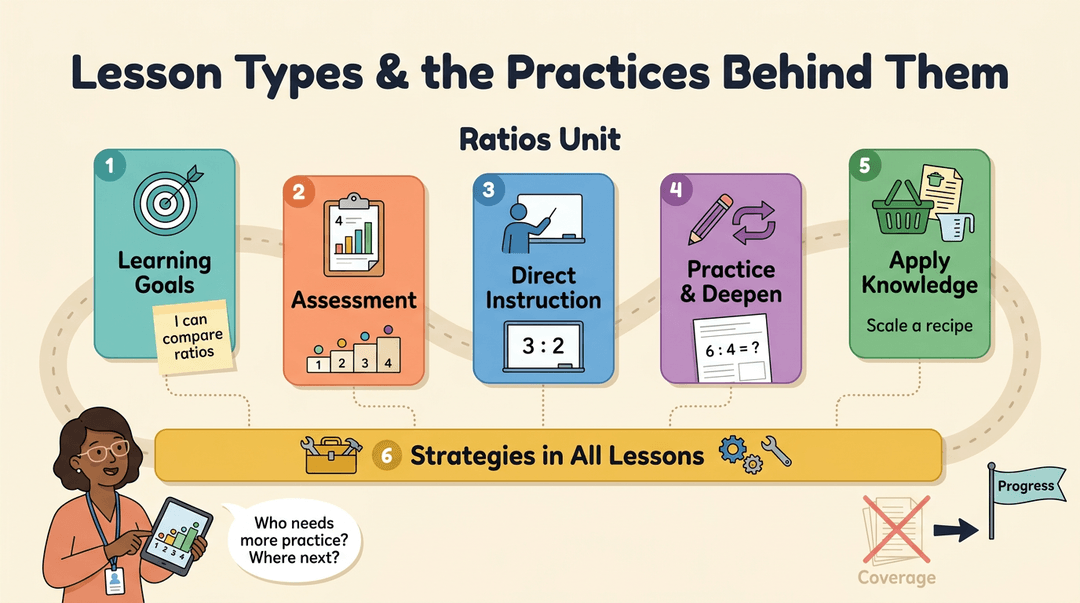
Here's what they cover:
- Learning goals: Clear targets, plus a way to write them from your standards.
- Assessment: Checks on learning, including proficiency scales that show where each student stands.
- Direct instruction lessons: Focused teaching of new content.
- Practicing and deepening lessons: Time to rehearse skills and go further.
- Knowledge application lessons: Students use what they know on real problems.
- Strategies in all lessons: Techniques that work in any lesson type.
Picture a middle school math teacher planning a ratios unit. Her learning goal is clear, her proficiency scale shows who needs more practice, and she knows where to go next. Clear targets keep her focused on progress, not coverage.
Building a classroom climate that engages students
Here's what shapes that environment:
- Engagement strategies: Ways to draw students in and keep them there.
- Rules and procedures: Routines that keep the room running.
- Building relationships: Connections that make hard work feel doable.
- Communicating high expectations: Showing every student you believe they can reach the goal.
Think of a first-year teacher who sets routines for turning in work in week one. Students spend less time guessing and more time learning. Routines do the heavy lifting.
Changes across the whole school system
The last chapters zoom out to the whole school. They cover the modern standards movement, the changes needed across kindergarten through 12th grade for high learning for all, and how to make system changes stick.
Picture a grade-level team writing learning goals from the same standards, so students get consistent expectations year to year.

Extra Resources to Pair with the Book
The book explains the why, and these extras help with the how. Here's what you can download for free, plus the other books in the series.
Free tools you can download
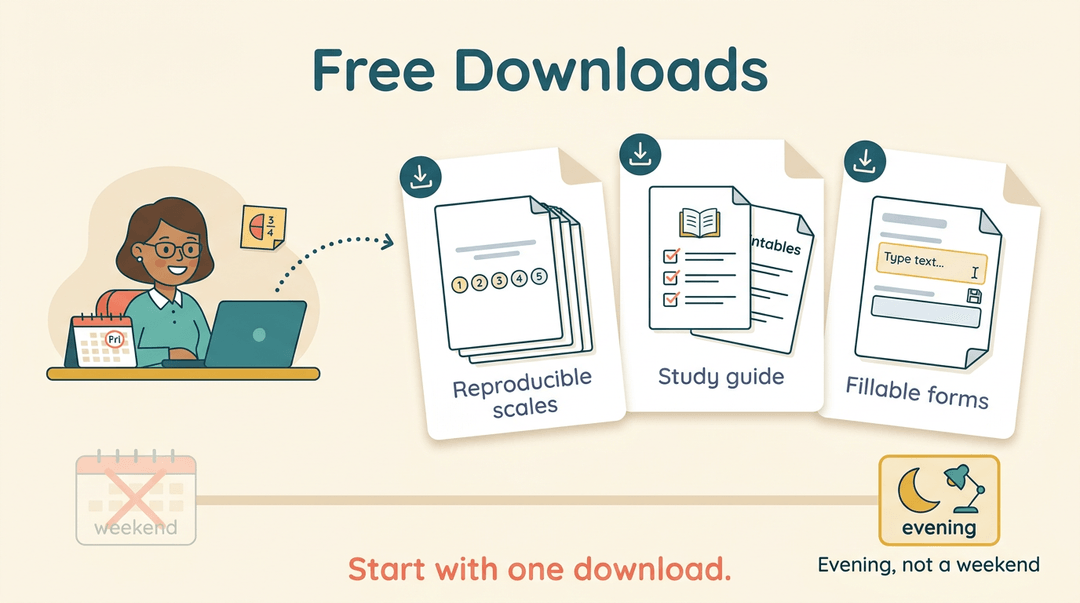
Think of a third-grade teacher planning a fractions unit for Friday. Her first stop is the reproducibles: printable pages she can copy for her own students.
- Reproducible scales: printable scales ready to copy for every student.
- Study guide and reproducibles: a guide to work through the book's ideas, plus printable pages for a team or for your own use.
- Handouts and fillable forms: ready-made handouts and forms she can type into and save, so she spends less time formatting and more time teaching.
Her unit plan takes shape in an evening instead of a weekend. Start with one download. The rest will still be there.
Other books in the series
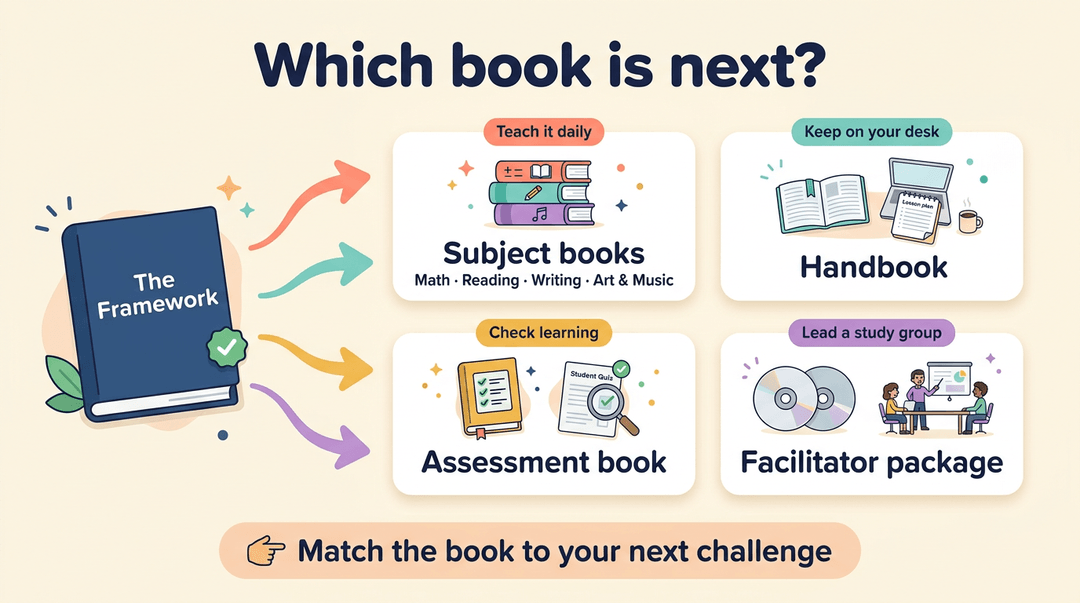
Once the framework feels familiar, the series offers more to dig into.
- Subject-specific books: titles for math, reading, writing, and art and music, for applying the framework to the content you teach every day.
- Handbook for the New Art and Science: a companion handbook to keep on your desk while you plan.
- Classroom assessment book: a focused guide to checking student learning, for when assessment is your next goal.
- DVD/CD facilitator package: materials for anyone leading a study group or workshop on the framework, whether that's a team at your school or a group of tutors.
Pick the one that matches your next challenge, and start there.
Formats, Publishers, and Where to Buy
Whether you listen, read on paper, or study on a screen, there's a version that fits how you work. Here's what's available and what to know before you buy.
Available formats and publishing details
The book comes in three formats:
- Audiobook: narrated by Charles Constant, so you can take it on your commute.
- Paperback: 152 pages, easy to tab and mark up.
- eBook: available through VitalSource.
It's a joint publication of ASCD (the Association for Supervision and Curriculum Development) and Solution Tree, published in February 2017.
Consider a first-year teacher who wants to finish the book before school starts. She listens to the audiobook on her drive in, then reaches for the paperback when it's time to highlight the ideas she wants to use.
Choosing a format is less about which one is best and more about which one fits your day.

Ordering rules and getting eBook access
Before you check out, know the rules. Each account is limited to one eBook per title, so a team that needs several copies should plan ahead.
Bulk orders go through customer service, so a grade-level team or department can reach out there directly. eBooks can't be returned, so double-check the title and format before you buy. Check twice, buy once.
To read your eBook, you'll need a redemption code and a VitalSource account. Have both ready before you start, so you're not hunting for a code on the day you want to read.
What Readers Thought of It
Reviews of The New Art and Science of Teaching mix praise with pushback, which is worth knowing before you commit. Here's what educators said, and how the book stacks up against Hattie's strategies.
What educators said in their reviews
A longtime follower of Marzano's work offered praise, and the book keeps the magic of the original. If the first book already shaped how you plan, that continuity is a big draw.
Not every review was glowing. Some educators found the writing textbook-like. When time is scarce, that's a real hurdle. Think of a second-year teacher with one Sunday evening to plan.
She skims past the dense passages, hunts for practical examples, and tries one idea with her own students before trusting it. She walks in Monday with one lesson she's confident in.
Others pushed back on self-referencing citations, where sources loop back to the book's own ideas instead of pointing outward. Check the evidence yourself before you lean on any single claim.
The book also gets compared with Hattie's strategies. The question is less about which list wins and more about what works for your students.
If you already use Hattie's list to choose what to try next, you'll want to read the two side by side before adding anything new.
When the framework shapes your unit plans and standards-aligned lessons, planning becomes a process you can rely on instead of a scramble. That's the real payoff: less guesswork for you and a clearer path for your students to follow.
Ready to map out your year? Explore Curriculum & Standards to plan units, lessons, and standards across the whole school year.

References
- Mastering the Marzano Elements: Building Blocks of Effective Teaching — marzanoevaluationcenter.com (2025)
Frequently asked questions
What is the new art and science of teaching?
The New Art and Science of Teaching is Robert Marzano’s research-based framework for planning and improving instruction. It combines the science of research-based teaching strategies with the art of adapting them to students, and focuses on evidence of student learning and mastery.
What is Marzano's art and science of teaching?
Marzano’s Art and Science of Teaching framework organizes effective teaching around student feedback, meaningful content instruction, and meeting students’ basic psychological needs. Its elements and strategies help teachers plan instruction, respond to learners, and check whether students are making progress.
What is the 70/30 rule in teaching?
There is no single, universally accepted “70/30 rule” in teaching; the phrase can refer to different recommendations in different contexts. One common version suggests students should do about 70% of the talking or active learning while the teacher accounts for about 30%, but it is a guideline rather than a fixed research-based requirement.
What are Marzano's six steps?
Marzano’s six steps commonly refer to teaching academic vocabulary: provide a description, explanation, or example; ask students to restate the word in their own words; have them create a nonlinguistic representation; engage them in activities that deepen knowledge; discuss the terms; and play games that reinforce them. These steps are a vocabulary-instruction routine, not the full structure of Marzano’s teaching framework.
What are the criticisms of the Science of Reading?
Critics of the Science of Reading debate how narrowly the term is defined and whether evidence-based phonics and decoding instruction receive too much emphasis relative to comprehension, vocabulary, language, and motivation. Others object to mandated programs or scripted instruction, arguing that teachers need flexibility and that reading development involves multiple interacting skills. These criticisms do not negate the strong evidence for explicitly teaching foundational skills such as phonemic awareness and phonics.
What are John Hattie's top 10 teaching strategies?
John Hattie’s rankings vary by study and update, so there is no fixed top 10. Influences often ranked highly include collective teacher efficacy, teacher-student relationships, feedback, formative evaluation, clear teacher expectations, self-reported grades, direct instruction, reciprocal teaching, classroom discussion, and metacognitive strategies. Hattie’s effect sizes describe average research findings, not guarantees for every classroom.