Team Building Activities for Teachers: A Complete Guide

Jump to section
Picture a potluck where nobody knows anyone. Before long, someone is handling drinks, someone else is slicing the cake, and a few people have figured out who's good on the grill.
Schools run on that same kind of teamwork, but it works best when it gets a deliberate start.
Team building activities for teachers are short, purposeful experiences that help colleagues trust each other, communicate openly, and solve problems together.
Here, we'll sort the options by goal, time, and setting, then share a ready-to-run staff session and ways to carry those habits into your classroom.
Why Team Building Activities for Teachers Matter
Most teachers never get enough time to know their colleagues well. Here's what that connection is worth.
How team building builds trust and morale
Team building starts with trust. When colleagues know each other, they communicate openly and ask for help sooner. Picture a new second-grade teacher who hesitates to flag a struggling reader in meetings. Later, she speaks up, and the team benefits.
That's the difference between working near colleagues and working with them.
Collaboration strengthens as teachers learn who to call for a math idea. Culture and morale improve too, since a team that enjoys each other carries that energy into planning. Engagement follows when people feel connected.
How staff teamwork lifts student success
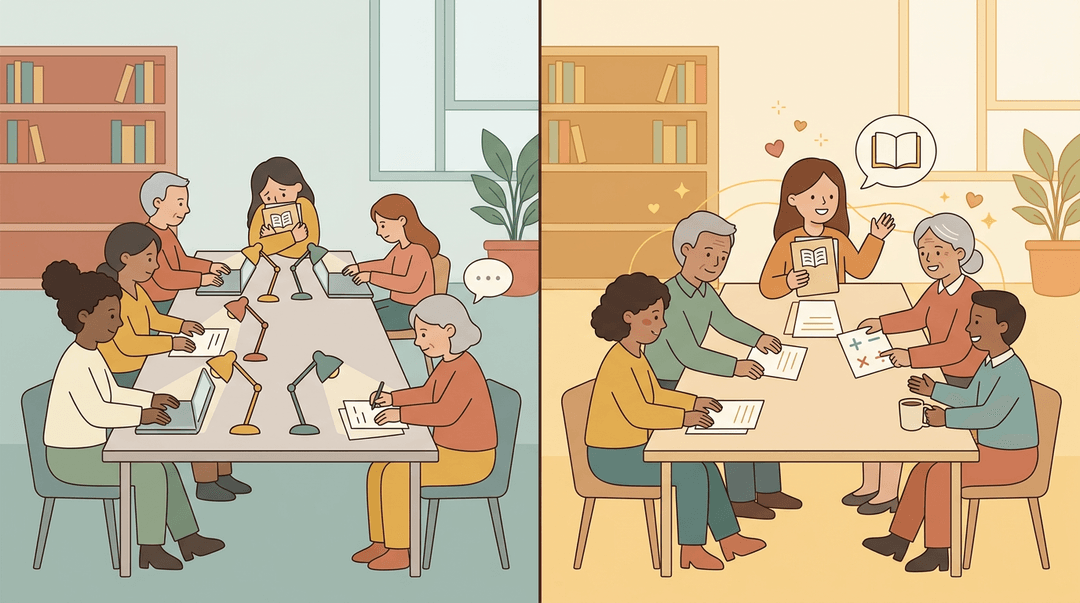
Staff teamwork boosts student success. A 2015 study by Matthew Ronfeldt and colleagues found that teachers and schools with higher-quality collaboration saw better achievement gains in math and reading. So the quality of collaboration is what matters.
Student well-being aids learning, too. PositivePsychology.com notes that well-being is essential for learning, since a lack of it leads to poor outcomes.
When a counselor and homeroom teacher compare notes on a withdrawn student, they can agree on one plan.
Planning together also builds a consistent educational experience. A student moving down the hall doesn't have to relearn the rules.
Working smarter and solving problems together
Shared planning also saves time. When a team builds one set of assessments together, no one starts from scratch. That's efficient resource use in action.
Working through a tricky scenario together builds team problem-solving skills. When a schedule breaks, the group already knows how to brainstorm and decide together.
Good activities also reveal each colleague's strengths and weaknesses. You'll spot the tech whiz and the colleague who connects easily with families. Strengths are easier to use once you can see them.
Lead a 10-minute Team Builder
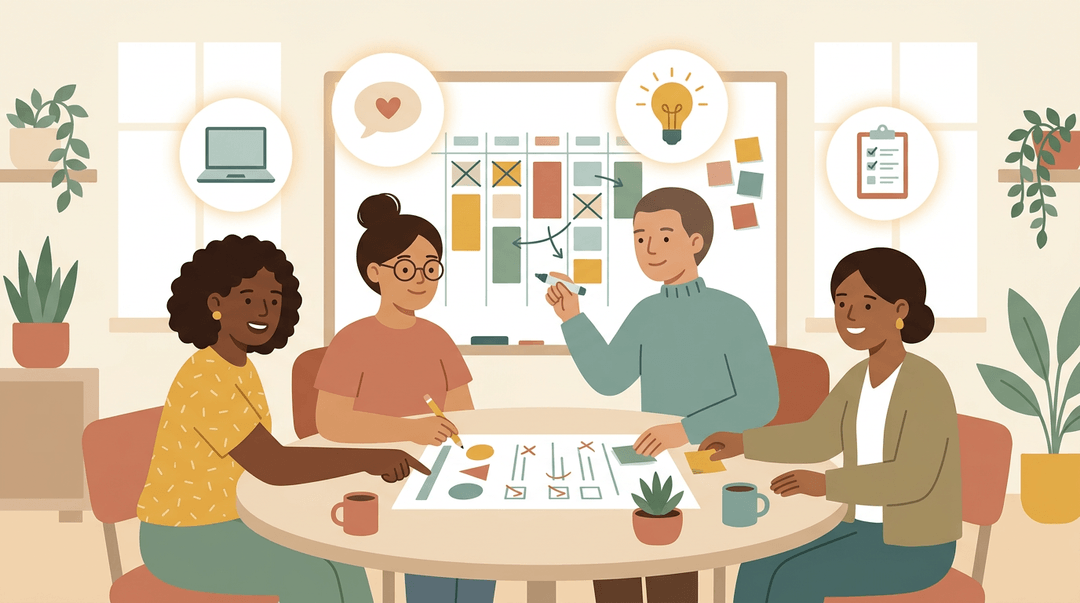
Use this card when you've got one short slot in a staff meeting and want it to build trust, not eat the agenda. Plan it once, run it on a visible clock, and spend the last few minutes tying it to real work.
Plan it
Decide four things before the meeting. Each takes about a minute.
| Slot | What to decide | Example |
|---|---|---|
| Goal | One outcome only | Colleagues from different teams talk |
| Time | Activity fits the slot | 5-minute build, 10 minutes total |
| Supplies | Free and already in the building | Index cards, tape, scrap paper |
| Opt-out roles | A job for anyone who'd rather not join in | Timekeeper, observer, scribe |
Opt-out roles matter because forced fun can backfire. Offering a real job keeps everyone part of the team.
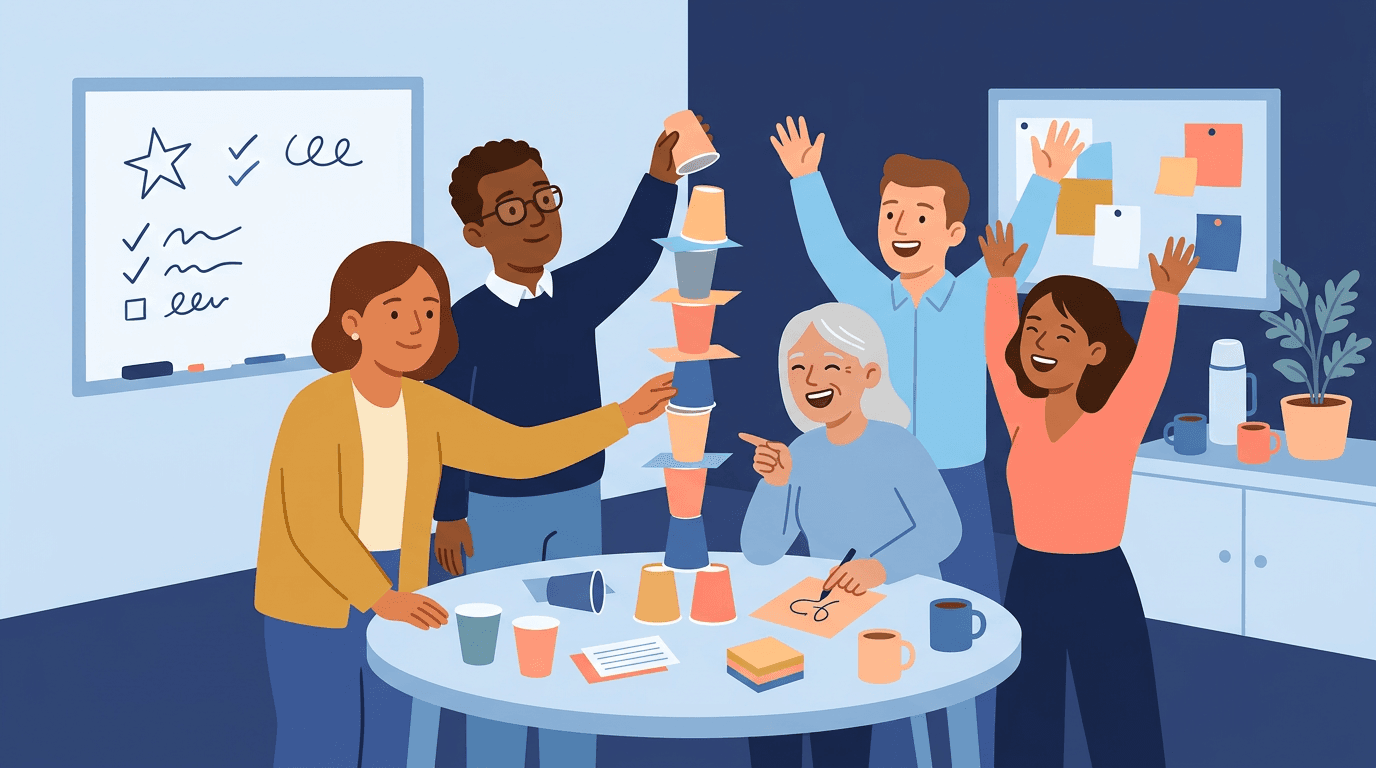
Example: The goal is "Teachers from different grades solve something together." Groups of four get 10 index cards and a strip of tape, with 5 minutes to build the tallest free-standing tower. One person per group may be the observer, who notes how the group made decisions.
Run it
Start your timer when you start talking.
- Explain the rules in 1 minute.
- Say: "Four per group, five minutes, tallest tower wins. Observers, you're welcome to watch instead."
- Form small mixed groups.
- Mix grade levels, departments, or new and veteran staff.
- Count off by fours instead of letting people sit with friends.
- Keep time visibly.
- Project a countdown timer so nobody has to ask how long is left.
- Run the activity for 5 minutes.
- Stay out of the way and listen for how groups talk.
- Call time and debrief.
Rotate the facilitator each month. A different colleague leads each time, so the routine belongs to the staff, not to one person. Hand them this card.
Debrief in 3 minutes
The activity is only the setup. The debrief is where the team-building happens, so protect those minutes.
- Ask what worked. Say: "What helped your group get moving?"
- Link it to daily teamwork. Say: "Where does that show up when we plan together?"
- Note ideas for next time. Jot them on one sticky note for next month's facilitator.
⚠️ Watch out: Don't let the build run long and cut the debrief. A shorter activity with a real conversation beats a longer one with none.
Bring it into your classroom
Once staff have felt the routine, you can run a smaller version with students. Keep the same shape: clear goal, short clock, mixed groups, quick debrief.
| Level | Try | Why it fits |
|---|---|---|
| Elementary | Name games | Everyone learns names fast |
| Middle school | Quick challenges | Short wins keep energy up |
| High school | Collaborative problem-solving | Students own the thinking |
Advisory and homeroom are natural homes for these. A 10-minute slot there needs no content prep, and the same opt-out roles work for students too.
Keep staff meeting agendas and class community-building routines together in EMStudio's online teacher planner.
Pick the Activity That Fits Your Team
Not every icebreaker fits every staff room. Start with who's in the room, how much time you have, and what you want to change.
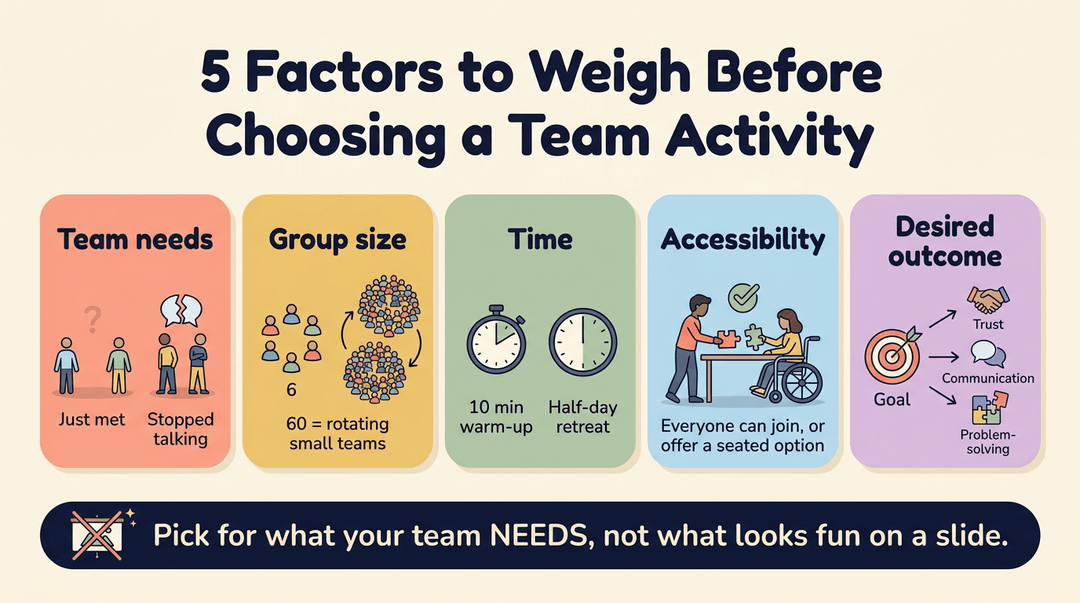
Factors to weigh before you choose
Weigh these five factors first:
- Assess team needs. Staff who barely know each other need something different from a team that's stopped talking.
- Staff size. Six people and sixty need different formats, and larger groups need structure, like rotating small teams.
- Time available. A 10-minute warm-up and a half-day retreat are different tools.
- Physical abilities and accessibility. Choose activities everyone can join comfortably, or offer a seated option.
- Desired outcomes. Trust, communication, and shared problem-solving each point to a different activity.
Pick based on what your team needs, not what looks fun on a slide.
Choose in-person, virtual, or hybrid
In-person usually wins on connection, while virtual usually wins on convenience. Virtual also makes it easier to include staff spread across buildings or part-time schedules.
A hybrid session takes a little more planning. Consider a fourth-grade team with two members joining remotely.
Pair each remote member with an in-room partner, use a shared digital whiteboard, and test audio first, so both teachers join the discussion instead of watching from the sidelines.
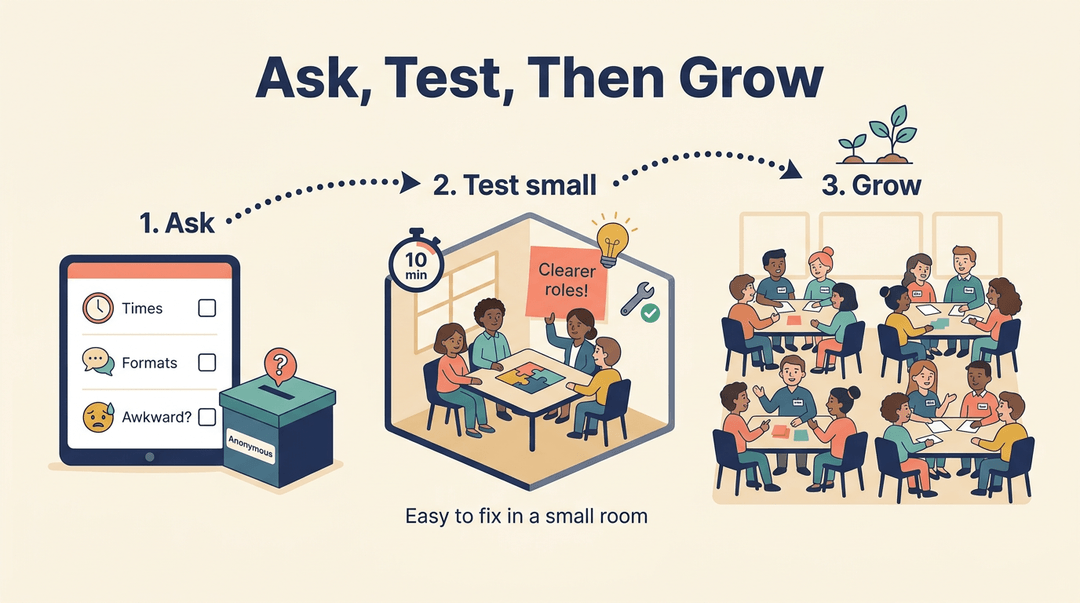
Ask staff and test a small version
Start with a short, anonymous survey on preferred formats, times, and activities people would find awkward.
Then run a trial run with a few volunteers or one grade-level team. A principal who tries a 10-minute puzzle first might learn it needs clearer roles, a fix that's far easier in a small room. Start small, then grow.
Times when team building helps most
Team building pays off most when relationships matter most:
- Onboarding new staff. A new teacher who knows three colleagues by name in week one has people to ask about the copier.
- Conflict or low morale. A low-stakes activity opens the door to honest conversation, but it works best alongside real problem-solving.
- Times of change. A new principal or curriculum can unsettle even a close team, so build trust before the change lands.
- Project start or end. A kickoff sets shared goals, and a wrap-up helps the team reflect on what worked.
Build the bond before you need it.
Quick Icebreakers and Warm-up Games
Play loosens up a staff room. The goal is connection rather than performance.
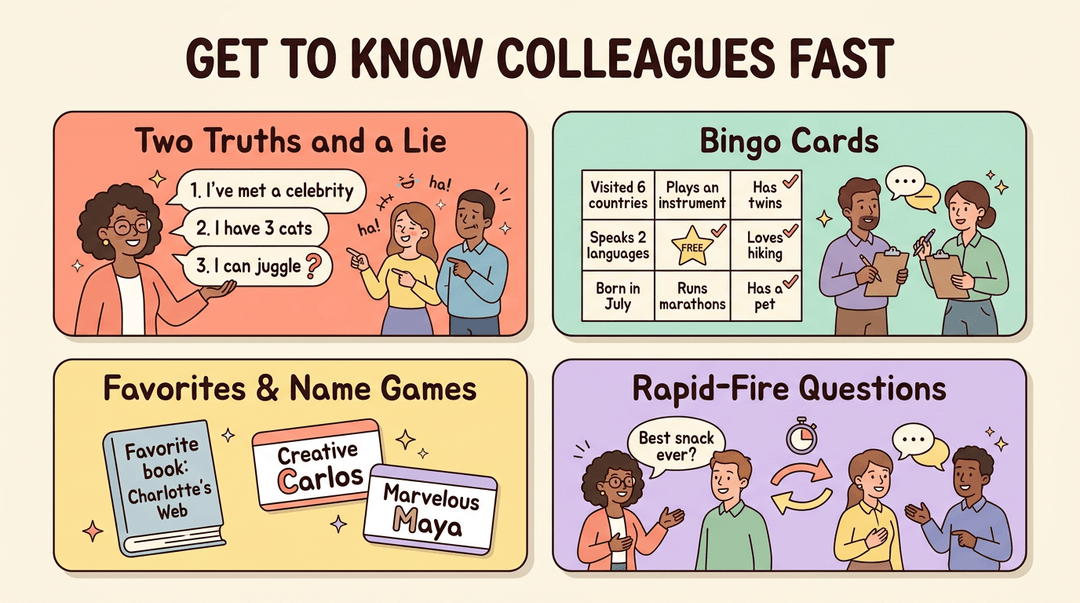
Getting to know colleagues fast
- Two Truths and a Lie: Each person shares three statements about themselves, and the group guesses which one is false. Laughter does the rest.
- Bingo cards: Squares name traits, like “has visited six countries,” and colleagues mingle to fill a row.
- Favorites and name games: Share a favorite book, or pair each name with a matching-letter adjective.
- Rapid-fire questions: Pair up for one light question, then switch partners.
What are some good ideas for teacher appreciation?
Keep it quick and specific, and you'll see it land.
- One-word pulse check: Each person names one word for their mood. A principal who hears “buried” can offer help right away.
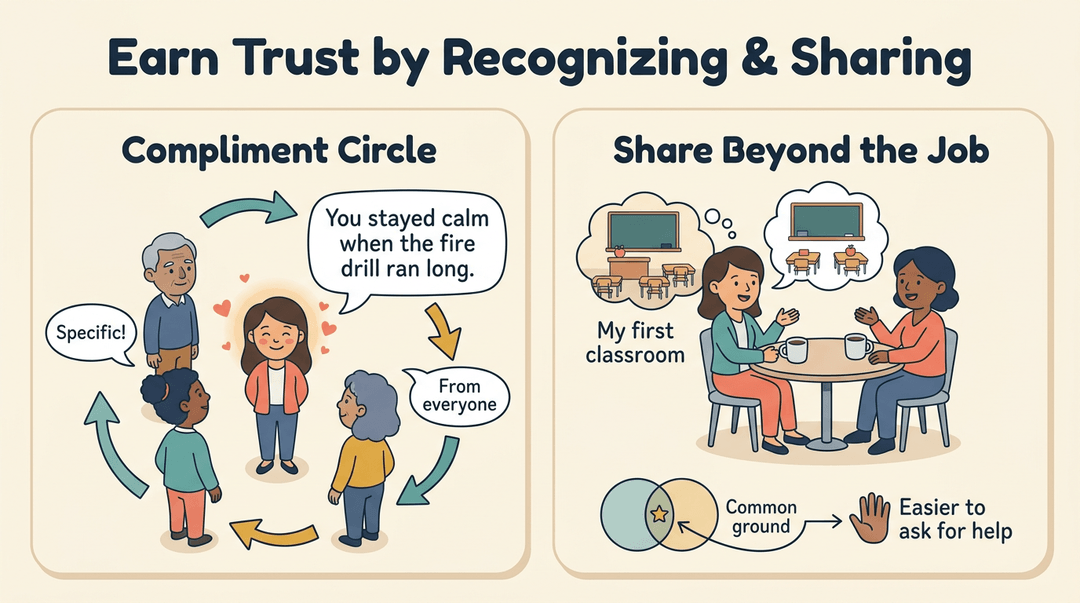
- Compliment circle: Praise the person on your right for a specific act, like a calm hallway reset.
- Gratitude and quick-win rounds: Share one thing you're grateful for and one recent win.
- Values check: Name a value like kindness, and spot where it showed up.
- Reuse as student morning meeting: The same rounds build community with students each morning.
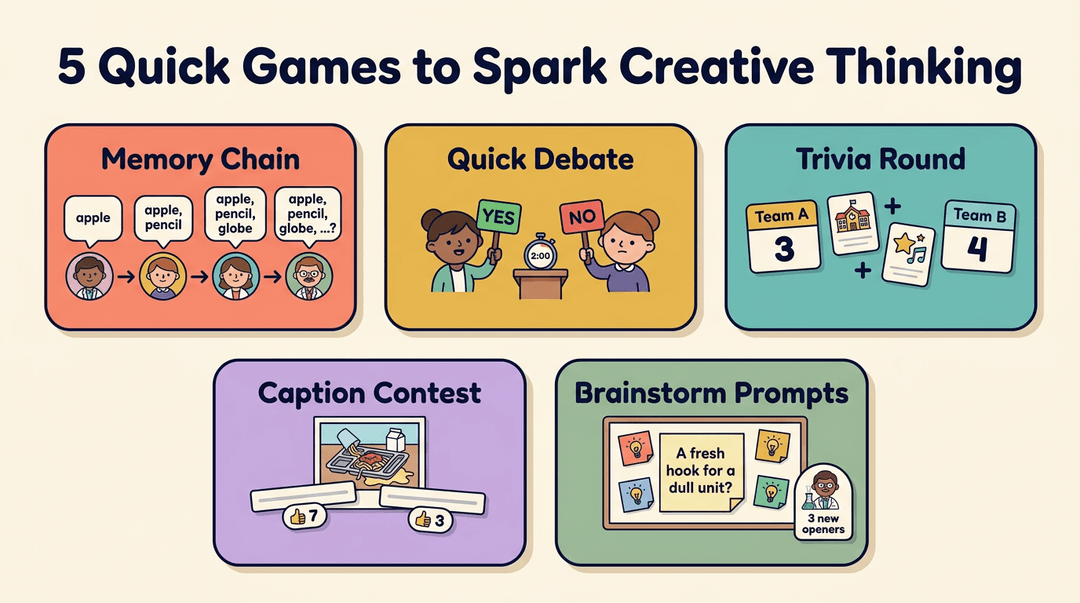
Short games that spark creative thinking
- Memory chain: Each player repeats the list so far and adds one.
- Quick debate: Pose a simple question and give each side two minutes to argue.
- Trivia round: Mix school history with pop culture, and let teams compete.
- Caption contest: Share a photo of a lunchroom spill and let staff vote on captions.
- Brainstorm prompts: Post a challenge, like “a fresh hook for a dull unit,” and collect ideas. A science teacher who does this before planning day leaves with three new openers.
Challenges That Get Teams Solving Problems
When a team solves something together, people stop talking at each other and start working with each other. Each challenge ends with a quick debrief, and that's where the learning sticks.
Try escape rooms, puzzles, and scavenger hunts
An escape room has a small team solve clues to unlock their way out before time runs out. You can book a physical room or run a virtual one. For something lighter, write education-themed puzzles. Scavenger hunts and breakout games need even less setup.
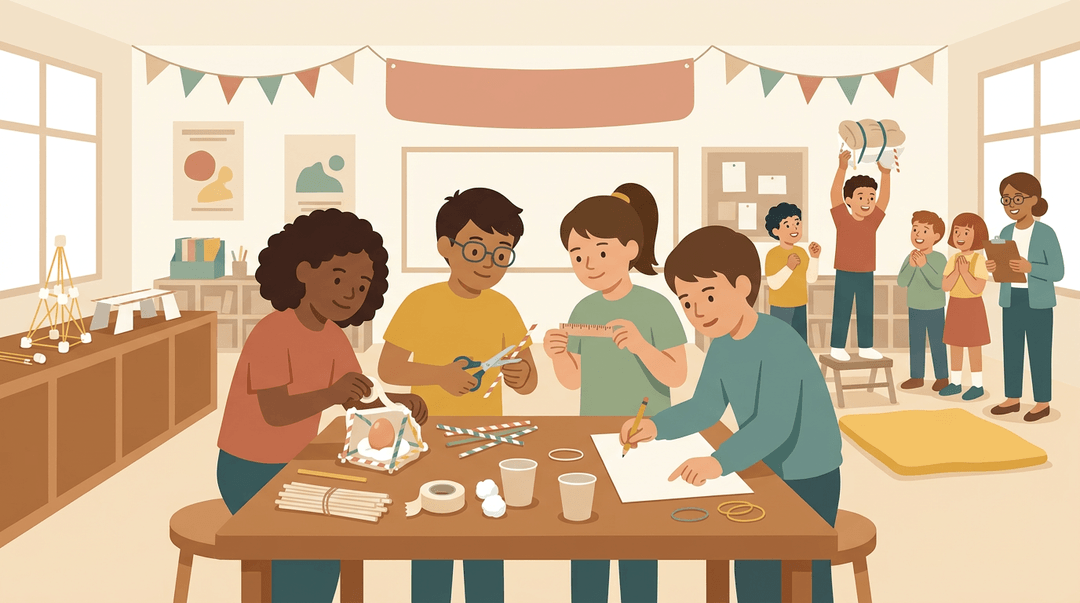
Hands-on building challenges like egg drops
In an egg drop, teams design a contraption to protect a raw egg, then drop it from a set height. Build towers, bridges, or castles from identical materials and test which stands tallest. Finish with a team motto that sums up how the group worked.
The real lesson is how the team divided the work, not whether the egg survived.
Get moving with active team games
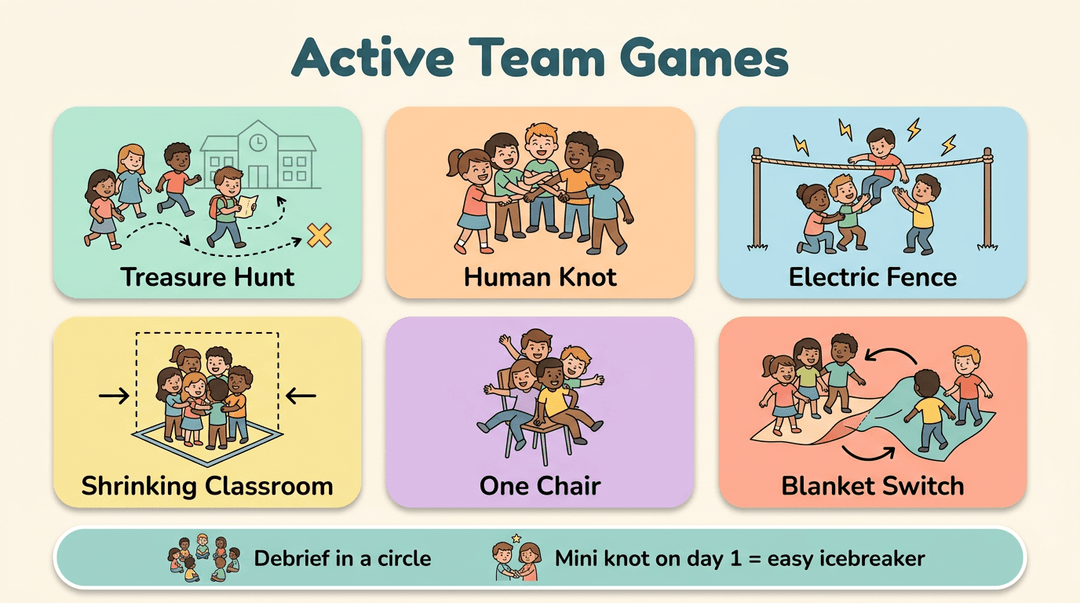
Some teams think better on their feet:
- Treasure hunt around school: teams follow clues across the building.
- Human knot: everyone grabs two different hands, then untangles without letting go.
- Over the electric fence: get everyone over a pretend fence without touching it.
- Shrinking classroom: fit the whole group into a space that keeps getting smaller.
- Get on the chair: work out how everyone can fit onto one chair.
- Blanket switch: flip a blanket so everyone changes sides without stepping off.
For students, keep the goal simple and debrief in a circle. A shortened human knot on day one can give shy students a low-stakes reason to talk with a classmate.
Practice real-world scenarios through role-play
Role-play lets staff rehearse hard conversations before they happen for real. The goal isn't winning the argument. It's listening well.
In a conflict role-play, two colleagues act out a disagreement, then switch roles. Quick workplace scenarios use one prompt, like a colleague who keeps missing deadlines.
Picture a grade-level team arguing over a shared prep period. In a mediator-led session, a neutral facilitator gives each person a turn, and the team leaves with a schedule everyone agreed to.
Close any session with questions from your facilitator debrief question bank, like 'Who helped the group move forward?'.
Ways to Build Trust Within Your Team
Trust rarely builds by accident, so we've gathered activities that give your team low-stakes practice before a busy week puts real pressure on everyone.
Guide a partner through blindfolded games
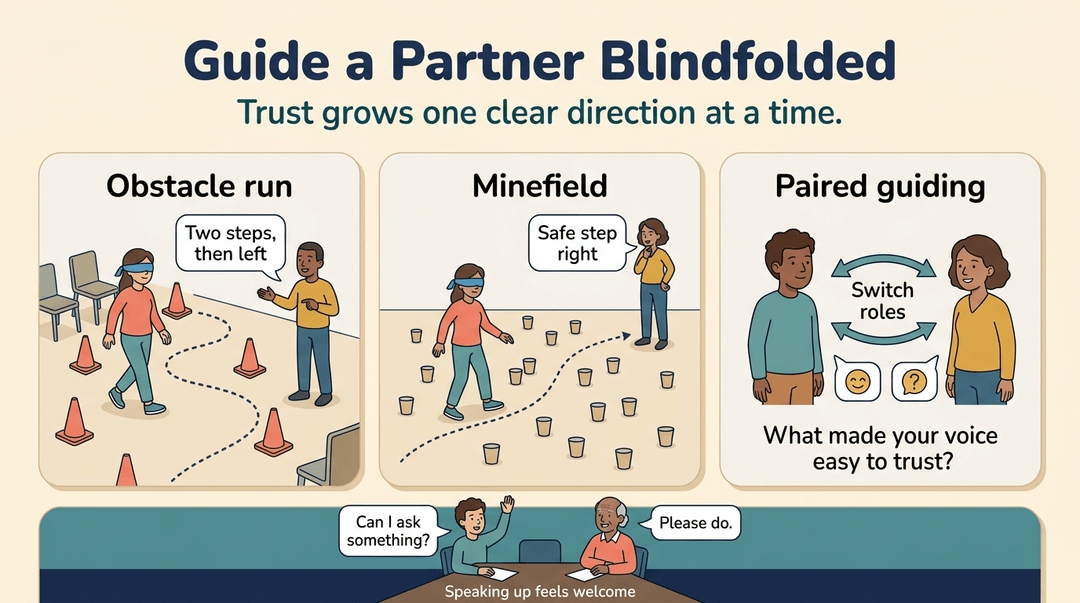
These games ask one person to rely entirely on a partner's words. It's less about winning and more about how clearly directions get heard.
- Obstacle run: One partner is blindfolded while the other guides them through chairs or cones using only spoken directions. Then they switch.
- Minefield: Scatter paper cups across a room. The blindfolded partner crosses while the guide calls out each safe step.
- Paired guiding: Partners take turns leading and following, then discuss what made the other person's voice easy or hard to trust.
Picture a first-year teacher paired with a veteran. The newcomer learns that speaking up is welcome, and the veteran learns to give patient, specific directions. At the next planning meeting, the newcomer asks the question they'd have kept to themselves.
Trust grows one clear direction at a time.
More trust exercises to try
- Falling trees: One person leans slowly backward while the group steps in to catch and guide them upright.
- Eye contact gazing: Partners sit face to face and hold eye contact in silence for a short, agreed-upon time.
- Blind artist drawing: One teacher draws blindfolded while a partner describes a simple shape out loud. Then they compare results and laugh together.
Earn trust by recognizing and sharing
- Compliment circle: Each teacher hears a specific compliment from every colleague, like 'You stayed calm when the fire drill ran long.'
- Personal sharing builds rapport: Invite teachers to share something beyond the job, like a first classroom. Common ground makes it easier when you need to ask for help.
Creative Projects and Walking in Others' Shoes
These activities give colleagues a shared task or a view from someone else's side. Here's how to try them:
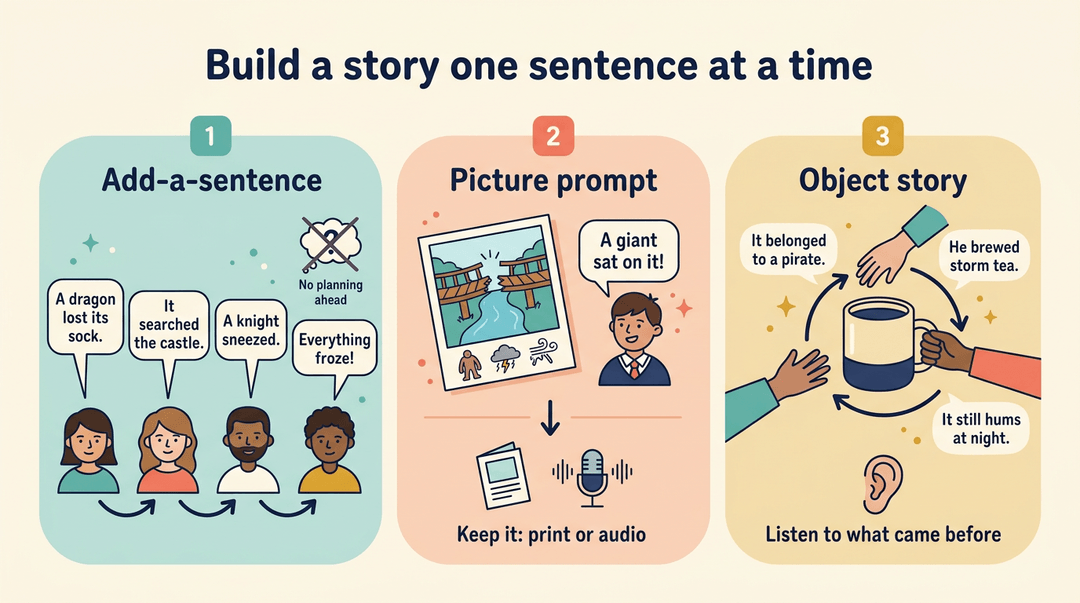
Build a story one sentence at a time
Start with add-a-sentence stories: each person adds one line before passing it on. Nobody gets to plan ahead.
Try picture or emoji prompts next: a team might get a photo of a broken bridge and explain how it got that way. Then record the story as a keepsake, in print or as audio.
For an object story, pass a mug around, and each person adds a piece to its history. It's less about being clever and more about listening to what came before.
Create together through art and projects
A group painting works well: each teacher paints one section of a canvas, and the team hangs it in the hallway.
For a class movie project, have grade-level teams film short movies with everyone contributing a scene.
Classroom party planning works the same way. A second-grade team might split the snacks, games, and decorations, so nobody spends the night alone with a glue gun.
For something playful, a staff talent show is simple: try a lip sync, a skit, a magic trick, or a poetry reading.
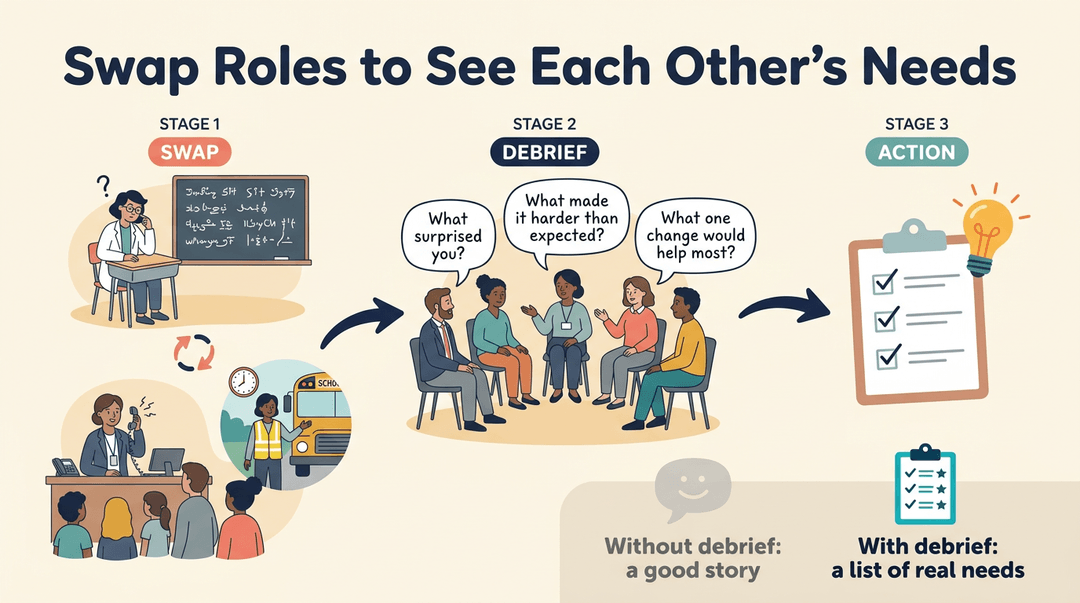
Swap roles to see each other's needs
Begin by having teachers act as students. A science teacher might sit through ten minutes of a lesson in a language they don't speak, and feel what English learners face.
Administrators can spend a morning on bus duty or at the front desk and spot bottlenecks they'd never otherwise see.
Then hold a debrief with these questions:
- What surprised you?
- What made the job harder than expected?
- What one change would help most?
The debrief turns a fun swap into action. Without it, people leave with a good story. With it, they leave with a list of real needs.
Fit Team Building into Your School Calendar
Team building sticks when it's part of the year's rhythm, and we'll show you where it fits. Staff meetings and professional development (PD) days already offer openings.
Build it into meetings and PD days
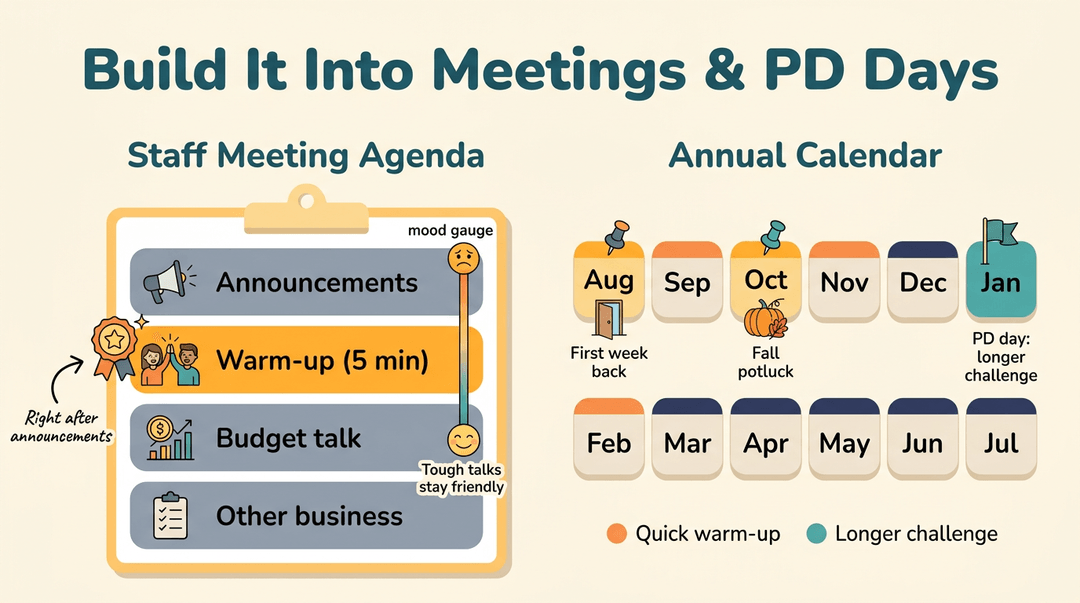
Staff meetings are the easiest place to start, since everyone's already in the room. Open with a quick warm-up before the business items, and save longer challenges for PD days.
Map out an annual calendar early in the year to spot natural openings, like the first week back. Seasonal activities, such as a fall potluck, give people something to look forward to.
Slot one activity into the staff meeting agenda, right after announcements. Consider a middle school principal who does this: the staff walks into budget talk already comfortable with each other, so tough conversations stay friendly.
Keep sessions short and consistent
Focus less on how big an event is and more on how often it happens. Keep these habits in mind:
- Regular short sessions. A brief activity respects a packed schedule and keeps people showing up.
- Once every few weeks. That rhythm builds momentum without crowding the calendar.
- Consistency is key. Put the next session on the calendar before you leave the current one.
Share organizing duties across the staff
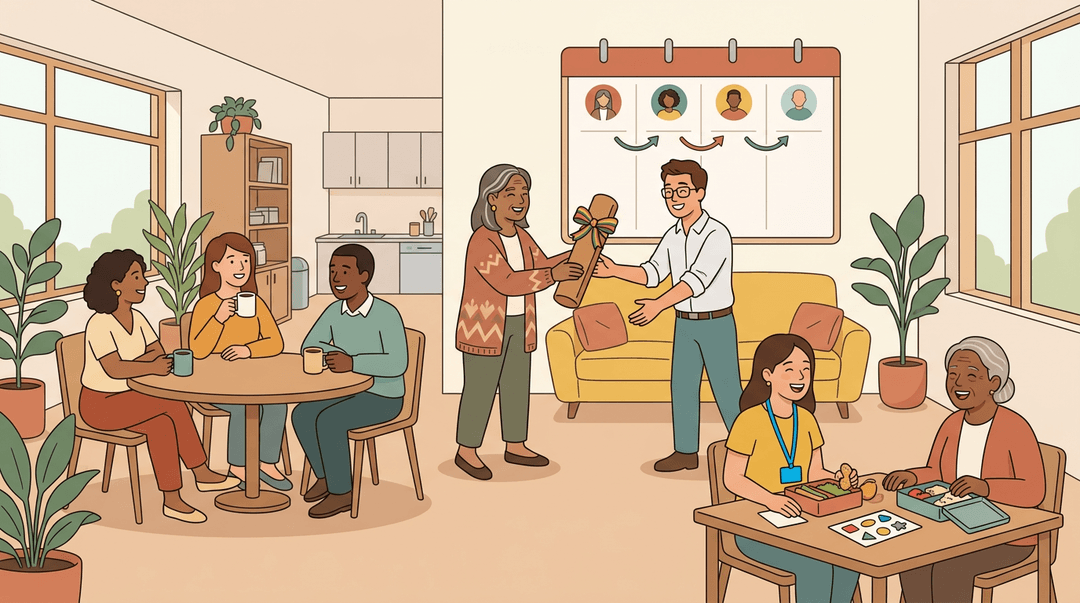
If one person plans everything, it becomes one more job on a full plate. Rotate organizing responsibility so a different teacher leads each session. Consider a fourth-grade team lead who hands planning to a teammate each month.
The teammate gets to shine, and nobody carries the load alone.
Integrate activities into mentorship programs, too. A first-year teacher and a veteran might share a monthly lunch challenge, giving the newcomer a friendly face before the first parent emails arrive.
Track what works and adjust next time
Record what worked in a simple shared note: each activity, how it went, and what you'd change. Add a two-question anonymous survey or a quick debrief at the end of a meeting to hear what staff actually enjoyed. Then apply lessons learned.
Reuse the winners and tweak the rest. The aim is less about scoring activities and more about understanding why they landed. Keep what works.
Common Problems and How to Solve Them
Most schools want stronger staff relationships, but the same few obstacles keep getting in the way. The good news is that each one has a practical workaround.
What usually stops team building from happening
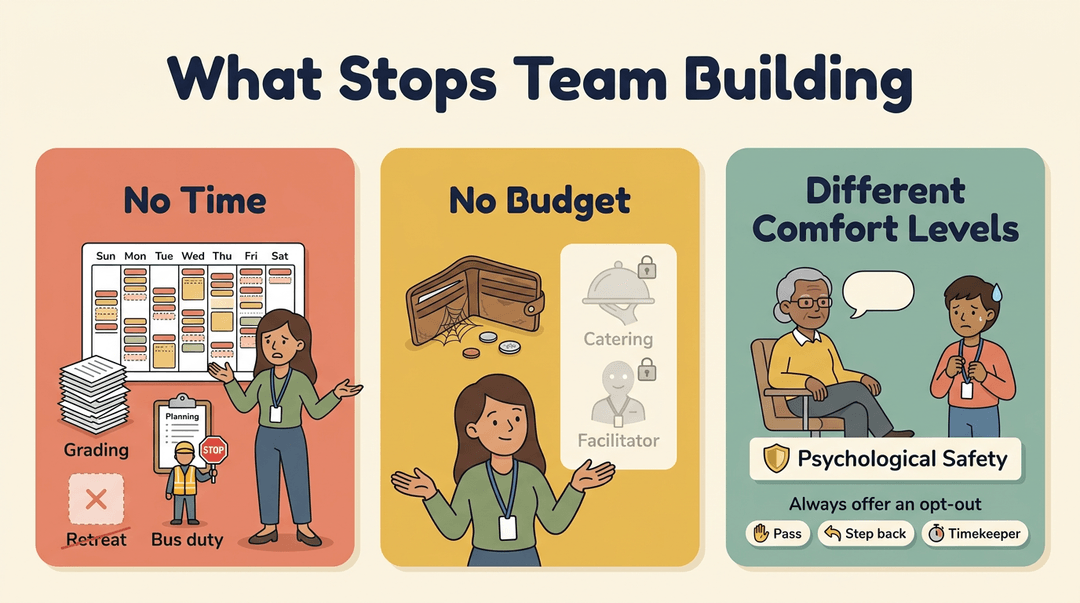
Three problems come up again and again:
- Time constraints. Grading, planning, and bus duty leave little room for anything extra, so a long retreat rarely fits anyone's calendar.
- Limited budget or resources. When every dollar is already spoken for, catered offsites and paid facilitators feel out of reach.
- Varying personalities and experience. A veteran teacher and a first-year teacher may not feel equally comfortable in the same room. That's why psychological safety matters: people need to know they can take part without being judged or put on the spot. Always offer an opt-out, such as passing, stepping back, or taking a support role like timekeeper.
Simple fixes for busy, tight-budget schools
Consider a fourth-grade team that spends five minutes at the start of Monday's meeting sharing one good thing from the weekend. No one loses a planning period, and colleagues who once only nodded in the hallway start swapping lesson ideas.
Small, frequent wins beat big, occasional events. Three fixes make it easy to start:
- Short 5-10 minute icebreakers. Keep them quick and low-stakes, such as asking what made someone smile this week.
- Repurpose classroom supplies. Sticky notes, index cards, and whiteboards can power a brainstorm, a sorting game, or a quick vote. You already own them.
- Mix and rotate teams. Shuffle groups each session so colleagues who rarely work together get to know each other.
Strong teams don't happen by accident. When colleagues trust one another, they share ideas more freely, lean on each other on hard days, and bring that same openness to their students.
A few well-chosen activities, matched to your goal and your time, can turn a group of coworkers into a team that truly works together.
Ready to build community beyond the staff room? Check out Classroom Management to keep your classes, sections, rosters, and timetables organized in one structured workspace.
References
- Teacher Collaboration in Instructional Teams and Student Achievement - Matthew Ronfeldt, Susanna Owens Farmer, Kiel McQueen, Jason A. Grissom, 2015 — journals.sagepub.com (2015)
- Improving Student Wellbeing: 16 Tools & Resources — positivepsychology.com
Frequently asked questions
What is the best topic for teachers?
A useful topic for teachers is how to build trust and communicate well with colleagues. Short activities focused on shared problem-solving, recognizing strengths, or getting to know one another can help staff work together more effectively.
What are some simple ideas for a talent show?
Simple talent-show ideas include a lip sync, a short skit, a magic trick, or a poetry reading. Keep performances brief and let people choose whether to participate or take a supporting role.
What are some good ideas for teacher appreciation?
Good teacher appreciation ideas include a compliment circle, where colleagues share specific praise, or a quick round for gratitude and recent wins. A one-word mood check can also help staff feel heard and identify when someone needs support.
How to be more fun as a teacher?
Be more fun as a teacher by adding short, low-pressure activities that help people connect, such as quick questions, trivia, caption contests, or creative challenges. Keep activities accessible, invite rather than pressure people to join, and make time to reflect or share afterward.