Visible Learning Explained: Hattie's Ideas and Their Limits

Jump to section
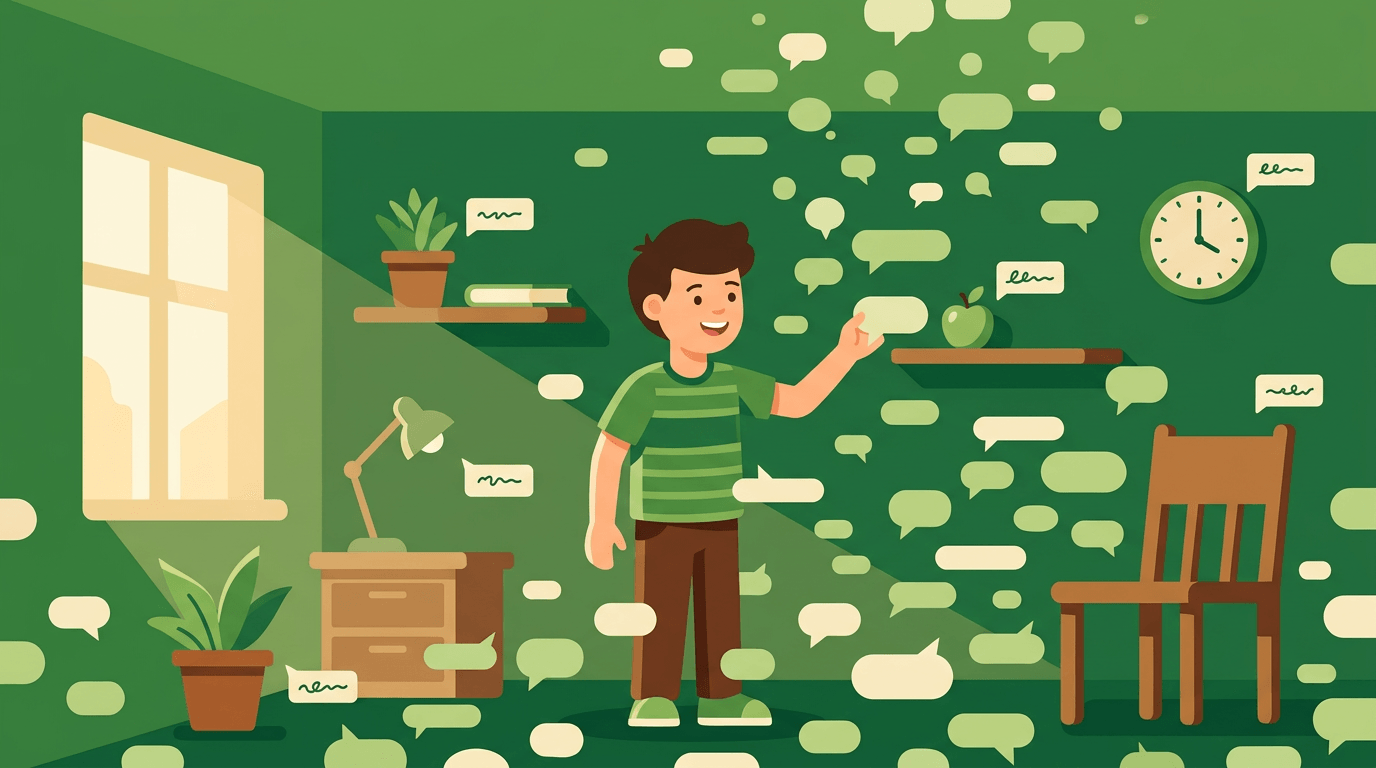
Picture driving through fog with only the car in front of you visible. You know you're moving, but you can't see where the road is taking you. Many classrooms work the same way: lessons happen, but teacher and student can't see what's really sinking in. Seeing what sticks starts with how a lesson is planned, so the framework in Understanding by Design Wiggins and McTighe is worth a look.
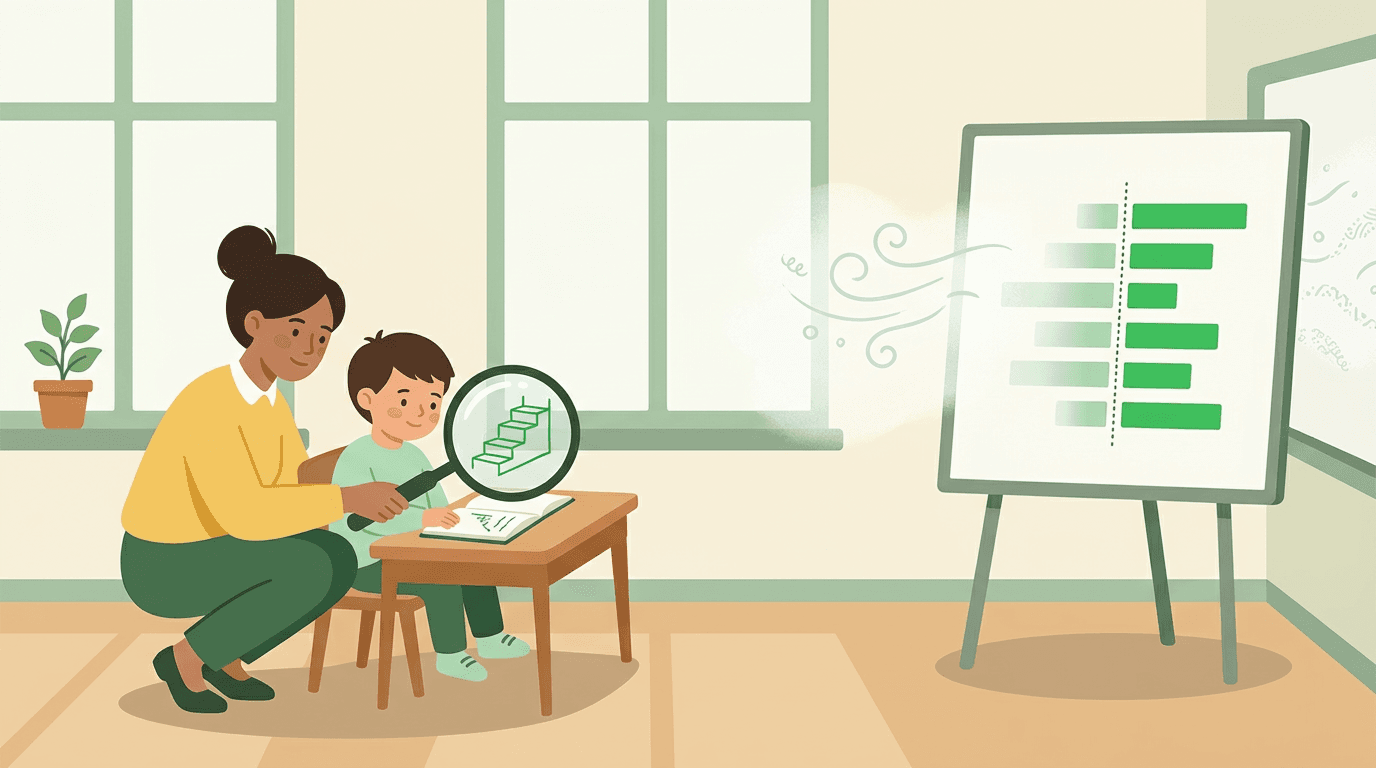
Visible learning, the idea associated with education researcher John Hattie, holds that strong teaching makes learning visible to both teachers and students. When you can see what students understand, you can adjust in time to help. If you want those adjustments to become routine, look at mastery learning.
We'll cover what Hattie meant, the core ideas, its limits, and how to build it into your lesson plans.

Make Visible Learning Work in Your Lessons
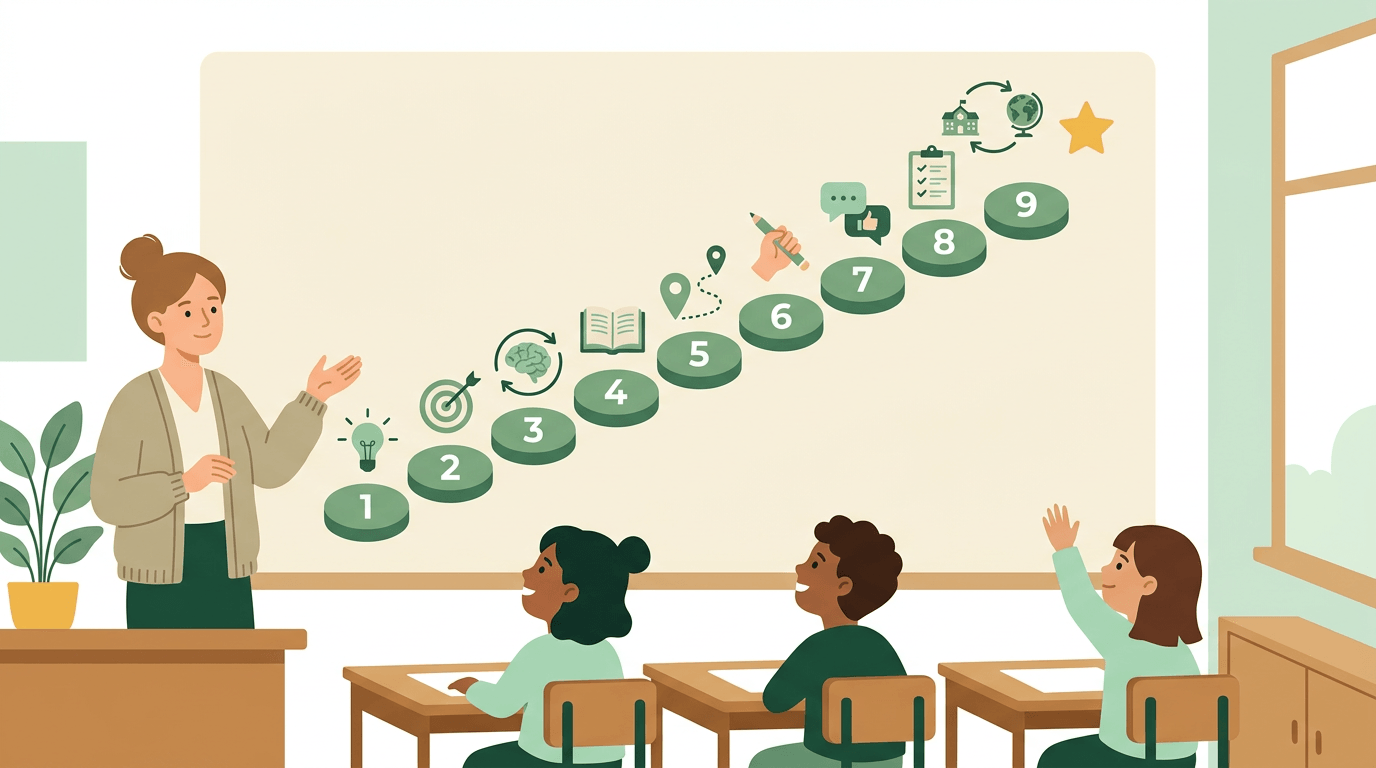
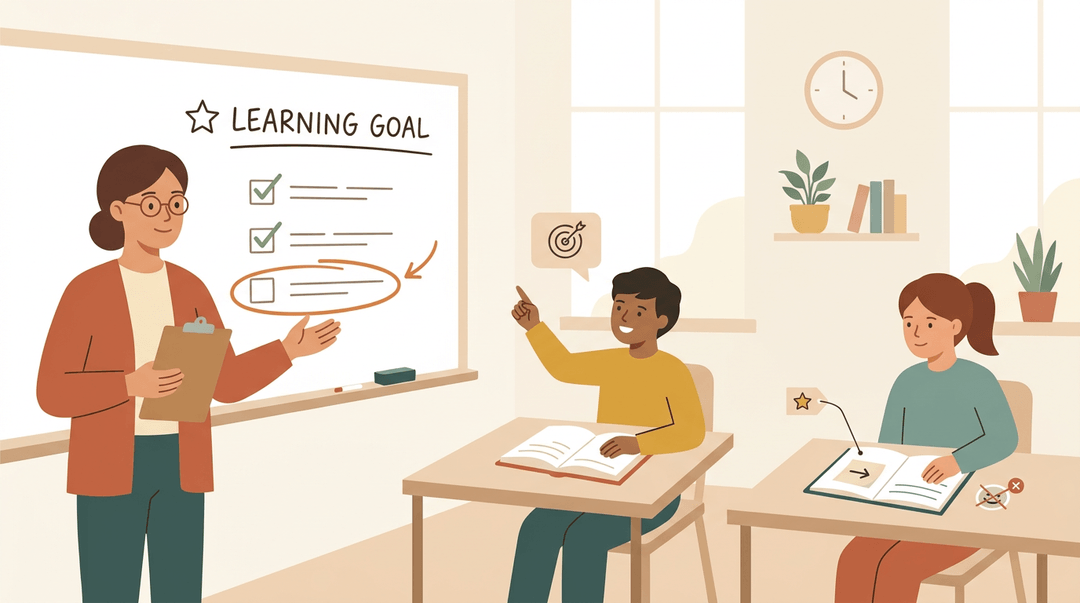
Use this playbook when you plan a lesson and want students to see the goal, the target, and their own progress. It runs in two phases, then adapts by grade band.
Before the lesson: set the goal
Start with what students will learn, not what they'll do. Three moves get you there.
- Write the learning intention
- Start with "We are learning to..." and name the skill or idea.
- Define the success criteria
- List two or three things students can show when they've got it.
- Match the student language
- Swap jargon for words your class actually uses.
Here's the difference between a task and a learning intention:
- ❌ "Complete page 12 on photosynthesis."
- ✅ "We are learning to explain how plants make their own food."
The first names an activity. The second names the learning, so students can tell when they've reached it.
Example: A fifth-grade science teacher writes the intention above. Her criteria, in student words: "I can name what a plant takes in. I can say what the leaf does with it. I can explain why the sun matters." She posts all three on the board before anyone opens a book.
During the lesson: teach and check
- Share the criteria upfront
- Read them aloud and have students restate one in their own words.
- Check understanding mid-lesson
- Say: "Hold up 1, 2, or 3 fingers: which criterion are you working on?"
- Close with an exit ticket
- Ask: "Pick one criterion. Show me you've met it."
The mid-lesson check is the cheapest way to catch a gap while you can still act on it. Sort the exit tickets by criterion, and you've got tomorrow's starting point.
Adjust for grade band
The idea stays the same. The tool changes with students' independence.
| Grade band | Tool | What it looks like |
|---|---|---|
| Elementary | "I can" statements | "I can add fractions with the same denominator." |
| Middle | Criteria checklists | Students tick off each criterion, pointing to evidence on their page |
| High school | Rubric self-assessment | Students score their own draft first, then name one gap |
💡 Tip: Move up a band gradually. Let middle schoolers try a self-scored rubric once the checklist feels easy.
Run this checklist every lesson
Confirm these before you close the lesson:
- Students state the goal: ask any student, and they can say it without looking.
- Students know next steps: they can name what to work on next.
- Feedback ties to criteria: your comments point to a named criterion, not a general "good job."
If one of the three is missing, fix that first. Then Build learning intentions and success criteria into reusable plans with EMStudio's online lesson planner.
Visible learning comes down to one simple habit: looking for evidence of learning, then acting on what you see. Hattie's ideas give you the lens, and the limits remind you to use it alongside your own professional judgment.
The payoff is a classroom where you can see where students stand.
Ready to put this into practice? Try our Lesson Planning tool to write, organize, and reuse your plans across multiple classes from one place.
Frequently asked questions
What is visible learning according to John Hattie?
John Hattie uses “visible learning” to describe teaching and learning in which teachers and students can see what students understand and what they need to learn next. Teachers use evidence of learning to adjust instruction, while students use clear goals and feedback to monitor their progress.
What is the 70/30 rule in teaching?
There is no single, widely accepted “70/30 rule” in teaching; the meaning depends on the context. It is sometimes used to suggest that students should do more of the learning work than the teacher, but it should not be treated as a universal research-backed ratio.
What are the four principles of Obe?
Outcome-based education (OBE) is commonly organized around four principles: clarity of focus on intended outcomes, designing learning backward from those outcomes, high expectations for all learners, and expanded opportunities for students to succeed. These principles guide what is taught, how learning is assessed, and how students can demonstrate achievement.
What are the 5 importances of learning?
Learning can build knowledge and skills, support personal growth, develop critical thinking, improve communication and relationships, and prepare people for work and everyday decisions. Its importance varies with a person’s goals and circumstances.
What are the 7 types of learning styles?
A commonly cited list names visual, auditory, reading/writing, and kinesthetic learning, plus verbal, logical, and social learning. These are informal ways of describing preferences, not proven fixed categories; research does not show that matching teaching to a supposed learning style reliably improves learning.
What are the four dimensions of teacher clarity?
Teacher clarity can be understood through clear learning intentions, explicit success criteria, understandable explanations and instructions, and feedback that shows students how to improve. Together, these help students know the goal, recognize quality work, and identify their next steps.
What are some examples of visual learning?
Examples of visual learning include diagrams, maps, charts, timelines, labeled illustrations, and demonstrations shown through images or video. Students can also use color-coded notes, concept maps, or sketches to organize and communicate ideas.