Understanding by Design Wiggins and McTighe Explained

Jump to section
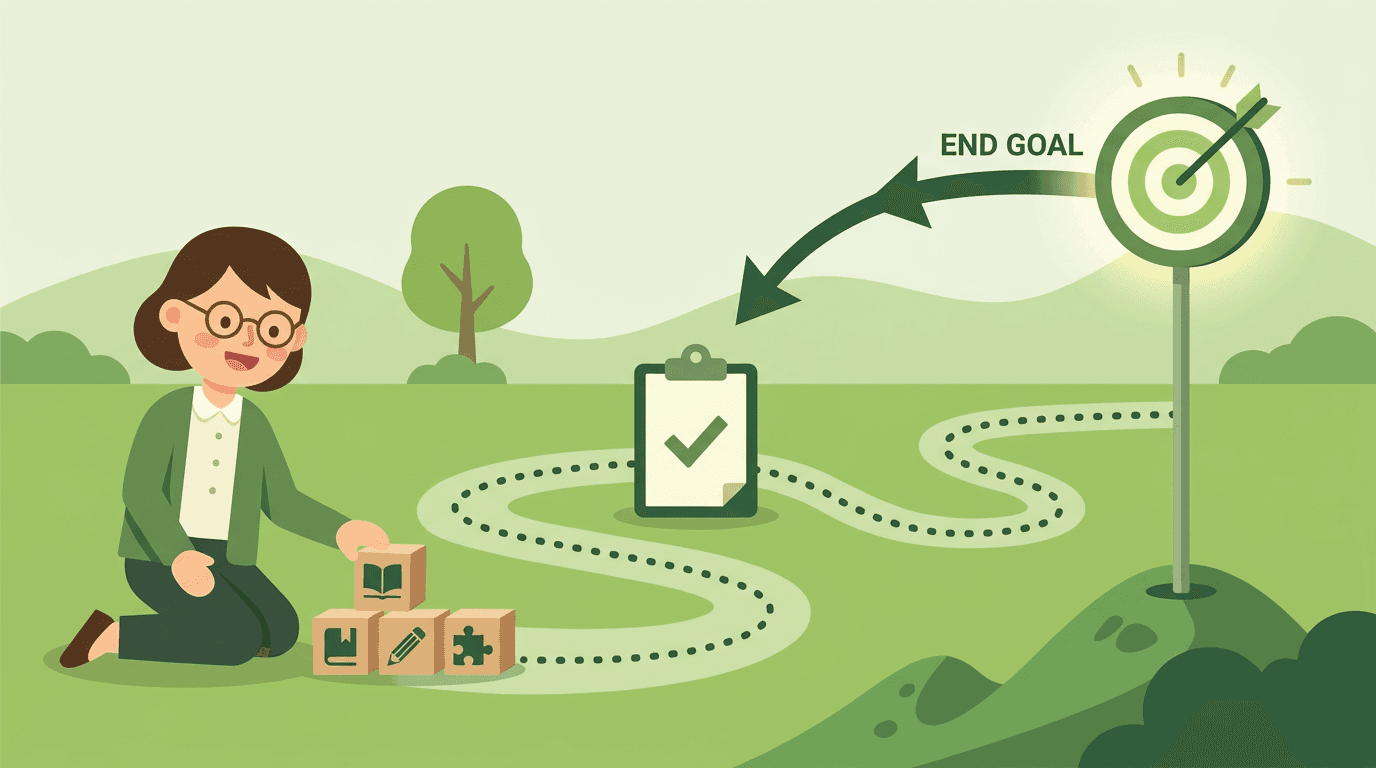
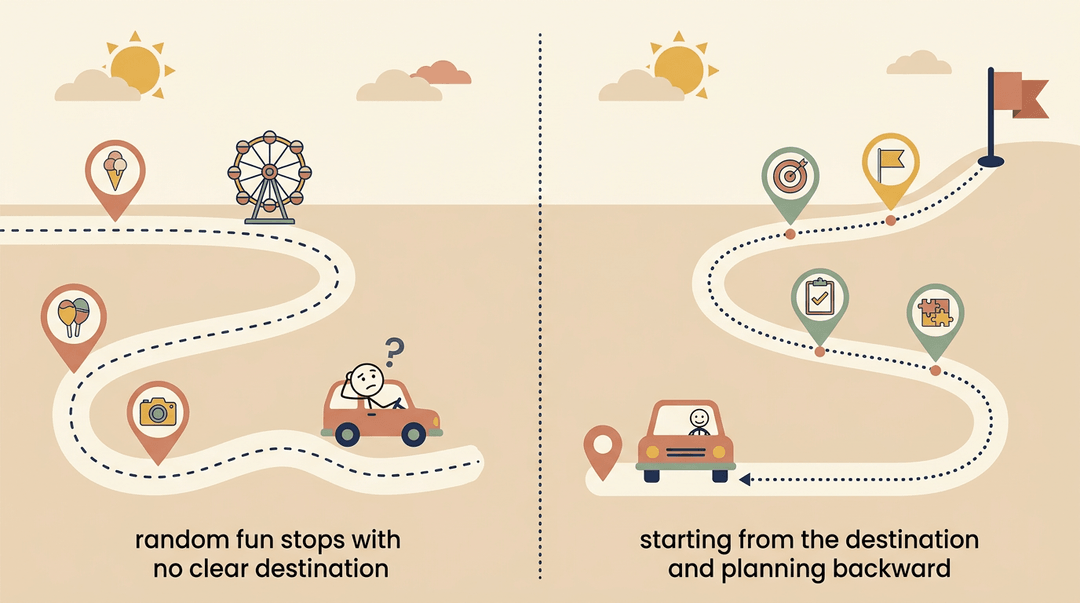
Imagine planning a road trip by picking a few fun stops and hoping you end up somewhere worth going. Most of us would rather know the destination first, then map the route.
That's the core idea behind Understanding by Design, the framework from Wiggins and McTighe that teaches you to plan from the end backward.
Here's the short version: you start with what students should understand, decide how you'll know they got there, and only then plan the activities.
This post walks through the three stages of backward design, gives you a checklist you can use right away, and shows where the framework gets used in real classrooms.
Understanding by Design Wiggins and McTighe
What separates a unit students remember from one they forget by Friday? Understanding by Design (UbD) offers a strong answer, and it's easier to use than you might expect.
Is Understanding by Design a curriculum?
No, it's a framework, not a curriculum. It's educational theory for curriculum design, so it shows you how to plan rather than handing you what to teach.
Grant Wiggins, co-author of the program, created it with Jay McTighe, and it was published via ASCD in a 1998 book. UbD and Understanding by Design are registered ASCD trademarks, so you'll see them capitalized and marked.
Is it still relevant today? The program is still widely used. Wiggins's profile describes it as an award-winning and highly successful program used all over the world.
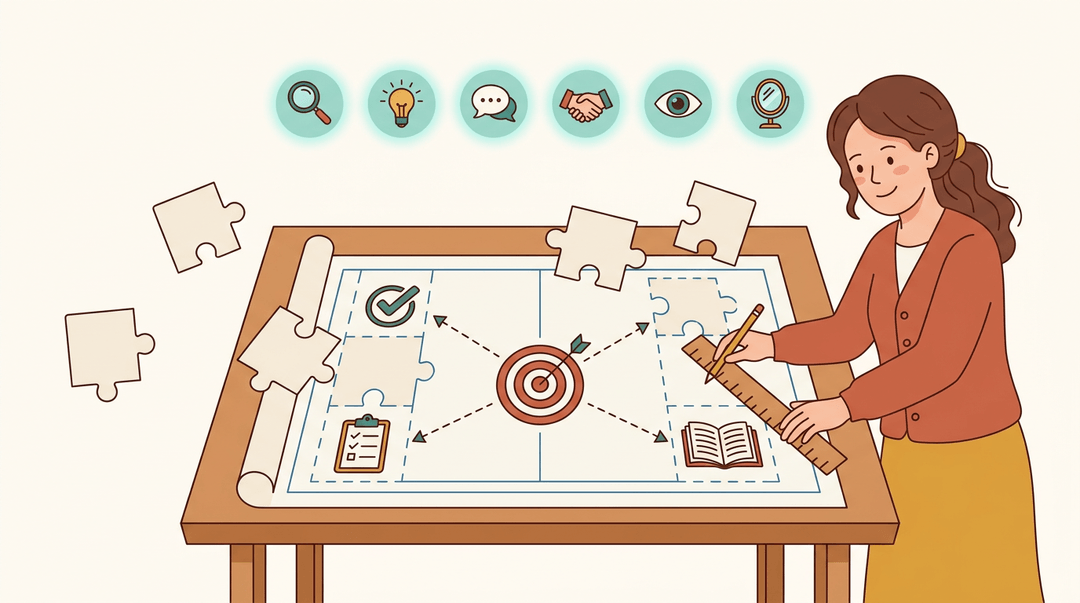
The framework also describes six facets of understanding, which help you check whether students truly get a concept.
Planning backward from the end goal
Start with the end, not the textbook. The Understanding by Design overview says lessons should be "logically inferred from the results sought, not derived from the methods, books, and activities with which we are most comfortable."
This is the reverse of traditional planning, often called backwards planning.
Consider a fifth-grade teacher who asks, "What should students be able to do by June?" before choosing a single worksheet. The process unfolds in a three-stage planning process, with each stage building on the last.
Teaching for transfer, not just recall
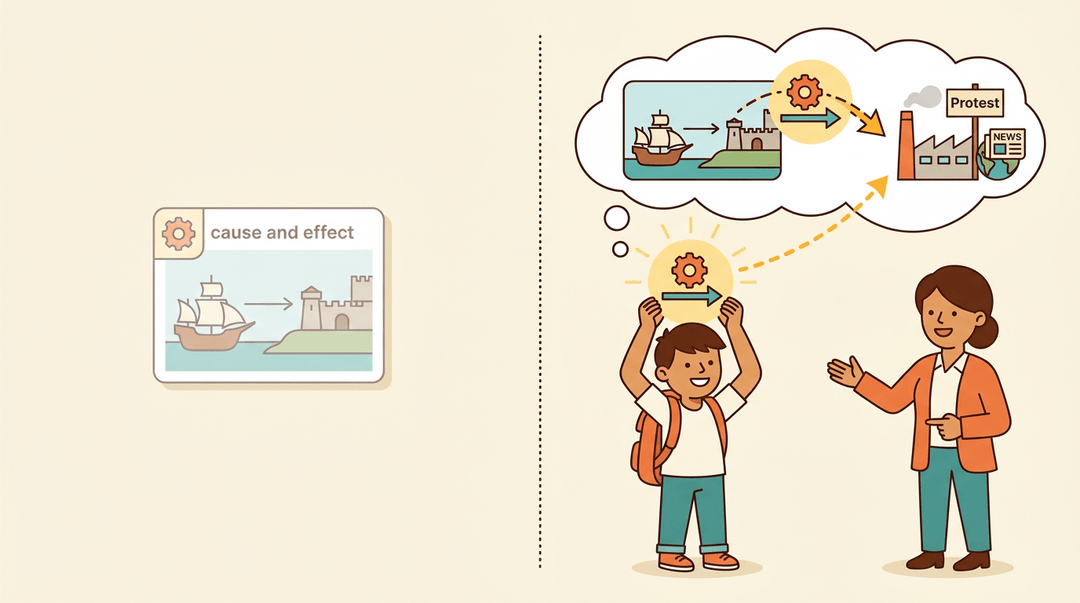
Facts matter, but students need to use them. UbD pushes you beyond simple recall toward transfer, where students apply skills to new situations and make connections between ideas.
This also responds to information overload in curricula. Picture a middle school history teacher who asks students to apply one cause-and-effect idea to a new event, not just repeat the textbook. The payoff is knowledge that travels with them.
The Three Stages of Backward Design
Wiggins and McTighe flip the usual planning order: you start with the destination and work backward through three stages.
Start by identifying your desired results
Begin with your content standards, the state or Common Core expectations your students must meet. Next, write "students will understand that..." statements naming the big ideas you want students to keep.
Finish with essential questions, open-ended prompts like "How do scientists decide what counts as evidence?" that guide learning all unit long.
Think like an assessor, not a teacher
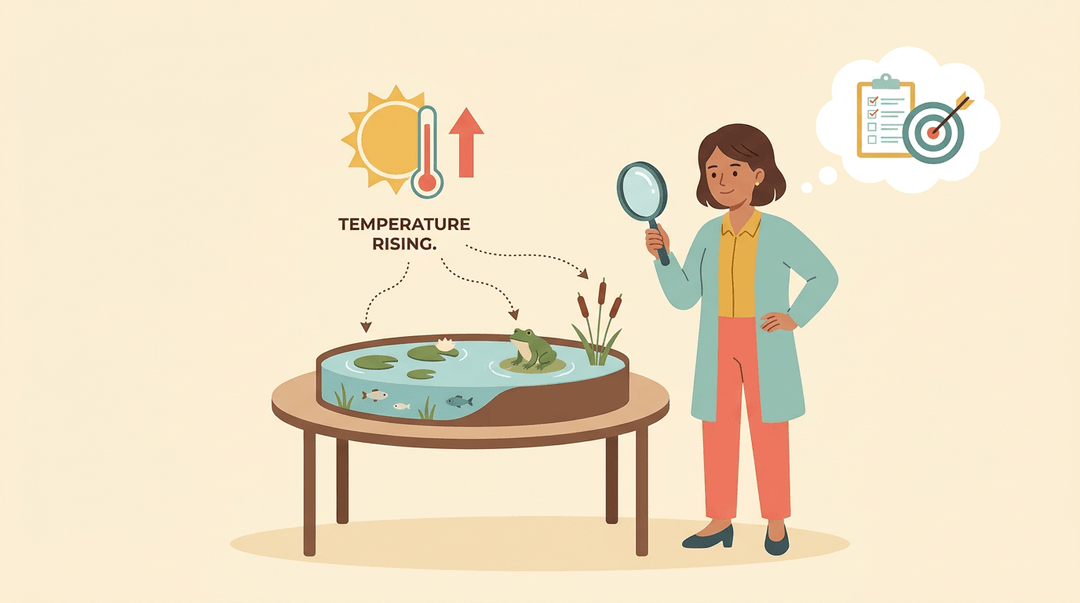
Wiggins and McTighe want you to think like an assessor, not an activity designer. Ask, "What would convincing evidence of understanding look like?" Then plan performance assessments tied to those goals.
For example, a seventh-grade science teacher whose goal is that students understand ecosystems might have them design a model pond and predict how a temperature change would ripple through it.
She knows what success looks like before teaching a single lesson.
Plan activities only after setting goals
Only now you'll list learning activities and select materials that lead to those results. The WHERETO elements (Where, Hook, Equip, Rethink, Evaluate, Tailor, Organize) guide a purposeful Stage 3 design.
The common trap is reversing the order. Activities-first planning produces busy lessons that favor coverage over understanding. Vague goals and late assessment cause trouble too. Order matters.
A Teacher's Checklist for Backward Design
Use this planning card when you're starting a unit and want to begin with the end. Work top to bottom, and finish each stage before you move on.
Stage 1: define your goals
Fill in each slot. The examples show a grade 8 argument-writing unit.
| Slot | What to write | Example |
|---|---|---|
| Learning goal | One clear, measurable outcome | Write an argument using two sources |
| Essential questions (2-3) | Open questions with no single answer | "When is a source trustworthy?" |
| Enduring understanding | One sentence that stays true for years | Strong claims rest on evidence |
Stage 2: plan your evidence
Before you plan any lesson, confirm:
- Performance task listed. Students use the goal, such as writing a letter to the principal.
- Rubric matches the goal. Each row names a piece of the goal and nothing extra.
- Formative checks added. Quick looks along the way, like an exit ticket after Day 3.
⚠️ Watch out: A rubric that grades neatness when your goal is argument measures the wrong thing. Cut any row you can't trace back to Stage 1.
Stage 3: sequence the learning
Now, and only now, plan the days.
- Map the daily lesson flow.
- Jot it in a line: Day 1 hook, Day 2 sources, Day 3 claims, Day 4 draft.
- Align each activity to the evidence.
- Ask: "Which part of the task does this prepare students for?"
- No answer? Cut the activity or save it for later.
- Build in scaffolding steps.
- Start with a modeled example, then sentence frames, then independent work.
Example: A grade 8 teacher's goal is a source-based argument. Her task is a letter to the principal about phone policy. Her rubric has two rows: claim and evidence. On Day 3, an exit ticket asks students to pair one claim with one source. Half the class pairs them weakly, so Day 4 opens with a modeled example before drafting.
At a glance:
| Stage | Key move | What you get |
|---|---|---|
| 1. Goals | Name the goal, questions, understanding | A clear target |
| 2. Evidence | Task, rubric, formative checks | Proof of learning |
| 3. Lessons | Flow, aligned activities, scaffolds | A plan with purpose |
Build and reuse backward-design units in one place with EMStudio's lesson planner.
Where Understanding by Design Gets Used
Understanding by Design (UbD) works in any subject, and it shows up in more classrooms than you'd expect.
Applying UbD in science classrooms
Should science students memorize facts or understand how the world works? Mike Smith and Siegel (2004) argue that knowledge and understanding are the primary goals of science education, and UbD fits that aim.
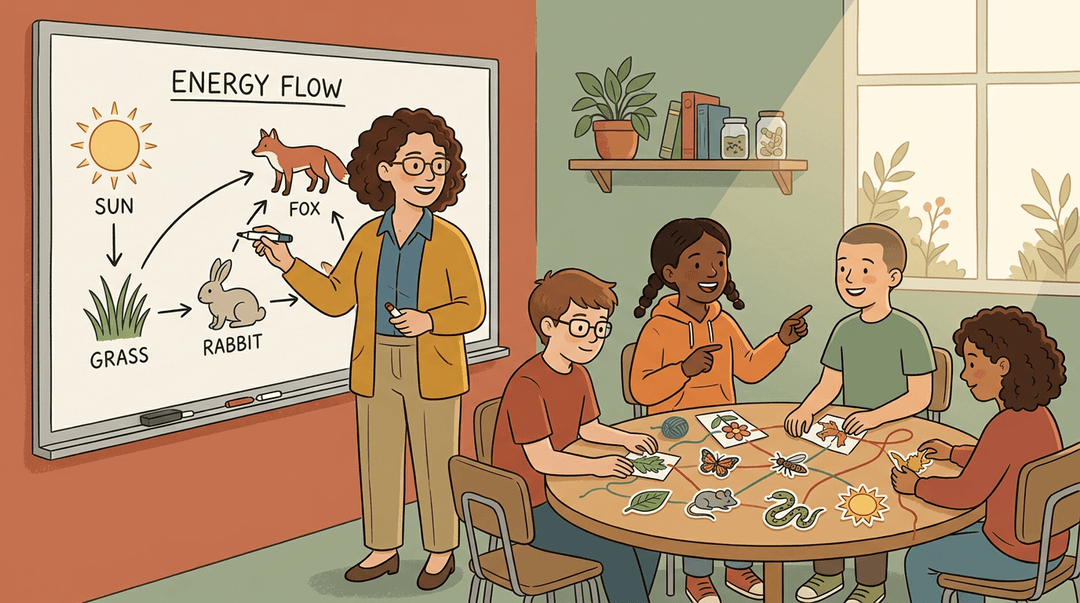
Consider a middle school teacher planning an ecosystems unit. She starts with what students should understand about energy flow, then designs assessments that reveal it. Students explain food webs in their own words.
Applying UbD to literacy and ESL teaching
UbD has been adapted for literacy education.
A study in the Asian-Pacific Journal of Second and Foreign Language Education used a UbD-based intervention with remote upper-grade elementary students, and the framework appears in English as a Second Language (ESL) and TESOL (Teaching English to Speakers of Other Languages) programs.
Pearson and Pellerine (2010) also reference it.
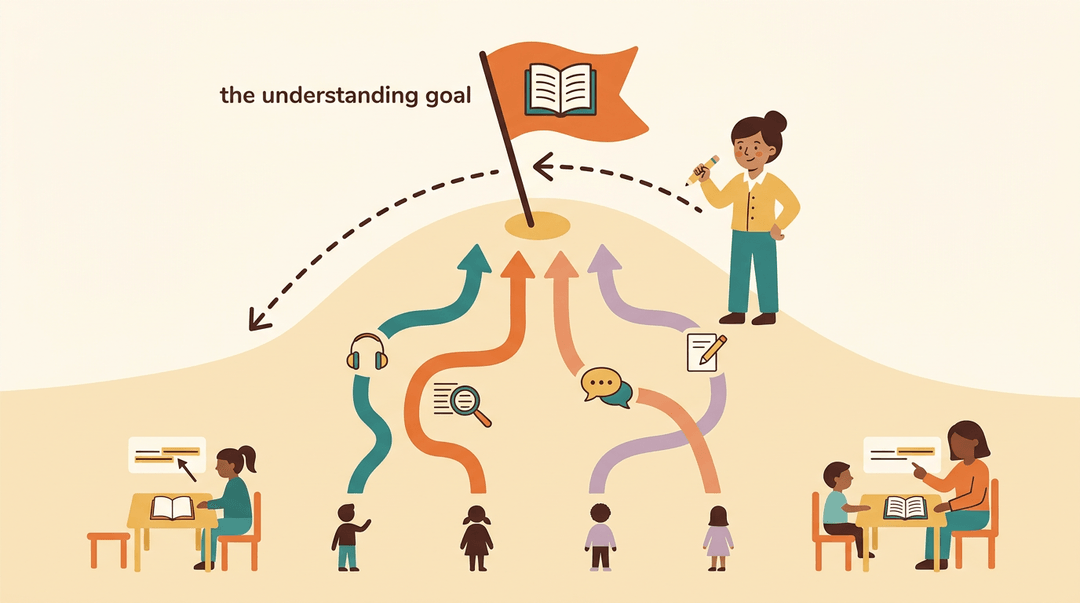
Universal Design for Learning (UDL) is often confused with UbD. UbD asks what students should understand and works backward from there.
UDL asks how every learner can access that learning, with flexible options for engagement, representation, and expression. Used together, UbD sets the destination and UDL builds several routes to it.
Homeschool parents and tutors can use the same backward steps with one learner.
A tutor prepping a student for a reading test might name the understanding first, such as spotting an author's claim, then pick passages that build it. You can adjust pace on the fly.
Backward design asks a simple question before every unit: what should students understand, and how will you know? Answer that first, and the activities you choose tend to fall into place with purpose instead of guesswork.
Ready to put the checklist to work? Check out our Lesson Planning feature to write, organize, and reuse your plans across multiple classes from one place.
References
- Enhancing English comprehension: a UbD mind walker intervention for remote upper-grade elementary students | Asian-Pacific Journal of Second and Foreign Language Education — link.springer.com (2024)
- Understanding by Design — edpsych.pressbooks.sunycreate.cloud
- Understanding by Design - Grant Wiggins, Jay McTighe — books.google.com.kh
- Knowledge, Belief, and Science Education — doi.org (2016)
- Grant Wiggins, Founder of Authentic Education — authenticeducation.org
Frequently asked questions
What is the backward design model according to Wiggins and McTighe?
According to Grant Wiggins and Jay McTighe, backward design is a planning process that begins with the desired learning results. Teachers then determine what evidence will show that students achieved those results and finally plan lessons, activities, and materials to support them.
What is Understanding by Design in simple terms?
Understanding by Design, or UbD, is a way to plan teaching by starting with the end goal. Teachers decide what students should understand, how they will demonstrate it, and then choose activities that prepare them for that evidence.
What are the three stages of Understanding by Design?
The three stages are: identify desired results, determine acceptable evidence, and plan learning experiences and instruction. In simple terms, set the goals, decide how learning will be demonstrated, and then plan the lessons.
What are the three stages of UbD?
The three stages of UbD are identifying desired results, determining acceptable evidence, and planning learning experiences and instruction. This sequence is also called backward planning or backward design.
What are the 7 different learning styles in a PDF?
The seven commonly cited learning styles are visual, auditory, reading and writing, kinesthetic, logical, social, and solitary. These categories are often used in popular education discussions, although research does not strongly support matching instruction to fixed learning-style preferences.
Is Understanding by Design still relevant today?
Yes. Understanding by Design remains widely used because it helps teachers align goals, assessments, and instruction while emphasizing understanding and transfer rather than simple recall. It can also be used alongside approaches such as Universal Design for Learning.
What do Wiggins and McTighe mean when they state that it is important to think like an assessor not a teacher?
Thinking like an assessor means deciding in advance what convincing evidence would demonstrate understanding, rather than beginning with activities a teacher wants to use. The teacher defines success and creates assessments connected to the learning goals before planning instruction.
Is Understanding by Design a curriculum?
No. Understanding by Design is a framework for designing curriculum and instruction, not a complete curriculum. It guides teachers in deciding what students should learn, how they will demonstrate it, and which lessons and materials will support those goals.