Self-Directed Learning Definition: A Plain-English Guide

Jump to section
Think about the last time you taught yourself something, like baking sourdough or fixing a leaky faucet. You set the goal, found the resources, and kept going until it clicked.
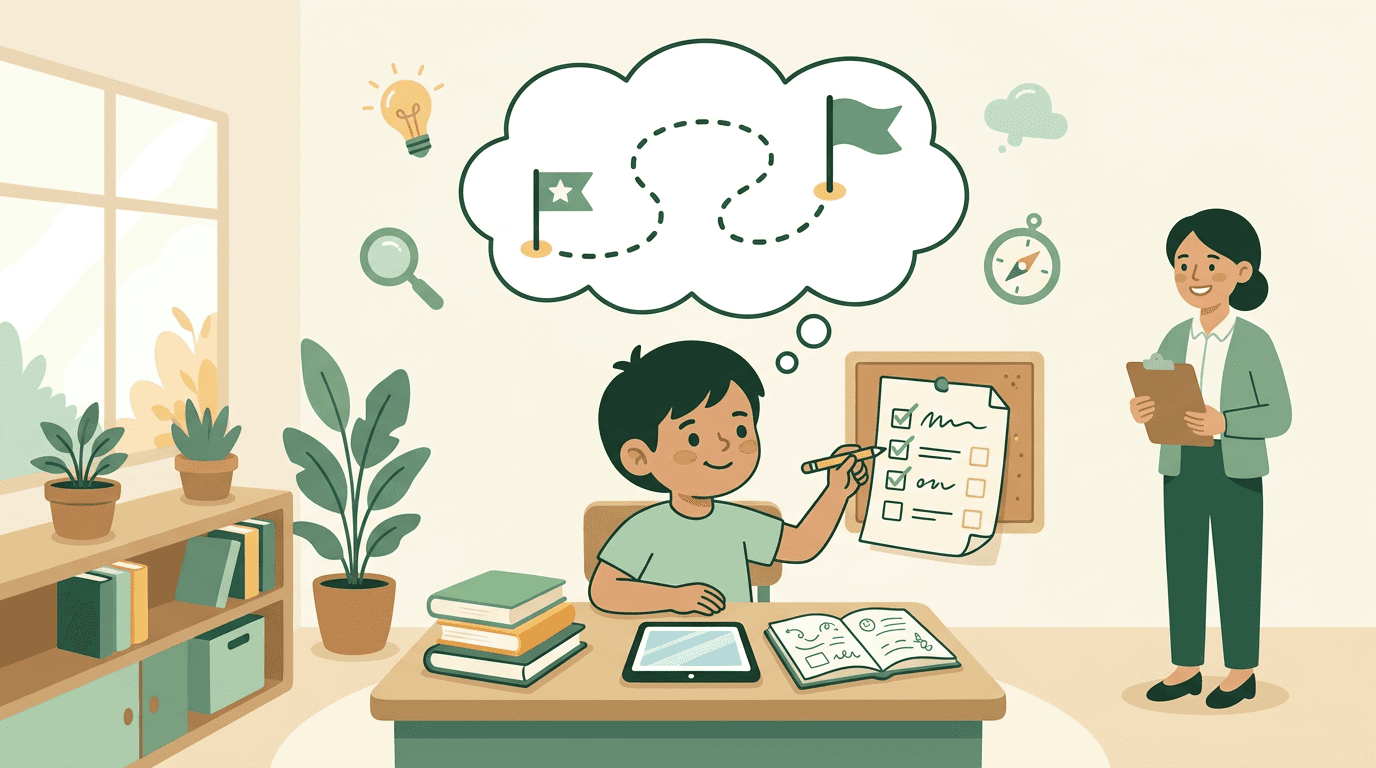
That's self-directed learning: the learner takes charge of what to learn, how to learn it, and how to tell they've mastered it.
Good news: you don't have to hand students the keys all at once. You build the skills first, then gradually release control.
Here's what's ahead: a plain definition, how it differs from teacher-led learning, how to measure it, and a classroom-ready way to build it into your lessons.

The Self-directed Learning Definition in Plain Terms
Self-directed learning sounds like jargon, but the idea is simple. Here's what we mean, and how it differs from similar terms you'll run into. Definitions of learning vary between experts, which is why these terms blur together.
Learners steer their own learning
At its heart, self-directed learning means the learner, not the syllabus, is in charge. In practice, that looks like this:
- Diagnose needs and set goals. They ask what they already know and what they still need.
- Choose resources and strategies. They pick the books, videos, or practice that suit them.
- Evaluate their own outcomes. They check progress and ask, "Did this work?"
- Decide when learning is finished. Once the goal is met, they make that call.
So what are the objectives of learning? They're clear targets describing what a learner should know or do by the end. Setting learning objectives gives the learner a destination to aim for.
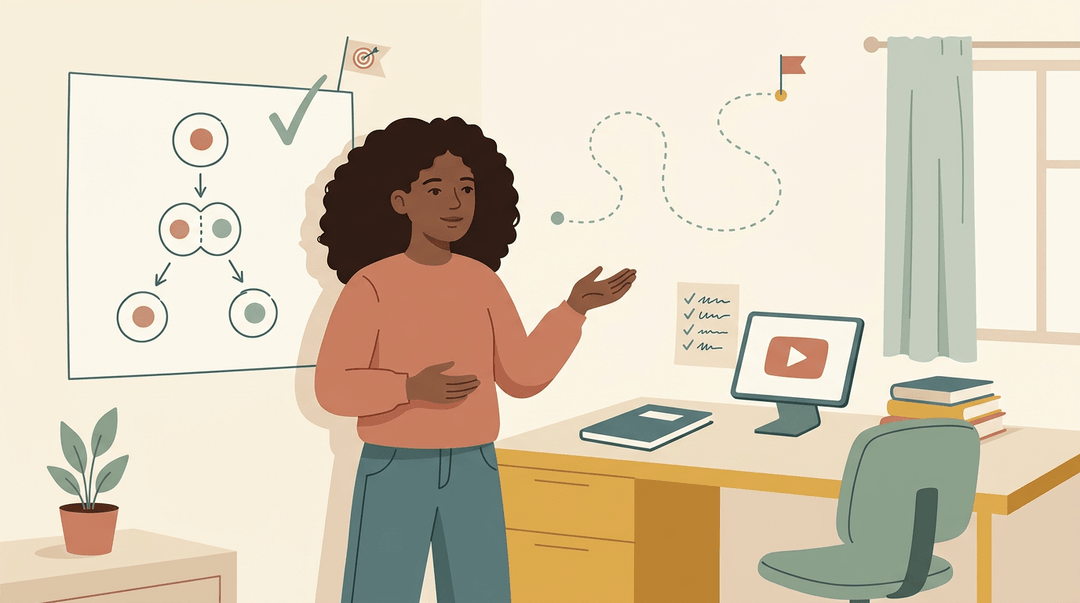
Consider a ninth grader who sets her own goal to explain cell division out loud. Once she can do it without notes, she walks into the test with confidence.
A process and a personal trait
Self-directed learning is both a process and a personal trait. As a process, it's the planning and checking a learner does. As a trait, it shows up as initiative and curiosity.
Everyone sits somewhere on a continuum of self-direction. Self-direction is the basis of all learning: nobody can do the thinking for the learner.
Similar terms and how they differ
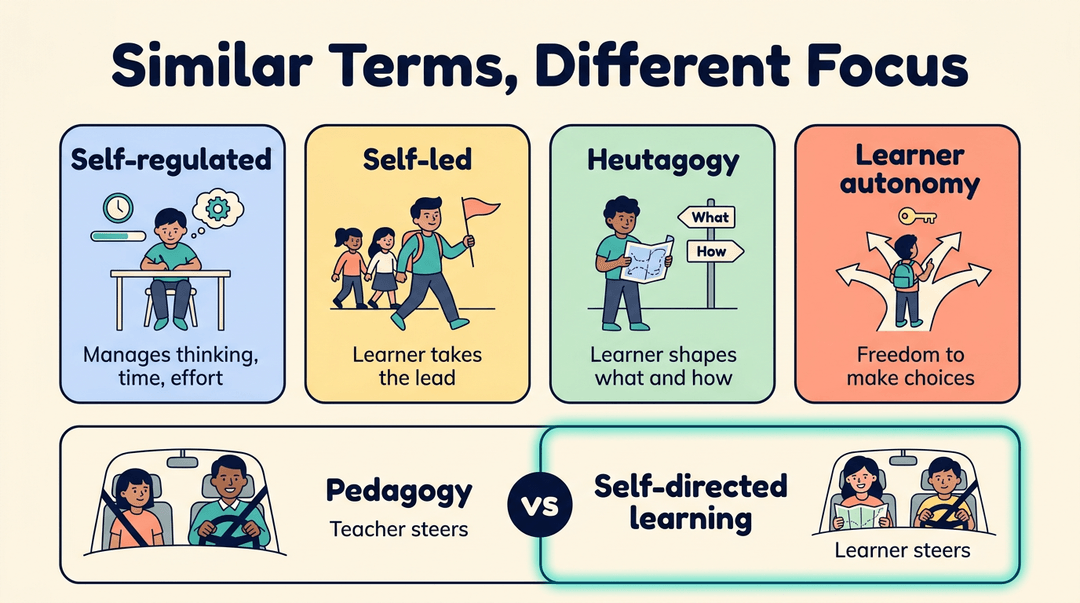
- Self-led and self-regulated learning. Self-regulated learning focuses on managing thinking, time, and effort; self-led means the learner takes the lead.
- Heutagogy. An approach centered on self-determined learning, where learners shape what and how they study.
- Learner autonomy. The freedom and ability to make your own choices about learning.
- Contrast with pedagogy. Teacher-led pedagogy keeps the steering wheel with the instructor. Self-directed learning hands it to the learner.
How instructors and L&D teams support learners
Instructors and learning and development (L&D) teams shift into a supporting role. Less telling, more coaching.
- Guide on the side. The teacher coaches with questions, not answers from the front.
- Negotiation with the teacher. Learner and teacher agree on goals, deadlines, and proof of learning.
- Support, not control. The teacher offers feedback and checkpoints without taking over every decision.
- Securing resources and evaluating outcomes. Teachers help find materials and review results together.
How Self-directed Differs from Teacher-led Learning
The clearest way to tell these approaches apart is to ask who makes the big decisions. In self-directed learning (SDL), the learner, not the institution, takes that call.
Who decides what and when to learn
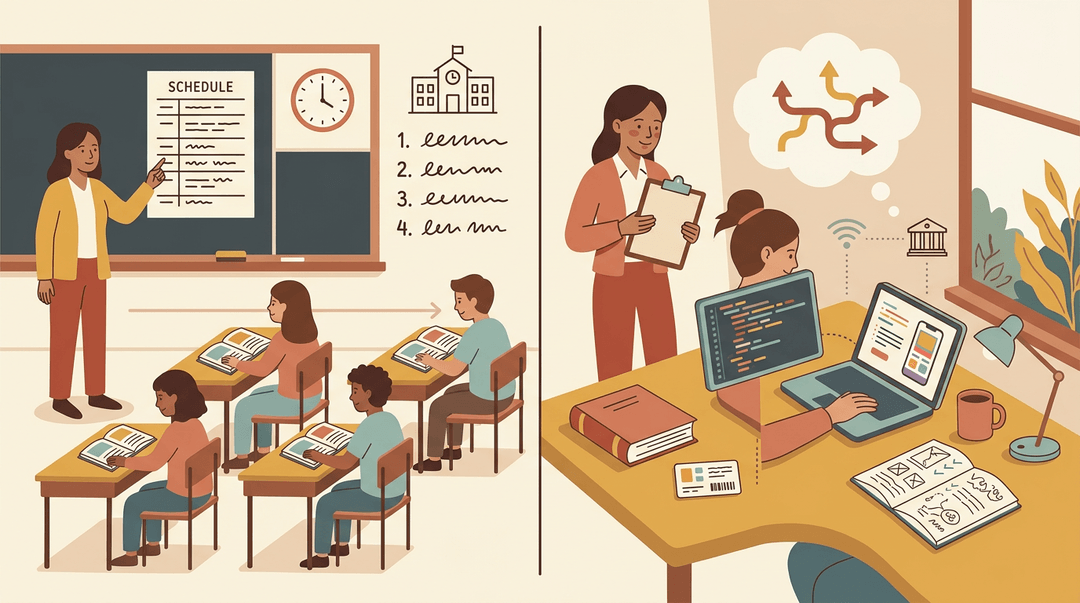
In teacher-led pedagogy, the institution decides. The school or district sets the curriculum, the schedule, and the pace, and students move through it together.
SDL flips that. The learner decides what to study, how, and when. Teachers don't disappear, but they shift from gatekeepers to guides.
Only access to content really limits a self-directed learner. Take a high school junior learning basic coding. With a library card and internet access, she can work through tutorials on her own schedule, then show her teacher a working project.
Self-direction isn't a free pass. Learners without reliable access, a clear plan, or someone checking progress can stall out. Some schools use a learning management system to keep the plan and progress visible to both learner and teacher.
Don't confuse this with learning styles. Those describe how someone prefers to take in information. Self-direction is about who chooses the path. Lists of learning styles vary from source to source, so this article won't name a single set of seven.
Learning in formal, nonformal and informal settings
Learning also happens in different settings. Formal learning takes place inside schools, with set courses and grades. The other two sit outside that system:
- Nonformal structured learning happens in organized programs, like a coding club or community art class.
- Informal social learning is unplanned, like picking up a skill from a friend.
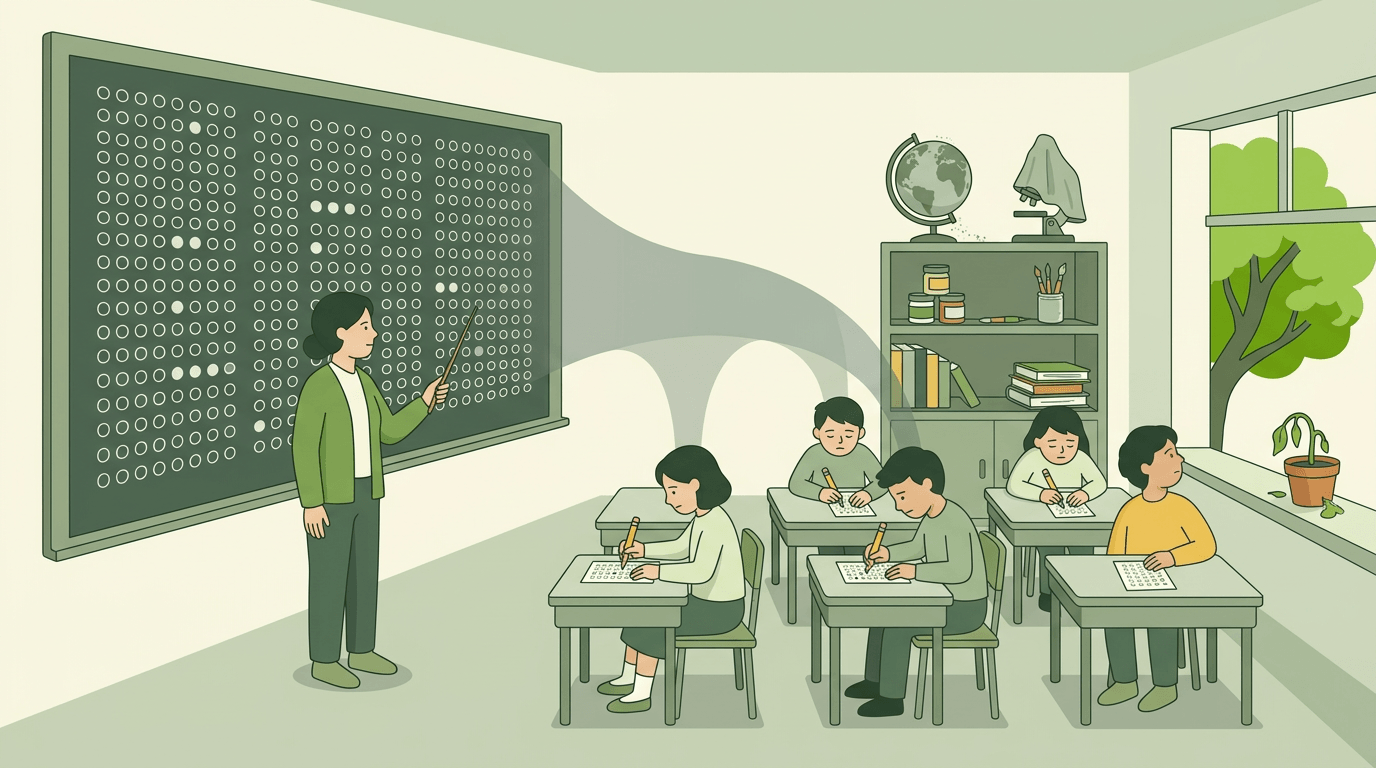
When every lesson runs on the same schedule, mid-lesson questions often wait, if they get asked at all. That's how standardized systems limit curiosity. Nonformal and informal settings leave more room for curiosity to lead.
Measuring Self-directed Learning and Its Parts
Self-directed learning (SDL) is easier to describe than to spot in action. Here's how it works, how it's measured, and what helps it grow.
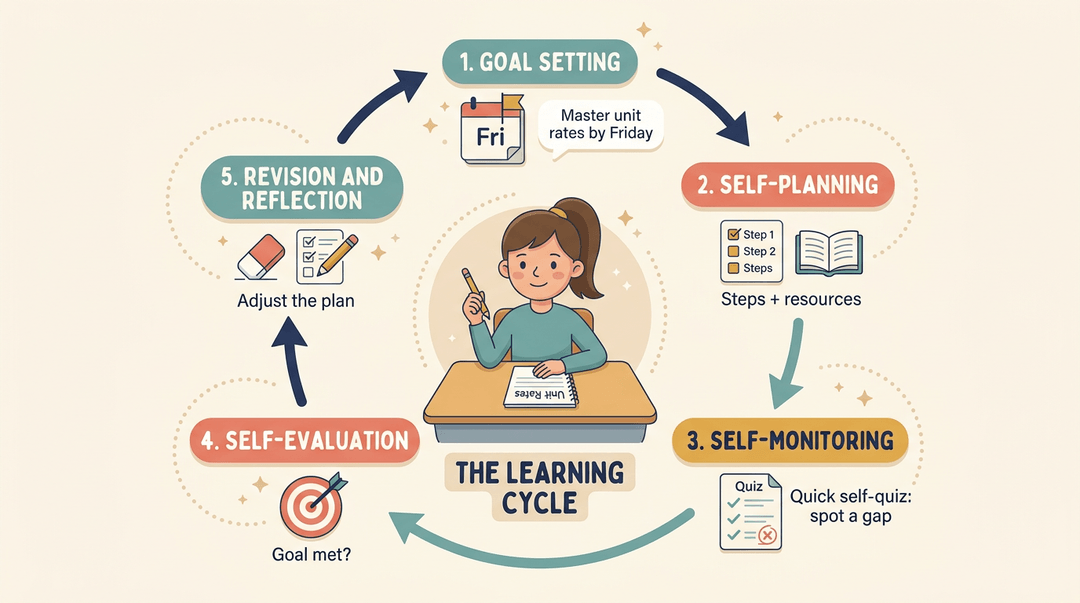
The core steps learners move through
Learners move through these steps:
- Goal setting: deciding what to learn or do.
- Self-planning: mapping the steps and resources.
- Self-monitoring: checking progress along the way.
- Self-evaluation: judging whether the goal was met.
- Revision and reflection: adjusting the plan for next time.
Picture a seventh grader who sets a goal to master unit rates by Friday, then spots a gap on a quick self-quiz and revises her plan before the test. That's the cycle at work. Learning pathways are one way to order those steps ahead of time.
Tools that measure self-direction
Several instruments measure it:
- SDL Readiness Scale: a self-rating tool for how ready learners feel to direct themselves.
- SRSSDL: the Self-Rating Scale of Self-Directed Learning, which asks learners to rate their own habits.
- Self-Directed Learning Instrument: a third option for gauging how self-directed a learner is.
These are research tools, so you don't need them to use the ideas. Think of them as a snapshot, not a grade.
What helps self-direction grow
Four ideas support that growth:
- Self-regulation: managing your attention, effort, and behavior to stay on track.
- Metacognition: thinking about your own thinking, knowing how you learn, not just what you study.
- Motivation: the drive to keep going on work that matters to you.
- Reflection: looking back on what worked so the next try is smarter.
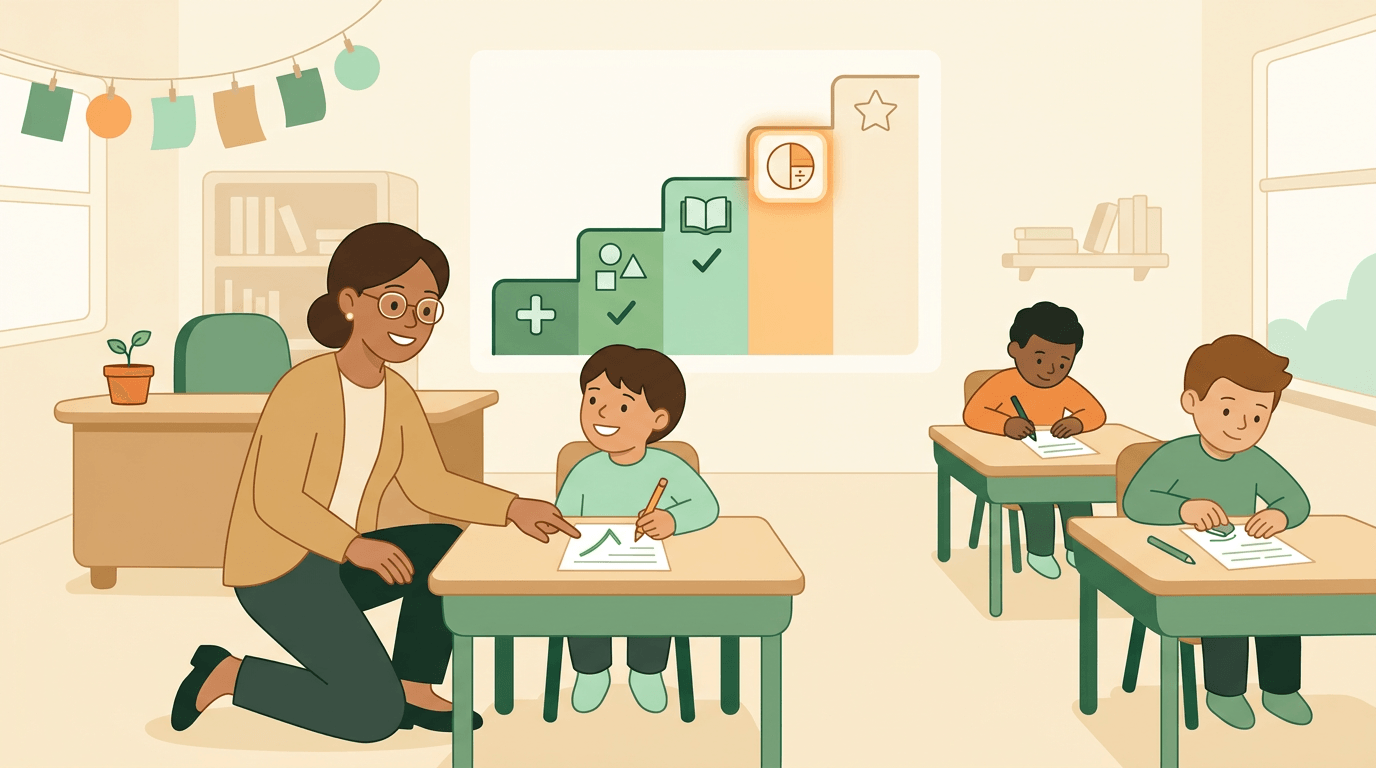
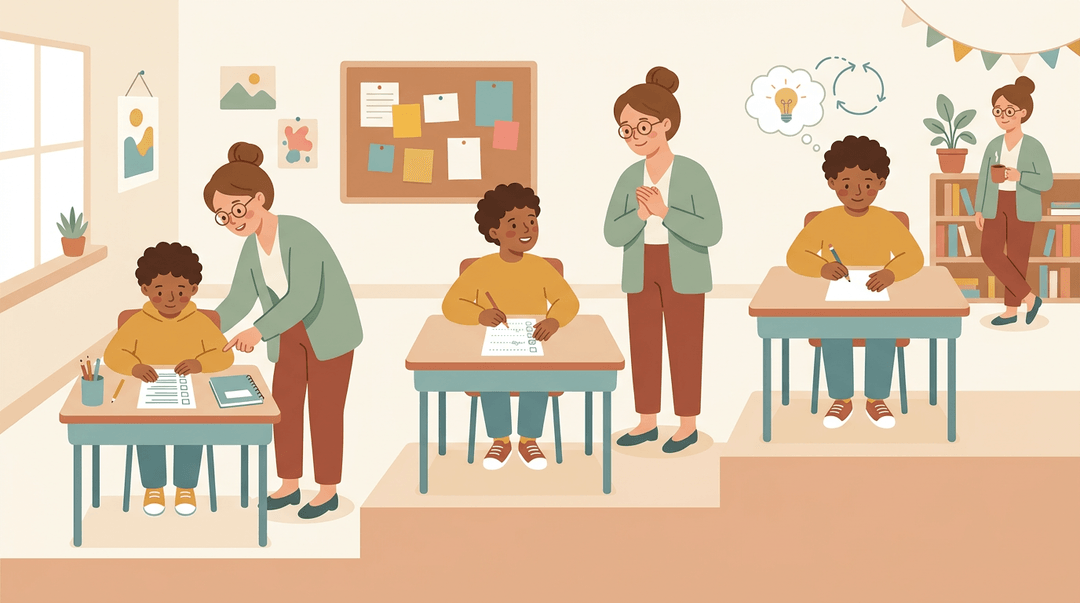
Grit's Staged SDL model (Grow) treats growth as a gradual release, not an on-off switch. Learners get more guidance early and more control as their skills build.
A fifth-grade teacher might start with checklists, then remove them until students write their own plans.
Build Self-directed Learning into Lesson Plans
Use this guide to plan lessons where students gradually own more of the work. Start with the release sequence, pick your grade-band tool, then add reflection routines and run the planning checklist.
Hand over control in three stages
Move through these in order. Skipping ahead is the fastest way to lose a class.
- Model goal setting first.
- Think aloud: "By Friday I want to explain fractions with a drawing."
- Show how you'd break the goal into small tasks.
- Offer guided choice next.
- Give three options that all hit the same objective.
- Students pick one and say why it suits them.
- Release independent projects last.
- Students set the goal, plan the steps, and choose a timeline.
- You move from leading to conferring.
⚠️ Watch out: Students who haven't seen goal setting modeled will stall when you hand them a blank project. If they stall, go back one stage.
Match the tool to the grade band
| Grade band | Tool | What it looks like |
|---|---|---|
| K-2 | Choice boards | A grid of tasks; students complete three |
| 3-8 | Learning contracts | A signed plan: goal, tasks, due date |
| 9-12 | Independent inquiry projects | Students write a question and plan the research |
Example: A fifth-grade teacher gives each student a one-week reading contract. Students write a goal, pick two tasks from a menu, and sign. On Thursday they check their own progress before the teacher conferences with them.
Build in reflection routines
Reflection is what turns choice into learning. Pick one routine and run it consistently.
- Exit ticket self-assessment. Students rate themselves at the end of class.
- Try: "I can explain today's idea: Yes / Almost / Not yet. My next step is..."
- Weekly learning journal. Five minutes on Friday, same prompts each week.
- Try: "This week I learned... I got stuck when... Next I'll..."
- Goal check-ins. A quick pause midweek to compare progress against the goal.
- Say: "Where are you on your goal, and what will you do next?"
Check your plan before you teach
Confirm each of these is in the lesson plan:
- Clear objectives students can own: written in "I can" language students could restate.
- A menu of resources: texts, videos, or tools students can choose between.
- Built-in reflection time: a scheduled slot, not whatever's left at the bell.
- Teacher conference slots: short, planned check-ins so you can coach each student.
Draft, organize, and reuse self-directed lesson plans across classes in EMStudio's online lesson planner.
Where Self-directed Learning Came From
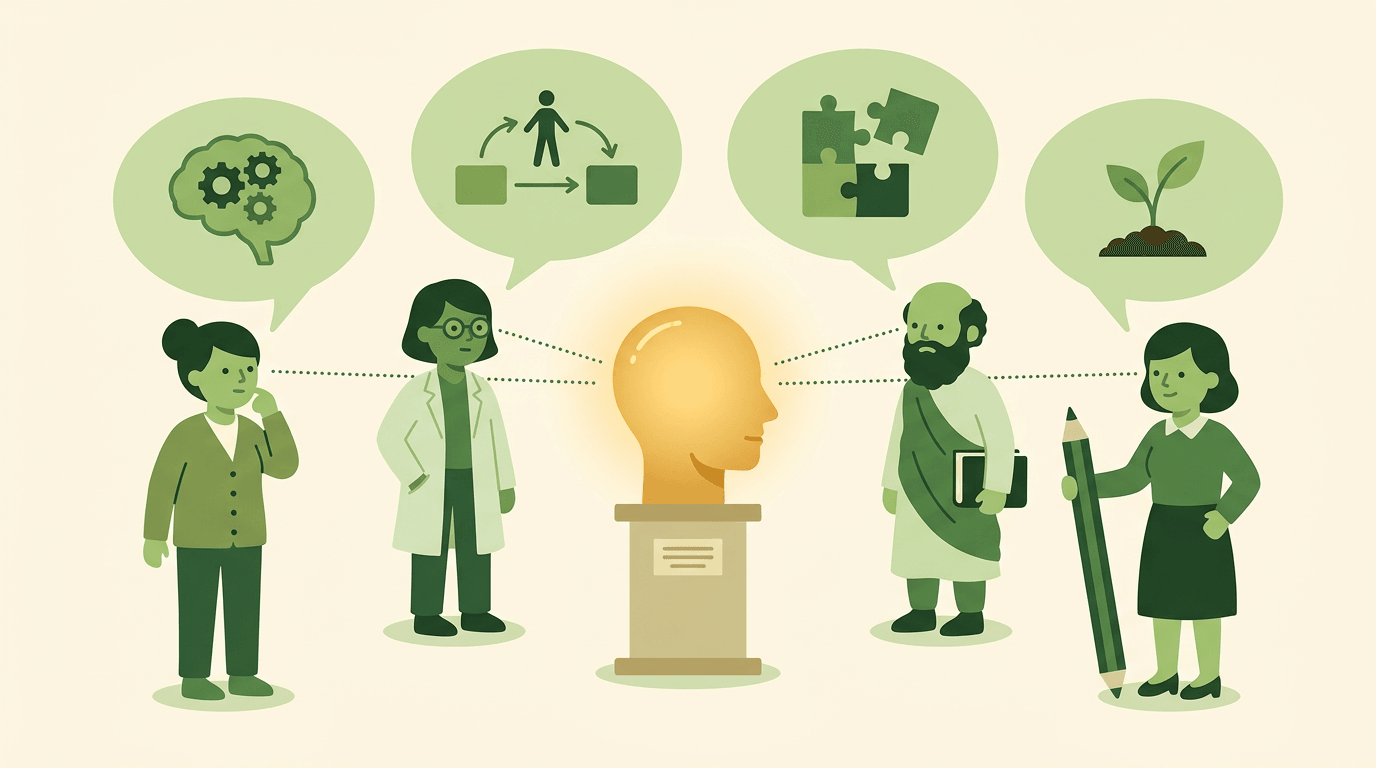
Self-directed learning (SDL) has a longer history than the buzzword suggests, running from ancient thinkers through a landmark 1975 model.
Knowles' andragogy for adult learners
Malcolm Knowles formalized self-directed learning in 1975 in Self-directed Learning: A Guide for Learners and Teachers. His work centers on andragogy, a model of teaching adults. The first principle of andragogy is where the model begins.
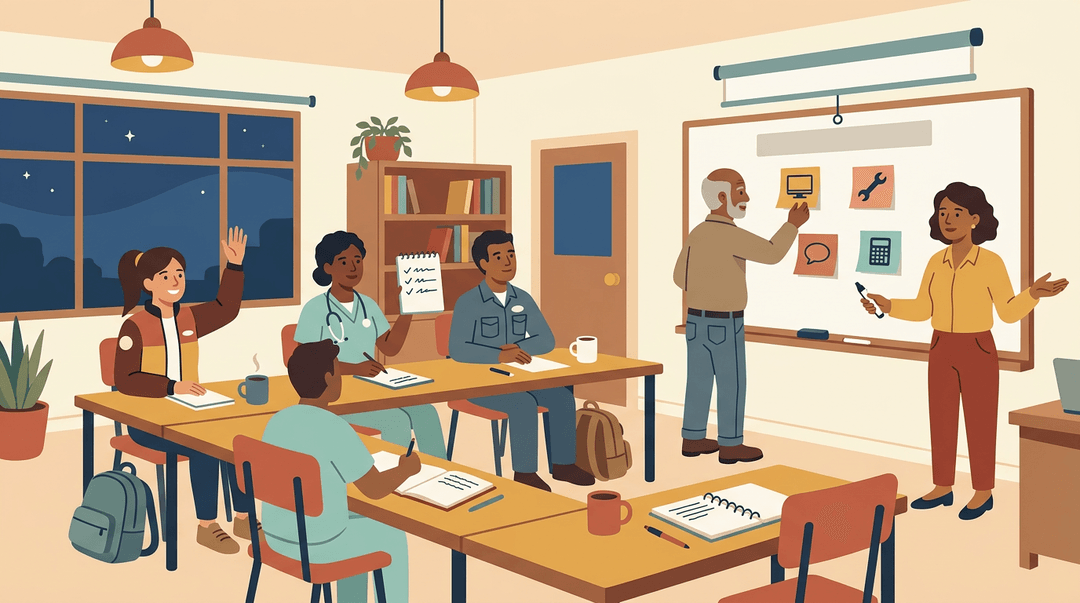
The model treats adults as partners in planning their learning, not just receiving it. Think of a night-school teacher who asks her adult students which skills matter most this term.
When they help choose the topics, the course reflects the goals they walked in with. That's ownership in action.
Researchers who shaped the field
Hiemstra, Brockett, and Garrison are names you'll keep seeing in SDL research, and Fischer and Scharff belong in that conversation too.
For a starting point, a bibliography of SDL research collects the field's work in one place, and the International Society for SDL is a good place to connect with people who study it.
Ancient roots and natural human curiosity
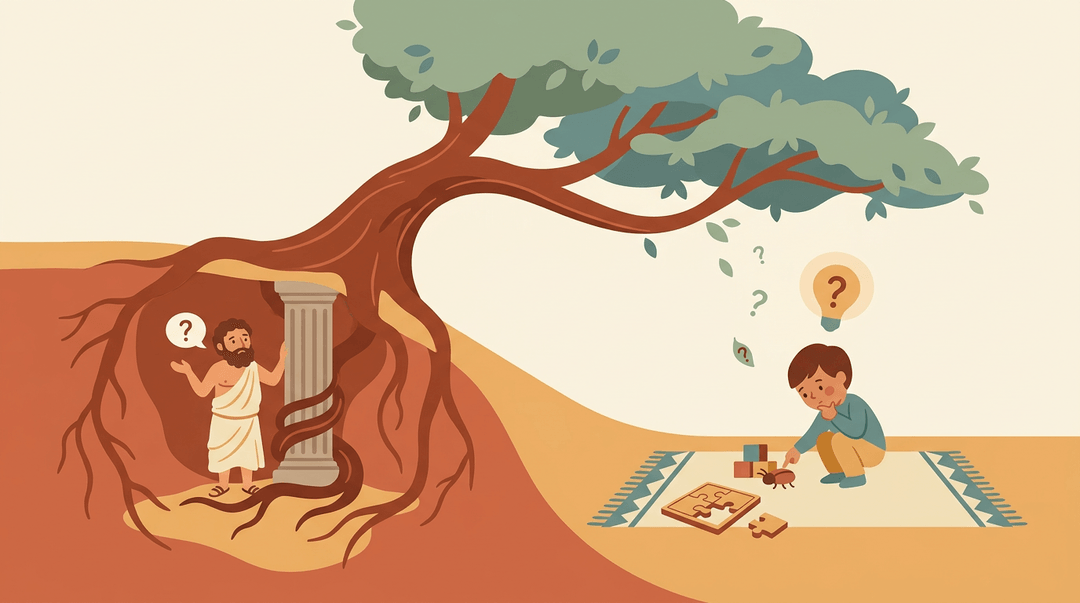
Ancient Greek philosophers were already asking how people come to know things for themselves.
Long before any formal model, children show the same instinct: they poke at objects, ask why again and again, and keep at a puzzle until it clicks. Curiosity came first.
Entrepreneurial learning research follows the same thread, looking at how people build skills by pursuing their own goals.
For you, that history is a reminder that giving students a voice in their learning isn't a passing trend. It's an idea with deep roots.
Why Self-directed Learning Pays Off
Self-directed learning pays off well beyond the classroom. Here's where that shows up.
How it helps people at work
- Flexibility and convenience. Learners set their own pace, so training fits around the workday.
- Enthusiasm and engagement. When people choose what to learn, they bring more energy to it.
- More effective, personalized learning. Each person targets their own gaps instead of re-covering what they already know.
- Diverse collective skillset. Everyone builds different strengths, so the team has more expertise to share.
- Job satisfaction. Research on learning organization climate and self-directed learning found a positive and significant correlation between self-directed learning level and intrinsic job satisfaction.
Consider a third-grade teacher learning a new math tool. They watch a short tutorial during planning time and try it with the class the next morning.
What role does curiosity play in learning?
Curiosity is the spark behind self-directed learning. It's less about having answers and more about going after them.
- Intrinsic motivation. Curiosity pulls learners forward from the inside, so no one has to push them.
- Compelling goals. A question worth answering gives learners a target they actually care about.
- Creating value for others. What a curious learner discovers can help a colleague or classroom.
- Entrepreneurial mindset. Curiosity builds the habit of spotting problems and testing ideas.
Lifelong skills for school and work
These habits last longer than any single unit or job.
- 21st century life skill. Finding and judging information on your own is essential beyond school.
- Transfer of learning. Applying what you learned in one setting to a new one, like using a reading strategy in science class.
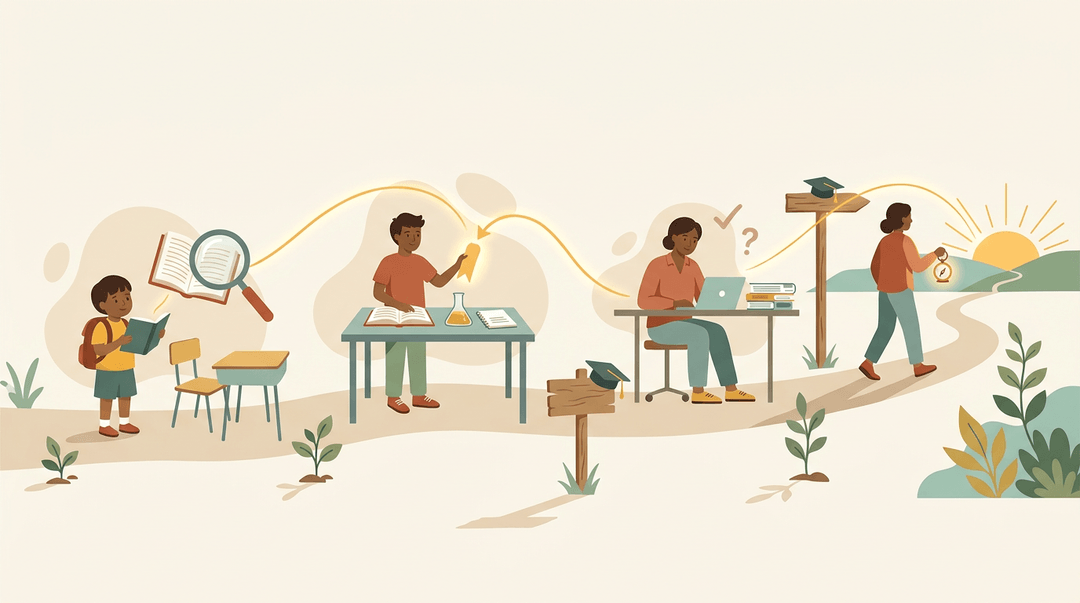
- Lifelong learning. Learners who steer their own growth keep learning long after graduation.
Skills like these don't expire.
Practical Methods, Tools and Approaches
Learners need the right habits and tools to take charge. Here's what builds them, and what technology should offer.
Tactics learners use on their own
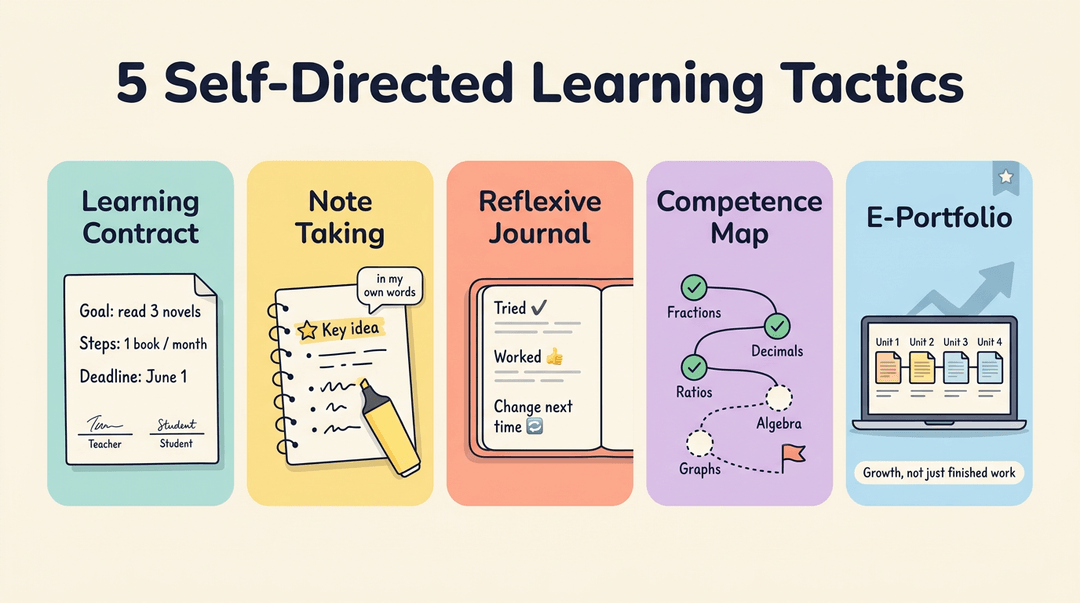
- Learning contracts set a goal, the steps to reach it, and a deadline. For students, you and the learner draft the plan together.
- Note taking becomes self-directed when learners decide what matters and jot it in their own words.
- Reflexive journals capture what learners tried, what worked, and what they'd change.
- Competence maps are visual maps of mastered skills and what's still ahead.
- E-portfolios are digital collections of work and reflections. A history teacher has students add one reflection per unit, so by year's end they hold a record of growth rather than a stack of finished work. Growth stays visible.
Teaching models that build self-direction
- Problem-based learning starts with a real problem, and students work out what they need to know.
- Inquiry-based learning starts with student questions, so learners investigate rather than wait for answers.
- Writing-to-learn uses short, low-stakes writing to show students what they understand.
- Inquiry units build self-directed learning (SDL) practice around one driving question. A middle school science teacher opens with why some bridges fail, and students design their own tests while the teacher coaches each group.
What learning technology needs to offer
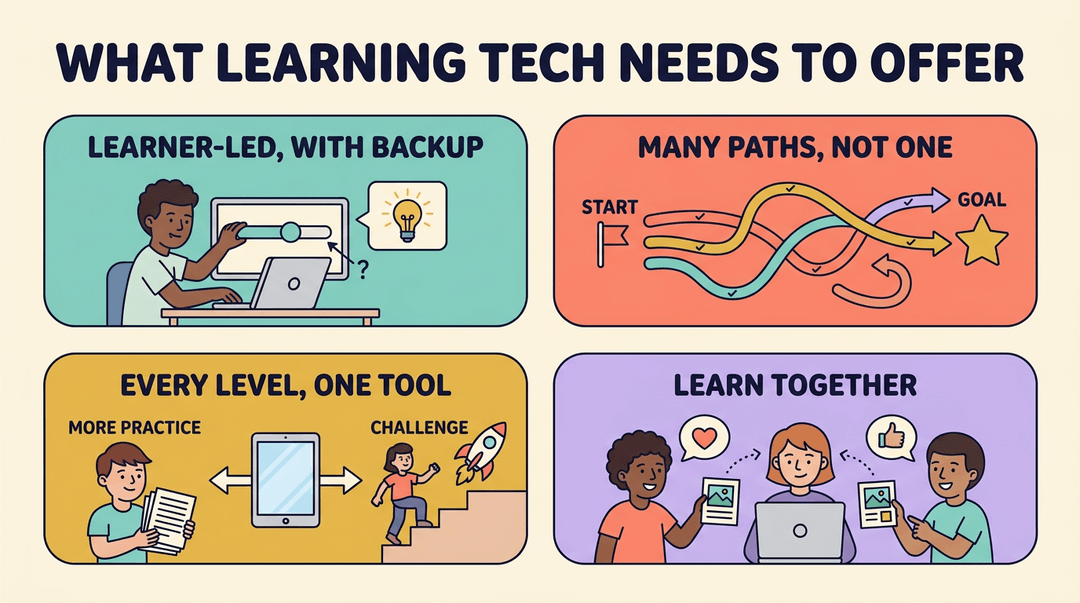
- User-directed yet supportive. Learners set the pace, with help ready when they stall. That balance is everything.
- Open-ended environments. Students explore and test several answers, not one right path.
- Support range of expertise. One tool should serve the student who needs more practice and the one who finishes early.
- Promote collaboration. Learners share work and learn from classmates.
Rolling Out Self-directed Learning at Work
Rolling out self-directed learning (SDL) is less about launching a program and more about setting people up to succeed.
Choosing libraries, platforms and content
- Learning libraries. Gather ready-made courses, videos, and articles that people can browse on their own.
- Learning management platform. Give everyone one home for resources and progress tracking.
- Gamification elements. Badges can boost motivation, but keep them secondary to the learning itself.
- Learner-created content. Invite people to share what they've figured out. A three-minute video of a classroom routine gives a colleague a head start.
- Low-cost subscriptions. Test affordable options before you spend big.
How managers guide and coach learners
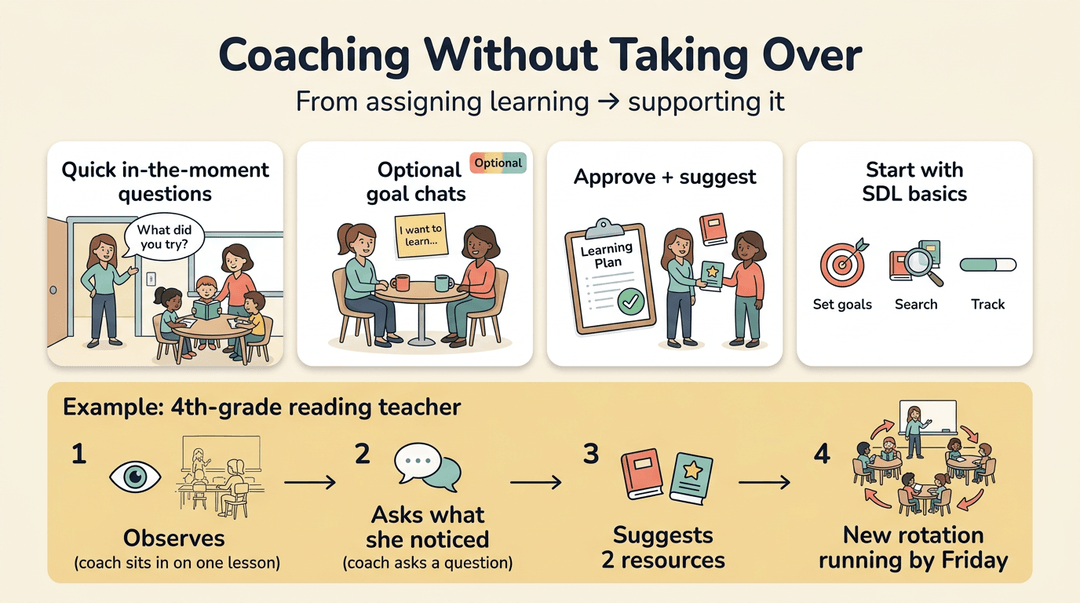
Managers, such as a principal or instructional coach, guide without taking over. Your role shifts from assigning learning to supporting it.
- Informal in-the-moment coaching. Ask a quick question after a lesson, like "What did you try?"
- Optional goal-setting meetings. Offer a short sit-down where learners name what they want to learn. Keep it optional so it feels like support.
- Manager approval and recommendations. Review each plan, approve it, and suggest resources that fit.
- Initial SDL training. Teach the basics first: setting goals, searching libraries, and tracking progress.
Consider a fourth-grade teacher who wants stronger small-group reading. Her coach sits in on one lesson, asks what she noticed, and suggests two resources. A new rotation is running in her room by the end of the week.
Creating a culture where learning thrives
- Regular feedback channels. Set a predictable place for questions, like a monthly check-in.
- Resource recommendations. Let people share what helped so good finds spread.
- Safe to make mistakes. Missed attempts are part of learning. Leaders can go first by sharing their own.
- Dedicated learning time. Time is the first thing people lose, so protect it on the calendar.
- Learning budgets. Set aside a small amount per person. Curiosity needs funding, too.
Learning together with peers
- Discussion forums and Slack. Create a space for quick questions and wins, such as a channel in Slack, a team chat app.
- Company wikis and Q&A. A wiki (a shared knowledge base) keeps answers from getting lost. A Q&A space lets people answer each other.
- Peers learning together. Pair colleagues on one shared goal, like two teachers testing the same strategy and comparing notes.
Self-directed learning comes down to one shift: students move from waiting for instructions to deciding what they need next. It grows one small step at a time, and every step makes independence feel more natural.
The payoff is a classroom where students think for themselves and you spend less time steering every move. Ready to build that into your next unit?
Check out the Lesson Planner, where you can write, organize, and reuse lesson plans across multiple classes from one place.
References
Frequently asked questions
What is Gen Z's learning style?
Gen Z does not have one universal learning style. Like other generations, individuals may prefer different ways of taking in information, while self-directed learning describes who makes decisions about the learning path, not a preferred way to learn.
What are the 7 types of learning styles?
There is no single agreed list of seven learning styles; lists vary by source. A commonly cited model names visual, auditory, verbal, physical or kinesthetic, logical, social, and solitary styles, though learning-style preferences should not be treated as fixed categories.
What are the objectives of learning?
Learning objectives are clear targets describing what learners should know or be able to do by the end of a learning experience. They give learners a destination and help them plan, track progress, and judge whether they have met their goal.
What role does curiosity play in learning?
Curiosity motivates learners to pursue answers and helps them set goals that matter to them. It can encourage independent investigation, sustain engagement, and lead learners to test ideas and discover useful solutions.