Early Childhood Education: What It Can Mean for Families

Jump to section
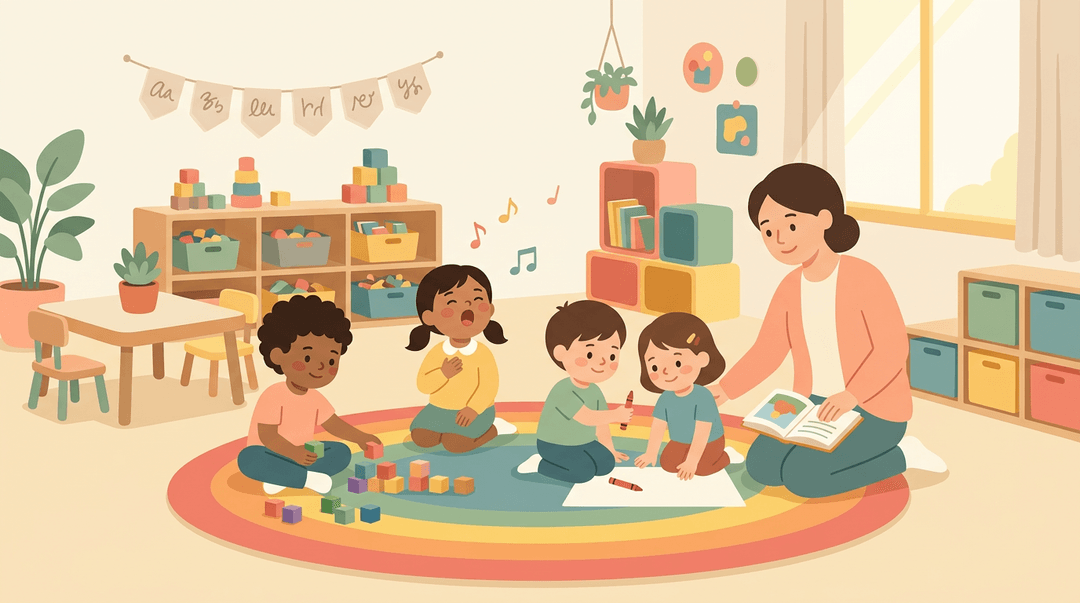
Think about the first few weeks of a new school year. Kids who've just met each other are sorting blocks, singing along, and sharing a crayon. Much of that everyday learning is early childhood education.
So what does early childhood education mean? Put simply, it's the care and learning young children receive before formal schooling, built on play, routines, and guided exploration.
Here's what this post covers, from the definition and age range to the purpose and career questions.
Along the way, you'll find practical teaching approaches and a play-based lesson plan you can use right away.
What Early Childhood Education Means and Covers
Early childhood education (ECE) is the learning that happens before children start primary school. Here's what the term covers.
What's the purpose of early childhood education?
The main purpose of early childhood education is to give young children structured learning that lays a foundation for lifelong learning. That structure can be planned, like circle time, or informal, like play that unfolds as children explore.
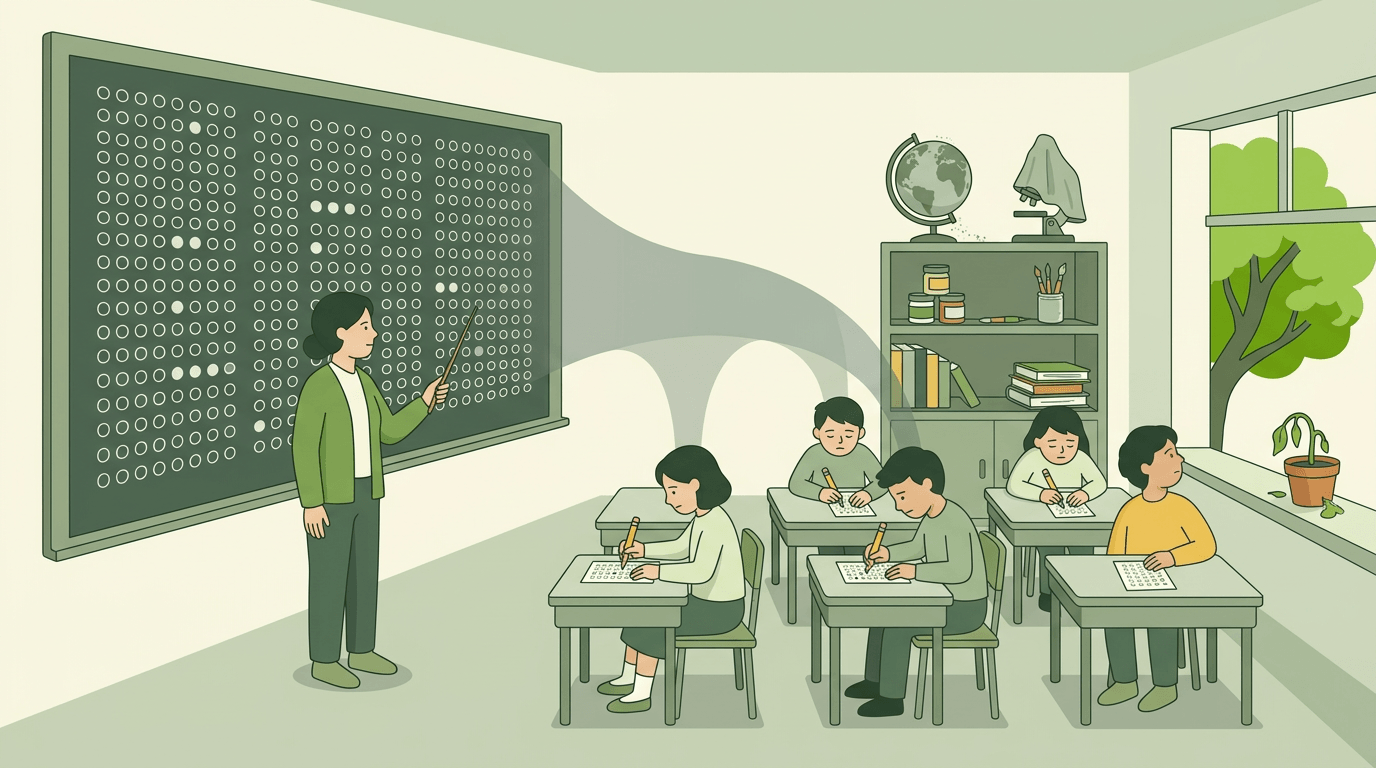
ECE is specialized for young learners, not a shorter version of K-12 (kindergarten through grade 12). It focuses less on what children memorize and more on how they learn to think.
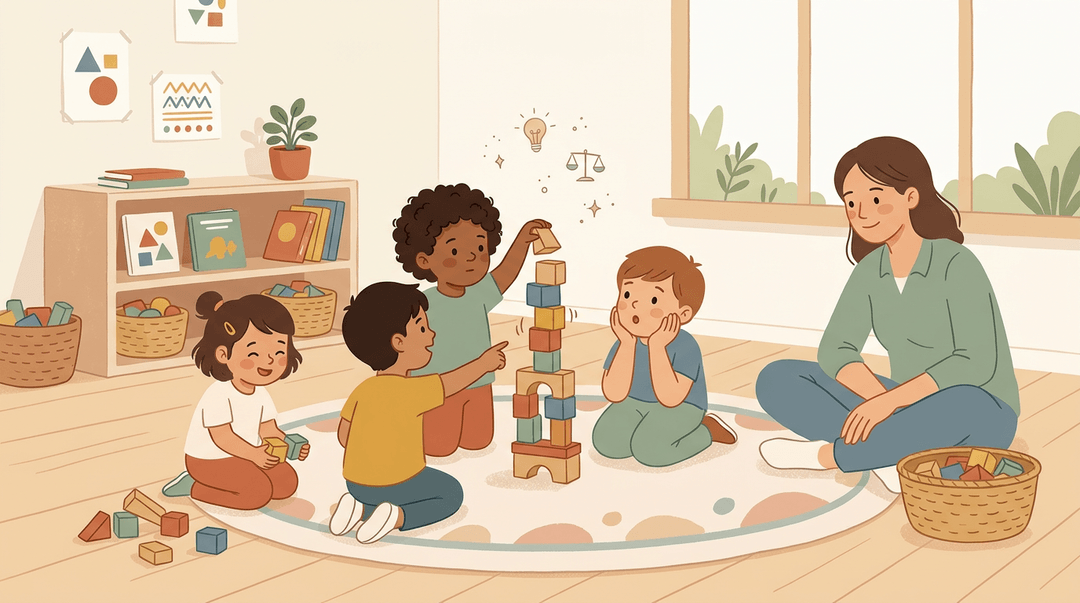
Picture a preschool teacher who sets out blocks so children can test which towers stay up. Children are practicing balance and cause and effect. No worksheet needed.
Which ages it covers
Age ranges vary by source, so you'll see a few answers:
- Birth to eight years: a broad view that reaches into the early primary grades.
- Birth to five years: a narrower view focused on the years before school.
- Before primary school starts: the simplest meaning, covering everything before first grade.
- Kindergarten: sometimes included, sometimes treated as the bridge into primary school.
The label shifts. The learning doesn't.
Programs and settings you'll find
ECE happens in many places:
- Preschools and kindergartens: group classrooms led by a teacher.
- Daycare and family child care: settings where learning happens through routines and play.
- Home-based learning: families teaching through everyday routines and planned activities.
- Early intervention programs: services for children who need extra developmental support.
- Community-based programs: learning offered through local organizations and groups.
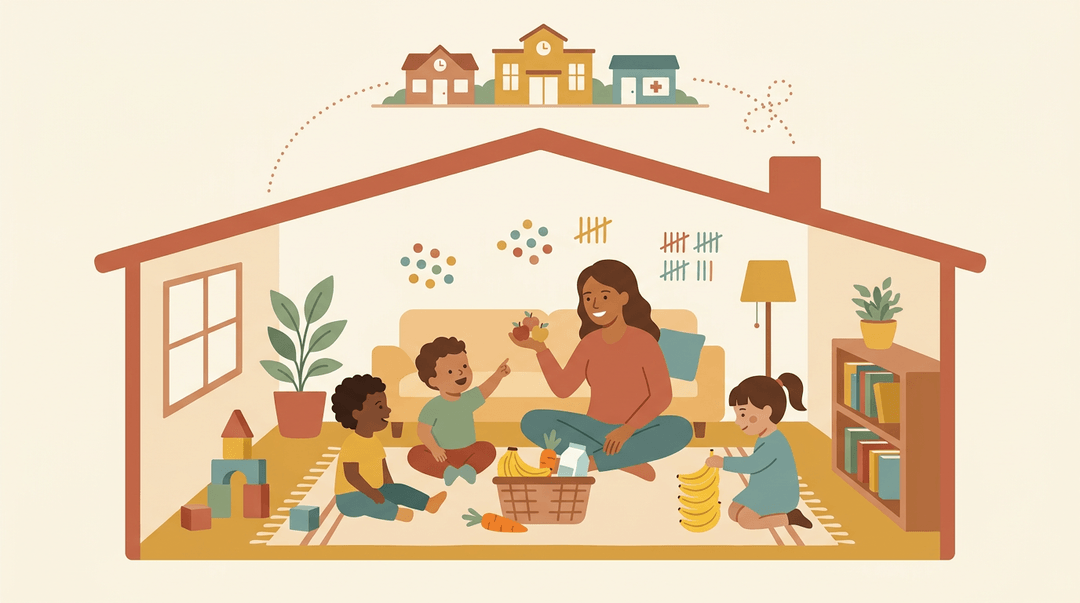
Consider a family child care provider who runs a small program from her home. She turns grocery trips into counting games. The setting is different, but the learning isn't.
How it differs from child development
Child development is the study of how children grow, and early childhood education puts what we know about that growth into practice. The two are interdependent, so they work best together.
| Early childhood education | Child development | |
|---|---|---|
| Main focus | Teaching practice | Developmental study |
| Main task | Planning learning experiences | Explaining how children grow |
| Typical settings | Classrooms, homes, and programs | Research and observation |
| Age span | The ranges covered above | Can extend past the early years |
How Brain Science Shapes Child Development
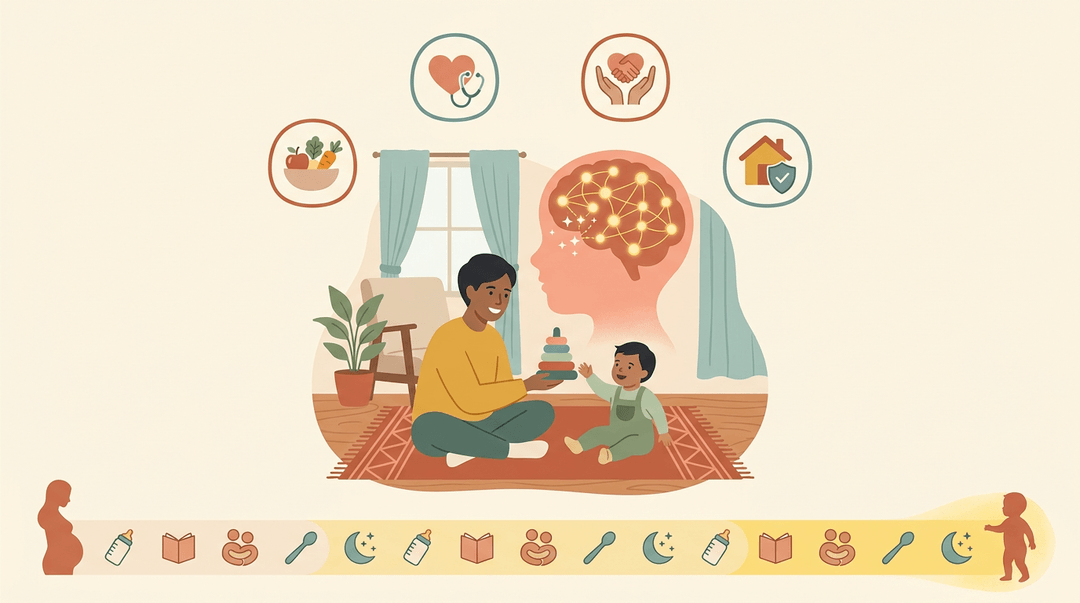
A child's brain builds itself every day, starting in the earliest years.
What affects early childhood development?
Rapid early brain growth happens through neural connections (links between brain cells) that form each time a child talks or plays.
Development is shaped by:
- nutrition
- health
- caring relationships
- safe spaces
The first 1,000 days, roughly from pregnancy through age two, are a critical formative window: when children are especially responsive to experience. What matters is the pattern of daily experiences, not any single moment.
Areas of growth in young children
- Cognitive, social, emotional, and physical growth. These develop side by side.
- Language and literacy. Talking and listening support early reading.
- Adaptive development. Everyday skills like dressing and asking for help.
- Motor skills and nutrition. Fine and gross motor skills grow with practice, and nutrition fuels them.
A whole-child focus recognizes that growth in one area supports the rest. Picture a teacher whose student hangs back at circle time but loves blocks. She invites that child to build beside a friend, and soon the child joins the songs.
Milestones, theories and individual differences
Three views explain development:
- Maturationist views see development on a biological timetable.
- Constructivist views see children building understanding through exploration.
- Ecological views see development shaped by the settings around a child.
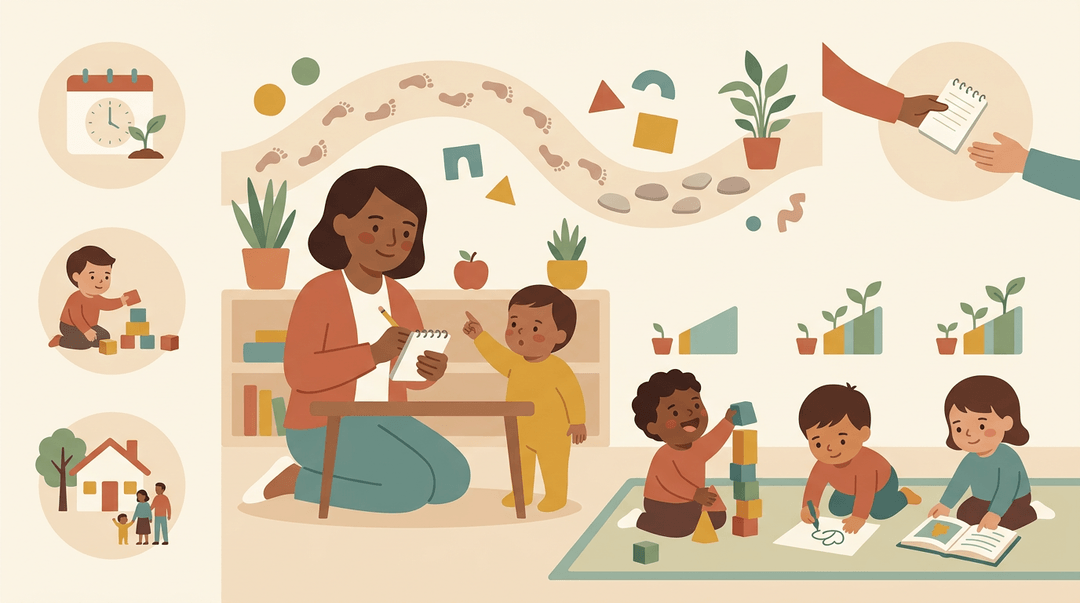
Milestones are guides rather than checklists every child must pass on schedule. Watch the pattern, not the calendar.
Children reach milestones at their own pace, so you'll see one area race ahead while another lags.
Screening flags who may need a closer look, while diagnosis formally identifies what's behind a concern. Consider a teacher whose young student points instead of naming objects. She shares notes so the family can act sooner.
Main Teaching Approaches in Early Classrooms
Most strong early approaches start from one question: how do young children learn?
Learning through play and exploration
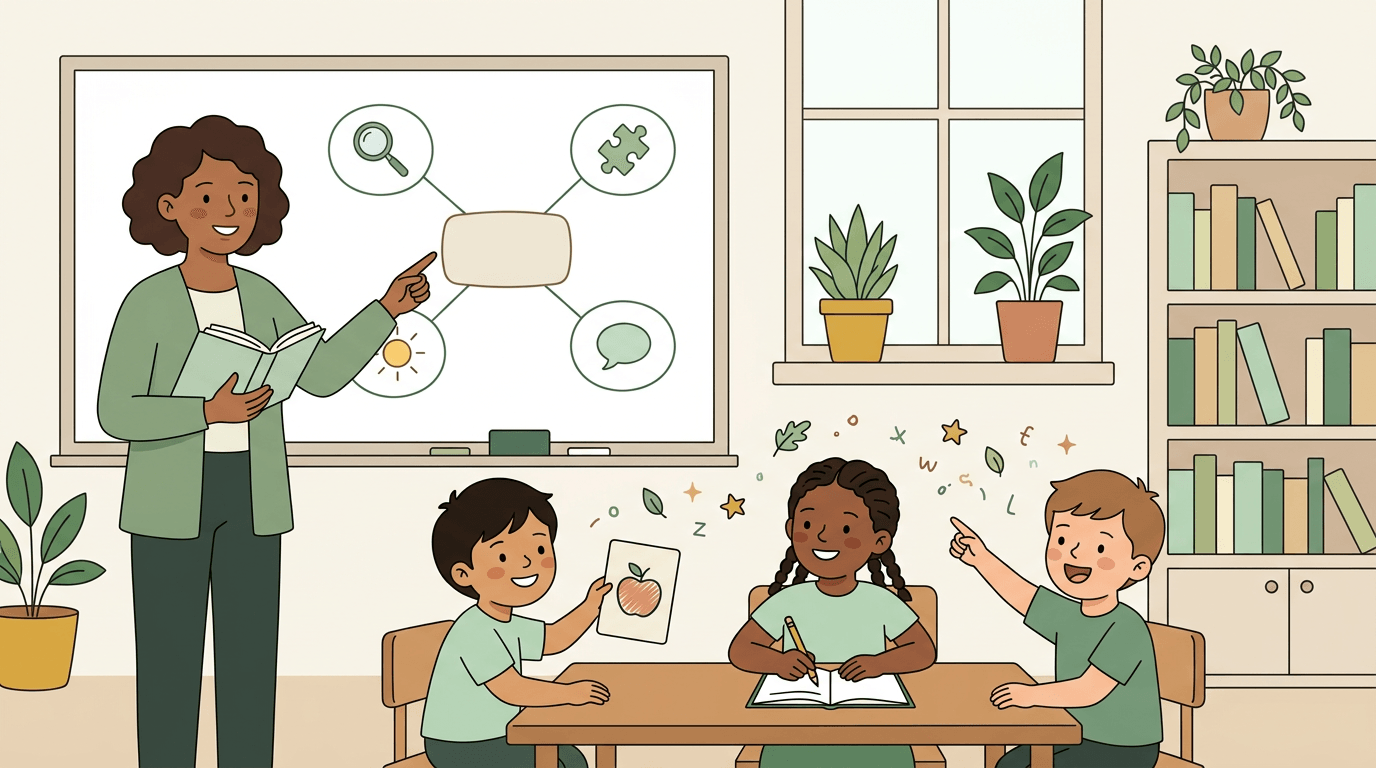
Play-based learning is how young children build language, math, and social skills. Play is the work. Open-ended materials like blocks build critical thinking and creativity, since no answer is the only right one.
Exploration works best when children find answers themselves. A pre-K teacher who fills a water table with cups hears, 'Which holds more?' Plan learning centers around play with clear goals, like counting in the block corner.
The aim is less about keeping children busy and more about guiding their thinking.
Famous philosophies like Reggio Emilia and Waldorf
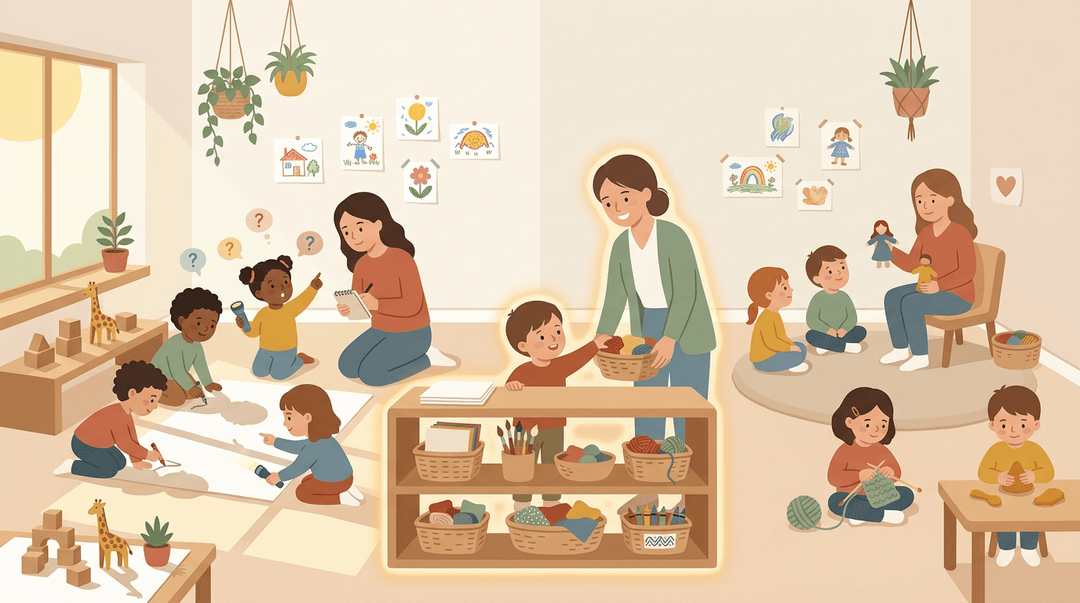
Reggio Emilia approaches are child-led, so the curriculum follows children's questions, such as a long study of shadows. That's emergent learning: the plan grows from curiosity, not a fixed script.
Waldorf classrooms weave head, hands, and heart together through storytelling and handwork. Think of the room as a third teacher. A kindergarten teacher who moves art supplies within reach sees children choosing materials on their own.
Safe spaces and families working together
A nurturing environment offers predictable routines, warm adults, and room for mistakes. Transitions can eat up a day, so a cleanup song sung the same way each time helps children move smoothly to centers.
Parents are a child's first teachers, so ask what they love at home. Use the same routine words at home and school. A one-line note about this week's science table gives families a dinner conversation starter.
Cultural responsiveness builds on the languages and traditions children bring, like a family song shared at circle time.
Trends shaping early education today
Four trends are shaping the room:
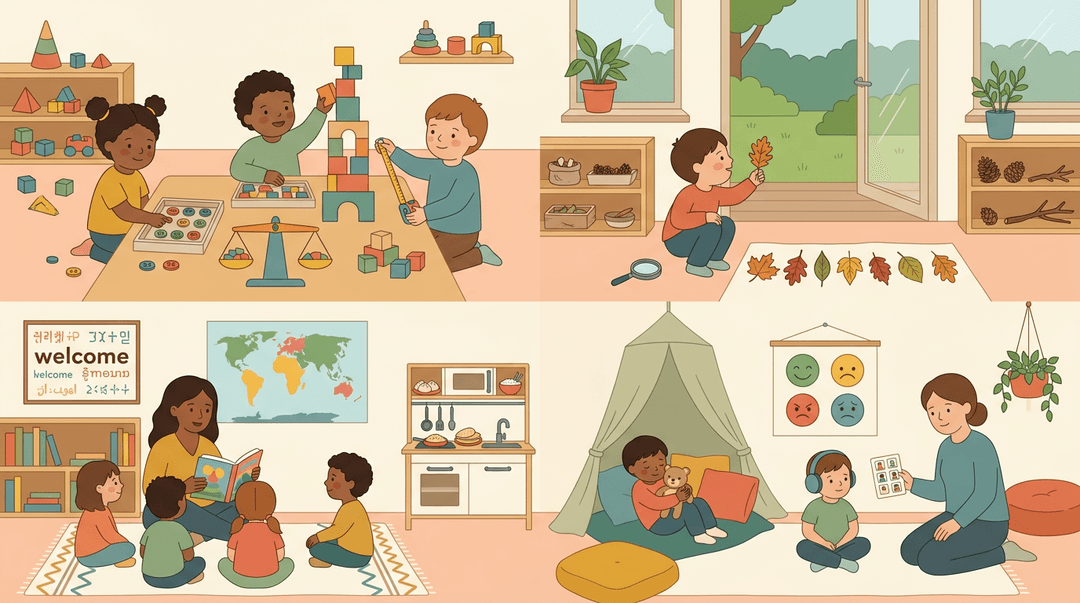
- STEM through play. Science, technology, engineering, and math (STEM) fit naturally into sorting, building, and measuring.
- Nature-based learning. Counting leaves on a walk builds observation and measurement without a worksheet.
- Cultural responsiveness. It's now a core planning question: whose languages, foods, and stories show up in your lessons?
- Mental health awareness. A feelings chart or calm-down corner gives children words for what they feel. Pair that with inclusive support for diverse needs, so multilingual learners and children with sensory needs get the help they need. Calm comes first.
Planning a Play-based Early Childhood Lesson
Use this guide when you need a lesson plan that starts with play and still points at a clear learning goal. It runs in five steps, with one sample activity per age group and a quick check before you teach.
Build the lesson in five steps
- Pick one developmental goal
- Make it something you can see: "Children will count out up to five items."
- Design a play-based activity
- Offer an open invitation, not a task with one right answer.
- Try: "What could you do with these baskets and apples?"
- Set up centers and materials
- Plan three or four stations, with doubles of the favorite items.
- Observe and jot notes
- Keep sticky notes handy: "10:15, Maya counted four apples aloud."
- Reflect and adjust your next plan
- Ask: "What did they do that I didn't expect?" Plan from that.
Children learn through play, so your job during the activity is to watch and add a question when it helps, not to run the play.
Sample activities by age group
| Age group | Activity | Goal you might choose |
|---|---|---|
| Toddlers | Sensory bin exploration | Scooping, pouring, naming textures |
| Preschool | Pretend grocery store | Counting, sharing, taking turns |
| Kindergarten | Story retelling circle | Sequencing a story's beginning, middle, end |
Example: A preschool teacher sets up a pretend grocery store with empty boxes, play money, and paper bags. Her goal is counting to five. She stays nearby with sticky notes. One child counts four apples into a bag, then asks for "one more." The teacher jots it down. Next week she adds price tags with numerals.
Check before you teach
Confirm each of these before children arrive:
- Clear, observable goal: you could point to it happening.
- Child choice built in: children pick materials, partners, or how they play.
- Short transitions planned: you have a song or cue ready for each move.
- Family connection idea: a take-home question, like "What did you buy at the store today?"
- Reusable for next class: the plan is saved so you can tweak it, not rewrite it.
⚠️ Watch out: If every child ends up doing the same thing in the same way, the activity has turned into a worksheet. Loosen the directions.
Save and reuse these play-based plans across groups with EMStudio's online lesson planner.
How Early Childhood Education Helps Children
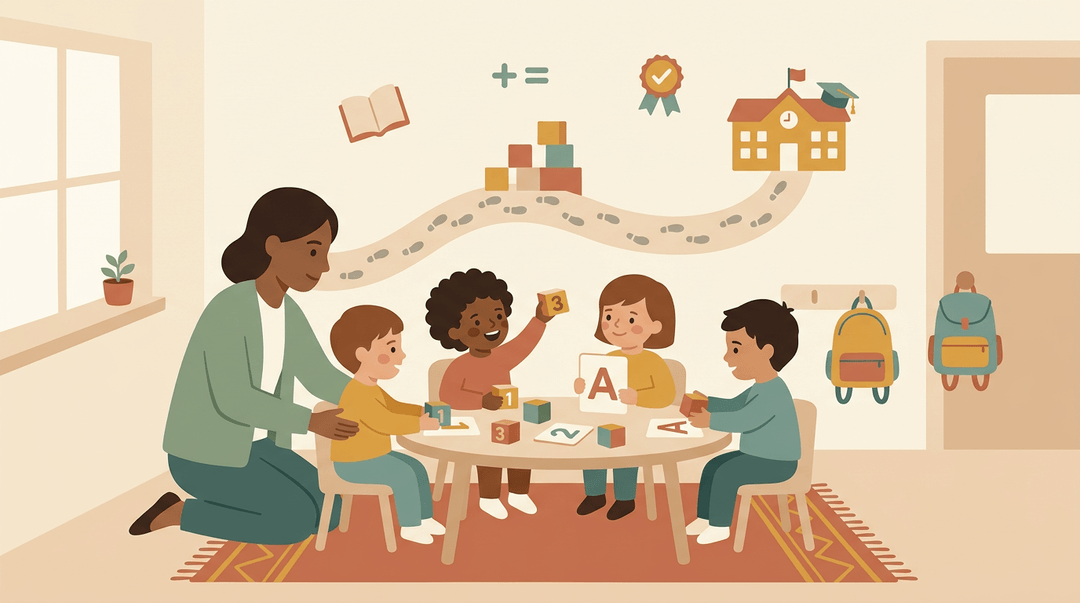
So what does early childhood education actually change? Quite a lot, and you'll see why.
Getting kids ready for school
A systematic review and meta-analysis in the European Journal of Psychology of Education links participation to stronger language and math outcomes.
The paper Early Childhood Education and Long-Term Academic and Socioeconomic Outcomes finds that high-quality programs are linked to improved school readiness and higher rates of high school completion.
The Organisation for Economic Co-operation and Development reports that supports built into early programs can reduce the need for remedial education later on.
Social, emotional and health gains for kids
Good programs help children grasp why rules matter, not just that they exist. Kids practice sharing and taking turns, building cooperation and empathy.
Daily routines also support emotional regulation, helping children name frustration and pause before reacting. Programs build healthy habits and nutrition knowledge, from handwashing to balanced snacks.
Teachers see children every day, so they're often first to notice a concern. A preschool teacher spots a child struggling to hear, shares that with the family, and the child gets a hearing check sooner.
That's early identification in action. Earlier notice means earlier help.
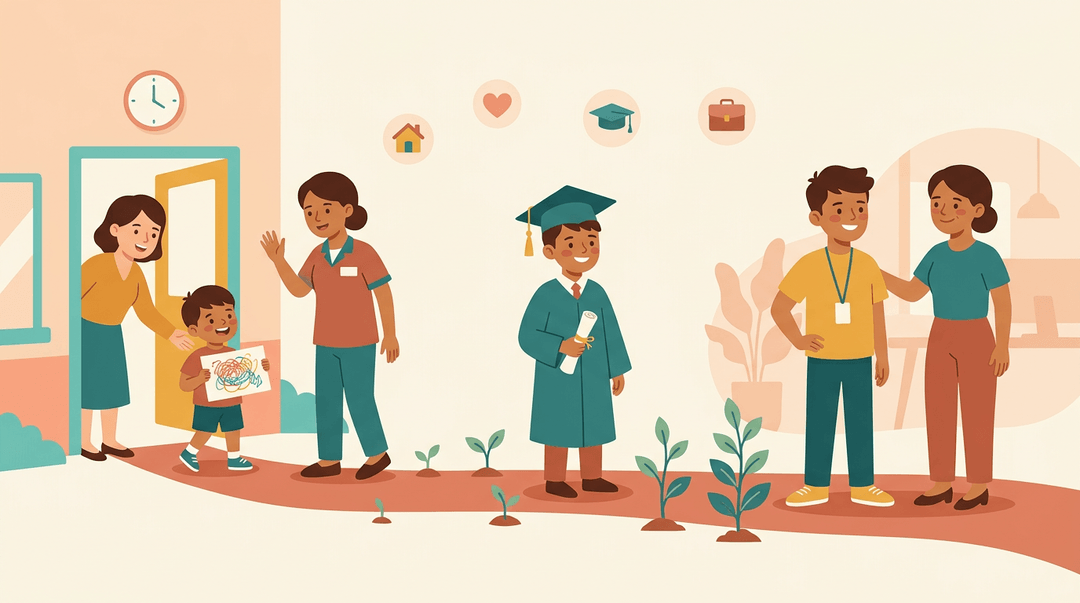
Long-term payoff for society and families
Research from the Institute of Education Sciences links early programs to higher rates of:
- high school completion
- college attendance
- employment
A Brookings article associates early programs with lower crime and less reliance on public assistance.
Quality programs also offer every child a fairer start. Picture a parent who starts a shift on time, knowing her son is happily settled. Caregivers are free to work when their children are safe and engaged.
Parents gain a partner and practical ideas you can use at home.
How Educators Put Practice into Action
Good early childhood practice lives in everyday tasks, from room setup to family talks.
The main jobs educators handle
- Nurturing environments. Build a warm, safe room where children can explore freely.
- Designing age-appropriate activities. Match tasks to where children are developmentally.
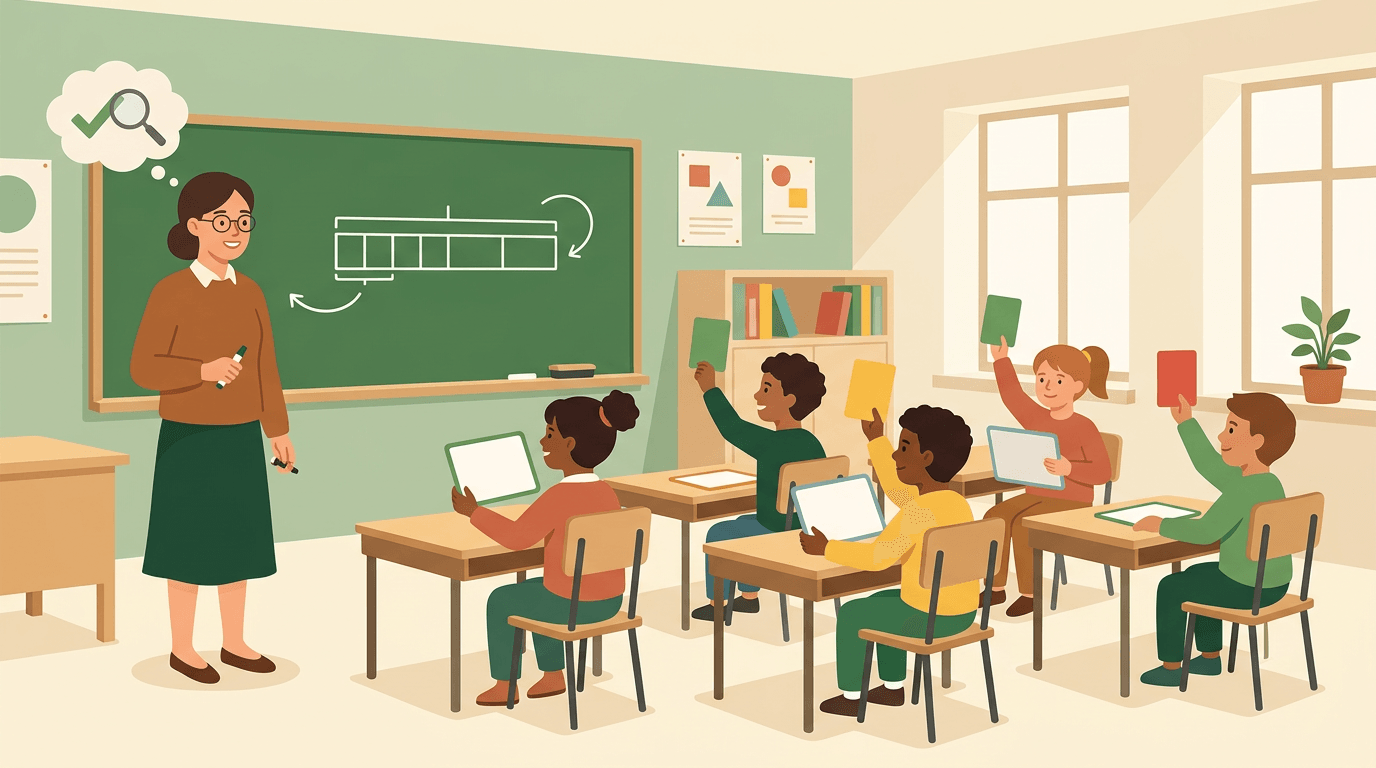
- Observing and assessing. Watch closely so we know what each child can already do.
- Communicating with parents. Keep families in the loop so home and school work together.
Turning what you see into lesson plans
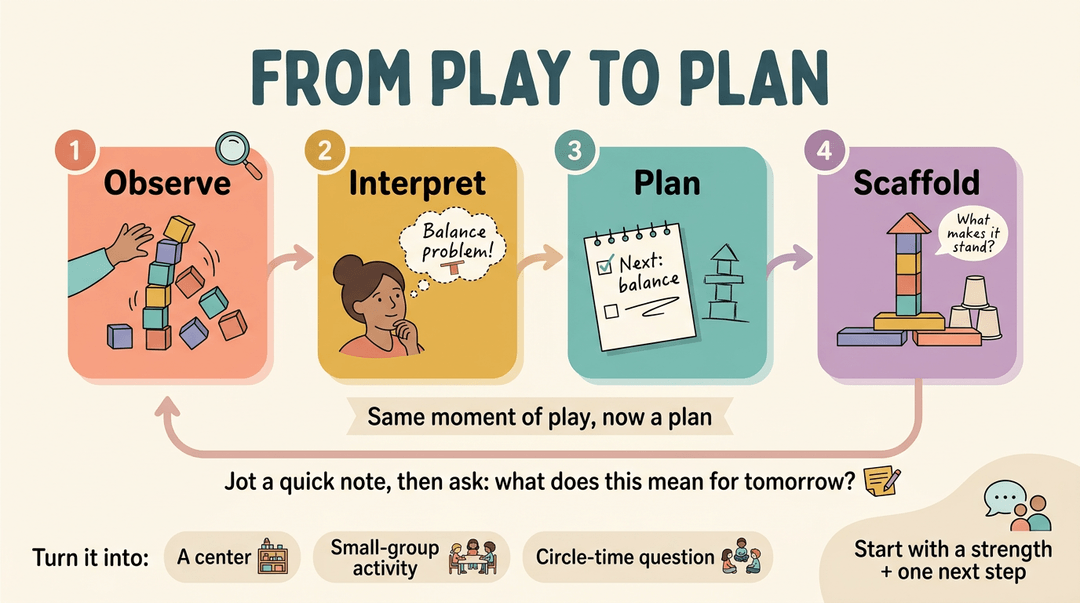
Here's how four steps turn a moment of play into a plan:
- Observe what children do during play.
- Interpret what that behavior reveals about skills.
- Plan the next experience that builds on it.
- Scaffold it with a prop, a question, or a small adjustment.
Consider a pre-K teacher watching children keep toppling their block towers. She reads it as a balance problem and adds wider base blocks and a few cups to test. The next block session now targets balance.
Documentation and reflection close the loop: jot brief notes, then ask what they mean for tomorrow.
Strengths-based family conversations open with what the child does well, then name one next step.
Finally, turn each observation into a plan: a center, a small-group activity, or a circle-time question.
Common mistakes and what raises quality
Most missteps come from good intentions:
- Worksheets over play. Paper tasks can crowd out the hands-on learning young children need. Play is the work.
- Milestones used as grades. Milestones guide your observations, not a child's grade.
- Ignoring context. A child's home language, culture, and routines shape how they learn, so look at the whole child.
- Staff qualifications and relationships. Well-prepared teams and warm bonds with children and families are central to quality.
Fair Access and the Challenges Families Face
Not every family can reach early learning, and the reasons vary widely.
What keeps children from getting care
Five barriers stand out:
- Poverty and affordability. When fees are out of reach, children often stay home.
- Funding limits. Programs short on money may struggle to open or stay staffed.
- Teacher shortages. An open seat means little without a qualified teacher.
- Humanitarian emergencies. Conflict and disasters can close programs and scatter families.
- Remote and rural gaps. Families far from any center may have no program nearby.
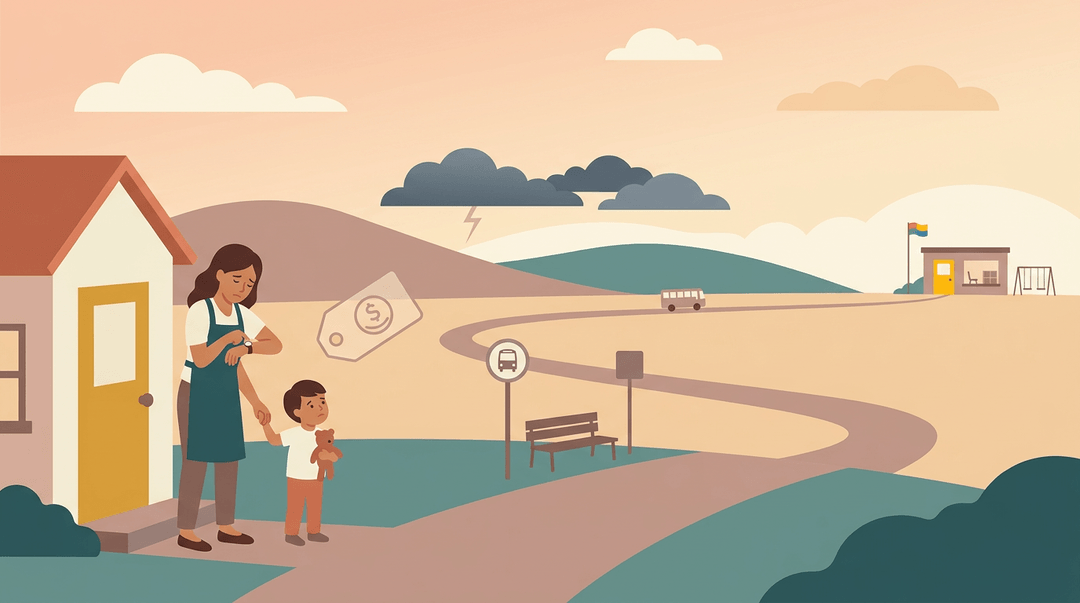
Think of a mother whose nearest preschool is a long bus ride away. Her shift pays the rent, so her four-year-old stays home. Access depends less on whether a program exists and more on who can reach it.
How many children attend early programs worldwide
According to UNICEF USA, only about half of the world's children are enrolled in these programs. Low-income countries lag behind. Human Rights Watch reports that only one in five young children there attend pre-primary education programs.
UNESCO, the United Nations Educational, Scientific and Cultural Organization, tracks the share of education budgets going to early learning. It calls for meeting the Tashkent Declaration benchmark of 10% of those budgets for pre-primary education.
Programs working to expand early learning
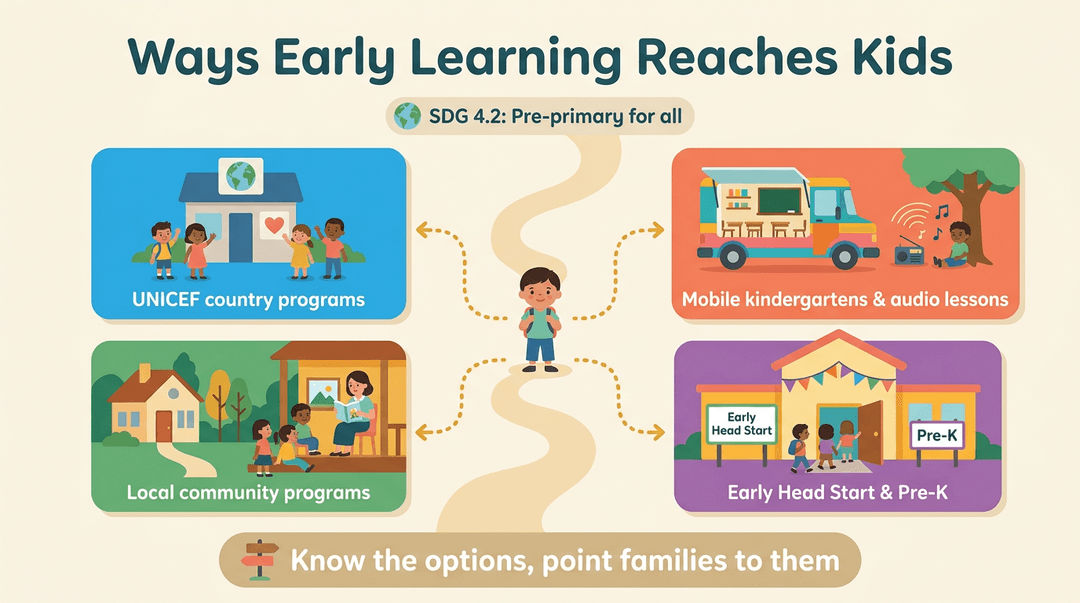
Sustainable Development Goal (SDG) 4.2 sets a pre-primary goal for countries. Efforts include:
- UNICEF country programs. UNICEF (the United Nations Children's Fund) works through country programs to strengthen early learning.
- Mobile kindergartens and audio lessons. They reach children who can't get to a classroom.
- Local community programs. They bring early learning closer to home.
- Early Head Start and Pre-K. Programs built to widen access.
Knowing what's out there helps you point families toward options.
Picking the Right Program for Your Child
Every program says it cares about kids, so the real question is how to tell the good ones apart. You'll find most of the answers on a single visit.
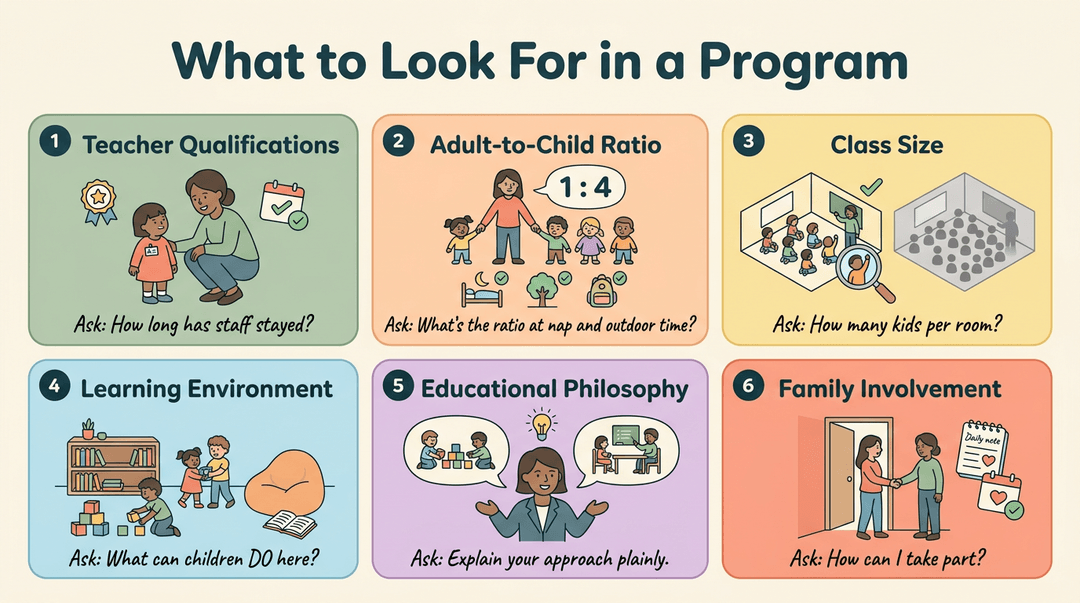
What to look for in a program
- Teacher qualifications. Ask about training, experience, and how long staff have stayed. Picture a lead teacher who knows every child's name by the second week and spots who needs extra time at drop-off. That's the kind of attention that makes a hard morning easier for everyone.
- Adult-to-child ratios. This is how many children each adult is responsible for. Ask what the ratio is during naps and outdoor play, not just at drop-off. Presence matters most.
- Class size. Ask how many children share each teacher's room. Smaller groups are easier to manage, and it's simpler for a teacher to notice when a child is struggling.
- Learning environment. Bright walls are nice, but the better question is what children can do in the room. Look for materials within reach, space to move, and a quiet corner. Notice whether children seem engaged or just waiting around.
- Educational philosophy. This is the approach the program uses to guide learning, such as play-based or more structured. Ask the director to explain it plainly. A clear answer means the staff have thought it through, and you'll know what your child's days will look like.
- Family involvement. Ask how staff share news about your child's day and how you can take part, whether through conferences, volunteering, or a daily note. A program that welcomes you in is one you can partner with.
Is Early Childhood Education a Good Career?
Is early childhood education a good career? It can be, especially if you love working with young children and want room to grow.
Career paths and where you can work
Consider a preschool teacher who turns circle time into a game for a shy child. That small change can help the child feel ready to join in.
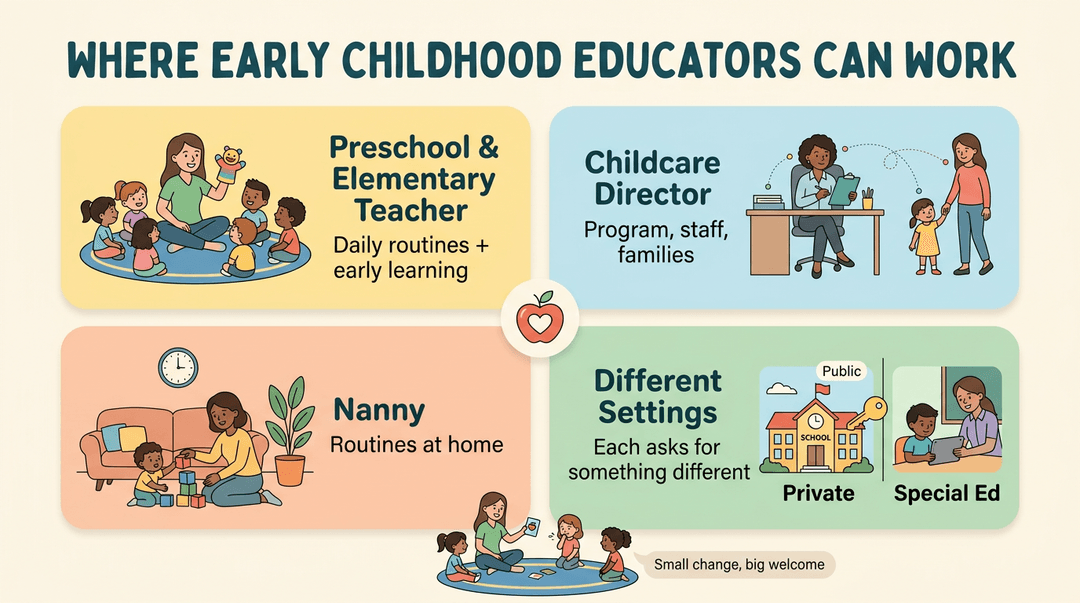
- Preschool and elementary teacher: Lead a classroom through daily routines and early learning.
- Childcare director: Oversee a program, its staff, and its families.
- Nanny: Support a child's routines in a family's home.
- Public, private, and special education settings: Each asks for something different, from state-funded classrooms to programs for learners with distinct needs.
Degrees, certification and what you can earn
Is early education a hard major? It asks a lot, but the challenge is less about memorizing theory and more about applying it.
- Associate or bachelor's degree: Your starting point, depending on your goals.
- State certification requirements: Each state sets its own rules.
- Child Development Associate (CDA) credential: Focused on working directly with young children.
- Student teaching experience: Hands-on classroom time before you're on your own.
The National Catholic Educational Association reports a national annual median wage of $38,140 for preschool teachers, excluding special education, in May 2025. That's a useful benchmark to plan around.
Ongoing courses to keep your skills sharp
- Child development training hours: Track the hours your state requires.
- Theory of learning: Revisit how children build understanding so your lessons match how they think.
- Developmental screening: Learn to spot when a child may need extra support, then point families toward help.
- State licensing checks: Keep your license active by meeting renewal requirements on time.
Keep learning, and the work stays fresh.
Early childhood education is about more than getting children ready for the next grade. It's about curiosity, confidence, and the habits that carry them through school and beyond.
When play and purposeful planning work together, young learners get a strong start.
Ready to plan your next play-based lesson? Check out the EMStudio Lesson Planner to write, organize, and reuse your lesson plans across multiple classes from one place.
References
- The effects of early childhood education and care quality on academic competences in early primary school: A systematic review and meta-analysis | European Journal of Psychology of Education — link.springer.com (2025)
- Early Childhood Education and Long-Term Academic and Socioeconomic Outcomes — doi.org (2026)
- and Long-Term Impacts of High-Quality Early Childhood ... — ies.ed.gov (2025)
- The labor market case for early childhood education — brookings.edu (2025)
- Early childhood education and care and additional supports for children: Building Strong Foundations for Life — oecd.org (2026)
- What Is Early Childhood Education? — unicefusa.org (2026)
- Strengthening the Right to Free Education — hrw.org (2025)
- Sustained and transformative financing for early childhood care and — unesco.org (2025)
- How to Hire a Preschool Teacher: A Complete Guide for 2026 — careers.ncea.org (2026)
Frequently asked questions
What is considered early childhood education?
Early childhood education is the care and learning young children receive before primary school. It often uses play, familiar routines, and guided exploration, and may take place in preschools, child care settings, homes, or community programs.
What is the main purpose of early childhood education?
Its main purpose is to provide structured learning that builds a foundation for lifelong learning. It supports children’s thinking and development through experiences suited to how young children learn.
What is the early childhood stage?
The early childhood stage generally refers to birth through about age eight, though some definitions focus on birth to five or the years before primary school. Kindergarten may be included or treated as a transition into primary education.
What are concepts in early childhood?
Early childhood concepts include play-based learning, exploration, routines, and development across cognitive, social, emotional, physical, language, and adaptive skills. Educators use these ideas to plan age-appropriate experiences and support each child’s growth.
What does an early childhood educator do?
An early childhood educator creates a safe, nurturing environment, plans age-appropriate activities, observes children’s learning, and communicates with families. They use observations to adjust activities and help children build skills through play and guided exploration.
Is early childhood education a good career?
It can be a good career for people who enjoy working with young children and want opportunities to grow. Roles include preschool teacher, child care director, nanny, and educator in public, private, or special education settings.
Is childhood education a major?
Yes. Early childhood education is a college major offered at some institutions, often through associate or bachelor’s degree programs. Requirements vary by career goal and state, and may include certification or classroom experience.
Is early education a hard major?
Early childhood education can be challenging because students must apply developmental knowledge in real classroom settings, not just learn theory. Coursework and preparation may include child development, lesson planning, observation, and hands-on student teaching.