What Is Operant Learning? A Complete Guide to How It Works

Jump to section
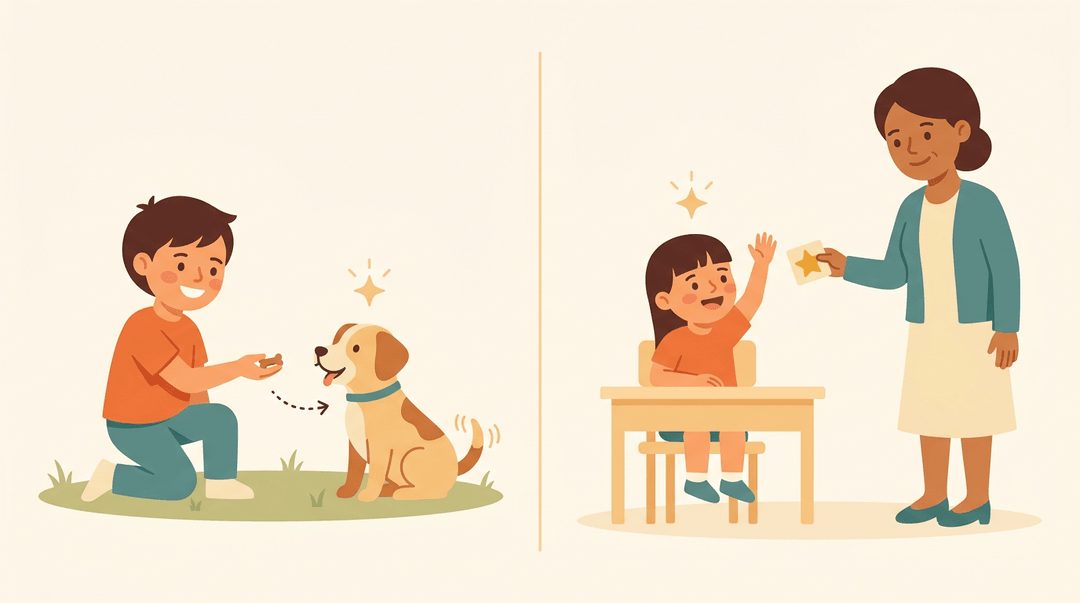
Think about training a puppy with treats: reward the good, ignore the rest, and behavior slowly bends toward the reward. That's the basic idea behind operant learning: we repeat what gets reinforced and drop what doesn't.
It shows up everywhere from classrooms to dog parks, and this post breaks down how it works, where it came from, and how you can put it to work with your own students.
What Is Operant Learning?
Ever wondered why a sticker chart works wonders in a kindergarten room but fizzles out with your seniors? That's operant learning at work: behavior that earns a reward tends to repeat, and behavior that doesn't tends to fade.
What does 'operant' mean?
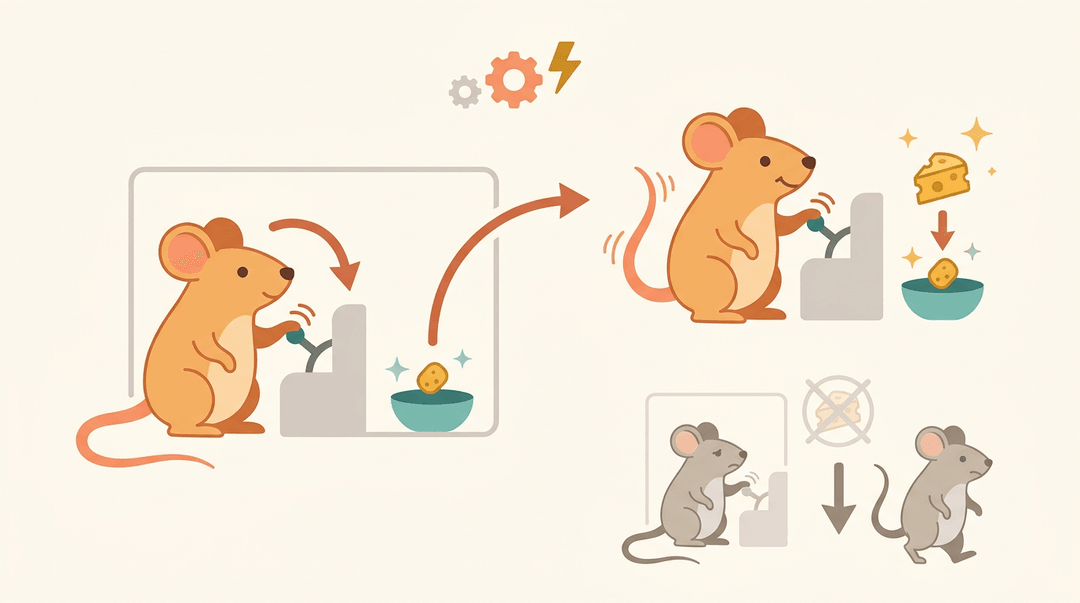
The word "operant" comes from "operate": these are behaviors an organism chooses to perform, not automatic reflexes. A voluntary behavior is shaped by what happens right after it.
Reinforcement makes it more likely to happen again, while punishment or extinction (withholding any payoff at all) makes it less likely.
Psychologists also call this instrumental conditioning, since the behavior is the instrument that produces the outcome.
What are examples of classical and operant conditioning?
Classical conditioning pairs two things that happen automatically. Operant conditioning depends on a choice and its consequence. Side by side:
| Classical conditioning | Operant conditioning |
|---|---|
| A dog salivates at a bell once paired with food | A dog sits because sitting earns a treat |
| A student feels anxious hearing a pop-quiz announcement | A student studies harder because studying raised a grade |
Same learning, different mechanics: one is involuntary and reflexive, the other voluntary and consequence-driven.
How Thorndike's puzzle box shaped the theory
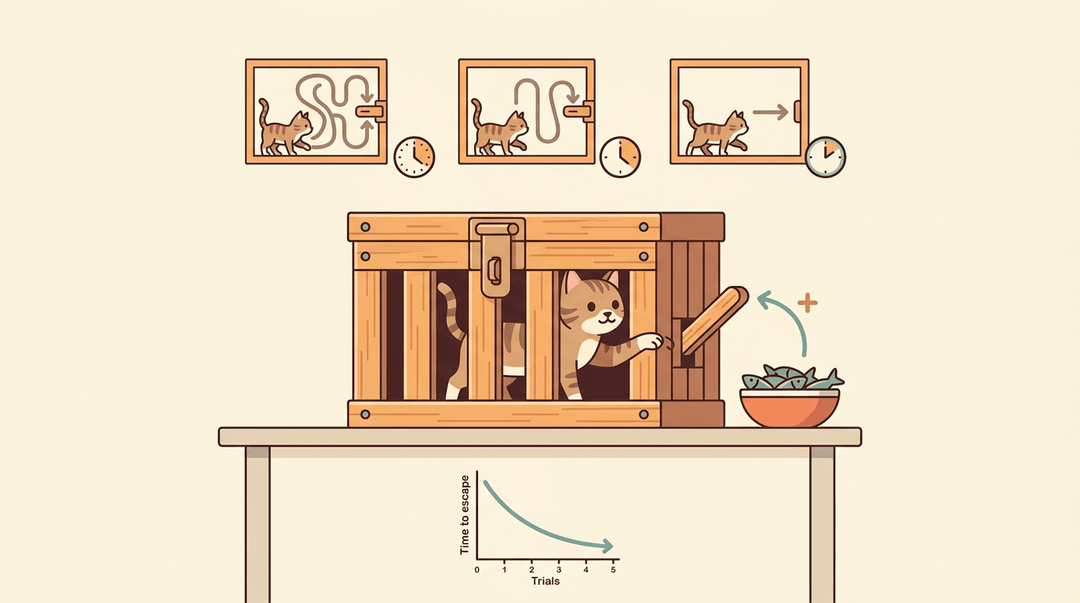
Long before Skinner, Edward Thorndike ran a series of "puzzle box" experiments, timing how quickly animals escaped over repeated trials. Those learning curves showed learning happening gradually, not in one flash of insight.
From this work, Thorndike proposed the law of effect: rewarded behaviors become more frequent, a founding idea of 20th-century behaviorism.
How Skinner advanced the theory
B.F. Skinner picked up where Thorndike left off, but he had little patience for guesses about what an animal, or a person, was thinking. He rejected mentalistic explanations outright, insisting only observable behavior and its consequences mattered.
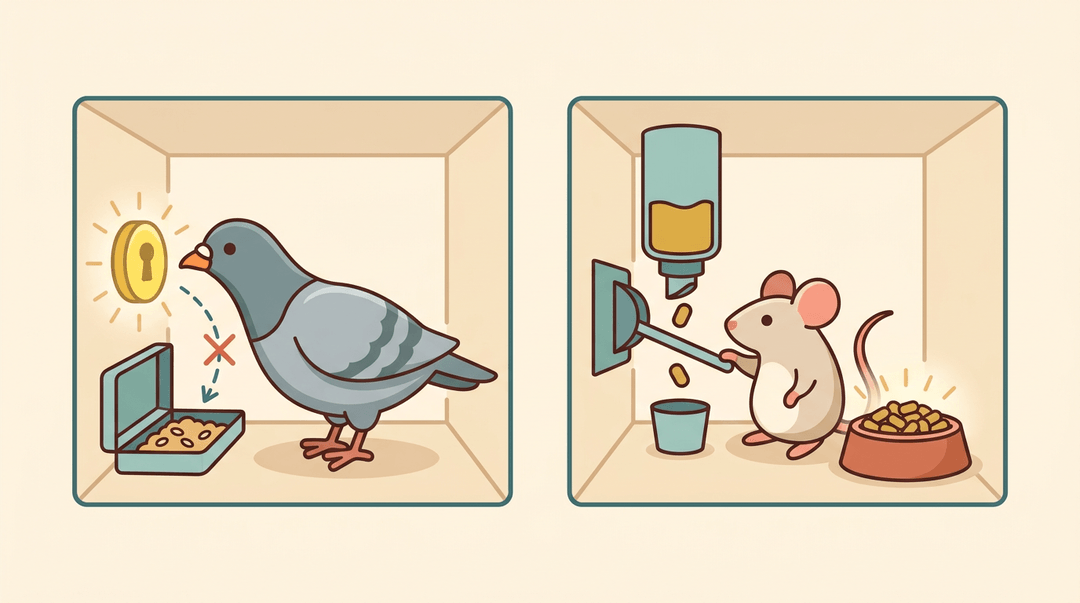
To test that, he built the Skinner Box and invented the cumulative recorder to track how response rates shifted under different reinforcement patterns, laying it all out in Behavior of Organisms, published in 1938, the book that put operant conditioning on the map.
Applying operant ideas to language and society
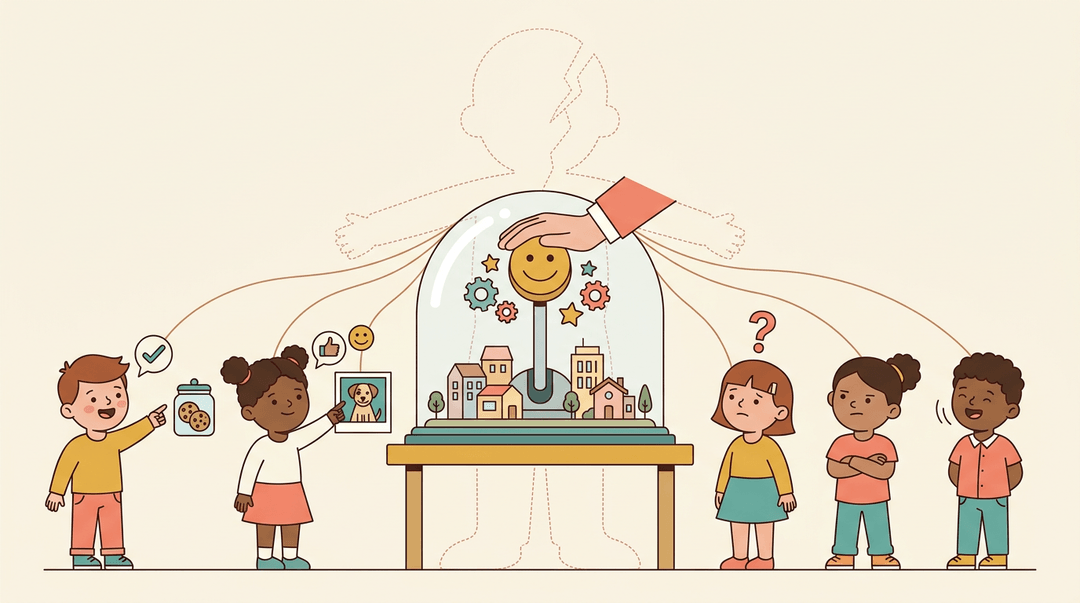
Skinner didn't stop at rats and pigeons. In Verbal Behavior, published in 1957, he argued language itself is shaped by consequences: a mand is a request reinforced by getting what you ask for, while a tact is a label reinforced by social approval.
He pushed the idea further in his novel Walden Two, imagining a whole community run on reinforcement.
Critics have pushed back hard on both fronts: reducing thought and language to reinforcement alone can miss the mentalistic nuance we recognize in ourselves, and heavy-handed reinforcement raises real ethical questions about shaping behavior without consent.
It's also worth watching for the false consensus effect, assuming every student learns exactly the way we do, before applying any single operant principle across your whole classroom.
How Reinforcement and Punishment Work
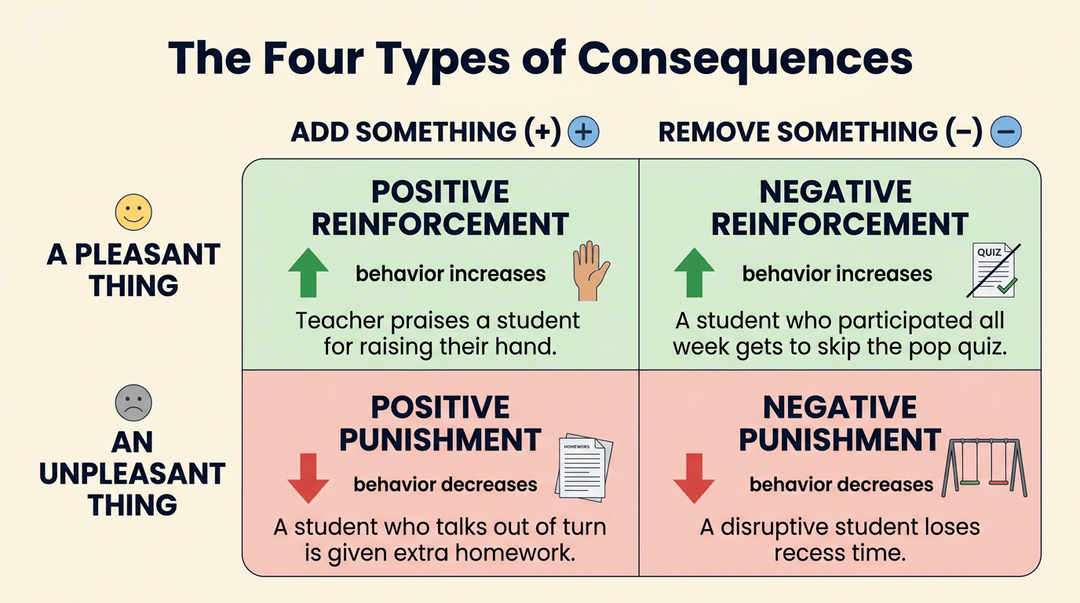
Reinforcement and punishment get mixed up constantly, but the difference is simple once you see it: reinforcement makes a behavior more likely to happen again, while punishment makes it less likely.
The words positive and negative don't mean good or bad here. They simply mean adding something or taking something away.
The four types of consequences
Put those two ideas together and you get four combinations:
| Consequence | What happens | Effect on behavior |
|---|---|---|
| Positive reinforcement | Adds a reward | Increases the behavior |
| Negative reinforcement | Removes something aversive | Increases the behavior |
| Positive punishment | Adds something aversive | Decreases the behavior |
| Negative punishment | Removes a reward | Decreases the behavior |
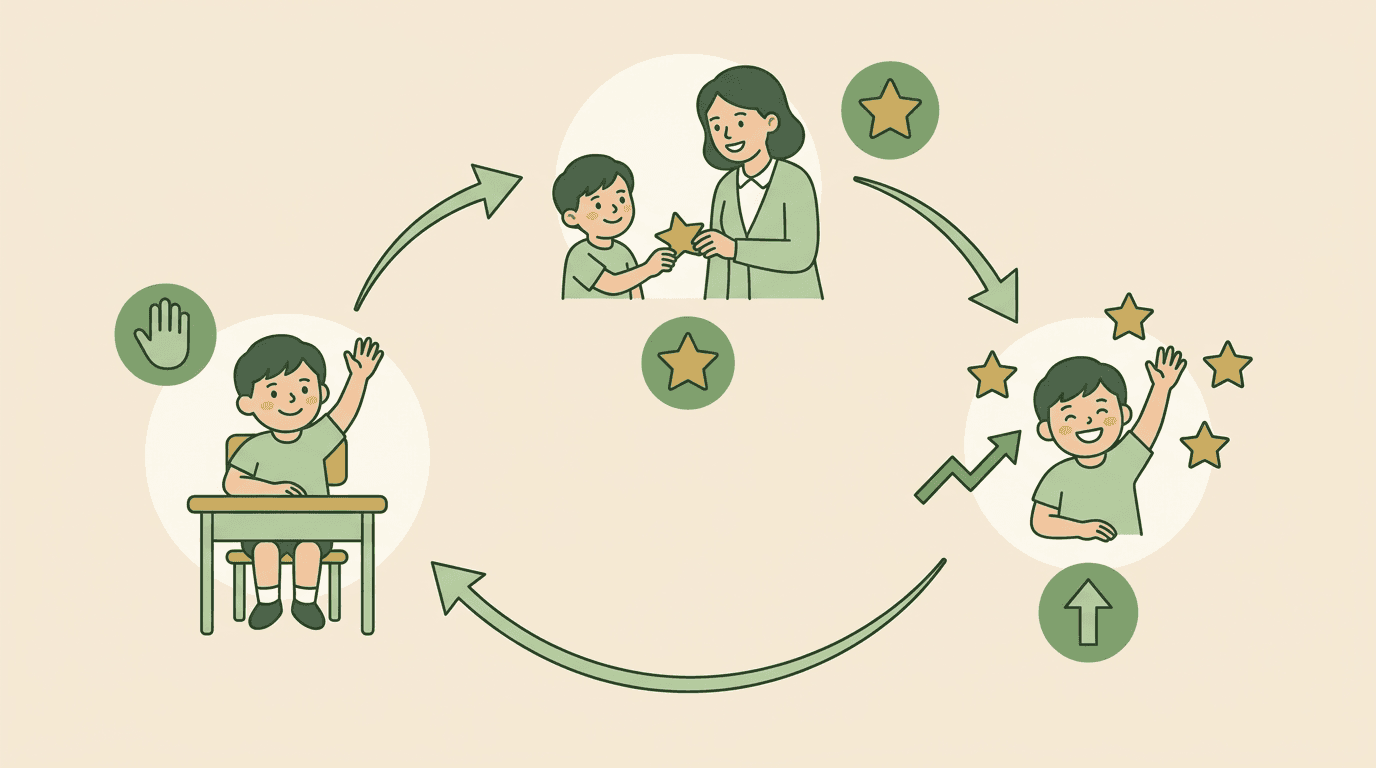
For example, a teacher praising a student who raises a hand is positive reinforcement. Letting that same student skip a pop quiz after a strong week of participation is negative reinforcement: something unpleasant gets taken away.
How extinction weakens behavior
Reinforcement doesn't keep a behavior alive on its own. It has to keep showing up. Once you remove the reinforcement behind a behavior, that behavior's probability of happening again starts to drop: that's extinction.
A student who stops getting attention for calling out answers will eventually call out less.
But extinction doesn't always come easy.
Behavior built on intermittent reinforcement (rewarded only sometimes, not every time) resists extinction far longer than behavior reinforced continuously, because the learner keeps expecting the reward might still arrive.
What makes reinforcement more effective
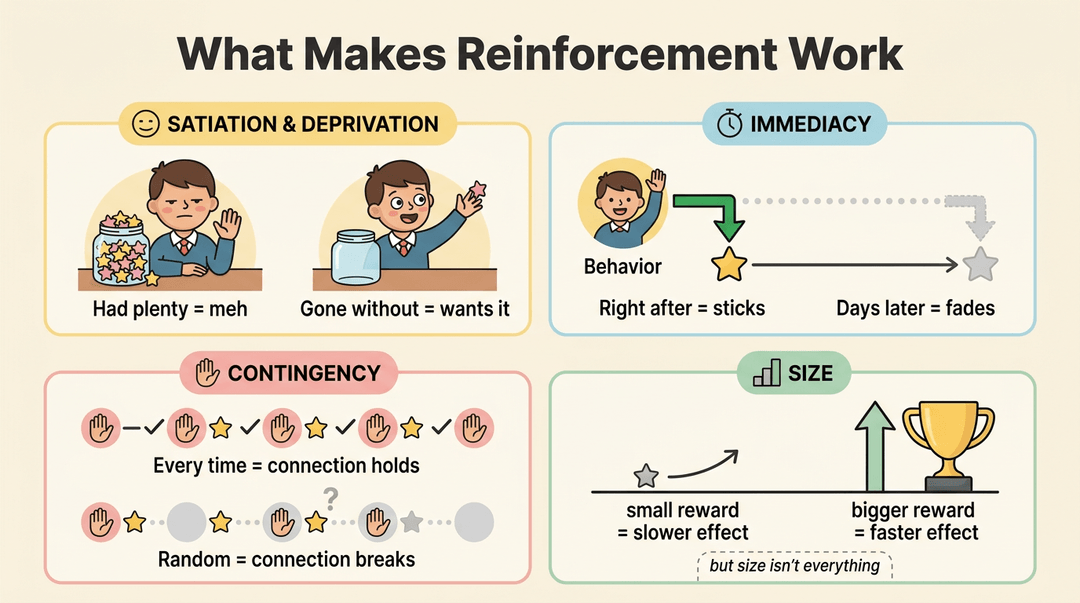
A few factors decide how well a reinforcer actually works:
- Satiation and deprivation. A reinforcer loses its pull once a student has had plenty of it, and gains power when they've gone without.
- Immediacy. A reward delivered right after the behavior sticks better than one that arrives days later.
- Contingency. The reward has to consistently follow the behavior, not show up at random, for the connection to hold.
- Size. A bigger reinforcer generally strengthens behavior faster, though it's not the only thing at play.
Different reinforcement schedules explained
Schedules describe when reinforcement shows up, and each one produces its own response pattern:
| Schedule | Pattern |
|---|---|
| Fixed interval | Reward after a set time; responding picks up near the end |
| Variable interval | Reward after an unpredictable time; steady, even responding |
| Fixed ratio | Reward after a set number of responses; a pause, then a burst |
| Variable ratio | Reward after an unpredictable number of responses; persistent responding |
| Continuous | Reward every single time; fast learning, but quick extinction if it stops |
How secondary reinforcers gain their power
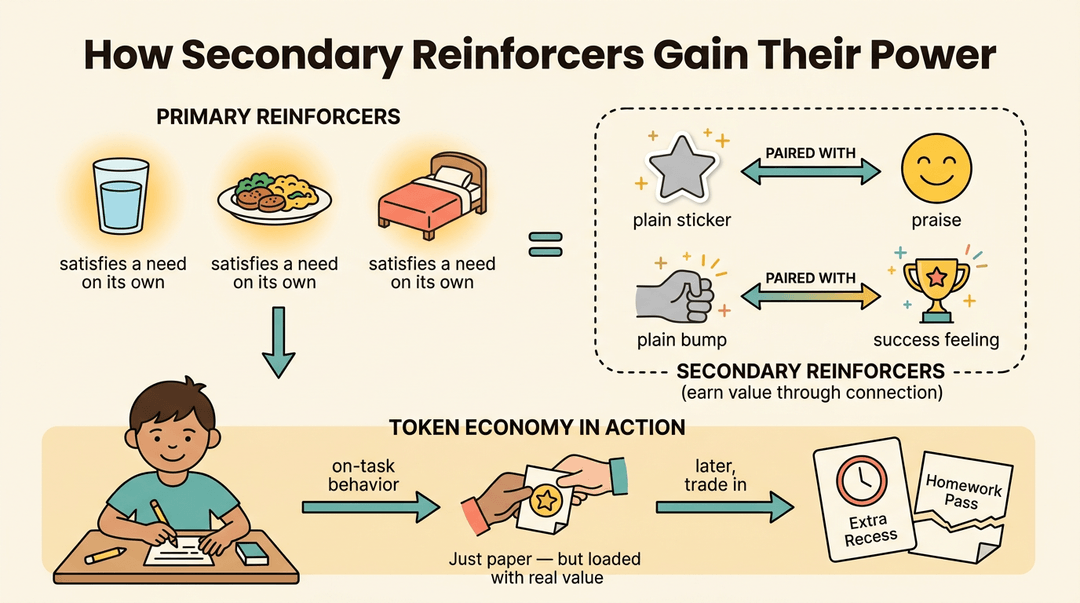
Not every reinforcer is built in. Primary reinforcers satisfy a basic need on their own, while secondary reinforcers (also called conditioned reinforcers) only carry weight because they've been paired with something the learner already wants.
A sticker means little by itself until it's been linked to praise or a prize. Even tactile feedback, like a high five or a fist bump, can become a reinforcer once a student connects it with success.
Token economies put this idea to work directly: students earn tokens for a target behavior, then trade them in later for something they actually want.
Consider a classroom where a teacher hands out points for on-task work, and students cash them in for extra recess or a homework pass. The tokens are just paper, but they've picked up real value along the way.
Key Techniques Behind Operant Learning
Operant learning isn't one single move. It's a small toolkit, and each tool does a different job: some build a behavior piece by piece, some tell a learner when that behavior will actually pay off, and some link small steps into something bigger.
Shaping behavior step by step
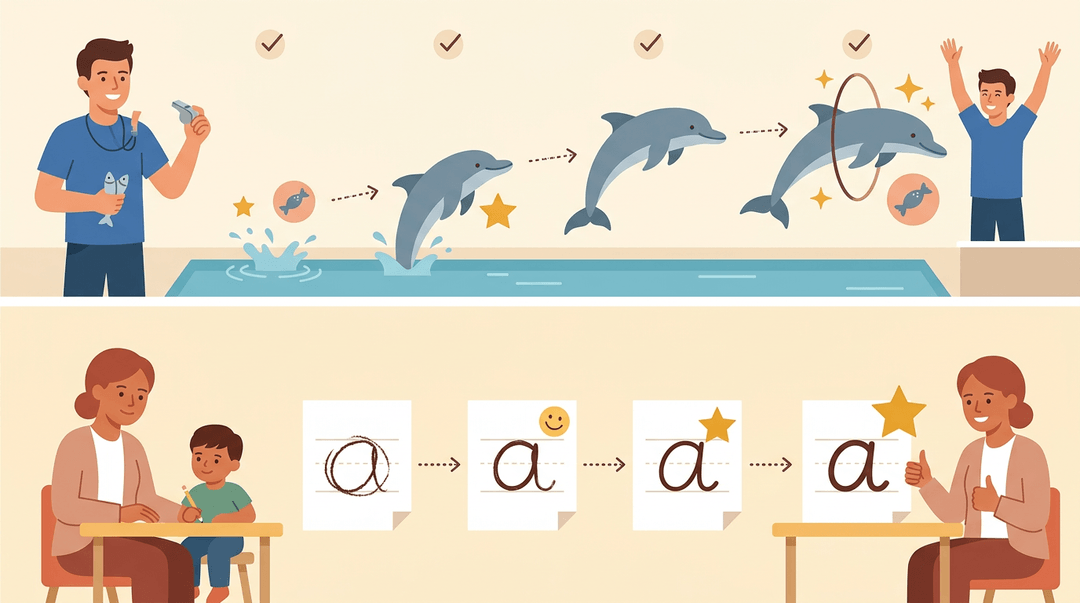
Shaping works through successive approximations: you reinforce whatever comes closest to the target behavior, then raise the bar once that step is solid.
It's the method behind most animal training, think of a dolphin trainer rewarding a splash, then a partial jump, then the full leap.
A kindergarten teacher does the same thing shaping a child's handwriting, praising a rough letter shape before expecting a neat one.
How context controls behavior
Behavior rarely happens in a vacuum. A discriminative stimulus is a signal that tells a learner a behavior will be reinforced right now, not always.
That's the difference between discrimination (responding only to the right cue) and generalization (responding the same way across similar situations). Together with the behavior and its consequence, this forms the three-term contingency model:
- cue
- response
- consequence
A teacher's raised hand for quiet works the same way: it's the cue that makes settling down worth reinforcing.
Linking behaviors into chains
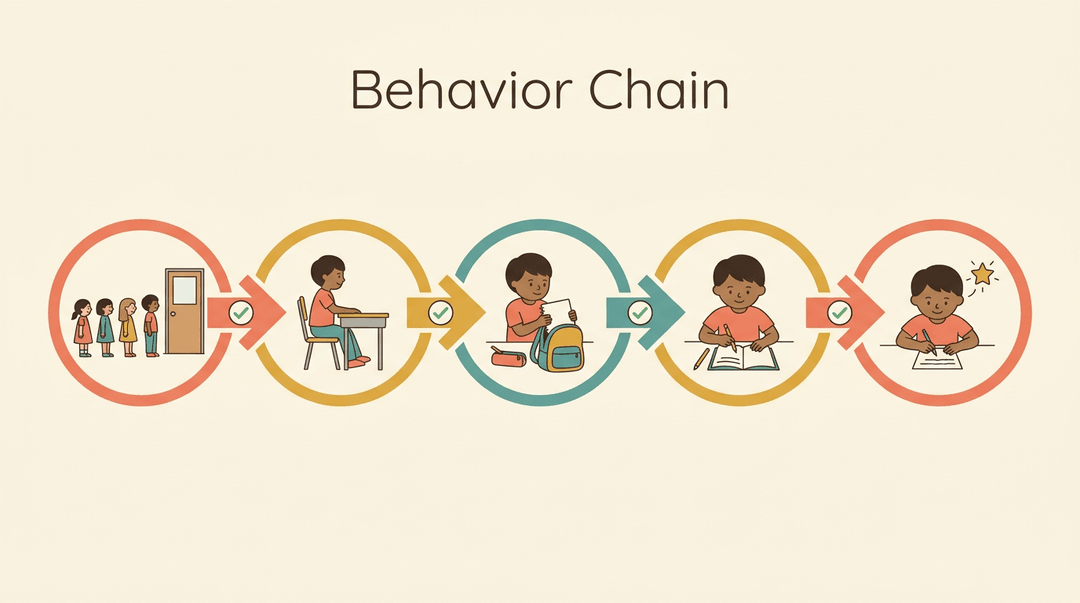
Complex behavior rarely happens in one step. Behavior chains link a sequence of responses, where each discriminative stimulus also acts as a conditioned reinforcer for the step before it.
Consider a morning routine: lining up cues sitting down, which cues pulling out materials, each link setting up the next until the whole sequence runs smoothly.
Why behavior varies before it's reinforced
Operant behavior is emitted, not triggered by a stimulus the way reflexes are. Learners try out slightly different versions of a behavior, and consequences select which version sticks, much like variation and selection in nature.
That's also why noncontingent reinforcement (rewards given regardless of behavior) is controversial: it can accidentally strengthen whatever a learner happened to be doing at the time.
Using Operant Conditioning in Your Classroom
Everything above becomes practical the moment you attach consequences to specific behaviors on purpose.
This guide walks you through building a reinforcement system, running it as a token economy or contract, and dodging the mistakes that sink most attempts.
Set up your reinforcement system
- Choose reinforcers that fit the age.
- K–2: stickers, line-leader duty, five minutes of choice time
- Middle and high school: homework passes, music privileges, preferred seating
- Ask students what they'd work for; a reinforcer only works if they want it
- Pair every tangible reward with specific praise.
- Say: "You started your warm-up right away, that earns a point."
- The praise names the behavior, so it can eventually carry the weight alone
- Fade the tangibles gradually.
- Stretch the schedule: every time → every third time → praise alone
- Fade over weeks, not days, and back up one step if behavior slips
Run a token economy or behavior contract
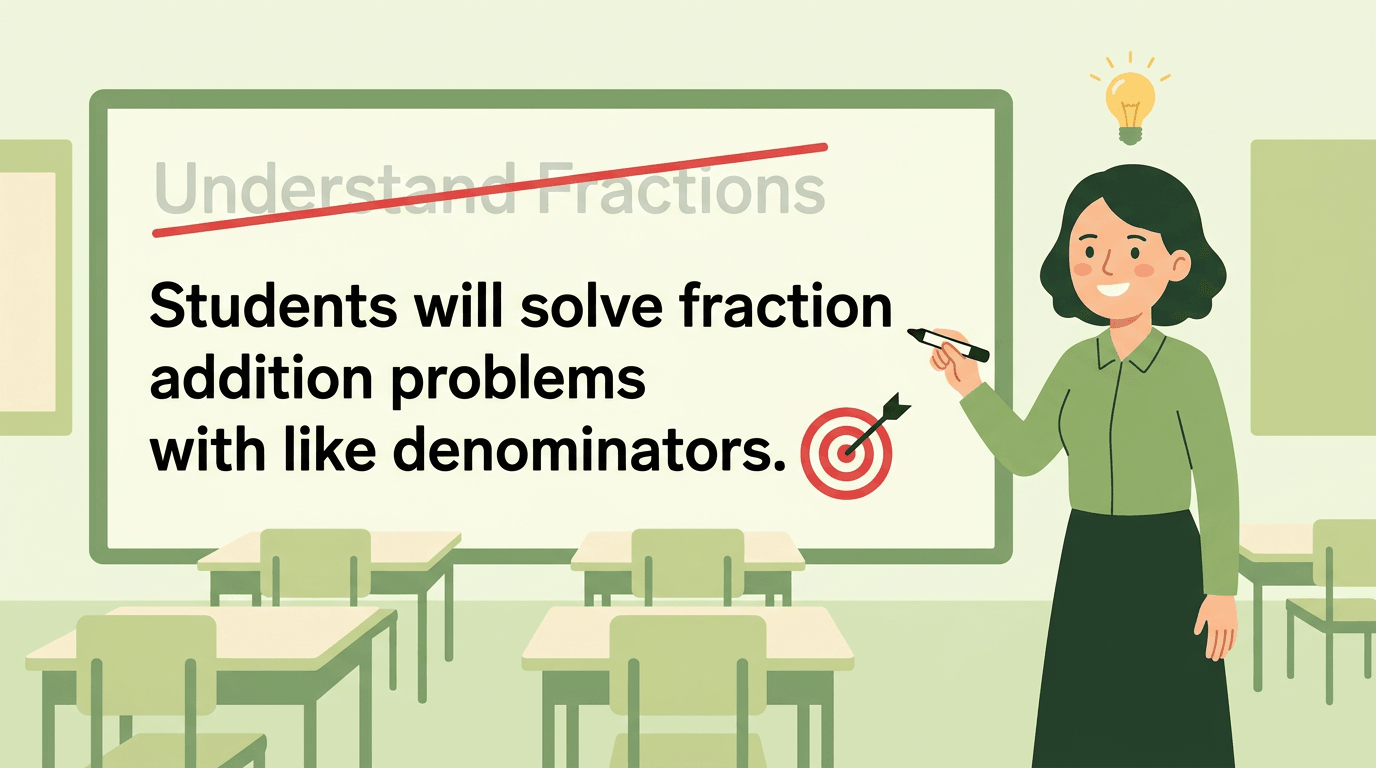
Define target behaviors you can see and count. Vague goals collapse the system on day one.
- ❌ "Be respectful"
- ✅ "Raise your hand and wait to be called on"
- The difference: anyone watching could tally the second one, nobody could tally the first
Set the exchange rate before you launch. One token per instance, and a first reward reachable within a day or two (say, ten tokens = ten minutes of free choice). If the payoff feels weeks away, students stop playing.
Put individual plans in writing. A behavior contract makes the deal explicit for the student, you, and home:
Example contract: Marcus will begin his warm-up within two minutes of the bell. Each day he does, he earns one token. Ten tokens = lunch with a friend of his choice. Signed: Marcus, Ms. Rivera, Mr. Wallace (Dad).
Avoid the common pitfalls
Key principle: behavior grows in the direction of whatever gets reinforced, including behavior you're accidentally reinforcing with attention.
| The pitfall | Do instead |
|---|---|
| Leaning on punishment | Reinforce the replacement behavior; reserve consequences for the serious stuff |
| Delayed consequences | Deliver the token or praise within seconds, not at day's end |
| Inconsistency across staff | Share a one-page plan; every adult uses the same behaviors, rates, and rewards |
Consistency is the quiet one that matters most: if the aide rewards what you ignore, students learn the system depends on who's watching, not on what they do.
At a glance: pick reinforcers students actually want, pair them with named praise, make behaviors countable, pay out fast, fade slowly, and keep every adult on the same page.
Build and store your reinforcement plans alongside daily lessons in EMStudio's lesson planner.
Escape and Avoidance Learning
Not every reinforcement adds something good. Sometimes it works by taking something bad away, and that's the core of escape and avoidance learning.
How escape learning works
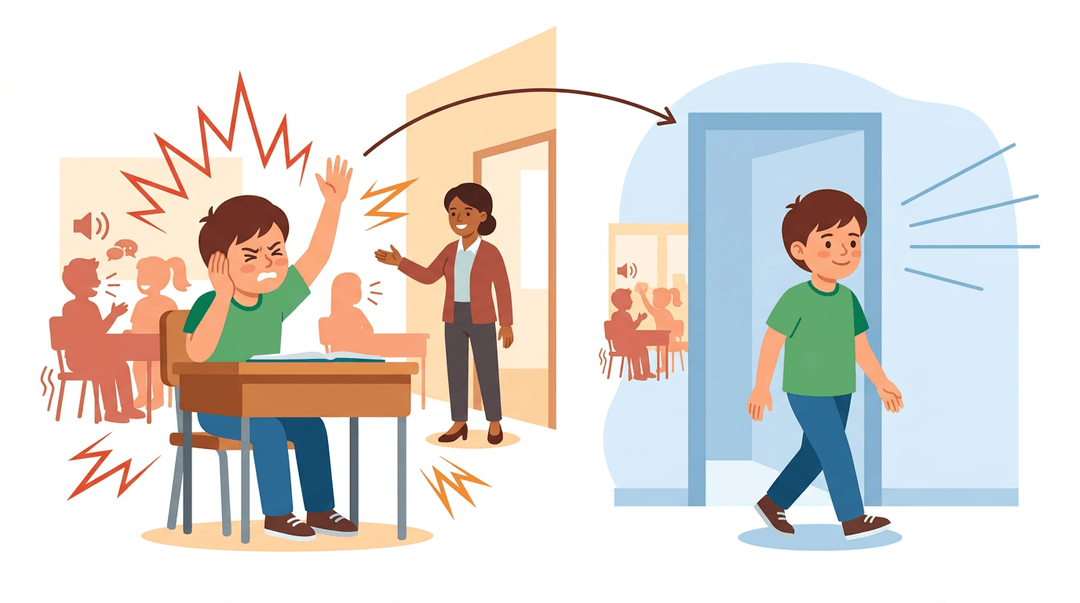
Escape learning happens when a behavior makes an unpleasant stimulus stop. The aversive event is already happening, and the response ends it. This is negative reinforcement in action: removing something unwanted strengthens the behavior that removed it.
Consider a student who raises a hand and asks for a break when classroom noise becomes too much. The moment the teacher grants the request, the noise (for that student) stops, and hand-raising gets reinforced.
Next time the room gets loud, that student reaches for the same behavior.
How avoidance learning is tested
Researchers study avoidance in a few structured ways:
- Discriminated avoidance trials. A warning signal comes before a shock. Respond during the warning, and the shock never arrives at all.
- Free-operant avoidance. No warning signal. Shocks arrive on a fixed timer unless the animal responds, which resets the clock.
- S-S and R-S intervals. The shock-shock (S-S) interval is the time between shocks if no response occurs. The response-shock (R-S) interval is how long a response delays the next one.
Why fear drives avoidance behavior
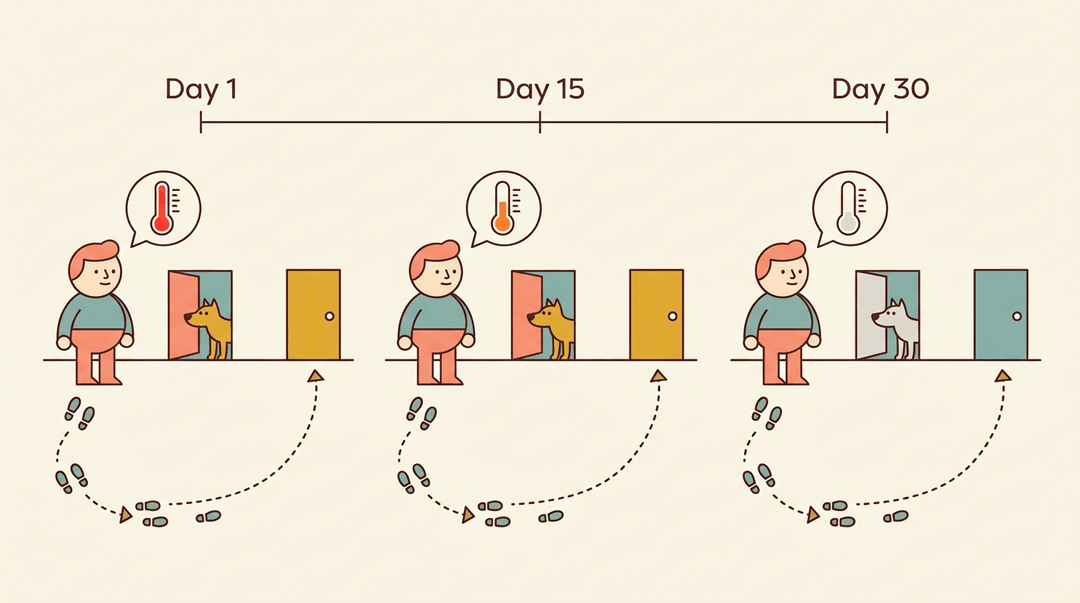
Avoidance is usually explained as a two-step process. First, a warning signal gets classically conditioned to fear through repeated pairing with an aversive event. Then, the escape response gets operantly reinforced because it reduces that fear.
That model has a real problem, though.
As Springer's review of two-factor theory puts it, the theory "is at odds with empirical findings that demonstrate sustained avoidance responding in situations in which the theory predicts that the response should extinguish."
In plain terms: if fear is doing all the work, avoidance should fade once the fear does. Often, it doesn't.
Why rats hoard food pellets
Operant hoarding studies show rats will accumulate food pellets rather than eat them right away, a finding confirmed in research on Long Evans rats. That's an odd result for animals assumed to be impulsive.
It matters because, as research on operant hoarding notes, this behavior contradicts standard impulsivity findings: the same animals expected to grab an immediate reward instead choose to stockpile for later.
The Brain Science Behind Operant Learning
Underneath every sticker chart and exit ticket, there's a biological process at work. Operant learning isn't just a theory of behavior: it's rooted in how your students' brains actually process reward and cue.
How dopamine reinforces behavior
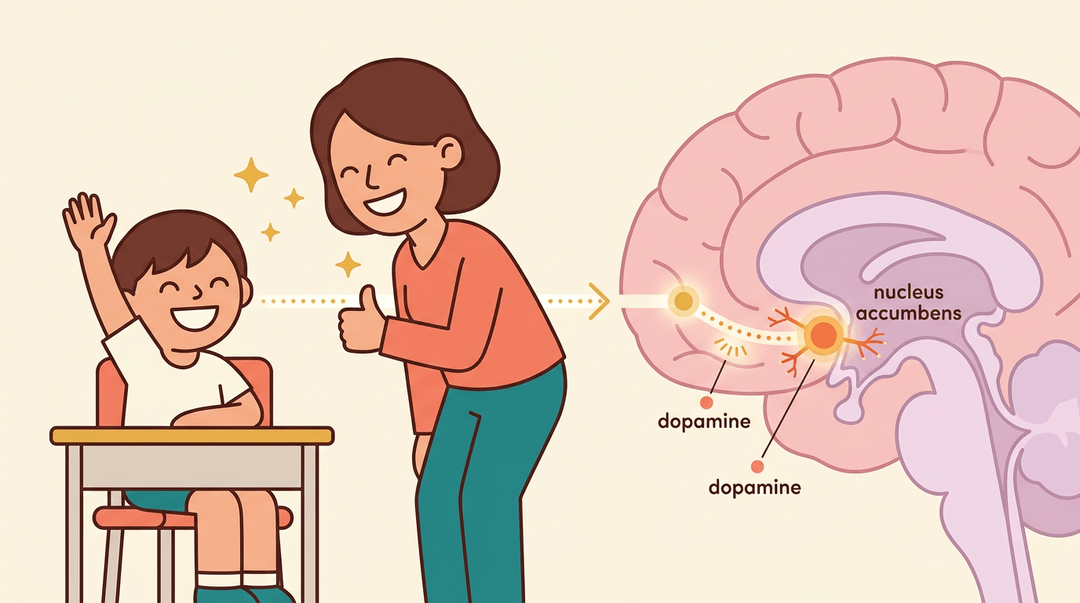
When a student gets it right and hears your praise, a small pulse of dopamine fires through the brain's reward circuitry, strengthening the synapses tied to that action.
Much of this activity centers on the nucleus accumbens, the brain's reward hub, which helps flag which behaviors are worth repeating.
Researchers studying value-based decisions in Parkinson's disease found that disruptions to dopamine signaling directly weaken reinforcement learning, offering strong evidence for dopamine's role in cementing behavior.
How the brain encodes learned cues
Cues get encoded too. The nucleus basalis releases acetylcholine that sharpens attention to a cue right as a behavior occurs, and repeated pairings drive neuroplasticity (physical rewiring) in the cortical regions tied to that cue.
Dopamine isn't only for rewards, either: it also shapes aversive learning, helping the brain flag what to avoid just as clearly as what to repeat.
When behavior happens without reinforcement
Not every behavior waits for a reward, though. Researchers studying autoshaping and challenges to the law of effect observed pigeons pecking a key that had no bearing on whether food appeared at all: behavior without reinforcement.
This pattern, known as sign tracking, shows animals (and arguably students) responding to a cue itself, not just its consequence. A related quirk, contrafreeloading, is when learners choose to work for a reward that's freely available anyway.
Further research on the timing of autoshaped keypecking suggests this isn't a break from operant learning at all: it's better explained as classical conditioning at work.
How to Apply Operant Conditioning in Everyday Life
Operant conditioning isn't confined to a lab with rats and levers. You'll find it quietly at work anywhere behavior meets consequence: your kitchen, your classroom, even the slot machines lighting up a casino floor.
Training animals with reinforcement
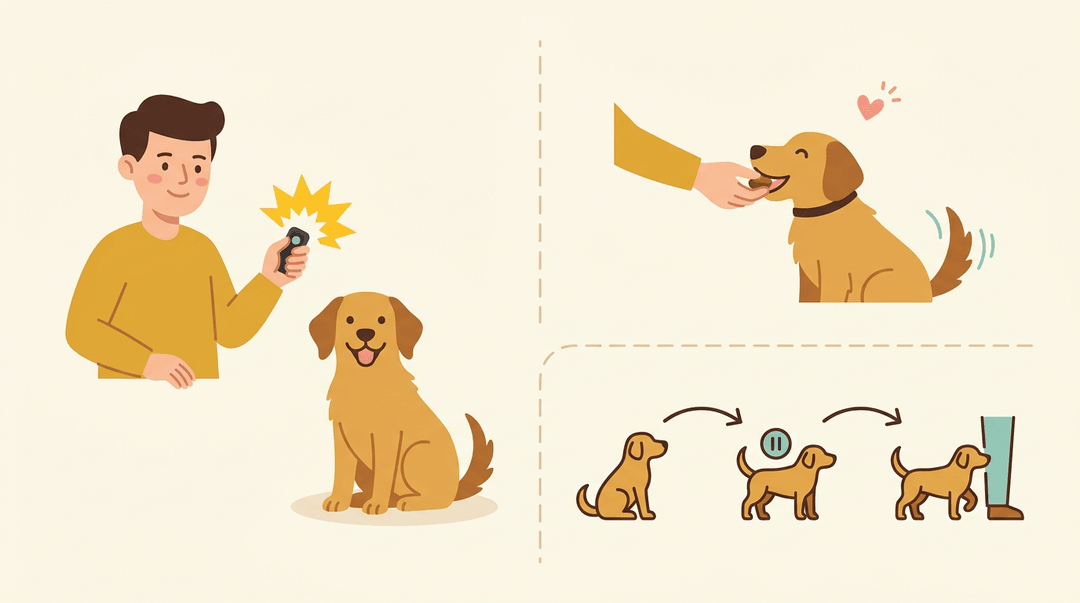
Dog trainers lean on primary reinforcers like food and secondary reinforcers like praise or a clicker's sound, paired with the primary reward until the sound alone carries meaning.
Clicker training works because the click marks the exact instant a dog does something right, and a treat cements it.
Trainers build complex tricks through shaping (rewarding closer approximations of the goal) and chaining (linking small steps into one smooth sequence, like sit-stay-heel).
Applied behavior analysis for autism
B.F. Skinner's work laid the groundwork for applied behavior analysis (ABA), a discipline that breaks skills into small, reinforced steps.
It's best known as an intervention for autism spectrum disorder, but its reach extends much further, shaping everyday social behaviors like sharing, eye contact, and following instructions.
Parenting and teaching with reinforcement
Parent management training teaches caregivers to reinforce wanted behavior instead of only reacting to unwanted behavior, often through consistent praise, one of the simplest forms of positive reinforcement.
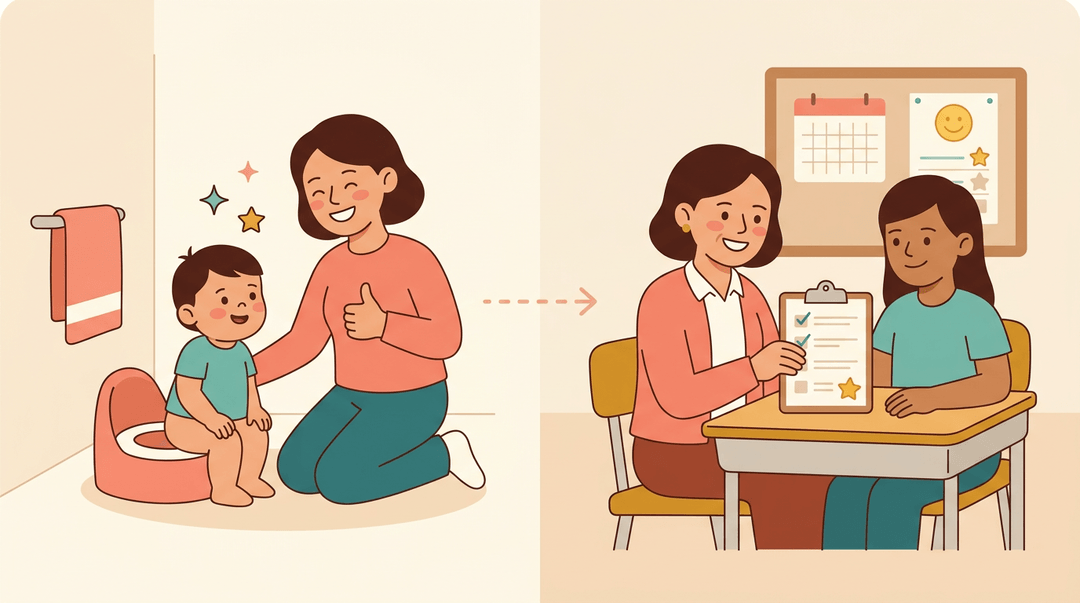
Consider a parent teaching a toddler to use the potty: each attempt closer to success earns encouragement, a string of successive approximations that eventually adds up to the full behavior.
In middle and high school classrooms, teachers use behavior contracts: written agreements spelling out expectations and rewards, giving older students a clear, self-monitored path toward better habits.
How addiction hijacks reinforcement
Addiction shows the same machinery working against someone. A drug can act as a powerful primary reinforcer, and repeated use builds incentive salience, the brain's tendency to flag drug-related cues as impossible to ignore, fueling craving.
Once dependence sets in, using again also relieves withdrawal, a form of negative reinforcement that keeps the cycle turning.
Gambling, games, and economic behavior
Reinforcement even shapes how we spend money. Economists use operant principles to explain consumer demand elasticity: how reliably a reward, like a discount, changes buying behavior.
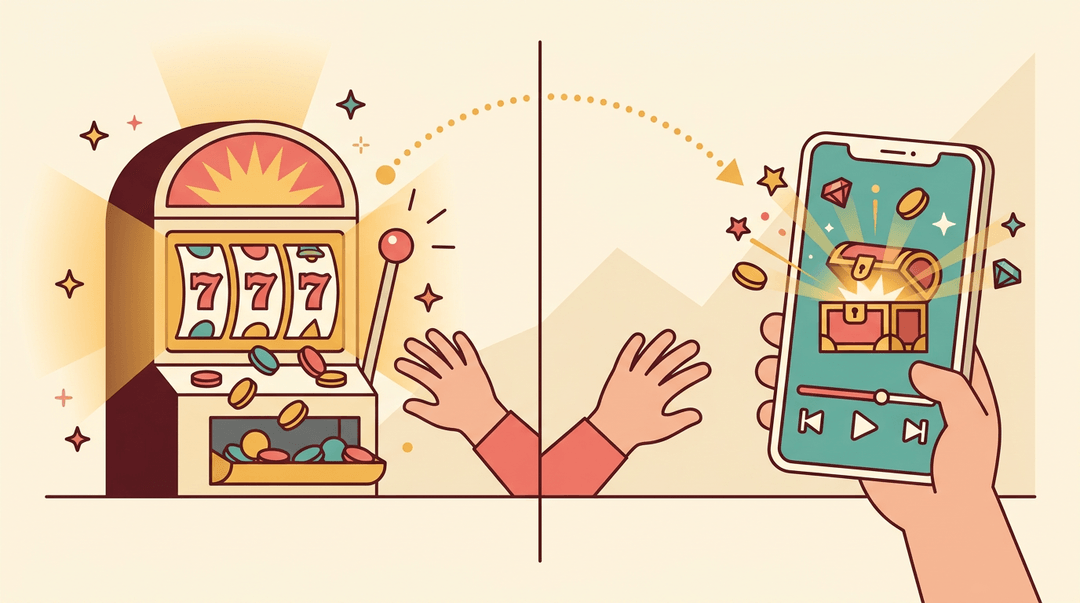
Slot machines run on a variable ratio schedule, paying out unpredictably, which is exactly why they're so hard to walk away from.
Video games borrow the same trick with compulsion loops that dole out small wins on an unpredictable schedule, and loot boxes have drawn real debate over whether they cross into gambling for younger players.
Training soldiers and institutions
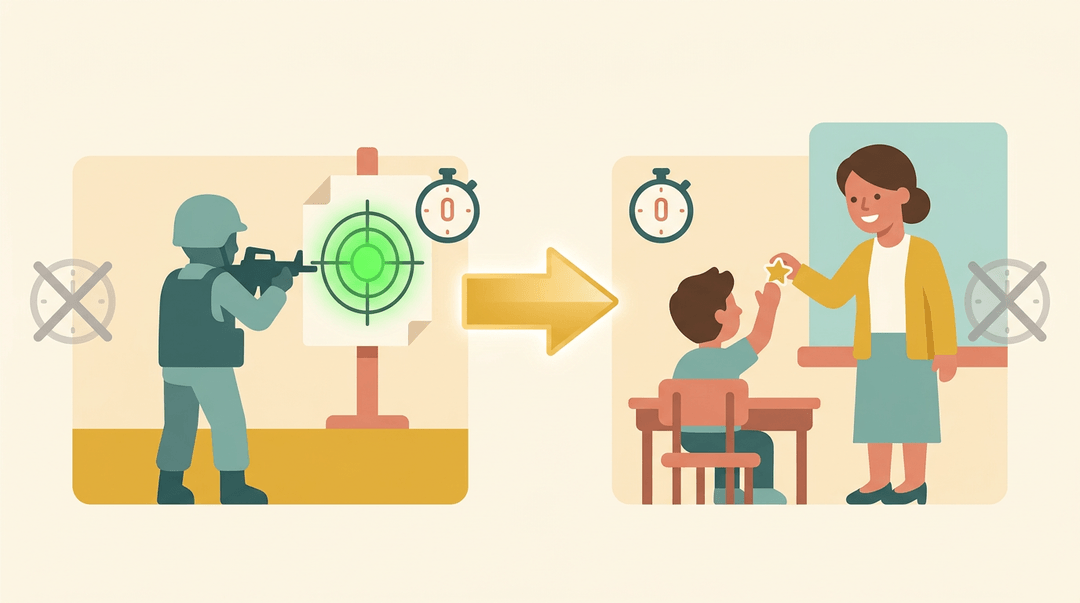
Institutions lean on reinforcement too. Marksmanship training depends on immediate feedback on target hits, since a delayed consequence teaches far less than an instant one. That principle traces back partly to historian S.L.A.
Marshall's WWII research into why so few soldiers actually fired their weapons in combat.
His book Men Against Fire "proposed solutions to the difficulties it disclosed, solutions that Marshall said were eventually incorporated into U.S. Army training procedures."
Hospitals show a similar logic: fear of malpractice consequences has pushed doctors toward defensive medicine, ordering extra tests to avoid punishment rather than purely to help the patient.
Operant learning isn't just psychology theory. It's a practical lens for shaping behavior, one response at a time, whether that's a student raising a hand instead of shouting out or a class settling into a smoother routine.
Once you see the reinforcement patterns, you can start using them on purpose instead of by accident.
Ready to build reinforcement strategies right into your weekly routine? Check out our Lesson Planning tool to organize and reuse plans that make good behavior easier to reward, class after class.
References
- On the origin and functions of the term functional analysis — pubmed.ncbi.nlm.nih.gov
- On Chomsky's Appraisal of Skinner's Verbal Behavior : A Half Century of Misunderstanding — pmc.ncbi.nlm.nih.gov
- Differentiating reinforcement learning and episodic memory in value-based decisions in Parkinson’s Disease — jneurosci.org (2025)
- Thinking Outside of the Box: 100 Years of Educational Psychology at TC — tc.columbia.edu
- Steps and pips in the history of the cumulative recorder. — pmc.ncbi.nlm.nih.gov
- Two-factor theory, the actor-critic model, and conditioned ... — link.springer.com
- Sex differences in food hoarding behaviour of Long Evans rats — pubmed.ncbi.nlm.nih.gov
- Operant hoarding: a new paradigm for the study of self-control — pubmed.ncbi.nlm.nih.gov
- The source of keypecking in autoshaping | Learning & Behavior — link.springer.com
- Temporal factors influencing the acquisition and maintenance of an autoshaped keypeck — doi.org (1975)
- The Secret of the Soldiers Who Didn’t Shoo..(Mar 89,Vol:40 Issue:2) — americanheritage.com
Frequently asked questions
What is another name for operant learning?
Operant learning is also called instrumental conditioning. Both terms describe learning in which voluntary behavior is shaped by its consequences.
What is operant behavior?
Operant behavior is voluntary behavior that an organism emits or chooses to perform. Its likelihood changes depending on what follows it, such as reinforcement, punishment, or no payoff.
What is operant conditioning for dummies?
Operant conditioning is learning through consequences. Behaviors followed by rewards or other reinforcement become more likely, while behaviors followed by punishment or no reinforcement become less likely.
How to apply operant conditioning in everyday life?
Choose a specific behavior, identify a consequence that matters to the person, and deliver it immediately after the behavior. For example, praise a student for raising a hand, give a dog a treat for sitting, or reward yourself for completing a workout, then gradually reduce tangible rewards as the behavior becomes established.
What is an example of operant conditioning in your own life?
One example is using a checklist to finish a task and then allowing myself a preferred activity afterward. Because the activity follows task completion, it can reinforce completing the task in the future.
What are examples of classical and operant conditioning?
Classical conditioning includes salivating at a bell after the bell has been paired with food or feeling anxious when hearing a pop-quiz announcement. Operant conditioning includes a dog sitting to earn a treat or a student studying harder because studying previously improved grades.
What does "operant" mean?
“Operant” comes from “operate” and refers to behavior that an organism voluntarily performs. In operant learning, that behavior is shaped by the consequence that follows it.