Matthew Effect in Reading: What It Is and How to Stop It


Jump to section
Picture two students who start the year at about the same reading level. One reads a little every night and grows more confident with each book. The other dreads reading time, skips the hard parts, and slips further behind each month.
That's the Matthew effect in reading: stronger readers tend to get stronger, and struggling readers tend to fall further back.
The good news is that this cycle isn't fixed. In this post, we'll explore where the term comes from, what builds strong reading skill, and how you can plan lessons that help close the gap.

What the Matthew Effect in Reading Means
Small reading gaps rarely stay small.
How the rich-get-richer pattern plays out
The Matthew effect is a term that Robert K. Merton coined, drawing on a biblical text, to describe how advantages accumulate. Keith E. Stanovich later applied the concept to differences in reading development.
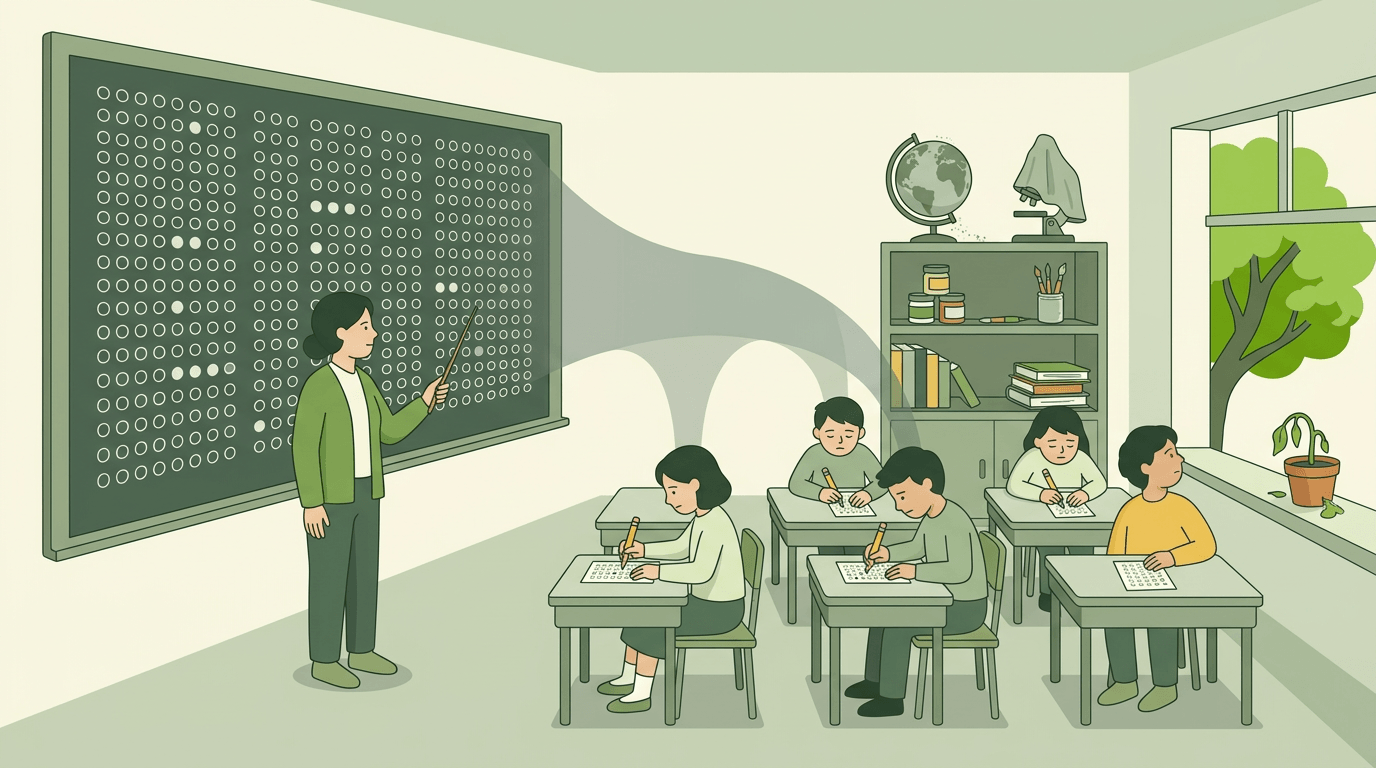
In reading, the rich get richer. Fluent readers read more, and each book makes the next one easier. Struggling readers avoid reading, so they read less when they need to read more.
Picture a third grader who finds reading hard. By October, she's choosing the thinnest picture books, while her classmate is halfway through a chapter book. By spring, that gap in practice has become a gap in skill.
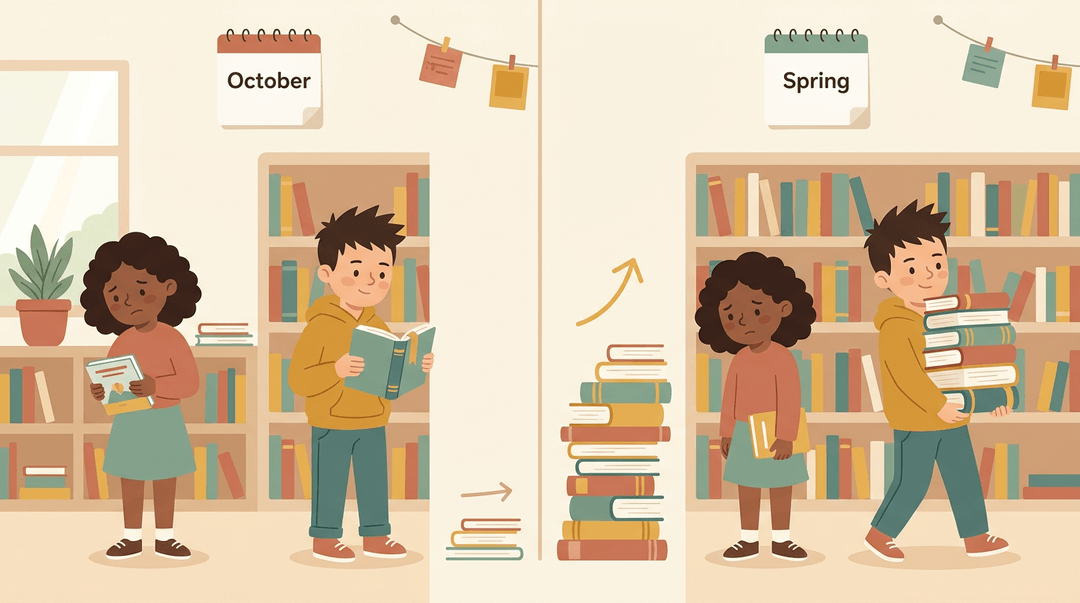
How the reading gap keeps growing
Because reading builds on itself, the gap rarely holds steady. Each year of extra practice adds to the strong reader's lead, while avoidance widens the struggling reader's distance.
Lower skill leads to less reading, which slows growth and makes the next text harder. This is a negative perpetuating cycle, and once a student is caught in it, it feeds itself. Interrupting that loop is where you come in.
Reading is also a major source of background knowledge and vocabulary. A student who reads less can fall behind in the words and concepts that science and social studies require. That's how a reading gap becomes a learning gap.
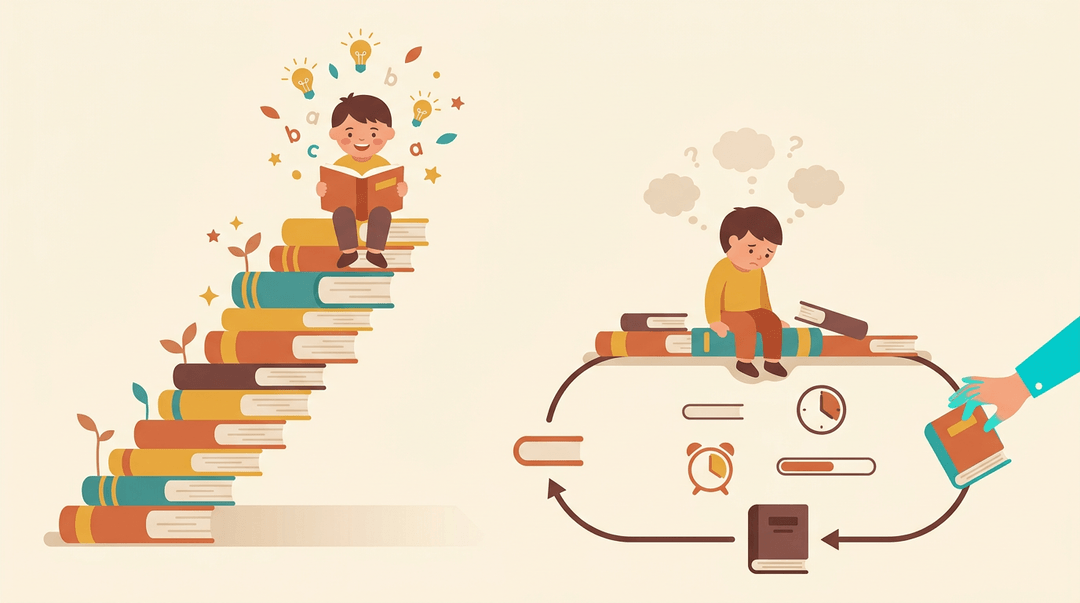
Why reading shapes the rest of life
Reading affects nearly every part of life, from math word problems to test directions and everyday paperwork.
Reading-for-pleasure programs aim to build lifelong readers, but the Matthew effect can flip that goal. The students who most need the pleasure of books often find reading least rewarding, so the habit never forms.
What Builds Strong Reading Skill
Strong readers aren't born with a secret skill. They're built, and we can build them one lesson at a time.
Building comprehension on vocabulary and grammar
Comprehension rests on language. The Education Endowment Foundation (EEF) identifies vocabulary and grammar as foundations of reading comprehension in its House of Reading model.
Readers need a rich vocabulary and an understanding of grammar and syntax (how sentences are built) to make sense of text. The model draws on work by Hogan et al.
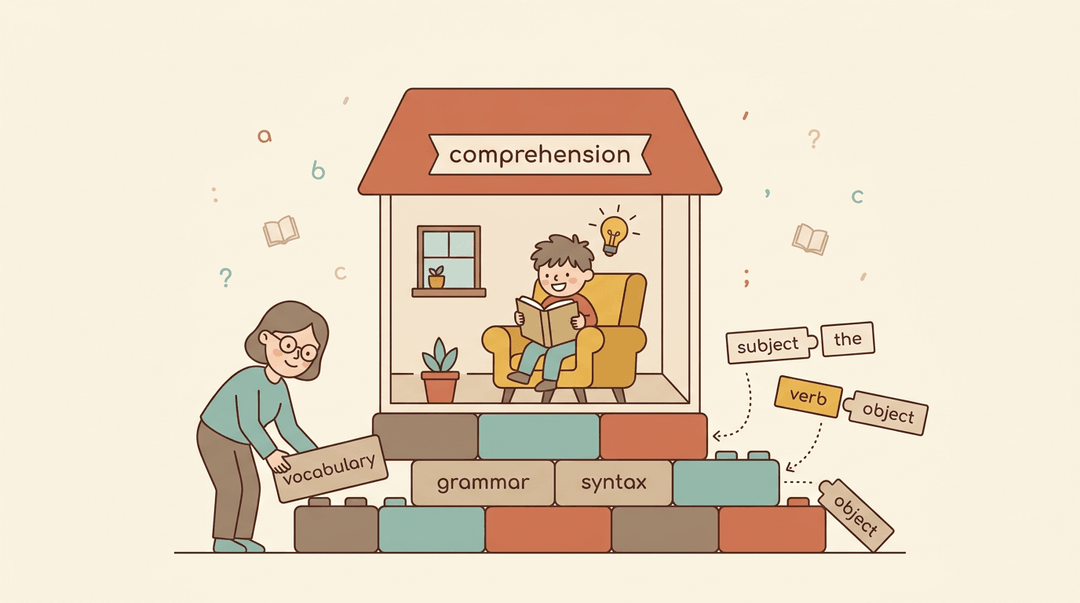
Teach the skills directly, step by step
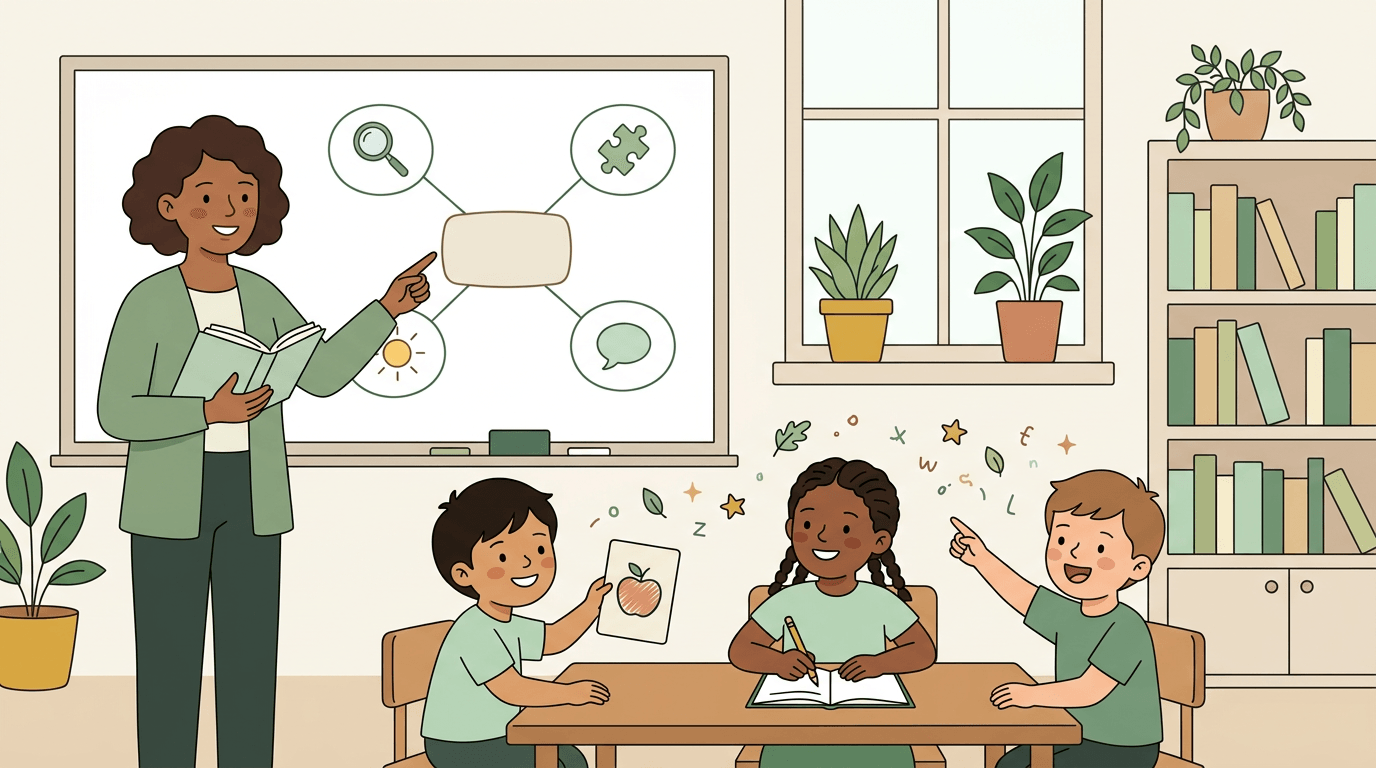
Teach vocabulary directly by picking the words students will meet in the text and showing what they mean and how they connect to the passage.
A fourth-grade science teacher, for example, might introduce sediment and erosion with a photo before reading, so students focus on the ideas.
Teach grammar patterns by showing how sentences are built: who's doing what, and how one clause links to another. It's less about memorizing grammar terms and more about noticing how sentences work.
Use explicit instruction for the alphabetic code, which links letters to sounds. Name each sound, model it, and practice together before students read alone.
Phonics teaches this code step by step, and it builds decoding, the skill of sounding out and blending words.
Build reader confidence with texts students can read accurately, and celebrate specific wins. A second-grade teacher who swaps a hard read-aloud for a shorter book her class can read solo may have a reluctant reader asking for more by Friday.
Confidence grows one decoded word at a time.
Scaffold new words with gradual release in three steps:
- Model: you show the word and how you figured out its meaning.
- Guide: you and the class work through a new word together.
- Release: students use the word on their own.
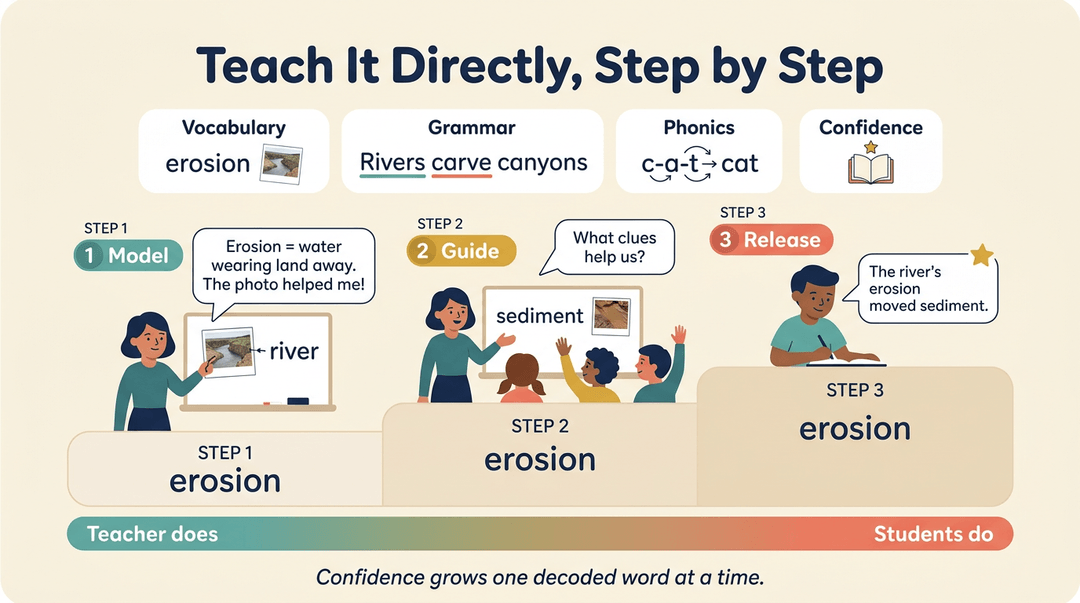
Lesson Steps to Close the Reading Gap
Use this guide to plan each reading lesson around one goal, match it to each reader's level, and keep the whole week on track. We've built it so you can run it straight from the page.
The four-part lesson
Every lesson follows the same order, so students always know what's coming.
- Set one decoding objective
- Write it on the board: "Today I can read words with the vowel team ai."
- Preteach key vocabulary
- Pick three or four words from today's text.
- Say: "This word is drizzle*. Say it with me, then use it in a sentence."*
- Run a gradual release read-aloud
- I do: "Watch how I sound out this word, then reread the sentence."
- We do: read the next page together.
- You do: students read a page while you listen.
- Finish with an exit ticket
- Students write two ai words and read one sentence aloud to you.
Example: A second-grade teacher sets the objective "read words with ai," preteaches drizzle and trail, and models page one. After the "you do" page, each student writes rain and wait on a slip and reads it aloud on the way to recess. The slips tell her who needs the objective again tomorrow.
Adjust for each reader level
Keep the lesson goal the same and change the support. Find the student, read across.
| When you see... | Try... |
|---|---|
| Students reading at a similar level | Small-group leveled texts: one text per group, matched to their level |
| Fluent, motivated readers | Independent choice reading: let them pick the book |
| A student stumbling on the objective | Extra modeling: repeat your think-aloud before "we do" |
| A pair with one stronger reader | Partner reading: take turns, stronger reader models first |
⚠️ Watch out: Struggling readers often get the least actual reading time, which is how the gap widens. Protect their volume first.
Weekly planning checklist
Before you lock your plan for the week, confirm:
- Daily reading volume goal: every student has a set amount of reading time each day.
- Small groups rotate: no group sits in the same slot all week.
- Progress notes logged: one line per student, such as "ai words: secure" or "needs reteach."
- Successful plans reused: a lesson that worked goes back in the rotation with new text.
Your exit tickets feed the progress notes, and the notes decide next week's groups. That loop is what steadily closes the gap.
Save and reuse differentiated reading plans with EMStudio's online lesson planner.
Classroom Strategies That Stop the Slide
The Matthew effect gets harder to reverse the longer it runs, so act early and keep the room encouraging.
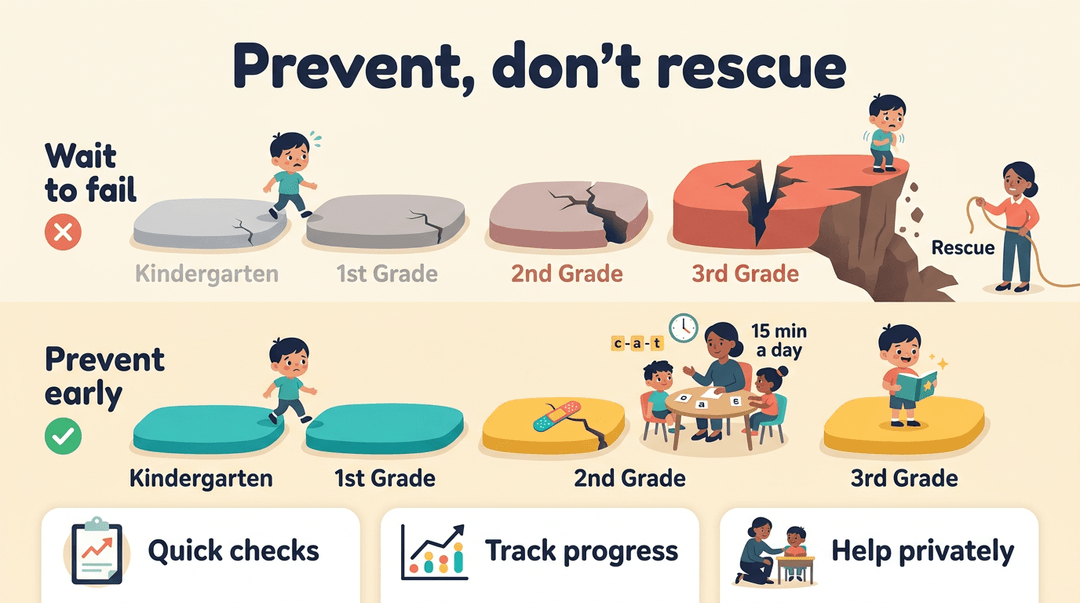
Catch struggling readers before third grade
Intervene before third grade, not after. A recent Education Week article describes one district's plan to act early, to "inoculate students against reading problems rather than trying to remediate later."
That's the preventative model, aiming for prevention rather than rescue.
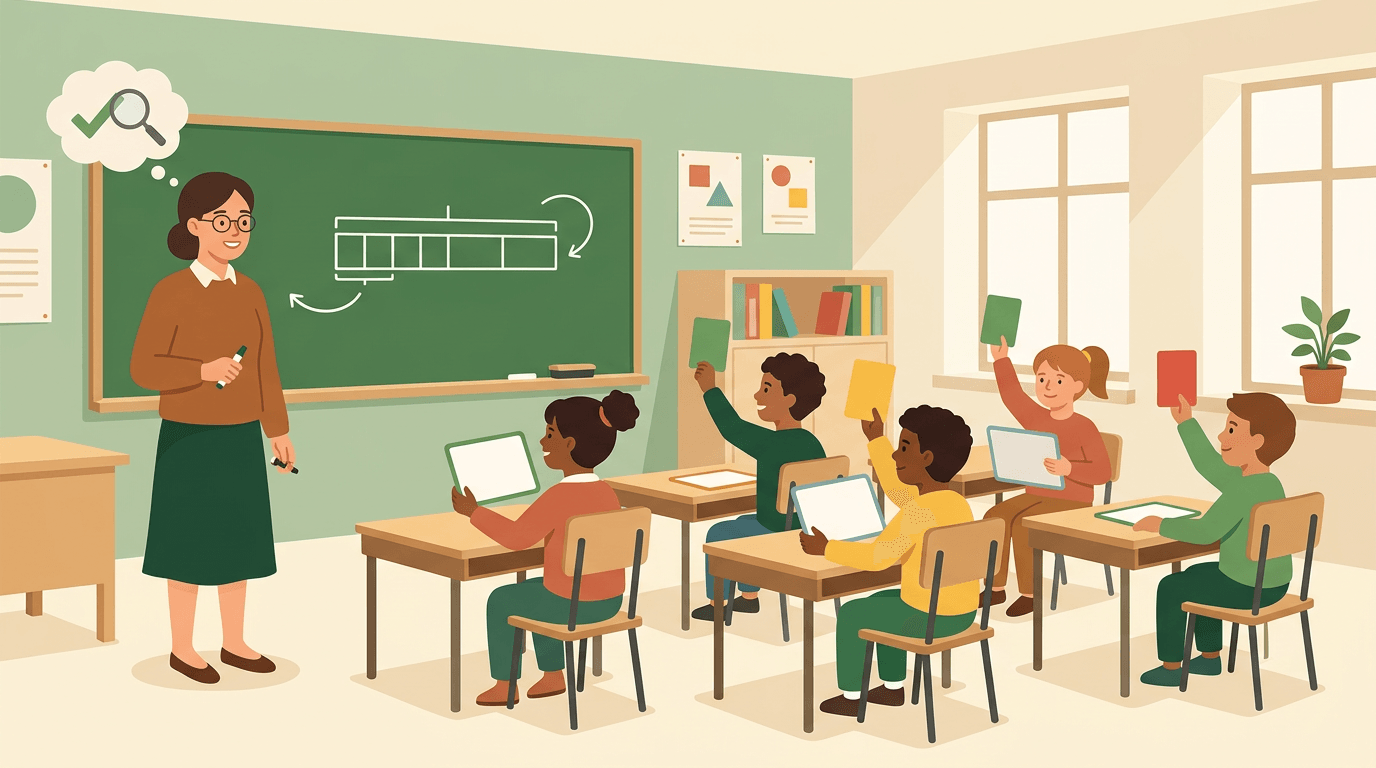
End the "wait to fail" habit by planning short intervention blocks into your weekly lessons. Use progress monitoring and quick screenings, regular checks that show whether a student is actually growing. Protect self-esteem by offering help privately.
Consider a second-grade teacher who sets aside 15 minutes a day for a small decoding group. Students practice sounding out unfamiliar words, and small problems get caught before they snowball.
Keep the classroom calm and encouraging
Students take risks when they feel safe, so build a positive, calm classroom space with predictable routines. Start the day with Morning Meeting, a short daily circle that strengthens the social-emotional climate (how safe and connected kids feel).
Give every student a turn to shine, not just the fastest readers, whether that's leading a read-aloud or explaining a strategy.
Spotting avoidance and building a growth mindset
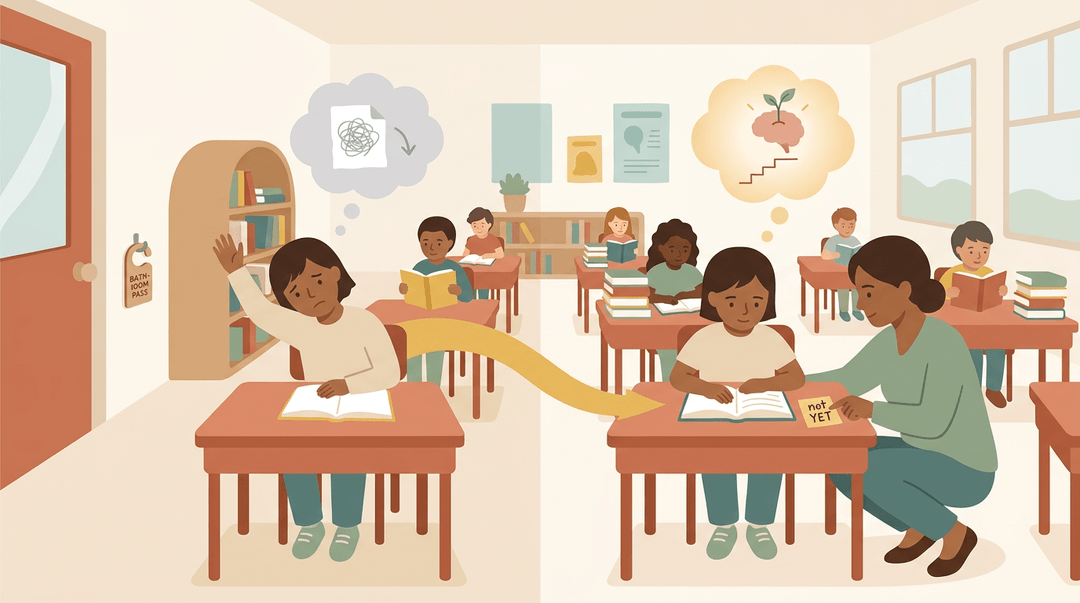
Avoidance often looks like misbehavior, such as a student who suddenly needs the bathroom during reading. Spot these at-risk behaviors early, since they can signal a skill gap.
Repeated failure can lead to learned helplessness, where students decide trying won't matter. A growth mindset pushes back by treating ability as something that grows with effort. Swap "This is too hard" for "This is too hard yet."
Explain that the brain grows with practice and learners progress at different paces. Struggle is information, not a verdict.
Involving families and adding tutoring
Lead with empathetic family communication: share what you're seeing and one simple way families can help at home. Small-group or 1:1 tutoring adds focused practice, but tutoring access varies, so start with what you have.
Homeschool parents and tutors can adapt these ideas:
- Homeschool: keep reading blocks short and daily, and track growth with the same simple checks.
- Tutors: mirror the classroom's focus skills and language so students get one consistent message.
Where Reading for Fun Helps and Stops
Reading for fun helps, but it isn't a cure-all. Here's where it holds and where it runs out.
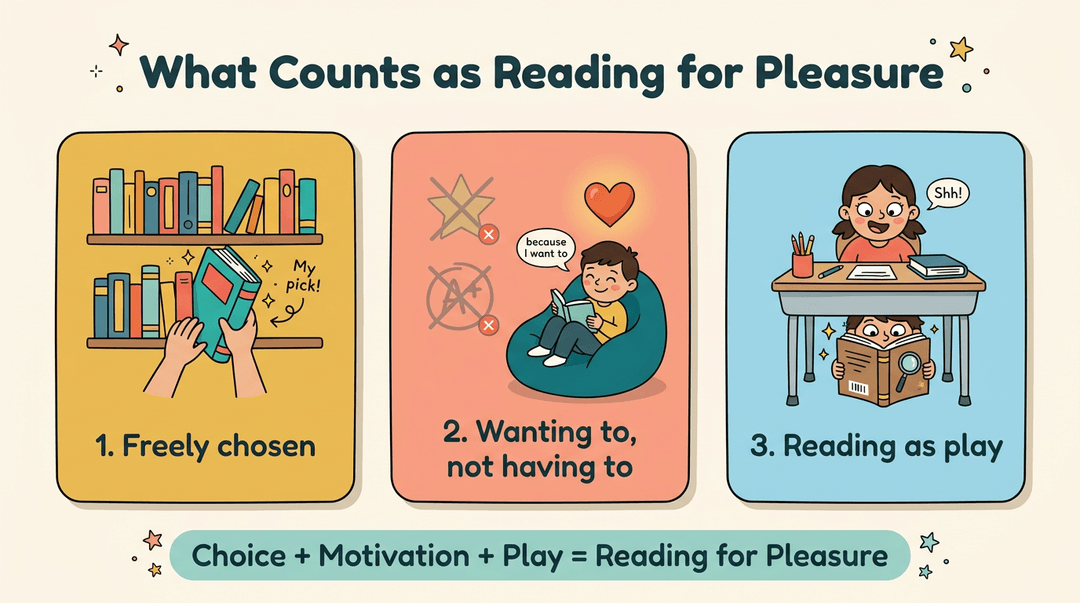
What counts as reading for pleasure
It rests on three ideas:
- Freely chosen reading. Students pick their own books.
- Intrinsic motivation. Students read because they want to, not for a grade or sticker.
- Reading as play. A student sneaking a mystery under her desk reads for the pure fun of it.
The benefits research has found
Research from the Organisation for Economic Co-operation and Development (OECD) showed that reading enjoyment matters more for children's educational success than family socio-economic status (income, education, and occupation).
A meta-analysis of extensive reading in second and foreign language learning reports positive effects on writing too.
Vocabulary and comprehension gains show up as well. That meta-analysis found positive, small-to-medium effects on both.
Research into young people's attitudes tracks their perceptions of themselves as readers, a self-image you can help build.
Books also build cultural understanding, opening windows onto other cultures and lives unlike a student's own.
Why simply getting students reading falls short
Does enjoyment make students better readers, or is it the reverse? The causal direction is unclear.
As a five-year randomized trial in high-poverty schools notes, the same is true of books: it's unclear whether they directly improve outcomes or simply reflect family resources.
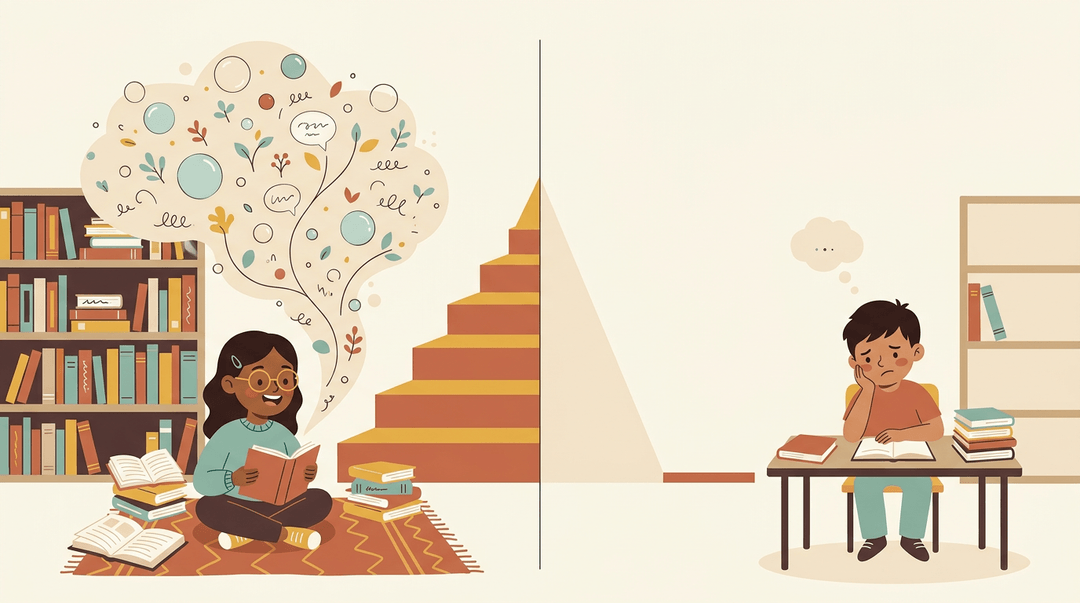
Students who are word-rich arrive with more words, so each new book builds on what they know. Word-poor learners start with fewer words, read less, and the gap widens.
When reading is hard, it stops being fun. A fourth grader who stumbles through every paragraph has little reason to pick up a book, so the students who need practice most get the least.
Research on reading for pleasure includes statistics on how much children read and how many books they have at home. A full shelf alone won't close the gap.
Tools and Programs That Can Help
Software can take some of the repetitive practice off your plate, freeing you up for the small-group work only you can do. Here's what to look for in vocabulary and grammar tools.
Vocabulary and grammar practice that adapts
Start with programs built around targeted academic vocabulary: the words that show up across subjects, like analyze, evidence, and infer, rather than only the words from a single story.
The goal is to help students use a word in their own writing, not just recognize it on a page.
Many of these tools run an adaptive algorithm, a set of rules that adjusts each question's difficulty based on how a student responds. Answer several items correctly, and the next one steps up. Stumble, and the program offers a simpler item or a hint.
Grammar works the same way: a student who has mastered plural nouns moves on to possessives, while a classmate still mixing them up gets another round. The shift is from practice that repeats to practice that responds.
Consider a fourth-grade teacher whose class ranges from students still sounding out multisyllabic words to a few already reading chapter books on their own.
During the same literacy station rotation, an adaptive tool can give the first group more practice on word parts while moving the second group into richer, more advanced vocabulary.
That matched practice gives both groups room to grow, which is the heart of closing the gap. Strong readers stay challenged, struggling readers get support, and you get to spend your minutes with the students who need you most. Nobody sits idle.
Reading gaps rarely close on their own, but they can shrink when you act early and consistently. Every day a struggling reader avoids text is practice they miss, so your planning and early attention make a real difference.
Ready to plan your next reading block with less prep? Check out our Lesson Planning tool to write, organize, and reuse lesson plans across multiple classes from one place.
References
- Learning a Language Through Reading: A Meta-analysis of Studies on the Effects of Extensive Reading on Second and Foreign Language Learning | Educational Psychology Review — link.springer.com (2025)
- Cumulative access to print books improves literacy achievement: Evidence from a five-year randomized trial in high-poverty schools — pmc.ncbi.nlm.nih.gov (2026)
- ED541400 — files.eric.ed.gov
- The Influence of Reading on Vocabulary Growth: A Case for a Matthew Effect — pmc.ncbi.nlm.nih.gov (2015)
- The Case for Reading Tutoring Before 3rd Grade, Not After — edweek.org (2026)
- The House of Reading: An Interactive Tool — educationendowmentfoundation.org.uk (2023)