Learning Centers Explained: Meanings, Setup, and Benefits

Jump to section
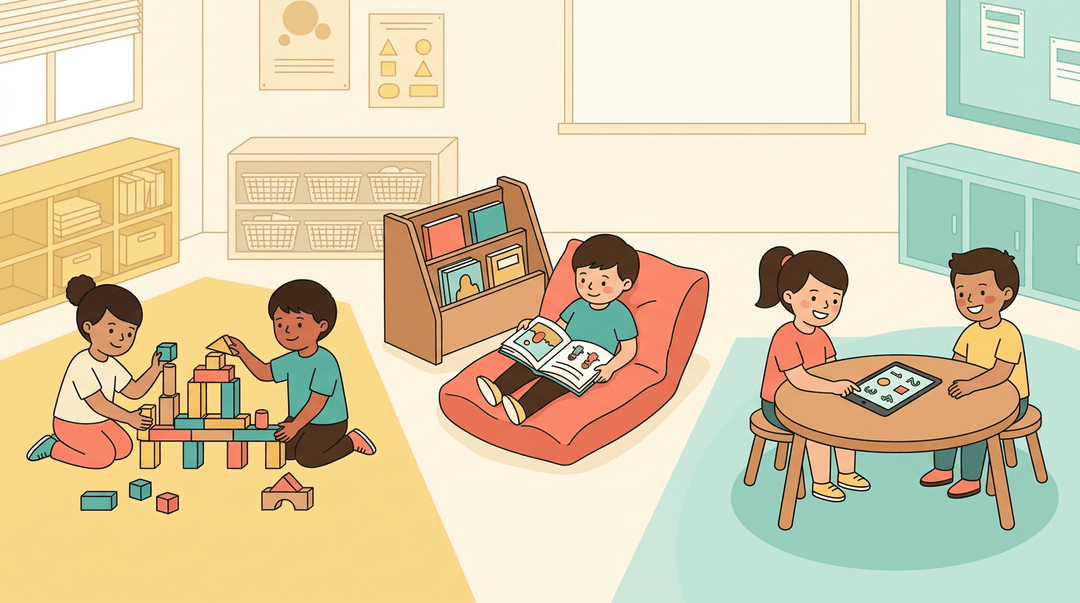
Picture walking into a classroom where one group is building a bridge out of blocks, another is curled up with a book, and a third is working through a math game on a tablet.
Nobody is waiting for the teacher to tell them what to do next. That's the power of learning centers.
The phrase gets used for a few different things: small stations inside a classroom, education centers that offer structured programs, and daycare brands that share the name.
In this post, we'll untangle each meaning, explain how they differ, and walk through a setup you can use in your own classroom.
What Is the Purpose of a Learning Center?
Ever wonder why some classrooms hum with small groups while others feel quiet and orderly? The answer usually starts with the purpose behind the setup. Here's what that purpose looks like.
A vision for fun, community-driven learning
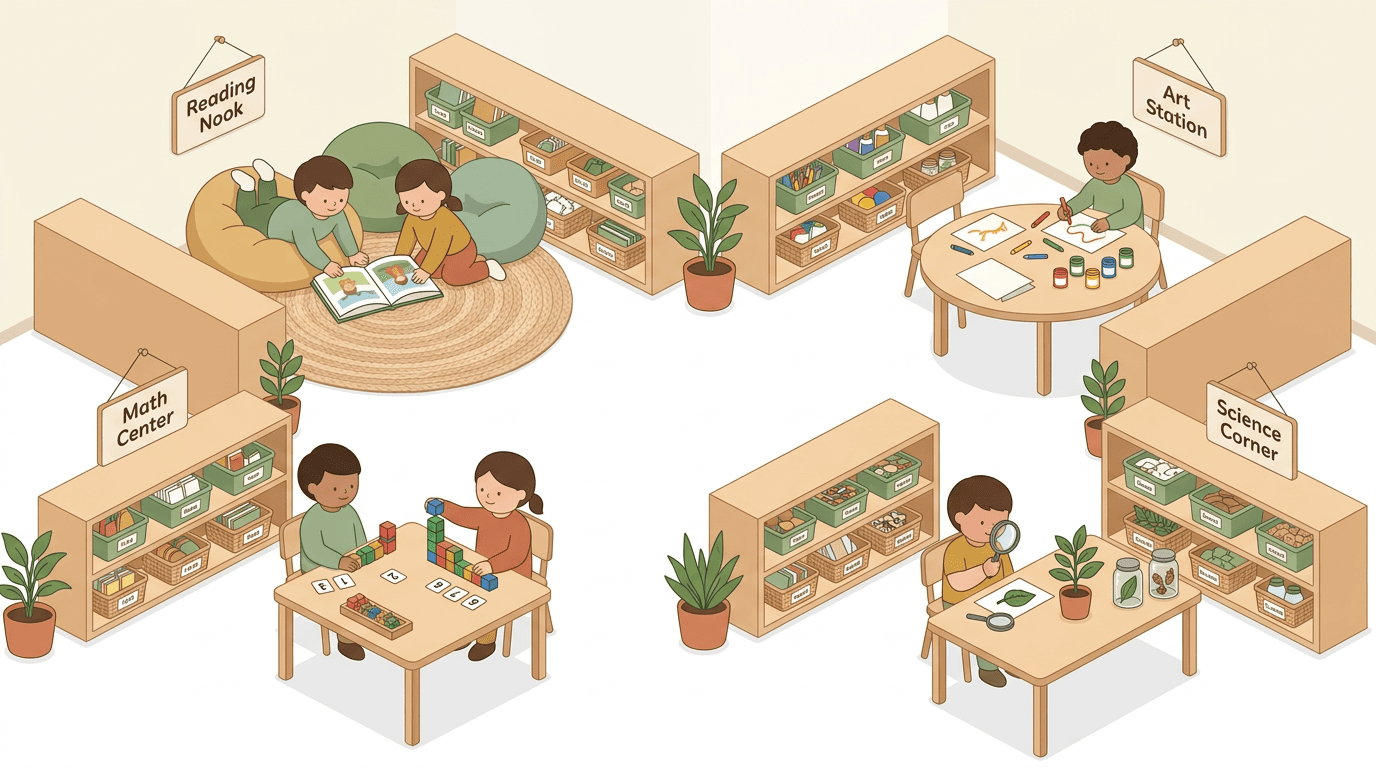
A learning center is a dedicated corner or station where young learners explore, practice, and grow at their own pace. Its core purpose is to make learning hands-on and personal.
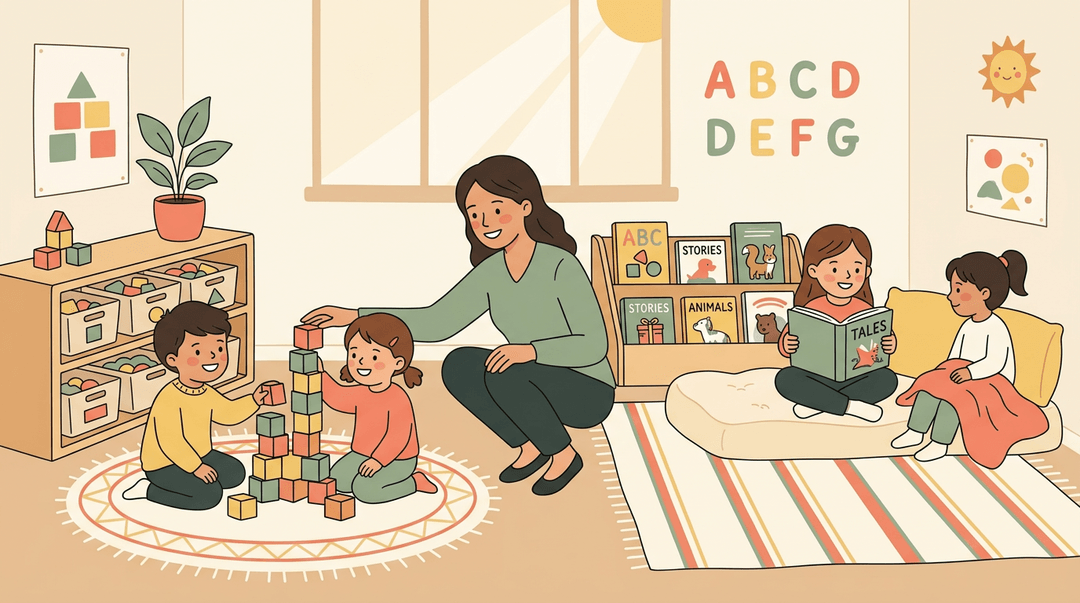
Think of a kindergarten teacher who sets up a blocks corner and a reading nook. Her students build, sort, and read in small groups, and she can check in on each one while the rest of the room keeps humming along.
Centers aim to be a leader in early education, with a community-focused education goal at the heart of it: children learning alongside peers, families, and teachers.
The purpose is less about what children memorize and more about how they engage with ideas. The approach blends fun learning with real skill building, so play feels like learning and learning feels like play.
Curiosity wins when kids are having a good time.
What Are Learning Centers in Education?
Learning centers are designated areas or stations where students work on focused tasks, often independently or in small groups.
In a classroom, they're the reading nook, the math manipulatives table, or the science discovery bin your students rotate through. In education more broadly, the term describes any purposeful setup that lets learners practice a skill at their own pace.
Common examples include a writing station, a listening corner, a building table, and a plant-care spot.
Supporting kids' whole development
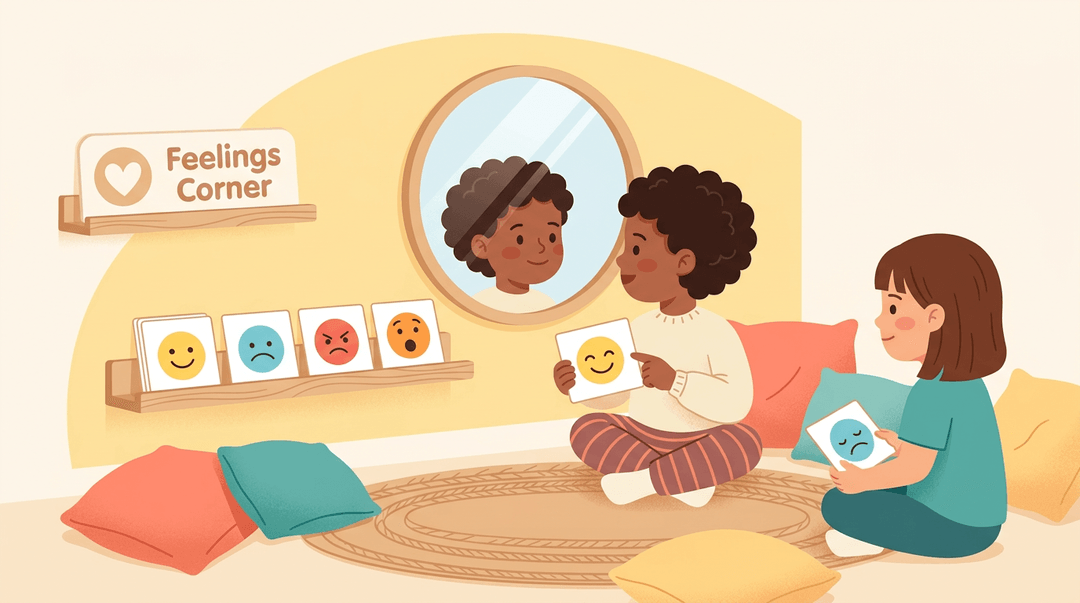
Centers do more than teach academics. Think of a kindergarten teacher who sets up a feelings corner with mirrors and picture cards, so students practice naming emotions before conflicts arise. That's the emotional intelligence focus at work.
When a center follows a research-based curriculum like Committee for Children's Second Step program, you know the activities are built around foundational social-emotional skills.
A preschool block center builds problem-solving skills, while a fourth grader's logic puzzle station stretches reasoning. Match each center to where your students are developmentally.
Link every center to a lesson objective. If the goal is comparing fractions, the station should require comparing fractions, not just sorting shapes.
During centers, use formative checks like a quick checklist or exit slip to see who's ready and who needs a small-group reteach.
Learning through nature and the outdoors
Natural environments turn a center into a living lab. Consider a second-grade class with a plant-grow-harvest station, where students plant beans, track height weekly on a chart, and harvest them for a snack.
Outdoor classroom design can start small: a shaded bench, a planting bed, and clipboards for observations.
Building community and environmental stewardship
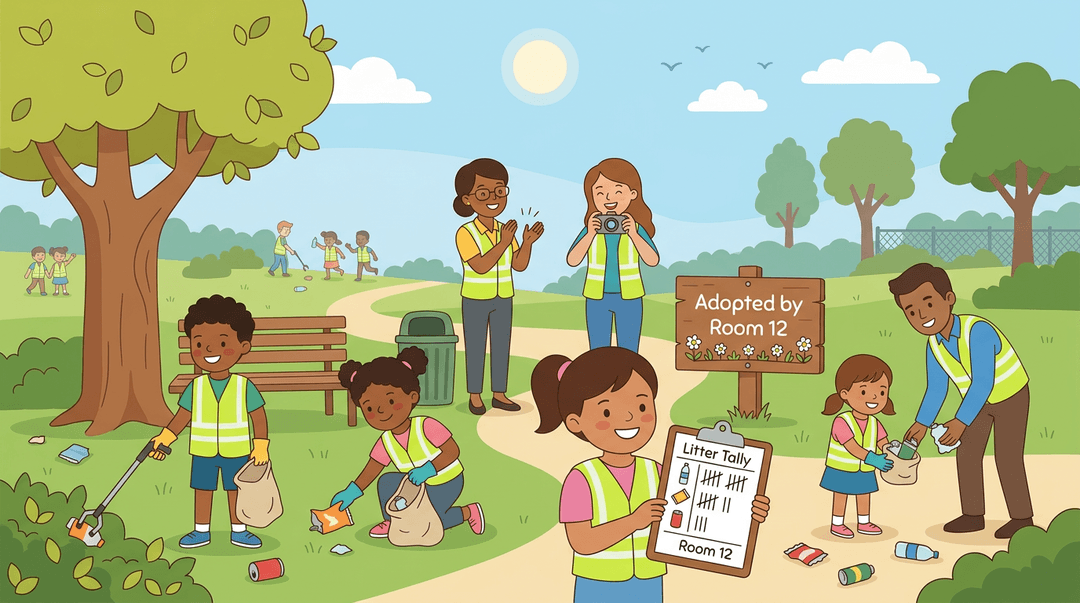
Centers can teach environmental stewardship beyond the walls. A class might adopt a corner of a neighborhood park, organize a cleanup day through community partnership events with families, and tally litter as a data task.
Students learn to care for shared spaces, and the neighborhood improvement focus gives the work real purpose.
Celebrating diversity and inclusion
Each center can celebrate individual diversity: a family heritage station where students share songs, stories, or recipes. Rotate roles so every student leads at least one center, building an inclusive community of learners.
Shared goals, like one harvest or one cleanup, unify the class around something everyone can own.
How to Set up Learning Centers in Your Classroom
Use this guide when you want stations running smoothly by the next lesson. It covers planning the rotation, choosing center ideas for your grade level, and a final check before students arrive.
Plan your rotations
- Map each center to one objective
- Post it as a student-friendly line: "Center 2: I can add fractions with unlike denominators."
- If a center doesn't serve an objective, cut it.
- Set the rotation timing
- Pick one length and stick to it, such as 12 minutes plus 2 to move.
- Younger learners need shorter rounds.
- Assign small groups
- Aim for 3 to 5 students per group, mixed or by readiness.
- Write group names on the board with their starting center.
- Open with a quick bell ringer
- Put one problem or prompt on the board for students to start on their own.
- Say: "Solve the one on the board, then wait for the timer."
Choose centers by grade level
Match the center's format to how your learners work best.
| Level | Center type | Example |
|---|---|---|
| Preschool | Sensory play centers | Sand and water bins with scoops |
| Elementary | Literacy and math stations | Partner reading, fraction card games |
| Secondary | Inquiry and STEM labs | Build and test a paper bridge |
| Tutoring | 1:1 skill stations | One skill per station, such as sight-word drills |
Example: A fourth-grade teacher runs three stations: partner reading, a fraction card game, and a teacher table. Each station posts its objective and has an exit ticket. Groups rotate when the timer rings, and the teacher table gets every group once.
Check before students arrive
Confirm each of these before the bell:
- Objective posted clearly: students can read it from their seats.
- Materials pre-sorted: each station has its own labeled bin, so no one hunts for supplies.
- Timer visible: everyone can see the countdown, so you aren't the clock.
- Exit ticket per station: one quick question or task students finish before moving on.
⚠️ Watch out: Don't skip the exit ticket to save time. It's how you learn whether each center did its job.
Build and reuse center-based lesson plans in EMStudio's online lesson planner.
Keeping Kids Safe and Healthy
Parents and educators want the same thing from a learning center: children who feel secure, cared for, and well fed. Here's what that looks like day to day.
A safe, nurturing space for kids
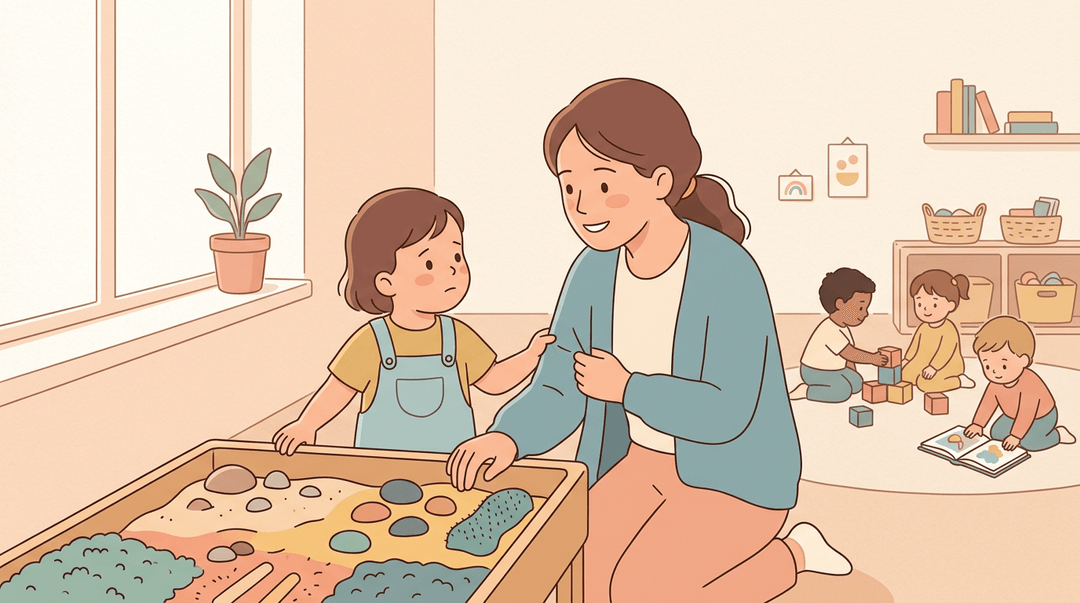
A learning center should be a safe haven for children, a place they can count on from the moment they walk in. Picture a toddler who arrives wary and clingy.
A caregiver who greets her by name and sits with her at the sensory table can turn that morning around.
Nurturing care matters at every age, from toddlers to school-age kids. The best centers also build a safe and kind culture. Children learn kindness by watching how adults treat them and each other.
Safety is about kids feeling secure, not just being supervised.
Health and safety you can trust
Look for rigorous health protocols that staff follow every single day, not just when someone's watching. Clear routines for:
- handwashing
- illness
- cleaning
protect every child in the room.
Nutritious food options matter too. Meals and snacks should give kids steady energy for learning and play. Consider a five-year-old who skips lunch because the food is unfamiliar.
A center that offers balanced, familiar choices helps her eat well and stay focused all afternoon.
Finally, healthy physical activity keeps bodies and minds sharp. Kids need time to run, climb, and move. Movement isn't a break from learning. It's part of it.
What's the Difference Between a Daycare and a Learning Center?
Parents and educators often use these terms interchangeably, but they aren't the same. A daycare focuses mainly on care while parents work. A learning center keeps learning at the heart of the day, and that's the key difference to look for.
Many brands, one trusted network
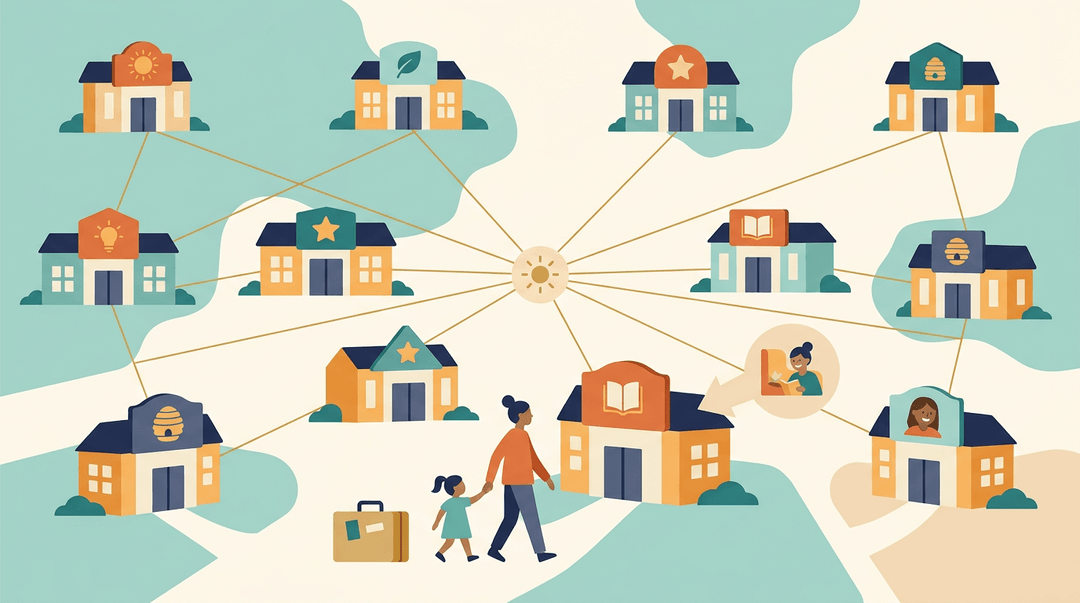
A learning center isn't a single school with a single sign. We operate a network of 1,110+ schools nationwide, spread across 11 unique brand identities. One network. Many names.
Think of a parent who moves across town and finds a different name on the door but a familiar approach inside. That's the network working for them.
Ages we serve, from infants up
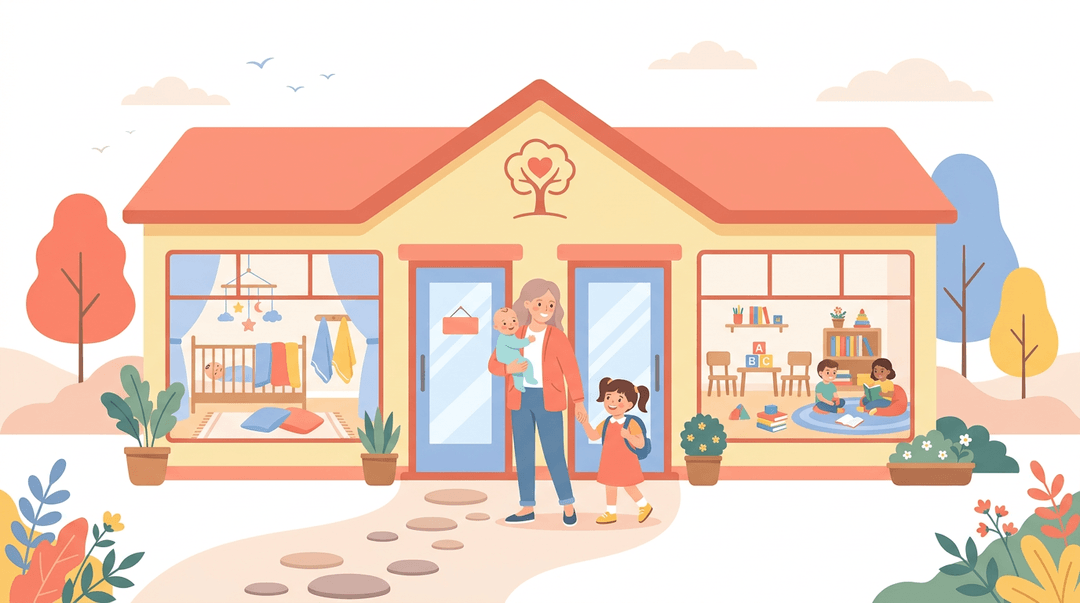
We welcome children from infants through school-age, so a family can stay within one network as their child grows. Consider a parent with a baby at home and an older child in kindergarten, who can rely on the same network for both.
Each age group has its own needs, and our programs are shaped around them.
Whether you're rotating small groups through stations or comparing childcare options, the core idea is the same: learning works best when students are engaged, supported, and safe.
A well-designed center gives every learner a purposeful place to practice and grow.
Ready to build your own stations? Check out Lesson Planning to see how you can organize and reuse center activities across all your classes from one place.
References
- Social & Emotional Early Learning Environments — sparkqsc.my.site.com (2026)
Frequently asked questions
What is the purpose of a learning center?
The purpose of a learning center is to make learning hands-on, personal, and engaging. It gives children a dedicated place to explore, practice skills, learn at their own pace, and work with peers while teachers facilitate and provide support.
What are learning centers in a classroom?
Learning centers in a classroom are designated stations where students complete focused activities independently or in small groups. Examples include reading nooks, math tables, science bins, writing stations, building areas, and listening corners, often with students rotating between them.
What are learning centers in education?
In education, learning centers are purposeful areas or setups that help learners practice specific academic, social-emotional, creative, or practical skills. They may be classroom stations, outdoor learning areas, tutoring stations, or structured programs serving children from infancy through school age.
How much do learning centers pay?
Learning-center pay varies by job, location, experience, qualifications, and employer. Teachers and childcare workers are paid hourly or by salary, while directors and specialized educators generally earn more; current local job listings and government wage data provide the most accurate figures.
What are some examples of learning centers?
Examples include reading nooks, writing stations, math manipulatives tables, science discovery bins, block-building areas, sensory-play centers, feelings corners, listening stations, plant-care areas, and STEM or inquiry labs. Tutoring programs may also use one-on-one skill stations.
What's the difference between a daycare and a learning center?
A daycare primarily provides supervision and care while parents work, whereas a learning center places structured learning and development at the heart of the day. Many learning centers also provide care, meals, physical activity, and health and safety routines for children from infancy through school age.
What does an education center do?
An education center provides structured opportunities for learning and development. Depending on its setting, it may offer classroom instruction, tutoring, childcare, hands-on activities, social-emotional learning, STEM programs, or skill-focused support led by educators.