Dyscalculia Tutoring From Signs to Setup, Fully Explained

Jump to section
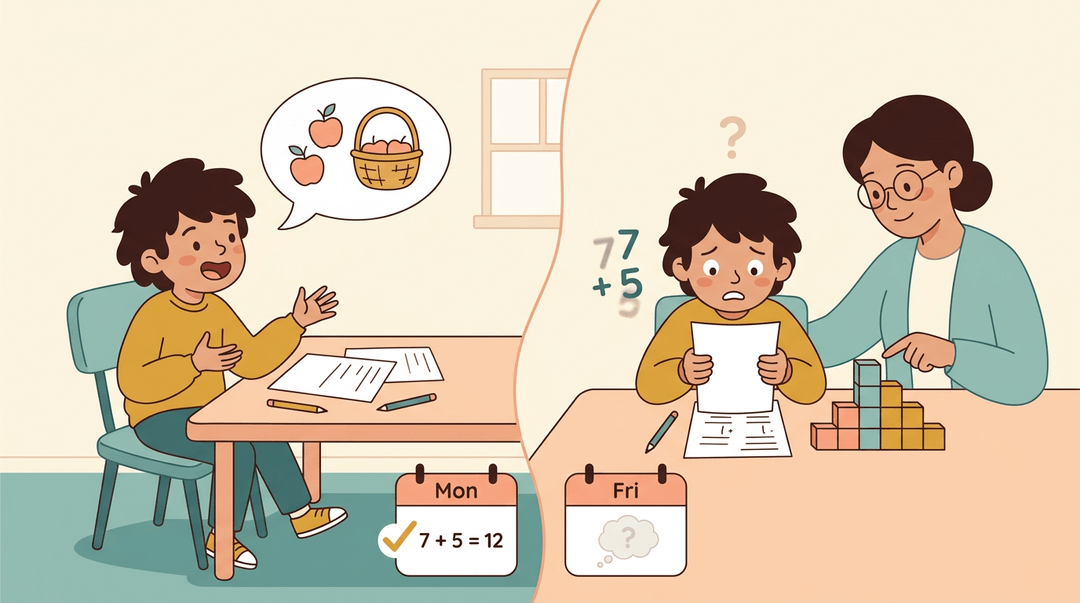
Picture a student who can talk through a word problem out loud but freezes the moment numbers appear on the page. Or one who nailed 7 + 5 on Monday and can't recall it by Friday.
For many learners, that struggle points to dyscalculia, a learning difficulty that makes working with numbers and math facts hard to grasp.
The good news is that targeted, patient tutoring can build number sense one small step at a time. Here, we'll cover what it is, how sessions run, the tools that help, tutor training, costs, and how to work with parents and schools.
Dyscalculia Tutoring Starts with Knowing the Signs
Before you plan a single session, you need to recognize the signs.
How dyscalculia affects number sense and logic
Dyscalculia is a math-specific learning disability, meaning it targets how a learner handles numbers. It's often called math dyslexia.
It affects number sense (the intuitive feel for what quantities mean) and logic, so the issue is how a learner processes numbers, not whether they're trying.
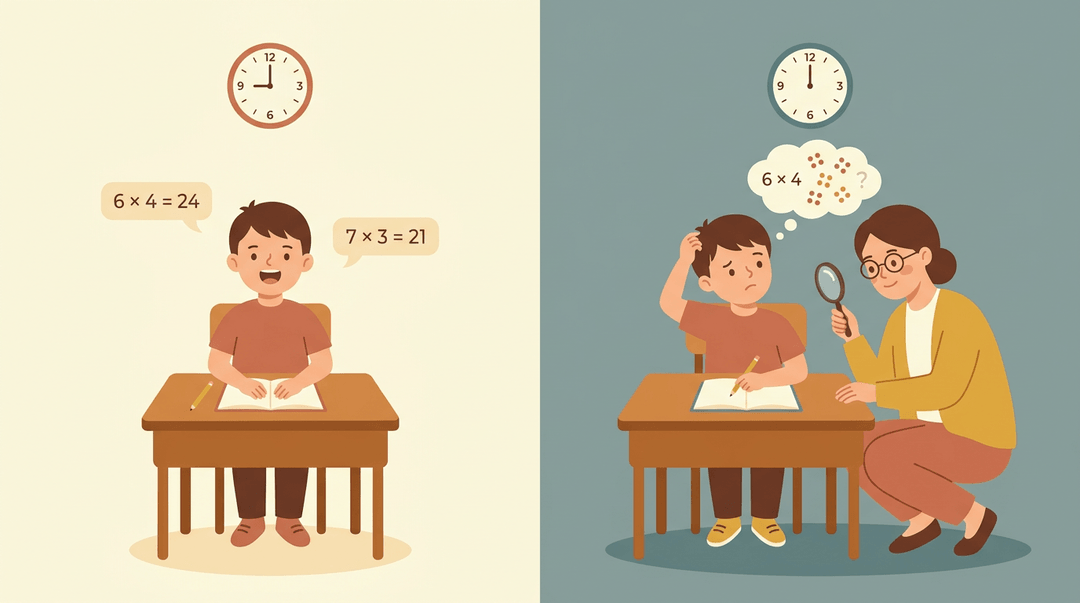
Consider a fourth-grade teacher whose student recites multiplication facts at 9 a.m. but can't explain 6 × 4 by lunch. That gap is your cue to look closer.
Common signs a learner is struggling
Watch for these patterns across lessons:
- Basic arithmetic. Simple addition and subtraction stay hard, even with practice.
- Comparing numbers. Trouble judging number size, like whether 38 or 83 is larger.
- Telling time. Difficulty reading an analog clock.
- Fact retrieval. Weak recall, like knowing 7 × 8 at warm-up and blanking an hour later.
- Spatial and geometry. Trouble picturing how shapes turn, flip, or fit.
One wrong answer tells you little. A pattern tells you a lot.
How it affects mood and schoolwork
Dyscalculia rarely stays on the worksheet. Years of struggle can wear down a learner's self-esteem, and frustration and anxiety can follow.
Math anxiety can co-occur with dyscalculia: a 2017 study by Mammarella and colleagues examined children with developmental dyscalculia, both with and without math anxiety.
Picture a student who stops raising their hand because they fear being wrong again. Spotting that early lets you rebuild confidence alongside the skills. Over time, this can lead to academic underachievement. The math is only half the story.

Who diagnoses it and when to refer
Only licensed professionals diagnose dyscalculia. Your role is to notice patterns, document them, and refer the learner to assessors, the qualified specialists who evaluate learners.
Dyscalculia can also appear alongside dyslexia, ADHD, and anxiety, so overlapping signs need a full evaluation.
The Diagnosis and Management of Dyscalculia stresses early identification, calling it "very important" given dyscalculia's frequent association with mental disorders.
Say you're a tutor who notices a learner can't read an analog clock, mixes up 38 and 83, and freezes on fact drills. Dated notes give the assessor a real starting point. Good notes make a referral count.
Why Tutoring Works and How It Runs
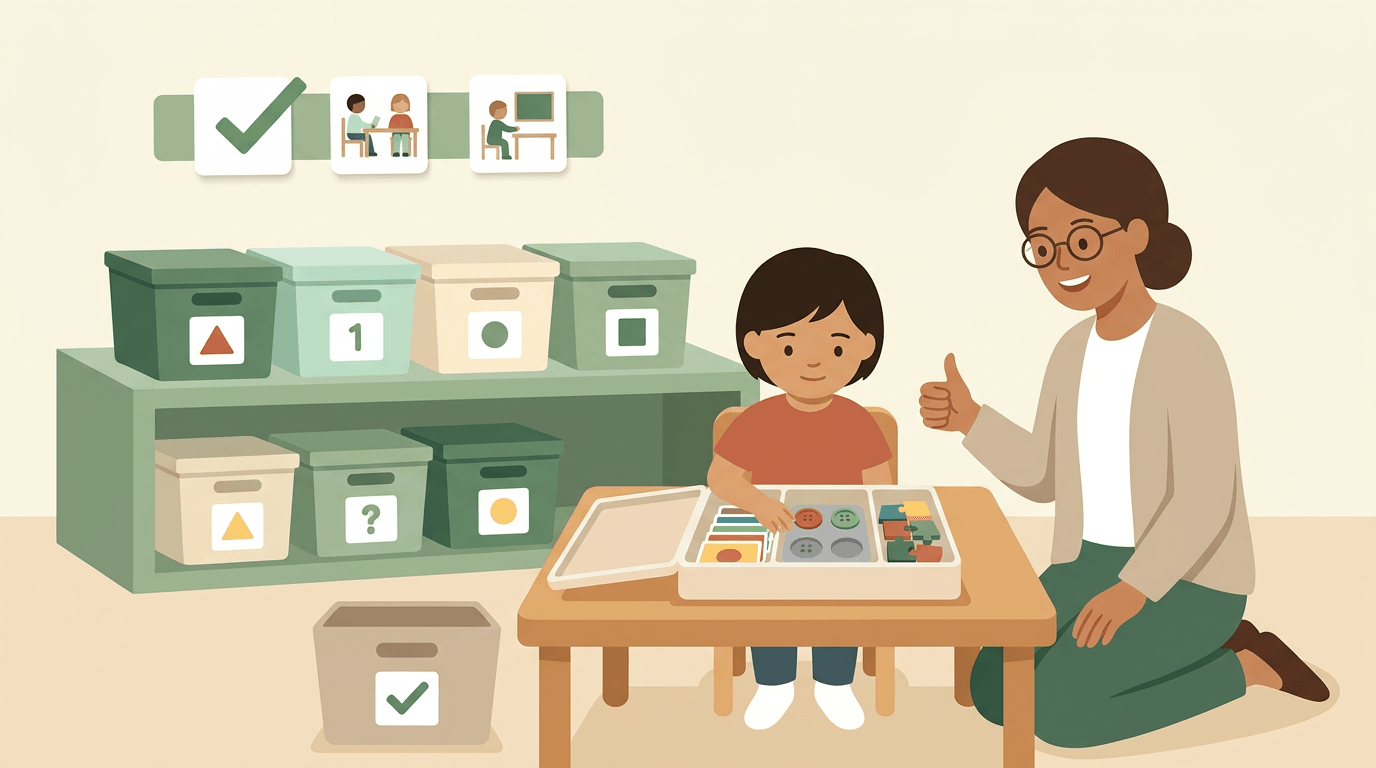
Good tutoring starts with a baseline assessment that shows where each student stands today. Every session builds from there.
Lessons built around each student
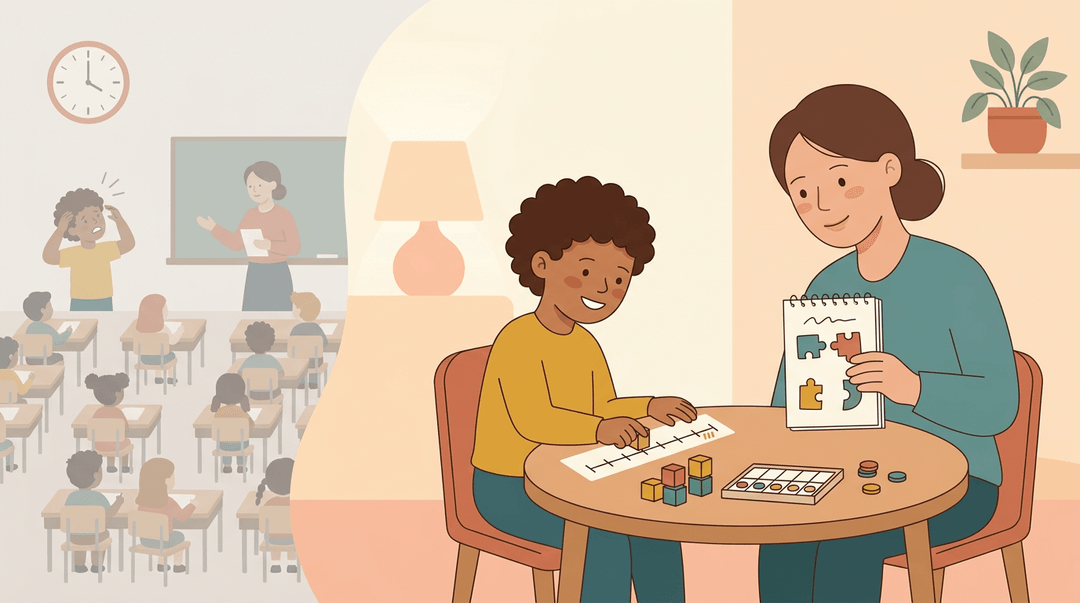
Each student has a different mix of strengths and gaps, so the plan starts with that student. According to The Diagnosis and Treatment of Dyscalculia, group classes may fall short of the individualized instruction these students need.
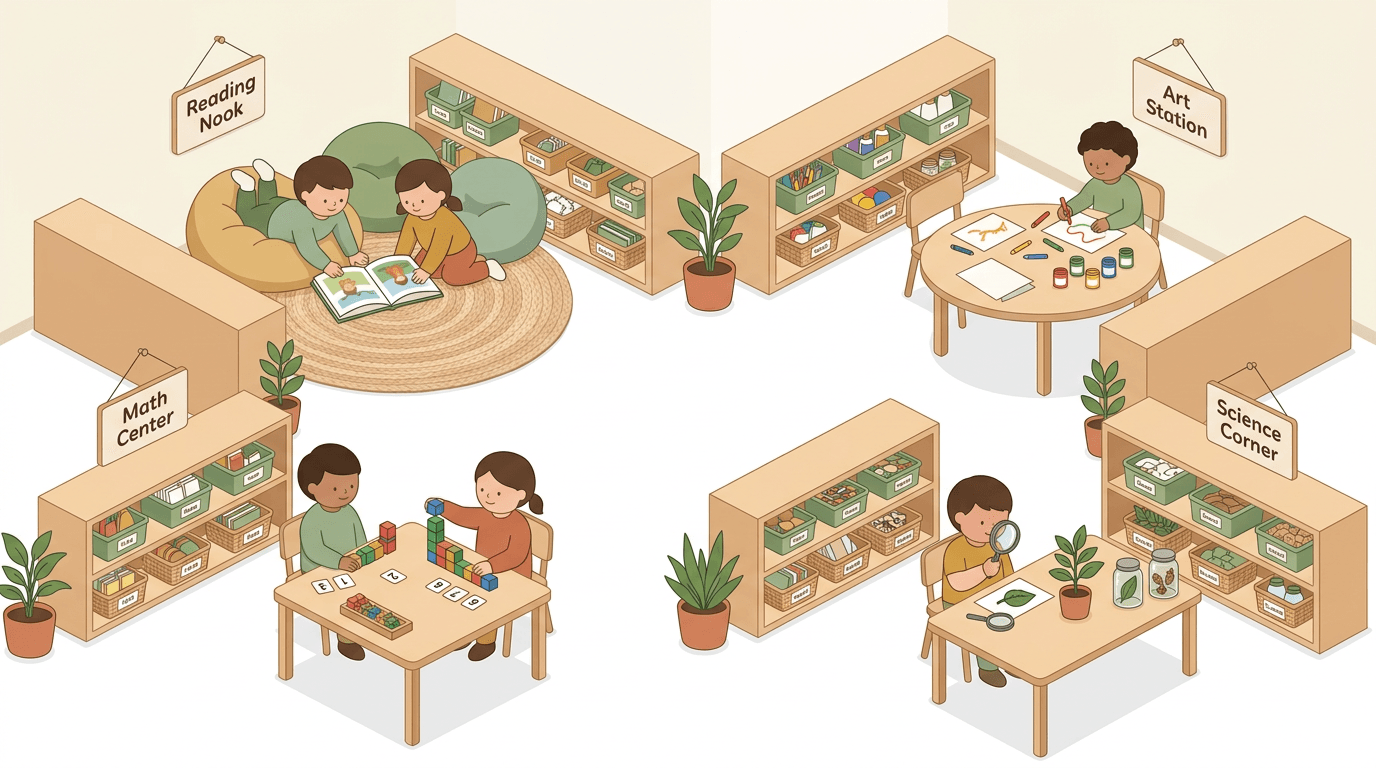
Students also process information in different ways. A quiet, focused space with one tutor removes the pressure to keep pace with a whole classroom.
Start with hands-on objects before symbols
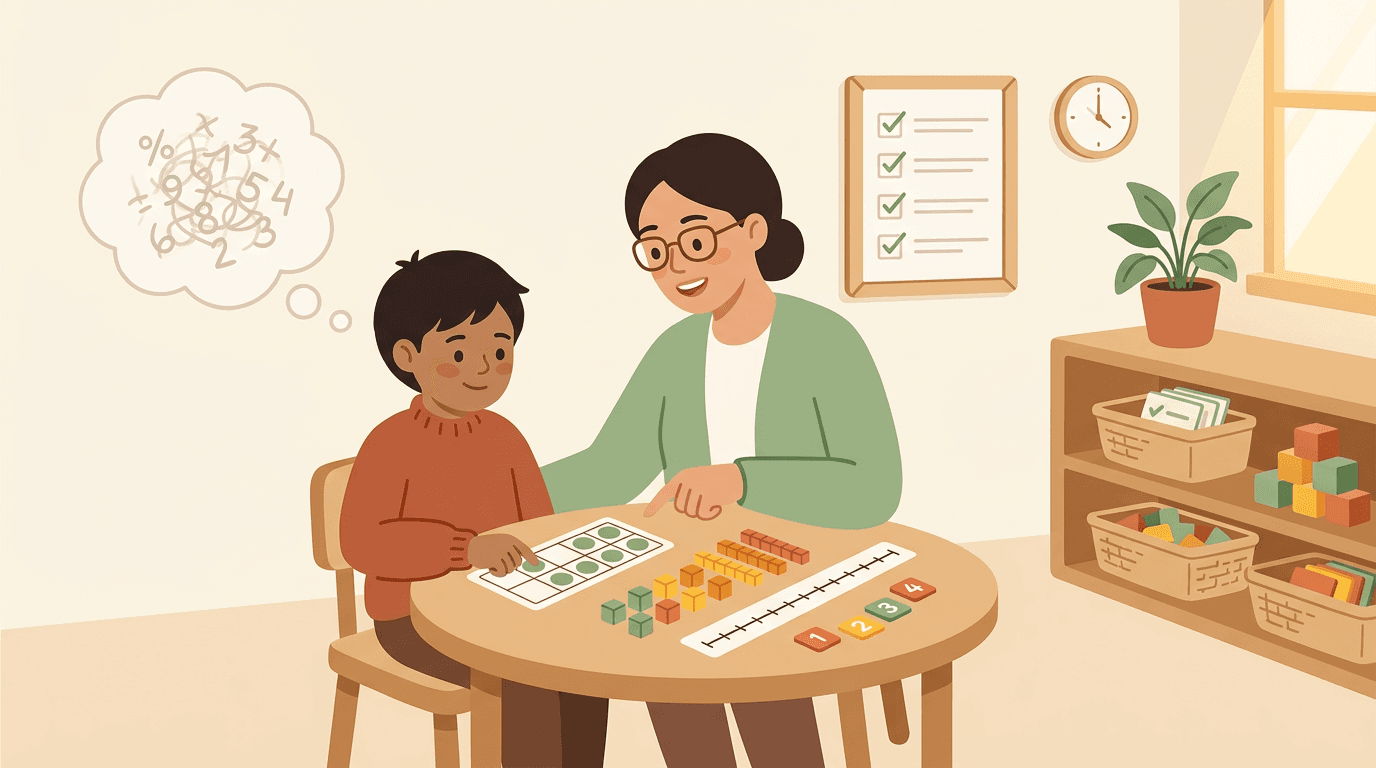
Tutors start with things students can touch. The concrete-pictorial-abstract sequence moves from counters to drawings to numerals. Build number sense, the feel for what numbers mean. Students need understanding before speed.
Multisensory instruction adds sight, sound, touch, and movement to each idea. Foundational skills build in order, from counting to word problems.
Use gradual release with manipulatives: model with objects, share the work, then step back. Objects first, symbols last.
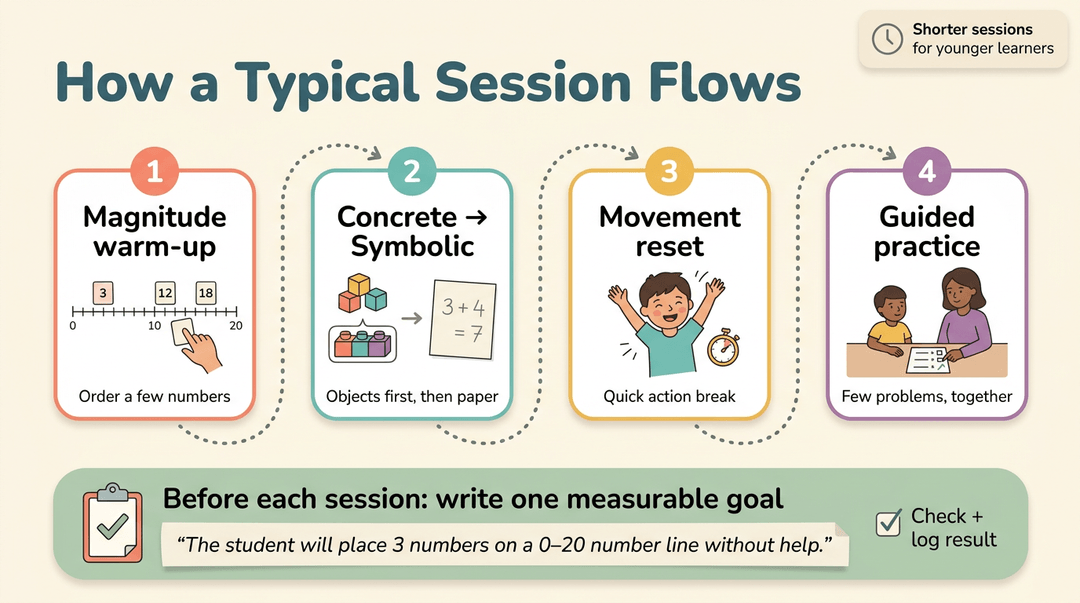
How a typical session flows
Here's how most sessions run:
- Short magnitude warm-up. Start with a quick magnitude check (how big or small numbers are) by ordering a few on a line.
- Concrete, then symbolic. Work the skill with objects first, then move to numbers on paper.
- Movement reset. A brief action break refreshes attention before the hardest part.
- Low-volume guided practice. Keep problem counts small, and work each one together so you can catch confusion early.
Shorter sessions suit younger learners. Before each one, write one measurable objective, like “The student will place three numbers on a 0 to 20 number line without help,” then check and log the result.
Praise effort and rebuild confidence
Give positive feedback that names what the student did well. Reward effort over accuracy, praising the strategy a student tried even when the answer is wrong.
Picture a middle schooler who misses three problems and sighs, “Math just isn't for me.” A tutor replies, “You tried counting back from the bigger number, and that's how we found the mistake.” The student stays in the problem.
Skip timed drills. They put speed in the spotlight when understanding is the goal.
Confidence grows from evidence, so show students their own progress on the tracking data.
Plan Each Dyscalculia Tutoring Session
This guide helps you build one focused session around a single skill, moving from objects to drawings to symbols. Use it as a one-page plan before every session.
Set the target
Pick one skill per session. A narrow target keeps the load light for the student and gives you something you can actually measure.
| Slot | Sample entry |
|---|---|
| Target skill | Compares unit fractions using bars, 4 of 5 correct |
| Prerequisite check | Can split a bar into equal parts? |
| IEP link | Goal: "Compares fractions using visual models" |
An IEP is an Individualized Education Program. Copy the goal's wording so your target visibly feeds it.
Check prerequisites first. Jot the chain, then test the bottom link with one quick question:
comparing fractions ← naming unit fractions ← equal parts
If the student misses the bottom link, that link becomes today's target.
Run the session: objects, drawings, symbols
Each step builds the next, so keep the order.
- Open with a number sense warm-up
- Say: "Show me six with your fingers. Now show me another way."
- Build it with manipulatives
- Tokens, bars, or cubes: the student moves them, you talk less.
- Sketch what you built
- The student draws the same quantity: dots, circles, or bars.
- Connect to symbols and equations
- Write the symbols beside the drawing: 1/4 < 1/2.
Move on only when the student can explain the step they just finished. If they stall, step back one rung rather than repeating the explanation.
Sample activities by grade band. Each one follows the same objects, drawings, symbols path.
| Grades | Activity | Objects → drawing → symbols |
|---|---|---|
| K-2 | Counting with tokens | Move tokens while counting, draw dots, write the numeral |
| 3-5 | Fractions with bars | Stack bars to compare, sketch them, write < or > |
| 6-8 | Ratios with number lines | Mark 2:3 on a double line, sketch it, write 2/3 = 4/6 |
Example: A tutor targets "compares 1/3 and 1/4" with a fifth grader. The student stacks two fraction bars and sees that the thirds piece is longer. Then they sketch both bars, and only then does the tutor write 1/3 > 1/4 beside the drawing. The symbol now has something to stand for.
End with a low-stress exit ticket
Keep it short, ungraded, and manipulatives-friendly. Two problems and one feelings check is plenty.
Exit ticket
- Show 3/4 with a bar. Use any tools you like.
- Which is bigger, 1/2 or 1/3? Show how you know.
- Circle one: Got it / Kind of / Need help
Then spend a minute on notes. Write one line on what worked (for example, "bars helped; verbal explanation didn't") and use the ticket to pick your next move.
| The ticket shows... | Next session |
|---|---|
| Right with objects, stuck on drawings | Keep objects, practice sketching the same problem |
| Right with drawings, stuck on symbols | Repeat the drawing-to-symbol step |
| Right everywhere | Move to the next skill in your chain |
| "Need help" circled | Reteach the prerequisite, keep the tone light |
Before every session, confirm
- Objective stated: it's written in one sentence you can say aloud to the student.
- Materials ready: tokens, bars, or number lines are out before the student arrives.
- No timed drills: nothing in the plan runs against a clock.
- Recap for parents: a two-line note is drafted: today's skill and one way to practice at home.
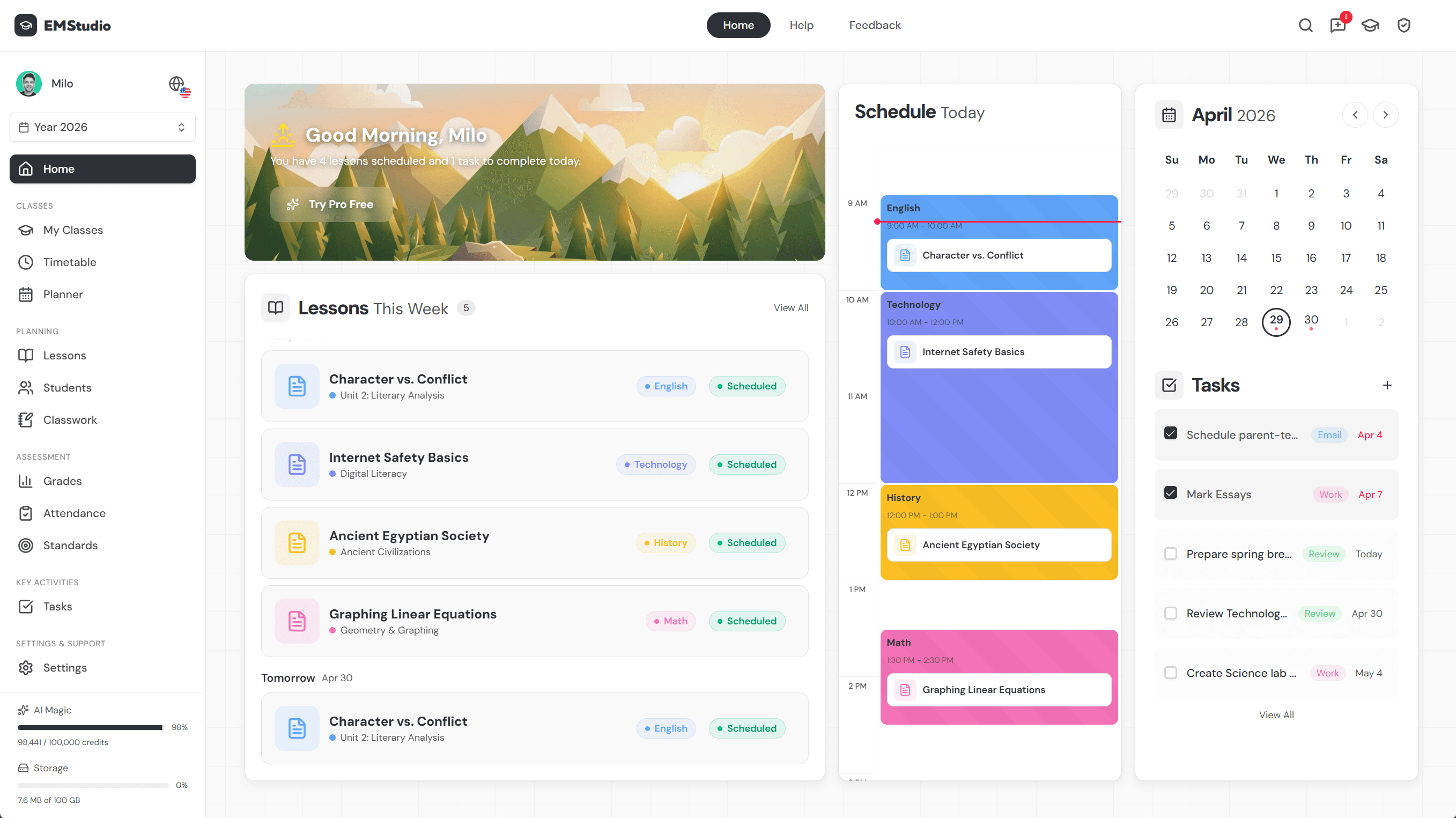
Save and reuse these session plans for each student with EMStudio's online lesson planner.
How Tutors Get Trained and Certified
A dyscalculia tutor is only as strong as their training. Here's what we'll cover: certification routes, low-cost options, tutoring your own child, and what to look for.
Certification routes and how long they take
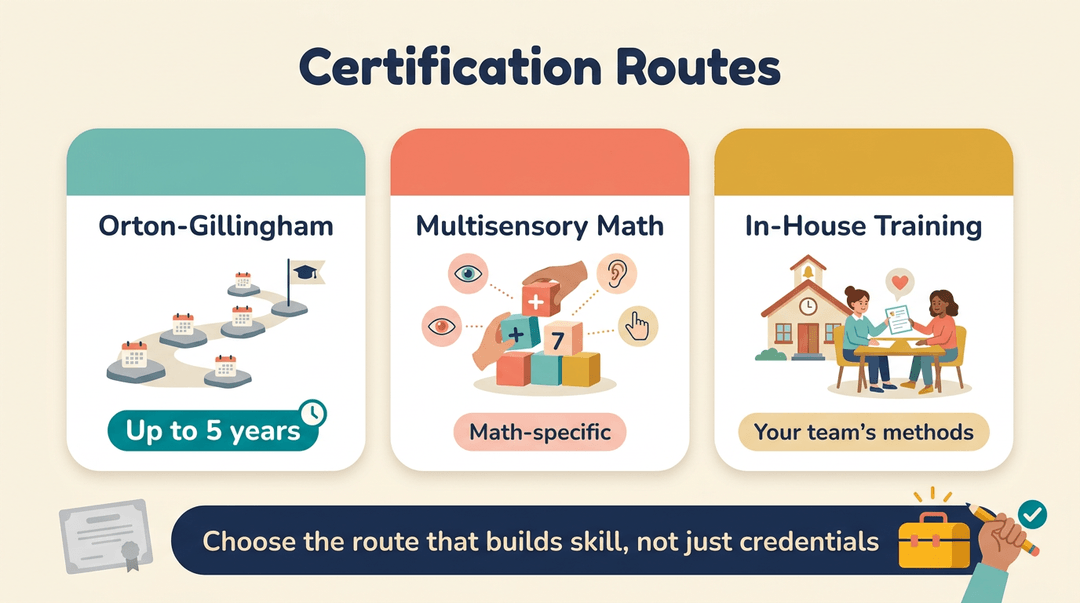
One route is Orton-Gillingham training. Illuminate Ed Therapy's comparison of structured literacy training programs notes that it can take up to five years, so plan for that timeline.
Multisensory math certification is more specific to the subject, teaching number concepts through several senses at once. In-house training from a school or tutoring organization keeps you close to the methods your own team uses.
Pick the route that builds skill rather than just credentials.
Low-cost programs for training tutors
Cost can stop capable people before they start. These options can help:
- Nonprofit educator scholarships: Search for funding from nonprofit organizations that support educators.
- Practicum student exchange: Explore it as a way to add supervised practice to your training.
- Scottish Rite and Reading Horizons: Compare these two against the other options on this list.
- Augustine Project: Add it to your research list.
Affordable doesn't have to mean lightweight, so check what each program teaches and certifies.
Parents who tutor their own child
Some parents tutor their own child, and it can work well. You'll need a genuine love of kids, the kind that keeps you patient when homework turns into tears, plus a willingness to work hard.
If you have learning differences of your own, be upfront about them. Sharing that can help your child feel understood, especially when math already feels like a closed door.
Picture a parent at the kitchen table each evening with a son who dreads homework. Weeks later, he counts out change at the corner store without freezing. That small win keeps them both going.

Qualifications and specialist programs to look for
Hiring or deciding whether you're ready to train? Watch for three markers:
- Qualified math tutor: Look for real mathematics preparation, not just a general tutoring badge.
- Named specialist programs: A strong tutor can name the program they trained in and what it taught them.
- Tutors know the method: Ask them to walk you through one concept. You're looking for knowing the method, not just owning the materials.
Credentials matter. Method matters more.
Tools and Setup for Online Tutoring
The right tools make abstract math visible, so set them up before your first session.
Digital rods, number lines, and fraction bars
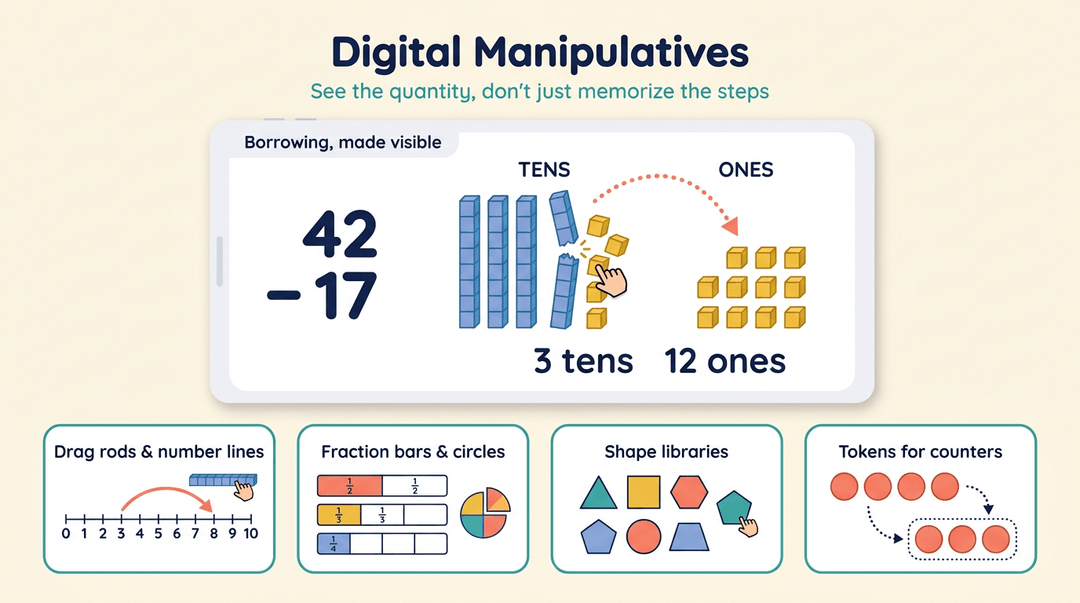
Think of a student who freezes whenever subtraction requires borrowing. With digital manipulatives, the on-screen version of hands-on blocks, you can drag a ten-rod apart so the regrouping is visible.
The aim is seeing the quantity, not just memorizing the steps.
Tools to look for:
- Draggable rods and number lines. Students move the pieces themselves instead of watching you work.
- Fraction bars and circles. Splitting a whole into equal parts makes fractions easier to compare.
- Shape libraries. Ready-made shapes save you from drawing everything by hand.
- Tokens for counters. Countable tokens let students track each step.
Showing math symbols and sharing files
Consider a tutor who uploads tonight's worksheet as a PDF (portable document format). The student writes answers in the shared space, and the lesson starts with the work already in front of them.
- Math symbols palette. Insert operators and equals signs without hunting for them.
- Upload PDFs and slides. Share a worksheet or slide so you're both looking at the same page.
- Limited equation editing. Equation editing is restricted, so prepare tricky expressions ahead of time.
Practice sites and software to share
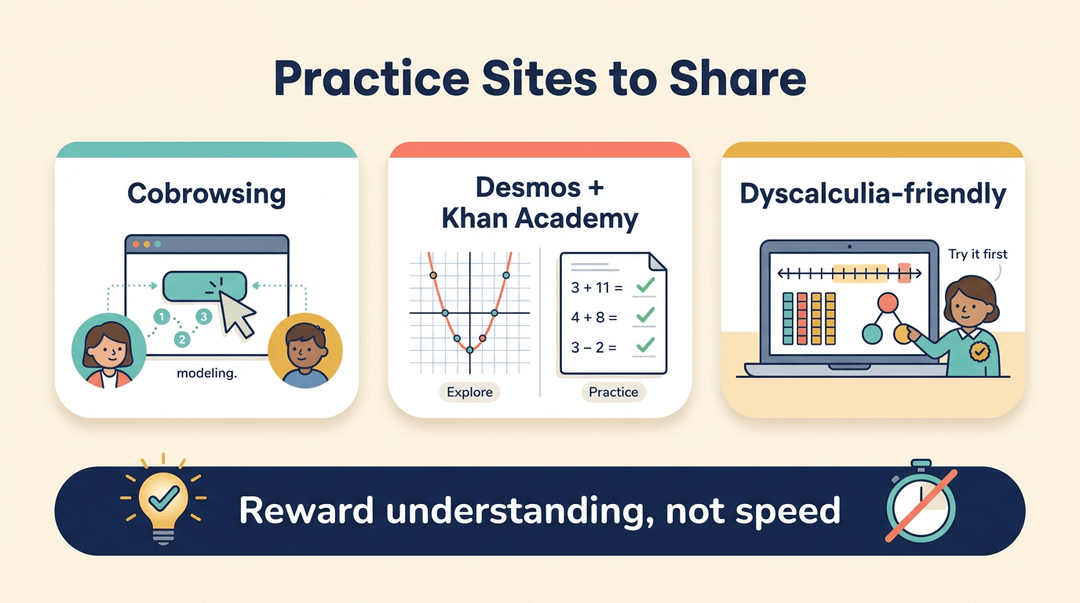
- Cobrowsing practice sites. Share one browser view so you can model each click.
- Desmos and Khan Academy. Use Desmos for graphing and visual exploration, and Khan Academy for skill practice.
- Math software for dyscalculia. Look for programs designed with dyscalculia in mind, and try each one yourself first.
Pick sites that reward understanding over speed.
Platform limits and recording rules
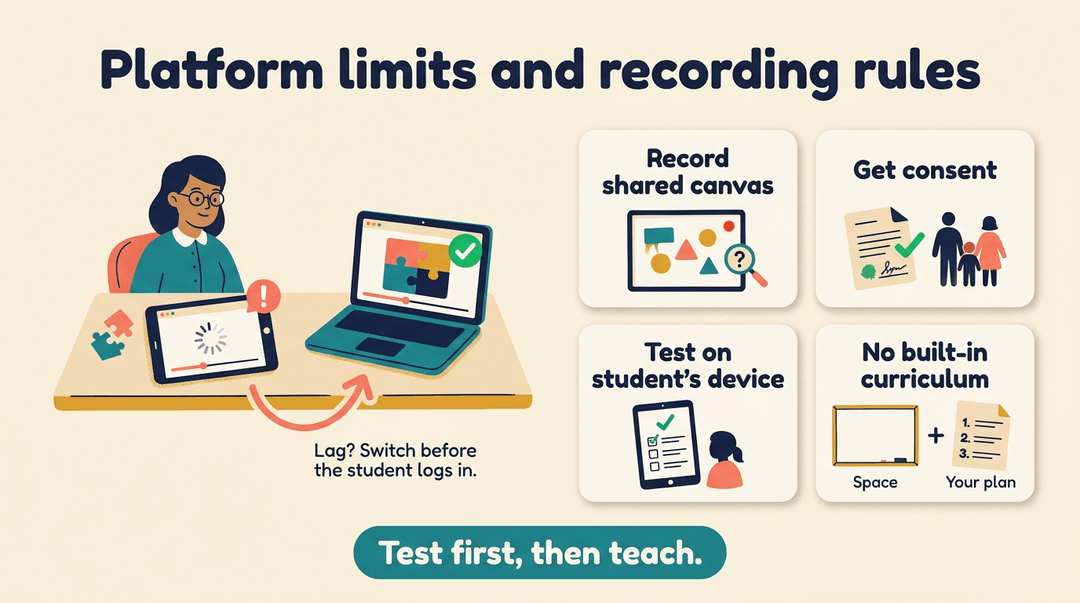
Consider a teacher who runs sessions from an iPad. When the drag-and-drop tool lags, she switches to a laptop before the student logs in, so the session starts on time.
- Record shared canvas. Check whether your platform can record the shared canvas, and whether that's what a student needs for review.
- Consent for recording. Get clear permission from families before you record, and check your school's policy.
- Weaker iPad experience. Some tools run less smoothly on iPads, so test on the device your student uses.
- No built-in curriculum. The platform gives you a space, not a sequence. Your lesson plan does the teaching.
Test first, then teach.
Working with Parents, Schools, and Support Groups
Tutoring goes further when everyone is on the same page.
Sharing recaps and wins with parents
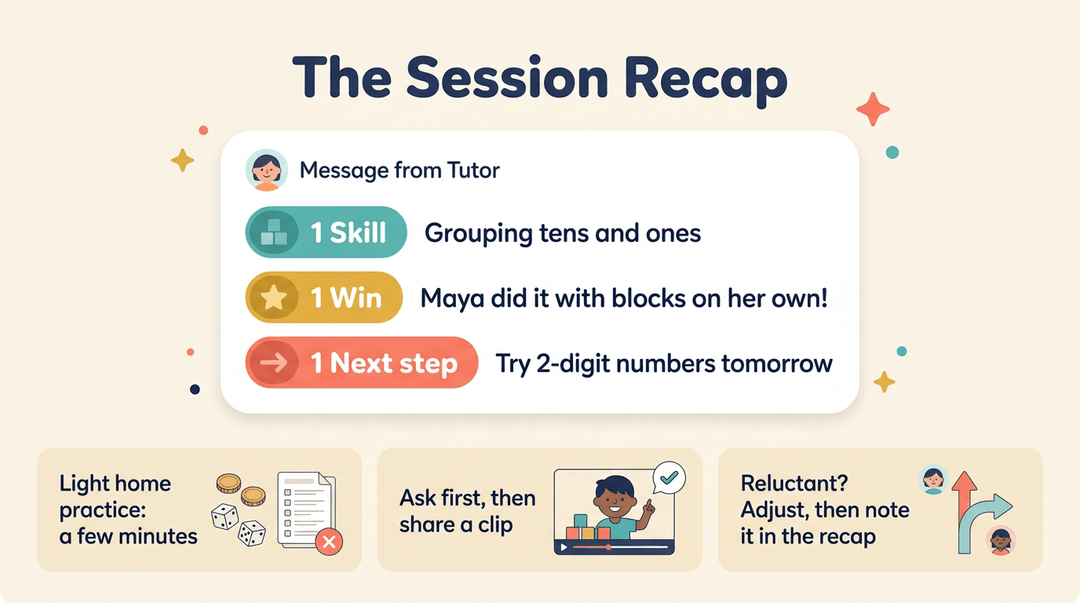
Parents want to know what happened in each session, not just that it happened. A short session recap covers one skill, one win, and one next step. For example, a tutor might write, “Maya grouped tens and ones with blocks on her own today.”
Keep home practice light. A few minutes with coins or dice often beats a worksheet stack. After a breakthrough, ask permission to share a short clip of the student explaining their thinking.
When a student is reluctant, adjust rather than push harder, and note the change in your recap.
Using IEP and 504 plans with teachers
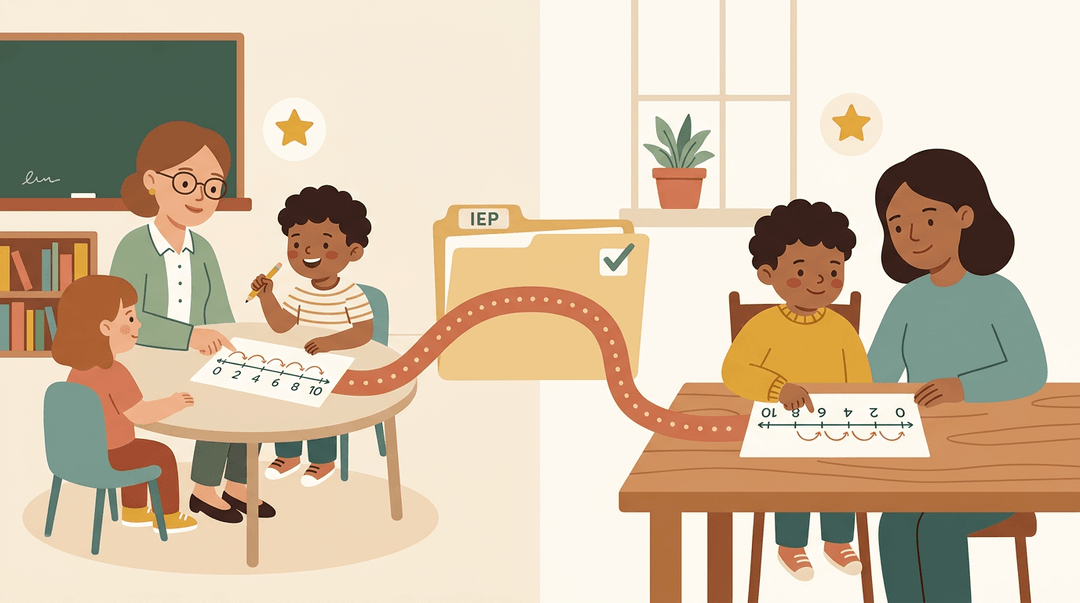
An Individualized Education Program (IEP) and a 504 plan are school plans that outline supports for learning differences. With the family's permission, ask for a copy so your tutoring builds on goals already written there.
Coordinate with the school so sessions reinforce classroom work.
Teachers and parents collaborate best when each knows the other's piece. Picture a third-grade teacher whose family mentions their child is practicing skip counting at home with a number line.
She uses the same method in math groups, so the student hears one approach, not two. Classroom accommodations often trace back to IEP goals, so plan around them.
Decoding Dyslexia chapters and parent groups
Parents can feel alone in this process. Decoding Dyslexia chapters connect them with other families who've been there.
Every child's needs differ, so aim for a plan built on what the child needs, not just what the paperwork says. Help parents prepare questions for the next meeting. Parents don't need to be experts. They need a partner.
Paying for Tutoring and Funding Options
Specialized dyscalculia tutoring costs more, but you have more options than you might think.
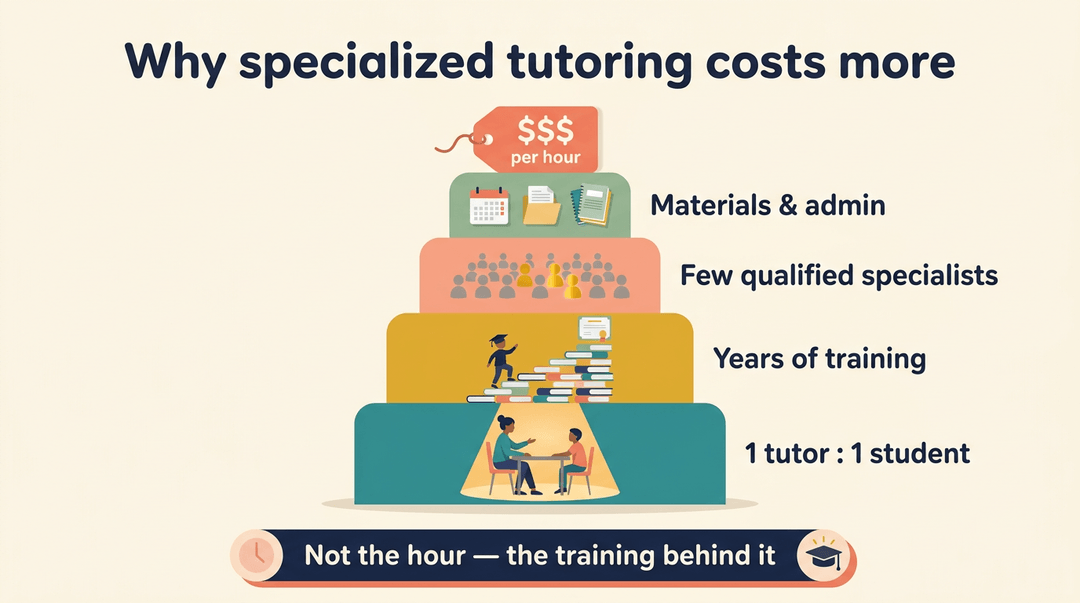
Why specialized tutoring costs more
Several factors push the price up:
- One-to-one format. Each session gives one student the tutor's full attention.
- Lengthy tutor training. Specialists spend a long time in training before they work with students.
- Few trained providers. There aren't many specialists to choose from.
- Provider overhead costs. Materials, scheduling, and administration are built into the rate.
It's less about the hour and more about the training behind it.
Creative ways families can fund lessons
Many families get creative. Some parents trade skills, like bookkeeping or carpentry, for sessions. Kids can raise funds too. Picture a fourth grader who runs a lemonade stand to cover part of her sessions.
She learns budgeting along the way. Real money makes numbers stick.
Community support helps too: neighbors, faith groups, and local organizations may pitch in. Running a small fundraiser builds entrepreneurial skills like planning and pricing.
Check state scholarships and voucher programs
Public funding can make a real difference, so check what your state offers. Utah's Carson Smith Scholarship and the Children's First Education Fund are two to research. Vouchers exist in 21 states, so find out whether yours is one of them.
Several of these options require an Individualized Education Program (IEP) or a formal evaluation. Start that paperwork early.
Homeschool families have funding options too.
Dyscalculia tutoring works best when it's personal, consistent, and shared. When you recognize the signs, plan with care, and bring parents and schools into the conversation, students gain the confidence to work with numbers.
Progress often comes in small steps, and every one counts.
Ready to make your session planning easier to reuse? Check out EMStudio's Lesson Planner, where you can write, organize, and reuse lesson plans across multiple classes from one place.
References
- Mammarella et al. - 2017 — researchonline.ljmu.ac.uk
- The Diagnosis and Treatment of Dyscalculia — pmc.ncbi.nlm.nih.gov (2019)
- The Diagnosis and Management of Dyscalculia — pmc.ncbi.nlm.nih.gov (2012)
- Structured Literacy Training Programs Compared: Gates — illuminateedtherapy.com (2026)