5E's Lesson Plan Format: The Five Phases Explained

Jump to section
Think about a great lesson you've taught, the kind where students leaned in before you'd even finished your opening question. That moment didn't happen by accident.
It likely followed a rhythm: a hook, some hands-on exploration, a clear explanation, a chance to apply the idea, and a check on what stuck.
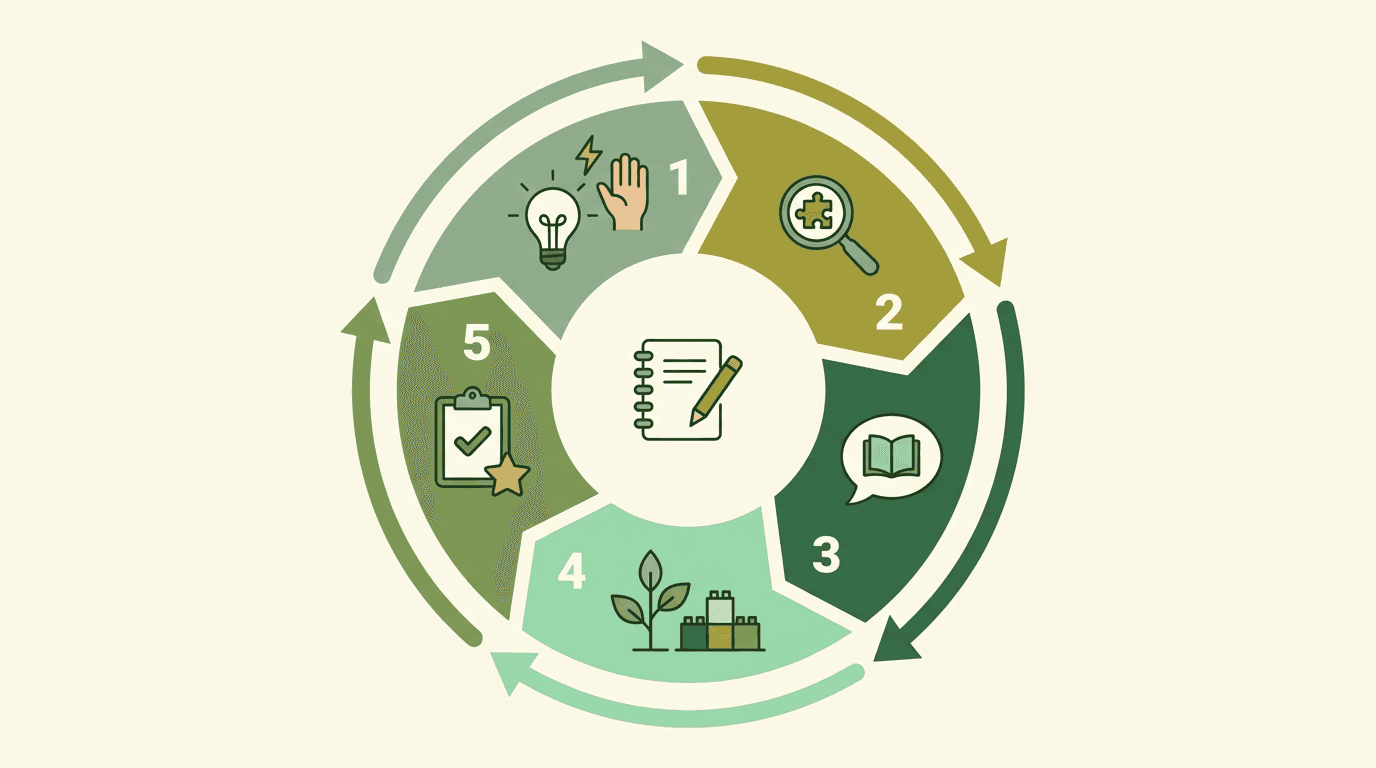
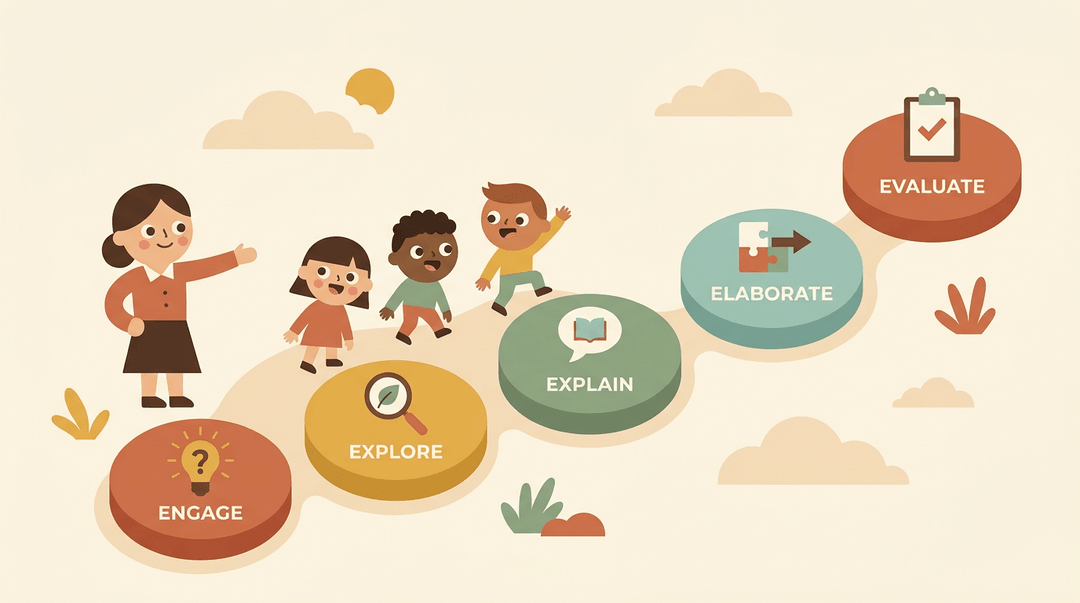
That rhythm has a name. The 5E lesson plan format is a classroom model built around five phases: Engage, Explore, Explain, Elaborate, and Evaluate. It gives you a clear sequence for moving students from curiosity to real understanding.
In this post, we'll cover where the model comes from, what each phase looks like in practice, and how to build your own 5E lesson in any subject or grade.
What Is the 5E Lesson Plan Format?
The 5E lesson plan format is a structure for teaching through exploration. Here's what it's for, where it came from, and where you can use it.
What the 5E model is for
The 5E model is an inquiry-based instructional model. Students test ideas, notice patterns, and build understanding themselves, while you act as a facilitator rather than the sole instructor.
A clear five-phase framework keeps that exploration purposeful and bridges theory and real-world practice. Students spend more time doing than hearing. Students do the thinking.
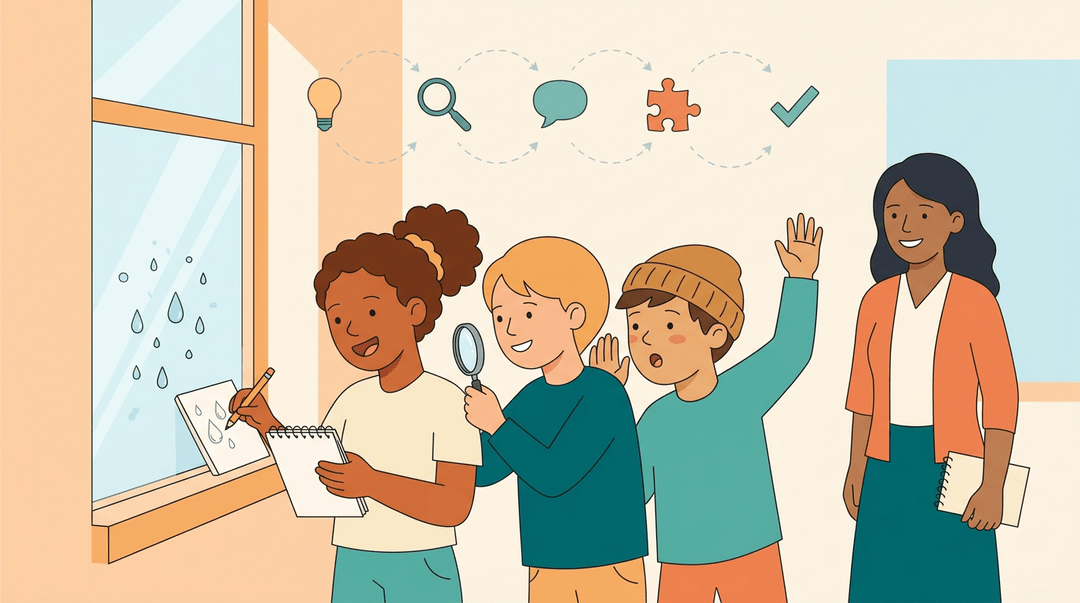
Think of a sixth-grade teacher planning a unit on the water cycle. She opens with a question: where does the water on a cold window come from? Students test their guesses, so when she introduces the vocabulary, it sticks.
Where the 5E model came from
Roger Bybee and Janet Landes developed the model in 1987, and the Biological Sciences Curriculum Study (BSCS) has continued to research its effectiveness.
BSCS built it for its Science for Life and Living program, rooted in late twentieth-century science education. You may also see 6E and 7E variants, which add Engineer and Extend phases.
Where you can use the 5E model
The model works across subjects and age groups, though it's most common in STEM and science. It adapts to English, math, and social studies too. Phases often span several lessons or a whole unit, so plan for that from the start.
The Five Phases of a 5E Lesson
Every 5E lesson moves through five phases, each with a distinct job. The sequence takes students from wondering to understanding, and you steer the path rather than handing over the answer.
Sparking curiosity to start the lesson
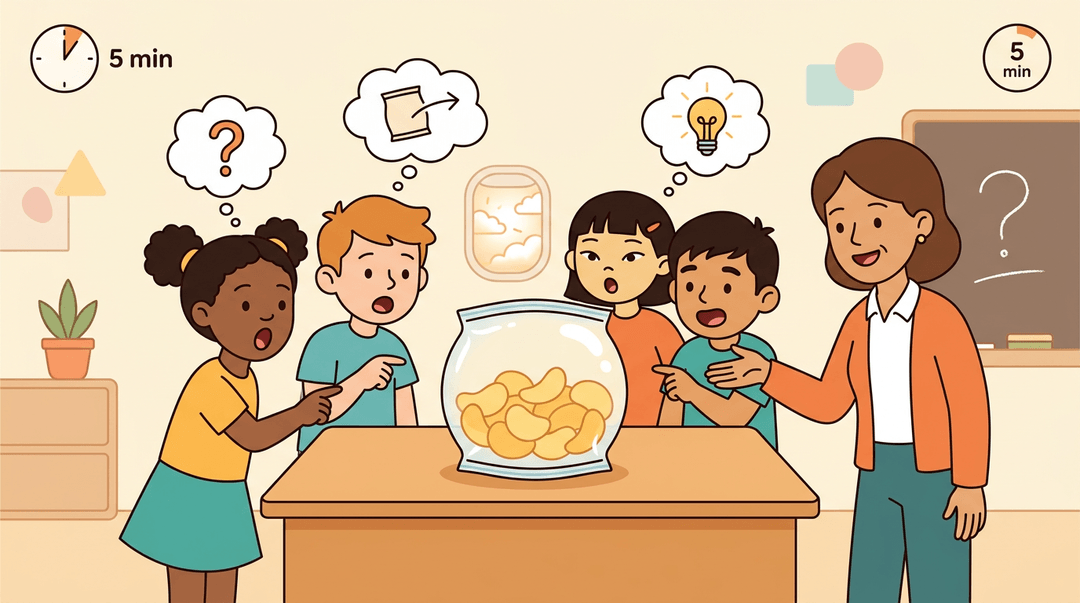
The Engage phase earns students' attention and activates what they already know. Pose a question or problem, such as "Why does a sealed bag of chips puff up on an airplane?" Hook them with a short video, a surprising demo, or a quick hands-on activity.
You facilitate while students form hypotheses, their first guesses, which are valuable even when they're wrong. Plan about five minutes.
Letting students explore hands-on
In Explore, students investigate in small groups, trading materials and ideas. Your job shifts to observer: watch, listen, and ask probing questions like "What changed when you added the second coin?"
Picture a fifth-grade teacher who gives pairs a cup of water, some coins, and a dropper. Students count how many drops fit on a penny before the water spills.
Everyone leaves with the same shared experience, which gives every later conversation common ground. Plan about fifteen minutes.
Explaining what students discovered
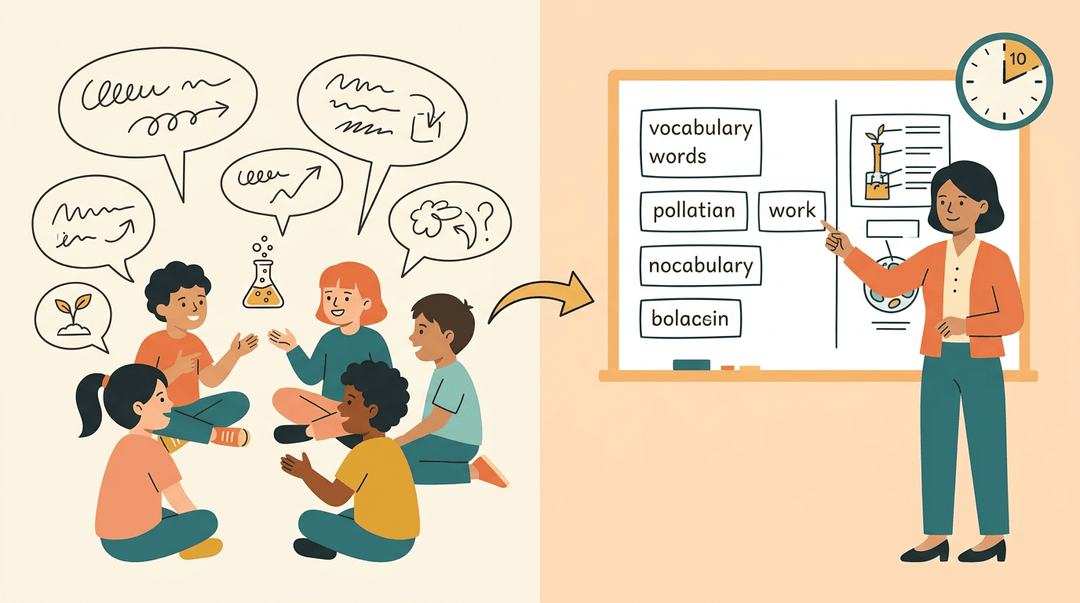
Students put their findings into their own words, even if the language is messy. Then you step in with direct instruction: vocabulary, formal definitions, and the key concept.
Clarify misconceptions and consolidate understanding through discussion, a short lecture, or a multimedia clip. The order matters: students explain before you tell, so new terms have real experiences to attach to. Plan about ten minutes.
Applying the learning to new situations
This is the Elaborate phase, where students carry the idea somewhere new through a real-world application, a case study, or a small project. Understanding deepens here.
A student who can explain how the water behaved can predict what happens when you change a single variable. Introduce new vocabulary, and have students use it in their own sentences. Budget about ten minutes.
Checking what students actually learned
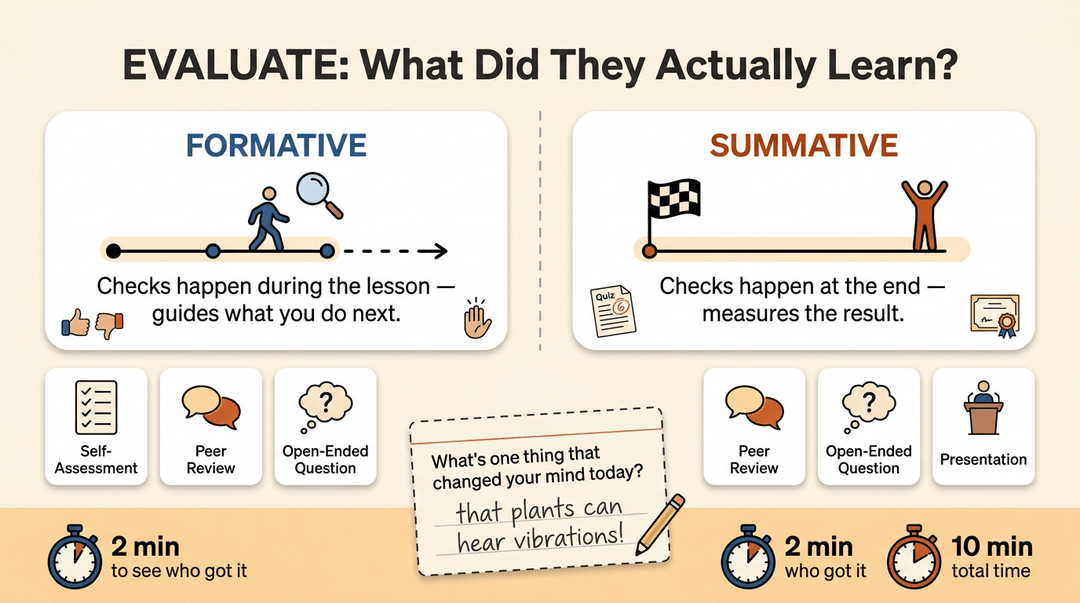
The Evaluate phase answers one question: what did students actually learn? Mix formal and informal methods. Formative checks happen during the lesson and guide your next move, while summative checks measure the result.
Add self-assessment and peer review so students reflect on their own thinking, plus open-ended questions, quizzes, or presentations. A quick exit ticket works well: students jot one answer, such as "What's one thing that changed your mind today?"
In two minutes, you know who got it. Plan about ten minutes.
Build Your Own 5E Lesson Plan
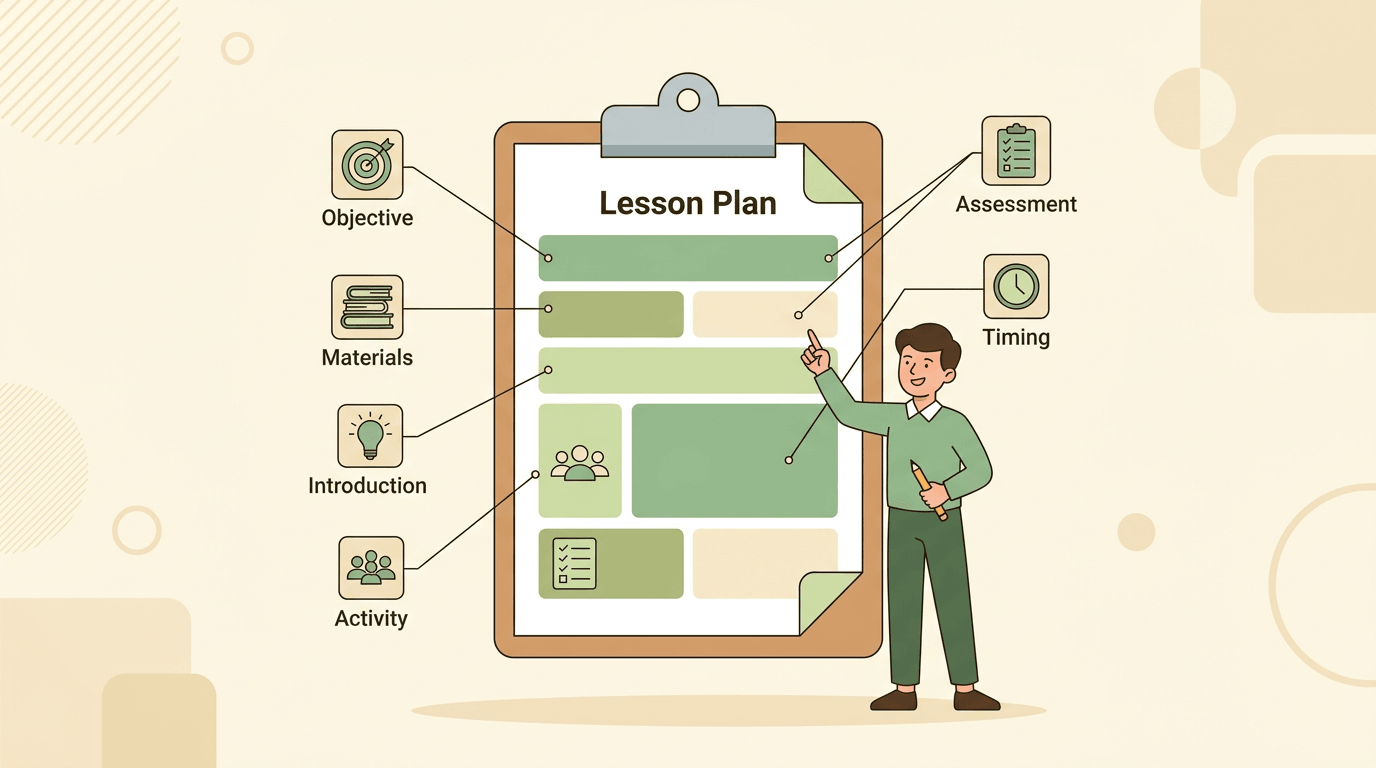
Use this guide when you're sitting down to plan a 5E lesson (engage, explore, explain, elaborate, evaluate) in any subject or grade. Work through the five steps in order, then run the checklist.
The examples use a grade 4 science lesson on ramps, but you can swap in your own topic.
Fill in the five phases
- Open with a hook and an objective
- Objective: write it as students will see it, "I can explain how ramp height changes how far a car rolls."
- Hook: roll two cars down different ramps, then ask "Why did one go farther?"
- Prior knowledge: have students jot what they already know about pushes and motion.
- Plan the hands-on exploration
- Task: groups test three ramp heights and record how far the car travels.
- Roles: Builder, Measurer, Recorder, Reporter. Rotate them next lesson.
- Observation questions: "What changed when you raised the ramp?"
- Explain the key concepts
- Vocabulary: list three to five terms, such as height, force, distance.
- Direct instruction: keep it short and name what students just saw.
- Check for understanding: "Show me on your whiteboard: higher ramp, farther or shorter?"
- Extend learning to real life
- Real-world task: students design a ramp for loading a wagon.
- New context: apply the same idea to a playground slide.
- Challenge question: "What would change if the ramp surface were rough?"
- Assess and plan the reteach
- Method: pick an exit ticket, short quiz, or performance task that matches your objective.
- Self or peer check: partners swap tickets and check them against a three-point list.
- Record results: tally misses by concept, and that tally becomes your reteach list.
Phases 1 and 2 are where students do before they're told. If you catch yourself explaining during the hook, save it for step 3.
⚠️ Watch out: Vague objectives make every later phase harder to plan and assess.
❌ "Students will understand ramps."
✅ "Students will explain, using their data, how ramp height changes how far a car rolls."
The difference: the strong version names an observable action and the evidence students will use.
See it filled in
Example: A grade 4 teacher sketches the whole lesson on one page before writing details.
| Phase | Plan |
|---|---|
| Engage | Two cars, two ramps, "Why?" |
| Explore | Groups test three heights, record distances |
| Explain | Mini-lesson on height, force, distance |
| Elaborate | Design a wagon-loading ramp |
| Evaluate | Exit ticket, partner check, tally misses |
Check it before you teach
- All five phases planned: each has a task, not just a title.
- Objectives measurable: each one uses a verb you can observe.
- Materials listed: cars, ramps, rulers, recording sheets, exit tickets.
- Time per phase set: write a minute count beside each phase.
- Assessment ready: the exit ticket is printed and matches the objective.
Build, save, and reuse your 5E lesson plans across classes with EMStudio's online lesson planner.
Why the 5E Model Works so Well
Good lessons rarely happen by accident. The 5E model gives you a sequence that keeps students thinking and checking their own understanding from start to finish.
Students take charge of their learning
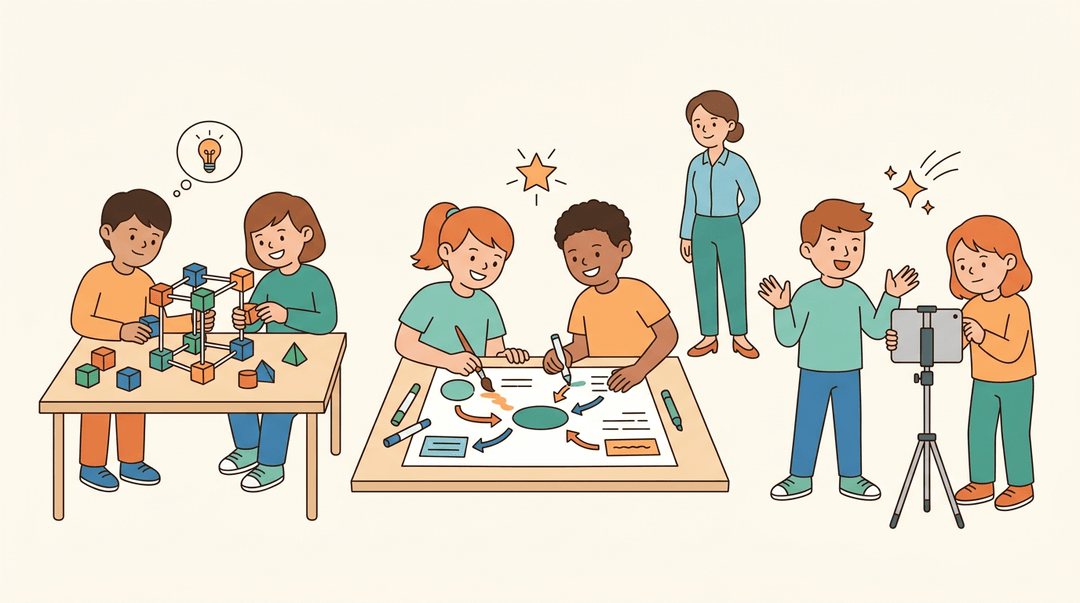
In the 5E model, students direct their own inquiry. During Explore, they test ideas and follow their own questions while you guide from the side. Partners compare findings and defend their reasoning, so collaboration comes naturally.
Choice matters too. Think of a sixth-grade science teacher who lets groups pick how they'll share results during Elaborate: a poster, a short video, or a model.
Students who chose their method take more pride in it, and that ownership carries into the next lesson.
Building critical thinking and inquiry skills
Students investigate before anyone hands them the vocabulary, so they learn to reason rather than memorize. That builds a scientific mindset: asking what would happen if, testing the idea, and revising when the evidence disagrees.
Wrestling with tricky problems in Explore also builds problem-solving ability, and every phase invites questions. The goal is how students think, not just what they produce.
Flexible ways to check understanding
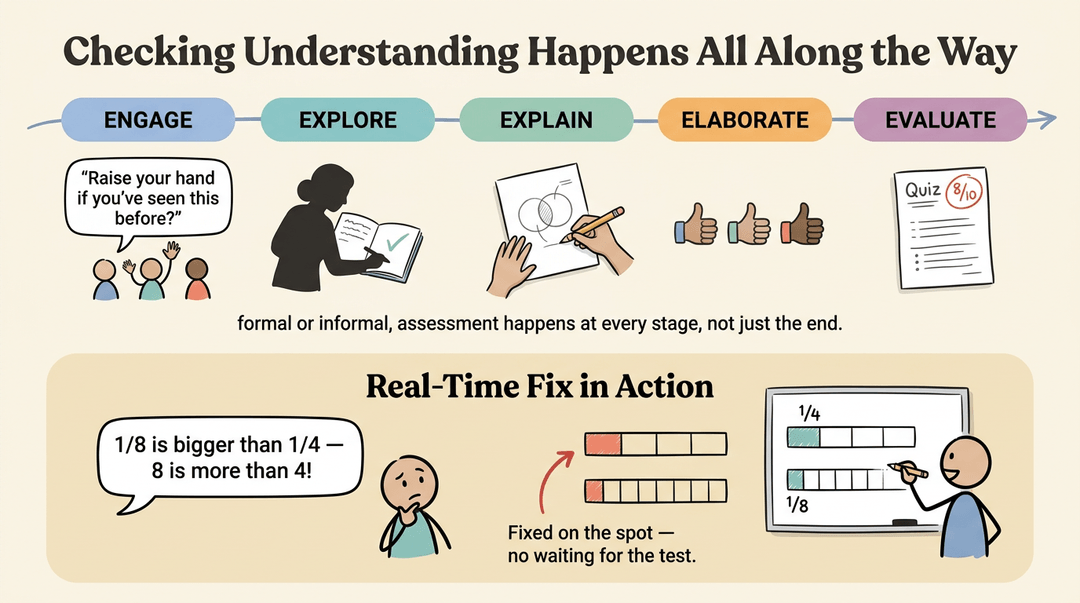
Assessment in the 5E model isn't a single test at the end. The model builds in formative checkpoints throughout, from a quick question during Engage to a sketch during Explain.
Use formal evaluation like a graded quiz or informal checks like a thumbs-up, whichever fits the moment.
Real-time correction pays off here. A middle school math teacher hears a student confidently claim a fraction is bigger because its denominator is bigger. Rather than wait for the unit test, she sketches both fractions and fixes the error on the spot.
Closing knowledge gaps for every learner
The 5E sequence catches gaps before complex topics arrive, since Engage and Explore reveal what students already know. Flexible grouping in Explore lets you pair students by need, so a small group can revisit basics while others push ahead.
Scaffolds and reteach opportunities are built in, too, so learners who process by doing, talking, or reading all find a way in.
Stronger engagement and teacher-student bonds
Engagement grows from conversation. As you circulate during Explore, you learn each student's strengths, gaps, and goals, and that connection builds trust. Students expand their interests and gain confidence when they succeed on work they helped shape.
Manipulatives, images, and quick polls keep attention high.

Putting the 5E Model into Practice
Knowing the five phases is one thing. Making them work on a Tuesday afternoon is another. Unlike backward design, which starts from the end goal, or the Hunter model's teacher-led steps, 5E puts student inquiry at the center. Teachers who compare other sequenced frameworks can also look at the nine events of instruction.
Planning clear objectives for each phase
Plan every phase before the lesson starts, not during it. Write a measurable objective for each so you know what evidence shows it worked.
For example, a fourth-grade teacher might have students sort three rock samples by texture in Engage and explain one observation in Explain. If an activity doesn't serve that objective, cut it.
Staying flexible and reflecting afterward
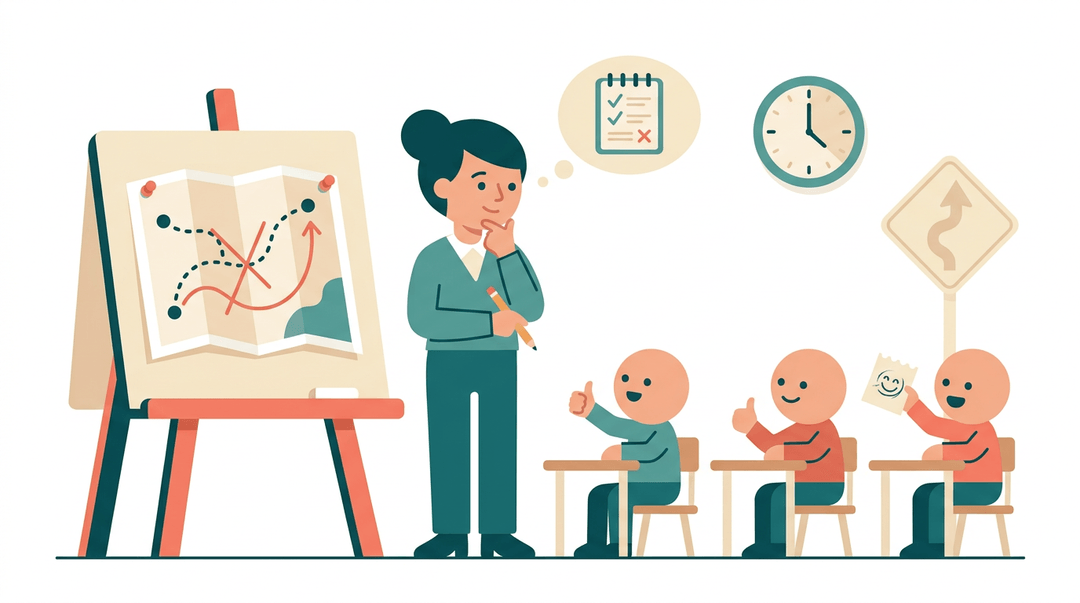
Your plan is a map, not a script. If half the room is lost during Explore, pause and adjust. After class, jot down what worked and what you'd change. Ask students for feedback too: a thumbs-up or one-line exit ticket tells you plenty.
Watch for pitfalls like rushing Explore so students never struggle productively, or skipping Elaborate so learning never transfers.
Adjusting the model for age and topic
Younger students need shorter phases, so a 20-minute Explore might become two 8-minute bursts with movement between. Add scaffolds like word banks and graphic organizers. If a concept is tricky, repeat Explain and Elaborate rather than rushing on.
Sub tip: put each phase's objective and materials on one page so a substitute can follow along.
Sample 5E Lesson Plans and Templates
Seeing the 5E model in action makes it click fast.
Examples across different subjects
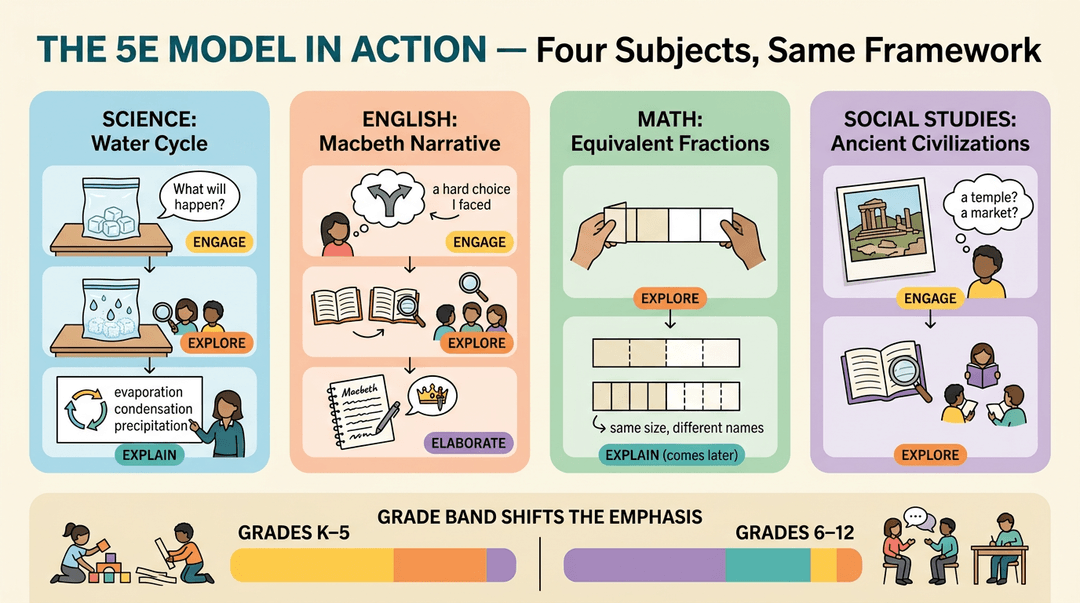
For example, a middle school science teacher covering the water cycle might place a bag of ice on each desk and ask, 'What do you think will happen?' (Engage).
Student teams then watch condensation form in a sealed bag (Explore) before you name the stages together (Explain).
In English, a teacher planning narrative writing around Macbeth might ask students to recall a time they faced a hard choice (Engage), then compare two scenes in small groups (Explore).
Each student drafts a short scene showing a character's decision (Elaborate).
A math teacher introducing equivalent fractions can have students fold paper strips to find equal parts (Explore) before any vocabulary appears.
In social studies, a unit on ancient civilizations might start with a photo of a city ruin (Engage), letting students guess its purpose before reading.
Grade bands change the emphasis. In K-5, expect more hands-on Engage and Explore time. In 6-12, students often handle more discussion and independent Elaborate work.
What a 5E template looks like
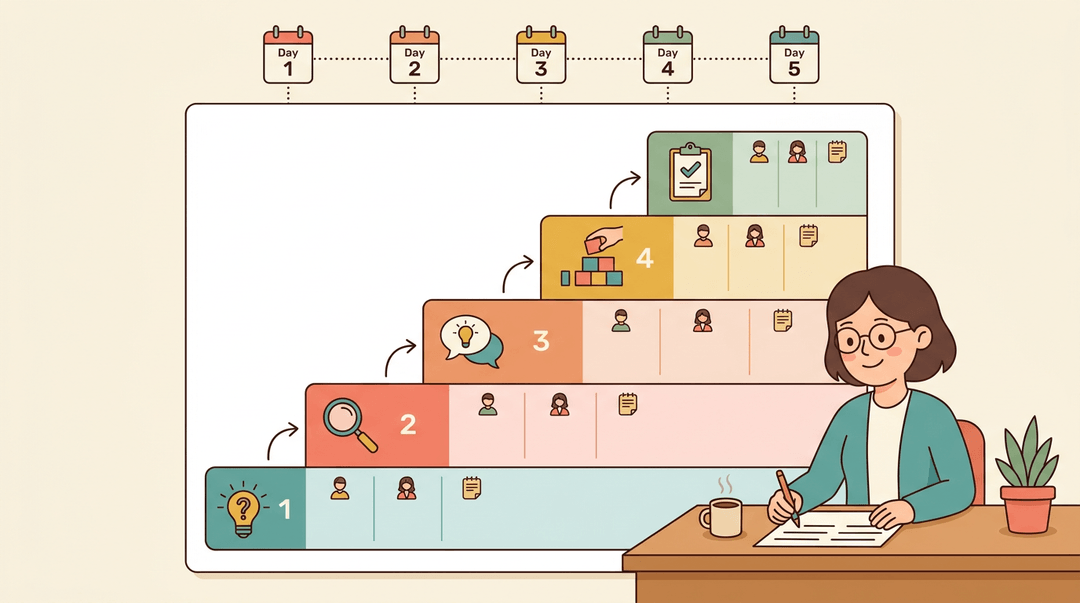
The 5E template is a customizable document you can download and adapt. Each phase gets a row with columns for the activity, student actions, and teacher actions. A notes field captures observations and assessment results.
Most lessons span several days, so map each phase to a day. Focus on what students do rather than what you say.
The 5E format works because it follows how students actually learn: they get curious, dig in, make sense of the idea, apply it, and show what they know. Each phase builds on the last, so your lesson feels purposeful instead of scattered.
Use the blueprint and checklist from this guide the next time you plan, and you'll likely find the structure gets faster with practice. Ready to build your next 5E lesson?
Check out our Lesson Planning feature to write, organize, and reuse your plans across all your classes from one place.
References
- A Systematic Review of BSCS 5E Instructional Model Evidence — doi.org (2023)
- The cognitive principles of learning underlying the 5E Model of Instruction | International Journal of STEM Education — stemeducationjournal.springeropen.com