Universalisation of Elementary Education: A Complete Guide

Jump to section
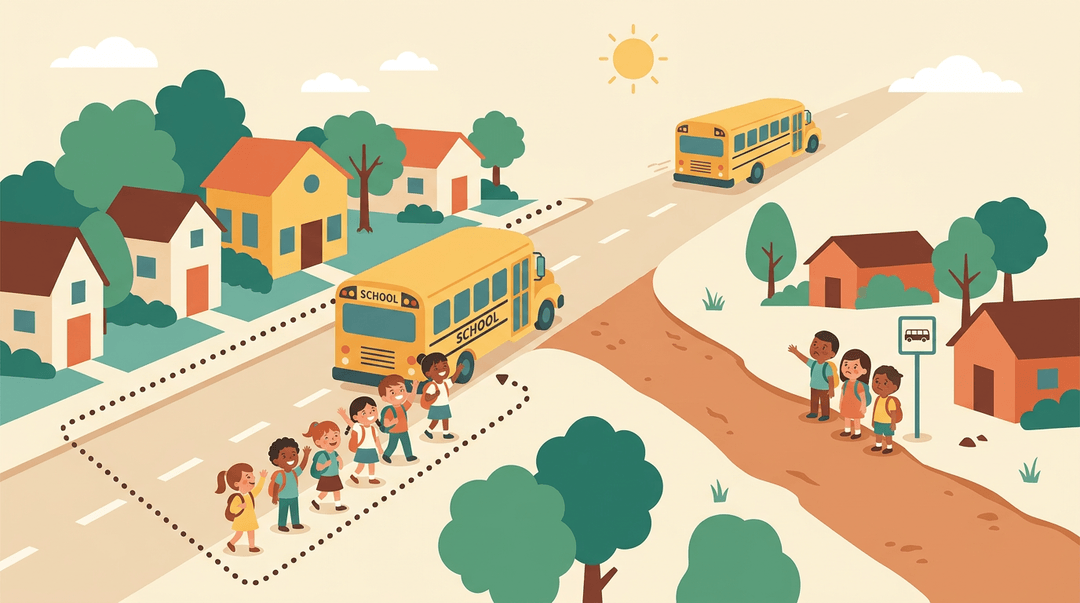
Think of a school bus that only drives down certain streets. Children on the other roads never get a ride, no matter how much they want to learn.
Universalisation of elementary education is the effort to make sure every child, in every neighborhood, can reach a quality elementary education.
In plain terms, it means making elementary schooling available, accessible, and worthwhile for all children.
In this post, we'll look at its constitutional basis, its core pillars, the government schemes that support it, the challenges in the way, and what you can do in your classroom to help.
Understanding Universalisation of Elementary Education
Ever wondered why every child should be in school, not just the lucky few? That's the goal of universalisation of elementary education (UEE): making sure every child gets a complete elementary education.
What UEE means and who it covers
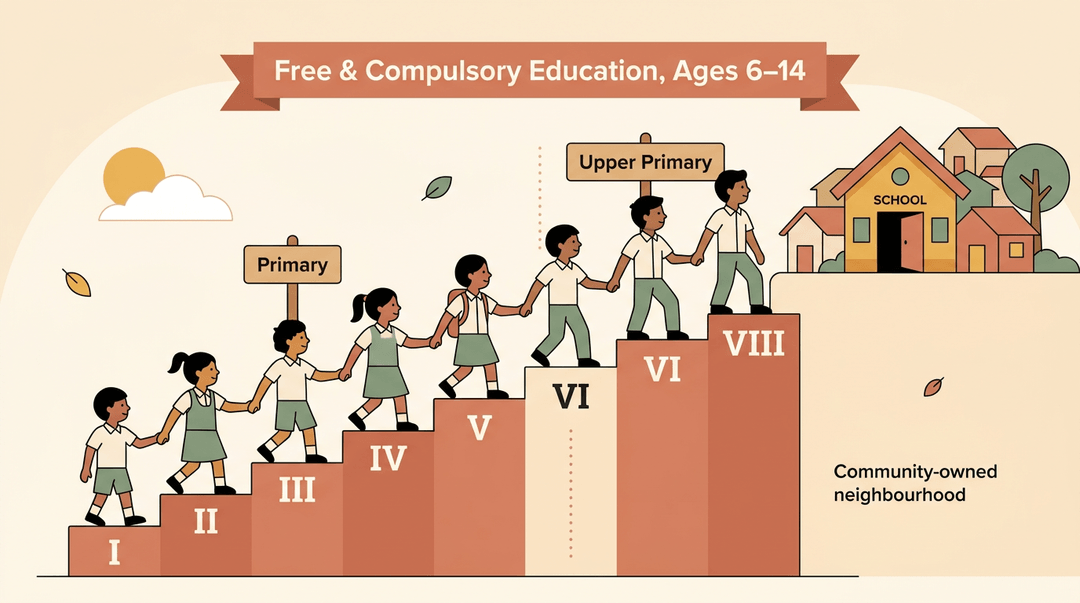
UEE targets children aged 6 to 14, covering classes I to VIII. Elementary education splits into primary and upper primary stages, so each child moves through a clear progression.
The core objective is free, compulsory schooling through completion for every child in that age group. UEE also draws on a community-owned schools model, where schools belong to the neighbourhoods they serve.
How the Right to Education Act connects to UEE
The goal is older than the law. Article 45 of the Constitution promised free and compulsory education for children up to age 14 within ten years. But it stayed a directive rather than an enforceable right.
As a non-justiciable principle, courts couldn't enforce it. One study of this history shows India missed the 1960 deadline, and decades of delay followed. Deadlines slipped. Children waited.
The Right of Children to Free and Compulsory Education Act, 2009, or RTE Act, changed that. It gives children aged 6 to 14 a justifiable legal entitlement to free and complete elementary education.
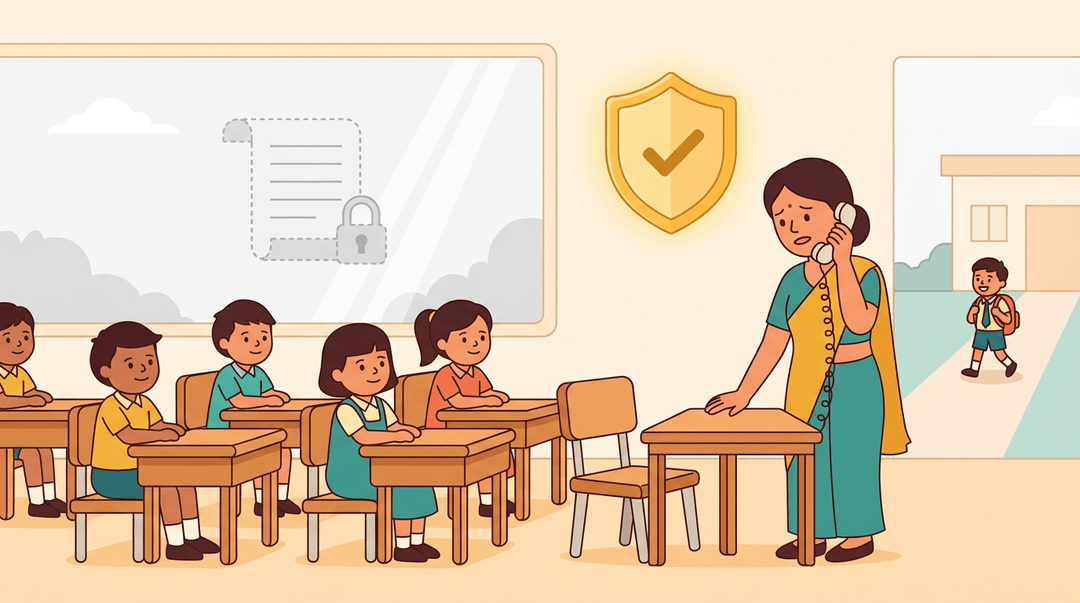
Consider a Class IV teacher who notices a student missing a full week. With the RTE Act behind her, she treats it as a signal to act. A quick call home can bring the child back before they fall behind.
The Three Core Pillars of UEE
The three pillars of Universalisation of Elementary Education (UEE) depend on each other. A school must be reachable, children must be enrolled, and they must stay until they finish.
Making sure every child has a school nearby
A walkable distance is the first condition, but facilities matter too. A nearby school without usable classrooms, toilets, or drinking water still leaves some children out. Access means every child, not just most.
Getting every child enrolled
Enrolment is a start, not a finish. Drives, incentives, and community mobilisation bring children in, but the numbers don't always rise.
A recent Education Ministry report, covered by The Hindu, found total enrolment in Classes 1 to 12 fell by 11 lakh students in 2024-25, an all-time low since 2018-19.
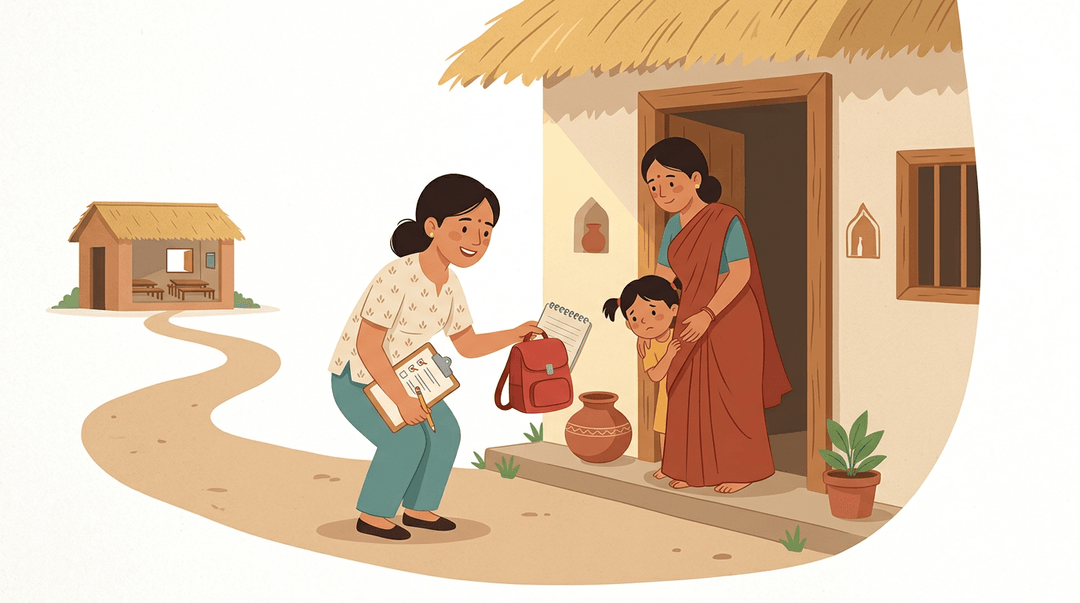
A Grade 1 teacher who visits families before term can find children who were never registered. One conversation can put a child in a seat on day one.
Keeping children in school until they finish
A child must stay until completion, because dropout defeats the UEE goal. Keith M Lewin documents wastage:
- about 30% fail to complete Grade V
- about 50% drop out before Grade VIII
- 60% don't finish Grade X
Class-wise UDISEPlus 2024-25 data show that dropout varies across primary grades. Watch for early warning signs like frequent absences. A Grade 4 teacher who notices a steady reader missing Mondays can call home that week. Catch it early.
How Teachers Can Support UEE
Universalisation only works if children enroll, stay, and learn. This guide gives you three habits for that: track who's showing up, plan for mixed levels, and make access fair. Use it as a term-by-term routine.
Track enrolment and retention
You don't need new software. A notebook and ten minutes a week will do.
- Mark attendance the same way daily
- One register, one grid, no gaps.
- Scan for patterns every Friday
- Look for Monday absences, three missed days in a row, or seasonal dips.
- Flag at-risk students early
- Say: "We've missed Meena this week. Is everything okay? How can school help?"
- Log retention by term
- Fill in one grid, shown below, at each term's end.
| Term | Enrolled at start | Still attending | Left (reason, if known) |
|---|---|---|---|
| Term 1 | 38 | 36 | 2 (family migration) |
⚠️ Watch out: Don't wait until a child has been gone for weeks. The first three missed days are your best window to reach the family.
Plan for mixed-ability, multi-grade classes
When one room holds several levels, plan around skills, not just grade labels.
Sequence lessons by level. Jot the prerequisite chain, then start where the class actually is:
fractions of a set ← equal sharing ← halving objects
Use spiral review cycles. Reopen old skills in short, regular doses so gaps don't harden.
- Week 1: teach equal sharing.
- Weeks 3 and 6: open class with a five-minute equal-sharing warm-up.
Pace for diverse learners. Give everyone one shared anchor task, then offer two routes:
- Support route: concrete objects, such as folding paper strips.
- Stretch route: a harder problem on the same idea.
Example: In a combined Grade 3 and 4 class, a teacher sets one shared task: "Share 12 mangoes equally among 4 friends." Grade 3 pupils use counters. Grade 4 pupils write the fraction each friend gets. Same lesson, two entry points, no one waiting.
Make access fair and inclusive
Find the situation, read across, act.
| When you see... | Try... |
|---|---|
| A girl absent often, with chores likely at home | Talk with the family; offer catch-up work for missed days |
| Tribal students unsure in the language of instruction | Pair with a peer; use home-language words to bridge |
| Examples that feel foreign to students | Swap in local markets, crops, festivals, and landmarks |
| Families unsure about sending children | Coordinate with community outreach: village leaders, school committees |
Culturally relevant examples are easy to build in. Turn "a train leaves a station" into "a bus leaves your local market."
Map year-long units and pacing to real classroom needs with EMStudio's curriculum planner.
Why UEE Matters for Society and Economy
Universalising elementary education isn't only about classrooms. It shapes health, the economy, and how people take part in public life. Here's how those pieces connect.
How UEE boosts health, economy, and democracy
Start with population stabilisation, the idea that a population grows at a steadier pace. Policy has long linked this to schooling.
The Sarva Shiksha Abhiyan (2001) targeted universal elementary education, and the Right to Education Act (2009) made schooling a fundamental right for children aged 6 to 14, as a recent piece in The Hindu explores in terms of how education shapes family decisions.
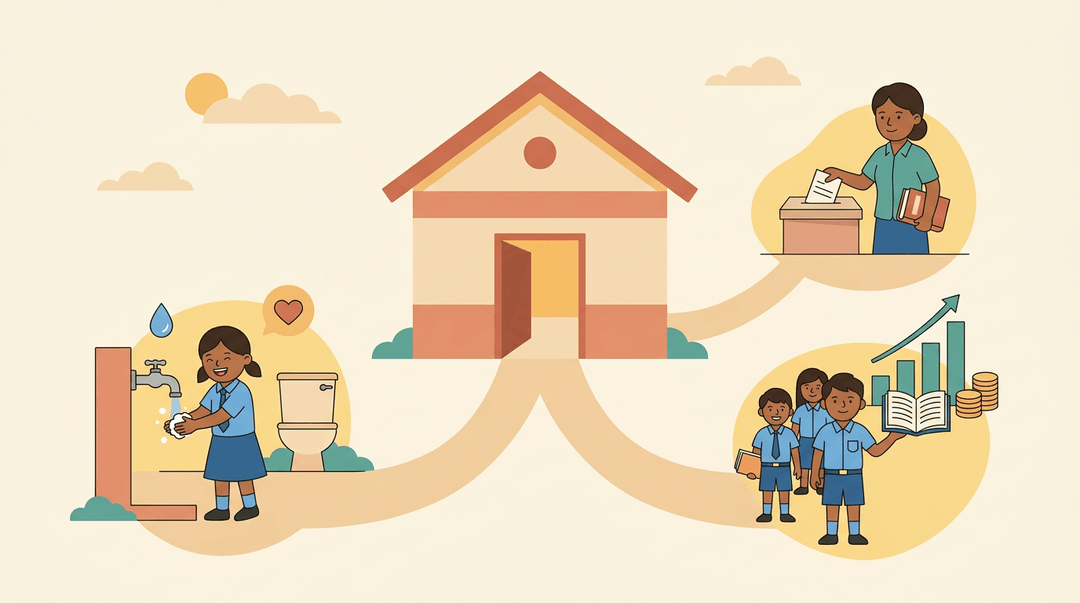
Health is part of the picture too. Think of a Grade 2 teacher whose school has clean water and working toilets. Children can focus on the lesson instead of worrying about basics.
A review of school WASH facilities under the Jal Jeevan Mission finds that water, sanitation, and hygiene in schools shape children's health, participation, and cognitive development.
The economic case is just as strong.
A study of public spending on elementary education in India argues that educating a population of India's size builds human capital and drives economic growth, which may reduce inequality by equipping millions with skills for a fast-changing economy.
Skills open doors.
Finally, there's informed choice. Democracy works best when people understand their options. Students who learn to read, compare, and reason grow into adults who can weigh decisions for themselves.
It's less about who speaks loudest and more about who understands the choice in front of them.
Key Government Schemes Supporting UEE
Getting every child into a classroom takes more than a law. It takes schemes that reach communities, classrooms, and budgets.
The mid-day meal scheme is one clear example: it's designed to draw children into school and keep them there, which is the retention problem universalisation of elementary education (UEE) is meant to solve. Here's how the main efforts fit together.
What Sarva Shiksha Abhiyan achieved for UEE
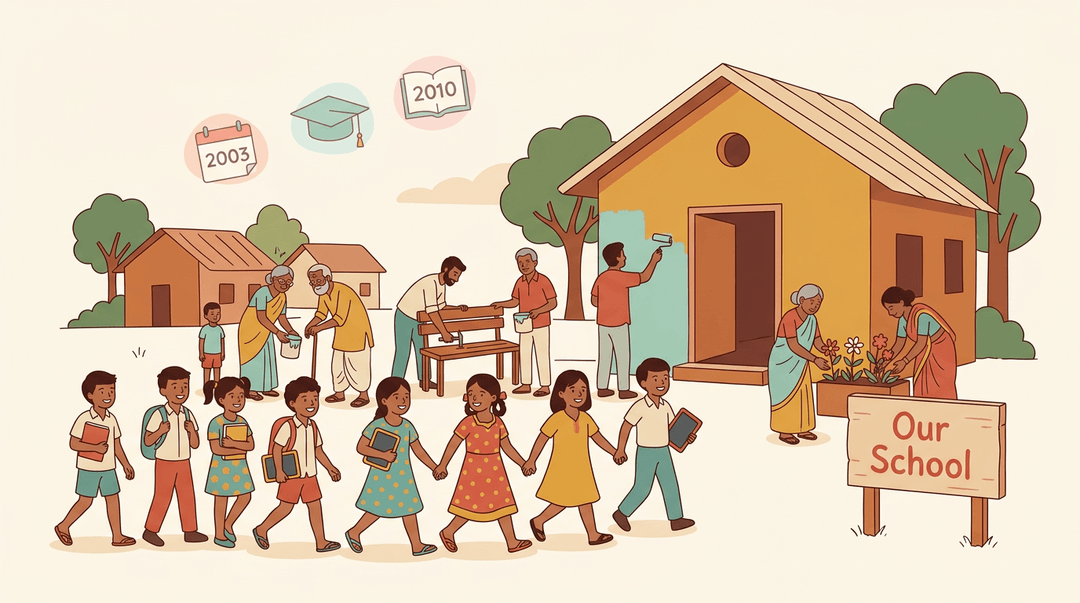
Sarva Shiksha Abhiyan (SSA) was the flagship push to bring every child into school. It aimed to build community-owned schools, where local people feel responsible for the school their children attend.
According to the Press Information Bureau, SSA aimed to provide "useful and relevant elementary education for all children in the 6-14 age-groups by 2010."
An enrolment target set for 2003 gave states a nearer milestone, and a special push for female literacy turned attention to girls' schooling.
How the Janashala programme supported learning
Enrolment only matters if children learn once they arrive. The Janashala programme addressed that through Nali-Kali, a joyful learning approach, alongside:
- community participation
- school sanitation
- inclusive education
Consider a Grade 2 teacher who lets pupils count seeds during a maths lesson instead of copying sums from the board. Learning by doing rather than by copying gives children a reason to want to come back.
Community participation brings parents into school life, sanitation covers basic facilities, and inclusive education makes room for every child's needs.
How public-private partnerships support UEE
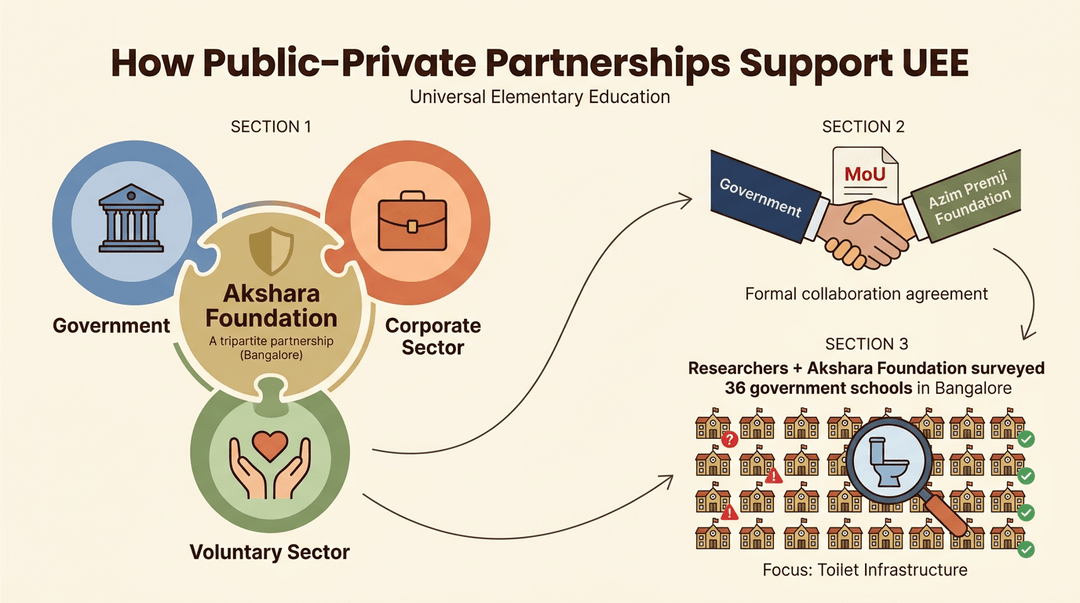
Government alone couldn't meet every need, so partners stepped in. An MoU with the Azim Premji Foundation formalised one such collaboration. The Akshara Foundation in Bangalore was conceived as a tripartite partnership between:
- the government
- the corporate sector
- the voluntary sector
In one example, researchers worked with the Akshara Foundation to survey 36 government schools in Bangalore, looking at their toilet infrastructure.
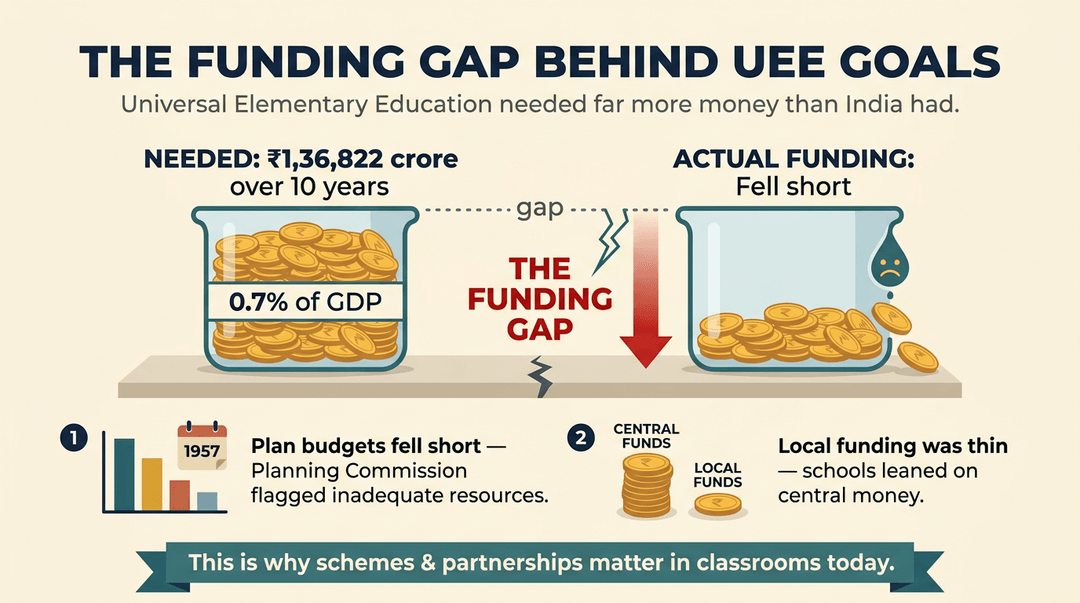
The funding gap behind UEE goals
Good intentions still need money, and the numbers were large. A 1999 expert report estimated that Rs 1,36,822 crore would be needed over 10 years to educate children aged 6 to 14. Experts also put the requirement at 0.7% of GDP. Money was the bottleneck.
- Plan budgets fell short. As an overview of India's primary education explains, the Planning Commission identified this deficiency as a significant barrier in 1957 owing to inadequate resources.
- Local funding was thin. Limited local contributions meant schools depended heavily on central allocations.
Understanding this gap helps you see why schemes and partnerships matter so much in your own classroom.
Challenges That Stand in the Way of UEE
Getting every child into a classroom sounds simple on paper. In reality, universalisation of elementary education (UEE) runs into money, teachers, buildings, curriculum, attitudes, and geography, and each problem makes the others harder to solve.
Not enough money to fund UEE
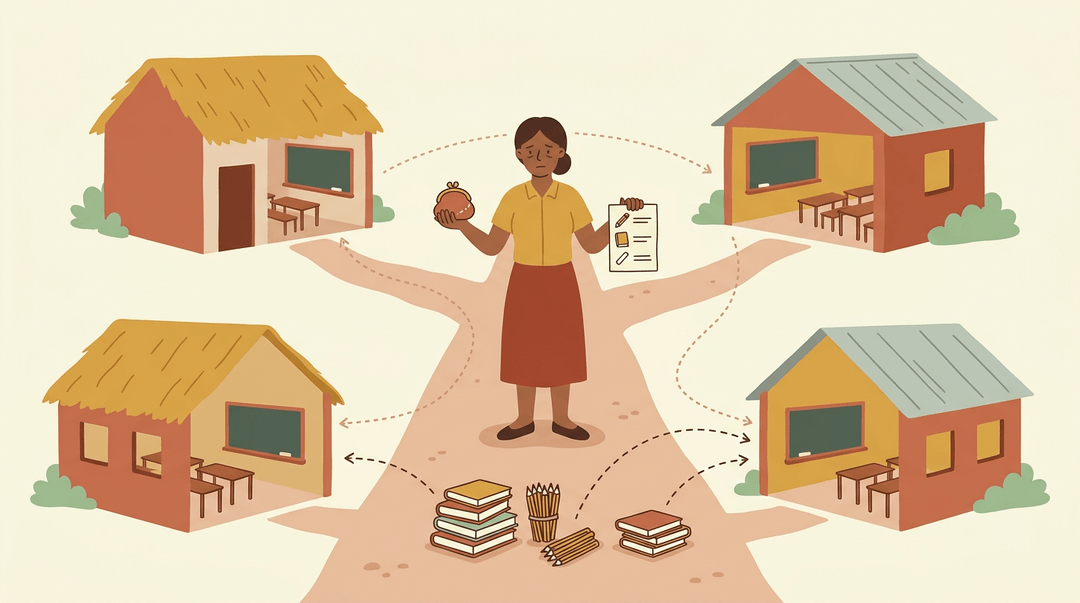
The root issue is a dearth of money. Plan allocations have often been low, and local institutions have limited funds of their own. When the budget runs thin, teacher pay and materials are the first things squeezed.
Think of a head teacher stretching one supply budget across three village schools. Keeping a short list of essentials and sharing materials with nearby schools helps every bit of support go further.
Too few trained teachers for UEE
Several things keep teachers from staying. Low salaries deter capable people, and rural posting reluctance means many prefer urban schools.
Without nearby residential quarters, a teacher posted to a remote village may spend hours commuting or leave altogether.
Many teachers are untrained for the classes they're handed, and multi-grade teaching (one teacher handling several grades at once) is hard without support. Helpful tactics include:
- Pairing older students as peer helpers for younger ones
- Rotating activities so one group works independently while you teach another
- Giving every grade a shared task they can each tackle at their own level
Missing schools and buildings
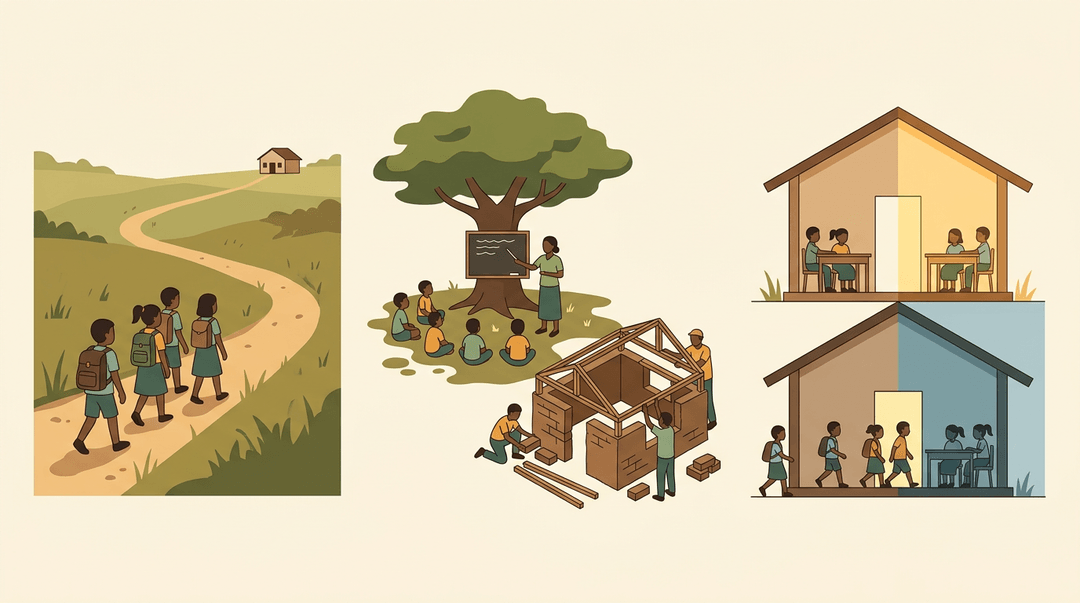
Some villages are schoolless, so children travel far or go without. A lack of buildings pushes classes under trees, and low-cost construction using local materials helps communities build sooner.
A shift system, where two groups use one building at different times, stretches space, though it asks more of teachers and families.
It's less about having a building and more about using the space well.
A curriculum that doesn't fit real needs
A narrow curriculum that ignores local life makes school feel irrelevant. Craft education, such as weaving, gardening, or simple carpentry, brings hands-on learning back in, and learning-by-work lets students learn by doing real tasks.
Consider a Grade 3 teacher in a farming community who has students measure the rows of a field before a multiplication lesson. Suddenly the times tables have a reason to exist. Relevance keeps kids coming back.
Social attitudes that keep kids out of school
Some barriers are cultural. Child marriage practices pull students out early, and caste and gender bias can decide who gets a seat and who gets respect.
A superstition and illiteracy cycle makes it hard for families to see the value of school, and girls are often pulled from school early, a loss that's hard to recover.
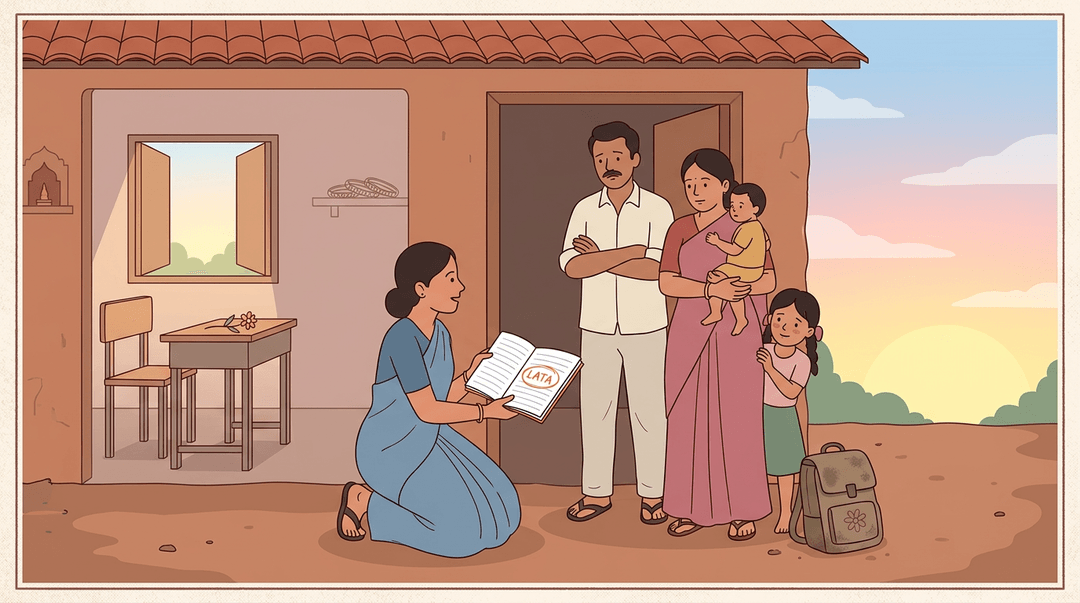
Teachers can start small: learn every child's name, reach out to families as soon as attendance slips, and invite parents to see what their children are doing.
Reaching remote and linguistically diverse areas
Geography complicates everything. Remote hilly and desert regions stretch the distance between homes and schools, and transport and communication gaps make it hard to deliver supplies or reach families.
Many classrooms also serve multiple languages and dialects, so a lesson in one language can leave children behind. Tribal and scheduled caste communities often face the steepest access barriers.
Begin with the language children speak at home, then bridge to the language of instruction using pictures, gestures, and familiar words. Access is only the first step.
Does Enrolment Mean Real Learning?
Getting children into school is a real win, but it isn't the finish line. Once they're inside, the question becomes whether they're actually learning.
Why enrolment doesn't guarantee learning
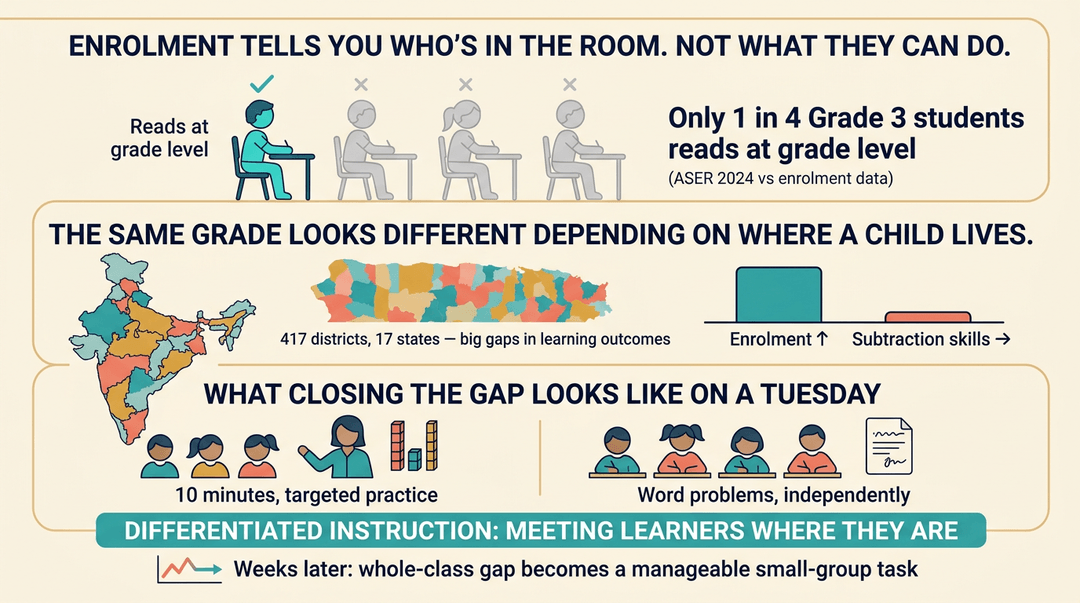
Enrolment tells you who's sitting in the classroom. It doesn't tell you what they can do.
The Annual Status of Education Report (ASER) tests children directly, and one comparison of recent enrolment figures with ASER 2024 results shows the gap: only 1 in 4 Standard III (Grade 3) children reads at grade level.
Input gains are real, but proficiency lags behind.
Location matters too. A recent study in the Journal of Social and Economic Development, using data from 417 districts across 17 major states, finds substantial geographic differences in elementary pupils' learning outcomes.
The same grade can look very different depending on where a child lives.
Math shows the same pattern. A RISE Programme review of ASER notes that, in contrast to enrolment gains, learning levels stayed low, including in subtraction.
Enrolment is the input. Learning is the outcome. So what does closing that gap look like on a Tuesday? Consider a Grade 4 teacher who notices half her class can subtract with borrowing and half can't.
Rather than re-teaching everything to everyone, she pulls the struggling group for ten minutes of targeted practice with base-ten blocks while the rest work on word problems.
Within a few weeks, a gap that looked like a whole-class problem becomes a manageable small-group task. That's differentiated instruction: meeting learners where they are.
Girls' Education and Regional Success Stories
Keeping girls in school is one of the hardest parts of universal enrolment, and some states have tried to tip the balance with direct support. Here's what those efforts look like, and what one hill state got right.
Incentives that keep girls in school
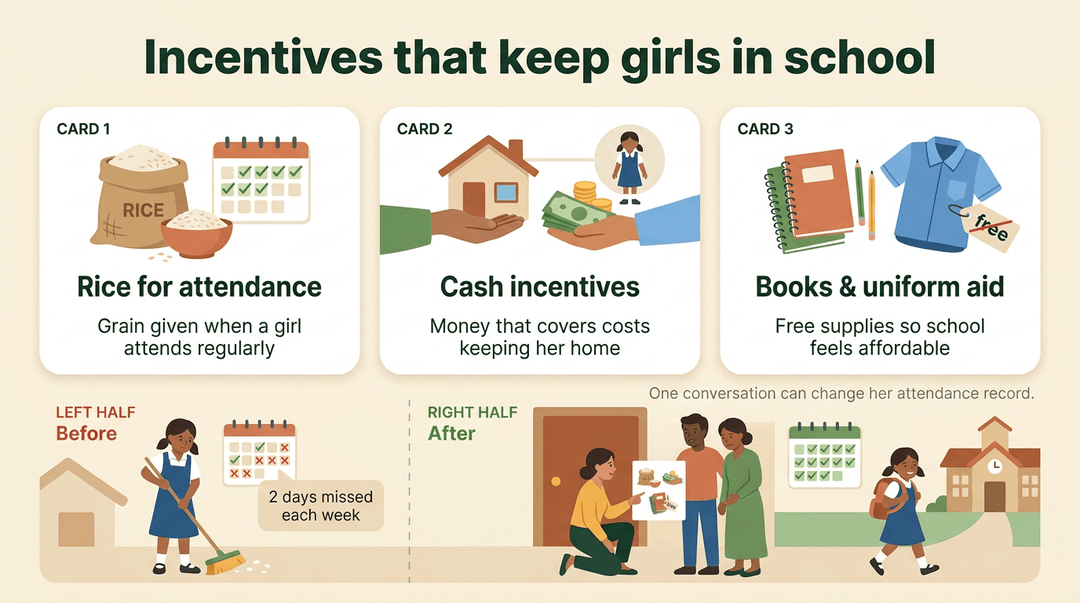
Attendance often slips first for girls, especially once household work or a long walk starts competing with lessons. Incentives aim to remove that pressure. Common approaches include:
- Rice for attendance: a grain allowance tied to regular attendance, giving families a reason to keep sending their child.
- Cash incentives: direct payments that help families cover costs that might otherwise push girls out.
- Books and uniform aid: free supplies that make school feel affordable and equal.
Think of a Class 6 girl who misses school twice a week to help at home. A teacher who knows about these supports can point her family toward them, and that one conversation can change her attendance record.
How Himachal Pradesh got it right
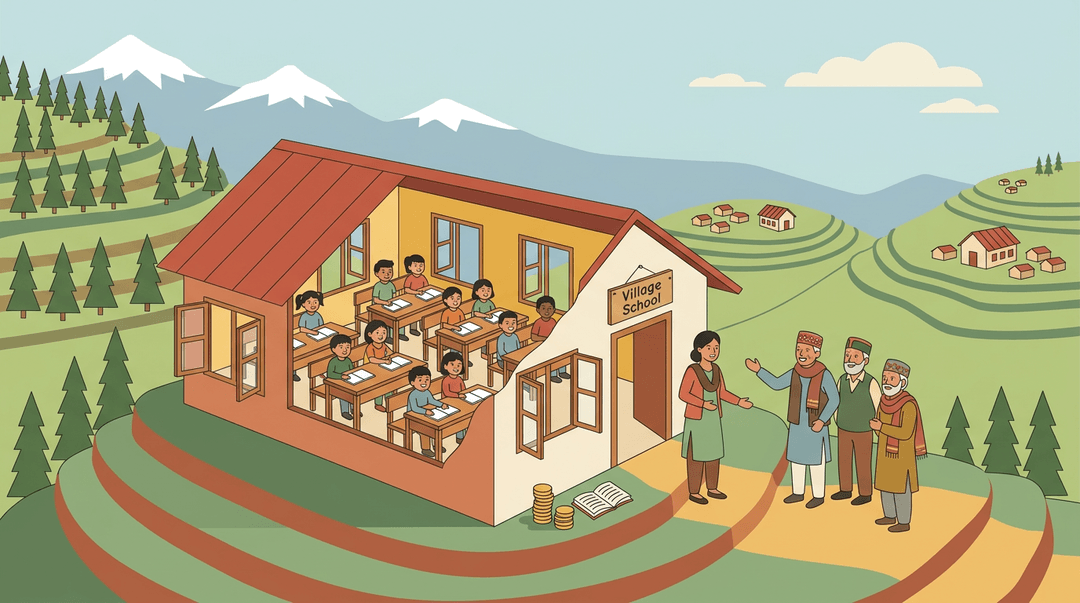
Himachal Pradesh is the case worth studying. Its literacy success rests on strong enrolment.
According to The Times of India, the state records a gross enrolment ratio (GER), which compares enrolled pupils with the eligible age group, of 100% at primary level and 103% at both upper-primary and secondary levels.
Spending is a key piece too. An Ideas for India analysis finds that public expenditure per student is highest in Himachal Pradesh.
The state also planned for access. According to Education for All in India's analysis of UDISE+ data, it opened a school in every habitation above a minimum population threshold. Small schools cost more to run. That trade-off was deliberate.
Panchayat and community involvement is the part of the story these sources don't spell out, so treat it as a question rather than a checkbox. Ask your local panchayat members how they support schools, and how you can work with them.
Administrative and Political Roadblocks to UEE
Good policy on paper doesn't always reach the classroom. Here's where we see the goal of Universalisation of Elementary Education (UEE), which aims to bring every child into school and keep them there, start to stall, and what that means for you.
Where policy and administration fall short
Basic education policy often sounds idealistic: every child, every village, a good school within reach. But good intentions don't staff a school.
Block and municipal administration can lose track of enrolment, delay funds, or leave schools without teachers for months. Political priorities also shift after independence, pulling attention toward other urgent demands.
When political will is weak, even well-designed schemes lose momentum.
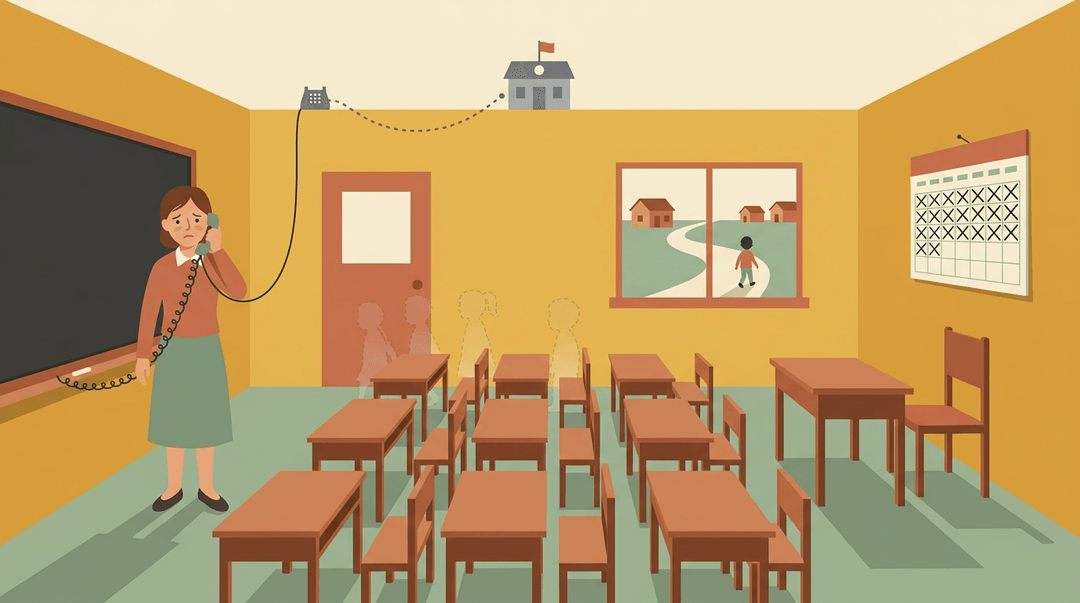
Consider a primary teacher in a rural block whose school hasn't had a replacement for a retired colleague all year. She knows which students have stopped coming, but her calls to the block office go unanswered.
Her class shrinks, and the children who drift away are often the ones who needed the school most.
NEP 2020 was meant to strengthen continuity in schooling, so gaps left by administrative lapses matter even more now.
Policy is less about writing the rules and more about delivering them, and a policy only protects children when someone follows through on the ground.
Universalisation of elementary education is about more than enrolment. It asks whether every child is in school, supported, and actually learning.
Policy sets the stage, but the everyday work happens in classrooms like yours, where attendance, inclusion, and quality come together.
Ready to plan that work with intention? Check out our Curriculum Planning feature, an all-in-one online teacher planner for mapping units, lessons, and standards across the whole school year.
References
- Dynamics of Transformation of Right to Education in India from Directive Principle to Fundamental Right: A History of Denial — journals.sagepub.com
- Understanding learning inequality in primary education in rural India: 2010–2018 | Journal of Social and Economic Development — link.springer.com (2025)
- School Education in Himachal Pradesh: Where Do We Stand?: A Comprehensive Analysis Based on UDISE+ Data: 2021-22 to 2024-25 — educationforallinindia.com (2026)
- Educational Outcomes and Child Development: Impact of School WASH Facilities Under Jal Jeevan Mission: A review — exa.ai (2026)
- ASSESSING EFFICIENCY OF PUBLIC SPENDING ON ELEMENTARY EDUCATION IN INDIA: A COMPARATIVE ANALYSIS POST-IMPLEMENTATION OF THE RIGHT TO EDUCATION (RTE) ACT — exa.ai (2025)
- OSEPA — osepa.odisha.gov.in
- Article 45: Provision for early childhood care and education to children below the age of six years — constitutionofindia.net
- Is it Achievable at Affordable Costs? Keith M Lewin — files.eric.ed.gov
- English Releases — pib.gov.in
- India's Journey in Primary Education: An Overview Since ... — ijssr.com
- Taking Stock of Toilets in Bangalore’s Government Schools: Status, Challenges and Opportunities — exa.ai (2013)
- Enrolment of school students aged 3 to 11 falls by 25 lakh: MoE report — thehindu.com (2025)
- State of Dropout, Transition, and Retention Rates based on UDISEPlus 2024-25 Data — educationforallinindia.com (2025)
- Backgrder_Financing_Edu — doccentre.net
- Comparing UDISE+ 2024-25 with ASER 2024 — educationforallinindia.com (2025)
- Expansion of formal schooling helps Himachal Pradesh move from 7% to 99.3% literacy rate — educationtimes.com (2026)
- Where education still moves the needle: marriage, not family size — thehindu.com (2026)
- Collaboration at — akshara.org.in
- Shifting from Schooling to Learning: How ASER Shaped India’s Education Discourse and Policy by Measuring Learning — riseprogramme.org
- How much does India spend on elementary education? — ideasforindia.in
Frequently asked questions
What is the Right to Education Act and how does it relate to universalisation of elementary education?
The Right of Children to Free and Compulsory Education Act, 2009, gives children aged 6 to 14 a justiciable legal entitlement to free and complete elementary education. It strengthens universalisation of elementary education by making access and completion a legal responsibility rather than only a policy objective.
What is the role of the mid-day meal scheme in universalisation of elementary education?
The mid-day meal scheme supports universalisation by encouraging children to enrol, attend regularly, and remain in school. It also addresses hunger during the school day, helping children participate more effectively in learning, particularly those from disadvantaged families.
What are the objectives of universalisation of elementary education?
The main objectives are to provide free and compulsory elementary education to every child aged 6 to 14, ensure access to a nearby and properly equipped school, achieve full enrolment, prevent dropout until completion of Class VIII, and provide useful, inclusive, and quality learning. UEE also aims to reduce inequalities linked to gender, caste, language, disability, geography, and poverty.