Is the Rod and Staff Curriculum Right for Your Homeschool?

Jump to section
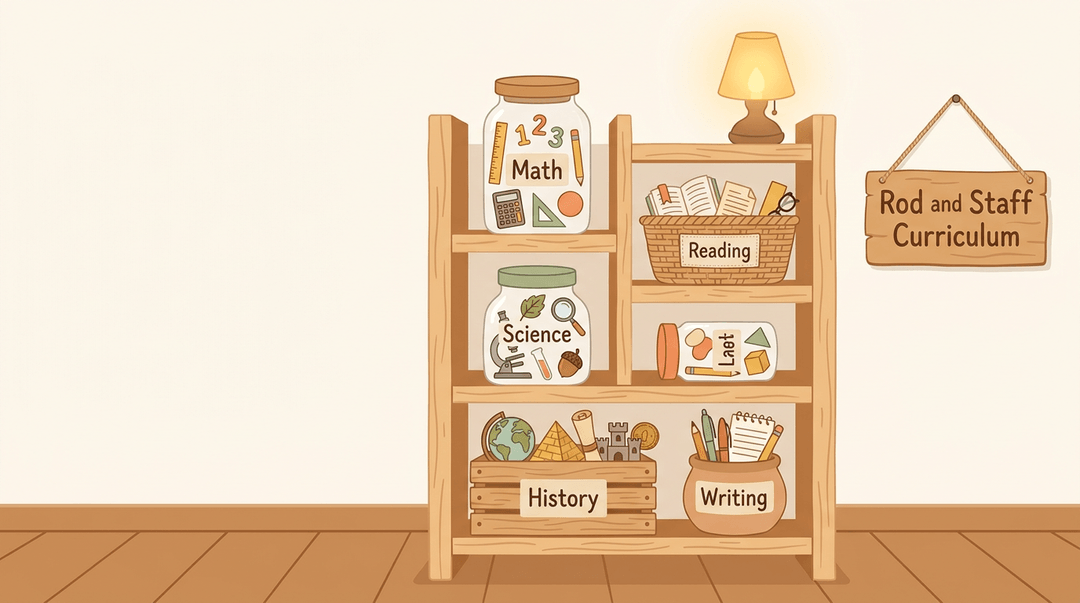
Think of a well-stocked pantry. Everything you need is there, but only if you know what to grab and when. A curriculum works the same way: it's the shelf that keeps your lessons organized and on track.
Rod and Staff Curriculum is a program rooted in Mennonite philosophy, and it's a favorite starting point for homeschoolers and tutors looking for structure.
In this post, we'll walk through its philosophy, subject lineup, grade range, and ratings, then share a simple framework for pacing and standards alignment.
A Look at the Rod and Staff Curriculum
Rod and Staff is a Christian curriculum with a traditional, structured feel, built for families who want clear lessons without extras. Here's what sets it apart and how to size it up.
The Mennonite publisher behind this curriculum
Rod and Staff is produced by a Mennonite publisher, so its content is Christian and Bible-based and doesn't compromise Scripture.
The name comes from Psalm 23:4, where the rod is a short club for protection and the staff is a long shepherd's crook for guiding. Its Anabaptist roots are noted, so you know the tradition behind the books.

Straightforward textbooks with little teacher prep
Think of a homeschooling mom with a second grader and a kindergartener at the same table. With textbook and workbook lessons, she points each child to the day's pages, then spends her time on whoever's stuck.
The illustrations are simple and black and white, so attention stays on the work. You'll still check answers, but teacher involvement stays minimal.
Researchers also split curriculum into seven types, which a review of curriculum development attributes to Kelly as the:
- formal
- informal
- planned
- received
- educational
- total
- hidden curriculum
Which grades this curriculum covers
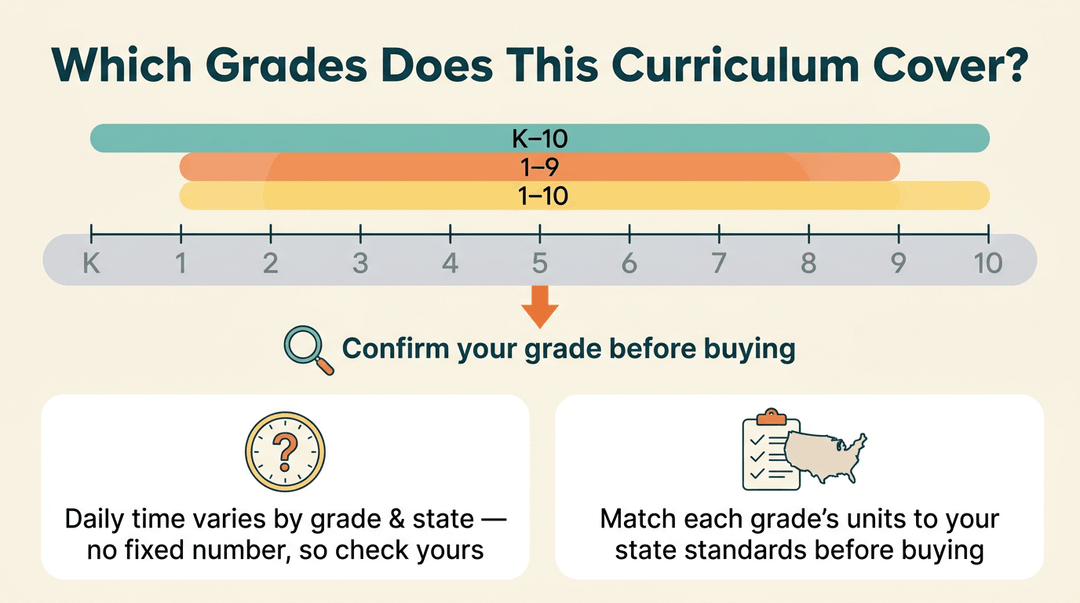
The range is kindergarten through 10th grade, though some descriptions list grades 1 through 9 or 1 through 10, so confirm your level before you buy. Daily time depends on grade and state rules, and our research has no verified figure, so check yours.
Before buying, map each grade's units against your state standards.
What is the highest rated homeschool curriculum?
Ratings usually cover:
- subject coverage
- ease of use
- affordability
- parent satisfaction
We don't have verified scores for Rod and Staff, so we can't name a single top pick. For deals on kindergarten materials, search publisher and homeschool retailer sites before paying full price.
Compared with CLE, ABeka, or BJU, put each on the same grade's scope and sequence side by side.
Planning Your Year with Rod and Staff
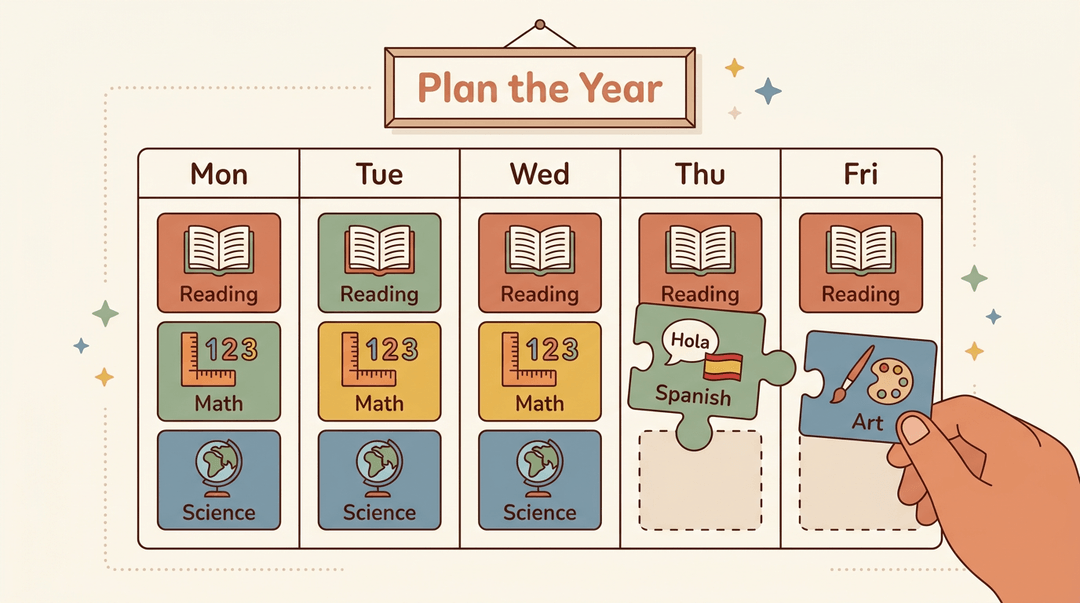
This guide helps you turn Rod and Staff's grade-by-grade books into a year plan you can check against your state's requirements and run across several children. Use it before week one, and again at each term break.
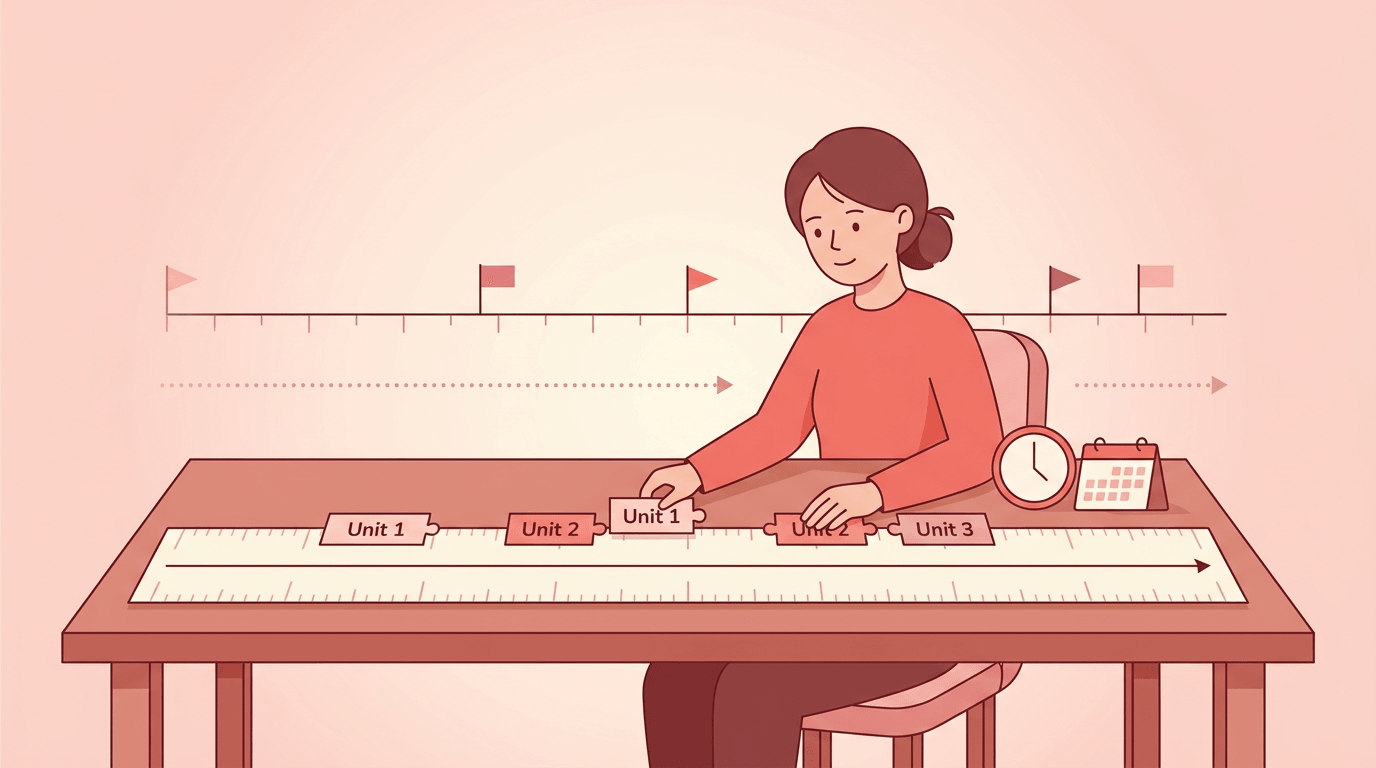
Build the year-at-a-glance
Start with one page per child. You're after the whole year in a single view.
- Map subjects by grade
- List each child's grade and every subject down the left side.
- Jot: Grade 3: Math, English, Reading, Spelling, Bible
- Set pacing per unit
- Divide each book's units by your school weeks.
- Jot: Math Unit 4: weeks 9-11
- Mark review weeks
- Place one after each cluster of units, plus a buffer before breaks.
- Jot: Week 12: review and catch-up, no new lessons
Match lessons to your state's requirements
Work down your state's standards list, one standard at a time, and find where Rod and Staff teaches it. A simple grid keeps the record.
| Slot | What you write | Sample entry |
|---|---|---|
| Standard | Copy it from your state's list | Add fractions with like denominators |
| Where taught | Book, unit, and weeks | Math Unit 6, weeks 14-16 |
| Gap? | Yes, no, or partly | Partly: no word problems |
| Supplement | One resource or activity | Two extra word-problem sets |
| Proficiency target | What mastery looks like | 4 of 5 problems correct, unaided |
⚠️ Watch out: Don't assume a match from the grade level alone. Check each standard against the actual lessons, because a gap you find in week 3 is easier to fix than one you find in June.
Coordinate schedules across grades
With more than one child, the goal is fewer separate lessons for you. Find your situation and read across.
| When you see... | Try... |
|---|---|
| Two children both need you at once | Stagger subjects: one starts independent work while you teach the other |
| Bible and Music on every schedule | Combine them into one shared block, with written work at each child's level |
| Hands-on activities keep getting skipped | Rotate one hands-on day a week, one child's subject per turn |
Example: A parent with a second grader and a fifth grader puts Bible and Music together first thing each morning. Math with the younger child runs while the older one does independent English. Friday is the hands-on day, alternating whose science or project it is. Review weeks fall at the same point for both, so the whole household catches up together.
Map your Rod & Staff scope, sequence, and standards alignment in one curriculum planner.
Language Arts Subjects
Rod and Staff treats language arts as connected skills, so grammar, reading, phonics, spelling, and vocabulary reinforce one another. Here's how each piece works.
How grammar and writing are taught
The grammar strand follows a traditional grammar approach, so students learn parts of speech and sentence structure in a clear, sequential order.
Writing is blended into the same lessons rather than kept separate, so a student practices a rule and then uses it in a short composition. Lessons carry a Biblical tone, and usage follows a conservative approach. This strand covers grades 2 through 10.
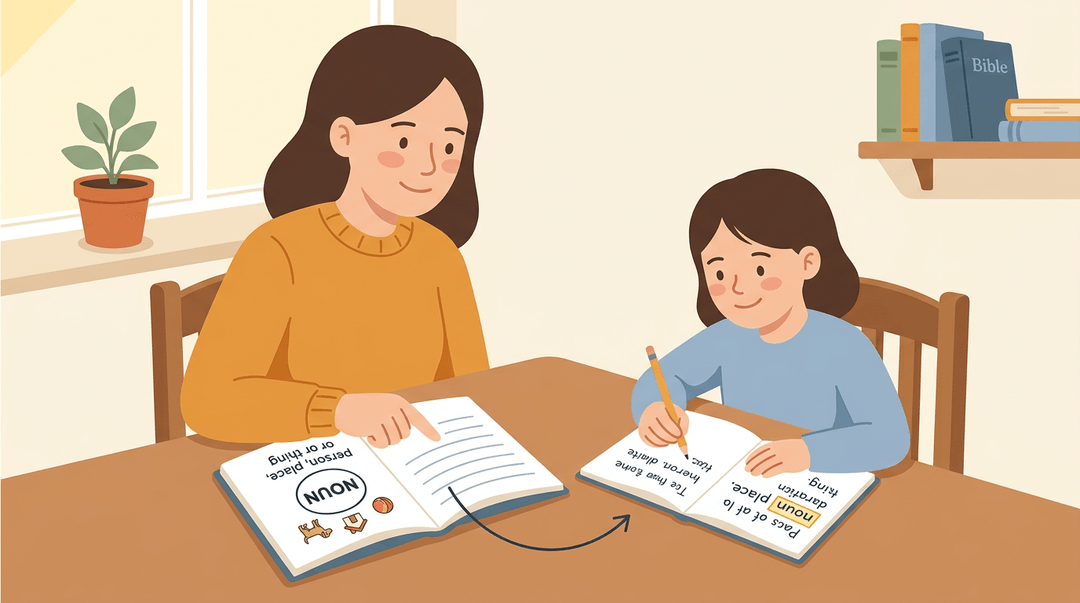
Think of a fourth-grade homeschool parent who wants her child to spot a noun and then use one in a paragraph that same week. The blend means the rule and the practice arrive together.
Reading lessons built on phonics
The reading lessons build on the phonics program, so students who know sound-letter patterns move into connected text. The content places a strong emphasis on Biblical themes, and the series spans grades 1 through 9.
The goal is less about memorizing whole words and more about decoding them.
A first-grade teacher can use a reading lesson right after finishing phonics work, so new skills show up in real stories immediately.
Teaching phonics in the early grades
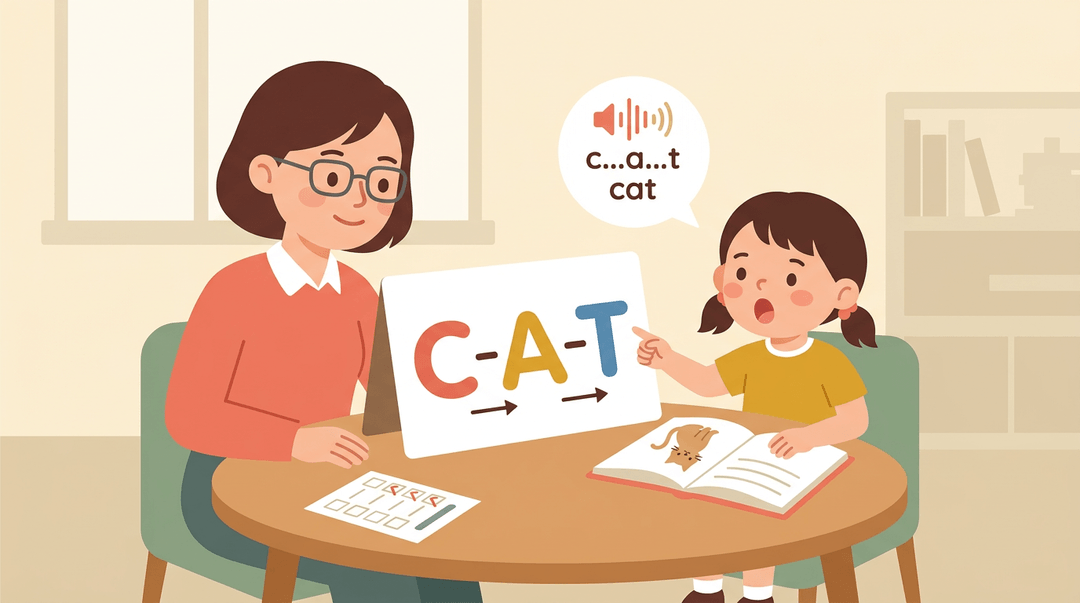
Phonics is designed for grades 1 and 2, and it teaches the foundational decoding skills every later reading task depends on. It can pair with the reading curriculum, so the two reinforce each other. That's the foundation.
Consider a tutor working with a second grader who can't blend three-letter words. A few short phonics lessons on those sounds, paired with the reading book, give the student a clear next step each day.
Spelling rules that build word power
Spelling uses a phonics and rule-based approach, so students learn patterns and the reasons behind them instead of long lists of unrelated words. That focus builds word power: once a student knows why a word is spelled a certain way, new words get easier.
Spelling also ties into the language arts set, so what students learn about sounds and grammar carries into their writing.
Picture a student who keeps misspelling words ending in silent e. One rule-based lesson can unlock dozens of words on the next test.
Growing vocabulary alongside language arts
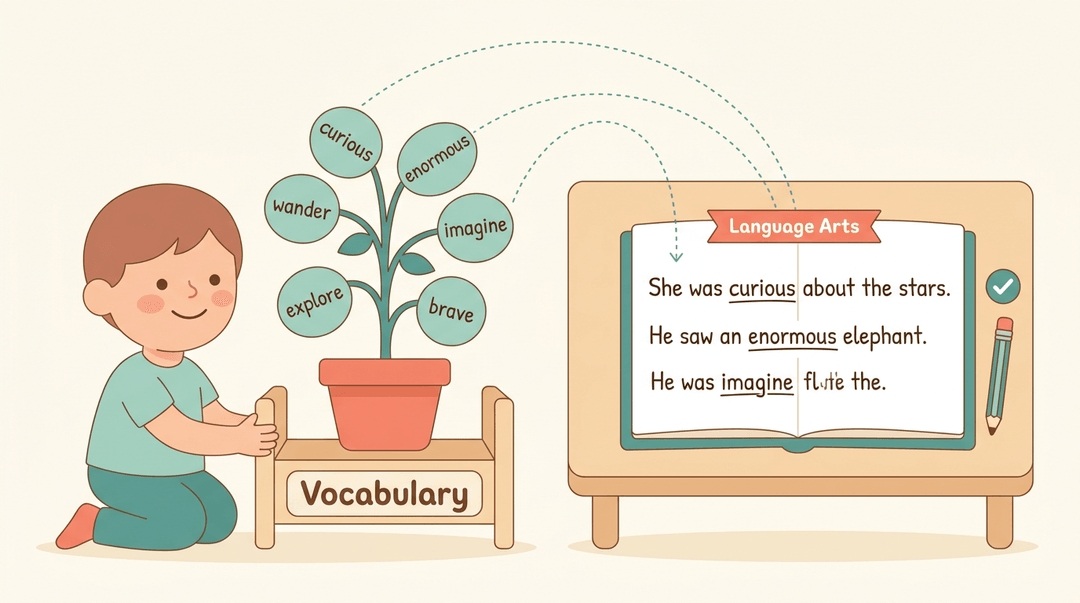
Vocabulary is listed as its own subject category, so it gets dedicated attention rather than being folded into another course. Keeping it separate lets you track new words on their own path while still putting them to work in grammar and writing lessons.
Math Curriculum
Rod and Staff's math program leans on daily practice, with Bible-based word problems threaded through the lessons. Here's what that looks like in your week.
Teaching math through drills and Bible lessons
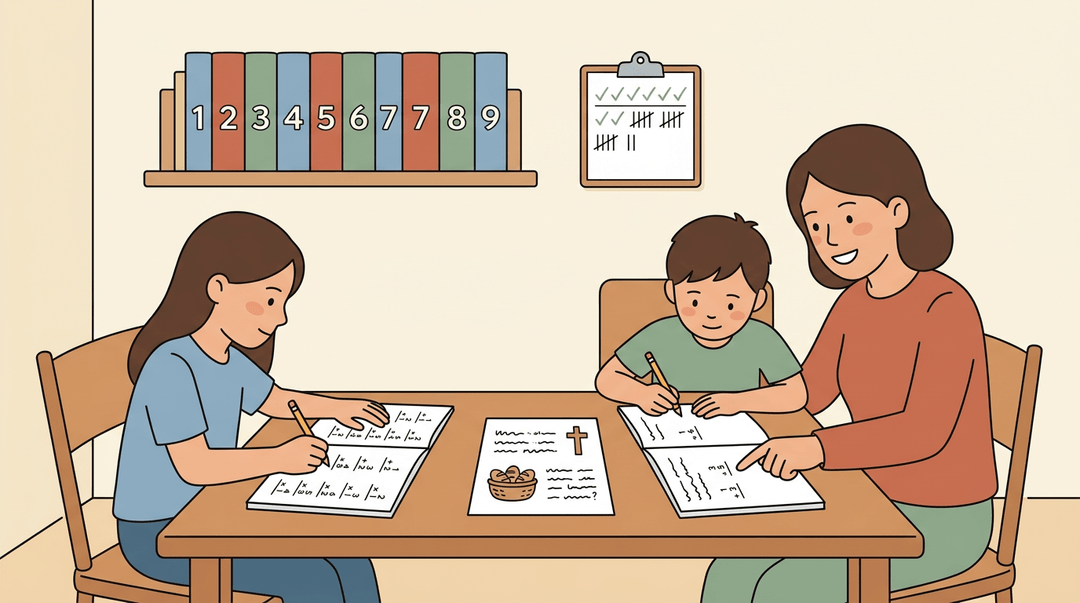
The program is built on drill-based skill building. Students practice facts and procedures every day, so computation becomes automatic, and the emphasis is on doing math rather than just discussing it. Repetition does the heavy lifting.
Each lesson balances new concepts with computation, so kids learn why a method works, not only how to run it.
Many word problems carry spiritual lessons, like a story about generosity or honest work, which reinforces Biblical values alongside the arithmetic.
Consider a homeschool mom with a third grader and a fifth grader. Each child can work through the lesson independently, and she steps in only when a question stumps them.
That's the kind of minimal teacher help the program is designed for, and it frees her to spend time with the younger child at the same table.
The series runs from grade 1 through grade 9, so you can stay with one approach from early counting through the middle grades.
Students log their daily drill progress, giving you a simple record of where each child is strong and where they need another pass.
Content-Area Subjects
Beyond the basics, Rod and Staff offers a full set of content-area subjects, each with its own grade range. Here's what you'll find in each one and where it fits in your week.
A young-earth approach to science
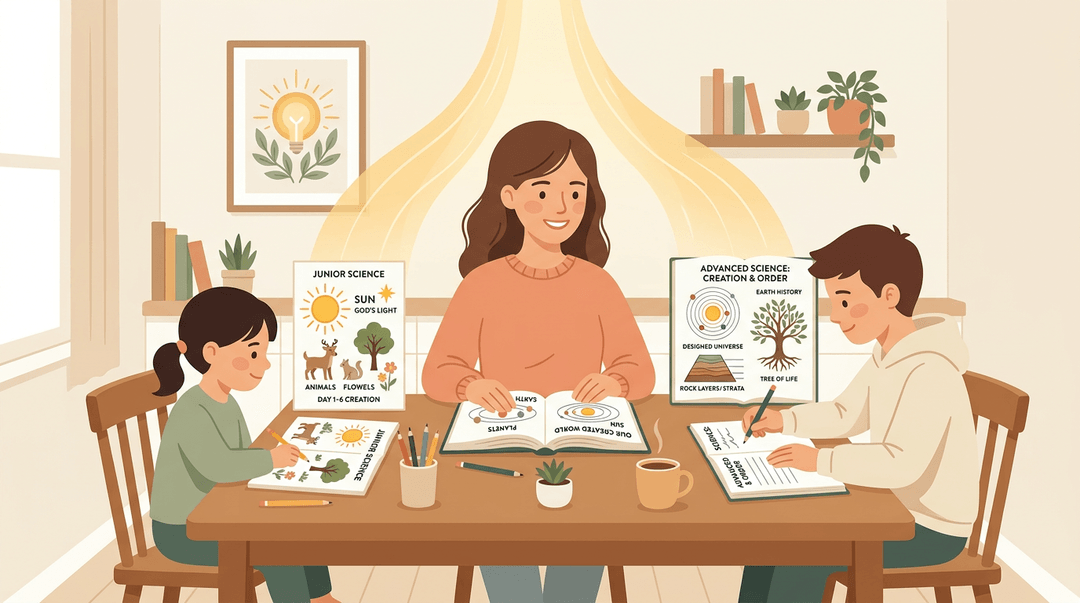
Science is taught from a young-earth perspective, using a textbook approach that gives students a clear, organized path through the material.
The science program covers grades 2 through 8, and its themes are God-centered, so creation becomes the starting point for what students study.
Consider a homeschool mom teaching a second grader and a seventh grader at the same kitchen table. She can keep both children anchored in the same God-centered framing while each one follows a textbook sequence suited to their grade.
Her payoff is one planning conversation instead of two.
History, geography, and Anabaptist heritage
History and geography are combined into one subject, so students learn where events happened alongside when they happened. This subject runs from grades 2 through 9.
The lessons draw on Mennonite and Anabaptist history books and carry strong themes of pacifism (a commitment to peace and nonviolence) and missionary work.
Bible as the core subject
Bible is listed as a standalone subject, built on core Bible-based texts rather than folded into other lessons. It gets its own spot on the schedule. For many families, that's what keeps Scripture from being squeezed out when the day runs long.
Teaching music through shaped notes
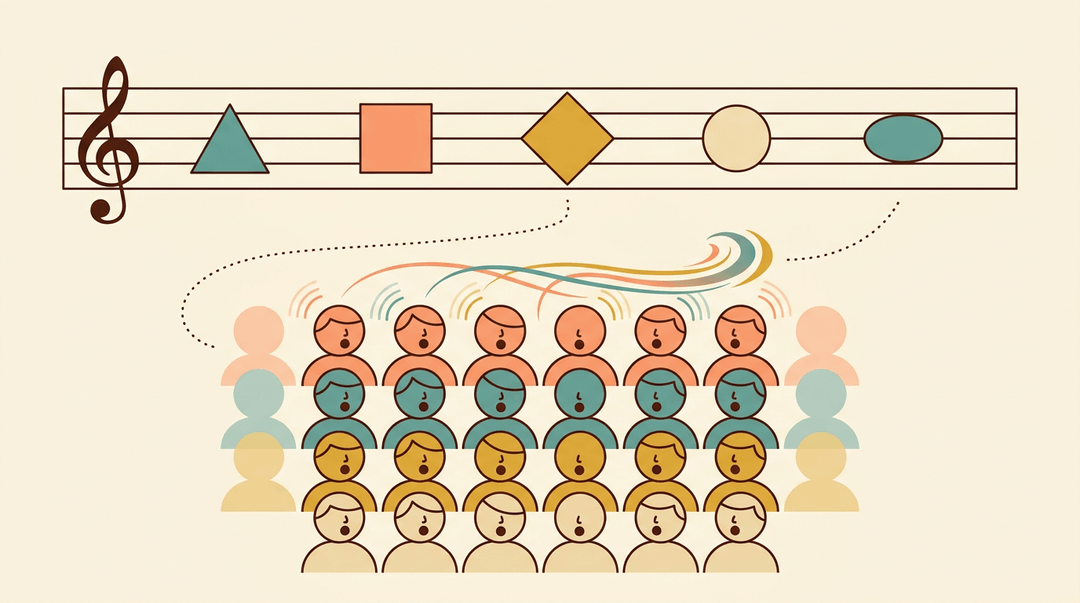
Music is taught through shaped note reading, a system where each note's shape signals its pitch so students can read melodies more easily. Lessons also build music theory alongside that reading and lead toward four-part harmony singing.
Reading the music is the first step. Singing it together is the goal.
Covering health as a subject
Health is listed as its own subject offering. That means you can plan it on the schedule like any other core area instead of tucking it into science.
Also offering Spanish and art
Spanish and art are both listed as categories in the lineup. If you're looking to round out the week with a language or a creative subject, both are available.
Rod and Staff brings a clear philosophy and a full range of subjects to the table. With a planning framework for pacing and standards, you can shape that structure into a year that fits your learners. Ready to map it out?
Check out our Curriculum & Standards planner to plan units, lessons, and standards across the whole school year.
References
Frequently asked questions
What is the highest rated homeschool curriculum?
There is no single highest-rated homeschool curriculum for every family. Ratings commonly consider subject coverage, ease of use, affordability, and parent satisfaction, so compare programs such as Rod and Staff, CLE, Abeka, and BJU against your child’s needs and each program’s scope and sequence.
What are the 7 types of curriculum development?
The seven types of curriculum development are formal, informal, planned, received, educational, total, and hidden curriculum. These categories describe both intentionally designed learning and the learning students receive through broader school experiences.
How many hours a day should a child be homeschooled?
A child’s homeschool time depends on age, grade, learning pace, subjects, and state requirements. There is no universal daily number, so follow your state’s rules and adjust the schedule based on your child’s progress and needs.
Where can I find deals on homeschool curriculum for kindergarten?
Look for kindergarten curriculum deals on publisher websites and homeschool curriculum retailers before paying full price. Comparing prices across several sellers can help you find discounts, used materials, seasonal sales, and bundled packages.