What Is Curriculum Mapping, Fully Explained

Jump to section
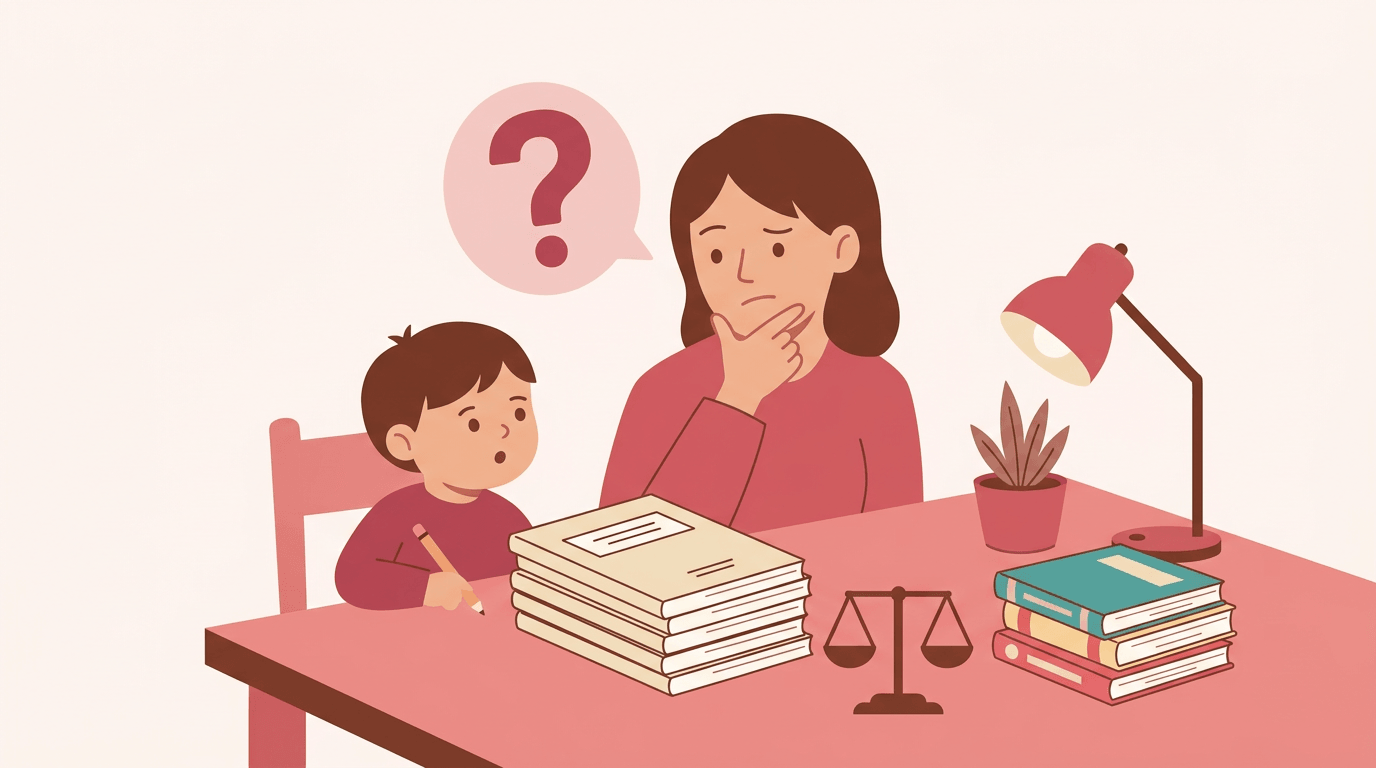
Think about the last time you hiked an unfamiliar trail. You probably checked a map first to see where the path led and where it forked. A curriculum map does that same job for your school year.
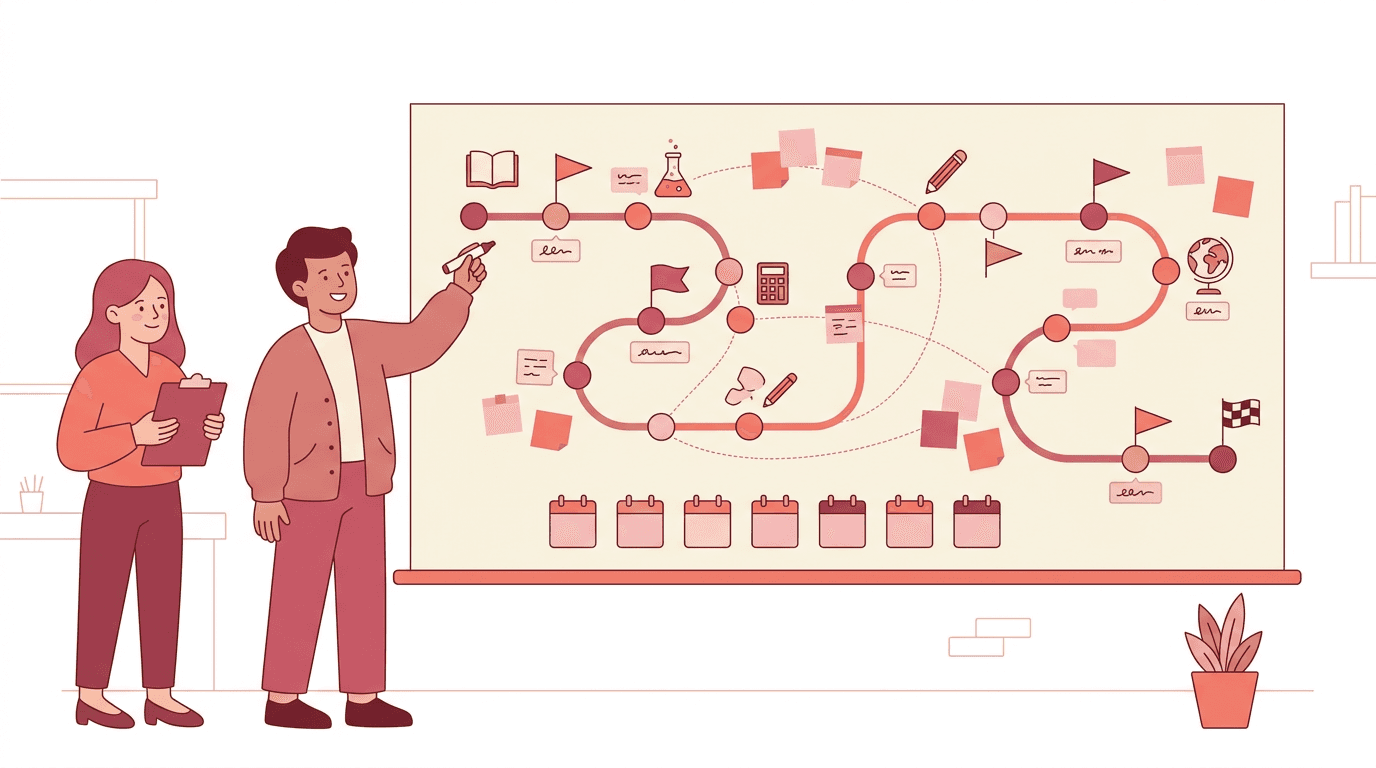
Curriculum mapping is the process of charting what you teach, when you teach it, and which standards each unit covers, all on one timeline. It lets you see the whole year at a glance and spot gaps before they become problems. Since mapping charts what you teach, a curriculum definition is a good place to begin.
Here, we'll cover its parts, types, and a walkthrough for building a simple year-long map.

What Is Curriculum Mapping and Its Purpose
Ever tried explaining your whole year on one sheet of paper? A curriculum map does that job, showing what you teach, when, and how you'll know students got it.
A visual tool for planning and alignment
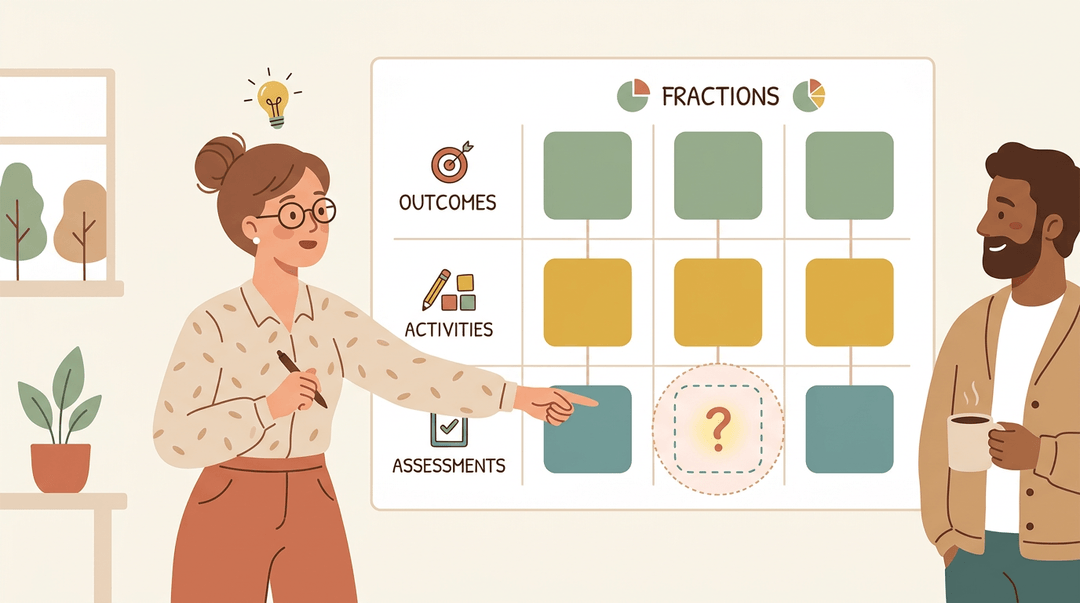
A curriculum map lines up outcomes, activities, and assessments so you can see them together. Picture a sixth-grade math teacher who spots, on one page, that her fractions unit has a strong activity but no check for understanding.
That's a gap you can fix before students ever feel it.
It's also a planning and communication tool, a diagram of your curriculum's structure that colleagues can read at a glance.
Is a curriculum map the same as a scope and sequence? Not quite. A scope and sequence shows what comes next; a map adds how each piece is taught and checked. That pairing of the what and the how is the heart of curriculum and instruction.
A curriculum concept is the big idea a unit is built around, such as ratios in math. Mapping makes it easy to trace across units.
Why a map should keep changing
Your map isn't something you finish once and file away. Revisit it periodically and reflect curricular changes, like a new text or pacing guide, as they happen.
Because maps are easily revised, an update takes a few edits, not a rebuild. A map that stays still gets stale.
What a map reveals about your program
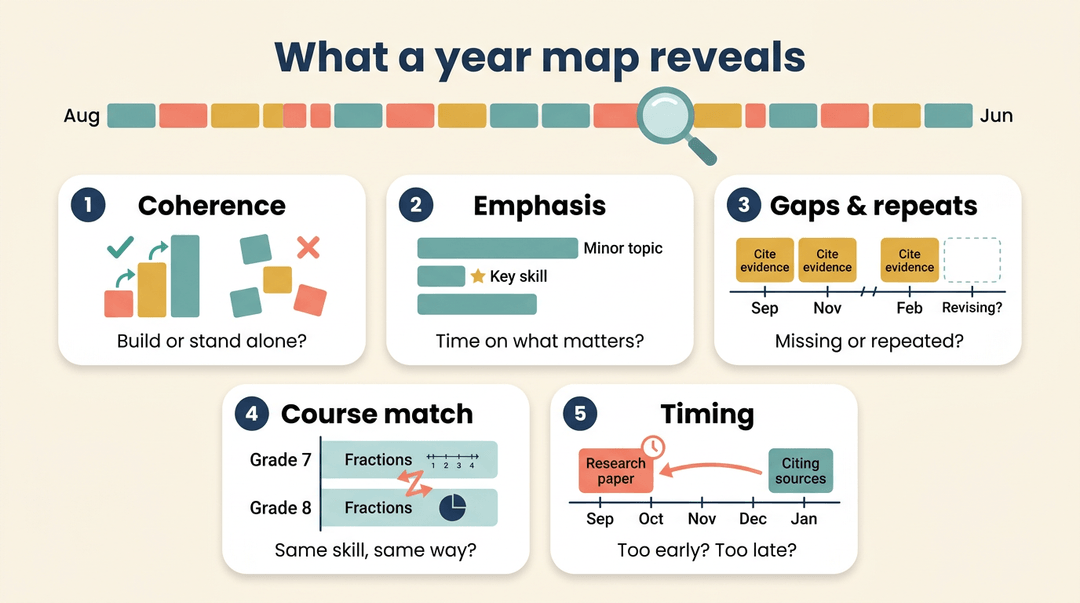
Once the whole year is visible, patterns jump out. Look for:
- Curricular coherence. Do units build on each other or stand alone?
- Content emphasis. Does the most time go to what matters most?
- Gaps and redundancies. Is a key skill missing, or taught three times?
- Misalignment between courses. Do two grade levels teach the same skill differently?
- Timing of instruction. Is a concept taught too early, too late, or in the wrong season?
How a Curriculum Map Is Put Together
Once you see a curriculum map laid out, the idea clicks. Here's how one is built and what belongs on it.
How the map is laid out
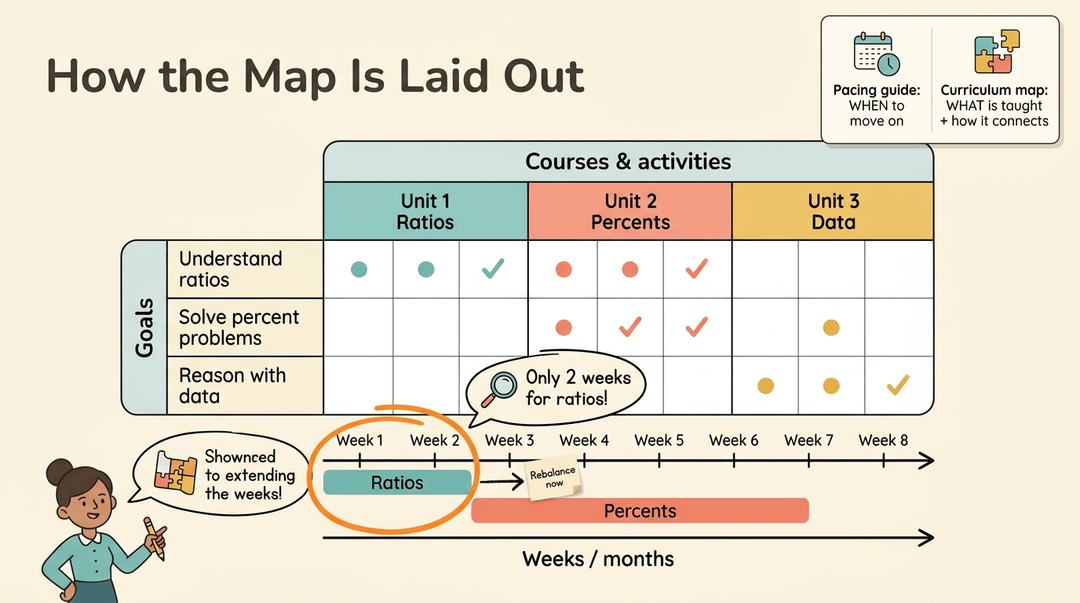
Most maps follow a simple grid:
- Goals listed down the left side
- Courses and activities across the top
- Spreadsheet-style rows and columns that let you scan across and down at a glance
- A weeks or months timeline that shows when each unit lands
A pacing guide focuses on when to move on, week by week. A curriculum map focuses on what gets taught and how the pieces connect. Picture a sixth-grade math team lining up their maps and spotting only two weeks for ratios before percent work begins.
They can rebalance the calendar long before the unit test.
Marking how deeply each goal is taught
Not every goal gets the same attention. Mark each cell with one of three levels:
- Introduce: students meet the idea for the first time
- Reinforce: students practice it and see it again in new contexts
- Master: students apply it on their own and get assessed on it
These marks show how deeply a goal is taught, not simply whether it's taught. That's where relative outcome emphasis comes in: it's the weight each outcome carries compared with the rest.
A goal you revisit all year deserves a heavier mark than a quick mention.
Ways to assess what students learn
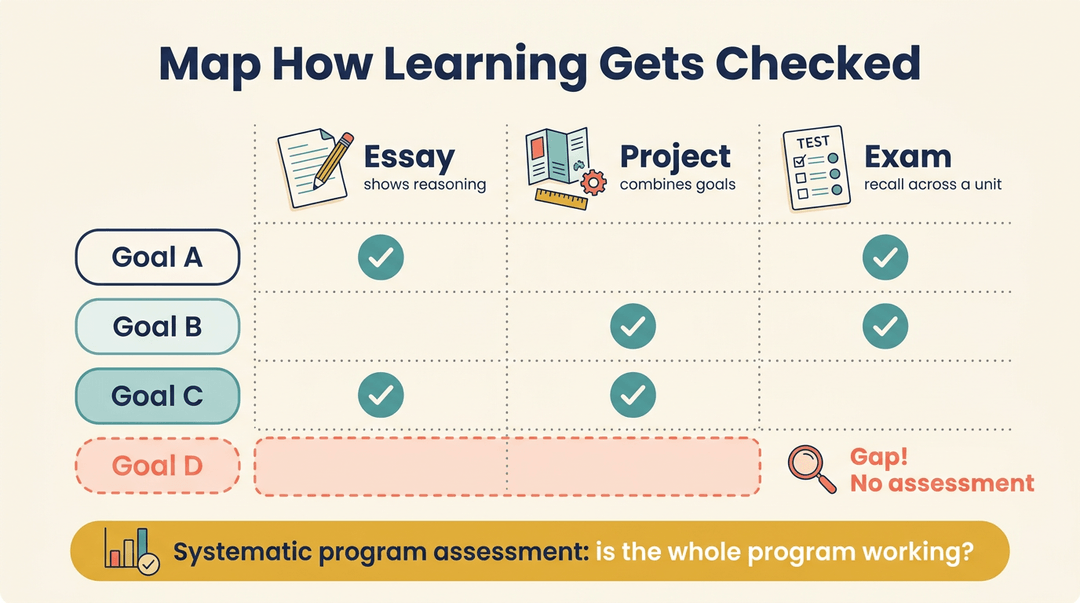
Your map should also note how learning gets checked, using tools like:
- Essays that show students' reasoning
- Projects that combine several goals at once
- Exams that check recall across a unit
Recording these supports systematic program assessment: a planned, ongoing look at whether the whole program is working. If a goal has no assessment anywhere on the map, the gap shows up at a glance.
What goes onto the map
A complete map holds more than topics. Plan to include:
- Learning objectives and targets: what students should know and be able to do
- Activities and resources: the lessons, texts, and tools you'll use
- Syllabi and courses: how each course fits the larger sequence
- Standards and competencies: the required goals each unit addresses
Start with one course or grade level. Once the structure feels natural, add the rest. Small and finished beats big and abandoned.
Building a Curriculum Map Step by Step
Building a map moves from the big picture to the single lesson, and we'll take it one layer at a time.
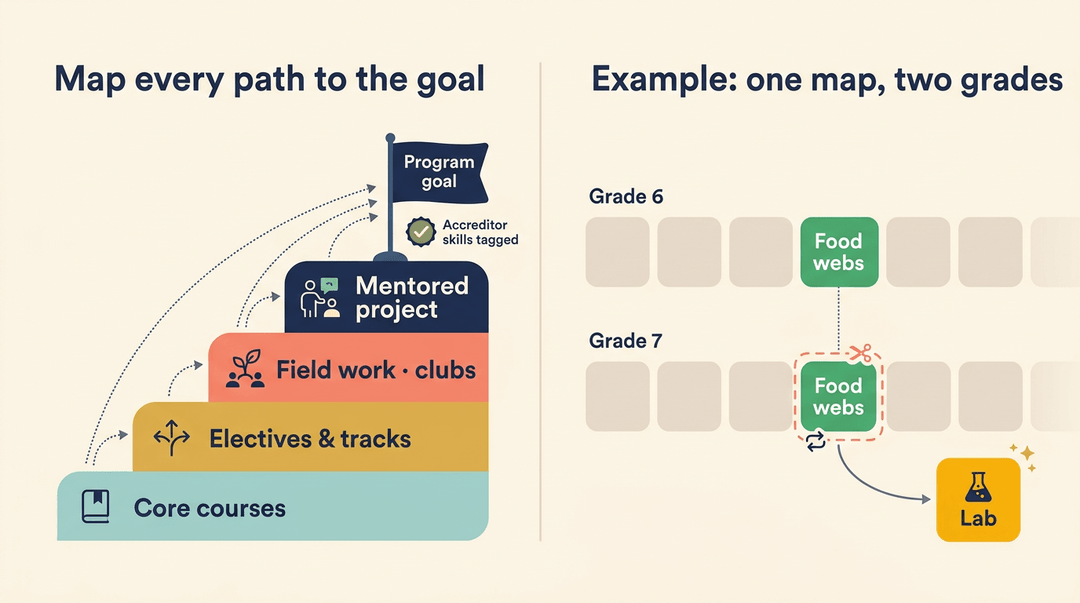
Connecting courses to program goals
Begin with the core courses every student takes. Add electives and specializations, since a chosen track often gives a core skill its best practice.
Field work, service projects, and clubs build competencies too, and faculty-mentored work (independent projects guided by a mentor) often ties skills together.
If you answer to an accreditor, match its required competencies to courses now so evidence is easy to find later.
Consider a seventh-grade science teacher whose ecosystems unit repeats sixth grade's food-web lesson. Lining up both years on one map lets her cut the repeat and reclaim that week for the lab she's been skipping.
Start with competencies and work backward
Start at the finish line with the core competencies students should leave with. Work back to the program outcomes that define those competencies in measurable terms, then map course and lesson outcomes.
Mapping is less about what you cover and more about what students can do. Everything else flows from that.
Practical steps to follow
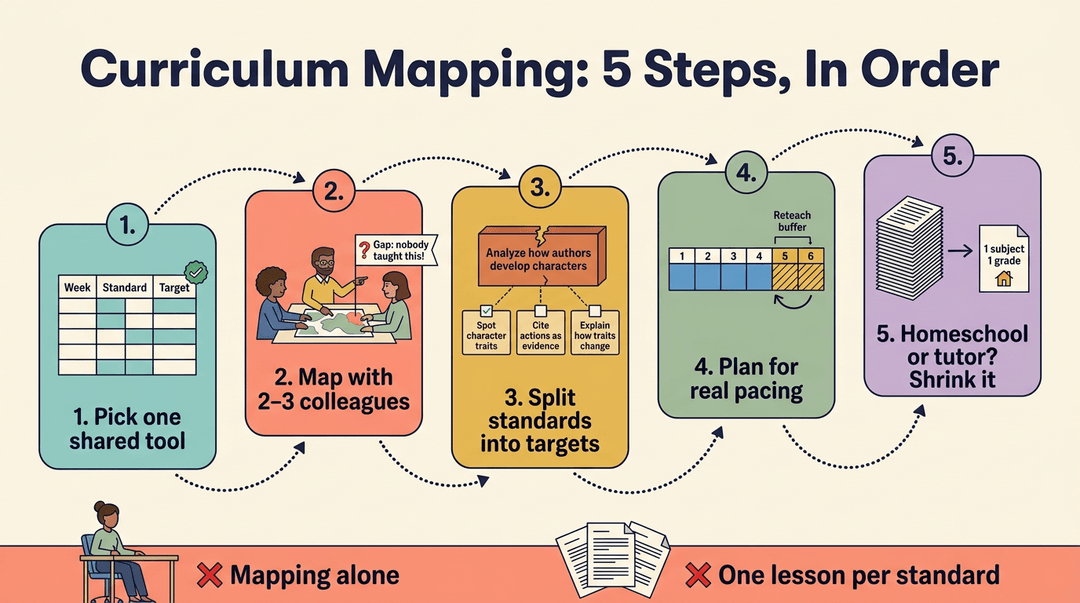
Two common mistakes are mapping alone and treating every standard as its own lesson. Avoid both by working through these steps in order:
- Select software platform: Pick a tool your whole team will actually use. A shared spreadsheet works for a first map.
- Collaborate as a team: Two or three colleagues catch gaps one teacher misses, like a skill everyone assumed someone else taught.
- Analyze standards into targets: Break each broad standard into teachable pieces. 'Analyze how authors develop characters' becomes several targets you can check.
- Consider student needs and pacing: Build in buffer weeks for reteaching instead of assuming everyone keeps pace.
- Homeschool and tutor adaptations: Scale it down to one subject and one grade on a single page, using the same steps.
Factors that shape your map
Your map should fit your situation, so weigh these before you commit:
- Program mission and goals: Reflect what your school or program says it values.
- External factors: State standards, testing calendars, and accreditation rules set limits you can't ignore.
- Student and faculty characteristics: Consider students' prior knowledge and each teacher's strengths.
- Delivery resources: Time, materials, and technology decide what's realistic each term.
Plan for what you have.
Map a Full School Year in Class
This guide walks you through building a simple year-long curriculum map in one sitting, then checking it before you use it. You'll need your standards document, a school calendar, and a blank table or spreadsheet.
Build the map in five steps
1. List the standards for the year. Put every standard you're responsible for in one column.
- Copy them straight from your state or district document.
- Keep the original wording so nothing gets lost in translation.
2. Unpack each standard into targets. A target is one skill students can show, written as a "students can" statement.
- Standard: compare fractions.
- Target: "Students can compare two fractions with unlike denominators using a number line."
3. Sequence units across months. Mark breaks, testing weeks, and holidays on the calendar first.
- Group related targets into units.
- Place prerequisite skills in earlier months than the skills that depend on them.
4. Pair an assessment with each unit. Every target gets one way to check it.
- Example: the fraction target gets a number-line exit ticket, then a short unit quiz.
5. Schedule review checkpoints. Build revisiting into the calendar now, not when you run out of time.
- Add a review week at the end of each quarter.
- Put one mid-year revision date on the map.
⚠️ Watch out: Don't fill every week. Leave a little slack in each unit, because lessons run long and snow days happen.
See it at each grade level
The five steps stay the same. What changes is how you organize the rows.
| Level | Map type | What it looks like |
|---|---|---|
| Elementary | Thematic unit map | One theme per month, like weather, pulling in science, reading, and writing |
| Middle school | Skills progression | One skill, like citing evidence, rising in difficulty from fall to spring |
| High school | Course-level map | One course by semester, each unit with its targets and assessment |
| Homeschool | Multi-age map | One shared theme, with a separate target row for each child |
Check your map before you finish
Run through these before you call the map done:
- Standards covered at least once. Every standard from step 1 appears in a unit.
- Assessments match targets. Each check measures the skill the target names, not something nearby.
- Pacing fits the calendar. Your units fit the real weeks you have, after breaks and testing.
- Gaps and overlaps flagged. Highlight any standard taught twice by accident or not at all.
- Mid-year revision scheduled. A date is on the calendar to adjust the map using what you've learned.
Plan units and map standards across the school year with EMStudio's Curriculum Planner.
Why Educators Rely on Curriculum Maps
A curriculum map turns a pile of lesson plans into one picture of the year. Teachers, teams, and schools all rely on that picture.
A clear path for learners
Think of a map as a road map for progression. Students can see how this month's unit builds on last month's and sets up what's next, so new skills don't feel like random detours.
Milestones and endpoints mark the checkpoints and the finish line, so learners know what success looks like. That's how you set clear learner expectations from day one.
Consider a seventh-grade science teacher who shares the map on day one. Her students see that an October big question leads to a November lab report. Nobody has to guess what matters.

Keeping standards and goals in sync
A map makes standards alignment visible by showing which state or district standards each unit addresses. The aim isn't to cover more. It's to cover what matters. A standard that shows up in three units should get real depth, not a passing mention.
Maps also sharpen your learning goals. When each unit spells out what students should know and do by the end, daily lessons aim at something specific.
Helping teams talk and work together
A shared map gives grade-level teams, departments, and coaches the same reference point. Pacing talks start from one page instead of five different memories of what was taught.
That shared picture also builds faculty consensus. A group weighing a change can point to the same unit and debate the same evidence.
Colleagues can plan together, too. Consider a fifth-grade teacher who inherits a class midyear. Instead of guessing what students already learned, they open the map, see that fractions come next, and check what came before.

Big-picture decisions a map supports
A map also supports decisions that reach beyond one lesson:
- Resource allocation decisions: Seeing where a unit needs more materials, time, or support helps you direct budgets and staff where they matter most.
- Identifying growth areas: Gaps and overlaps show up on the page, so you can spot a skill nobody teaches or a topic covered three times.
- Raising profile and attracting funding: A clear, organized map gives parents, board members, and funders a concrete look at your school.
- Informing student decisions: Students and families can see what each course involves, which makes course choices easier to plan.
Making learning better for students
Here's where we see the payoff: in the classroom. When you can see the whole year, you spot where a group will need extra support or enrichment and plan before the unit starts.
A special education teacher who sees a heavy multi-step word problem unit ahead can prep a visual organizer weeks in advance.
Since the map records what you taught and when, you can compare it with student results and make specific changes next time. Improvement stops being a feeling that a unit 'went okay' and becomes something you can point to.
That's the difference between a hunch and a plan.
What Are the Types of Curriculum Mapping?
Curriculum mapping can zoom in on one class or zoom out across grade levels. Each view answers a different question.
Mapping one class across a year
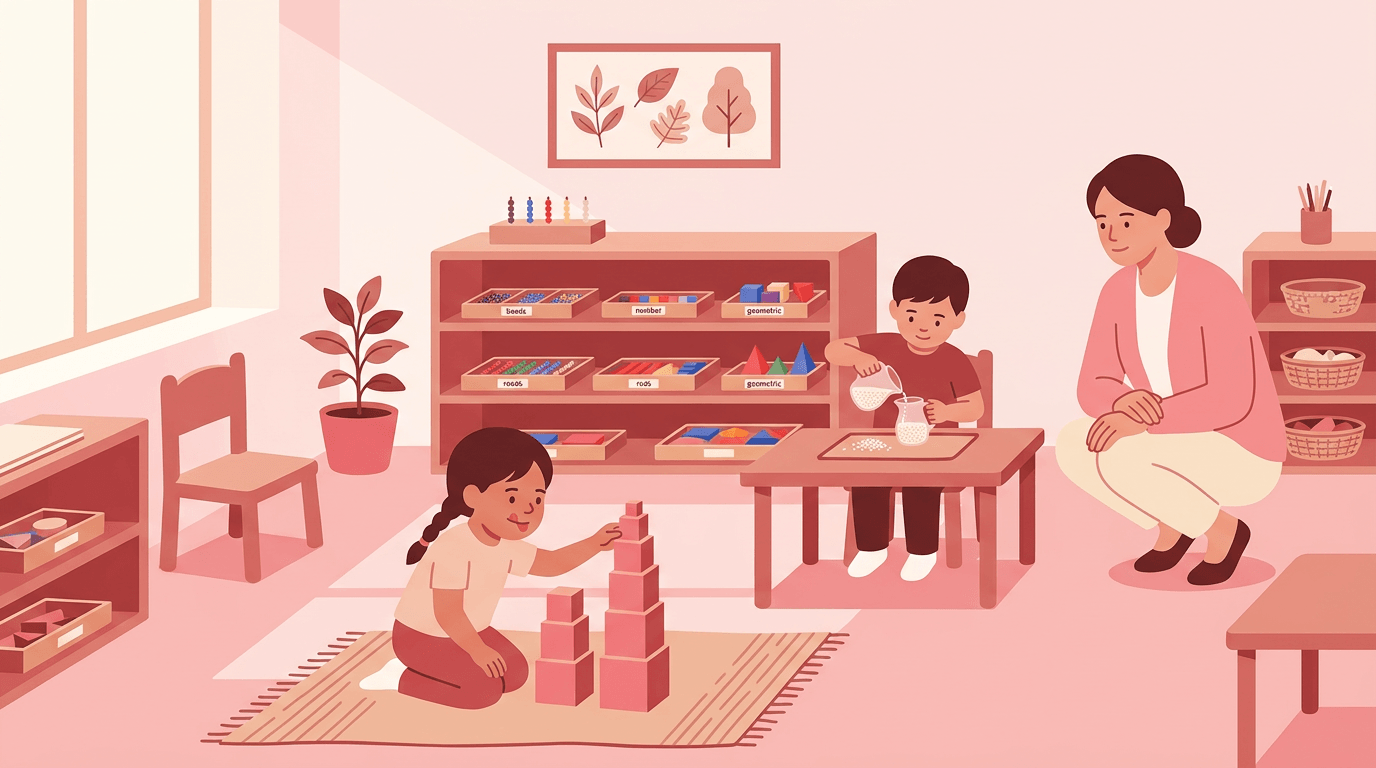
Zooming in means focusing on one subject or grade level across a full term or year. That view helps with pacing, which is simply how quickly you move through content. It's less about what you teach this week and more about when each unit lands.
Consider a middle school science teacher with one class. Her map lists each unit, its skills, and its checkpoints on one page. When a unit runs long, she sees the ripple effect and adjusts early.

Looking across grades to spot gaps
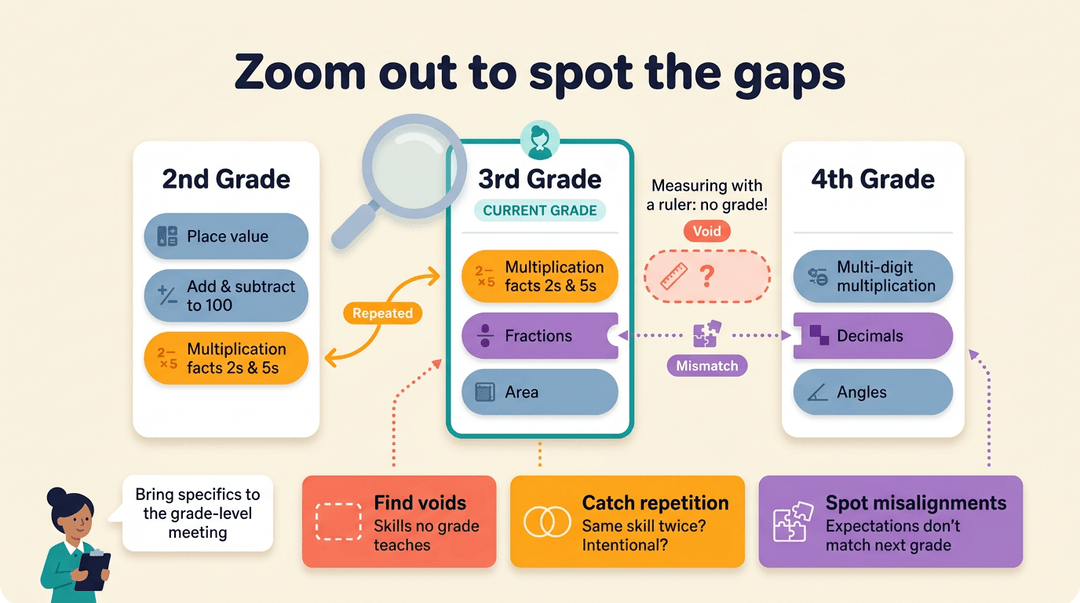
Zooming out puts your map beside the grade levels above and below yours. The question shifts from what your class covers to what students learned before you and what comes next.
Picture a third-grade teacher who lays her math map beside the second- and fourth-grade maps. She notices that no grade teaches measuring with a ruler, and that two grades cover the same multiplication facts.
Now she brings specifics to her next grade-level meeting.
Looking across grades helps you:
- Find voids. Spot skills no grade is teaching.
- Catch repetition. See where two grades overlap, and decide whether it's intentional.
- Spot misalignments. Notice when one grade's expectations don't match the next grade's content.
From inside a single classroom, you only see your slice of the sequence, so gaps are easy to miss. Zoom out. They stand out fast.
How to Review and Evaluate a Map
A finished map is still a draft until you test it. Use these questions and resources to catch gaps before your students do.
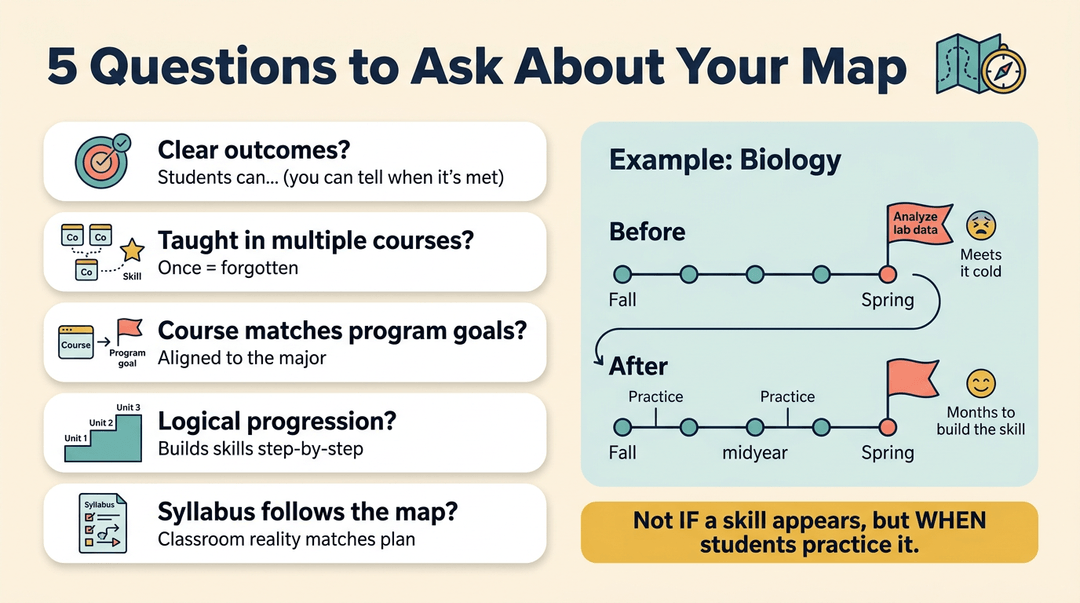
Questions to ask about your map
Ask yourself:
- Are the outcomes well articulated? Each should describe what students can do, specific enough to tell when it's met.
- Are outcomes addressed in multiple courses? A skill taught once is easy to forget.
- Is each course aligned to the program? Check for alignment with the program goals each course claims.
- Does the content show logical progression? Each unit should build on the last and set up the next.
- Does the syllabus offer clear guidance? It should name the outcomes it covers and follow the map's sequence.
Consider a high school biology teacher whose map places analyzing lab data only in the final unit. Her students would meet it cold at the end of the year. She moves a short practice into the fall, and by midyear they've had months to build the skill.
The real question isn't whether a skill appears on your map but when students practice it. Gaps hide in plain sight.
Sample maps and tools to learn from
Seeing a finished example makes the questions above easier to answer. Start with these:
- University of Hawaii resources: Explore these to see how one institution structures its mapping work.
- Sample maps and slides: Put two or three side by side and note how each labels outcomes and sequences units.
- Evaluation form: Use it to score your own map item by item, and share it with a colleague for a second look.
A curriculum map turns a school year from a stack of separate lessons into one connected plan. You now know what it is, how it's built, the types you'll see, and how to review it.
The payoff is simple: less scrambling each week and a clearer path for every student from September to June.
Ready to put this into practice? Explore Curriculum & Standards to plan units, lessons, and standards across the whole school year.

Frequently asked questions
What is a curriculum concept?
A curriculum concept is the central idea a unit is built around, such as ratios in mathematics. It connects the unit’s learning goals and activities.
What are the 7 types of curriculum?
Seven commonly described types of curriculum are recommended, written, taught, supported, assessed, learned, and hidden curriculum. They distinguish what is planned, delivered, resourced, evaluated, experienced by students, and conveyed through school culture and routines.
Is a curriculum map the same as a scope and sequence?
No. A scope and sequence shows what content comes next and in what order; a curriculum map also connects that content to how it is taught, when it is taught, and how student learning is assessed.