Curriculum Based Measurement: A Complete Guide


Jump to section
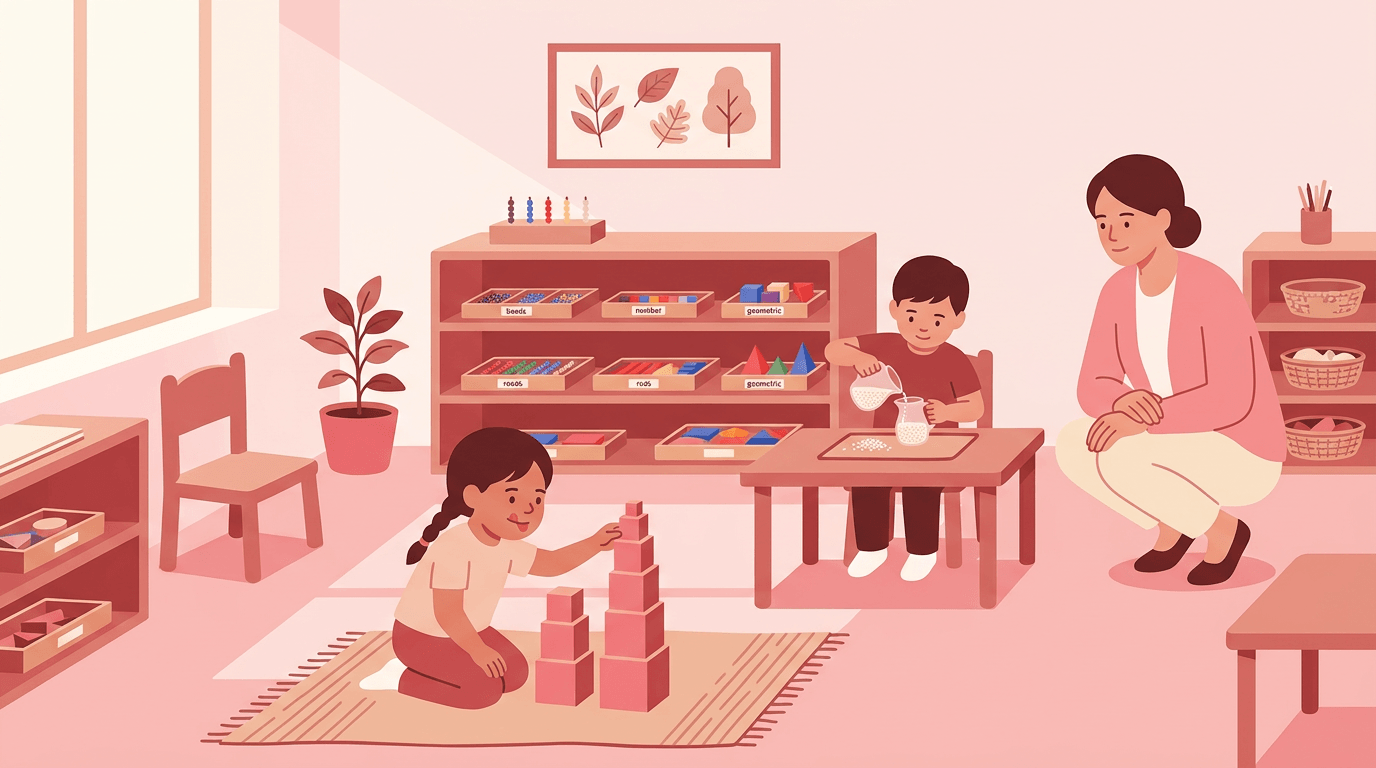
Think about the quick glance you take at your car's fuel gauge on a long road trip. It takes a second and tells you whether you're on track or need to stop soon, long before you're stranded.
Curriculum-Based Measurement (CBM) works the same way for learning: it's a set of brief, repeatable checks that show how each student is progressing through grade-level material.
In this post, we'll cover what CBM is for, how to give and score its short probes, what benchmarks mean, where the approach falls short, and a simple classroom routine that links probe data to your pacing and standards.
What Curriculum Based Measurement Is For
Curriculum-based measurement (CBM) gives you a quick read on whether students are learning, and it's built for everyday classroom use.
Here's what we'll cover: the skills it measures, where it fits in your school's support system, and how it compares to other measurement types.
Reading, writing, and math skills covered
CBM tracks student skill progress using brief, standardized probes that every student takes under the same conditions, so the results compare fairly. Probes cover reading, writing, and math.
Think of a third-grade teacher with a student who seems to be slipping. A short reading probe shows in minutes whether that student is climbing or stalling, long before the end-of-unit test.
So what are the different types of measurement in education? One useful split is between general outcome measurement and mastery measurement. General outcome measurement, which CBM is, samples broad skills to show how much a student is growing.
Mastery measurement checks whether one specific skill is learned, so it asks whether they've finished, not how far they've come. Before you check a skill, it helps to write down a learning target and success criteria.

How it fits RTI and teaching decisions
CBM is most often used in response to intervention (RTI) evaluations, the process schools use to see how students respond to extra support. It also fits Tier 1, the regular instruction every student gets, so you can check on the whole class.
The core question is simple: is this child learning? When the answer is no, the data guides instructional changes, like reteaching a skill or regrouping students. That's the whole point.
You'll see CBM in systems like DIBELS and AIMSweb, so it may already be part of your school's routine.
How These Tests Are Given
Every result should point to a clear next step.
Timing, graphing, and goal-setting conferences
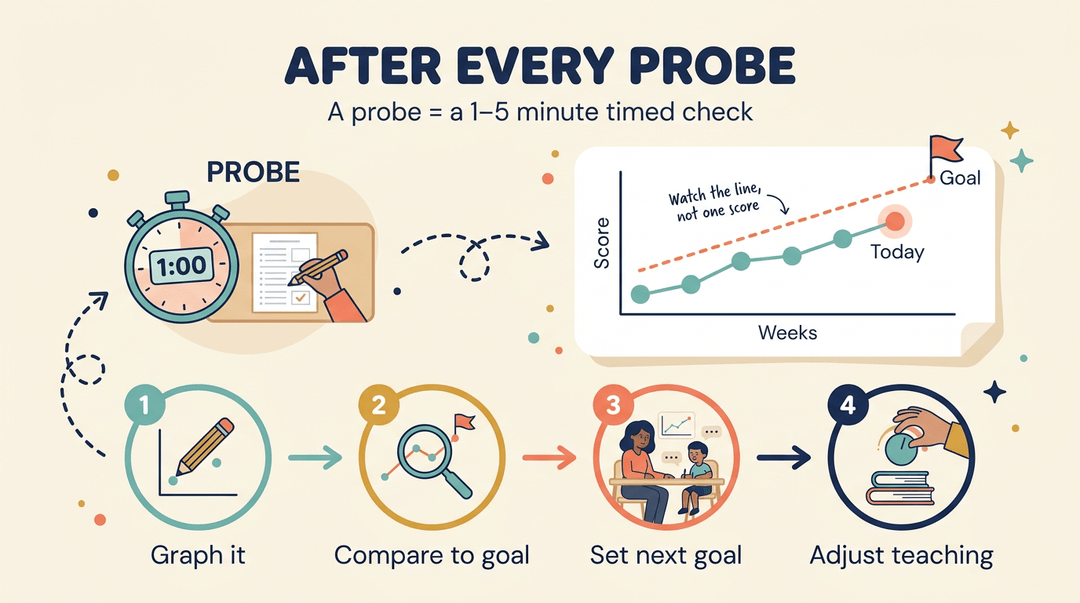
Each check is a probe, a short timed sample lasting one to five minutes. Your real question isn't what a student scored today but where the line is heading. After each check, you:
- Record the result on the student's graph.
- Compare it to the student's goal.
- Hold a goal-setting conference to set the next goal.
- Adjust your teaching to match what the data shows.
Tailoring checks to each student
A struggling student may need more frequent probes, different items, or a different way of teaching. Think of a special education teacher whose student's line has been flat for several weeks. Flat lines are information.
She switches that student to one-on-one measurement, giving the probe individually, then changes the teaching, not just the test. Within a few checks, she can see whether it's working.
How often to check progress
You can check a student one to five times a week, depending on how much support they need. A weekly schedule running three to four months gives you enough points to read a real trend.
Draw a goal line from the starting point to the target, then compare the actual growth to expected growth. Set a decision rule in advance, such as changing something when points stay below the goal line.
Benchmark assignments are probes given to the whole class at set points in the year, showing where each student stands against grade-level expectations. Falling below benchmark isn't a verdict on the student. It's the start of next steps:
- more frequent checks
- different items
- a new teaching approach.

Running CBM Checks in Your Classroom
This is a weekly routine card for running one short probe, graphing the score, and deciding what to change. Reach for it once you've picked a skill and want a rhythm you can keep up all term.
Set up the weekly routine
- Pick one skill to track
- Choose the skill your standards and pacing guide need most right now.
- Example: oral reading fluency, not "reading."
- Choose the skill your standards and pacing guide need most right now.
- Choose standardized probes
- Use probes of similar difficulty so scores are comparable week to week.
- Fix the day and time
- Same day, same part of the lesson, so a score reflects learning rather than a rough Monday.
- Read the same directions every time
- Say: "Start here. Read aloud, and do your best. I'll tell you when to stop."
Graph it and set the goal
Scores only tell a story once you can see them in a row. Do these in order, once at the start and then weekly.
- Record the baseline score
- Use the first probe, or the middle of a few, as your starting point.
- Draw the goal line
- Mark your end-date goal, then draw a straight line from baseline to it.
- Plot each weekly score
- One dot per probe, added the same day you give it.
- Share the graph with the student
- Say: "Here's where you started, here's our goal, and here's this week's dot."
Example: A fourth-grade teacher plots a baseline of 42 words correct per minute and draws a line up to a goal taken from her benchmark table. After a few weeks, the dots sit below the line. She meets with the student, shows the graph, and agrees on a daily partner-reading routine to try next.
Decide what to change next
Look at the trend, not a single dot. One low week can be a bad day. A run of dots under the goal line is information.
| When you see... | Try... |
|---|---|
| Dots climbing along or above the goal line | Keep going; consider raising the goal |
| Dots flat or under the line for several weeks | Change grouping or add targeted practice |
| One sudden dip, then recovery | Check conditions (timing, directions), then carry on |
| You just changed something | Re-probe on schedule to see if it worked |
⚠️ Watch out: Change one thing at a time. If you swap grouping and practice together, the graph can't tell you which one helped.
What to probe by grade band
| Grades | Probe type |
|---|---|
| K-2 | Letter or word fluency |
| 3-5 | Oral passage reading |
| 6-8 | Math computation probes |
Before every probe, confirm
- Standardized directions: you're reading the same script, word for word.
- Timer ready: set and visible to you before the student begins.
- Score consistently: the same rules for what counts as correct, every week.
- Log results: the score goes on the graph the same day.
Map your probe skills to standards and pacing guides with EMStudio's Curriculum Planner.
Common CBM Tests and Examples
Most curriculum-based measurement (CBM) tools are short, timed probes that check one skill at a time.
Reading fluency with one-minute passages
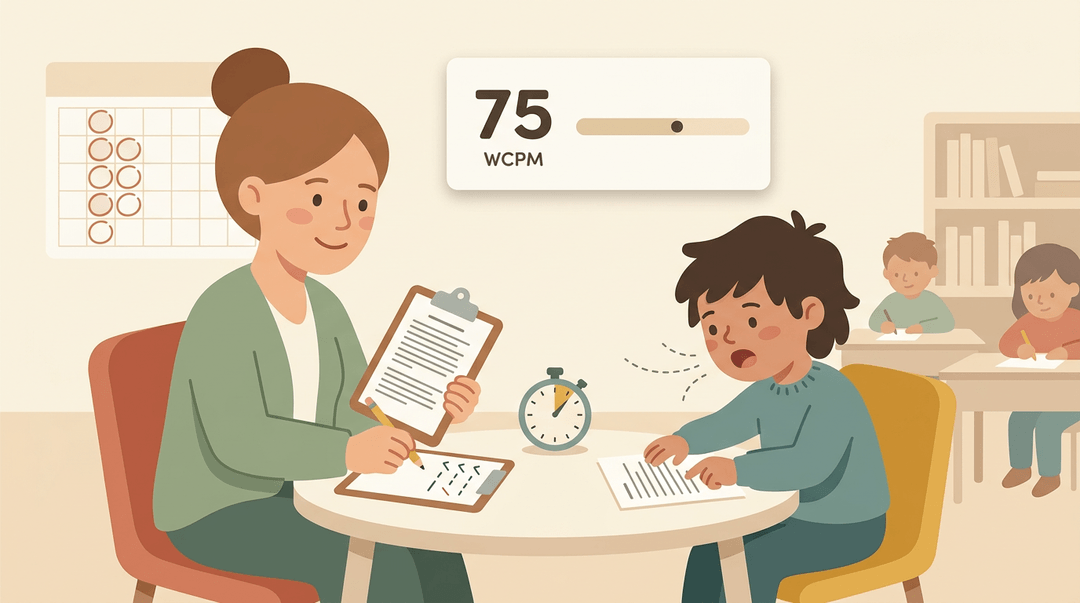
Reading is the classic CBM. A student reads a grade-level passage aloud for one minute while you mark errors. Your score is words correct per minute (WCPM), which you compare to grade benchmarks.
Each check uses individual administration, so you work with one student at a time. According to Vanderbilt University's Special Education Resource Project, reading fluency is used as a proxy for reading competence.
The point isn't speed itself. It's what that speed reveals.
Picture a second-grade teacher who runs this check every other Monday. By lunch, she knows who's ready for the next passage and who needs small-group help. That's a lot of insight from one minute.
Writing checks with a story starter
Writing CBM starts with a story starter, one prompt every student responds to. The routine runs like this:
- Read the story starter prompt aloud.
- Give students 1 minute to brainstorm.
- Give them 3 minutes to write.
Then count words, spelling, and grammar to score the sample.
How do you score math probes?
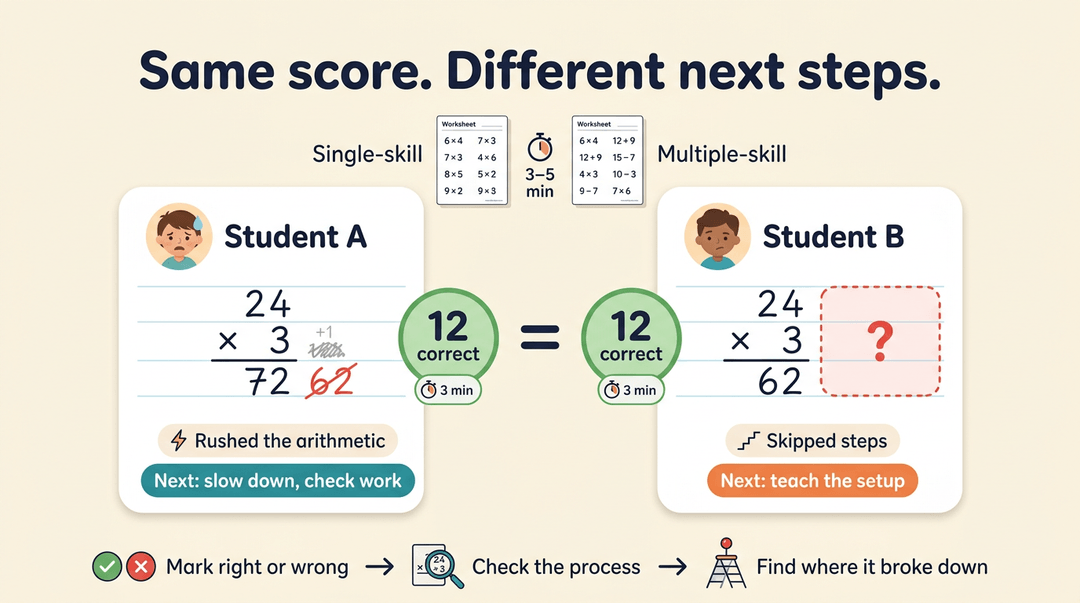
Math probes come in two forms. Single-skill probes focus on one operation, while multiple-skill probes mix several on one sheet. Most run 3 to 5 minutes.
So how do you score math CBM? Mark each answer correct or incorrect, then check the process: did the student set up each problem correctly, and where did the steps break down?
Consider a fifth-grade teacher whose two students each get 12 correct on a three-minute probe. One set up every problem properly but rushed the arithmetic; the other skipped steps entirely. Same score, different next steps.
Standardized spelling lists for CBM
Standardized spelling lists give every student the same words under the same conditions. That consistency lets you compare results across your class and track growth over time.
Why CBM Is Worth Using
Curriculum-based measurement (CBM) uses short checks, called probes, on the skills you've just taught. Its value shows up in four areas.
Quick checks that catch small gaps
A CBM probe is short, so you can give one often without pulling students off task. Frequent checks reveal minor shortcomings, and the aim is to catch a small gap this week, not a big one at the end of the unit.
Think of a fourth-grade teacher who wonders if her class has slipped on multiplication facts. A short probe on Monday shows who has drifted, so she can pull those students for a quick reteach.
One probe can also measure multiple skills, so a single check gives you more to work with.
How students stay motivated to improve
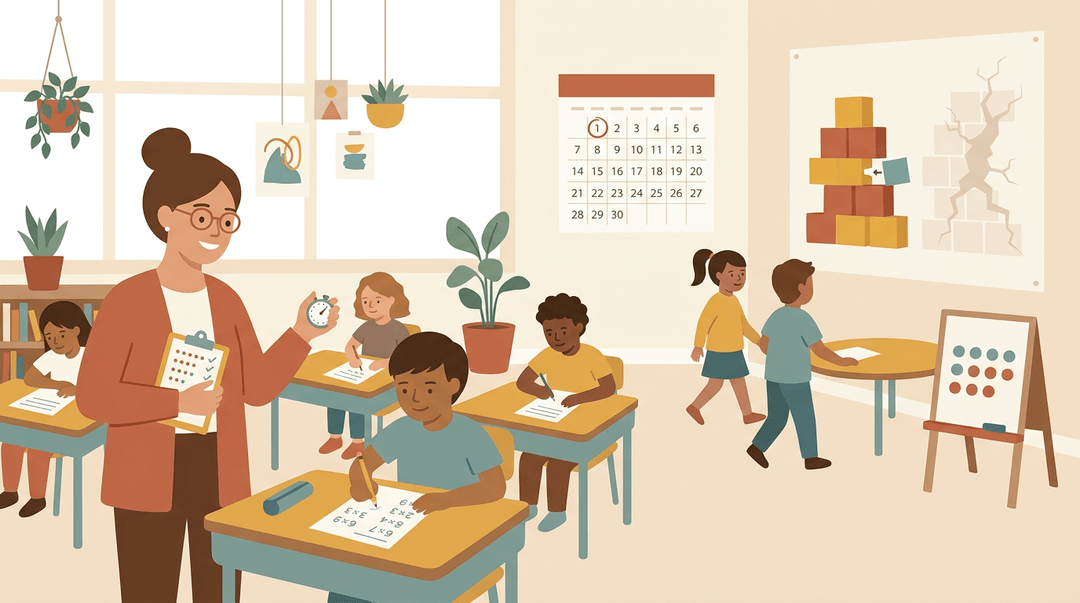
Quick, timely feedback helps students connect their effort to results. Graphs show improvement, so a student sees a line climb instead of just a number.
According to a Curriculum-Based Measurement and Progress Monitoring resource, CBM's quick feedback and progress graphs have been associated with higher learning rates. Progress graphs also motivate students and support self-reflection.
Picture a reader who has felt stuck all year. When her line finally turns upward, she stops asking whether she can improve and starts asking what she's doing differently. That question is self-reflection in action.
Matching tests to what was taught
Probes should sit at the right difficulty level: fair to what you taught, yet hard enough to show growth.
According to Vanderbilt University's Special Education Resource Project, CBM can be a better fit than traditional tests for evaluating what's been taught and measuring short-term growth.
The question shifts from what students remember about a unit to how much they've grown this week. Consider a middle school math teacher who probes after a lesson on ratios.
If most of the class misses the same step, she reteaches it before moving on. Fast data changes your next lesson.

Sharing progress with parents
Graphs don't have to stay in your classroom. According to a Curriculum-Based Measurement and Progress Monitoring resource, a graph makes progress easy to understand and can be used to engage parents.
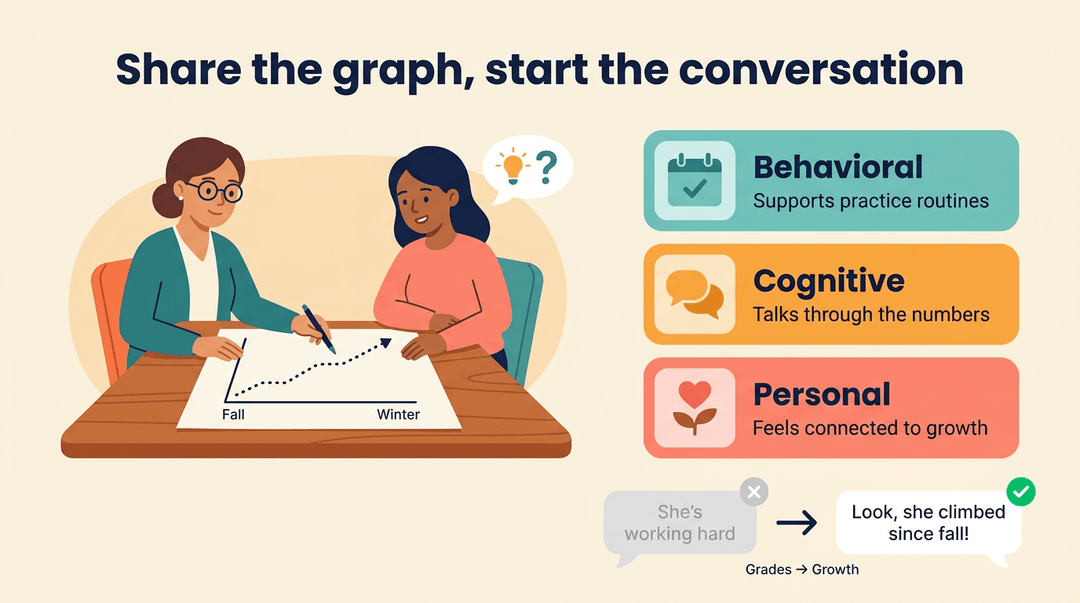
Sharing that data can encourage three kinds of parent involvement:
- Behavioral involvement: parents support the routines that keep practice going.
- Cognitive involvement: parents talk through what the numbers mean.
- Personal involvement: parents feel connected to their child's growth.
Bring graphs to conferences, where a homeroom teacher can point to a line that climbed since fall. Instead of a vague 'she's working hard,' the parent sees where growth happened, and the talk shifts from grades to growth.
Numbers on a graph become a conversation.
Where CBM Falls Short
Curriculum-based measurement (CBM) is useful, but it has blind spots worth knowing.
Whether scores truly measure reading
A third-grade teacher sees probe scores climb, yet the student can't retell the story. The score looks like progress, but the teacher can't tell what the student understood.
A study on reading fluency measures notes that CBM reading-fluency probes don't directly measure reading comprehension. It also questions whether oral reading fluency is defined the way it's measured. CBM works as a proxy for reading.
According to oral reading fluency research from BRTapps, the most widely used CBM emphasizes speed and accuracy rather than the strategies readers use. So how a student got a word right stays hidden.
Pair every probe with a comprehension check, such as a few questions about the passage or a quick retell.
Time demands and limited teaching guidance
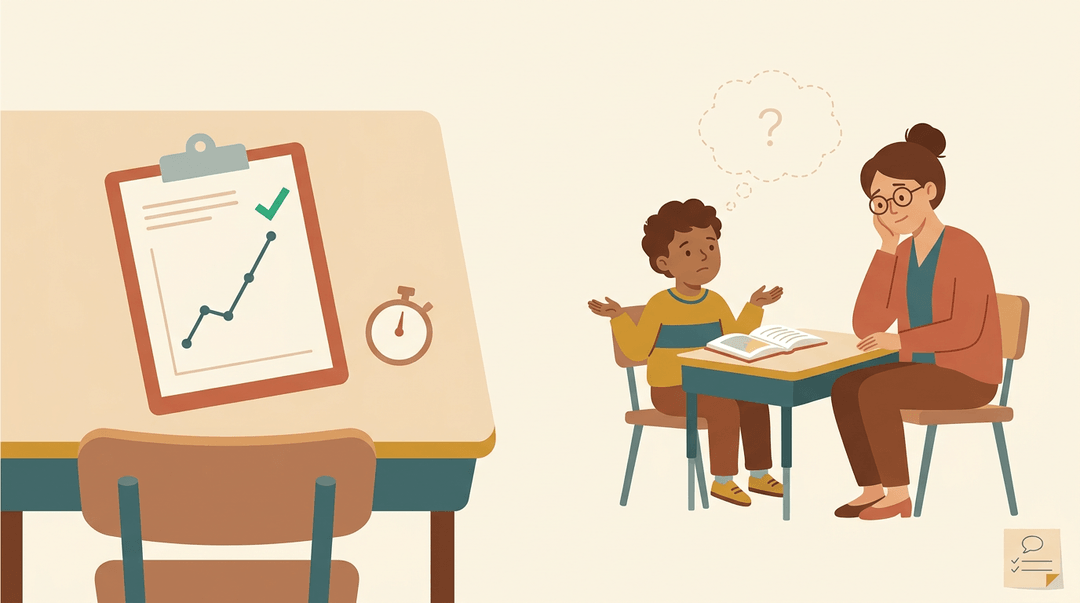
Calculating growth estimates from CBM data can be time-consuming. A study on monitoring student reading progress also notes that routine fluency collection can be time-consuming for teachers.
Deciding whether a change is needed can take over six weeks of data, a long wait for a struggling student. Even then, CBM shows that a student is behind or growing, not why. It flags a problem but doesn't map the fix.
Effects on teaching and student confidence
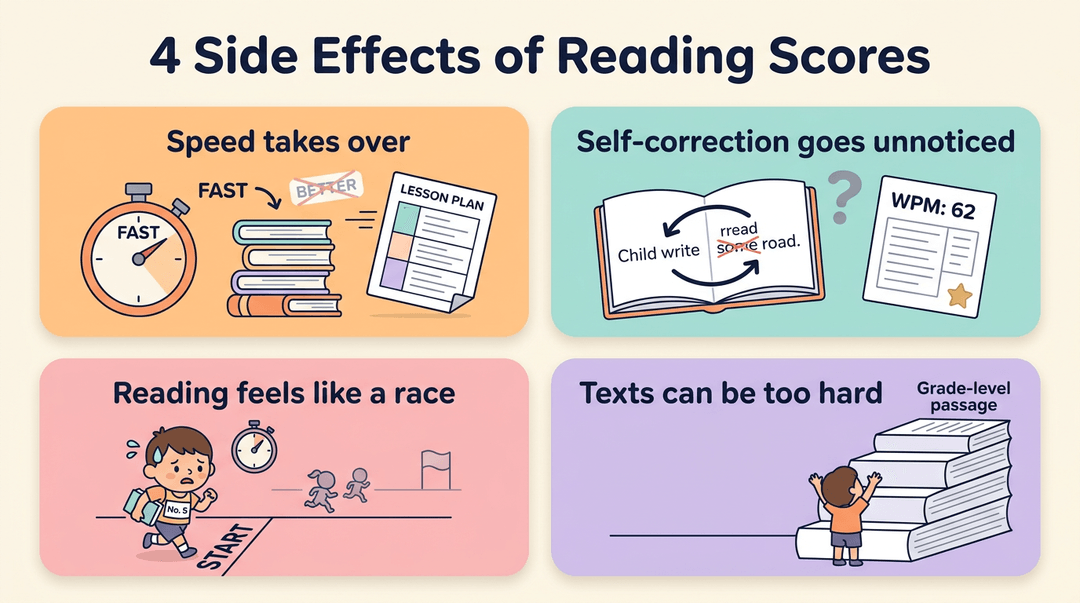
Scores also shape your lessons and how students feel about reading. Watch for four effects:
- Speed takes over. Teaching can drift toward faster reading instead of better reading.
- Self-correction goes unnoticed. A student who stops, rereads, and fixes a mistake has a skill worth praising, but a speed score can't show it.
- Reading feels like a race. Frequent timed probes can leave struggling readers with negative reading experiences.
- Texts can be too hard. Standardized grade-level passages may be out of reach for some students.
Why the curriculum based label is debated
The passages are standardized, not drawn from your class's texts, so the curriculum part of the label is open to question. Like any other test, a probe is a timed snapshot of one moment.
Genuine assessments built from class texts offer an alternative. In one short conference about a passage, you can see what a student understood and how they got there.
Frequent, small checks beat waiting for a big test to tell you something went wrong.
CBM gives you a steady read on how each student is moving, and the routine above turns those numbers into clear choices about what to reteach and when it's time to move on.
Ready to line those choices up with your calendar? Check out Curriculum & Standards to plan units, lessons, and standards across the whole school year.

References
- Curriculum-Based Measurement and Progress Monitoring — educationonline.ku.edu (2025)
- What is Curriculum-Based Measurement? | Special Education Resource Project — my.vanderbilt.edu
- Oral Reading Fluency Assessment: Issues of Construct, Criterion, and Consequential Validity — ila.onlinelibrary.wiley.com
- Identifying a Measure for Monitoring Student Reading Progress — tandfonline.com (1992)
- Oral Reading Fluency Research — brtapps.com
Frequently asked questions
What is an advantage of using curriculum-based measures (CBMs) for progress monitoring?
CBMs use brief, standardized probes that can be repeated often, making it easier to spot learning gaps early and track growth over time. Their results can guide changes to instruction, such as reteaching a skill or regrouping students.
What is the most effective reading program?
There is no single most effective reading program for every student. Effective instruction is explicit, systematic, matched to students’ needs, and includes phonemic awareness, phonics, fluency, vocabulary, and comprehension, with progress checks to guide support.
What is the 80/20 rule in special education?
The 80/20 rule in special education often refers to a placement model in which a student with disabilities spends at least 80% of the school day in general education and up to 20% outside it for specialized instruction. It is a shorthand, not a required placement formula; decisions should be individualized to the student’s needs and the least restrictive environment requirements.
What are the different types of measurement in education?
A useful distinction is between general outcome measurement and mastery measurement. General outcome measures sample broad skills to track growth over time, while mastery measures check whether a student has learned a specific skill.
What are the four C's of curriculum planning?
The four C’s commonly used in curriculum planning are content, context, competencies, and community. The exact wording can vary by planning framework, but these categories address what students learn, the setting and relevance of learning, the skills they develop, and the people involved.
What are the 5 major types of curriculum design?
Five commonly cited curriculum design types are subject-centered, learner-centered, problem-centered, integrated, and competency-based. Frameworks may group or name designs differently, but these describe whether planning centers on subject matter, students, problems, connected disciplines, or demonstrated skills.
What are benchmark assignments?
Benchmark assignments are assessments given to a whole class at set points during the school year. They show how students are progressing relative to grade-level expectations and help identify who may need additional support.
What happens if you fail a benchmark?
Failing or scoring below a benchmark does not determine a student’s ability or future success. It signals that educators should review the results, provide appropriate support, and monitor progress more closely, adjusting instruction as needed.