National Curriculum Framework: What It Is and How It Works

Jump to section
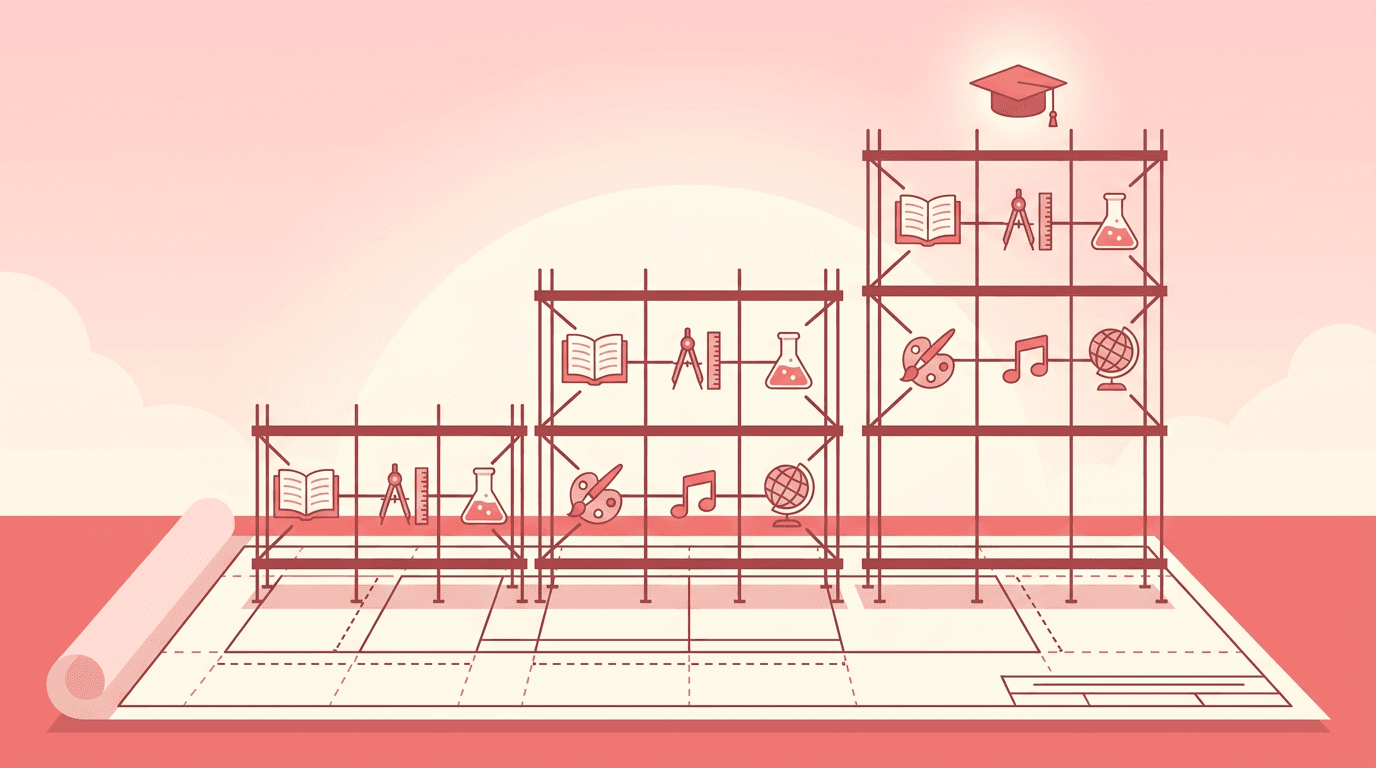
Think about moving into a new house with no blueprint: you'd know a kitchen and bedrooms belong somewhere, but not how the rooms connect. Curriculum reform works the same way.
The National Curriculum Framework (NCF) is the blueprint that tells schools how to arrange the rooms: what students learn, when, and why. It's reshaping classrooms right now, from early years through senior school.
In this post, we'll walk through what the NCF actually says, how it's changed over time, and how you can align your own lesson plans with it, stage by stage.

What Is the National Curriculum Framework
Think of the National Curriculum Framework (NCF) as the blueprint an architect hands to builders before a single wall goes up. It doesn't build the classroom itself, but it tells everyone involved what to build and why.
Why NCF exists and what it does
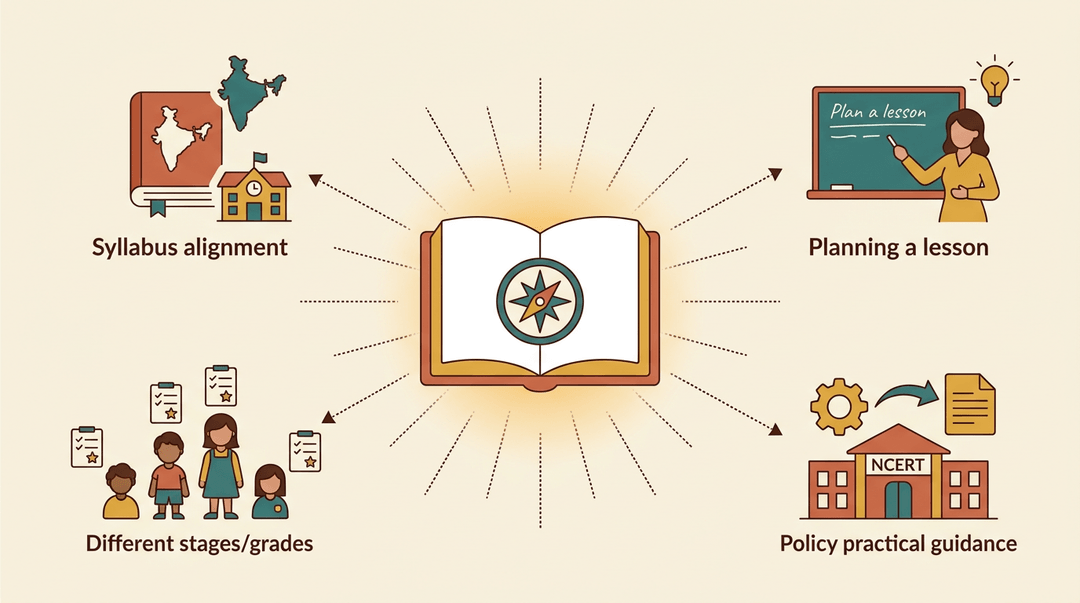
The NCF exists to keep teaching pointed in the same direction across a huge, varied system. It works as the master guideline that syllabus writers and textbook authors follow, so a Class 5 science book in one state lines up with the goals set nationally. It also shapes everyday teaching practices: how a lesson gets planned, how a concept gets introduced, how a classroom gets run day to day. Beyond that, it sets out clear goals and standards for what students should know and be able to do at each stage. The framework is developed by the National Council of Educational Research and Training (NCERT), the body responsible for turning policy into practical guidance for schools.
What areas the NCF covers
The NCF isn't limited to one slice of schooling. It spans four areas:
- School education
- Early childhood care and education
- Teacher education
- Following the National Education Policy (NEP) 2020, adult education
What are the five key components of the curriculum framework?
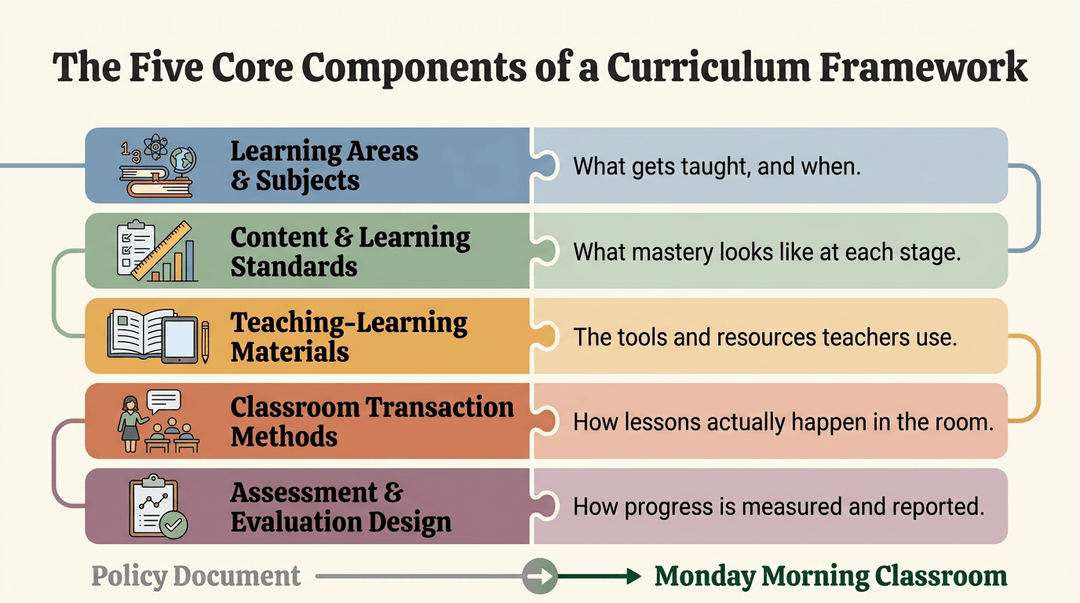
Every NCF builds on five core components:
- Learning areas and subjects. What gets taught, and when.
- Content and learning standards. What mastery actually looks like at each stage.
- Teaching-learning materials. The textbooks, tools, and resources teachers lean on.
- Classroom transaction methods. How lessons actually get delivered in the room.
- Assessment and evaluation design. How progress gets measured and reported.
Together, they turn a policy document into something a teacher can use on Monday morning.
How the NCF Has Evolved over Time
The NCF hasn't stayed the same since its first edition. Each version reflects a shift in how India teaches and learns, which explains why NCF 2023 looks so different from its predecessors.
A timeline of past curriculum frameworks
The National Council of Educational Research and Training published three early editions of the NCF:
- 1975
- 1988
- 2000
NCF 2005 followed as the fourth version, still linked to child-centered learning. The NCF 2022 draft set the stage for NCF 2023, the current version.
Where NCF 2005 leaned on constructivist ideas, NCF 2023 builds around competency-based learning, a shift in emphasis rather than a total rewrite.
How the NCF actually gets developed
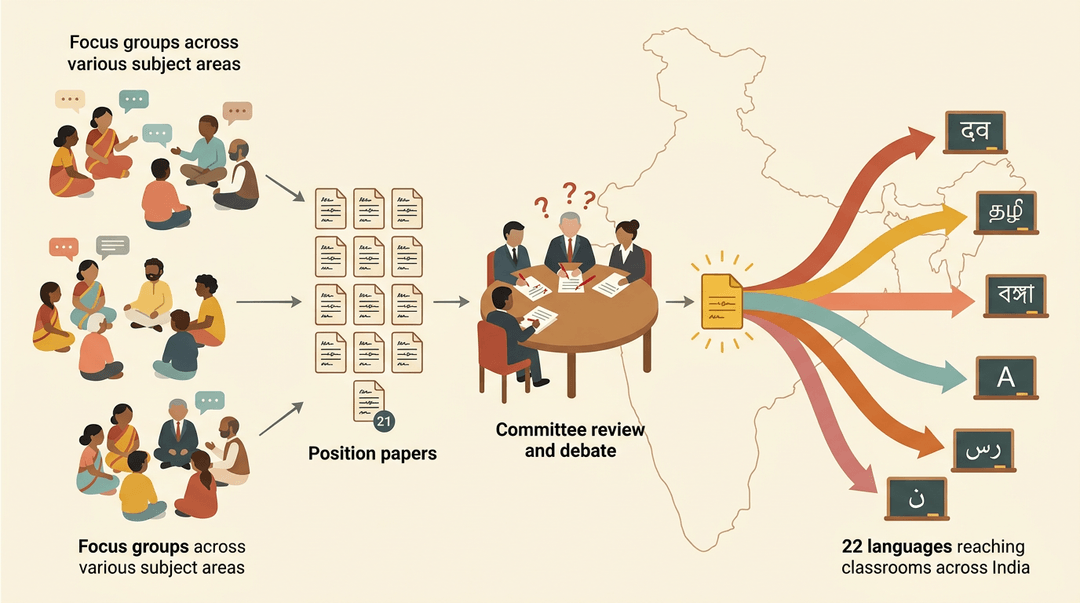
Building a new NCF takes years, not weeks. It starts with focus group discussions across subject areas, feeding into 21 position papers on topics from language teaching to assessment.
The Central Advisory Board of Education reviewed drafts and raised criticism, while the Kasturirangan committee, formed in 2021, helped steer the direction amid debate over the framework's approach.
State-level consultations brought in educators from across the country, and the final document was translated into 22 languages so it reaches every classroom, not just English- and Hindi-medium ones.
How NCF connects to NEP 2020
NEP 2020 mandates four separate NCFs:
- school education
- early childhood care
- teacher education
- adult education
with the school version aligned to NEP's broader vision. That's where the 5+3+3+4 structure comes from, replacing the old system with stages that match how children actually develop.
The process itself was largely paperless and tech-driven, a notable break from earlier consultations.
What Are the Five Principles of NCF
What are the five principles of NCF? At its core, the framework rests on five guiding principles:
- moving from rote learning to holistic learning
- making education inclusive and equitable
- building skills across many disciplines
- giving states flexibility to adapt curricula
- keeping the whole experience joyful and stress-free
Together, they read less like a rulebook and more like a philosophy for the classroom.
Moving from rote learning to holistic learning
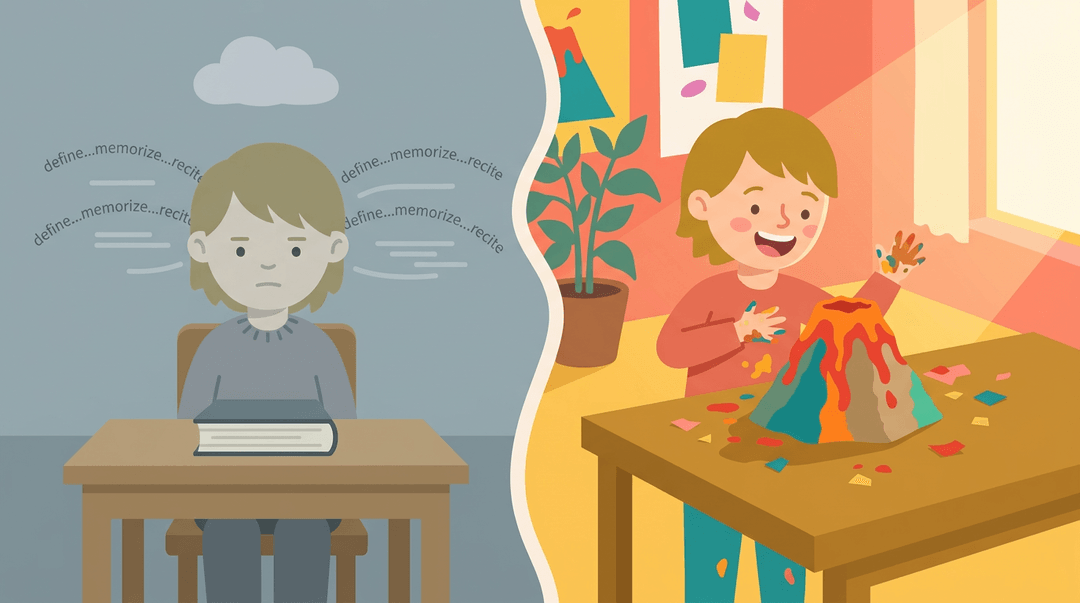
For decades, success in school often meant memorizing and reciting. The NCF pushes back on that, favoring child-centred pedagogy where the student's curiosity, not the textbook's order, drives the lesson.
Think of a fifth-grade teacher who swaps a chapter of definitions for a hands-on volcano model: that's activity and experiential learning in action, and it's exactly what this principle asks for.
The payoff is a classroom that feels less like a test-prep pipeline and more like a place kids actually want to be.
Making education inclusive and equitable
This principle insists that a child's caste, gender, or background shouldn't shape their access to a good education.
It also calls for real support for disabled learners, not token accommodations, plus a deliberate emphasis on regional languages so a student's home tongue isn't a barrier to understanding.
The goal is equal opportunity: every learner, in every district, getting a fair shot at the same quality of instruction.
Building skills across many disciplines
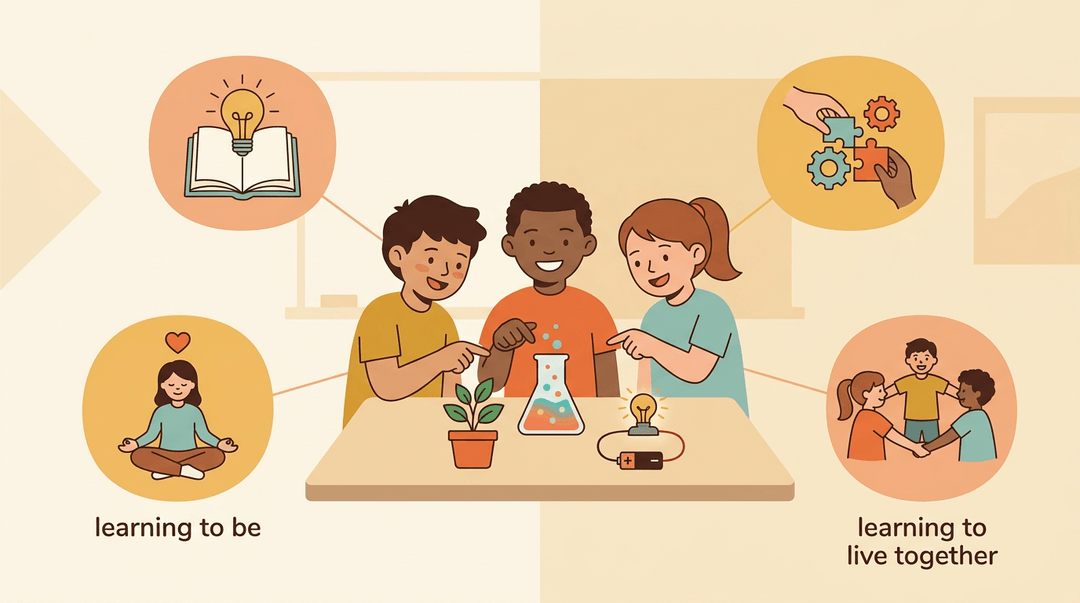
Here's where the four pillars of education in India come in:
- learning to know
- learning to do
- learning to be
- learning to live together
That framing nudges schools toward cognitive, social, and emotional growth side by side with physical and mental development.
Consider a middle school unit that pairs a science experiment with a group reflection on teamwork: that's an interdisciplinary curriculum teaching a life skill alongside the content.
Giving states flexibility to adapt curricula
The NCF is empowering, not prescriptive. States set their own curricula within its framework, weaving in local and regional elements so a lesson in Kerala can look different from one in Punjab while still meeting the same core intent.
Understanding the 5+3+3+4 School Structure
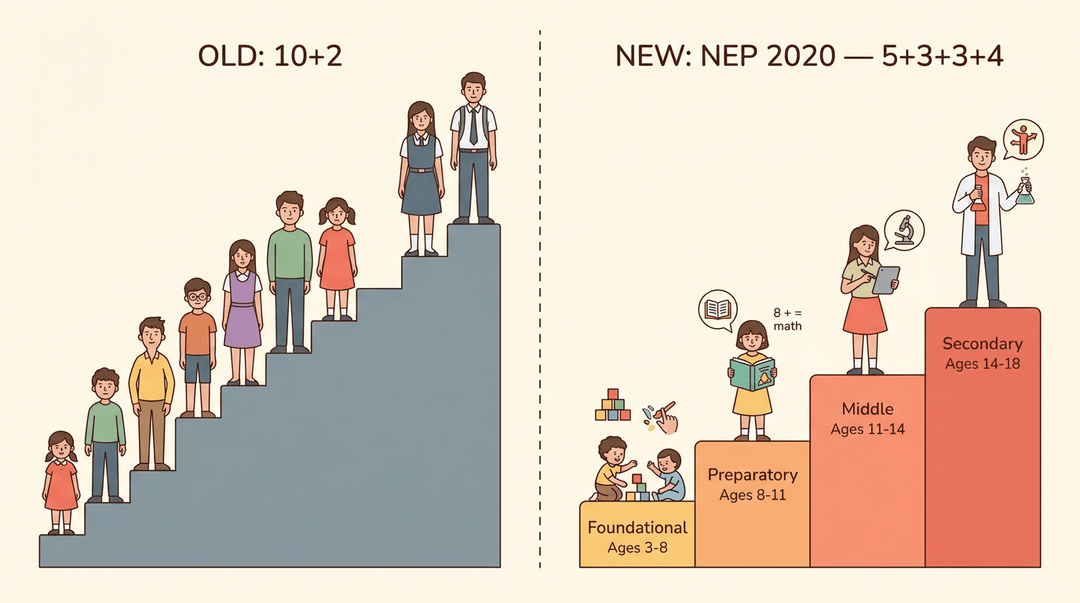
Think of the old system as a single long hallway with a few doors. The 5+3+3+4 structure works more like a house with rooms built for what actually happens inside them:
- five years for early learning
- three for the basics
- three for deeper subject work
- four for the transition into adulthood
Each stage is designed around how children actually grow, not around a fixed grade count.
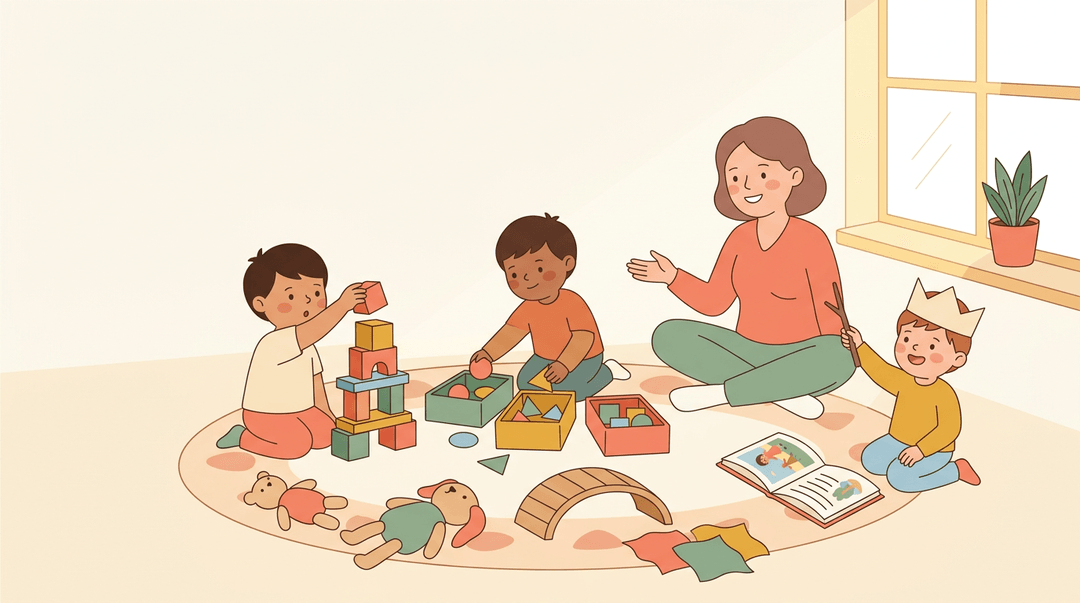
The foundational stage, ages 3 to 8
This stage covers preschool through class 2, and it leans almost entirely on play-based learning. Instead of worksheets, a 5-year-old might sort shapes by color, act out a story, or build a tower to learn about balance. The early childhood focus here isn't about rushing toward reading and writing; it's about cognitive and social skill building through play, so children learn to share, follow simple instructions, and problem-solve before they ever sit for a formal lesson.
The preparatory stage, ages 8 to 11
Covering classes 3 to 5, this is where structured classroom introduction begins in earnest. Students move into subject periods and start building numeracy and language basics: place value, basic grammar, simple word problems. But the emphasis stays on interactive methods over lecture. A class might use counting games for math or group storytelling for language, keeping the transition from play to formal study gradual rather than sudden.
The middle stage, ages 11 to 14
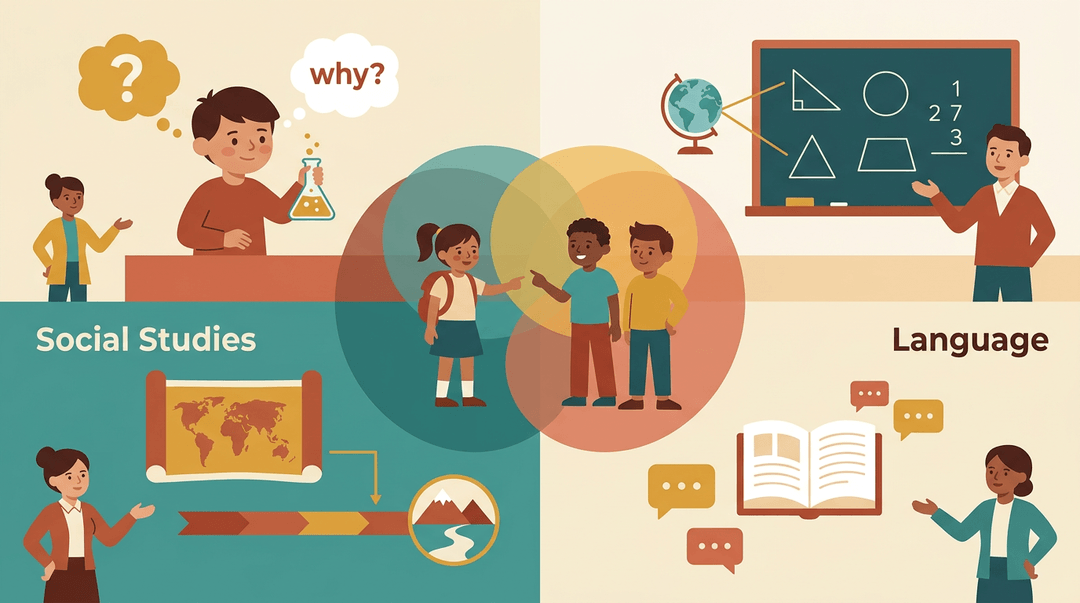
Classes 6 to 8 bring subject-specific learning: distinct periods for science, math, social studies, and languages, taught by subject teachers rather than one generalist. There's a real emphasis on critical thinking here. A science class might run a simple experiment and ask students to explain why the result happened, not just record it. Lessons also lean interdisciplinary, connecting a history topic to geography or a science concept to math, so students see how subjects overlap.
The secondary stage, ages 14 to 18
Classes 9 to 12 shift toward career readiness. Students get flexible subject choice, picking combinations that match where they're headed instead of one fixed track. Project-based learning takes over more of the coursework: a student interested in environmental science might spend a term researching local water quality instead of just reading about it.
Why the old 10+2 system was replaced
The 10+2 model treated ages 6 to 16 as one long stretch, then bolted on two years of specialization. It didn't align with how children actually develop at each age. The restructuring, driven by the National Education Policy (NEP) 2020, split schooling into stages that match real developmental shifts instead of an arbitrary grade count.
How to Align Lesson Plans with NCF
The framework's stages aren't age labels; each one expects a different kind of lesson. Find your stage below, build from its moves, then use the steps at the end to tie every plan back to a learning outcome.
Plan for your stage
Ages 3 to 11 (foundational and preparatory).
- Lead with play: sorting stations, shop-corner role play, pattern hunts with bottle caps.
- Open with a short starter: a rhyme retell, or "count everything red in this room."
- Introduce new ideas in the mother tongue first, then bridge to the school-language term.
- Say: "We call this 'adding.' What do we call it at home?"
Middle stage.
- Anchor units in interdisciplinary projects, not single-subject worksheets.
- Prompt: "Design a water-saving plan for our school" (science, math, civics).
- Start discussions with a genuine question, one you don't know the answer to.
- Try: "What would break first if our town doubled in size overnight?"
- Integrate subjects on purpose: graph rainfall data in math, then write about it in language class.
Secondary stage.
- Build projects around real careers. Template: role + task + audience.
- Example: "As a health officer, brief the local council on clean drinking water."
- Map flexible subject choices: chart each combination against the outcomes it can still reach.
- Assess competencies, not recall: grade "applies the concept in a new situation," not memorized steps.
Key principle: The stage sets the method; the learning outcome sets the goal. The steps below connect the two.
Map standards to Monday's plan
Whatever the stage, every daily plan should trace back to a stated outcome. Here's the routine we use:
- Unpack each learning outcome.
- Circle the verb and the content: "compares fractions" = skill compare, concept fractions.
- Build a proficiency scale for it.
- Four levels, one observable behavior each: beginning, developing, proficient, advanced.
- Proficient might read: "orders three unlike fractions and explains the ordering."
- Track vertical alignment.
- Jot the chain: last stage's version ← this outcome → next stage's version.
- Example: "shares objects equally ← compares fractions → operates on unlike fractions."
Then write each day's objective as one level of the scale, so the week climbs the ladder instead of circling it.
When stages, standards, and pacing live in separate documents, that alignment slips; map them all in one place with EMStudio's Curriculum Planner.
The Teacher's Role and Training Needs
A framework only works if the person standing in front of the class can bring it to life. That's why the National Curriculum Framework (NCF) puts you, the teacher, at the center of the whole design.
Teachers act as facilitators, not lecturers
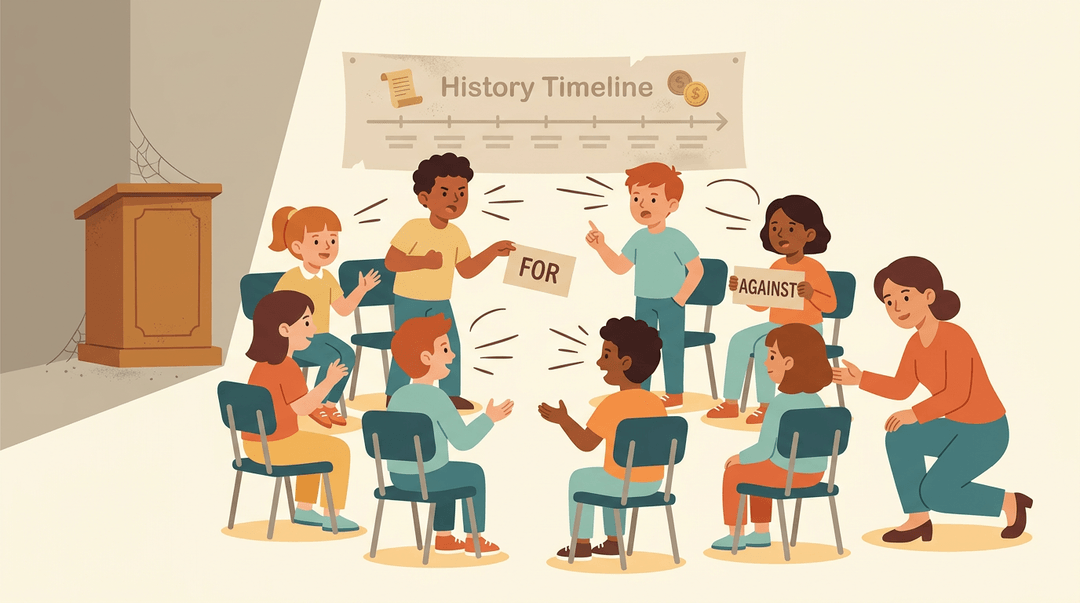
The NCF asks you to trade the podium for a learner-centric role: less telling, more guiding. Instead of delivering facts, you're setting up the conditions for students to question, explore, and build understanding themselves.
Think of a middle school teacher who turns a history lesson into a debate rather than a lecture: students walk out remembering the argument, not just the dates.
That shift, from lecturer to facilitator, is central to whether the framework actually reaches the classroom or just stays on paper.
Why ongoing teacher training matters
Facilitating well doesn't come automatically. It takes regular training programs that:
- keep you current on active-learning strategies
- help you integrate digital tools without them becoming a distraction
- build comfort with competency-based teaching methods that grade growth, not just recall
Skip the training, and even the best-designed framework stalls at the classroom door.
How teacher education frameworks fit in
Teacher training itself runs on its own framework.
According to a study on teacher education reform in India, the National Curriculum Framework for Teacher Education (NCFTE) was revised in 1988 and again in 2009 to keep preparation programs aligned with the country's changing needs.
It's a separate document from the school-level NCF, but the two are meant to stay in step: what you're trained to teach should match what the classroom framework expects you to deliver.

How NCF Handles Language and Multilingualism
Walk into a classroom in one state and you might hear five different home languages before the bell even rings. The National Curriculum Framework (NCF) treats that mix as a strength to build on, not a problem to smooth over.
Understanding the three-language formula
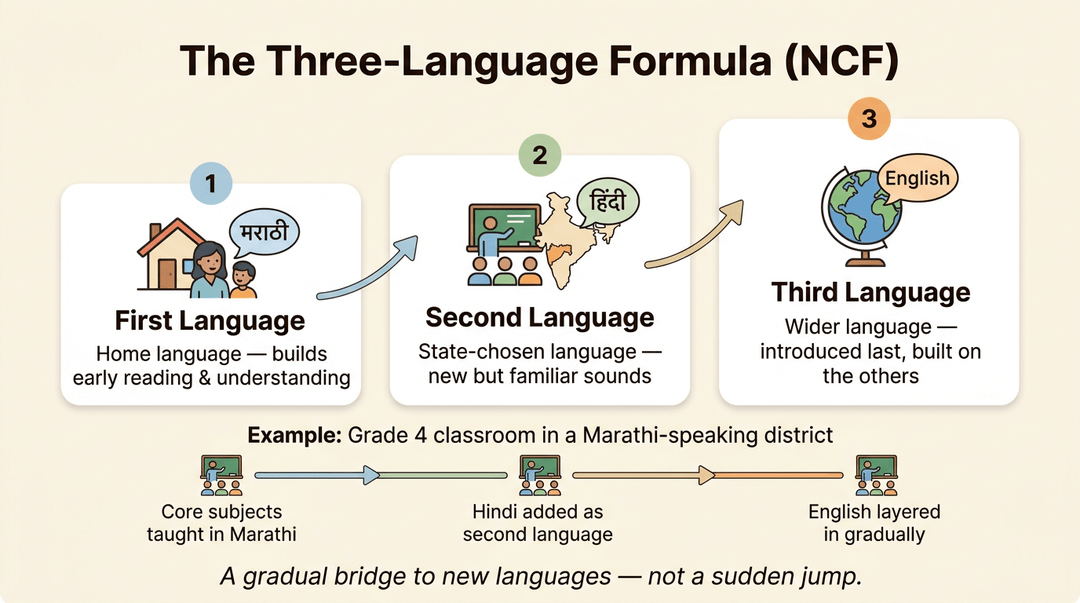
NCF organizes language learning through what it calls the three-language formula:
- First language: a student's mother tongue or home language, used to build early literacy and comprehension.
- Second language: typically a modern Indian language chosen at the state level, often one the student doesn't already speak at home.
- Third language: usually English or Hindi, depending on the student's region and prior exposure.
For example, a fourth-grade teacher in a Marathi-speaking district might teach core subjects in Marathi, add Hindi as the second language, and layer in English as the third. That gives students a gradual bridge to a new language instead of a sudden one.
Teaching young children in their home language
Younger students benefit even more directly. NCF calls for mother tongue medium instruction through the early primary years, so a five-year-old learns to read using words she already speaks at home.
That's the difference between decoding a new alphabet and decoding a new language at the same time.
Consider a kindergarten teacher managing a room where three home languages overlap. Rather than picking one and leaving the others behind, NCF pushes for a genuine multilingual learning environment:
- peer translation
- bilingual labels
- stories told in more than one tongue
so every student sees their own language reflected in the room.
Guidance for Teaching Specific Subjects
Every subject asks something different of a teacher, and the framework spells out what that looks like in practice. Here's how it breaks down subject by subject.
Teaching languages
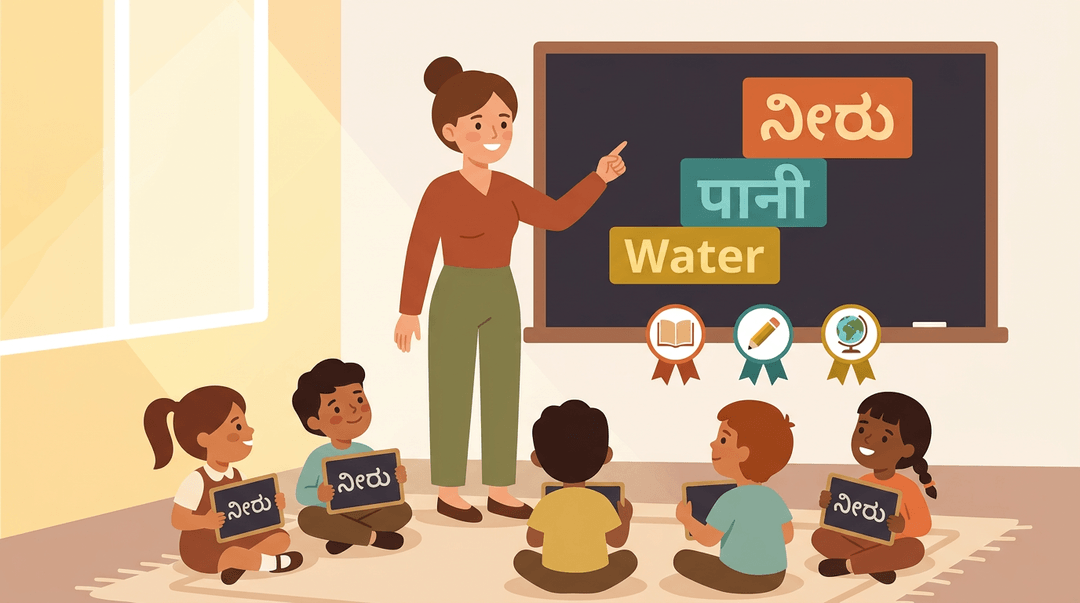
The three-language formula asks schools to teach students in at least three languages across their schooling, with the mother tongue or regional language forming the medium of instruction wherever possible, especially in the early years.
For example, a primary teacher in a Kannada-medium classroom builds early reading and math lessons in Kannada before introducing Hindi and English as additional subjects.
Where a state prefers a different order for its Hindi or English options, the framework leaves that choice open: the goal isn't which language comes second, it's building real fluency in more than one.
Teaching mathematics
Math guidance leans less on memorized formulas and more on problem-solving: students should learn to reason through a problem, not just recall a procedure.
Consider a middle school teacher who swaps a worksheet of identical equations for one real-world puzzle, like splitting a restaurant bill, and lets students find their own path to the answer.
That shift builds confidence too: a student who's used to guessing at steps starts trusting their own reasoning once they see it work.
Active learning pedagogy, hands-on tasks, group problem sets, and manipulatives, keeps math something students do rather than watch.
Teaching science and social science
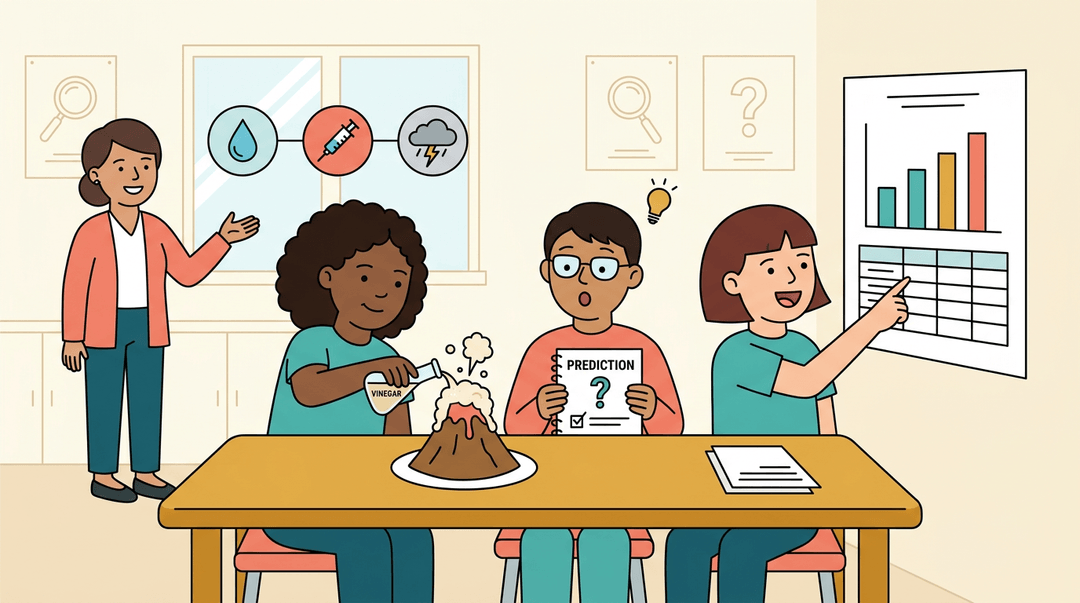
Science and social science share a goal: developing what the framework calls scientific temper, a habit of questioning, testing, and verifying rather than accepting claims at face value.
A high school science teacher can build that habit with a simple experiment where students predict an outcome, run the test, and explain any surprise in the result.
Social science lessons should carry the same critical thinking into how societies work, while connecting science to its societal relevance, water treatment, vaccines, weather patterns, so students see why the subject matters outside the textbook.
Both subjects should build data analysis skills early: reading a graph or table becomes as ordinary as reading a paragraph.
Teaching arts, health, and work education
Art, health, and work education round out the whole student. Art supports personality development, giving students a space for expression that a test never captures.
Physical education and sports build the same discipline and teamwork that show up later in group projects.
Work experience integration and vocational skill building, from basic carpentry to digital tools, give students a hands-on sense of what work actually involves, well before they have to choose a career.
Using computers and technology in schools
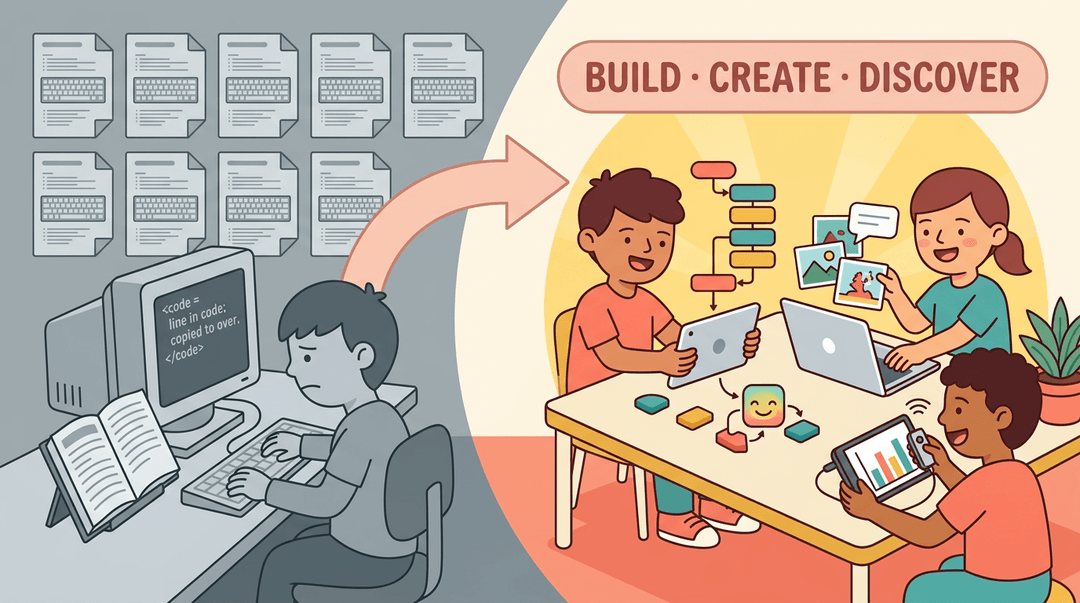
Technology guidance pushes schools to move beyond rote skill sets, typing drills and software tutorials, toward using computers to enable knowledge creation:
- research projects
- digital storytelling
- small data collection tasks
A computer science teacher might have students build a simple app instead of memorizing syntax line by line.
The framework also supports flexible curriculum models, so schools can adapt tech use to their own resources instead of following one rigid template.
How Assessments and Exams Are Changing
For decades, one exam decided a student's fate.
That's changing, and if you're in a classroom today, you're already seeing it: assessment is moving away from a single high-stakes moment and toward something more continuous, with the board exam hall changing right along with it.
Evaluating students continuously, not just once
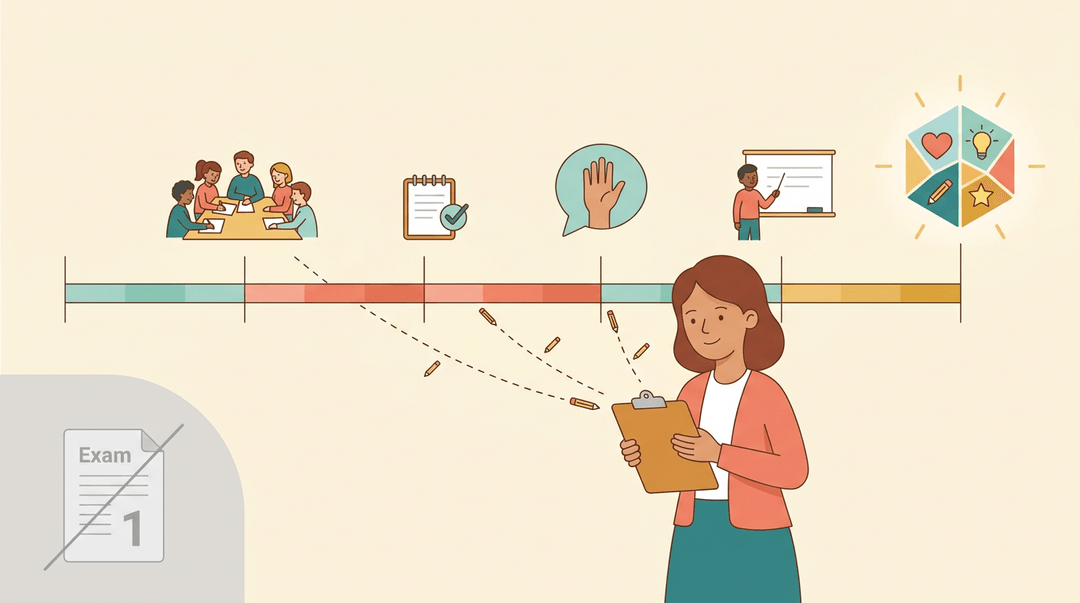
The Continuous and Comprehensive Evaluation (CCE) model, introduced in the National Curriculum Framework (NCF) 2005, asks you to assess students throughout the year rather than pinning everything on one final paper.
Think of a middle school teacher tracking a student's group work, quizzes, and class participation across a term instead of waiting for a single exam to tell the whole story.
That shift reduces sole reliance on high-stakes tests and swaps a single score for a holistic report card: one that captures how a student learns, not just what they remembered on exam day.
Board exams held twice a year
The NCF 2023 pushes this further by proposing modular board exams held twice a year for Class 12 students.
Instead of one make-or-break sitting, students get a second chance, which takes the pressure off a single date and eases the stress that builds up around board exams.
The evaluation itself is also becoming competency-based: less about recalling facts under pressure, more about demonstrating what a student can actually do with what they've learned.
Bringing Technology into the Classroom
The National Curriculum Framework doesn't just tell you what to teach. It nudges you toward how you teach it, and technology has become a big part of that how.
The classroom that used to run on chalk and worksheets now runs alongside a handful of digital tools that support the same goals.
Digital tools schools are adopting
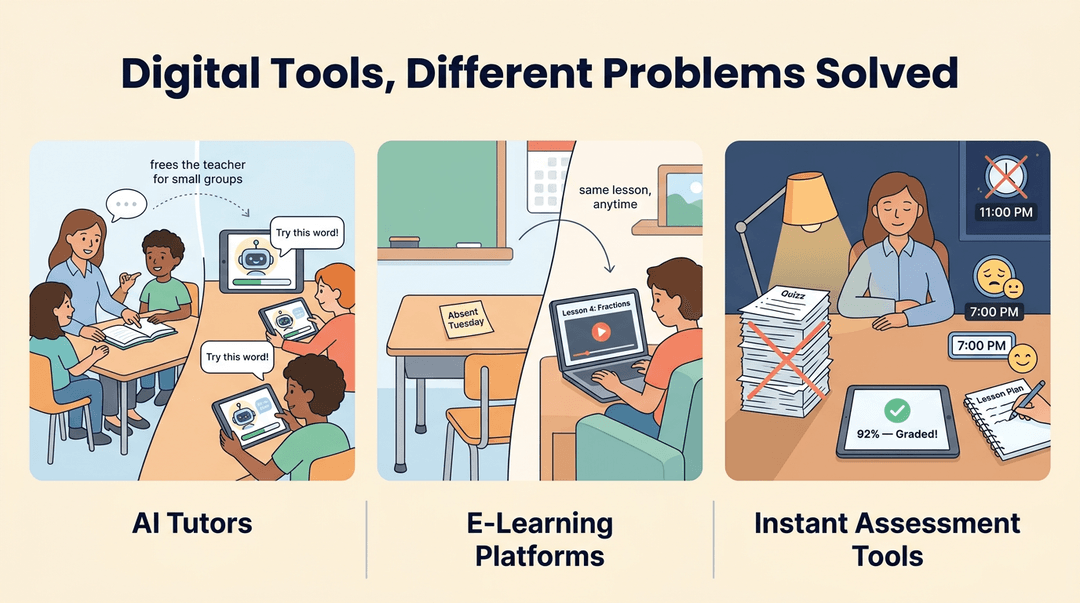
Schools working with the framework are leaning on a mix of tools, each solving a different problem:
- AI-driven tools. Think of a middle school teacher who uses an AI tutor to give struggling readers extra practice while she works one-on-one with another small group.
- E-learning platforms. These let a lesson continue outside class hours, so a student who missed a session can catch up without falling behind the rest of the room.
- Edtech for assessments. Instead of a stack of papers to mark overnight, quizzes get graded instantly, freeing up an evening for actual lesson planning.
Using computers to build higher-order thinking
Used well, a computer isn't just a worksheet on a screen. It's a tool for thinking, not just recall.
- Explanatory reasoning development. A science teacher might have students use a simulation to test a hypothesis, then explain why the result turned out the way it did.
- Access to knowledge sources. A student researching a history topic can pull from primary sources online instead of relying on a single textbook chapter.
- Flexible learning styles. A visual learner can watch a short video; a student who learns by doing can work through an interactive model, all covering the same standard.
How NCF Gets Implemented and Enforced
A framework is only as good as its rollout. Turning the National Curriculum Framework (NCF) from a policy document into daily classroom practice takes coordinated work at the national, state, and school level, and each layer has its own job to do.
How states adopt the framework
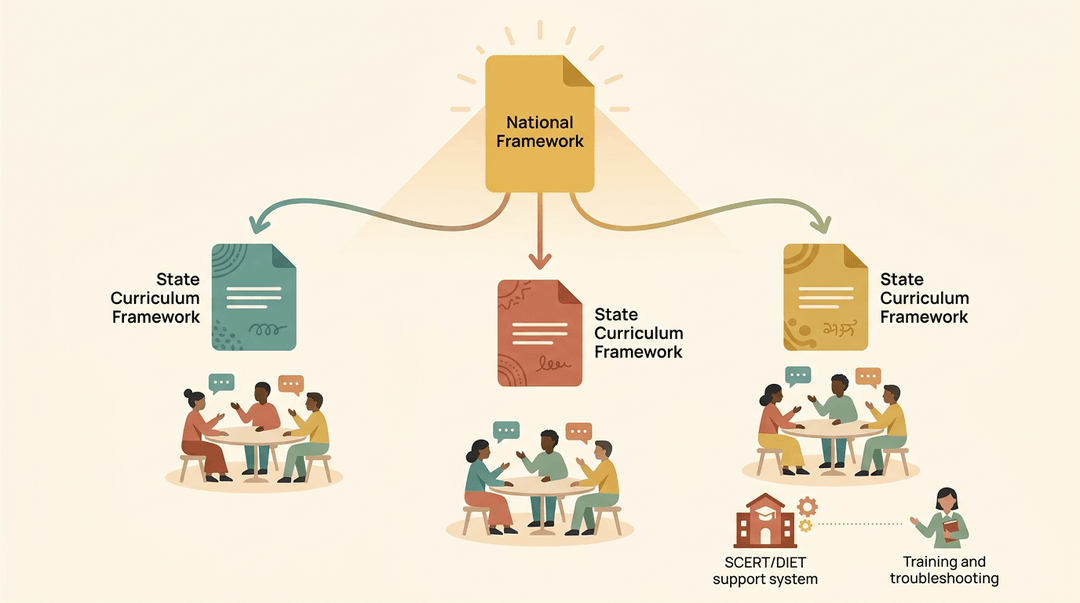
States translate the national framework into their own State Curriculum Frameworks (SCFs), adapting national goals to local languages, resources, and student needs. Getting there means district-level consultations that pull in local voices before anything is finalized, backed by SCERT/DIET support: the state academic bodies that train teachers and troubleshoot rollout on the ground.
How the national rollout works
At the national level, the NCERT-NIC tech platform coordinates drafting and feedback at scale, while MyGov survey feedback lets teachers, parents, and the public weigh in directly. Reach matters too: as noted by IMPRI Impact and Policy Research Institute, draft frameworks are translated into 22 languages before going back to the states for comment, so no region gets left out of the conversation.
What schools must do to comply
On the ground, schools run curriculum audits to check current practice against NCF expectations, often using a curriculum audit checklist template to keep the review consistent. From there, teachers build holistic lesson plans and stock material-rich classrooms: real objects, visuals, and hands-on resources, not just textbooks. None of this happens without friction: uneven training and resource gaps remain the biggest on-ground implementation challenges.
The NCF isn't just policy language. It's a working structure for how learning should feel: connected, age-appropriate, and grounded in real student growth.
Once you see how its principles, structure, and assessment shifts fit together, aligning your own lessons becomes far less daunting.
Ready to put this framework into practice without the guesswork? Check out our Curriculum & Standards tool to plan units, lessons, and standards across your whole school year.
References
- National Curriculum Framework(NCF) — fmuniversity.nic.in
- National Curriculum Frame Work 2005 And ... — ijcrt.org
- Shri Dharmendra Pradhan to launch Mandate Document of National Curriculum Framework (NCF) — pib.gov.in
- CHITKARA UNIVERSITY — iie.chitkara.edu.in
- New Directions in Professionalization of Teacher Education in India — doi.org (2014)
- Mandate Document for Development of National ... — daa.uok.edu.in
- Ministry of Education forms a National Steering Committee for the Development of National Curriculum Frameworks — pib.gov.in
- The national curriculum framework 2011 : consultation document 1 executive summary — um.edu.mt (2011)
- latest national curriculum framework for school — naturenurture.org (2025)
- NCF 2023: Class 12 board exams twice a year; ‘modular’ exams in 10 years — news.careers360.com
- National Curriculum Framework, 2022: A Far-fetched Dream? — impriindia.com
Frequently asked questions
What is the meaning of National Curriculum Framework?
The National Curriculum Framework (NCF) is a blueprint for education that defines what students learn, when, and why. It guides syllabus writers and textbook authors, ensuring consistency in educational goals across a vast system, from early years through senior school.
What is the purpose of the National Curriculum Framework?
The purpose of the National Curriculum Framework (NCF) is to provide master guidelines for education, ensuring teaching is consistent and effective across the system. It shapes teaching practices, sets goals for what students should learn at each stage, and aligns educational content with national objectives.
What is the National Curriculum Framework in India?
The National Curriculum Framework (NCF) in India serves as the master guideline for the education system, developed by the National Council of Educational Research and Training (NCERT). It dictates the learning areas, content standards, teaching methods, and assessment designs for schools across the country, spanning school education, early childhood care, teacher education, and adult education.
What are the five principles of NCF?
The five principles of the NCF are: moving from rote learning to holistic learning, making education inclusive and equitable, building skills across many disciplines, giving states flexibility to adapt curricula, and keeping the whole experience joyful and stress-free.
What are the 10 NCSS themes?
The 10 NCSS themes are Culture; Time, Continuity, and Change; People, Places, and Environments; Individual Development and Identity; Individuals, Groups, and Institutions; Power, Authority, and Governance; Production, Distribution, and Consumption; Science, Technology, and Society; Global Connections; and Civic Ideals and Practices.
What are the five key components of the curriculum framework?
The five key components of the curriculum framework are: learning areas and subjects, content and learning standards, teaching-learning materials, classroom transaction methods, and assessment and evaluation design. These components work together to translate educational policy into practical classroom instruction.
How many NCF are there in India?
There have been five National Curriculum Frameworks (NCFs) published in India. These include early editions in 1975, 1988, and 2000, followed by NCF 2005, and the current NCF 2023.
What do you mean by National Curriculum Framework?
The National Curriculum Framework (NCF) is an overarching document that serves as a blueprint for the entire education system, outlining what, when, and why students should learn. It acts as a guide for curriculum design, content development, teaching methodologies, and assessment strategies across all educational stages.