IB Learner Profile: The 10 Attributes and How They Work

Jump to section
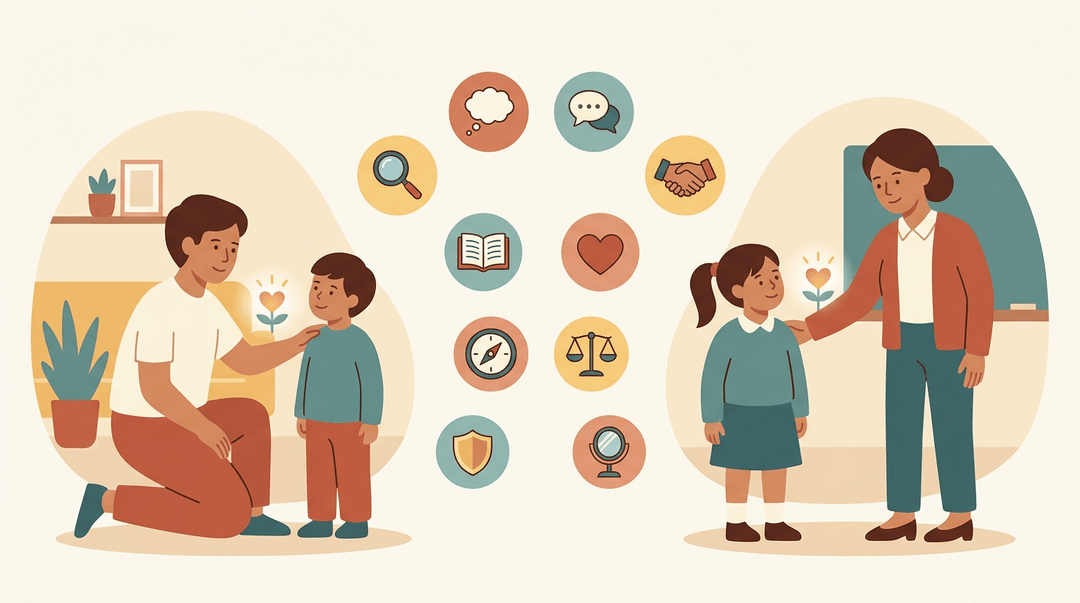
Think of the values a family tries to pass down to their kids: not facts to memorize, but habits meant to shape how they move through the world. The IB (International Baccalaureate) learner profile works the same way.
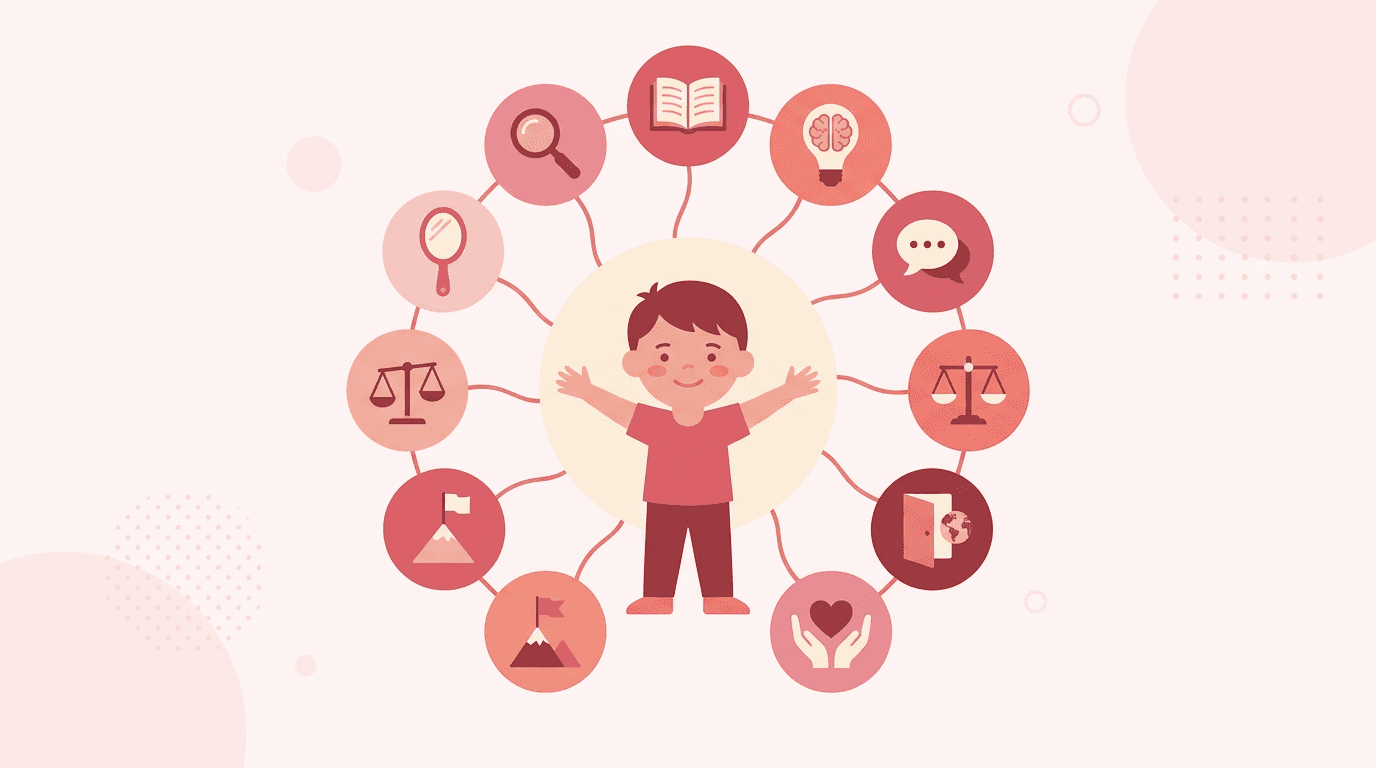
It's a set of ten attributes, like inquirer, thinker, and communicator, that describe the kind of learner (and person) IB programmes aim to grow.
Below, we'll unpack all ten, where they fit in the IB structure, and what teaching them actually looks like in your classroom.
What Is the IB Learner Profile
The International Baccalaureate (IB) Learner Profile is the mission statement made practical: a set of ten attributes the program expects every student, not just the academically gifted, to grow into.
That's worth saying plainly, because the giftedness myth keeps plenty of capable students and families from even considering IB. It's less about who a student already is and more about who they're becoming.
The 10 attributes and their purpose
That set of ten attributes covers how students think, communicate, and treat others, worded simply enough that a ten-year-old and a seventeen-year-old can both apply them at their own level.
Each one guides personal academic development, giving students language for the kind of person they're trying to become, not just the grade they're chasing.
Teachers and students share that same language, which turns it into a shared vocabulary for growth rather than a school-specific label.
A teacher might tell a student they showed strong reflection on a project, or ask a class which attribute a task called on. It's not a checklist to tick off before graduation.
It's a lens for tracking growth over years, and the aim is a well-rounded individual who can think, care, and act, not just test well.
How the learner profile shapes school life
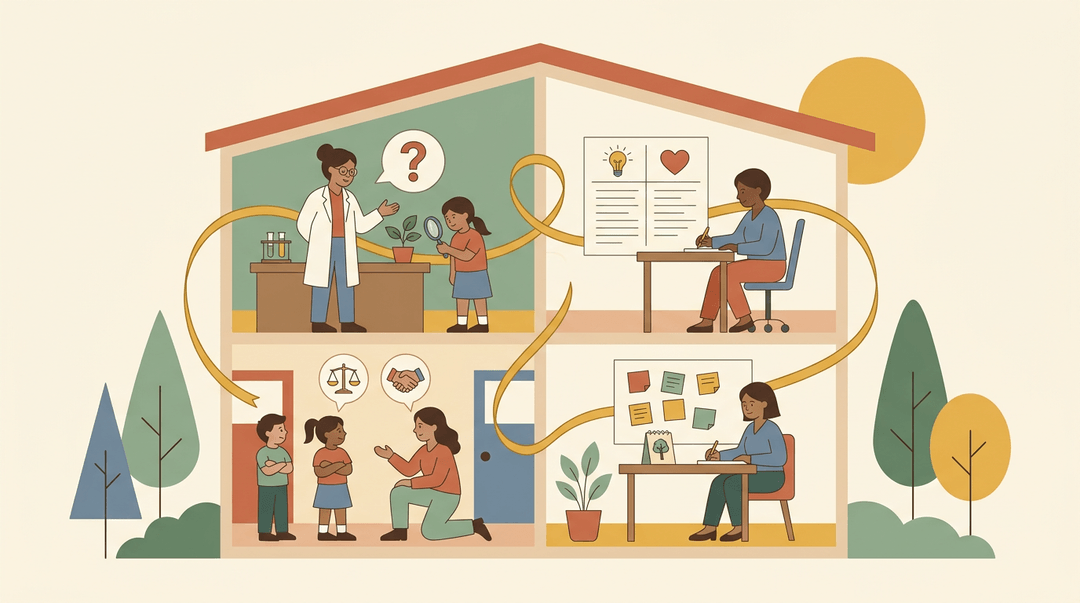
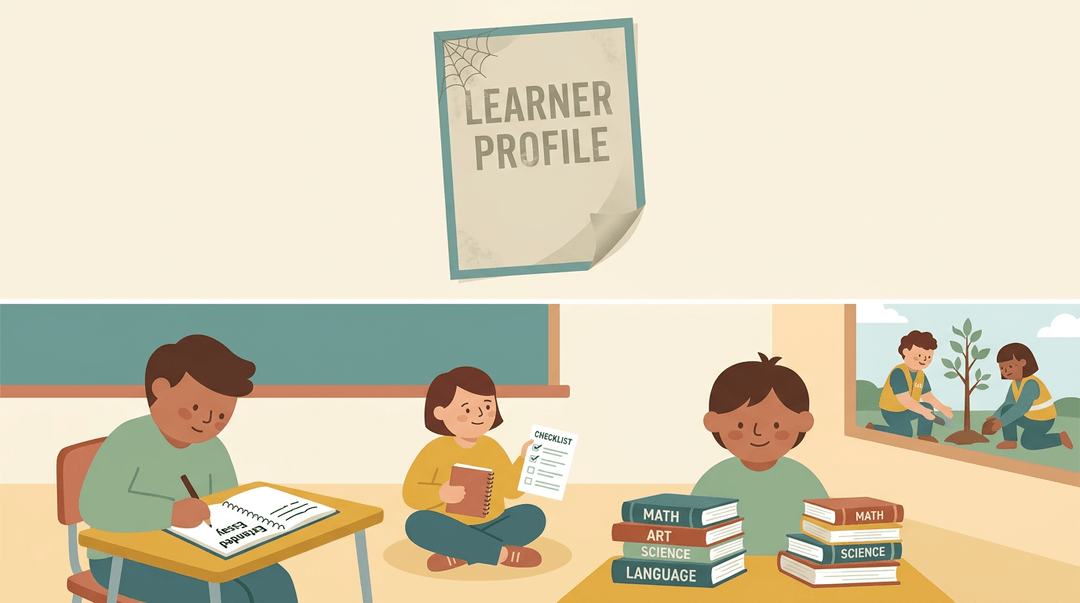
The profile isn't confined to one class or one poster in the hallway. It's woven into a holistic education model that treats character growth as seriously as content knowledge, so it runs through school life:
- how a unit is planned
- how a rubric is written
- how a teacher handles a disagreement between students
That balance between knowledge and character shapes how students learn day to day.
A science teacher might ask students to question before handing them the answer; a homeroom teacher might frame a hallway conflict as a chance to practice patience and fairness.
Small moments like these, repeated for years, are what actually build a well-rounded student, no matter their starting point.
The 10 IB Learner Profile Attributes
Ask a room full of IB teachers which single attribute matters most, and you'll get ten different answers.
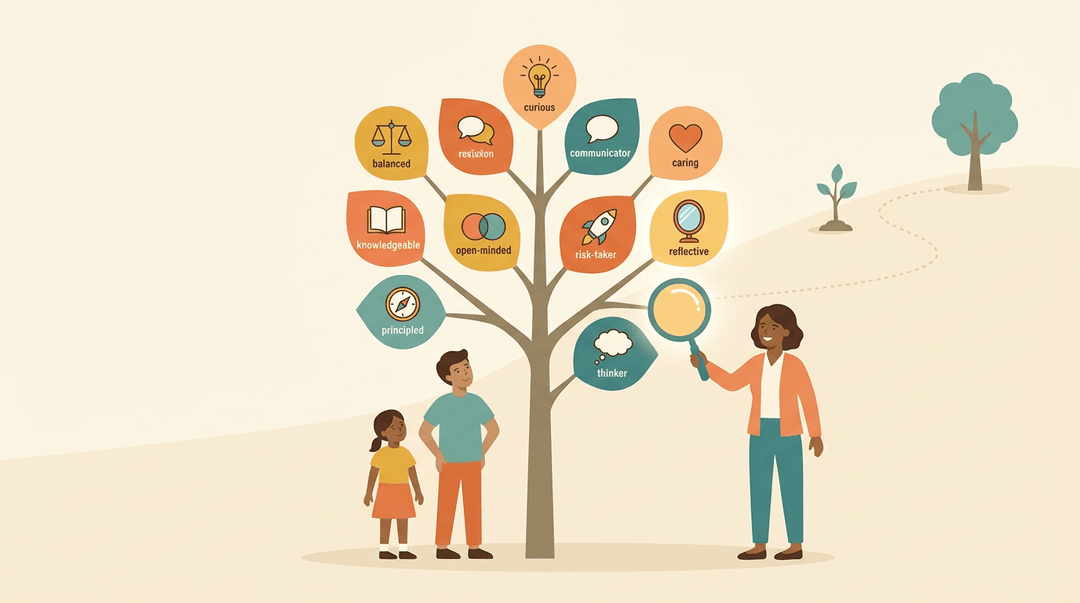
That's the point: the IB designed these ten traits to work together, not to rank against each other, though Inquirers and Reflective thinkers usually spark the liveliest staffroom debate about which one really drives the rest.
Curiosity, knowledge and thinking skills
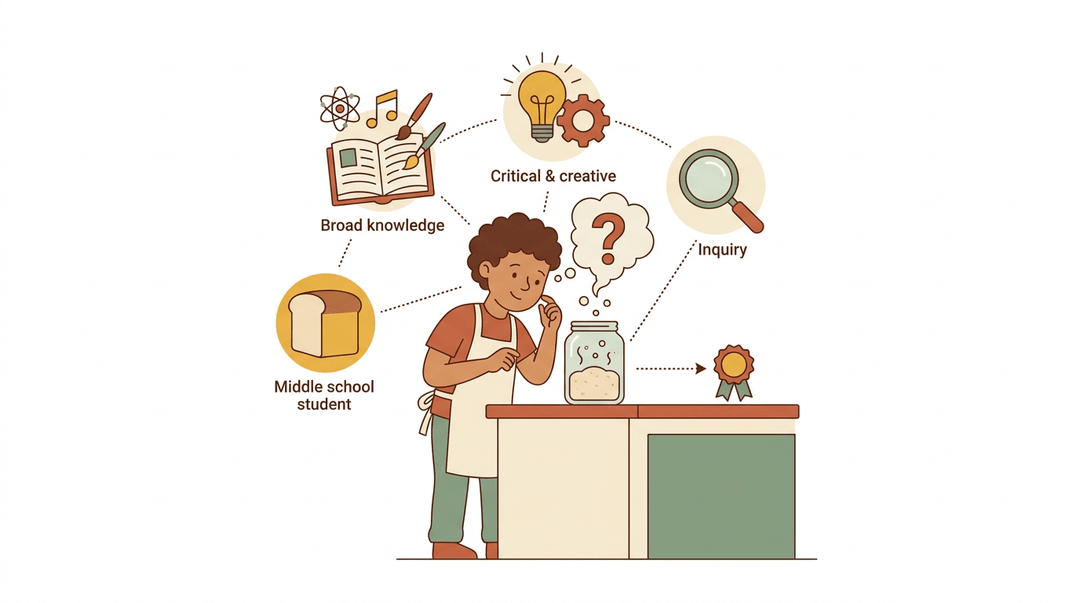
Inquirers ask questions before they're handed answers. Think of a middle school student who wonders why bread rises and turns that curiosity into a science fair project on yeast fermentation.
Knowledgeable learners build broad, interdisciplinary understanding rather than siloed facts, while Thinkers apply critical and creative reasoning to real problems, not just textbook exercises.
Together, these three attributes push students toward genuine problem-solving: connecting what they already know to what they haven't seen yet.
How students communicate and collaborate
Communicators express themselves confidently in more than one language, listen actively, and know how to make a group project actually work.
Consider a high school student presenting a joint history and language assessment in both English and Spanish, then fielding classmates' questions without notes. Collaboration isn't an add-on skill here; it's built into how the attribute gets assessed.
Integrity, empathy and global citizenship
Principled students act with integrity and fairness even when no one's grading it. Open-minded learners respect cultures and perspectives beyond their own, and Caring students pair that respect with empathy and a habit of community service.
Together they build toward genuine global citizenship: treating a local food drive and a global refugee crisis as connected concerns, not separate ones.

Courage, balance and self-reflection
Risk-takers approach unfamiliar challenges with courage instead of avoidance. Balanced students protect their physical, emotional, and intellectual health in equal measure.
Reflective learners set goals, evaluate their own progress, and treat failure as data rather than defeat: the habit that keeps lifelong learning alive well past graduation day.
Teaching the Learner Profile in Your Classroom
The learner profile sticks when students meet it in small, repeated doses, not in a one-off assembly. Here's a weekly routine you can run in any IB classroom, plus the tools that make it visible.
The one-attribute-a-week routine
- Pick one attribute each Monday.
- Write it on the board: "This week we're practicing being inquirers."
- Model it out loud during daily lessons.
- Say: "I don't actually know the answer, so I'm going to ask a better question."
- Name it when students show it.
- Try: "Stopping to hear Amir's side first? That was open-minded."
- Link the week's evidence to report comments.
- Liftable line: "Maya showed she's a risk-taker by volunteering to present her draft first."
⚠️ Watch out: don't let attributes become behavior management ("be more principled!"). The moment they're used as scolding, students stop owning the language.
Adapt it to your program
The routine holds across all three programs; the vehicle changes.
| In... | Anchor the attribute to... |
|---|---|
| PYP | Show-and-tell, ending with "Which attribute did I use today?" |
| MYP | Debates (communicators) and service projects (caring) |
| DP | CAS reflections and TOK discussions, where attributes map directly |
Example: A PYP teacher closes show-and-tell by asking the presenter to point to one attribute poster and finish the sentence "I was ___ because...". Thirty seconds, and the vocabulary becomes the student's own.
Tools for reflection and assessment
Three lightweight tools, each producing something you can actually collect:
- Self-reflection journal prompts. One per week, tied to the attribute.
- "When did you take a risk this week, and what happened next?"
- Peer feedback checklists. Three or four yes/no lines students tick for a partner.
- "My partner listened fully before responding (open-minded)."
- Portfolio evidence collection. One dated artifact per attribute each term.
- A photo of debate notes tagged communicator counts; it doesn't need to be polished.
Make the language part of the room
Before the routine can work, the vocabulary has to live on the walls and in everyday talk. Confirm:
- Posters are visible, all ten attributes, at student eye level, not above the whiteboard.
- You use the words casually, not just on Mondays: "That was a very inquirer question."
- You celebrate attribute moments, with a two-minute Friday shout-out naming who showed the week's attribute and how.
At a glance: pick one attribute weekly, model it aloud, adapt the vehicle to your program, collect one piece of evidence, and keep the language visible in between.
Once the routine is humming, planning gets easier too: you can map learner-profile attributes straight into your units with EMStudio's curriculum planner.
Why the Learner Profile Matters
Grades tell you what a student scored. The learner profile tells you who they're becoming, and that distinction is exactly why so many families weigh IB against the alternatives.
Why is IB better than A-Level?
A-Levels ask students to go deep in three or four subjects. IB asks the same, plus a set of habits that outlast the exam: reflection, inquiry, open-mindedness.
That breadth is why NLCS Singapore notes that "these qualities are increasingly valued by universities and employers alike, who recognise that adaptability, communication, and critical thinking underpin long-term success."
An A-Level graduate might walk in knowing their subject cold. An IB graduate walks in knowing how to learn anything, adapt when the plan changes, and think critically under pressure.
That's the edge: not better content, but a more global-ready student, one who's practiced stepping into unfamiliar problems and unfamiliar rooms.
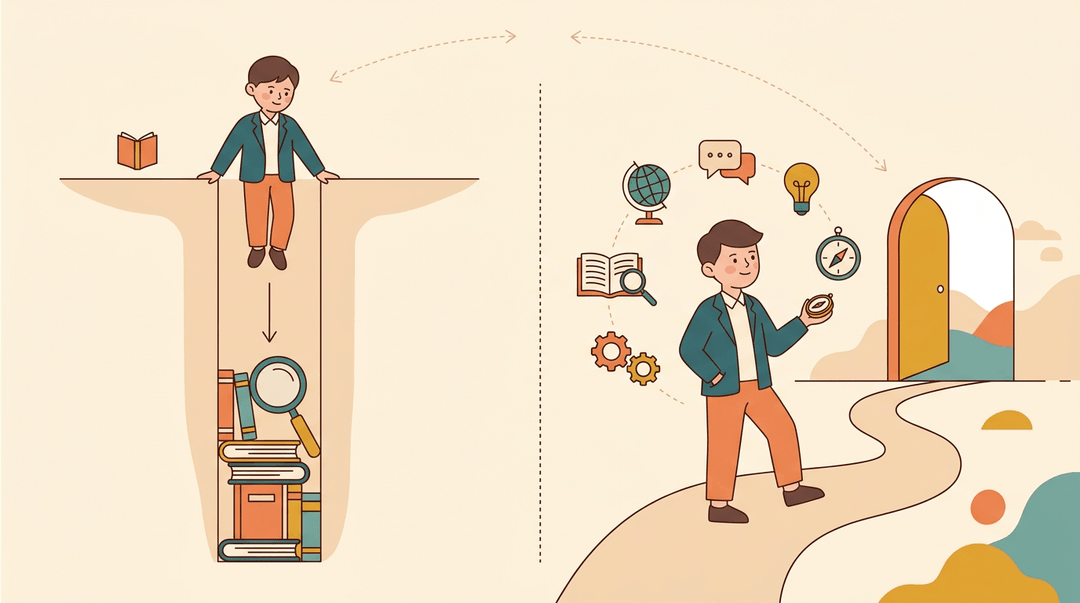
Balancing academic success and character growth
Character growth doesn't compete with grades, it complements them. A student who's confident, grounded, and self-aware tends to handle a tough exam season better than one who's only ever been graded on content recall.
IB puts equal weight on mindset and mastery, which is why the profile shows up in report comments, not just scores.
Is IB harder than college? In some ways, yes: the workload and reflection habits front-load skills many students don't build until university. But that's the point.
IB measures development, not perfection, so a student still growing into an attribute is still succeeding.
How Schools Implement the Learner Profile
Knowing the ten attributes is one thing. Bringing them into daily lessons, activities, and report cards is another.
Schools build the profile into the fabric of the school day, then track it through rubrics and narrative reports rather than a single test score.
Teaching strategies for each attribute
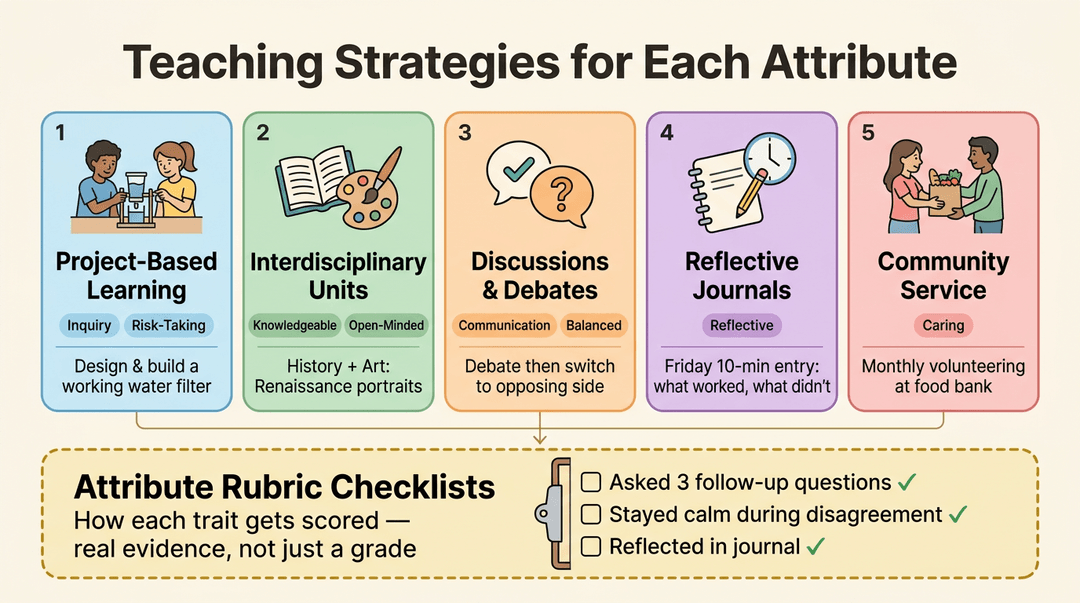
Teachers reach for a handful of go-to methods to make each trait visible in the classroom:
- Project-based learning. Students design and carry out a real task, building inquiry and risk-taking along the way.
- Interdisciplinary units. Combining subjects (say, history and art) helps students practice being knowledgeable and open-minded at once.
- Discussions and debates. These sharpen communication and reward students who stay balanced under disagreement.
- Reflective journals. A weekly entry builds the habit of reflection that the profile expects.
- Community service programmes. Volunteering turns caring from a word on a poster into something students actually do.
- Attribute-based rubric checklists. Teachers score specific behaviors against each trait, which is how the profile gets assessed and reported, not through a grade, but through evidence teachers and parents can both see.
Embedding it through academic rigor
The profile isn't a side activity bolted onto "real" classes. It runs through them. Subject-specialist teachers model each attribute inside their own discipline: a science teacher pushing inquiry, a literature teacher pushing open-mindedness.
An inquiry-based curriculum keeps students asking questions instead of memorizing answers, and students are pushed toward critical exploration beyond the syllabus, chasing a question further than the textbook goes.
Support through activities and pastoral care
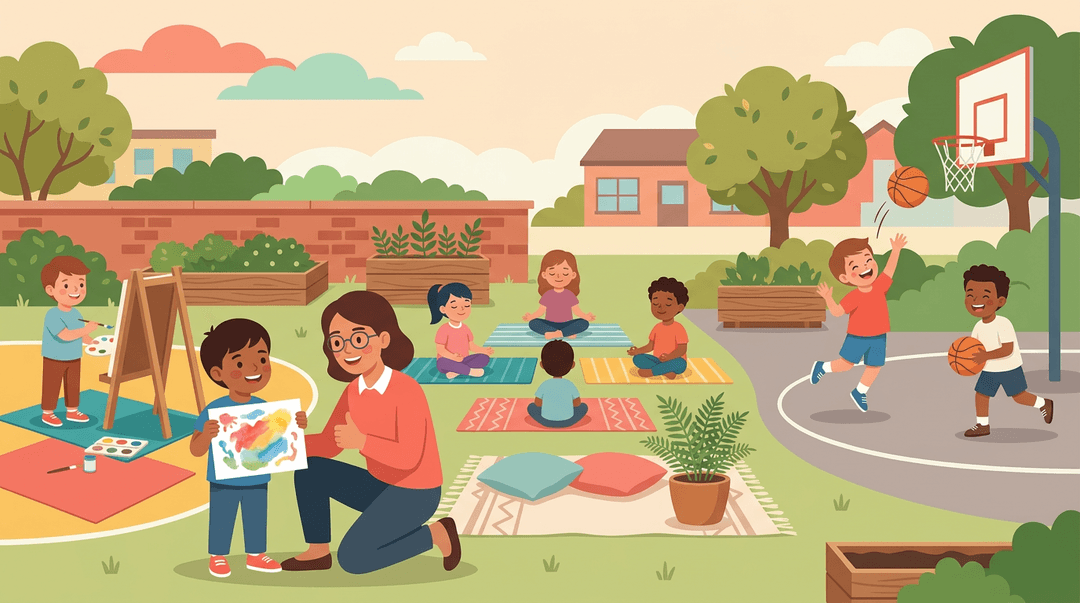
Attributes also grow outside the timetable. Schools offer enrichment activities in sports, arts, and mindfulness that build balance and reflection in ways a worksheet can't.
Strong pastoral care and a real sense of community, backed by close teacher-student relationships, give students a safe place to practice risk-taking without fear of getting it wrong.
Real classroom activity examples
A few concrete formats show the profile in action:
- Science experiments and science fairs (inquirer, thinker)
- Model United Nations (communicator, principled)
- Charity drives (caring)
- Adventure camps (risk-taker)
- Portfolio development, which doubles as an ongoing record for reporting growth over time
Related Parts of the IB Programme
The learner profile doesn't stand on its own: it runs through every stage of the IB, from the Primary Years Programme (PYP) through the Middle Years Programme (MYP) and into the Diploma Programme (DP), with each phase building on the last.
Core components of the Diploma Programme
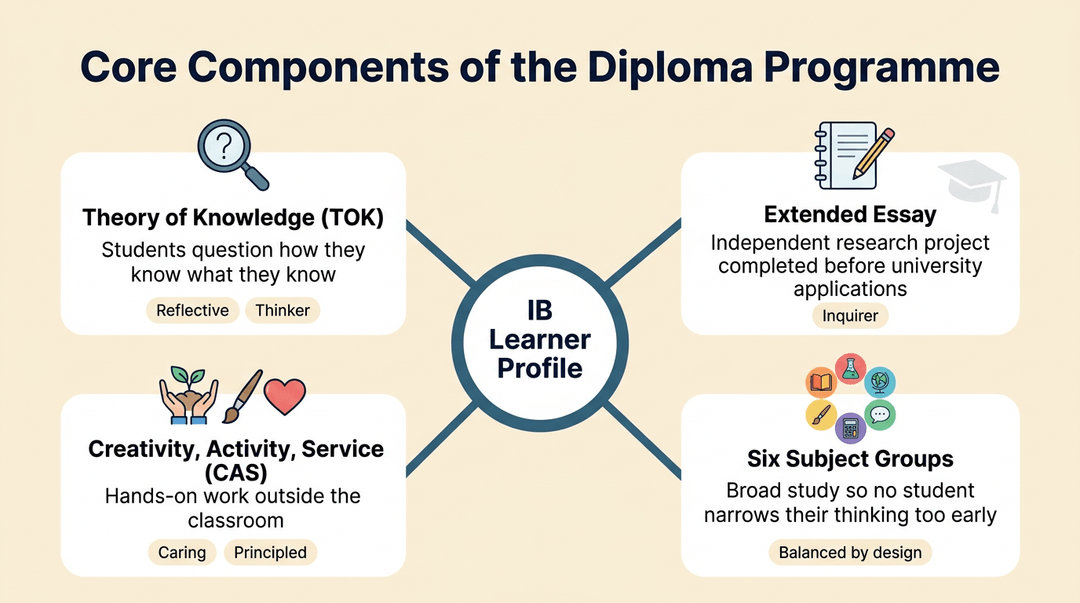
The DP asks students to put the profile into practice through four core pieces:
- Theory of Knowledge (TOK): students question how they know what they know, sharpening the reflective and thinker attributes.
- Extended Essay: an independent research project that builds the inquirer attribute well before university applications ever land on a desk.
- Creativity, Activity, Service (CAS): hands-on work outside the classroom that grows the caring and principled sides of the profile.
- Broad subject study across six subject groups, so no student narrows their thinking too early.
What are the 5 ATL skills in IB?
The IB's Approaches to Learning (ATL) skills are the working habits behind the profile: thinking, communication, social, self-management, and research skills. In the classroom, that shows up as:
- Independent research skills, sharpened through the Extended Essay and TOK.
- Critical reflection habits, built through regular self-assessment.
- A non-specialised, broad curriculum that keeps every subject group active rather than letting one dominate.
- Activities beyond academics, through CAS, that grow social and self-management skills alongside academic ones.
Together, the DP core and the ATL skills turn the learner profile from a list of words into daily classroom habits.
The learner profile isn't a poster on the wall. It's a daily habit, one attribute at a time, built into how you plan and teach, not just how you decorate the room. When students see it lived out, not just quoted, it starts to stick.
Ready to build these attributes into your everyday planning? Check out our Curriculum & Standards page to plan units, lessons, and standards across the whole school year.
References
- What is the IB learner profile? — nlcssingapore.sg
Frequently asked questions
What is the profile of an IB student?
An IB student is someone the International Baccalaureate (IB) programmes aim to develop, embodying ten key attributes. The profile is less about who a student already is, and more about who they are becoming, focusing on habits that shape how they navigate the world.
What are the 10 IB learner profiles?
The 10 IB learner profiles are Inquirers, Knowledgeable, Thinkers, Communicators, Principled, Open-minded, Caring, Risk-takers, Balanced, and Reflective. These attributes are designed to work together, guiding students' personal and academic development.
What are IB learners?
IB learners are students enrolled in International Baccalaureate programmes who are encouraged to develop a specific set of ten attributes. These attributes cover how students think, communicate, and interact with others, aiming to foster well-rounded individuals.
What are the 10 IB learner profile traits?
The 10 IB learner profile traits are Inquirers, Knowledgeable, Thinkers, Communicators, Principled, Open-minded, Caring, Risk-takers, Balanced, and Reflective. These traits represent the kind of learner and person IB programmes aim to cultivate.
What are the 5 learner attributes?
The five learner attributes are Inquirers, Thinkers, Communicators, Principled, and Risk-takers. These are part of the broader set of ten attributes that the IB learner profile aims to develop in students.
Why is IB better than a level?
IB is considered strong because it goes beyond deep subject knowledge, like A-Levels, by fostering a set of habits that are critical for long-term success. It emphasizes reflection, inquiry, and open-mindedness, producing adaptable and critical-thinking individuals ready for global challenges. This breadth is highly valued by universities and employers.
What are the 5 ATL skills in IB?
The five ATL (Approaches to Learning) skills in IB are thinking, communication, social, self-management, and research skills. These skills are fundamental working habits that support the development of the IB learner profile attributes.
What does balanced mean in an IB learner profile?
In the IB learner profile, "balanced" means that students understand the importance of intellectual, physical, and emotional well-being to achieve personal harmony. It encourages them to recognize their interdependence with other people and with the world.