Learning Target and Success Criteria: A Complete Guide


Jump to section
Picture starting a road trip with a map that marks your destination but shows no route, no landmarks, and no sign that you've arrived. That's what many lessons feel like to students.
A learning target names where the class is headed, and success criteria spell out the landmarks that show they're getting there.
Together, they turn a vague lesson into a clear path. In this post, we'll cover what each one means, how to write them, how to build them with your students, and a checklist you can use on Monday.

What Learning Target and Success Criteria Mean
Before you plan a lesson, you need to know what students should learn and how you'll know they learned it.
What students are aiming to learn
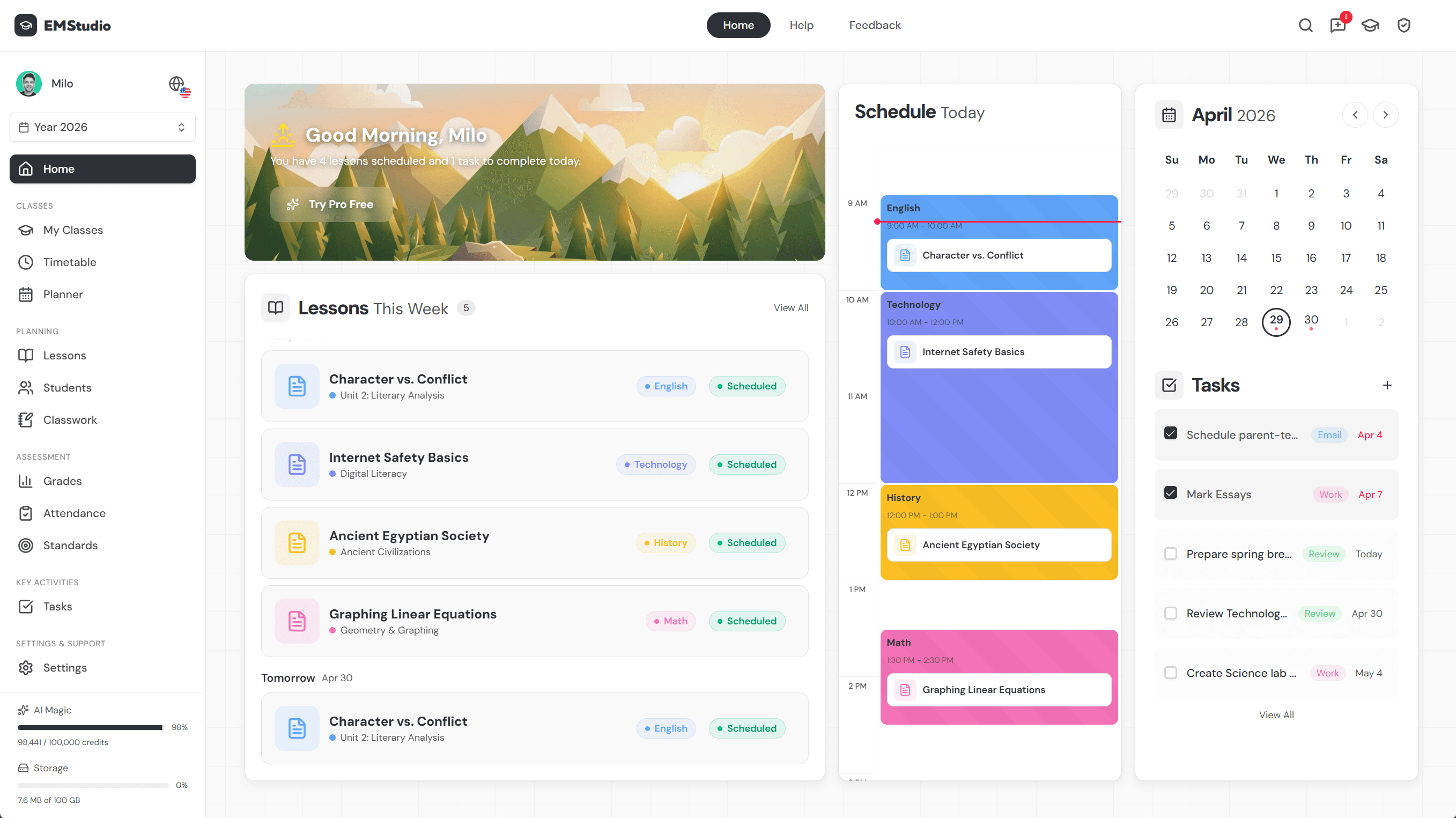
A learning target names what students should learn, not what they'll do to get there. Standards often read in formal language, so rewrite them as a student-friendly rewording.
One fifth-grade teacher turns “compare fractions with different denominators” into “compare fractions that have different bottom numbers,” so students see what they're working toward.
Targets also come in two flavors. A knowledge target is about what students know, such as the causes of a historical event. A skill target is about what they can do with it.
Evidence that a target was reached
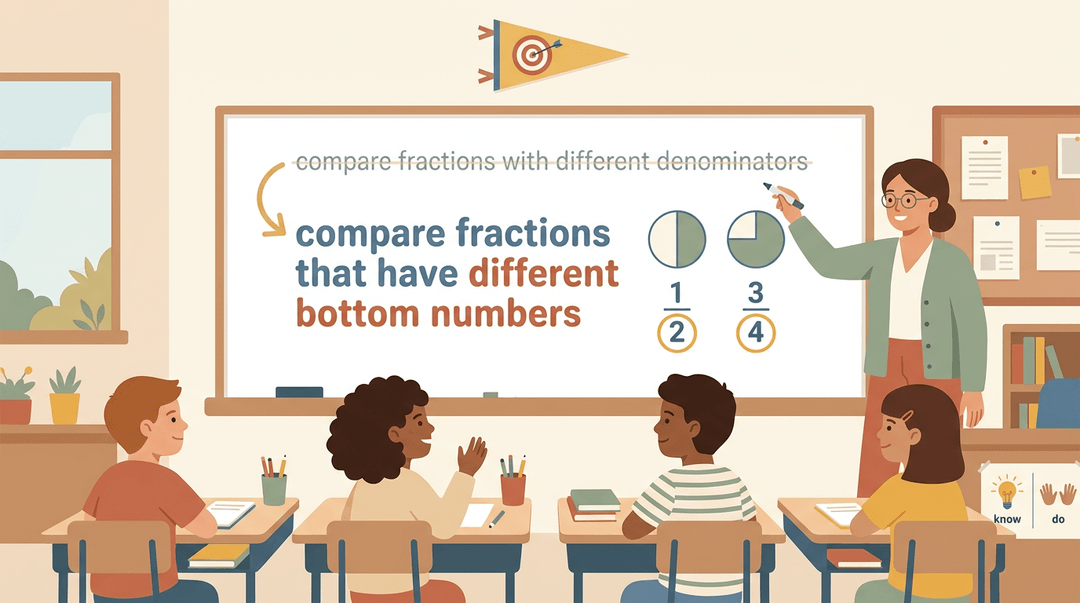
Success criteria are the observable evidence that a target was met. The target shows students where they're headed; the criteria show how they'll know they've arrived. They can be ingredients or process steps: skip one, and the result is incomplete.
Strong criteria often use verb-noun phrases like:
- Identify the main idea
- Label each part of a cell
- Solve a two-step equation
The same evidence also gauges your teaching. A middle school science teacher whose target is how plants make food asks for three criteria:
- name the inputs
- describe the process
- explain the outputs
When exit tickets show most students missing the process, she reteaches only that piece.

Other names for the same idea
You'll hear these called learning objectives, targets, or intentions. Same idea, different label.
Some frameworks call the evidence performance indicators: observable descriptions of what a student's work looks like when a target is met.
Many classrooms also rewrite the target as an “I can” statement that students read as their own goal.
Writing Clear Targets Students Can Follow
A strong learning target starts with the standards and the colleagues who teach them.
Breaking down standards with colleagues
Analyze your curriculum map, then unpack each standard with your team: what thinking does it demand, and what does mastery look like? Align standards, targets, and assessments so your test measures what the standard asks.
Finally, map targets to yearly units so no skill is missed or taught twice.
Consider a sixth-grade science teacher whose team discovers that its energy test checks only vocabulary. She rewrites it to ask for reasoning, so the test matches the standard.

Signs of a well-written target
Here's what we look for:
- Student-friendly stem. Open with "I can" so students see the goal as theirs.
- Measurable verbs. "Compare" shows what success looks like. "Understand" doesn't.
- Learning, not doing. Name the thinking, not the task.
- Specific to context. Name the content, not just the subject.
- Match cognitive demand. Pick verbs that fit the standard's level of thinking.
No single top three fits every class, so try these:
- Math: "I can use a number line to add two-digit numbers."
- Reading: "I can identify the evidence behind an author's claim."
- Science: "I can explain how heat moves between objects."
Pairing character goals with daily steps
Scaffold daily targets so each one moves students toward mastery. A proficiency scale describes what a student can do at each level, and each level builds on the one before. Aim for progress rather than completion.
Pair each academic target with a character goal. Consider a middle school math teacher who pairs equations practice with a habit of asking a classmate before raising a hand. By Friday, she can see which habit helps the learning stick.
Students can't hit a target they can't see.
Co-creating Success Criteria with Students
Success criteria land best when students help define them. Here's how we bring them in.
Matching criteria to each target
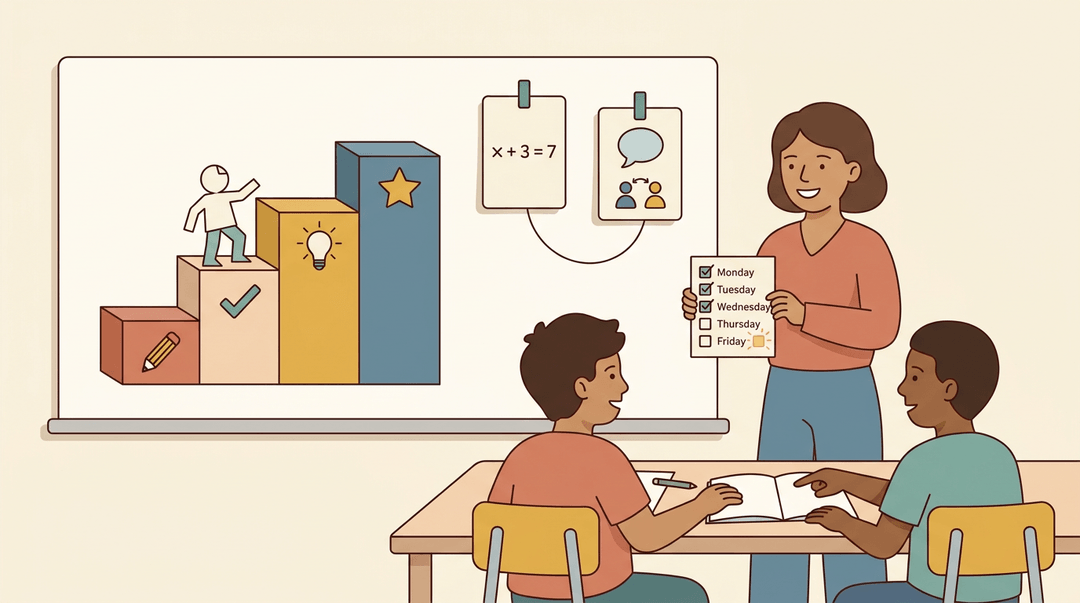
Every learning target needs its own success criteria, and you start by asking what counts as evidence. Take a fifth-grade teacher whose target is "support a claim with evidence."
Her class decides that strong work "states the claim in the first sentence," so students can check drafts before submitting, and she spots gaps fast.
Success criteria aren't rubrics. A rubric grades how well work is done, while success criteria name what a piece must contain.
Word each one so two people would agree it's met: "names the cause" beats "shows understanding." Define the learning before the success, or criteria will describe a task instead of the thinking behind it. Measurable wording like this also applies to smart goals examples for students.
Building criteria together in class
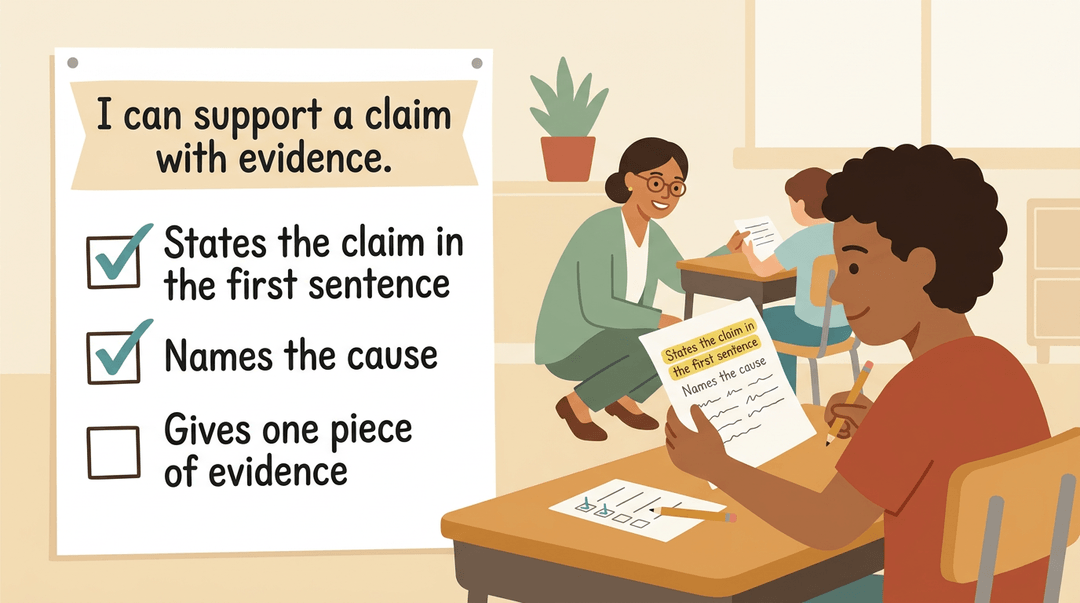
Students internalize criteria more deeply when they help build them:
- Analyze good and poor examples. Compare a strong and a weak anonymous sample, then ask what makes the difference.
- Pair discussion of features. Partners name the features they noticed before sharing with the class.
- Use varied exemplars. Several strong samples show that excellence can look different.
- Internalize what excellence looks like. Revisit the same exemplars throughout the unit, so quality lives in students' heads, not on a poster.
How many criteria and what kinds
Process criteria describe how a student works, not only what they produce, such as "checks the answer a second way." Compulsory criteria appear in every response, while toolkit criteria are optional strategies students choose from.
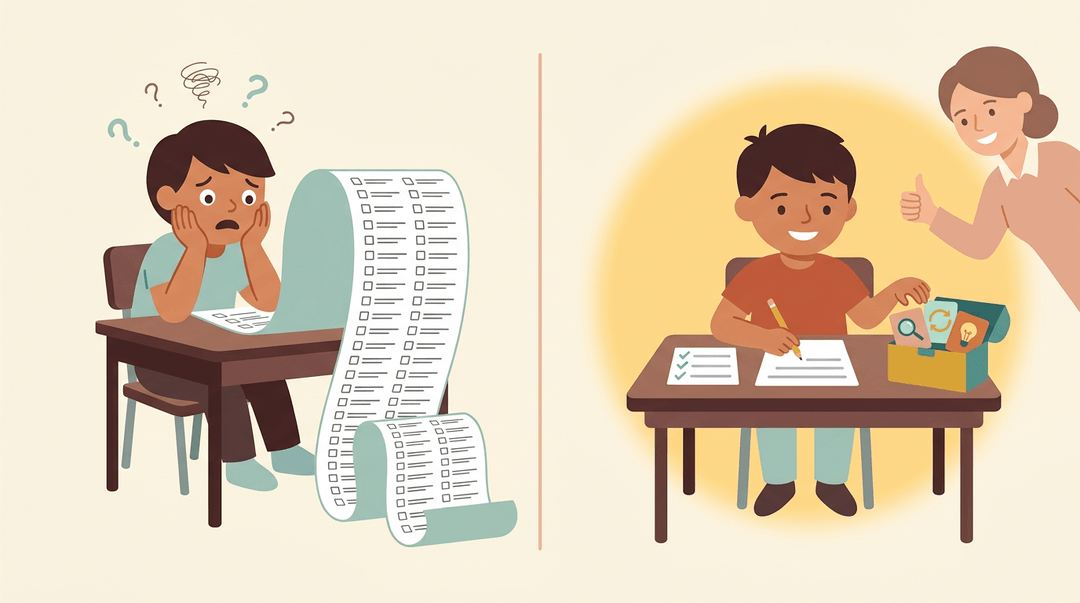
The number depends on skill. Beginners need fewer criteria, since long lists overwhelm them. Less is more for your newest learners.
Favor generic, transferable features like "states a clear claim," which carry across subjects so students build habits, not one lesson's answers.
Classroom Checklist for Targets and Criteria
Use this card when you plan a lesson, then again right before you teach it. It takes you from standard to shareable target in five moves, shows what targets look like at each grade band, and ends with a four-point quality test.
Plan a target in five steps
- Start from the standard
- Underline the verb and the content it names.
- Standard (paraphrased): write an opinion piece supported by reasons.
- Write the "I can" target
- Turn that verb into student language.
- I can support my opinion with reasons.
- List 3 to 4 success criteria
- Name the visible evidence that the target is met.
- I state my opinion. I give two reasons. I end by restating my opinion.
- Plan the activity last
- Ask, "What task would let students show me these?"
- Choose the task after the criteria, never before.
- Share and revisit in lesson
- Read the target aloud at the start.
- Pause midway: "Which criterion have you met so far?"
- Return to it at the exit check.
Targets by grade band
Criteria get more demanding as students grow, but the shape stays the same: one target, a few observable signs.
| Grade band | Sample "I can" target | Criteria look like |
|---|---|---|
| K-2 | I can tell about my favorite animal. | Draw it, label it, tell one fact (with picture cues) |
| 3-5 | I can write a focused paragraph. | Topic sentence, three details, closing sentence |
| 6-8 | I can argue a claim with evidence. | Clear claim, two text quotes, explanation of each |
| 9-12 | I can analyze an author's choice. | Name the choice, explain its effect, justify with reasoning |
For K-2, pair each criterion with a small picture or icon, and read it aloud together.
The fast test for strong targets
Run your draft through these four checks before you share it.
- Measures learning, not activity. The target names what students will know or do, not what they'll make.
- Uses concrete, measurable verbs. Explain, compare, and solve work; understand and appreciate don't.
- Students can restate it. Ask a student to say it in their own words.
- Criteria show observable evidence. You could point to it in student work or hear it in student talk.
Here's the first check in action:
- ❌ I can make a poster about the water cycle.
- ✅ I can explain the stages of the water cycle.
The difference: the first names a product, while the second names the thinking that the product (or a talk, or a diagram) would show.
⚠️ Watch out: If you pick the activity first, the criteria tend to turn into "finish the poster." Write criteria first, then fit the task to them.
Link standards, daily targets, and success criteria in EMStudio's Curriculum Planner.
Using Targets and Criteria During Lessons
Targets and criteria only matter when students can see them in action. Here's how to use them before, during, and after each lesson.
Plan the target before the activity
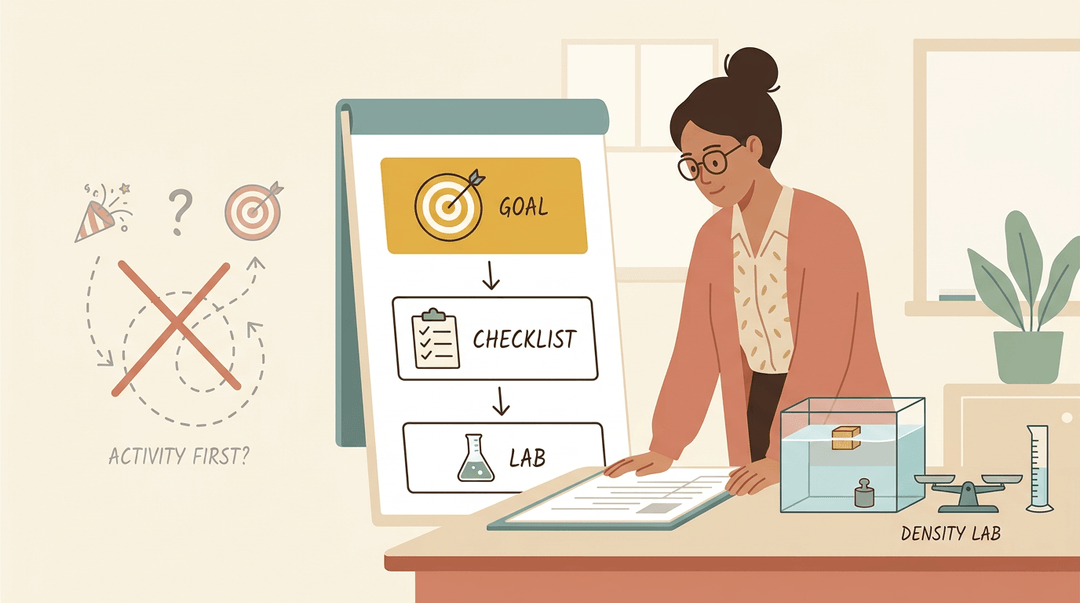
Define the learning target first: what students should know or be able to do. Then define success criteria: what proof of learning looks like. Only then plan the activity.
Too many lessons start with a fun task and hunt for a purpose afterward. Flip that order.
Consider a seventh-grade science teacher planning a density lab. Her target is that students explain why objects float or sink. Her criteria: they predict using mass and volume, then justify it with data. Now the lab has a clear job.
Build both into your daily lesson template, and share them in plain language before work begins.
Unpacking the target with your class
Reading the target aloud isn't enough. Students need to understand what it asks, not just that it exists. Restate the verbs in your own words: "analyze" might become "compare and explain why." Define key vocabulary, such as density or evidence.
Explain up front how you'll assess learning, so the exit ticket doesn't surprise anyone. Timing depends on lesson structure: a mini-lesson might take two minutes, while a multi-day project needs a full period.
Returning to the target during class
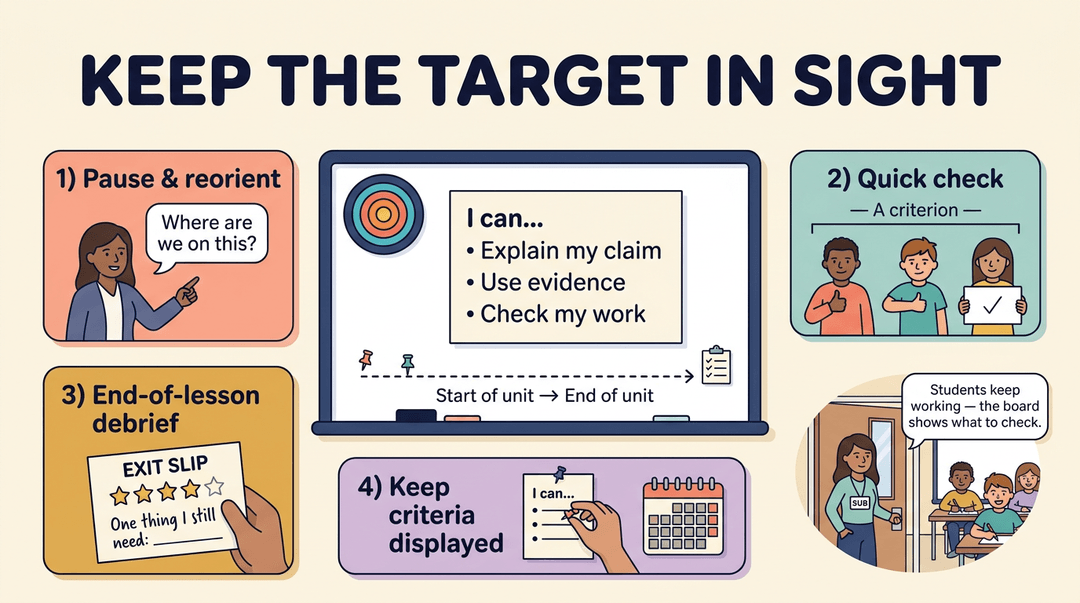
Four habits keep the target visible:
- Pause and reorient. Stop midway, point to the target, and ask, "Where are we on this?"
- Checks for understanding. A thumbs-up or whiteboard response tied to one criterion shows who's on track.
- End-of-lesson debrief. Students rate themselves against the criteria and name one thing they still need.
- Keep criteria displayed. Post them all unit, not just on day one.
Picture a substitute stepping into an unfamiliar room mid-unit. The criteria on the board show what to check, so students keep working without a long explanation.
Tracking progress and giving feedback
A simple target tracker lets students mark each criterion as not yet, getting there, or got it, while quick checks show which criteria are sticking. Use the criteria as a feedback framework.
Feedback tied to a criterion tells students where they stand, not just how hard they tried. Instead of "good job," name the criterion they met and the one to work on next.
Pre-assess in the do-now. Two warm-up questions show what students already know before you teach a word, so you know where to start. Curriculum based measurement is a short check that can track progress over time.
Why Clear Targets and Criteria Matter
Learning targets and success criteria tell students where they're headed and how they'll know they've arrived.
Research showing a 0.88 effect size
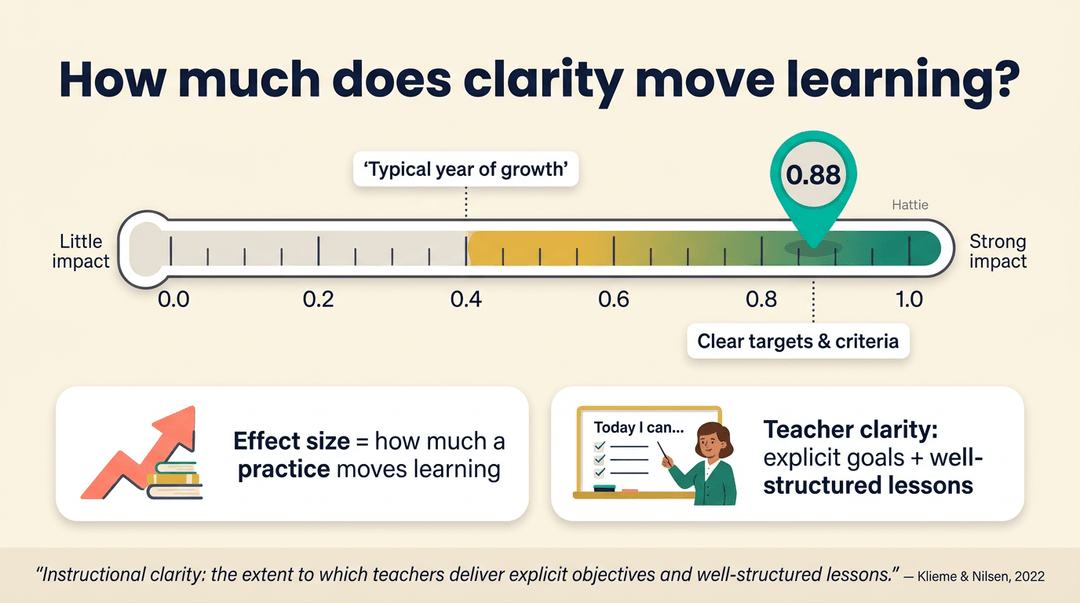
Hattie's research puts an effect size of 0.88 on clear targets and criteria. An effect size shows how much a practice moves learning, and 0.88 is strong.
Teacher clarity research examines how clearly teachers communicate learning intentions and expectations to students.
Klieme and Nilsen (2022) describe instructional clarity as “the extent to which teachers deliver explicit objectives and well-structured lessons.”
What students gain from clear targets
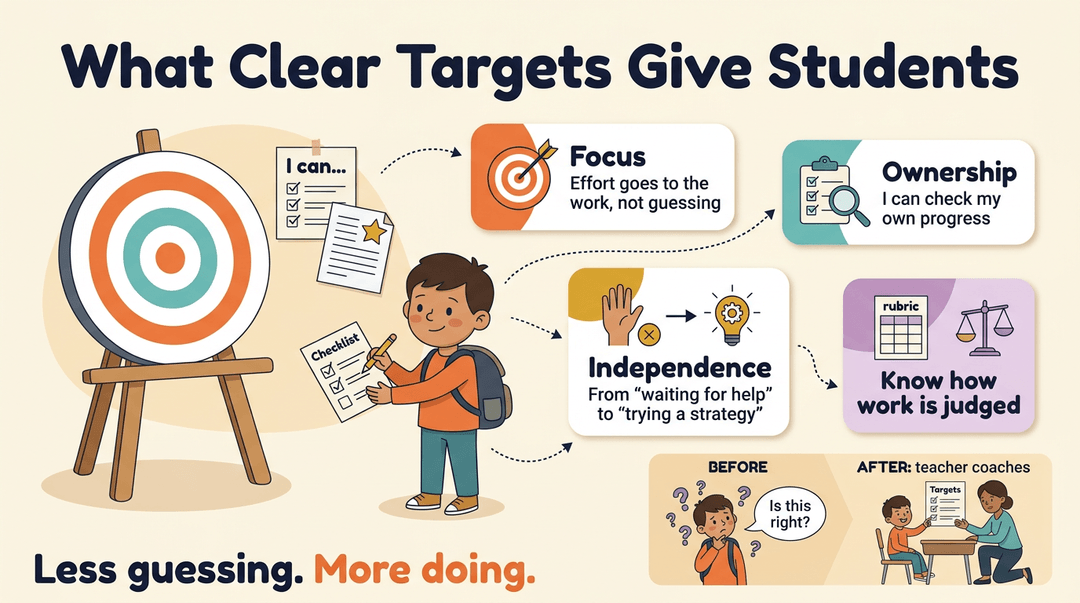
When students can see the target, they gain four things:
- Focus and motivation. A visible goal gives students something to aim for, so effort goes to the work, not to guessing.
- Ownership of learning. Students who know the target can check their own progress instead of waiting to be told they're done.
- Independence and agency. Students who know what success looks like can pick their own next step, moving from waiting for help to trying a strategy.
- Know how work is judged. The paper Learning strategies: a synthesis and conceptual model says teachers “need to be clear about the criteria used to determine whether the learning intentions have been successfully achieved.”
Think of a fifth-grade teacher who posts success criteria beside a sample of strong work.
Students start knowing what a finished answer looks like, and the teacher coaches instead of answering “Is this right?” for the tenth time. Less guessing. More doing.
Real Examples and Common Teacher Questions
Nothing clarifies a learning target like seeing one in action. Here are three lessons, then answers to common concerns.
Lessons you can adapt for class
- Newspaper article writing lesson: "I can write an opening paragraph that answers who, what, where, and when."
- Polar bear habitat target: "I can explain how a polar bear's habitat meets its needs."
- Southwestern Region "I can": "I can describe how the Southwestern Region's land and weather shape daily life."
For diverse learners, keep the target and change the support. Give English learners sentence frames, and give students with individualized education programs (IEPs) a shorter list of criteria.
Answers to teachers' common concerns
Writing targets takes time, and that worry is fair. Keep it lean: one target and three or four criteria per lesson, then reuse what works.
Recording is easy: have students copy the target into their notebooks and check off each criterion as they meet it.
When you co-construct criteria, students help write them. Giving them yourself is quicker. Either way, who writes them matters less than whether students use them.
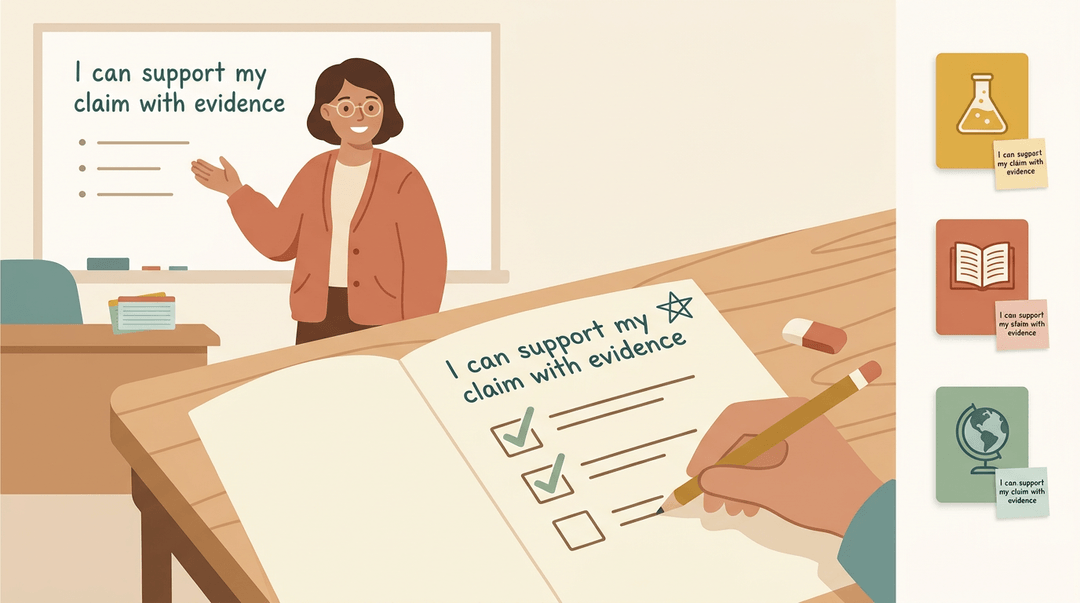
Many targets travel well: "I can support my claim with evidence" works in several subjects. Familiar language means less explaining.
Workshops and AI-generated examples
At a workshop on targets and criteria, bring a unit you already teach. You'll leave with targets ready to use.
Pair colleagues' examples with output from artificial intelligence (AI) tools, since teammates know your students. Treat AI drafts as a starting point, not a final answer.
Consider a second-grade teacher who asks an AI tool for five reading targets, keeps the two that fit, and saves planning time.
When students know where they're headed and how to tell they've arrived, the whole room gets easier to lead. Targets and criteria give learners a clear path, and they give you a sharper view of who's ready to move on and who needs another pass.
Used every day, that small, specific language makes learning visible.
Ready to map your next unit? Check out our Curriculum & Standards page to plan lessons and standards across the whole school year.

References
- Frontiers | Time and quality in and out of class: the roles of instruction and homework in mathematics achievement and interest — frontiersin.org (2026)
- Learning strategies: a synthesis and conceptual model — pmc.ncbi.nlm.nih.gov (2016)
Frequently asked questions
What is a learning goal?
A learning goal, or learning target, states what students should learn rather than what activity they will complete. It should be written in student-friendly language and describe knowledge or a skill students can demonstrate.
What are success criteria?
Success criteria are observable signs that show whether a learning target has been met. They describe the evidence students should include or the steps they should demonstrate, using clear wording that people can agree has been met.
What are the criteria for good objectives?
Good learning objectives use student-friendly language, concrete and measurable verbs, and specific content. They describe the learning rather than an activity, match the level of thinking required, and have success criteria that make evidence of learning observable.
What are the top 3 learning objectives?
There is no single set of top three objectives for every class; they depend on the subject and learning goals. Examples are: “I can use a number line to add two-digit numbers,” “I can identify the evidence behind an author’s claim,” and “I can explain how heat moves between objects.”