Forward Chaining and Backward Chaining Examples

Jump to section
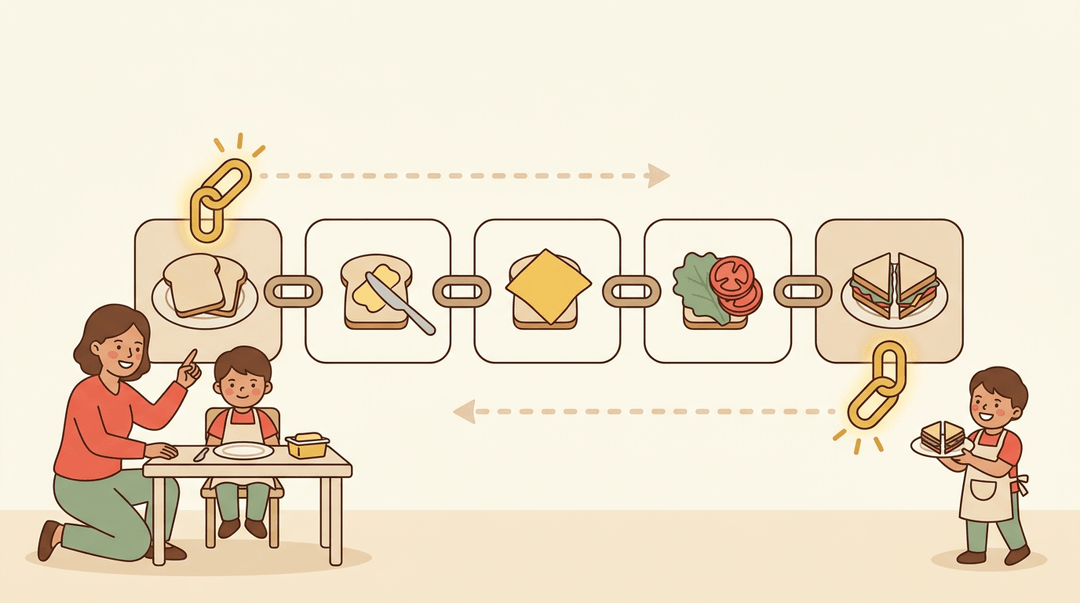
Think about teaching a student to make a sandwich. You could hand over the whole job at once, or break it into small steps and build from there. That's the core of chaining: teaching a multi-step skill one link at a time.
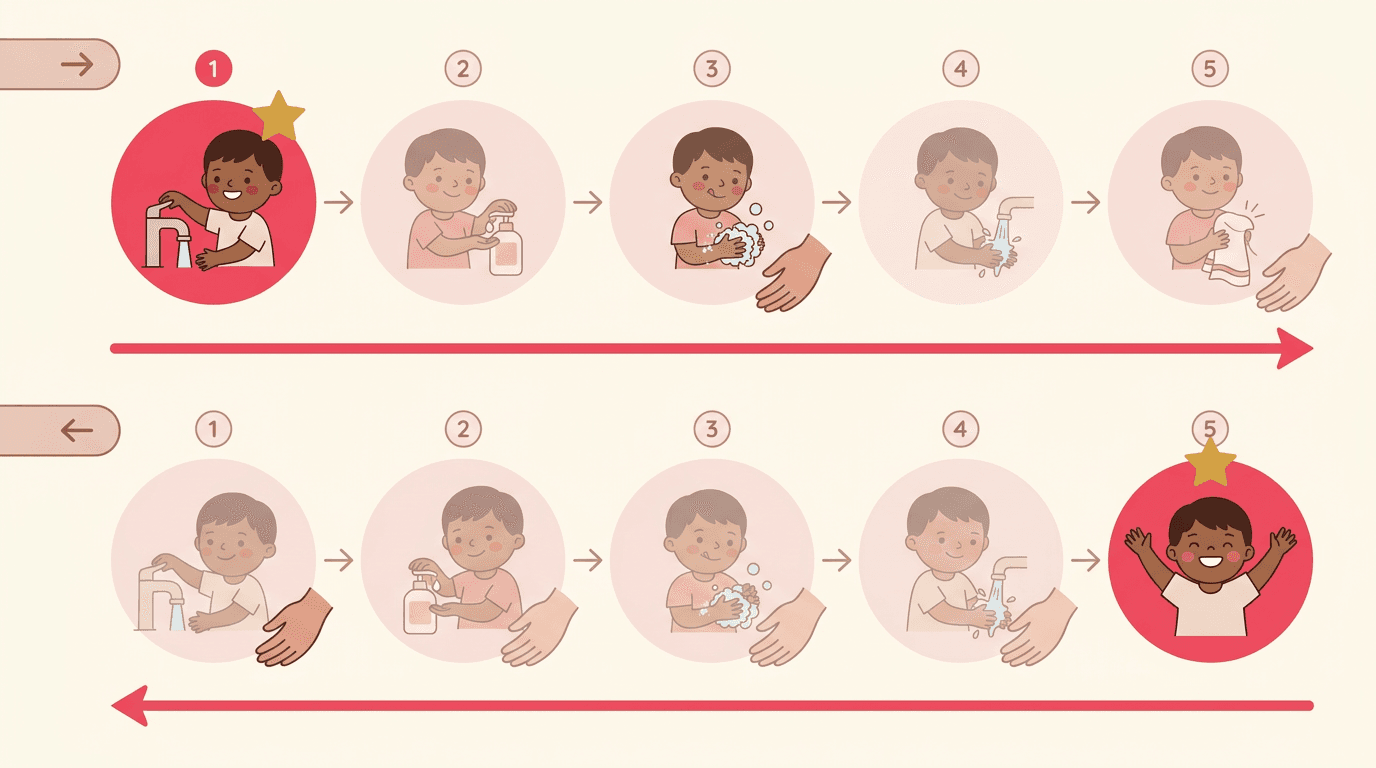
Forward chaining starts with the first step and works toward the last, while backward chaining begins with the final step and works back.
In this post, we'll walk through side-by-side examples, help you pick the right method, and show you how to turn both into a classroom routine you can sequence across the year.
Behavior Chaining and Task Analysis Basics
Many skills look like one action but are really a chain of smaller ones. Here, behavior chaining means linking those actions in order, not the artificial intelligence (AI) idea of chaining.
How behavior chaining breaks tasks into steps
Behavior chaining breaks a complex task into smaller steps and links them in sequence. Each step cues the next, so finishing one action signals the start of the following one. The chain ends with the terminal behavior, the end goal. Chains like this are a form of learned behavior, seen in animals and people alike.
You're teaching a sequence, not a pile of separate skills.
Map each step before chaining begins
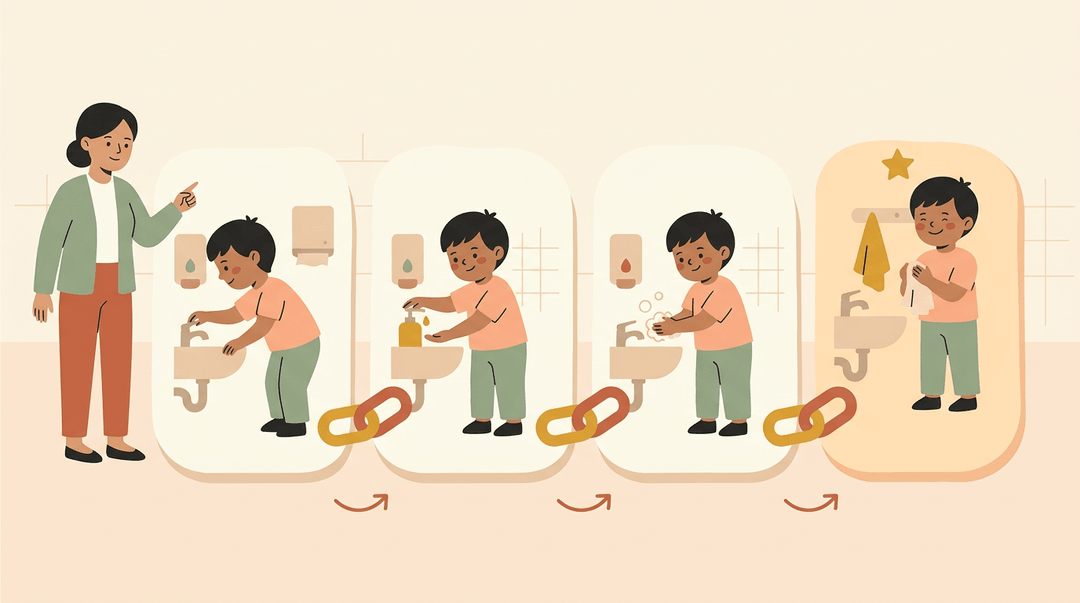
Before you teach any chain, write out every step in order. This is task analysis, and it's your teaching map. A good map shows exactly where the learner struggles, so you know which link needs the most support.
Consider a special education teacher whose student can get his jacket on but stalls at his shoes. Mapping the steps reveals the laces are the sticking point, so she can target that link instead of re-teaching everything.
Mapping is needed before chaining begins. Skip it, and you're guessing.
Putting on shoes as an everyday chain
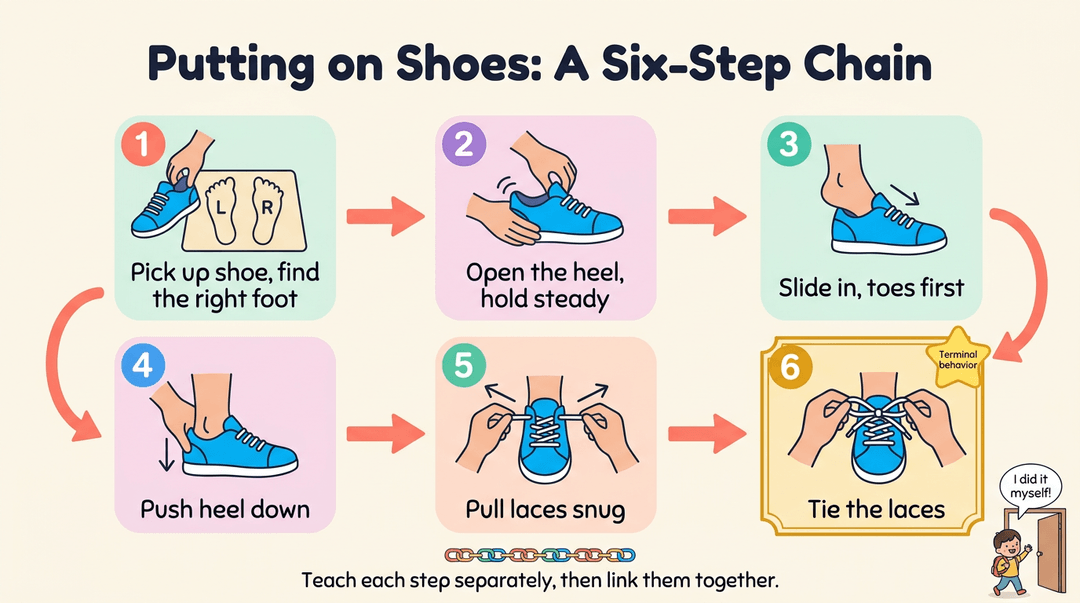
Putting on shoes is a chain most of us do without thinking. Here's a six-step sequence:
- Pick up the shoe and find the right foot.
- Open the heel and hold it steady.
- Slide your foot in, toes first.
- Push your heel down into the back.
- Pull the laces snug.
- Tie the laces. That's the terminal behavior.
Teach each step separately first. Once every piece holds, link them so each step leads straight into the next. The payoff is a student who gets out the door without waiting for help.
Forward Chaining and Backward Chaining Examples
Chaining breaks a task into small links. In occupational therapy (OT), the question is where to start: first step, last step, or all at once.
What is forward chaining in OT?
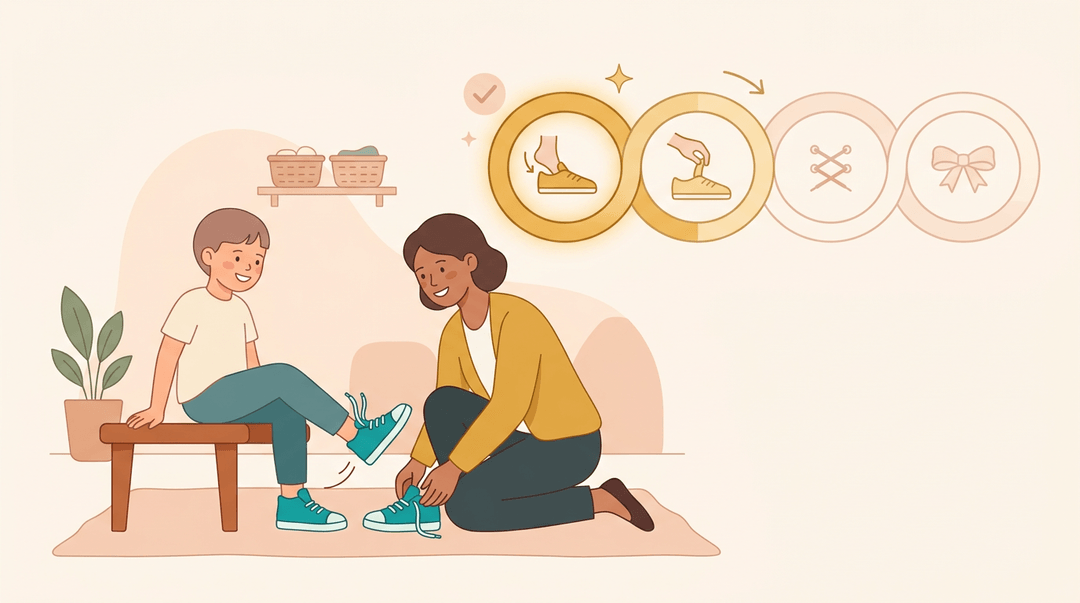
In forward chaining, the therapist teaches the first step to mastery and assists with the rest. The learner then adds the next step.
Consider a student learning to put on shoes. The therapist handles the laces while the student pushes the heel in. Once that step is automatic, the student takes on the next one.
Forward chaining works well when early steps are easier or more motivating. It also mirrors how many skills are naturally introduced. In OT, it's a natural fit for building self-care routines link by link.
Backward chaining starts with the final step
With backward chaining, the learner practices the final step first while the therapist assists with earlier steps. Every session ends with a finished task.
Picture a student learning a hair bun. The therapist gathers and twists the hair while the student places the final pin. The learner always finishes, so motivation and satisfaction are built in.
In your classroom, packing a backpack at dismissal works the same way. You fill the bag and hand over the zipper, so the student finishes on a win.
According to Behavior Chaining in ABA (applied behavior analysis), backward chaining flips the sequence, so the learner completes the task and may master it faster.

Teaching every step together at once
Instead of one link at a time, you teach every step together. You use a prompt hierarchy, moving from the most help to the least, and fade support as the learner gains independence.
Think of a learner brushing their teeth. You'll guide the whole routine at first, then fade your help until they brush on their own.
This suits shorter chains and learners who already have some component skills.
How forward and backward chaining differ
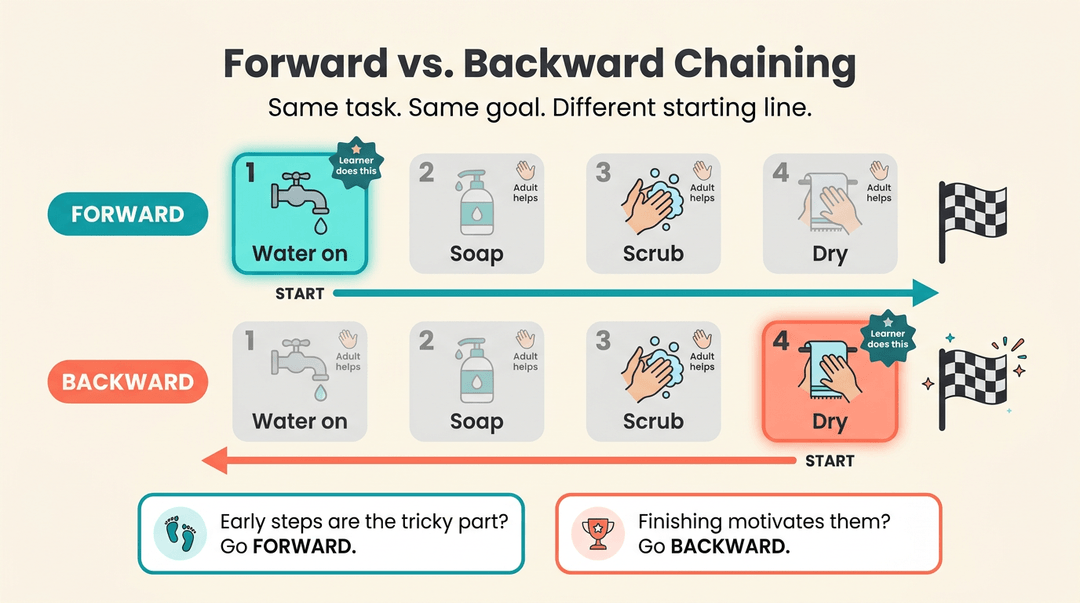
Here's the key difference: where you begin. Forward chaining starts at the beginning and builds toward the end. Backward chaining starts at the end and works toward the beginning. Same destination, different starting line.
Your choice depends on what motivates the learner and where the difficulty sits. If the early steps are the manageable part, go forward. If finishing motivates them, go backward.
Use Chaining in Your Classroom
This guide helps you turn one everyday routine into a chained skill you can teach, prompt, and track. Reach for it when students can do parts of a routine but not the whole thing.
Plan the skill
- Pick one routine.
- Choose something students repeat daily, like washing hands before snack.
- Write the task analysis.
- Break it into 5 to 8 steps a person could watch and check.
- Handwashing: turn on water, wet hands, soap, scrub, rinse, dry.
- Choose forward or backward.
- Forward: teach step 1 first, prompt the rest.
- Backward: you do every step but the last, so the student finishes and gets the payoff.
- Set mastery criteria.
- For example: all steps, no prompts, three sessions in a row.
If you're unsure which direction to pick, backward chaining is a gentle start: the student always ends on success.
Example: A PreK teacher uses backward chaining for handwashing. She completes steps 1 to 5 with the child, who dries their own hands and hears, "You finished it!" Next session, the child rinses and dries. The chain grows one step at a time, always ending in success.
Starting points by grade
| Grade level | Routine | Sample chain |
|---|---|---|
| PreK | Handwashing | Water, soap, scrub, rinse, dry |
| Elementary | Unpacking and organizing | Hang bag, turn in homework, stock desk |
| Middle | Lab setup | Goggles, gather materials, assemble, check |
| High school | Multi-step problem solving | Read, identify question, choose method, solve, check |
Swap in your own steps. What matters is that each one is observable and in a fixed order.
Session checklist
Run through this before and after each practice session:
- Steps are observable and ordered. Anyone could watch and say "done" or "not yet."
- Prompts are planned and faded. Decide your prompt ladder ahead, from full help down to a gesture, then nothing.
- Each completed step is reinforced. Praise, a point, or a checkmark right when the step is done.
- Progress is tracked every session. Note which steps were independent and which needed a prompt.
⚠️ Watch out: Fading prompts too slowly is the common trap. If a student does a step independently twice, drop to a lighter prompt.
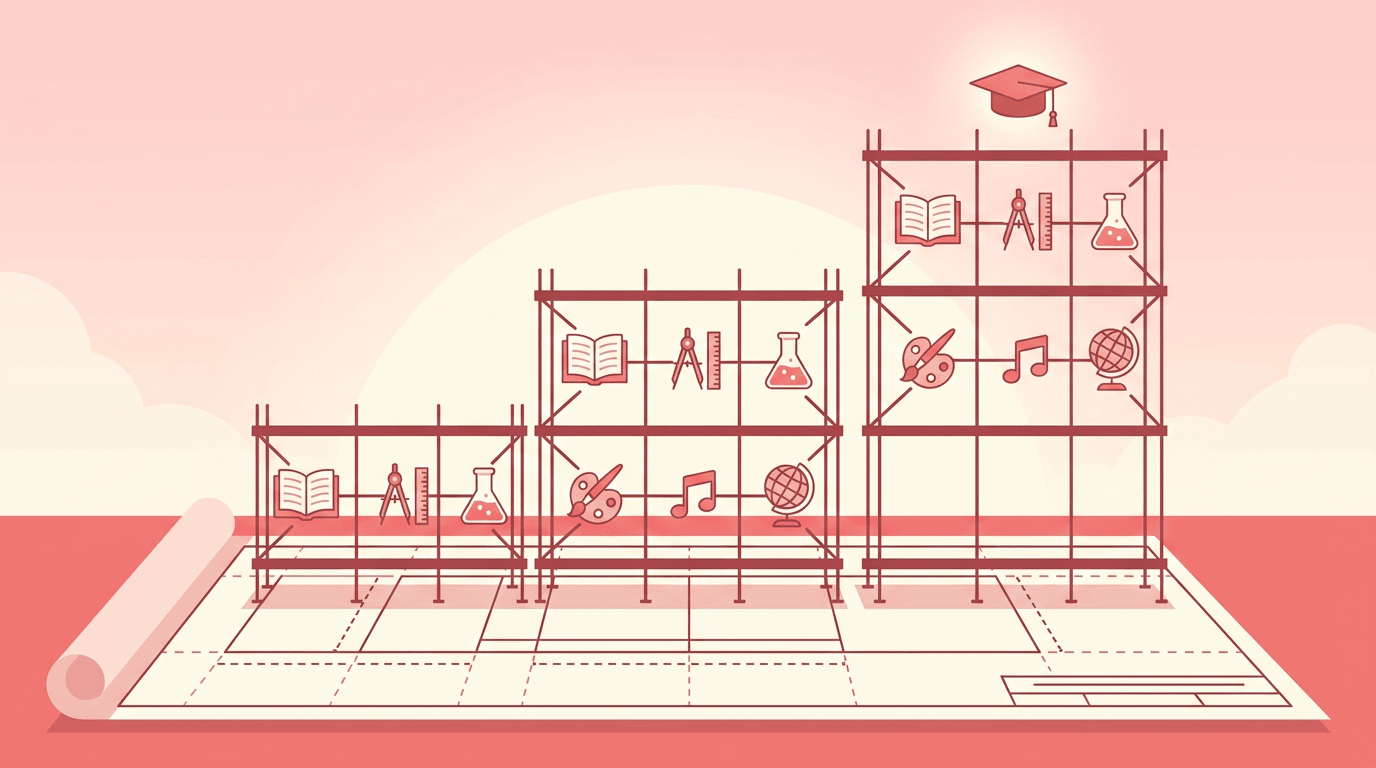
Sequence these skill steps into your year-long units with EMStudio's Curriculum Planner.
Picking the Right Chaining Method
Choosing between forward and backward chaining isn't about which method is better. It's about which one fits this learner, this skill, and this moment. Here's how we'll sort that out.
Factors that shape the decision
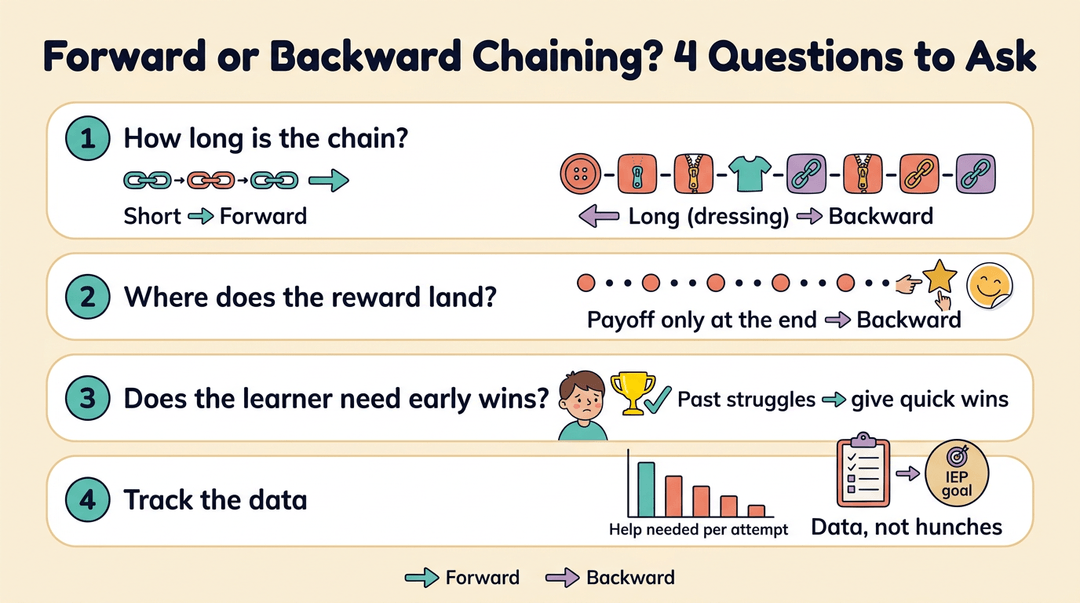
Start with task complexity and chain length. Short chains often suit forward chaining, while a longer routine like dressing with buttons and zippers often calls for backward chaining, so the learner finishes each attempt.
Then ask where the reward lands: if the payoff comes only at the end, backward chaining gets the learner there sooner.
Consider the learner's frustration and history too. A student who has struggled before may need early wins. Progress data should guide these choices, not hunches, so track how much help each attempt requires.
Then link that data to your individualized education program (IEP) goals so every decision serves a measurable target.
Mixing methods and shifting with data
Therapists rarely use only one. They blend methods within a routine, depending on how the learner is doing. The real skill is knowing when to switch.
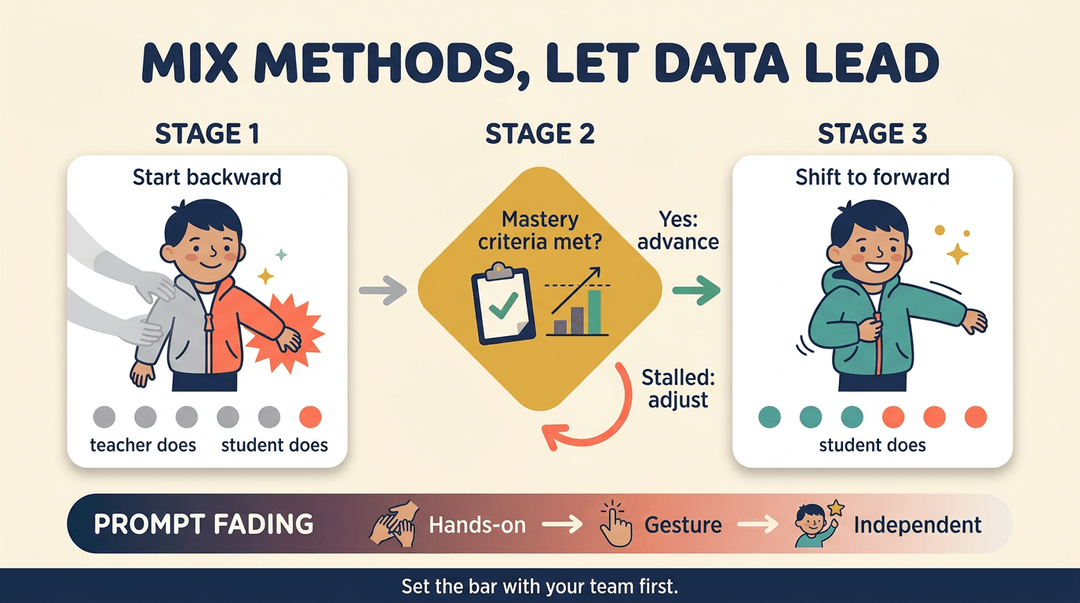
For example, a special education teacher helping a student put on a coat might start backward, doing the early steps so the student zips the final zipper and feels the finish.
Once that step is reliable, the teacher can shift to forward chaining so the student takes on the first steps too.
Switch based on what the data shows. Set mastery criteria before you start: the specific level a learner must reach on a step before you move on, agreed on by the whole team. Meet that bar and advance. Stall out and adjust.
Pair this with prompt fading, gradually reducing help from hands-on support to a gesture to independence as the learner gets stronger. Let the data lead.
How Reinforcement and Problem Behavior Connect
Reinforcement shapes whether a routine holds, and a stall shows you what to change. Along the way, you'll check generalization (the skill working in new places) and maintenance (the skill lasting over time).
Rewarding each correctly completed step
Reinforcement is anything that makes a behavior more likely to happen again. In applied behavior analysis (ABA), behavior chaining teaches a routine as a series of linked steps. Seeing examples of conditional learning shows how reinforcement strengthens the behaviors a learner repeats.
According to Behavior Chaining in ABA, reinforcing correctly completed steps can help learners build independence in daily routines.
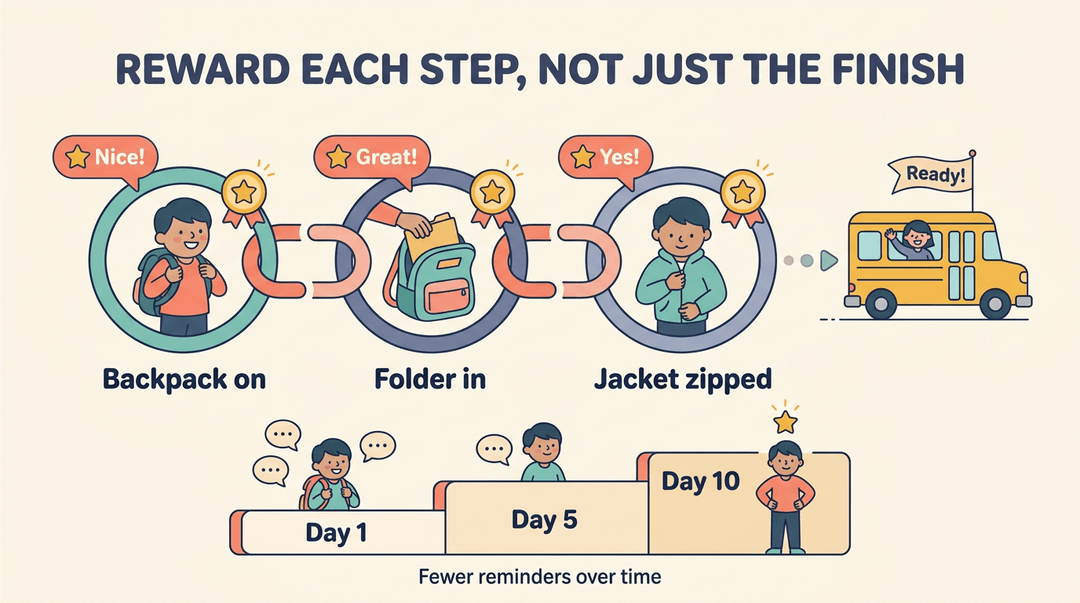
Think of a special education teacher whose student is packing for the bus. She praises each step: backpack on, folder in, jacket zipped. The payoff is a student who needs fewer reminders each day.
Reward each step, not just the finish line. Here's what that does:
- Reinforce correctly completed steps. Give praise right after each link.
- Keeps learners motivated. Frequent small wins make a long routine feel doable.
- Builds independence in daily routines. Over time, the learner needs fewer prompts.
Finding where a routine breaks down
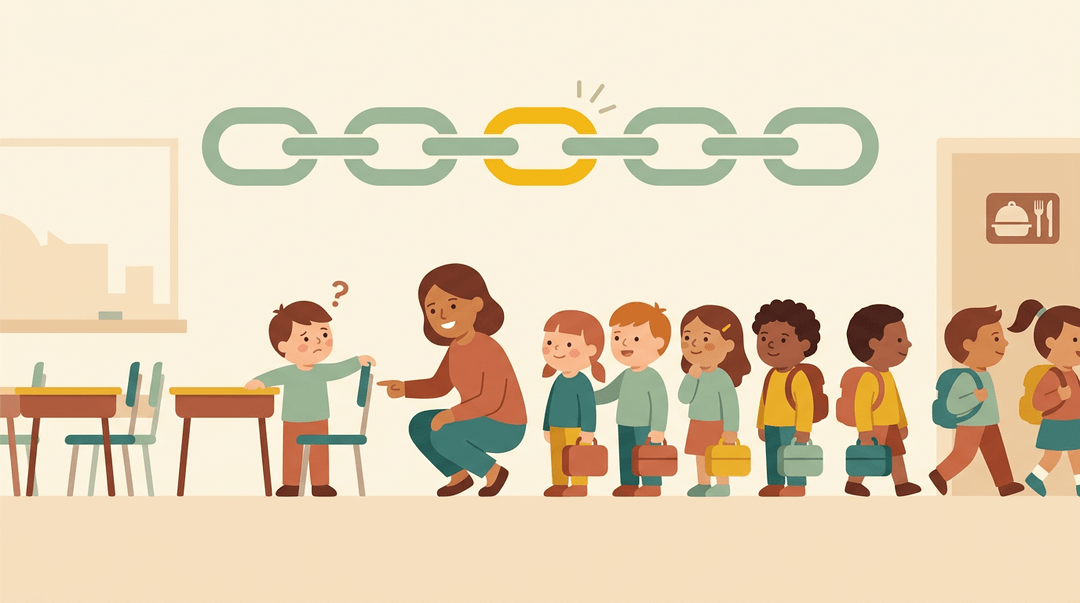
When a routine falls apart, it's tempting to fix everything. Your job is to find where it stalls. Consider a homeroom teacher whose class lines up for lunch. Most of the class moves smoothly, but one student stalls at pushing in the chair.
Once she teaches that step, the line moves on time. Start with one link.
- Map the chain. List every step in order, from start to finish.
- Identify the problematic step. Watch for the one where the learner pauses or needs help.
- Teach the step or restructure the routine. Teach it directly if the skill is missing. If the routine is the obstacle, split a step, reorder, or add a visual cue.
Forward and backward chaining are two routes to the same goal: a student who can complete the whole skill on their own. Choosing between them comes down to where your learner needs the most support.
The real payoff comes from making chaining a routine you'll actually use. Break the skill into steps, pick your method, and check progress on a regular schedule.
Ready to build it into your year? Check out Curriculum & Standards to plan units, lessons, and standards across the whole school year.
References
- Behavior Chaining in ABA — appliedbehavioranalysisedu.org
Frequently asked questions
What is backward chaining?
Backward chaining is a way to teach a multi-step skill by starting with its final step. The learner practices that last step while someone assists with the earlier steps, then gradually takes on more of the sequence.
What is forward chaining in OT?
In occupational therapy, forward chaining teaches the first step of a task first, with the therapist assisting with the remaining steps. Once the learner can do that step reliably, they learn the next one, building the sequence toward the finished task.
What is behavior chaining?
Behavior chaining is teaching a complex skill as a sequence of smaller actions, with each completed action cueing the next. The sequence leads to a final goal, called the terminal behavior.