What Does Learning Differences Mean? A Clear Guide

Jump to section
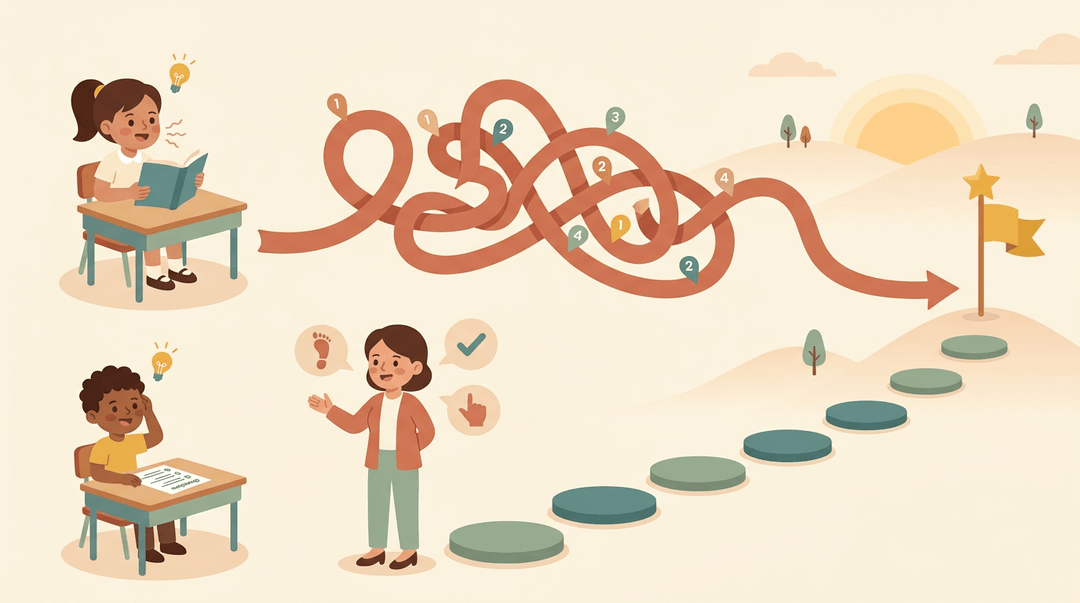
Picture two students in the same third-grade class. One reads aloud smoothly but loses track of multi-step directions. The other can follow each step once it's explained but freezes when asked to read the directions alone.
Both are capable, and both are learning in their own way.
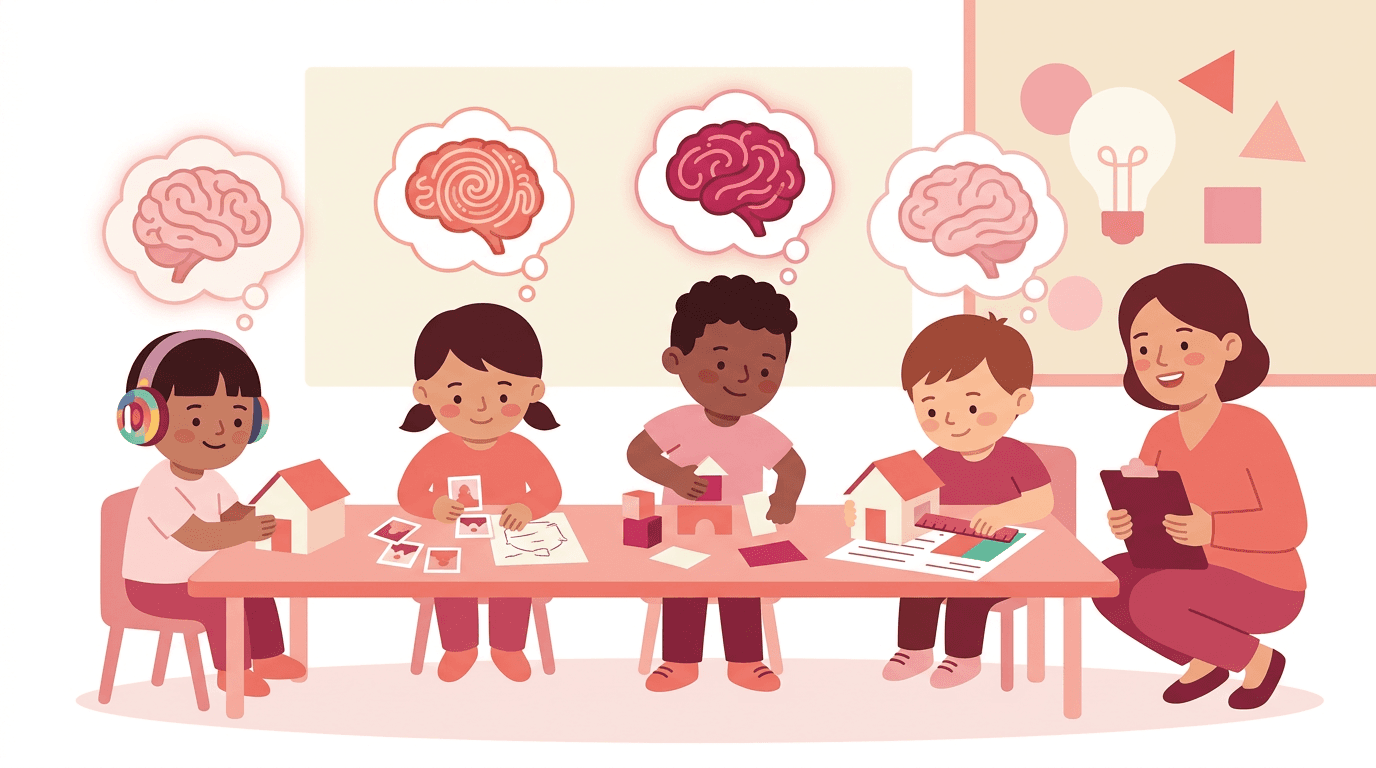
So what do we mean by learning differences? It's a broad term for the ways a student takes in, processes, or shows what they know that differ from the typical pattern. It doesn't signal low intelligence.
It signals that a student needs a different route to the same destination.
What Does Learning Differences Mean
Learning differences describe how some students take in, process, and show what they know differently from their peers.
How the brain shapes learning differences
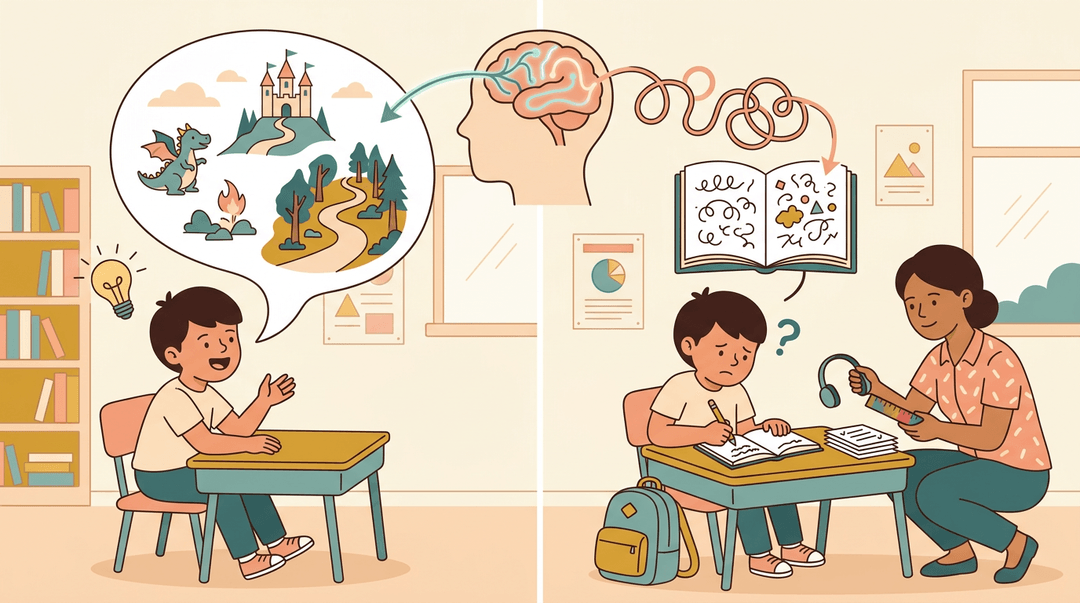
Learning differences are brain-based and aren't related to effort. So what causes a learning disability? The answer is neurological differences in how the brain processes information.
Consider a fourth-grade teacher whose bright, hardworking reader explains a story aloud but freezes on the written page.
Knowing the gap is in how the brain processes text, not in how hard the student tries, points you toward targeted reading supports. Effort isn't the missing piece.
Students with learning differences have average to above-average intelligence. Their challenges tend to show up in specific academic areas, like reading.
How common learning differences are
Some estimates suggest learning differences affect roughly 20 percent of the population, or one in five children and adults. For dyslexia alone, a PubMed article, Dyslexia in the 21st century, reports the same 20 percent, affecting boys and girls equally.
Nancy Doyle's estimate in the British Medical Bulletin places the neurodivergent share at around 15 to 20 percent.
Recognizing that specific learning difficulties are lifelong matters because students carry them well past your classroom, so the supports they build now need to last.
Other names for learning disabilities
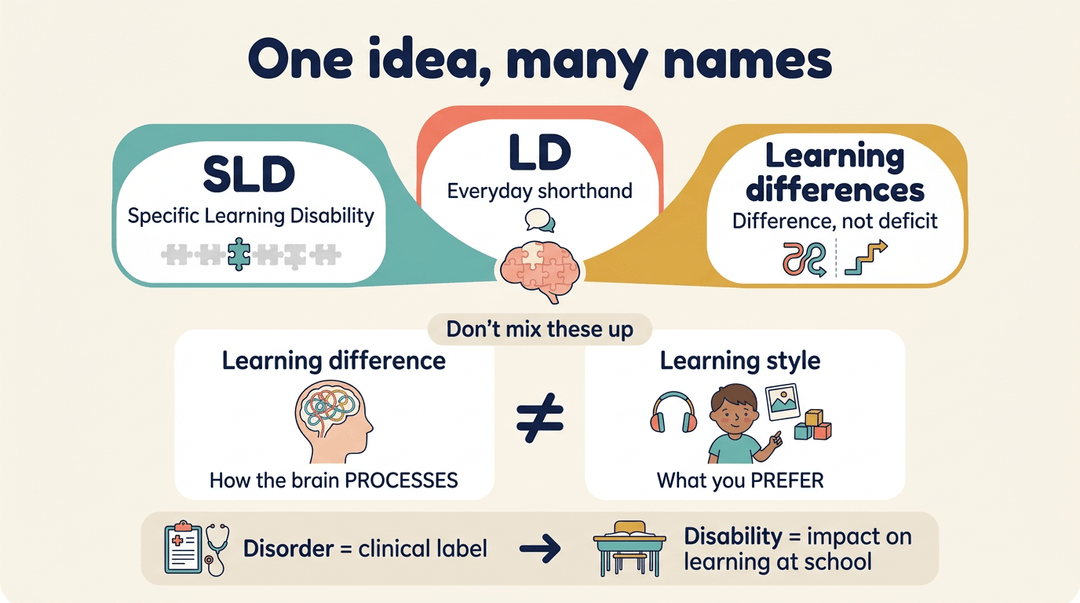
You'll see it under these labels:
- Specific Learning Disabilities (SLDs): a term for difficulties that affect particular academic skills.
- Commonly called learning disabilities (LD): the everyday shorthand.
- Also called learning differences: a phrase that stresses difference over deficit.
A disorder is a clinical label, while a disability describes how that condition affects learning at school. Learning differences also aren't learning styles, which describe preferences. A learning difference is a processing difference.
Common Types of Learning Differences
Learning differences show up in different ways. Here are the common types and what they tend to look like in your classroom:
Reading trouble from dyslexia
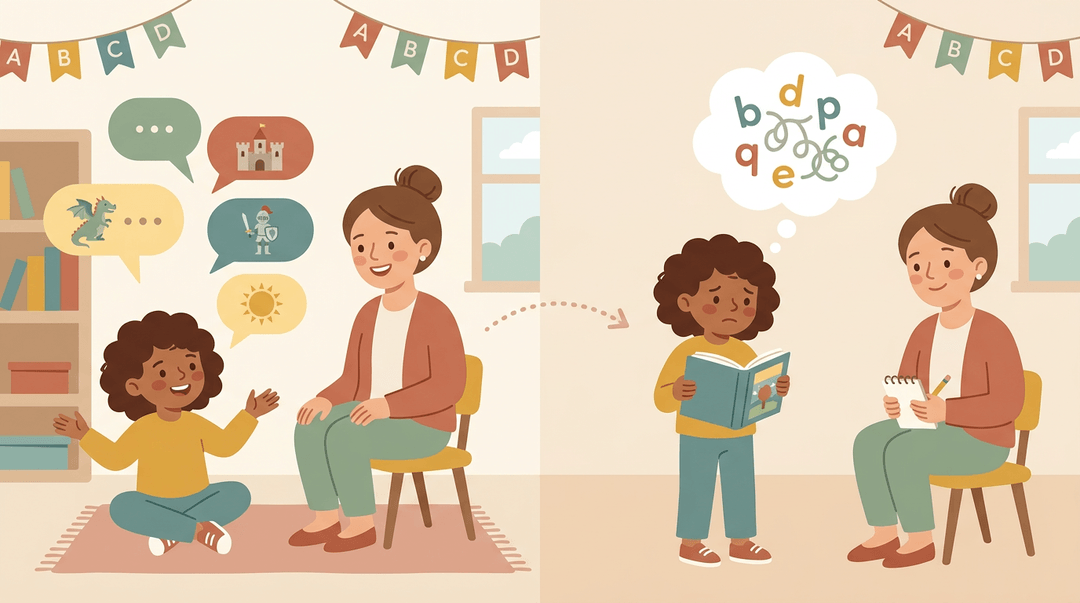
Dyslexia affects how students read and spell words. Many struggle with phonological awareness, the ability to hear and manipulate sounds in spoken words, so linking letters to sounds and blending them into words feels like a puzzle.
What sets dyslexia apart from a skill gap is that it persists despite adequate instruction. The struggle is with decoding the page, not with thinking.
Classroom signs to watch for:
- Guessing at words from the first letter or a picture
- Slow, effortful reading
- Inconsistent spelling
- Reading that lags behind strong verbal skills
Picture a third-grade teacher whose student retells a story perfectly but freezes when asked to read aloud. Noticing that gap early means support can start sooner.
Writing challenges known as dysgraphia
Dysgraphia makes getting writing onto the page hard. Students may show grammar and spelling errors that keep appearing, unclear or unstructured writing, or difficulty forming letters. Handwriting can look uneven or cramped and wear a student out quickly.
Sometimes the ideas are there, but the mechanics take so much energy that the organization suffers.
Math difficulties known as dyscalculia
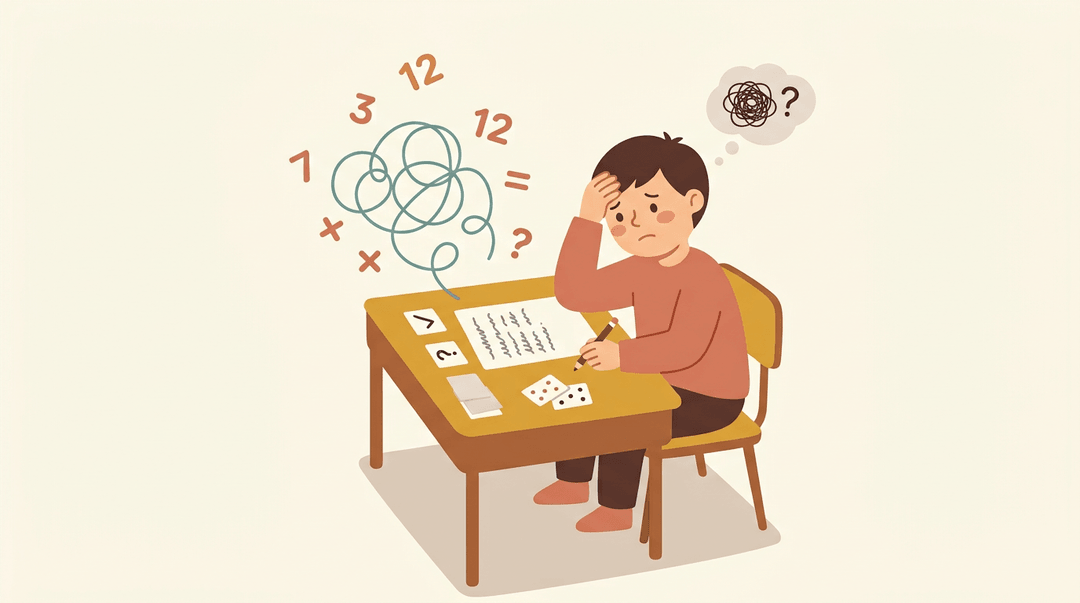
Dyscalculia affects how students understand numbers and math concepts. Basic calculation can be a constant struggle, from number sense to memorizing facts, even with practice.
Word problems and multi-step tasks are often harder still, since the student must read the problem, pick an operation, and track each step.
Other differences like ADHD and language disorders
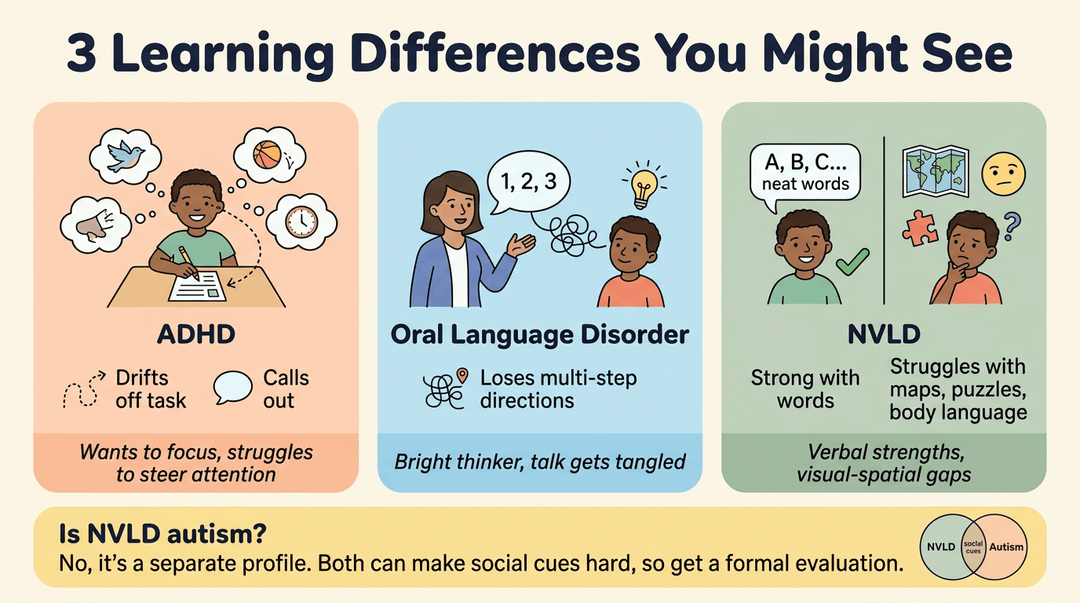
Attention-deficit/hyperactivity disorder (ADHD) shows up as trouble with attention, focus, and impulse control, like difficulty staying on task or frequent calling out.
These students often struggle to regulate their attention even when they want to do well.
Oral language disorders affect how students understand and use spoken language, like following multi-step directions. Because so much learning happens through talk, these students can fall behind even when their thinking is sharp.
Nonverbal learning disability (NVLD) pairs strong verbal skills with difficulty on visual-spatial tasks and interpreting nonverbal cues. Is NVLD a form of autism?
No. It's a separate profile, though both can involve trouble reading social cues, which is why a formal evaluation matters.
Plan Standards-aligned Lessons for Learning Differences
Use this guide when you're turning a standard into a unit that works for every learner, including students with an IEP (Individualized Education Program) or a 504 plan. Start with the target, then build in the routes.
Unpack the standard
Do these three moves before you plan a single activity.
- Name the core learning target.
- Boil the standard to one verb and one thing.
- "Students can compare two fractions with unlike denominators."
- Separate the skill from the access.
- The skill is what you're assessing. Access is how students get in and show it.
- In a fraction word problem, reading isn't the skill, so reading it aloud is fair game.
- Keep the grade-level expectation.
- Change the route, never the destination.
Here's what that line looks like in practice:
✅ Same grade-level fraction problems, read aloud, with fraction strips on the desk. ❌ Swapping in easier problems from two grades down.
The difference: the first changes access to the skill. The second quietly changes the skill.
Plan multiple ways in
Once the target is fixed, decide how students will take in the content and show what they know.
| Lever | Offer | What it looks like |
|---|---|---|
| Vary input | Text, audio, visual | Printed passage, recording, labeled diagram |
| Offer varied response formats | Write, say, or show | Short paragraph, voice recording, annotated drawing |
| Chunk multi-step tasks | One step at a time | Three steps on three cards, handed out in turn |
Every student can use these options, not only the ones with plans. That keeps the support from singling anyone out.
Example: A fifth-grade teacher's target is "compare fractions with unlike denominators." Students get the problem as text or a read-aloud, and can answer in writing or by explaining aloud to the teacher. The multi-step task comes as three cards: find a common denominator, convert, compare. Everyone meets the same grade-level target.
Before you teach, confirm
- Target is clear and measurable. You can say what a student must do in one sentence.
- Accommodations are listed per unit. They're written beside the plan, not held in your head.
- Progress is checked with a proficiency scale. A short scale shows where each student is, from just starting to secure.
- IEP/504 supports are reviewed. Each student's listed supports are matched to this unit's tasks.
Map standards and build flexible units in one place with EMStudio's Curriculum Planner.
Spot Early Signs and Act Quickly
Catching a learning difference early gives you and the student more options. Here's what to watch for and where we'd turn for help.
Notice subtle early warning signs
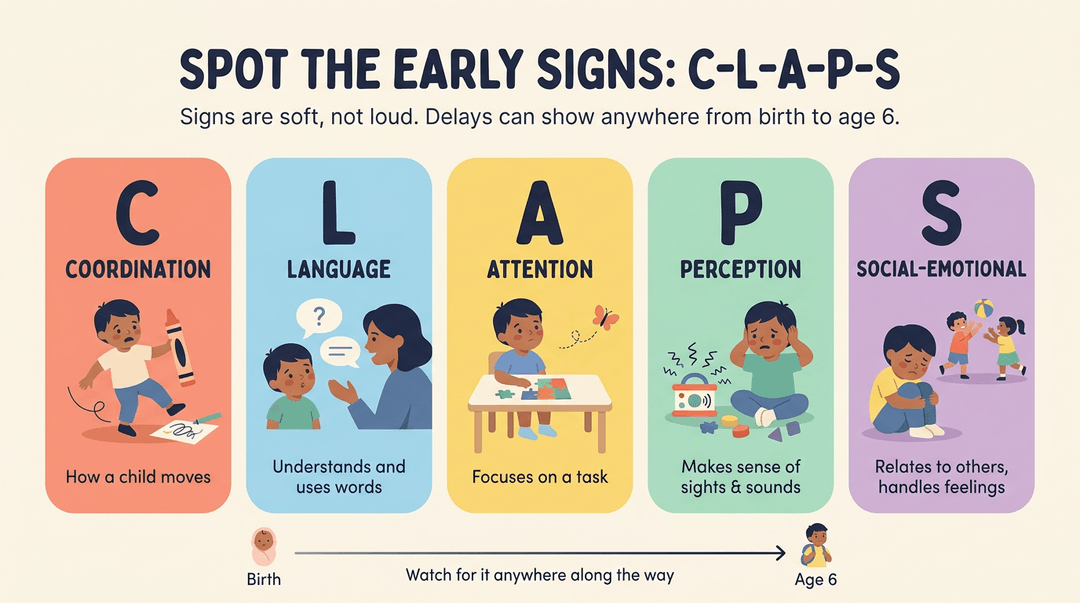
Early signs are soft, not overt. A child might avoid drawing or always seem a step behind, and delays can appear anywhere from birth to age 6.
A handy memory aid, C-L-A-P-S, covers five areas:
- Coordination: how a child moves
- Language: how a child understands and uses words
- Attention: how a child focuses on a task
- Perception: how a child makes sense of sights and sounds
- Social-emotional: how a child relates to others and handles feelings
Don't wait and see
Many families and schools choose to wait and see, hoping a child will catch up. Educators have long made the case for early intervention: the goal is prevention rather than rescue.
A study on preventing reading problems among low-income students found that early kindergarten gains carried into better reading skills by the end of first grade for high-risk students, so preventive work is possible by kindergarten.
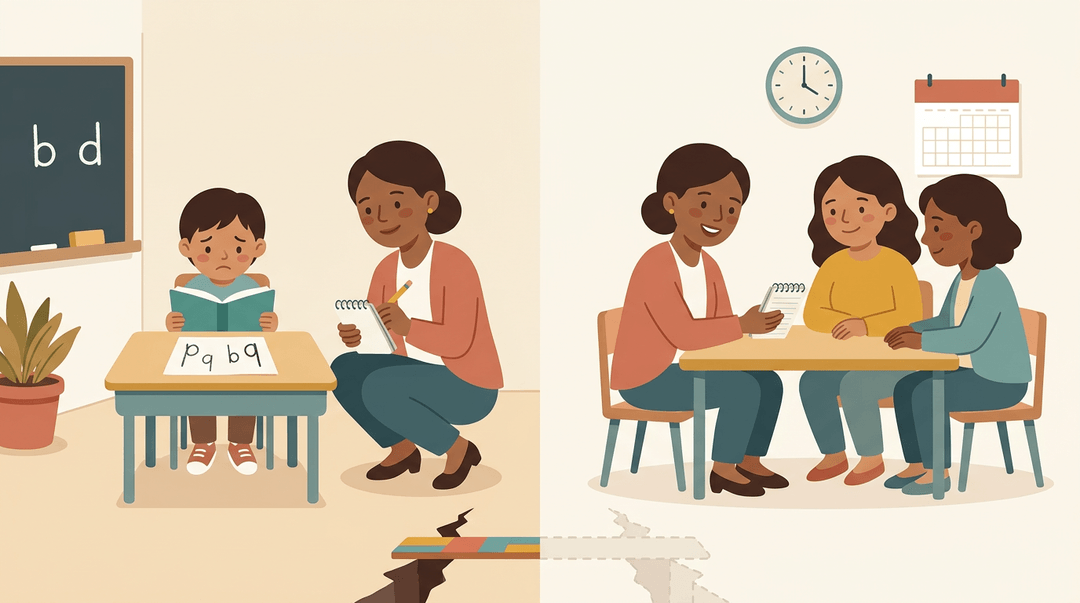
Think of a second-grade teacher who notices a student dreading read-alouds and mixing up "b" and "d." She shares specific notes with the family and support team, so help starts while the gap is still small. Timing matters.
Where to find help and support
A few places to look:
- Pediatrician or speech pathologist: a first stop for concerns; speech pathologists focus on communication.
- Occupational therapist: a specialist to consult when movement or daily tasks raise questions.
- Developmental charts and checklists: compare what you're seeing against typical milestones.
- Specialized early childhood schools: programs built for young children who need extra support.
- Understood.org and podcasts: good places to keep learning.
Know Your Legal Rights and Protections
Knowing your rights is how you make sure a learner gets what they're owed.
Parents and students who understand the rules can practice self-advocacy by asking clearly for the supports a student needs, and that same knowledge helps ensure civil rights are met. Here's the framework.
The main federal laws to know
The three laws to know:
- IDEA (Individuals with Disabilities Education Act): Guarantees a free appropriate public education (FAPE) in the least restrictive environment (LRE), meaning students learn alongside their peers as much as possible.
- ADA (Americans with Disabilities Act): Protects against discrimination in employment and services.
- Section 504: Protects students with disabilities in programs that receive federal funding, including schools.
Two plans come up often, and they're easy to mix up. An individualized education program (IEP) comes from IDEA and lays out specialized instruction and services.
A 504 plan comes from Section 504 and spells out the accommodations a student needs to access learning. Check which one a student has before you plan, so you know what support is in writing.
Next, know the difference between accommodations and modifications. Accommodations change how a student accesses the work, while the learning goal stays the same. Modifications change what the student is expected to learn.
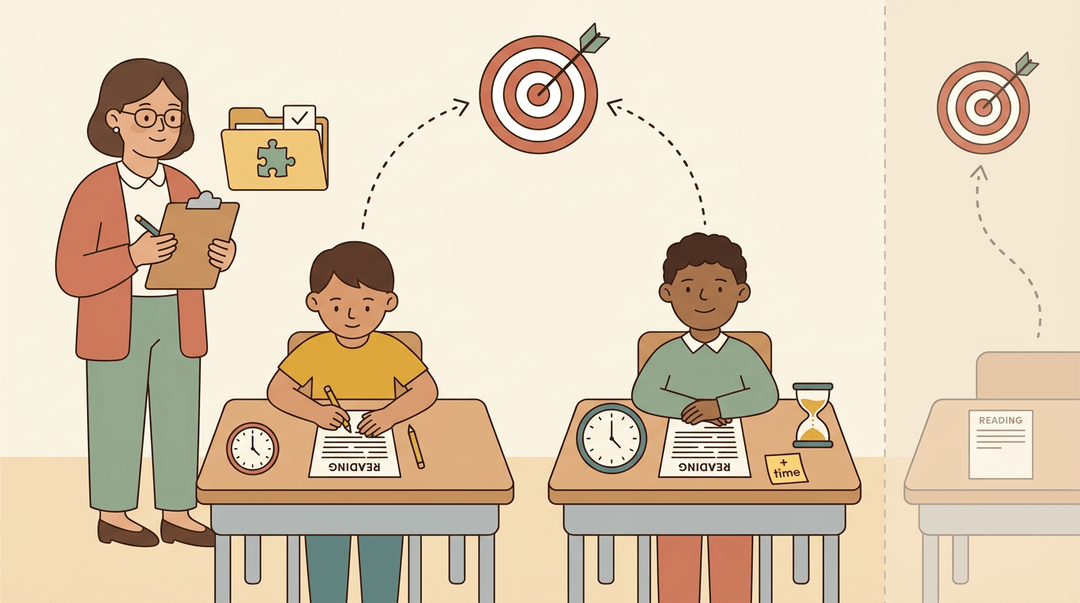
Consider a fourth-grade teacher whose student reads slowly. Giving that student extra time on a reading test is an accommodation: the same skills are measured, but reading speed no longer hides what the student knows.
A simpler test that measures fewer skills is a modification, and that's a bigger change.
Learning differences aren't a problem to fix in one student. They're a reason to design lessons with more than one path in mind. When you know what to look for and plan with every learner in view, your whole classroom benefits.
Ready to build standards-aligned units that reach every learner? Check out our Curriculum & Standards page to map lessons, units, and standards across the whole school year.
References
- Dyslexia in the 21st century — pubmed.ncbi.nlm.nih.gov (2020)
- Implementing Research-Based Instruction to Prevent Reading Problems Among Low-Income Students: Is Earlier Better? — onlinelibrary.wiley.com
- Most Common Neurodivergent Conditions: Prevalence, Demographics, and Co-Occurrence Statistics — nfil.net (2026)
Frequently asked questions
What is the difference between a disability and a disorder?
A disorder is a clinical label for a condition, while a disability describes how that condition affects a person’s learning or functioning at school. The terms overlap, but they refer to different things.
What is dyscalculia?
Dyscalculia is a learning difference that affects understanding numbers and math concepts. It can make number sense, basic calculations, math facts, and multi-step or word problems difficult, even with practice.
Why is it important to recognize that specific learning difficulties are a lifelong condition?
Specific learning difficulties are lifelong, so students may need support beyond their school years. Recognizing this early helps them build useful strategies and supports that can continue as their needs change.
What are examples of learning differences?
Examples include dyslexia, which affects reading and spelling; dysgraphia, which affects writing; and dyscalculia, which affects math. ADHD, oral language disorders, and nonverbal learning disability (NVLD) are also learning differences or related profiles.
What causes a learning disability?
Learning disabilities are associated with neurological differences in how the brain processes information. They are not caused by a lack of effort, and they do not mean a person has low intelligence.
Is NVLD a form of autism?
No. NVLD is a separate profile involving difficulty with visual-spatial tasks and interpreting nonverbal cues. It can share some social-cue challenges with autism, so a formal evaluation can help distinguish the two.
Does learning mean?
Learning means taking in, processing, and using information to develop knowledge or skills. People can learn in different ways and may need different routes or supports to show what they know.