What Is the Curriculum Definition? A Complete Breakdown

Jump to section
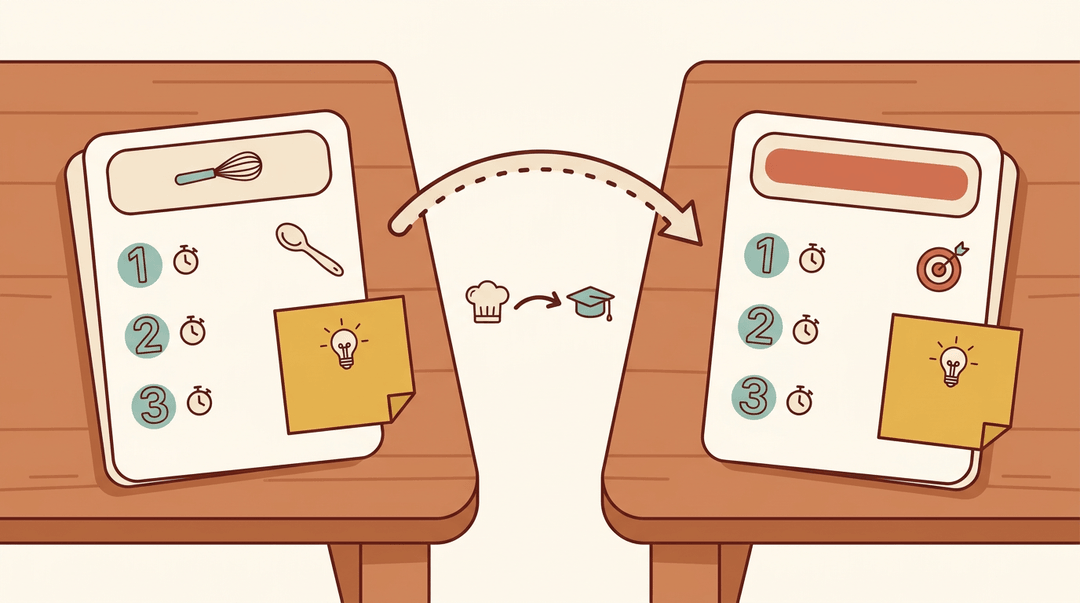
Ask someone to describe their favorite recipe, and they won't just list ingredients. They'll tell you the order, the timing, the little tricks that make it work.
Curriculum works the same way: it's not just a list of topics, it's the whole plan for what students learn, how, and why.
This post breaks down every layer of that definition, from its components and types to the theories behind it, and shows you how to turn it into a standards-mapped plan you can actually use.
The Real Definition of Curriculum
Ask ten educators what curriculum means and you'll get several true answers, because the word covers more ground than most people realize.
What is an example of curriculum?
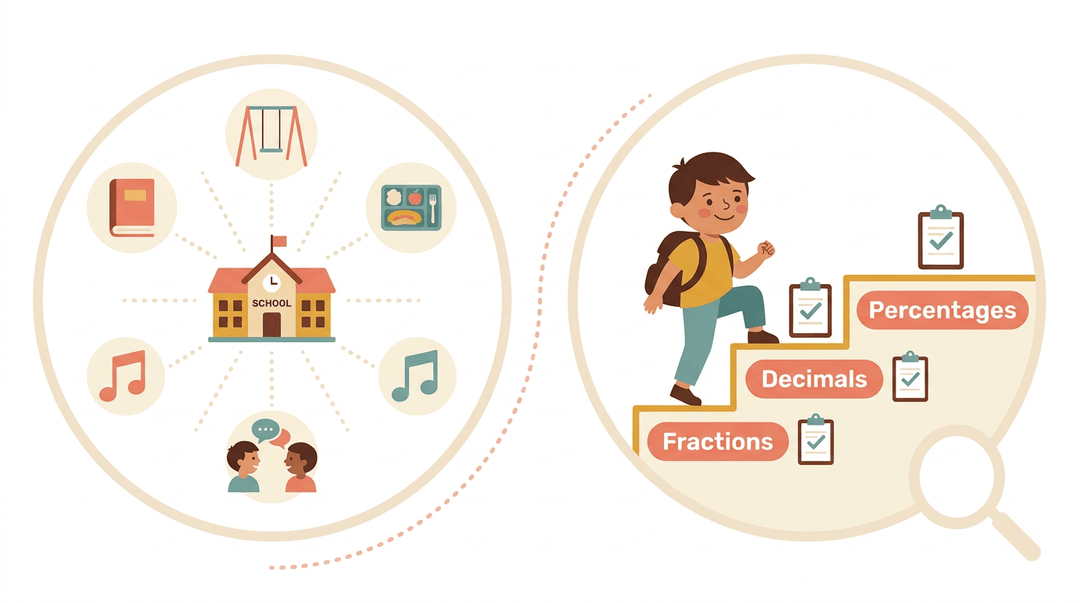
Curriculum takes a few real shapes. Sometimes it's an inventory of learning activities: the ordered list of lessons, projects, and assessments a teacher runs through in a term. Sometimes it's a standards-based sequence of experiences, built to march students toward district or state benchmarks. Zoomed out, it's the totality of student experiences: everything a learner absorbs at school, planned and unplanned. Zoomed in, it's a planned sequence of instruction: this skill before that one. A fourth-grade math example makes it concrete: fractions, then decimals, then percentages, each unit closing with a quiz that checks whether the last skill stuck.
Where the word curriculum comes from
Curriculum comes from the Latin word for a race course, literally a lap to run. Its first educational use traces back to 1576, when scholars researching the historiography of curriculum found the term in Thomas Fregius's publication of Ramus's mapping of knowledge. From there, it evolved from a literal track into its modern sense: a course of study.
How curriculum differs from a syllabus
A syllabus is a topic list only: readings, units, and due dates for one class. Curriculum is broader than a syllabus. A syllabus describes one course; curriculum prescribes what an entire school or district must teach.
How experts define curriculum
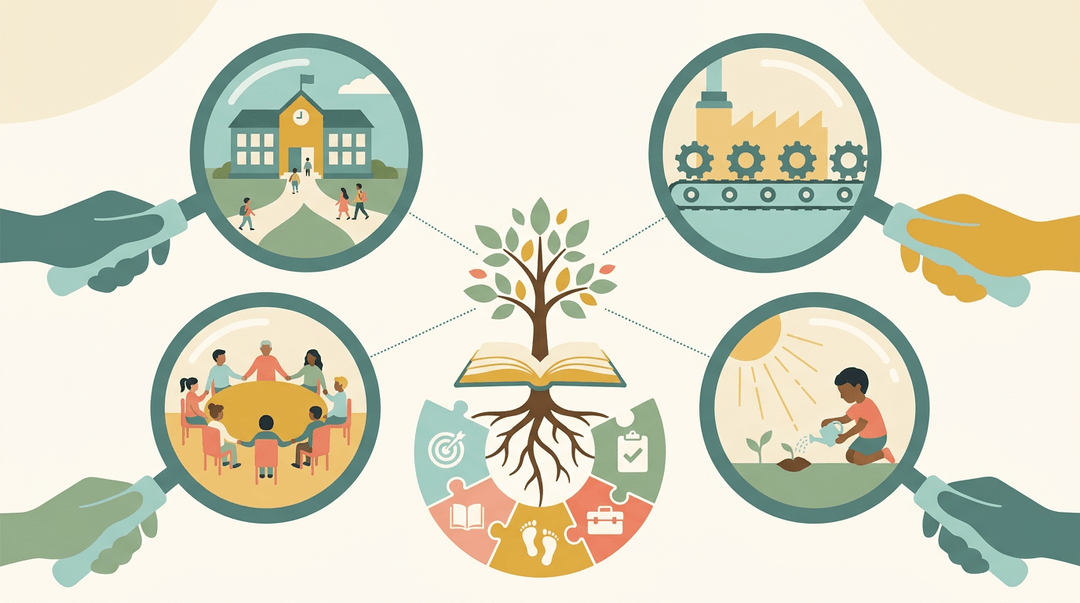
Definitions shift with the lens. John Kerr defined curriculum as all learning that's planned and guided by the school, in groups or alone, inside class or out. Some researchers frame curriculum as a social agreement about what schools should teach. Franklin Bobbitt viewed curriculum through a social-engineering lens, borrowing industrial production methods to standardize what students learn. Dewey took the opposite route: his philosophy of education rooted curriculum in lived experience, learning by doing rather than by decree.
Between those views, we can boil curriculum down to five essentials, sometimes called the basic 5 curriculum framework: objectives, content, learning experiences, resources, and assessment.
Line those against your standards, and that's curriculum, not just a syllabus.
What Makes up a Curriculum
A curriculum isn't one document you hand a teacher. It's four interlocking parts working together:
- goals
- methods
- materials
- assessments
Move one, and the rest shifts too.
Setting learning goals and objectives
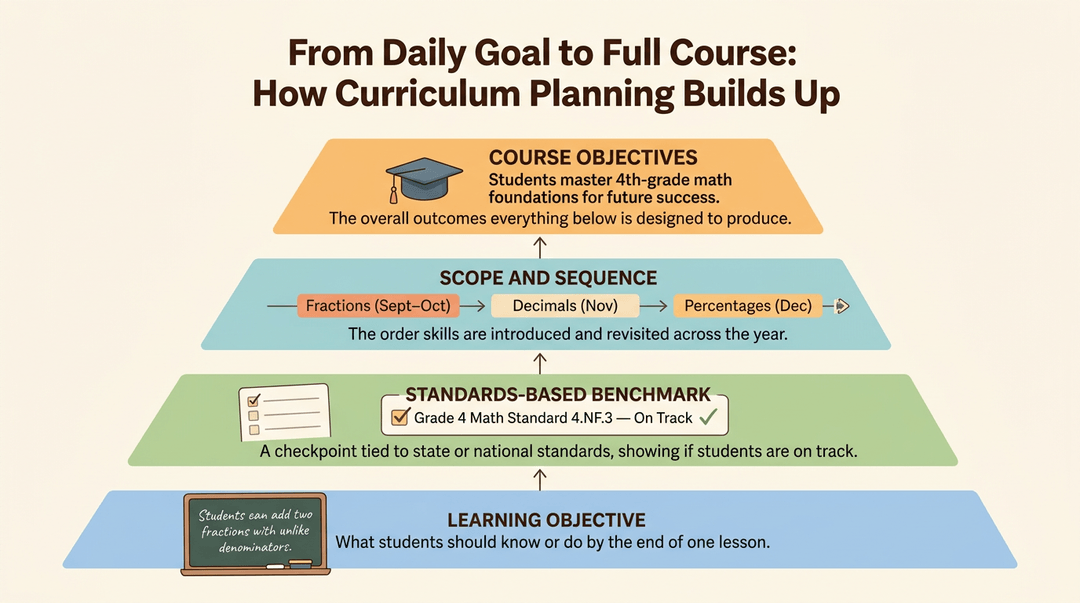
Every curriculum starts with learning objectives: clear statements of what students should know or do by the end of a lesson, unit, or course.
Those objectives connect to standards-based benchmarks, checkpoints tied to state or national standards that show whether students are on track.
String enough benchmarks together and you get a scope and sequence: the order in which skills get introduced and revisited across a year.
A fourth-grade teacher mapping fractions before decimals, because one skill builds on the other, is scope and sequence in action. Course objectives sit above all of it: the outcomes everything else is designed to produce.
Choosing teaching methods and approaches
Goals only matter if you can teach toward them. That's where instructional approaches come in: the procedures you use to deliver a lesson, from direct instruction to inquiry-based projects.
Differentiated teaching methods adjust those approaches for the student racing ahead and the one who needs another pass, in the same room.
Every method still needs to align with the pedagogy behind it, the underlying theory of how students learn, or the approach and the goals start pulling in different directions.
Picking materials and resources
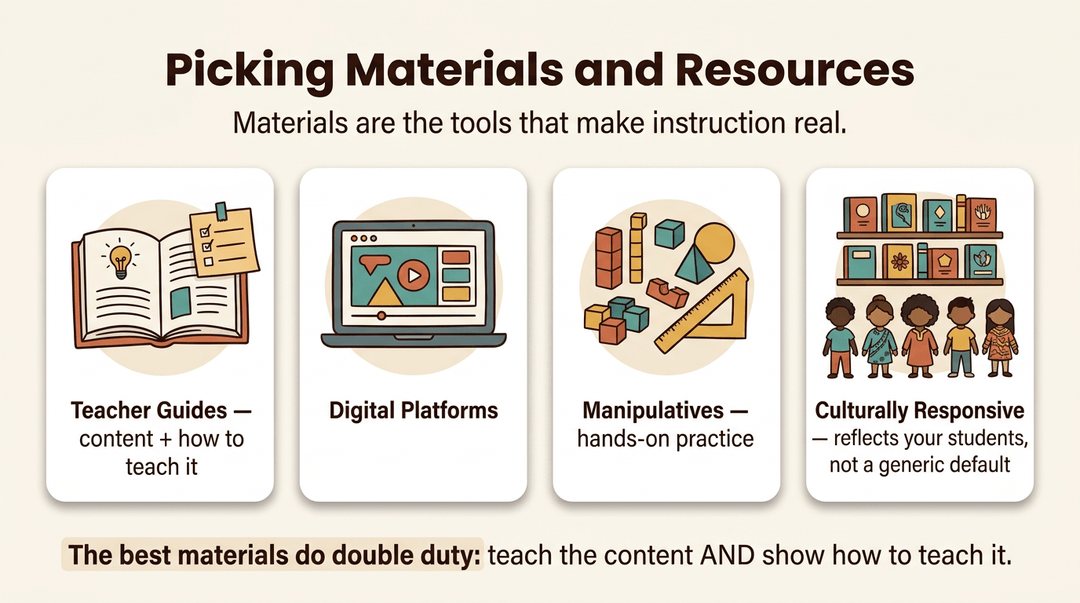
Materials are the tools that make instruction real:
- textbooks, teacher guides
- digital platforms
- manipulatives that support the lesson in front of you
The strongest ones are also culturally responsive, reflecting the backgrounds of the students actually in the room rather than a generic default. A good teacher guide does double duty, pairing content with a suggested way to teach it.
Assessing and evaluating student progress
A curriculum needs a way to know if it's working. That's an assessment strategy: the ongoing gathering of evidence, quizzes, exit tickets, projects, observations, that shows what students have actually learned.
What you choose to evaluate matters as much as how: skill mastery, growth over time, or both. A simple proficiency scale helps make that visible:
| Level | Description |
|---|---|
| 4 | Exceeds the standard |
| 3 | Meets the standard |
| 2 | Approaching the standard |
| 1 | Below the standard |
Turn Curriculum Definitions into a Plan
Definitions only matter once they shape what happens in week three.
This walkthrough takes you from "what curriculum means" to a standards-mapped year you can actually run: name your curriculum type, map standards into units, then audit the whole thing before you commit.
Name your curriculum type first
Three quick decisions set the plan's boundaries. Answer them before you map anything.
- Written or hidden focus? Plan the documented curriculum first; note the routines and values students absorb alongside it.
- Which philosophy fits your goals? Mastery goals point to a tightly sequenced, content-first plan; inquiry goals point to learner-centered projects.
- What's explicit, and what's null? List what you'll openly teach, then name what you're leaving out on purpose.
Example: "We teach persuasive writing explicitly this year. We're skipping poetry analysis: that's our null curriculum, chosen rather than forgotten."
Map standards to teaching units
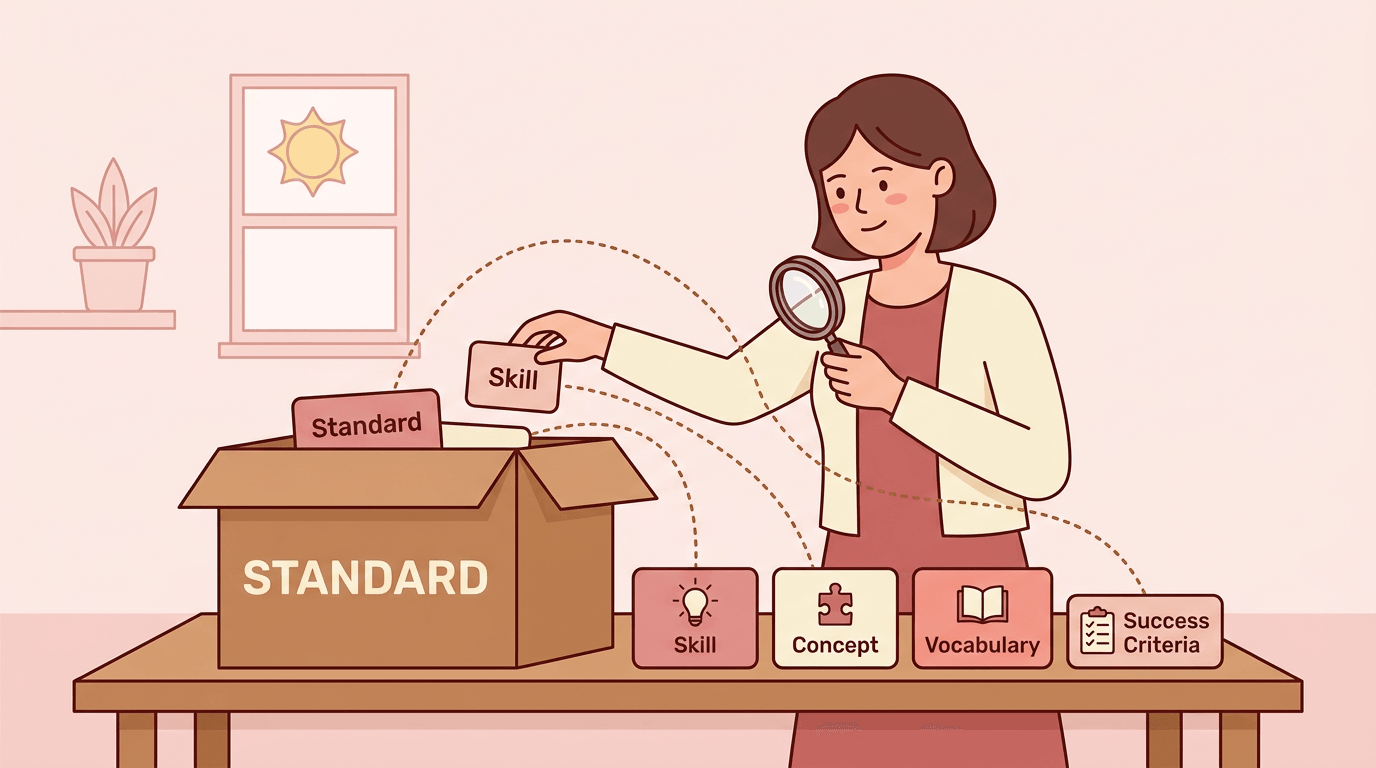
- Unpack each standard into learning targets.
- Turn the standard's verbs into "I can" statements students could read aloud.
- Build a year-at-a-glance sequence.
- One row per unit: weeks, standard codes, and the assessment that closes it.
- Align vertically across grades.
- Check what the grade below builds and the grade above expects.
- Jot the chain: "multiply fractions ← equivalent fractions ← equal sharing."
Here's what step 1 looks like on paper:
Standard: "Analyze how an author develops a claim." Targets: I can identify the claim. I can trace the evidence supporting it. I can explain how each paragraph strengthens it.
💡 Tip: Trade year-at-a-glance maps with the teacher one grade above you. Ten minutes of comparing rows catches vertical gaps a solo review never will.
Audit the plan before you commit
Before the map goes final, confirm:
- Every standard has a home. Each code appears in at least one unit row.
- Horizontal alignment holds. Each unit's objectives, activities, and assessment all point at the same targets.
- Pacing is realistic. Count actual teaching weeks after subtracting testing windows and holidays.
Gaps you catch now cost minutes; gaps you catch in March cost a unit. Find your row and fix it early:
| When the map shows... | Try... |
|---|---|
| A unit with no assessment week | Trim one activity, add a checkpoint |
| Standards stacked in the final month | Move one unit before winter break |
| Two units hitting the same target | Merge them and bank the freed weeks |
Once the audit is clean, you're done designing: map standards and pace units for every grade level right inside EMStudio's curriculum planner.
Different Types and Levels of Curriculum
Ask ten teachers what curriculum means and you'll get several different layers of the same answer. That's because curriculum runs on more than one level at once: some of it printed in a binder, some of it never written down at all.
Explicit, implicit, hidden, and null curriculum
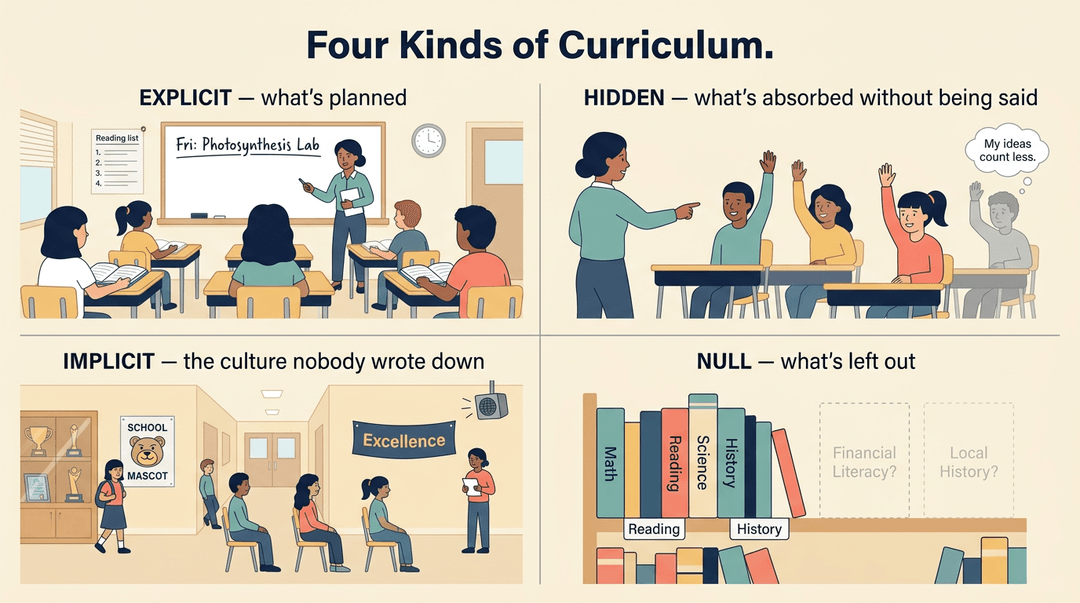
- The explicit curriculum is what's actually taught: the standards, the reading list, the lab you run on Friday.
- Beside it sits the hidden curriculum, the unintended lessons students pick up along the way. For example, a student who's rarely called on to lead a discussion may quietly learn that their ideas count less, even though no one ever says so out loud.
- The implicit curriculum is broader still: a school's culture, its rituals, its unspoken values, shaping students whether or not anyone planned it that way.
- Then there's the null curriculum, everything left out. What a school chooses not to teach says as much about its priorities as what it does.
Extracurricular and community-based programs
Clubs, sports, and student government are school-sponsored activities that extend learning past the bell. So are community-based programs, partnerships with local organizations that put classroom skills to work in the real world.
Neither replaces classroom instruction, but both supplement it, giving students a place to practice what they've learned.
Intended, implemented, achieved, and written curriculum
Curriculum also moves through stages.
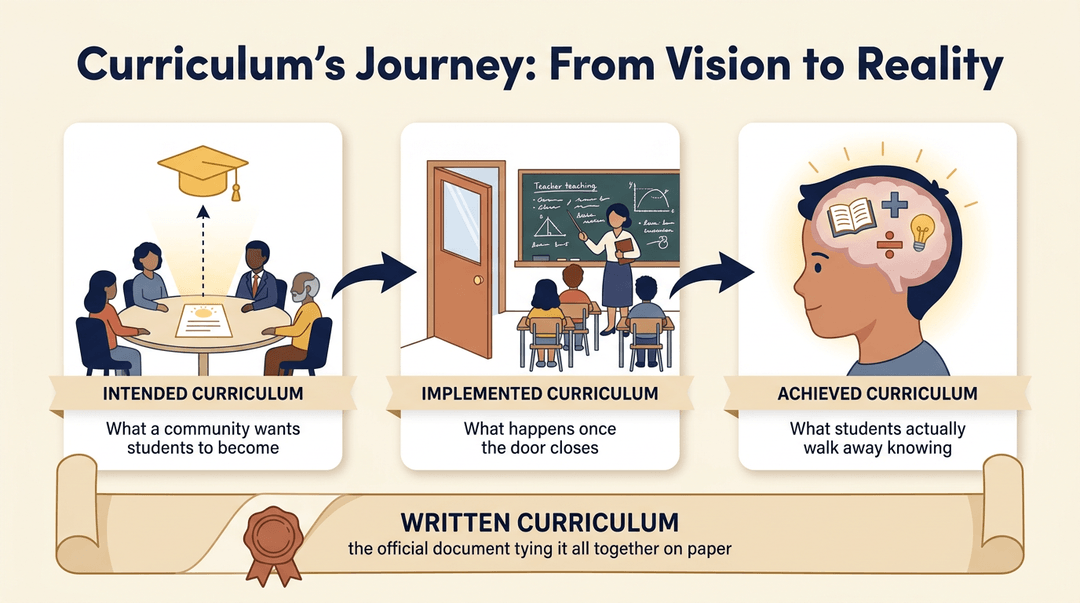
- The intended curriculum is the societal vision: what a community wants its students to become.
- The implemented curriculum is what actually happens once a teacher closes the classroom door.
- The achieved curriculum is what students walk away actually knowing.
- And the written curriculum is the official document tying it all together on paper.
Different Theoretical Approaches to Curriculum
Ask five curriculum theorists what curriculum actually is, and you'll get five different answers. That's because curriculum isn't one fixed idea: it's a lens, and the lens you pick shapes everything from lesson design to assessment.
Four ways to view curriculum
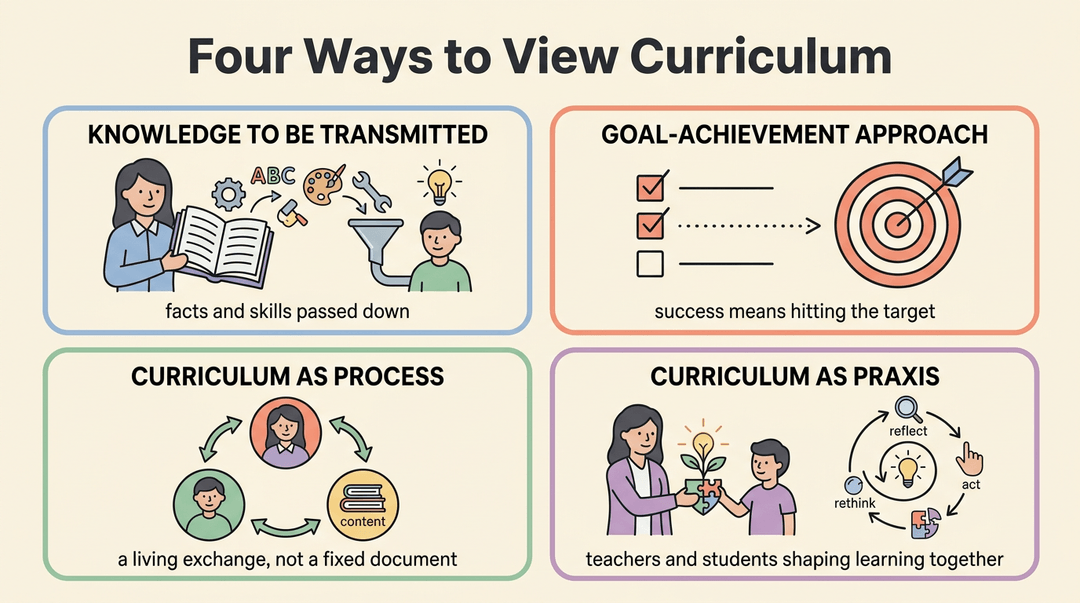
Scholars generally sort curriculum theory into four broad camps:
- Knowledge to be transmitted. Curriculum as a body of content: facts, skills, and cultural knowledge passed from teacher to student.
- Goal-achievement approach. Curriculum as a set of measurable objectives, where success means hitting predefined outcomes.
- Curriculum as process. Curriculum as the ongoing interaction between teacher, student, and content, not a static document.
- Curriculum as praxis. Curriculum as reflective action, where teachers and students actively shape what's learned and why.
What philosophers like Rousseau taught about curriculum
Long before modern theory, philosophers were already arguing over what belongs in a classroom.
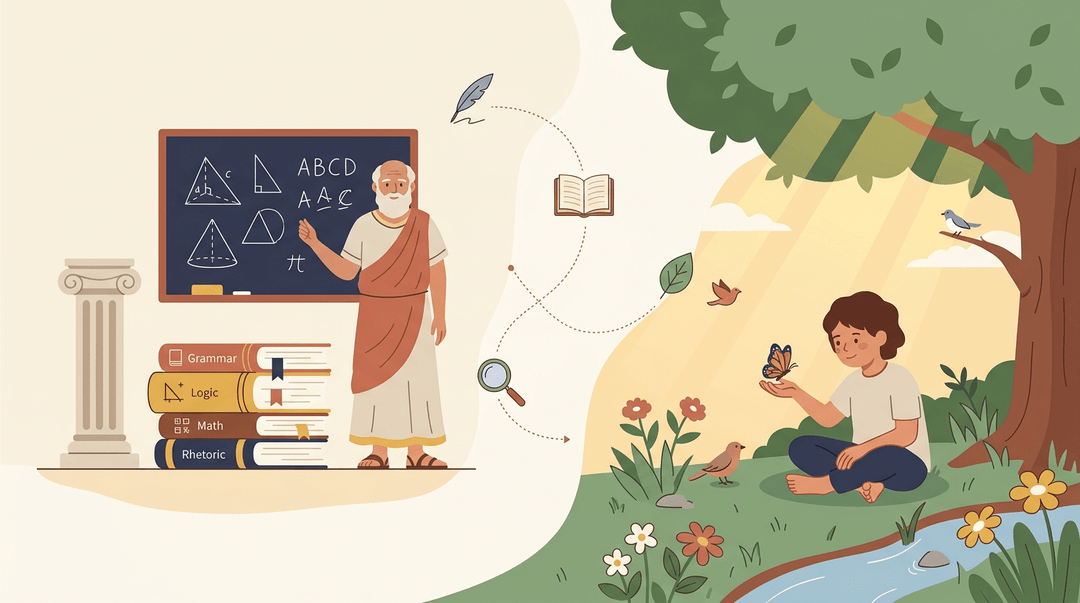
Robert M. Hutchins championed “permanent studies,” arguing that basic education should emphasize grammar, reading, rhetoric, logic, and mathematics, while college study rests on liberal education.
Arthur Bestor pushed a similar essentialist line, insisting schools exist for intellectual training rooted in grammar, literature, and writing.
Joseph Schwab took a different angle: his discipline-based view of curriculum treats each academic subject, and its underlying structure, as the real source of content.
Progressivists countered with something more personal: their experience-based approach treats lived experience itself, not fixed content, as the building block of curriculum.
What is the curriculum of Rousseau?
Rousseau's philosophy of education holds that a child should develop a strong, virtuous character, the ability to reason, and a refined sense of sentiment together, letting natural development guide what and when a child learns rather than a fixed body of knowledge.
Curriculum as a social contract
A curriculum isn't just a stack of standards; it's a social contract. Every scope and sequence reflects what a community, and often a nation, decides is worth passing on.
That's why curriculum design constantly balances local needs (a farming town's science examples, a coastal district's history) against global competencies like digital literacy and cross-cultural communication.
And it doesn't stop at the classroom door: curriculum spans formal instruction (your gradebook and lesson plans), non-formal learning (clubs, tutoring, after-school programs), and informal learning (what students pick up from family, media, and daily life).
What makes a curriculum high quality
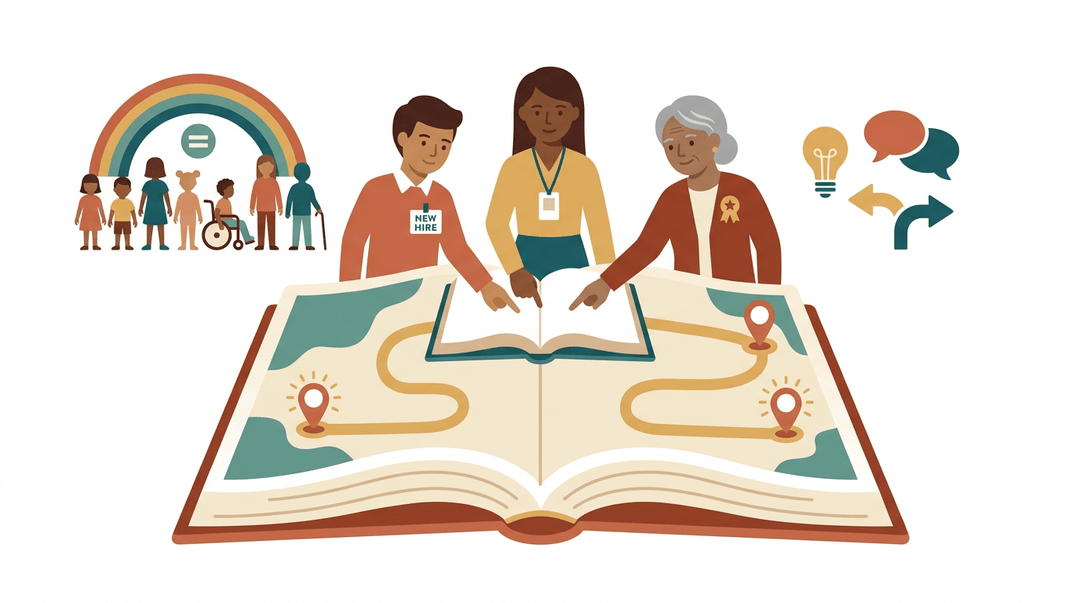
A strong curriculum does three things well. It supports inclusive, equitable education, meaning every student, regardless of background or ability, can access and succeed in it.
It defines lifelong learning competencies: critical thinking, collaboration, adaptability, not just content recall.
And it acts as the central guide for instruction, so a substitute teacher, a new hire, and a twenty-year veteran are all working from the same map.
Common challenges in curriculum design
Even well-intentioned curricula run into trouble. Content can go stale, listing outdated examples long after the world has moved on.
Alignment often breaks down between what's taught, how it's taught, and how it's assessed, leaving pedagogy and testing pulling in different directions.
Many curricula also underrepresent local and environmental context, skipping the community's own history or ecology. And under it all sits a resource problem: not every school has the training time or materials to implement a curriculum as designed.
Gender and equity issues in curricula
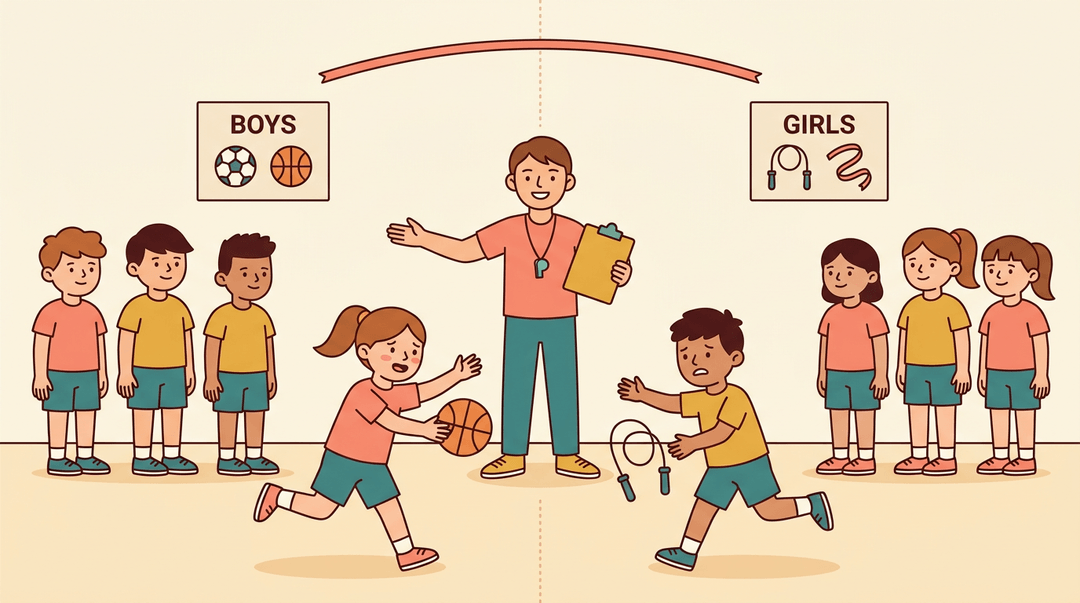
Equity gaps show up in specific, fixable places. Gender stereotyping is a well-documented issue in Physical Education (PE), where activities get quietly sorted into "boys' sports" and "girls' sports."
This isn't a new concern: international frameworks have long called for change, with Educational Technology: Its Creation, Development and Curriculum noting that Article 10 requires equal access to "the same curricula, teaching staff and standards" and the elimination of stereotyped concepts.
The same imbalance can creep into course content more broadly: whose stories get told in a reading list, whose contributions show up in a science unit. Fixing that starts with a hard look at who's represented, and who isn't.
How Curriculum Is Organized Nationally and Locally
Curriculum isn't just a philosophy question. Somewhere, a ministry, a state board, or a single classroom teacher has to write down exactly what gets taught, and that job looks different depending on where you stand.
How other countries structure curriculum
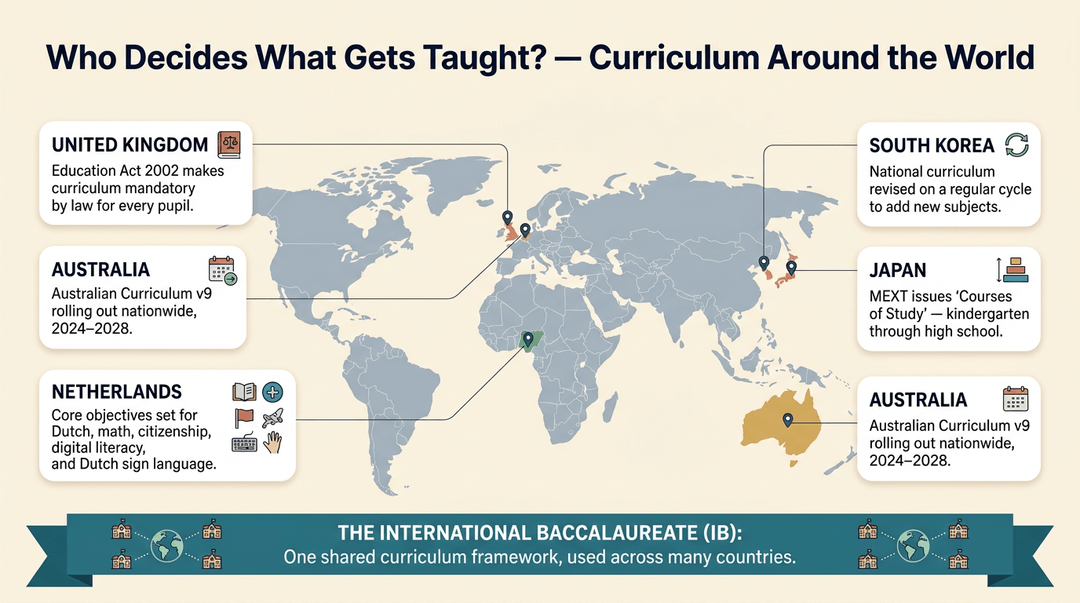
Most national systems put curriculum in law or in a central ministry's hands, though the details vary:
- United Kingdom. The Education Act 2002 establishes a required curriculum for every registered pupil, known as the National Curriculum for England.
- Australia. The Australian Curriculum is mid-rollout, with staged implementation of Version 9 running from 2024 through 2028.
- South Korea. Its national curriculum is revised periodically to keep pace with new academic fields and shifting social needs.
- Japan. MEXT issues Courses of Study guidelines covering kindergarten through high school.
- The Netherlands. National core objectives already published cover Dutch, math, citizenship, digital literacy, and Dutch sign language.
- Nigeria. Its Basic Education Curriculum sets comparable national benchmarks for early grades.
The International Baccalaureate (IB) framework runs alongside all of this, giving schools in many countries a shared curriculum structure that crosses borders.
How US states define curriculum
In the US, states set standards and districts (or individual teachers) choose the curriculum that meets them: two layers of authority working together.
The Common Core standards initiative tried to align states around shared benchmarks, and states like Rhode Island have run their own statewide efforts to pin down what "curriculum" officially means.
Teachers doing standards-mapped planning learn to cross-reference their state's specific standards codes.
Homeschool families face a similar task on a smaller scale, designing curriculum that satisfies their state's requirements while fitting one household.
Core curricula in higher education
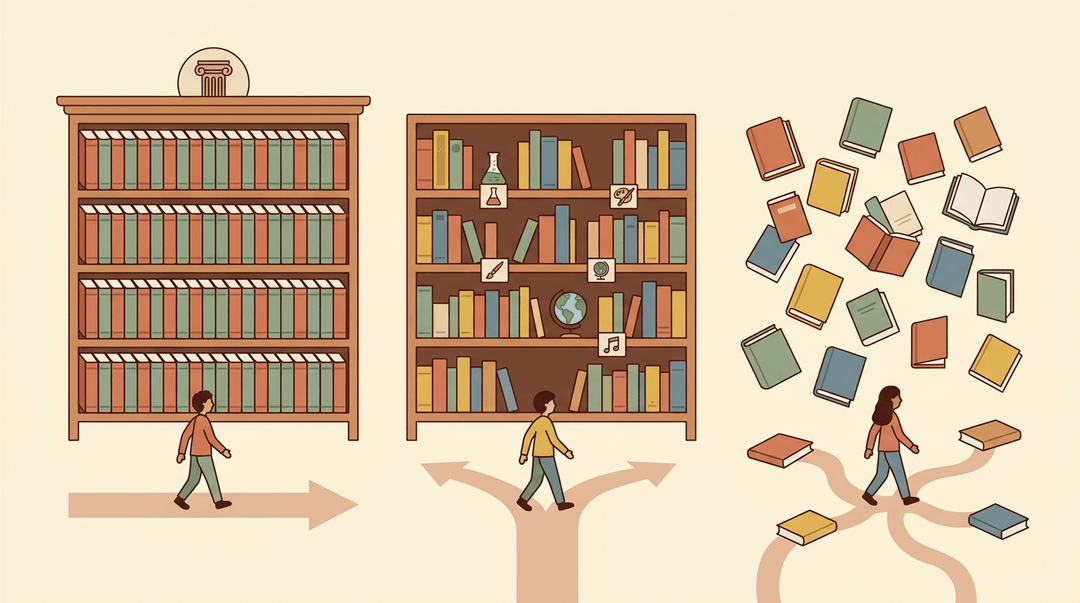
Columbia and the University of Chicago built their reputations on required core programs rooted in Great Books reading lists. Brown's Open Curriculum takes the opposite approach: no required core at all.
Many colleges land in between, using distribution requirements that guarantee breadth without dictating every text.
International groups supporting curriculum research
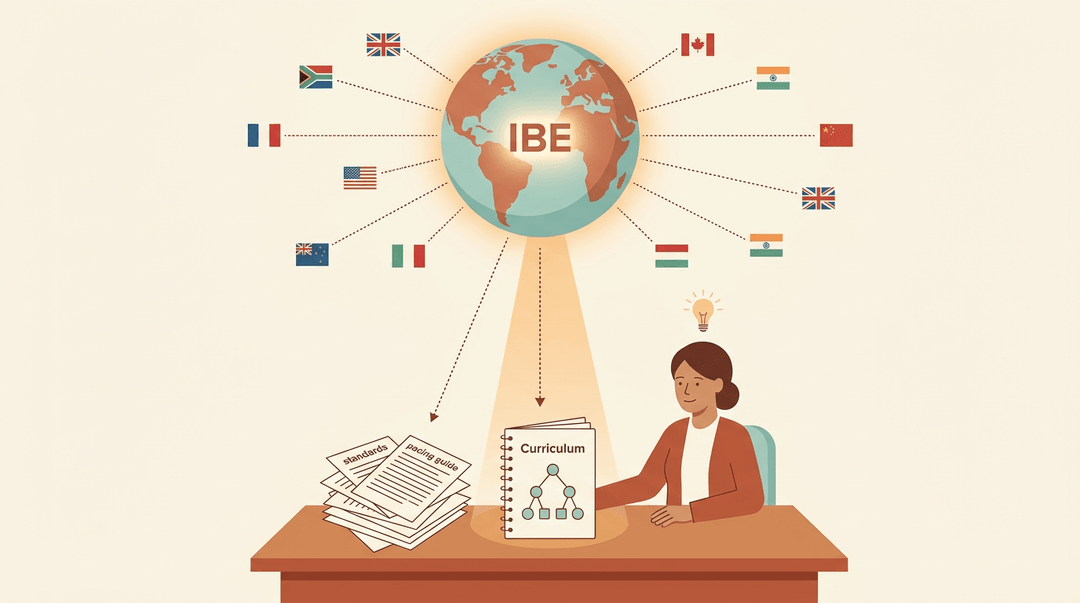
UNESCO's International Bureau of Education (IBE) serves as a global focal point for curriculum, offering technical assistance to member states and publishing curriculum research that shapes policy well beyond any one classroom.
Curriculum is bigger than a pacing guide or a stack of standards. It's the structure, the sequence, and the why behind everything you teach, built from real definitions, real components, and real theory.
Once you see it that way, planning gets a lot less overwhelming.
Ready to turn that definition into a plan you can actually use? Check out Curriculum & Standards to map your units, lessons, and standards across the whole year.
References
- On the Historiography of Curriculum — blogs.ubc.ca
- Social Efficiency Ideology — uk.sagepub.com
- 1. Traditional Point of View — sajaipuriacollege.ac.in
- Did There Exist Two Stages of Franklin Bobbitt's Curricu — files.eric.ed.gov
- Educational Technology: Its Creation, Development and C — ndl.ethernet.edu.et
- Education Act 2002 — legislation.gov.uk
- Australian Curriculum implementation — education.qld.gov.au
- The Korean Curriculum in Primary and Lower Secondary Schools — timssandpirls.bc.edu
- MEXT : Curriculum Guidelines ("Courses of Study") and ESD — mext.go.jp
- National reforms in school education — eurydice.eacea.ec.europa.eu
- NERDC e-Curriculum Portal — nerdc.org.ng
- Curriculum — ride.ri.gov
- The Core Curriculum — college.columbia.edu
- The Open Curriculum — brown.edu
- (PDF) Curriculum Theory and Practice By — academia.edu (2011)
- Curriculum orientations and their role in parental involvement ... — bera-journals.onlinelibrary.wiley.com (2019)
- (PDF) THE CONCEPT OF EXPERIENCE IN JOHN DEWEY'S PHILOSOPHY OF EDUCATION/JOHN DEWEY’İN EĞİTİM FELSEFESİNDE DENEYİM KAVRAMI — academia.edu (2016)
- Content, Joseph Schwab and German Didaktik — doi.org (2015)
- Common Core State Standards — sequoiaunion.org (2025)
- About Us — ibe.unesco.org
- Rousseau’s 5 Stages of Child Development - Sprouts - Learning Videos — sproutsschools.com
- The IB Education Framework — brightmindsschool.com
Frequently asked questions
What is the best definition of curriculum?
Curriculum is the comprehensive plan for all aspects of student learning, encompassing not just topics but also how and why students learn them. It includes the objectives, content, learning experiences, resources, and assessment designed to guide instruction and student development.
What is the basic 5 curriculum?
The basic 5 curriculum refers to five essential components: objectives, content, learning experiences, resources, and assessment. These elements work together to form a comprehensive framework for planning and implementing educational goals.
What is the curriculum of Rousseau?
Rousseau's educational philosophy posits that a child's natural development should guide their learning, rather than a fixed curriculum. The focus is on developing a strong, virtuous character, the ability to reason, and a refined sense of sentiment through lived experience.
What are the 4 elements of curriculum?
The four elements of curriculum are goals, methods, materials, and assessments. These components are interconnected, meaning any change in one element will consequently affect the others.
What is an example of curriculum?
An example of curriculum can be seen in a fourth-grade math sequence: students first learn fractions, then decimals, and finally percentages. Each unit builds on the previous one, with a quiz at the end of each topic to assess skill mastery.
Which best defines curriculum?
Curriculum is best defined as the entire plan for what students learn, how they learn it, and the reasons behind that learning. It integrates objectives, content, learning experiences, resources, and assessment to provide a structured educational journey.