Core Classes Explained: What They Are and Why They Matter


Jump to section
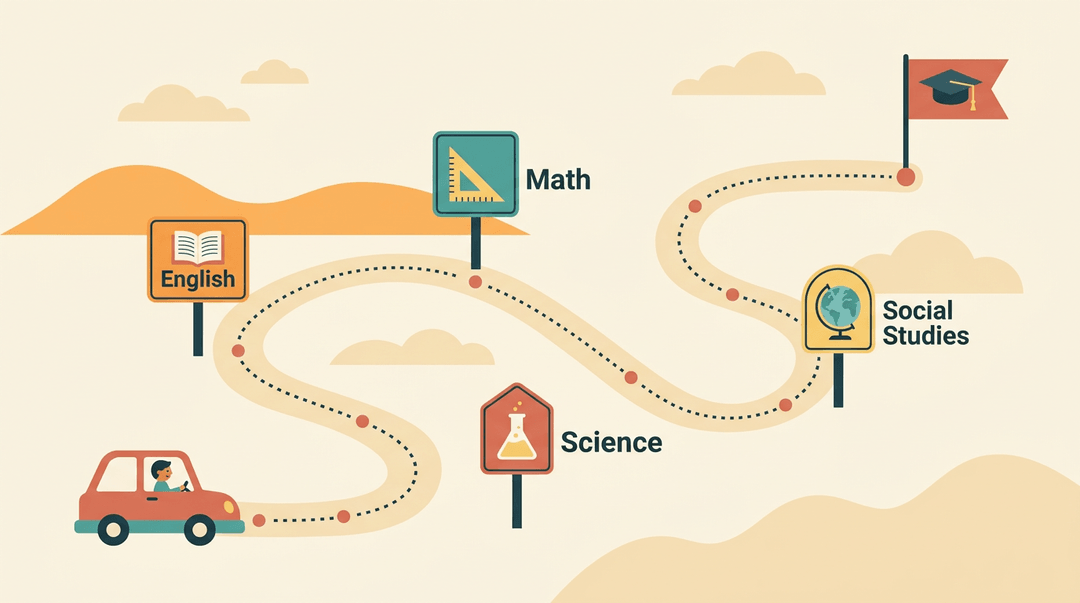
Think about the last time you planned a road trip. You didn't just start driving. You picked a route, checked which stops mattered most, and made sure you'd arrive on time. Core classes work the same way.
They're the required courses students must pass to earn a diploma or move on to college.
In plain terms, core classes are the foundational subjects, usually English, math, science, and social studies, that build the knowledge students need everywhere else.
Requirements vary by state, high school, and college, and homeschool families and International Baccalaureate programs approach them differently too.
In this post, we'll cover what core classes are, how the Core 4 and Texas requirements compare, what core means in college, and how you can map a sequence that keeps students on track.
What Core Classes Are and Why They Matter
Ever wondered why every student takes the same English and math courses? That's the work of core classes, the foundation everything else gets built on.
What Counts as a Core Class
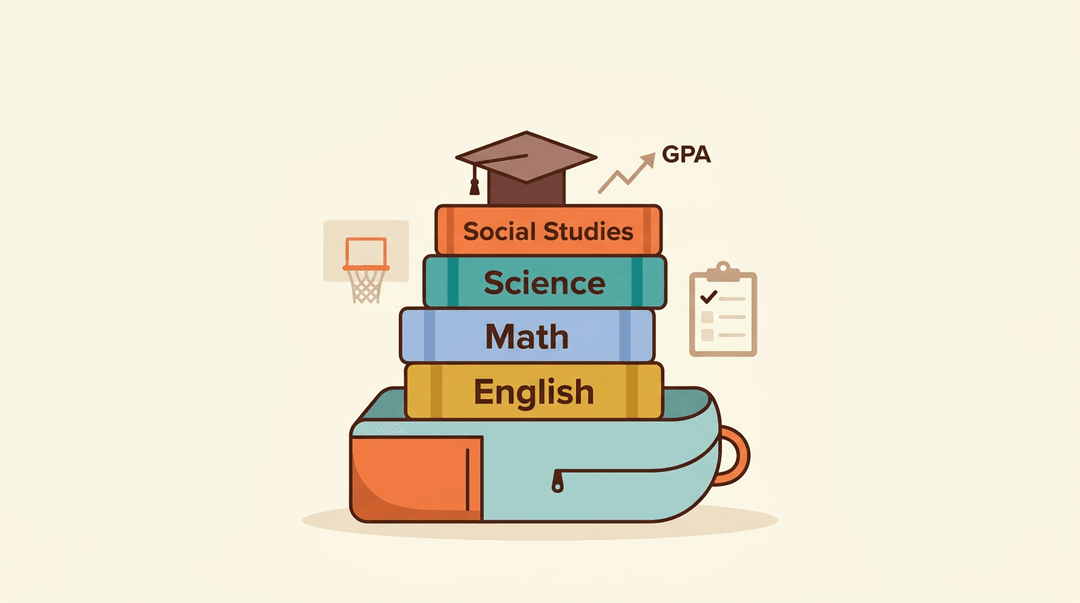
Core classes are the broad subjects most schools require: English, mathematics, science, and social studies. Your school or state sets the exact list, so check it before you plan a schedule.
These courses form the basis for GPA (grade point average) calculation, so they carry real weight on a transcript. They also serve as a prerequisite for upper-level courses.
A student generally needs Algebra I before Algebra II, and strong reading skills before advanced literature.
Planning for college athletics? The NCAA uses its own definition of a core course for eligibility, so confirm which classes count against its approved list.
Skills You Build in Core Classes
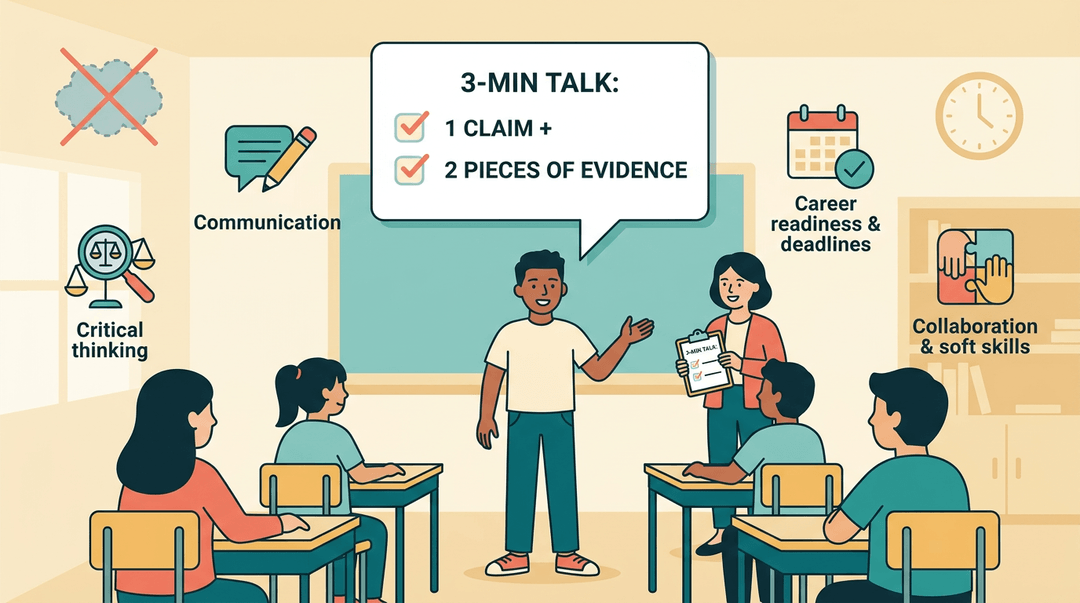
Core classes are less about what students memorize and more about how they learn to think. Along the way, they build:
- Critical thinking: weighing evidence and questioning claims
- Communication skills: writing clearly and speaking with purpose
- Career readiness: the habits employers look for, like meeting deadlines
- Soft skills for the workplace: collaborating, adapting, and handling feedback
Skills get stronger when they're taught on purpose. Turn each one into a learning target a student can see and measure. Consider a high school English teacher who wants her class to improve speaking.
Instead of a vague goal like be a better speaker, she writes: present a claim with two pieces of evidence in a three-minute talk. Students know what success looks like, and she can check it in one class period. Vague goals get vague results.
What Are the Core 4 Classes?
Ask a counselor about core classes, and you'll hear the same four subjects: English, math, science, and social studies. These Core 4 courses form the backbone of most graduation plans, so they're the first thing to check on any transcript.
English and Communication Requirements
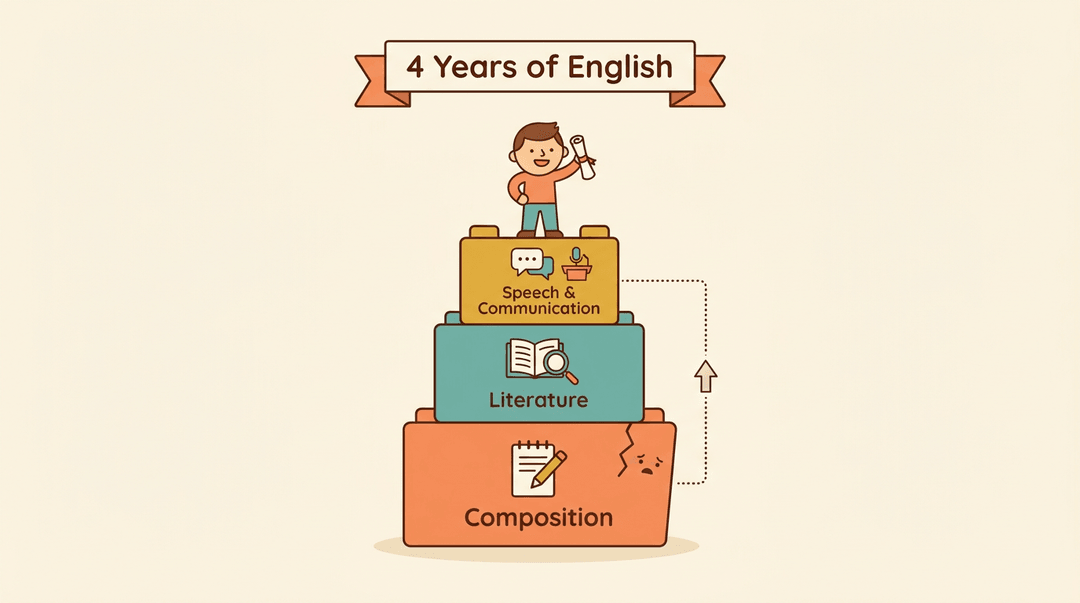
Most high schools require four years of English, and that goes well beyond novels. Students typically take composition courses for writing, literature courses for analysis, and a speech or communication course for presenting ideas.
According to Regulation 6.002, the framework requires 4 credits of English/Language Arts with substantial writing. Writing is the prerequisite for nearly every other course, so a student who coasts here pays for it later.
Math Requirements
Math usually runs from algebra through calculus, and most programs require three to four years. The path varies.
Rhode Island's readiness-based math guidance sets a default of four credits, including Algebra I, Geometry, and Algebra II, but other programs sequence courses differently.
Consider a school counselor reviewing a junior's schedule who spots a missing geometry credit in time to fix it before senior year. Math builds quantitative reasoning, and it's less about memorizing formulas and more about reasoning with numbers.
Science Requirements
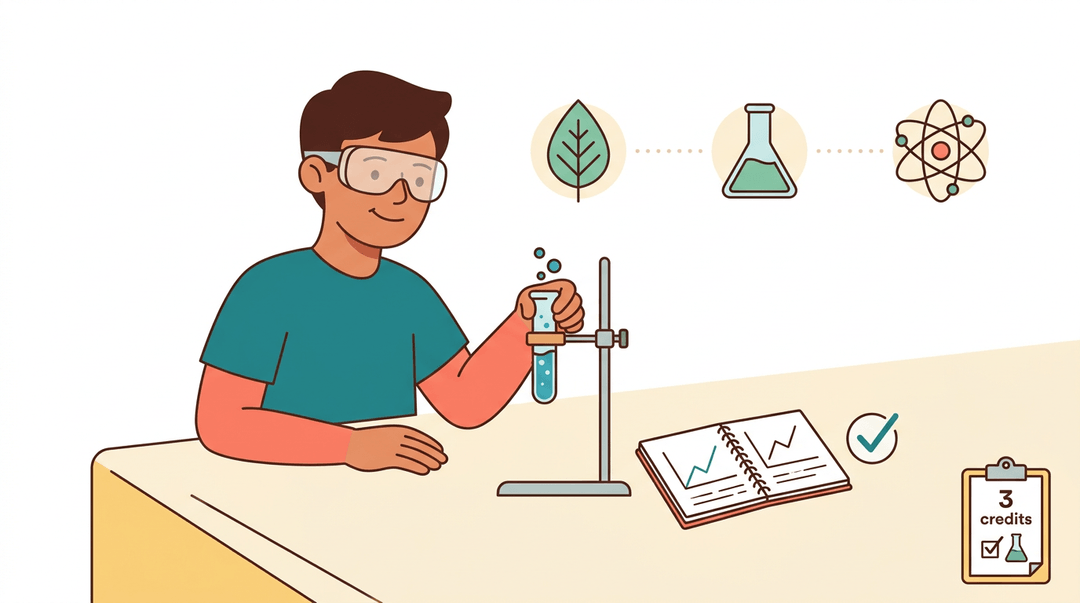
Most programs include a lab science requirement, which means hands-on work rather than reading alone. The core sequence is usually biology, chemistry, and physics. Regulation 6.002 calls for 3 credits of natural science with substantial laboratory work.
The goal is scientific literacy: the ability to ask what evidence supports a claim.
Students aiming for STEM majors may need deeper lab experience in chemistry and physics than students on a non-STEM path, so check the requirements against where they're headed.
History, Government and Social Science
Social science requirements range from 2 to 6 years or hours depending on the program, and they often include history, government, psychology, sociology, and economics.
The University of California's Subject Area A guide asks for two years of college-preparatory history and social science, including world history and U.S. history, or a half year each of U.S. history and civics.
These courses build civic engagement skills: reading sources, weighing arguments, and understanding how decisions get made. Civics is practice for real life.
Arts, Language and Humanities Courses
Many programs add a creative arts credit, a foreign language requirement, and humanities courses such as philosophy. Together, these build cultural sensitivity, the habit of understanding perspectives unlike your own.
In the International Baccalaureate (IB) Diploma Programme, the core works a little differently.
It includes Theory of Knowledge (TOK), which explores how we know what we know, the Extended Essay (EE), a self-directed research paper, and Creativity, Activity, Service (CAS), which asks students to build skills through the arts, physical activity, and community service.

Map Out Your Core Class Sequence
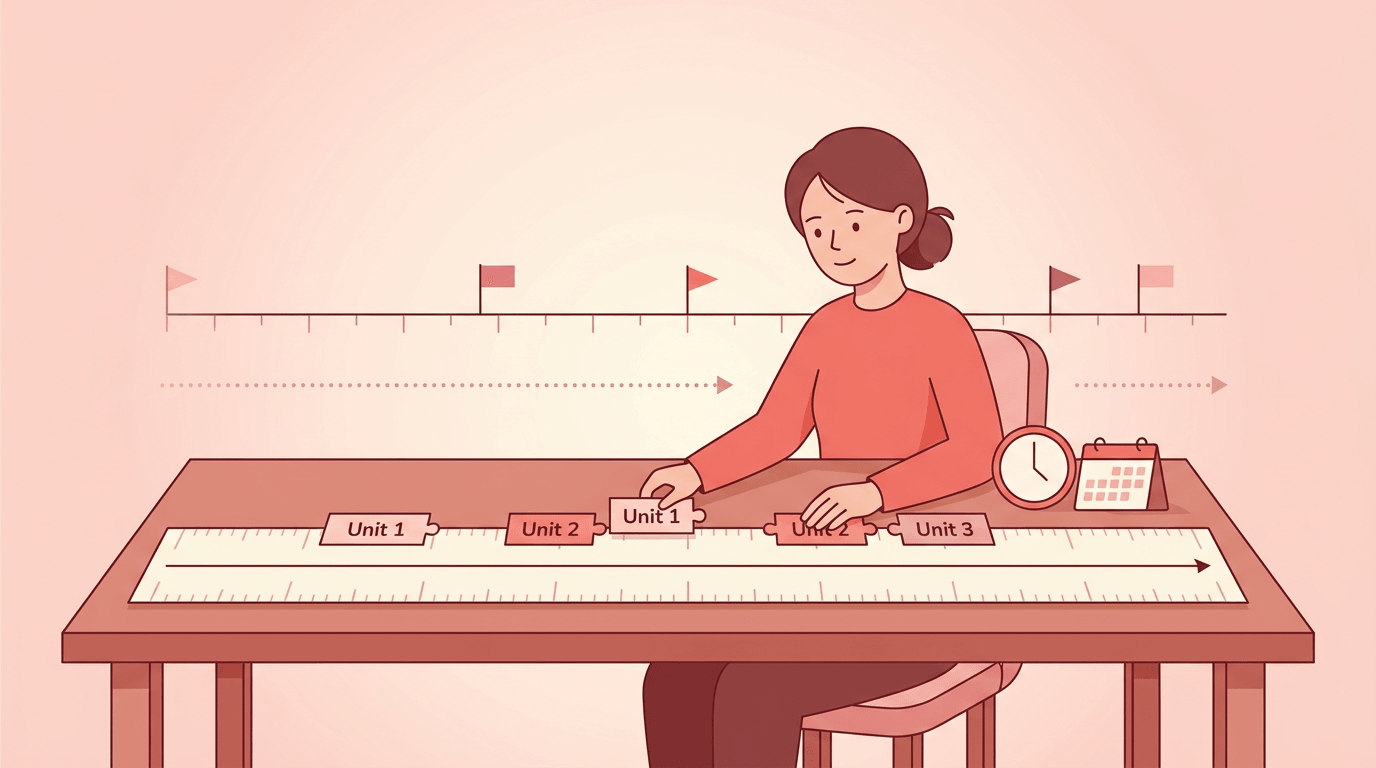
A core class map shows what each student takes, in what order, and what proof you'll keep. Build one page per stage, then adjust it as the year unfolds.
Elementary and middle school: map by grade
Here the map is a sequence you build once per grade.
- List the core subjects for each grade
- Jot it like this: Grade 4: English language arts, math, science, social studies
- Align each subject to state standards
- Note the standard strand beside each unit: Grade 4 math: fractions
- Set pacing guide checkpoints
- Mark where you should be: Fractions done by end of quarter 2
If a checkpoint slips, you'll see it a quarter early instead of in May.
High school: map four years at once
Lay out the whole sequence on one grid before students pick courses. This one is a sample, so swap in your own state's requirements.
| Subject | Grade 9 | Grade 10 | Grade 11 | Grade 12 |
|---|---|---|---|---|
| English | English 9 | English 10 | English 11 | English 12 |
| Math | Algebra I | Geometry | Algebra II | Precalculus |
| Science | Biology | Chemistry | Physics | Elective |
| Social studies | World history | U.S. history | Government | Economics |
Then run two checks on the grid.
GPA and eligibility checklist. Confirm these each year:
- Credits per subject match your state's graduation requirements.
- Core GPA is tracked on its own, apart from electives.
- College eligibility requirements are met for the schools your student is considering.
Prerequisite chains. Write each one backward from the end goal:
Precalculus ← Algebra II ← Geometry ← Algebra I
⚠️ Watch out: One skipped link blocks everything after it. Check the chain before a student drops or swaps a core course.
Homeschool and IB: record as you teach
Without a school registrar, your records are the proof. Keep them current, not reconstructed in senior year.
Document core subjects taught. Log these for each course:
- Course title and grade level
- Materials used, in one line
- Credit and final grade when the course ends
Map the IB core components. The IB Diploma core has three parts: Theory of Knowledge, the Extended Essay, and CAS (Creativity, Activity, Service). Give each one a place on the timeline next to the subject courses.
| IB core component | What to map |
|---|---|
| Theory of Knowledge | Which terms it runs and who teaches it |
| Extended Essay | Topic deadline, draft checkpoints, final due date |
| CAS | Activity log with dates and reflections |
Keep transcript-ready records. Use the same course titles on your map and your transcript. Then nothing needs translating later.
Example: A homeschool parent of a ninth grader fills one row per course: Biology, 9th grade, one credit, A-, lab notebook on file. By senior year the transcript is a copy-and-paste job.
See how EMStudio's curriculum planner turns this scope and sequence into a living, standards-aligned plan.
Core Class Requirements in High School
Your core classes are the required subjects on your transcript, and colleges and athletic programs check them first.
How Many Core Classes Do You Take in High School?
Core classes are math, English, science, and social science. The exact number depends on your school and state, and the sources we reviewed don't give a single typical count, so check your graduation plan.
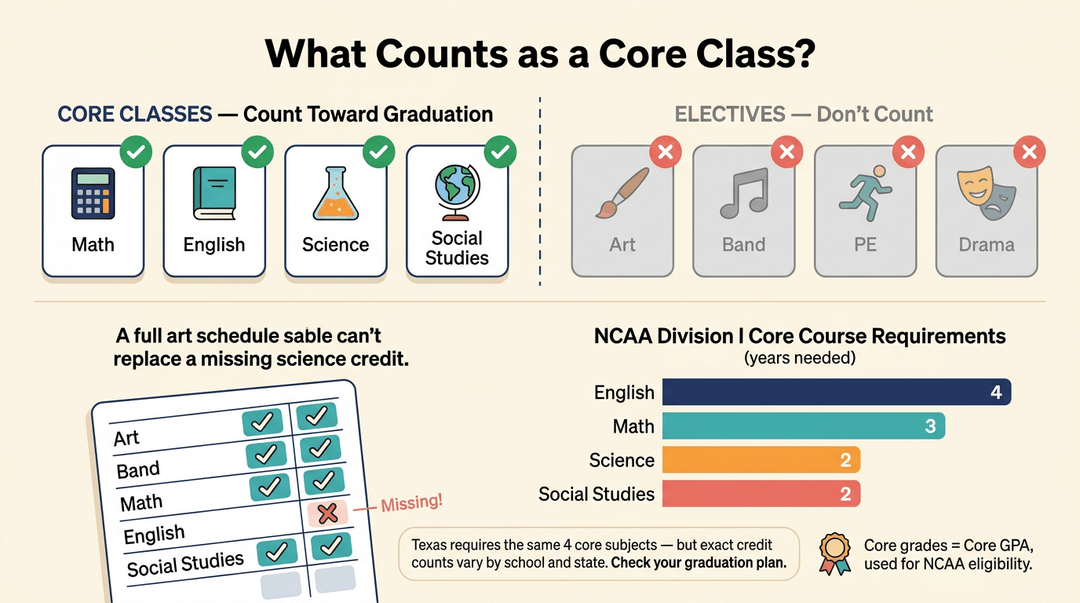
The question isn't just how many classes you take, but which ones count. Electives don't count toward the core, so a packed art schedule won't cover a missing science credit.
In Texas, the required foundation curriculum covers:
- English language arts
- mathematics
- science
- social studies
as Texas law spells out. For NCAA Division I, the NCAA course table lists four years of English, three of math, two of science, and two of social science. Your core grades also shape your core GPA, which athletes need for eligibility.
NCAA Core Course Eligibility Rules
Athletes face a separate checklist:
- 16 core courses. Division I requires 16 NCAA-approved core-course credits in required subject areas.
- Core GPA of 2.2 to 2.3. Division I's minimum is 2.3 for a final qualifier.
- Locked-in grades. Per the eligibility guidance, your transcript with six semesters of grades goes to the Eligibility Center at the end of junior year. Timing matters.
- Approved course lists. Only classes on your school's NCAA-approved list count, so confirm each one before you enroll.
What Is Core in College?
Ever wonder why a biology major still has to take a history class? That's the core at work. Here's how it affects your schedule, your transfer credits, and your grades.
How Core Credits Transfer Between Schools
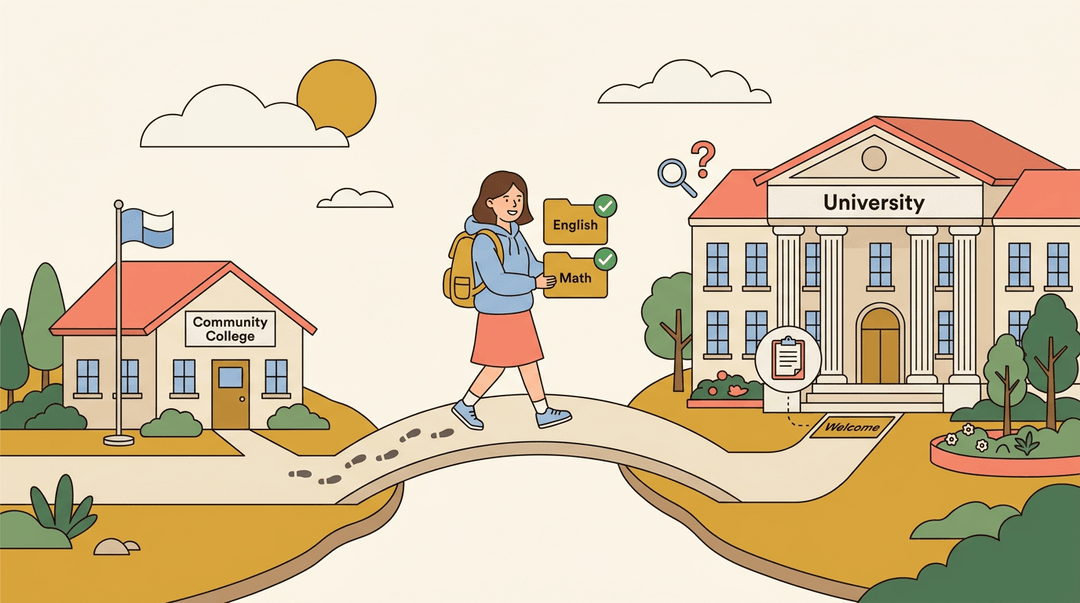
The college core curriculum is the set of general education courses most students complete regardless of major. It's a focus on breadth rather than specialization, and it's designed for smooth transfer.
A student who finishes core at a community college can often carry those credits to a four-year university. Think of a student who completes her English and math core before transferring: those courses should count toward her new school's requirements.
Policies vary by institution and state, though, so always check with the receiving school. Public and private colleges set their own rules, too, which means a course that transfers easily from one may not from the other. Don't assume. Confirm.
How Core Requirements Vary by Major
Core requirements differ by program, and changing majors changes what you need. A student who switches from engineering to English may find that some core courses now fill a different component area, while others still need to be taken.
Most plans offer options within each component area, so you can choose courses that match your interests.
How Core Courses Are Numbered
Core courses usually carry 100- or 200-level numbers. They act as the gateway to advanced courses, building the skills you'll need for upper-level work. Core is the foundation, not the finish line.
Grading Standards for Core Classes
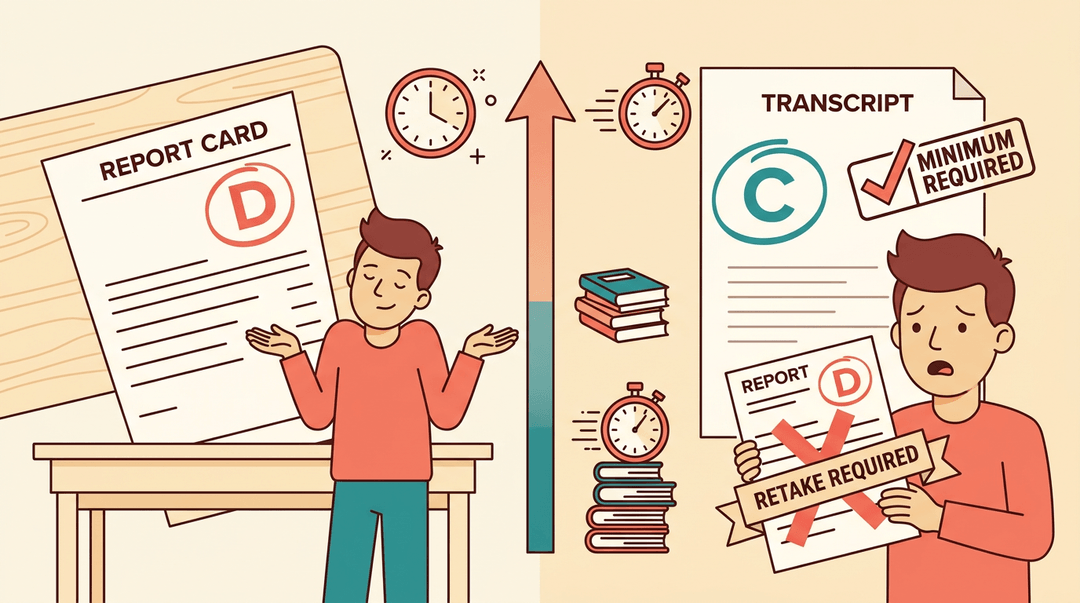
Grading is stricter than many students expect. As CWI's registration policy states, "Unless otherwise stated in a course description, a minimum grade of C or higher is required in all courses fulfilling a requisite requirement."
Core classes also tend to be harder than their high school equivalents, with faster pacing and more independent reading. Consider a student who scraped by with a D in high school writing.
In college, that grade may not count, so the student has to retake the course.
How to Plan and Finish Core Classes
Core classes only help when students finish them, so planning matters as much as choosing.
Sample Core Class Schedules
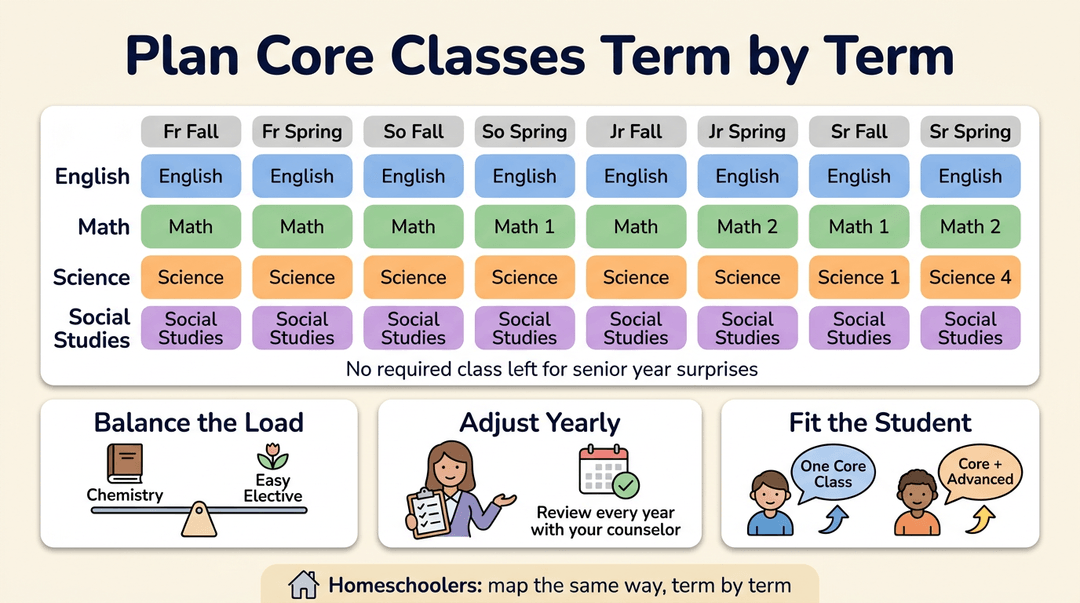
Start with a semester-by-semester plan that places each core requirement in a specific term.
Consider a ninth grader whose counselor maps English, math, science, and social studies before the first bell, so no required course surprises them in senior year.
Balance course loads by pairing a demanding class like chemistry with a lighter elective. Ask your counselor or advisor to review the plan every year, since they know your school's rules.
To differentiate course loads, let a student who needs support take one core class at a time, while a student ready for more adds an advanced section. Homeschool families can map core subjects the same way, term by term.
Taking Core Classes Online
A fully online core lets students finish required courses from home when their schedule can't fit a needed class.
According to Midland College, some online core-course programs offer a 1-year completion timeline, including late-start or mini-mester options.
As their article explains, "Instead of taking a full 15-week semester, students focus on one core class and complete it in just three weeks."
Compressed terms reward focus over juggling. Shorter isn't easier, so plan your weekly hours before you enroll.
Using GPA and Eligibility Calculators
Your grade point average (GPA) matters, so try a core course GPA calculator to see how core grades alone affect it.
Then track eligibility progress each term against your remaining requirements, so a student knows which class comes next and nobody is surprised at graduation.
Core classes give students a shared foundation, and a clear map makes that foundation easier to reach. When you know which requirements apply and where each course fits, you spend less time untangling schedules and more time teaching.
Ready to plan the whole year with less guesswork? Check out our Curriculum Planning feature, an all-in-one online teacher planner for mapping units, lessons, and standards across the school year.
References
- Regulation-6.002 - High School Graduation Credit Requirements — docshare.wps.com (2026)
- RIDE Readiness-Based Graduation Requirements: Math ... — ride.ri.gov
- INST 140 – Registration with Course Requisites — cwi.edu (2026)
- What Is a Mini-Mester? A Fast Track to College Credit at Midland College — midland.edu (2026)
- Subject Area A: History / Social Science — hs-articulation.ucop.edu
- 4.files.edl.io
- Statutory citation — sboe.texas.gov
- NCAA Division I Initial Eligibility Requirements - NCAA.org — ncaa.org (2026)
- NCAA Initial Eligibility Requirements - NCAA.org — ncaa.org
- NCAA COURSES — resources.finalsite.net
Frequently asked questions
What is core in college?
In college, “core” usually means the general education curriculum required of most students, regardless of major. It provides broad knowledge through courses such as English, math, science, social science, and humanities, while major courses provide specialized study.
What are the core classes in Texas?
Texas foundation curriculum core classes include English language arts, mathematics, science, and social studies. The exact credits and course choices depend on the graduation program and school requirements, so students should verify their plan with a counselor.
How many core classes do you take in high school?
There is no single nationwide number of high school core classes. The total depends on the state and school, but core subjects generally include English, math, science, and social studies, with many programs requiring about four English credits, three or four math credits, three science credits, and varying social studies credits.