Sign Language for Classroom Routines, Explained Simply

Jump to section
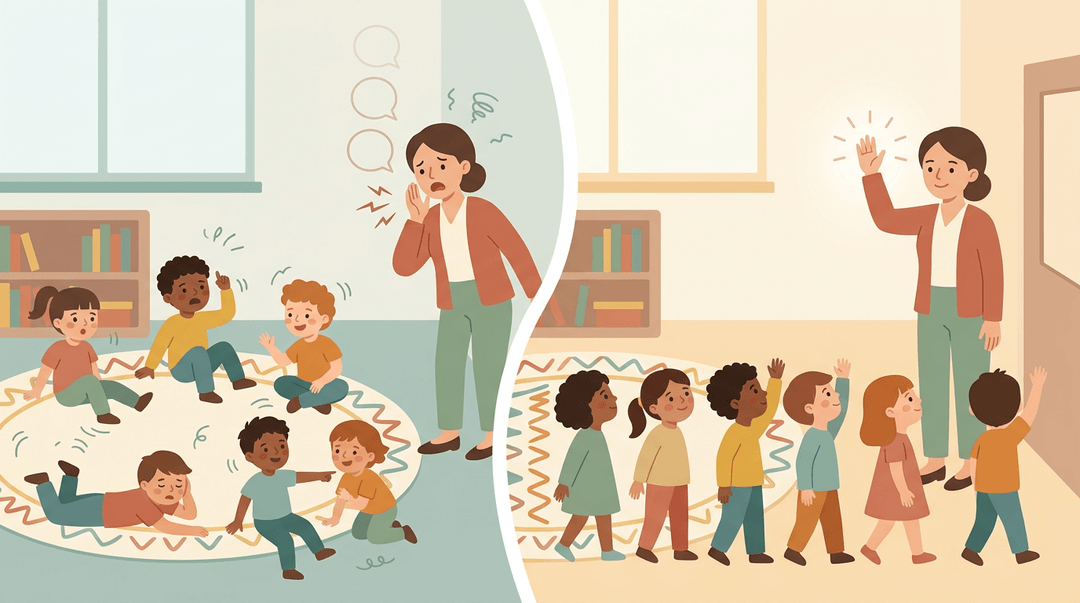
Picture saying 'line up' for the third time while half the class is still wiggling on the carpet. Now picture raising one hand and watching the whole room move, without a single word.
Classroom sign language is a small set of hand signs for everyday routines like lining up or cleaning up. A gesture often cuts through noise faster than a voice does.
In this post, we'll cover why signs work, which ones to start with, and a one-week rollout plan you can run in any grade band.
Starting Sign Language for Classroom Use
Start small with a few classroom signs tied to routines you already run. Here's how we'd suggest beginning without waiting to feel like an expert.
Why classroom signing helps young learners
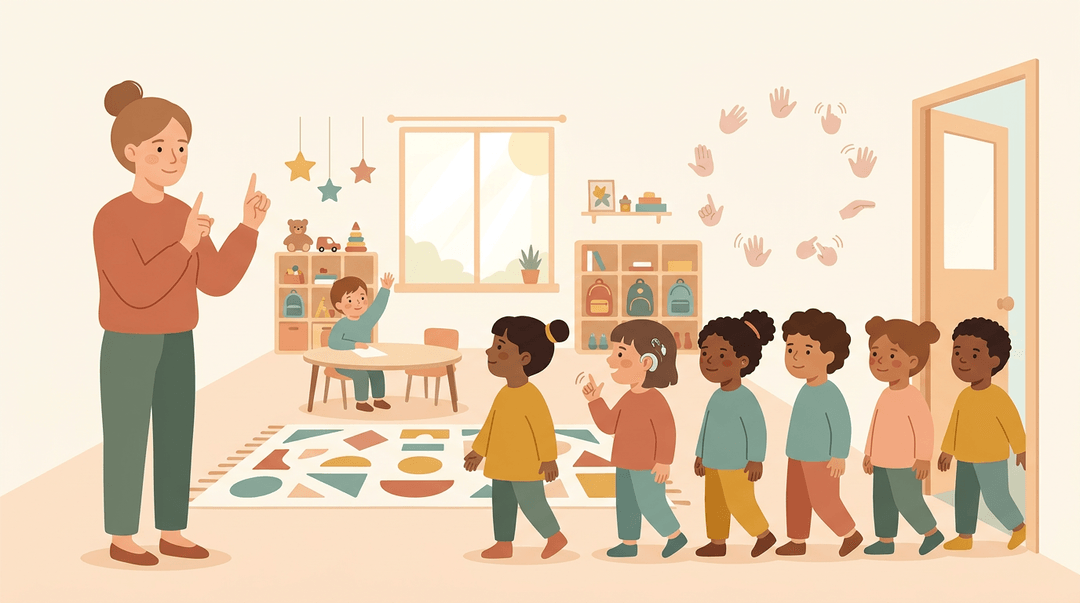
Signing is a powerful learning tool for young children, and it works for toddlers and up. Picture a kindergarten teacher who signs "line up" as she says it. Within a week, her class moves on the cue without her raising her voice.
It also reduces interruptions. As Signature puts it, signing "offers a silent way for students to communicate without disrupting lessons," which helps you maximize teaching and learning time.
Deaf, nonverbal, and special-needs students get another way to take part, too. Everyone gets a say.
Building teacher confidence without fluency
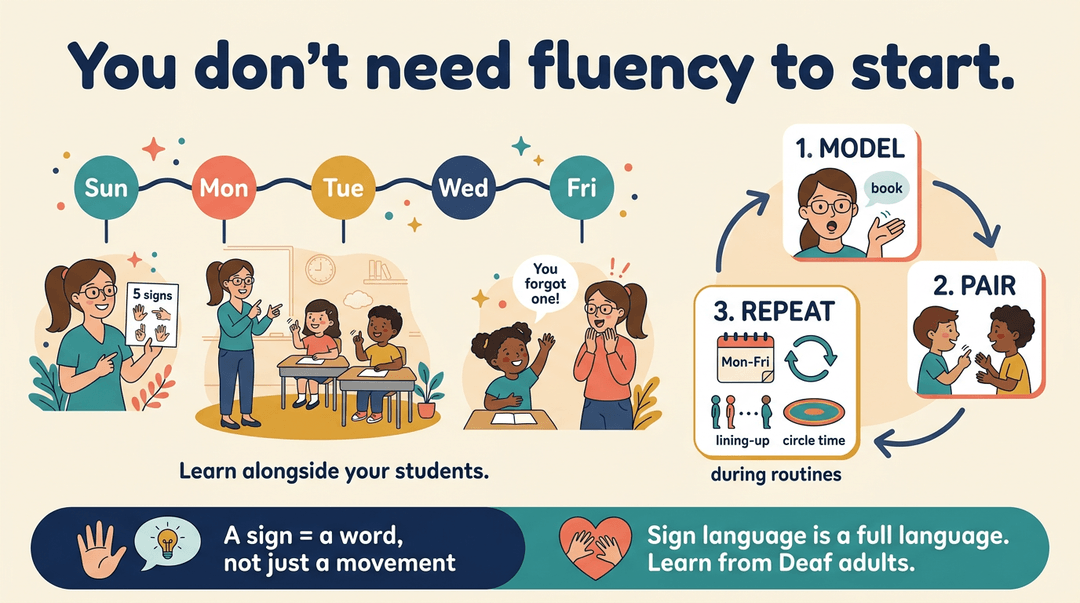
You don't need fluency, the ability to sign quickly and comfortably, to begin. Learning alongside students is fine. Consider a third-grade teacher who learns five signs on Sunday and teaches them Monday.
By Friday, her students are reminding her of the ones she forgot.
Teach each sign the same way:
- Model. Sign as you say the word.
- Pair. Students practice with a partner.
- Repeat. Bring the sign back during routines all week.
If you already use fingerplays and songs, signing will feel familiar. Signs carry meaning, though, so students learn a word, not just a movement. Once students connect each sign to a word, you can grow that into a language rich classroom one step at a time.
Kids can pick up classroom signs quickly, and Signature suggests starting with simple, everyday signs that fit into daily routines.
Signing also opens a door to the Deaf community. Local Deaf adults can teach you more than any chart. Respect the culture behind it. Sign language is a full language, not a gimmick, and it belongs to a Deaf community.
Get Classroom Signs Going in One Week
This plan gets a small set of signs working in your room by Friday. Start with three, add slowly, and let routines do the teaching.
The five-day plan
| Day | Focus | Your move |
|---|---|---|
| 1 | Pick three signs | Choose ones you'd use daily anyway |
| 2 | Model while speaking | Sign and say the word together |
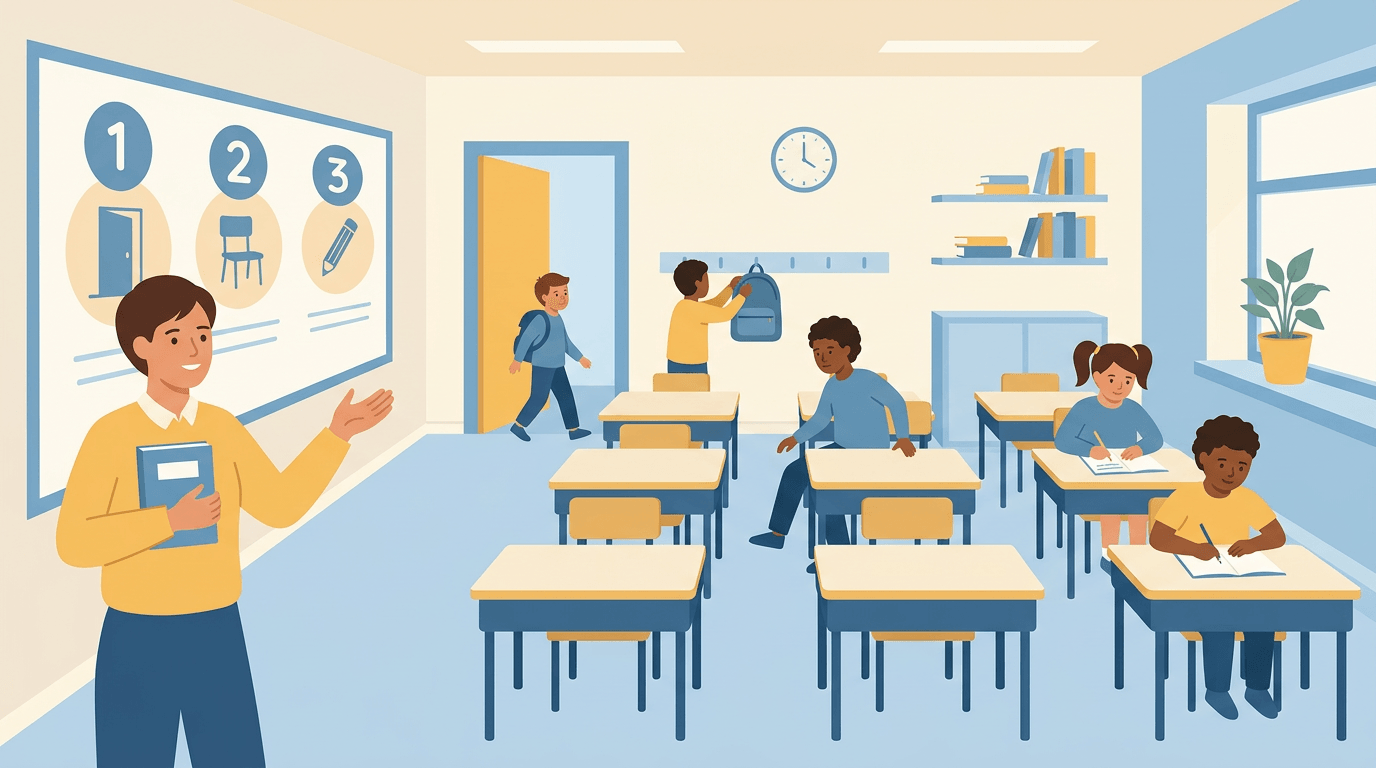
| 3 | Practice during transitions | Use signs at cleanup and line-up |
| 4 | Add a sign | Introduce one new sign, keep the rest |
| 5 | Review on Friday | Quick refresher, then celebrate use |
Each day after Day 1, add one new sign and keep using the old ones. Transitions are the best practice slot because they repeat every day and students already expect a cue.
Model while speaking. Pair the sign with your normal words so nothing is lost for anyone.
Say: "Time to clean up." (while signing CLEAN)
Starter signs by grade band
| Grade band | Starter signs | Where they shine |
|---|---|---|
| Pre-K | EAT, HELP, CLEAN | Snack, centers, cleanup |
| Elementary | restroom, agree, question | Silent requests, discussions |
| Secondary | silent agree, volume check | Group work, discussions |
Example: A second-grade teacher starts the week with restroom, agree, and question. Students sign restroom from their seats, so she never stops her read-aloud. By Friday, the class signs agree during discussions without being asked.
Your setup checklist
Confirm these before Monday, then revisit them on Friday:
- Reliable sign source chosen. Use one trusted reference so every sign stays consistent.
- Visual sign chart posted. Keep it at student eye level, near where you'll use the signs.
- Families taught key signs. Send home the starter signs so students can use them anywhere.
- Student sign use praised. Name it specifically: "Thanks for signing HELP. I saw that right away."
- Sticking signs tracked. Jot down which signs students use on their own, then drop or reteach the rest.
⚠️ Watch out: Don't add a fourth sign before the first three feel automatic. A crowded chart is the quickest way to lose students.
Plan your sign rollout inside EMStudio's lesson planner and attach the sign chart to each class.
Tools and Materials to Use
You don't need a closet full of gear to start. A few well-chosen resources cover most of a typical school day.
Printable posters, videos, and guides
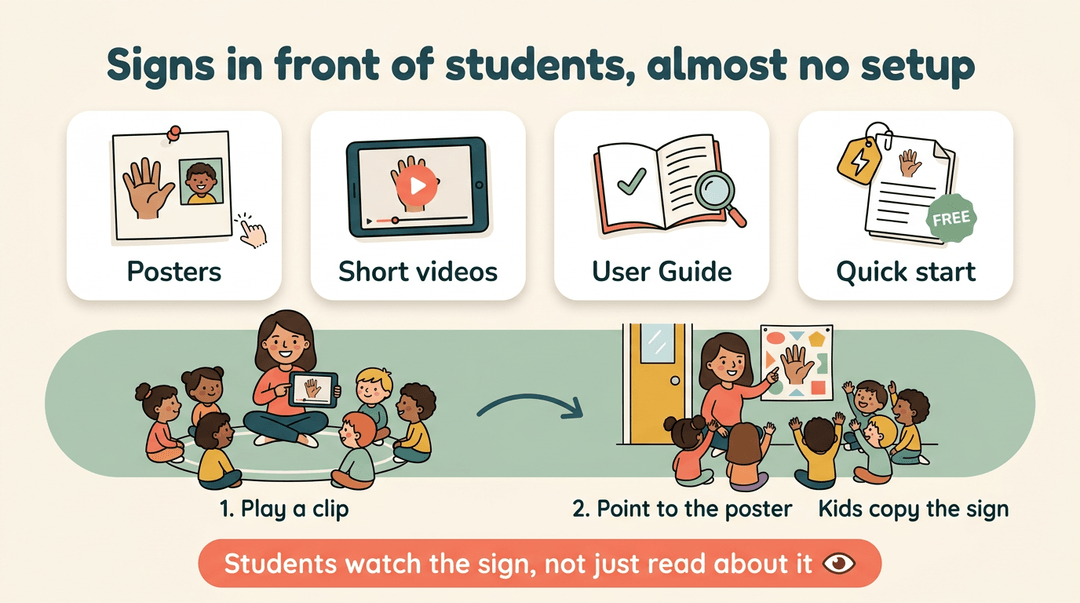
Start with materials that put signs in front of students with almost no setup:
- Printable illustrated posters: Print them, post them at eye level, and point to them during routines.
- Video collection for daycare: Short clips built for young learners, ready to play during circle time or transitions.
- User guide: Read it before you launch so you know what each resource is for.
- Free quick start guide: A no-cost starting point for running your first sign routine.
Picture a daycare teacher at morning circle. She plays one clip on the tablet, then points to the poster by the door while the children copy the sign. Nobody has to hunt for materials, so circle time keeps moving.
The goal is for students to watch a sign, not just read about it.
Look up signs and their variations
Check a sign before you teach it, so you're modeling it correctly:
- Video of CLASSROOM sign: Watch it performed before you demonstrate it yourself.
- Sign variations: American Sign Language (ASL), Signing Exact English (SEE), and fingerspelling, where each letter gets its own handshape.
- Member-only descriptions and memory aids: Some sign descriptions and memory aids are reserved for members. If you have access, use them to help students remember tricky handshapes.
Pick one variation for your class and stick with it. Consistency is what makes a sign stick.
Everyday Signs for Early Childhood Routines
The fastest way to start is with routine signs: gestures paired with the moments you already run each day. They stick when they show up at the same time.
Slip signs into your current routine
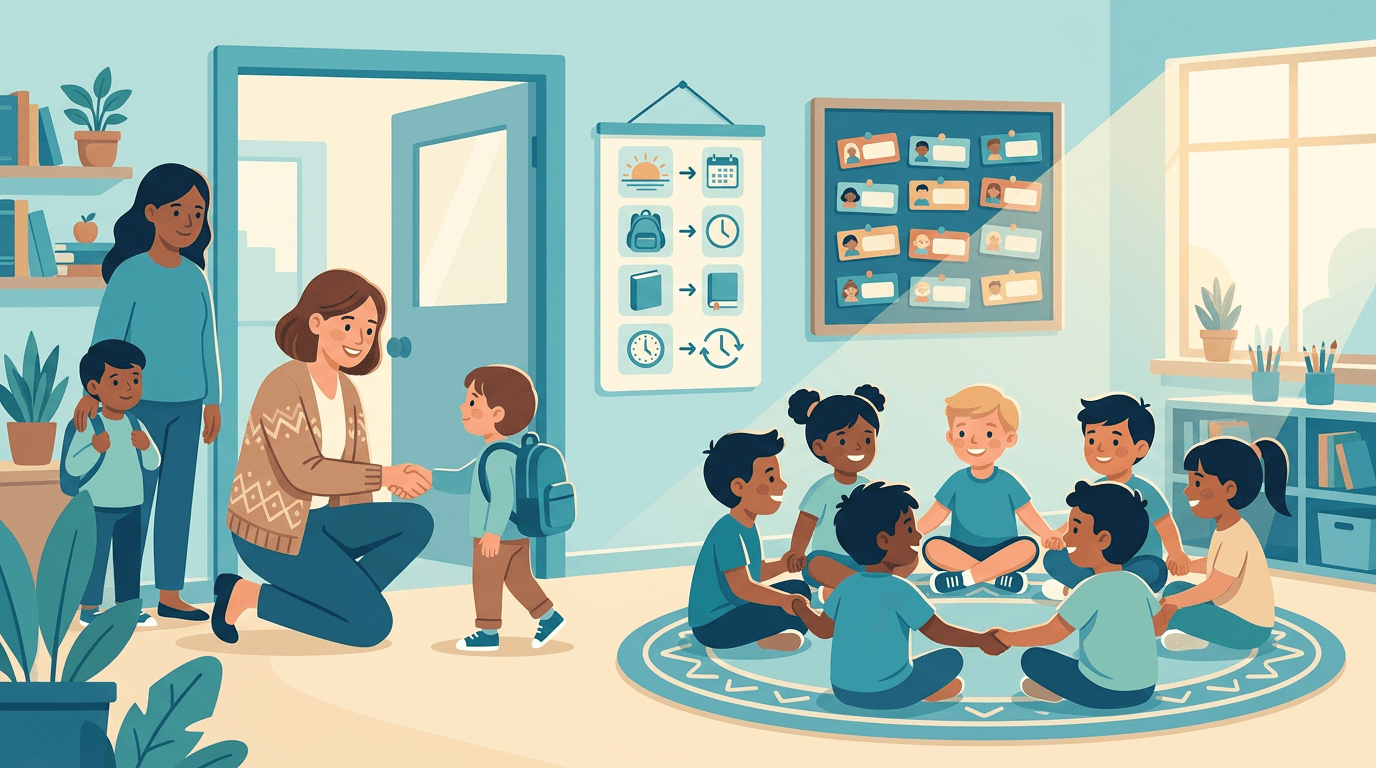
Signs don't need their own slot in your schedule. Add them to the rhythm you already have, so each sign lands when its moment arrives. It works with infants, toddlers, and mixed-age groups, and it's flexible enough for even a loose, unstructured day.
Sign inside the routine, not on top of it.
Consider a preschool teacher who signs EAT as she sets out snack bowls. Because the sign lands at the same moment daily, children connect the gesture to food before the first bite.
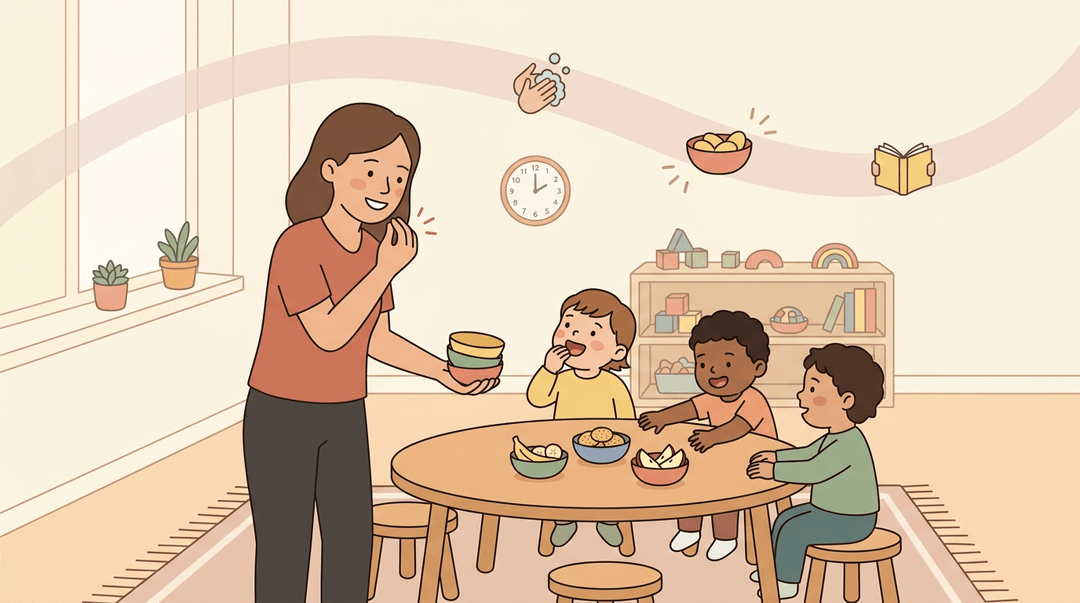
Daily moments that work best for signs
Look for these natural fits:
- Arrival and circle time. Sign WAIT while the last children find their spots.
- Play and clean up. Sign PLAY when centers open and CLEAN when it's time to tidy.
- Story and snack time. Sign BOOK before reading and EAT at snack.
- Outside and nap time. Sign OUTSIDE at the door and SLEEP as the room dims.
- Dismissal. Use ALL DONE to close each activity and the day, so the sign always means the same thing.
Starter signs to teach first
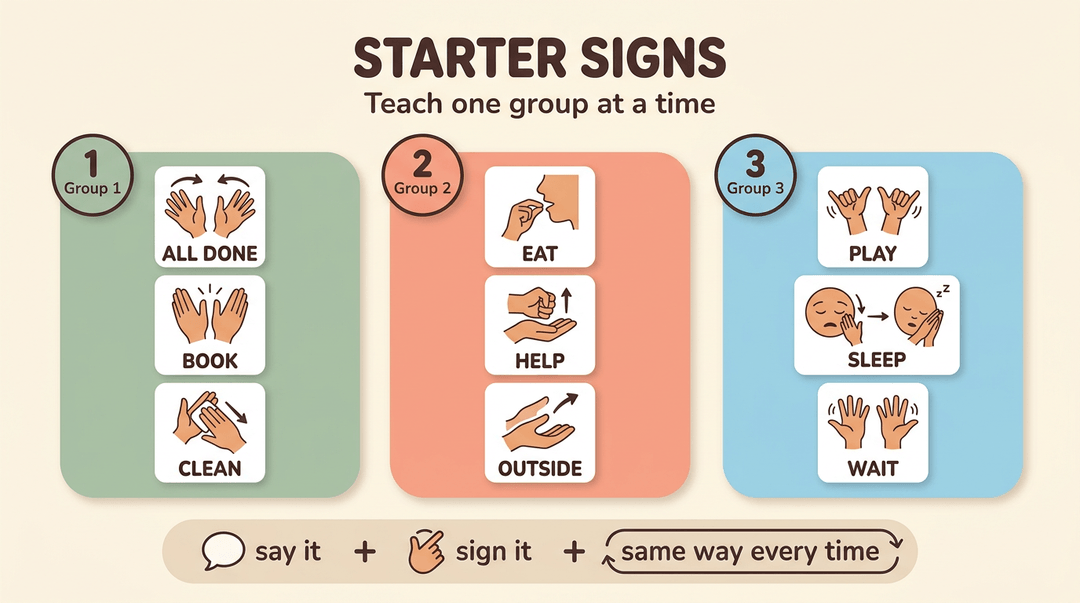
Start small with starter signs: the words you'll use most in a day. Teach them in three groups, one group at a time, so each gets plenty of practice.
- ALL DONE, BOOK, CLEAN
- EAT, HELP, OUTSIDE
- PLAY, SLEEP, WAIT
Pair each sign with its spoken word and the same gesture every time. Repetition does the teaching.
Signs That Keep Classroom Management Simple
A handful of signs can run much of the day without a raised voice. Here's how to use them for discussions, needs, and courtesy.
Signs for joining in discussions
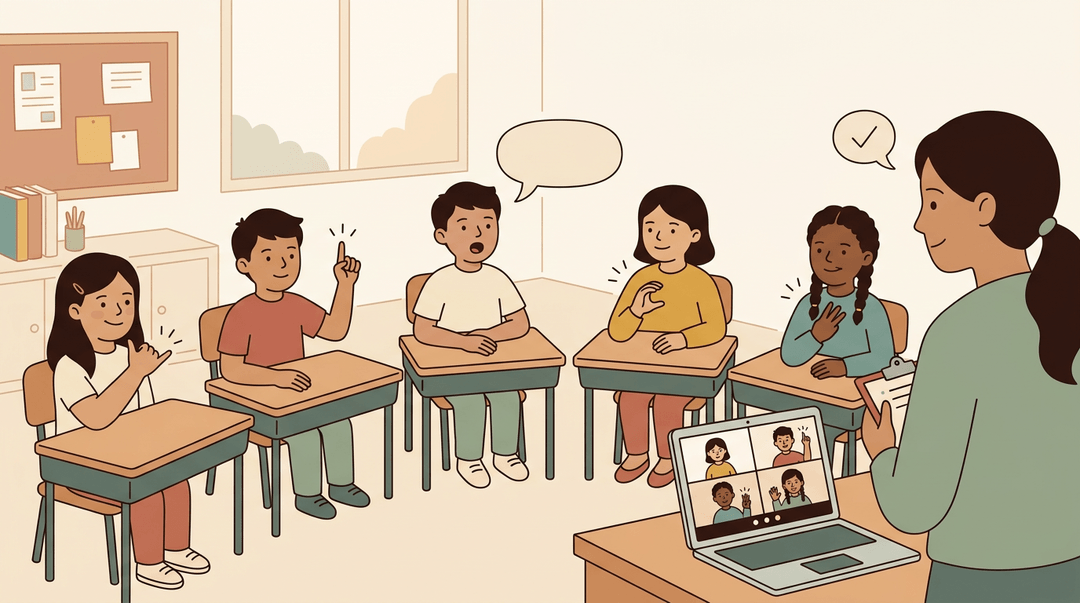
Discussions get noisy fast. A same sign (a quick gesture for agreement) lets students show support instead of talking over a classmate. Question and comment signs let students add a thought without jumping in. Noise is only one part of it, so a sensory classroom plan can also look at light, touch, and movement.
A visual check-in, like fingers for how confident they feel, lets you spot who needs another pass without stopping the lesson. Practice them first, so students watch for signals instead of waiting their turn.
Signs also work on camera, so virtual discussions stay just as organized.
Signs for needs and quiet behavior
A restroom sign lets students request a trip with a small gesture, and you answer with a nod. A middle school science teacher mid-demonstration can say yes without breaking focus.
Students ask instead of interrupting, so instruction time stays protected. The lesson keeps moving.
Silent applause (hands raised and wiggled, no sound) celebrates a win without drowning out the next step. Signs also keep the volume low when energy runs high.
Build courtesy and community through signing
Teach a sign for thank you and another for you're welcome. Hallway requests can happen with a sign instead of a shout, cutting repetitive chatter.
During group work, a quiet thank-you lets a teammate know their idea landed without pulling the group off task. A fifth-grade teacher circulating the room hears less noise and sees more kindness.
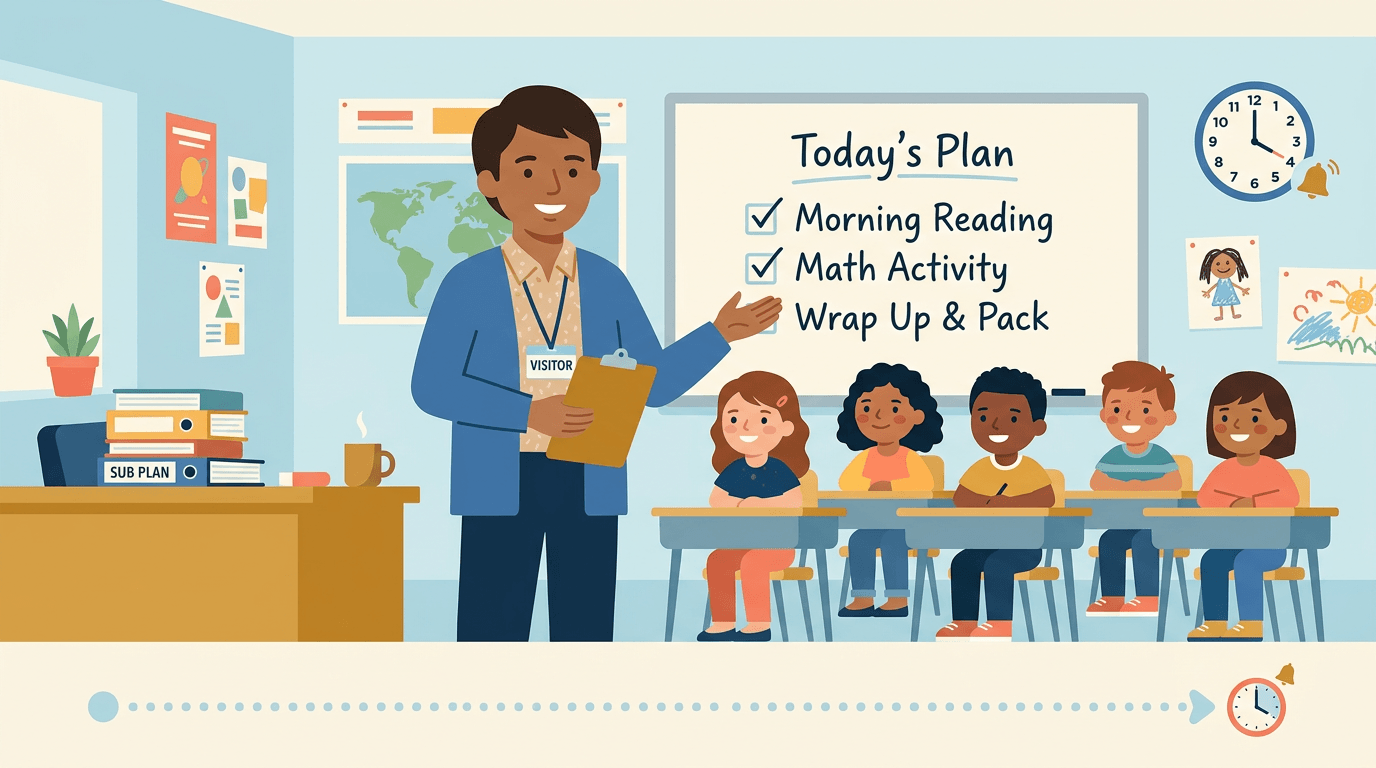
Post a simple sign chart by the door. A substitute picking up an unfamiliar room doesn't have to invent routines, because students already know the signals. Teachers who want more on setting routines like these can start with our Harry Wong classroom management book guide.
When signs become part of your routine, your students learn to read your room without constant reminders. Start with a handful, practice them daily, and build from there. Your class gets calmer, and you get more time to teach.
Ready to bring more order to your day? Check out Classroom Management to organize your classes, rosters, and timetables in one structured workspace.
References
- How BSL enhances learning for all children — signature.org.uk