7 Steps to a Language Rich Classroom, Explained

Jump to section
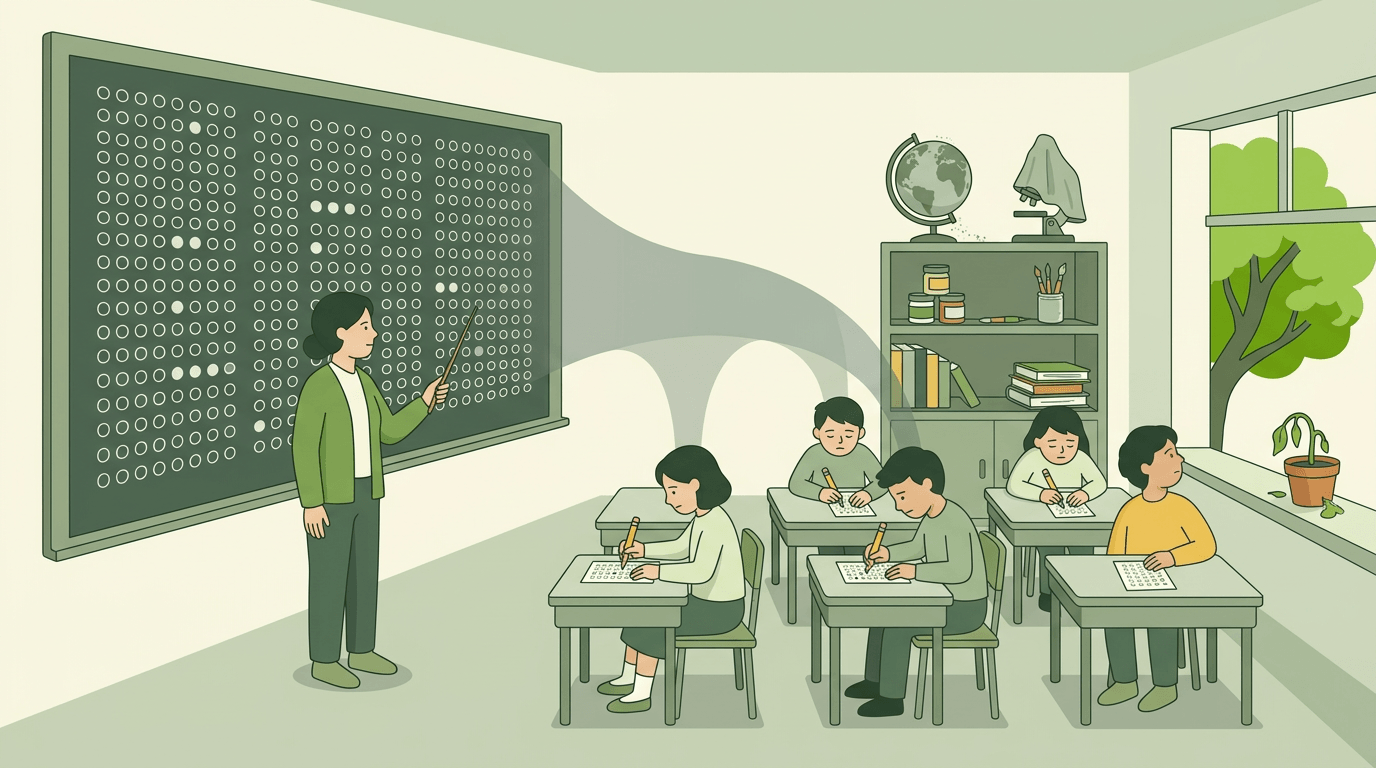
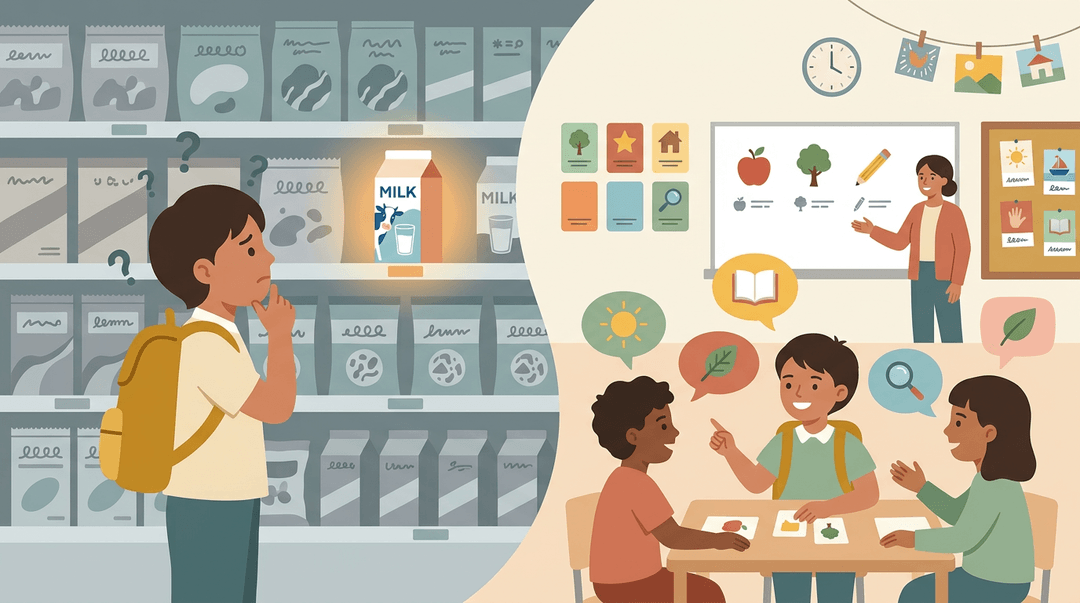
Picture walking into a foreign grocery store where you can spot the milk but have no idea what anything else says. Plenty of students feel that way in a classroom full of new vocabulary that nobody stops to explain or use out loud.
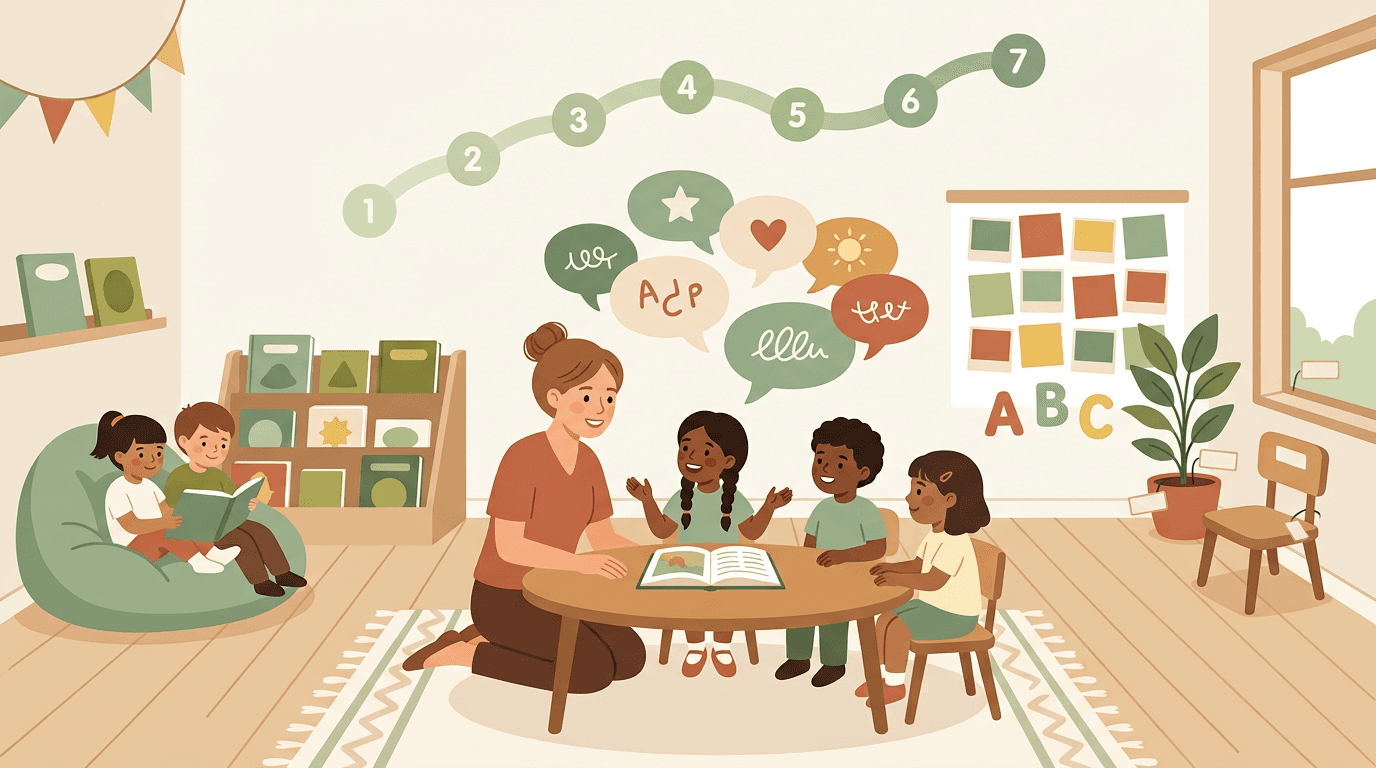
A language-rich classroom changes that. It's a room where students hear, read, discuss, and use new words throughout the day, and where vocabulary is part of every lesson.
In this post, we'll walk through the 7 Steps to build that kind of classroom, then turn them into a routine you can plan into your next lesson.
7 Steps to a Language Rich Classroom
Before you build anything, it helps to know where the framework came from, how its steps connect, and where it fits. A language-rich classroom is one where students hear, read, speak, and write academic language all day, not just during reading time.
The authors and how the framework grew
The framework comes from a book by Seidlitz and Perryman, and it was built for multilingual learners. The routines support students who are still learning English while giving every student more language to work with.
The approach has also been adapted for world language classrooms. A second edition has since been released, so check that you're using the newest version.
How the steps build on each other
The seven steps are designed as a system, not a checklist. Here's how the pieces fit:
- Steps 1 through 4: routines that take little prep, so you can start right away.
- Steps 5 through 7: lesson components that build on those routines.
That structure gives you an easy entry point. Begin with the simpler routines, then bring in the harder steps once your students know the rhythm. Start small, then build.
Where the framework fits in classrooms
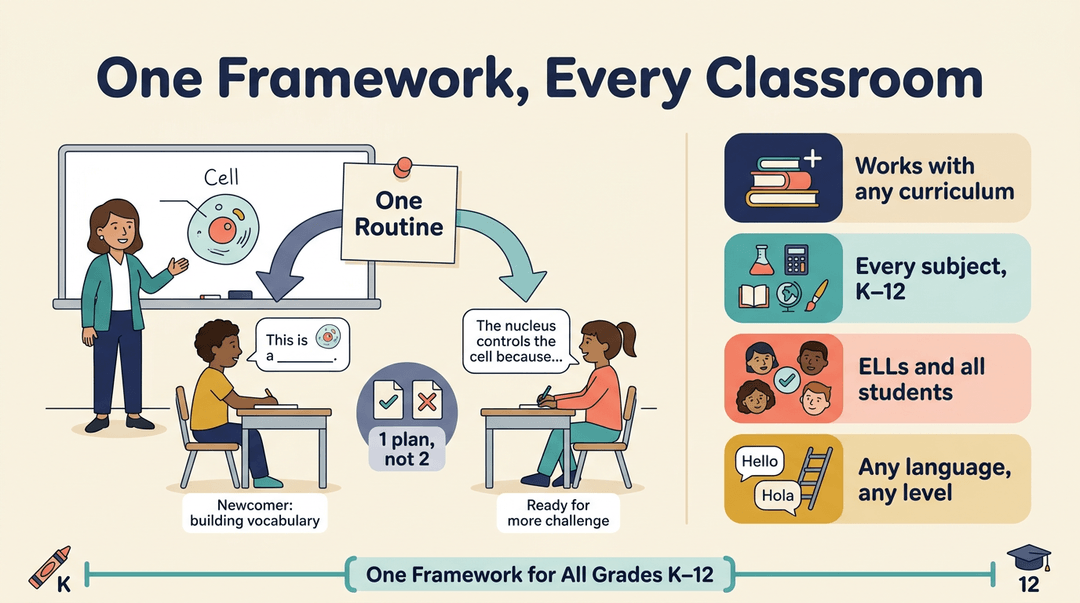
- Any curriculum. It fits alongside the materials you already use, so you don't have to start over.
- Every content area, kindergarten through 12th grade. It isn't limited to language arts.
- Supports English language learners (ELLs) and all students. The same routines serve ELLs and every other student in the room.
- Any language or level. It works whether students are learning English or a world language, at any proficiency level.
Picture a high school biology teacher with a newcomer who's still building vocabulary and a student ready for a bigger challenge. One routine can serve both, so she doesn't have to write two lesson plans.
Steps 1 to 4 Get Everyone Participating
Participation rises when students know what to say when stuck and expect to answer. These steps build both habits.
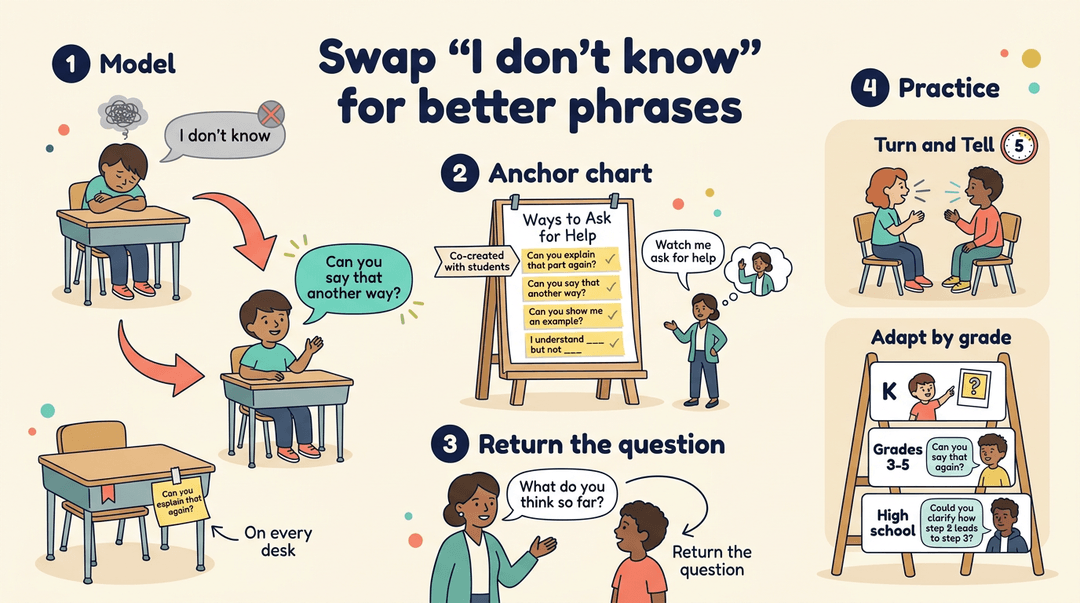
Swap I don't know for better phrases
Stuck students often shut down. Teach help-seeking phrases instead, like "Can you explain that part again?" Use explicit instruction and modeling: say, "Watch me ask for help," then show it.
Picture a fourth-grade teacher who gets a shrug every few minutes. After a week, students ask "Can you say that another way?" and the lesson keeps moving.
Build a co-created anchor chart and keep bookmarks or sticky notes on desks. When a student stalls, always return the question to them: "What do you think so far?"
Practice phrases with Turn and Tell 5, where partners rehearse them aloud. Adapt by grade: a kindergartner might point to a picture card, while a high schooler can phrase a full request.
Require full sentences and randomize calls
Ask for complete sentences. Instead of "One-half," students say, "The shape is split into two equal parts, so each piece is one-half."
Randomize and rotate calling so the same voices don't dominate. Calling on everyone over time beats calling on the usual hands.
A middle school science teacher who draws names from a rotating list gives quiet students the same practice as eager ones. Nobody coasts.
Signals that get the whole class responding
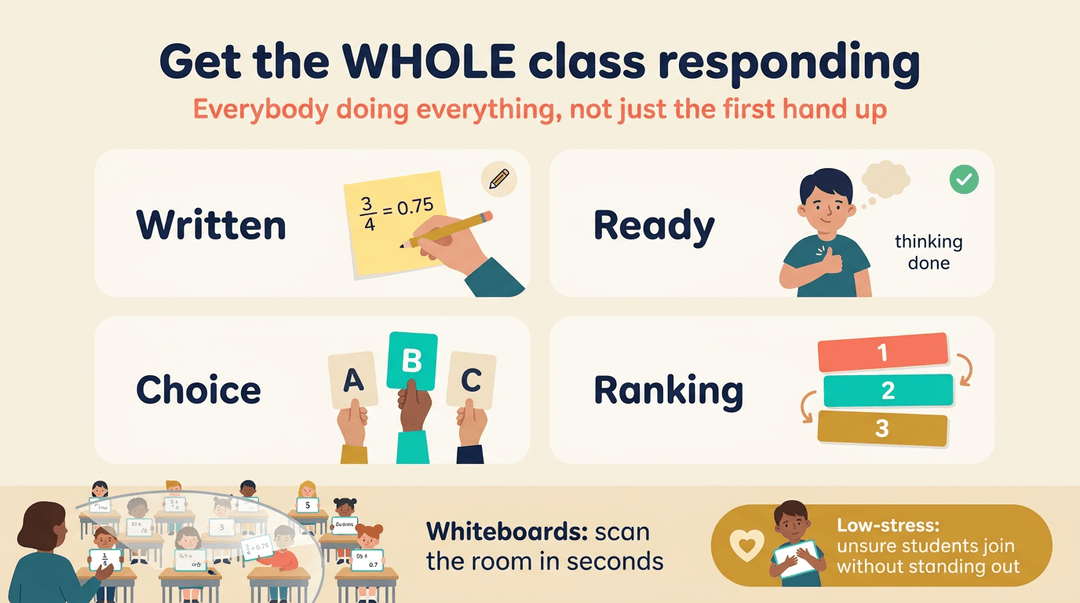
Aim for everybody doing everything, not just the first hand up. Try these response types:
- Written: students jot an answer before sharing.
- Ready: students signal when they've finished thinking.
- Choice: students pick from options.
- Ranking: students put ideas in order.
Whiteboards let you scan the whole room's thinking in seconds, so you'll know who's with you. Keep it low-stress inclusive participation so unsure students can join without standing out.
Steps 5 to 7 Build the Lesson
These final steps put your plan into action: what students see, say, and write.
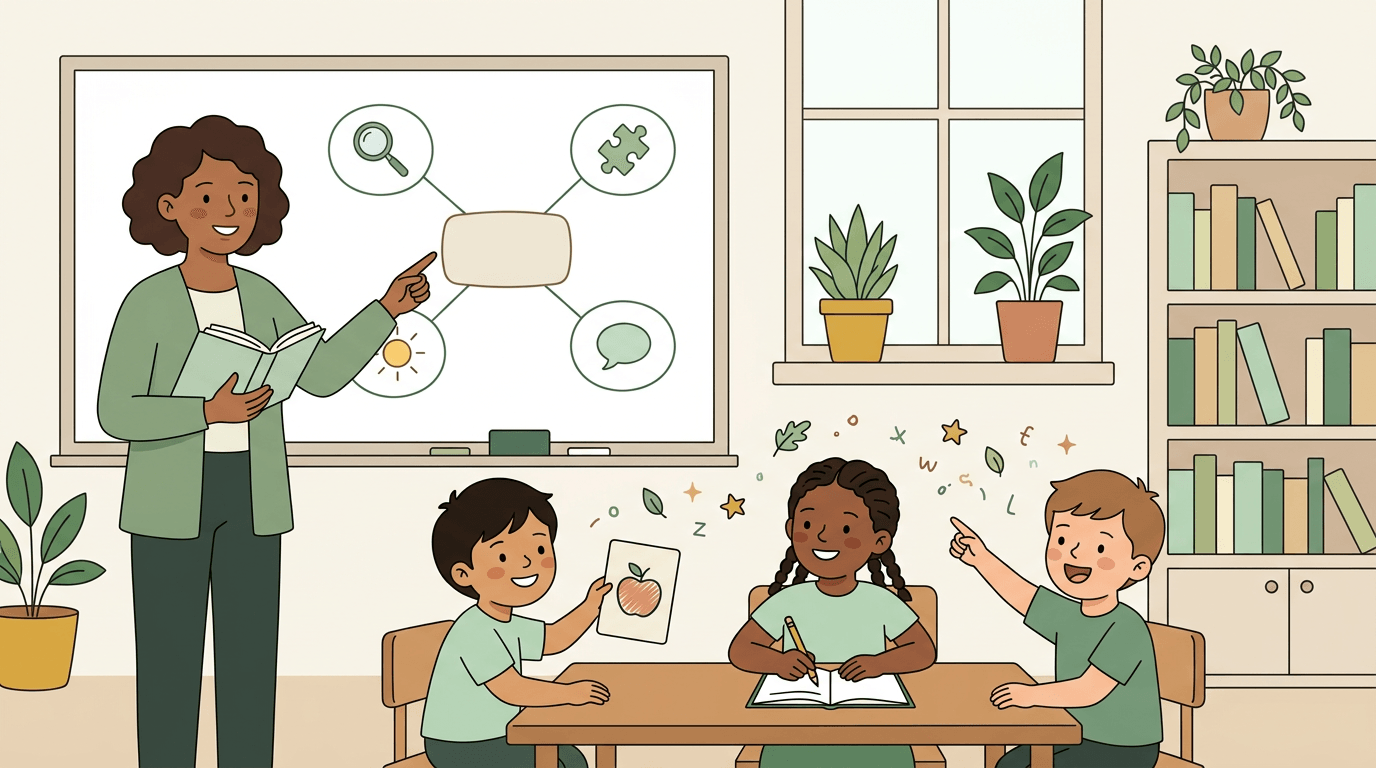
Build vocabulary with visuals and gestures
According to the Stanford Encyclopedia of Philosophy, dual coding theory holds that information can be represented through both verbal and visual forms.
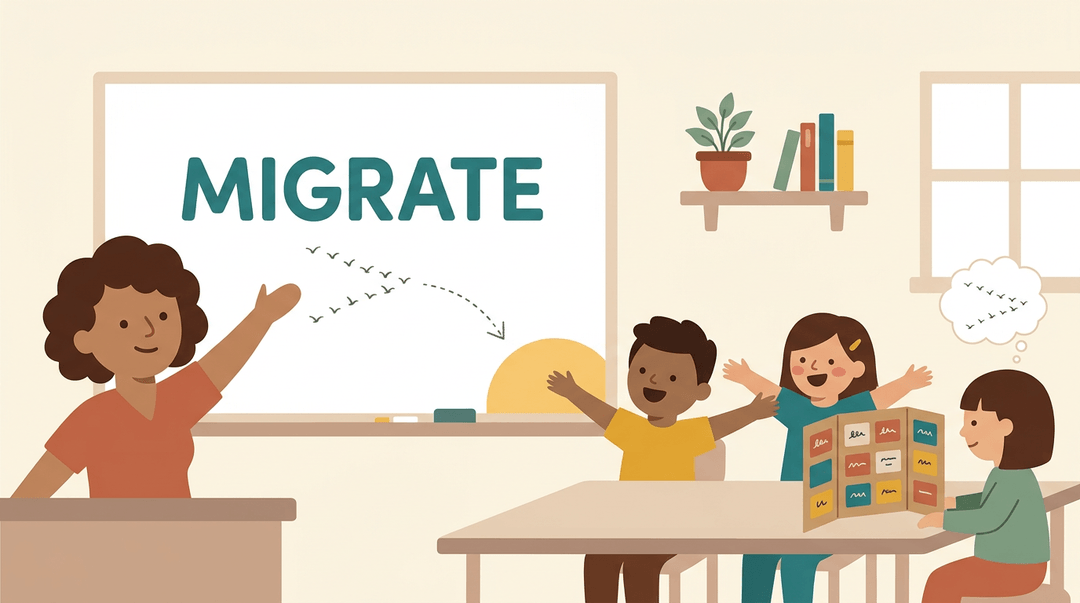
A fourth-grade teacher who pairs migrate with a sketch of birds flying south gives students a picture to recall when the word appears.
Try these tools:
- Gestures, color-coding, and annotations. Pair each term with a motion, color-code word families, and mark key words in the text.
- Portable tri-fold word walls. A board students carry to their seats keeps words within reach.
- Circumlocution pyramid and bingo. Circumlocution, describing a word without naming it, is the skill students practice in both.
Guide structured talk and literacy practice
Set expectations first: what a good answer sounds like and how long each round lasts. Then chunk the time into short, timed rounds.
Proactive scaffolds are supports you set up before students need them, like a word bank on each desk. Sentence stems such as The main idea is ___ because ___ are lexical chunks, ready-made phrases students reuse as single units.
Use quick teacher check-ins. A middle school science teacher gives partners three minutes, then kneels beside one pair to hear whether they're using the stem. Thirty seconds, fewer surprises.
Bonus activities to try in class
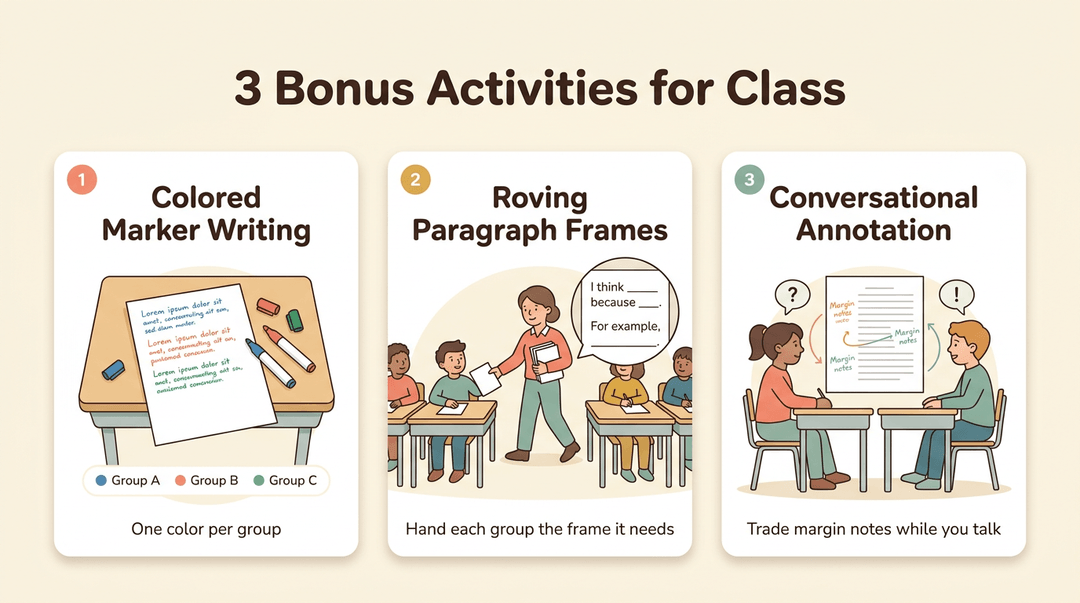
- Collaborative writing with colored markers. Each group writes in a different color so you can track contributions.
- Roving paragraph frames. A paragraph frame is a fill-in-the-blank template. Circulate and hand each group the one it needs.
- Conversational annotation. Partners trade margin notes on one text as they talk.
Plan a Language-rich Lesson This Week
Use this planning template to build one lesson where every student speaks, reads, or writes in full sentences. Fill in five slots, check the list at the end, and you're ready to teach.
Fill in five slots
- Set one language objective
- Name what students will say or write, not just learn.
- Try: "Students will explain how plants get energy, using 'because.'"
- Choose one routine step
- Pick one of the seven steps, not all of them.
- Partner talk is an easy first pick.
- Add visuals and key vocabulary
- Pair each key word with a picture or object.
- Example: sunlight, roots, energy, each with a labeled drawing.
- Script sentence stems
- Write the stem students will lean on.
- Example: "Plants need ___ because ___."
- Plan a total-response check
- Every student answers at once, so you see all of them.
- Say: "Show me on your whiteboard."
Example: A fourth-grade teacher sets the objective above, picks partner talk, and posts three picture-labeled words. Partners take turns with the stem. Then everyone writes one sentence on a whiteboard and holds it up.
⚠️ Watch out: Resist stacking several routine steps into one lesson. One step, done well, beats five done thinly.
See it by grade band
| Grade band | Routine | What it looks like |
|---|---|---|
| K-2 | Gestures, picture word wall | Students act out grow, then say "The seed grows." |
| 3-5 | Partner talk, stems | "I think ___ because ___." Partners swap roles. |
| 6-8 | Annotation, paragraph frames | Mark causes in a text, then use the frame below. |
| 9-12 | Written response, ranking | Rank three causes, then justify the top choice. |
For grades 6-8, try this frame: "One cause of ___ was ___. This led to ___." For grades 9-12, try: "I ranked ___ first because ___."
Check the plan before you teach
- Students speak in sentences. The stem asks for more than one word.
- Every student responds. No one can opt out of the check.
- Vocabulary is displayed and reused. Words stay visible, and the task requires them.
- Scaffolds are visible. Stems and frames are posted, not just spoken.
- The exit ticket checks language. It asks for a sentence using the stem or key word.
Save your language objectives, stems, and routines as reusable templates in EMStudio's lesson planner.
Grow a Love of Words in Class
Vocabulary grows fastest when students see you caring about words. Here's how to make that visible.
How teachers model enthusiasm for words
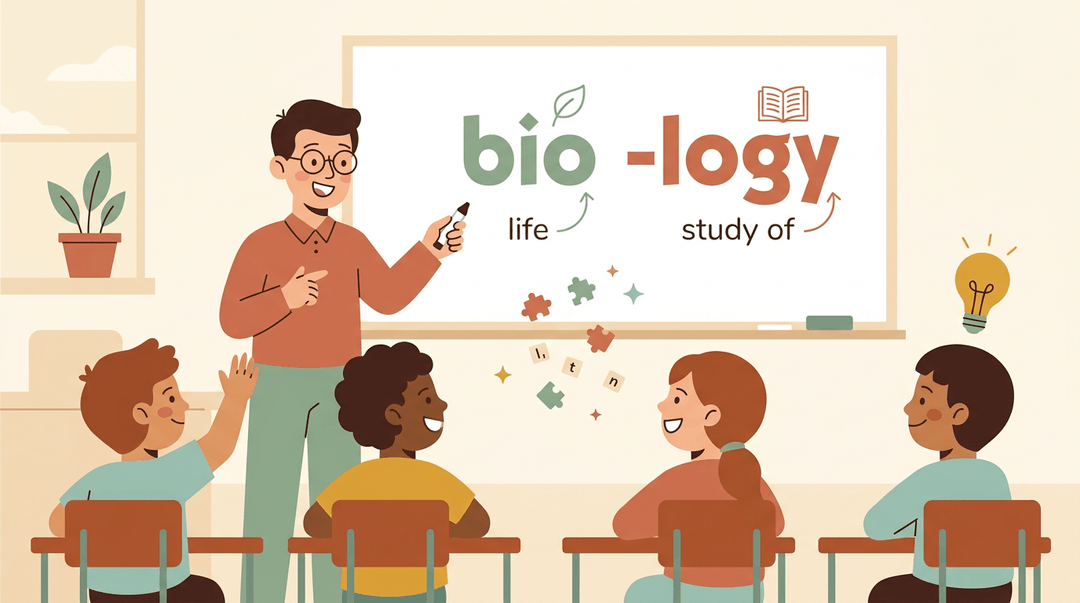
Enthusiasm is caught, not taught. Share a word you recently learned and where it came from. Explore etymology (a word's origin) and morphology (how prefixes and roots build meaning). A science teacher might split biology into bio and -logy on the board.
Joy is the payoff. Words become puzzles students want to solve.
Everyday habits that grow vocabulary
Small, daily routines beat occasional big lessons.
- Read aloud twenty minutes daily. A Literacy Worldwide chapter argues daily read-alouds can't be overestimated.
- Quotes and poetry across curriculum. Pull a poem into science or a quote into math.
- Answer in complete sentences. Restating the question puts new words to work.
- Word of the day. Post one word and challenge students to spot it all day.
- Thesaurus and dictionary use. Help students pick the right synonym.
- Organized genre-labeled library. Genre bins help reluctant readers find a 'yes' book.
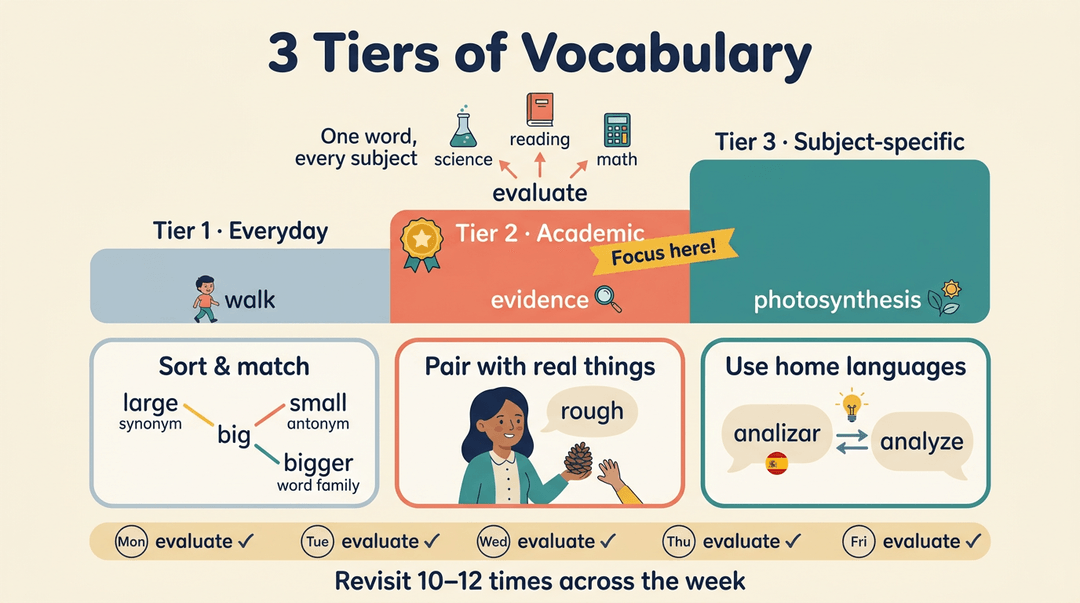
Teach vocabulary across three word tiers
Sort words into three tiers:
- everyday words like walk (Tier 1)
- academic words like evidence (Tier 2)
- subject terms like photosynthesis (Tier 3)
Focus on Tier 2: a student who owns evaluate can use it in any subject. Use interactive word relationships by having students sort and match synonyms, antonyms, and word families.
A chapter on vocabulary acquisition through extensive reading notes that proponents claim learners need ten to twelve exposures to a word, so revisit each Tier 2 word across the week.
Pair words with pictures and objects. A first-grade teacher holding up a pinecone while teaching rough anchors the word.
Tapping students' home languages (translanguaging) means drawing on them alongside English. A Spanish speaker might notice analizar is close to analyze.
Helping students write stronger sentences
Use sentence stems, starter frames like 'One reason ___ is that ___.'. They give struggling writers a head start.
- Required sentence ingredients. Include a subject, a strong verb, a detail, and a Tier 2 word.
- Daily sentence-writing contests. Set a two-minute timer and a prompt word; the best sentence wins a shout-out.
- Themed quizzes. Build them around weather or sports to put new words in context.
- Stems for homeschool and tutoring. Homeschool parents and tutors can use the same frames one-on-one.
What the Research Shows
Here's what the 7 Steps have shown so far, plus the learning ideas behind them.
Results from three phases and five campuses
The work ran in three phases across five campuses, with gains in:
- math
- reading
- the Texas English Language Proficiency Assessment System (TELPAS)
Long-term tracking is planned, including student oral language growth.
Fidelity of implementation means following the steps as designed, and it's less about whether you use them than about how faithfully you do.
Preliminary internal reviews from school districts, summarized on Geosirius's 7 Steps page, show a correlation between high-fidelity implementation and improved State of Texas Assessments of Academic Readiness (STAAR) scores. Fidelity counts.

The learning ideas behind the method
Comprehensible input means language students mostly understand, with just enough new material to stretch them. Low-stress supported output means students speak and write with scaffolds like sentence frames, without the pressure of perfection.
Dual coding theory says pairing words with pictures gives students two ways to remember a concept.
Think of a newcomer at a table of English speakers. A picture and a sentence frame let that student answer out loud, and you hear exactly what they're ready to say.
Adapt the steps instead of copying them
Avoid a cookie-cutter approach: the goal is to adapt the steps, not copy them word for word. Fidelity and adaptation aren't opposites. Follow the design, then tailor the details.
Use 'Step it up' sections to build higher-level content thinking when a group is ready, and keep the content demanding. Students tend to take more risks with a teacher they trust, so strong relationships make the routine work.
Putting the 7 Steps into Practice
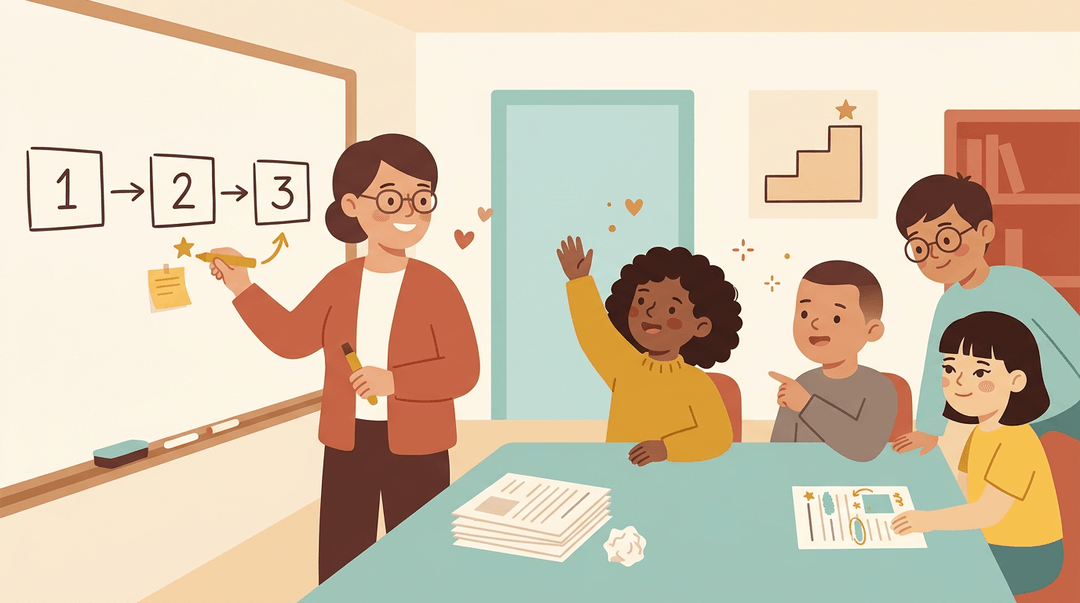
Knowing the seven steps is one thing. Getting them into daily lessons is the real work, and we'd suggest rolling them out in small, manageable pieces.
Training teachers and leading the rollout
Start with a campus-wide book study so everyone shares the same language. Follow it with hybrid ongoing professional development (PD), blending in-person and online sessions so learning continues past a single workshop. Then make it hands-on.
Run a card sort activity, and have teachers mingle to match each step with its visual and description.
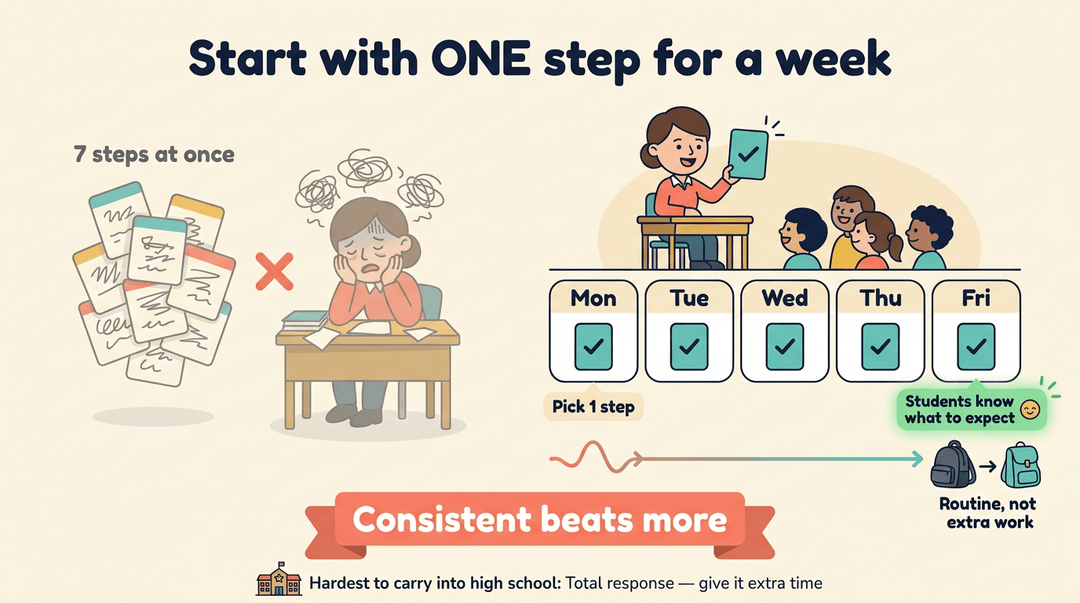
Start with one step for a week
Trying all seven at once can overwhelm everyone, so pick one step and try it for a week. This approach has been used in grades 2-4 and in English as a second language (ESL) co-teaching.
Picture a second-grade teacher who chooses a single step on Monday and uses it every day. By Friday, students know what to expect, and the routine stops feeling like extra work.
Here's the pattern: consistent routines beat doing more. The hardest step to carry into high school is total response, so give yourself extra time with it there.
Why enthusiasm doesn't always become practice
Many teachers leave training excited, then never fully fold the steps into their lessons. Enthusiasm is a good start, but practice is where the steps actually live.
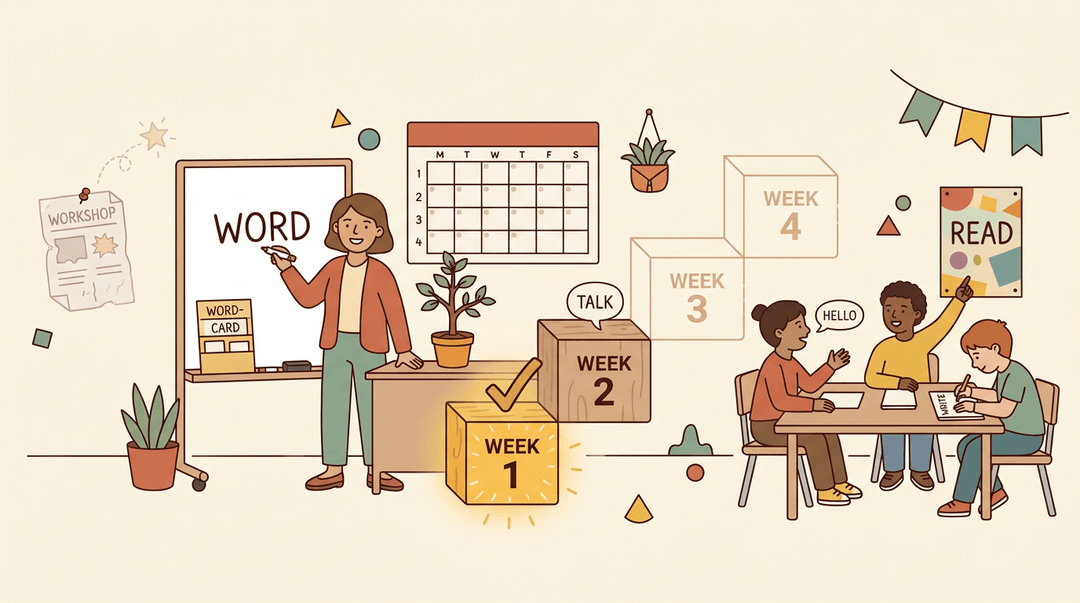
Part of the fix is how the steps are back-loaded for ease, spreading the work out instead of piling it into week one. Excitement fades. Routines last.
Building a language-rich classroom doesn't mean overhauling everything you do. It means making words a visible, spoken, and regular part of your lessons, so students get more chances to use the vocabulary they need.
Start with one step this week, then add another once it feels routine. Ready to plan with these steps built in? Check out our Lesson Planner to write, organize, and reuse lesson plans across multiple classes from one place.
References
- Mental Imagery > Dual Coding and Common Coding Theories of Memory (Stanford Encyclopedia of Philosophy/Fall 2016 Edition) — plato.stanford.edu
- L2 vocabulary acquisition through extensive reading — doi.org (1996)
- 7 Steps To A Language Rich Classroom — geosirius.ifz.ru (2025)
- Chapter 2: The Power of Reading Aloud to Your Students — literacyworldwide.org
Frequently asked questions
What is the direct instruction method of teaching?
Direct instruction is a teacher-led approach that clearly explains and models a skill or concept, then gives students structured practice and feedback before they work independently. Lessons typically use explicit explanations, examples, checks for understanding, and review.
What are the 7 C's in education?
There is no single universal set of “7 C’s” in education; different frameworks use different terms. One commonly used version is critical thinking, creativity, collaboration, communication, citizenship, character, and connectivity.
What are the 7 key components of classroom management?
Classroom-management frameworks vary, but seven common components are clear expectations, consistent rules, predictable routines, organized classroom spaces, positive teacher-student relationships, engaging instruction, and fair responses to behavior.
What are the 5 C's of language teaching?
The ACTFL World-Readiness Standards identify five C’s for language learning: Communication, Cultures, Connections, Comparisons, and Communities. They emphasize using language to communicate, understand cultures, connect with other subjects, compare languages and cultures, and participate in communities.
What are the 7 classroom management strategies for students with learning disorders?
Helpful strategies include using clear, brief directions; breaking assignments into smaller steps; pairing spoken directions with written or visual cues; keeping routines predictable; allowing extra processing time; checking understanding privately; and giving specific, positive feedback. Adapt supports to each student’s needs and any accommodations in their learning plan.
What are the steps of direct instruction?
A common direct-instruction sequence is to review prerequisite learning, state the objective, explain and model the new skill, lead guided practice, check understanding and give feedback, then assign independent practice and review the learning. Teachers may adjust the sequence or revisit steps when students need more support.
What are the 6 basic steps of instruction?
Six basic instructional steps are to set an objective, activate prior knowledge, present and model new content, guide student practice, check understanding and provide feedback, and assign independent practice or review. The precise labels differ across teaching models.
Can you give me an example of direct instruction?
To teach the word “migrate,” a teacher states the learning goal, shows a picture of birds flying south, explains and models the word, and asks students to use it in a sentence with a partner. The teacher checks responses, gives feedback, then has each student write an original sentence using “migrate.”