Positive Punishment vs Negative Reinforcement Explained

Jump to section
Imagine you're trying to calm a noisy class. You could give a reward for quiet hands, or you could remove a privilege that's been making things worse. Both aim for the same result, but they work in very different ways.
That's the heart of positive punishment and negative reinforcement, two terms that sound alike and often get mixed up.
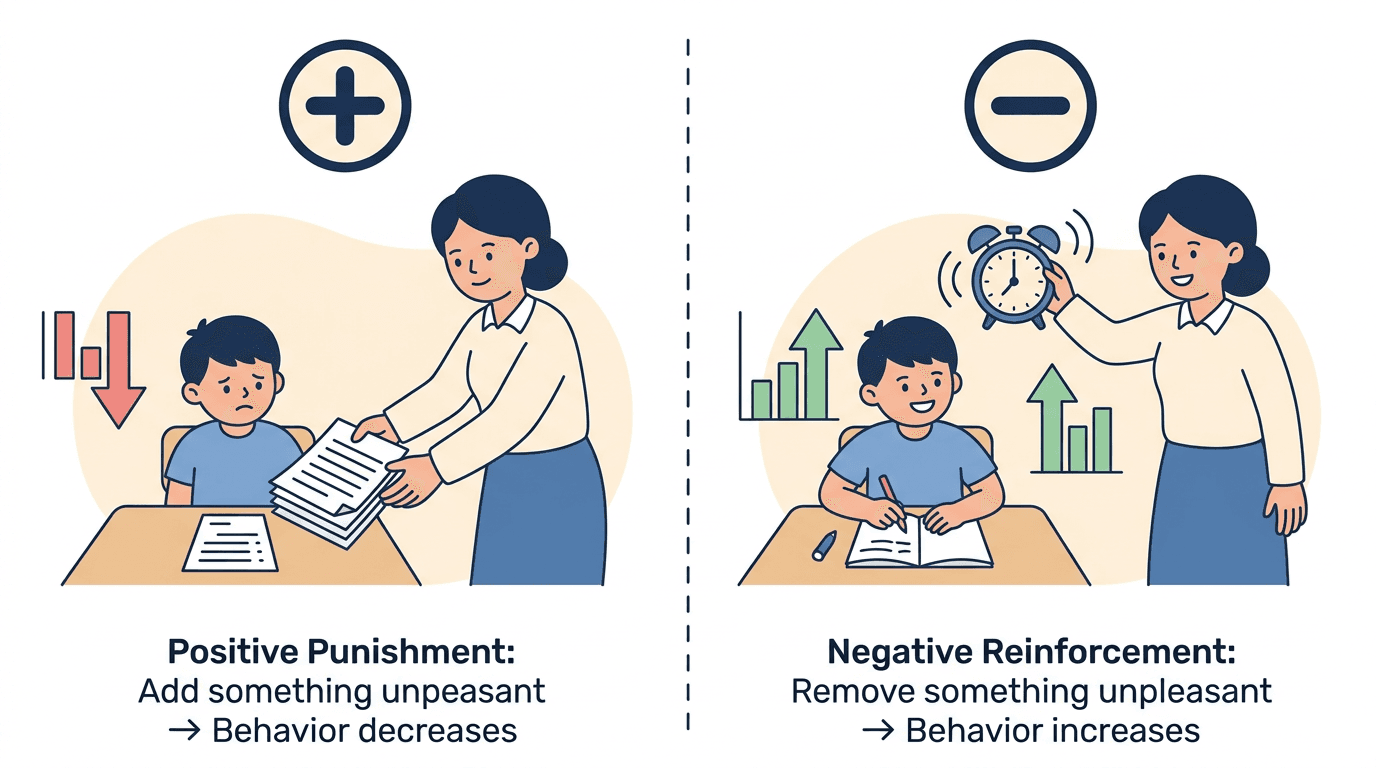
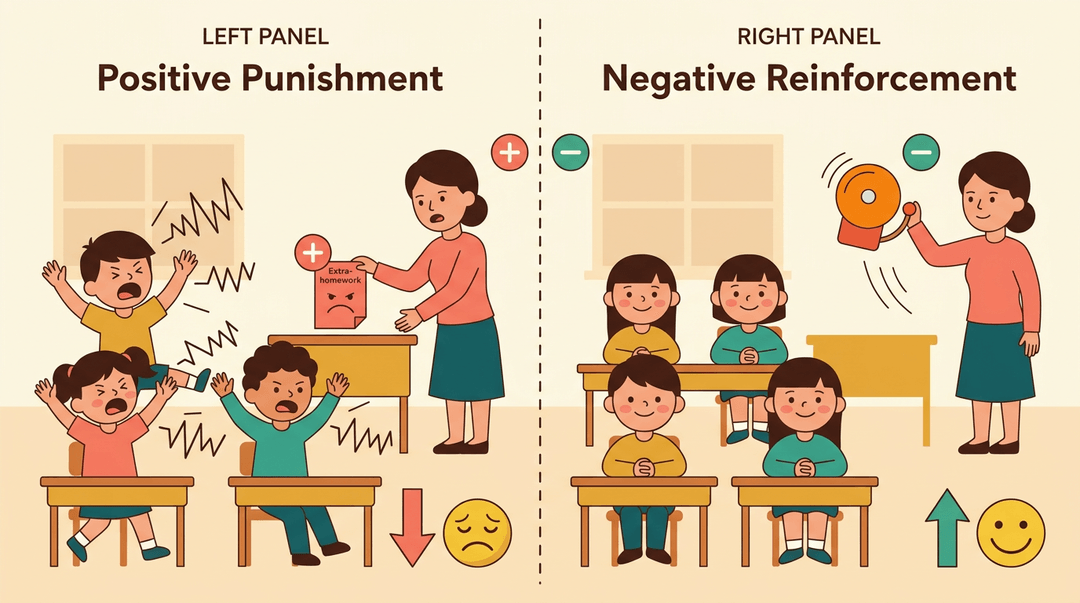
The short answer: positive punishment adds something unpleasant to decrease a behavior, while negative reinforcement removes something unpleasant to increase a behavior.
In this post, we'll define both, show you how to tell them apart, and walk through classroom examples you can use right away.
Positive Punishment vs Negative Reinforcement Basics
Every consequence falls into one of four types, and two questions will help you sort them: Is something being added or removed? And does the behavior become more or less likely afterward? The four types of consequences are:
- positive reinforcement
- negative reinforcement
- positive punishment
- negative punishment
Negative reinforcement takes away something unpleasant
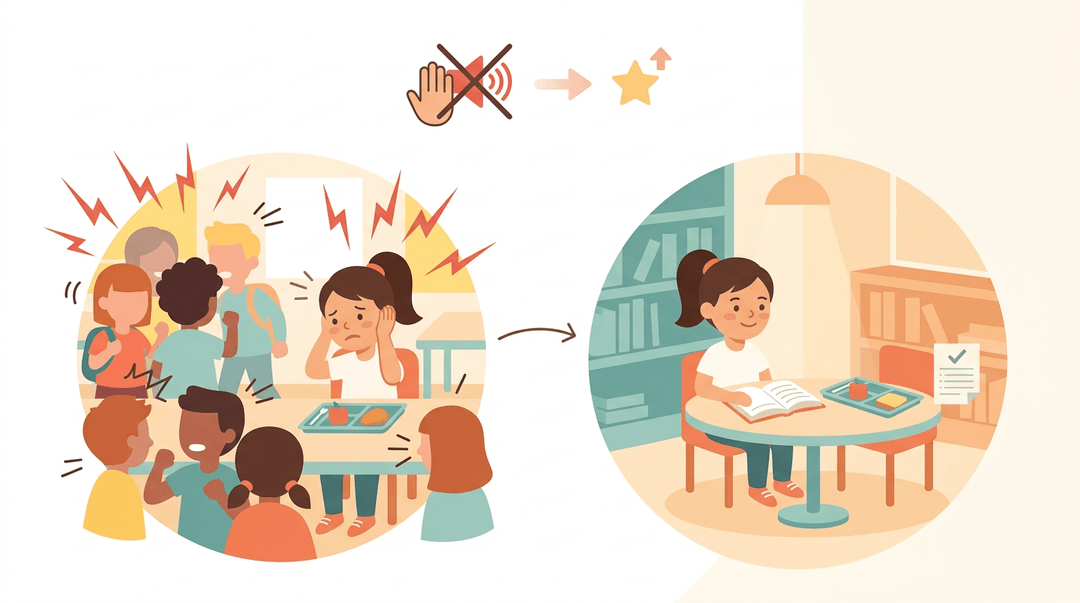
Negative reinforcement removes an aversive stimulus, which is a fancy way of saying something unpleasant. That removal strengthens the behavior that came right before it.
The idea traces back to B. F. Skinner, whose operant conditioning framework included negative reinforcement. Picture a student who dreads a loud, crowded lunch line.
When she finishes her work early and gets to eat in the quiet library, escaping the noise rewards finishing early, so she's more likely to do it again. In short, you subtract something unpleasant to make a behavior stronger.
Positive reinforcement adds a reward
Positive reinforcement adds something desirable right after a behavior, and that behavior happens more often. Praise and money incentives are common examples.
Consider a fifth-grade teacher who gives a specific compliment each time a student checks work before turning it in: 'You caught that sign error before handing it in.' Within a few weeks, checking becomes a habit.
Positive punishment adds something unpleasant
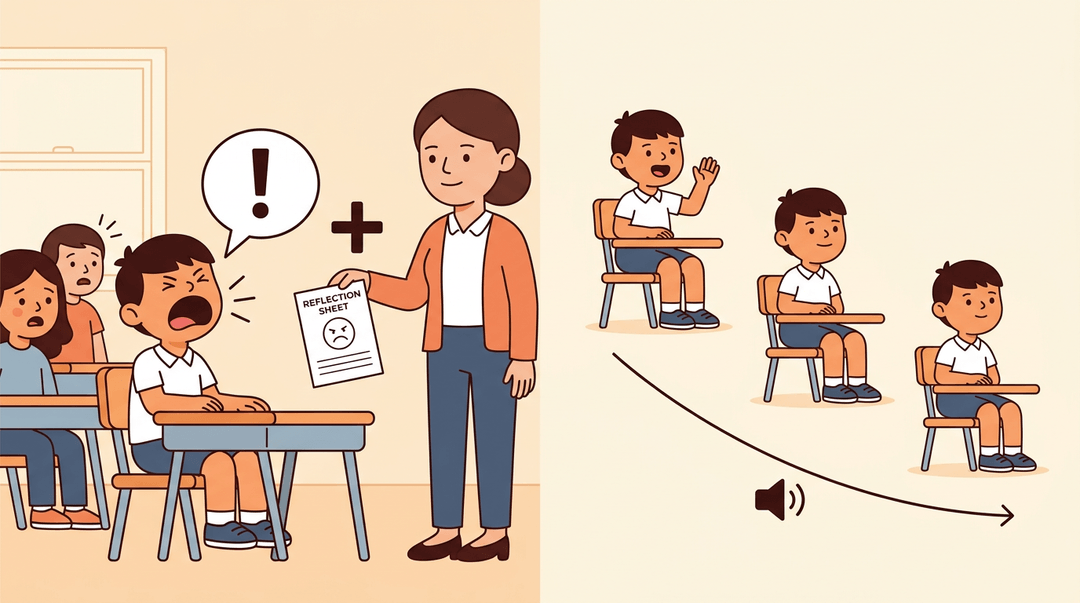
Positive punishment adds an aversive stimulus after a behavior, and that behavior decreases. Spanking is one example, where something painful is added to weaken a behavior.
In a classroom, a teacher might assign a required reflection sheet after a student keeps shouting out. The extra work is unpleasant, so shouting out becomes less frequent. Adding something bad weakens the target behavior.
Negative punishment takes away a reward
Negative punishment removes something the student already enjoys, which weakens the behavior that led to losing it. At home, a parent who pauses TV time after a child skips homework is using negative punishment.
The TV time is withdrawn, and skipping homework becomes less likely. Denying dessert works the same way. Keep the two questions handy, and these four labels get much easier to sort.
Telling Reinforcement and Punishment Apart
Both terms describe what happens after a behavior, and they're easy to swap. Here's how to tell them apart.
Adding vs removing something
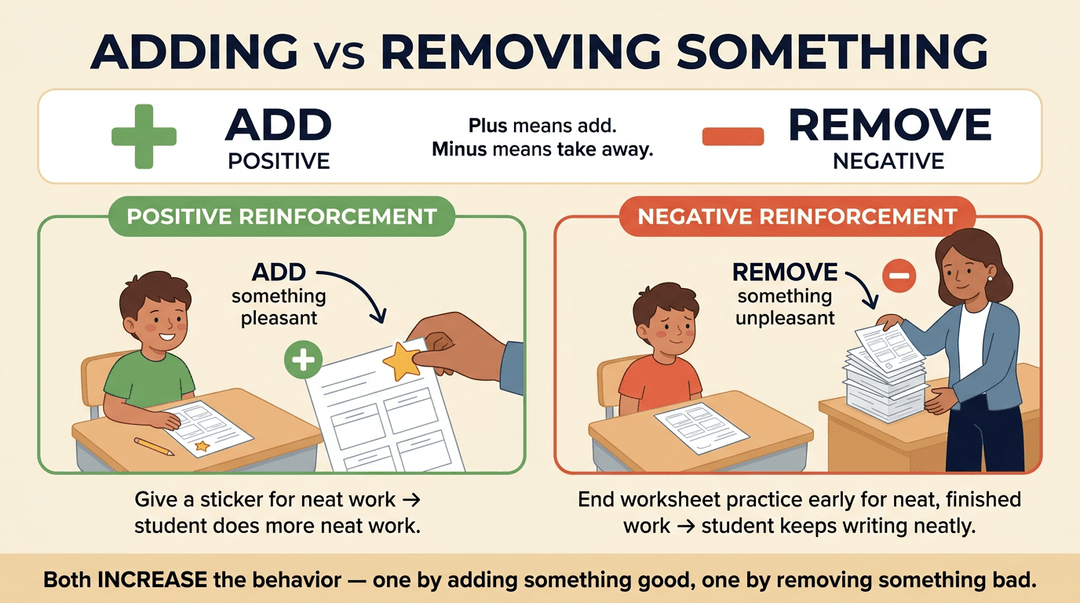
When something is added after a behavior, it's positive. When something is removed, it's negative. Positive means plus, negative means minus.
This sorts reinforcement into positive reinforcement (adding something pleasant) and negative reinforcement (removing something unpleasant). Consider a fourth-grade teacher who excuses students with neat, finished worksheets from the rest of the practice.
Ending that chore strengthens neat work. That's negative reinforcement.
Does it strengthen or weaken the behavior
Reinforcement increases a behavior, and punishment decreases it. A psychology text on operant conditioning states it directly. Azrin and Holz framed punishment as the opposite of reinforcement, and that mirror image is a useful lens.
Take a student who keeps calling out during silent reading. Adding an extra writing task after each outburst is positive punishment: something is added, and the calling out drops.
Why these terms get mixed up
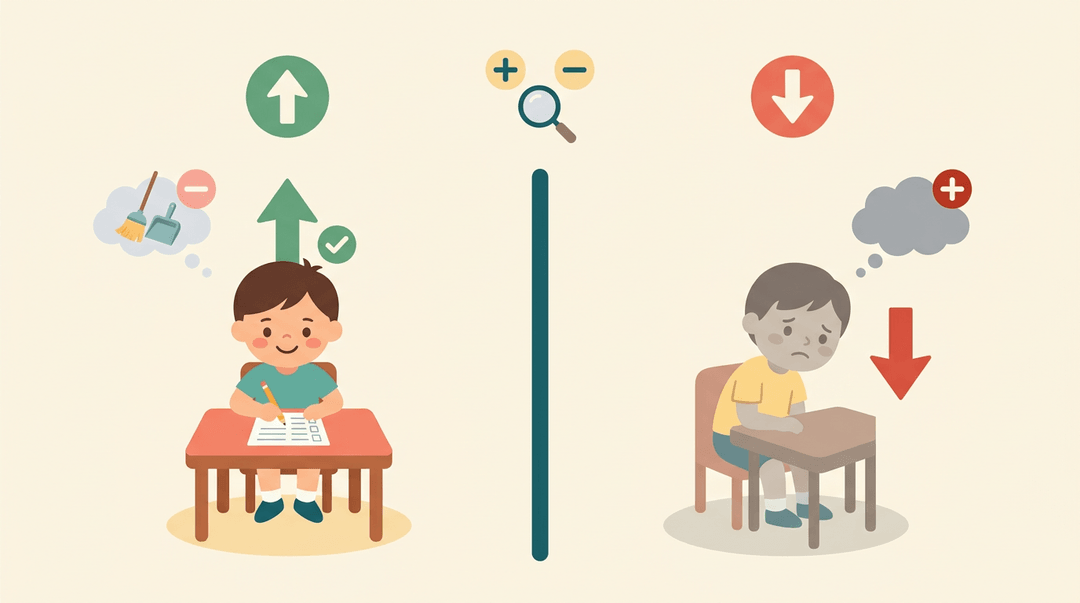
Negative reinforcement gets mistaken for punishment because both involve something unpleasant, and negative sounds like a penalty. Two questions clear it up: did the behavior go up or down, and was something added or removed?
In the worksheet case, neat work went up and an unpleasant task was removed, so it's reinforcement. The two ideas are also historically tangled, which keeps the confusion alive. Check the outcome, not the word.
Using These Consequences in Your Classroom
Use this guide when a behavior keeps repeating and you need to choose a consequence, fit it to your students' age, and check that it's working.
Pick the consequence
Start with your goal, then read across.
| Your goal | Reach for | Try saying |
|---|---|---|
| Build a behavior up | Reinforcement first | "You started right away. Pick today's warm-up song." |
| Cut a behavior down | Remove the payoff, teach a replacement | "Next time, raise your hand and I'll come to you." |
| Student is escaping work | Let a break follow a request | "Say 'I need a break' and you can reset." |
Reinforcement grows the behavior you want. Positive punishment (adding something unpleasant) only suppresses one, and it doesn't teach what to do instead. So pair every removal with a skill the student can use next time.
⚠️ Watch out: Check for accidental reinforcement loops. If a student shouts to avoid a worksheet and you send them to the hallway, you may have just rewarded the shouting.
❌ Task removed after the outburst. ✅ Task paused after a break request.
The difference is what the student did right before the relief.
Quick reference by grade level
| Level | Try | What it looks like |
|---|---|---|
| Elementary | Sticker charts | Reinforces the behavior you named |
| Elementary | Calm corner | A spot to reset, then rejoin |
| Middle school | Privilege removal | Tied to the specific behavior |
| Middle school | Check-in/check-out | A brief adult touchpoint before and after the day |
| High school | Logical consequences | The result connects directly to the choice |
| High school | Contracts | Written goals the student helps shape |
Keep track of what you use
You can't tell if a consequence works from memory alone. Confirm that you're recording:
- Behavior and consequence type: what happened, and whether you added or removed something.
- Timing and immediacy: how soon the consequence followed the behavior.
- Frequency over time: whether the behavior is rising, flat, or falling.
- Support team sharing: patterns passed along to counselors or colleagues.
Here's one log entry you can copy:
Tue, 10:15. Called out during independent work. Sent to hallway (removal). Immediate. Third time this week.
That one line shows the pattern. Escape may be the payoff, so the next step is teaching a break request. Bring entries like this to your support team, and the conversation starts from data instead of impressions.
Log behaviors, consequences, and patterns alongside attendance and grades in EMStudio's classroom management tools.
How These Play Out in Real Life
Once you can tell these apart, you'll spot them everywhere. Here's how they show up at home, in class, and in treatment.
Escape learning vs avoidance learning
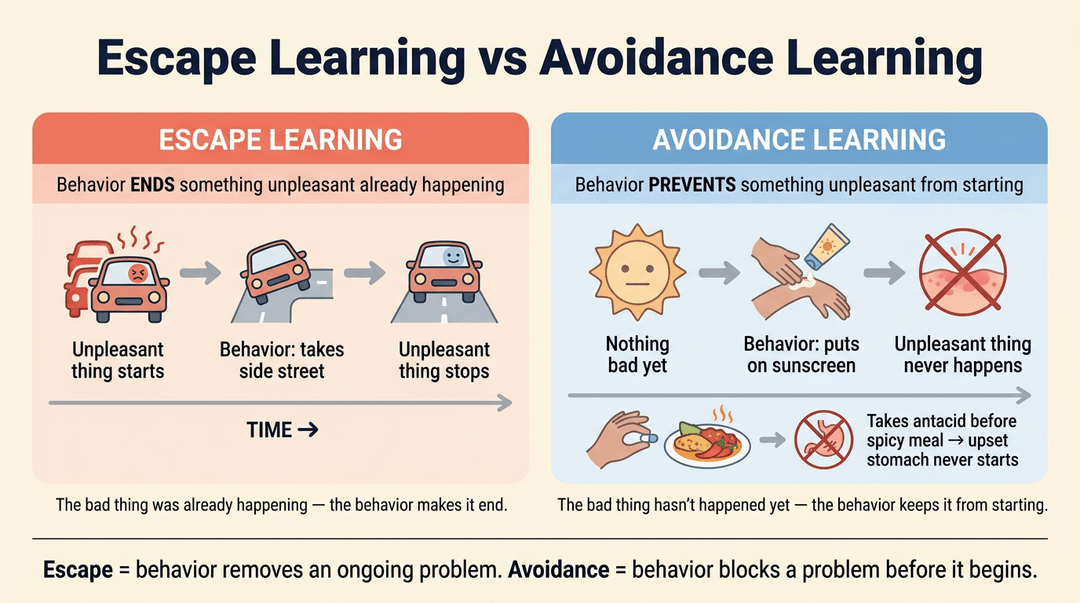
Negative reinforcement works through two patterns. In escape learning, a behavior ends something unpleasant that's already happening. In avoidance learning, a behavior prevents something unpleasant from starting.
Putting on sunscreen before going outside is avoidance. Taking a side street once traffic has backed up is escape. Taking an antacid before a spicy meal is avoidance, too.
Examples from parenting and classrooms
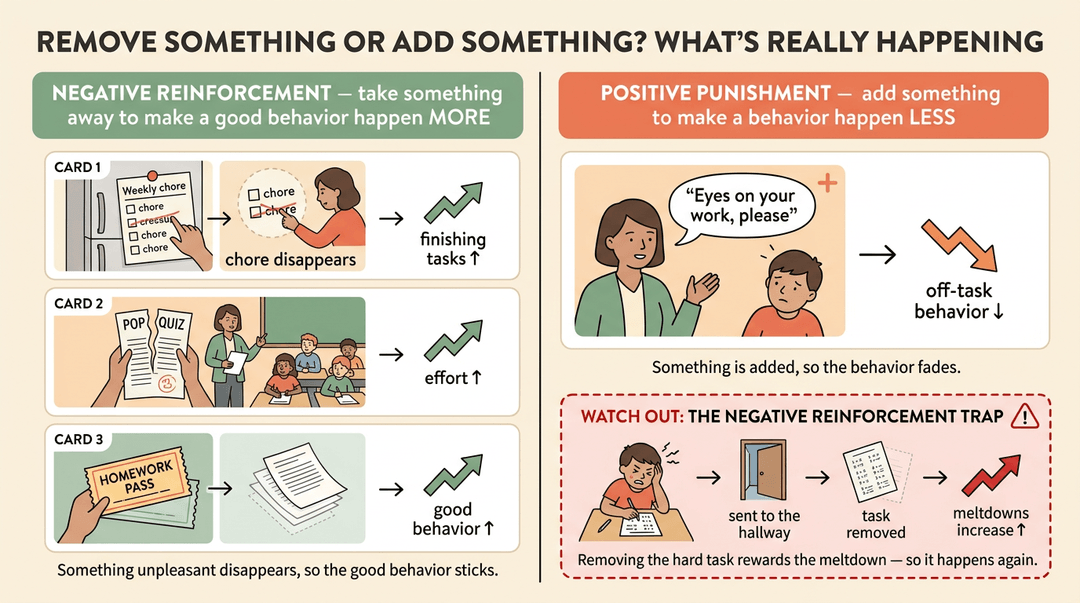
Consider a parent who drops a chore from the list once their child finishes the week's tasks. The chore disappears, so the reward is a removal: negative reinforcement. Hiding toys until tidy-up happens is also a removal, not an added penalty.
A quick verbal reprimand, like 'Eyes on your work, please,' adds a consequence instead. That's positive punishment.
In class, a teacher cancels a pop quiz after students show strong effort on a hard unit. A student who earns a homework pass for good behavior gets an unwanted assignment removed.
Watch for the negative reinforcement trap. Imagine a student who melts down over a hard math problem and gets sent to the hallway. The hallway removes the task, so the meltdown is rewarded, and the student learns that melting down works.
How therapy uses these consequences
Addiction treatment offers a strong example. An analysis from the U.S. Sentencing Commission describes a federal drug treatment program where many who complete it become eligible for early release, up to a 12-month sentence reduction.
Therapists also reinforce coping skills. When a client uses a healthy strategy, that strategy gets noticed and rewarded, so it's more likely to stick.
Behavioral parent training shows the same principles at home.
CHADD, a national ADHD organization, lists behavioral parent training among the three most evidence-based ADHD treatments, alongside medication and school accommodations. Same principles, different settings.
Timing, Effectiveness, and Tradeoffs
Do people with ADHD work better with negative or positive reinforcement? The answer varies by learner, so watch what works for each student.
A Frontiers study of children's reinforcement learning compared different reinforcement contingencies, a reminder that effectiveness depends on the child.
Why timing matters so much
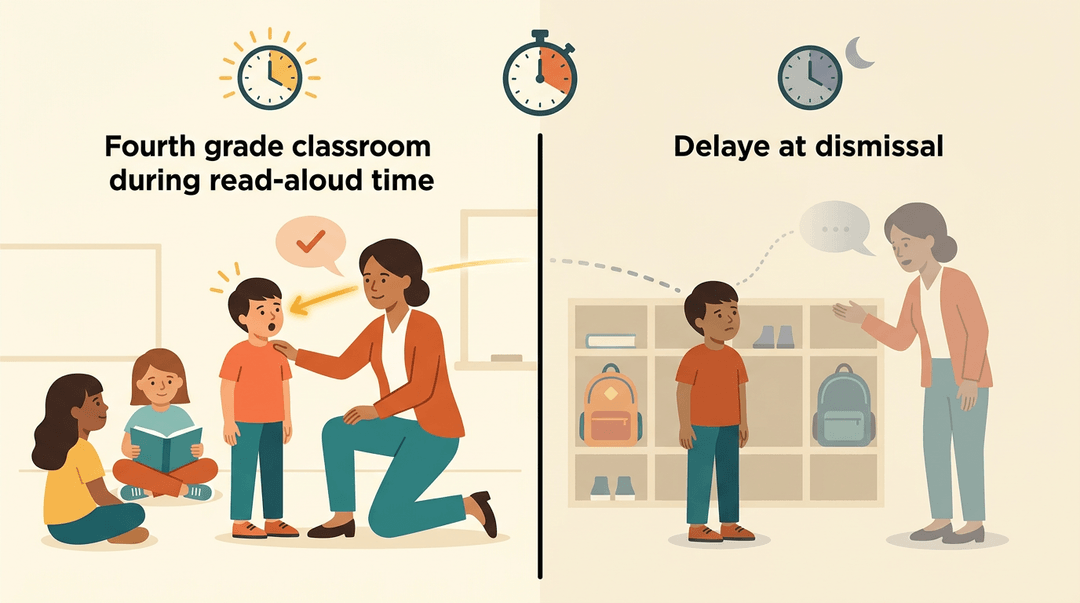
Immediate delivery strengthens the response, so students make the link. Delayed reinforcement creates a weaker connection. Picture a fourth grader who blurts out during read-aloud: a calm reminder right then teaches more than a talk at dismissal.
Punishment works the same way, and it's clearest when delivered right after the misdeed.
Quick fixes vs lasting change
Negative reinforcement is often the best short-term fix, but quick fixes can fade. According to a study in the journal Behavior Modification, reinforcement produces faster, longer-lasting change than punishment.
Constant correction also risks decreased engagement.
Weighing the pros and cons
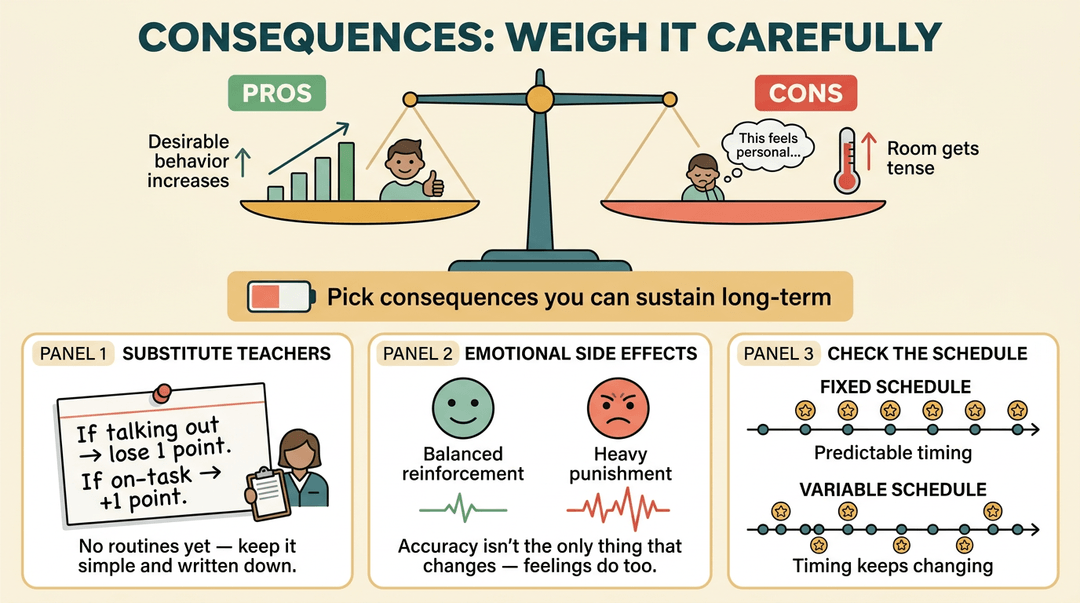
Used well, these tools can increase desirable behavior, but students may misread a consequence as personal, and overuse makes the room tense. Pick consequences you can sustain.
Substitute teachers need extra care: without the routines a regular teacher has, keep consequences simple and written into your sub plans.
Punishment can also carry emotional side effects. A study on combining positive and negative reinforcement found emotional behavior differed between conditions, in addition to accuracy.
Finally, check the schedule: a fixed schedule delivers consequences at predictable points, while a variable schedule changes that timing.
Is the Distinction Even Valid
It's a fair question, and the answer depends on what you need the labels to do.
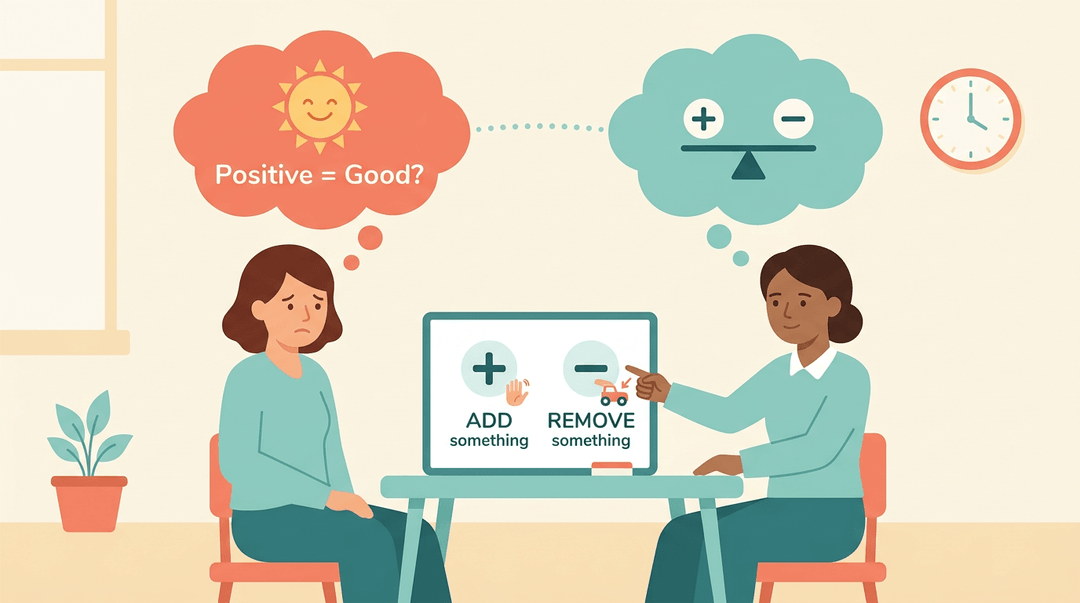
Why adding vs removing can feel arbitrary
Positive and negative describe the direction of change, not whether it feels good or bad. A stimulus (a praise comment, a point, a buzzer) is either added or taken away.
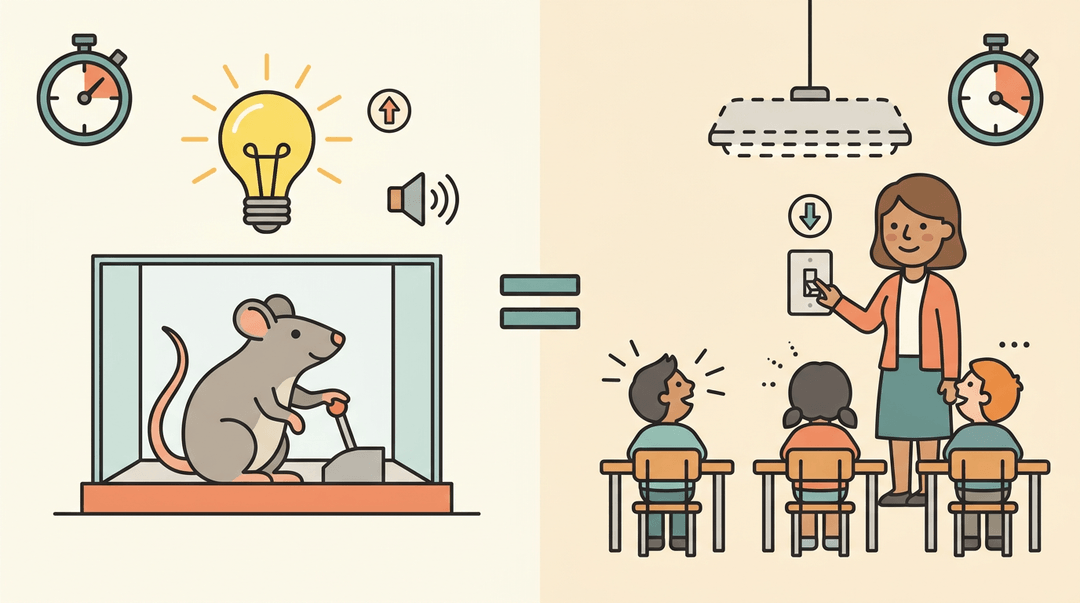
Imagine a rat that presses a lever to a tone, and each press also switches on a light. If it presses more, the light is doing the work, even though nothing was handed over as a treat. The change matters regardless of direction.
Consider a teacher who switches off the lights when the room gets loud. She can count how quickly the class settles.
The case for keeping these labels
The labels still earn their place:
- Shared language. Teams can discuss a plan using the same words.
- Measurable events. Added or removed stimuli are easier to count than vague impressions.
- Object-lesson value. Students can see the idea in action.
- Applied behavior analysis. The terms help teams design and review interventions.
- IEP behavior plans. Precise wording shows exactly what changes, so the team can check progress.
Why positive and negative sound loaded
Positive often sounds friendlier than negative, even when the science is neutral. Public and scientific language don't always match, which can confuse parents and colleagues.
Token economies can raise legal issues in some settings, so careful wording matters. Cultural value judgments add another layer, since one teacher's neutral term may sound loaded to another.
Positive punishment and negative reinforcement both shape behavior, but they do it by adding or removing something, and that difference should guide how you respond.
Keep your timing close, focus on the behavior, and check whether the approach is working for your students.
Ready to turn these ideas into a plan? Check out our Classroom Management feature to organize your classes, rosters, and timetables in one structured workspace.
References
- Operant Conditioning — wsu.pressbooks.pub
- Recidivism and Federal Bureau of Prisons Programs: Drug ... — ussc.gov
- Frontiers | Working Memory and Reinforcement Schedule Jointly Determine Reinforcement Learning in Children: Potential Implications for Behavioral Parent Training — doi.org
- The effects of combining positive and negative reinforcement ... — digital.library.unt.edu
- The etymology of basic concepts in the experimental analysis of behavior. — pmc.ncbi.nlm.nih.gov (2004)
- Positive Reinforcement: How It Works and How to Use It Well — emstudio.pro (2026)
- Parent Training and Behavior Management: Building Skills at Home — bmmc.ae
Frequently asked questions
What is the difference between reinforcement and punishment?
Reinforcement increases the likelihood of a behavior, while punishment decreases it. Positive and negative describe whether something is added or removed, not whether the consequence is good or bad: positive adds something, and negative removes something.
What are the four types of consequences?
The four types are positive reinforcement, negative reinforcement, positive punishment, and negative punishment. Positive reinforcement adds something desirable to increase behavior; negative reinforcement removes something unpleasant to increase behavior; positive punishment adds something unpleasant to decrease behavior; and negative punishment removes something desirable to decrease behavior.
Do people with ADHD work better with negative or positive reinforcement?
There is no single answer for everyone with ADHD because effectiveness varies by learner. Positive reinforcement is often a useful starting point because it builds desired behavior, while negative reinforcement can also work when removing something unpleasant strengthens the behavior. Immediate, individualized feedback helps determine which approach works best.