Morning Meeting Question Ideas: A Guide for Every Day

Jump to section
Think of a coach jogging a team through warm-ups before the real game starts. Those few minutes loosen everyone up and get them in the right frame of mind. A morning meeting question does the same job for your classroom.
It's a short, shared prompt that gets students talking, listening, and ready to learn before the first lesson begins.
So what makes a good morning meeting question worth your time? In this post, we'll look at why these questions matter, the main types to try, and how to plan a week of prompts without scrambling each morning.
We'll also cover facilitation tips, grade-level adjustments, common troubleshooting, and a weekly planning checklist you can use right away.

Why Morning Meeting Questions Matter
Before the first bell, a few minutes set the day's tone.
What morning meeting does for your class
Morning meeting gives students a calm, shared start. It:
- Builds classroom community
- Strengthens speaking and listening skills
- Supports social-emotional learning (SEL), the skills for understanding feelings
- Creates a predictable daily routine
- Sets the tone for respectful learning
- Fosters belonging and connection
Consider a second-grade teacher whose class is settling in after winter break. One question about favorite winter foods gets everyone talking, and a quiet student finally speaks up.
The goal is less about what students answer and more about how they feel walking in. Predictability builds trust.
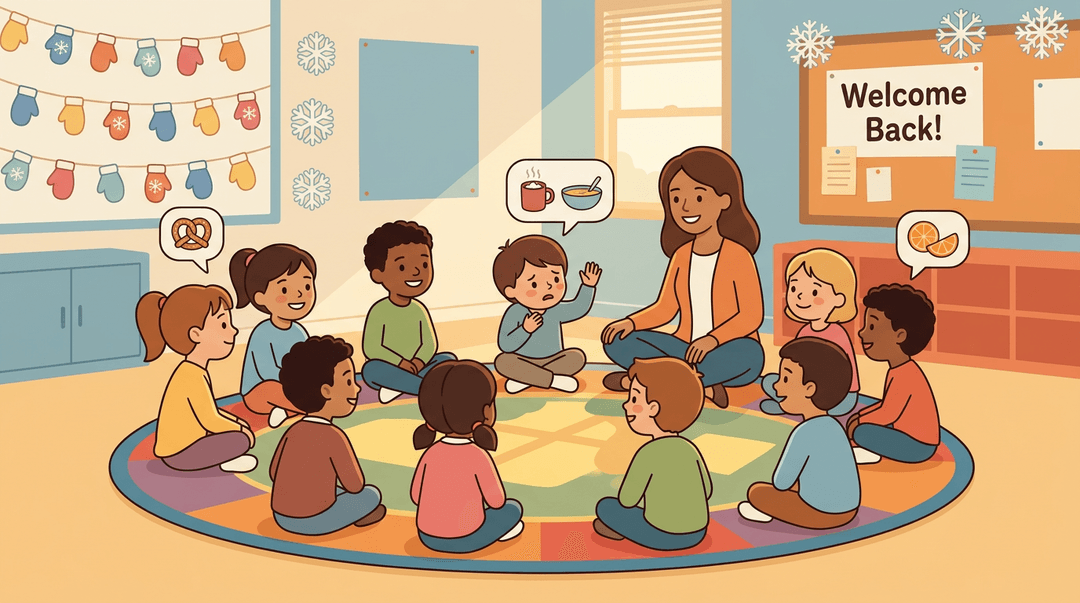
What goes into a morning meeting
A typical meeting has a few parts you can repeat:
- Greeting by name, so every student is acknowledged
- Sharing personal events, like a new pet
- A group activity or game to get everyone moving
- A morning message from you that previews the day
- The question of the day, as a component of its own
Tying questions into the day's lesson
The question works best when it's tied to what students are learning.
- Connect the question to the day's lesson
- Embed academic content in each part, like counting or vocabulary
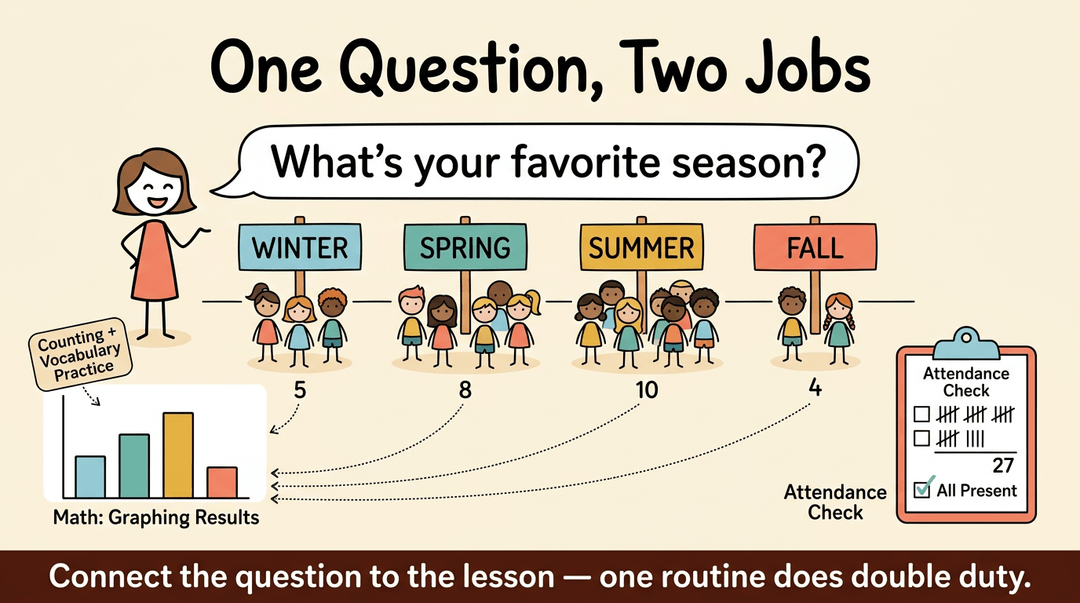
- Chart favorite-things polls to practice math and graphing
- Doubles as a quick attendance check
A fourth-grade teacher asks, "What's your favorite season?" Students stand under a sign for their answer, the class graphs the results in math, and the same count marks attendance. Two jobs, one routine.
Types of Morning Meeting Questions to Try
Morning meeting questions give every student a low-stakes way to speak up before the day gets busy. Here's a look at the main types and when each one shines.
Questions to get to know your class
Start here in September. Simple prompts about favorites (food, color, animal) get students talking about something they know well, and that's exactly the confidence you want on day one.
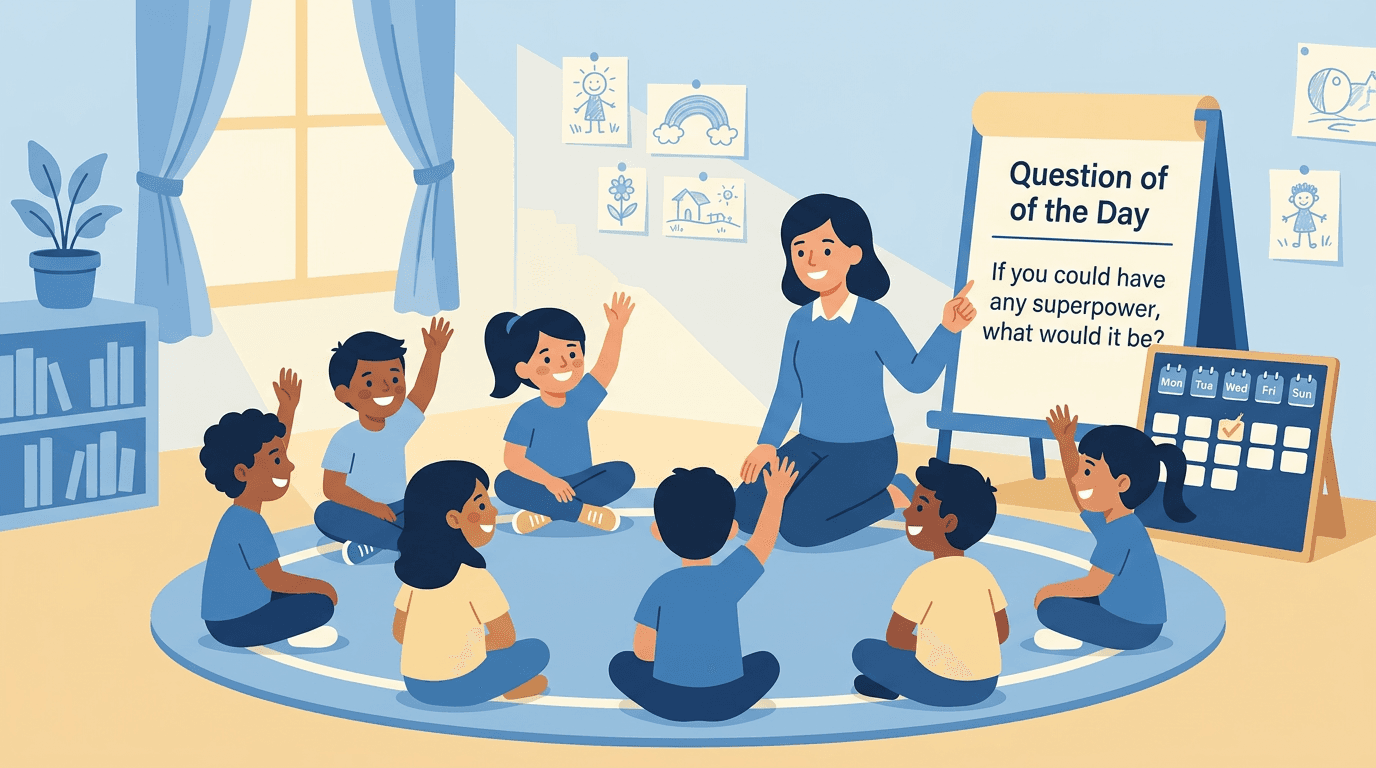
Add a question about what they want to be when they grow up, or a superpower question like “If you could have one superpower, what would it be?” Dream questions reveal a lot without asking anyone to share anything too personal.
Consider a second-grade teacher who asks each student one favorite thing and jots it on a sticky note. By October, she's matching names to interests and can ask, “How was the soccer game, Malik?” That small follow-up is what makes the routine stick.
These questions work best at the start of the year, but don't stop there. Keep rotating them all year, since new students and changing interests give you fresh answers.
If you're hunting for 100 great small talk questions, you don't need one master list. Build your own bank by pulling about ten from each category in this section, then rotate through them.
Good starters include “What's the best thing you did this weekend?” and “What's a book or show you can't stop talking about?”

Favorite things and opinions
Ask about a favorite subject, season, or activity, and you'll hear quick, confident answers. Opinion prompts are low pressure because there's no right answer.
A student who says recess is the best part of the day isn't wrong, and everyone else gets to weigh in too.
Turn those answers into a class vote or graph. Tally favorite seasons on the whiteboard in one morning and you've got a quick data lesson before first period.
Would you rather prompts
Would you rather questions offer a fun binary choice: “Would you rather read a book about dragons or a book about robots?” There's no wrong answer, which keeps even hesitant students comfortable joining in.
Let students vote by movement: stand on the left side of the room for option A, the right for option B. Or use hands, which is quicker in a crowded room.
Movement gets bodies up before the day's first lesson, and you can see who's siding with whom at a glance.

What would you do scenarios
These prompts build empathy and problem-solving. Try a social situation like exclusion: “What would you do if you saw someone sitting alone at lunch?” Most scenarios have multiple acceptable answers, and that's the point.
Students practice thinking through options rather than hunting for the one correct response.
Follow up on how others felt. Ask, “How do you think that student felt when it happened?” That single question moves the conversation from what to do toward why it matters.
Checking in on feelings
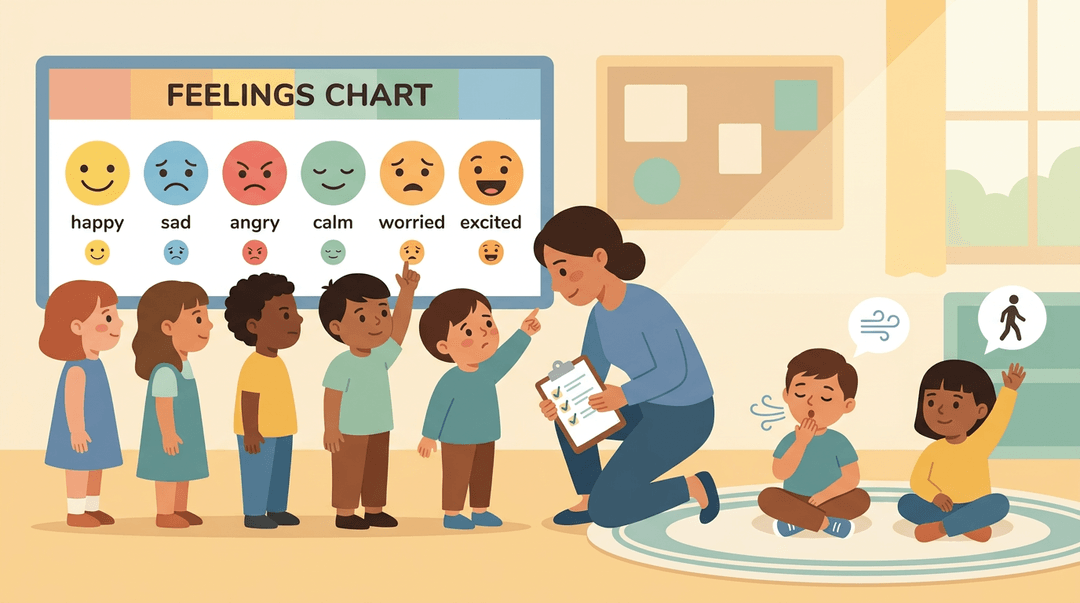
Each student names the emotion they're bringing into the day. Pair that with a discussion of coping strategies, like three deep breaths or asking for a break.
Over time, this builds self-regulation and empathy, because students learn to name a feeling before they act on it.
For younger kids, a feelings chart with faces does the heavy lifting. Students point to the face that matches their mood, and you get a quick snapshot of who might need a check-in at lunch.
Friendship and kindness prompts
Ask what makes a good friend, and students will surprise you with thoughtful answers. Follow with prompts about including others, resolving disagreements kindly, and showing kindness every day.
For example, a fourth-grade teacher asks, “What's one kind thing someone did for you this week?” Students share, and the room fills with examples classmates can copy. The payoff is a class where kindness is something students see and repeat.
Gratitude prompts
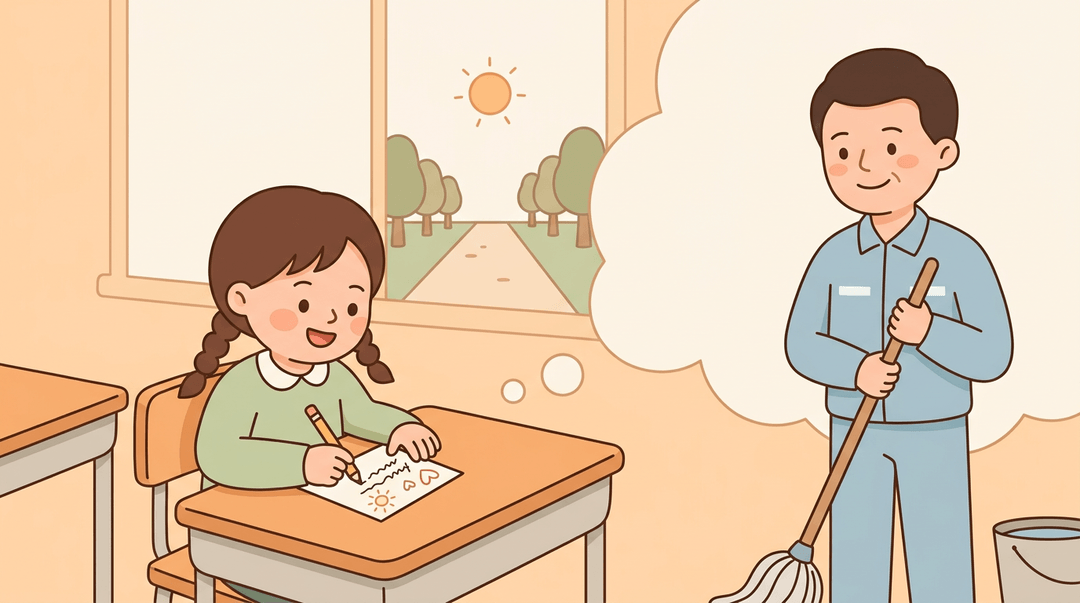
Ask students what they're thankful for, whether it's things or people. The real power comes when gratitude turns into action. A student who's thankful for the custodian can write that person a note.
Appreciating small moments, like a sunny walk to school, teaches students to notice good things daily, and thank-you notes make a natural extension.
Growth mindset prompts
Build growth mindset with questions that value effort over perfection: “What's something you worked hard on this week?” Pair that with prompts about learning from mistakes, asking for help, and setting personal goals.
Students who hear, “What did that mistake teach you?” start to see errors as steps forward.
How to Plan a Week of Questions
Use this guide to set up five days of questions in one sitting, run each one in about five minutes, and spot who needs a check-in. Print it once and reuse it every week.
The weekly rotation
A fixed theme for each day means you're never hunting for a question at 7:55 a.m. Students also learn what to expect.
| Day | Focus | Sample question |
|---|---|---|
| Monday | Get-to-know-you | "What's one thing you did this weekend?" |
| Tuesday | Would-you-rather | "Would you rather fly or be invisible?" |
| Wednesday | Feelings check | "What weather matches your mood today?" |
| Thursday | Gratitude | "Who helped you this week?" |
| Friday | Growth mindset | "What was hard this week that got easier?" |
Running each morning
Follow the same four moves every day so the routine runs itself.
- Display the question early
- Post it on the board before students arrive, so they can start thinking at the door.
- Give think time
- Say: "Take a quiet moment to think before anyone speaks."
- Offer a pass option
- Say: "You can pass now, and I'll come back to you."
- Debrief in two minutes
- Try: "What did you notice about our answers today?"
Example: On Wednesday, a teacher posts the feelings question on the board. Students settle in, think quietly, and share around the circle. Two students pass. At the debrief, the teacher notes that many people chose "cloudy," and asks what might help a cloudy day go better.
Tracking participation and behavior
Keep a simple class roster or notebook nearby. After the meeting, take thirty seconds to jot down:
- Reluctant sharers. Note who passes often, and on which days.
- Pattern example: "Sam passes on Wednesday feelings questions."
- Recurring themes. Log topics that come up again and again.
- Example: "Several students mentioned feeling tired after the weekend."
- Private follow-ups. Check in one-on-one, away from the group.
- Say: "I noticed you passed today. Is there anything you'd like to talk about?"
Over a few weeks, the log shows you which question types get students talking and which ones need a gentler approach.
Plan and reuse weekly morning meeting rotations alongside rosters and attendance in EMStudio's online teacher planner.
How to Use Question of the Day
Once you have a routine, a question of the day takes only minutes. Keep the sequence the same each morning, and students will know exactly what to expect.
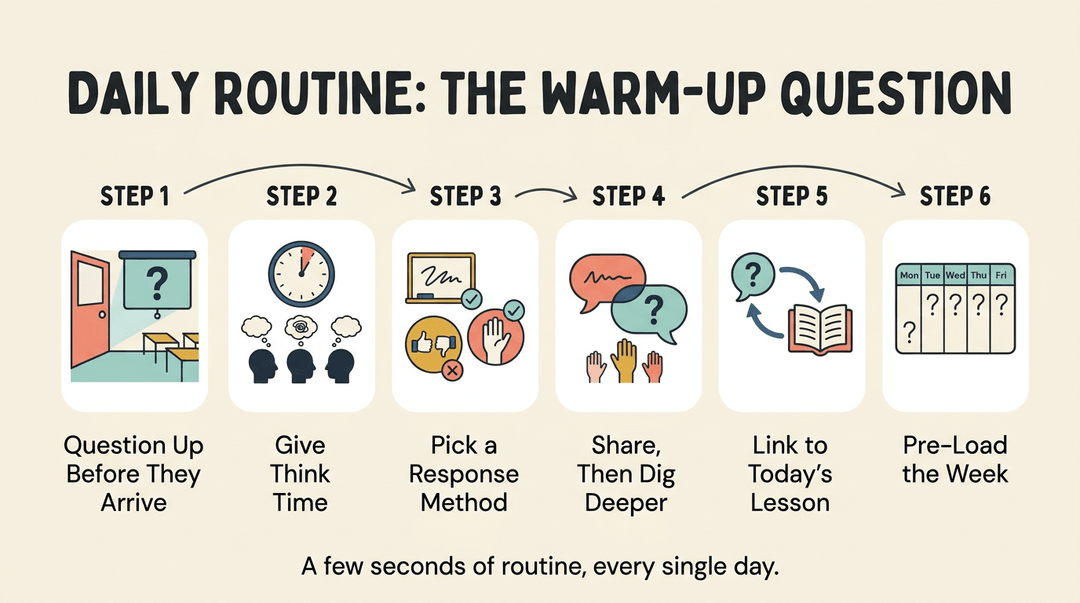
Daily routine steps
- Display the question before arrival. Students start thinking the moment they walk in.
- Give think time. Pause a few seconds before anyone speaks.
- Choose a response method. Pick one that fits the question and your time.
- Share and discuss answers. Take a few responses, then ask a follow-up.
- Connect to the day's lesson. Link answers to what's coming, so the question feels like a doorway, not a detour.
- Pre-load questions in your lesson planner. Write the week's prompts ahead so you're never scrambling.
Ways students can respond
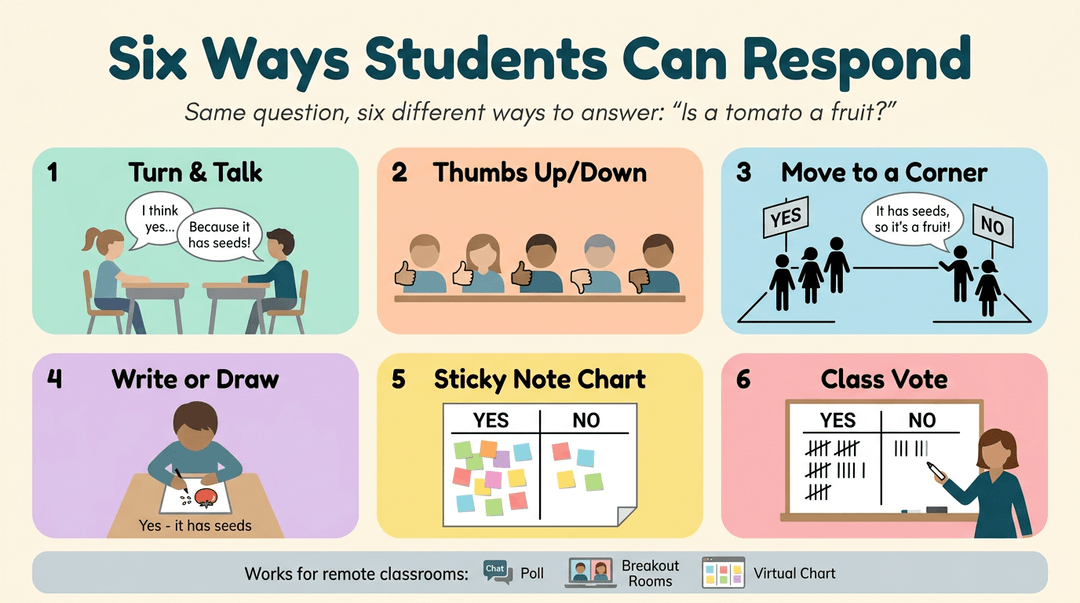
Mix up the method so the routine doesn't go stale:
- Turn and talk. Partners share for a minute before the whole class hears from anyone.
- Thumbs up/down. A quick read on agreement or understanding.
- Move to room areas. Students stand in a 'yes' or 'no' corner and defend their spot.
- Write or draw an answer. Gives quieter learners time to think on paper.
- Sticky note chart. A shared chart shows patterns at a glance.
- Class vote/display. Tally responses on the board so everyone sees where the room stands.
A fifth-grade teacher asks, 'Is a tomato a fruit?' and students move to a corner. The student who never raises a hand is suddenly defending a position. Students don't just answer the question; they explain their thinking. Movement wakes up a room.
Virtual and remote classrooms can run the same routine. Post the question in chat or on a shared slide, use polls for thumbs up/down, and send partners to breakout rooms for turn and talk. A digital sticky note board works for the chart.
Tips for Leading Discussions
When every voice gets heard and the talk goes somewhere, morning meeting does its best work. Here's how to get there.
Getting everyone to participate
- Mix response options. Let students answer with thumbs, whiteboards, or a one-word reply, not just out loud.
- Allow passing. Students can say "pass" and still be part of the circle.
- Offer low-pressure alternatives. Shy students can write their answer first or share it with a neighbor.
- Use partner or small group sharing. Consider a fourth-grade teacher who has pairs talk for thirty seconds before the class shares. By then, everyone has something ready to say.
Taking conversation deeper
First answers are a starting point. Push for more:
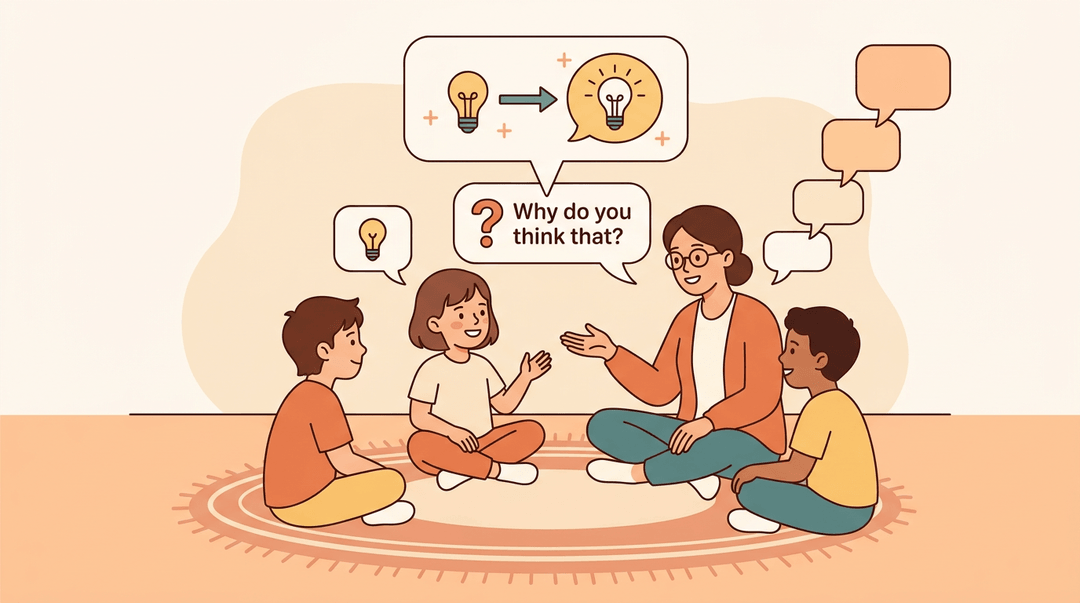
- Ask follow-up questions. Try "What makes you say that?" after a first answer.
- Ask "Why do you think that?" It shifts students from what they think to why they think it.
- Build on classmate ideas. Try "Jordan's idea connects to this. Who can add to it?"
Keeping discussion respectful
Respect is taught, not assumed.
- Teach active listening. Students look at the speaker and repeat one thing they heard before responding.
- Model disagreeing respectfully. Show students how to challenge an idea without attacking the person.
- Give sentence starters for disagreement. Phrases like "I see it another way" or "What if we looked at it this way?" help students who don't know how to begin.
- Keep the conversation moving. Set a time limit so a few voices don't dominate.
- Summarize and move on. Restate the main takeaway in one sentence, then transition to the next part of the day.
Adjusting Questions by Grade Level
Morning meeting questions work best when they match where students are developmentally, so the routine stays steady while the questions grow with your learners. A tutor or homeschool parent can use the same ideas, aiming each question at one child.
Adapting for kindergarten
Keep questions simple and concrete, like “What’s your favorite color?” Pictures and choices help young learners answer without freezing up. Model your own answer first so students hear what a full thought sounds like.
Accept short responses, such as one word or a pointed finger, and build from there.

Adapting for first grade
Move toward open-ended questions that invite more than one right answer, like “What might a rainy day be good for?” Practice complete sentences by repeating a student’s answer back in full. Offer sentence starters such as “I think...”
rather than waiting for students to find their own words.
Adapting for second grade
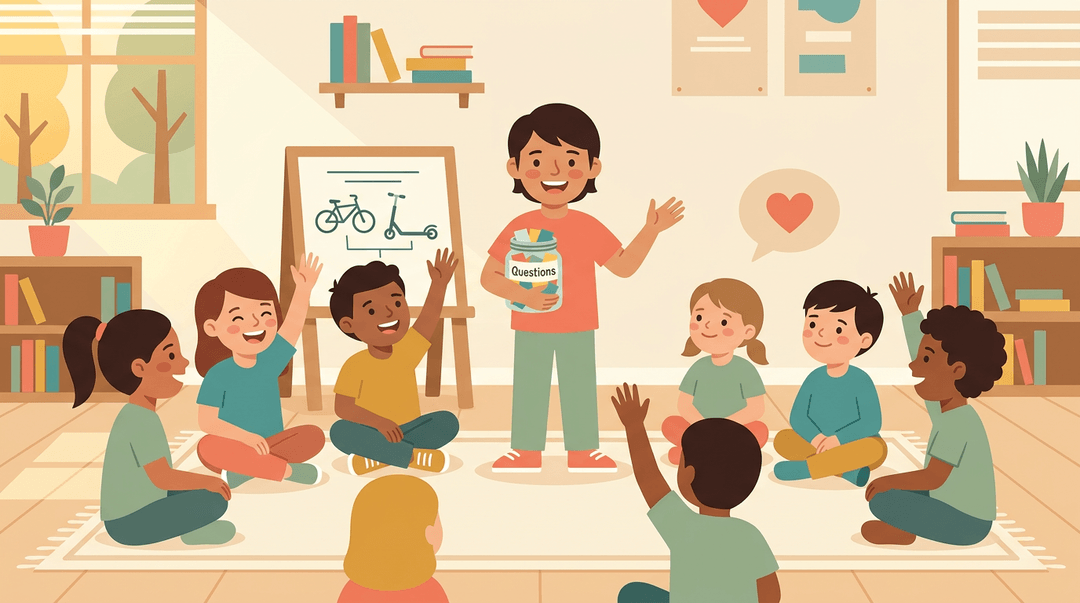
Introduce compare-and-explain prompts, like “How is a bike like a scooter, and how is it different?” Build perspective-taking with “How might a friend feel about that?” Encourage building on peers’ ideas by asking, “Who can add to what Maya said?”
For 4th grade and upper elementary, students thrive on a little ownership. Consider a teacher who lets a rotating student host choose the question and run a quick “would you rather” round. Students practice leadership, and the meeting feels like theirs.
A riddle of the day or a class-built question jar works well too.
Common Questions and Troubleshooting
Once morning meeting is up and running, the same questions tend to come up. Here's how to handle them.
How often and how long
Daily works best, but a few times a week still counts if your schedule is tight. Plan for 5 to 10 minutes. If engagement is high, let it run a little longer, but keep an eye on the clock.
When a student doesn't want to share
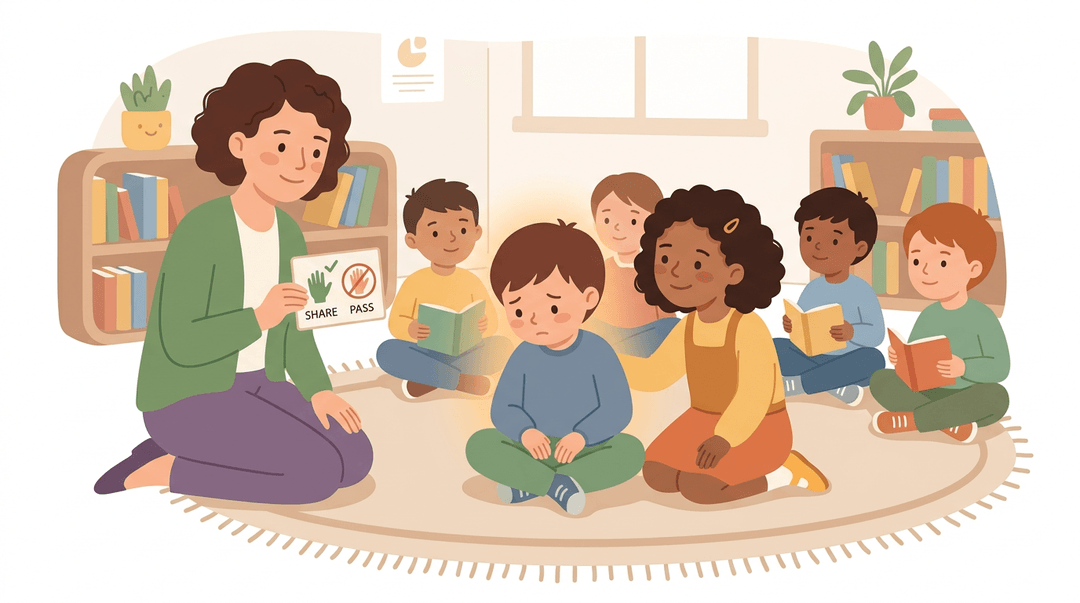
Don't force sharing. Forcing it tends to make a quiet student less willing to speak, not more. Offer options instead:
- Pass. The student skips without penalty.
- Partner share. A trusted classmate shares alongside them.
Picture a third-grade teacher whose quietest student stares at the carpet every morning. She lets him pass for two weeks, then invites him to share with one trusted classmate. Soon he's raising his hand on his own.
If a conversation turns difficult, redirect it to a calmer topic and follow up privately afterward. Flag reluctant sharers for a behavior check-in so you can spot patterns early.
Using questions beyond morning meeting
The same questions can do double duty all day. Use one as a bell ringer on the board as students settle in. Offer a journal prompt option for students who think better on paper. Or use one as a transition activity between lessons. Same question, new job.
Helpful Morning Meeting Resources
Good question sets are easier to find than you might think. Here's where to look.
Books and printable question sets
Start with books packed with ready-made ideas. Most give you a full list of prompts, so you skip the brainstorming and spend that time on your students.
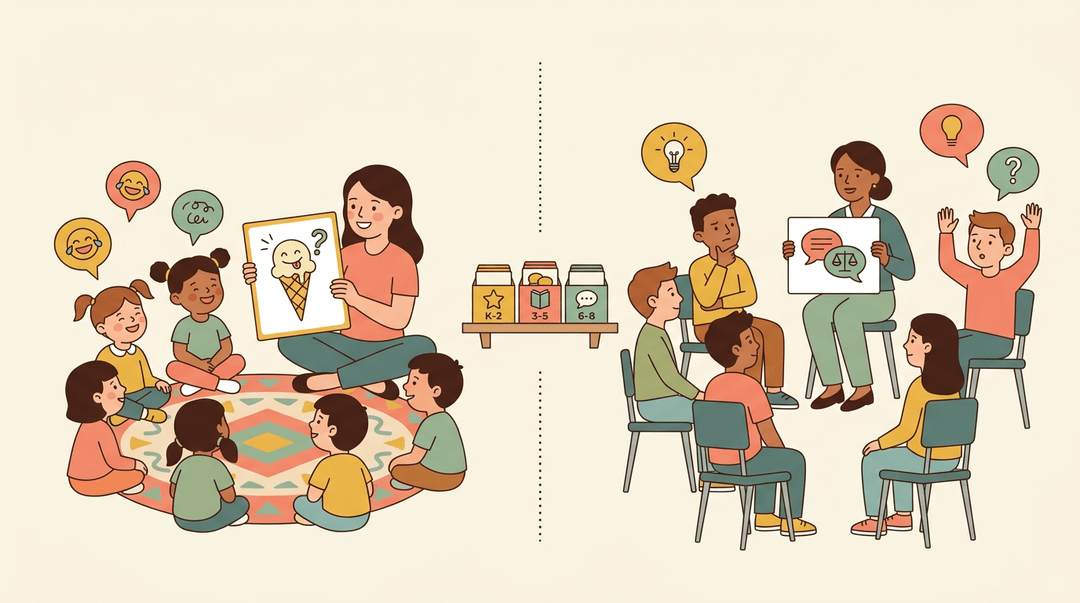
Look for one organized by grade band, since a question that delights a second grader can flatten a fifth grader.
Grade-specific idea collections go a step further. Picture a first-year kindergarten teacher who needs playful, silly prompts, while a middle school teacher needs questions that spark real debate.
Matching the collection to your grade keeps the circle lively instead of babyish or boring.
If you teach across subjects, an academic-integration book series ties the circle to what students are learning. A question about the water cycle can lead straight into Monday's science lesson, so the routine does double duty.
Printable question cards and slides are the quickest option. Print a set, laminate it, and rotate a card each morning, or project slides on the board. A substitute can run the circle from a stack of cards without calling you during your planning period.
Large question banks of 50 or more answer the question What are 50 random questions? A bank that size covers about ten weeks of daily prompts before a repeat. Pick one with a mix of:
- silly
- reflective
- thoughtful
questions so every student finds something they can answer. The best banks feel fun rather than forced. Pick one and start Monday.
Morning meeting questions work best when they're part of a routine your students can count on. Pick a few types, plan a week ahead, and give everyone room to practice listening and sharing.
Over time, that short daily circle builds the trust and community that make the rest of the day run more smoothly.
Ready to keep your routines organized alongside your lessons? Check out our Class Management feature page to see how EMStudio helps you structure classes, rosters, and timetables in one place.
Frequently asked questions
What are 50 random questions?
50 random questions are a mixed collection of prompts covering topics such as silly preferences, favorite things, personal experiences, feelings, gratitude, friendship, and hypothetical choices. In a classroom, a bank of 50 questions can provide roughly ten weeks of daily prompts before repeating, depending on how often meetings are held.
What are 100 great small talk questions?
Great small talk questions are open, low-pressure prompts that invite people to share without requiring personal or sensitive information. Examples include “What was the best thing you did this weekend?”, “What book or show are you enjoying?”, “What is your favorite season?”, “Would you rather fly or be invisible?”, and “What is something you are looking forward to?”
What are some fun and engaging ideas for morning meetings in 4th grade?
Fun and engaging ideas for fourth-grade morning meetings include student-led question rounds, would-you-rather votes, riddles, a class question jar, feelings check-ins, kindness and gratitude prompts, and short partner discussions. You can also connect questions to learning by graphing favorite-season responses, practicing vocabulary, or using a scenario to discuss empathy and problem-solving.
Why is a morning meeting important?
A morning meeting is important because it gives students a calm, predictable start and helps build classroom community. It strengthens speaking, listening, belonging, empathy, and self-regulation while establishing respectful routines and helping students get ready to learn.