Planning Classroom Management for Every Teaching Situation
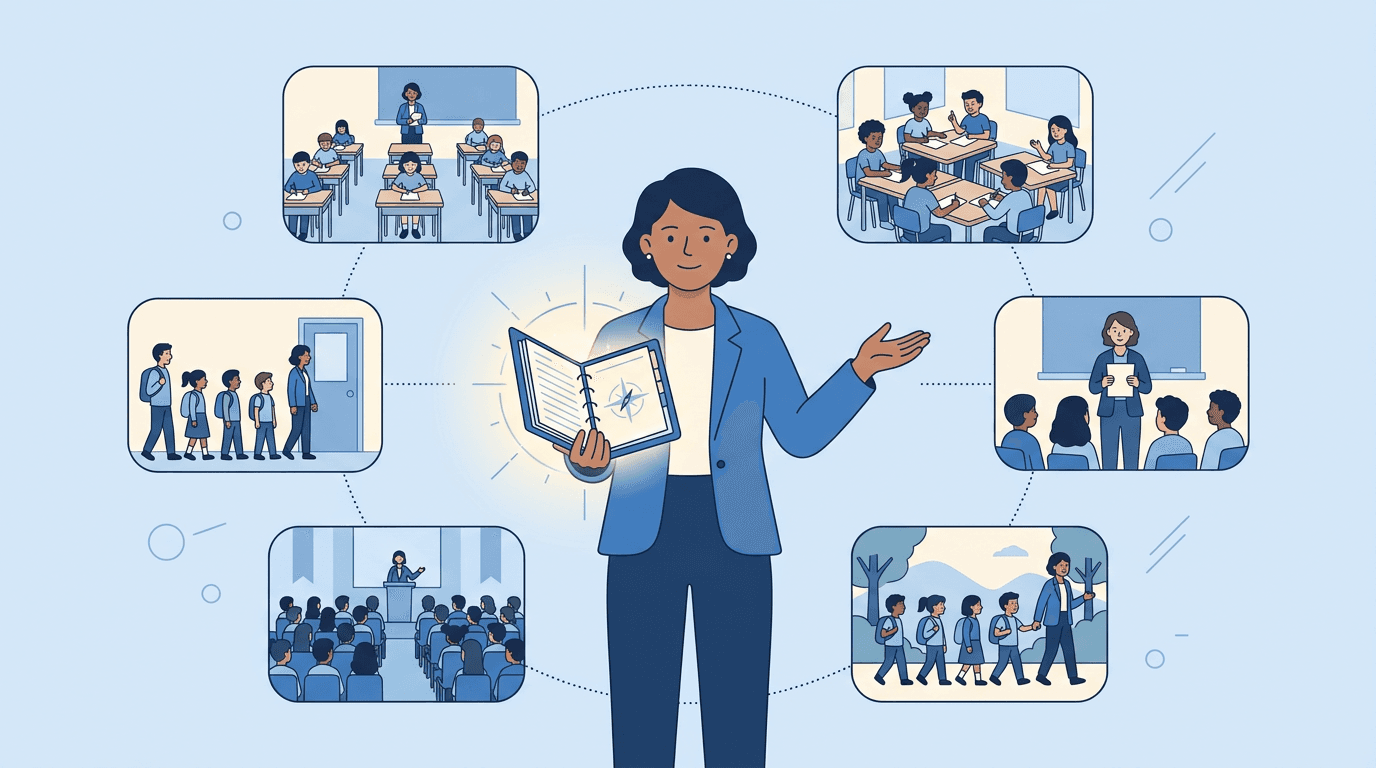

Jump to section
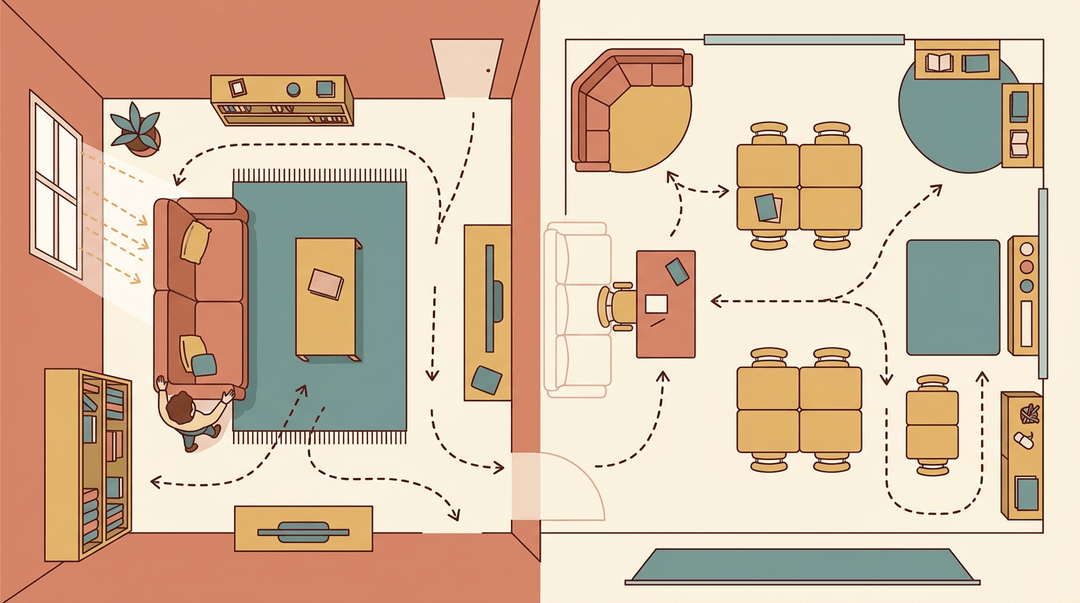
Think about the first time you rearranged furniture in a new apartment. You didn't just shove a couch against a wall and call it done: you thought about traffic flow, light, and how the space would actually get used every day.
Planning classroom management works the same way. It's the deliberate design of routines, relationships, and systems that let real teaching happen.
In this post, we'll map the styles, techniques, tools, and a step-by-step checklist you can use whether you're new, virtual, or subbing for the day.
The Basics of Planning Classroom Management
Before you can run a calm, productive classroom, you need a plan for how you'll get there. That's what classroom management planning really is: the thinking you do before the bell rings, not the scrambling you do after things fall apart.
What planning classroom management really means
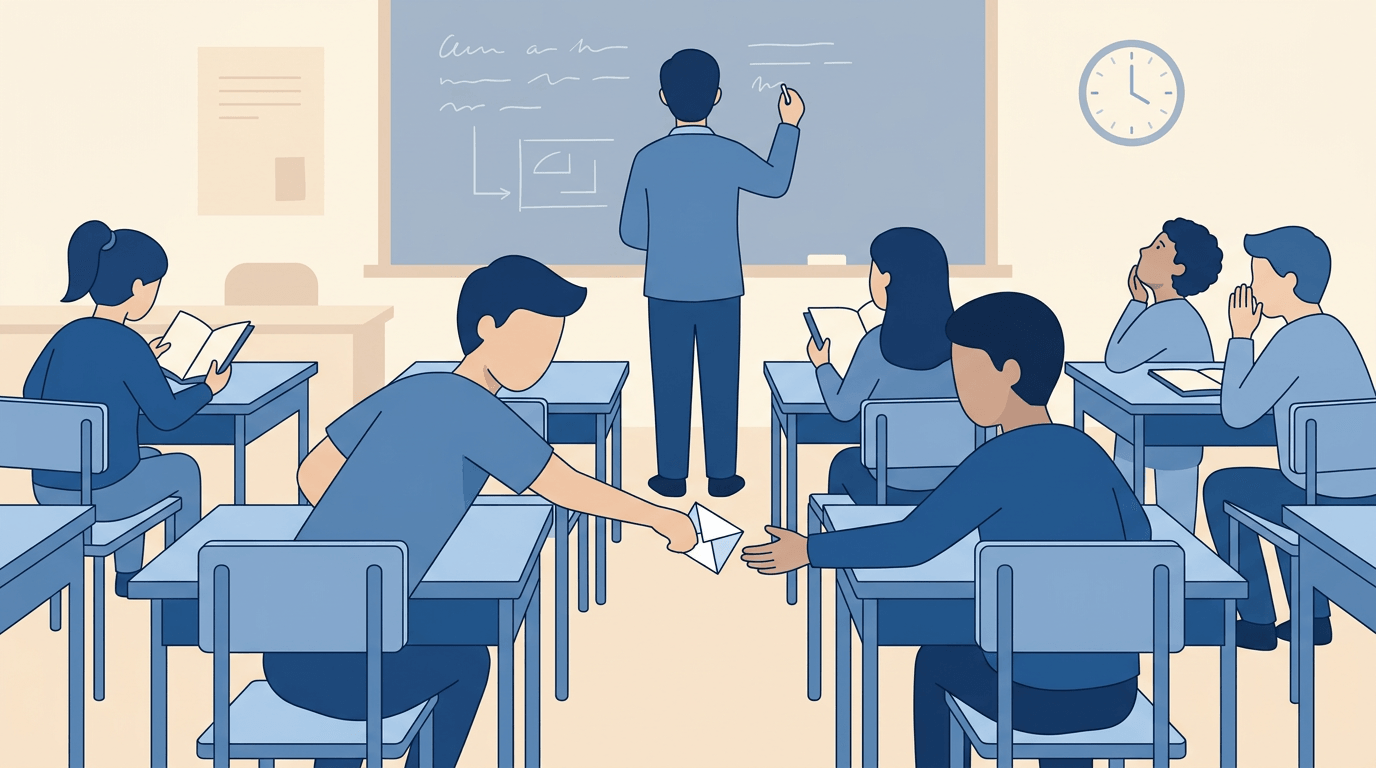
At its core, classroom management planning is a proactive strategy: a set of methods you put in place ahead of time so small disruptions don't snowball into chaos. It's less about reacting to a problem and more about preventing it in the first place.
Think of it as the organization of your whole learning environment:
- where students sit
- how materials move
- what happens in the first five minutes of class
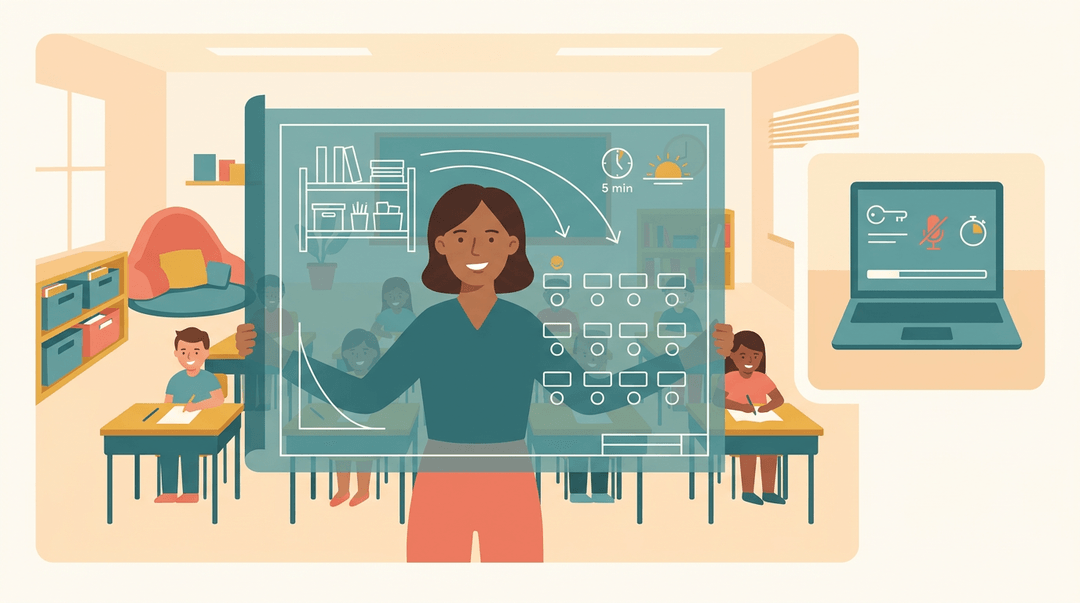
It's your road map for the day, the thing you can glance at when a lesson starts to wobble. A strong plan also flexes with the room.
It gives you structure without locking you into a script, so you can adjust when a lesson runs long or a substitute has to step in for a day.
The same thinking applies when you're teaching virtually: the plan just shifts to cover logins, mute rules, and screen time instead of seating charts.
Why classroom management skills matter
Good classroom management protects your instructional time. Every minute you're not redirecting off-task behavior is a minute your students are actually learning.
It also protects you. Teachers with a clear plan report less daily stress, which means fewer headaches and more energy left for actual teaching. Students benefit too: a predictable, well-run classroom supports stronger engagement and better outcomes.
And since classroom management is often part of formal teacher evaluations, a solid plan isn't just good for your students. It's good for your career.
Different Classroom Management Styles and Strategies
Every teacher settles into a management style, often without ever naming it.
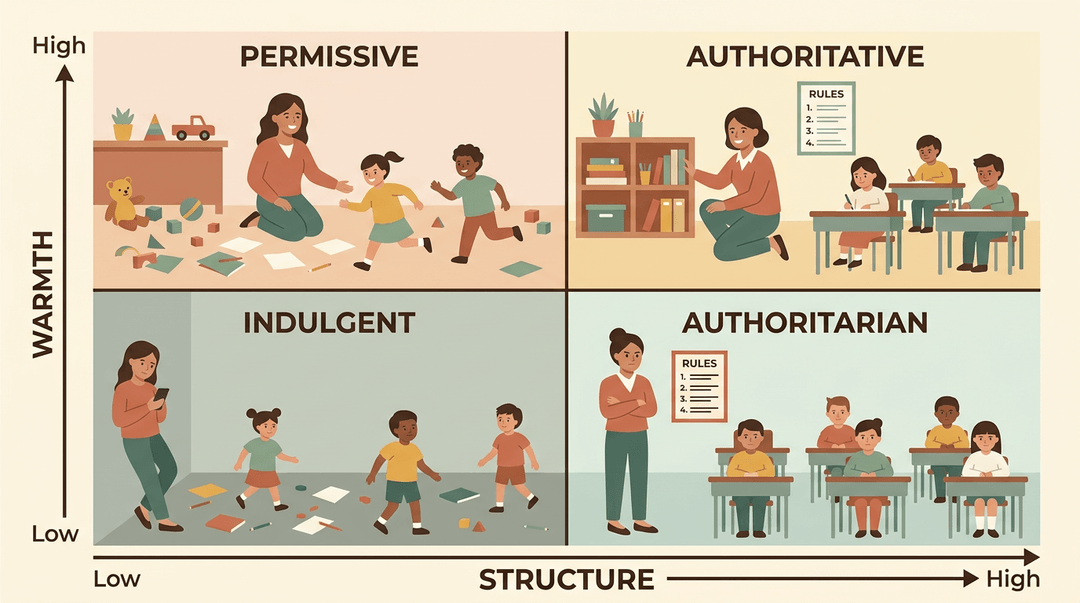
Established frameworks, PBIS (Positive Behavioral Interventions and Supports), responsive classroom, restorative practices, conscious discipline, love and logic, and trauma-informed practices, all build on four underlying styles:
Four common classroom management styles
- Authoritative. High warmth, high structure: clear expectations and consistent follow-through.
- Authoritarian. High structure, low warmth: rules matter more than relationships.
- Permissive. High warmth, low structure: a comfortable room with too few boundaries.
- Indulgent. Low structure, low follow-through: students set the pace, and little gets reinforced.
Montessori classrooms lean authoritative but build it into the room itself. That's classroom management in Montessori: a prepared environment, ordered materials, and predictable routines do the work that verbal correction usually does elsewhere.
Preventive, supportive, and corrective strategies
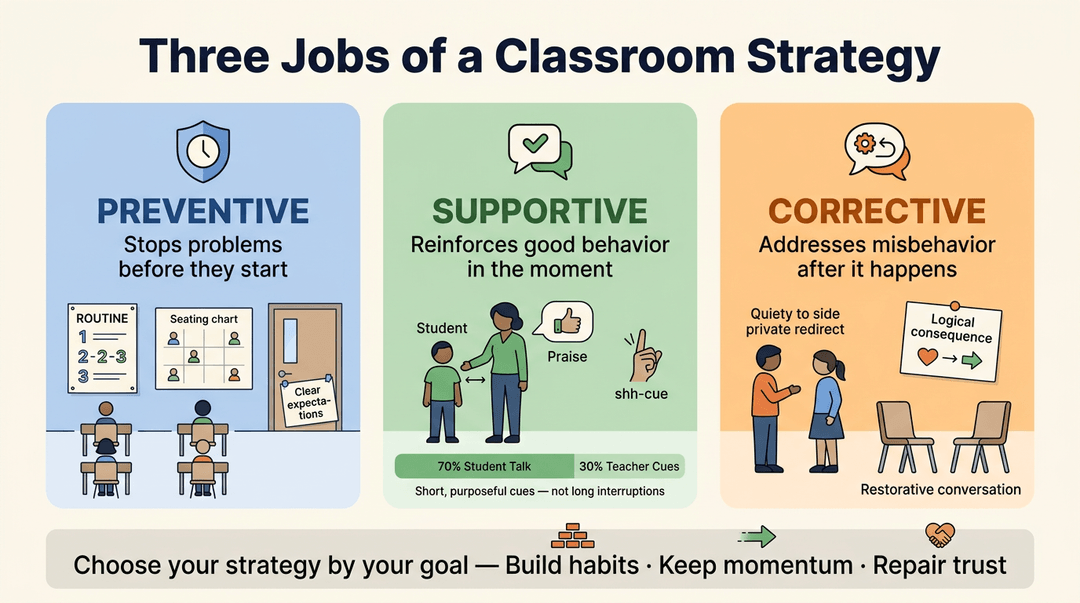
Every strategy you reach for fits one of three jobs.
- Preventive strategies stop problems early: posted routines, seating charts, clear expectations.
- Supportive strategies reinforce good behavior in the moment: praise, proximity, a quiet cue.
- Corrective strategies address misbehavior after it happens: a private redirect, a logical consequence, a restorative conversation.
Supportive strategies often lean on a 70/30 talk-time rule: keep roughly 70 percent of class talk with students, stepping in with short, purposeful cues rather than long interruptions, since dialogic teaching research notes that "'dialogic teaching' pays as much attention to the students' talk as to the teacher's."
Which bucket you lean on depends on your goal: building habits, maintaining momentum, or repairing trust.
What is the 70/30 rule in teaching?
A second "70/30" shows up differently: shorthand for splitting teacher control and student agency, roughly 70 percent structure you set and 30 percent choice students exercise. A nine-component checklist from KnowledgeWorks complicates that split, warning that "the mismatch can be jarring when lessons and assessments routinely prioritize student agency but classroom management is still about teacher control." Compliance-based enforcement clashes with competency-based learning, where students progress by what they can do. Working through all nine components while you plan helps you catch that mismatch before it derails a lesson.
What Are the Five Classroom Management Techniques?
Ask five teachers for their classroom management secret, and you'll likely hear five different answers. In practice, most strong plans lean on the same five techniques:
- clear rules
- corrective consequences
- positive reinforcement
- behavior tracking
- de-escalation strategies for the moments when a student needs to cool down before anything else can happen.
Setting clear classroom rules and expectations
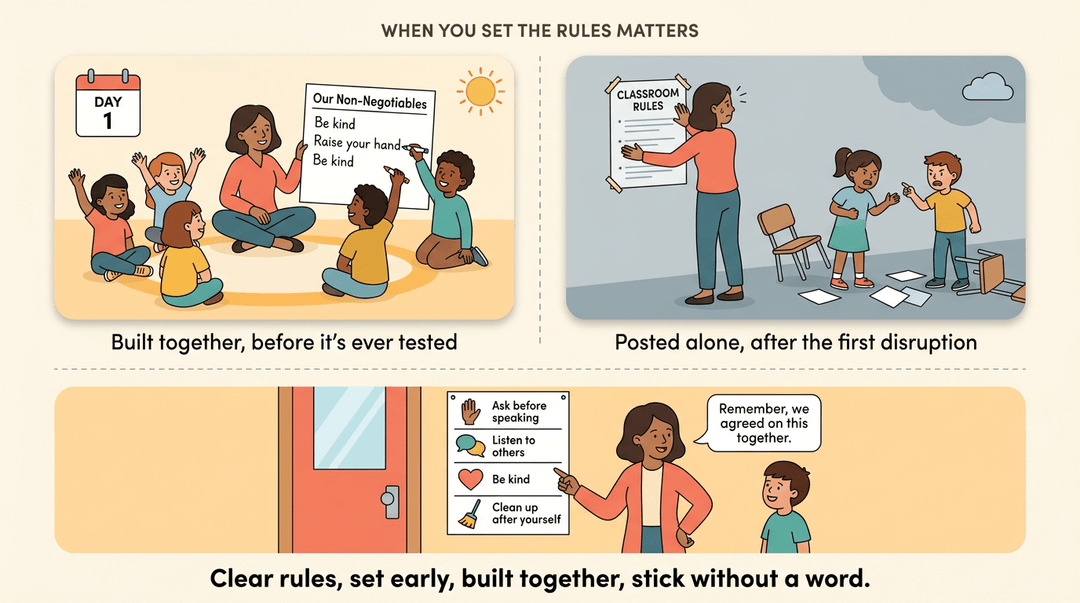
Rules work best when students know them before they're ever tested. Share your expectations on day one, not after the first disruption.
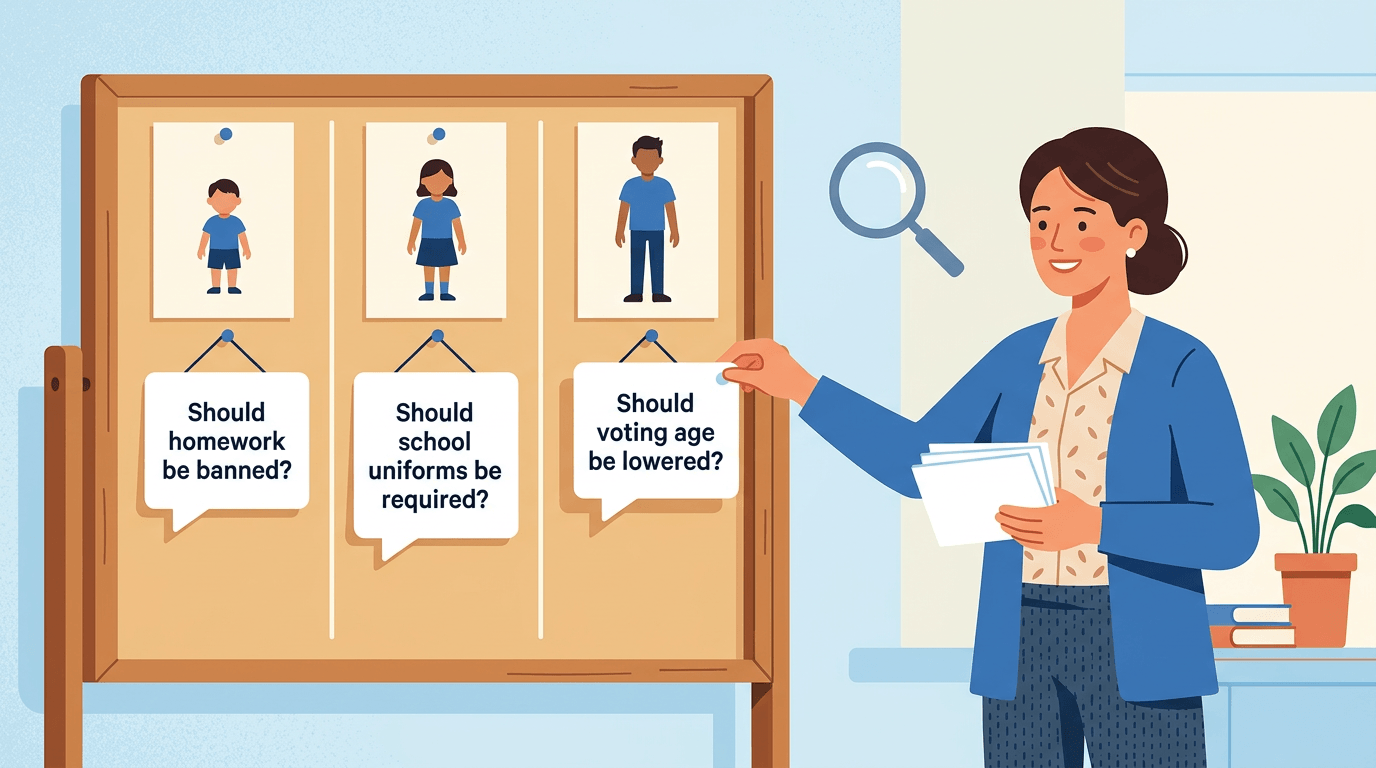
Better yet, build them together: a fifth-grade teacher who spends the first morning asking students to help draft the classroom's "non-negotiables" gets buy-in that a posted list alone never earns.
Once you've landed on them, put them somewhere visible: a simple visual rule chart near the door reminds students without you saying a word. Co-created norms also give you something to point back to later: "Remember, we agreed on this together."
Consequences that correct misbehavior
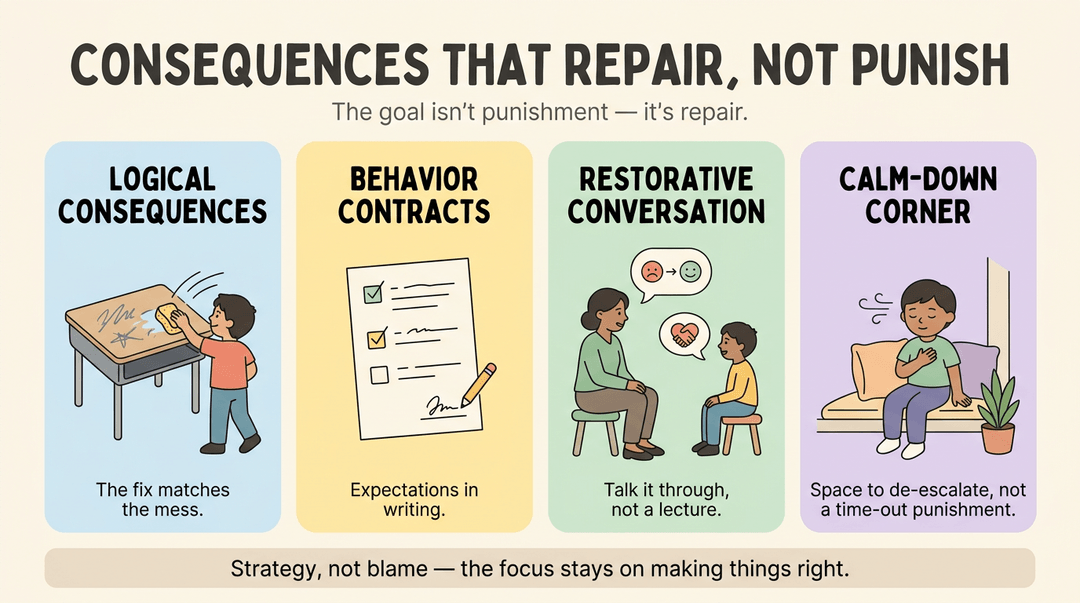
The goal here isn't punishment: it's repair.
- Logical consequences tie the response directly to the behavior (a student who writes on a desk cleans it).
- Behavior contracts spell out expectations and next steps in writing for a student who needs extra structure.
- A restorative conversation, where the student talks through what happened and how to make it right, often does more than a lecture ever could.
For bigger moments, a calm-down corner or short reflection time gives an escalated student space to de-escalate before rejoining the group: it's a strategy, not a punishment, and it keeps the focus on repair rather than blame.
Rewards and positive reinforcement that work
Reinforcement doesn't have to be elaborate:
- Verbal and tangible praise. A specific "I noticed how you helped Jordan" lands harder than a generic "good job."
- Points or token systems. Small, visible progress toward a reward.
- PBIS tiers. Positive Behavioral Interventions and Supports, layering whole-class, small-group, and individual reinforcement.
- Free or low-cost rewards. Extra recess, a classroom job, or choosing the next read-aloud.
Tracking and monitoring student behavior
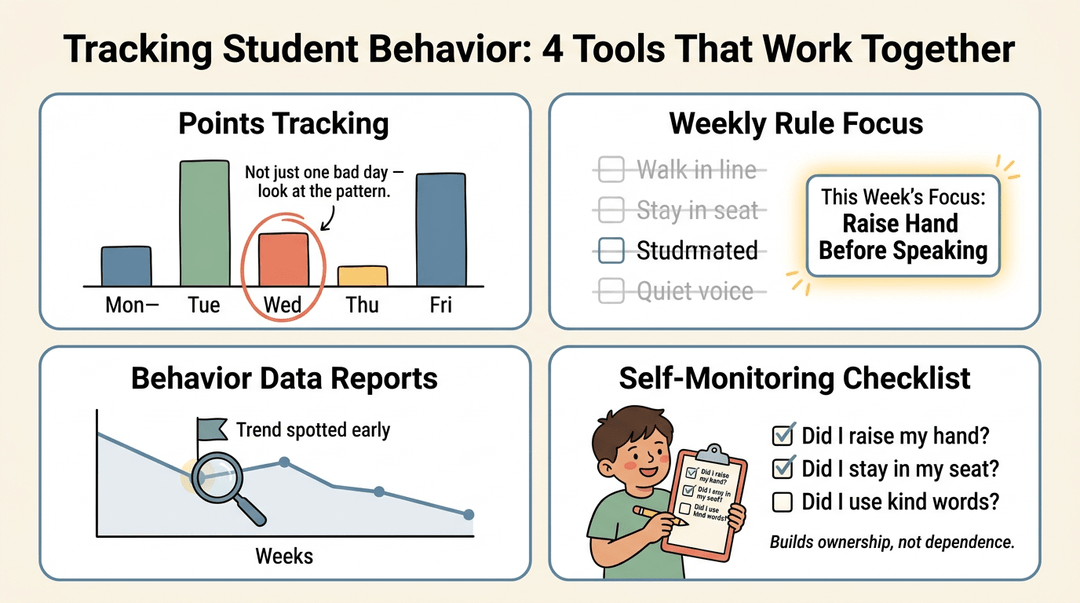
A points tracking system shows patterns over time, not just a single bad day. Pair it with a targeted weekly rule focus so students aren't juggling every expectation at once.
Behavior data reports help you spot trends early, and self-monitoring tools (a simple checklist a student fills in) build ownership instead of dependence on you to catch every slip.
Your Step-by-step Classroom Management Checklist
Here's the plan-building checklist in three versions: your first classroom, a virtual one, and the day you're away. Work through the one you need; every item ends in something you can copy.
Your first-classroom starter checklist
Before day one, confirm these four things exist on paper, not just in your head:
- 3 to 5 core rules are posted, each one observable and phrased as a behavior.
- ✅ "One voice at a time" ❌ "Be respectful"
- The difference: the first can be seen; the second has to be interpreted.
- A seating chart is drawn, with frequent-check-in students within two steps of where you stand.
- An entry and exit routine is scripted, down to the first minute.
- Entry: grab the warm-up sheet at the door, start writing within one minute.
- Exit: pack up on your signal, push in chairs, line up by rows.
- One reward system is chosen, just one: say, class points toward ten minutes of Friday free time.
⚠️ Watch out: a rule isn't done when it's written; it's done when students have rehearsed it. Budget the first week for practice runs, not just announcements.
The virtual classroom version
Online, structure lives in your settings and your schedule. Set these four before the first session:
| Set up... | What it looks like |
|---|---|
| Mute and camera norms | "Mics off, cameras on for the first five minutes" |
| A digital check-in | Opening poll: "Drop a 1 to 5: how ready do you feel today?" |
| Scheduled brain breaks | A two-minute stretch timer every 20 to 25 minutes |
| An engagement tracker | Roster tally of chat replies, poll answers, and mic turns |
The tracker matters most: you can't read a room through a screen, so you count it instead.
What to leave for a substitute
A substitute inherits your systems with zero context, so leave one page that hands them over. Yours might read:
Sub note, Room 204. Seating chart attached (this is a copy, keep it). Daily routines: warm-up on entry, phones in the caddy, line up by rows at the bell. Behavior shorthand: "check" = verbal warning, two checks = note left on my desk. Emergency contacts: office x100, nurse x115, my cell on the back.
Those four pieces (a seating chart copy, the daily routines, your behavior-system shorthand, and an emergency contacts list) are the whole handoff. Anything longer goes unread by third period.
Whichever checklist you're running, it's easier when rosters, timetables, and behavior notes stay synced in one place with EMStudio's class management tools.
Building Strong Teacher-student Relationships
Strong relationships don't happen by accident. They start the moment a student walks through the door, and they grow from small, repeated actions.
Greet each student by name as they enter, and run a quick icebreaker activity in the first week so your room feels like a welcoming classroom culture, not just a row of desks.
Spending even five quiet minutes of one-on-one banking time with a student who's struggling can pay off months later when things get tense.
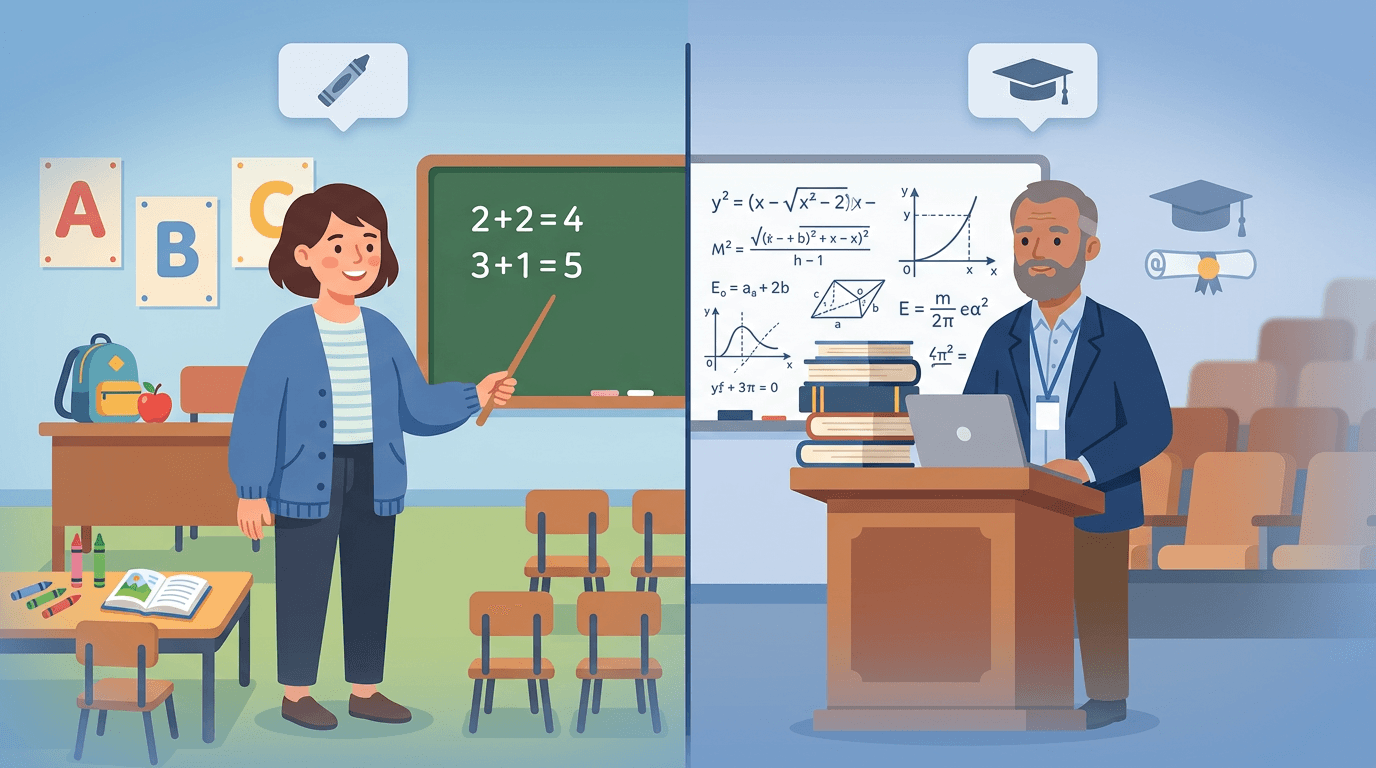
For younger grades, try a simple "two truths and a wish" icebreaker; for older students, a quick values-ranking discussion works just as well.
Keeping relationships strong all year
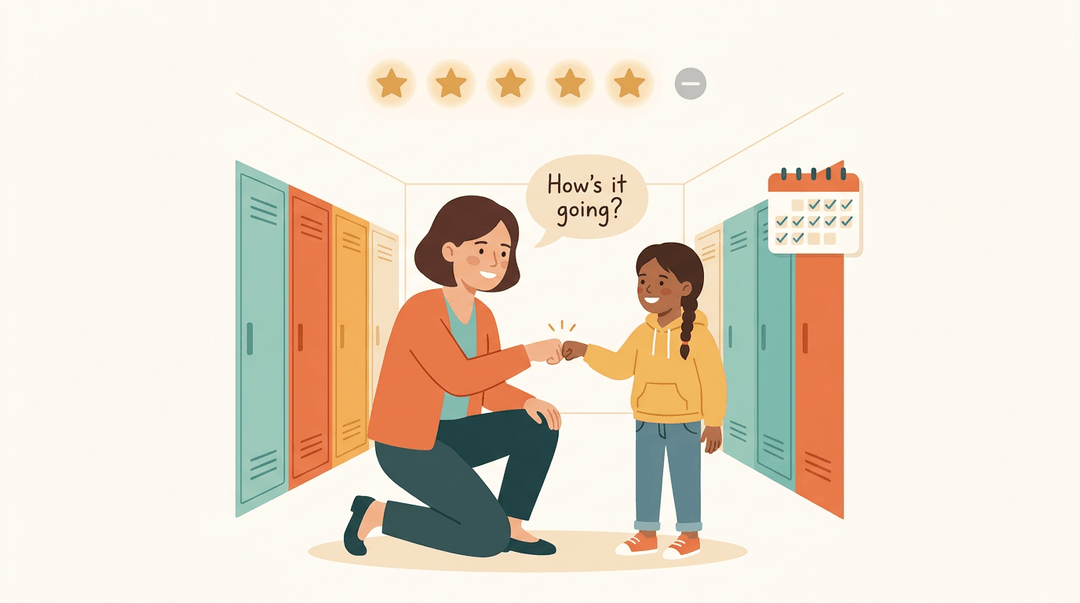
Keeping relationships strong means treating connection as routine, not a one-time event. Regular check-ins, even a 30-second "how's it going?" in the hallway, keep you tuned into a student's world.
Aim for a healthy positive-to-negative interaction ratio: a 2019 study from Sabey, Charlton, and Charlton notes that teachers are often encouraged to aim for five positive interactions for every negative one.
Acknowledge good behavior out loud, not just corrections, and build in short weekly feedback conversations so students always know where they stand with you.
Repairing relationships after conflict
Conflict happens, even in a well-run classroom. A restorative conversation after a blow-up rebuilds trust faster than a punishment ever could. Own your part first: if you raised your voice, say so.
Lead with empathy, offer a genuine fresh start, and always separate the deed from the doer. A student who made a poor choice isn't a "bad kid," and treating them that way only closes the door you're trying to reopen.
Routines, Structure, and Classroom Setup
A classroom runs on more than good intentions: it runs on predictable systems students can count on. Three pieces work together here:
- the routines you repeat
- the room you build
- how you move between the two
Daily routines and procedures that stick
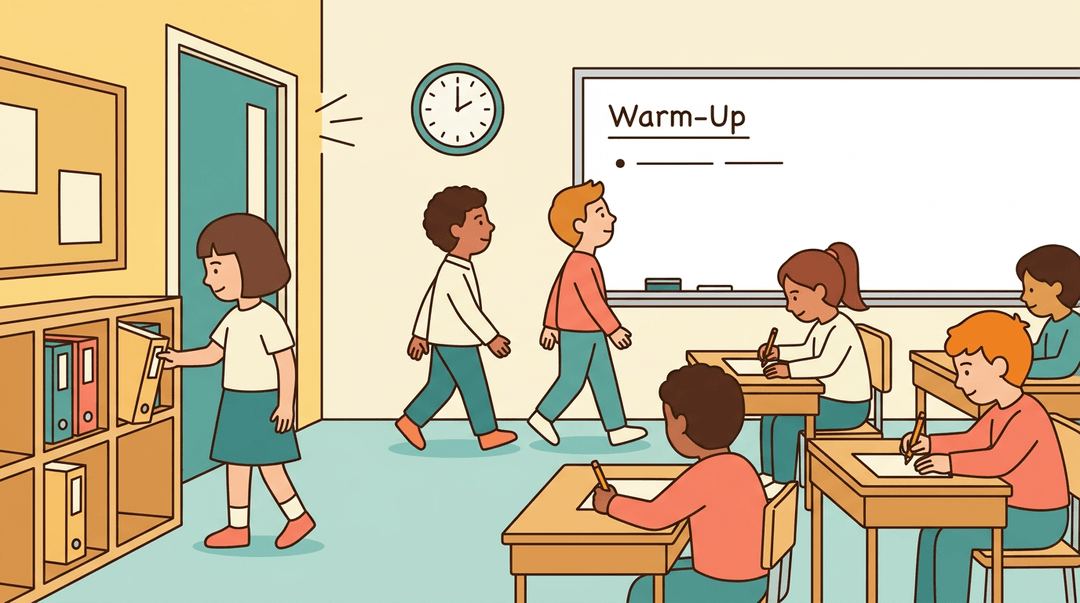
Think of a teacher who opens every class the same way: students know to grab their folder, check the board, and start the warm-up before the bell even finishes. That's the payoff of practiced classroom procedures.
Clear entry and exit routines cut down on chaos at the two messiest points of the day, while consistent transition procedures (how students move from desks to groups, or room to room) keep momentum instead of losing it.
A consistent start and end to class, repeated daily, turns a routine into a habit students don't have to think about.
Choosing seating arrangements and classroom layout
Seating isn't just furniture, it's a behavior tool. Strategic seating can separate students who distract each other and put a struggling reader near extra support, while collaborative clusters make group work easier to run.
A flexible, adjustable layout lets you reconfigure fast: rows for a quiz, pods for a project, so the room always supports what you need, including students with specific access or sensory needs.
A rotating classroom jobs chart adds another layer of structure, giving students ownership of small daily tasks like handing out papers or leading the line.
Managing time and smooth transitions
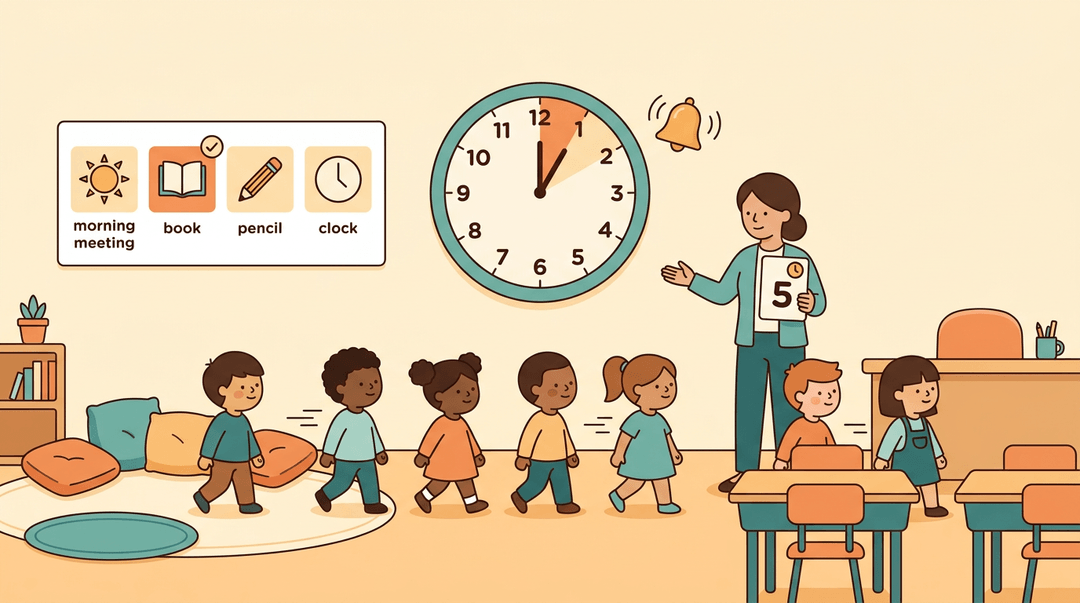
Visual schedules, timers, and a simple 5-minute warning keep transitions smooth instead of sudden.
Morning meetings or bell ringers give each day a steady, familiar start, and consistent transition cues (a chime, a countdown, a call-and-response) signal what's coming next before confusion has a chance to set in.
Technology Tools for Classroom Management
The right technology doesn't replace your classroom management plan: it reinforces it, catching small issues early and freeing up time you'd otherwise spend on paperwork.
AI and digital tools for managing behavior
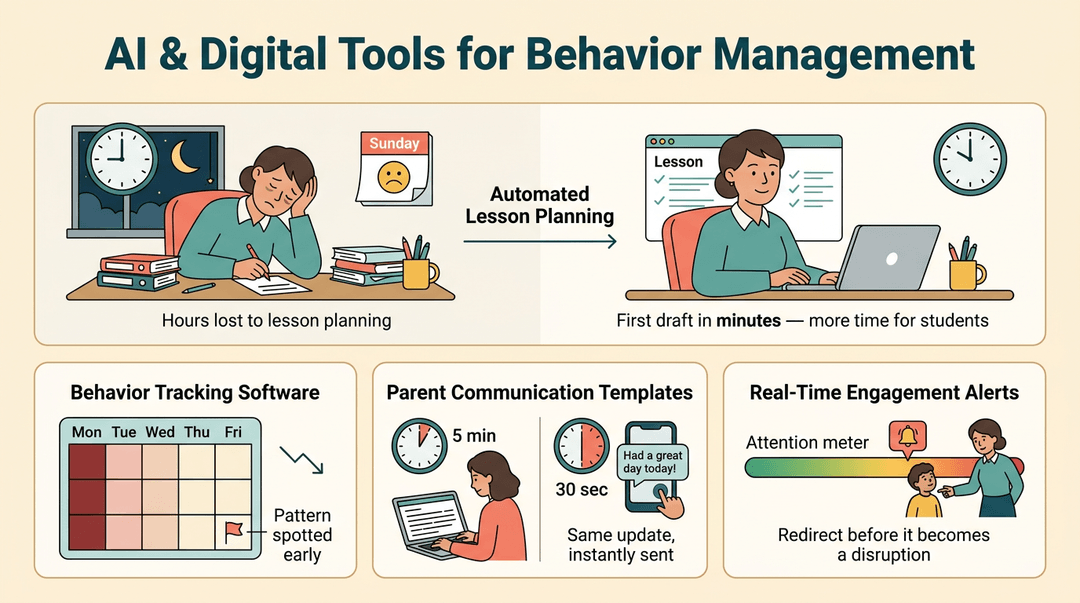
Consider a teacher who used to lose a Sunday evening to lesson planning. Automated lesson planning tools can draft a first pass in minutes, leaving more energy for the relationships that make any behavior plan actually work. From there:
- Behavior tracking software logs patterns over time, so a quiet trend (like a student struggling every Monday) shows up before it becomes a bigger problem.
- Parent communication templates turn a five-minute update into a thirty-second send, keeping families in the loop without eating your prep period.
- Real-time engagement alerts flag when attention is slipping, so you can redirect before it turns into a disruption rather than after.
Digital platforms for assignments and worksheets
You don't need a stack of paper to run a tight classroom. Platforms that convert paper worksheets to digital formats cut down on lost assignments and messy handoffs, and self-grading features handle the repetitive scoring so you don't have to.
Tools with Google Classroom integration keep everything, assignments, grades, and feedback, in one place students already know how to use. Together, these simply reduce grading time, which means less grading, more teaching.
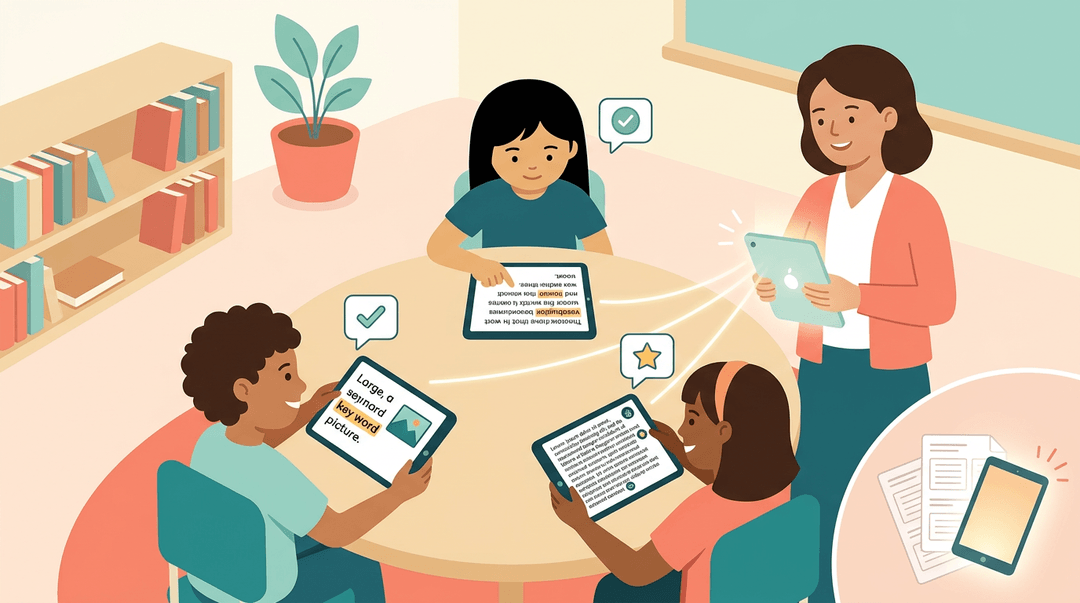
Using tech to differentiate instruction
Differentiation used to mean building three versions of the same worksheet by hand.
Now, tools that handle personalized activity generation can do that work for you, while instant student feedback lets a struggling reader know right away what to fix instead of waiting until tomorrow.
Text leveling tools adjust reading difficulty automatically, and built-in supports for learning differences mean one platform can meet very different learners in the same room.
Student-centered and Equity-focused Approaches
Classroom management lasts longest when it's built with students, not imposed on them. That means handing over real ownership and staying alert to who feels seen in your room and who doesn't.
Giving students ownership and agency
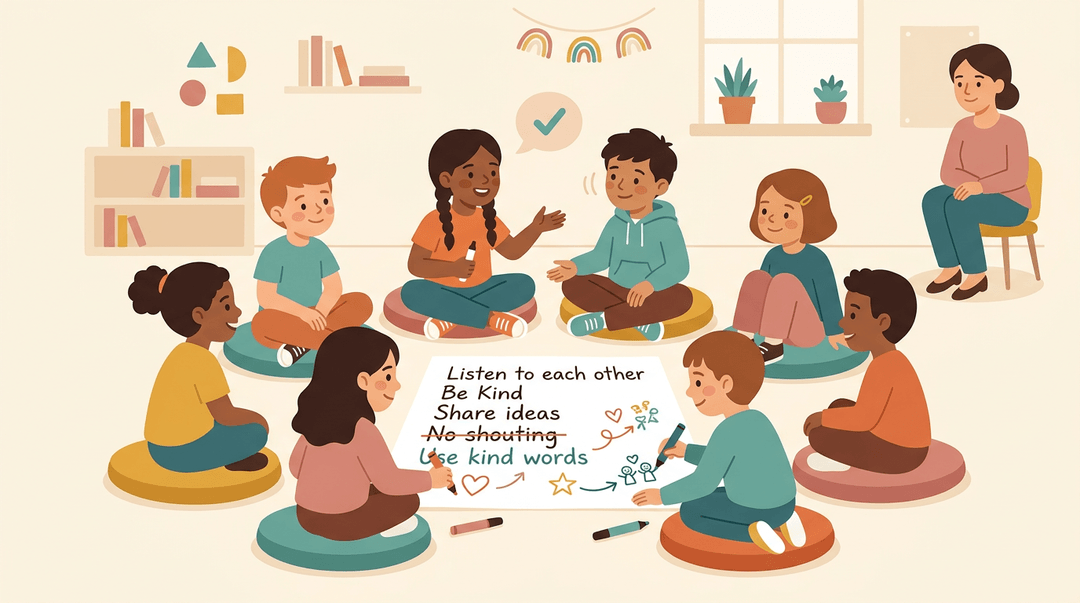
When students help write the rules, they're far more likely to follow them. Co-created norms turn a list of "don'ts" into a shared agreement the class actually owns.
Try a student-led class meeting once a week, where students raise concerns and problem-solve together instead of waiting for you to referee.
Peer accountability does real work here too: a classmate's gentle "hey, we agreed on this" often lands better than a teacher's reminder. The payoff is bigger than tidier behavior.
Students who help shape their classroom start to feel ownership of their own learning experience, not just the rules around it.
Restorative, non-punitive discipline practices
Before responding to misbehavior, ask what's driving it. A student who's acting out might be exhausted, anxious, or lost in the content, and punishment won't fix any of that.
Restorative practices look for the root cause and offer face-saving options so a student can correct course without public humiliation.
Exclusionary punishment (sending a student out, suspending them) removes them from learning without teaching them anything. Repair over retribution means the goal is making things right with the people affected, not just doling out a consequence.
Addressing systemic inequities in the classroom
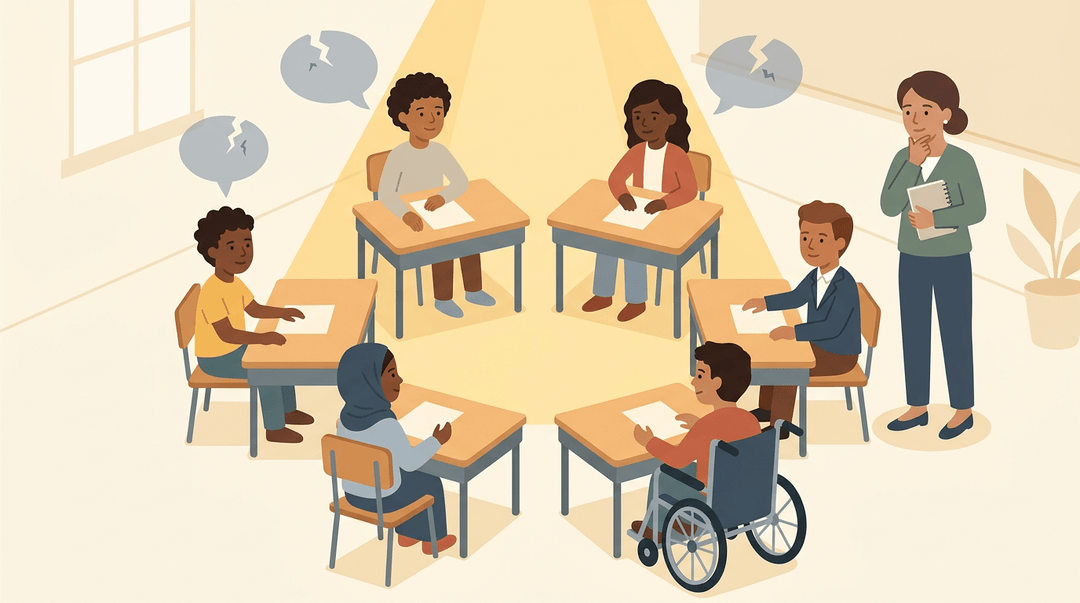
Not every student walks in with the same social standing. Pay attention to status differences, and be willing to name how race, class, and gender shape classroom dynamics.
Watch for microaggressions, the small, often unintentional comments that chip away at belonging. Culturally responsive practice means your management choices reflect and respect every student's background, not just the loudest cultural norm in the room.
Instructional Delivery and Collaboration Models
How you deliver a lesson and who you deliver it with shapes classroom management just as much as any rule chart. A solid plan accounts for both.
Different ways to deliver instruction
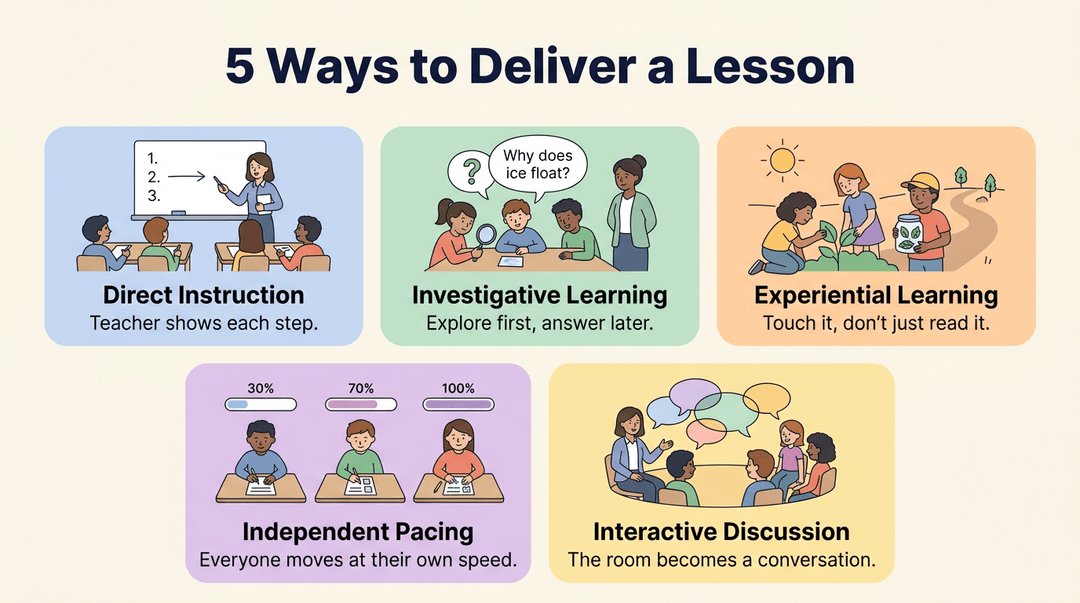
No single delivery style fits every lesson, so your plan should flex across a few proven approaches:
- Direct instruction. A clear, teacher-led lecture that works well for introducing new content or modeling a skill step by step.
- Indirect/investigative learning. Students explore a question or problem before you confirm the answer, building curiosity instead of just absorbing facts.
- Experiential learning. Field trips and hands-on activities turn abstract ideas into something students can touch and remember.
- Independent study pacing. Students move through material at their own speed, which is especially useful for differentiation.
- Interactive, discussion-based lessons. Students talk through ideas with you and each other, turning the room into a conversation instead of a monologue.
Co-teaching models that work
When two educators share a room, management has to be planned, not improvised.
Research on co-teaching outlines seven recognized co-teaching styles, including team teaching, where both teachers lead instruction together, and station or parallel teaching, where each teacher runs a smaller group simultaneously.
Both models cut down on behavior gaps by keeping every student closer to an adult. None of this works without buy-in from above: administrators need to build co-teaching time into the schedule and support the pairing, not just assign it and walk away.
Ongoing Professional Growth
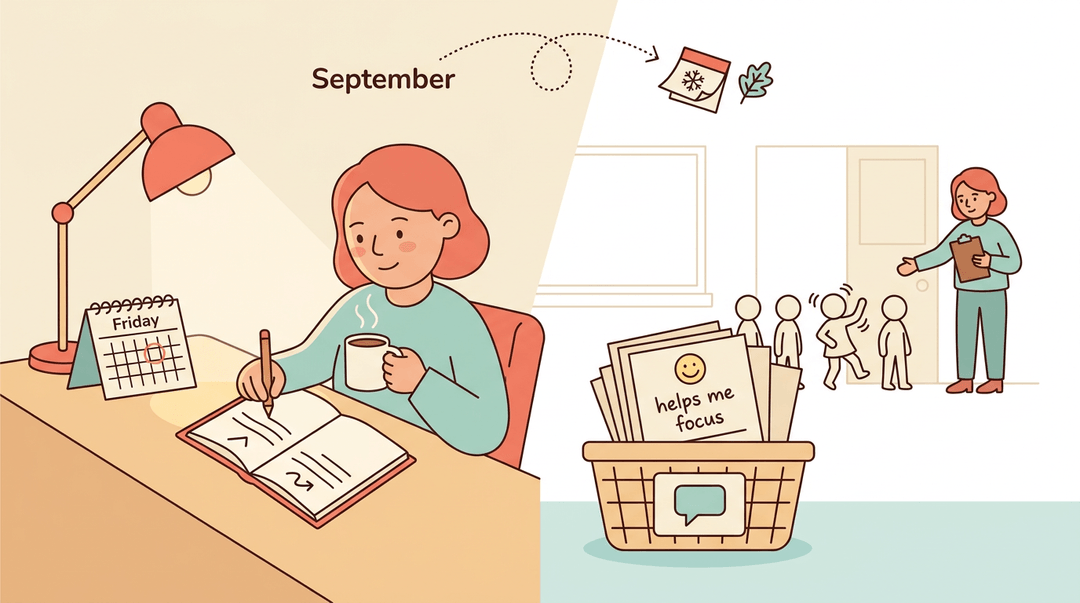
Classroom management isn't a plan you set in September and forget. It's a practice you keep sharpening all year long.
Reflecting on and adjusting your practice
Build a weekly reflection habit: five minutes on Friday to note what worked, what fell flat, and what to tweak before Monday. Pair that with real student feedback.
A quick anonymous survey or exit ticket asking "What helps you focus in here?" often surfaces blind spots you'd never catch alone.
Consider a veteran teacher who invites a colleague in to observe a tricky transition period. A fresh set of eyes spots the small friction points (a noisy hallway line, a confusing signal) that get invisible once you're used to them.
Build in mid-year adjustments too: what worked with a quiet September class might need retooling once personalities shift and routines go stale.
Professional development resources worth exploring
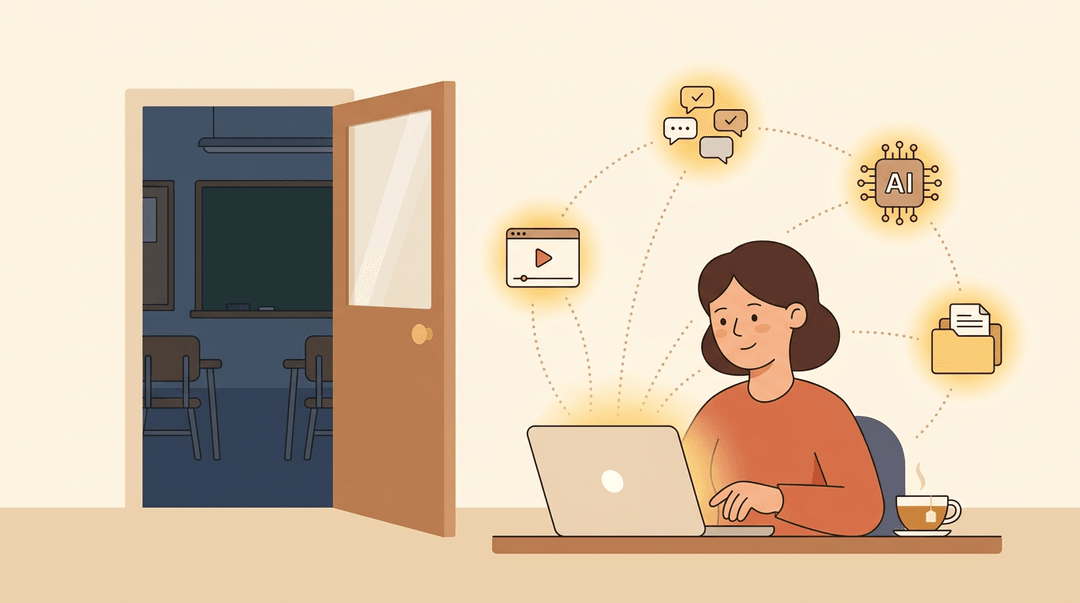
Growth doesn't stop at your own classroom door.
- Webinars and workshops on classroom management give you new strategies without the cost of a full course.
- Online teacher communities let you ask a question at 9pm and get three practical answers by morning, from educators who've actually tried them.
- AI literacy certification is worth a look too: as AI tools creep into lesson planning and grading, understanding how they work (and their limits) helps you manage a classroom that's increasingly tech-integrated.
- PD materials library: a saved stash of articles, templates, and recordings you can revisit whenever a specific challenge comes up again.
Good classroom management isn't one trick. It's routines, relationships, and the right techniques working together, built with a plan instead of left to chance. Get that foundation in place, and everything else you teach has room to land.
Ready to put this planning into practice? Check out our Classroom Management feature to organize your classes, rosters, and timetables in one structured workspace.
References
- Co-Teaching Models: A Systematic Analysis of Types, Implementation, and Effectiveness — exa.ai (2026)
- Dialogic Teaching - Investigating Teacher-Student Talk from a CA perspective — exa.ai (2016)
- The “Magic” Positive-to-Negative Interaction Ratio: Benefits, Applications, Cautions, and Recommendations — journals.sagepub.com (2018)
- 9 Components of Student-centered Classroom Management — knowledgeworks.org
Frequently asked questions
What is the 70/30 rule in teaching?
The 70/30 rule in teaching can refer to two different ideas. In talk-time, it means students should account for roughly 70% of classroom discussion while the teacher uses short, purposeful cues. In classroom management, it can mean about 70% teacher-set structure and 30% student choice or agency.
What is classroom management in Montessori?
Classroom management in Montessori relies on a prepared environment rather than frequent verbal correction. Ordered materials, clear routines, purposeful work, and predictable expectations help students develop independence and manage their behavior within a structured, respectful setting.
What are the five classroom management techniques?
Five widely used classroom management techniques are setting clear rules and expectations, using logical corrective consequences, reinforcing positive behavior, tracking behavior patterns, and using de-escalation strategies. Together, these techniques prevent problems, reinforce productive behavior, and support repair after misbehavior.
How do I write a classroom management plan?
To write a classroom management plan, define three to five observable rules, create a seating chart, script entry, transition, and exit routines, and choose one reinforcement system. Add procedures for correcting behavior, de-escalating conflict, tracking patterns, communicating with families, and adjusting the plan when evidence shows something is not working. Rehearse the routines with students and revise the plan as needed.