How to Teach Reading to Dyslexic Students: A Complete Guide

Jump to section
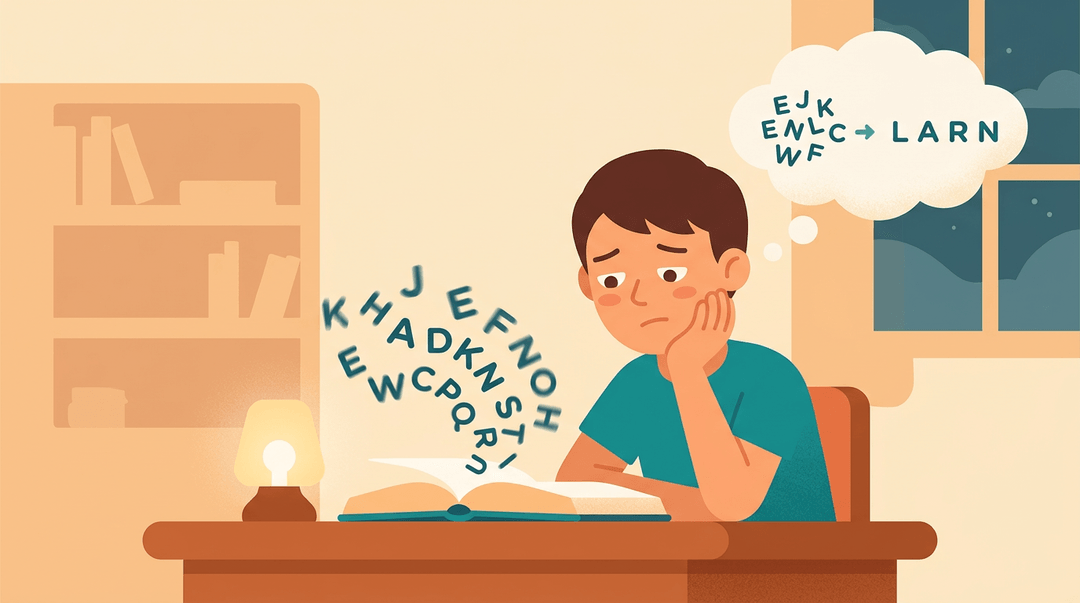
Picture a student who works hard every night, yet the words on the page still seem to shift and blur. That frustration is what many dyslexic learners feel every day, and it's why the right teaching approach matters so much.
Dyslexia is a common, language-based learning difference that affects how students decode and spell words, not how smart they are.
This guide gives you a clear path forward. We'll cover what dyslexia is, the evidence-based structured literacy methods that work, multisensory techniques, helpful tools, and practical classroom strategies you can use right away.
Understanding Dyslexia Before Teaching Reading
Before you choose a method, it helps to know what you're working with. Here's what dyslexia looks like in a classroom and why it's so often misunderstood.
What dyslexia is and how common it is
Dyslexia is a learning disability that affects reading, especially decoding (turning letters into sounds and words), fluency (reading smoothly), and accuracy.
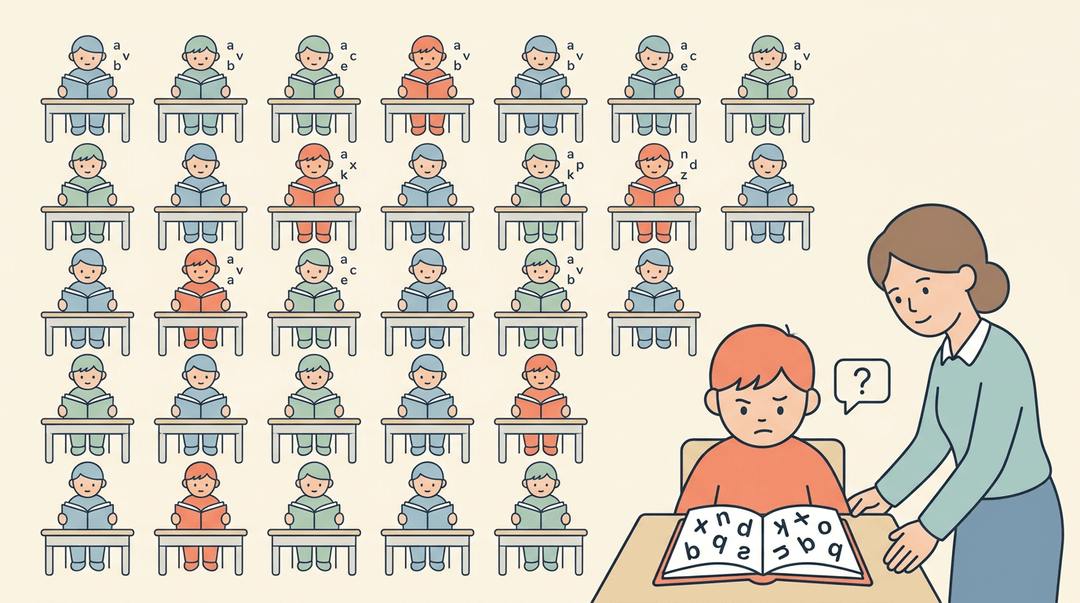
According to the International Dyslexia Association, it affects an estimated 5-20% of the population. In a class of 25, that could be one student or several.
Watch for:
- slow or inaccurate reading
- poor spelling and writing
- mixing up similar words
If you see these patterns, bring them to your school's support team rather than waiting.
What reading looks like with dyslexia
Consider a second-grade teacher with a student named Marcus. He reads carefully, but each sentence takes so long that by the end he has lost the thread. Letters or words may look reversed to him, and reading feels slow and frustrating.
Because decoding uses up his energy, grasping the main idea is hard. The strain spreads to math word problems, multistep directions, and remembering what he just heard. Seat Marcus near the front so you can check in quickly.
Struggles and strengths that often go together
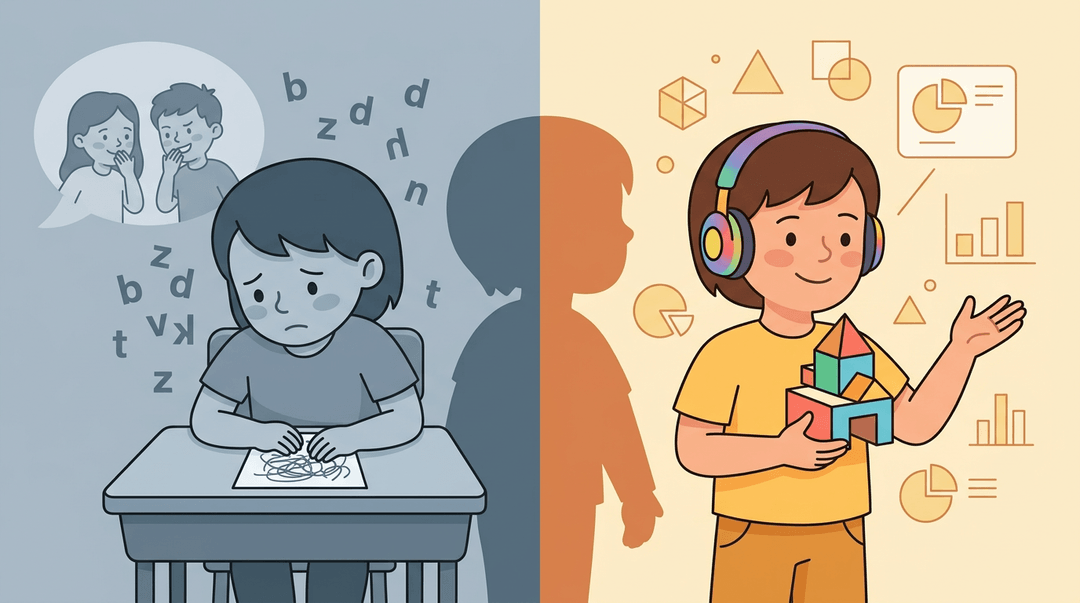
Spelling and writing are often hard, too. A struggling reader may also get teased or feel embarrassed, which can wear down self-esteem, so keep an eye on the playground and group work.
Yet many students with dyslexia have real strengths, such as strong visual-spatial skills or a sharp auditory memory. Their core challenge is decoding, not intelligence. Build on those strengths with diagrams, discussion, and audio.
When reading level doesn't match intelligence
A student can be bright and still read well below grade level. Avoid 'baby books,' which signal that a capable learner isn't capable. Also watch for fake engagement, where a student nods along with a hard book he can't read.
Students who read less than peers get less practice, and the gap widens. Instead:
- read challenging, high-interest material aloud
- pair students up
- offer audiobooks
Group students by skill need, not by how advanced they seem, so no one is stuck in a group that feels like a label.
Evidence-based Ways to Teach Reading
Dyslexic students do best when reading is taught as a system rather than guessed at. Here's what that looks like and which approaches have the strongest support.
The building blocks of structured literacy
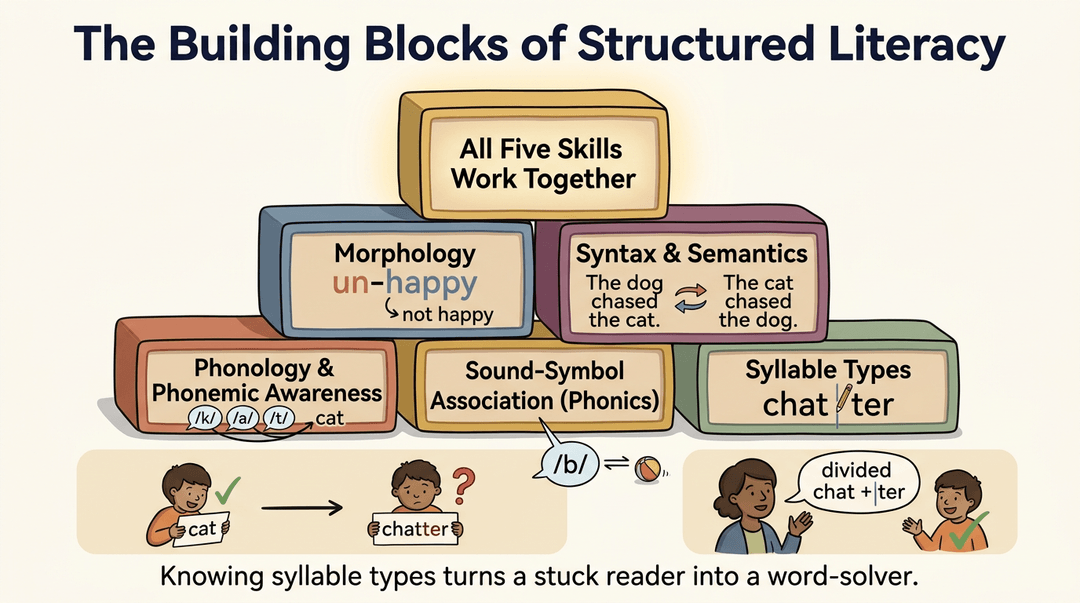
Structured literacy covers five connected skills:
- Phonology and phonemic awareness: hearing and manipulating the individual sounds in spoken words.
- Sound-symbol association (phonics): linking each sound to its letters.
- Syllable types: the patterns that help students decode longer words.
- Morphology: using roots and prefixes to unlock meaning.
- Syntax and semantics: understanding how word order and meaning build sentences.
Consider a second-grade teacher whose student can read "cat" but stalls on "chatter." Teaching syllable types gives that student a way to tackle the word piece by piece.
Core principles behind effective instruction
Effective programs are systematic and cumulative, building each skill on the last. They rely on explicit direct teaching, modeling a sound or pattern aloud before students practice it.
They're also diagnostic and individualized, so you adjust pacing to each learner's gaps.
This differs from Guided Reading and Balanced Literacy, which tend to leave decoding to be picked up in context. Structured literacy teaches the code directly and in sequence.
How the Orton-Gillingham method works
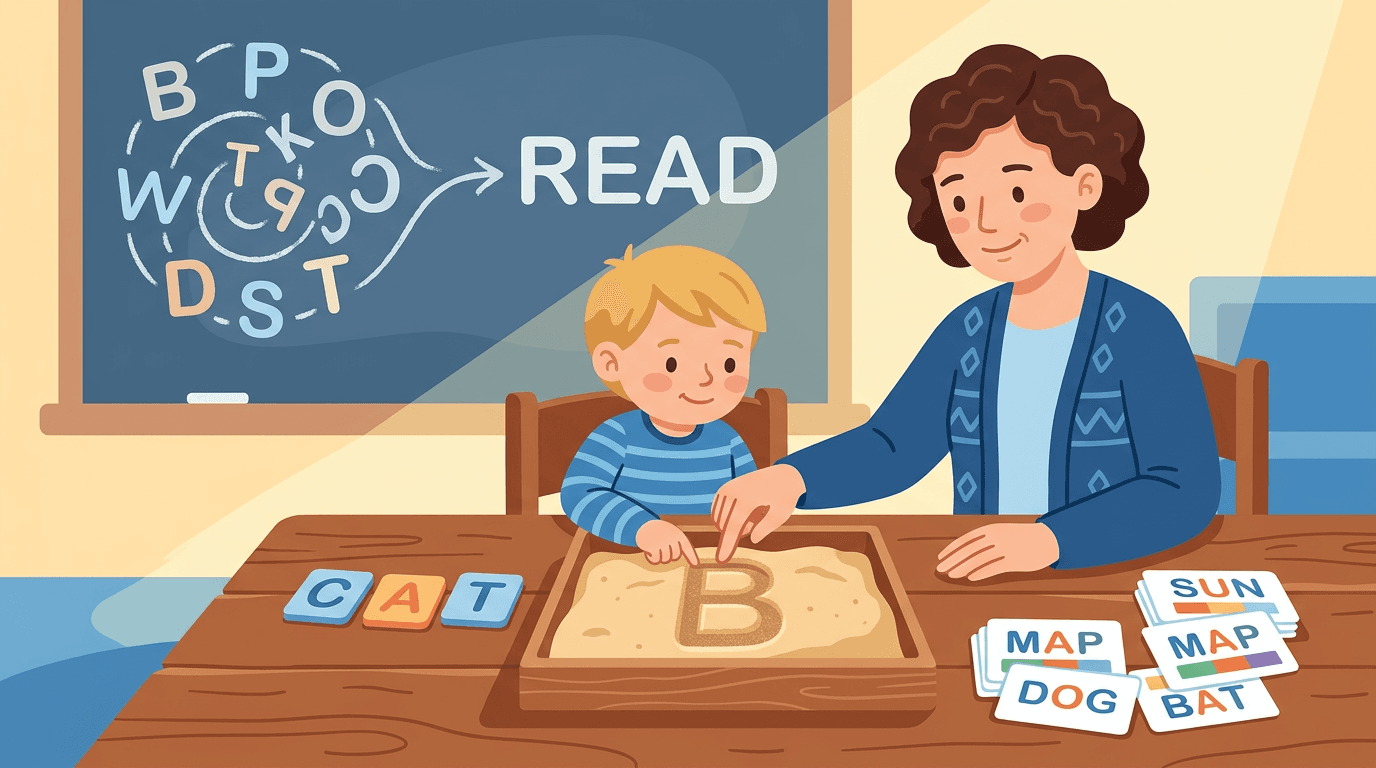
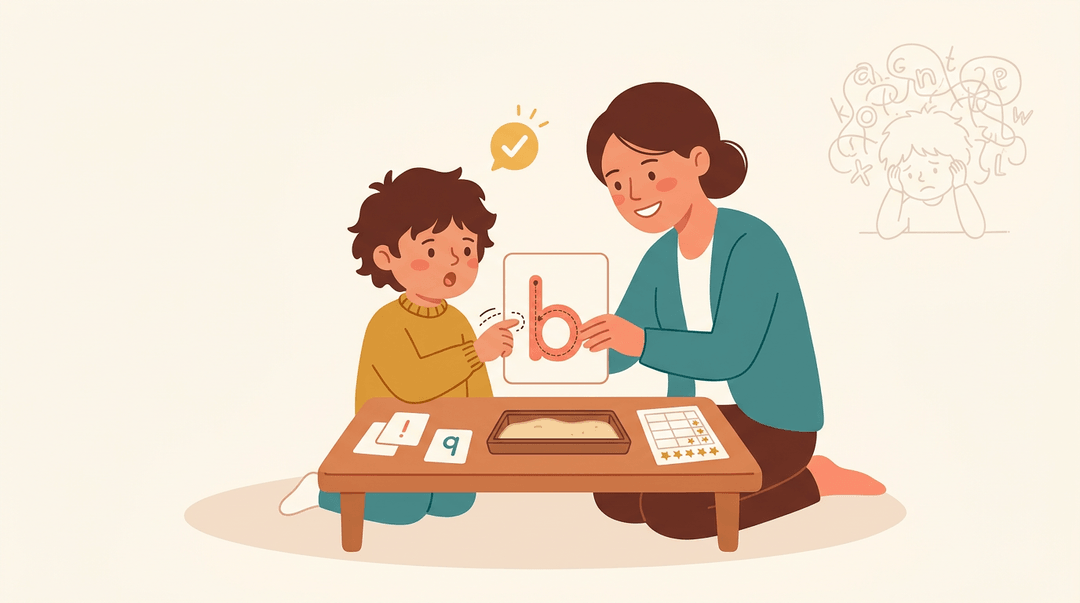
Orton-Gillingham is a multisensory approach: students see, say, and trace each letter together. Lessons are direct, explicit, and sequential, with positive reinforcement and an emotionally supportive tone that keeps students willing to take risks.
Imagine a fourth grader who has spent years feeling 'bad at reading.' A patient, step-by-step lesson that names every small win can shift that feeling.
Named programs and Corrective Reading
Several named programs apply these principles. Wilson, Lindamood-Bell, and Barton are all associated with systematic instruction in these skills.
The Barton Reading & Spelling System is a one-on-one tutoring system that improves spelling, reading, and writing skills.
Is Corrective Reading good for dyslexia? It has a solid evidence base. NIFDI describes it as an evidence-based remedial reading intervention, and its evaluation involved 134 students receiving 65 lessons in groups of up to 10.
The sources here don't single out dyslexia specifically, so check its fit against your student's profile.
A Teacher's Checklist for Supporting Dyslexic Readers
Use this as a two-part card: a short daily check you run every morning, and four moves you build into each lesson plan. Pin it up and tick through it as you plan.
Daily check
Before students settle, confirm each of these is in place.
- Seat near instruction. Front or side of the room, away from doors and noisy corners.
- Visuals paired with spoken directions. Say it and show it.
- Example: "Open to page 12" spoken, with p. 12 on the board.
- Extra processing time built in. Pause before you expect an answer.
- Say: "Take your time. I'll come back to you."
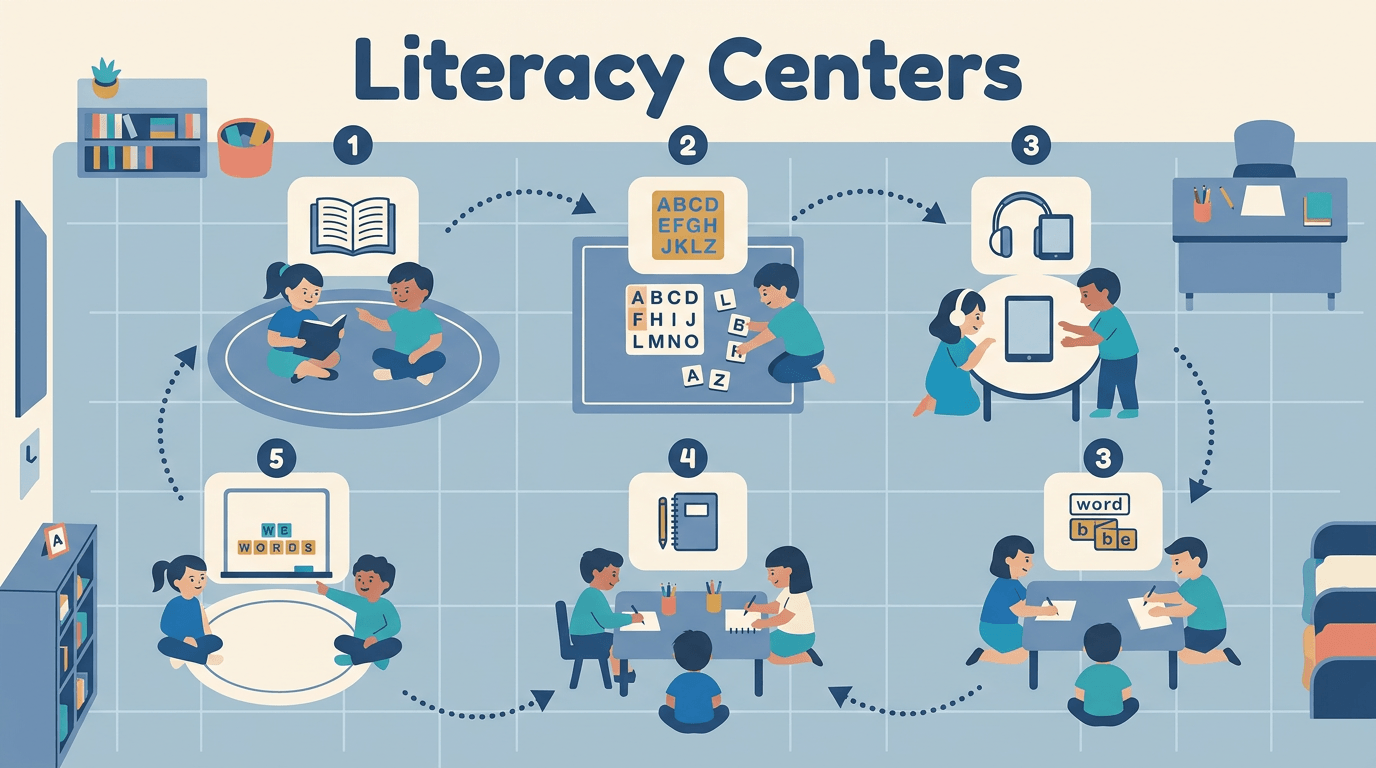
- Small reading groups rotating. Keep them flexible so no group becomes a label.
- IEP/504 accommodations tracked. Keep a running note of what each student is entitled to and whether it happened today.
- Effort and progress praised publicly. Name the specific thing: "You sounded out that whole word on your own."
⚠️ Watch out: Public praise should celebrate effort, not put a student on the spot. Never ask a dyslexic reader to read aloud cold in front of the class.
Lesson-plan adjustments
Build these into the plan itself, in roughly this order.
- Pre-teach key vocabulary. Introduce the hard words before students meet them in text.
- Jot 3 to 5 words, each with a picture and a quick say-it-and-tap-it practice.
- Chunk the reading. Break the text into short segments with a purpose for each.
- Try: "Read these two paragraphs and find who the main character is."
- Embed a multisensory task. Have students use eyes, ears, voice, and hands together.
- Example: trace each word in a sand tray while saying its sounds.
- Schedule frequent progress checks. Check in briefly and often, so problems surface early.
- A one-minute end-of-lesson check, noted next to the student's name, is enough.
Example: A fourth-grade teacher planning a science passage on weather pre-teaches evaporate and condense with sketches. She splits the passage into three short chunks, and students trace each vocabulary word in a sand tray before reading. At the end she jots a quick note for two students whose accommodations she's tracking. Nobody feels singled out, and she knows by Friday what to adjust.
At a glance:
| Part | Key move | What you get |
|---|---|---|
| Daily check | Seating, visuals, time, groups | A calmer, more accessible room |
| Accommodations | Track IEP/504 supports | Nothing slips through |
| Lesson plan | Pre-teach, chunk, multisensory | Text that's reachable |
| Progress checks | Short, frequent | Early signs of what's working |
Log accommodations, rosters, and reading progress in one place with EMStudio's planner.
Multisensory Tricks That Help Memory Stick
Dyslexic students often remember best when a word reaches them through more than one channel. The strategies below pair sight, touch, sound, and meaning so each word has several ways to stick.
Picturing words in your mind
Many students with dyslexia think in pictures, so give them one to hold onto. Ask them to close their eyes and form a mental picture of a word, then describe what they see.
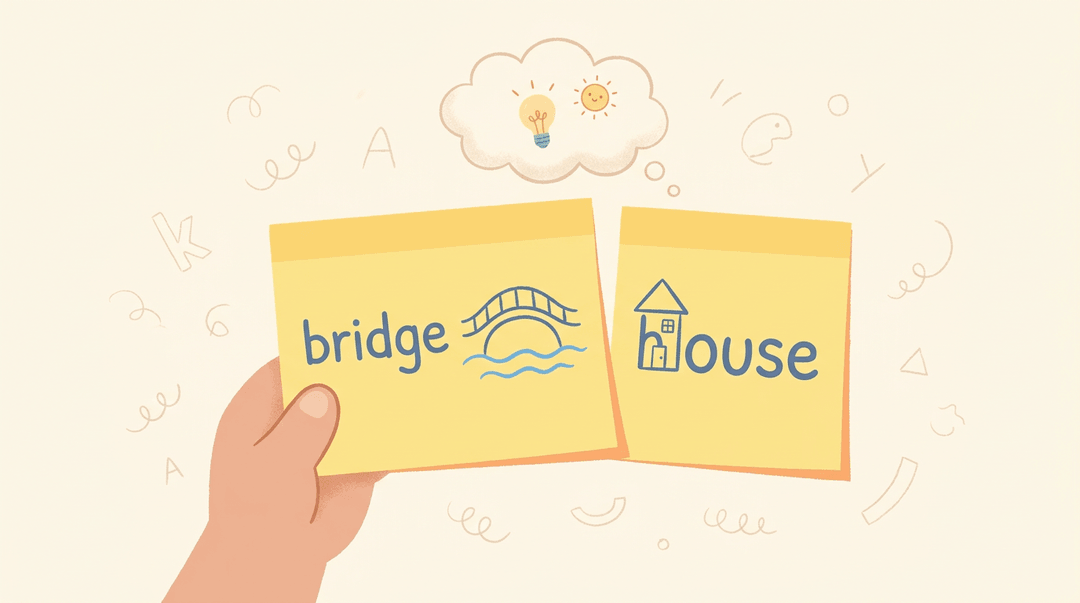
For vocabulary, have them illustrate the word on a sticky note, such as a quick sketch of bridge beside the printed term. You can also draw pictures into letters, like turning the o in a word into a sun.
Picture a second-grade teacher who draws a tiny house inside the letter h. The drawing gives the student a hook, and the hook makes the letter easier to recall.
Engaging touch, sight, and sound together
Pair what students see with what they feel and say. Have them trace letters in a tray of sand while sounding them out, or air-write words with big arm motions.
Sandpaper letters let fingers learn each shape, and acting out words in a quick round of charades gets the whole body involved. Picture a fourth grader who mimes leap before reading it in a passage.
The movement anchors the word, so the reading feels less like a struggle. The goal isn't to replace reading with movement. It's to add a second path to the same word.
Memory tricks for tricky words
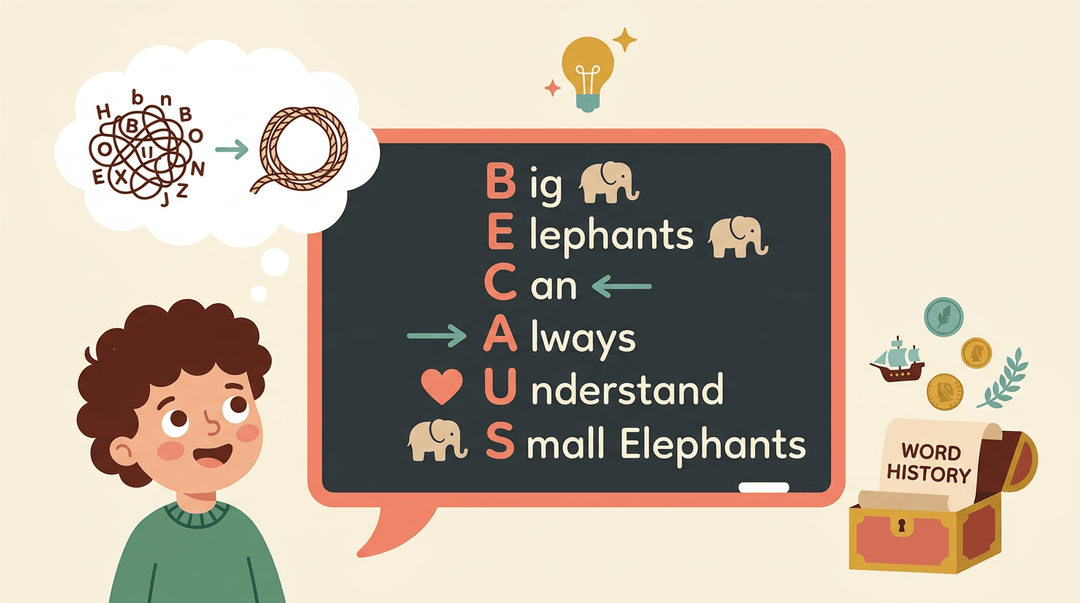
Some words break the rules, so give students a shortcut. Memory aid phrases work well: build a sentence where each word's first letter spells out the tricky spelling. Rhymes help too, pairing a hard word with one that sounds like it.
Word history exploration can make odd spellings make sense, because learning where a word came from gives its letters a reason to be there. Try it with a student who keeps mixing up a word, and you may find the story is what finally sticks.
Ways to build vocabulary that stick
Have students write short stories that use their new vocabulary words, so each word lives in a sentence that matters to them. Context-based learning teaches words inside a passage instead of a list, so students learn from the clues around each word.
Pictorial flashcards put an image on one side and the word on the other. Think of a middle school teacher who shows a flashcard with a lighthouse and the word beacon, then asks students to finish one sentence about it.
That quick check shows who's ready to move on. Memory sticks when it has company.
Practical Strategies for the Classroom
Dyslexic students need structure, not just more effort. These strategies help you break down practice, remove unnecessary barriers, and bring families into the work.
Breaking reading into manageable chunks
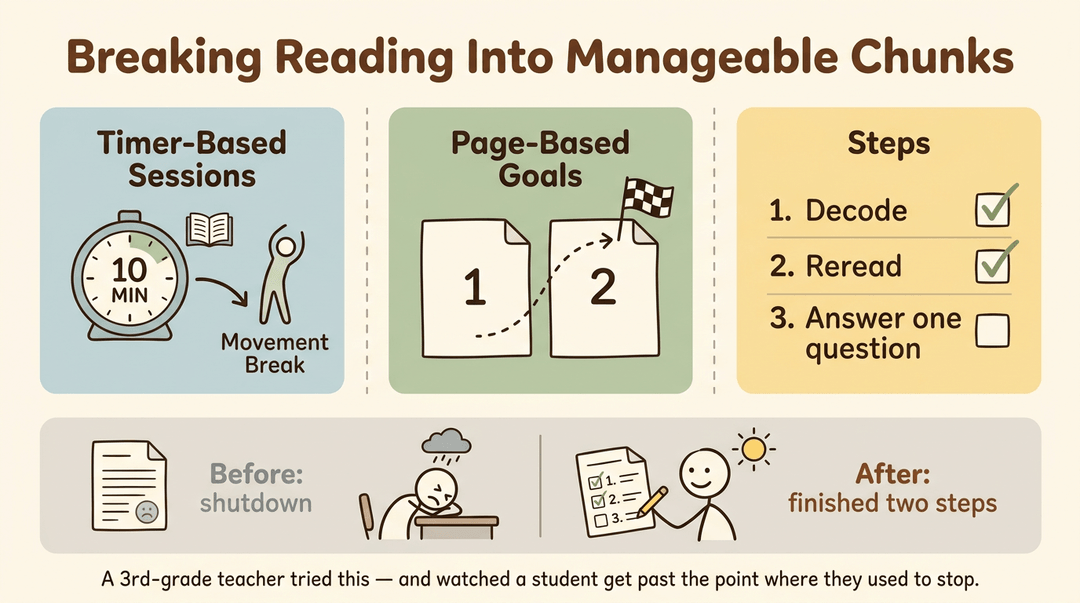
Long blocks of text can overwhelm a student before they reach the first paragraph break. Try these moves:
- Timer-based sessions: Work in short bursts, such as ten focused minutes followed by a movement break.
- Page-based goals: Set a target like two pages so the student can see a finish line.
- Steps: Split a task into numbered actions, such as decode, reread, then answer one question.
A third-grade teacher who tried this watched a student finish the first two steps of a worksheet that had previously caused a shutdown.
Accommodations that make reading easier
Accommodations change how students access the work, not what they're expected to learn. Consider these:
- Skip round-robin reading, which can turn a lesson into a public test.
- Allow typed assignments and provide private reading and writing time.
- Create bookmarks with step-by-step instructions students can follow on their own.
- Digitally track accommodations for each student so every teacher and substitute knows what's in place.
Your student's Individualized Education Program (IEP) or Section 504 plan may already require some of these supports. Review the plan with the team so your classroom matches it.
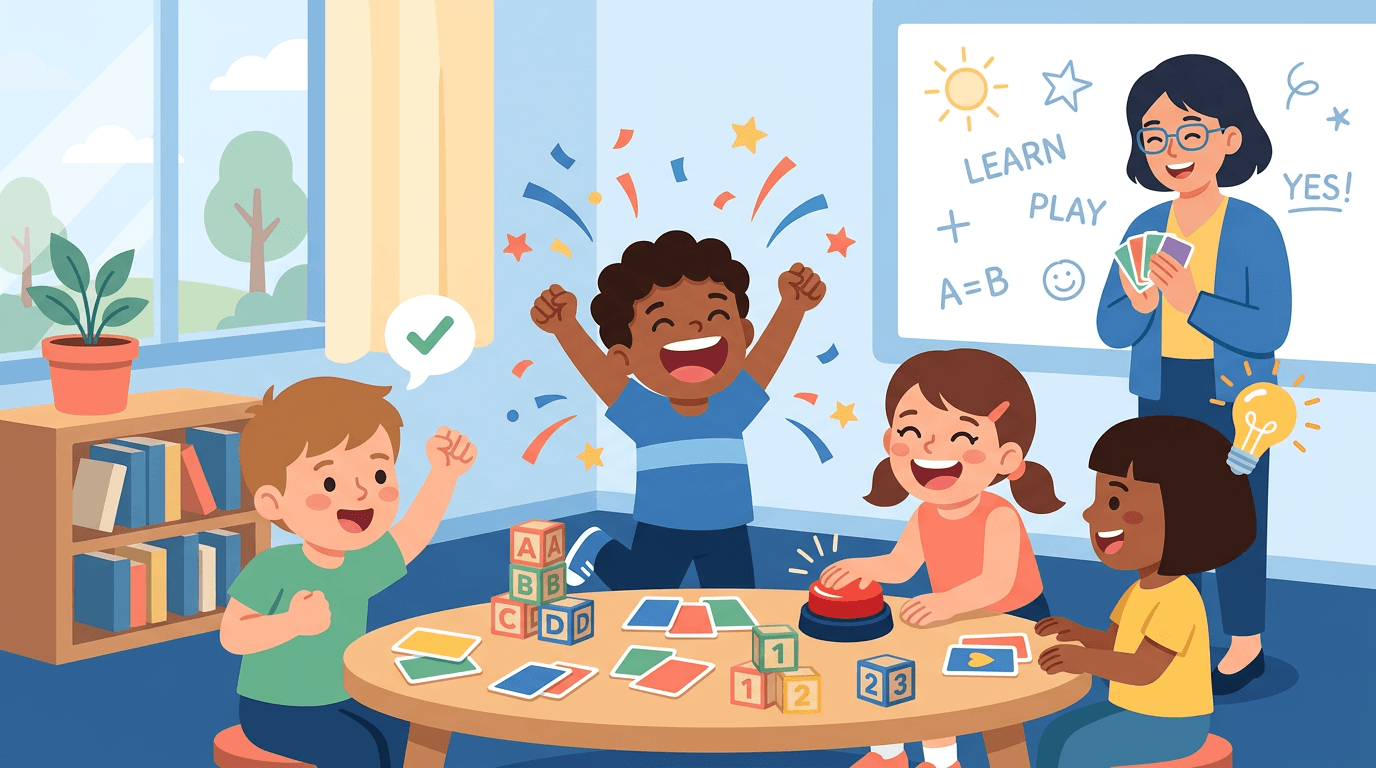
Games that make practice fun
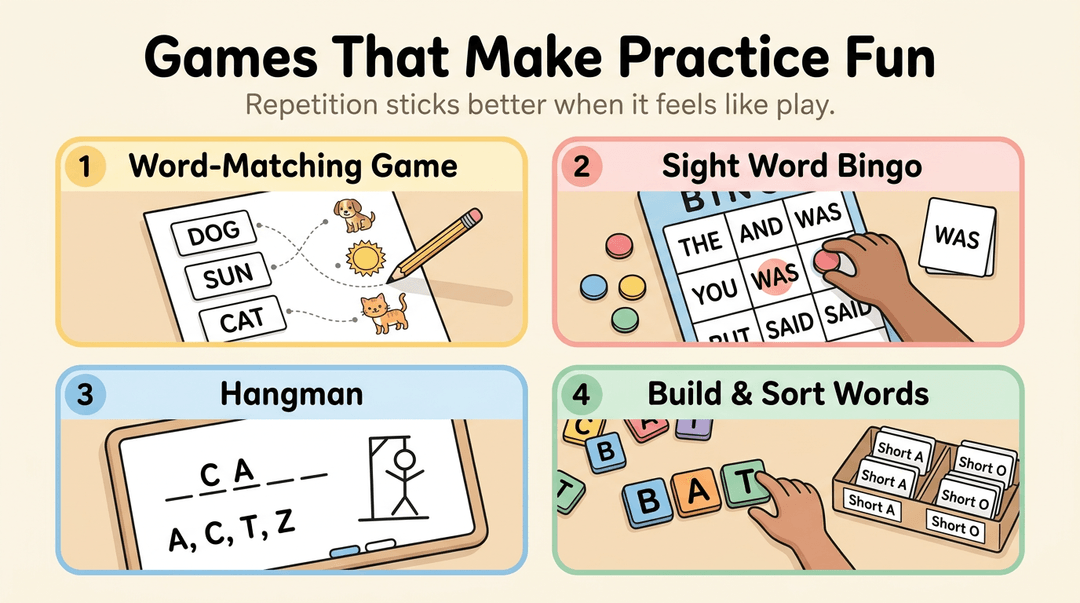
Repetition sticks better when it feels like play:
- Word-matching games that pair written words with pictures.
- Sight word bingo or hangman, where students race to spot the words they're practicing.
- Other fun learning activities, like sorting word cards or building words with letter tiles.
How to get kids to remember sight words?
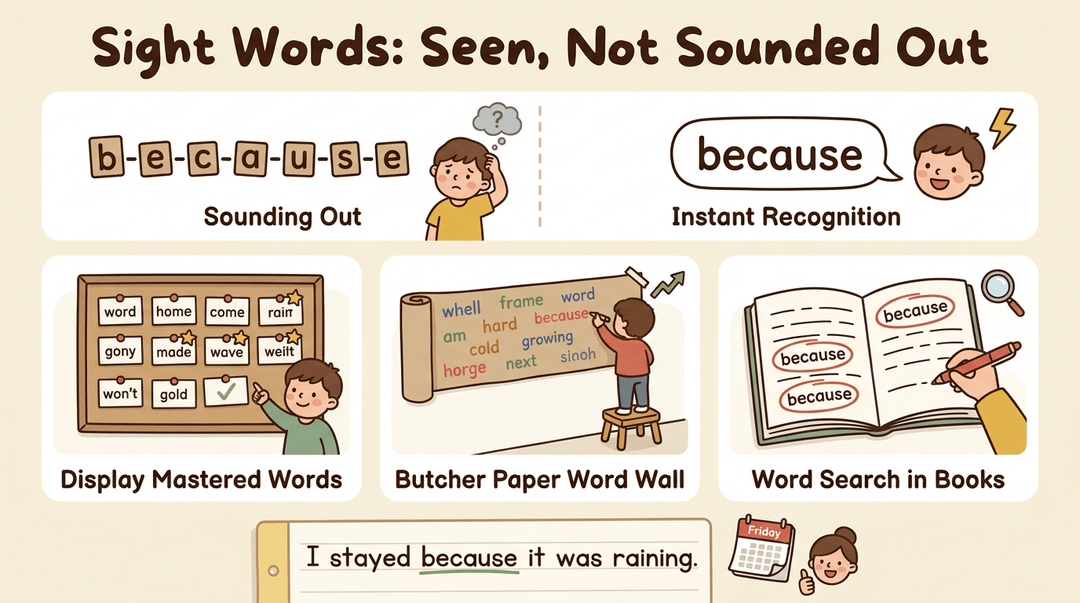
Sight words are high-frequency words, like because and said, that students should recognize instantly even when they don't follow phonics rules. The goal is recognition, not sounding out each word.
Students build that recognition through repeated, visible exposure:
- Display mastered words so students can see their own progress.
- Build a butcher paper word wall that grows with the class, and let students add the words themselves.
- Run sight word searches in books, circling practice words in a familiar story.
Picture a second-grade teacher whose class kept misspelling because. She added it to the wall, then had students hunt for it in their readers. By Friday, more of them were spelling it correctly in their journals.
Working with parents to reinforce practice
Practice only sticks if it continues at home. Coordinate the sight word list so families work on the same words your class does. Give parents simple tasks, like a quick flashcard review at bedtime, and keep practice going across settings.
Share progress notes with parents easily through a short weekly message, and you'll give families a reason to celebrate a new word at dinner.
Why Reading Aloud Matters
Reading aloud is one of the simplest tools you have, and it does real work for dyslexic students who can't yet read a book on their own. Here's what it gives them and how to make it count.
What kids gain from being read to
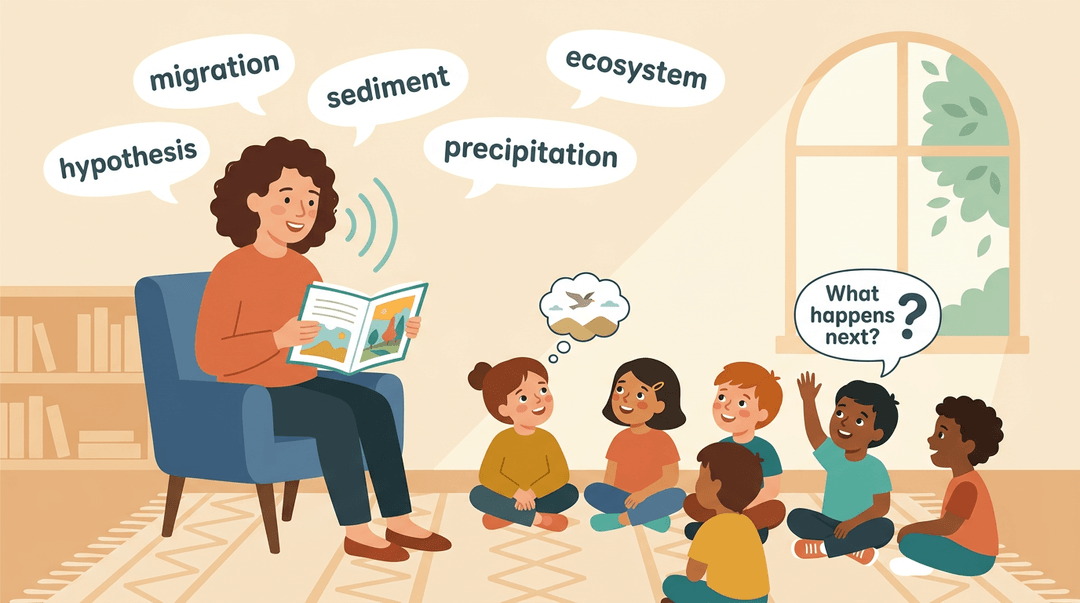
Listening lets students reach ideas that sit above their decoding level. Here's what that looks like:
- Above-level vocabulary. Students hear words they can't yet read, like migration or sediment, and start using them.
- Fluency modeling. They hear smooth, expressive reading and learn what good sounds like.
- Comprehension skills. Following a story builds the meaning-making they'll later apply to print.
- Questions and discussion. A pause for 'What do you think happens next?' gets students talking.
Best practices for reading aloud
Preview the text before you read it. Flag unfamiliar names and terms, and mark where you'll pause to ask a question.
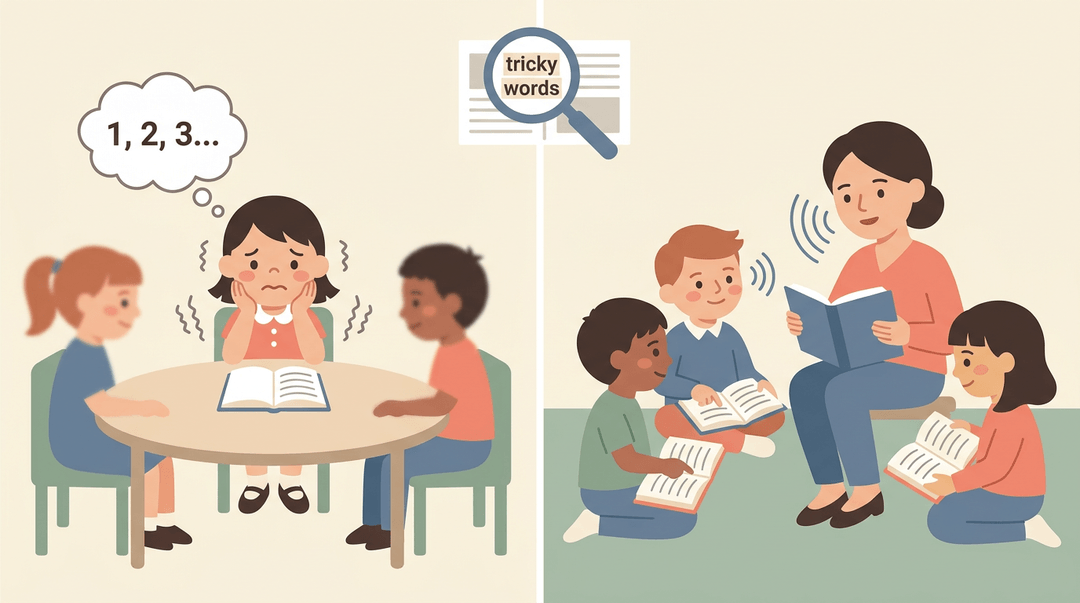
- Avoid round robin reading. Taking turns, one paragraph at a time, singles out struggling readers.
- Preview the text. Know the tricky words before the class does.
Picture a student with dyslexia at a round robin table, counting paragraphs until her turn arrives. By the time she reads, she's lost the story and is focused only on getting the words right.
Pair listening with visual tracking: students follow the printed words with their eyes as they hear them. The goal is listening with the text, not instead of it.
Using audiobooks as a reading tool
Audiobooks give students supplemental story access. A student can follow the novel the class is reading, even when the printed words are out of reach.
Professional narrators also bring pacing, voices, and expression that many classroom readers can't match. The drawback is limited interactivity.
A recording can't pause for a question or notice a student's confusion, so you still need to check in. A recording can't read the room.
Helpful Tech Tools for Dyslexic Readers
Technology can lighten the load, so students spend their energy on meaning.
Text-to-speech tools that read aloud
Text-to-speech tools read written words aloud. Speechify and SCRIBE tools are options to try, and screen readers do similar work on a computer. The payoff is dual channel processing: hearing a word while seeing it.
Consider a fourth grader stuck on a science passage. Following along by ear and by eye, she can spend her energy on the ideas instead of decoding.

Adjusting text format for easier reading
Small layout changes can make a page less crowded. Adjustable font and background colors let each student find what's easiest on their eyes. E-readers like Kindle let students change text size and spacing, and a browser reading mode strips away clutter.
BeeLine Reader adds a color gradient across each line to guide the eye. Let students test options. It's the right format that matters, not the fanciest one.
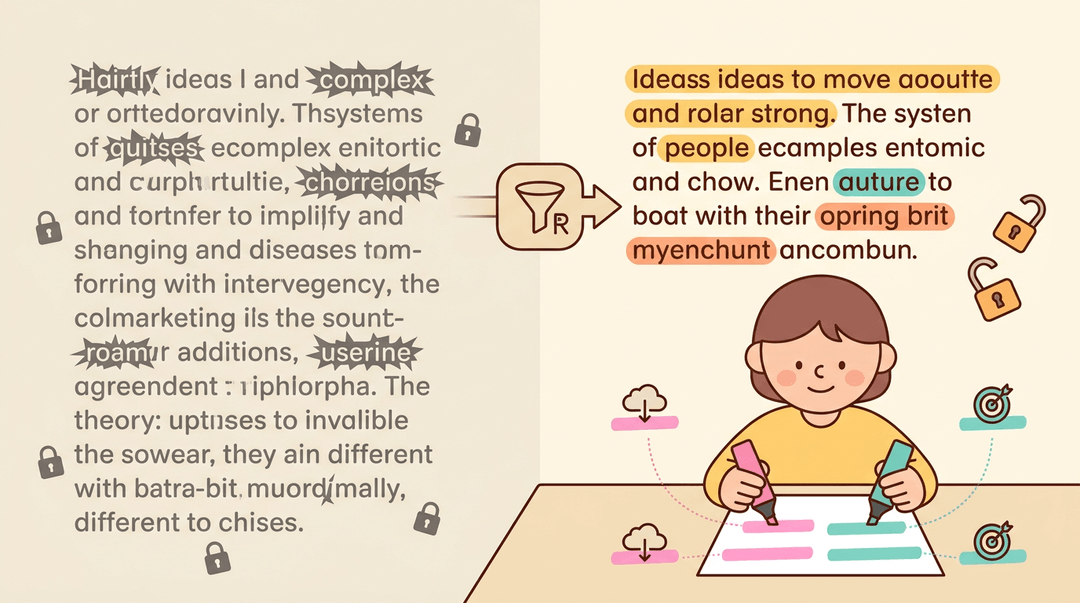
Tools that simplify tricky text
Some texts stay hard even in the right format. Rewordify simplifies text by rewriting difficult words in plainer language. Highlighter markers help too. A seventh grader can mark causes in one color and effects in another, creating a visual anchor.
The ideas stay the same. Only the barrier comes down.
Strategies for Reading Independently
Once students can decode, the goal is reading on their own. These strategies build understanding and fluency.
Strategies that boost comprehension
Decoding a word doesn't guarantee understanding the passage. Try these:
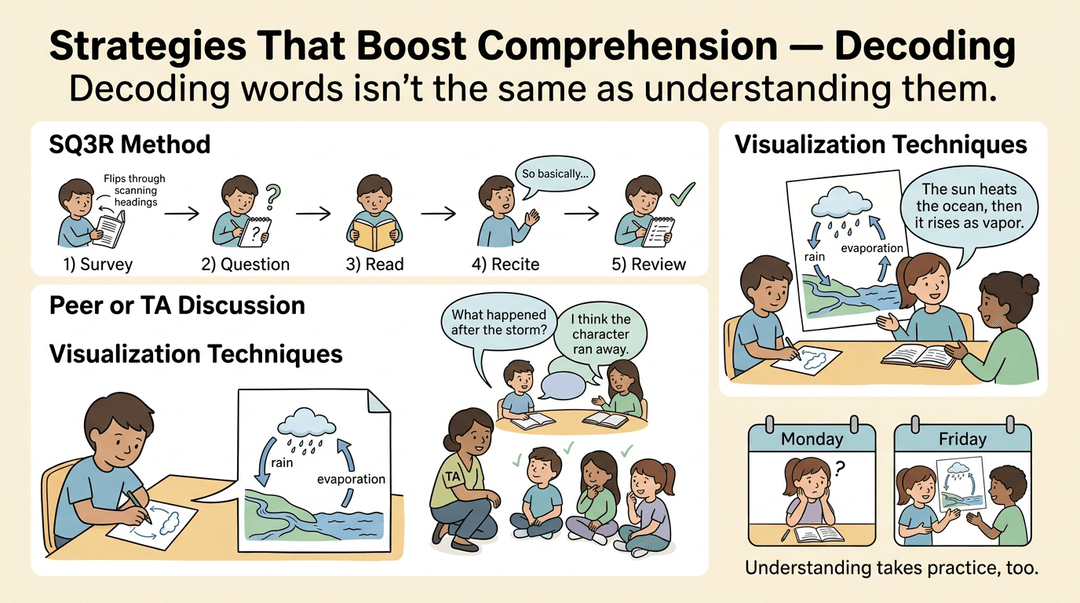
- SQ3R method: Students Survey the text, write Questions, Read a section, Recite the answer in their own words, then Review.
- Peer or TA discussion: Pair students to talk through a passage, or have a teaching assistant (TA) check in with a small group.
- Visualization techniques: Students sketch a scene, character, or process as they read.
A fourth grader who can't explain a chapter on the water cycle might sketch the arrows between clouds, rivers, and oceans, then tell a partner what each one does. By Friday, she's explaining it without her notes. Understanding takes practice, too.
Building fluency through practice
Fluency frees students to focus on meaning instead of decoding, and it grows through steady, short practice rather than occasional long sessions.
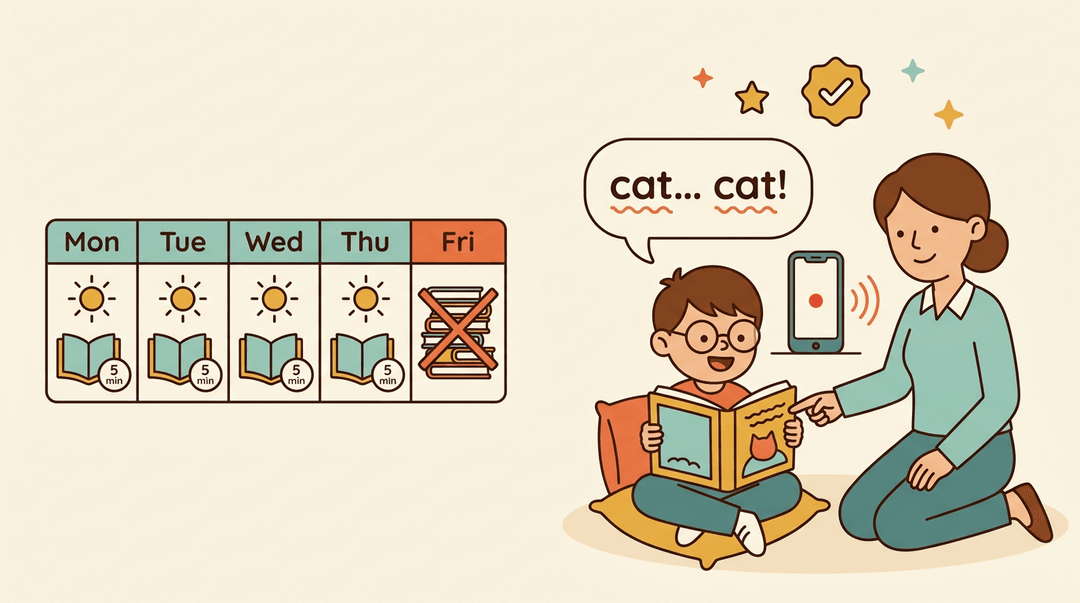
- Repetition and daily practice: Reread the same short passage several times across the week. A few minutes daily beats one long Friday session.
- Reading aloud for pronunciation: Listen for stumbled words, model each one, and let students repeat it.
- Self-recording for feedback: Students record a short reading, listen back, and pick one word to improve.
Teaching reading to dyslexic students takes patience, the right methods, and a little creativity.
When you combine structured literacy, multisensory practice, and consistent reading aloud, you give students the tools to decode words with confidence and, over time, read on their own.
Every small win adds up. Ready to keep your planning as organized as your instruction? Check out our Class Management feature to organize your classes, rosters, and timetables in one place.
References
- Reading, Spelling, and Writing Programs — dyslexiahelp.umich.edu (2026)
- Dyslexia Basics — dyslexiaida.org
- Corrective Reading: An Evidence Based Remedial Reading Intervention — nifdi.org (2025)
Frequently asked questions
What are some effective evidence-based teaching strategies for students with dyslexia?
Effective strategies include structured literacy that explicitly and systematically teaches phonemic awareness, phonics, syllable types, morphology, syntax, and semantics. Multisensory practice, such as seeing, saying, tracing, and building words, can reinforce learning. Instruction should be diagnostic and individualized, with frequent progress checks, short repeated practice, and accommodations such as audiobooks, text-to-speech, extra processing time, and avoiding cold read-alouds.
How to get kids to remember sight words?
Teach sight words through repeated, meaningful exposure rather than relying only on memorization. Display mastered words, build a word wall, search for the words in familiar books, and use games, flashcards, pictures, sentences, and short daily reviews. For irregular words, add a mnemonic, word history, or another memorable connection, while still teaching any regular letter-sound patterns.
How to help people with dyslexia?
Support people with dyslexia with explicit structured literacy instruction, multisensory practice, and patient encouragement. Pair spoken directions with visuals, allow extra processing time, break reading into smaller sections, provide audiobooks or text-to-speech, and offer high-interest material at an accessible level. Work with teachers, specialists, and families to follow any IEP or 504 accommodations and monitor progress.
Is corrective reading good for dyslexia?
Corrective Reading has a solid evidence base as an evidence-based remedial reading intervention, and it teaches reading skills systematically. However, its cited evaluation was not specific to students with dyslexia, so its suitability should be judged against the learner’s individual decoding, spelling, language, and instructional needs. A qualified reading specialist can help determine whether it is an appropriate fit.