Classroom Flow Games Explained: Types and How to Run Them

Jump to section
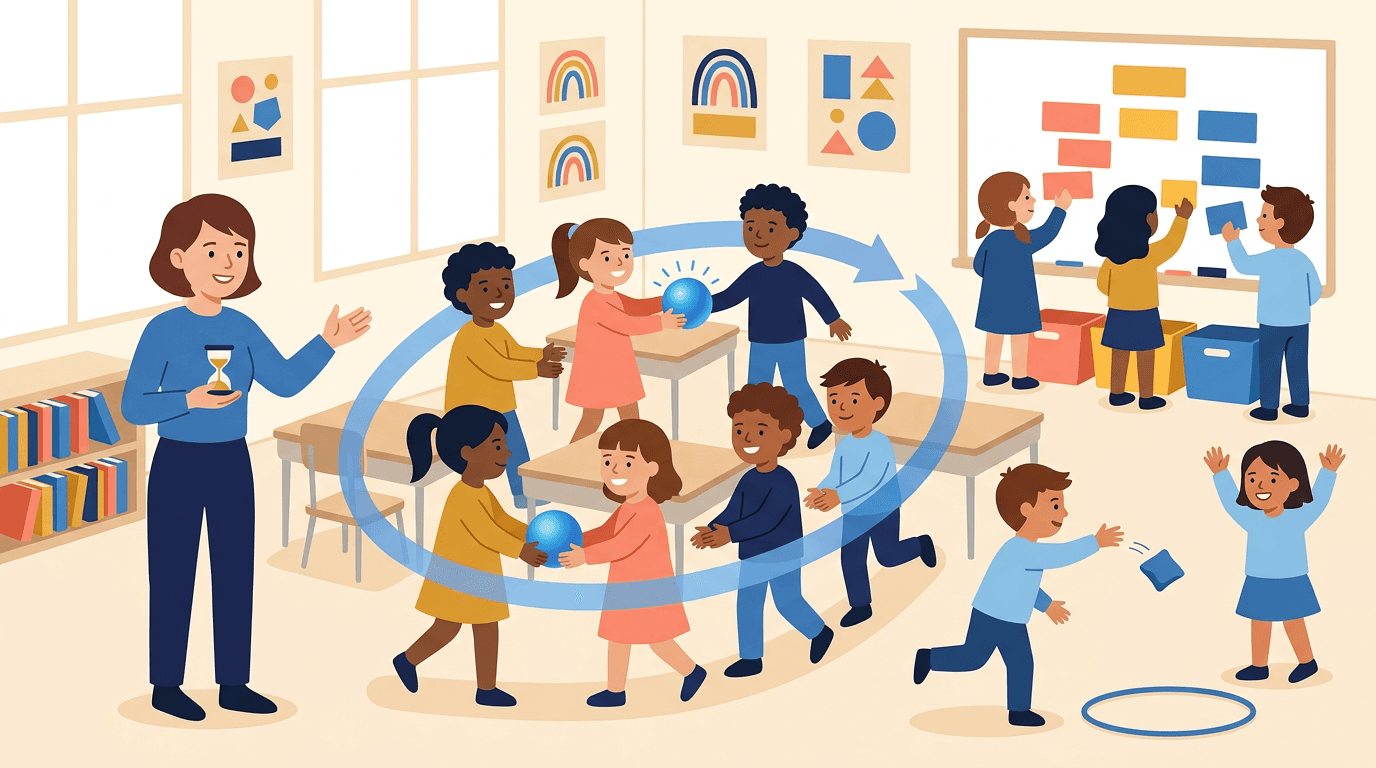
Think about the minutes between activities: passing out materials, waiting for the room to settle, or the lull right after a lesson ends. Those gaps add up, and they're often where attention drifts.
Classroom flow games are short, purposeful activities that fill those moments with learning, so your lesson keeps moving from one task to the next.
Flow is less about keeping students busy and more about keeping them connected to the lesson.
In this post, we'll define what flow means, sort games by goal, format, and how to run them, and share a ready-to-use playbook for smooth transitions, behavior, and debriefs.
Why Classroom Flow Games Are Worth Using
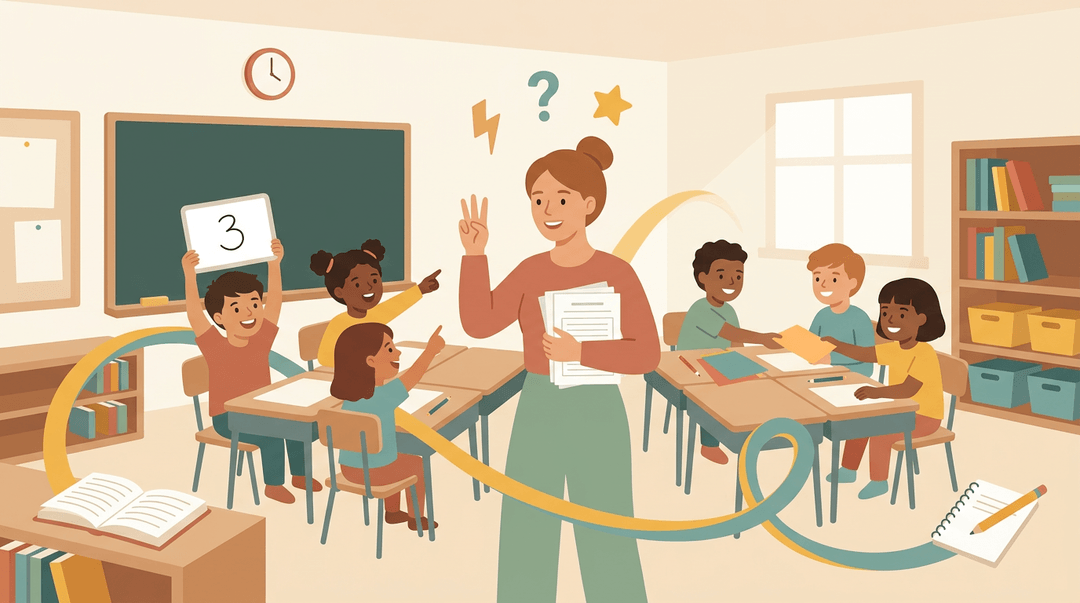
Here's what we mean by classroom flow: the steady rhythm of a lesson, where students move between tasks with little friction. A flow state is when students are fully absorbed in what they're doing.
Flow games are short, purposeful activities built to create both.
Keep students energized and motivated to practice
A well-chosen game can boost student engagement. According to Graduate Programs for Educators, gamification is a proven way to motivate students and increase their activity and engagement in learning.
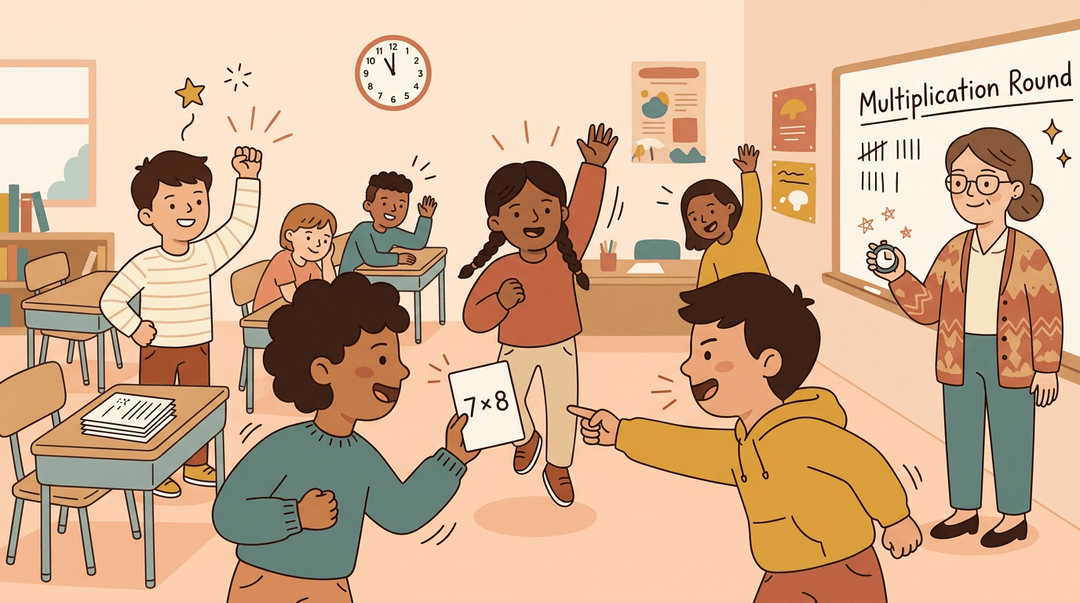
Consider a fifth-grade teacher with twenty minutes before lunch and restless students. A quick multiplication round gets everyone standing and practicing without a single worksheet. Energy shifts, and students are willing to try again.
Energy and fun matter, but the real goal isn't to keep students busy. It's to keep them practicing.
Use games to review and check learning
Games work as review, too. A quick round at the start of class lets students recall last week's material without the dread of a quiz. Rerun the format with new content for extra practice, and each round reinforces the skill without feeling like drill.
Because you see answers in real time, a game also works as assessment. Think of a high school science teacher who runs a five-minute round before a unit test.
She spots three students still mixing up two key terms and pulls them aside, so the help lands before the test does.
Unwind, bond and build teamwork
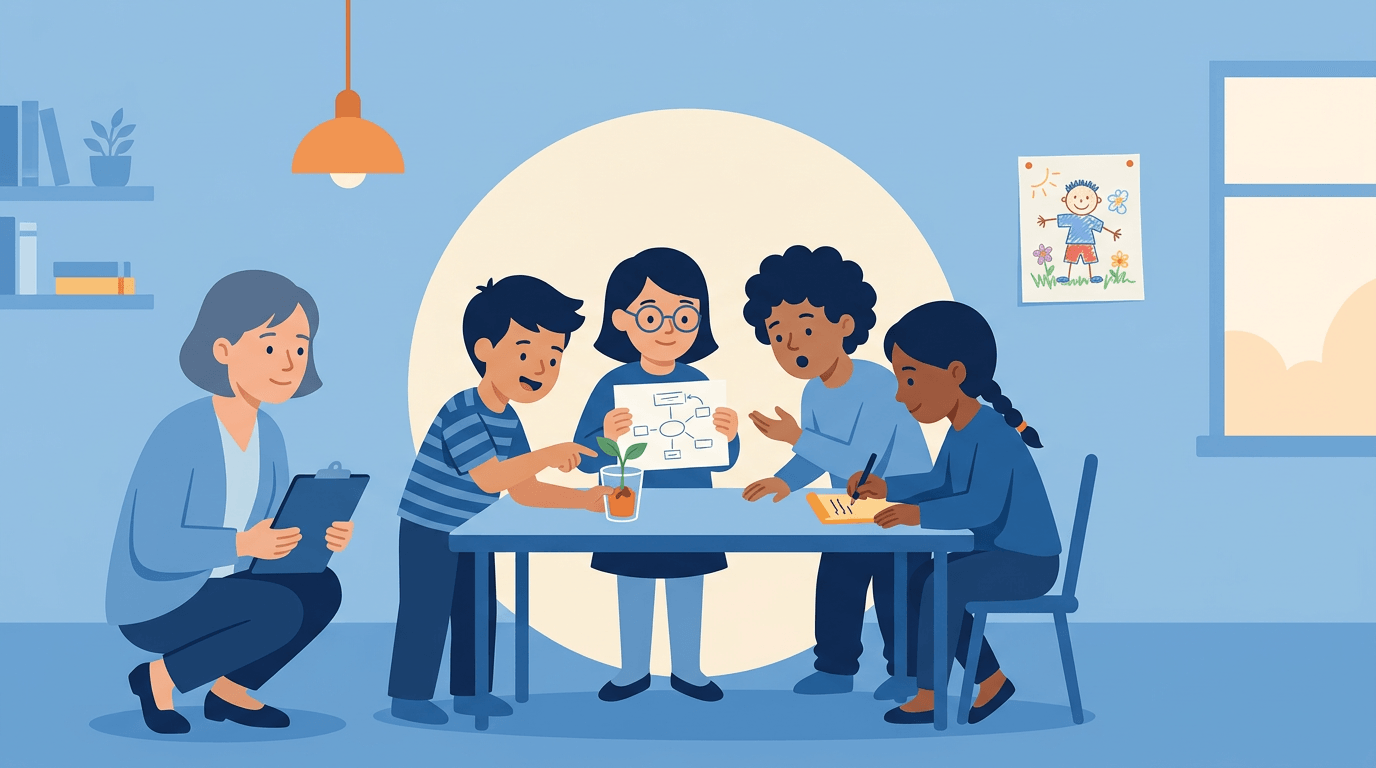
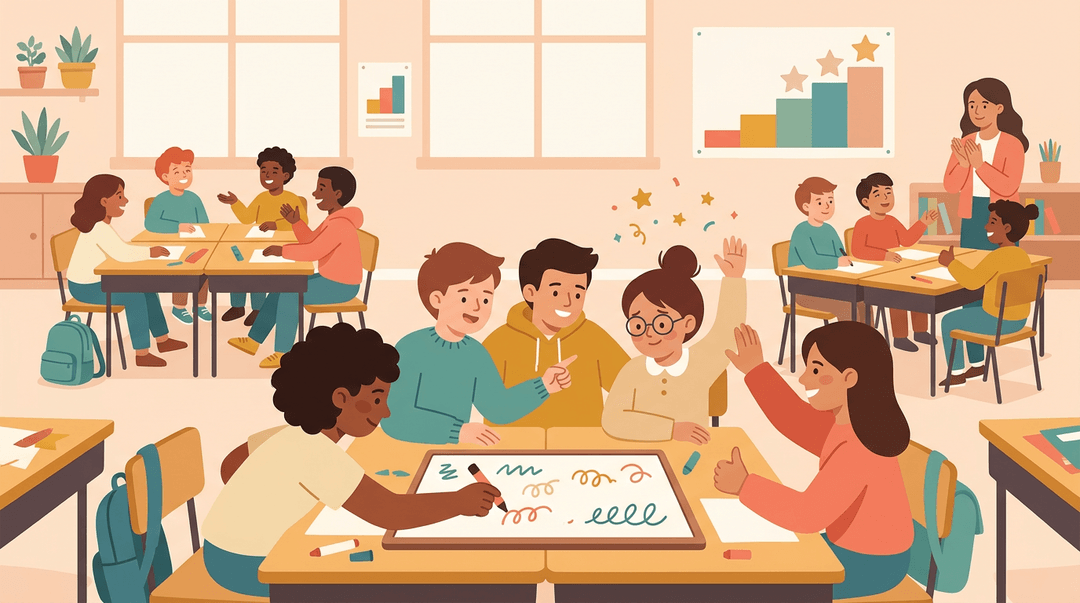
Listening for a long stretch is tiring, and a short game lets students unwind. Team formats encourage teamwork, since students share ideas, hear classmates out, and divide roles. Over time, those rounds build community.
Every small win also builds confidence, especially for the student who rarely raises a hand. Confidence grows one win at a time.
Keep every game tied to real learning
Not every game earns its place. Before you run one, check two things:
- Avoid fluff games. A round that fills time without practicing your skill leaves students no closer to the goal.
- Let games advance learning. Students should leave each round sharper than they entered it.
If it doesn't teach, it's just a break.
Teacher Checklist for Running Games Smoothly
Use this guide to run any classroom game from first setup to the last seat. Work through the three phases in order, then match your game to the grade-band table.
Before the game starts
Confirm these before students see the game:
- One learning goal named. Post it in kid language.
- "Today we're practicing adding fractions with like denominators."
- Materials and groups ready. Everything is sorted before the bell.
- Cards in one pile per group, and a group list on the board.
- Rules and noise level posted. Students can read them from their seats.
- "Voice level 1 while playing. Freeze means freeze."
During play
Flow comes from predictable cues. Keep these three moves running the whole time.
- Use one start/stop signal. Pick one cue and use it every time.
- Try: "When I raise my hand, hands up and eyes on me."
- Rotate roles and turns. Change jobs on a schedule, not on demand.
- Roles like reader, recorder, and materials manager swap every round.
- Praise teamwork, not just winning. Name the behavior you want repeated.
- Say: "Table 3 just made sure everyone had a turn. That's teamwork."
⚠️ Watch out: If you only celebrate the winners, the rest of the room tunes out. Call out cooperation at least once per round.
Closing with a timed debrief
Decide the debrief length before you start, and protect it even if play runs long.
- Give a timed wrap-up signal. Warn students before the end.
- Say: "Two minutes left, then we stop and talk."
- Ask a two-question reflection. Students answer with a partner or on a sticky note.
- Try: "What did our team do well?"
- Then: "What did this game help you understand about today's goal?"
- Reset to seats quickly. Use your stop signal again, then a countdown.
- Say: "Ten seconds to your seat, materials in the bin."
Game ideas by grade band
| Grade band | Game | How it runs |
|---|---|---|
| K-2 | Freeze Dance reset | Music plays, freeze on the stop signal, then a calm-down breath |
| 3-5 | Scoot task cards | One card per desk, students rotate on your signal |
| 6-8 | Scavenger hunt review | Teams find and answer posted questions around the room |
| 9-12 | Digital escape room | Teams solve linked review puzzles, with roles assigned up front |
Example: A fourth-grade teacher runs Scoot with fraction task cards. The goal on the board reads, "Add fractions with like denominators." She rings a chime to scoot, rotates the recorder job every three cards, and praises a table that checks answers together. With two minutes left she gives the wrap-up signal. Students share one strength of their team, then one thing the cards taught them, and they're seated in ten seconds.
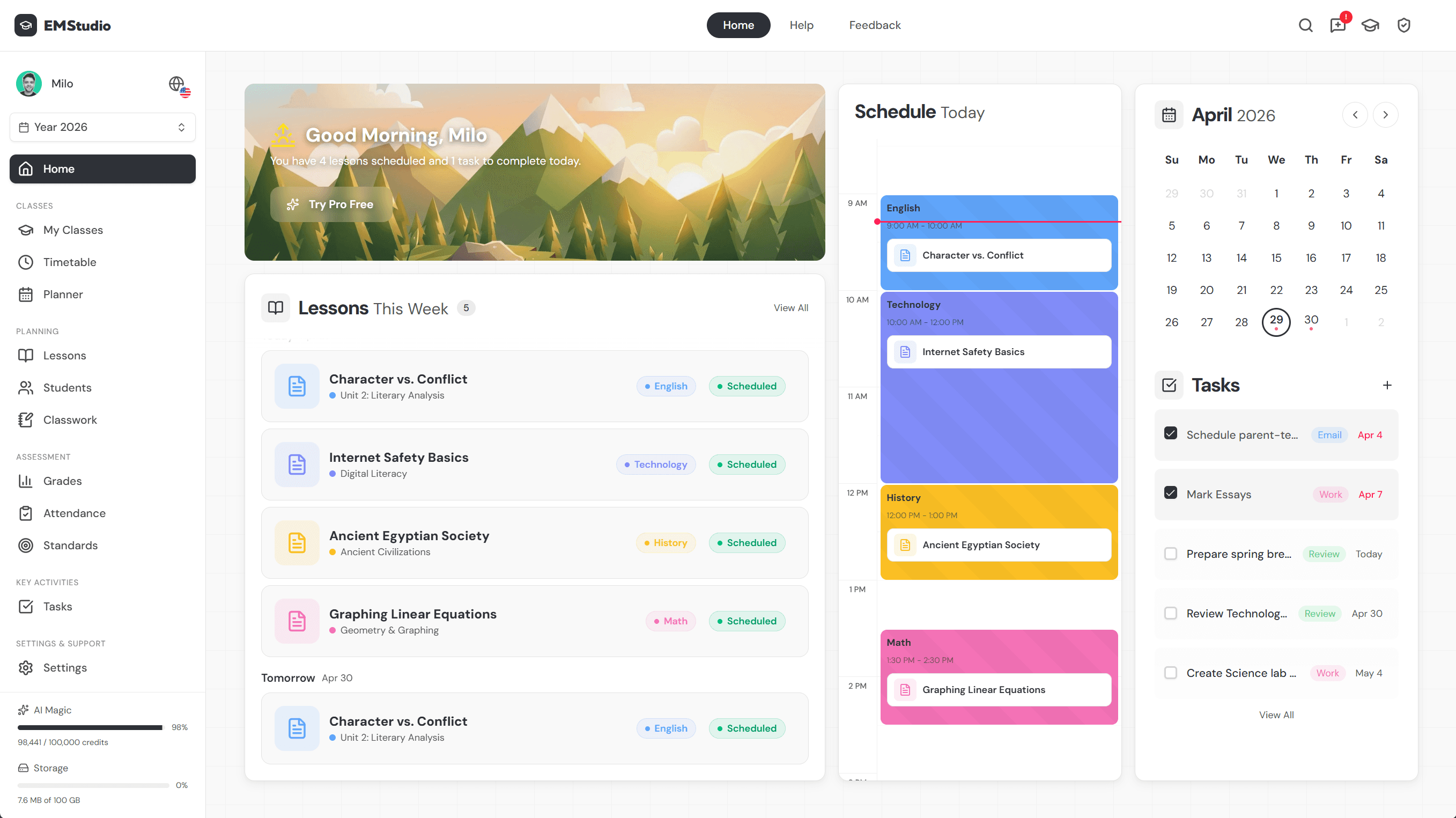
Plan game blocks and transitions in your weekly timetable with EMStudio's class management tools.
Review and Skill-building Games for Class
Review doesn't have to mean another worksheet. These games range from quick warm-ups to big themed events.
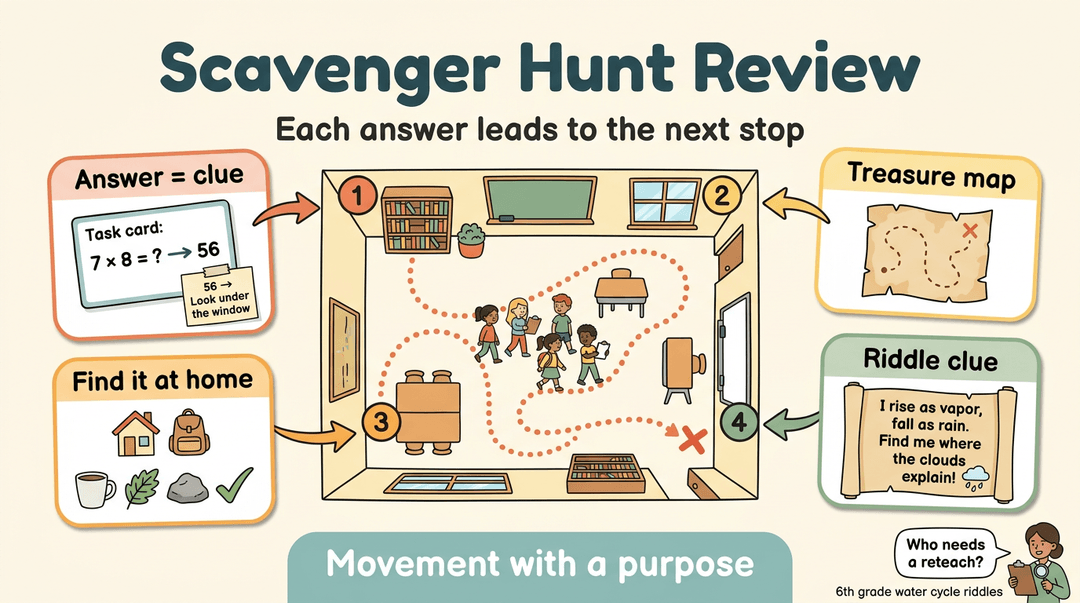
Scavenger hunts with answer and riddle clues
Hide clues around the room, and students solve their way to the next stop:
- Answer-as-clue task cards: each answer leads to the next card.
- Treasure map clues: a map guides teams from stop to stop.
- Find items at home: students hunt for matching objects, so review continues after school.
- Riddle-style clues: a riddle points students to the next spot.
A sixth-grade science teacher hides water cycle riddles around the room. Students stay busy, and she can spot who needs a reteach. Movement with a purpose.
Play Scoot and other task card games
Scoot has students move from desk to desk, answering the task card at each stop. Run it whole-class, with everyone moving on your signal, or self-paced, so each student moves at their own speed. These games are less about winning and more about practice.
Jenga task cards put a question on each block, and students answer whichever one they pull. Any board game with task cards works too: players draw a card whenever they land on a space.
Quizzes and word games like Bingo
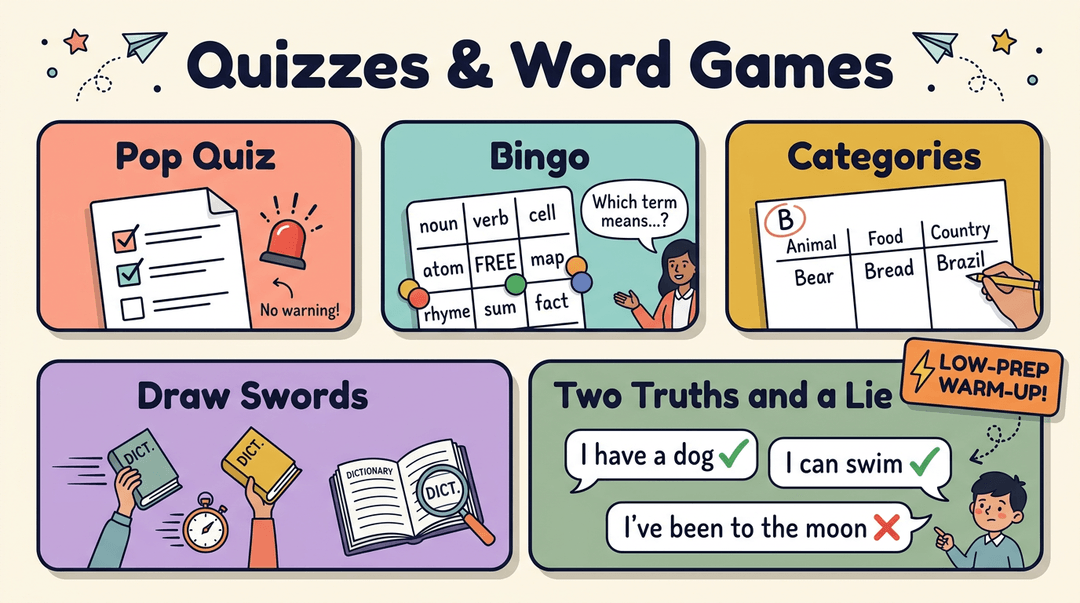
Quizzes are the simplest option: a short check shows what landed. A pop quiz, given without warning, keeps attention sharp.
In Bingo, students mark review terms as you call out definitions. In Categories (also called Scattergories), players name items that fit each category. For a race, try Draw Swords, a dictionary race where students hunt for words quickly.
For a low-prep warm-up, try Two Truths and a Lie: students share two true statements about a topic and one false one, and classmates guess the lie.
Classic board and card games for review
Snakes and Ladders lets students climb or slide depending on their answers, and Noughts and Crosses (tic-tac-toe) gives each correct answer a claimed square. Go Fish works too, with students collecting pairs like a term and its definition.
For number and time skills, adapt a board game so each move needs a time or number question. The game stays familiar; the content changes.
Big themed games like The Amazing Race
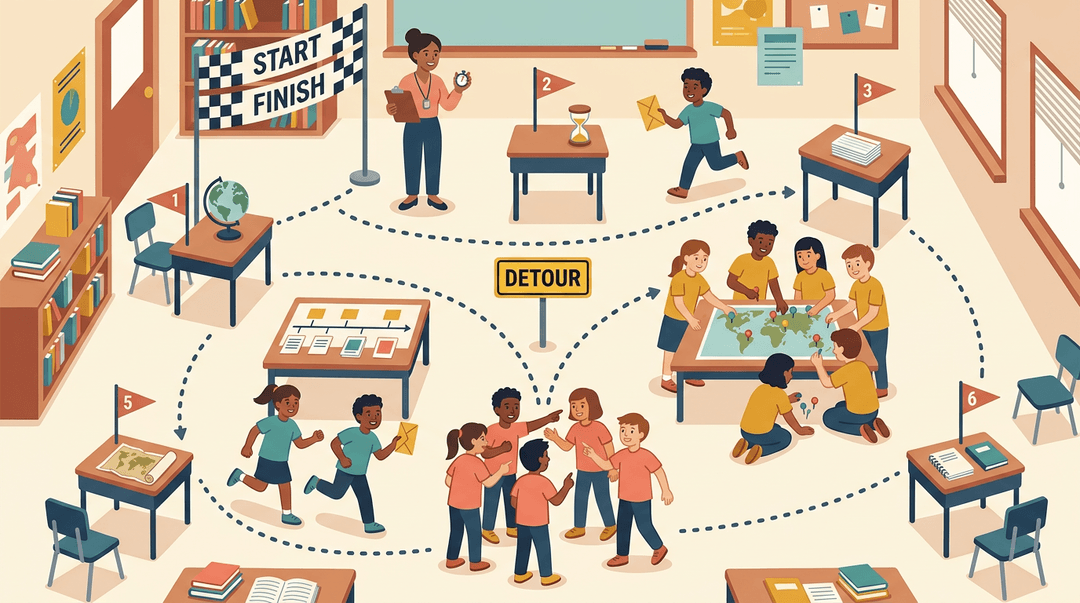
The Amazing Race turns review into a journey. Teams move from one pit stop to the next, each a checkpoint with a task. A detour offers a choice between two tasks.
This one takes more prep, but it's worth it: a memorable review day that covers several skills at once.
Picture a middle school social studies teacher with six pit stops and a detour where teams choose between a map task and a timeline task. Students stay on the move, and review feels like an event instead of a chore.
If you'd rather not build the route from scratch, a template is available to get you started.
Pick and Run Games That Actually Work
A great game can still fall flat if it doesn't fit the moment. These steps help you choose well, run it smoothly, and keep everyone involved.
Match each game to your goal
Start with the job the game needs to do: bring energy to a sleepy afternoon, review last week's vocabulary, or build community in September. Then check prep time and the skill it reinforces.
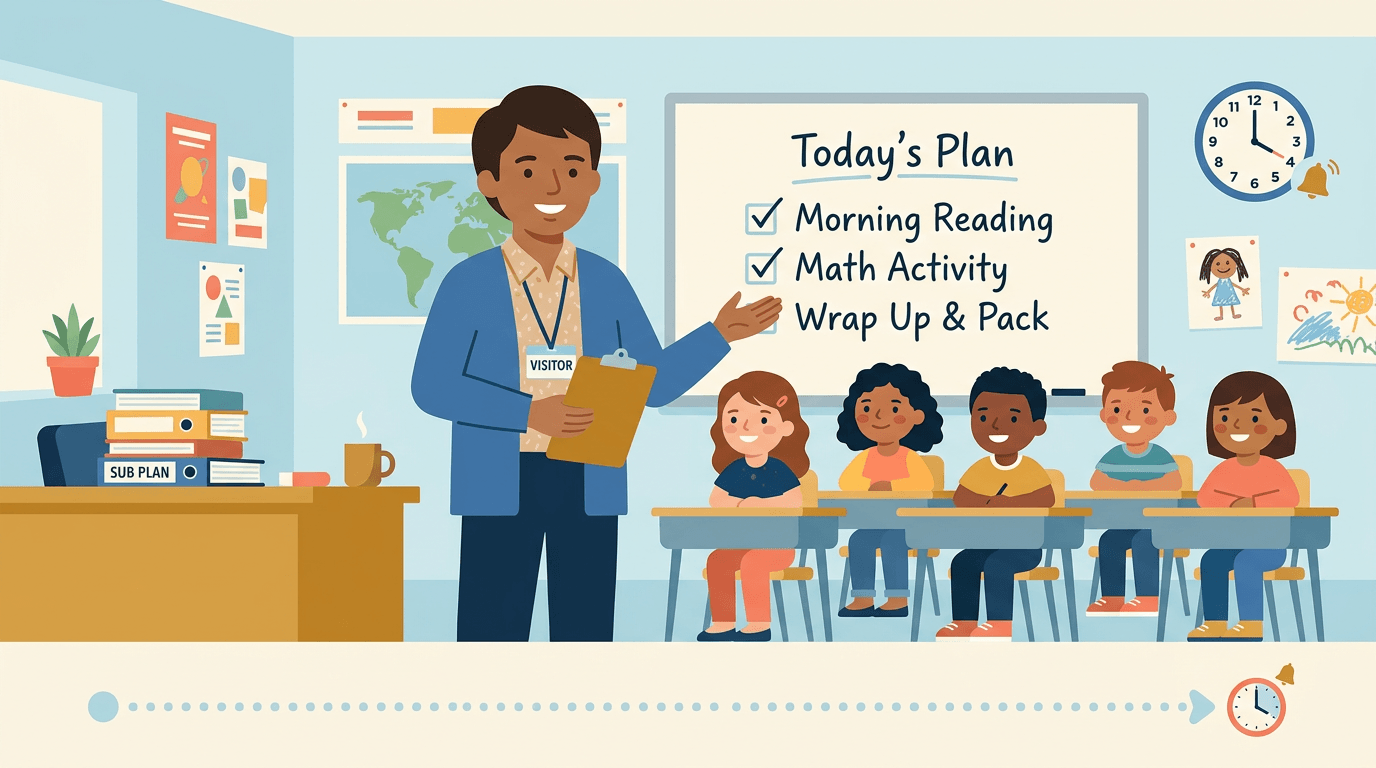
Pick the game that fits what students need rather than what looks fun on a slide. Keep a few zero-prep games on hand, and save them for substitutes who need something they can run from a sentence on the board.
Time rounds and explain rules up front
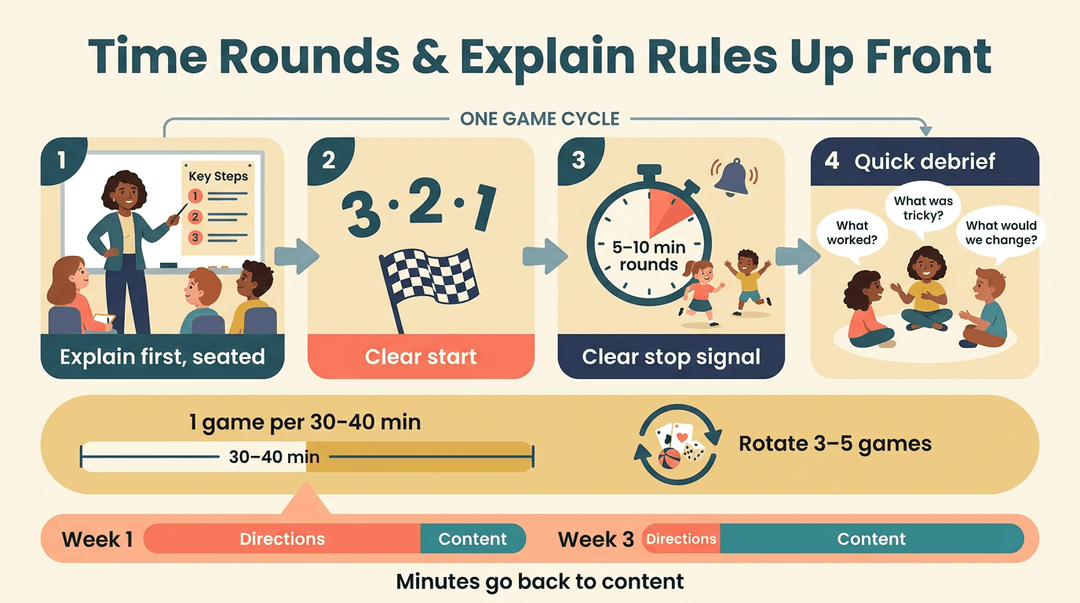
Explain the rules before anyone stands up, and post the key steps where students can see them. Cap rounds at 5 to 10 minutes so energy stays high, then take a quick debrief: ask what worked, what was tricky, and what they'd change.
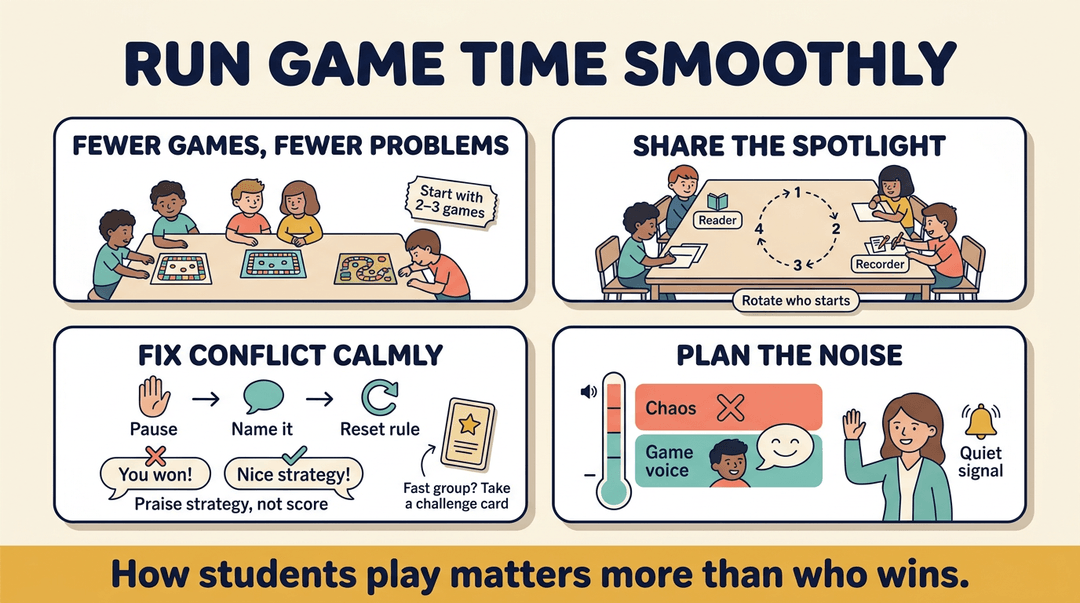
Plan about one game per 30 to 40 minutes, and rotate three to five games so students get variety without relearning the rules.
Smooth transitions run both ways. Use a clear countdown to start and a clear signal to stop, then move straight into the debrief. Consider a fifth-grade teacher who reuses the same three games all month.
By week three, her students start a round in seconds, and the minutes once lost to directions go back to content.
Manage group size, turns and noise
Limit how many games run at once, especially early in the year. Alternate turn order so the same confident students don't always go first, and assign roles like reader and recorder so everyone has a reason to talk.
Let fast groups take a harder card as a pacing option. Some students thrive on competition while others dread losing, so praise strategy over the final score. When conflict flares, pause, name the issue calmly, and restart with a reset rule.
How students play matters more than who wins.
Set noise-level expectations first. Agree on what a game voice sounds like and practice a quiet signal before round one. Noise is part of the plan. Chaos isn't.
Include everyone with tech backup options
Not every student can or wants to be on camera. Offer camera-off options, and keep a chat-only backup for anyone who prefers typing or whose connection drops. Flexible participation means students choose how to respond: aloud, typed, or on a card.
Scale by grade level too, with shorter, more active rounds for younger students and longer, student-led rounds for older ones.
Consider a high school history teacher with two students joining from home. With a chat-only backup, they answer each round alongside everyone in the room.
Invite parents and helpers to join in
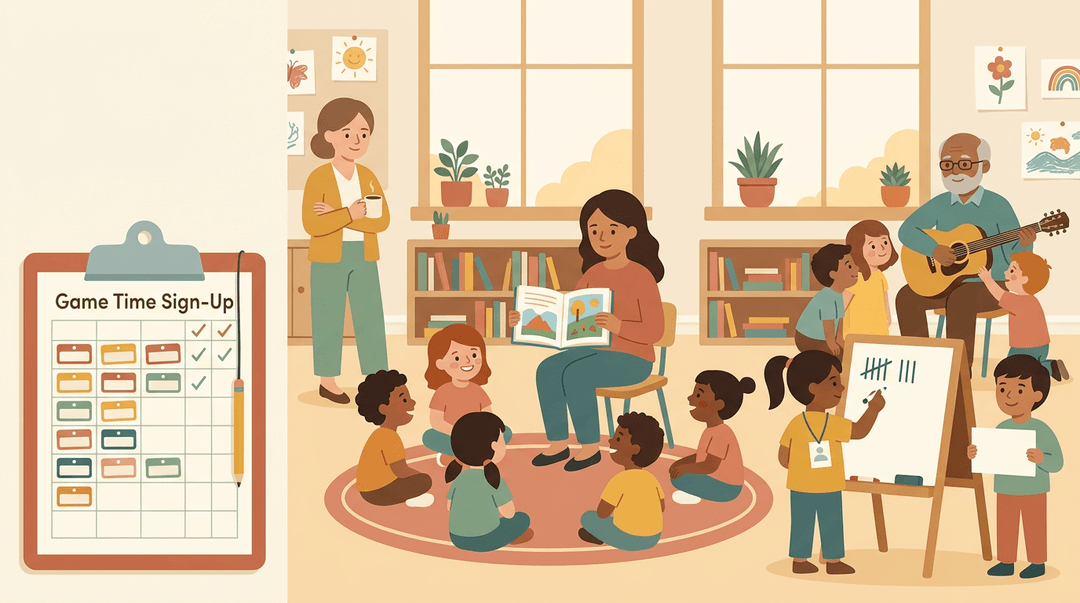
Other adults can carry part of the load. A recurring sign-up sheet lets parents or community members volunteer for one game period at a time.
Guest readers can run a reading round, student helpers can keep score or read prompts, and talent show slots let a guest share a skill and lead a short round built around it. Less prep, more teaching.
Creative and Social Games to Try
These games add creativity and connection to your day, and most need little more than a few minutes. Here's how to try each one.
Build dens and make crafts together
Hands-on building gives students a reason to work together:
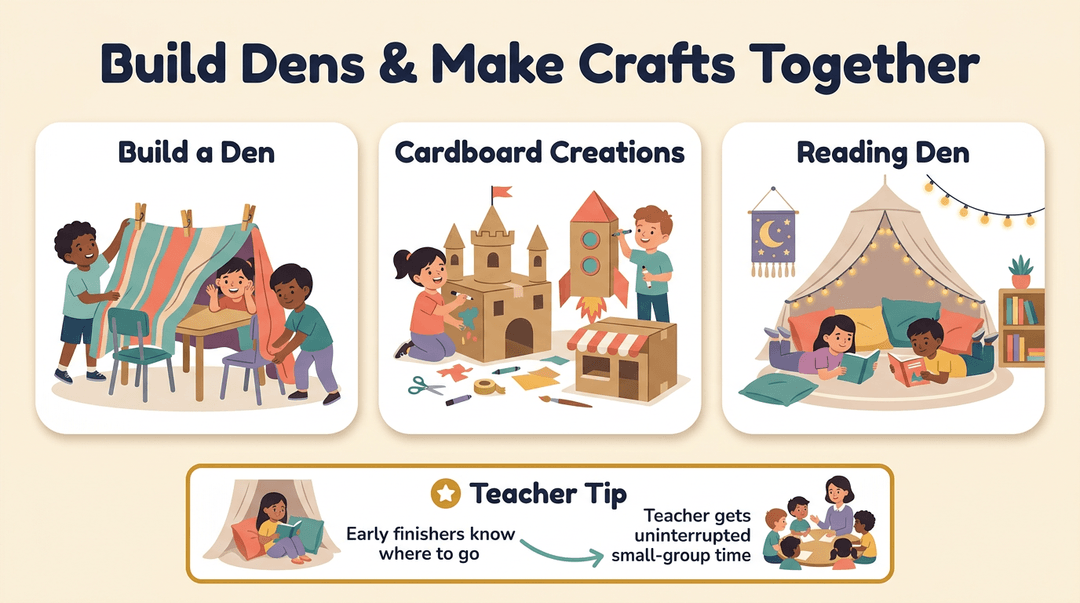
- Build a Den: Teams use chairs, blankets, and tables to create a hideaway.
- Cardboard decorating: Turn saved boxes into castles, rockets, or storefronts.
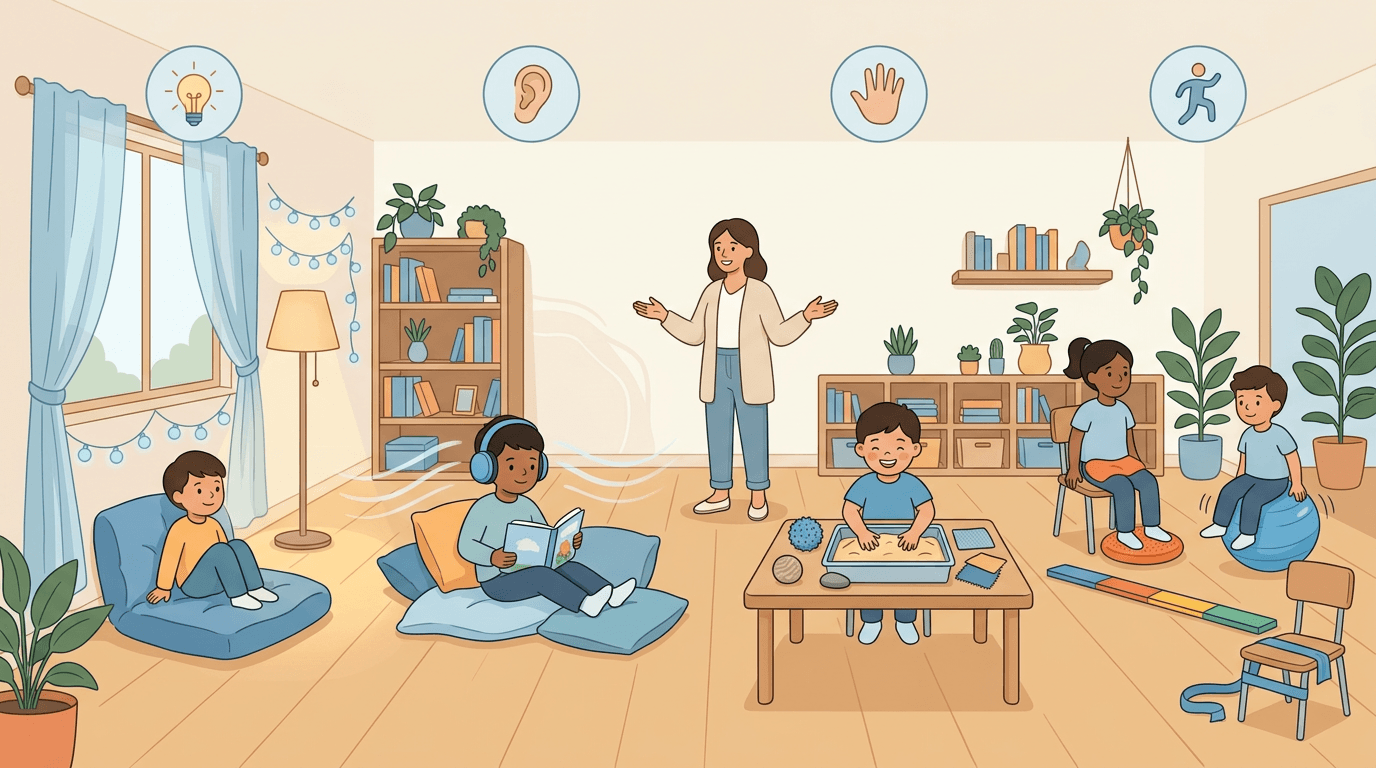
- Reading den: A cozy corner with pillows and books gives students a calm place to read.
Consider a second-grade teacher who sets up a reading den for choice time. Students who finish early know where to go, and she gets uninterrupted minutes with her small group.
Telephone, drawing and story-building games
These games are less about winning and more about listening.
- Blind Artist: One student describes a picture while a partner draws it without seeing the original.
- Telephone: Whisper a sentence down a line, then compare the first and last versions.
- I Spy: Give clues about something in the room and let classmates guess.
- Draw It: A student sketches a word while the class guesses.
- Build a Story: Each student adds one sentence as the story travels around the circle.
Get to know classmates with fun prompts
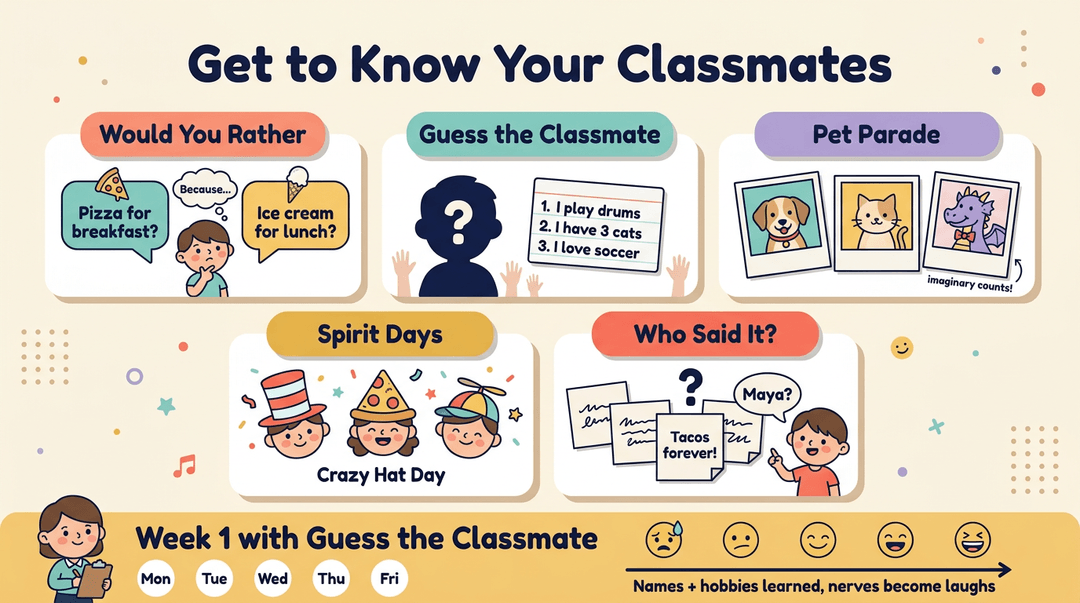
- Would You Rather: Pose a silly or thoughtful choice, then ask students to explain their pick.
- Guess the Classmate: Each student shares three facts, and the class guesses who it is.
- Pet Parade: Students share a photo of a pet, real or imaginary.
- Spirit Days: Pick a theme, like crazy hats, to build school pride.
- Who Said It: Read anonymous answers to a prompt, and let the class guess the writer.
A middle school homeroom teacher runs Guess the Classmate in the first week of school. By Friday, she knows names and hobbies, and nervous students have already shared a laugh.
Simple magic tricks and fun props
Start with simple magic tricks that need no special equipment. A little mystery goes a long way.
- Card tricks: A volunteer picks a card, and you reveal it with a flourish.
- Props like wands: A wand, cape, or hat turns a simple trick into a show.
Think of a fourth-grade teacher who ends the day with a five-minute card trick. Students leave with a grin and a question. Curiosity wins.
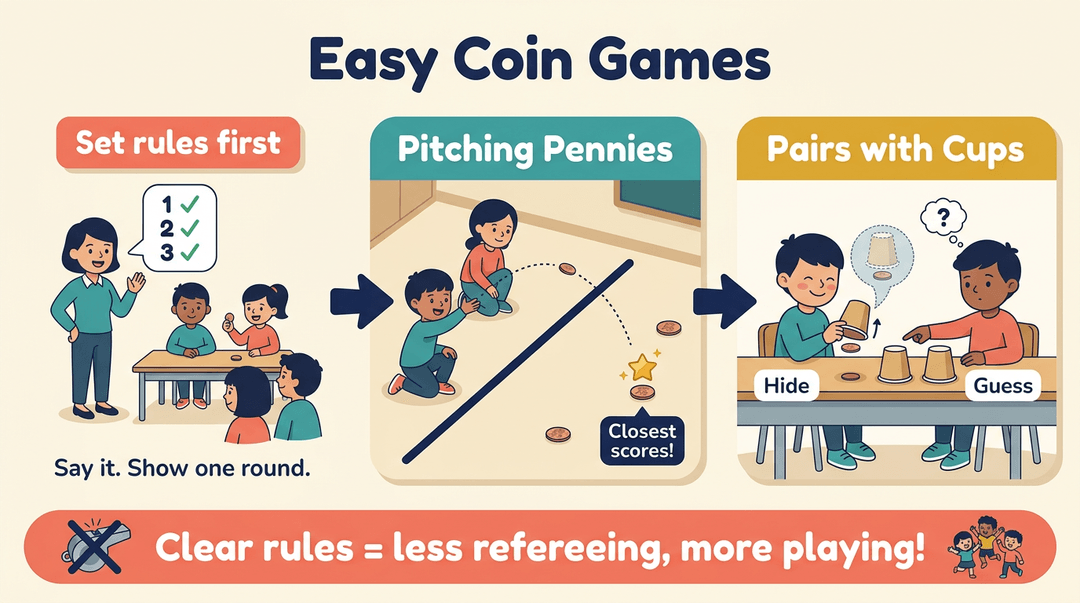
Try easy coin games after setting rules
- Pitching Pennies: Students take turns tossing pennies toward a line, and the closest one scores.
- Pairs with cups: One partner hides a coin under one of several cups, and the other guesses which one.
Whichever game you choose, set rules beforehand. Explain them out loud and model one round before anyone picks up a coin. Clear rules mean less refereeing and more playing.
Get Moving with Active Games
Sometimes the fastest way to refocus a class is to get students moving. These games also build real skills.
Music breaks like Freeze Dance to reset
Freeze asks students to move and stop on cue. Freeze Dance adds music: students dance until it stops, then freeze in place. It's a quick energy reset and a fun warm-up to open a lesson.
The real payoff comes when you make it a signaled transition routine. Think of a second-grade teacher who plays the same song before every station rotation. Students learn to move on your signal rather than their own impulse. Simple, and it works.
Physical challenges that build coordination
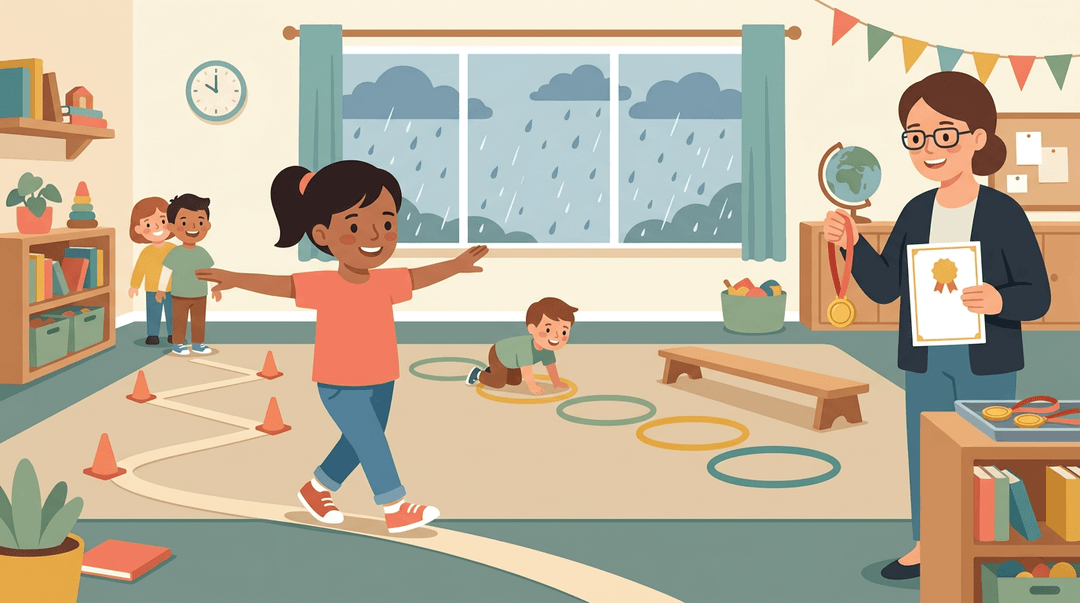
Lay a strip of masking tape on the floor for a balancing beam, and students walk it heel to toe with arms out. Add cones, hoops, and a bench for an obstacle course.
Think of a kindergarten teacher on a rainy day when the gym is booked. Tape lines turn the carpet into a course. Reward progress rather than speed with medals and certificates, so every student has a reason to try.
These activities build balance, body control, and coordination. Effort earns the medal.
Act, guess and role-play in class
Charades has students act out a word while classmates guess. Keep the categories simple, like book characters. Pictionary swaps acting for drawing, with one student sketching a term while teammates race to name it.
Both games build speaking confidence with low pressure, since quiet students can answer with a gesture. Role-play takes it further. Students rehearse everyday situations, like asking for help or settling a disagreement, before the moment arrives.
The goal is practice rather than performance. Low stakes, high payoff.
Digital and Online Game Formats to Try
Some of the best classroom games live on screens your students already use, so here are digital formats to try.
Turn lessons into games with Genially templates
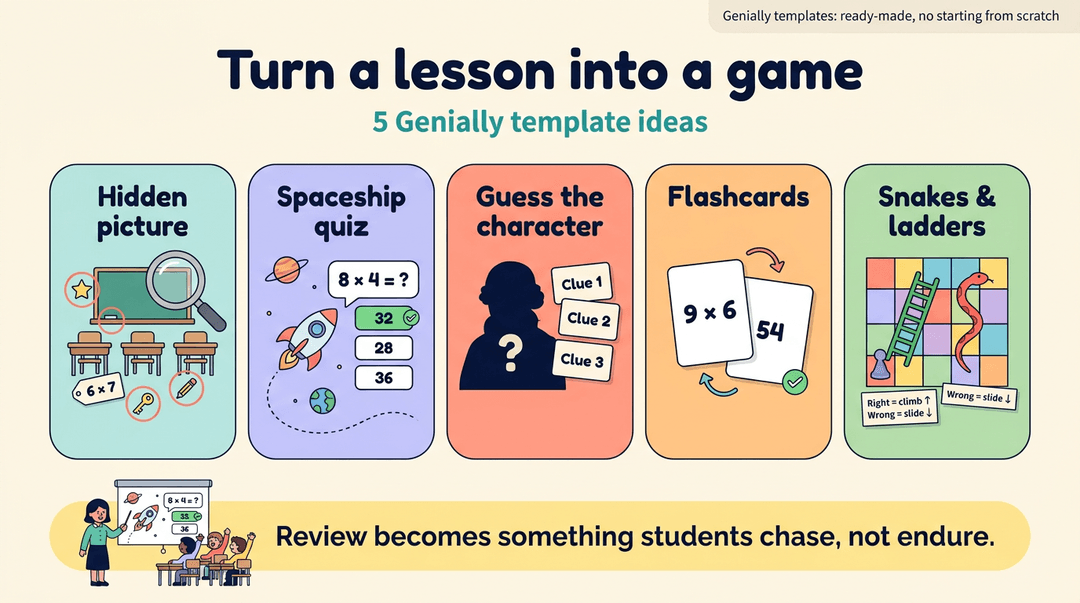
Genially offers ready-made templates, so you can turn a lesson into a game without starting from scratch. Common formats include:
- Hidden picture game: students hunt for hidden items tied to your content.
- Spaceship quiz: students answer questions to move their ship forward.
- Guess the character: students use clues to identify a figure from your unit.
- Interactive flashcards: students flip through terms and check their own understanding.
- Snakes and ladders: a classic board game where answers decide who climbs and who slides.
Consider a fifth-grade teacher reviewing multiplication on a Friday afternoon. She projects a spaceship quiz, and review becomes something students chase, not something they endure.
Customize and reuse game templates
A template is a starting point, not a finished product. Templates offer three levels of use, so you can start simple and build up. You can also reuse and modify copies: duplicate a game, then swap in your own questions and images.
Tutorial videos walk you through each step, and classroom activity ideas give you a launching pad.
A middle school science teacher might copy a guess-the-character game and change only the clues for the next unit, turning a long planning session into a quick edit.
Set up games in Google Classroom
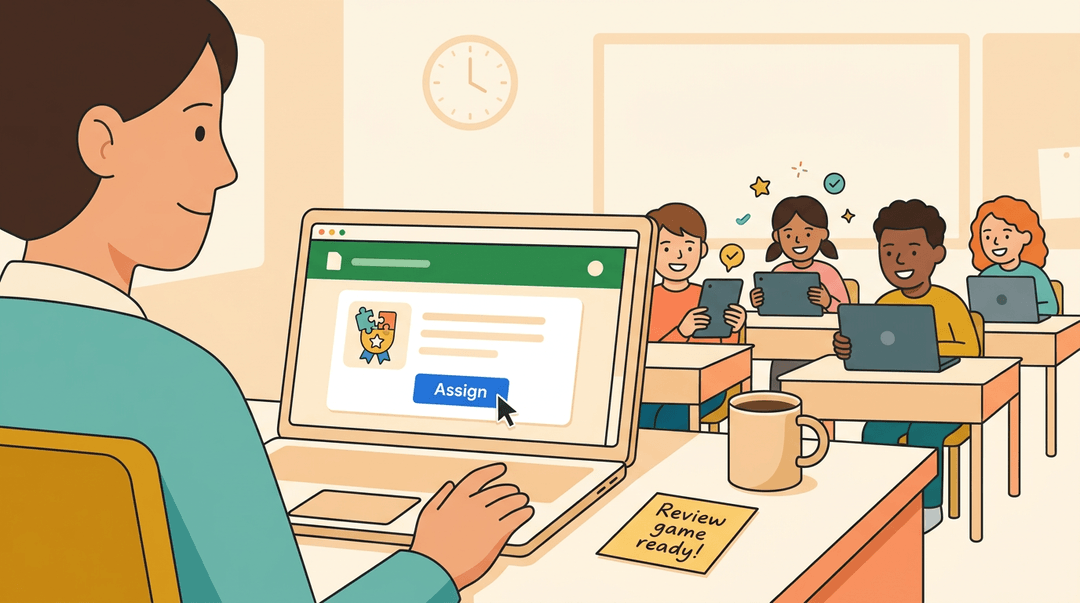
You can start with a free Genially account, so trying a game costs only a little time. The Classroom add-on lets you assign games without switching platforms. Less switching. More teaching.
A substitute opens Google Classroom, finds the review game the regular teacher left, and assigns it in a few clicks. The class stays on track.
Self-grading escape rooms in Slides or Forms
Escape rooms built in Google Slides or Forms give students themed puzzles to solve. They're self-paced, so students move at their speed, not the slowest group's.
They're also self-grading, which gives immediate feedback on every answer. And prep stays low.
A high school biology teacher running an ecosystem escape room can coach a stuck group while everyone else keeps moving, spending class time teaching instead of grading.
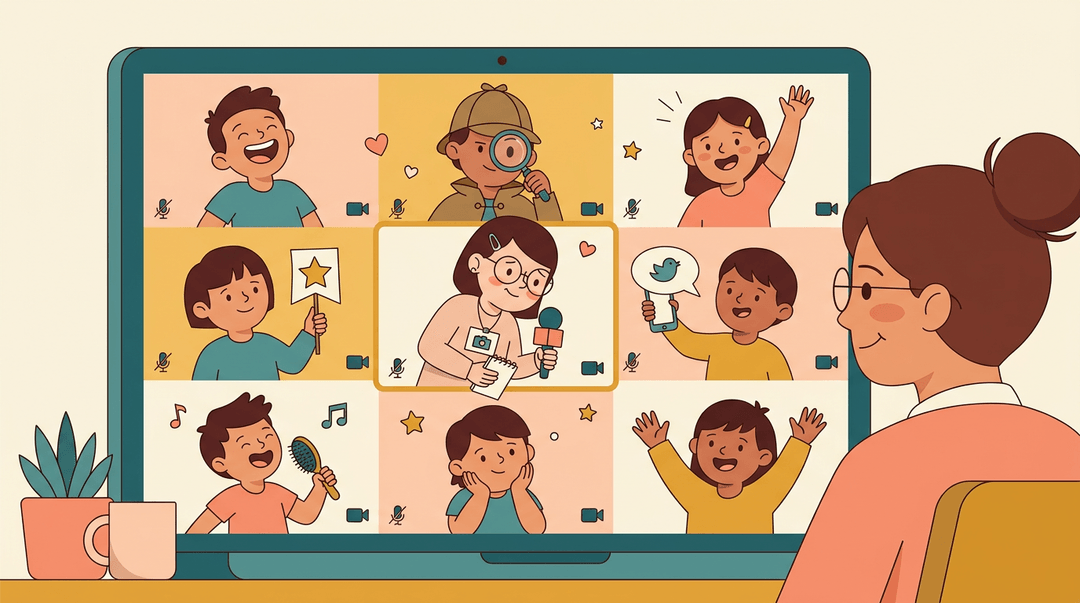
Games built for virtual classrooms
These games help students stay connected when learning happens from a distance.
- Pretend Reporter: students take on a reporter's role to interview classmates.
- Karaoke and lip sync: students perform along to a song for a playful break.
- Mystery Theater: students solve a mystery built around a topic.
- Tweet Yourself: students share ideas in short, tweet-style posts.
- Virtual talent show: students showcase a skill while classmates cheer them on.
Picture a fourth-grade teacher whose class is learning from home. In Pretend Reporter, her quietest reader can become the sharpest questioner, and the whole class leans in.
When flow games become part of your routine, transitions feel smoother, behavior is easier to manage, and debriefs help students see what they actually learned. You don't need a long list of complicated activities.
A handful of games you know well, run with a clear routine, will do more for your classroom than a list you never get to try.
Ready to bring more order to your day? Check out our Classroom Management page to organize your classes, rosters, and timetables in one structured workspace.
References
- How Learning Through Gamification Keeps Students Engaged — graduateprogram.org