Excused Absence: What Qualifies and How It's Handled

Jump to section
Think back to the last permission slip a student handed you before a field trip. One signature, one clear reason, and an absence that could've counted against them gets a pass instead.
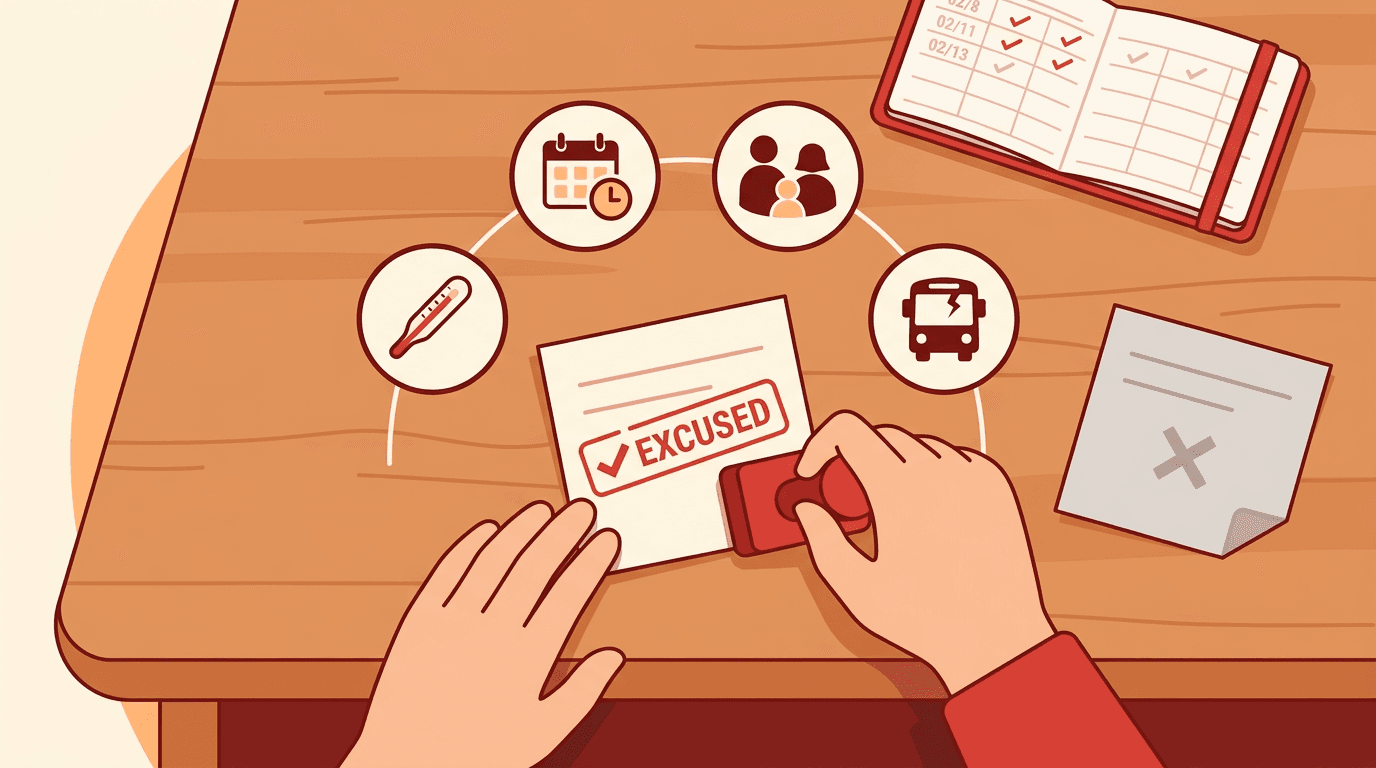
An excused absence works the same way: it's any absence your school formally accepts as valid, usually because it's backed by a reason like illness, a family emergency, or a religious observance.
Here's exactly what qualifies, what doesn't, and how to handle it in your own attendance records.
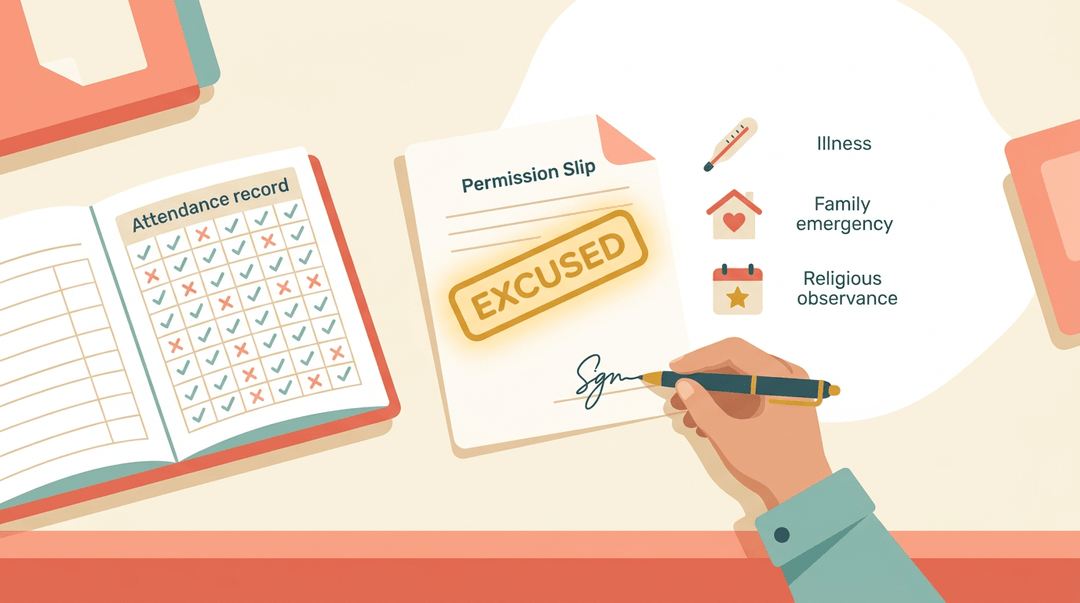
What Counts as an Excused Absence
An excused absence is any absence a school agrees to code as valid, meaning it won't count against a student's attendance record and the student keeps the right to make up missed work.
What makes an absence "excused" isn't the absence itself: it's the reason behind it, plus the documentation that backs it up. Here's what typically qualifies, and how to request it the right way.
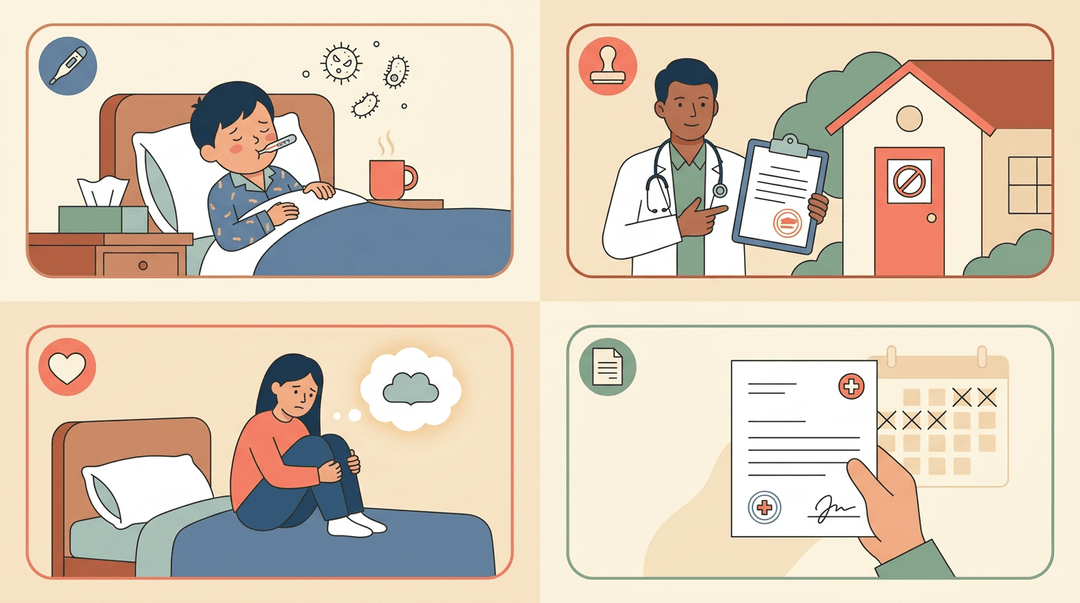
Illness and health issues that qualify
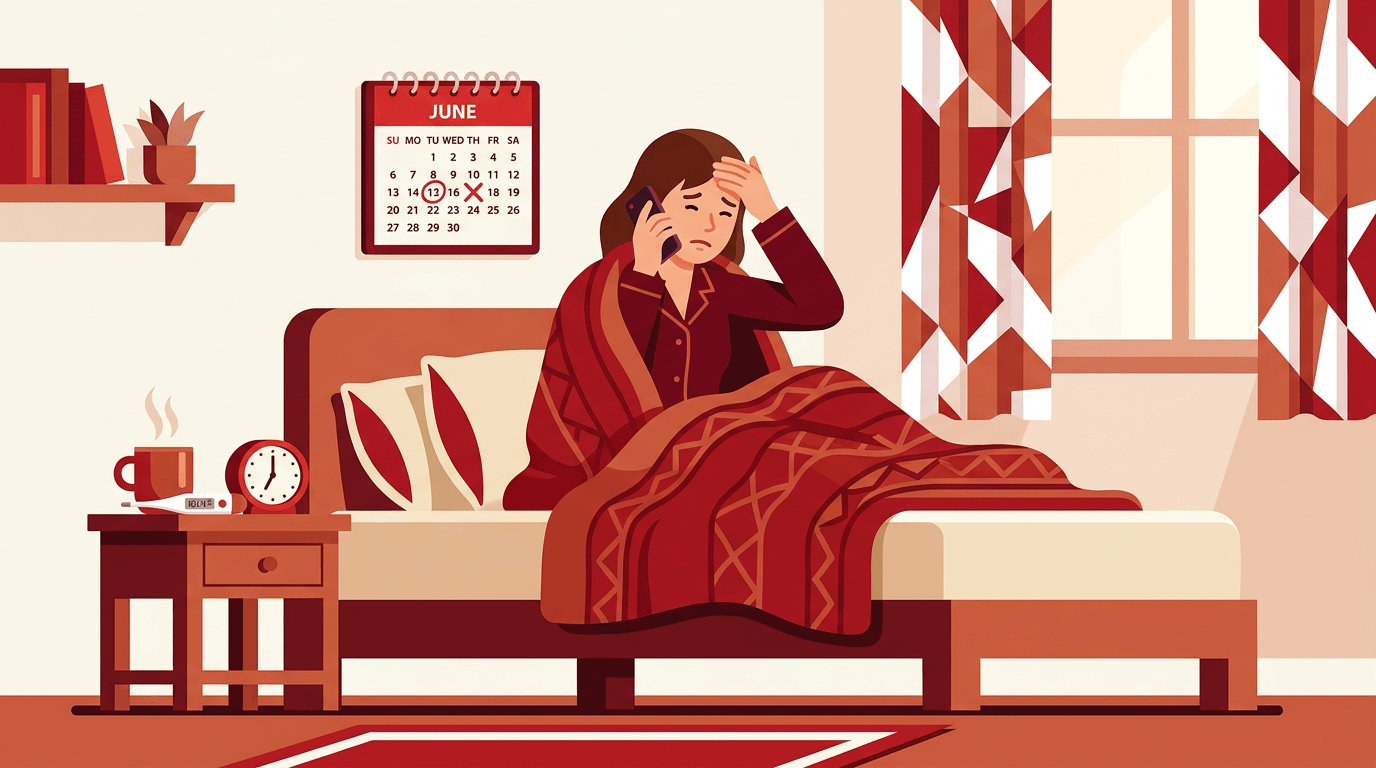
- General illness. A cold, flu, or stomach bug your child can't shake off is the most common excused reason.
- Quarantine or health officer order. If a doctor or public health official orders isolation, that absence is excused automatically.
- Mental health absences. A student managing anxiety, burnout, or another mental health need can qualify for an excused day, the same as a physical illness.
- Physician statement after several days. Once an illness stretches past a few days, most schools ask for a note from a physician confirming the student was under care.
Doctor, dentist, and other appointments
Medical, dental, optometric, and chiropractic appointments all count as excused, and so does a scheduled driver's license test.
Where possible, encourage families to book these outside school hours: it keeps the student in class and avoids the paperwork altogether, but when that's not possible, the appointment itself is a valid excuse.
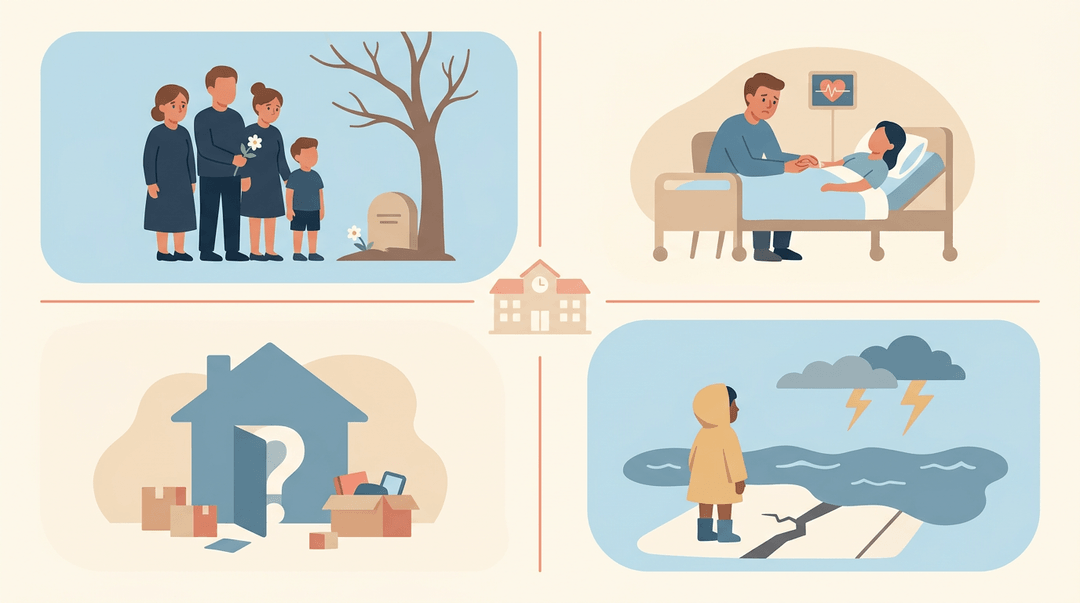
Family emergencies and bereavement
- Funeral of immediate family. Attending the funeral of a parent, sibling, grandparent, or other close relative is excused.
- Serious family emergency. A hospitalization, sudden move, or crisis at home qualifies.
- Family emergency, broadly defined. Schools generally give some latitude here rather than a rigid list, since emergencies rarely look alike.
- Safety concerns. If getting to school poses a genuine safety risk (severe weather, an unsafe route, a threat at home), that's excused too.
Jury duty and other civic duties
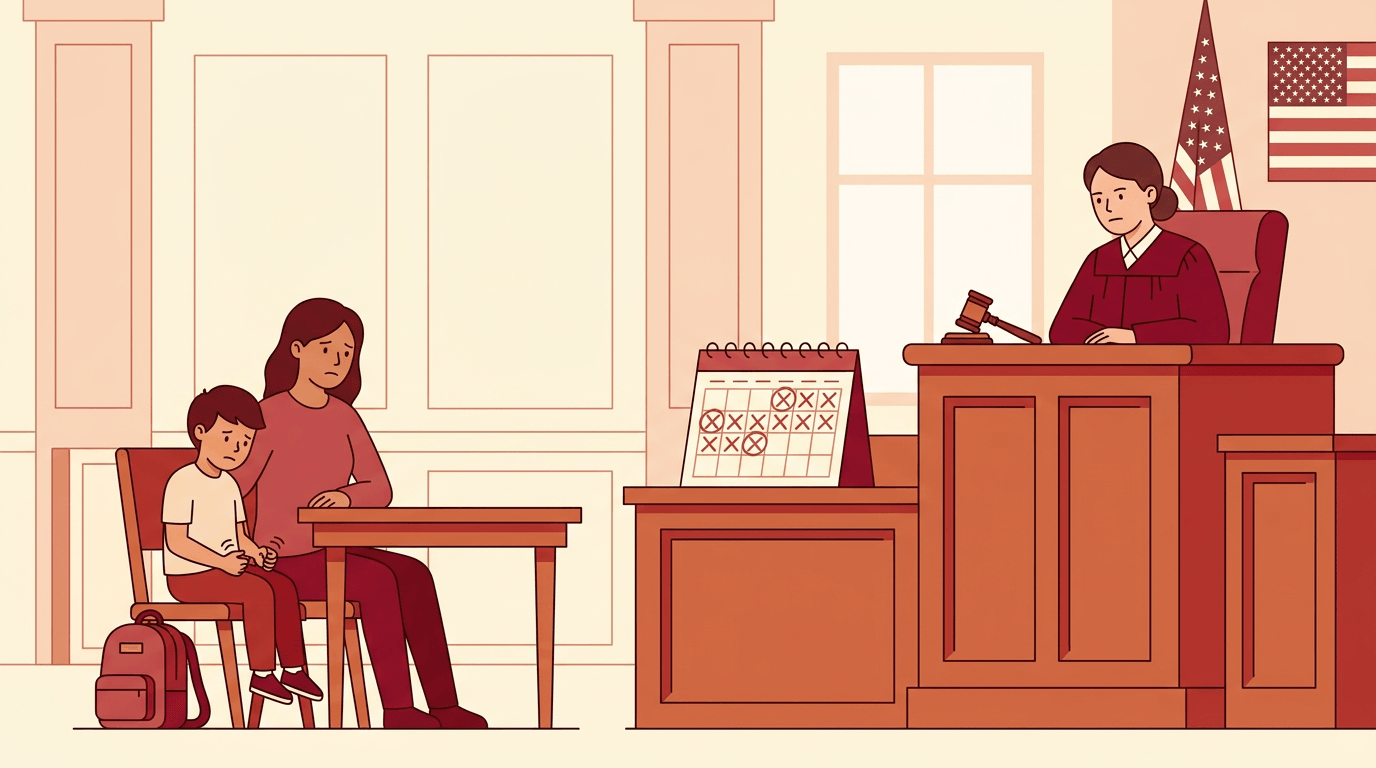
Civic obligations are excused because they're legally required, not optional. That includes:
- Jury duty
- Court appearances
- Precinct board or election service
Religious holidays and observances
Students can miss school for religious holidays and ceremonies, and for religious retreats, without it counting against them. Time spent in religious instruction is usually excused up to a set limit set by the district.
The one catch: it needs prior arrangement, so the school knows in advance rather than finding out after the fact.
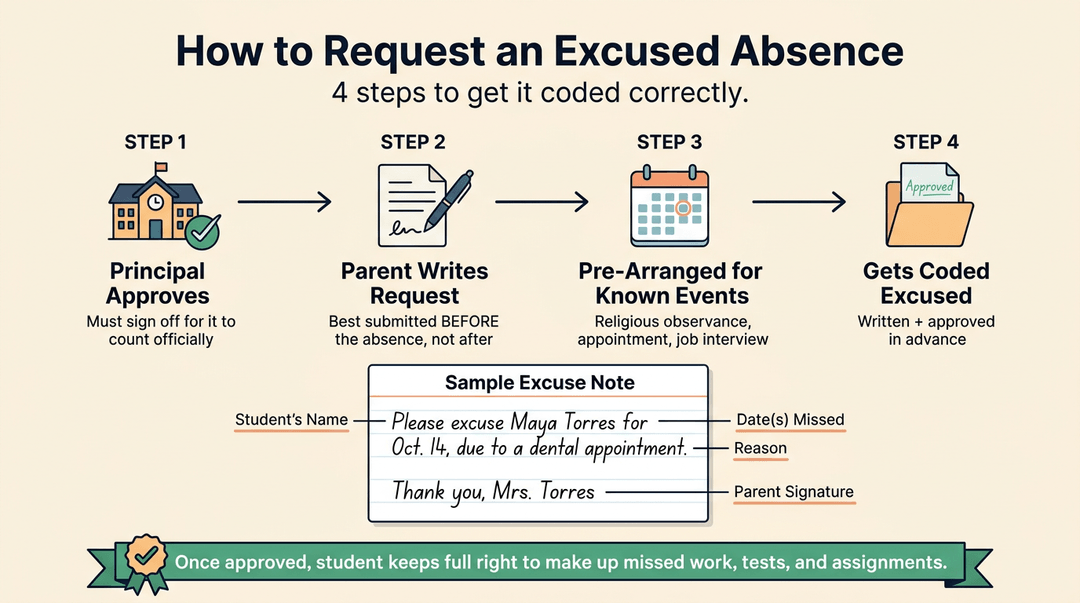
How to request an excused absence
Most of these reasons still need to go through the right channel to actually get coded as excused:
- Principal approval needed for the absence to count officially.
- Written parent request required, ideally before the absence, not after.
- Pre-arranged with the administrator for anything foreseeable, like a religious observance or appointment.
- Employment conference requests, such as a job interview or a required work obligation, follow the same process: a written request in advance, approved before the student is out.
A simple parent excuse note covers the basics: student's name, date(s) missed, the reason, and a parent signature. Something like: "Please excuse [student name] for [date], due to [reason]. Thank you, [parent name]."
Once it's approved and coded excused, the student keeps full rights to make up any missed work, tests, and assignments.
A Teacher's Quick Guide to Excused Absences
A student hands you a note before the bell, and you have about thirty seconds to decide three things: is it valid, how do I code it, and what do I do afterward. This card walks you through all three, in order.
Before you mark it: verify
Confirm all three before the absence gets an "excused" mark:
- The written excuse note checks out. Dated, signed by a parent or guardian, and states the reason.
- The reason is on your district's approved list. Don't rely on memory; keep the list taped inside your attendance folder.
- Prior approval exists if the district requires it. Planned absences like religious observances or family travel often need sign-off before the date.
⚠️ Watch out: a note with no date or signature isn't verification. Mark the absence unexcused for now and tell the student it flips once a complete note arrives.
Code it the same day
- Mark it excused or unexcused, clearly. Never leave a blank or a "pending" overnight.
- Tag the reason type. Illness, legal, or religious, for example: the tag is what makes patterns visible later.
- Illness covers sickness and medical appointments; legal covers things like court dates.
- Flag any student nearing the truancy threshold. Even excused absences add up; a flag now beats a formal letter later.
Follow up within the week
- Assign makeup work promptly. Hand it over the day the student returns, with a due date attached.
- File the note in the student's record. If truancy questions come up months later, that note is your documentation.
- Watch for a pattern and loop in the parent. Use the table below to decide when a call is due.
| When you see... | Do this... |
|---|---|
| A one-off excused absence | Code it, file the note, move on |
| Same reason repeating (e.g., third illness this month) | Call home and share the count |
| Total absences nearing the truancy threshold | Notify the parent in writing and alert your admin |
When you make that call, lead with the data, not a judgment. Try: "I noticed Maya has missed four Mondays this quarter, all excused. Is there anything we can do to help?"
Example: A middle school teacher notices a student's excused illness absences cluster around test days. Because each one was tagged "illness" at coding time, the pattern takes one glance to spot, and a parent call uncovers test anxiety the counselor can actually address.
Spotting that kind of pattern by hand means flipping through weeks of records; EMStudio's attendance tracker lets you tag excused reasons and spot patterns in one click.
The Laws and Policies Behind Excused Absences
Excused absence rules aren't invented at the school level. They flow from state truancy law first, then get filled in by your district, so it helps to know where one ends and the other begins.
How state law sets the rules
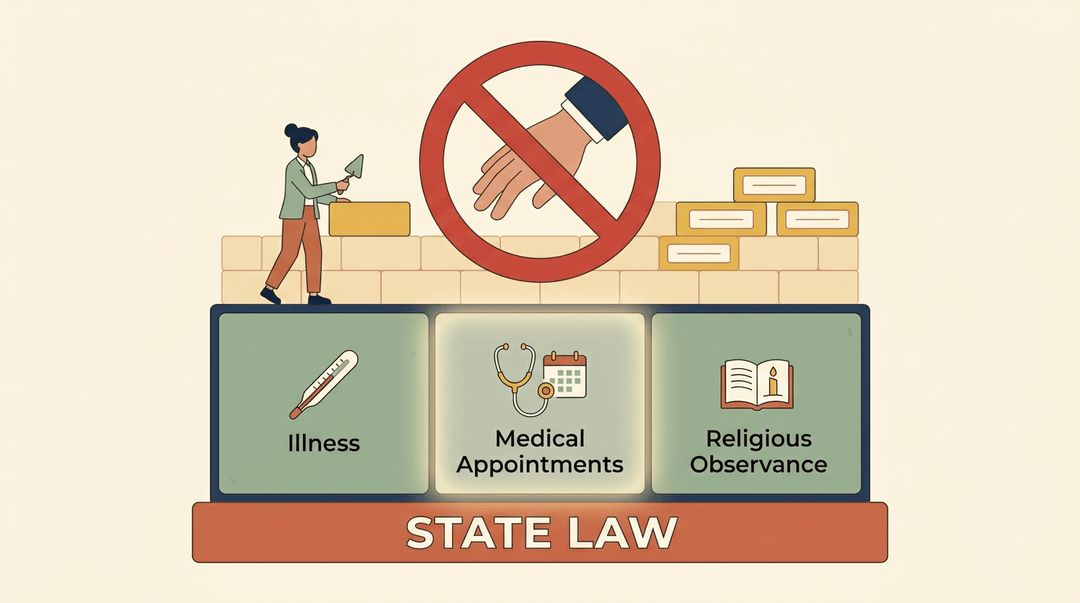
State truancy laws set the floor for attendance enforcement, and they also spell out the categories of absence that must count as excused:
- Illness
- Medical appointments
- Religious observance
Your district can build on that list, but it can't shrink it: state rules are the minimum every local policy has to meet, not a suggestion.
How districts add their own rules
Beyond the state minimums, districts are free to add their own valid reasons, from college visits to family emergencies.
That's why it's worth pulling up your district's attendance policy rather than assuming it matches the school down the road: coding, documentation, and even the deadline to submit an excuse note can all vary district by district.
Recent changes to the law
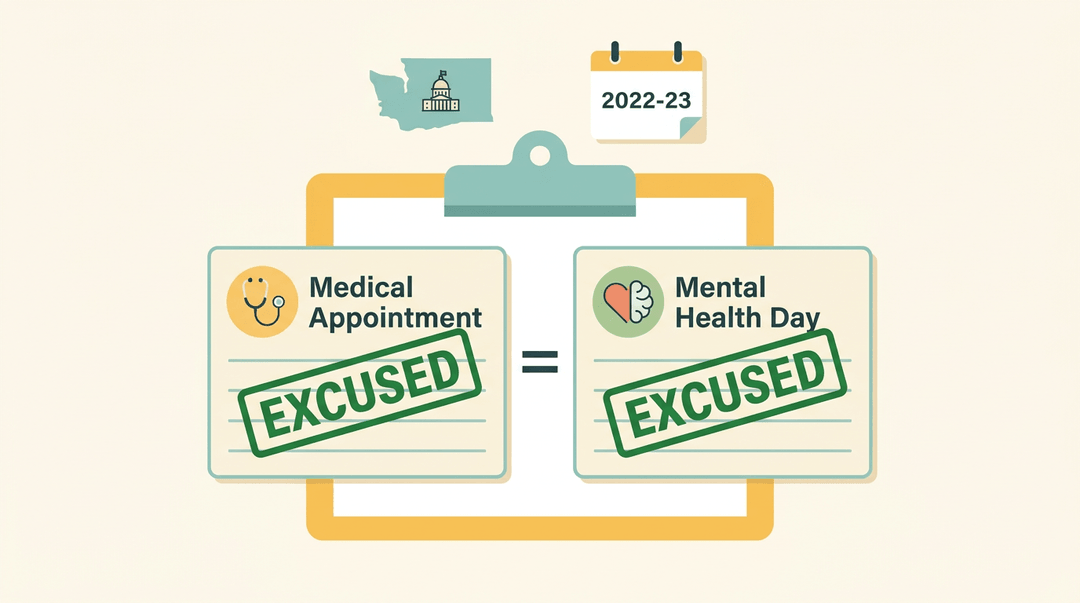
Washington's rules shifted recently to cover student mental health. House Bill 1834 directed that, starting in the 2022-23 school year, an absence tied to a mental health reason must be categorized as excused, the same as illness or a medical appointment.
The Office of Superintendent of Public Instruction (OSPI), the state agency that oversees K-12 education, followed with guidance to help districts apply the change, shaped in part by input from an advisory group of educators and health professionals.
When Absences Become a Truancy Issue
A single excused absence is nothing to worry about. But once unexcused absences start piling up, or minutes late turn into a pattern, schools have to treat it as a truancy issue instead of a scheduling hiccup.
How many absences trigger truancy
Most districts follow a similar threshold before truancy procedures kick in:
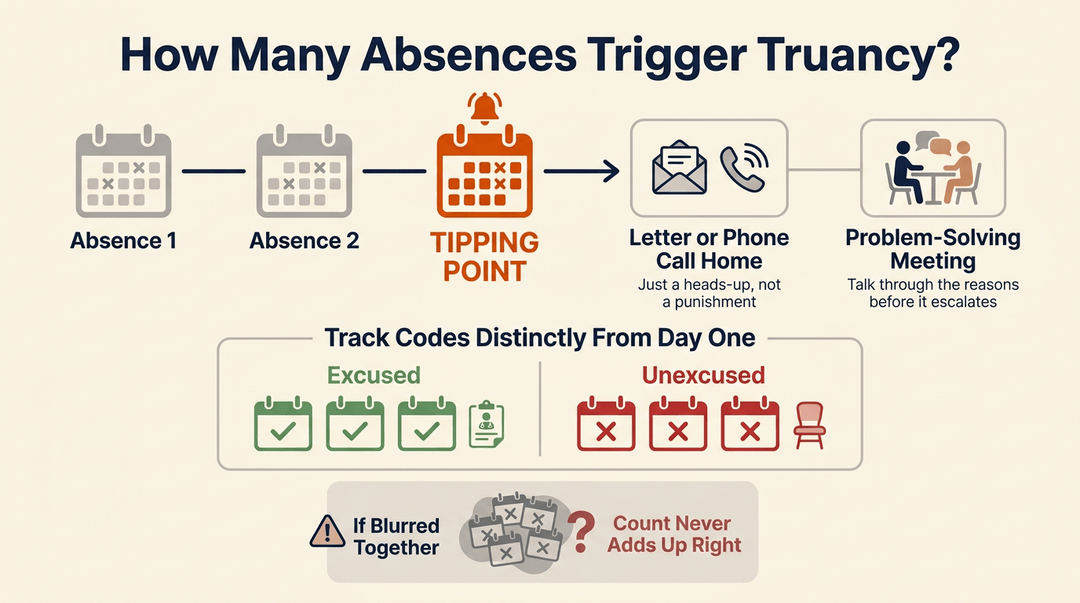
- Three unexcused absences is usually the tipping point. According to Island County, Washington's truancy laws, "If that becomes three unexcused absences, the student and parent will likely be asked to come to the school for a meeting to discuss the attendance policy and reasons for the absences."
- That third absence typically prompts a letter or phone call home: not a punishment, just a heads-up that something needs attention.
- From there, schools usually move into a problem-solving notification process: a short meeting to talk through what's behind the absences before things escalate.
- None of this works unless you're logging excused and unexcused codes distinctly from day one. Blur the two, and the count that's supposed to trigger truancy never adds up right.
Rules on tardiness and leaving early
Truancy isn't only about missed days. Tardiness and early departures count too, and the cutoffs are specific.
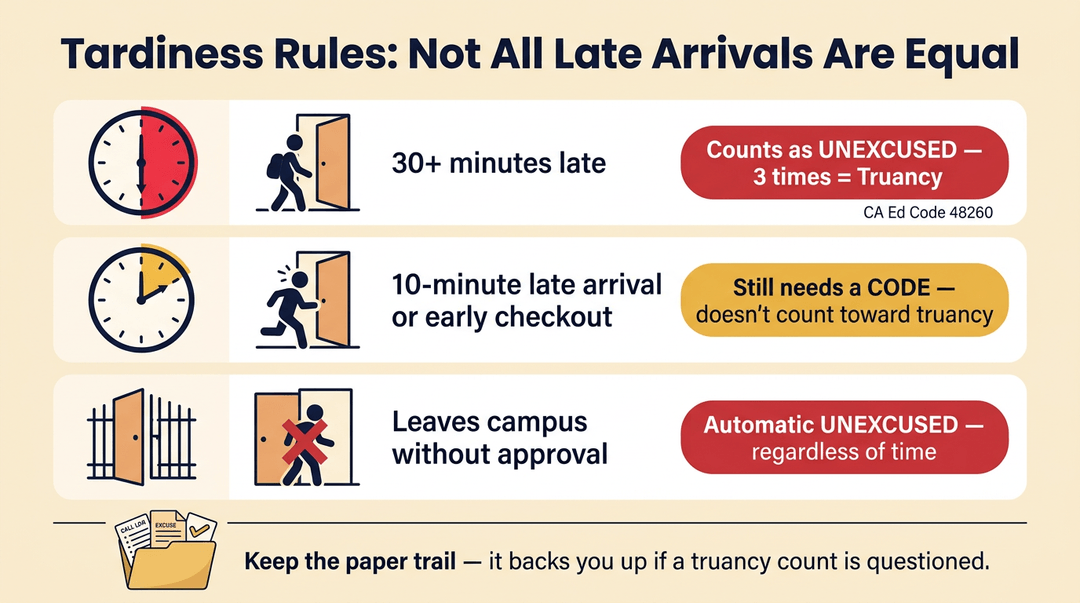
- A 30-minute tardy is generally coded unexcused. Under California Education Code 48260, as applied by Washington Manor Middle School's attendance policy, "a student is considered truant if they are absent without a valid excuse for more than three days in a school year, or if they are tardy by more than 30 minutes on three or more occasions."
- A 10-minute late arrival or early checkout still needs a code, even if it falls short of that 30-minute line.
- Leaving campus without approval gets treated as an unexcused absence outright, no matter how long the student's gone.
Keeping these distinctions on record matters.
As research on excused and unexcused absence policies notes, "School staff will keep a record of absence and tardiness, including a call log and/or a record of excuse statements submitted by a parent/guardian... to document a student's excused absences."
That paper trail is what backs you up if a truancy count ever gets questioned.
Examples of Unexcused Absences
Knowing what counts as excused only helps if you can spot what doesn't. Most districts draw that line around whether the reason was unavoidable or simply inconvenient, and these examples usually fall on the inconvenient side.
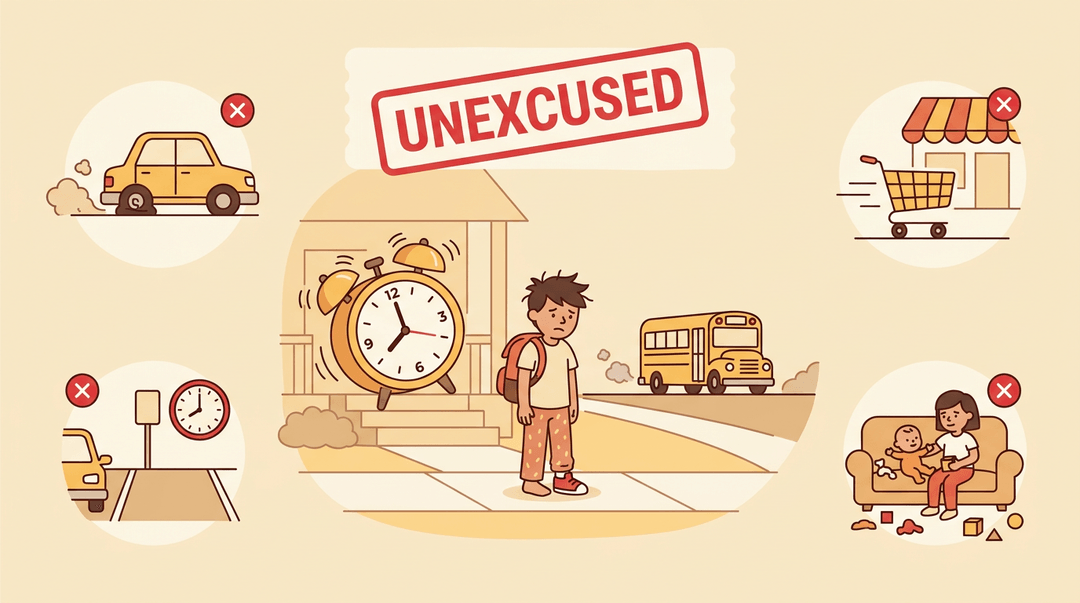
Oversleeping, missed rides, and other excuses
Consider a middle schooler who sleeps through an alarm and misses the bus. It happens, but it's not something a school will code as excused. The same goes for a handful of everyday mishaps:
- Oversleeping. No alarm, no ride, no excuse in the school's eyes.
- Transportation or car trouble. A flat tire or a late carpool still counts as a personal logistics problem.
- Missing the bus or a ride. Even a one-time slip lands as unexcused.
- Errands or shopping. Running to the store during school hours isn't a valid reason.
- Babysitting or being needed at home. Family responsibilities matter, but schools generally require a documented emergency, not routine help.
Vacations and trips without approval
A family trip booked over a school week can turn into an unexcused stretch fast. Vacations without pre-approval almost always get marked this way, since most schools ask families to request time off in advance.
Any trip during school time that skips that step, even a short one, follows the same rule.
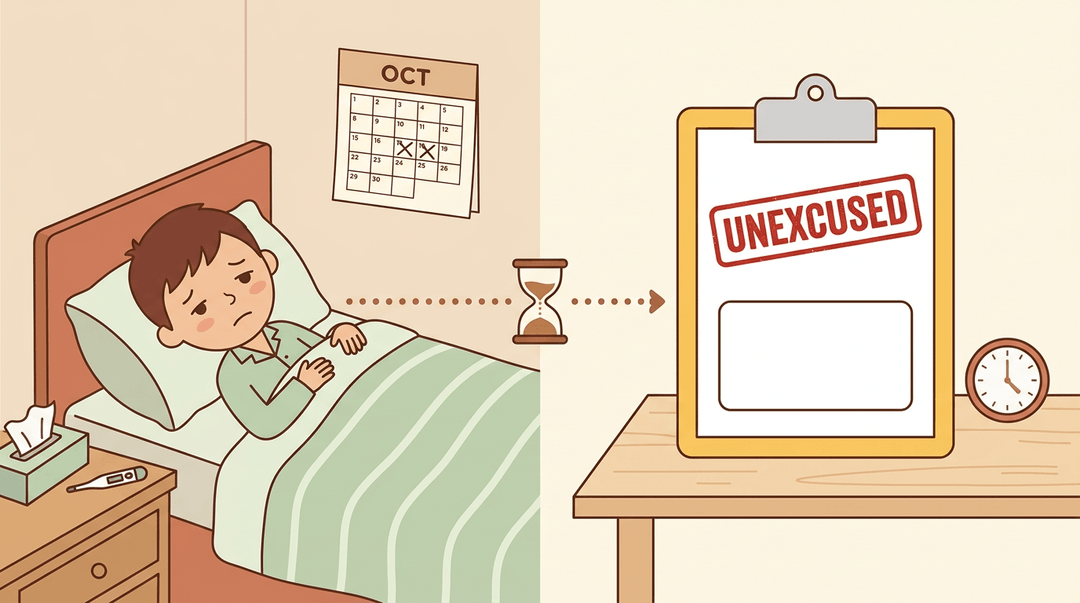
Missing notes and unverified illness
Think of a student out for two days with a stomach bug, but no note ever shows up. Without documentation, that absence usually stays unexcused. The same applies when:
- There's no parent note submitted within the school's window.
- An illness goes unverified, with no doctor's note or parent confirmation.
- An absence stays uncleared for a long period, often converting automatically once a deadline passes.
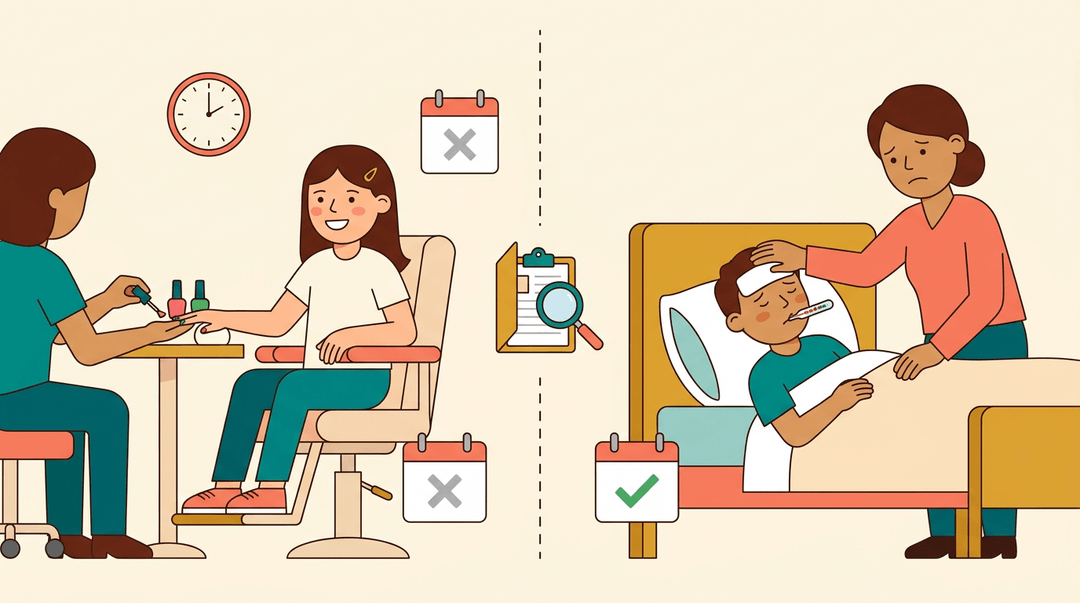
Hair, nails, and other personal errands
A student who leaves early for a hair, nail, or tanning appointment is missing school for a personal errand, not a medical or family emergency.
The same goes for other non-emergency personal errands: they might feel urgent to a family, but they don't meet the bar schools set for an excused absence.
An excused absence isn't just paperwork to file away. It's proof that a fair attendance policy can respect real life while still holding students accountable to their learning.
Knowing the difference protects you, your students, and your school when questions come up later.
Ready to keep those exceptions from turning into chaos in your own gradebook? Check out Attendance & Records to mark attendance quickly and spot patterns across your classes over time.
References
- HOUSE BILL REPORT HB 1834 — lawfilesext.leg.wa.gov
- Policies - Attendance and Absences – Attendance & Our School — wms.slzusd.org
- Truancy Laws — islandcountywa.gov
- Students Excused and Unexcused Absences — citeseerx.ist.psu.edu (2014)
Frequently asked questions
What is the best reason for absences?
The best reason is a genuine, unavoidable circumstance that your school recognizes, such as illness, a medical appointment, a family emergency, a religious observance, or a required civic obligation. Submit the required note or documentation promptly.
What is a good absence excuse?
A good absence excuse is truthful, specific, and supported when necessary. For example: illness, a doctor or dentist appointment, a family emergency, a funeral, a religious observance, or a court or jury obligation.
What are the valid reasons for absenteeism?
Valid reasons commonly include illness, mental health needs, medical appointments, family emergencies, bereavement, safety concerns, religious observances, court appearances, jury duty, and election service. Exact rules and documentation requirements vary by state and district.
How do you write an excused absence?
Write the student's name, the date or dates missed, the reason, and a parent or guardian signature. For example: “Please excuse [student name] for [date] due to illness. Thank you, [parent or guardian name].”
What does it mean if your absence is excused?
An excused absence means the school has formally accepted the reason and coded the absence as valid. It generally does not count as an unexcused absence, and the student retains the right to make up missed work and tests.
Is mental health a valid reason to miss school?
Yes. Mental health needs, including anxiety, burnout, or another mental health concern, can be a valid reason to miss school. The absence still must follow the school's reporting and documentation rules.
What to say for an excused absence?
State the truthful reason briefly and clearly, such as “illness,” “medical appointment,” “family emergency,” or “religious observance.” Include the student's name and date, and provide a parent signature or required documentation.
What should I put for reason for absence?
Put the specific, truthful reason for missing school, such as illness, a medical or dental appointment, a family emergency, a religious observance, or a mental health need. If the absence was planned, check whether advance approval is required.