Students Who Are Cyberbullied Are More Likely to Face These Risks

Jump to section
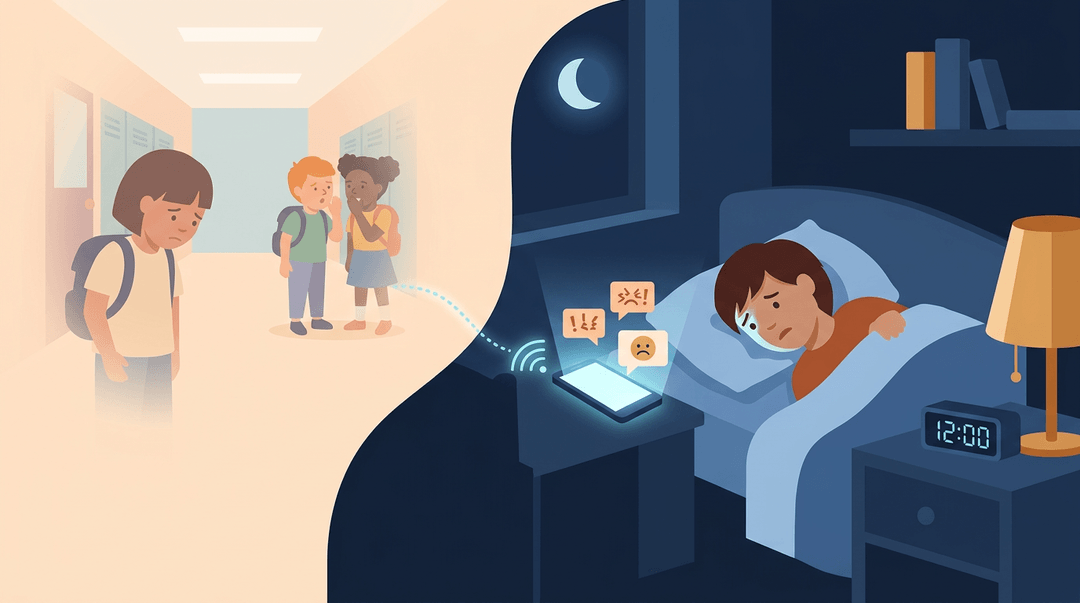
Think about a worry that used to stay at school: a tense hallway moment, a tough comment at recess. By the end of the day, home gave you a break from it. For today's students, that break doesn't come.
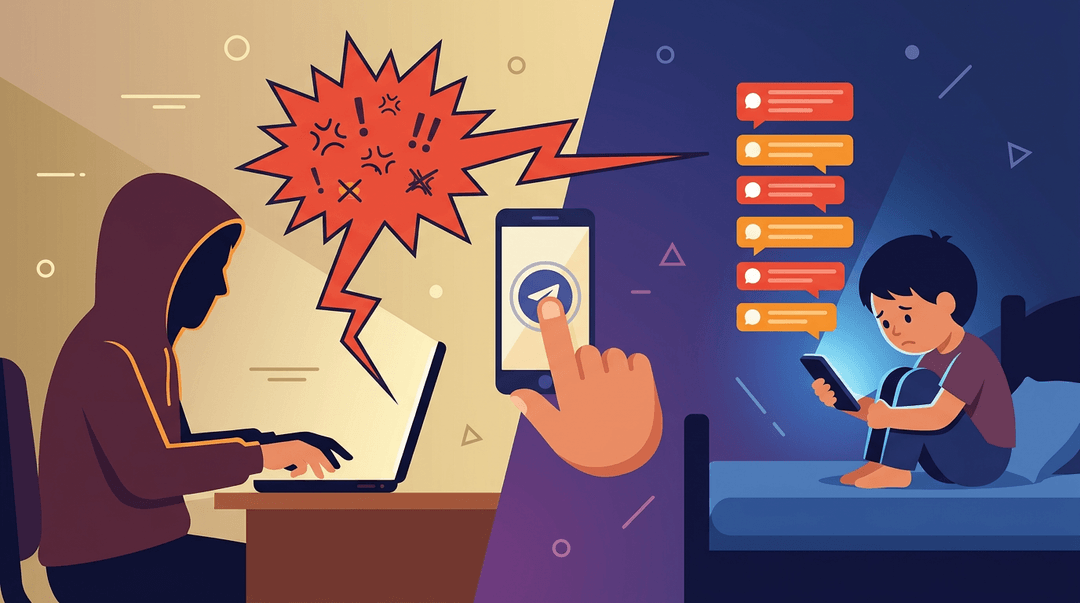
A phone buzzing at midnight carries the same hurt straight into their bedroom. That's cyberbullying: bullying that follows kids through texts, apps, and group chats, long after the bell rings.
It's more common than many teachers realize, and the fallout touches mental health, grades, and behavior alike. This guide walks through what it leads to, how often it happens, and how you can spot it early.
What Cyberbullying Really Means for Students
Ask any teacher what's changed about bullying in the last decade, and the answer is simple: it never clocks out anymore.
What cyberbullying is
Cyberbullying is repeated, intentional harm delivered through digital channels:
- social media
- texts
- group chats
- gaming platforms
Unlike a single mean comment, it's a pattern, not an isolated incident. Where traditional bullying lives in hallways and playgrounds, cyberbullying follows a student home, onto their phone, and into bed.
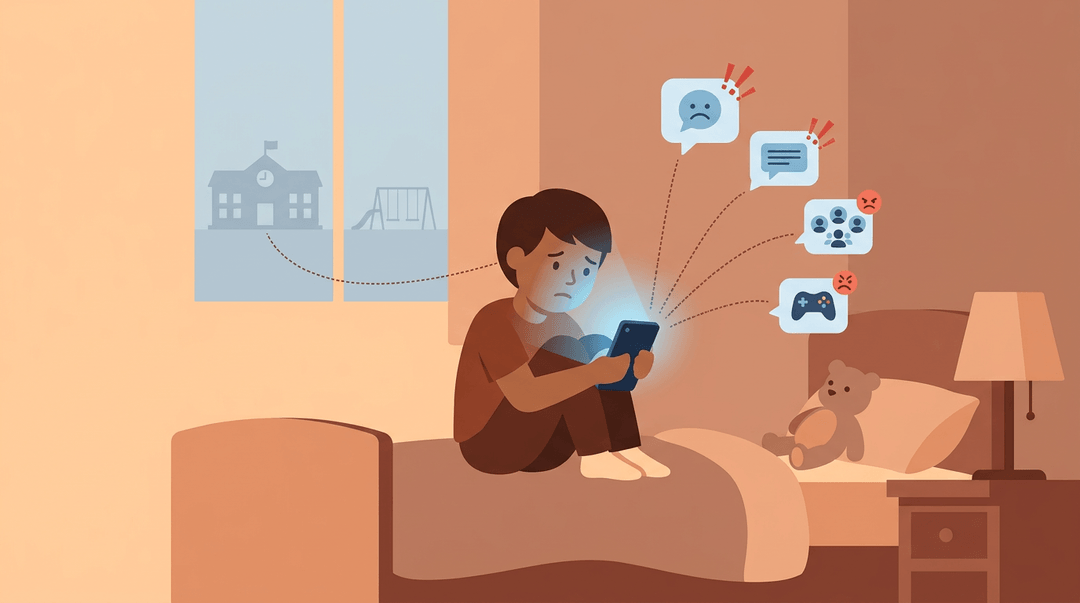
How cyberbullying differs from traditional bullying
A few things set it apart:
- No escape hatch. It runs 24/7, so there's no final bell that ends it.
- Anonymity. Attackers can hide behind fake accounts, making it harder for a student to know who's targeting them.
- Reach and speed. A single post can reach an entire grade level in minutes.
- Permanence. Screenshots and shares mean content can resurface long after it's posted.
- No size requirement. Traditional bullying usually involves a power imbalance; online, any student with a phone can become an attacker.
Common forms cyberbullying can take
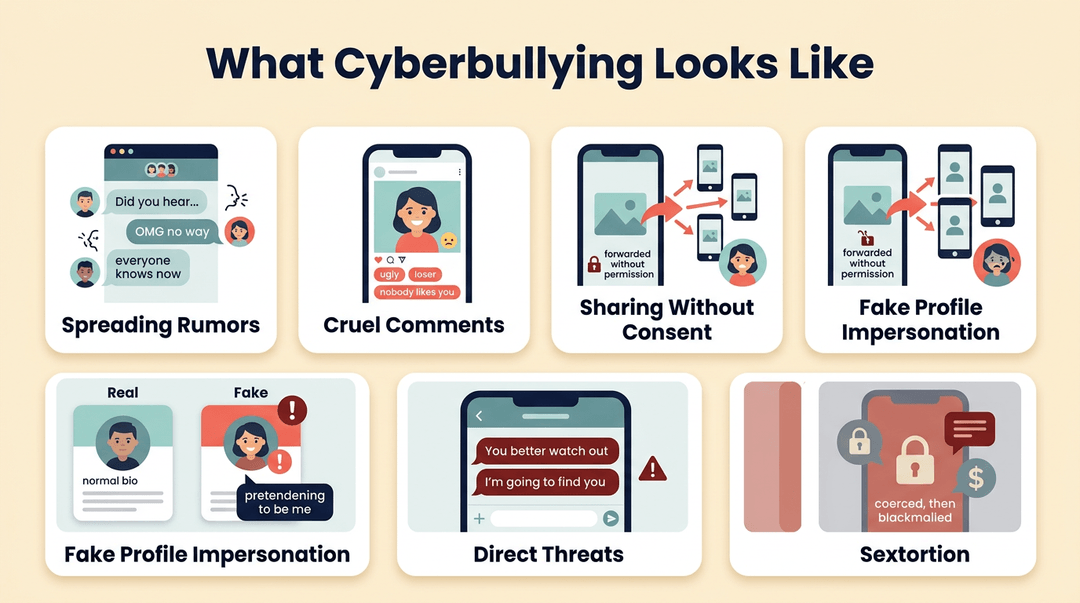
It tends to show up in a handful of recognizable patterns:
- Spreading rumors or gossip through group chats or comment threads
- Posting cruel or degrading comments on photos and posts
- Sharing embarrassing photos or videos without consent
- Impersonation through fake profiles built to humiliate someone
- Direct threats and harassment messages
- Sextortion, where a student is coerced into sharing explicit images and then blackmailed over them
Spotting Cyberbullying Through Attendance Patterns
Cyberbullying rarely announces itself, but it leaves fingerprints in your attendance data. This guide shows you which patterns to watch, what to do the moment you spot one, and how the signs shift by grade level.
Four red flags in your attendance data
Before assuming a student is just "flaky," check your records for these patterns:
- A sudden spike in absences. Steady attendance until a few weeks ago, now missing days regularly.
- Monday and Friday tardiness. Dread peaks around weekends, when online harassment runs unsupervised.
- Avoiding specific classes. Present all day but missing one period: the aggressor may share that room.
- Frequent nurse or counselor visits. Vague stomachaches that cluster right before the same class.
One flag alone could mean anything. Two or more together, and it's time to act.
Your five-move response
- Document the pattern in writing. Dates, times, and what you observed, nothing speculative.
- Example log entry: "Oct 3–17: absent four Mondays; left early twice citing stomachache before 5th period."
- Flag chronic absenteeism fast. Don't wait for the official threshold to trigger.
- Report the pattern to your attendance team the week you notice it.
- Loop in the school counselor. Share your log so they can watch for social dynamics you can't see.
- Contact parents proactively. Describe the pattern, then ask, don't diagnose.
- Say: "I've noticed a change in Maya's attendance and I'd like to understand it. Have you seen anything at home?"
- Build a safety plan with the student. Keep it concrete and small.
- A daily check-in with one trusted adult, a seat change, and an agreed signal to step out of class.
💡 Tip: Lead with curiosity, not the word "cyberbullying." Asking a student directly often gets a flat denial; asking "what's making mornings hard lately?" opens the door.
What avoidance looks like at each grade
The pattern is the same (avoid the place where the online conflict goes face-to-face), but the place changes:
| Grade band | The tell | What it usually means |
|---|---|---|
| Elementary | Recess avoidance | The playground is where posts become taunts |
| Middle school | Skipping lunch | The cafeteria is the unstructured social arena |
| High school | Class-specific absences | Targeted avoidance of one person's schedule |
You can't act on a pattern you never see: spot at-risk students sooner with EMStudio's attendance pattern tracking and early-warning reports.
How Many Students Experience Cyberbullying
Numbers alone can't capture what cyberbullying does to a student, but they show how common it's become, and the answer shifts depending on how you ask the question.
What percent of teens get cyberbullied
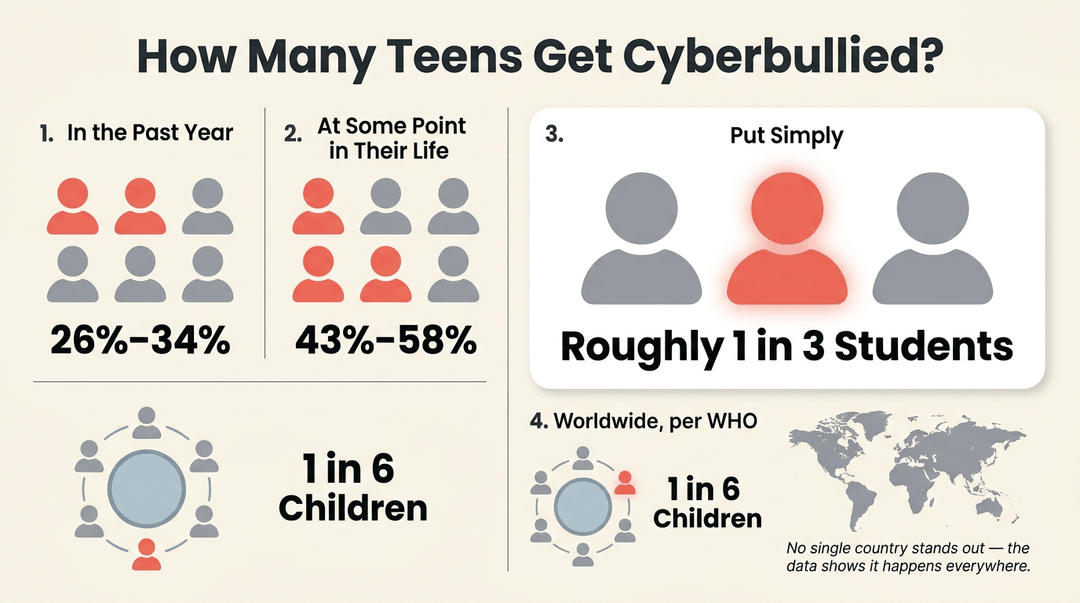
Ask about the past year, and you'll typically hear that somewhere between 26% and 34% of teens have experienced cyberbullying. Ask about their whole life so far, and that range climbs to 43% to 58%.
Put another way, roughly 1 in 3 students has dealt with it at some point. Globally, the picture narrows a bit: the World Health Organization reports that one in six children experiences cyberbullying, based on its ongoing survey of adolescents.
If you're hoping to pin the problem on a single country, the data doesn't cooperate: the clearest multi-country figure stays at that one-in-six mark rather than singling out one nation as the worst offender.
How cyberbullying trends have changed
The trend line only moves one way. Cyberbullying rates have increased over the past decade, even as in-person bullying has held fairly steady.
That rise tracks closely with how fast digitalization has reshaped the way we spend our days online: more time connected means more chances for conflict to follow a student home.
Screen time keeps climbing too, and every added hour gives cyberbullying more room to happen.
Gender differences in who gets bullied
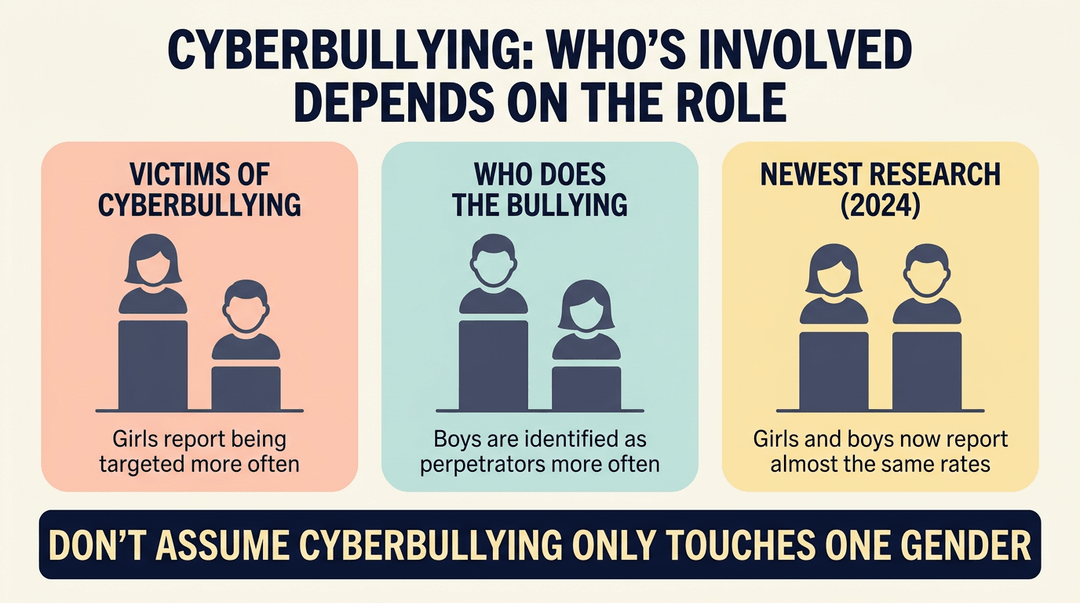
Who's involved depends on which role you're asking about. Girls are more often victims of cyberbullying than boys, a pattern that shows up across several studies.
Boys are more often the perpetrators, according to meta-analyses pooling results across dozens of studies.
But the newest numbers complicate that story: recent research finds almost no difference between girls and boys in cyberbullying rates, with both reporting it at close to the same frequency.
The takeaway for your classroom: don't assume cyberbullying only touches one gender.
Which platforms see the most cyberbullying
Platforms shift as fast as trends do, but a few names show up again and again. YouTube tends to report the highest rate of incidents, while Snapchat and Instagram are common sites where teens trade comments, photos, and private messages.
Facebook still factors in, especially for older students. As social media usage keeps climbing, so does the opportunity for cyberbullying to follow a student from the hallway straight into their pocket.
What Being Cyberbullied Can Lead To
Cyberbullying rarely stays contained to a screen. It follows a student into the hallway, into sleep, into the next test, and the effects show up across mental health, emotional well-being, behavior, and even long-term outcomes.
Here's where you'll see each one surface, plus a teacher's lens for catching it early:
How cyberbullying affects mental health
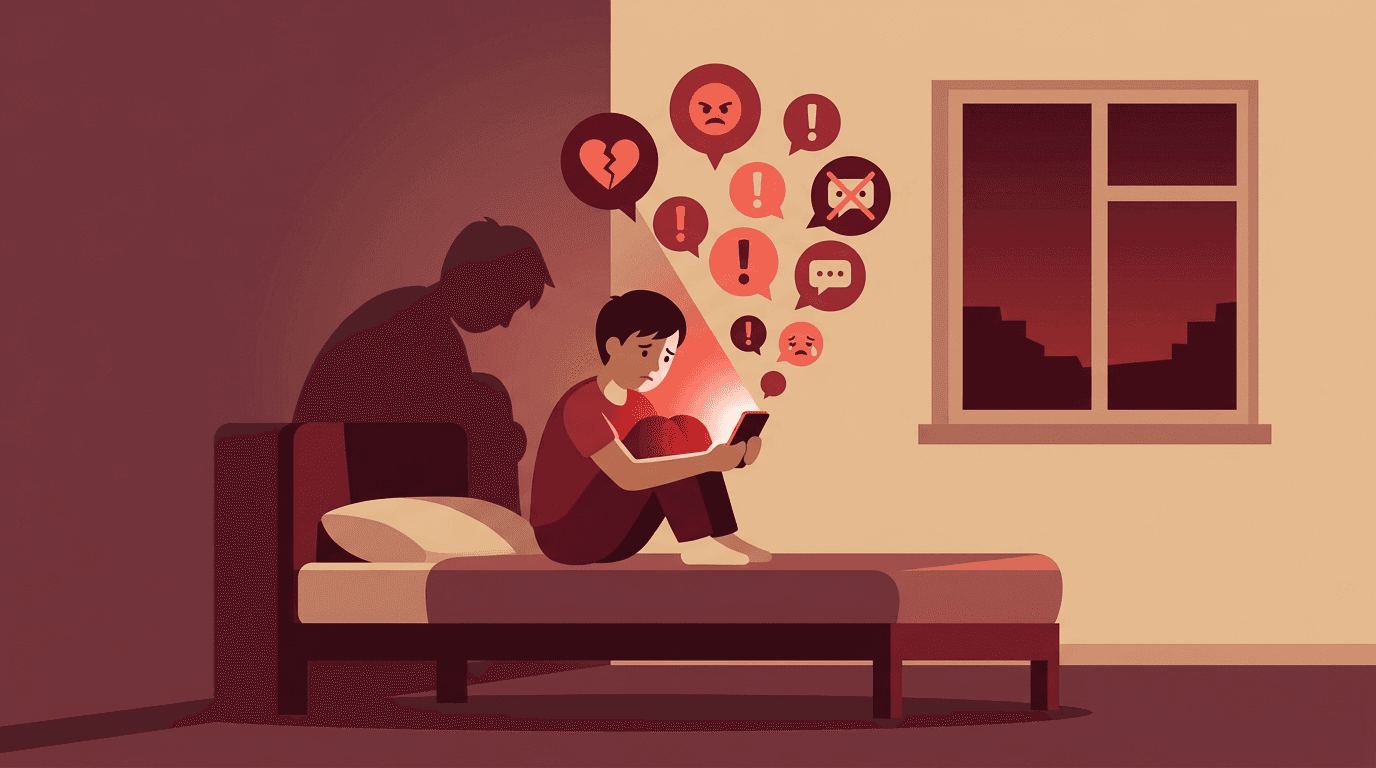
The most immediate damage often lands on a student's mental health. Persistent harassment online can trigger anxiety and depression, chip away at self-esteem, and in more severe cases produce symptoms consistent with post-traumatic stress disorder (PTSD):
- intrusive thoughts
- hypervigilance
- trouble concentrating
For some students, the weight of constant harassment leads to suicidal thoughts or self-harm, which is why any mention of either deserves immediate attention, not a wait-and-see approach.
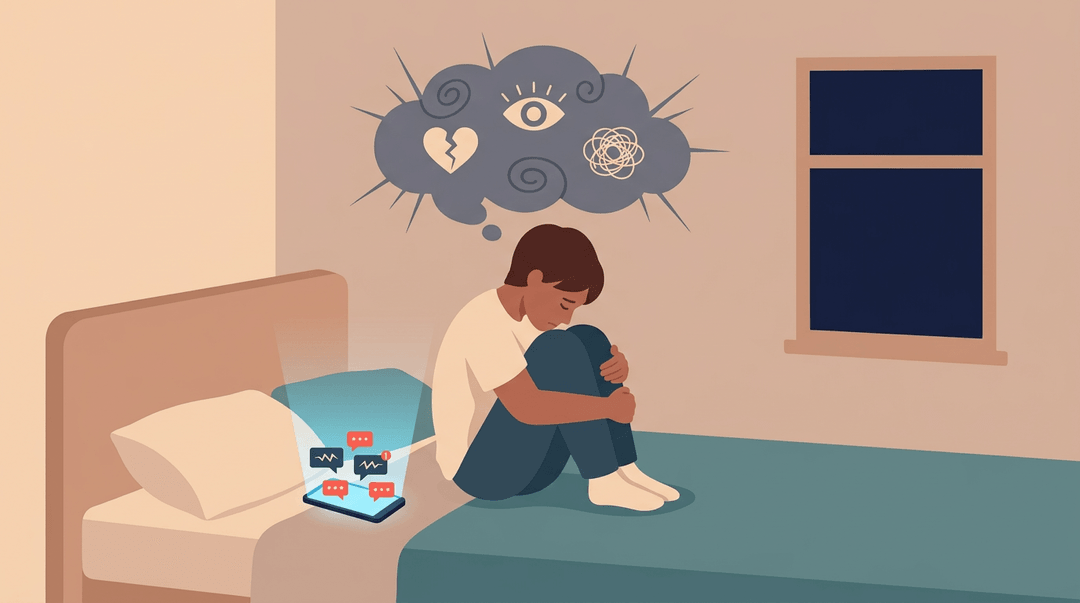
The emotional toll cyberbullying takes
Underneath the clinical labels sits a messier set of feelings. A cyberbullied student might cycle through anger, hurt, and fear within a single afternoon, then retreat into isolation and humiliation once the group chat goes quiet.
Powerlessness and insecurity often follow, especially when the bullying feels impossible to escape. Shame and stigma can keep a student from telling anyone at all, especially a teacher they assume can't actually help.
Behavioral and physical signs of cyberbullying
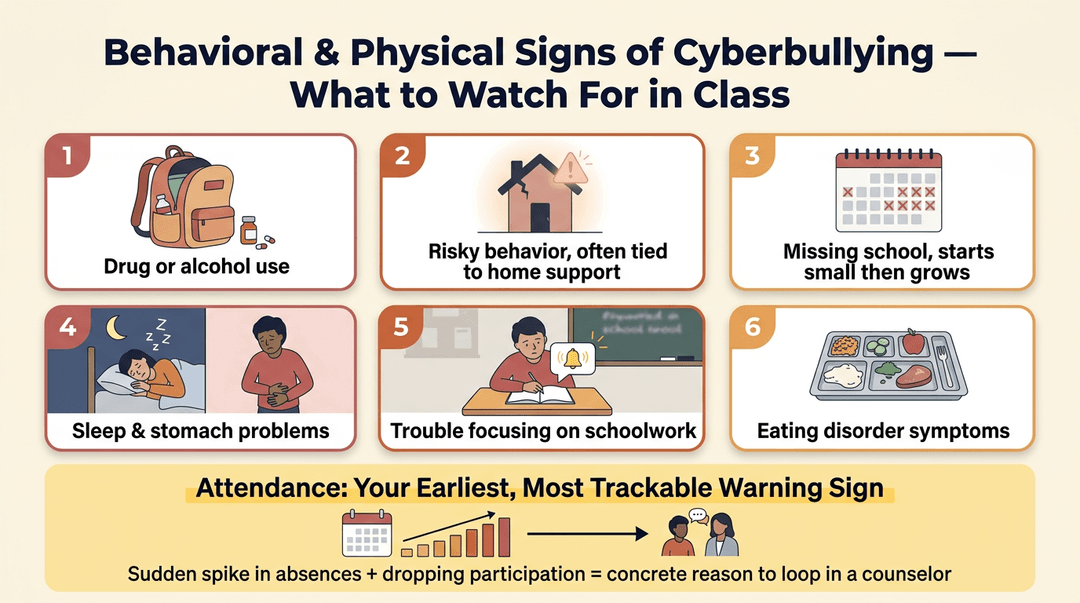
These emotional and mental shifts rarely stay invisible. They tend to surface as behavior and physical symptoms you can actually observe in your classroom:
- Drug or alcohol use. Ybarra and colleagues found that adolescents harassed online were more likely to use alcohol, drugs, and carry a weapon at school.
- Risky sexual behavior. A study of Argentine adolescents found a link between cyberbullying victimization and unprotected sex, one shaped partly by how much emotional support a student gets at home.
- Missing school. Avoidance often starts small, a skipped class here, a sick day there, before escalating into chronic absenteeism or truancy, patterns most schools already track.
- Sleep and gastrointestinal problems. Stress shows up in the body before it shows up anywhere else.
- Academic difficulties. Concentration drops when a student is bracing for the next notification instead of the next lesson.
- Eating disorders. Researchers studying a national sample of early adolescents found a measurable association between cyberbullying and eating disorder symptoms.
For teachers, attendance is the most trackable early warning.
Flag absence spikes early: a sudden jump in missed days, especially paired with a drop in participation, is far easier to document than a vague feeling that something's wrong, and it gives you a concrete reason to loop in a counselor.
The most serious long-term risks
Left unaddressed, cyberbullying's damage doesn't stay in adolescence.
- Some of the most devastating cases carry links to suicide, part of why mental health responses to cyberbullying need to be immediate rather than routine.
- Chronic low self-esteem can persist well past graduation, shaping how a former victim approaches relationships and work.
- A National Institute of Justice study found that victims of cyberbullying may be more likely to engage in delinquent and deviant behavior than victims of traditional bullying.
- In the rarest, most extreme cases, researchers reviewing school shootings in the United States have identified bullying victimization among the grievances tied to some perpetrators' motives, often described as revenge.
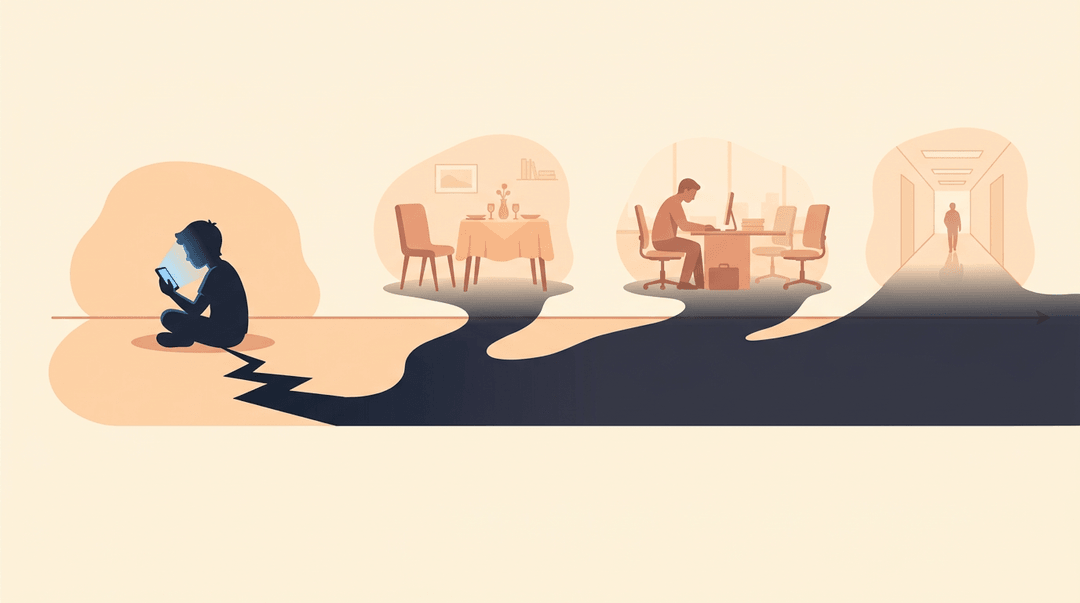
How school and online bullying overlap
Hallway and screen rarely stay separate. Students bullied online are frequently bullied in person too, and the students doing the bullying often show up in both settings as well.
The overlap isn't a coincidence: the same social dynamics, status, exclusion, and group pressure, tend to drive both, which is why a cyberbullying problem is rarely just an online problem.
What Drives Kids to Cyberbully
Cyberbullying doesn't happen in a vacuum. The kids behind it are often wrestling with something of their own, and understanding what drives that behavior helps you step in before the harm spreads.
Why some kids become cyberbullies
- Power and control. Some students bully because it gives them a sense of dominance they don't feel elsewhere.
- Reactive aggression. Others lash out online after feeling hurt, embarrassed, or rejected themselves.
- Peer pressure. Kids join in because a group already is, and standing apart feels riskier than joining in.
- Anonymity. A screen name or fake profile lowers inhibition, making cruelty feel consequence-free.
- Social reinforcement. When a cruel post racks up likes and shares, that attention rewards the behavior and keeps it going.
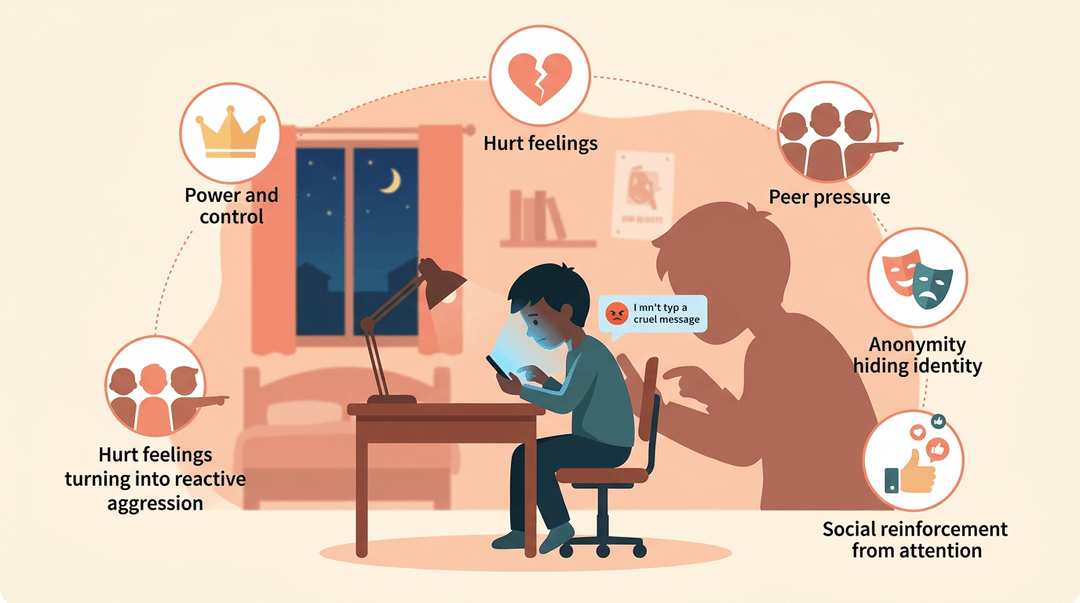
What struggles bullies often face
Kids who bully frequently carry their own weight. Many face relationship difficulties at home or with peers, and plenty feel real shame once the screen goes dark.
Left unaddressed, these patterns tend to follow them: bullying behavior raises the risk of becoming an abusive adult, and cyberbullying increasingly carries real legal consequences as more cases cross into harassment law.
How technology makes cyberbullying easier
Technology didn't invent cruelty, but it strips away most of the friction that used to slow it down.
- More screen time means more hours of peer contact, for better or worse.
- The internet's anonymity lets kids type things they'd never say face-to-face.
- Phones put victims within constant, easy reach.
Together, these factors lower the barrier to bullying: no hallway confrontation needed, just a tap to send.
What Are 10 Ways to Prevent Bullying
Preventing cyberbullying isn't one person's job. It takes parents, schools, counselors, and kids themselves working together, and here's what that looks like in ten steps:
- Keep communication open so kids feel safe telling you what's happening online.
- Monitor online activity and know what platforms your kids actually use.
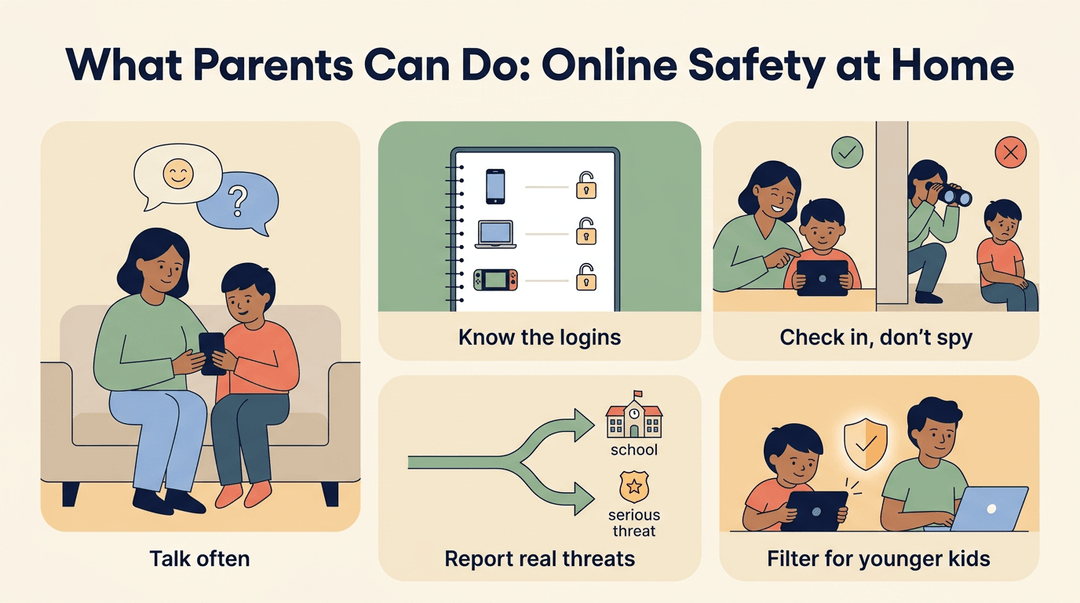
- Know the passwords and devices in your house, not to snoop constantly, but to step in when it matters.
- Report serious incidents to the school or, when there's a real threat, the police.
- Use web filters to cut down on harmful contact and content before it reaches your kid.
- Put a clear anti-bullying policy in place at school, with consequences everyone understands.
- Loop in the counselor early for both the student being targeted and the one doing the bullying.
- Build a simple reporting portal so students can flag what's happening without fear.
- Train students in bystander intervention: a peer stepping in works fast.
- Log every incident in the student's record, watching for behavioral red flags along the way.
What parents can do
Most of this starts at home. Talk with your kids regularly about what's happening online, know their passwords and devices, and keep an eye on their activity without turning it into surveillance.
If something crosses a line, report it to the school or, when it's a genuine threat, to the police. Web filters help too, especially for younger students who aren't ready to navigate everything on their own.
What schools and teachers can do
Schools carry a lot of the weight here. A clear, enforced anti-bullying policy sets the tone, and a counselor should be involved early, not just for the student being bullied, but also for the one doing the bullying.
Reporting portals and bystander intervention training give students real tools to act. Mental health programs matter too.
One habit other guides skip: logging incidents in student records and watching for behavioral red flags, things like a sudden drop in attendance, a slide in grades, or a usually talkative student going quiet.
How counselors and therapists can help
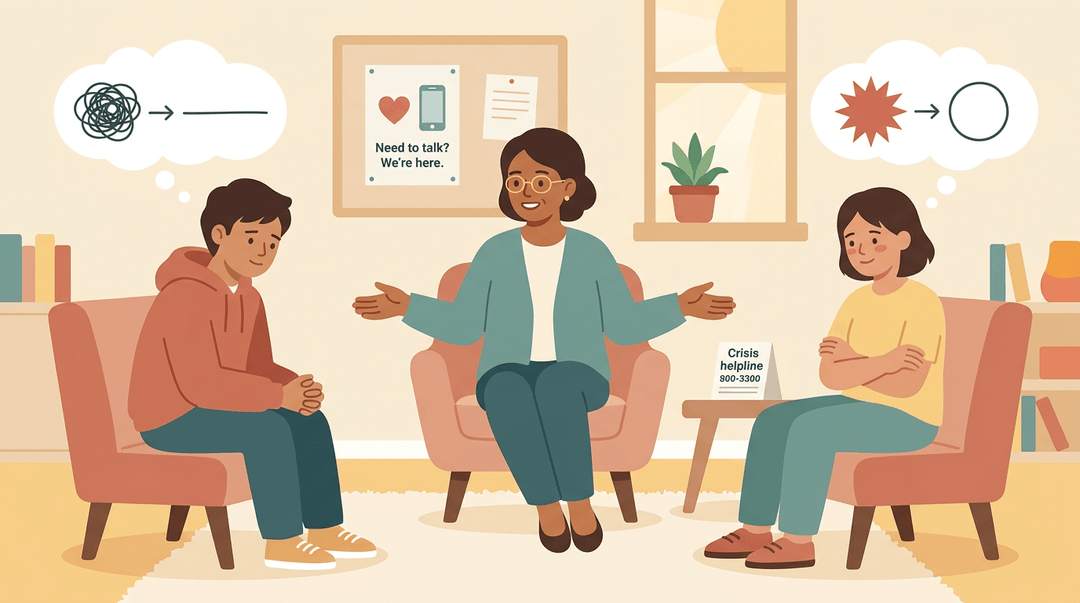
Counselors and therapists work with both sides: the student who's been targeted and the student doing the targeting. Cognitive behavioral therapy (CBT) helps kids reframe harmful thought patterns on either end of that dynamic.
Just as important is making sure every student knows where crisis resources are and feels safe disclosing what's going on before it escalates.
Teaching kids to stay safe online
A few habits go a long way: never share passwords, block bullies right away, and never join in, even as a bystander forwarding a screenshot.
Kids also need to understand that participating in cyberbullying carries real consequences, at school and sometimes legally.
Why bystanders matter in stopping it
Bystanders can stop bullying faster than any adult policy. When a peer steps in, incidents often end within seconds, long before a teacher or counselor even hears about it.
What the Law Says About Cyberbullying
When a cyberbullying incident lands on your desk, "is this even illegal?" is often the first question that crosses a teacher's mind. The honest answer: it depends on where you teach, and what you do next matters just as much as the law itself.
How states handle cyberbullying laws
Every state has stepped in with some kind of anti-bullying law, though the requirements aren't uniform, according to Secure Children's Network. Some states stop at school policy; others go further and make it a crime.
North Carolina is one example: its cyber-bullying of young person statute makes it a criminal offense to use a computer or electronic device to intimidate or torment a minor, as State Regs Today reports.
Here's where enforcement gets tricky: cyberbullying often hides behind anonymous accounts, burner numbers, or fake profiles, and tracing a screenshot back to a real student can stall even a willing investigation.
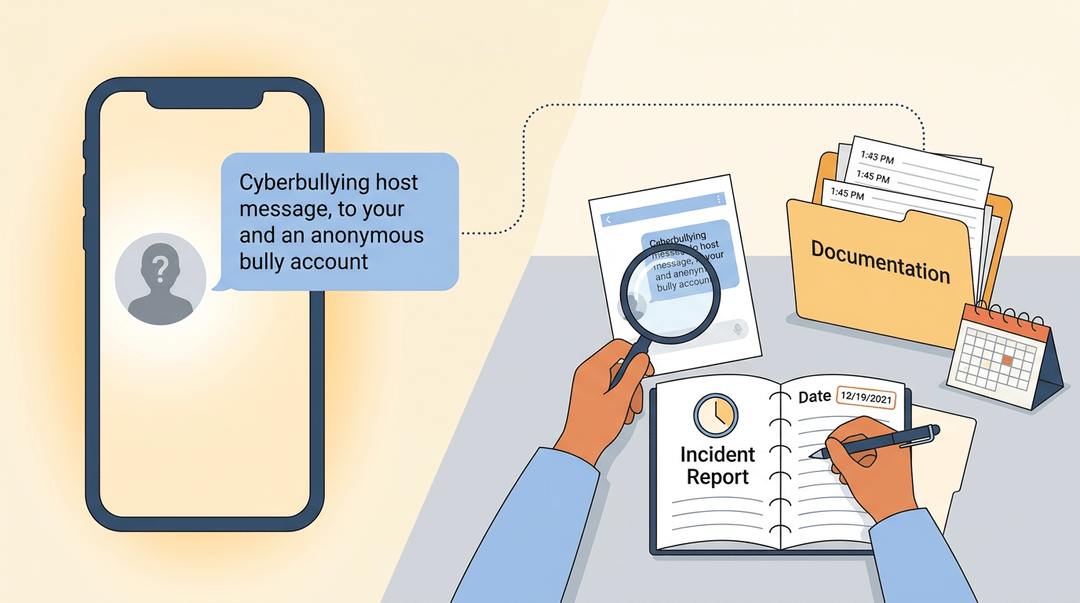
That's exactly why your documentation duty matters. Know your state's reporting mandates before an incident happens, not during one. Save screenshots with timestamps, log who was involved, and report through your school's official channel right away.
A clear paper trail won't just satisfy legal requirements. It gives administrators, and sometimes law enforcement, something concrete to work with once the anonymity wears off.
Cyberbullying rarely announces itself. It shows up quietly: in a dip in grades, a shift in mood, a student who suddenly dreads Mondays. Knowing the warning signs, the prevalence data, and what the law expects of schools gives you a real head start.
The earlier you notice a pattern, the sooner you can step in. Ready to catch those patterns before they escalate? Check out our Attendance Tracking feature to mark attendance quickly and spot concerning trends across your classes over time.
References
- Study of the Relationship Between Cyberbullying and Mental Health in Adolescents—A Systematic Review — mdpi.com (2026)
- Gender Differences in Image-Based Sexual Abuse and Cyberbullying Victimization | International Journal of Bullying Prevention — link.springer.com (2025)
- Sociodemographic and psychological characteristics of school shooters in the United States: a systematic review of the literature — exa.ai (2026)
- One in six school-aged children experiences cyberbullying, finds new WHO/Europe study — who.int
- Friendship Quality and Gender Differences in Association With Cyberbullying Involvement and Psychological Well-Being — pmc.ncbi.nlm.nih.gov
- Current perspectives: the impact of cyberbullying on adolescent health — pmc.ncbi.nlm.nih.gov
- Bullying Victimization and Unprotected Sex Among School-Going Adolescents in Argentina: Moderating Role of Parental Emotional Support — pmc.ncbi.nlm.nih.gov
- Cyberbullying and eating disorder symptoms in US early adolescents. — psycnet.apa.org
- After the Bell and into the Night: The Link Between Delinquency and Traditional, Cyber-, and Dual-Bullying Victimization — nij.ojp.gov
- 2025 Cyberbullying Data — cyberbullying.org (2025)
- Social Media Bullying Statistics And Their Impact (2026) | #childpredator | #kidsaftey | #childsaftey — nationalcybersecurity.com (2026)
- Self-Harm, Suicidal Behaviours, and Cyberbullying in Children and Young People: Systematic Review — oxfordhealth.nhs.uk (2025)
- Cyberbullying Laws by State: What Parents Should Know in 2026 - — securechildrensnetwork.org (2026)
- Cyberbullying Laws And Penalties in North Carolina (2026) — stateregstoday.com (2026)
- Global Cyberbullying Statistics: A Worldwide Data Report — internetsafetystatistics.com (2025)
- 2023 Cyberbullying Data — cyberbullying.org
- More than a third of young people in 30 countries report being a victim of online bullying — unicef.org
- One in five school-aged children in England experience cyberbullying — medicalxpress.com
- Teens' Experiences on TikTok, Instagram and Snapchat — pewresearch.org
- Cyberbullying of environmental activists on social media — pandasecurity.com
- Cyberbullying Research Center — cyberbullying.org
Frequently asked questions
What are 10 ways to prevent bullying?
1. Ten ways to prevent bullying are: keep communication open, monitor online activity, know the passwords and devices children use, report serious incidents, use web filters, enforce a clear school anti-bullying policy, involve counselors early, provide an anonymous reporting portal, teach bystander intervention, and document incidents while watching for warning signs. These steps work best when parents, schools, counselors, and students act together.
What are some common platforms where cyberbullying occurs?
2. Cyberbullying commonly occurs on social media, text messages, group chats, gaming platforms, and video-sharing sites. Frequently reported platforms include YouTube, Snapchat, Instagram, Facebook, and messaging apps.
How many people are affected by cyberbullying?
3. Estimates vary by survey and timeframe. About 26% to 34% of teens report experiencing cyberbullying in the past year, while roughly 43% to 58% report experiencing it at some point in their lives. Globally, the World Health Organization reports that about one in six school-aged children experiences cyberbullying.
Which country has the highest rate of cyberbullying?
4. There is no single reliable answer because rates vary by country, age group, survey wording, and year. International comparisons do not consistently identify one country as having the highest rate, so a broad global figure, such as one in six children, is more dependable than ranking countries.