Teacher Burnout Explained and How to Recover From It

Jump to section
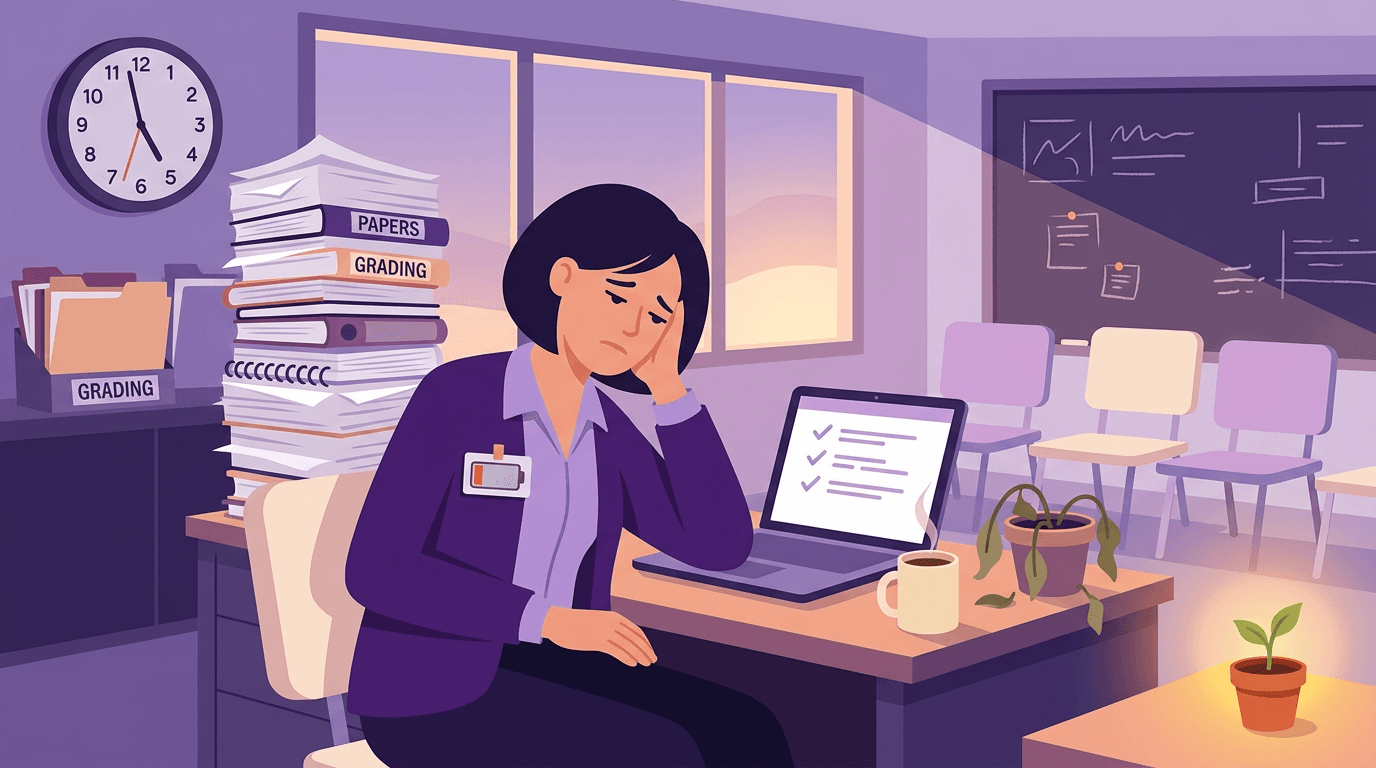
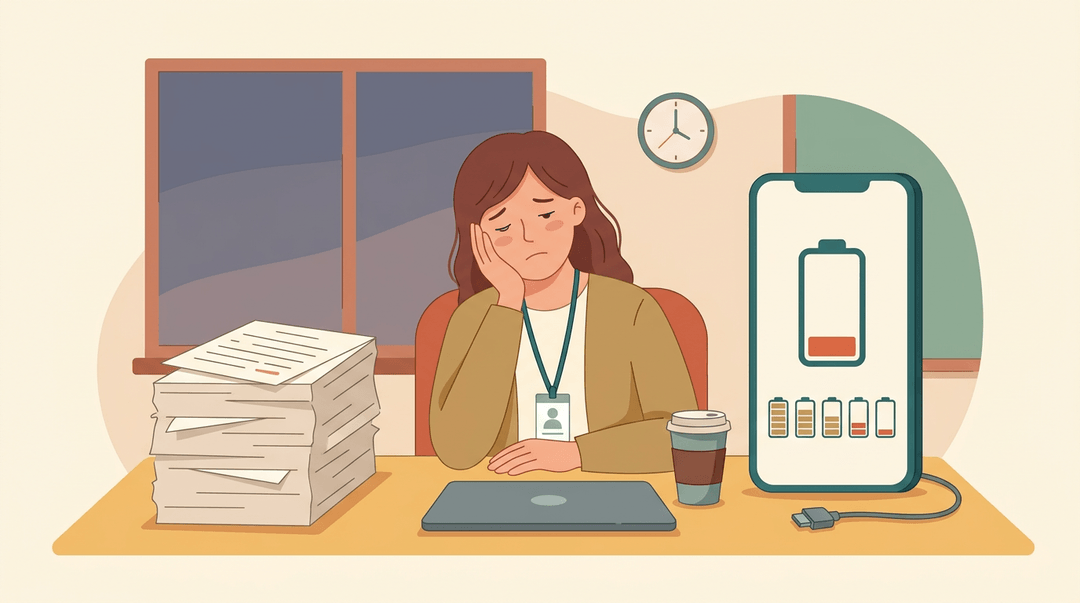
Picture a phone battery that never fully charges. It still works, but each day it holds a little less, until one morning it won't turn on. Many teachers know that feeling.
That slow drain is what teacher burnout looks like: chronic exhaustion that builds when the demands of teaching keep outpacing the time, energy, and support you have.
We'll cover what burnout is, how to spot it, what drives it, and what it costs, then move to fixes you can start this week, from your own habits to school-level change.
How Common Teacher Burnout Really Is
Burnout is more common than many teachers assume. Here's what we mean by the term, how widely it's reported, and whether the word gets the story right.
What burnout actually means
Burnout is chronic workplace stress that leaves you with physical and mental exhaustion and a growing detachment from your work. It develops slowly over time, usually through accumulation rather than one bad day.
Think of a fourth-grade teacher who answers parent emails at 10 p.m. and still dreads Mondays. Nothing dramatic happens, just a steady pile-up. By spring, she's counting days until summer and wondering why teaching no longer feels like hers.

How many teachers feel burned out
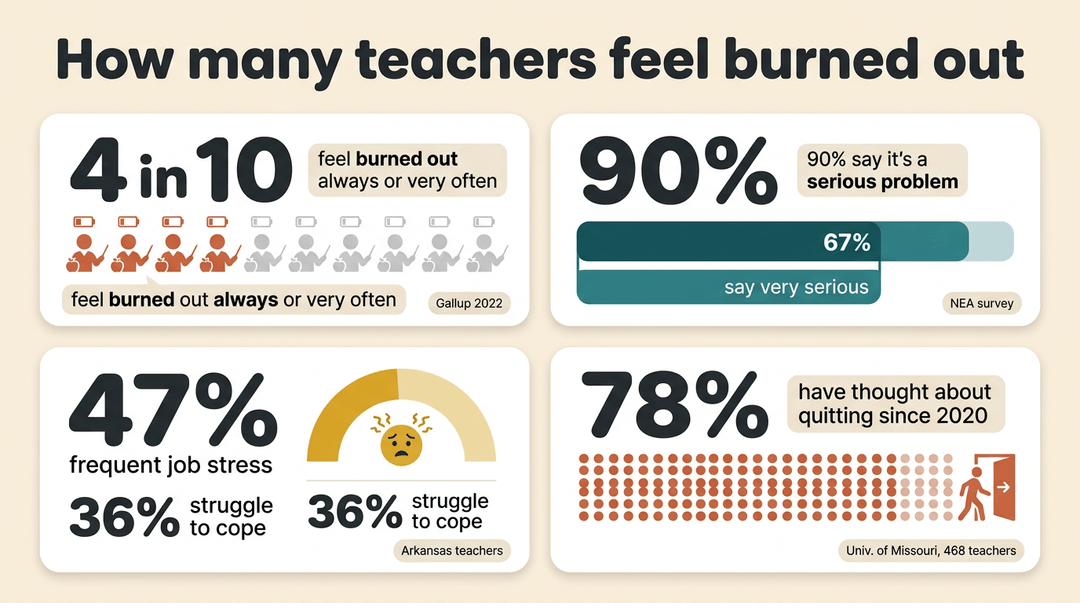
- Highest of any profession. According to a June 2022 Gallup poll reported by CNBC, more than four in 10 teachers in kindergarten through 12th grade feel burned out "always" or "very often."
- A serious problem. In a National Education Association (NEA) survey, 90% of members say burnout is a serious problem, and 67% call it very serious.
- Nearly half report frequent stress. A survey of Arkansas teachers found that 47% experience frequent job-related stress, and 36% say they have difficulty coping with it.
- Most have considered quitting. University of Missouri researchers surveyed 468 teachers and found that 78% have thought about quitting since the 2020 pandemic.
Whether burnout is the right word
Burnout suggests you've run out of energy. Demoralization is different: it's losing faith that your efforts matter.
The word can also suggest personal weakness, as if the fix is simply to cope better. A systemic view asks a sharper question: what about the workload, staffing, and expectations is wearing teachers down?
Tutors, online instructors, and homeschool parents face versions of this pressure too.
Signs a Teacher Is Burning Out
Burnout rarely arrives all at once. The signs usually show up in your body, your planning, and your interactions first.
Physical and emotional changes to notice
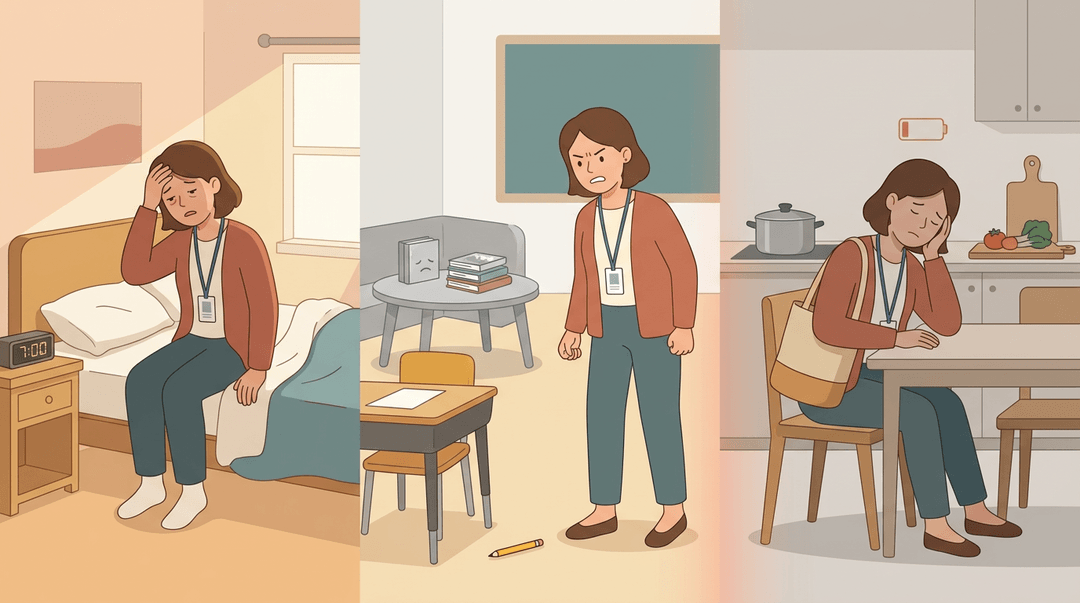
Chronic fatigue is often the first signal: you're tired even after a full night's sleep. Sleep and appetite may shift too, and frustration or sadness come more easily.
Many teachers feel less capable than tired, with morale and self-esteem dipping together.
Consider a fourth-grade teacher who used to love reading groups. Now she dreads the first bell, snaps over a dropped pencil, and goes home too drained to cook dinner.
How burnout hurts focus and planning
Burnout also drains mental bandwidth. You reread the same email three times or forget why you walked into the copy room. That drop in productivity often comes with reduced efficacy: lessons feel flatter and harder to deliver.
Lesson planning and records slip next, with attendance entries going missing and parent emails sitting unanswered. Watch for a growing planning backlog of unplanned lessons and ungraded work. Treat it as a signal, not a character flaw.
How burnout changes your behavior
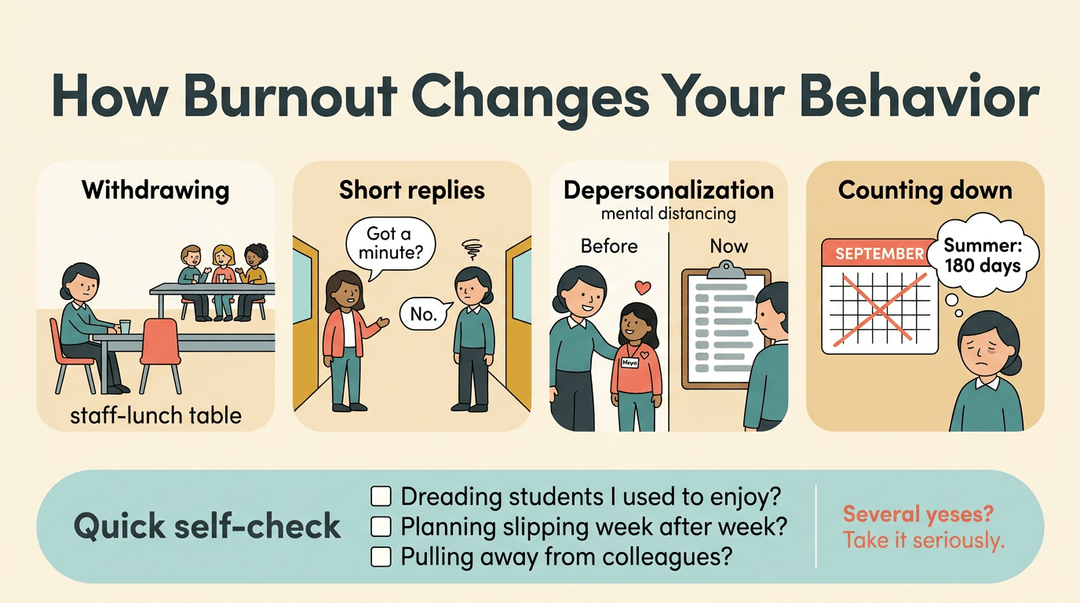
Behavior shifts often follow. You might skip the staff lunch or stop chatting in the hallway, and irritability shows up as short replies to colleagues.
Students may become names on a roster rather than people you know, which is depersonalization: mental distancing. Job dissatisfaction sets in when you start counting down to summer in September.
Ask yourself a few honest questions: Are you dreading students you used to enjoy? Is your planning slipping week after week? Several yeses are worth taking seriously.
What Pushes Teachers Toward Burnout
Burnout is less about caring too little and more about carrying too much. Knowing which pressures weigh on you is the first step toward easing them.
Heavy workloads and difficult conditions
The strain often starts with the job itself:
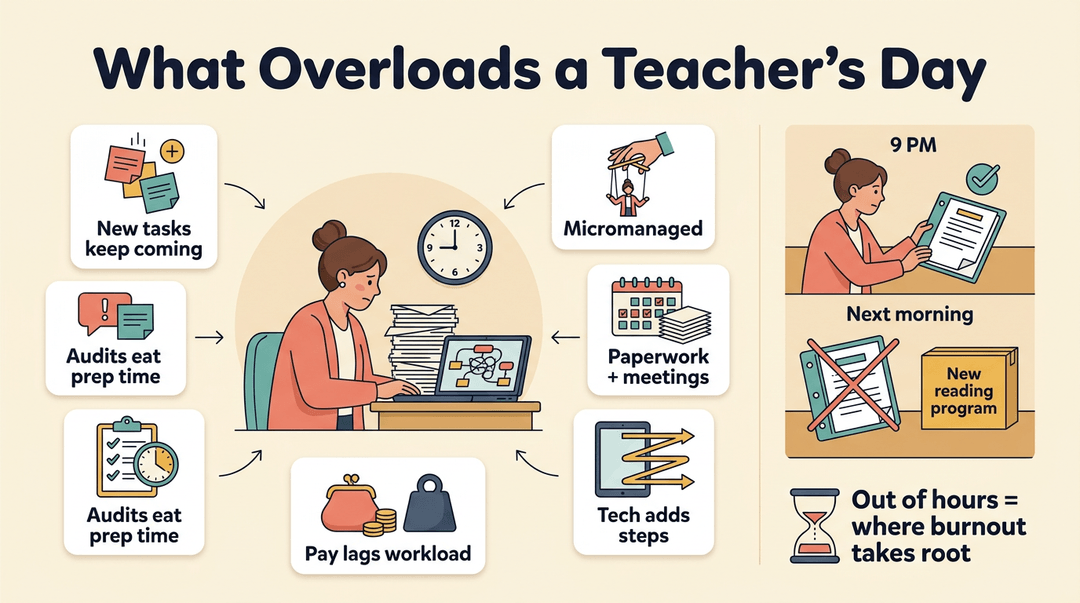
- Constant added tasks. New duties keep arriving.
- Micromanagement. Close oversight limits your professional judgment.
- Paperwork and meetings. They crowd out planning time.
- Ineffective new technology. Some tools add steps instead of saving time.
- Insufficient pay. Wages can lag behind the workload.
- Audit tasks that eat prep time. Compliance checks eat into the time you need to prepare.
Consider a fourth-grade teacher who finishes her lesson plans at 9 p.m., only to learn a new reading program replaces them the next morning. She's simply out of hours, and that gap is where burnout takes root.
How student behavior drains teachers
Post-pandemic behavior challenges can make even simple lessons harder to run. Cellphone distractions pull attention away from the lesson, and negative perceptions of students can creep in when every day feels like damage control.
Picture a middle school science teacher who collects phones before every lab. Those minutes add up, and they're minutes she can't get back for teaching.
Feeling unsupported and disrespected
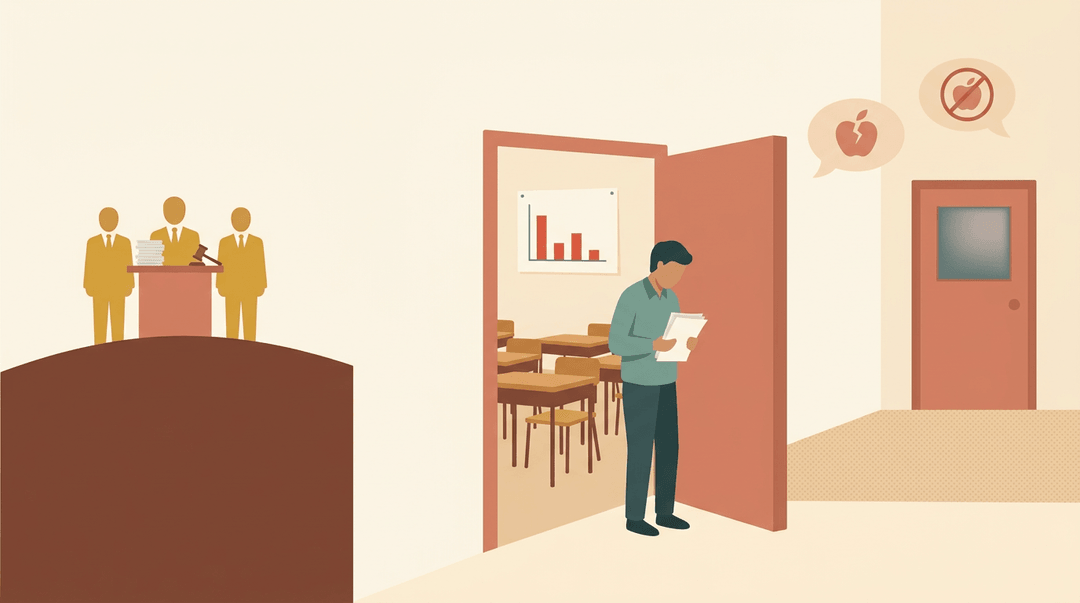
Burnout deepens when we feel alone with a problem. Limited administrative support can leave you handling tough situations with little backup.
Decisions made by politicians can feel distant from classrooms, and an anti-public-education climate can make the work feel undervalued. Then there's the blame for test scores, even though results reflect far more than one classroom.
How low confidence raises burnout risk
Low self-efficacy, or doubt in your ability to reach students, makes every hard day feel heavier. Newer teachers are more vulnerable to burnout than experienced ones.
A study from researchers at Michigan State University and the University of Virginia, reported by Safety and Health Magazine, suggests less-experienced teachers are more likely to burn out when their co-workers feel the same way.
According to the Edna Bennett Pierce Prevention Research Center, special education teachers are at heightened risk for stress and burnout, which negatively impacts their effectiveness and well-being.
A Practical Plan to Reset Your Workload
This plan helps you cut your workload without waiting for a policy change. You'll work in four moves: see, trim, protect, and check. Start the first one this week.
Move 1: see where your week goes
You can't trim what you can't see. For five school days, keep a running log on a sticky note or in a notes app.
- Log every task for five days
- Write the task and rough minutes, nothing fancier.
- Mark each task must-do or optional
- Must-do means something breaks if you skip it, like report cards.
- Circle your three biggest time drains
- These are the rows with the most minutes and the fewest "must-dos."
Your log might look like this:
| Task | Minutes | Must-do or optional |
|---|---|---|
| Grade the Friday quiz | 45 | Must-do |
| Rebuild slides from scratch | 60 | Optional |
| Check email (all day, in bits) | 70 | Mixed |
Move 2: Batch and drop
Switching between tasks costs you energy. Group the small stuff so you do it once, on purpose.
- Batch grading and email. Pick two email windows (say, before first bell and after dismissal), and grade in one block, not in scraps.
- Reuse what you already have. Pull last year's slides, handouts, or quizzes and tweak them before you build anything new.
- Drop one low-value task. Choose one optional row from your log and stop doing it.
💡 Tip: Drop only one task at first. A single clean cut you actually keep beats a long list of cuts you abandon by Thursday.
Move 3: Guard your evenings and weekends
Boundaries hold better when they're specific. Vague promises like "work less" tend to dissolve. Put each one on the calendar.
| Boundary | What it looks like |
|---|---|
| Daily stop time | Laptop closes at 5:00, and unfinished items go on tomorrow's list |
| One protected evening | Wednesday: no grading, no email, no planning |
| Work-free weekends | Bag stays in the car or closet until Monday |
If a boundary slips once, that's fine. Pick it back up the next day.
Move 4: check your burnout level every week
Take two minutes each Friday to see how you're doing. Copy this and fill it in:
Energy (1 to 5): 2 Mood (1 to 5): 3 Warning signs this week: Dreading Monday, snapping at students, skipping lunch One adjustment for next week: Move grading to a single Thursday block
Rate energy and mood first, then note any warning signs, then choose one change. If your numbers stay low for several weeks, that's a signal to talk to someone you trust, not a signal to try harder.
At a glance:
| Move | Key action | What you get |
|---|---|---|
| See | Log five days, mark must-do | A clear picture of your drains |
| Trim | Batch, reuse, drop one task | Fewer scattered hours |
| Protect | Stop time, one evening, weekends | Real recovery time |
| Check | Weekly rating and one tweak | Early warning, steady adjustments |
Draft lessons faster with EMStudio's AI Lesson Editor and reclaim planning time.
What Burnout Costs Schools and Students
So who really pays when teachers burn out? Everyone in the building, including you.
How burnout strains school staffing
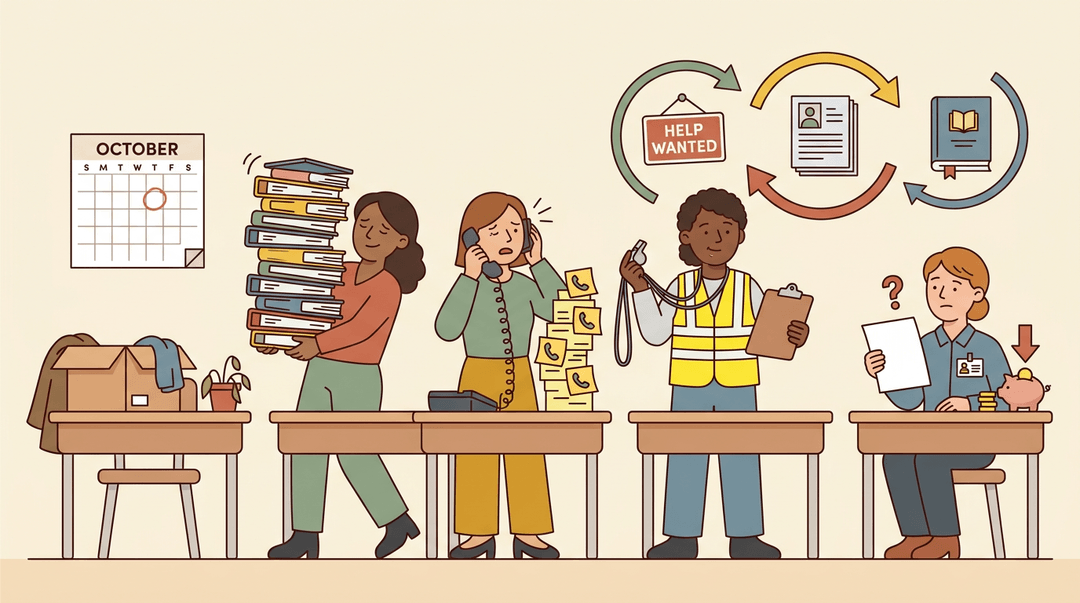
When a teacher burns out, the first cost is often turnover, and schools already facing teacher shortages can feel it most. The school must recruit and train a replacement while colleagues pick up the slack.
Picture a fourth-grade team that loses a teammate in October. The rest absorb her reading groups, hall duty, and parent calls.
Burnout also shows up as absenteeism, and each absence means a substitute, a lesson left behind, and a disrupted routine. All of it costs money, so schools absorb the bill for recruiting, training, and substitutes.
How burnout affects students and equity
Students feel it too. A systematic review from York St John's research archive found some evidence linking burnout to lower student performance and weaker motivation, but little evidence it affects student wellbeing.
Student behavior can shift, too, since a depleted teacher has less energy for routines and redirection.
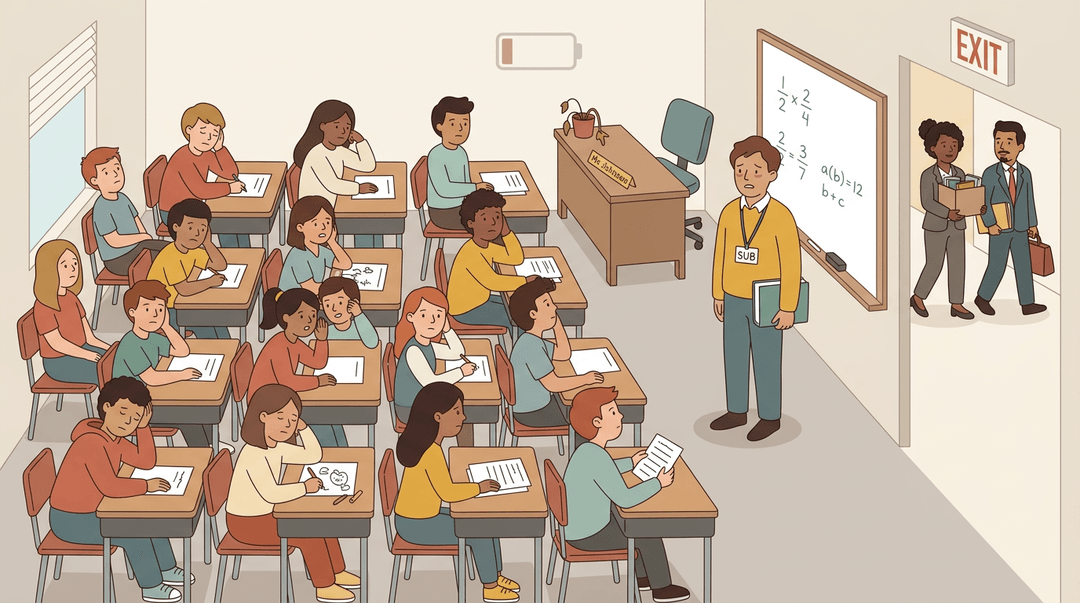
When posts go unfilled, classes may go to uncertified staff or grow larger. Picture a crowded seventh-grade math room run by a long-term substitute who isn't yet certified.
Burnout can contribute to inequities affecting Black and Hispanic educators. A WTAE news report on turnover among educators of color describes a disproportionately high number of Black and Hispanic teachers leaving the profession.
The mental health toll on teachers
The toll is personal, too. Long stretches of stress can bring anxiety and depression, and those feelings don't stay at the school door. Think of a veteran teacher who dreads Sunday nights.
Burnout is less a private struggle than a public health challenge. Everyone pays a share.
What Teachers Can Do on Their Own
You can start protecting your energy today. It's less about eliminating stress and more about managing it.
Simple ways to manage stress
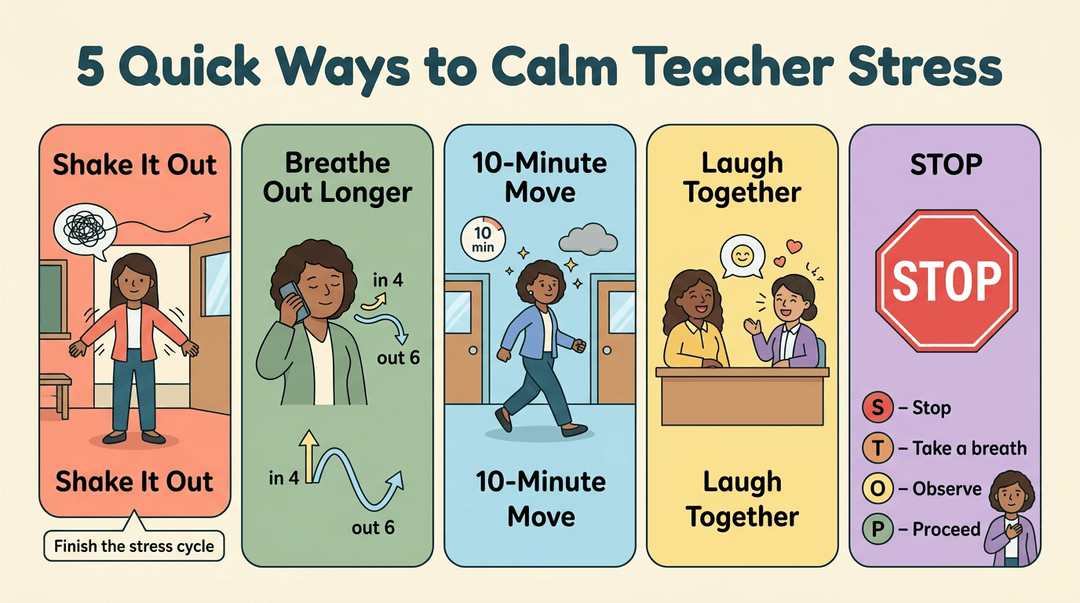
- Complete stress cycle. Move your body after a rough class to help finish the stress response.
- Deep breathing. Inhale slowly, then exhale longer, even before a tough parent call.
- Physical activity. Even ten minutes of movement between classes resets your mind.
- Laughter. Share a joke with a colleague or let a funny classroom moment land.
- STOP technique. Stop, take a breath, observe what you're feeling, then proceed.
Daily habits that protect your health
- Sleep hygiene. The routines that support rest, like a steady bedtime and screens put away early.
- Nutrition and exercise. Keep easy snacks in your desk and pick movement you'll repeat.
- Mindfulness and meditation. Take two minutes in your car to notice your breath.
- Prioritize personal needs. Calendar your own meals and appointments like parent conferences.
Setting limits and keeping perspective
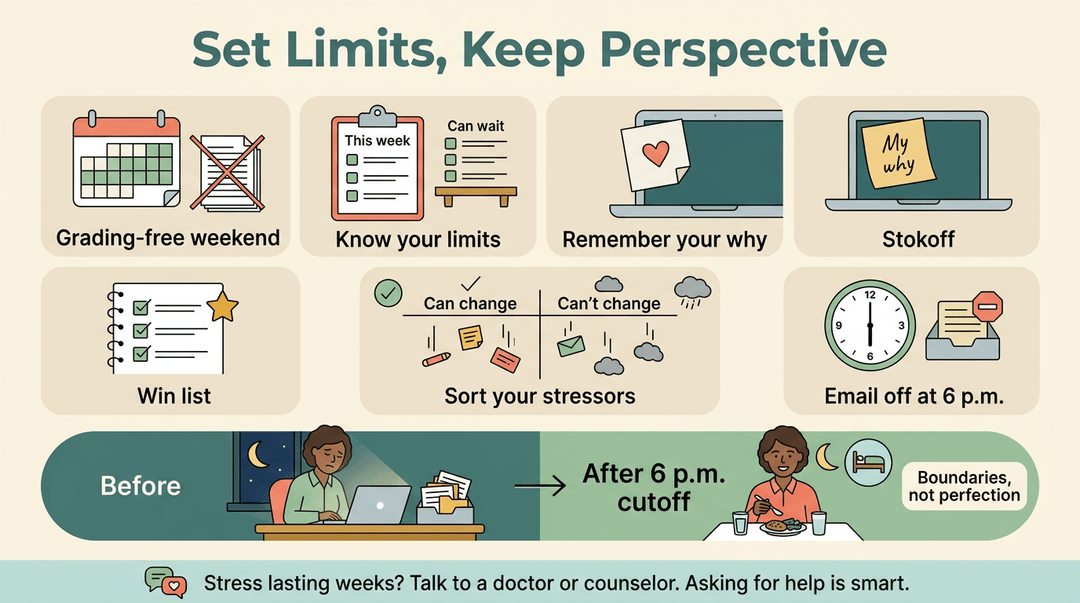
- Intentional time off. Schedule real breaks, like a grading-free weekend.
- Know your limits. Decide what you can handle this week and let the rest wait.
- Remember your why. Keep your reason for teaching where you'll see it.
- Recognize accomplishments. Keep a running list of wins, big and small.
- Identify stressors. List what drains you, then sort it into what you can and can't change.
- Set email and grading cutoffs. Pick an end time, such as 6 p.m., and stick to it.
Think of a first-year teacher who sets a 6 p.m. email cutoff. Their evenings go back to dinner and sleep, not an inbox. The aim is boundaries rather than perfection.
If stress lingers for weeks, reach out to a doctor or counselor. Asking for help is a smart move.
What Schools and Leaders Can Change
Individual habits help, but they can't fix a system that piles on work. Schools and leaders control the conditions that keep teachers going, so start there.
Easing workload and managing time
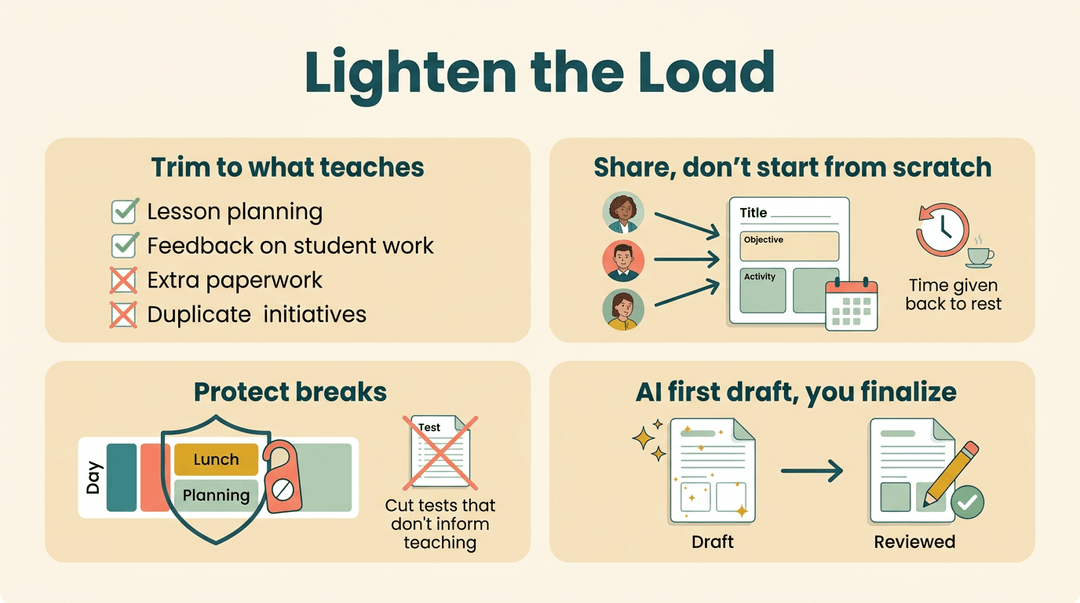
Start by having teachers prioritize essential tasks: if a job doesn't directly support learning, trim it. Set realistic expectations, since stacked initiatives weigh everyone down.
Give teachers digital planning tools like shared calendars and reusable templates. Picture a fifth-grade teacher whose grade team shares one lesson template. Adapting it beats building from scratch, and that time goes back to rest.
Schedule breaks during the day so lunch and planning aren't routinely interrupted. Reduce testing emphasis by cutting assessments that don't inform instruction.
And artificial intelligence (AI) drafting tools can speed lesson prep by producing a first version of a worksheet that you review and adapt.
Building peer and mentor support
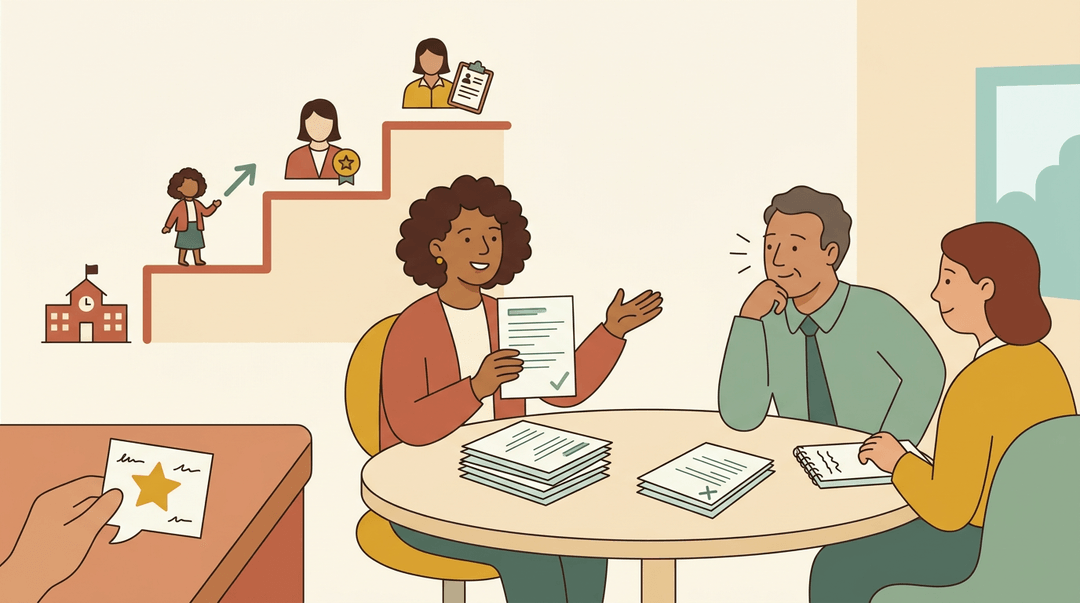
Peer support can look like shared planning, co-teaching, or grade-level teams, so no one solves every problem alone. Pair every new teacher with a mentor who can answer the small questions that feel huge in September.
Support should feel like help rather than judgment.
Build an open communication culture where saying you're struggling counts as strength. Extend Social-Emotional Learning (SEL) programs to staff too. Connection isn't a perk. It's protection.
Giving teachers more growth and control
Work feels heavier when someone else decides how you do it, so ask for teacher input on learning decisions. Offer career advancement paths, like lead teacher or instructional coach roles, so experienced educators can grow without leaving teaching.
Give teachers more curriculum say. A seventh-grade math teacher who helps choose supplemental materials knows which practice sets work for their students, so they keep those and drop the rest. Recognize effort specifically and soon after it happens.
Vague thanks fades fast. Specific recognition sticks.
Backing staff who are burned out
Make sure there's no retaliation for reporting workload or wellbeing concerns. Name a clear contact person, like a counselor or wellness coordinator, so no one has to guess where to turn.
Offer affordable healthcare coverage that includes mental health care. Build cover plans for breaks, such as a reliable substitute or prepared lesson folder, so a needed rest day doesn't leave students behind. Rest should never come with guilt.
Policy Fixes Beyond the Classroom
Personal habits only go so far when your building is short on staff and money.
Funding and policy changes that help
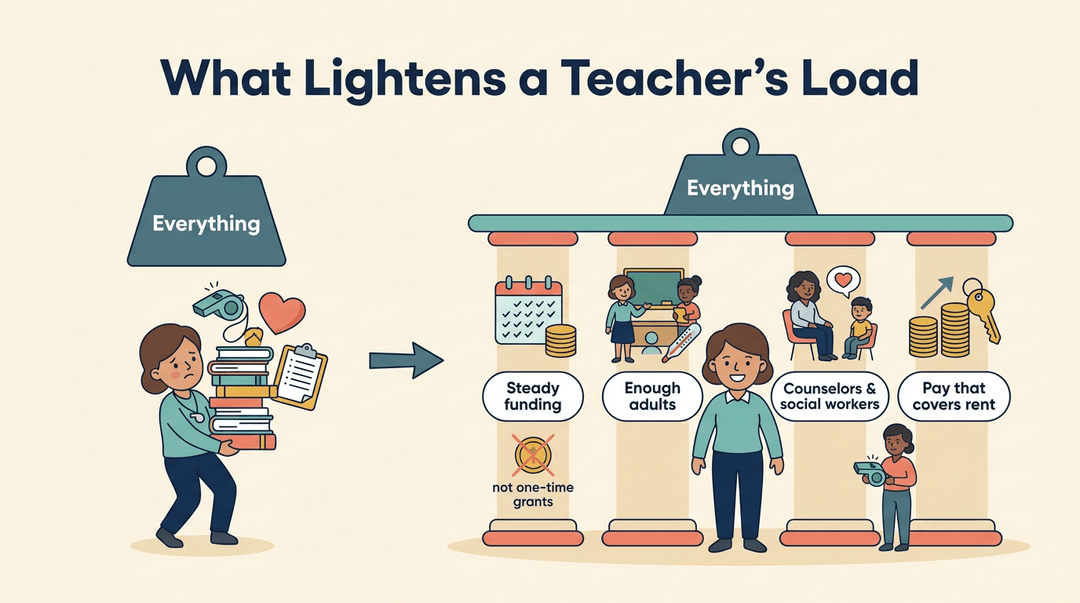
Consider a fourth-grade teacher who covers three recess duties a week because the school can't afford another aide. Long-term school funding keeps that gap from reopening every year.
One-time grants patch problems, but predictable budgets let districts plan ahead.
Adequate staffing means fewer classes stretched across too few adults. Filling open positions, adding support staff, and building in coverage keeps a sick day from landing on a colleague's full schedule.
Behavioral health resources, like counselors and social workers, give students and staff support before a crisis hits. When those roles are funded, teachers aren't the only adults carrying every student's struggles.
Higher salaries reward the work instead of expecting teachers to run on passion alone. Passion won't pay the rent.
Organizing for change through unions
Individual teachers rarely win these fights alone, which is where unions come in.
Union advocacy gives educators a collective voice in state and district debates. Instead of each teacher sending a separate complaint to a board member, a union can bring shared concerns to the table.
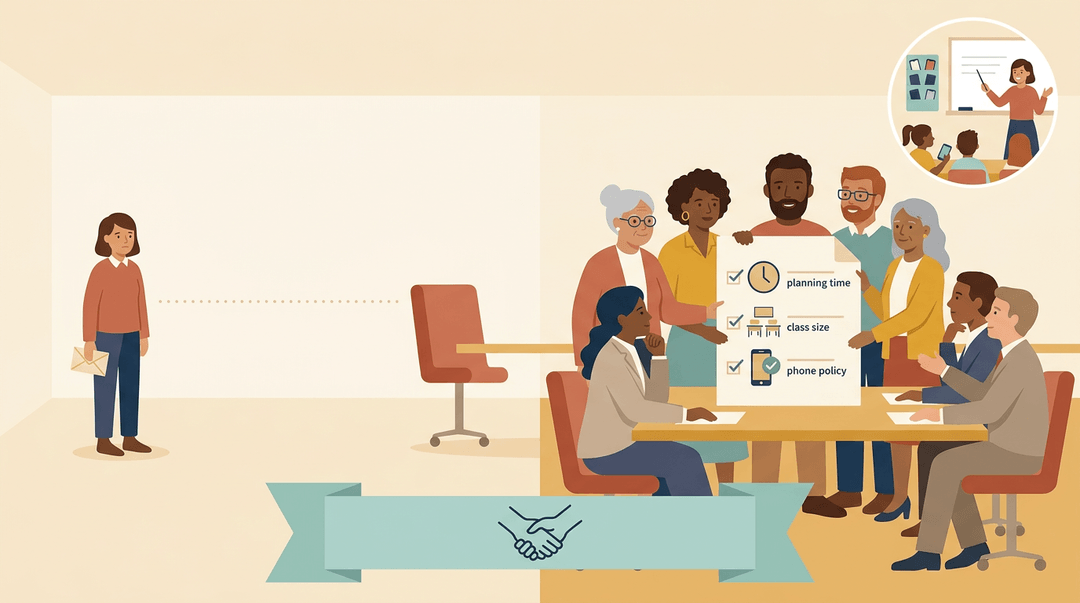
Collective bargaining is how a union and district negotiate contract terms, such as workload, planning time, and class sizes. Collective action changes the system, not just your schedule.
Clear cellphone policies can help too. Think of a high school English teacher who spends the first ten minutes of class chasing down phones. A consistent policy that teachers helped shape hands that time back to instruction.
Unions also push to end high-stakes graduation tests that decide whether a student earns a diploma, arguing they narrow what gets taught. Multiple measures of learning would give you room to teach the whole course.
Teacher burnout is real, but it isn't inevitable. Spotting the warning signs early, protecting your time, and pushing for change at school and beyond can help you stay in the work you care about.
Start small this week. Pick one step from the reset plan and see how much room it creates.
Ready to make lesson planning lighter? Check out the AI Lesson Editor to draft and refine lessons with built-in AI assistance.
References
- New Survey Results Show Arkansas Teachers Report High ... — oep.uark.edu (2026)
- Study reveals why teachers are leaving the classroom in the post-pandemic era — showme.missouri.edu
- Helping special education teachers under stress — prevention.psu.edu
- Does Teacher Burnout Affect Students? A Systematic Review of its Association with Academic Achievement and Student-Reported Outcomes — ray.yorksj.ac.uk
- NEA survey: Massive staff shortages in schools leading to educator burnout; alarming number of educators indicating they plan to leave profession — nea.org
- Teachers are in the midst of a burnout crisis: 'It became intolerable' — cnbc.com
- Burnout may be contagious among newer teachers: study | 2017-07-17 — safetyandhealthmagazine.com
- Burnout, low pay and politics are driving away teachers. Turnover is soaring for educators of color — wtae.com