Whole Brain Teaching Rules Explained: A Complete Guide

Jump to section
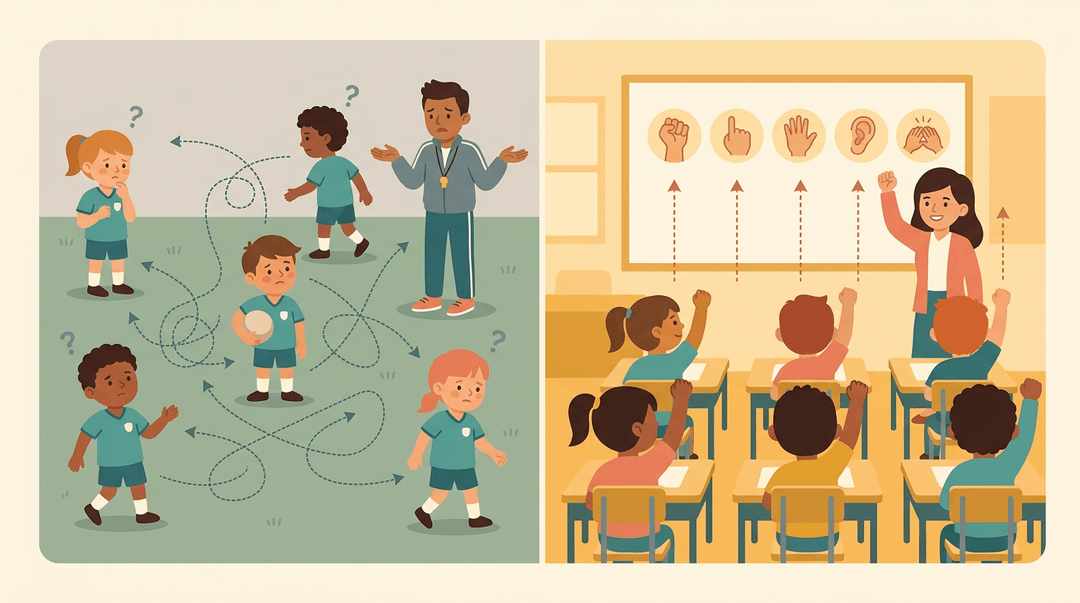
Picture a sports team that has never run a play together. The talent is there, but nobody knows where to go. Many classrooms feel the same way until everyone shares the same routines.
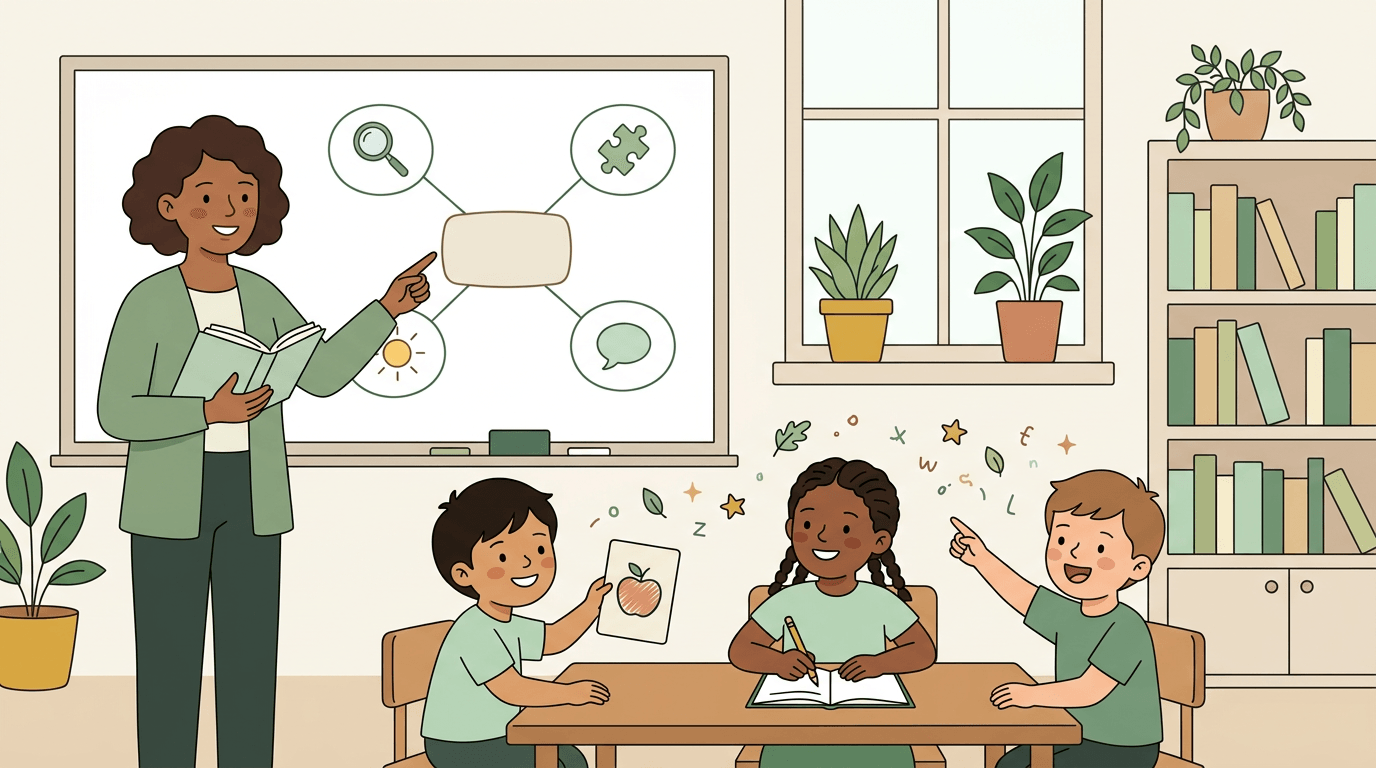
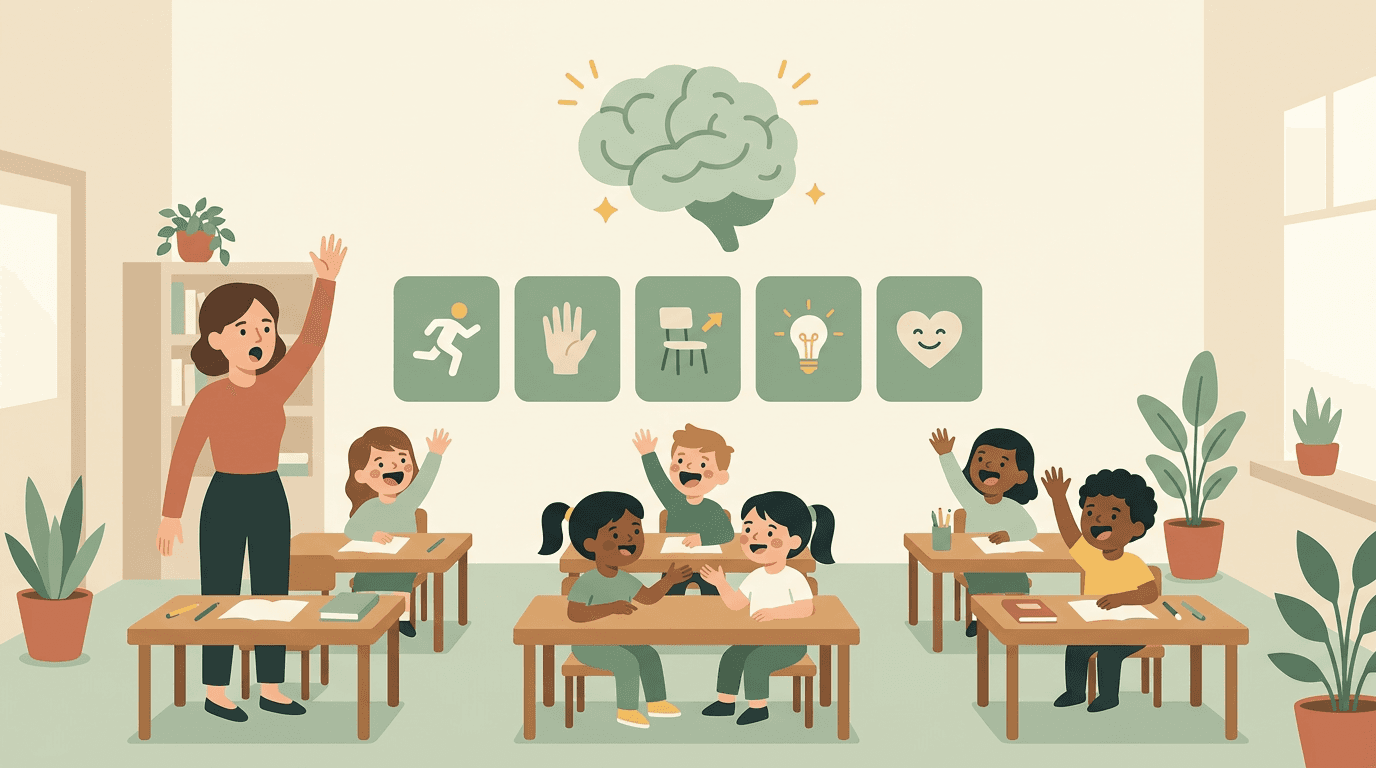
Whole Brain Teaching rules build that shared language with five classroom rules, each paired with a simple gesture students learn to follow.
In this post, we'll explain every rule and gesture, show you how to teach and practice them, and give you a ready-to-run lesson sequence to introduce them.
Whole Brain Teaching Rules for Your Classroom
Whole Brain Teaching builds its classroom management around five rules, each with its own wording and gesture.
The five rules at a glance
The system centers on five core classroom rules. Rules work best when they're practiced, not just posted, so rehearse them daily, multiple times. Think of a fourth-grade teacher who spends two minutes on them each morning.
Soon, a single gesture replaces a full reminder.
The goal is mastery: students who can state each rule and perform its gesture unprompted. Once they get there, the rules can be adopted as school-wide rules.
A common mistake is teaching them once and moving on. Students need that repetition.
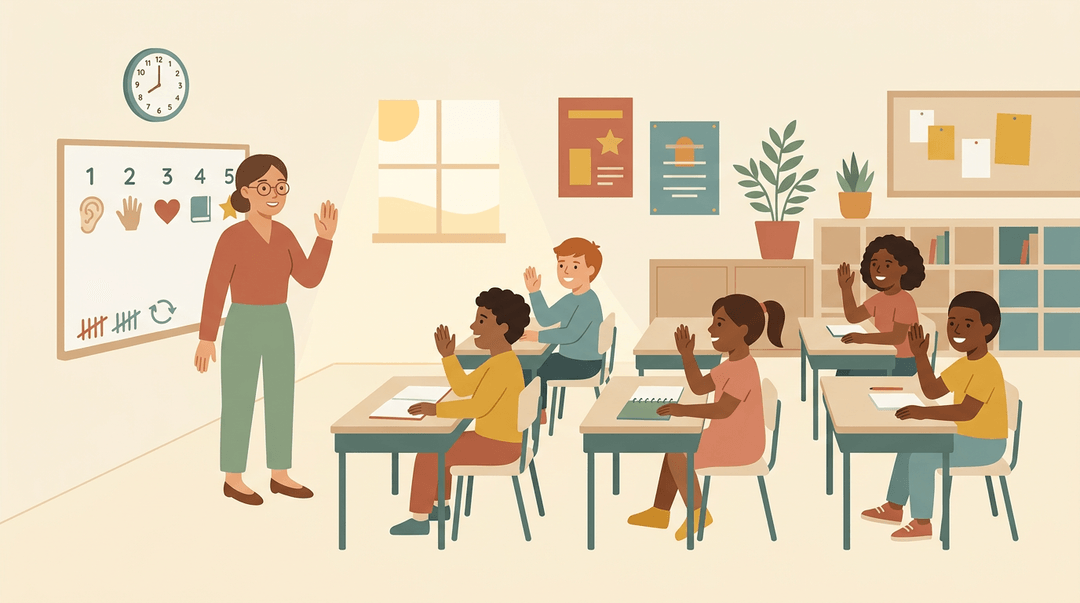
Ways to practice and reinforce the rules
Try these routines:
- Rule Rehearsal. Say each rule and gesture together as a class.
- Rules Callouts. Call out a rule and have students respond with its gesture.
- Right/Wrong Way. Model a rule correctly and incorrectly, and have students spot the difference.
- Three Peat. Repeat a rule three times in a row to build fluency.
- Timer Game. Race the clock to see how fast students can follow a rule.
- Tutoring and homeschool. Scale any routine down to one student or a small group.
Why the rules work with the brain
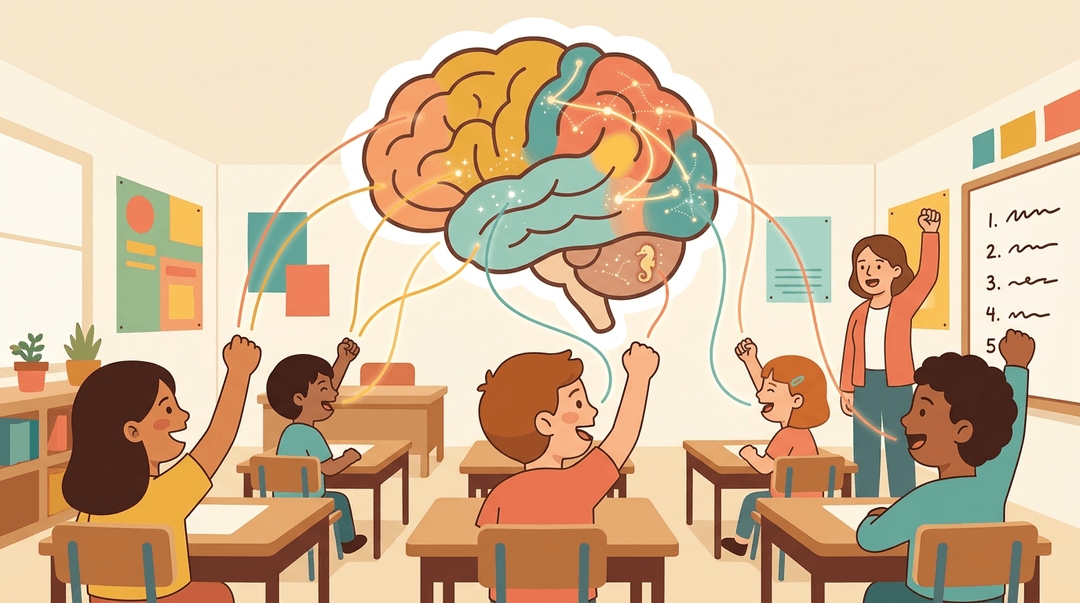
Rules engage many brain areas. Biffle (2013a) notes that when rehearsed and used in class, the five rules involve:
- the prefrontal cortex
- Broca's area
- Wernicke's area
- the limbic system
- hippocampus
- visual cortex
- motor cortex
That's a lot of brain for one gesture.
Repetition builds stable neural connections. Abbott et al. (2021) explain that practice "fortifies connections between nerve cells."
The rules also teach positive behavior patterns, so students practice what good behavior looks like until it becomes their default.
How to Introduce the Five Rules
Use this guide to launch all five rules on day one, adjust the launch for your grade band, and keep the rules alive all year. Each rule gets the same short routine, so you can run it without notes.
Day-one sequence
Run this loop for each rule, one rule at a time.
- Model the rule with its gesture
- Say the rule and do the gesture once, slowly.
- Say: "Watch me first. Then you'll do it with me."
- Run Rule Rehearsal with the class
- Everyone says the rule and does the gesture together.
- Rehearse until the words and motion match across the room.
- Show the Right Way and Wrong Way
- Act out the rule done wrong (exaggerated and funny), then done right.
- Ask: "What did I do wrong that time?"
- Three Peat the tricky rules
- Repeat the rule and gesture three times in a row.
- Save this for rules your class stumbles on, not all five.
Example: A teacher introducing "Follow directions quickly" says "Stand up" and then ambles toward the door (Wrong Way). The class laughs and names the problem. She repeats the direction and snaps to attention (Right Way). Because they spotted the difference themselves, the class remembers it.
Grade-band tweaks
Keep the four-move loop and change who does the work.
| Grade band | Adjust the loop by... |
|---|---|
| K-2 | Short phrases and big, full-arm gestures |
| 3-5 | Students lead the Right/Wrong Way demonstrations |
| 6-12 | Co-create the rule wording with students |
For 6-12, try: "What would this rule sound like in your own words?" Then agree on one version and keep the gesture simple.
Weekly stick checklist
Confirm these each week so the rules don't fade after the launch:
- Rehearse rules each morning. One quick round with gestures, before anything else.
- Praise rule-following specifically. Name the student and the rule.
- Reteach after breaks. Rerun the day-one loop after weekends, holidays, and long breaks.
- Note problem rules in plans. Jot down which rule slipped and plan a Three Peat for it.
✅ "Maya, you followed directions the second I said them." ❌ "Good job, everyone."
The first names the student and the behavior, so others know exactly what to copy. The second praises without teaching anything.
⚠️ Watch out: Rules fade fastest right after a break. Schedule the reteach before the break ends, not after problems appear.
Build and reuse your rules-introduction lesson plans in EMStudio's online lesson planner.
Other Strategies and Lessons Worth Trying
Once the five rules feel familiar, a few extra techniques and lesson formats help you put them to work. Here's where to start.
Techniques you'll use most often
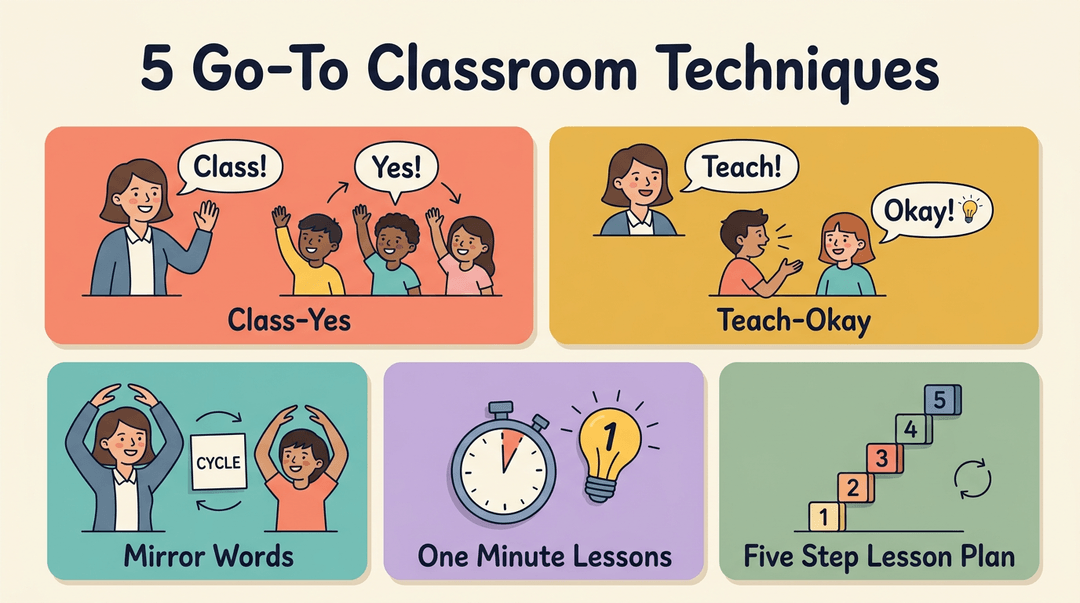
These quick routines fit almost any lesson. Consider a fourth-grade teacher who uses Class-Yes after recess: one call, one response, and the whole room is back with her.
- Class-Yes attention getter: Call “Class!” and have students answer “Yes!” to refocus the room.
- Teach-Okay: Say “Teach,” and students turn to a partner and explain what they just learned.
- Mirror Words: Pair key vocabulary with a gesture so students repeat both the word and the motion.
- One Minute Lessons: Keep direct teaching short and focused on a single idea.
- Five Step Lesson Plan: A repeatable structure that gives every lesson the same skeleton.
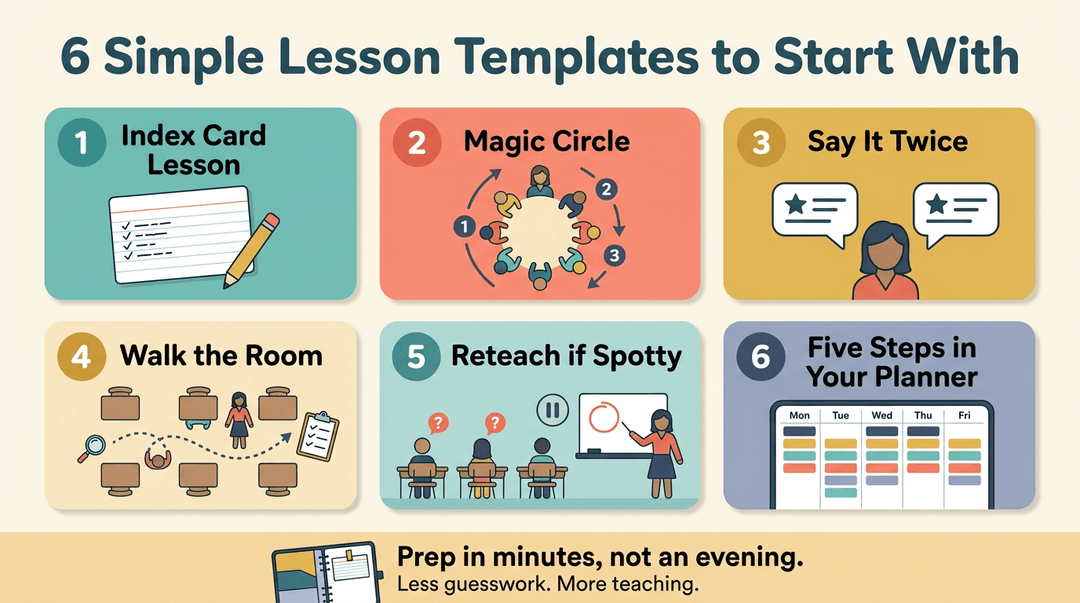
Simple lesson templates to start with
- Index card lesson format: Write each lesson's key steps on one index card you can glance at mid-lesson.
- Magic Circle steps: Run the lesson as a whole-group circle, moving through its steps in order.
- Repeat points twice: Say your most important points twice so they land.
- Walk room checking comprehension: Circulate during work time and check understanding while students work, not after the quiz.
- Reteach if understanding spotty: When your walk reveals gaps, pause and reteach that point before moving on.
- Fit Five Step Lesson Plan into planner: Write the five steps into your weekly planner so every lesson has a built-in outline.
Think of a middle school science teacher who taped her index card inside her planner. Lesson prep now takes minutes, not an evening. Less guesswork. More teaching.
Boosting Motivation, Behavior, and Social Skills
These tools cover three needs: rewarding effort, building social skills, and handling challenging behavior.
Ways to reward effort and progress
Recognition works best when it rewards progress rather than perfection. Picture a fourth-grade teacher whose reluctant reader finally finishes a full page. Naming that growth out loud tells the class that effort gets noticed, and you'll see more of it.
Here's what each one does:
- Super Improver. Celebrates growth, not just top scores.
- Scoreboard. Tracks progress toward a shared class goal.
- Effort chart. Makes persistence visible.
- Class Dojo integration. Pairs these rewards with Class Dojo points.
- Game-like rewards for improvement. Turns progress into a challenge students want to win.

Teaching social skills and good character
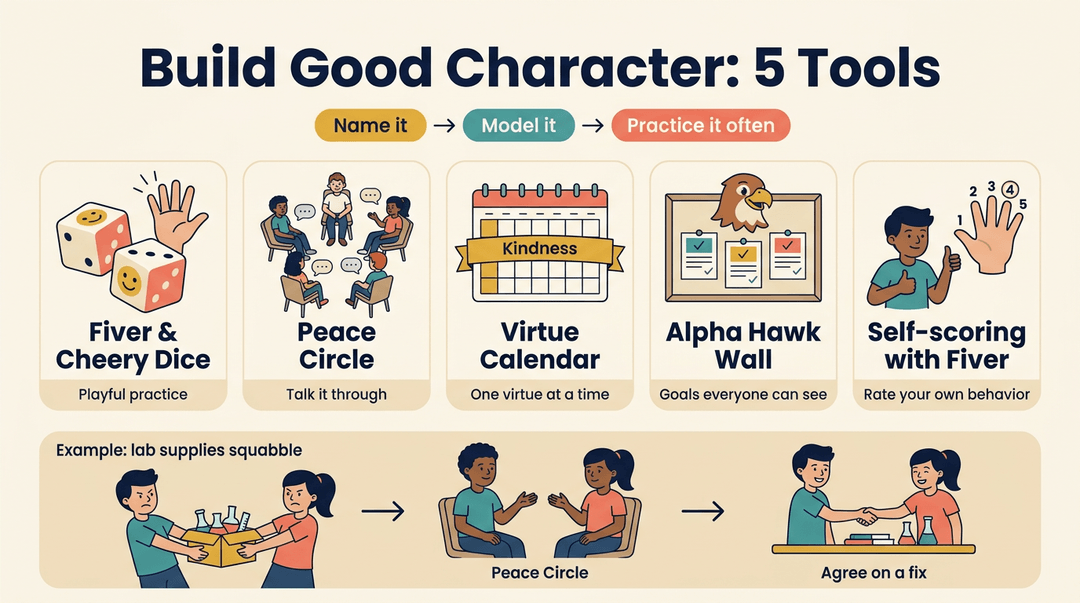
Good character grows like any skill: name it, model it, and practice it often. These five tools make that practice routine:
- Fiver and Cheery Dice. Add playful, repeatable practice.
- Peace Circle. Gives students a structured space to talk through conflicts.
- Virtue Calendar. Spotlights one virtue at a time on a set schedule.
- Alpha Hawk Wall. Keeps social goals visible to everyone.
- Self-scoring with Fiver. Has students rate their own behavior.
Picture a middle school teacher whose class keeps squabbling over lab supplies. A quick Peace Circle gives students a calm place to say what happened and agree on a fix before the next lab.
Handling challenging behavior in class
Challenging moments go better when students already know the plan. Aim to prevent problems rather than just react to them.
- Rascals program. Gives students who struggle with routines structured support.
- Rules and Rascals. Keeps class rules and Rascals expectations consistent.
- Agreement Bridge. Helps you and a student agree on a path forward.
- Open the Door. Offers a respectful way for students to ask for a reset.
Used daily, these tools replace guesswork with a shared plan. Consistency wins.
Materials and Training for the Rules
Before you teach the rules of Whole Brain Teaching (WBT), you'll want the right materials and some support in your corner.
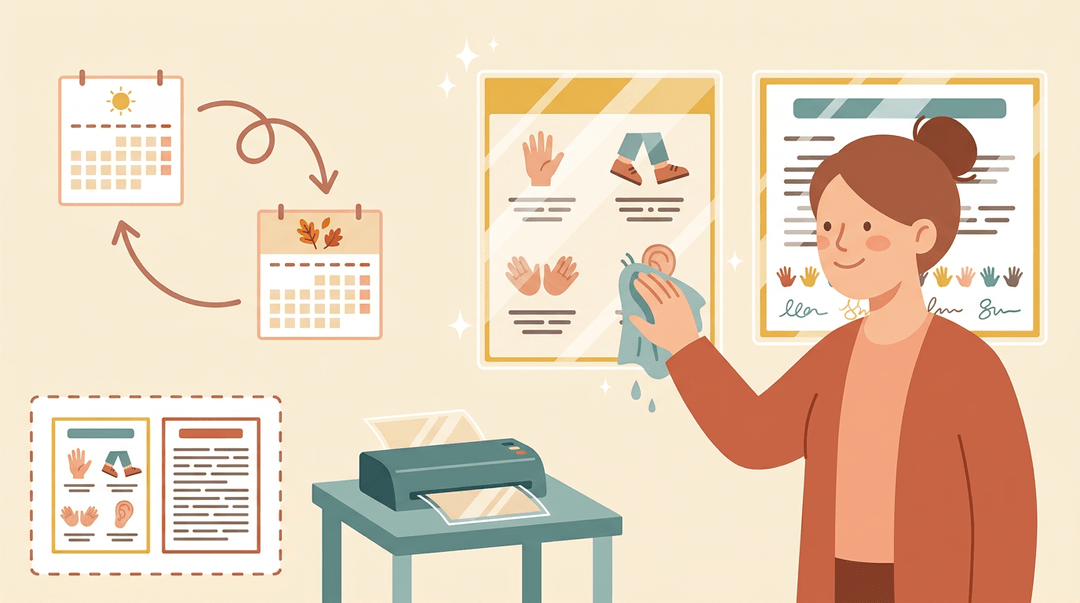
Printable posters you can laminate and edit
There are free rules posters on Teachers Pay Teachers (TpT), so you don't need to spend a dime to start. Pair them with a student agreement poster so the class can see what it committed to.
Consider a second-grade teacher who laminates one set in August. Each fall, she wipes it clean and hangs it back up, so she never spends an afternoon reprinting. Laminating once means you can reuse the set rather than reprint it.
Official, editable Bitmoji versions of the rules let you change the wording for your room. Adjust the wording by grade band. A kindergarten class may need simpler phrasing than a fifth-grade class. Make it yours. Students follow rules they understand.
Where to get training and support
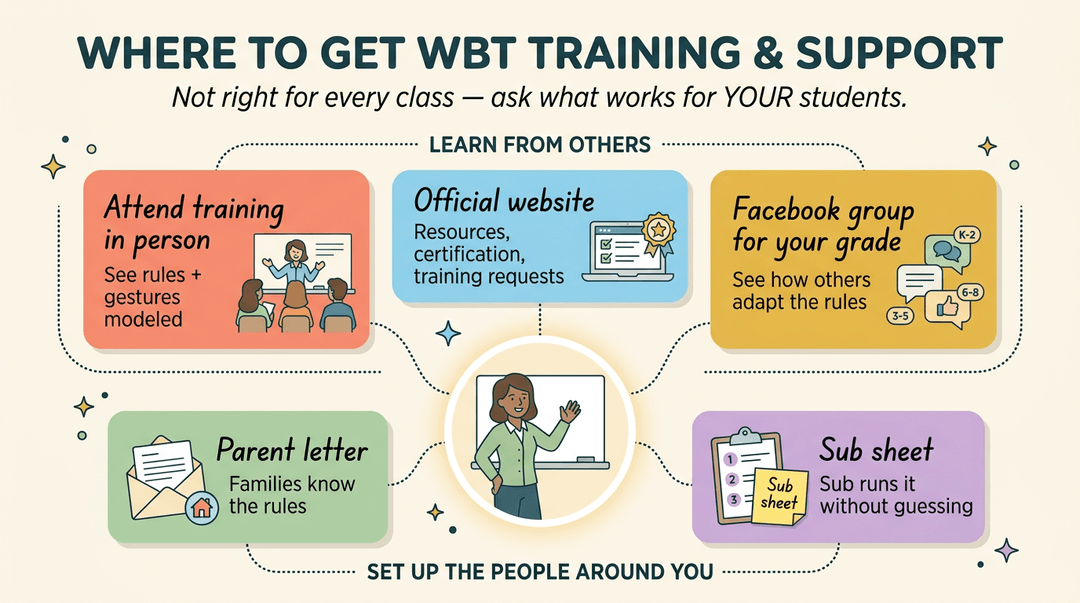
WBT isn't a fit for every classroom, so go in with questions about what works for your students.
- Attended WBT training. Go in person if you can, so you'll see the rules and gestures modeled before you teach them.
- Official website. Check it for current resources.
- Certification and training requests. Use the official website to ask about both.
- Facebook groups by grade. Join a group for your grade level to see how other teachers adapt the rules.
- Parent letter and sub sheet. Send home a parent letter so families know the rules, and leave a sub sheet so a substitute can run them without guessing.
The Brain Science Behind the Method
Before you teach the rules, know what's happening in your students' brains. Here's the science behind the method.
Brain areas that get involved
Several brain areas get involved:
- Prefrontal, visual, and motor cortices. The prefrontal cortex sits at the front of the brain, while the visual and motor cortices handle sight and movement.
- Broca's and Wernicke's areas. These are the language centers for speaking and understanding.
- The hippocampus. Research on the medial temporal lobe memory system describes structures like this as essential for long-term memory of facts and events.
- The limbic system. This is the brain's emotional network.
Shifting wandering minds into a game mind
Research on mind wandering suggests we spend up to half our waking moments doing it, and a Harvard Gazette report found people spend 46.9 percent of their waking hours thinking about something other than what they're doing. That's a lot of daydreaming.
This is where Game Mind comes in: a state Whole Brain Teaching aims for, where students are pulled into the lesson like a game.
A paper on Brain-Based Learning and Whole Brain Teaching notes that teachers benefit from positive behavior reinforcement, memory retention, and student engagement.
Games tap into the brain's reward system: dopamine, a chemical messenger, and the nucleus accumbens, the region that responds to it.
Borrow what makes entertainment compelling: teams, points, quick challenges, and a little suspense. Consider a fifth-grade teacher who turns vocabulary review into a team race with a scoreboard. Students who would normally drift are suddenly leaning in.
Game Mind isn't about entertainment for its own sake; it's about engagement that serves the lesson. Fun with a purpose.
Once students know the five rules and their gestures, routines start to feel natural instead of something you have to keep repeating. Practice them until they're second nature, and you'll have more room for the teaching you came here to do.
The payoff is a room where everyone knows where to go, just like that team finally running the play together.
Ready to put this into practice? Check out the Lesson Planner to write, organize, and reuse your rule-introduction lessons across multiple classes from one place.

References
- Neuropedagogy: from neurons to teaching and learning — doi.org (2026)
- Brain-Based Learning and Whole Brain Teaching Methods — nwcommons.nwciowa.edu (2017)
- Attenuation of Deep Semantic Processing during Mind Wandering: An ERP study — pmc.ncbi.nlm.nih.gov (2018)
- Wandering mind not a happy mind — news.harvard.edu (2010)
- The medial temporal lobe memory system — pubmed.ncbi.nlm.nih.gov (1991)