Multimodal Learning Explained: The Science and How to Use It

Jump to section
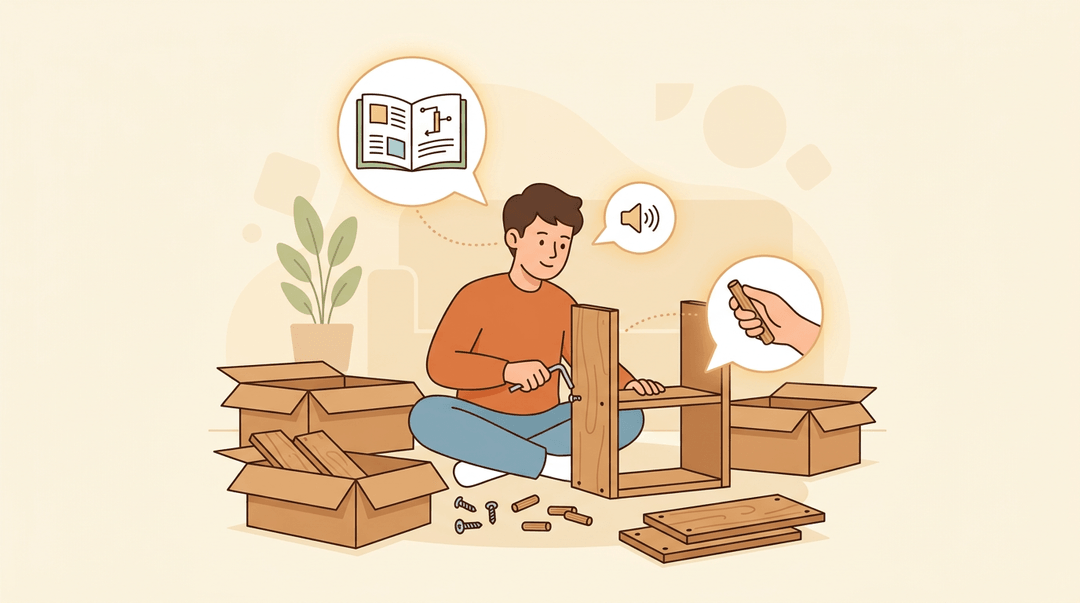
Think about the last time you put together flat-pack furniture. You read the instructions, studied the diagrams, and felt your way through fitting each piece by hand: three senses, one task. Multimodal learning works the same way.
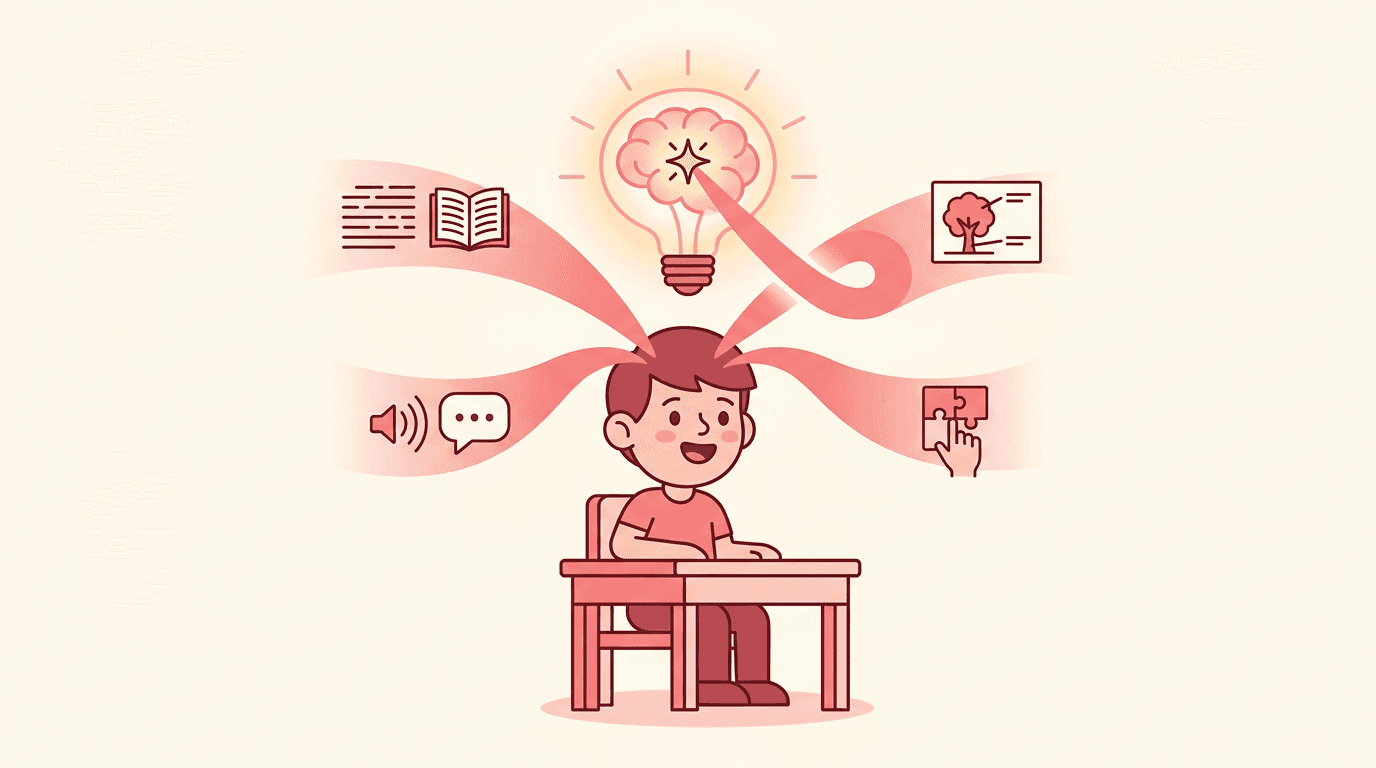
It's teaching that engages sight, sound, and touch together so ideas land from more than one direction.
It's grounded in real cognitive science, not just a buzzword, and this post breaks down the theory, the five modes, and a checklist you can use Monday morning.
Understanding Multimodal Learning
You've probably heard "multimodal" outside of education, too: ChatGPT is a multimodal model, built to read text, look at images, and process audio in the same conversation. In the classroom, the idea works the same way.
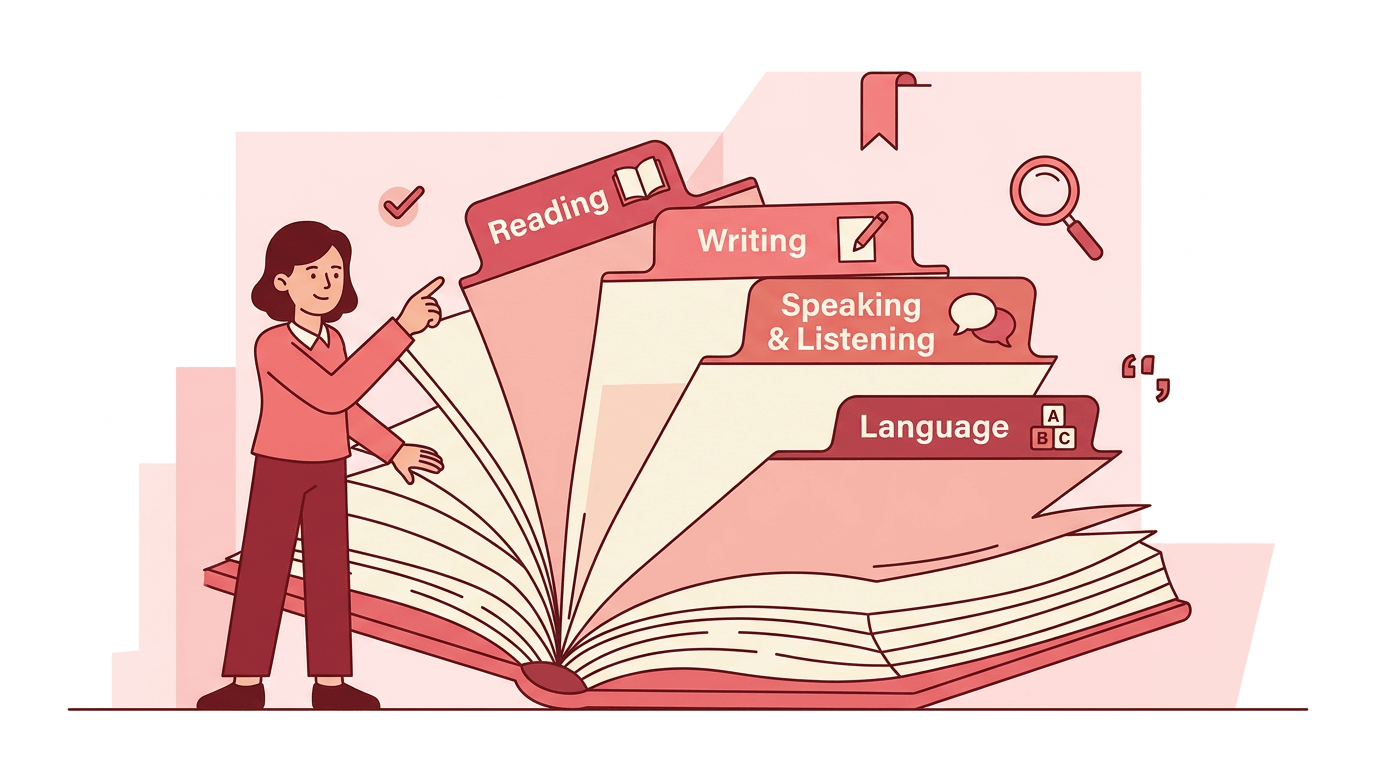
The multimodal learning model presents one idea through several modes at once, drawing on five elements:
- linguistic
- visual
- aural
- gestural
- spatial
How Multimodal Learning Engages Your Senses
Multimodal learning isn't about finding a single "best" channel. It gives students multiple ways to experience the same content, using the body and several senses together rather than leaning on one dominant style.
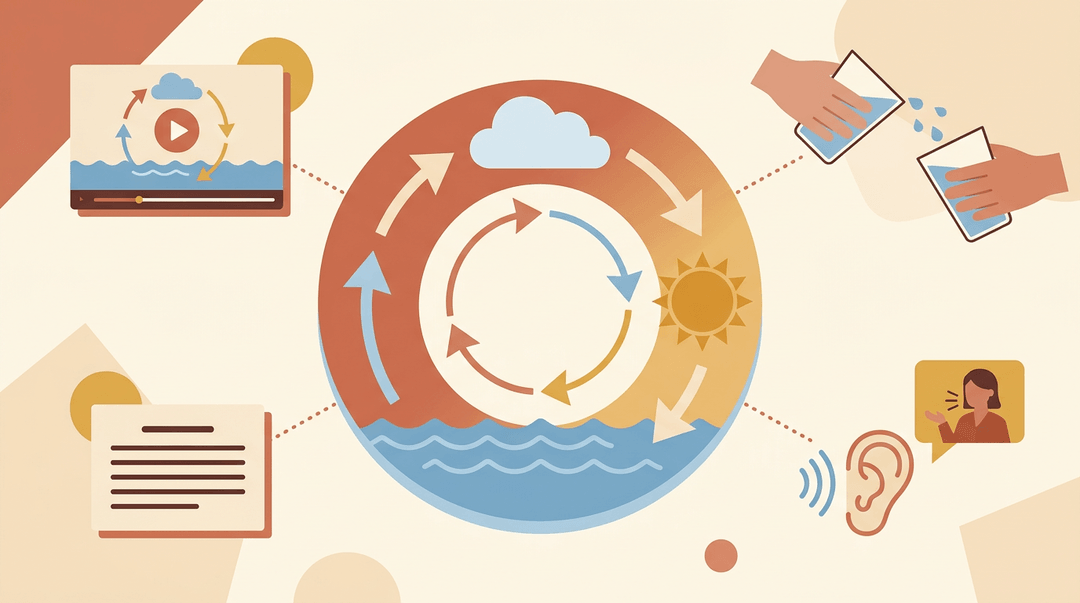
For example, a middle school teacher covering the water cycle might pair a labeled diagram with a short video, a hands-on demonstration using cups of water, and a one-paragraph summary, so visual, auditory, kinesthetic, and text-based input all reinforce each other.
How Multimodal Learning Differs From Learning Styles
Multimodal learning is often confused with learning styles theory, but they're not the same. The VARK model sorts learners into four fixed styles, and a popular expanded version lists seven types:
- visual
- aural
- verbal
- physical
- logical
- social
- solitary
Both rest on the meshing hypothesis: that matching instruction to a preferred style boosts achievement. That hypothesis has been debunked by research, and learning styles theory is widely labeled a neuromyth.
Preferences aren't fixed aptitude, and students frequently misjudge their own style anyway. Multimodal learning sidesteps that problem by feeding every student several channels at once.
The Neuroscience Behind Multimodal Learning
When the brain encodes information through several senses at once, it builds stronger, more integrated memories that are easier to retrieve later.
Naturalistic environments are multisensory by default, and embodied cognition research suggests movement and physical experience shape how concepts get understood, not just remembered.
How Your Brain Learns Through Multiple Senses
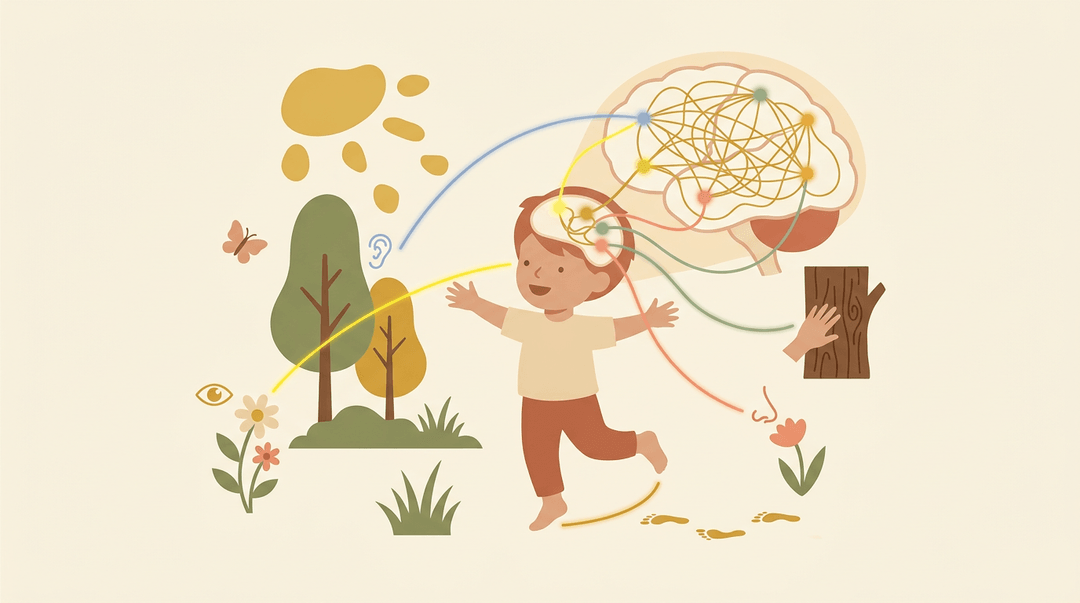
Your brain doesn't file information into one drawer. It builds connections across sight, sound, and touch, and the more paths a piece of information travels, the stickier it becomes.
How Multiple Senses Boost Memory
When a lesson pairs a visual with a tactile action (called dual coding), the brain builds two retrieval paths instead of one. Each added sense forges another neural connection, so pulling on one cue can drag the rest along with it.
A meta-analysis covered by Edutopia found that pairing words with physical actions produced an effect size of 1.23, well above the threshold researchers call large.
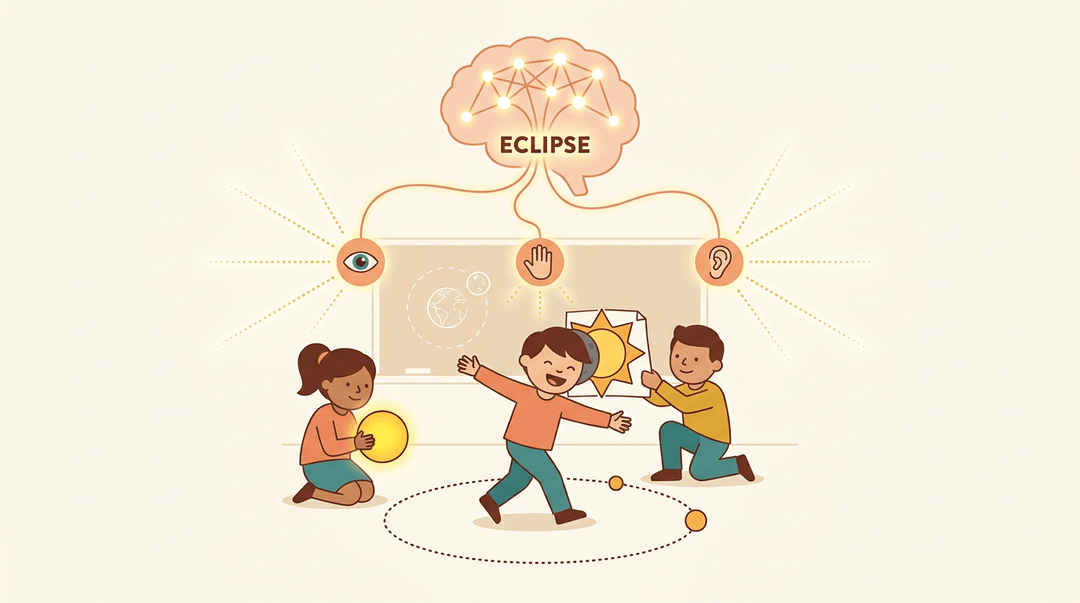
Consider a student who acts out the moon circling the earth while learning the word "eclipse": the movement gives the concept something to hold onto. The pattern holds up broadly: the more modalities a lesson engages, the better the memory that sticks.
What Brain Scans Reveal About Learning
Brain-imaging research backs this up. One fMRI study published in Communications Biology tracked brain-network activity during creative writing and found it recruits circuitry tied to memory and imagery, not just the pathways used for reading.
A separate EEG study comparing handwriting with typing found that forming letters by hand engages the brain differently than tapping a key, pulling in kinesthetic, movement-based information that typing simply skips.
Why Words and Visuals Work Together
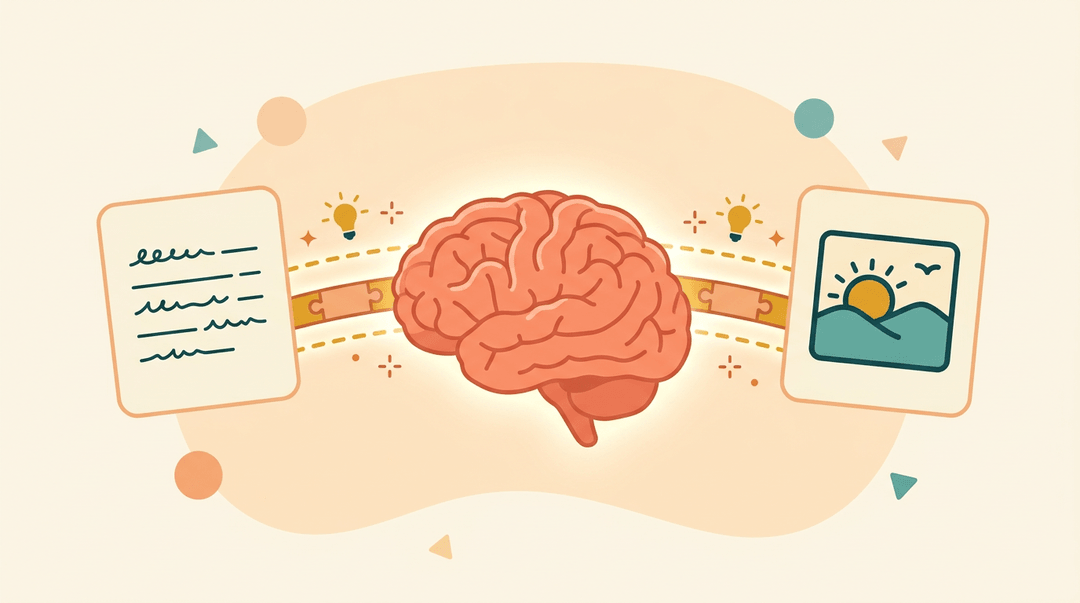
Words and visuals together do more than either alone. Combining them forces active cognitive processing: the brain has to build a bridge between what it reads and what it sees. That bridging isn't just decoration.
It's what supports higher-order thinking, not just recall of a single fact.
Why Multimodal Learning Works so Well
Ask any teacher what makes a lesson land, and you'll rarely hear "the textbook." The real answer usually sounds more like engagement: students seeing, hearing, doing, and talking, all in the same class period. That's not an accident.
It's rooted in how the brain actually processes information, and it pays off in a few concrete ways.
Keeping Students Engaged and Motivated
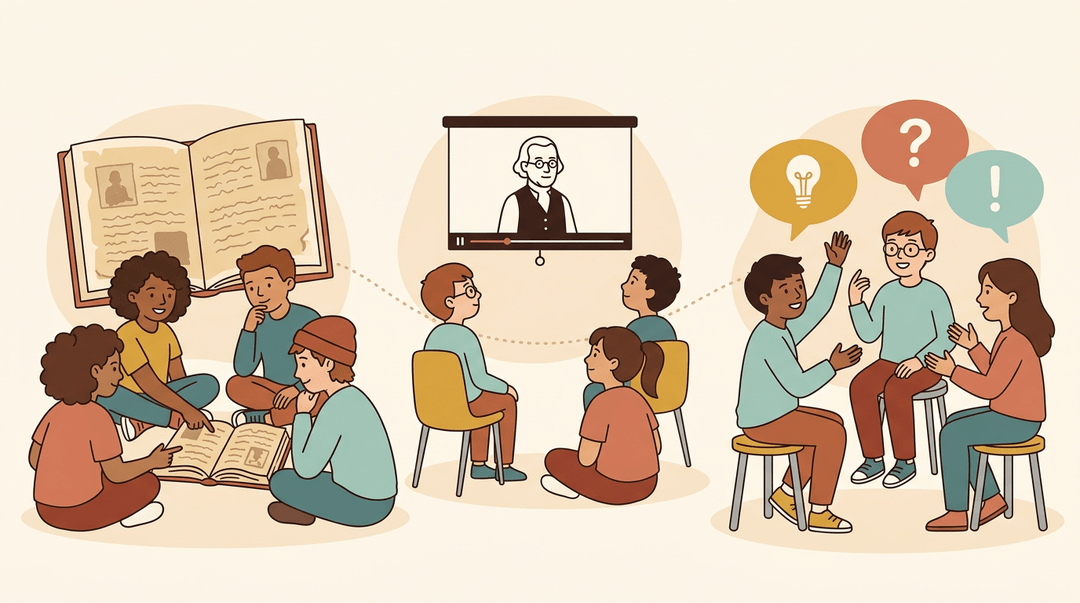
Multimodal lessons put students in the driver's seat instead of the audience. When a lesson moves between video, discussion, and a hands-on task, attention has less room to drift, and participation climbs because there's more than one way to jump in. For example, a middle school history teacher who pairs a primary-source reading with a short documentary clip and a small-group debate gives quieter students an entry point beyond raising a hand. That's interactive engagement that actually means something, not activity for its own sake.
Better Retention and Comprehension
Every additional sense a lesson engages gives the brain another hook for a memory to hang on. Instead of one narrow pathway to a fact, students build several routes to the same concept, which makes it easier to retrieve later. According to the University of Aberdeen, "When students learn through multiple senses, their brains create stronger, more integrated memories," and that shows up as improved recall percentages compared with single-mode teaching. It also eases the reliance on rote memorization: students come to understand a concept from several angles instead of just repeating it back.
Supporting Diverse Learners and Needs
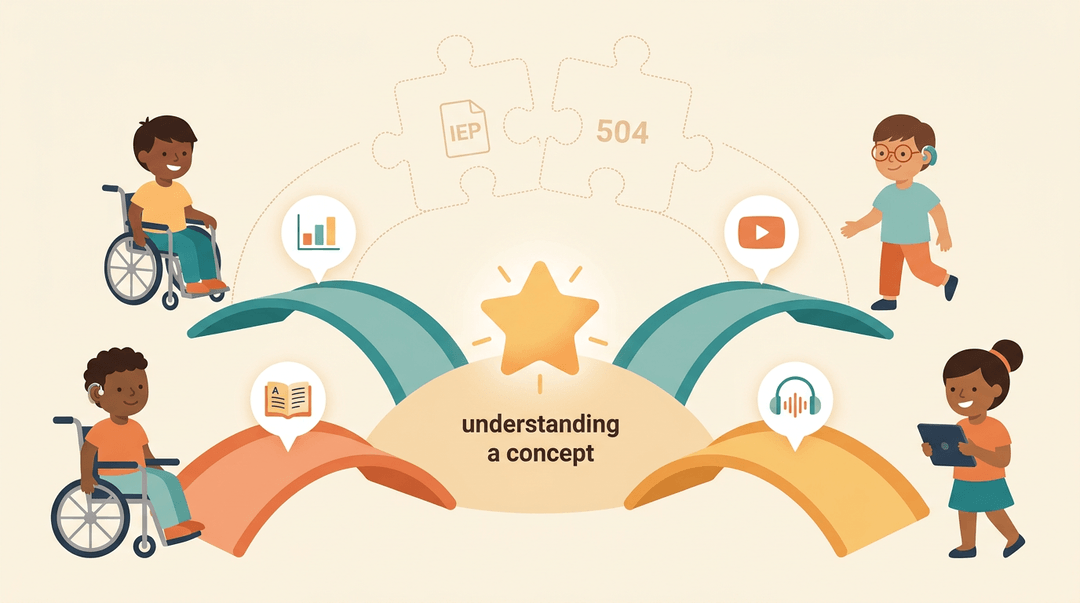
Multimodal design doesn't just help learning stick, it opens the door wider. A student who struggles with dense text can still grasp a concept through a diagram or a short video, which reduces barriers before they turn into obstacles. That overlaps directly with Universal Design for Learning, a framework built on offering multiple ways to access and show learning, and it's often the same flexibility already written into a student's IEP or 504 accommodations. Built in from the start, multimodal teaching makes those supports feel like part of the plan rather than an afterthought, which is what a genuinely equitable classroom looks like.
Growing Higher-Order Thinking Skills
Working across modes also stretches students beyond simple recall. Comparing what a chart shows against what a text argues, or turning a spoken explanation into a diagram, asks students to reason, not just repeat. Consider a high school science teacher who has students analyze a data set, explain their findings aloud, and sketch a model: that student is practicing problem-solving and reasoning skills that transfer well beyond the science room.
Teaching Strategies That Engage Multiple Senses
Once you know what multimodal learning is, the real question is what it looks like on a Tuesday morning. These strategies turn the theory into something you can try before lunch.
Learning Through Movement and Action
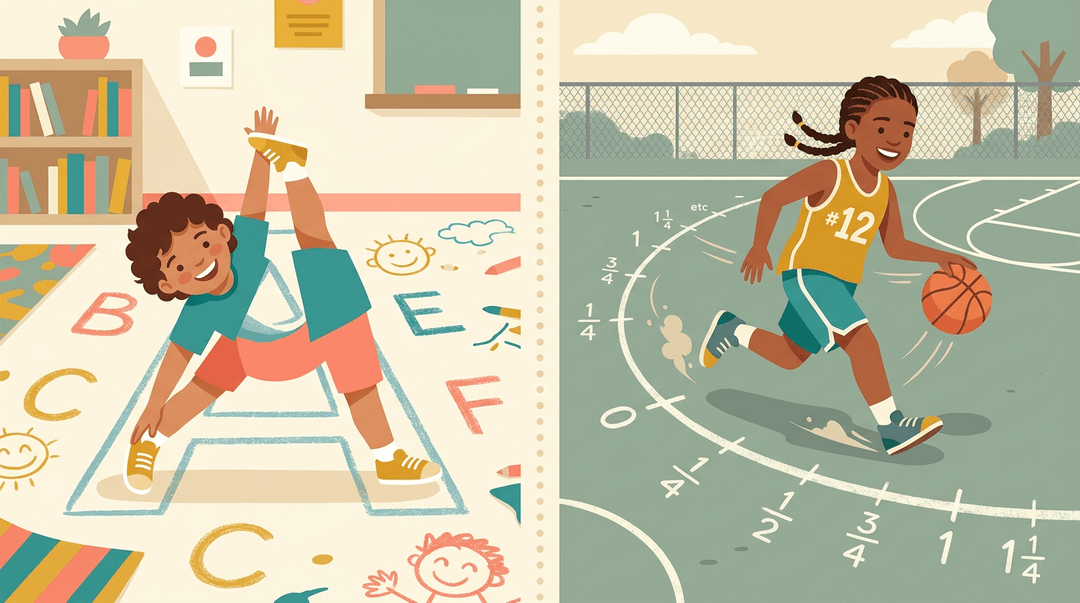
Movement gives an abstract idea a body to live in. A kindergarten teacher can have students trace giant letters with their whole arms and legs, turning the alphabet into a full-body memory instead of a worksheet.
A middle school teacher tackling fractions might chalk a number line onto the basketball court and send students dribbling to the right answer.
Acting out vocabulary words, or simply pairing a word with a gesture (stomping for "stomp," for example), gives the body a stake in what the mind is learning.
Using Drawings and Visual Notes
Ask a student to sketch a flower's parts while labeling them, and they're doing more than decorating a worksheet: they're building a visual model of the concept.
Concept maps and other organizational drawings do the same for abstract relationships, turning a paragraph of text into a diagram the eye can follow.
Sketchnotes, quick doodles paired with keywords, work because they force active reconstruction of the material instead of passive copying.
The Power of Reading Aloud
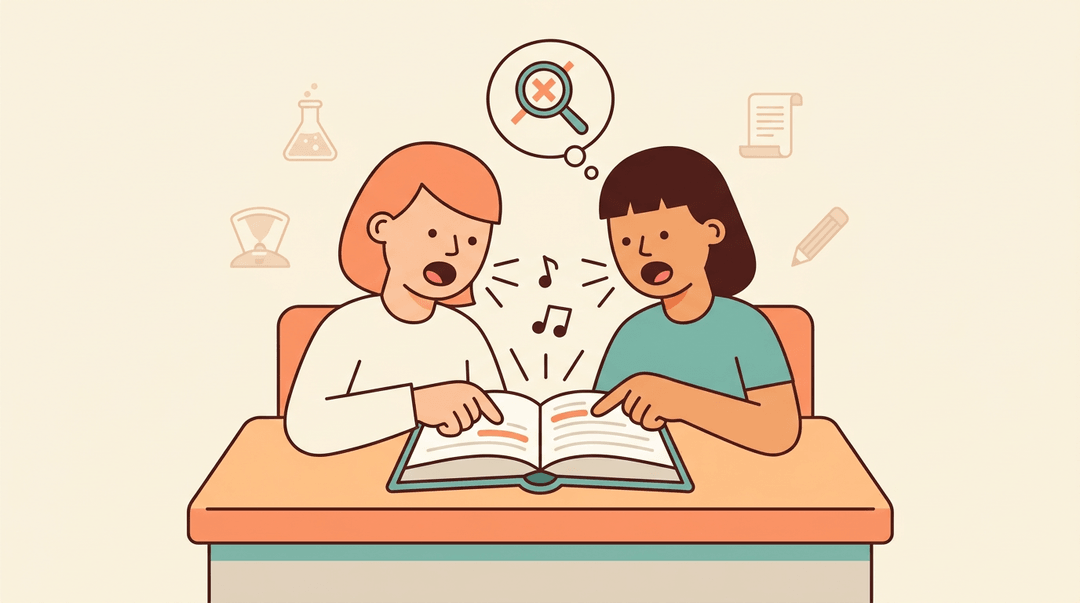
Reading aloud adds sound and rhythm that silent reading simply can't. Partner reading and choral reading let students hear a text more than one way, catching nuances a quiet skim would miss.
According to a study on proofreading accuracy, readers who proofread aloud caught more errors than those reading silently, evidence that voice sharpens attention to the page.
That boost isn't confined to the reading block either: it carries into science labs, history reports, and any subject where students need to catch their own mistakes.
Handwriting vs Typing for Learning
Handwriting and typing aren't interchangeable, even though both put words on a page.
A 2024 study reported by Moneycontrol found that writing by hand creates broader patterns of brain connectivity than typing, engaging the networks tied to learning and memory more actively.
Typing is faster, but it offers less kinesthetic input: fewer of the small physical movements that seem to help ideas stick.
That doesn't make digital tools the enemy: assistive technology like text-to-speech and word prediction can be essential for students with dyslexia. The goal is balance, not either/or, so students build both handwriting and digital skills.
Using Technology to Add More Senses
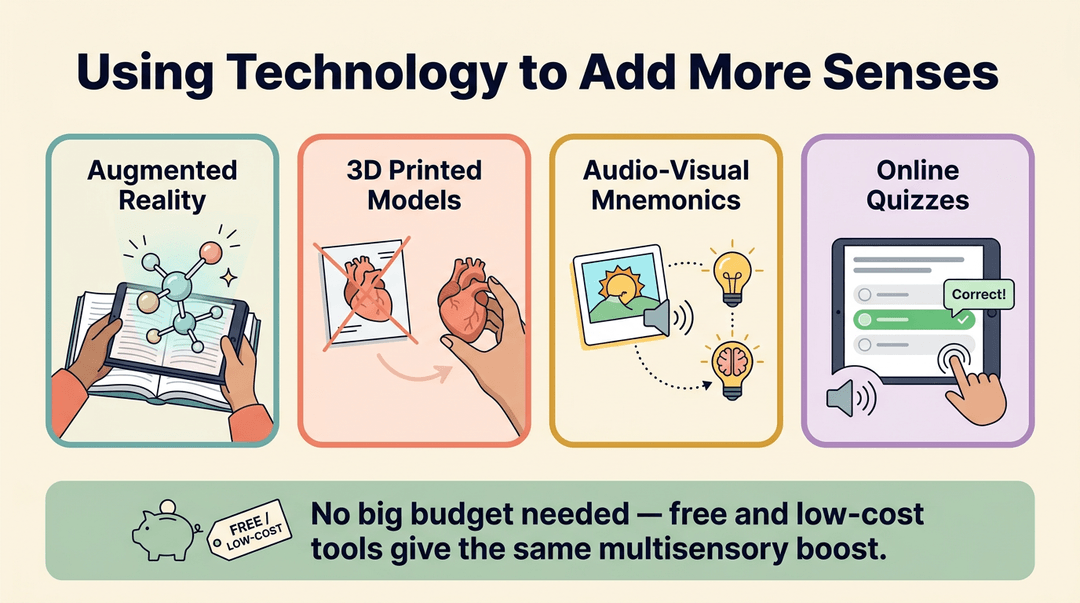
Technology can add senses a textbook alone can't reach:
- Augmented reality devices let students point a tablet at a page and watch a 3D molecule or historical scene appear.
- 3D printed models turn a diagram of a cell or a bone into something students can hold and rotate.
- Audio-visual mnemonic platforms pair sound and image to help facts lodge in memory.
- Online quizzes and assessments add instant feedback, blending sight, sound, and sometimes touch into one activity.
None of this requires a big budget. Plenty of free or low-cost tools offer the same multisensory punch as their pricier counterparts.
Designing a Multimodal Classroom
Pulling it all together doesn't mean using every mode every day.
It means building a classroom where visual aids and models sit alongside student discussions and hands-on projects, and where a shared virtual platform lets students revisit a lesson in whatever mode helped it click.
Blend activities across a unit rather than cramming them into one period, and the variety itself becomes part of what makes the learning stick.
A Quick-Start Checklist for Multimodal Lessons
Use this guide when you're planning tomorrow's lesson and want two or three modes working together, not five fighting for attention. Run the steps in order; they take about ten minutes once you've done them twice.
Five steps to plan the lesson
- Set one clear learning goal. Write it as a single student-facing sentence.
- On the board: "I can explain why the moon's shape appears to change."
- One goal only: two goals means two lessons.
- Pick 2 or 3 modalities that fit the goal.
- For the moon goal: visual (phase diagram) + kinesthetic (lamp-and-ball model).
- Skip a mode that's merely available; keep the ones that carry the content.
- Align every activity to the goal.
- Quick test: "If I cut this activity, could students still hit the goal?"
- If yes, cut it. A fun station that teaches nothing else is decoration.
- Add one quick formative check. Two minutes, no grading.
- Exit ticket: "Sketch the moon's position when we see a full moon. One sentence: why?"
- Reflect and adjust before you reuse the plan.
- After class, jot one line: "Ball model worked; diagram confused 6 kids. Lead with the model next time."
⚠️ Watch out: the most common failure is picking modalities first and bolting a goal on after. The goal always chooses the modes, never the reverse.
Pairings that work by grade band
Find your row and start there; each pairing is a proven low-prep combination.
| Your learners | Try this pairing |
|---|---|
| Early elementary | A content song plus matching movements (sing the water cycle, act each stage) |
| Upper elementary | Sketchnotes during reading, then small-group discussion of the drawings |
| Middle and high school | An AR model to explore, then a structured debate using what students saw |
| Tutoring and adult learners | Audio explanation on the commute, then timed practice sets |
Quick fixes for common problems
| When you notice... | Try... |
|---|---|
| Students losing focus mid-lesson | Simplify the tools: paper and pencil sketchnotes instead of a new app |
| No time to plan multimodally | Reuse one template: swap the content, keep the structure and timing |
| You're not confident yet | Start with one multimodal activity per week, not a whole redesigned unit |
Example: A fifth-grade teacher piloting this checklist added just one change to a fractions lesson: students folded paper strips (kinesthetic) before seeing the number line (visual). Same goal, same exit ticket, one extra mode. That's the right size for a first attempt.
At a glance: one goal, two or three modes, aligned activities, a two-minute check, a one-line reflection. That's the whole system.
Once a lesson works, make it repeatable: map these multimodal activities to your standards and pacing guide with EMStudio's Curriculum Planner.
Common Challenges and How to Solve Them
Multimodal learning pays off, but it doesn't arrive without a few bumps. Here's what tends to trip teachers up, and how to smooth each one out.
Finding Time to Plan Lessons
Designing a lesson that moves through several modes takes longer than writing one that just covers the material verbally. That time crunch, plus the sense that you need a closet full of new materials, stops a lot of good intentions before they start.
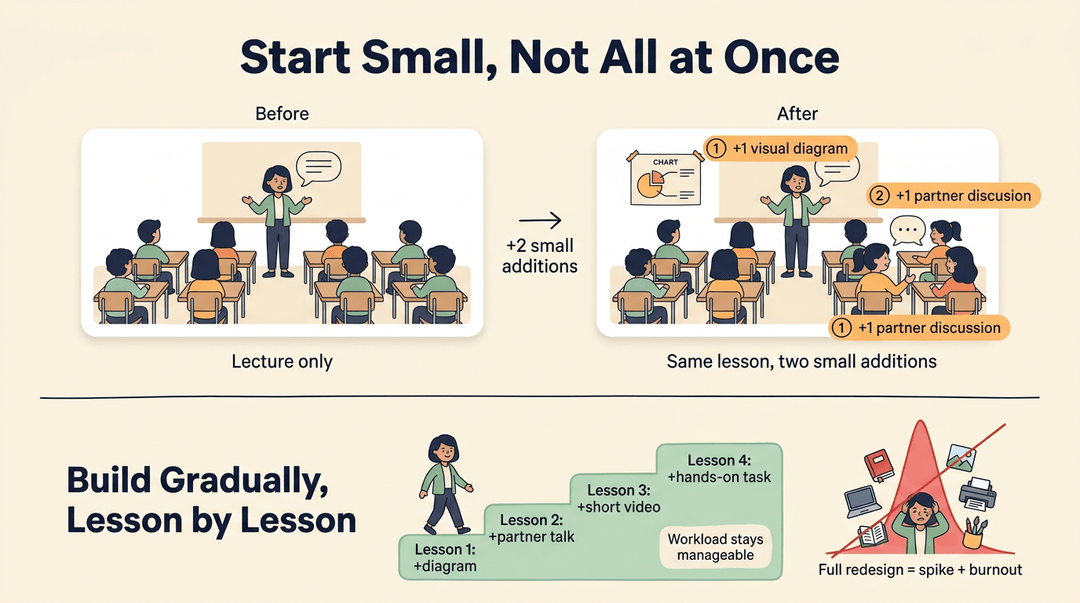
The fix is to start small. Consider a middle school teacher who simply adds one visual diagram and one partner discussion to an existing lecture. That's multimodal learning without a full redesign.
Build from there, one lesson at a time, and the workload never spikes all at once.
Keeping Lessons Focused and Clear
Variety only helps if it points somewhere. Every activity needs a clear learning goal behind it, and every mode you add should link directly back to that objective, not just fill time.
Watch for a related trap: piling on too many modes at once. Ask students to read, watch, discuss, and build in a single class period, and you risk cognitive overload, where working memory fills up faster than understanding can form.
Two or three well-chosen modes, tied tightly to the objective, beat five scattered ones. The goal is understanding, not just checking off tasks.
Using Technology Without Distraction
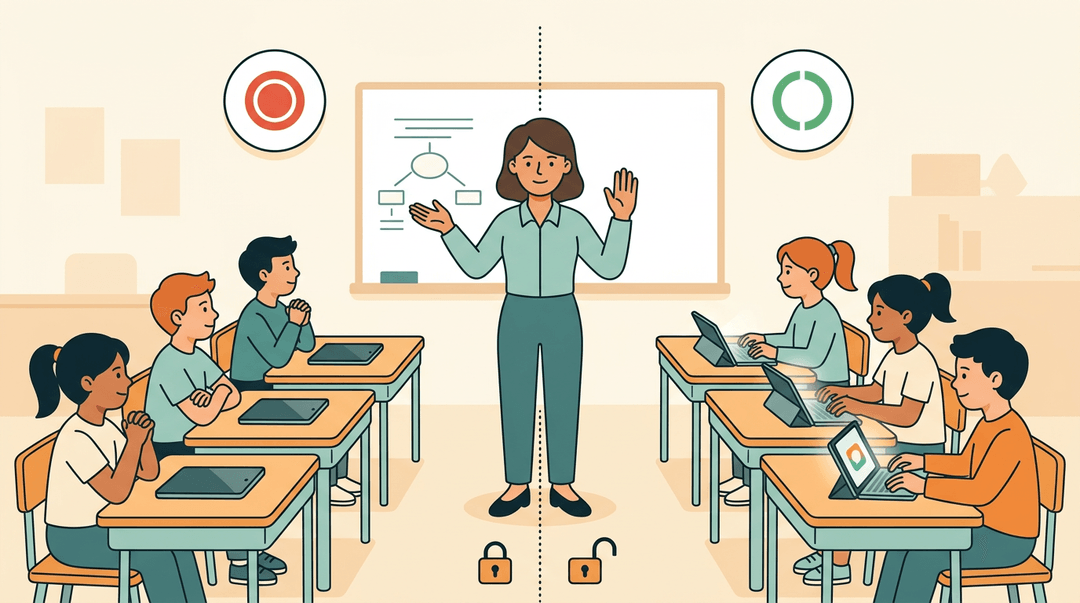
A tool without a clear purpose becomes a distraction, not a mode. Simple classroom routines fix this fast: a set signal for when devices are open versus closed, and a consistent platform students already know how to use.
Choose flexible, uncomplicated tools over flashy ones, and the tech disappears into the lesson instead of competing with it.
Building Confidence Through Collaboration
No teacher should have to build this alone.
- Sharing a successful multimodal lesson with a colleague
- Getting protected planning time from a supportive department leader
- Drawing on ready-made resources
All build confidence faster than trial and error ever will.
Multimodal Learning in Action
Theory only gets you so far. Here's what multimodal teaching actually looks like once it moves out of the research and into a real room, whether that room is a fourth-grade classroom or a hospital training lab.
Examples From K-12 Classrooms
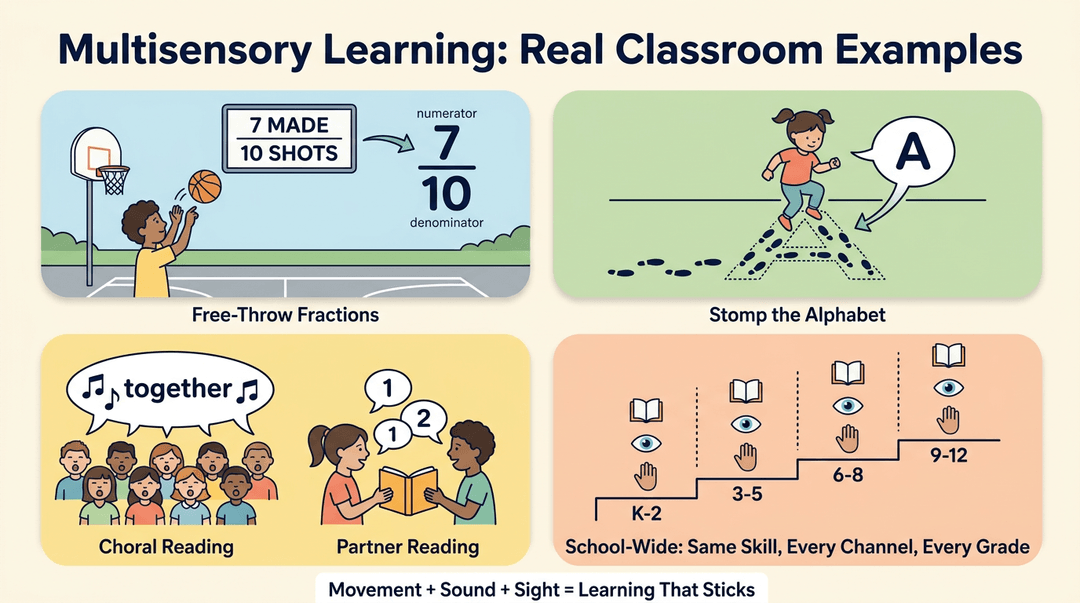
Consider a fourth-grade teacher who has students shoot free throws to practice fractions: made baskets over attempts becomes the numerator and denominator, right there on the court.
Younger classrooms often run ABC whole-body activities, having kids stomp out the shape of a letter or hop through the alphabet, so kinesthetic and visual channels reinforce each other.
Choral reading, where the whole class reads aloud together, and partner reading, where two students trade off, both blend auditory and visual input to build fluency.
Many schools scale this up with school-wide literacy programs that layer read-alouds, visuals, and hands-on projects across every grade, so the same skill lands through more than one channel.
Applications in Healthcare Training
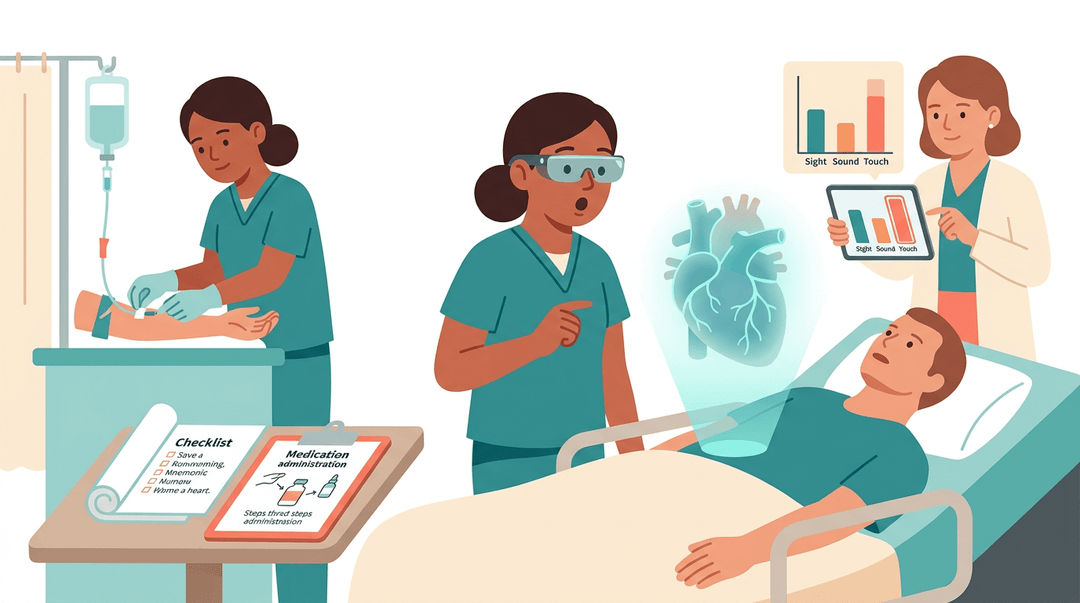
Multimodal design shows up well past K-12. Think of a nursing instructor running a clinical simulation: active learning strategies like hands-on skills stations and role-play let trainees practice a procedure instead of just reading about it.
Audio-visual mnemonic tools, a rhyming checklist paired with a diagram, help new nurses recall medication steps under pressure.
Some programs now add augmented reality (AR), technology that overlays digital images onto the real world, plus 3D models so trainees can rotate a virtual heart before ever touching a real one.
Data-driven assessment tools then track which mode each trainee relies on most, so instructors know exactly where to adjust.
Multimodal learning isn't about doing more, it's about doing enough for every learner in the room. When sight, sound, and touch work together, ideas stick longer and make more sense the first time.
That's the real payoff: fewer re-teaches, more genuine understanding, and lessons that meet students where they are.
Ready to build lessons that use every mode with intention? Check out our Curriculum & Standards planner to map multimodal strategies across your whole year.
References
- Cognitive and neural mechanisms of mental imagery supporting creative cognition — nature.com (2025)
- Learning Styles, Preferences, or Strategies? An Explanation ... — link.springer.com
- Is it really a neuromyth? A meta-analysis of the learning styles matching hypothesis — pmc.ncbi.nlm.nih.gov
- Frontiers | The Importance of Cursive Handwriting Over Typewriting for Learning in the Classroom: A High-Density EEG Study of 12-Year-Old Children and Young Adults — doi.org
- Reading aloud improves proofreading (but using Sans Forgetica font does not). — psycnet.apa.org
- Did you know... How Multisensory Learning Supercharges Education? | Stories — abdn.ac.uk
- The Power of Multimodal Learning (in 5 Charts) — edutopia.org
- Psychology says people who type notes may process information differently than those who write by hand- Moneycontrol — moneycontrol.com (2026)
Frequently asked questions
What is the meaning of multimodal learning?
Multimodal learning is an approach that presents ideas through multiple modes or senses, such as sight, sound, touch, movement, and language. Using several channels helps learners experience and connect with the same content in different ways.
What is the multimodal learning model?
A multimodal learning model presents one idea through several modes at the same time or across a lesson. Its five elements are linguistic, visual, aural, gestural, and spatial.
What are the five multimodal elements?
The five multimodal elements are linguistic, visual, aural, gestural, and spatial. They represent language, images, sound, movement or physical action, and the organization of objects or information in space.
What are the 7 types of learning styles?
The seven commonly cited learning styles are visual, aural, verbal, physical, logical, social, and solitary. Research does not support the idea that matching teaching to a fixed preferred style reliably improves achievement.
What are examples of multimodal learning?
Examples include pairing a labeled diagram with a video, hands-on demonstration, and written summary. Other examples are acting out vocabulary, using concept maps, reading aloud, exploring 3D models, and combining a primary-source reading with a documentary and debate.
Is ChatGPT a multimodal model?
Yes. ChatGPT is a multimodal model that can work with more than text, including images and audio, depending on the version and features being used.