Communicative Language Teaching Meaning: A Complete Guide

Jump to section
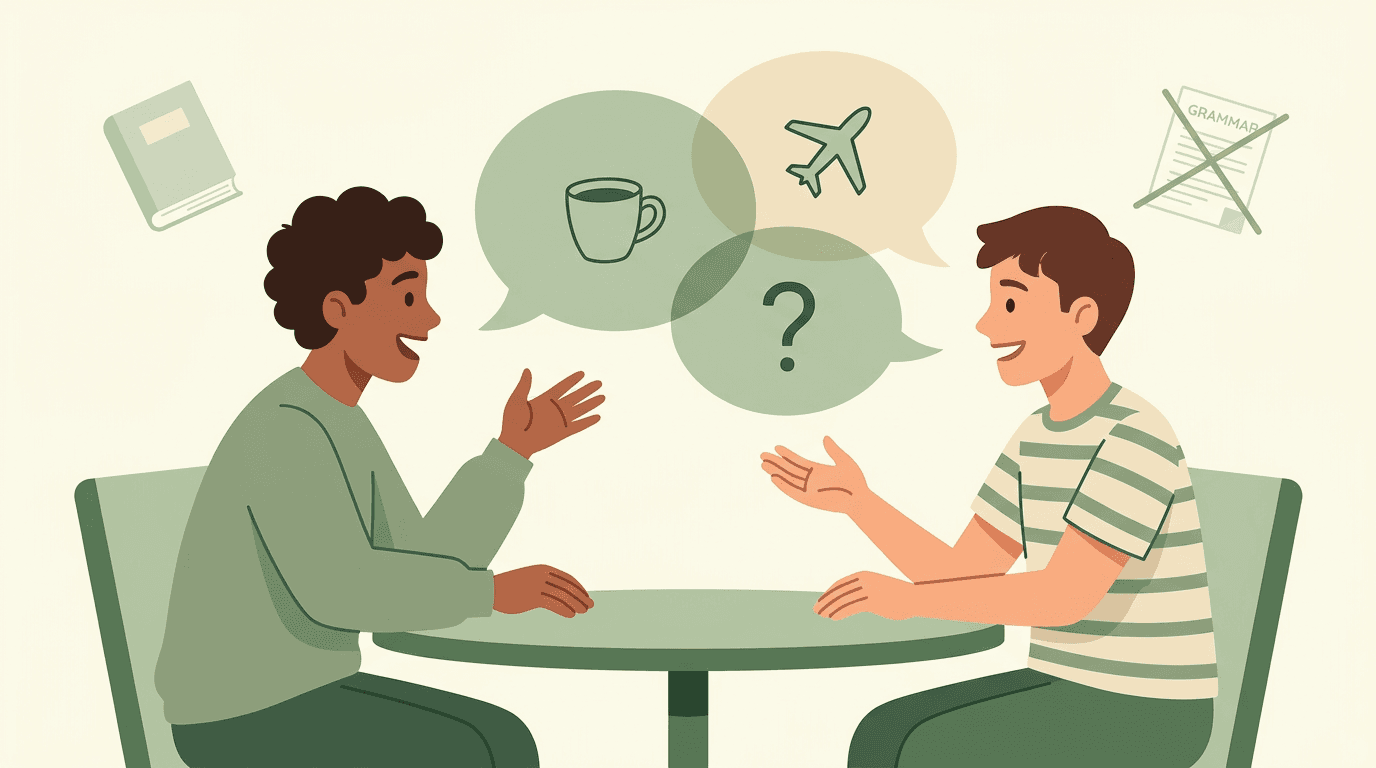
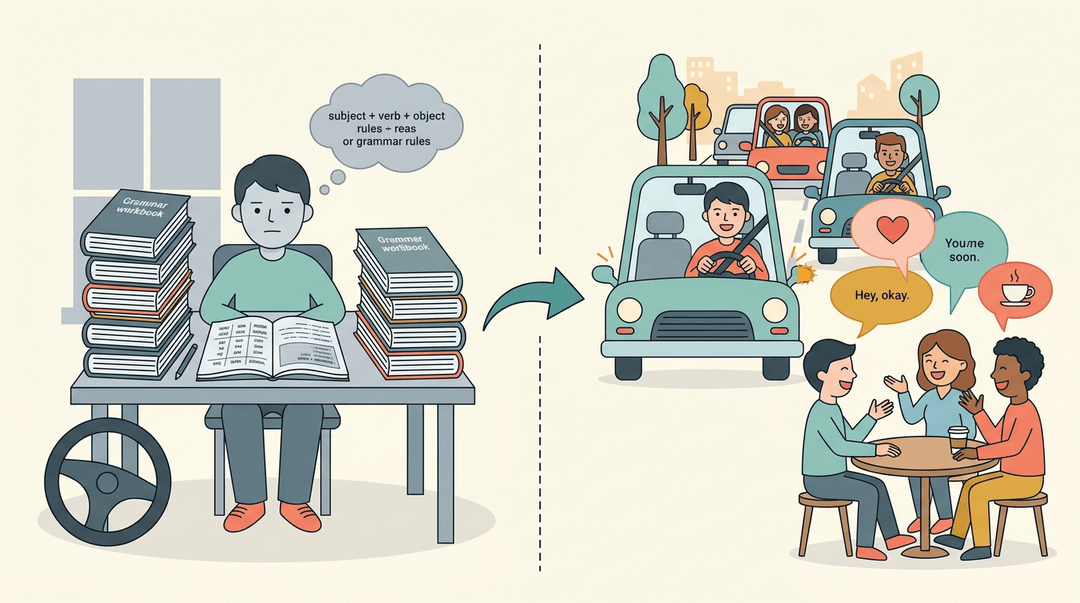
Think about learning to drive a car. You could memorize the entire manual, but you won't feel ready until you're behind the wheel, signaling, merging, reacting to real traffic. Language learning works the same way.
Communicative Language Teaching (CLT) is an approach that puts real, meaningful interaction at the center of the lesson, not grammar drills in isolation.
As classrooms grow more diverse and students need language for genuine use, that shift matters more than ever. This post breaks down what CLT really means, how it plays out in the classroom, and how to plan it.
What Communicative Language Teaching Really Means
You'll sometimes see Communicative Language Teaching (CLT) confused with Community Language Learning, but they're different approaches. CLT is the bigger shift in how we think about language itself: as something you use, not just something you know.
How communicative teaching replaced old methods
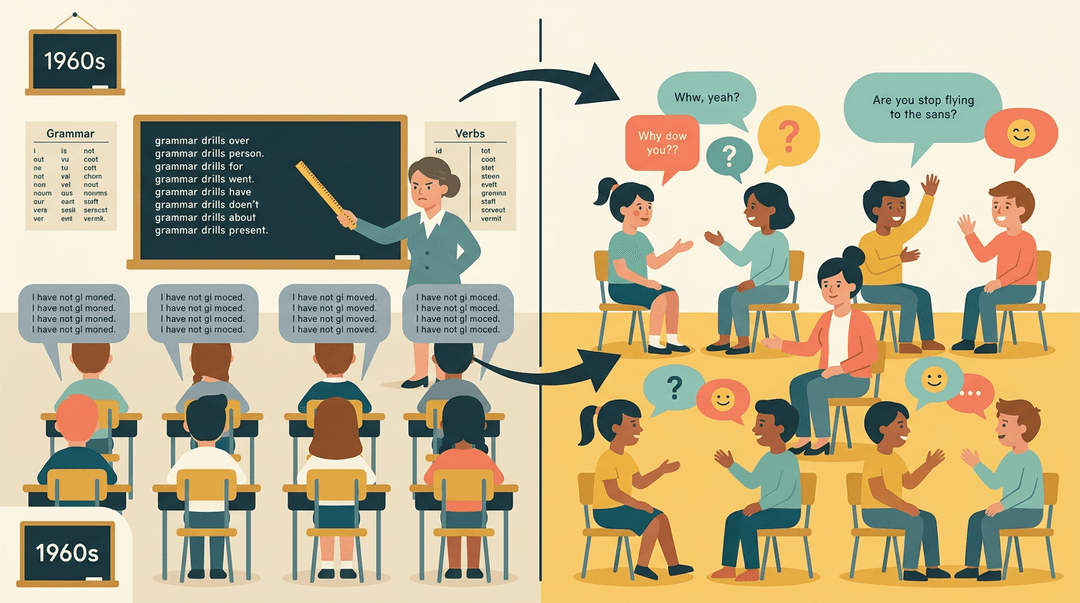
According to a history of Communicative Language Teaching, CLT's roots trace to British applied linguistics in the late 1960s, when teachers pushed back against situational and audiolingual drills that treated language as patterns to memorize.
That reaction sparked a real paradigm shift: the communicative model of language reframes every lesson around language as communication, not grammar practice for its own sake.
What is communicative language learning?
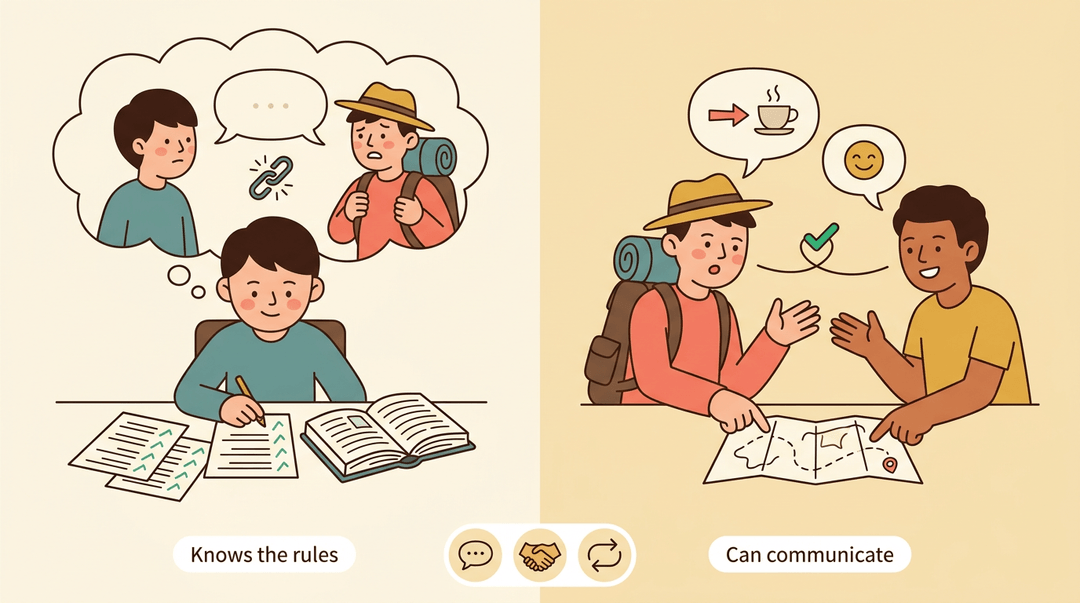
So what is communicative language learning? It's knowing the difference between knowing a language's rules and being able to use it, and CLT trains the second skill.
Linguist Dell Hymes coined communicative competence to describe what speakers need to communicate appropriately in real social contexts. Canale and Swain split that into grammatical, sociolinguistic, and strategic competence:
- the forms
- the appropriateness
- the ability to recover when a conversation stalls
Halliday's functional theory treats language as a resource for doing things:
- requesting
- persuading
- explaining
Krashen and Terrell argued learners absorb language best through natural, meaning-focused use, not isolated drills.
Many teachers map this onto the 5 C's (communication, culture, connections, comparisons, communities), a reminder that communicative ability reaches past the sentence.
Why meaning matters more than grammar
CLT's real aim is to develop communicative competence, which means meaning comes before form. Lessons organize around functions and purposes, like apologizing or negotiating, because that's what language is actually for.
Fluency and accuracy aren't rivals: they're complementary, each reinforcing the other.
It's worth distinguishing CLT from task-based teaching here too: task-based lessons revolve around completing a task, while CLT keeps communicative competence itself as the explicit target, using tasks as one tool among several.
What Makes a Lesson Truly Communicative
A lesson can look busy without ever being communicative. The real test isn't how many activities you run, but whether students are actually using language to mean something.
What a communicative classroom looks like
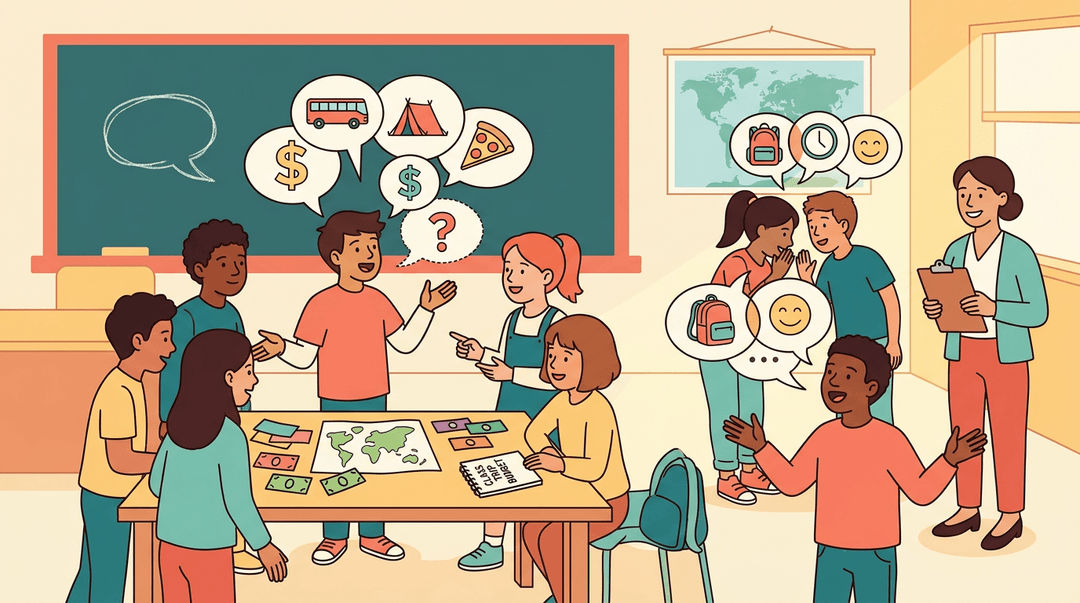
Picture a middle school teacher running a role-play where students negotiate a class trip budget. That's appropriateness to situation: language chosen to fit the context, not a textbook script. A few other traits mark the room:
- Message/meaning focus. Students care about what they're saying, not just getting the grammar right.
- Psycholinguistic processing. Learners build sentences in real time, drawing on memory and reasoning rather than repeating fixed phrases.
- Risk taking. Students attempt language a little beyond what they've fully mastered.
- Holistic, free practice. Tasks let students combine skills freely instead of drilling one isolated point.
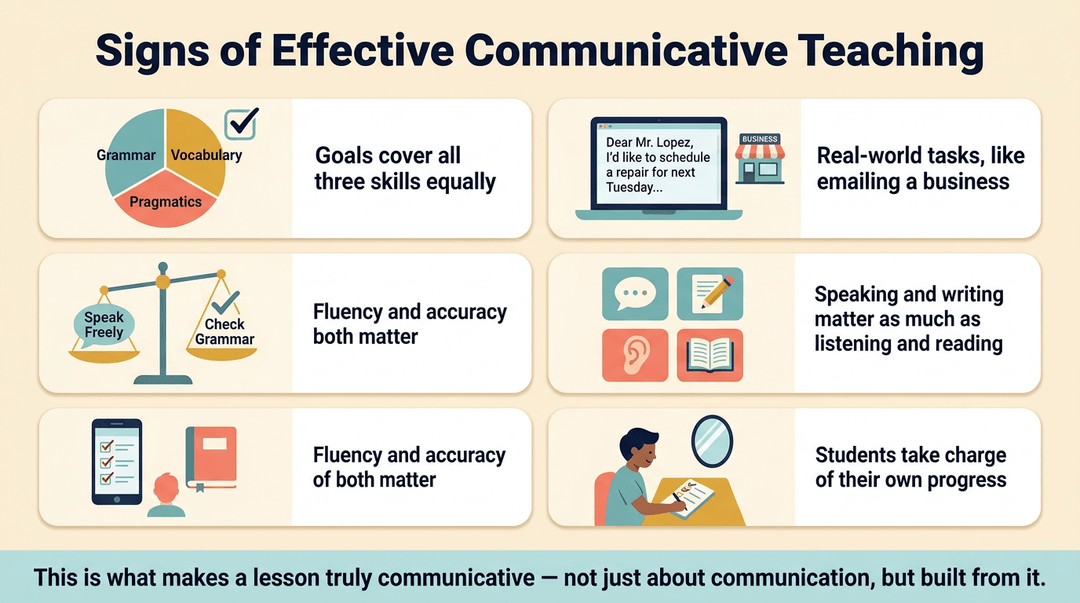
Six signs of effective communicative teaching
Beyond the room's feel, a few concrete signs tell you the teaching itself is on track:
- Clear classroom goals tied to competence components: grammar, vocabulary, and pragmatic skill all get attention, not just one.
- Pragmatic, authentic language use, like handling a real exchange such as writing an email to a local business.
- A deliberate fluency and accuracy balance: some tasks prize getting the message across, others tighten up correctness.
- Equal attention to productive and receptive use, so speaking and writing matter as much as listening and reading.
- Growing learner autonomy, where students take responsibility for their own progress rather than waiting for correction.
Together, these signs are what separate a lesson that merely mentions communication from one that is communication.
Designing a Communicative Syllabus
Before you can run a communicative classroom, you need a plan that reflects how people actually use language: not just which structures to teach, but why and with whom.
Assessing communicative competence performance starts right here, at the planning stage, long before any test.
Setting goals and choosing a syllabus
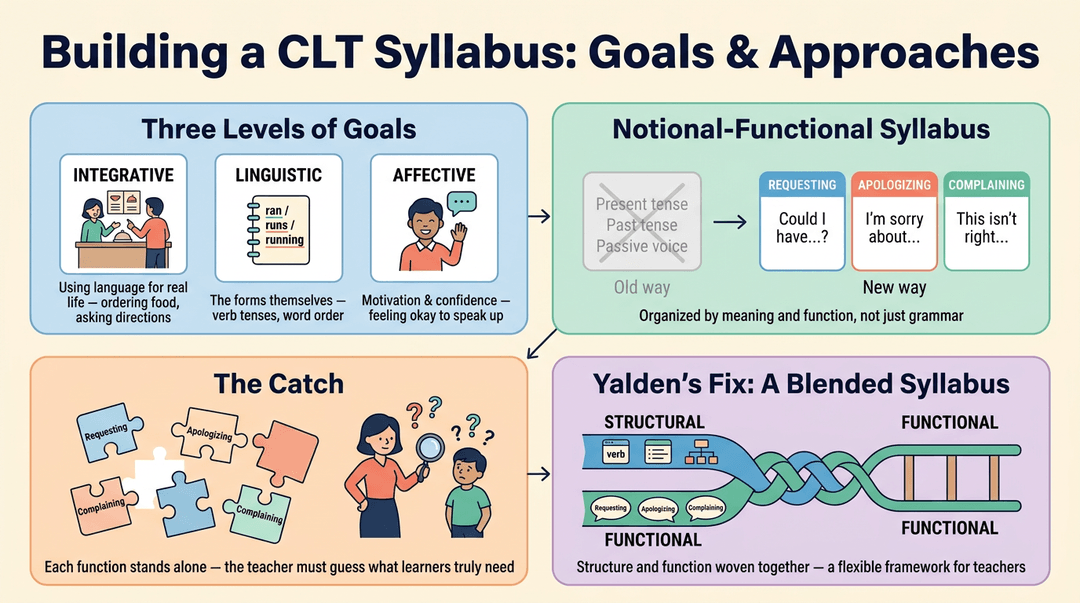
A sound CLT syllabus sets goals at three levels:
- Integrative (using language for real purposes)
- Linguistic (the forms themselves)
- Affective (motivation and confidence)
One common approach is the notional-functional syllabus, organized around meanings and functions like requesting or apologizing rather than grammar points alone.
But Wilkins's notional syllabus drew criticism as a basis for course design, since, as noted in Theory and practice in second language syllabus design, it "consists of a set of isolates to be mastered and depends on the ability of the syllabus designer to specify the needs of the learner."
Yalden answered with several syllabus types that blend structural and functional strands, giving teachers more flexible frameworks to build from.
What learners and teachers each do
In a communicative classroom, the learner acts as a negotiator, working out meaning with classmates instead of waiting for the "right" answer.
The teacher becomes a facilitator: part needs analyst and counselor diagnosing gaps, part group process manager keeping conversations productive.
For example, a facilitator might circulate during pair work and nudge a quieter student with a follow-up question rather than handing over the answer.
Choosing materials for communicative lessons
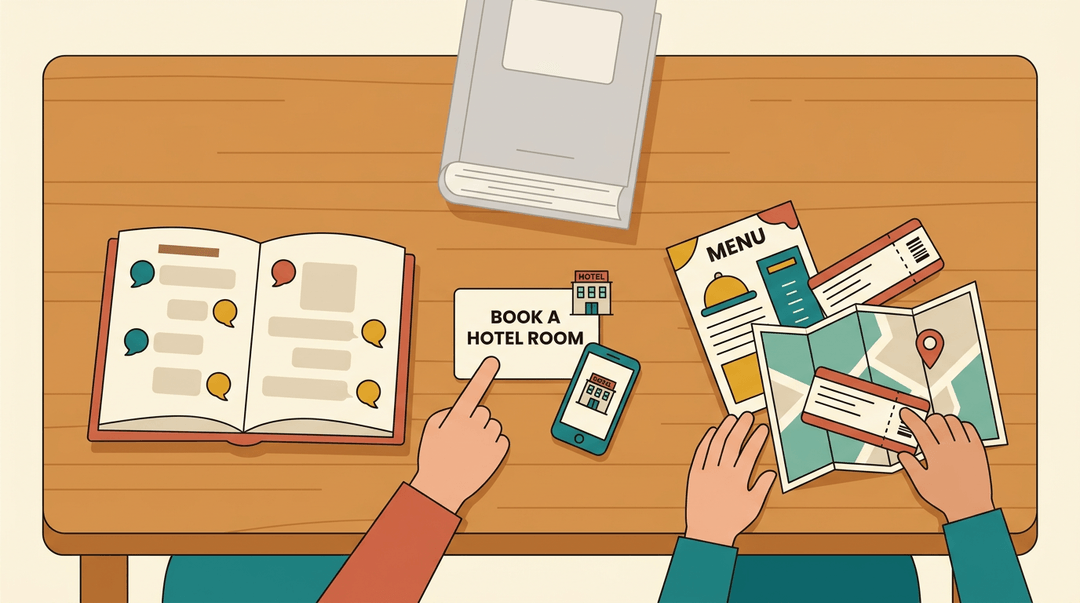
Materials generally fall into two camps: text-based resources built around dialogues and readings, and task-based materials built around real tasks like booking a hotel room. Add realia, menus, tickets, maps, and the lesson starts to feel real.
Together, these choices shape the quality of classroom interaction far more than any textbook chapter on its own ever could.
Where Grammar Fits into Communicative Teaching
Grammar hasn't disappeared from the communicative classroom: it's just playing a different role. Instead of being the end goal, it's the toolkit that makes real communication possible.
Why grammar still matters for meaning
Grammar isn't a checklist of rules to memorize for a quiz. According to TESOL International Association, as learners build their grammar, "they begin to add detail, clarify meaning, and express more complete thoughts."
That's the whole point: grammar helps students say what they actually mean.
It also works as a connected system rather than a pile of isolated rules. Graham Lock describes how grammar "enables speakers and writers to represent their experience of the world, to interact with one another, and to create coherent messages."
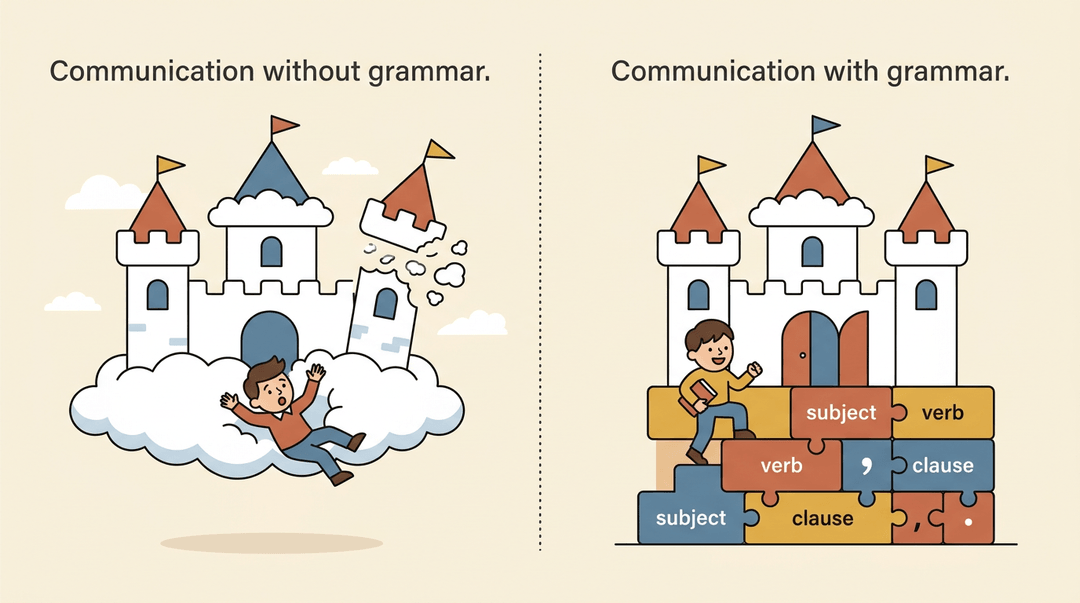
Without that system, communicative competence (the ability to use language appropriately in real situations) has nothing to stand on. Communication without grammar is a castle in the air: it looks fine until someone tries to live in it.
Moving from drills to real communication
This is why communicative language teaching moves away from rote drilling and fill-in-the-blank memorization. Grammar still gets taught, just through use rather than before it.
Consider a middle school Spanish teacher introducing the subjunctive. Instead of a worksheet of conjugations, students practice it inside songs, dialogues, games, and role-play, like negotiating weekend plans with a partner.
The grammar sticks because students needed it to say something real.
How a Communicative Lesson Actually Runs
So what does this actually look like between the bell and the end of class? A communicative lesson follows a loose but recognizable rhythm, one that moves students from hearing language to actually using it.
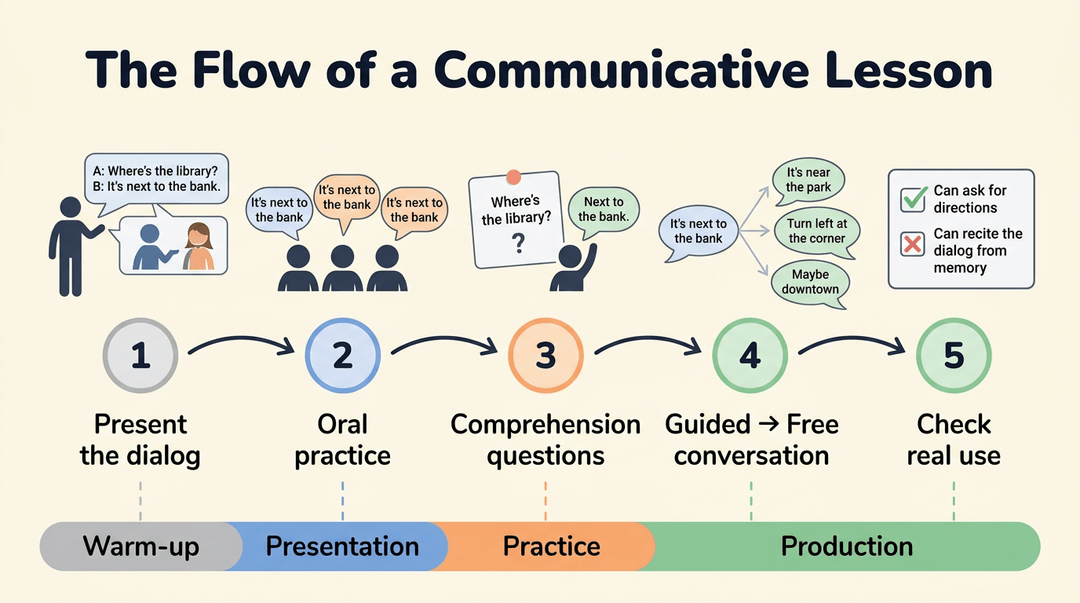
The typical flow of a lesson
Most communicative lessons move through a few clear stages.
- You present a short dialog in context
- Students get oral practice with its key phrases
- They answer questions tied to the dialog's content
- The class shifts from guided exchanges toward freer, more open conversation
- You close by checking what students can do with the language, not just what they can recite
These stages map neatly onto the warm-up, presentation, practice, and production phases of any standard lesson plan, so this approach fits the structure you're probably already using.
Techniques for teaching grammar communicatively
Grammar doesn't disappear here; it just gets taught differently. You might introduce a verb tense through a song or a short drama scene instead of a worksheet, then ask students to personalize it to their own lives: "What did you do last weekend?" Feedback targets meaning first and form second, and students learn structures by doing something with them:
- working in pairs
- collaborating on a task
- and practicing the whole exchange rather than isolated drills
What's an example of communicative language teaching?
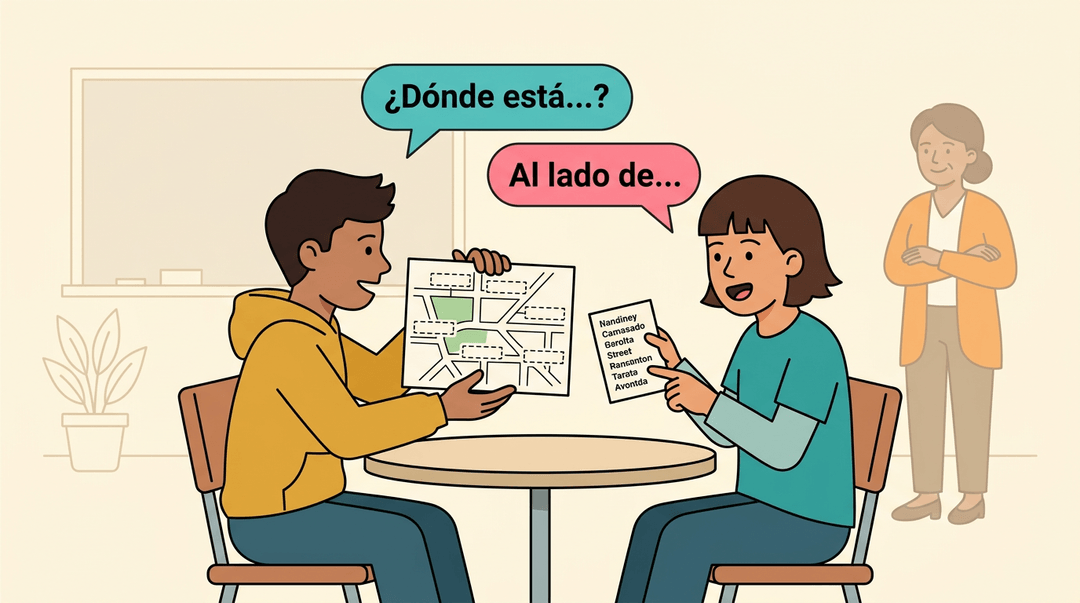
Picture a middle school Spanish class where half the students hold a map with missing street names and the other half have the names but no map. They have to talk, in Spanish, to fill in the gaps: a genuine information gap with a real communicative purpose. The point is getting the directions right, not the grammar, so you step back instead of correcting every slip. As a Brigham Young University overview of the method explains, learners constantly adjust their speech to make themselves understood, a process known as negotiation of meaning. That back-and-forth, students repairing and clarifying for each other, is communicative language teaching in action.
Planning a Communicative Language Teaching Lesson
A CLT lesson isn't a grammar lecture with a chat tacked on: it's a flow that moves students from noticing language to needing it. Here's the five-phase structure we recommend, plus a quick check before you walk in.
The five-phase lesson flow
- Open with a communicative hook. A 3-minute real exchange, not a drill.
- Try: "Ask your partner two things they did this weekend, then report one back."
- Present the target language in context. Embed it in a dialogue, text, or clip.
- A short restaurant conversation teaches "Could I have...?" better than a chart.
- Run guided pair or group practice. Structured, but about real meaning.
- Give a frame: "Could I have ___, please?" with a menu each pair works from.
- Release students into a free communicative task. No script, just a goal.
- Build in a gap: each partner holds information the other needs to finish.
- Close with reflection and feedback. Patterns, not interruptions.
- Jot errors while you circulate; address the top two or three with the whole class.
- Ask: "What word did you need today that you didn't have?"
⚠️ Watch out: correcting students mid-task kills the fluency you're building. Note it, let the conversation finish, and fix the pattern afterward.
Fit the free task to your learners
| Level | Task type | What it looks like |
|---|---|---|
| Elementary | Picture info-gap | Partner A describes a hidden picture; Partner B draws it |
| Middle school | Role-play dialogues | A shopkeeper and a customer negotiate a return |
| Adult / ESL | Real-life simulations | A job interview or doctor's visit, played in character |
Before you teach, run this check
Scan your plan against these four questions. If any answer is no, adjust before class, not during.
- Real communicative purpose? Students exchange meaning they actually want, not recited forms.
- ❌ "Read the dialogue aloud twice."
- ✅ "Find three foods you and your partner both ate yesterday."
- The difference: the second can't be completed without genuine exchange.
- Information gap present? One partner knows something the other needs to succeed.
- Minimal teacher intervention? During the free task, you circulate and take notes, not lead.
- Fluency and accuracy balanced? Free talk during the task, targeted correction after it.
Once this flow works for your class, keep it: build and reuse your CLT lesson flow with EMStudio's online lesson planner.
Benefits of Communicative Language Teaching
Once you move past the theory, CLT's real payoff shows up in the classroom itself: students talk more, worry less, and actually use the language they're learning. Here's where that shows up most.
How it boosts student engagement
Because CLT is student-centered and task-oriented, students drive the lesson instead of sitting through it.
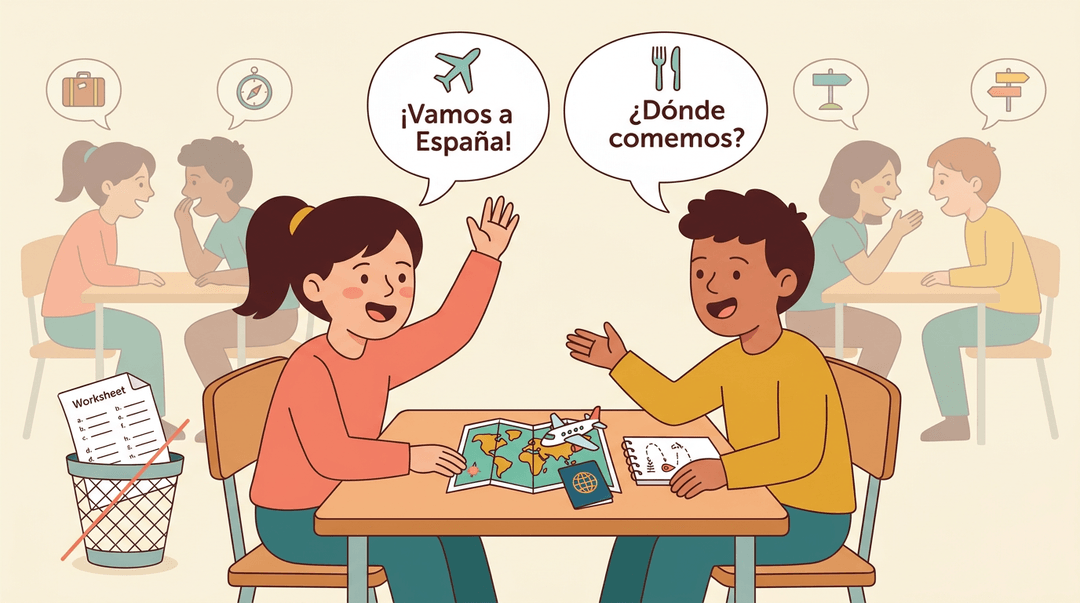
For example, a middle school Spanish teacher who swaps a vocabulary worksheet for a partner "plan a trip" task usually sees more hands up and more talking.
That shift tends to raise interest and enjoyment, too: when a task mirrors a real-life scenario, like ordering food or asking for directions, students stop treating the language as an abstract subject and start treating it as something they'll actually use.
Working in pairs and small groups also builds interpersonal relationships: students learn to negotiate meaning with each other, not just answer to the teacher.
How it builds real communication skills
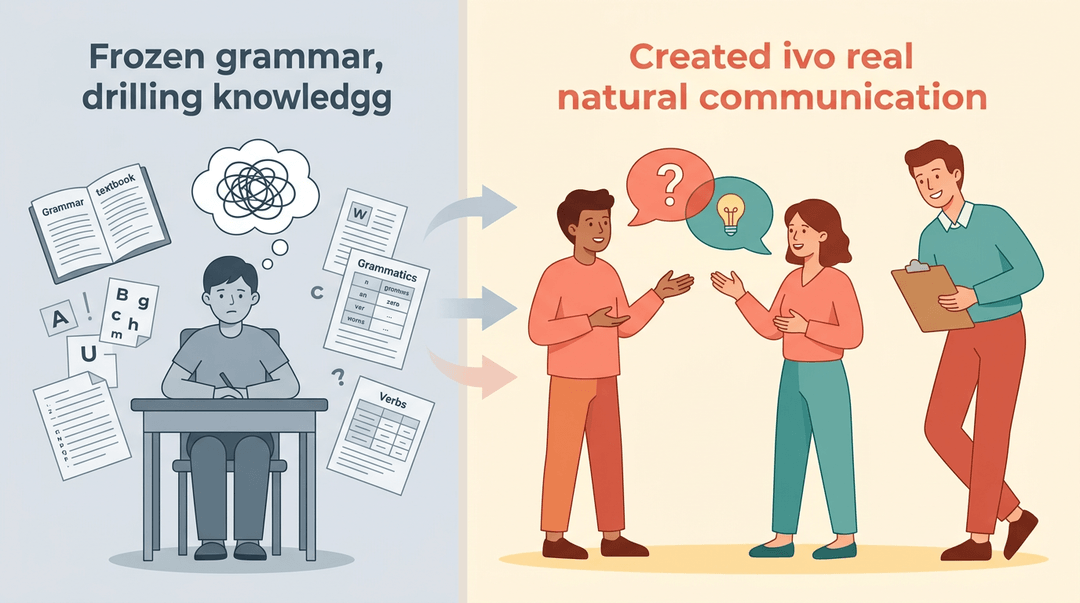
CLT also closes the gap between knowing a language and using it. Grammar knowledge only counts for so much if a student freezes when asked a real question.
Because tasks force learners to negotiate meaning on the spot, CLT trains problem-solving and communication skills together, rather than grammar in isolation and communication as an afterthought.
That shift changes the teacher-student relationship, too: the teacher coaches during the task instead of lecturing before it, so the exchange feels more like a conversation than a quiz.
Practicing the whole task from start to finish, instead of drilling isolated pieces, lets learning happen the way it does outside the classroom: naturally.
Challenges and Drawbacks of CLT
CLT isn't a cure-all, and it's worth being honest about where it struggles.
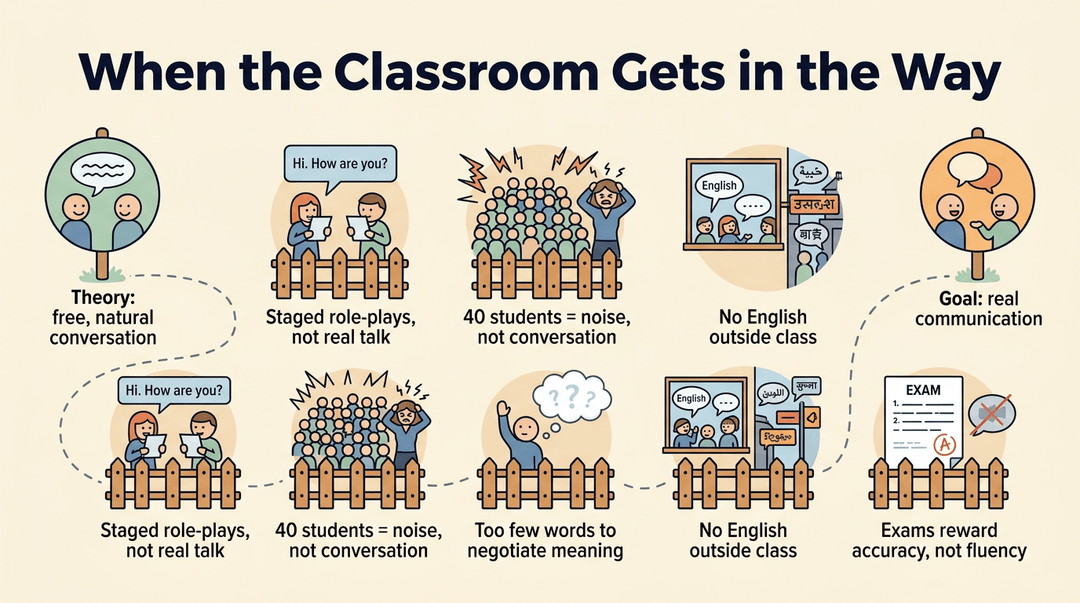
When the classroom gets in the way
Real classrooms don't always behave like the theory assumes. Several things get in the way:
- Abstract or inauthentic activities. Role-plays and info-gap tasks can feel staged rather than genuinely communicative.
- Large classes. Consider a high school teacher managing forty students: pair and group work turns into noise management instead of real conversation.
- Low proficiency learners often lack the vocabulary to negotiate meaning, leaving them stuck rather than speaking.
- EFL contexts, where English isn't used outside class, give students little authentic practice beyond the lesson itself.
- Grammar-based exams reward accuracy over fluency, pulling instruction back toward the drills CLT tries to move away from.
Challenges teachers and curricula face
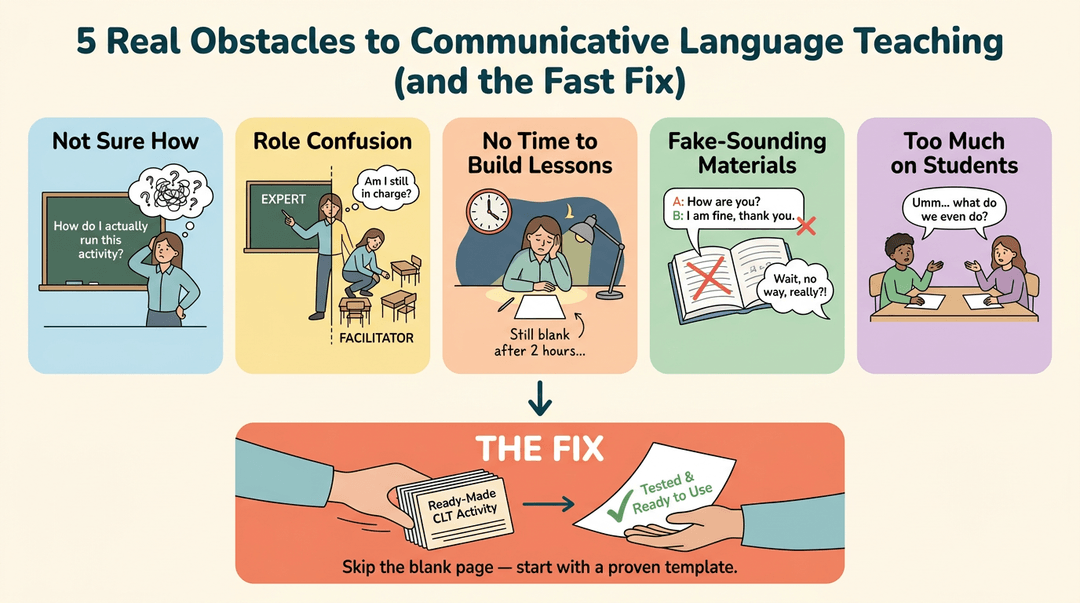
Even willing teachers run into real obstacles:
- Insufficient training leaves many unsure how to actually run a communicative lesson.
- Role confusion: shifting from "expert at the board" to facilitator feels unfamiliar, and some teachers worry it undercuts their authority.
- Designing communicative tasks from scratch takes time most teachers don't have.
- Few authentic materials exist; textbooks often default to scripted, unnatural dialogues.
- Too much responsibility shifts onto students who may not yet have the skills to self-direct.
The fix isn't always more training hours. Ready-made CLT activity templates can close that gap fast, giving teachers a tested starting point instead of a blank page.
Why some cultures resist this approach
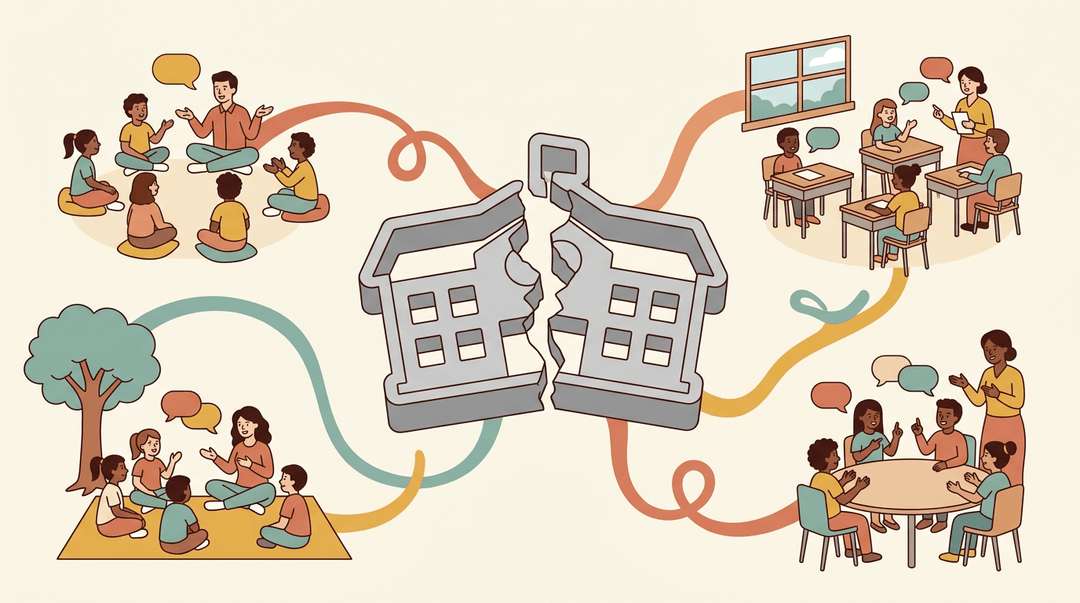
CLT doesn't travel evenly across classrooms worldwide. In China, research on communicative language teaching found that "CLT tends to counter traditional teaching practice as intensive reading is integrated into all stages of learning in China," so many teachers lean on reading and translation instead. Korean teachers report low motivation to adopt the approach. Large classes and exam pressure make the shift harder everywhere, and students themselves sometimes resist speaking up, more comfortable listening than participating.
CLT's Global Spread and Modern Status
CLT didn't stay a classroom theory for long. Within a couple of decades it reshaped language teaching worldwide, and today it faces a new question: what happens once the era of the single "designer method" ends?
How CLT spread around the world
The British Council and linguists working across Europe picked up CLT early, and by the 1980s it had become the mainstream methodology in language classrooms worldwide.
Much of that momentum came from necessity: European adults needed practical language skills for work and travel, not grammar drills they'd never use outside a test.
CLT answered that need directly, offering a more humanistic alternative to audiolingual repetition and rote memorization, one built around real communication rather than mechanical accuracy.

Where CLT stands in the post-method era
By the 1990s, researchers started questioning whether any single designer method could fit every classroom, sparking what's often called the death of methods debate.
As applied linguist B. Kumaravadivelu argues in Post-Method Pedagogy: Teacher Growth behind Walls, a true method calls for one fixed set of theoretical principles and one fixed set of classroom procedures, and CLT never cleanly fit that mold.
Instead, it survived as a loose set of guiding principles teachers adapt rather than a rigid system.
That shift opened room for what Nagy calls post-communicative methods, plus a broader trend toward localizing CLT to fit each region's culture and classroom realities.
CLT isn't a passing trend. It's a reminder that language exists to connect people, and lessons stick best when students use it for something real.
From syllabus design to grammar's supporting role, every piece points back to one goal: communication that works beyond the classroom walls.
Ready to put CLT into your weekly plans? Check out our Lesson Planning tool to organize and reuse communicative activities across every class, without starting from scratch each time.
References
- Communicative Language Teaching — www2.vobs.at
- Communicative Competence — researchgate.net
- The Natural Approach — methodsoflanguageteaching.byu.edu
- Communicative Language Teaching — methodsoflanguageteaching.byu.edu
- Functional English Grammar: An Introduction for Second Language Teachers - Graham Lock — books.google.com
- Communicative language teaching in the Chinese ... — files.eric.ed.gov
- Post-Method Pedagogy: Teacher Growth behind Walls — dbe.metu.edu.tr
- A Study of Communicative Competence — exa.ai (2017)
- Halliday’s Functional Grammar: Philosophical Foundation and Epistemology — exa.ai (2017)
- Theory and practice in second language syllabus design — exa.ai (2013)
- From Simple Sentences to Expanded Ideas: Grammar Strategies for MLEs | TESOL — tesol.org
Frequently asked questions
What is communicative language learning?
Communicative language learning is learning to use a language effectively and appropriately in real social situations, rather than only memorizing grammar rules. It develops communicative competence through meaningful interaction, including requesting, explaining, persuading, and repairing misunderstandings.
What is the main focus of communicative language teaching?
The main focus of Communicative Language Teaching is meaningful communication and communicative competence. Students use language for real purposes, with attention to both fluency and accuracy, instead of practicing grammar in isolation.
Can you give me an example of communicative language teaching?
One example is a Spanish information-gap activity. One student has a map with missing street names while another has the missing names, so they must speak Spanish to ask for and give directions, clarify meaning, and complete the map.