Science of Learning: What It Is and How to Apply It

Jump to section
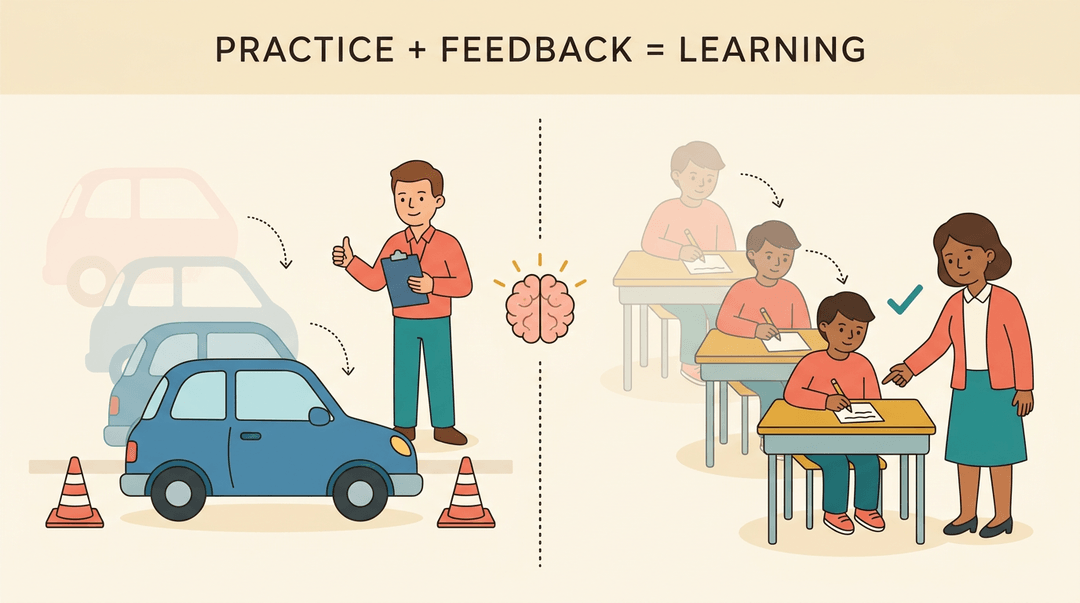
Think about the last time you learned to parallel park. You probably didn't master it from one explanation. You practiced, got feedback, and slowly built a feel for it.
Teaching works the same way, and the science of learning is the research that explains why some practice sticks and some doesn't.
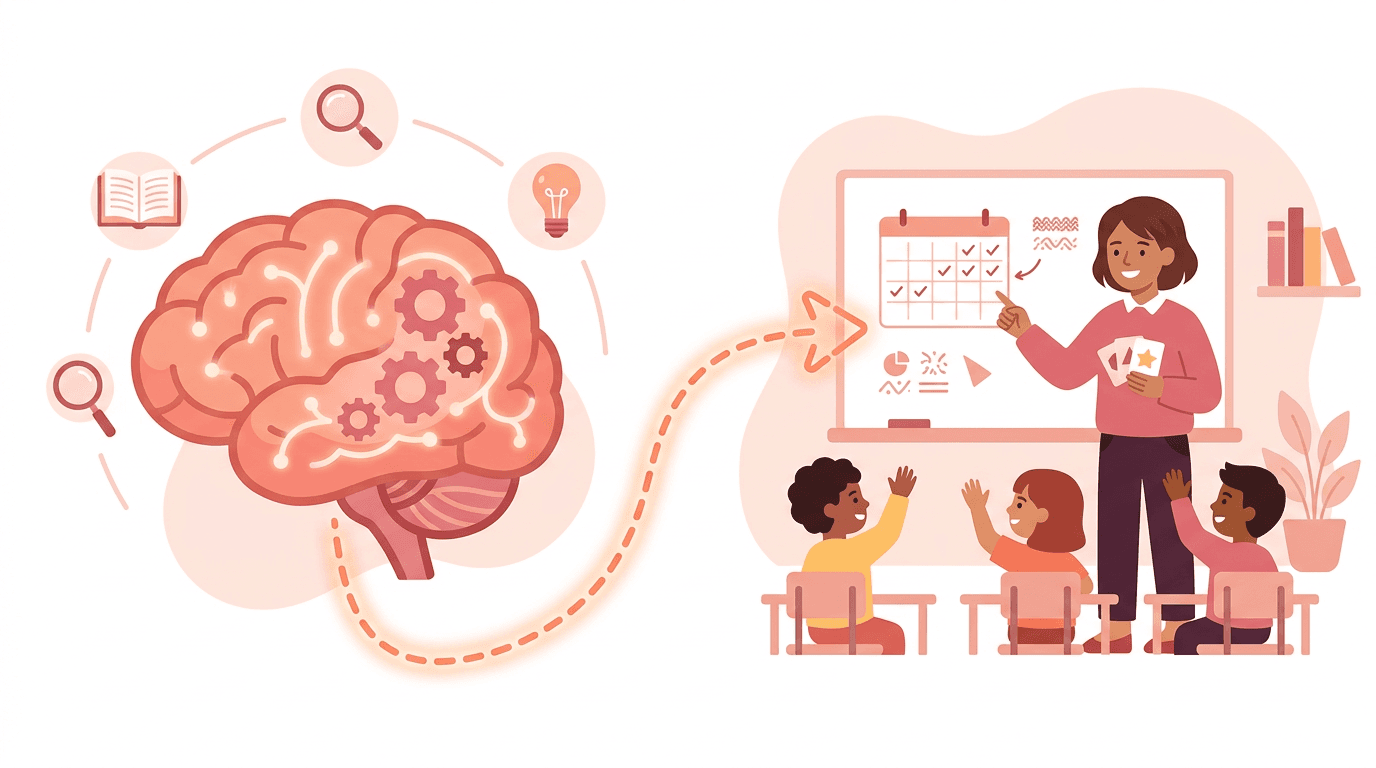
The science of learning is the body of research on how people acquire, retain, and apply knowledge. It draws on cognitive psychology, neuroscience, and classroom studies to show what actually helps students learn.
In this post, we'll cover what the field is, the core principles behind it, how mindset shapes effort, and how to turn all of it into lessons you can use on Monday morning.
What Is the Science of Learning?
The science of teaching and learning is the research-based study of how people learn and how teaching can support that process. Its purpose is to test which methods actually work and explain why, so you're not left guessing.
Here's what that looks like in your classroom.
Why prior knowledge matters for learning
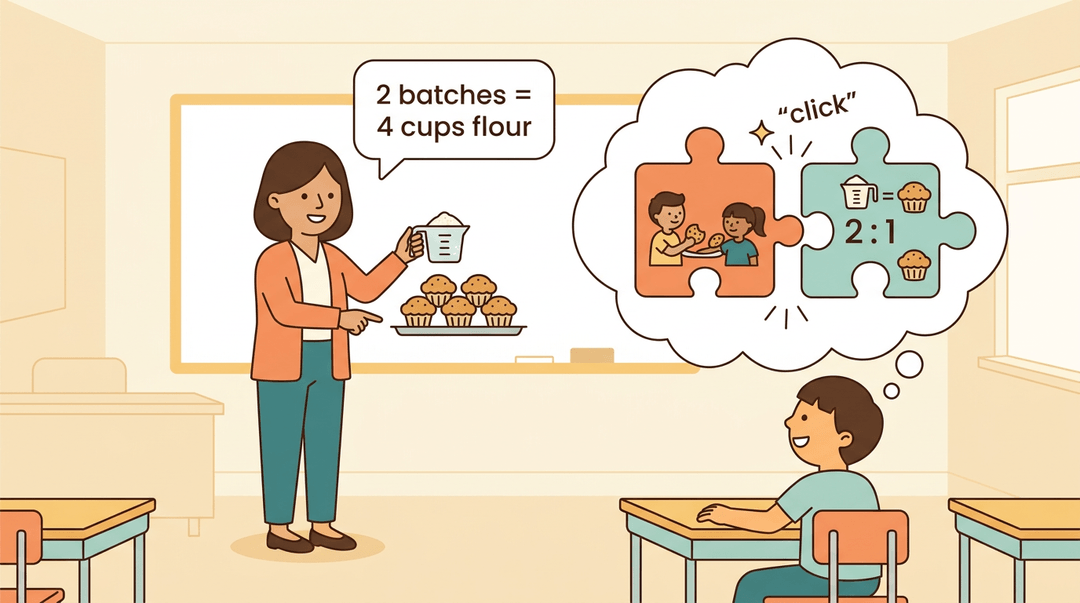
New learning builds on what's already there. Ideas stick when they attach to something students already know, which is why professional development so often emphasizes checking prior knowledge before you teach.
Consider a seventh-grade teacher introducing ratios who starts by asking how many cups of flour go into two batches of muffins. Students already understand sharing, so the new idea has something to grab onto.
How chunking lightens cognitive load
Working memory can only juggle so much at once. Chunking breaks content into smaller, connected pieces, which extends working memory by making each piece easier to hold.
Pair it with effortful thinking strategies, like asking students to explain a step in their own words. Chunk your lessons into short segments and check for understanding after each one.
A middle school science teacher might split a lesson on cells into structures, functions, and how they work together.
Why retrieval practice and feedback work
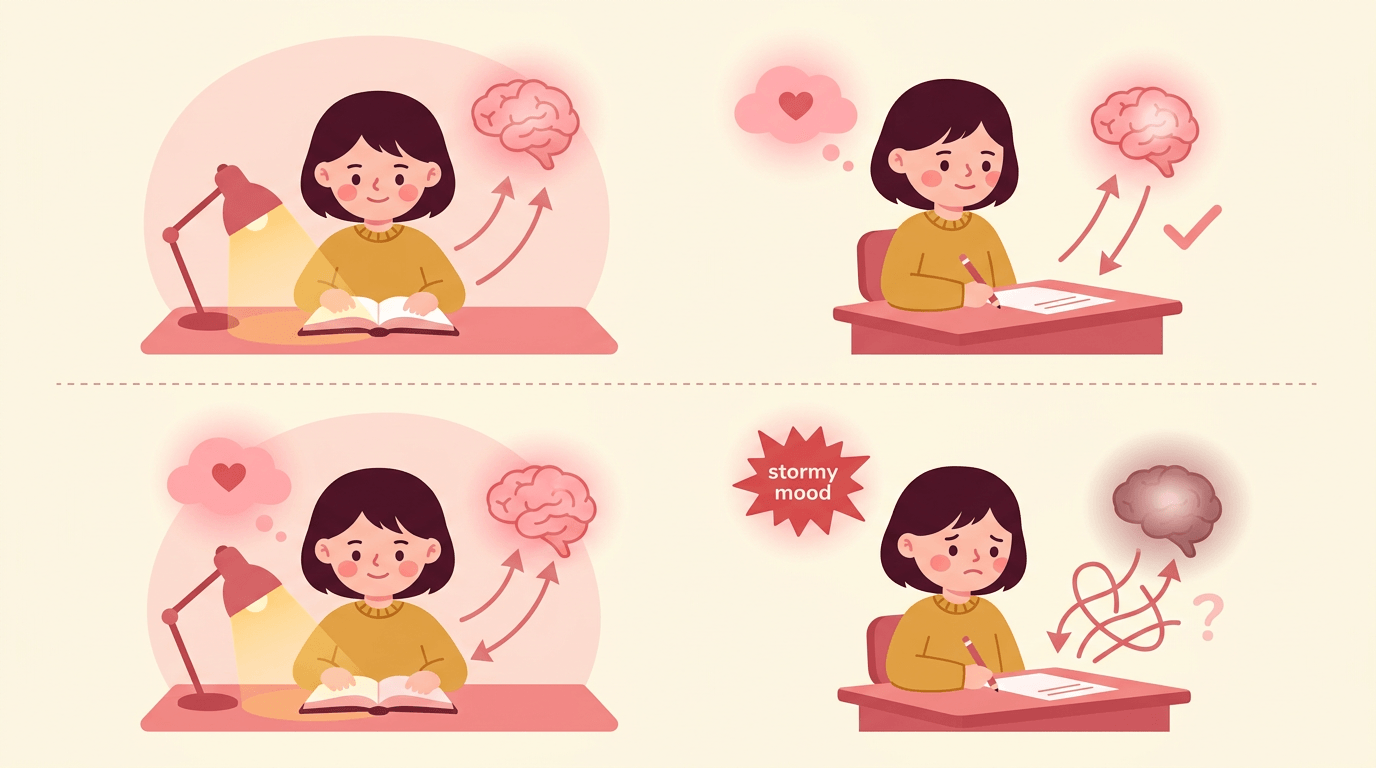
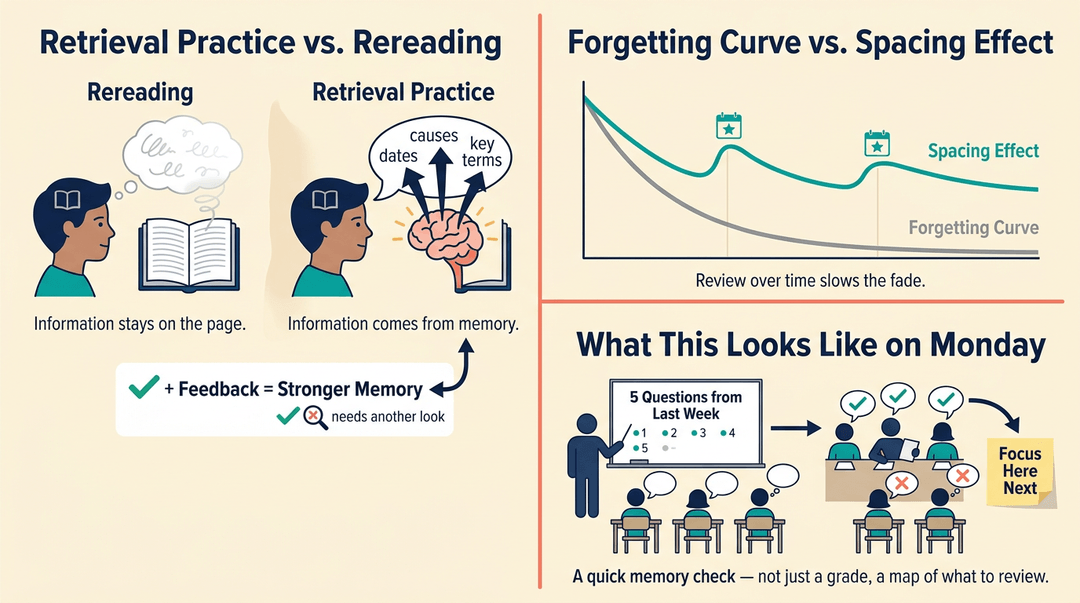
Retrieval practice, pulling information out of memory rather than rereading it, is the core strategy here. Feedback makes it stronger, because students learn what they got right and what needs another look. Timing matters too.
The forgetting curve shows how memory fades without review, and the spacing effect shows that reviewing over time slows that fade. Recall can also depend on the conditions present when something was learned, which is the idea behind state-dependent learning.
A CELL at UIndy article on spacing puts it plainly: "Engaging in repeated retrieval practice during spaced study sessions strengthens memory recall and promotes deeper learning."
Picture a high school history teacher who opens each Monday with five questions from last week's unit. Students answer from memory, then check together. The quick check doesn't just grade; it shows students where to focus.
Learners build their own understanding
Students aren't empty containers. Learners construct their own knowledge by connecting new information to what they already believe. That's why the research favors tasks where students explain, predict, and compare rather than simply listen.
Building deeper mental models for learning
A mental model is a framework that links facts into a bigger picture. Novices tend to see isolated facts, while experts see patterns and principles. That gap is the difference between memorizing a rule and understanding why it works.
A student who can explain why you flip the divisor is building a model. One who only remembers the steps is not.
Putting Learning Science into Your Lesson Plans
Pick your setting, choose one move, and try it this week. Each strategy below comes with something you can lift straight into tomorrow's plan.
Elementary (K-5)
Young learners need short, visual, low-stakes routines. These three fit into the edges of a lesson you already teach.
- Start with a short retrieval warm-up. Students pull yesterday's learning from memory before you reteach anything.
- Say: "Close your notebooks. Write three things you remember from yesterday."
- Chunk directions with visuals. Put one icon per step on the board and release one step at a time.
- Draw a pencil, a book, a star. Say: "Do the pencil step only, then look up."
- Praise the strategy, not the child. Name something the student controlled.
- ✅ "You tried a new strategy when the first one got stuck."
- ❌ "You're so smart."
- The difference: the first points to effort and choices students can repeat.
Secondary (6-12)
Older students can handle more spacing and more self-awareness. These three strategies work across subjects.
| Strategy | What it looks like |
|---|---|
| Spaced review quiz | Five questions: three from this week, two from earlier units |
| Interleaved practice set | Mixed problem types in one set, not ten of the same |
| Metacognitive reflection log | Two-line entry at the end of class or a test |
For the log, try: "What was hardest today? What will I do differently next time?"
Example: A 7th-grade math teacher swaps Friday's single-topic worksheet for a mixed set of ratio, percent, and fraction problems. Students have to decide which method fits each one, so they're practicing choosing, not just repeating.
Tutoring and homeschooling
With one learner, you can respond in the moment. Find your situation and read across.
| When you see... | Try... |
|---|---|
| A session starting cold | One-on-one retrieval check: "Tell me what you remember from last time, no notes." |
| A skill that's still shaky | Flexible mastery pacing: stay put and re-teach until they can do it without hints |
| A finished unit and open time | Self-paced spiral review: keep a topic list; the learner picks two old topics per session |
⚠️ Watch out: Don't add all nine strategies at once. Start with one, run it for two weeks, then add another.
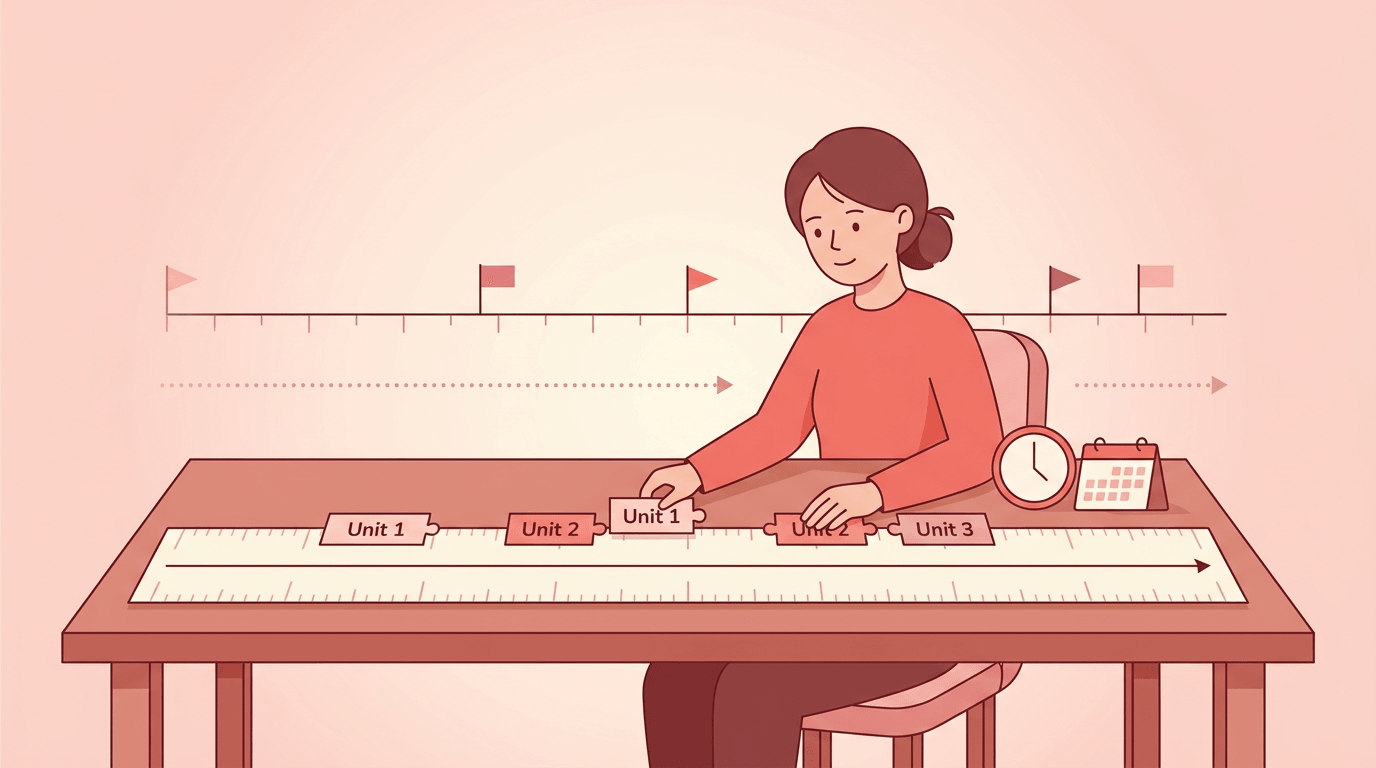
Build spaced retrieval and chunked units directly into your pacing guide with EMStudio's curriculum planner.
How Mindset Shapes Learning
Ever notice how two students can face the same hard problem and react in completely different ways? Much of that difference comes down to belief. Here's what the research says about why, and what you can do about it.
Fixed mindset versus growth mindset
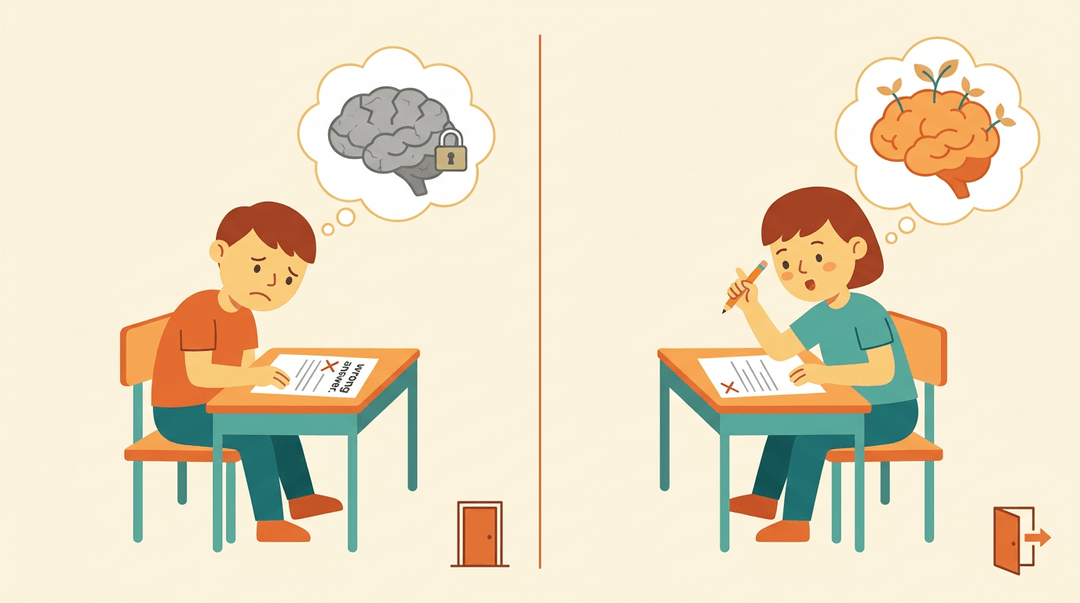
Dweck's mindset theory separates two beliefs about ability. A fixed mindset assumes talent is set in stone, so a challenge feels like a threat. A growth mindset sees ability as something that develops, so a mistake becomes useful information.
Students with a growth mindset see failure as a learning opportunity, which means they can ask what went wrong and try a better approach.
Why the type of praise matters
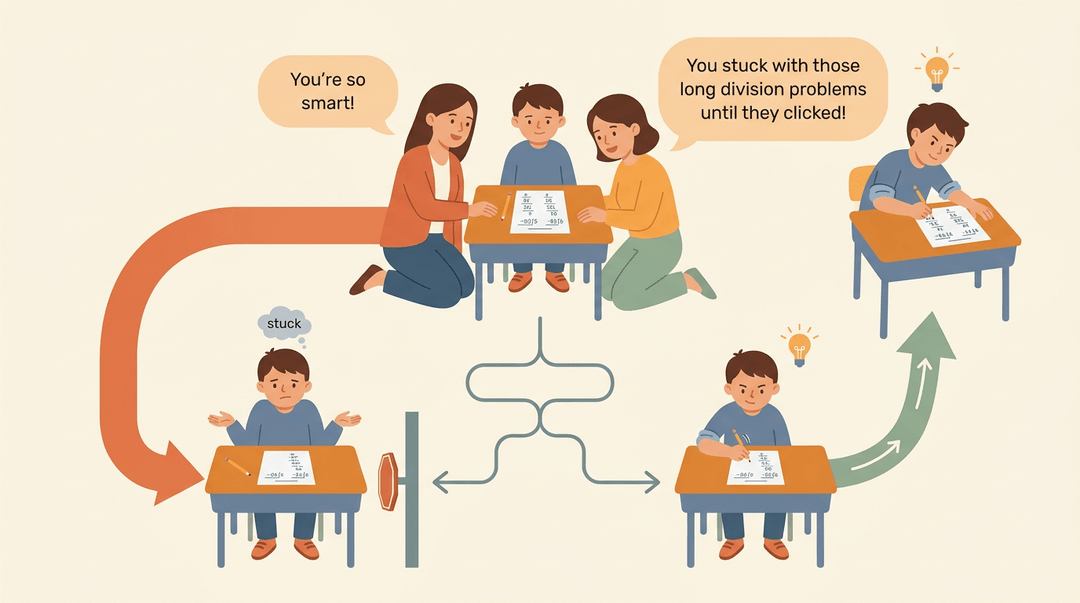
Not all praise works the same way. Effort-based praise highlights what a student did, while trait praise focuses on who they are.
A recent study on parental praise found that process praise, which highlights child effort, fostered persistence, while person praise could undermine it. Effort is something students control, so praising it keeps them going.
Criticism works the same way. Feedback about a student's strategy gives them something to change. Feedback about their character gives them nothing to act on.
Consider a fifth-grade teacher who swaps "You're so smart" for "You stuck with those long division problems until they clicked." That student is more likely to tackle the next hard problem.
Try effort-based feedback scripts like "I noticed you tried a new strategy. What happened when you did?"
How beliefs about ability affect learning
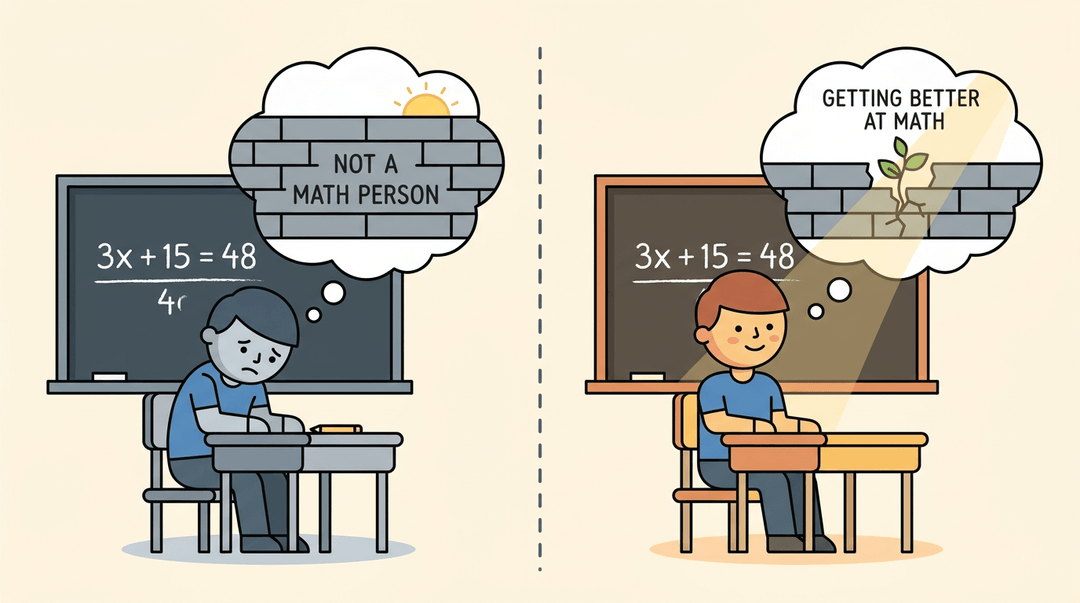
What students believe about their learning ability affects their outcomes. A student who thinks they're "just not a math person" may stop trying before they start.
The good news is that mindset isn't an immutable trait, so those beliefs can shift with the right experiences.
Cultural and social messages shape these beliefs too. Ideas students pick up at home, from peers, and in media about who is "good at" what influence how they see themselves. Be mindful of the labels you use.
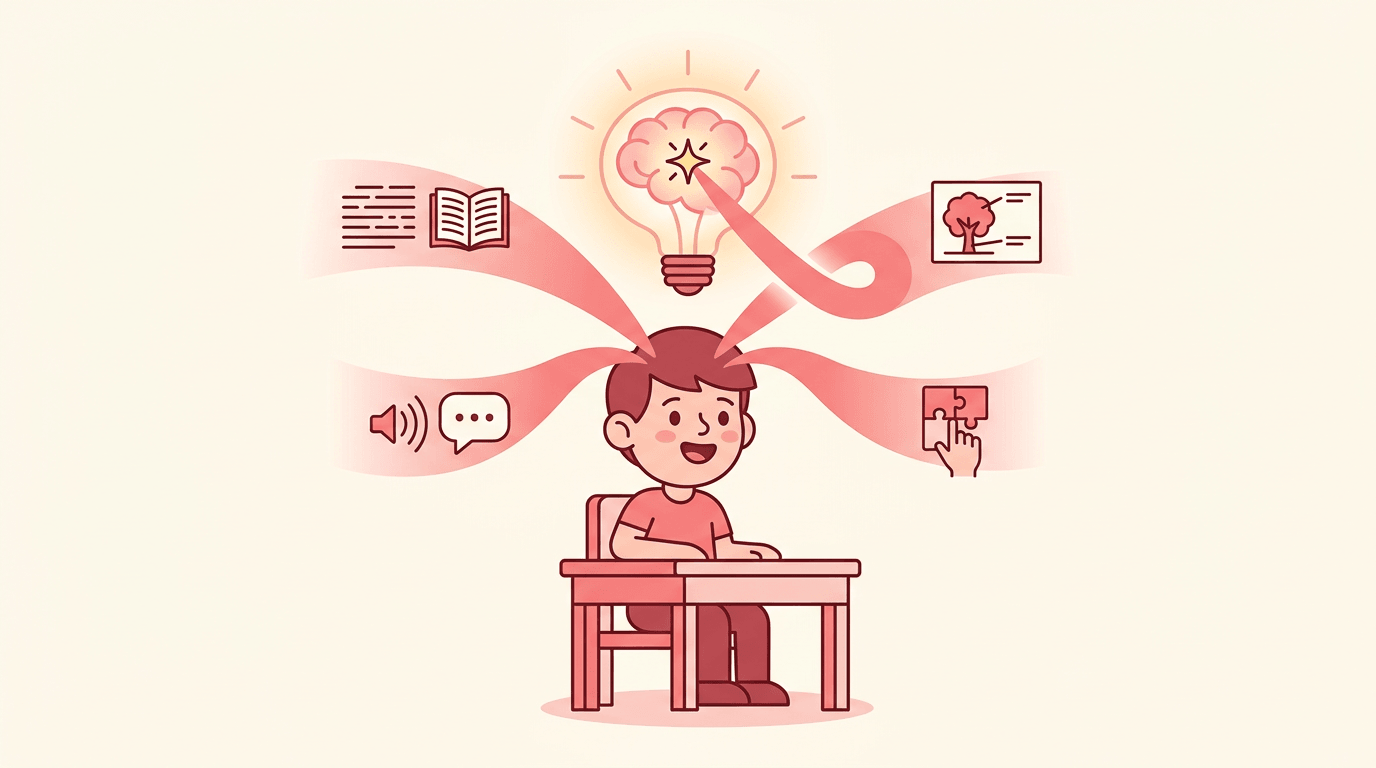
The same pattern shows up in the popular idea that each student has a fixed learning style.
Yale's Poorvu Center for Teaching and Learning notes there is no scientific evidence that matching content to learning styles enhances learning outcomes. Teach to the content, not the label.
Helping students overcome resistance to learning
Resistance often traces back to fear of failure. A student who expects to be embarrassed will avoid the task, and that avoidance can look like laziness from the outside. Metacognition, or thinking about one's own thinking, gives students a way in.
When a student can say "I got stuck on step two," the problem becomes specific and manageable.
Your behavior shapes mindset as well. When you respond to a wrong answer with curiosity rather than disappointment, students learn that mistakes are safe to explore. Mistakes are data, and students who see them that way keep working.
Designing Lessons and Reflecting on Teaching
So how do we teach science? Start with the lesson itself.
How course design shapes learning
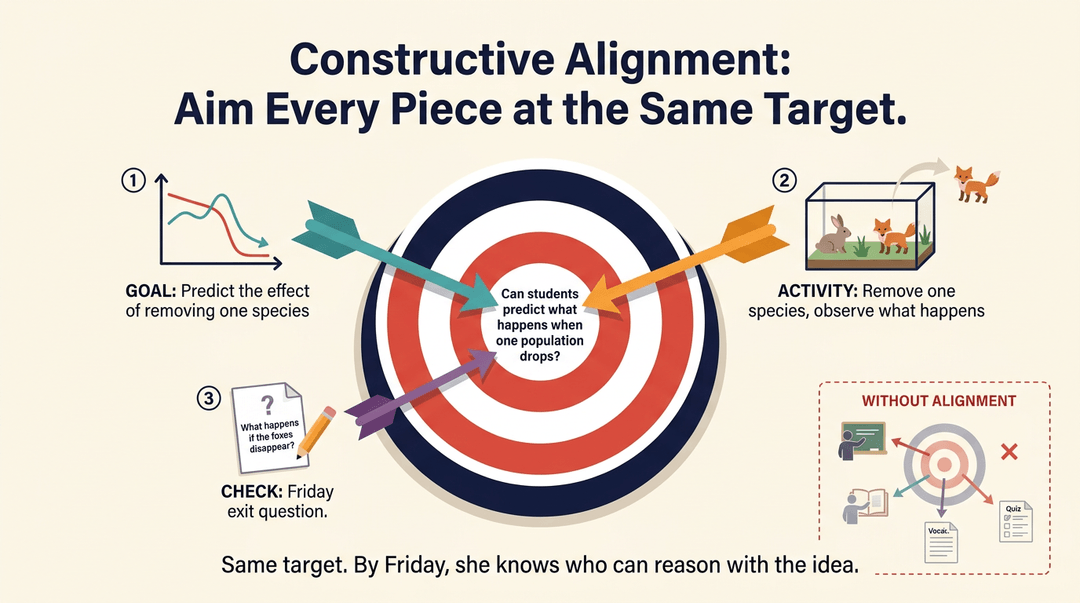
Constructive alignment means every part of a lesson points at the same target: your goal, your activities, and your check for understanding. Structure courses around how students think, not what you cover.
Consider a seventh-grade science teacher who wants students to predict what happens when one population drops. She builds a short experiment and an exit question around that prediction, and by Friday she knows who can reason with the idea.
Reflecting on your own teaching
Start with teaching effectiveness: which lessons actually produced the thinking you wanted? Then explore your personal teaching philosophy in a sentence or two. Finally, self-assess your strategy use:
- Which strategies work, and which are just habit?
- What did students show you they need?
A veteran history teacher auditing two weeks of lessons might find retrieval practice appears just once. One small swap, and review starts to stick.
Students' stages of intellectual growth
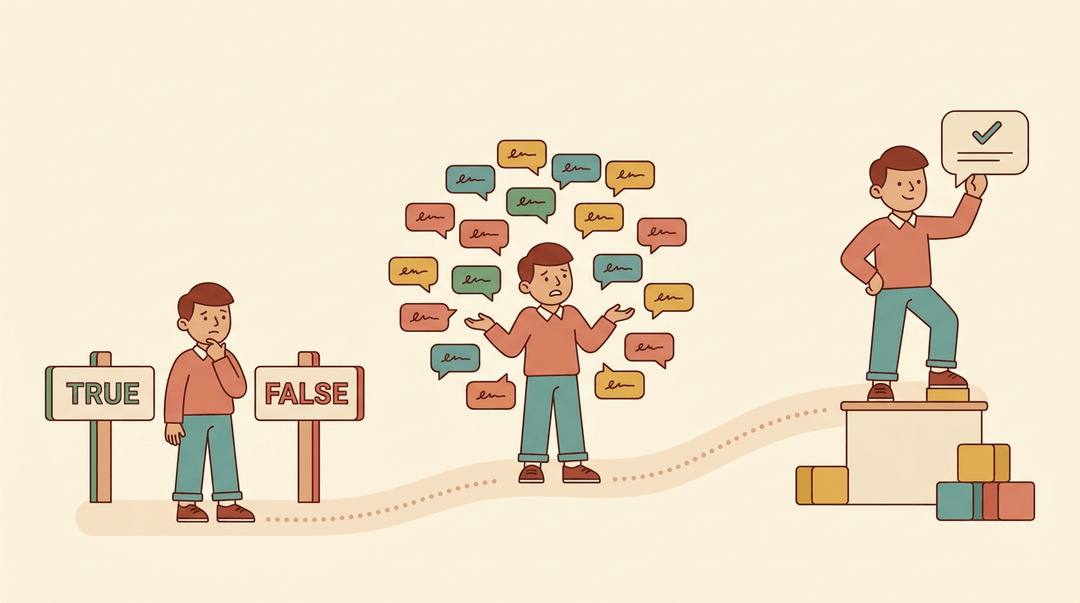
Perry's stages of development describe students' evolving epistemic beliefs, meaning what they think knowledge is and how it's known.
According to The Innovative Instructor, Perry described students moving from seeing things as simply true or false, through a stage where every belief seems equally valid, toward commitments they can defend.
A student stuck on true or false expects you to supply the answer. Your move is asking them to defend a claim, not repeat one.
Putting Learning Science into Practice
Research only changes classrooms when it reaches the people doing the teaching. Here's how one district turned learning science into everyday practice, and what you can borrow from it.
Rolling out professional development districtwide
Change at this scale starts with leaders. The rollout moved in phases:
- leaders first
- then teachers
- then all staff
The real goal is a district-wide cultural shift, not a one-time workshop. Picture a fourth-grade teacher who learns about retrieval practice in the fall and sees it become part of everyday routines by spring.
Lasting culture takes a decade-long implementation process, so plan for patience.
Balancing research with teacher judgment
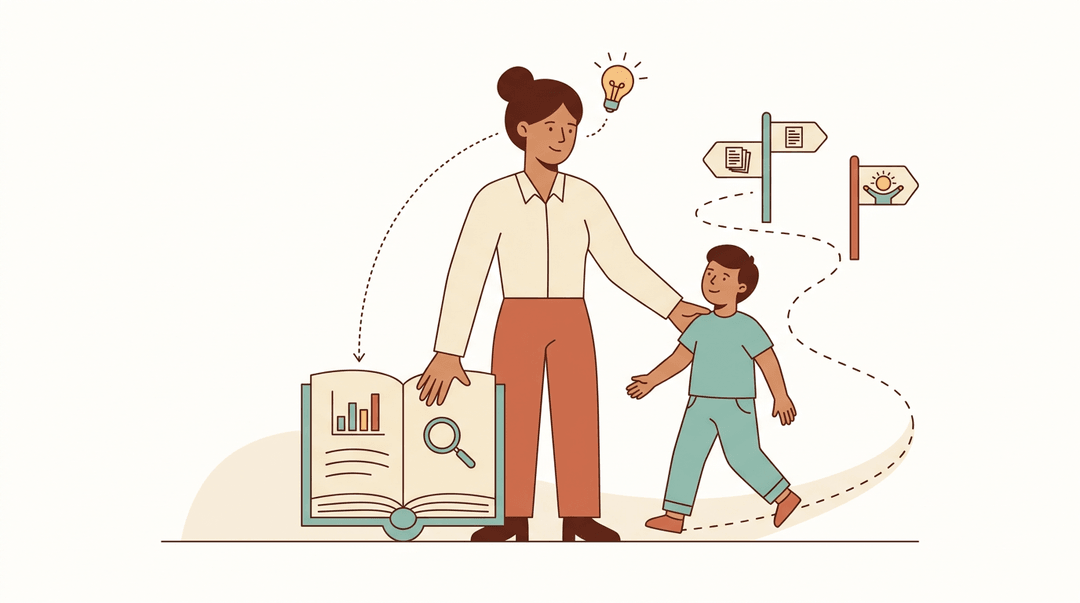
Research gives you a strong starting point, but it isn't a script. The approach stayed grounded in evidence without being prescriptive, which leaves room for your professional judgment.
You know whether a struggling reader needs a shorter passage today or a quick warm-up first. The goal is evidence-informed teaching, not rigid compliance.
Applying learning science equitably
Strong strategies should work for everyone, so equity belongs at the design stage. Teams that consider underrepresented populations from the start are working toward closing achievement gaps, not just adding support later.
Before you finalize any plan, ask which students it might leave out, then build for them first.
Partnering with research institutions
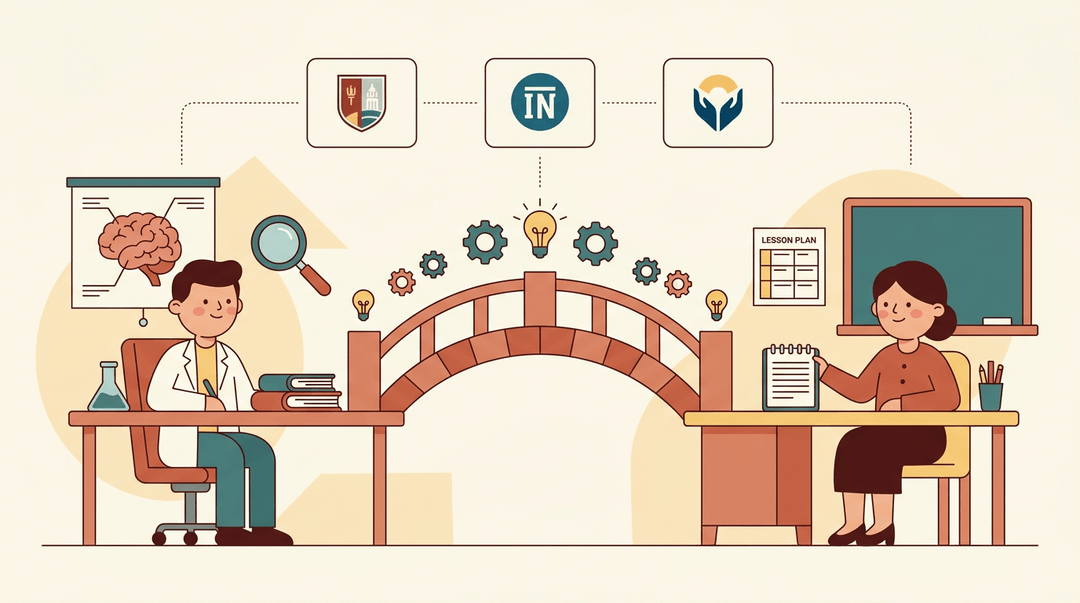
Schools don't have to do this alone. The district partnered with CTTL and Deans for Impact, which argues that embedding learning science into teacher preparation is an important lever for instructional improvement.
The work also recognized academic researchers.
So what does a learning scientist do? A learning scientist studies how people learn and helps turn those findings into classroom practice, bridging the research lab and your lesson plan.
Measuring real outcomes for students
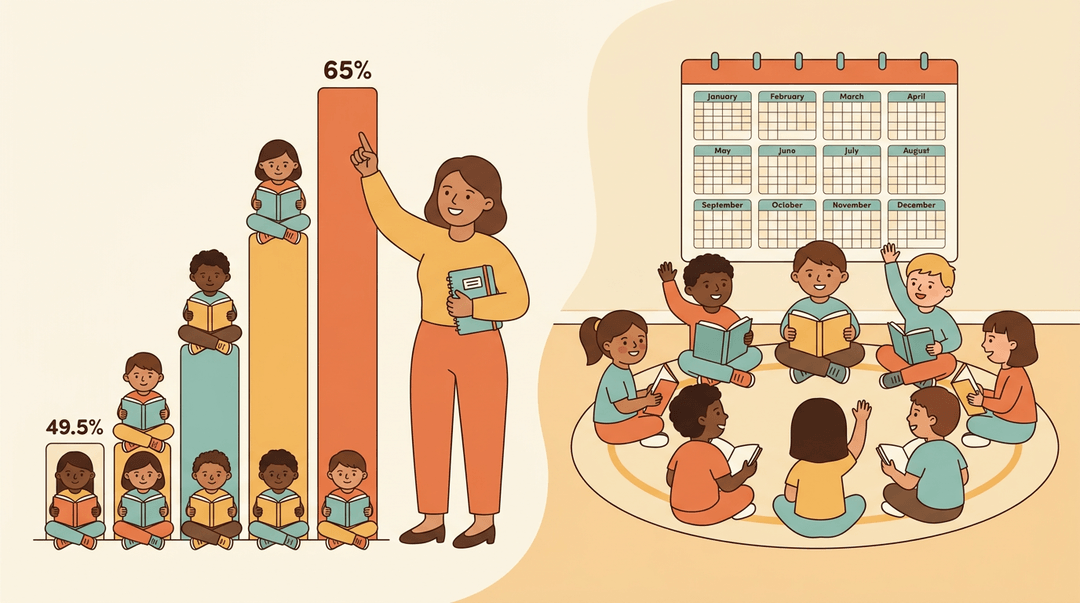
Did it work? As Edutopia reports, 3rd-grade English language arts (ELA) proficiency on the Maryland Comprehensive Assessment Program rose from 49.5% to 65% between 2018 and 2025, 14.2 points above the state average.
Gains extended to Black and low-income students. In May 2023, the Center for Model Schools named the district an Innovative District, one of only seven in the U.S.
Progress like that takes time. And it starts with teachers.
When you plan with how learning actually works, you spend less time guessing and more time teaching. The core principles, mindset research, and classroom strategies covered here work best together, and each one makes the others more effective.
Ready to build these ideas into your whole year? Check out our Curriculum Planner to plan units, lessons, and standards across the entire school year.
References
- Evaluating the Impact of Parental Praise on Children’s Problem-Solving Persistence — doi.org (2025)
- Teach Growth and Fixed Mindset — ctli.vermontstate.edu
- Perry’s Scheme – Understanding the Intellectual Development of College-Age Students — ii.library.jhu.edu
- 3 Learning Benefits of Spacing — cell.uindy.edu
- Learning Styles as a Myth — poorvucenter.yale.edu
- District-led School Turnaround: Aiming for Ambitious and Equitable Instruction in Shelby County’s iZone — repository.upenn.edu (2020)
- Deans for Impact Releases New Edition of The Science of Learning | May 19, 2026 — deansforimpact.org (2026)
- Working Toward Instructional Equity for All — edutopia.org (2026)
Frequently asked questions
What is the science of teaching and learning?
The science of teaching and learning is the research-based study of how people acquire, retain, and apply knowledge, and how teaching can support that process. It draws on fields such as cognitive psychology, neuroscience, and classroom research to identify effective instructional methods and explain why they work.
What is the purpose of learning science?
The purpose of learning science is to understand how learning happens and determine which teaching practices improve it. It helps educators use evidence-informed strategies, such as prior-knowledge checks, chunking, retrieval practice, spacing, feedback, and metacognitive reflection, instead of relying on guesswork.
How do we teach science?
We teach science by aligning learning goals, activities, and assessments around how students are expected to think. Effective instruction connects new ideas to prior knowledge, presents information in manageable chunks, gives students opportunities to explain and apply concepts, uses retrieval and spaced practice, and provides timely feedback.
What does a learning scientist do?
A learning scientist studies how people learn and applies that research to improve teaching and educational practice. They may conduct research, analyze learning and classroom data, design or evaluate instructional approaches, and help connect findings from research settings with everyday lessons.