Nature of Learning Explained: Types, Conditions, and Theory

Jump to section
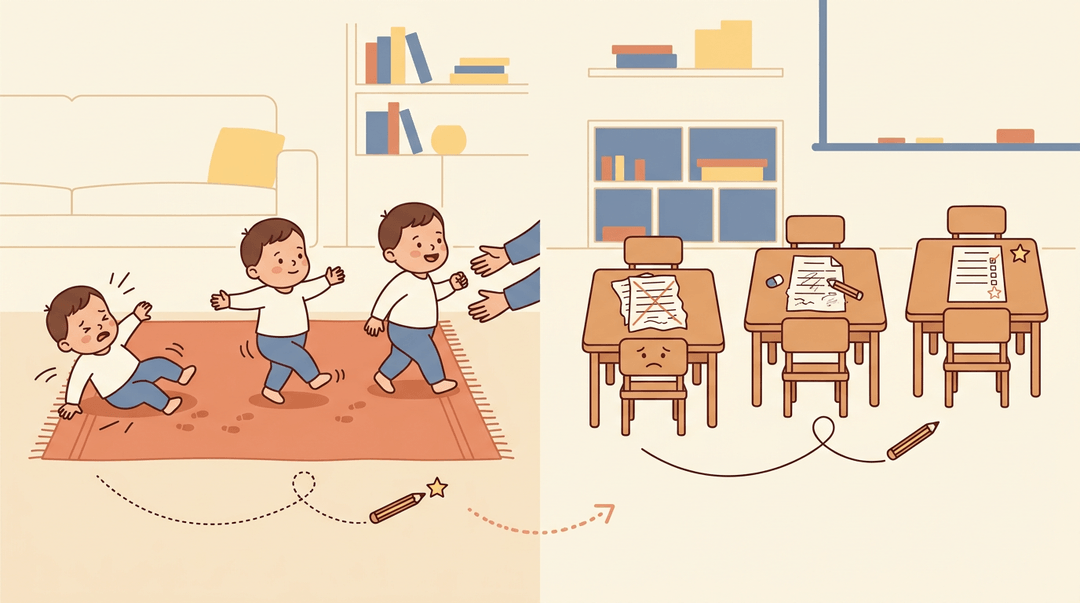
Think about a toddler learning to walk: a stumble, a wobble, a fall, then another try, a little steadier each time. Nobody hands them a manual. They build the skill through trial, feedback, and repetition until it clicks.
Learning works the same way, just with more variables and a classroom full of personalities.
At its core, learning is the process of acquiring new knowledge, skills, or behaviors through experience, instruction, and practice. Understanding that process, not just delivering it, is what separates lessons that stick from lessons that fade by Friday.
In this post, we'll unpack the types, conditions, and theory behind learning, then show you how to put it to work in your classroom.
Understanding the Nature of Learning
What actually happens when a student "gets it"? Teachers ask this every day, and we see the answer play out in every corner of the classroom.
Learning touches nearly every part of being human, which is why some frameworks even map it across seven distinct areas, from physical skill-building to emotional growth, each one shaping how a lesson actually lands.
How psychologists define learning
According to the University of Minnesota's introductory psychology text, learning is "the relatively permanent change in knowledge or behavior that is the result of experience."
That definition covers a lot of ground: picking up a new skill, absorbing a fact, or simply reacting differently the next time a similar situation comes up.
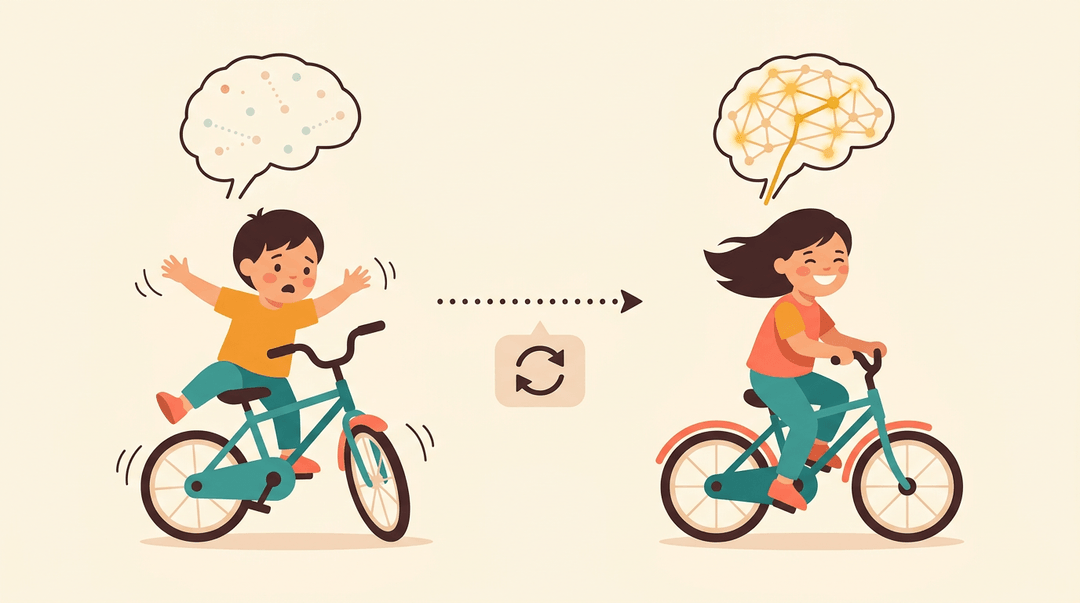
Neuroscience adds the mechanism behind it, showing that behavior grows out of neural activity, networks of neurons signaling each other until a new skill finally feels automatic.
Why learning comes naturally to us
You don't have to convince a toddler to learn to walk. Humans arrive with a built-in eagerness to learn, and intelligence itself is a natural human trait that shows up long before formal schooling starts.
Research summarized in The Learning Person ties learning directly to motivation and intelligence, describing it as a "relatively permanent change in behavior or mental processes due to experience" that runs across species, not just our own.
It's also a lifelong process: it doesn't stop at graduation, it runs from birth to the very last lesson you ever learn.
Real learning versus rote memorization
Memorizing a list isn't the same as understanding it. Rote learning, the kind built on conditioned response and repetition, is often described as parasitic: it latches onto existing knowledge without ever truly connecting to it, so it fades fast.
Meaningful learning works differently. It asks a student to weigh new information against what they already know, which is exactly why it sticks long after the quiz is over.
Learning as lifelong growth and change
Learning shows up as behavior that shifts over time: a student adjusting to a new routine, a teacher adapting to a new curriculum. It tracks alongside growth and development milestones, and it never comes from just one source.
Home, school, friendships, and even mistakes all feed it.
Setting up the Conditions for Learning
Knowing how learning works is one thing. Setting up a classroom where it actually happens is another. That's where a handful of research-backed conditions come in, and they start with what a student already knows.
Why prior knowledge matters first
New information doesn't land on a blank slate. It lands on everything a student already believes, half-remembers, or misunderstands about a topic, and that's exactly why context has to come first.
Without a reference point, a new fact is just noise: there's nothing for it to stick to.
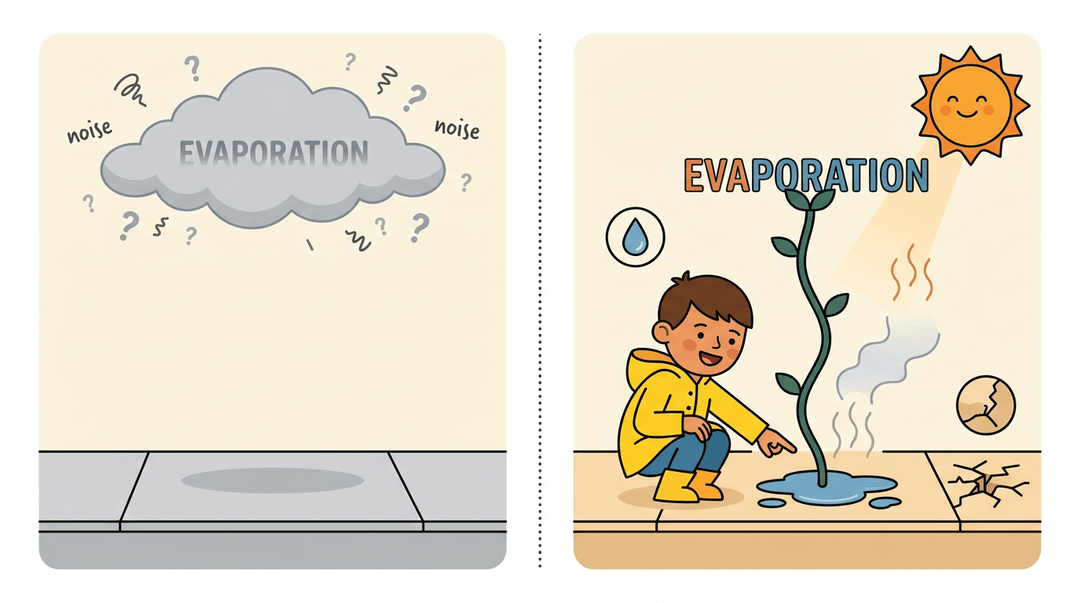
Think of a middle school teacher introducing the water cycle. Start with what students already notice (rain, puddles drying up on the sidewalk) and the vocabulary that follows has something to attach to.
Skip that step, and "evaporation" is just a word on a worksheet.
This is the first of the seven principles of learning, a model that holds that students' prior knowledge can help or hinder learning, and that how they organize that knowledge shapes how well they can apply it later.
Building on existing understanding, rather than ignoring it, is what makes transfer to new contexts possible down the road.
Pace new information in small steps
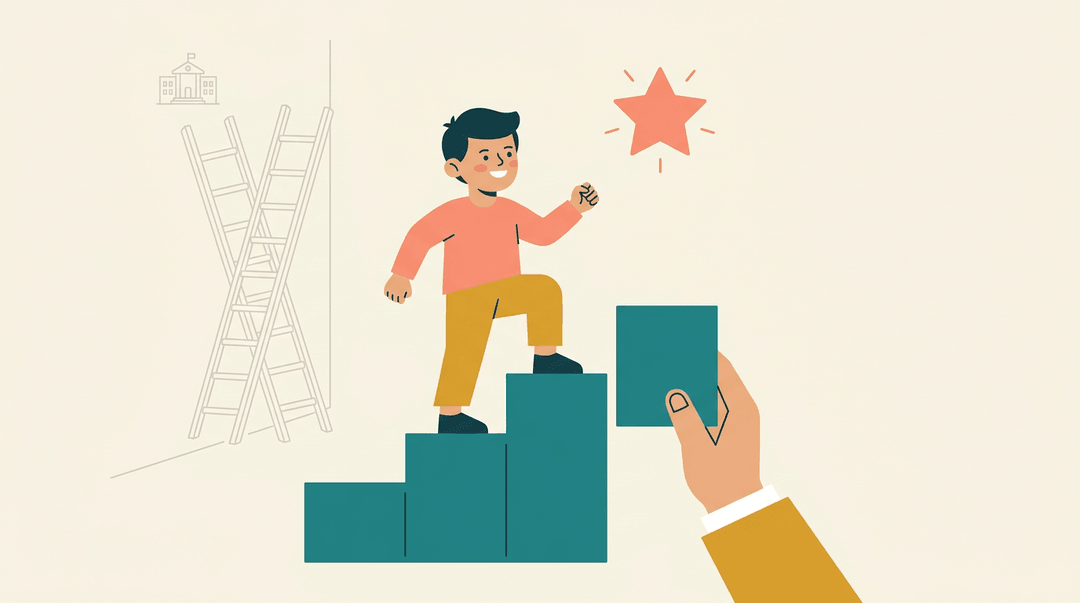
More isn't better here. The brain can only juggle so much at once, so new content needs to arrive in small, digestible increments rather than one dense download. Overload doesn't just slow learning down. It stalls it completely.
Consider a high school teacher introducing algebraic equations. Teach one operation, let it settle, then add the next, rather than handing over the whole process in one lecture.
That step-by-step build is a direct application of the same seven-principle model, which calls for balancing challenge against a student's current capacity: enough to stretch them, not so much that they shut down.
Repetition that actually helps you learn
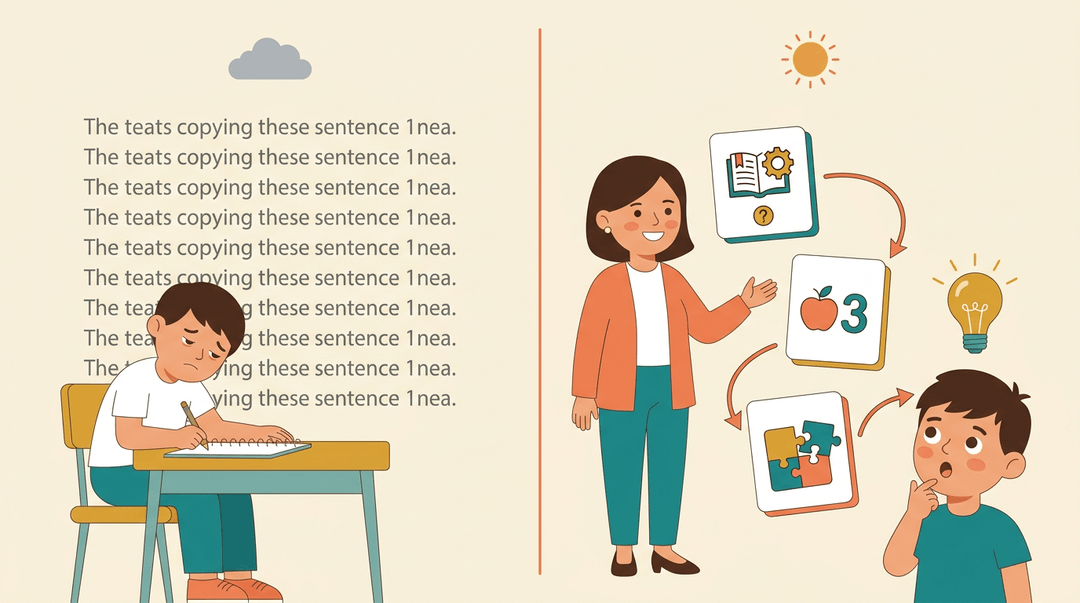
Repetition gets a bad reputation, and for good reason: senseless repetition, the kind that's just copying the same sentence ten times, rarely helps anyone. Thoughtful repetition is different.
It's what strengthens retention and turns a skill from shaky to automatic.
The key is variation. A teacher who restates the same concept a few different ways (a definition, then an example, then a quick analogy) reduces confusion instead of just repeating the confusion louder.
Practice works the same way: a few short, varied rounds beat one long, repetitive one.
Get learners actively involved
Learning sticks better when students aren't just receiving it. They need to talk about it, test it, and do something with it.
- Think-pair-share. Students reflect alone, compare notes with a partner, then share with the group.
- Hands-on tasks. A science teacher running a short lab lets students test an idea instead of just reading about it.
- Student-led presentations. Explaining a concept to classmates forces a deeper level of understanding than simply absorbing it.
Challenge students without overwhelming them
Hard work is good. Too much of it, without support, isn't. The goal is to stretch every student, including your high achievers who finish early and need more than busywork, without tipping into overload.
This is where a growth mindset matters: the belief that ability grows with effort, not a fixed trait you're stuck with.
It's also part of why the jump from high school to university can feel so jarring for students who were never asked to stretch that far before. Setting the bar appropriately high, with the right support underneath it, closes that gap before it opens.
Bringing Learning Theory into Your Classroom
All the theory above earns its keep the moment it shapes a real lesson. Here's how to turn these principles into moves you can plan tonight and run tomorrow.
Five moves to build into every lesson
- State the learning target up front. Post it where students can see it.
- On the board: "I can explain why shadows change length during the day."
- Activate prior knowledge before new content.
- Try: "What do you already know about shadows? Tell your neighbor one thing."
- Build in active participation. Every student does something, not just watches.
- Swap "any volunteers?" for whiteboards, turn-and-talks, or all-write responses.
- Plan a formative check before the bell.
- One exit-ticket question tells you who's ready to move on tomorrow.
- Normalize mistakes out loud.
- Say: "That's a useful mistake. Let's find where it came from."
Example: A fifth-grade teacher ends a fractions lesson with a single exit-ticket question. Twelve wrong answers tell her tomorrow opens with a reteach, not a new topic. That's the formative check doing its job.
Adjust the delivery by age
The principles stay constant; the packaging changes with your learners.
| Your learners | Lean on | What it looks like |
|---|---|---|
| Early years | Play and sensory input | Counting with blocks before any worksheet |
| Middle grades | Peer collaboration | Pairs solve, then explain to another pair |
| Secondary | Self-directed projects | Students choose the topic; you set checkpoints |
| Homeschool / adult | Self-paced goals | Learner sets weekly targets; you review progress |
The two-minute audit
Mid-lesson, scan the room and confirm:
- Students are actively engaged. Most are talking, writing, or building, not just listening.
- Pacing matches readiness. Nobody's finished five minutes early with nothing to do.
- Feedback is timely and specific. "Check your second step" today beats "good job" on Friday.
- Diverse learners are supported. Fast finishers have an extension; strugglers have a scaffold.
⚠️ Watch out: busy isn't the same as engaged. A quiet room coloring the title page is activity without thinking. Ask what each student's brain, not just their hands, is doing.
Once these moves become habits lesson to lesson, map these principles across your whole year with a standards-aligned curriculum planner.
Putting Students and Peers at the Center
Learning isn't something you do to students, it's something they do, with your guidance. When students actively engage with a concept instead of just listening to it, they construct their own meaning, piecing ideas together in a way that sticks.
That calls for a mix of pedagogies, not one fixed method, and we can support students further by helping them build a sense of themselves as learners: aware of how they learn best, not just what they're learning.
Why collaborative learning works so well
Cooperative learning environments turn a classroom into a working team rather than rows of individual desks.
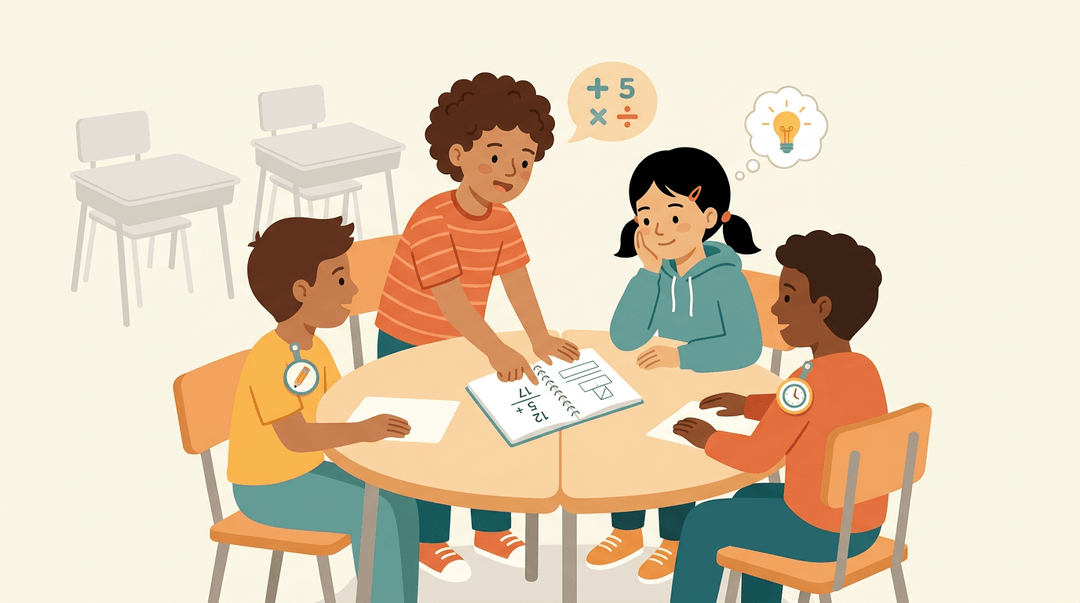
Think of a group of fifth graders solving a math problem together: each one explains a step to a partner, and in the process, the explainer learns it twice as well as the listener.
That's peer-to-peer learning at its most efficient, no teacher needed for every exchange. Simple team-building strategies, like assigning roles within a group or starting with a quick icebreaker, help that kind of sharing happen naturally.
The goal is a genuine community of learners: a room where students see each other as resources, not competitors.
Teaching to different learners and backgrounds
No two students walk in with the same prior knowledge, and a lesson that ignores that gap loses half the room before it starts. Differentiated instruction adjusts for that: the same core idea, taught through different entry points for different students.
It also means staying sensitive to diverse cultural backgrounds, since the examples and language that click for one student might not land for another. The aim isn't uniformity. It's embracing uniqueness, built around who's actually sitting in the room.
Helping students direct their own learning
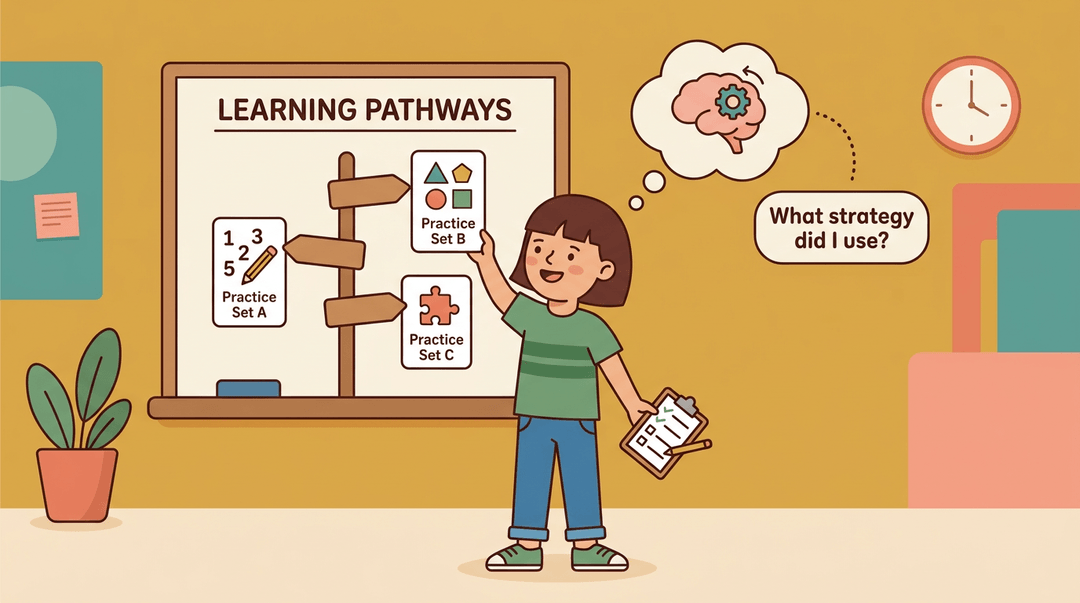
When a student gets some control over pace and resources, like choosing which practice set to tackle first, it builds both confidence and a sense of responsibility for their own progress.
Flexible goal-setting lets that student stretch toward a target that actually fits them, and working through a problem independently sharpens skills no worksheet alone can teach.
Metacognition, thinking about your own thinking, deserves to be taught explicitly rather than assumed: a quick "what strategy did you use, and why?" question turns a passing task into a lasting skill.
How Emotions and Motivation Shape Learning
Learning doesn't happen in a vacuum of pure logic. Every lesson lands inside a student's emotional state, and that state can open the door to understanding or slam it shut.
Why emotions matter to learning
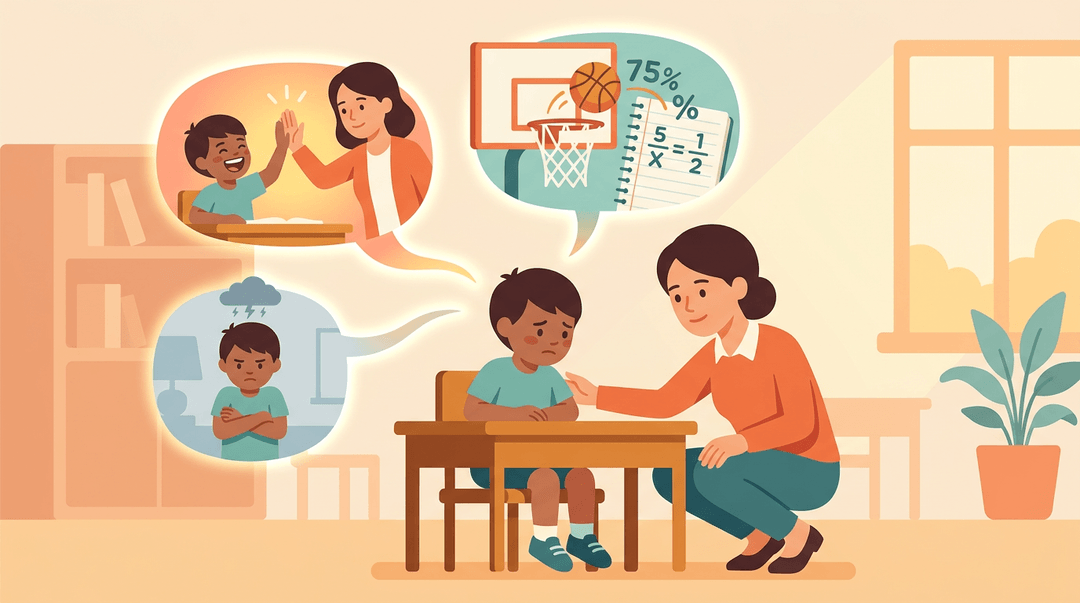
Teachers who stay emotionally attuned notice a shift in a student's mood before it turns into shutdown.
Positive experiences (a win, a laugh, a moment of being understood) make a subject feel safe to return to, while negative ones make a student brace against it.
A personal connection to the material helps too: a student who loves basketball will grasp ratios faster once they're framed around free-throw percentages.
Students also carry an emotional memory of how a teacher treated them, often longer than they remember what was taught.
Clearing emotional blocks to learning
Distress narrows thinking. A student gripped by fear or embarrassment isn't being careless. Their intelligence is simply harder to access in that moment. Letting tension discharge, through a breath, a break, or just being heard, often clears the path.
Once that release happens, students can re-evaluate the material with a clearer head instead of a defensive one.
How approval and praise boost learning
Students need to feel liked before they'll take academic risks. Approval builds the confidence to try, and genuine praise speeds learning along rather than just rewarding it.
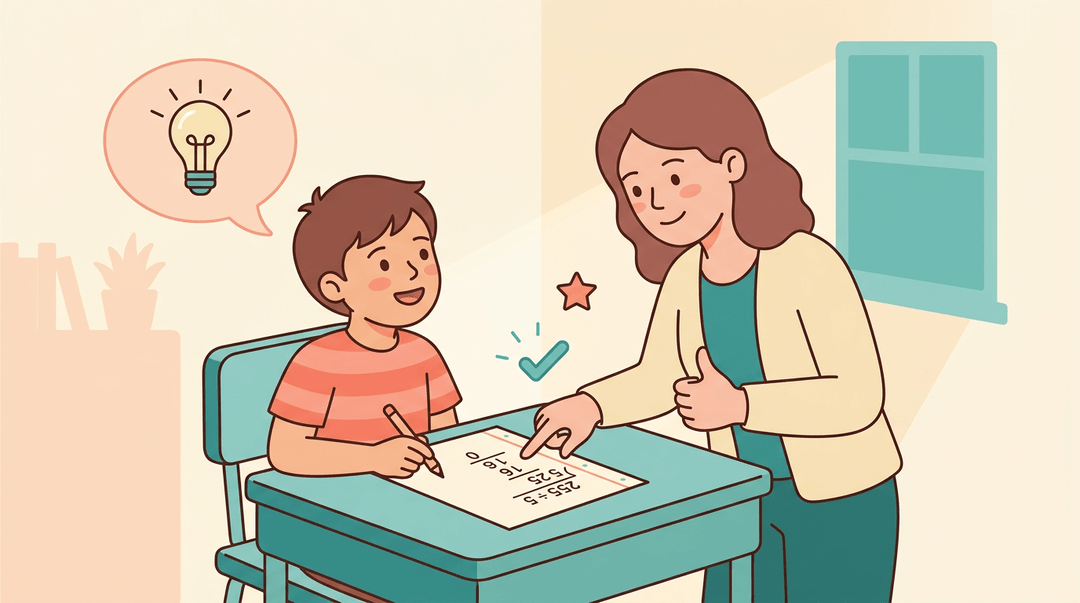
For example, a student stuck on long division often breaks through faster right after a teacher points out what they did get right. That small win fuels the next attempt.
Intrinsic motivation beats external rewards
Grades and tests are weak motivators; they measure learning, they don't drive it. The real engine is the satisfaction of learning itself: mastering something that once felt out of reach.
Give students a challenge that stretches them just past comfortable, and growth follows. A mindset that defines success as personal progress, not a score, keeps students reaching long after the test is graded.
Rethinking Assessment and Feedback
Assessment isn't the finish line of learning. It's a checkpoint that shapes where you go next.
Using feedback to guide growth
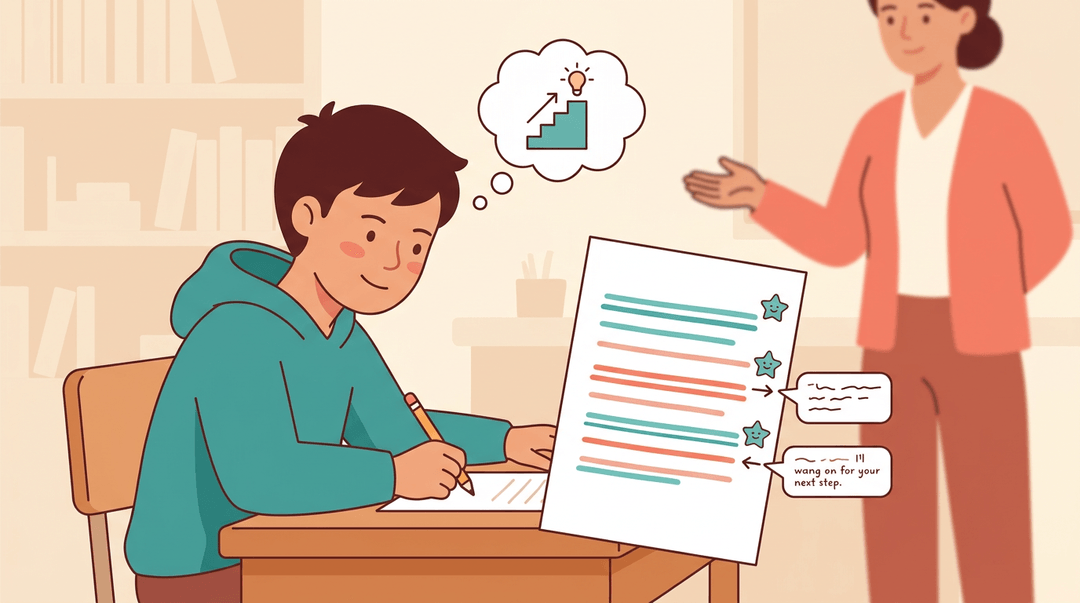
Effective feedback starts with clarity: students need to know exactly what's expected before they can meet it. Done well, feedback doesn't just point out what's wrong, it supports growth by showing a clear next step.
For example, a middle school writing teacher who underlines strong transitions alongside rough ones gives a student something to build on, not just a grade to accept.
That shift hands the learner more control over their own progress, turning assessment into something that informs what comes next rather than closing the book on a topic.
Problems with traditional grading and tests
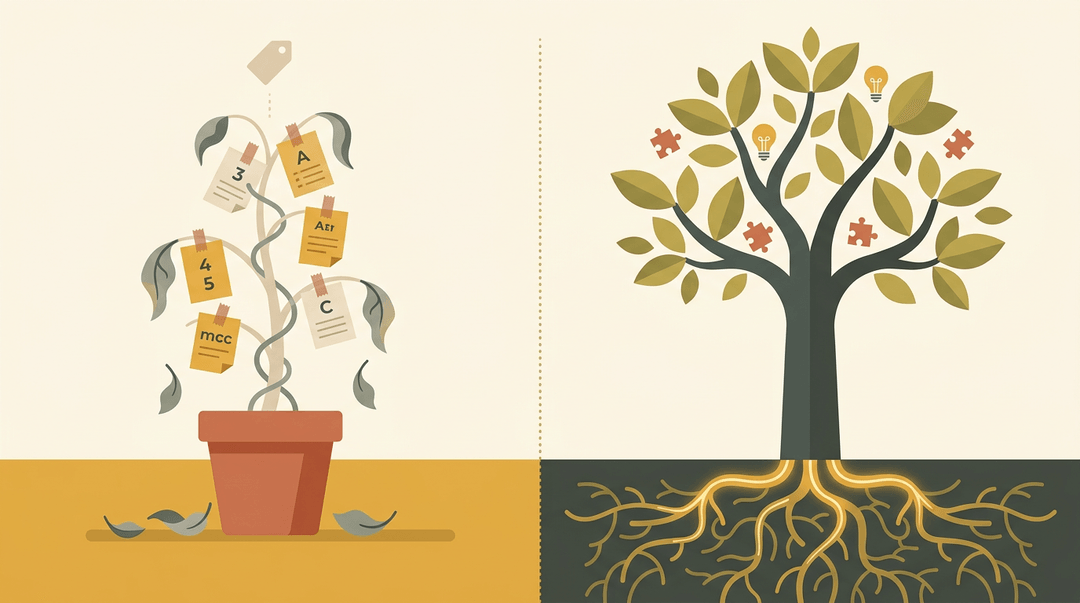
Traditional grading carries real costs. A single letter grade can distort a student's sense of self-worth, turning performance into identity. High-stakes tests often trigger anxiety that has little to do with actual understanding.
And a one-size-fits-all test rarely captures what every learner in the room actually knows. Worse, grades can quietly crowd out intrinsic motivation, the desire to learn for its own sake, as scores become the goal instead of the understanding behind them.
Treating mistakes as part of learning
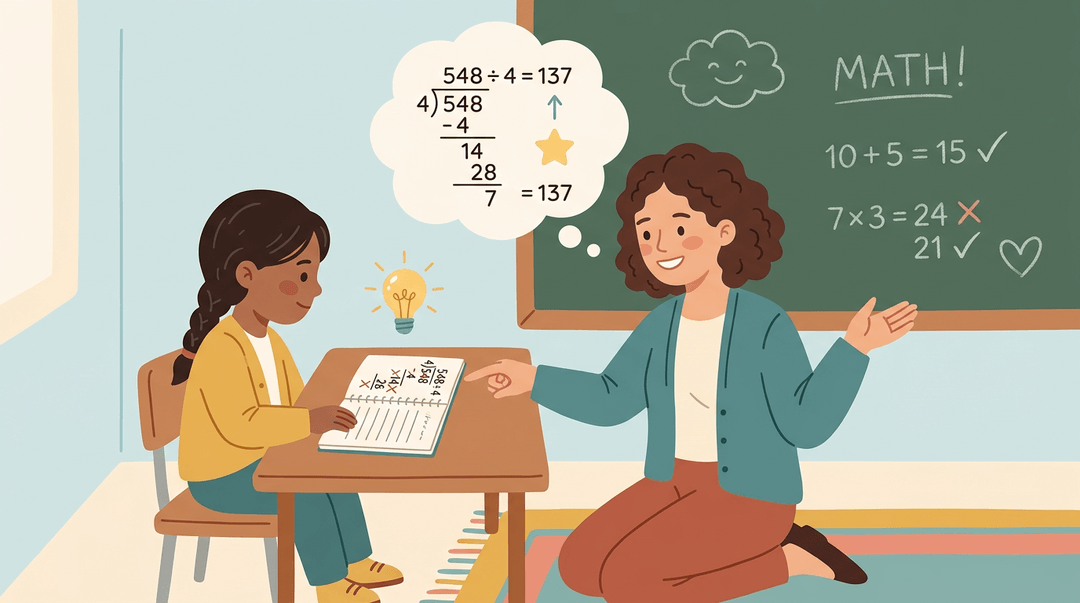
Mistakes aren't failures to stamp out. They're evidence of a brain in the middle of learning. Consider a student who bombs a first attempt at long division: corrected without judgment, that error becomes the clearest path to getting it right.
Celebrating failure as part of the process, rather than punishing it, keeps students willing to try. Harsh correction shuts that down fast, while a calm, specific correction keeps the door open for next time.
What Are the 7 Types of Learning?
Ask ten teachers how their students learn best, and you'll get ten different answers, because learning isn't one single style. It's a blend of senses, thinking patterns, personality traits, and the strategies students use to study.
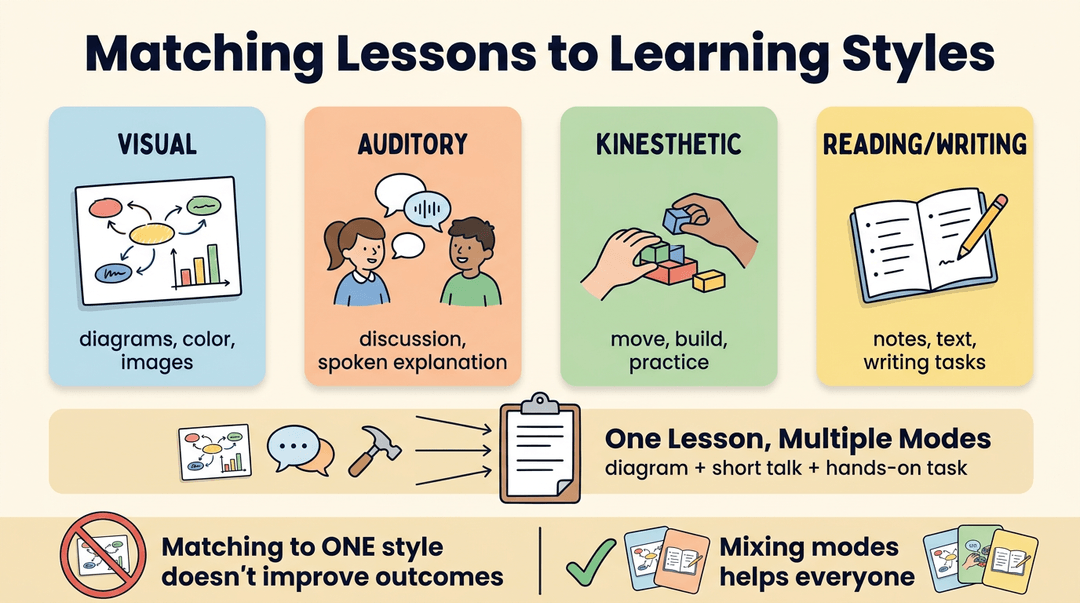
Some models group these into four broad types (visual, auditory, kinesthetic, and reading/writing), while a fuller view, the one below, sorts them into seven: visual, auditory, kinesthetic, perceptual, cognitive, personality-based, and active or experiential learning.
Matching lessons to sensory learning styles
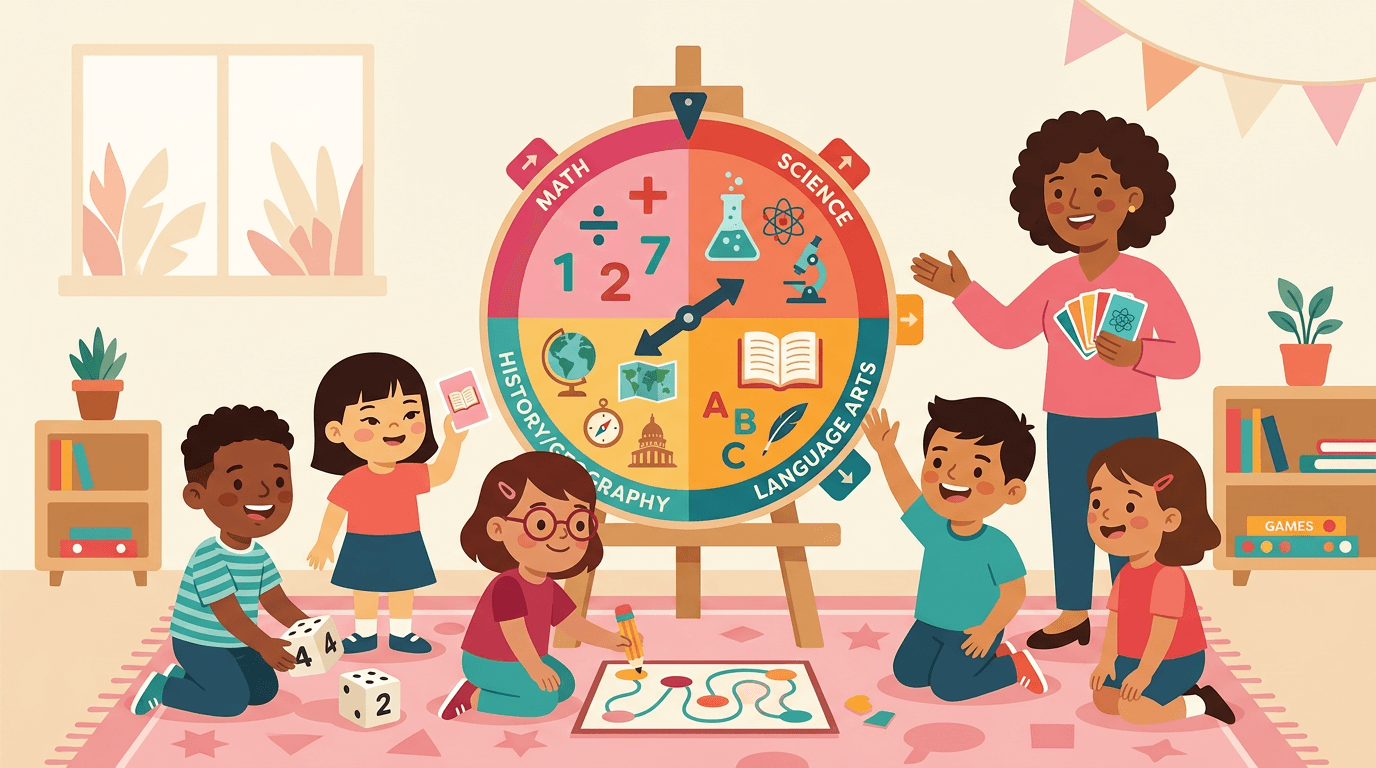
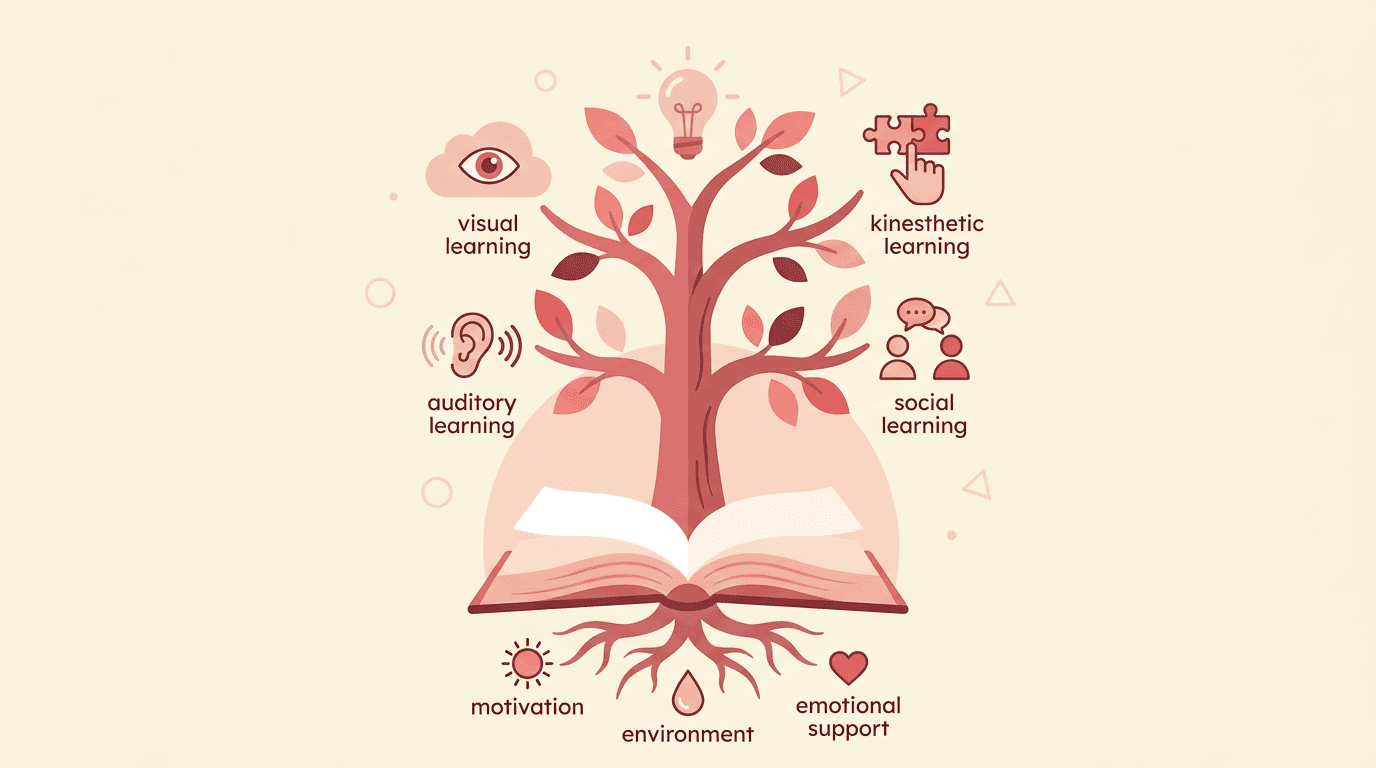
The most familiar trio is sensory: visual learners take in information through diagrams, color, and images; auditory learners absorb it through discussion and spoken explanation; kinesthetic learners need to move, build, or physically practice a skill.
A four-type learning model adds reading/writing as a fourth lane, useful for matching activities to learner type: pair a diagram with a short lecture and a hands-on task in the same lesson.
One caution: according to the Poorvu Center for Teaching and Learning, there's no evidence that matching instruction to a preferred style improves outcomes. Variety still beats a single mode for everyone.
Cognitive and personality-based learning styles
Beyond the senses, a review in Educational Psychology Review describes perceptual, cognitive, and personality-related dimensions layered on visual, auditory, and kinesthetic preferences.
A perceptual style shapes how a student notices information; a cognitive style shapes how they process it, sequentially or in big-picture leaps; a personality style shapes how they engage, independently or collaboratively.
Watching for these patterns helps you spot a learner's real strengths and the gaps worth shoring up.
Study techniques like SQ3R and note-taking
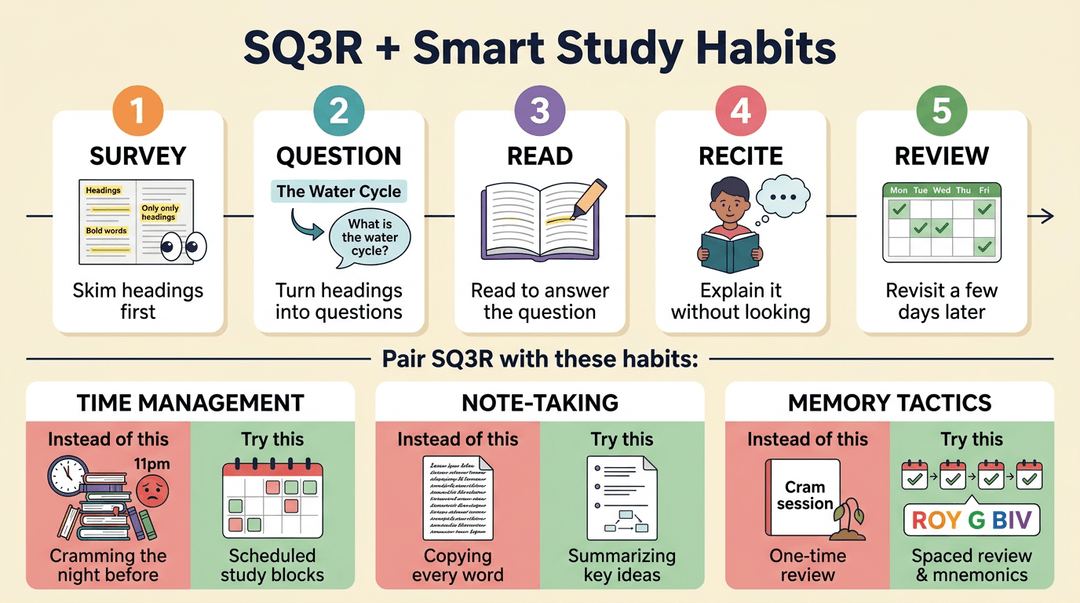
Strong study habits matter as much as style. The SQ3R method moves students through five steps: survey, question, read, recite, and review.
Pair that with simple time management (blocking study sessions instead of cramming), note-taking that summarizes rather than transcribes, and memory tactics like spaced review or mnemonics.
Active learning through games and role-play
For students who learn by doing, role-play and simulations turn abstract content into lived experience. Consider a history class debating a treaty in character instead of just reading about it.
Game-based learning, discussion boards, and project-based group work keep students actively applying ideas rather than passively absorbing them.
Extending Learning Beyond the Classroom
Learning doesn't stop at the classroom door, and it shouldn't. The most lasting lessons happen when students see a concept travel outside the four walls where it was taught.
Connecting lessons to community and other subjects
Think of a history lesson that also touches science, writing, and art in the same week.
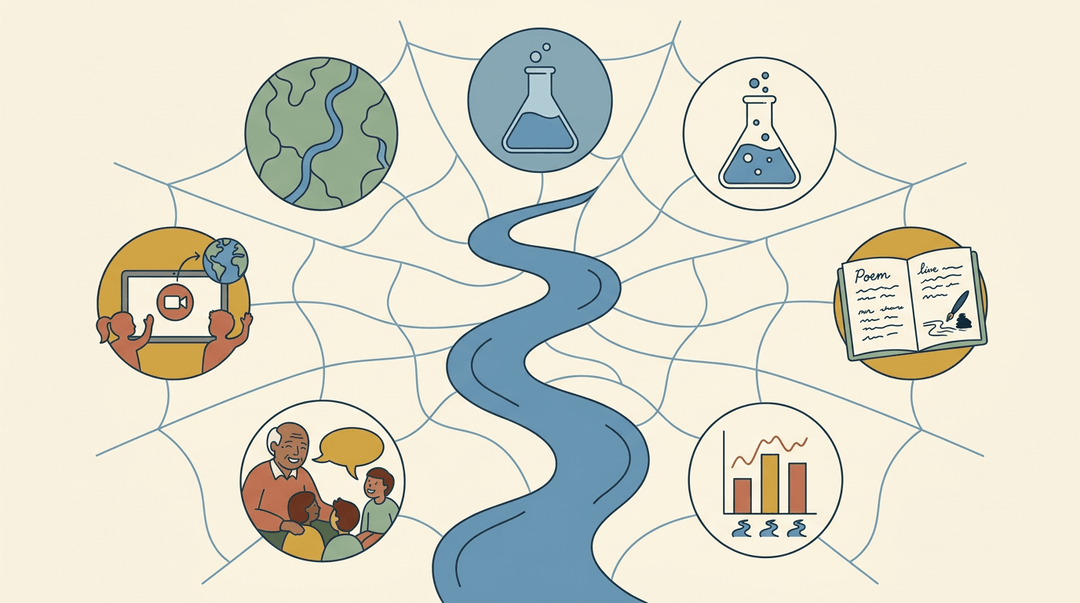
That's interdisciplinary collaboration: teachers across subjects planning together so students notice how a theme like "water" shows up in a geography map, a poem, and a chemistry experiment.
For example, a middle school team might sync a unit so the math teacher covers data from a river survey the science teacher's class just ran.
Real-world projects push this further. A class mapping local water quality or cataloging neighborhood history isn't just practicing skills: students see their work matter to people they know.
Bringing in community members and elders adds something a textbook can't.
A local elder sharing oral history or a tradesperson walking students through a real repair job turns abstract content into lived knowledge, and it gives students a sense that learning connects to their own community's story.
Global connections widen that circle even more.
A video call with a classroom overseas, a shared writing project with students in another country: these moments show learners that their questions and ideas have an audience well beyond their own school, and that their learning is part of something much bigger.
Learning isn't a single switch you flip. It's a web of conditions, emotions, types, and relationships that all need tending at once, and the more clearly you see that web, the easier it is to design lessons that actually work.
When you plan with that bigger picture in mind, every unit becomes a chance to meet students where they are, not just where the pacing guide says they should be.
Ready to put this into practice? Check out our Curriculum Planning tool to plan units, lessons, and standards that reflect how your students actually learn.
References
- Learning Styles, Preferences, or Strategies? An Explanation for the Resurgence of Styles Across Many Meta-analyses | Educational Psychology Review — link.springer.com (2025)
- PPT - Understanding How Learning Works: 7 Research-Based Principles for Effective Teaching PowerPoint Presentation — slideserve.com (2026)
- 8 Types of Learning Styles — bau.edu
- brain science neuroscience behavior — old.lytlesrebc.edu
- Learning Styles as a Myth — poorvucenter.yale.edu
- Teaching the SQ3R method of study : an investigation of the instructional approach / — exa.ai
- Chapter 7. Learning — open.lib.umn.edu (2015)
- The Learning Person — exa.ai (2010)
Frequently asked questions
What are the 7 types of learning?
The seven commonly cited types are visual, auditory, kinesthetic, perceptual, cognitive, personality-based, and active or experiential learning. These describe ways learners receive, process, and apply information. Research does not show that matching teaching to a preferred learning style improves results, so varied instruction is generally more effective.
What are the 7 areas of learning?
The seven areas of learning are commonly described as physical, cognitive, emotional, social, moral, creative, and spiritual development. Together, they recognize that learning involves more than academic knowledge, including skills, relationships, feelings, values, and personal growth.
What are the 7 Principles of Learning?
The seven principles of learning are: prior knowledge influences learning; students organize knowledge in ways that affect application; motivation directs learning; development and social context shape learning; practice and feedback support mastery; students learn best when challenged appropriately; and effective learning requires active engagement and self-regulation. In practice, these principles support activating prior knowledge, pacing content, providing feedback, encouraging participation, and helping students reflect on their progress.