Classroom Reward System Ideas That Actually Change Behavior

Jump to section
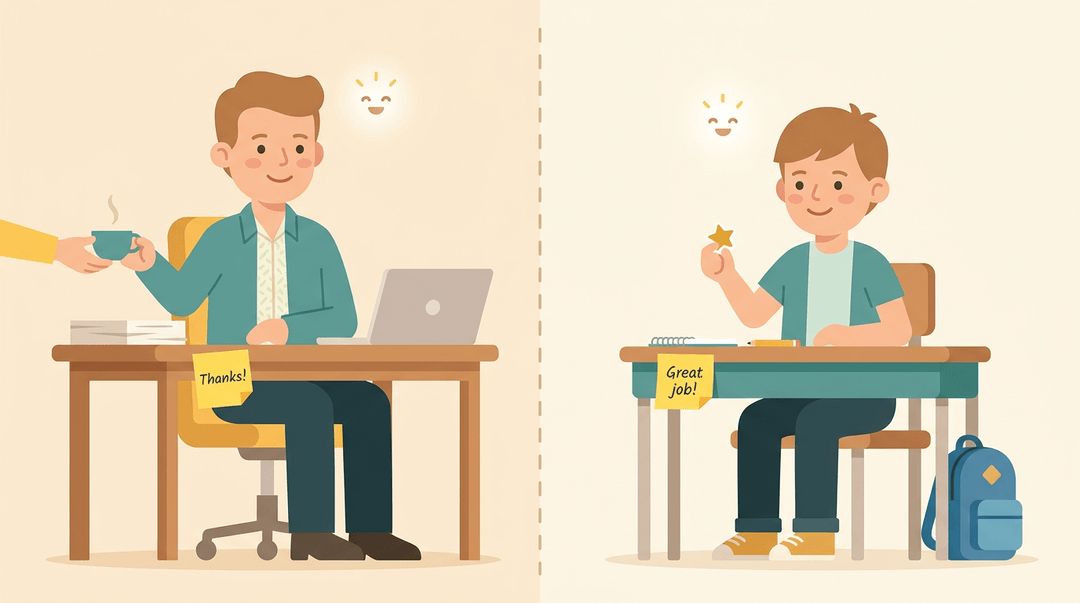
Think about the last time someone gave you a small thank-you for a job well done. Maybe it was a coffee from a colleague or a sticky note on your desk. That little boost makes you want to do it again, and students feel the same way.
Classroom reward system ideas are simply structured ways to recognize effort, behavior, and progress so that good choices show up more often.
In this guide, we'll cover why rewards work, real examples, how to design and track a system, a practical checklist, and some alternatives worth considering.
Why Classroom Reward System Ideas Work
Ever wonder why a simple sticker chart can change a whole class's week? Here's what's happening underneath, and where rewards can go wrong.
What makes rewards actually motivate kids
Rewards rely on operant conditioning: behavior that's followed by a positive result tends to happen again. They also pull attention back to the task.
A study published in the International Journal of Research Publication on a scoreboard reward system in science found that students' attention improved, with posttest scores up 17.4%.
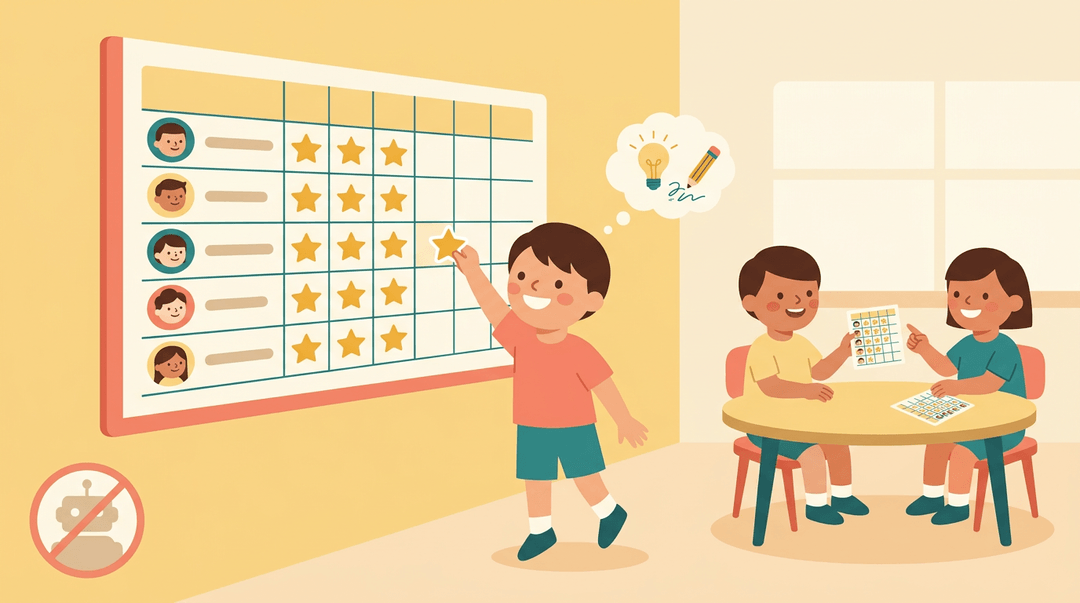
A visible chart builds a feedback loop. Students see their progress, adjust, and try again.
Rewards tied to effort and process, rather than finished products, also give students a reason to do the thinking themselves instead of reaching for an AI shortcut.
From rewards to real motivation
Think of a fourth grader who earns points for reading every night. At first, the points are the reason. Over time, you want the book itself to become the reward.
That's the bridge from extrinsic motivation (outside prizes) to intrinsic motivation (the drive that comes from within).
Some teachers call this stage explorer mode: students stop asking what they'll get and start asking what they can discover. Rewards can also breed entitlement, though. When a prize is expected every time, it stops motivating.
The goal is for learning itself to feel like the win.
Weighing the benefits and drawbacks
Rewards can lift self-esteem. A study from Bangkok Thonburi University found that secondary students scored significantly higher on a self-esteem measure after a token economy program. The same kind of system can help with deadlines.
After a stamp collection program at a Hat Yai school, researchers in the Journal of Social Science Kamphaeng Saen reported that 90% of students reached an excellent level in on-time submission and quality.
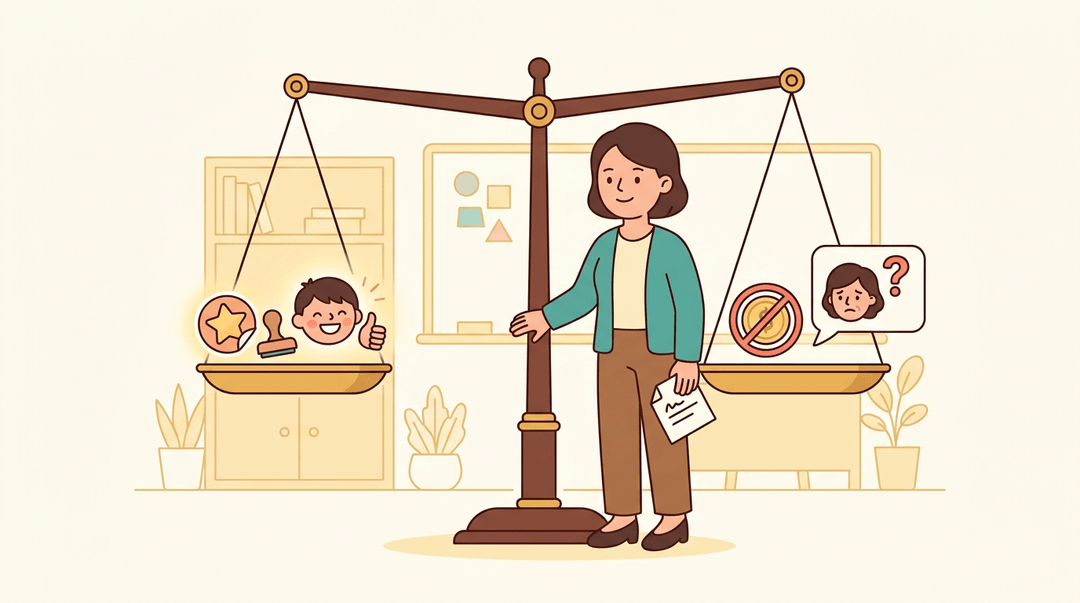
The drawbacks are real, though. Some students and parents may see rewards as bribery, so frame them as recognition, not payment.
A Chicago Booth Review article notes that incentives can produce different short-term and long-term results, and its researchers warn that tangible rewards call for real care.
Consider a fifth-grade teacher who starts a point system and sends home a one-paragraph explanation. When a parent asks why their child earned points for turning in homework, she can point to the goal: effort and growth, not payment.
What Are Some Examples of School Reward Systems?
The best rewards match what your students actually care about. Some cost nothing, some cost a few dollars, and some work best for the whole class.
Here are the most common options, along with a named school-wide approach like the house points team system covered below.
Free rewards that cost nothing
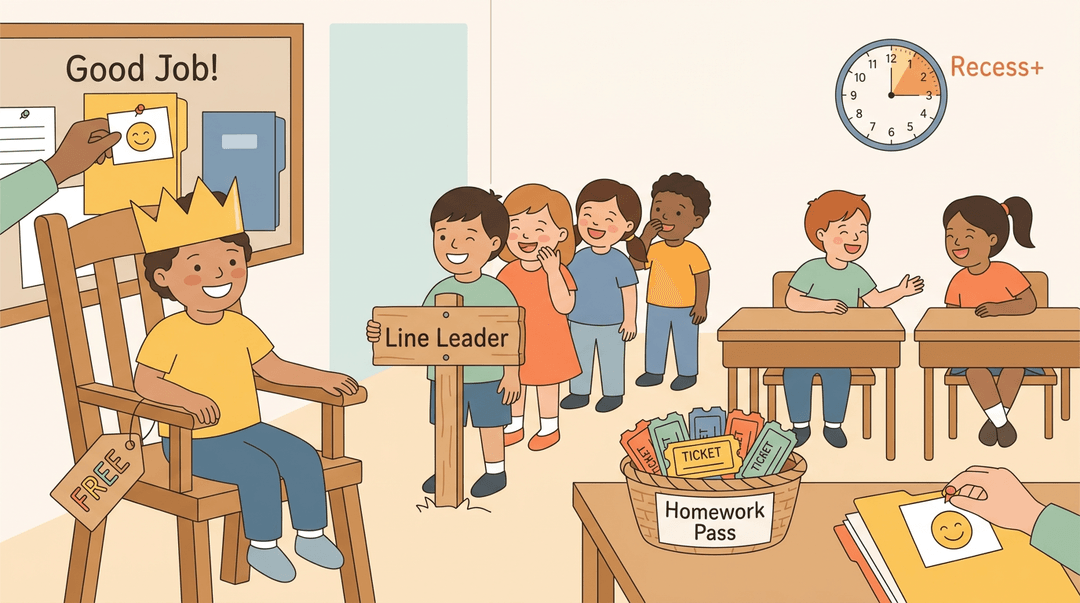
Some of the strongest rewards cost you nothing but a little planning. Consider a fourth-grade teacher who lets the first student to finish pick a seat swap for the day. Other free options include:
- Extra recess time
- A homework pass
- Notes of praise sent to a student's folder
- Trading seats with a friend
- Line leader for the day
- Teacher's chair for the day
The payoff is simple: students get something they value, and you spend only a few seconds of attention.
Cheap prizes kids love
Small prizes still work, especially for younger learners. Popular choices include:
- Stickers and stamps
- Trinkets from dollar stores
- Fidget toys
- Snacks and candy (check your school's food policy first)
- Keychains and erasers
A prize works best when it's tied to a specific behavior, not handed out at random.
Special privileges as rewards
Privileges often motivate more than objects. Students might:
- choose the music during work time
- take on a classroom helper role
- lead a lesson
- sit with a friend
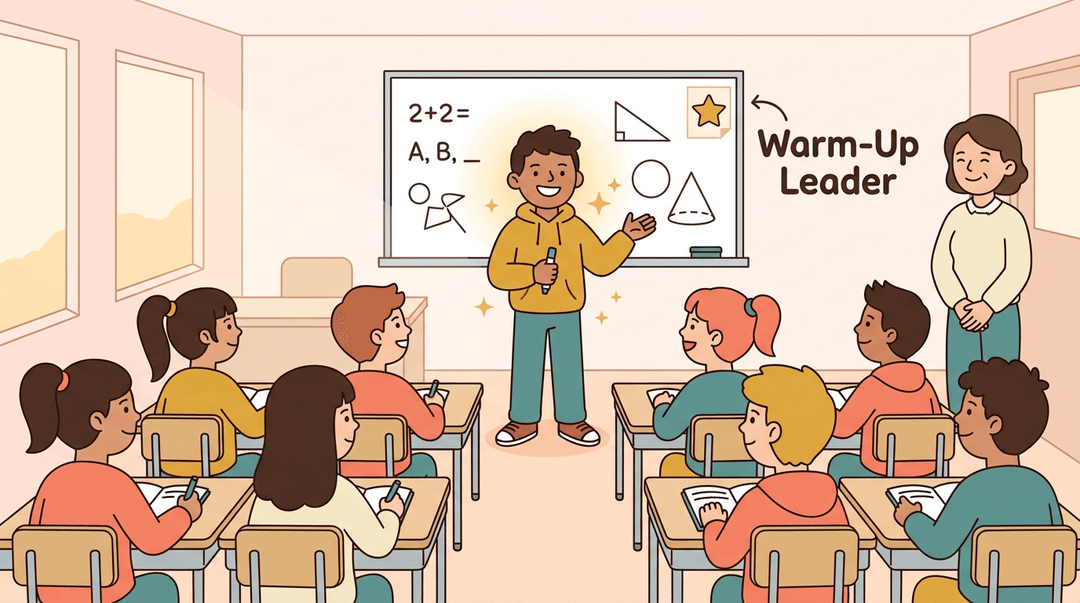
Think of a middle school teacher who gives the student who met a reading goal the job of leading the warm-up. That student gets a moment of pride, and the class gets a lesson delivered by a peer.
Recognition that builds lasting motivation
Certificates, badges, and a student of the month spotlight show learners their effort was seen. A positive note home does the same for families.
A Youngstown State University guide on positive reinforcement notes that “Consistent reinforcement of students’ efforts also promotes stronger motivation and classroom engagement over time.”
That's the heart of long-term sustained motivation: consistent recognition, not one big moment.
Rewards the whole class earns together
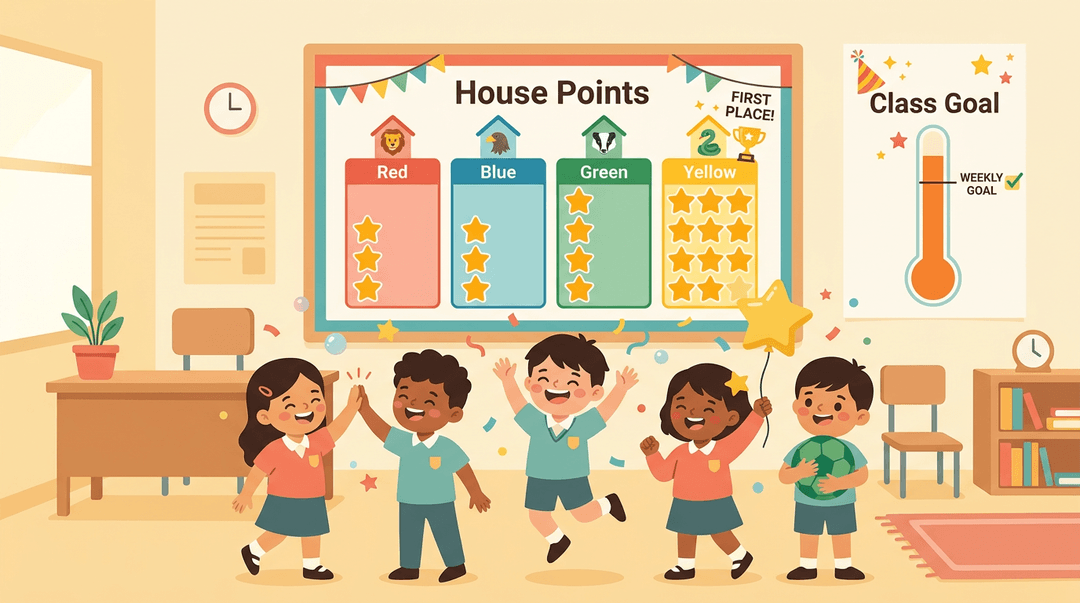
When the group wins, everyone has a stake. Class parties or dance time, extra recess for the whole class, and house points work this way.
With a house points team system, students earn points for their team across the week, and the team with the most points earns a prize.
For a simpler version, try a shared goal incentive: set one target, like every assignment turned in for the week, and celebrate together when the class hits it.
Rewards that fit different grade levels
Age changes what feels rewarding. Here's a quick guide by level:
- Elementary: stickers, stamps, extra recess, and line leader
- Middle school: choosing the music, a helper role, and a homework pass
- High school: gift cards, a dress down day pass, and school dance tickets
Match the reward to the age, and the effort usually follows.
Designing a Reward System That Works
A reward system only helps when students trust it. Build one that's clear, fair, and designed to fade as good habits take hold.
Set clear rules for earning rewards
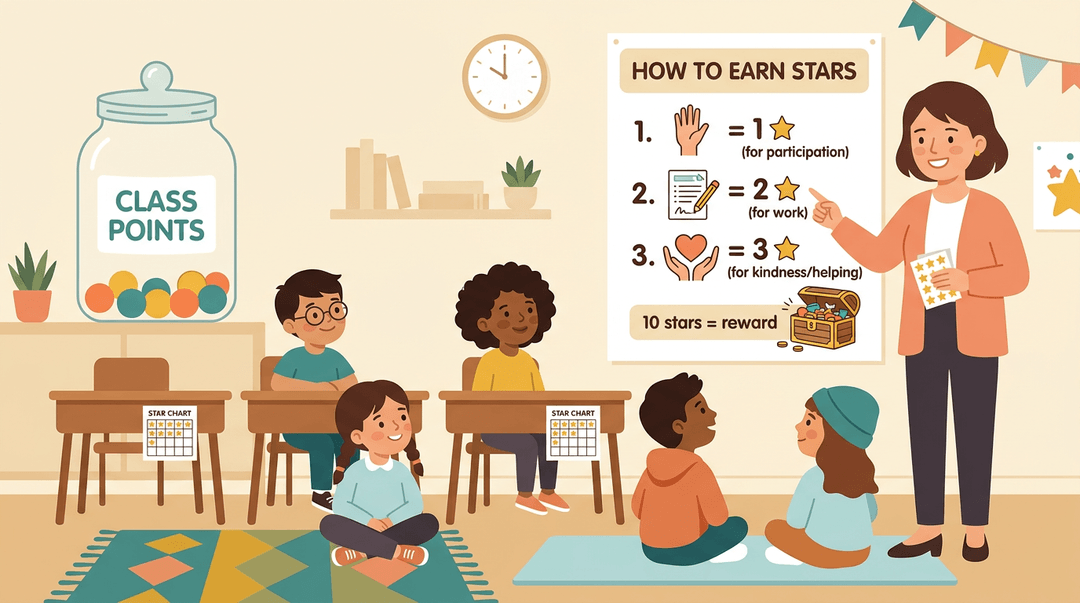
Start by spelling out how rewards are earned: what counts, how many points or stamps it takes, and when rewards are handed out. Post the rules and walk through them on day one.
Consistency prevents arguments, because when every student gets the same answer to the same question, there's less room for doubt. Decide early whether rewards go to individuals or to the whole class, and stick with that choice.
Reward effort rather than perfect scores so every student has a real shot at earning them.
Let students help choose rewards
Ask students what they actually want. A third grader might pick extra recess, while a high schooler might prefer a homework pass or a seat by the window.
Tailor options by grade level, and offer a mix for different personalities: some students love public shout-outs, while others would rather earn a quiet sticker or a private note home. Keep the menu realistic for your workload.
A list of rewards you can deliver in two minutes beats an ambitious one you'll abandon by October.
Mixing individual and team rewards
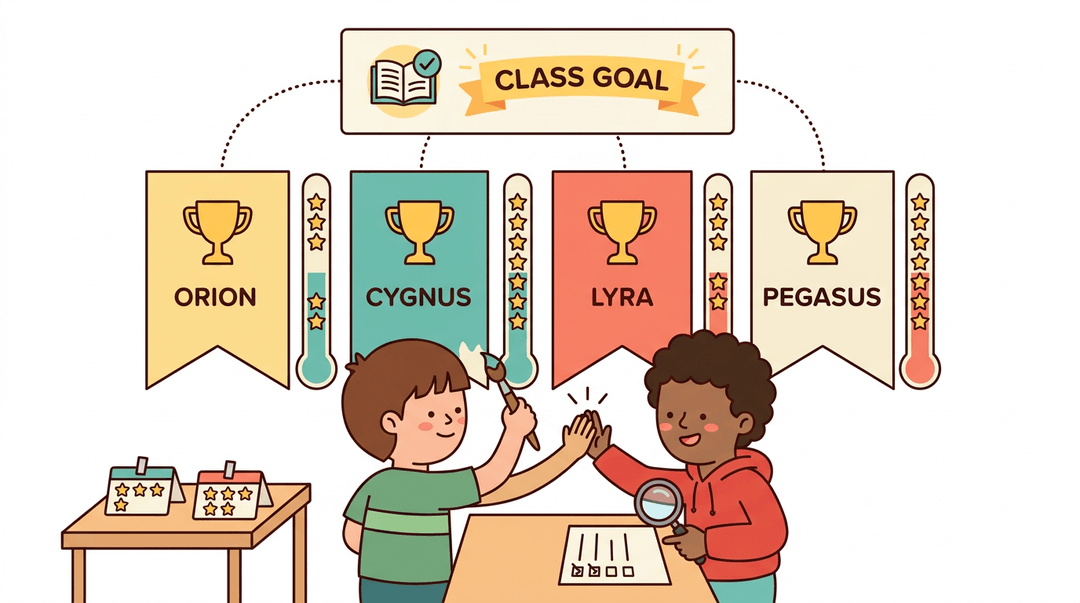
Blend competition and teamwork so the system works for everyone. Individual rewards motivate students who thrive on personal goals, while team rewards build the support that helps classmates pull each other along.
Lean on complementary strengths: the artist designs the team banner, and the careful reader checks the directions. A house points model, where each group earns points toward a shared total, is one simple way to do this.
Layer bonus goals on top, such as a class-wide reward when everyone hits a reading target.
Practical things to plan for
Before you launch, check for food allergies. Skip food rewards or get families' approval first, because a treat that's harmless for most students could be dangerous for one.
Buying in bulk keeps costs down: one pack of pencils or stickers can supply weeks of rewards. Set up a classroom school store with a simple price list, and restock on a schedule that fits your time.
Build a substitute-friendly plan too: post the rules, the point log, and the store prices so a sub can run the system without guessing. Start small.
A Teacher's Checklist for Reward Systems
Use this guide to build a reward system in three passes: plan it, set it up, then keep it running. Print it and work down the page.
Plan before you start
Confirm these before you hand out a single point:
- Goal and behaviors are named. Pick one goal and two or three observable behaviors.
- Try: "Students start work within two minutes of the bell."
- Students have weighed in. Their input makes the rewards worth earning.
- Say: "If you could earn one thing for a great week, what would it be?"
- Policies are checked. Look at school rules before you promise anything.
- Food rewards need a check on allergy and schoolwide food policies first.
Set up the system
Fill in each slot below. The example column is a starting point you can adapt.
| Slot | Decide | Example |
|---|---|---|
| Rewards | Match them to the grade | K-2: stickers, helper jobs. Grades 6-8: choice seating, music during work |
| Earning criteria | Name the exact action | One point for starting within two minutes |
| Tracking | Pick one you'll actually update | Wall chart or an app |
| Mix | Individual, group, or both | Personal points plus a class jar |
Criteria are where most systems wobble, so check yours against this pair:
- ✅ "Earn a point for turning in homework at the start of class."
- ❌ "Earn points for being good."
The difference: a student (and a substitute) can see whether the first one happened.
Tip: Choose the tracking method you can update in under a minute. A fancy chart you skip by Thursday is worse than a tally on a sticky note.
Keep it going
A system lasts when you plan its whole life, including the ending. Here's a simple timeline.
| When | Your move | What it looks like |
|---|---|---|
| Weeks 1-2 | Start small | One behavior, one reward, one tracker |
| Each month | Review and adjust | Ask: "Which rewards are students still chasing?" Swap out the rest |
| From month two | Plan the fade-out | Reward every time, then most times, then occasionally, then praise only |
| Before you're out | Prep a substitute plan | A one-page sheet, below |
Substitute backup sheet. Keep it where a sub will find it.
Reward system while I'm out: Give a point for [behavior]. Tally on [chart location]. Rewards are claimed [day]. Please leave the tally sheet on my desk.
Example: A fourth-grade teacher starts with one behavior, "materials ready at the bell," and a class marble jar. After a month, students ask for a longer read-aloud instead of prizes, so she swaps the reward. By month three she awards the jar only on Fridays, and the habit holds.
Keep reward points, attendance, and behavior notes together in one class view with EMStudio.
How to Track and Manage Rewards
Tracking is where a reward system either thrives or quietly falls apart. Here's how to keep yours simple, visible, and fair.
What are some creative ideas for a class reward chart?
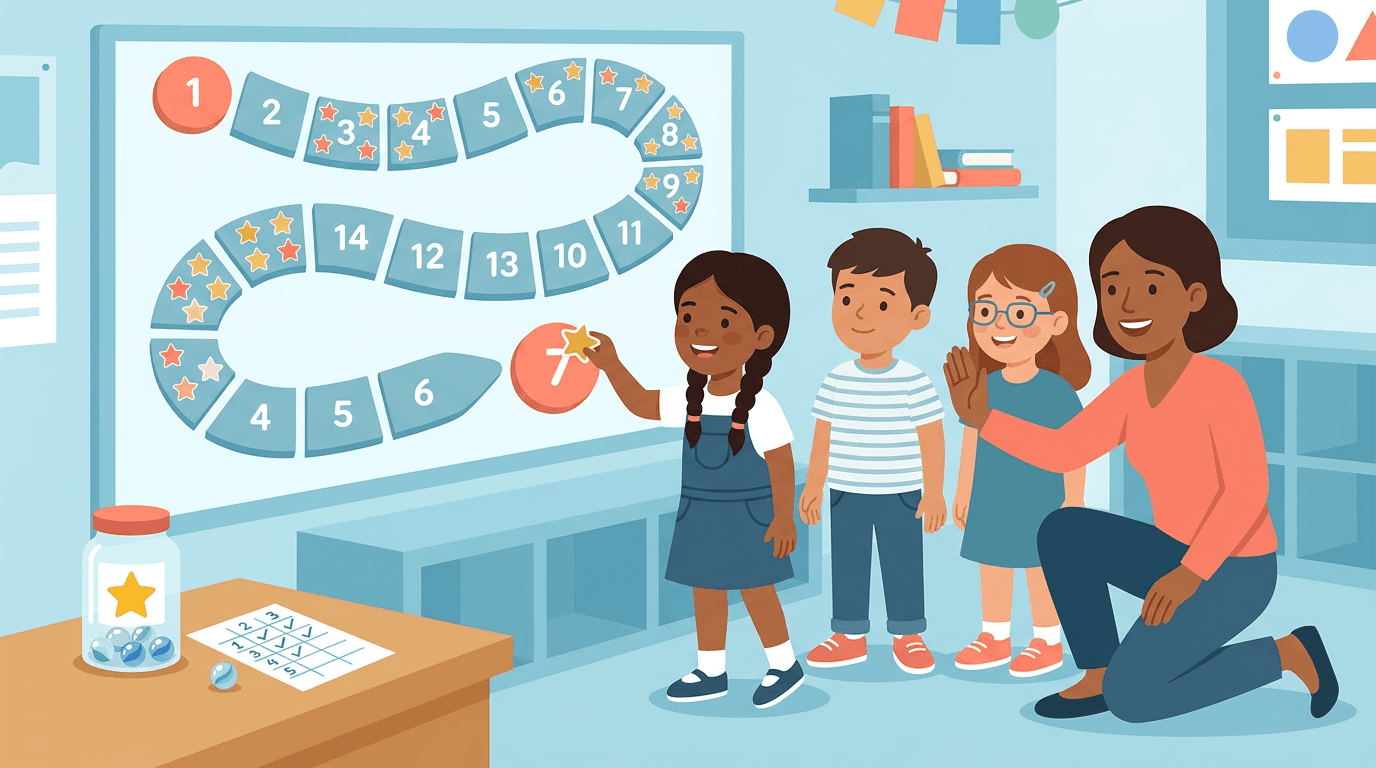
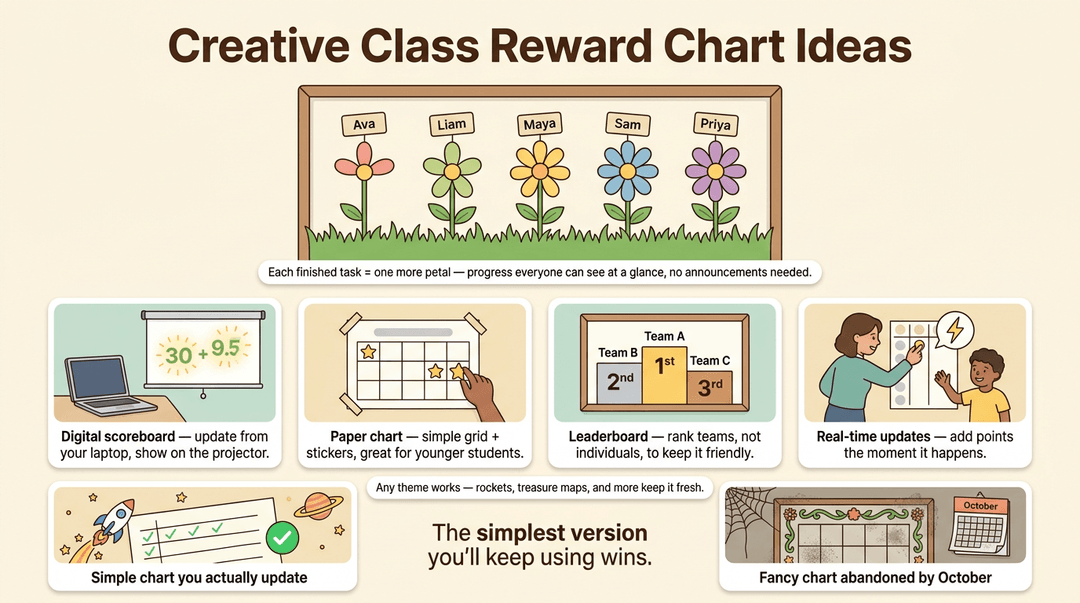
Consider a fourth-grade teacher who turns a bulletin board into a garden, where each student's flower grows a petal for every completed task. Kids see progress at a glance, and nobody has to announce it.
You have several formats to choose from:
- Digital scoreboard tools: Update points from your laptop and display them on a projector.
- Paper chart option: A printed grid with stickers works well for younger students.
- Leaderboard formats: Rank teams rather than individuals to keep competition friendly.
- Real-time updates: Change points as behavior happens so students connect the two right away.
Themes like rockets or treasure maps keep a reward chart fresh. The simplest version you'll actually update beats the fanciest one you abandon by October.
Running a classroom token economy
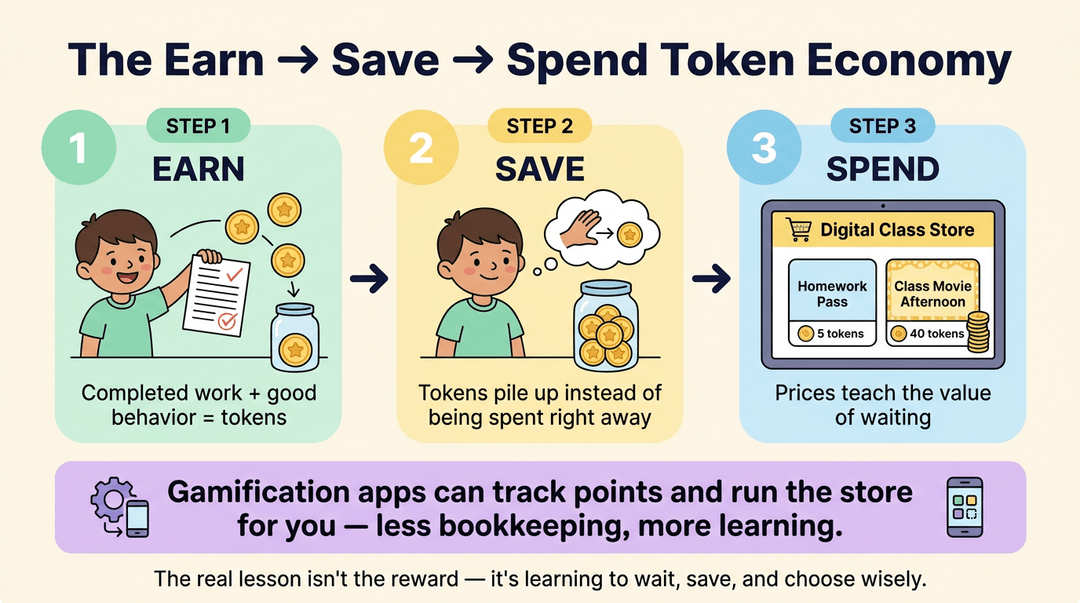
A token economy lets students earn virtual currency for good work and spend it on privileges. Here's how the earn, save, spend model works:
- Students earn tokens for completed work and positive behavior.
- They save tokens instead of spending them right away.
- They spend tokens in a digital school store on rewards they've picked.
A fifth-grade teacher might price a homework pass low and a class movie afternoon high. Students learn to wait rather than grab, and that's the real lesson. It builds money management skills well beyond your room.
Digital gamification apps can track points and run the store automatically, saving you evenings of bookkeeping.
Alternatives to Using Reward Systems
Not every classroom needs a prize box. Sometimes your words and a simple tracker do the work.
Using words instead of prizes
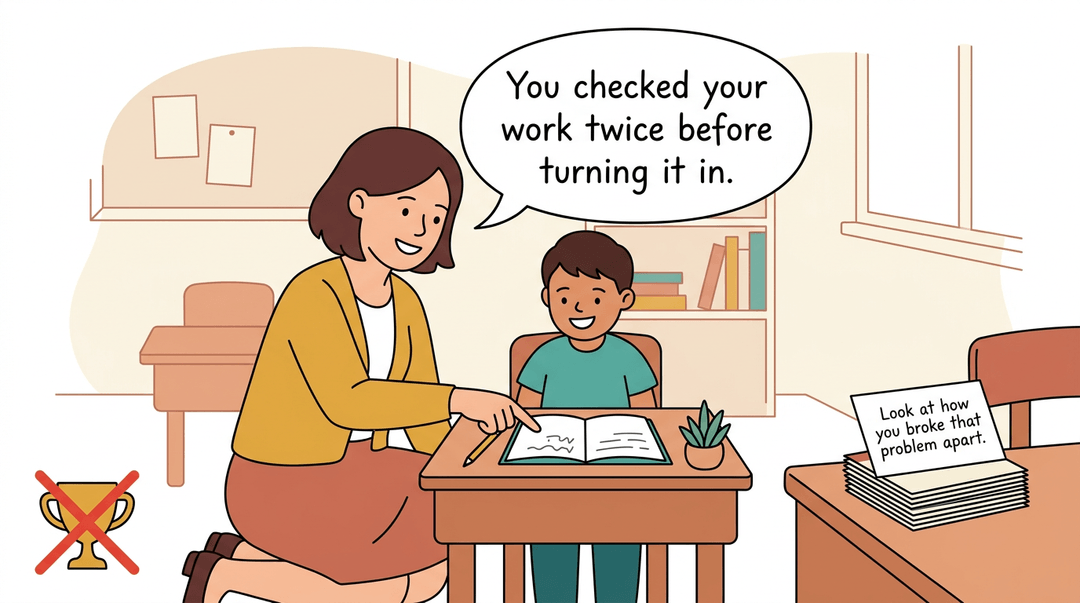
Praise works best as specific feedback that names the exact behavior. Instead of 'Good job,' try 'You checked your work twice before turning it in.'
A study of undergraduates found that feedback high in specificity was rated more constructive than unspecific feedback. Describing exactly what a student did also builds intrinsic motivation, the drive to keep going because the work matters.
Keep cue cards on your desk with quick phrases like 'Look at how you broke that problem apart.'
In a virtual classroom, name the student in the chat, keep praise to one sentence so the lesson keeps moving, and use a quick reaction tool for smaller wins.
Tracking behavior without prizes
Tracking shows growth without handing out rewards. Two simple tools do most of the work:
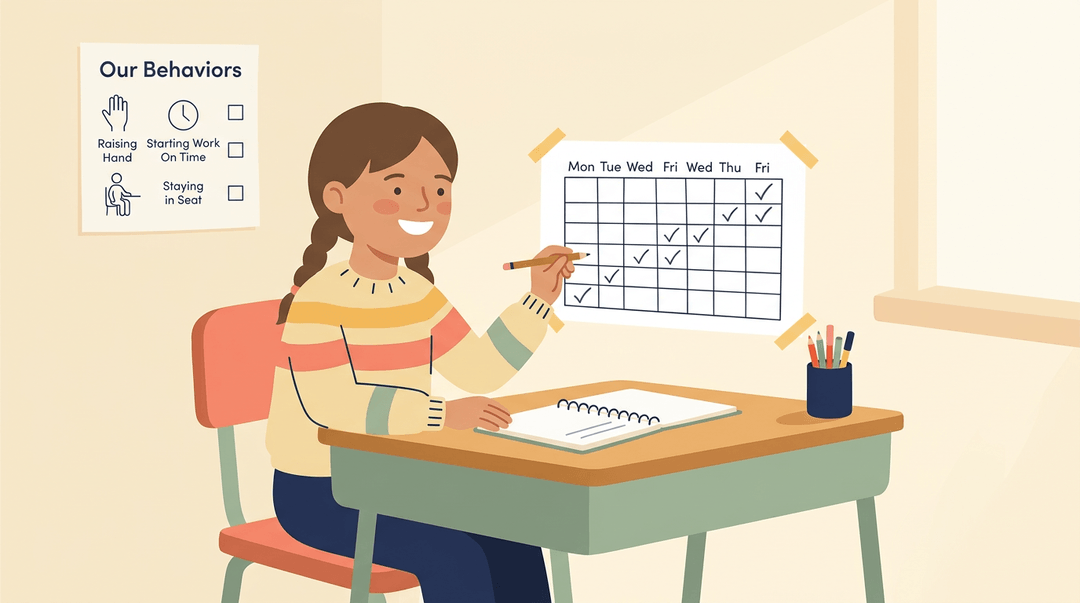
- Self-monitoring chart: students mark their own progress each period.
- Check-off behavior list: three or four target behaviors posted at the front of the room.
Think of a fifth-grader who keeps missing the start of work time. Filling in her own chart each day, she sees her check marks climbing within two weeks.
Use these as temporary extrinsic support, an outside structure that helps while a habit forms. Then plan to fade it, lightening the check-offs as consistency grows. The chart is a tool for building the habit, not keeping it going forever.
A reward system works best when it's simple, fair, and tied to the behaviors and growth you actually want to see. Start small, pick one or two approaches, and adjust as you learn what motivates your students. Remember, the goal isn't stickers or points.
It's helping every learner feel capable and connected.
Ready to keep your classroom organized as you build your system? Check out our Classroom Management feature to organize classes, rosters, and timetables in one structured workspace.
References
- Navigating the Influence of the Scoreboard Reward System on Students’ Attention Span in Science | IJRP — ijrp.org (2025)
- The Effects of a Reinforcement Program Using Token Economy and Social Reinforcement to Enhance Self-Esteem of Secondary School at Prachabumrung School Bangkok — so01.tci-thaijo.org (2025)
- The Development of On-Time Assignment Submission Behavior of Matthayom 2 Students Using a Stamp Point Collection Reinforcement System at Patongprathankiriwat School, Hat Yai District, Songkhla Province — so17.tci-thaijo.org (2026)
- Short-Term Rewards Don’t Sap Long-Term Motivation — chicagobooth.edu
- Positive Reinforcement in Education — online.ysu.edu
- Making feedback constructive: the interplay of undergraduates' motivation with perceptions of feedback specificity and friendliness: Educational Psychology: Vol 41 , No 10 — tandfonline.com (2020)
Frequently asked questions
What are some ideas for a reward system?
Reward systems can include stickers, stamps, points, tokens, praise notes, extra recess, homework passes, seat swaps, or classroom helper roles. You can also offer privileges such as choosing work-time music, leading a warm-up, or sitting with a friend. Tie each reward to a clear behavior or effort goal rather than giving rewards randomly.
What are some creative ideas for a class reward chart?
Try a garden chart where students add flower petals, a rocket chart where names move toward the moon, or a treasure map with progress markers. Digital scoreboards, sticker grids, team leaderboards, and real-time point updates are also effective options. Choose a format that is easy to update consistently and consider ranking teams instead of individuals to keep competition friendly.
What are some creative rewards ideas for students?
Creative student rewards include choosing the class music, taking the teacher’s chair, serving as line leader, leading a lesson, or becoming a classroom helper. Other options include extra recess, a homework pass, a positive note home, stickers, badges, small trinkets, fidget toys, or a class movie afternoon. Offer different choices because students are motivated by different types of recognition.
What are some examples of school reward systems?
Examples include individual point or stamp systems, token economies with a classroom store, sticker charts, positive notes home, student-of-the-month recognition, and school or class house points. Whole-class systems can use a marble jar, shared goal thermometer, class party, dance time, or extra recess. Rewards may be free privileges, small prizes, recognition, or group celebrations, depending on students’ ages and school policies.