Baddeley's Model of Working Memory: How the Mind Holds Information

Jump to section
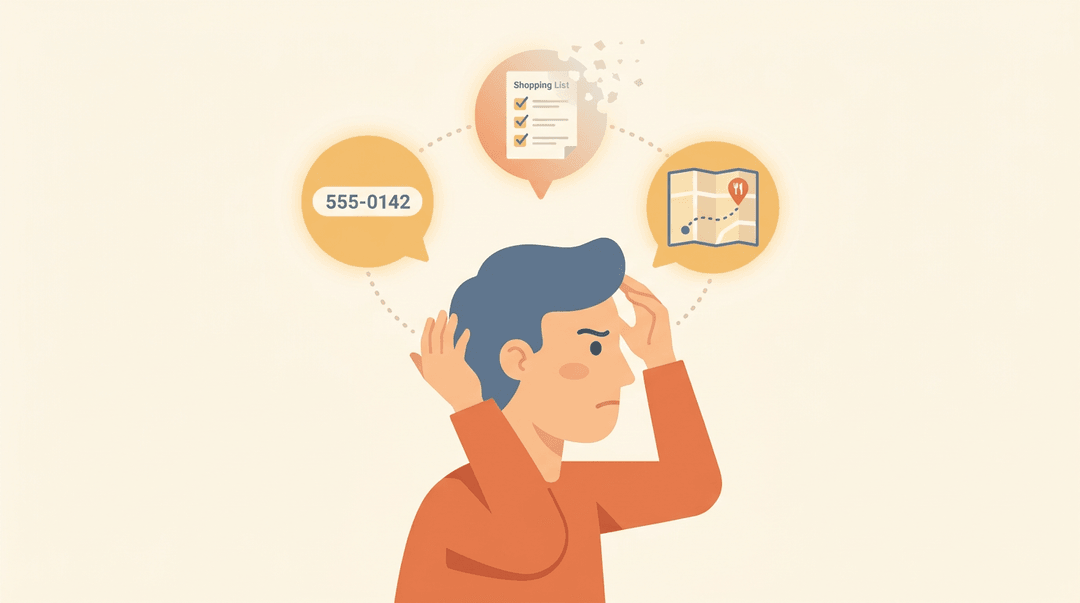
Think about juggling a phone number, a shopping list, and directions to a new restaurant, all at once, all in your head. Most of us can hold onto that for a few seconds before it slips.
Working memory works the same way: it's the mental workspace where you briefly hold and use information before it fades or moves into longer-term storage. Psychologist Alan Baddeley built a model to explain how that workspace actually operates.
Here's how it breaks down, and what it means for your lesson plans.
An Overview of Baddeley's Model of Working Memory
Ever tried to hold a phone number in your head just long enough to dial it? That's working memory doing its job, and Alan Baddeley and Graham Hitch built a model to explain exactly how it pulls that off.
How Baddeley and Hitch developed the model
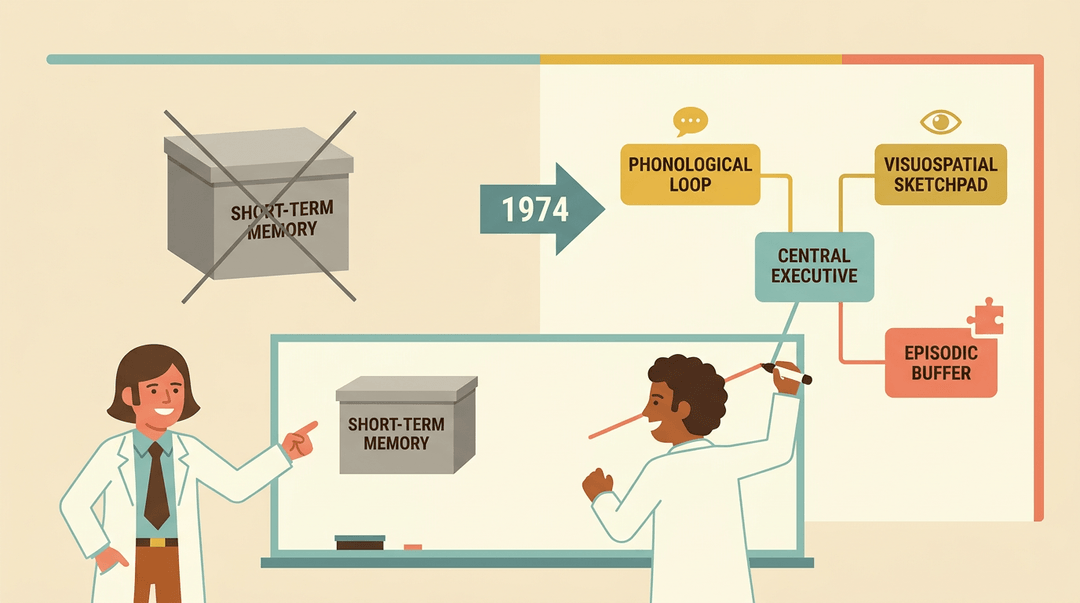
In 1974, Alan Baddeley and Graham Hitch proposed a working memory model that broke away from the rigid, all-or-nothing view of memory as either short or long-term.
As Baddeley later explained, the pair set out to build an alternative to the then-dominant Atkinson-Shiffrin model of short-term memory, which treated short-term storage as one single, unitary box.
They argued a lone store couldn't explain what memory actually does, so they split it into parts that work together. That 1974 model launched with four components, and it's remained the dominant working memory theory ever since.
What is working memory in simple terms
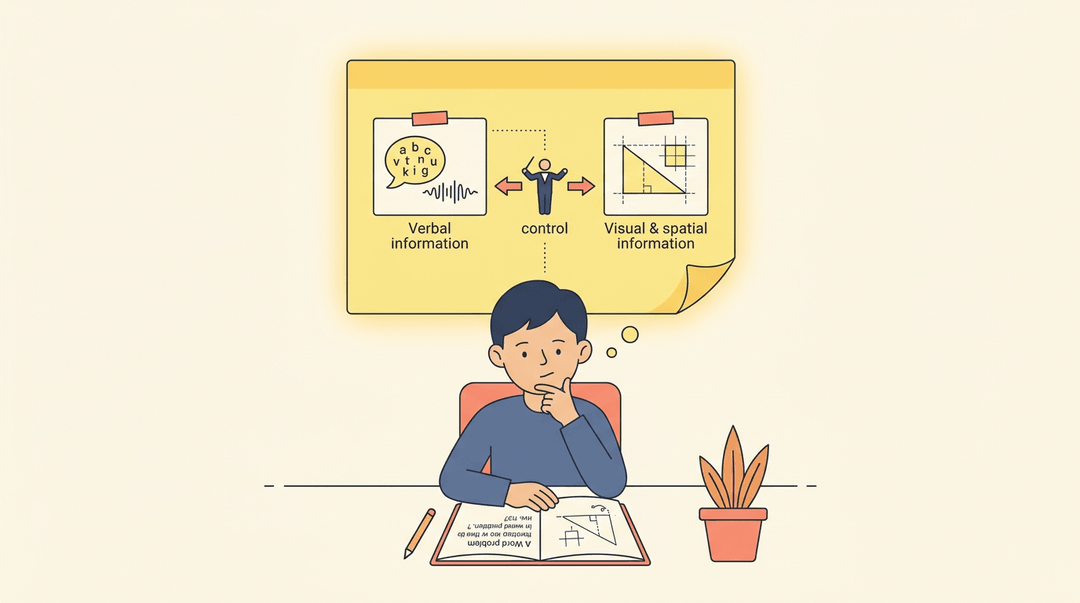
Think of working memory as a mental sticky note: a small, temporary space where you hold information and actively work with it, whether that's solving a word problem or following multi-step directions.
It supports reasoning, learning, and language, and unlike long-term memory, it doesn't stick around once you're done with it.
Baddeley and Hitch split that sticky note into distinct pieces:
- a verbal store for sounds and words
- a visuospatial store for images and layout
- an executive controller managing both
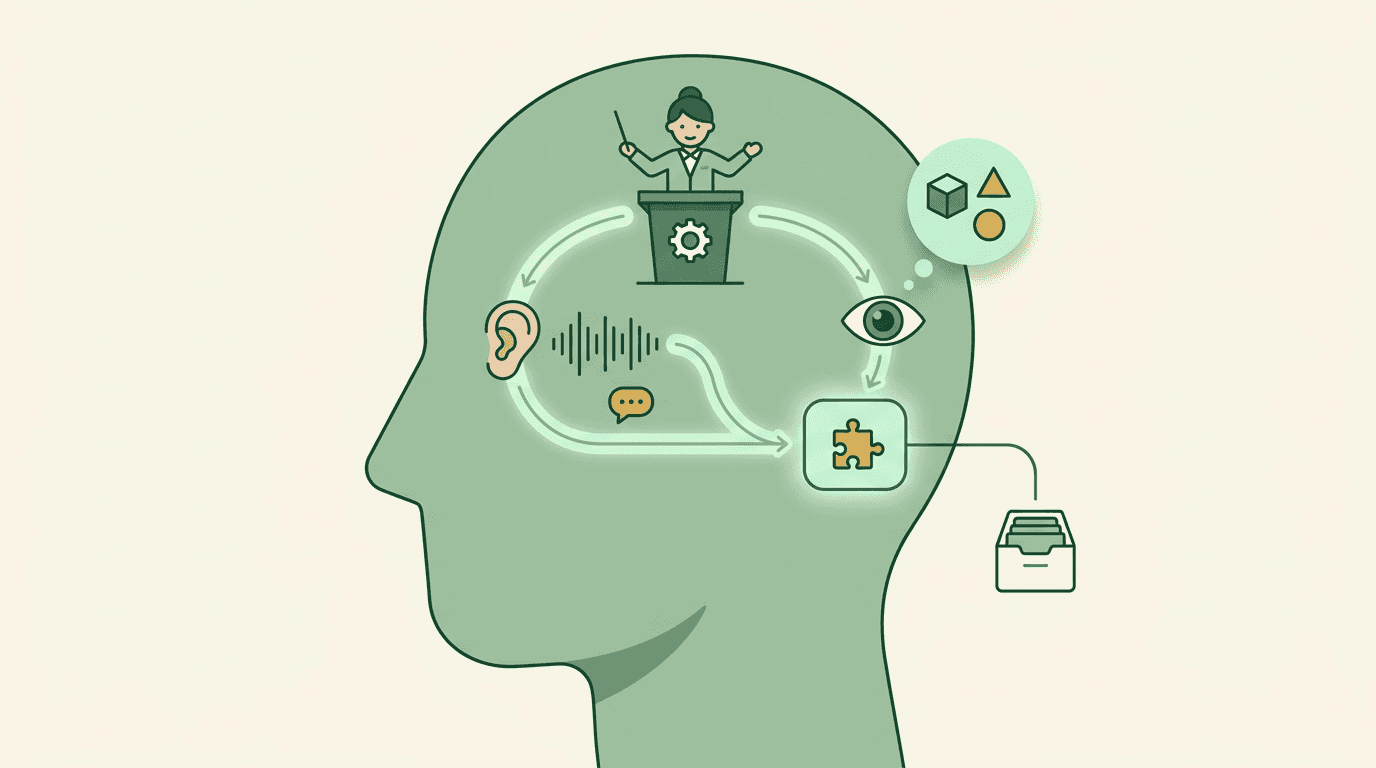
That's the three main types in a nutshell. Picture a student reading a word problem (verbal), picturing a diagram (visuospatial), and juggling both while working out the steps (executive): that's the whole model in action.
Cowan's embedded-process model offers a simpler take, framing working memory as attention aimed at parts of long-term memory rather than separate stores.
The Central Executive: the Memory's Boss
Every team needs someone calling the plays, and in Baddeley's model, that's the central executive. It's the supervisory control system running the whole show, and seeing what it actually does makes the rest of the model click into place.
What the central executive actually does
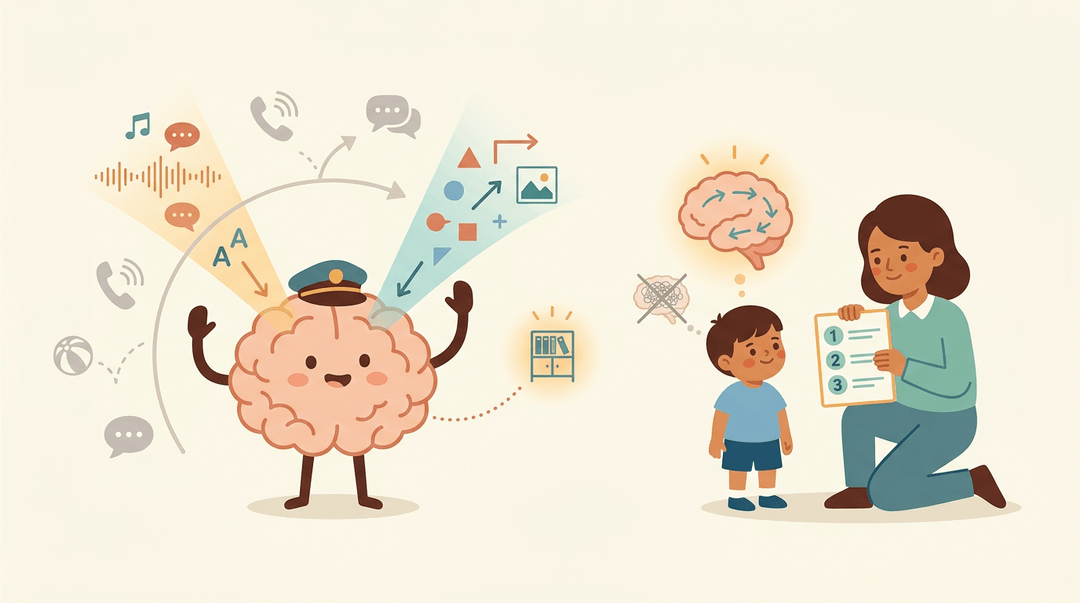
The central executive directs the model's slave systems (the phonological loop and visuospatial sketchpad), deciding what gets attention and what gets filtered out. It handles selective attention, updates and codes incoming information, and manages task shifting and inhibition: switching between activities without losing the thread. It also coordinates access to long-term memory, pulling up what's already known to make sense of what's new. For teachers, that means chunking instructions into smaller steps lightens the executive's load instead of overwhelming it.
Everyday examples of the central executive at work
Baddeley himself called it the "boss" or "little boss," and the nickname fits. Think of driving while holding a conversation: the executive juggles both, shifting focus as the road demands. In a classroom, it's what lets a student block out hallway noise to stay on a worksheet. Picture a company boss delegating tasks to assistants: that's the executive directing its slave systems.
What brain research reveals about the executive
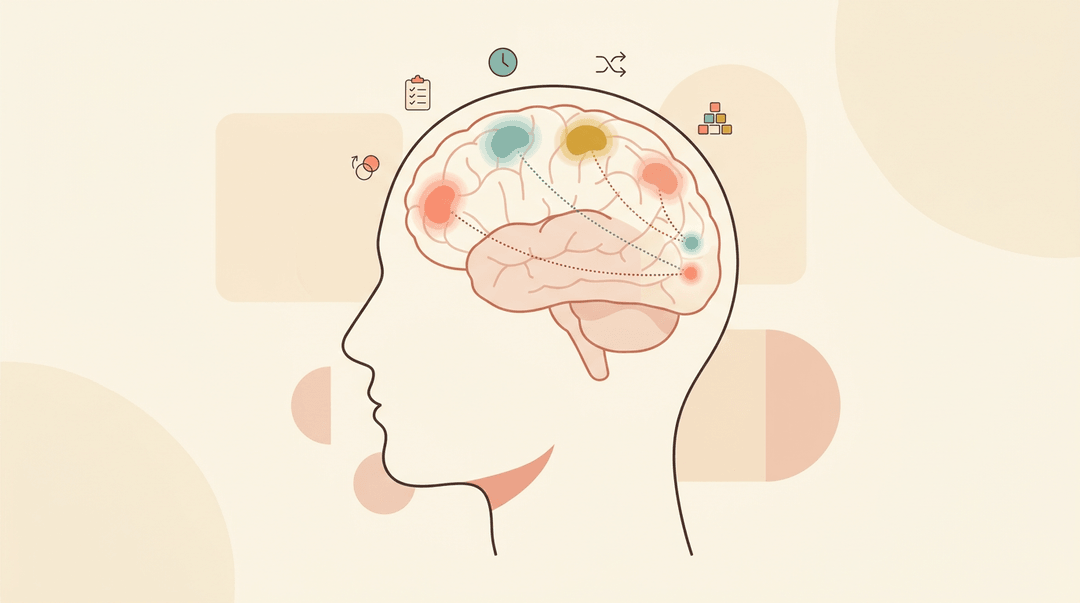
Studies of dual-task impairment in people with Alzheimer's disease show that central-executive dysfunction can cause that impairment, pointing to real deterioration of executive function. That's fueled a critique: is there really one unitary "central" system, or several separate, independent executive functions? Brain imaging research backs the latter, showing these functions are localized in the frontal lobes, alongside posterior regions.
The Phonological Loop: Your Inner Voice
Think of the quiet voice you hear when you sound out a new word or repeat a phone number to yourself before dialing it. That's the phonological loop at work: the part of working memory that handles sound and language.
How the phonological loop stores sound
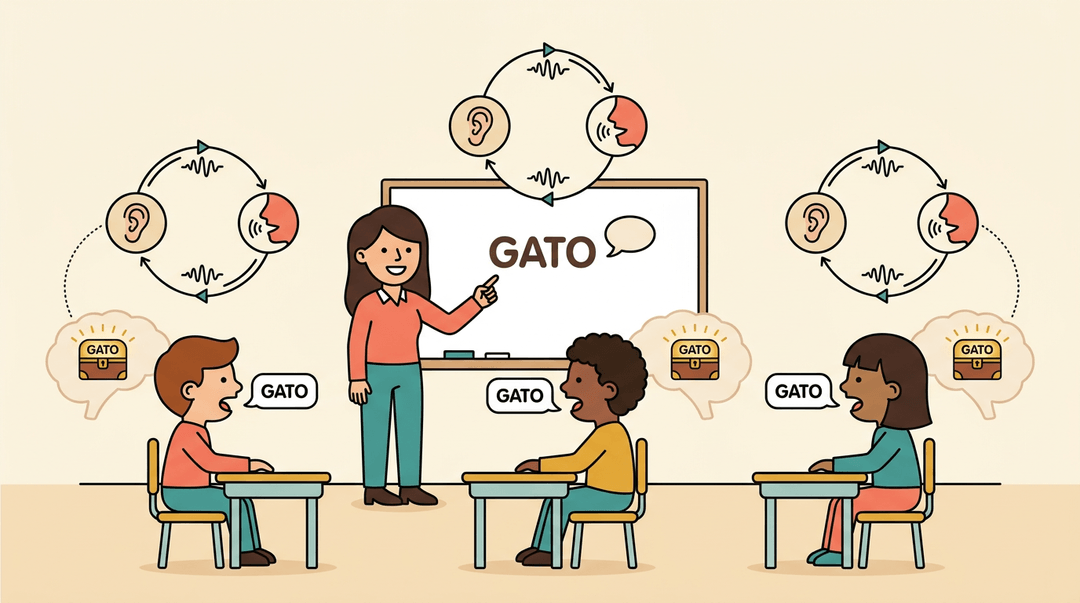
Baddeley split this system into two parts: a phonological store that holds sound briefly, and a rehearsal component that keeps it alive by repeating it, like an inner ear paired with an inner voice.
It stores verbal and acoustic information rather than images, and that's why auditory input tends to stick a little better than visually presented input: reading a word silently still gets converted into that inner voice.
This matters enormously for vocabulary and language learning.
For example, a world languages teacher drilling new vocabulary can lean on repeated oral rehearsal: having students say a word aloud several times gives the phonological loop something to hold onto long enough for it to transfer into longer-term memory.
Evidence behind the phonological loop
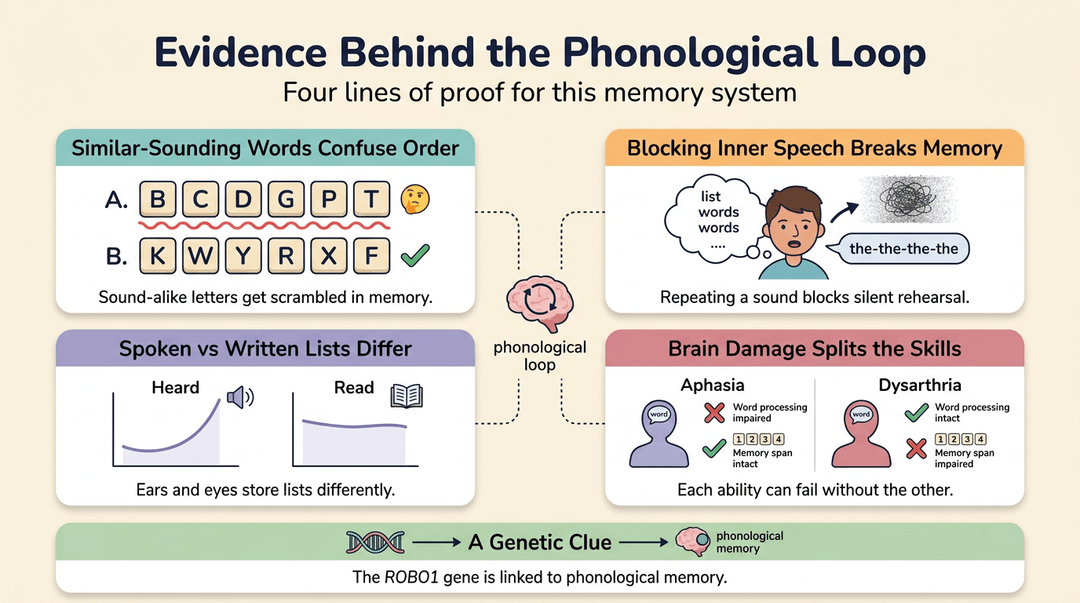
Several findings back this model up.
- The phonological similarity effect shows that words sounding alike are harder to recall in order, evidence that Baddeley's phonological loop model governs one specific part of the system.
- The articulatory suppression effect (blocking rehearsal by repeating an irrelevant sound) disrupts recall further.
- Modality and recency effects show that spoken lists are remembered differently than written ones.
Neuropsychological cases add more support: research on patients with aphasia and dysarthria found a double dissociation between memory span and word processing among neurological patients, showing these are genuinely separate abilities.
There's even a genetic thread. The ROBO1 gene has shown a significant link to phonological memory.
The Visuospatial Sketchpad for Images and Space
Picture holding a mental floor plan of the school while also picturing the color of a poster on your classroom wall. That's the visuospatial sketchpad doing two jobs at once, and it's worth pulling those jobs apart.
How the sketchpad handles visual information
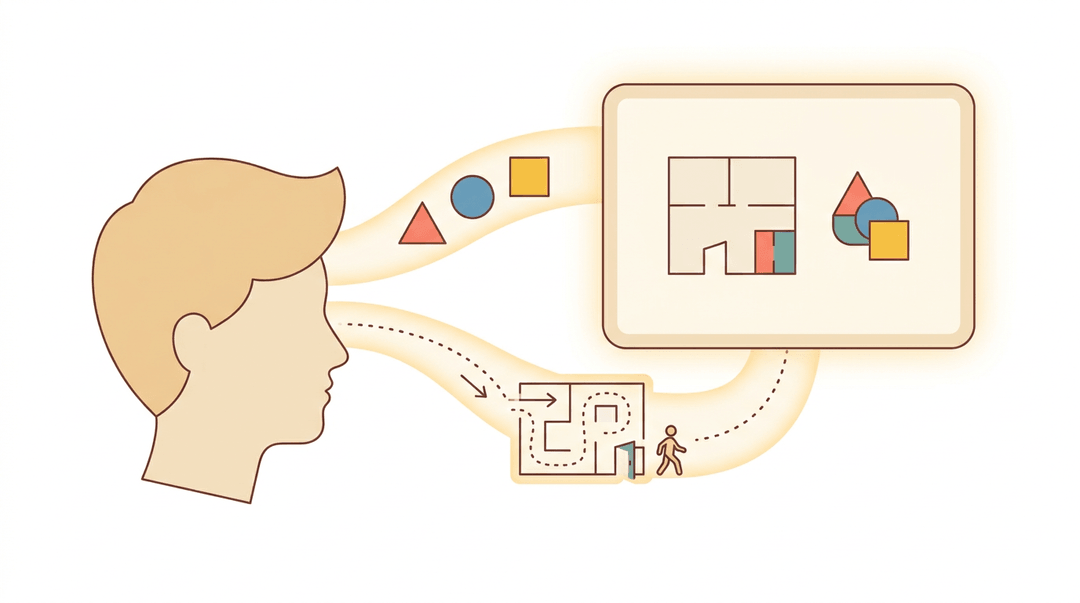
The sketchpad stores visual details like shape and color alongside spatial details like location and movement, so a student can picture a diagram or find their way through an unfamiliar building without saying a word aloud.
Researchers now treat these as two separate subsystems rather than one blended store.
That split echoes a known divide in the visual brain: spatial processing leans on what's often called the dorsal, or "where," pathway, as one breakdown of the model explains, while visual identity leans on a separate route.
The sketchpad also acts as a kind of display screen for long-term visual memory, letting you call up and inspect an image already stored in memory.
Logie's split into visual cache and inner scribe
Cognitive psychologist Robert Logie later split the sketchpad further. The visual cache stores form and color, while the inner scribe handles movement and sequencing.
The inner scribe also rehearses that spatial information and hands it off to the central executive for use.
Evidence for separate visual and spatial systems
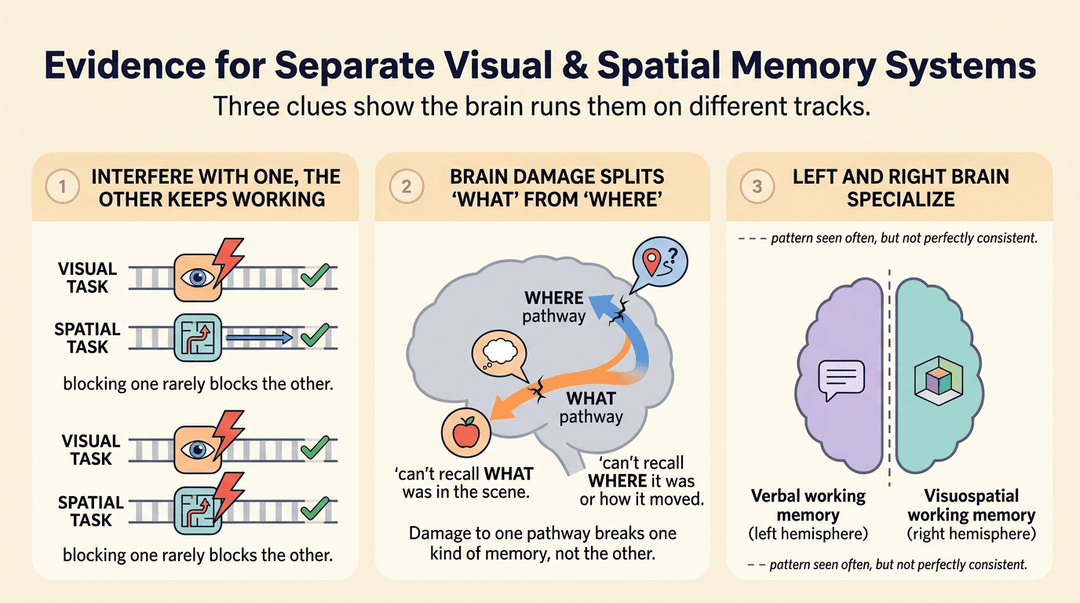
Three lines of evidence support the split.
- Tasks that interfere with visual processing rarely disrupt spatial tasks, and vice versa, a sign the two run on separate tracks.
- Brain damage tells a similar story: a lesion-mapping study of visual scene memory found damage to one pathway disrupted recall of what was in a scene, while damage to another disrupted recall of where it was and how it moved.
- Hemisphere activation differs too: research on hemispheric lateralization notes verbal working memory tends to sit in the left hemisphere and visuospatial working memory in the right, though findings aren't perfectly consistent.
The Episodic Buffer Linking Memory Systems
The original three-part model explained how sound and images get held for a few seconds, but it never explained how those separate stores connect to each other, or to everything you already know. That's the gap Baddeley closed with a fourth piece.
Why Baddeley added the episodic buffer
Baddeley added the episodic buffer to the model in 2000, and the Centre for Neuroscience in Education describes it as "a further sub-component" built to do what the phonological loop and visuospatial sketchpad couldn't manage alone.
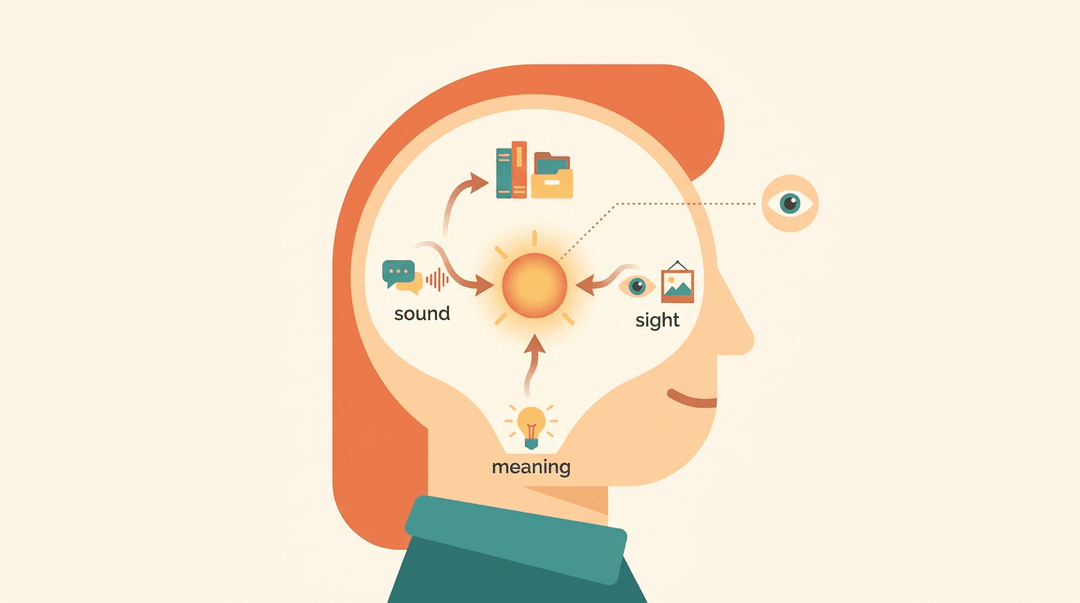
It acts as a limited-capacity, passive store that binds sound, sight, and meaning into a single episode. Crucially, it also links working memory to long-term memory, and it's the one component you can access consciously as it happens.
Evidence supporting the episodic buffer
Some of the strongest evidence comes from amnesic patients: despite damaged long-term memory, a review of Baddeley's model shows they can still recall complex, structured stories far beyond what the phonological loop should allow.
Baddeley himself acknowledged that several phenomena weren't captured by his original model, and a later City Research Online review describes the buffer as integrating information from multiple sources into one unified memory.
Actors reciting long scripts and storytellers holding a room show the same binding at work, something we've all felt without naming it, right down to smell and taste alongside sound and sight. That's why storytelling boosts recall in your own classroom.

Why some now call it the awareness buffer
More recently, a 2026 paper reframing working memory renamed the episodic buffer the "awareness buffer," placing it at the focal point of the system.
It's still episodic at its core: still binding perceptual input, long-term memory, and bodily sensation into one experience. The new name just makes explicit what it always did.
Using Working Memory Research to Plan Lessons
The theory above explains why students lose the thread mid-lesson; this guide turns it into a planning routine. Run these three moves while you draft, then hold the finished plan against the checklist at the end.
Chunk the lesson before you fill it
Working memory fades fast, so build the container before the content.
- Sketch the period as short segments first. Time blocks before topics.
- On paper: "5 min bell ringer → 10 min new idea → 8 min guided practice → repeat."
- Assign one new concept per segment. If a block introduces two, split it in half.
- Open with a bell ringer that primes memory. Retrieving yesterday's material warms up what today attaches to.
- Try: "Write yesterday's definition of a numerator from memory, no notes."
Say it and show it
The phonological loop carries spoken words; the visuospatial sketchpad carries images. Pair them and two channels share the load instead of one channel drowning.
| You say | Students see |
|---|---|
| "First, label your axes" | The axes being labeled on the projected graph |
| A definition read aloud | The same definition written on the board |
| Steps of a complex task | A numbered diagram that stays on their desks |
For genuinely complex tasks, make the diagram the main event: a flowchart of the steps beats a spoken paragraph every time.
Example: A middle school science teacher introducing the water cycle names each stage aloud while tracing it on a projected diagram, then pauses for two minutes of guided labeling before moving on. Both loops carry the idea, and nobody has to hold four stages in their head at once.
Design out the overload
Now hunt through your draft for the three biggest working memory drains. Find your row, apply the swap.
| When your draft asks students to... | Swap in... |
|---|---|
| Switch tasks (listen, then copy, then compute) | One task at a time, finished before the next starts |
| Hold spoken steps in their heads | A written backup: steps on the board or on a desk slip |
| Absorb new content for 20 straight minutes | A guided-practice break after each new idea |
⚠️ Watch out: multi-step directions given verbally only are the most common overload of all. If students have to remember the instructions and do the task, the task loses.
The memory-friendly checklist
Before you teach, confirm:
- One simple objective. You can state it in a single sentence.
- Key info repeated. The main idea lands at least twice: spoken once, written once.
- One task at a time. No segment asks students to do two things simultaneously.
- Verbal plus visual. Every spoken instruction has a matching visual partner.
All four boxes ticked means your plan respects what working memory can actually hold. Plan chunked, multisensory lessons faster with EMStudio's online lesson planner.
Where in the Brain and How Well It Holds Up
Baddeley's model isn't just a diagram on a whiteboard: brain-imaging work has mapped each component to real neural activity, and that evidence has both bolstered the theory and exposed its rough edges.
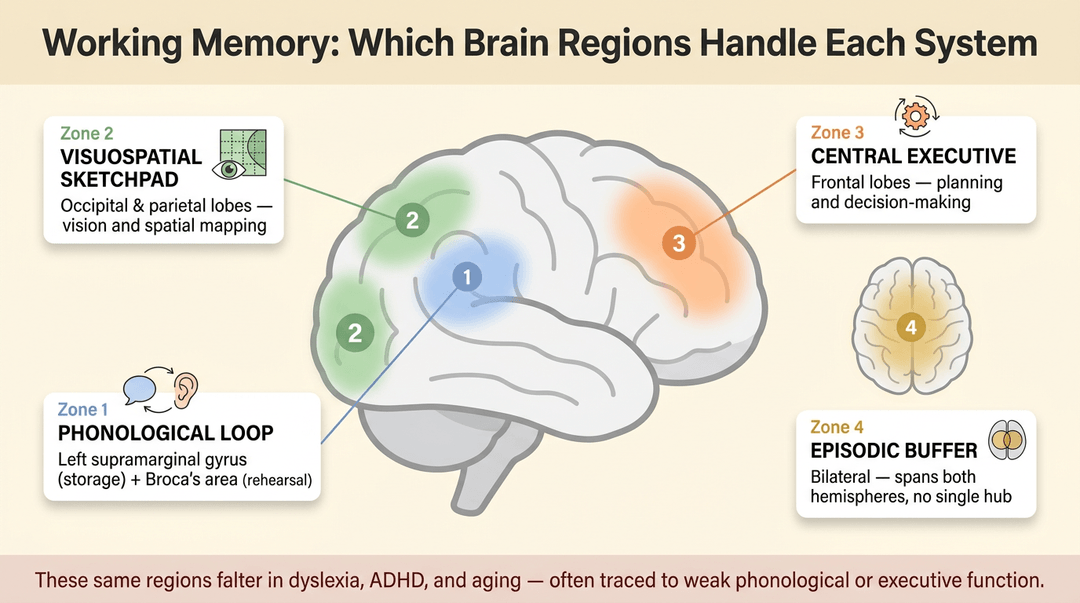
Which brain regions handle each system
Each system leans on a different neural neighborhood:
- Phonological loop. Neuroimaging studies associate phonological-loop processing with activity in left-lateralized language and auditory brain regions. One study using cerebral blood flow imaging localized the phonological store to the left supramarginal gyrus and the rehearsal process to Broca's area.
- Visuospatial sketchpad. Research on visual working memory has linked this system to activation across occipital and parietal regions, the brain's visual-processing and spatial-mapping hubs.
- Central executive. This system draws mainly on the frontal lobes, the brain's planning and decision-making center.
- Episodic buffer. Activation here tends to be bilateral, spanning both hemispheres rather than sitting in one tidy spot.
These same regions show up in research on dyslexia, ADHD, and aging, where working-memory breakdowns often trace back to weaker phonological or executive function.
Strengths and criticisms of the model
The model's biggest strength is scope: it integrates decades of memory findings into one workable framework and has inspired extensive research across cognitive psychology. But it isn't without debate.
The 7±2 rule has been controversial in discussions of working-memory capacity: George Miller's original 1956 paper noted he felt "persecuted" by that number, and later work has challenged its precision.
The episodic buffer, added decades after the original three components, remains comparatively under-researched next to its older siblings.
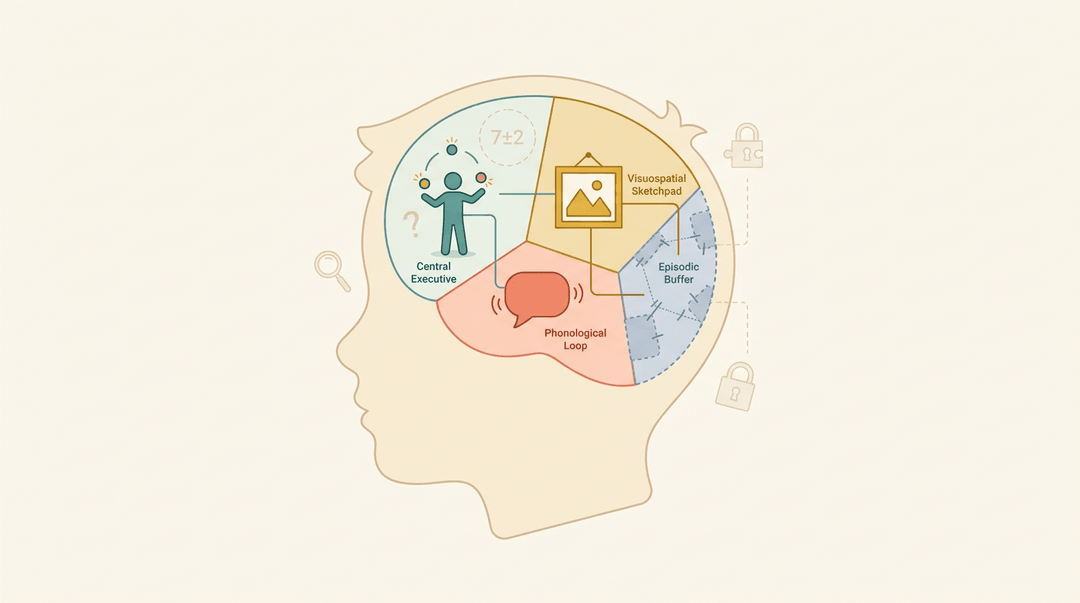
Baddeley's model gives you a clearer picture of what's happening inside a student's head the moment new information lands: juggled by the central executive, sounded out in the phonological loop, pictured in the visuospatial sketchpad, and stitched together in the episodic buffer.
Knowing that isn't just theory. It's a lens for spotting why a lesson clicks or why it overloads a room full of learners. Ready to put it to work? Check out our Lesson Planning tool to build lessons that respect how working memory actually functions.
References
- Working Memory From the Psychological and Neurosciences Perspectives: A Review — pmc.ncbi.nlm.nih.gov
- A double dissociation between memory span and word processing among neurological patients attests to the functional independence of verbal short‐term memory — doi.org (2025)
- Association of the ROBO1 gene with reading disabilities in a family-based analysis — pmc.ncbi.nlm.nih.gov
- Frontiers | Brain substrates of visual scene memory: a lesion-behavior mapping study — frontiersin.org (2025)
- Hemispheric lateralization during maintenance of verbal and visuospatial working memory — doi.org (2025)
- Awareness as the heart of working memory — doi.org (2026)
- Transformed Visual Working Memory Representations in Human Occipitotemporal and Posterior Parietal Cortices — eneuro.org (2025)
- George Miller’s Magical Number of Immediate Memory in Retrospect: Observations on the Faltering Progression of Science — pmc.ncbi.nlm.nih.gov
- research — psy.ed.ac.uk
- Brain imaging of the central executive component of working memory — pubmed.ncbi.nlm.nih.gov
- The phonological loop model of working memory: an ERP study of irrelevant speech and phonological similarity effects — pubmed.ncbi.nlm.nih.gov
- Introduction to Working Memory — cne.psychol.cam.ac.uk
- The episodic buffer: a new component of working memory? — pubmed.ncbi.nlm.nih.gov
- The episodic buffer.pdf — openaccess.city.ac.uk
- Contact details: — citeseerx.ist.psu.edu (2015)
- The neural correlates of the verbal component of working memory — nature.com (1993)
- Visuospatial Sketchpad Definition & Meaning — scales.arabpsychology.com (2025)
- Baddeley's Working Memory Model: Definition & Examples — db.arabpsychology.com (2025)
Frequently asked questions
What are the four components of working memory?
The four components are the central executive, phonological loop, visuospatial sketchpad, and episodic buffer. The central executive directs attention, while the other systems temporarily hold verbal, visual-spatial, and integrated information.
What are the three main types of working memory?
The three main types are verbal working memory, visuospatial working memory, and executive control. In Baddeley's model, these correspond broadly to the phonological loop, visuospatial sketchpad, and central executive.
Can you explain working memory in a simple way?
Working memory is your mind's temporary workspace. It lets you briefly hold information, such as a phone number or directions, while actively using it before it fades or enters long-term memory.
Can you explain the working memory model?
Baddeley's working memory model describes memory as several systems working together rather than one short-term storage box. The central executive manages attention and coordinates the phonological loop for sounds and words with the visuospatial sketchpad for images and locations. The episodic buffer combines information from these systems with meaning and long-term memory into a unified episode.