Classroom Learning Games: The Complete Guide for Any Subject

Jump to section
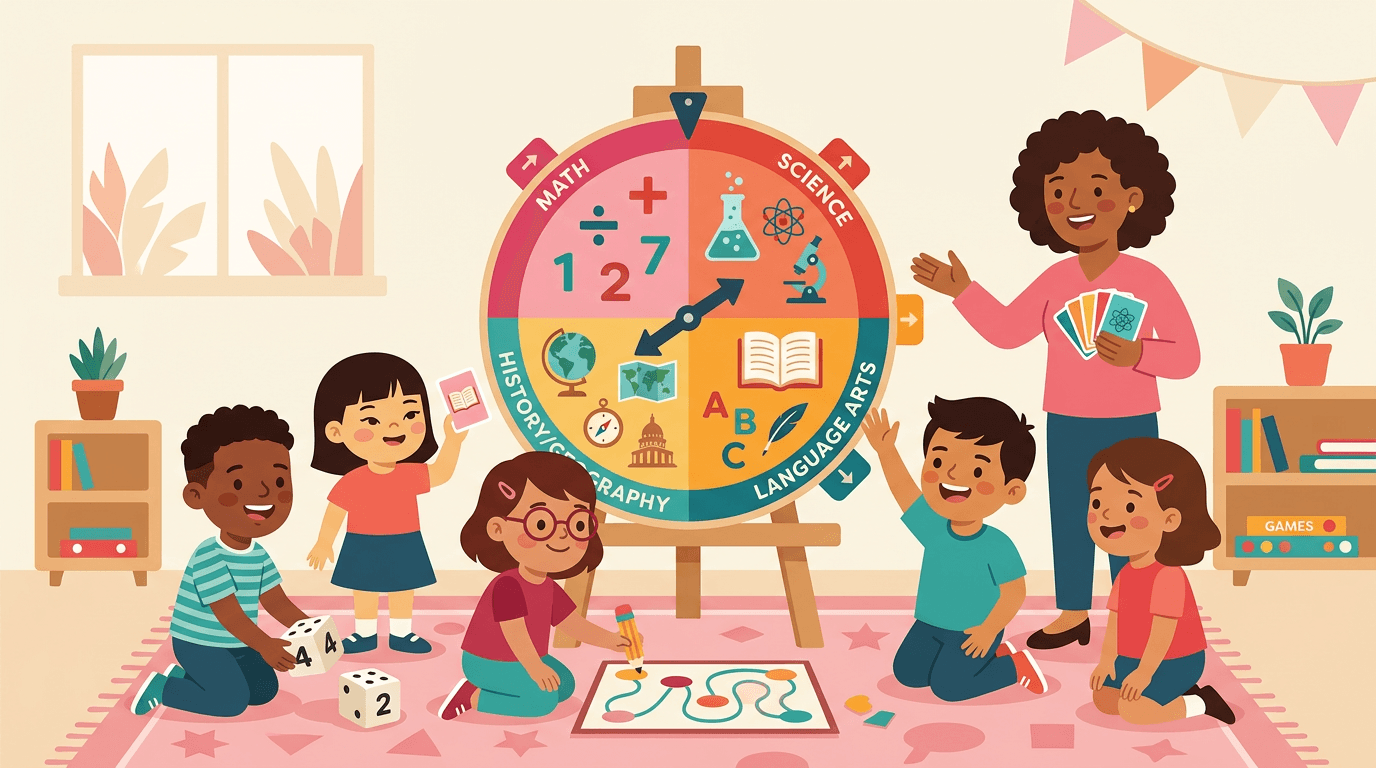
Think about the last time your class went quiet, not because they were bored, but because they were racing to beat the clock. That's the energy a good game can bring to your room.
Classroom learning games turn review, practice, and new content into something students actually look forward to, and they don't have to be complicated or expensive.
In this guide, we'll walk through no-prep, team, vocabulary, subject-specific, and digital options, plus the benefits that make them worth your time. You'll also get a fast playbook for choosing and running a game the same day.
The Real Benefits of Classroom Learning Games
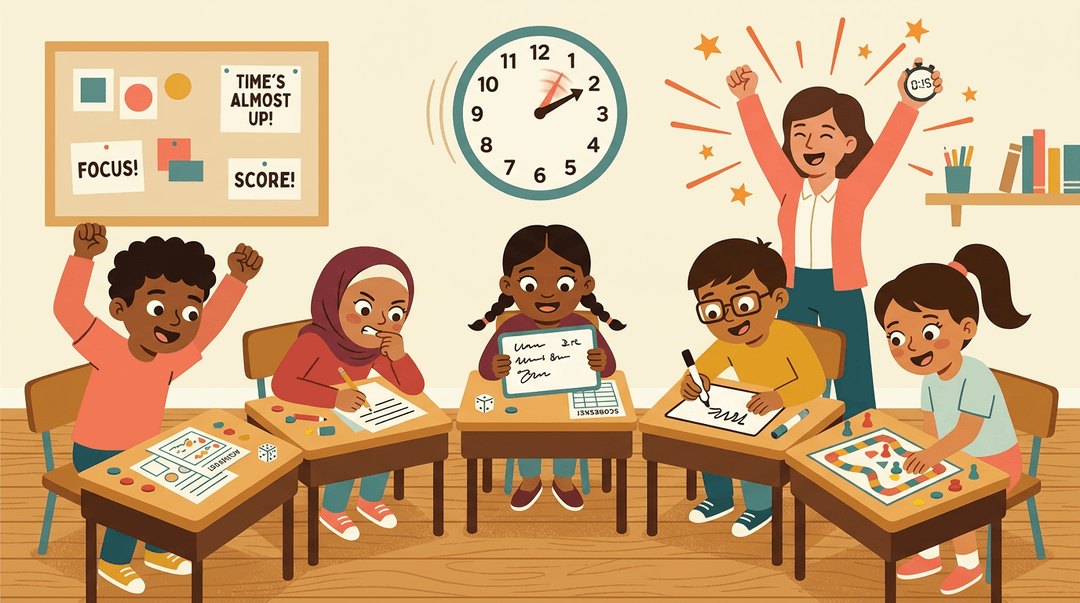
Used on purpose, games support engagement, retention, teamwork, and independent practice. Gamification adds game features like points to regular lessons, while game-based learning makes an actual game the lesson.
Why play keeps students engaged
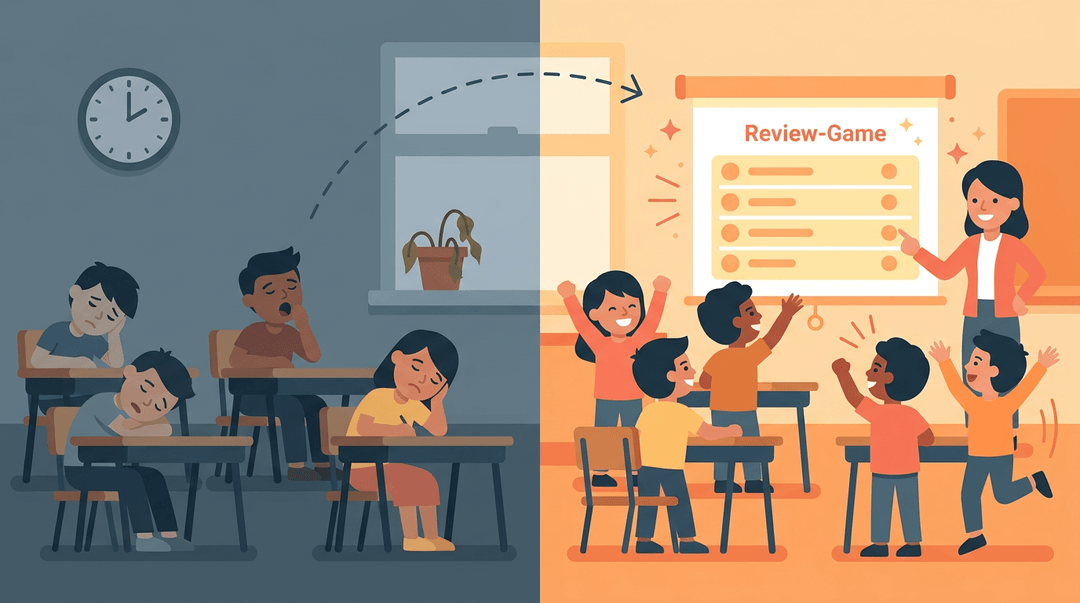
Picture a fifth-grade teacher whose room is losing steam at 2:00. A quick review game re-energizes students in minutes. Games also work as brain breaks and fun attention-grabbers.
Playful learning sticks because students are doing the thinking, not just listening. Games don't replace teaching. They make it stick.
How games boost retention and test scores
Repetition is where games shine, and overlearning, or practicing past the point of getting it right, helps skills stay put. A mathematics study comparing gamification with traditional teaching found that games can produce test score gains.
According to Davis, repeated, engaging practice can reinforce lesson retention and may improve test performance. Claims of a half letter grade gain circulate, but our sources don't confirm that figure, so we won't cite one.
Building teamwork and social skills through play
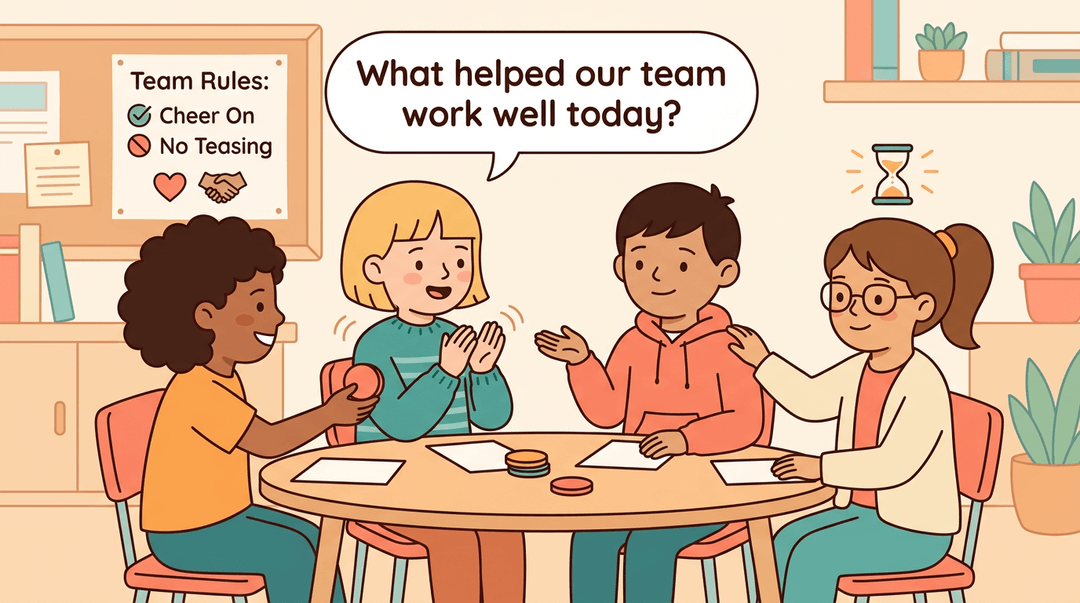
Games build teamwork as students take turns, share roles, and talk through answers together. Set courtesy rules first, like cheering for teammates and accepting wrong answers without teasing.
Over time, students develop self-regulation, managing impulses and waiting their turn, and the class starts to feel like a community. Follow up with social-emotional learning (SEL) discussion prompts like 'What helped our team work well today?'
Games that let students play independently
Multi-level games let advanced students push ahead while others keep building foundations, all within one activity. Self-checking games give immediate feedback, so students can work independently.
For example, a third-grade teacher running a math station can work with a small group while partners play a self-checking card game. That's time back for real teaching.
Digital Platforms for Classroom Learning Games
Digital games can handle everything from a quick warm-up to a full unit of practice. Here's how the main options compare, and where each one fits in your week.
Live quiz and trivia tools
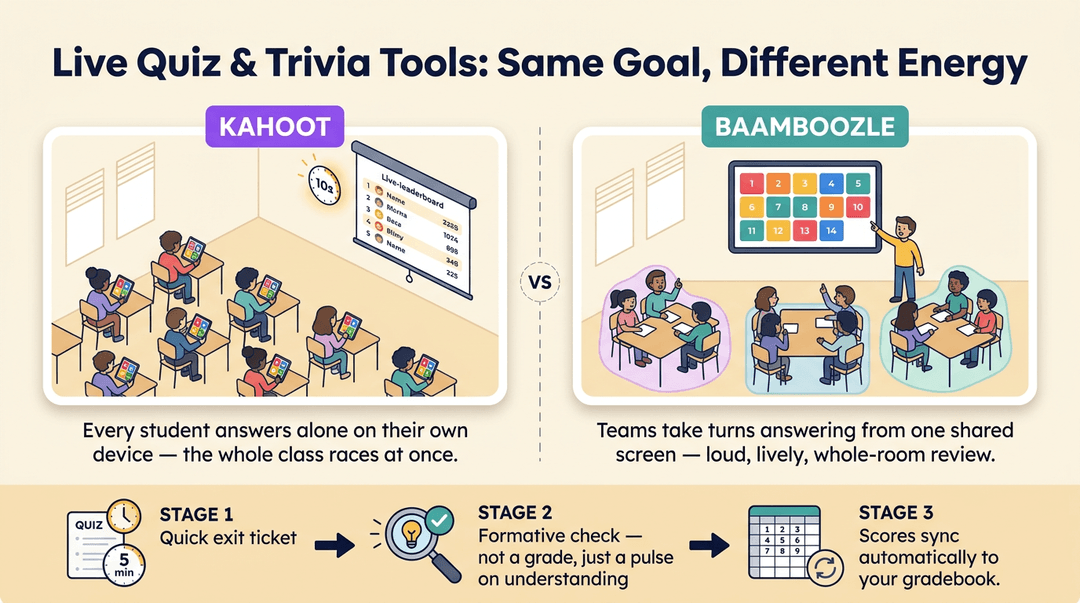
Tools like Kahoot run real-time quizzes where every student answers on a device, so the whole class competes at once. Baamboozle works differently: it's a team game you project on a screen, which is great for a lively whole-room review.
Used as exit tickets, these quizzes give you formative assessment (a check of understanding during learning, not a final grade) in just a few minutes.
Many of them can also sync scores to your gradebook, so the numbers are already there when you sit down to plan.
Game libraries aligned to your curriculum
Standards-aligned libraries offer more than 2,000 games across math, science, and history, so you can match a game to the skill you're teaching rather than the other way around. Some include avatar battles and quests that give practice a storyline.
Adaptive math fact practice adjusts difficulty as students answer, which helps the early finisher and the student who needs another pass.
According to IES, the developers of Teachley's math game apps created a suite that “support fact fluency and promote math strategy development.”
Printable game kits you can reuse
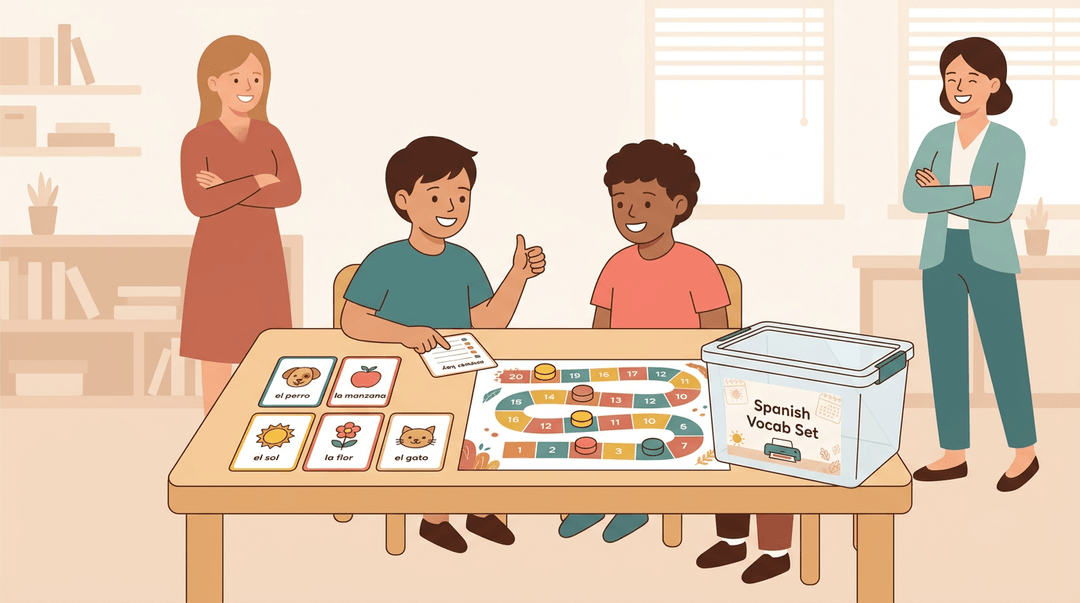
Printable kits don't need a device at all. Self-checking card games let students confirm their own answers, so you're free to circulate. Gameboards and tokens give you a setup you can pull out for any unit.
Single-skill focus sets keep practice narrow, and Spanish vocabulary sets are a ready-made option for world language classes. Picture a Spanish teacher who prints one set, laminates it, and uses it every semester.
The payoff is a game you reuse rather than rebuild.
Searchable libraries of digital games
Searchable libraries let you filter by subject and grade, so a fifth-grade teacher can find a reading challenge in seconds instead of scrolling. You'll also find:
- printable crosswords
- coloring pages
- math puzzles
- reading challenges
Before students log in, review how each platform handles their information.
Student data privacy matters here, and that includes checking how a tool complies with COPPA (the Children's Online Privacy Protection Act, a U.S. law covering data collected from children under 13).
Look for clear privacy policies, and ask your school's tech team which tools are approved. Check before you click.
How to Pick and Run a Classroom Learning Game Fast
Use this guide when you need a game for today or tomorrow. Choose in five minutes, match it to your grade band, then run it with four simple moves.
Pick in five minutes
Work through these in order. Each answer narrows the next.
- Match the game to your goal.
- Review game: students recall what they've already learned.
- Practice game: students apply a skill they're still building.
- Review game: students recall what they've already learned.
- Check your time and space.
- Ten minutes and desks in rows? Choose a seated, quick-round game.
- Choose no-prep or digital.
- No-prep needs only paper, a whiteboard, or your voice.
- Digital needs working devices and a few minutes of setup.
- No-prep needs only paper, a whiteboard, or your voice.
- Confirm the standard.
- Jot it down: Game: ___ / Skill students practice: ___ / Standard: ___
- If you can't fill the last blank, pick a different game.
- Jot it down: Game: ___ / Skill students practice: ___ / Standard: ___
Match the game to the grade
Find your grade band and start with that game type.
| Grade band | Start with | Why it works |
|---|---|---|
| K-2 | Movement and sight-word games | Young learners learn by moving and repeating |
| 3-5 | Team review games | Teams add friendly stakes and peer help |
| 6-8 | Digital quiz platforms | Fast feedback and a competitive feel |
| 9-12 | Discussion-based games | Students defend ideas and respond to peers |
Example: A fourth-grade teacher splits the class into four teams for a review before a unit test. Each team gets one question at a time and ten seconds to confer. The same questions would have been a worksheet, but now every student is talking about the content.
Run it smoothly
Games go wrong in the first two minutes or the last two. These moves cover both.
- Set clear rules upfront.
- Say: "One answer per team. Voices at level one. Points only for correct answers."
- Model one round first.
- Play a practice question aloud with a volunteer before scoring anything.
- Debrief the key takeaway.
- Ask: "What's one thing this game showed you that you'd missed?"
- Log scores afterward.
- Record scores next to the standard, so the data helps your next plan.
⚠️ Watch out: Skipping the debrief is the most common slip. Without it, students remember who won but not what they learned.
Slot these games right into your unit pacing with EMStudio's curriculum planner.
Team Games for Review and Competition
Team games turn review into a contest, and that energy is often exactly what a tired class needs. These formats need little prep, so you can use them the same day.
Buzzer and bell quiz games
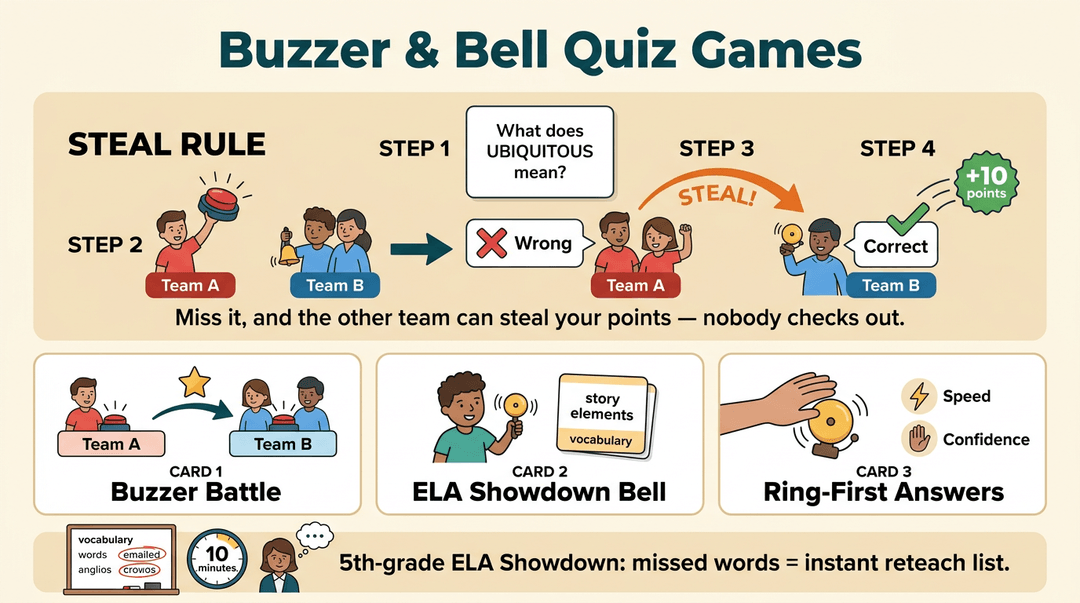
Buzzer games are the classic fast-answer format. Split your class into teams, read a question, and let the first team to signal take a shot. The steal rule keeps everyone alert: if the buzzing team misses, the other team can steal the points.
- Buzzer battle with steal points: Wrong answers hand the opposing team a chance to steal, so nobody checks out.
- ELA showdown bell: Ask English language arts (ELA) questions on vocabulary or story elements, and students ring a bell to claim the answer.
- Ring-first answers: Students ring the bell before answering, so speed and confidence both count.
Consider a fifth-grade teacher who runs an ELA showdown during a vocabulary unit. In ten minutes, she can see which words still need reteaching, because the missed answers show up right on the board.
Toss and shoot scoring games
Toss games get students moving while they review. Each successful shot earns the team a question.
- Trashketball paper toss: Set a bin across the room and let teams earn a shot by answering first.
- Points by distance: Tape distance lines on the floor so longer throws are worth more. This rewards risk rather than accuracy alone.
Game-show style classroom games
Game-show formats bring television energy into your room.
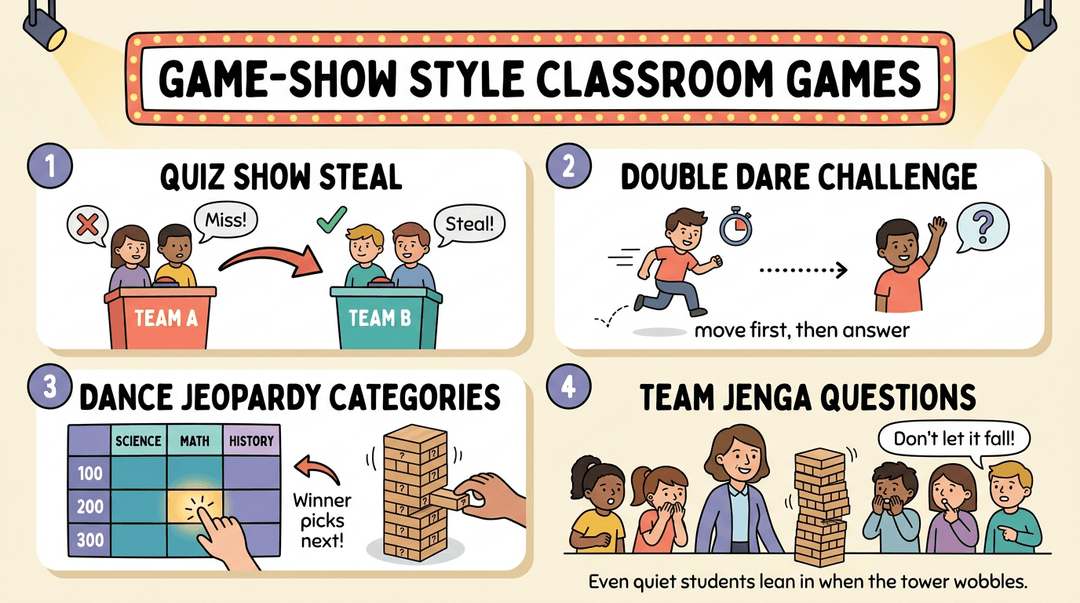
- Quiz show steal rule: Teams answer in turn, and any team can steal a question the other team misses.
- Double Dare physical challenge: Teams complete a quick movement task, like a hop or a stretch, before they get to answer.
- Dance Jeopardy categories: Post topics on the board. The team that answers picks the next category and point value.
- Team Jenga question pulls: Write a question on each block. Teams pull a block, answer its question, and try to keep the tower standing.
A middle school science teacher might end a unit with Team Jenga, and the wobbling tower keeps even the quietest students watching.
Relay and desk recall challenges
Relay games keep every student involved, not only the ones who volunteer first.
- Around the world fact recall: Students move desk to desk, answering one fact at each stop. The first to finish the loop wins.
- Question difficulty packs: Sort questions into easy, medium, and hard packs. Teams start easy and climb as they answer correctly.
Everyone plays, and that's the point.
Vocabulary and Word-guessing Games
Vocabulary is where a lot of content lives, so word games are a natural fit. Here's how to use them without losing control of the room.
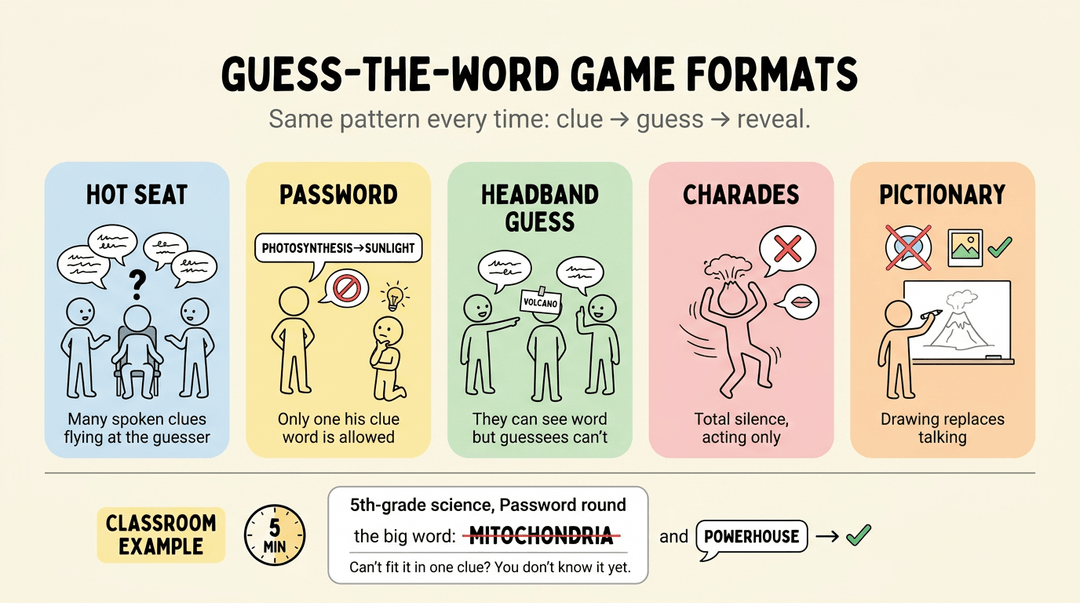
Guess-the-word game formats
Most of these follow one pattern: a clue, a guess, and a quick reveal. In:
- hot seat, one student faces the class while classmates give clues and the student names the word.
- password, teams can give only one-word clues, which forces precise thinking.
- headband forehead guess, a card is placed on a student's forehead, and classmates act as the clue-givers.
- Charades uses silent acting only.
- Pictionary swaps the acting for quick drawing.
For example, a fifth-grade science teacher can run a password round on key terms in five minutes. Students who can't squeeze a term into one clue have to figure out what it really means.
Games that reinforce spelling
In sparkle, students spell a word letter by letter, one at a time, so every learner gets a turn in the spotlight.
For sight words, the "I have, who has" card chain works well: each card's answer becomes the next card's question, so the whole class reads aloud in sequence.
Consider a first-grade teacher who uses that chain as a morning warm-up. Every student must read, listen, and respond, and the steady pace keeps even your quietest readers engaged.
Matching and sorting word games
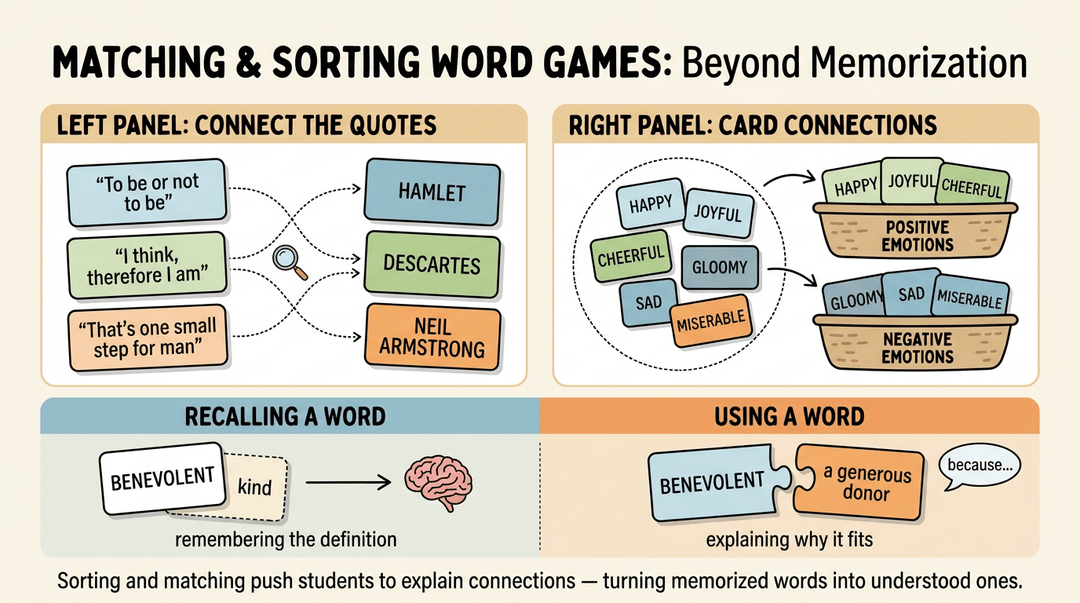
In connect the quotes, students match each quote to the card that fits, which builds comprehension along with vocabulary. Card connections asks students to group words by theme, meaning, or part of speech.
Are students recalling a word, or actually using it? These games push toward using it, because sorting and matching require students to explain why two things belong together. That's less about memorizing a word and more about understanding it.
Games for Specific Subjects and Skills
Some skills need a game built for them. Match the game to the subject, and practice starts to feel like play.
Math fact practice games
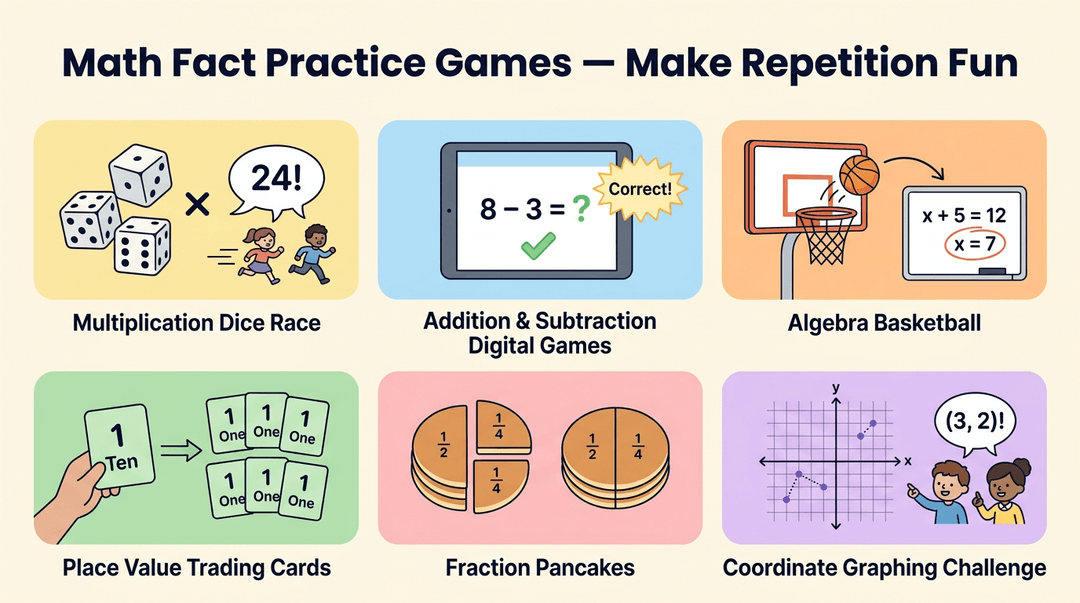
Fact fluency grows through repetition, and games make repetition fun. Try a multiplication dice game: students roll two dice, multiply the numbers, and race to call out the product first.
For addition and subtraction digital games, students get instant feedback, so they know right away which facts need another look.
Think of a fourth-grade teacher who runs an algebra basketball game. Each correct answer earns a shot, so students solve equations while they're moving. Use place value games to build number sense, with students trading tens for ones using cards.
For fractions pancake games, students stack fraction pieces to build a whole pancake, so halves and quarters start to make sense. Finally, graphing coordinate games turn plotting points into a team challenge where students call out locations on a grid.
Grammar and ELA games
Students learn grammar best when they manipulate words. In sentence sorting games, students arrange word cards into complete sentences, then check whether each one makes sense.
A nouns verbs sort works the same way: students sort cards into two piles and explain their choices. Proper noun games help students see that names of people, places, and days deserve capital letters.
The figurative language skate game has students move around the room to match a phrase with its meaning, so the idea of figurative language is something they move through, not just read about.
Games that build reading comprehension
Comprehension gets deeper when students act it out. Have students act out poems and stories, and they'll notice the details that a quick read can miss.
Six-word stories challenge students to tell a complete story in exactly six words, which forces them to pick the most important moments.
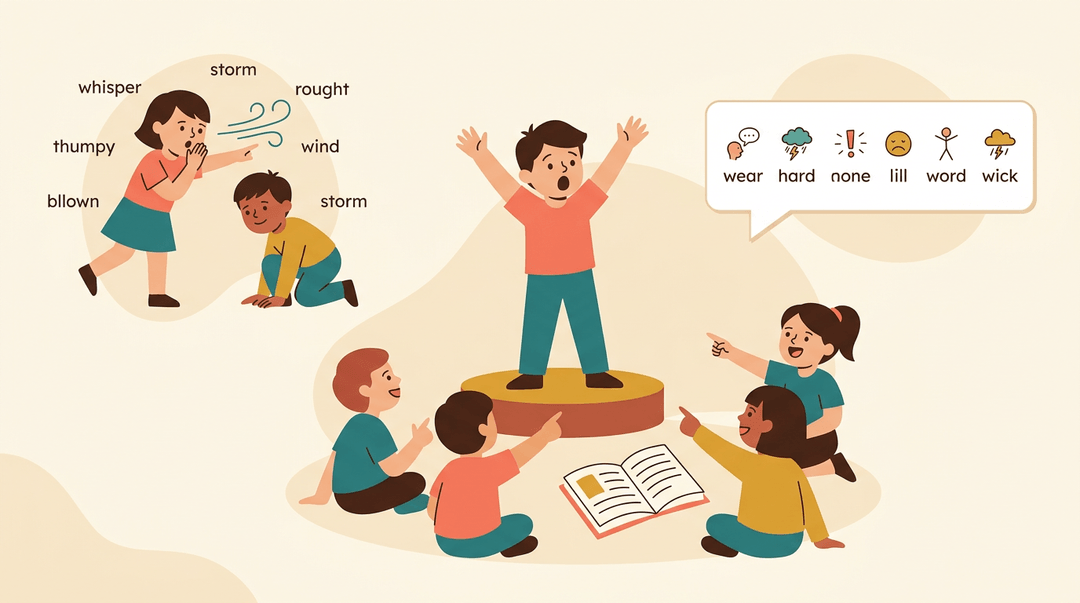
In show me literature acting, a student performs a character's feelings without speaking, and classmates guess the emotion and point to the text that supports it.
Cross-curricular trivia games
Trivia works across subjects. Use climate curiosity questions to spark discussion in science or social studies, and let students explain their answers.
For a quick check, play stand up sit down true/false: students stand for true and sit for false, so you can see who's confident and who needs a second look. It's a fast, low-prep way to get everyone involved.
No-prep Movement Games
Here's how to get students focused and moving today, with nothing more than your room.
Quiet games that build focus
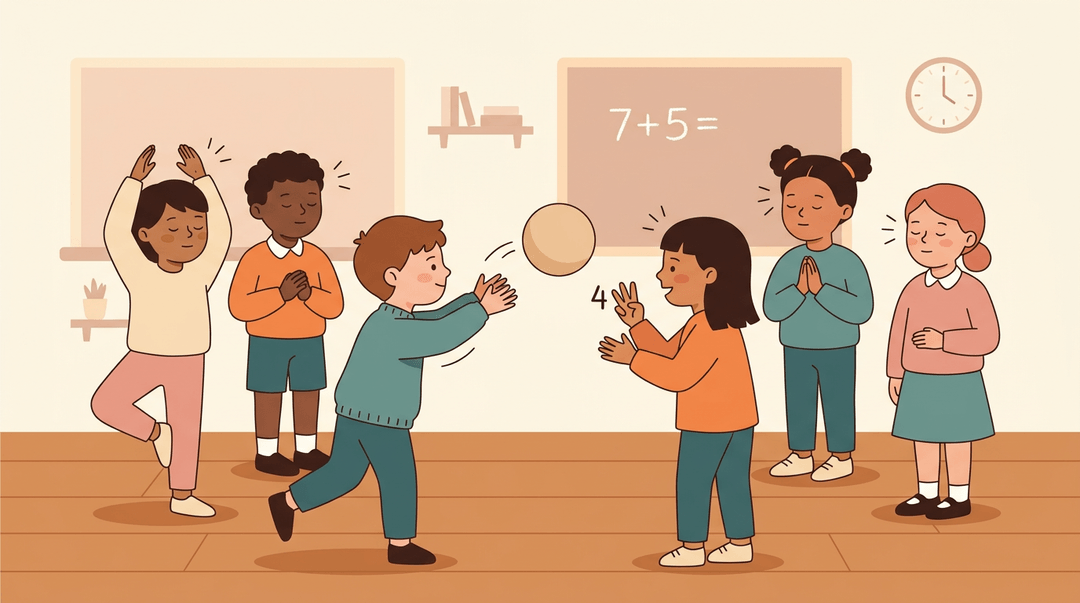
In a silent ball toss, students pass a soft ball around, and whoever catches it shows an answer with their fingers. A fifth-grade teacher can check a math warm-up this way in under two minutes. Nobody talks.
Build self-control focus by having students hold a pose until you release them. You're training attention rather than filling time. Try a last-one-standing format too: anyone who moves sits out.
Games that get students moving
Four corners pairs each corner with an answer choice. Students walk to their pick, and you see the room's answer split at a glance.
In line up nonverbally, students order themselves by birthday or a lesson number without speaking, relying on gestures and eye contact.
Would you rather sides has students stand on one side of the room or the other, then defend their choice.
For walkabouts wall questions, students rotate past posted prompts and jot one answer per stop. A high school history teacher gets a stack of responses to review in minutes.
Scavenger hunts and object searches
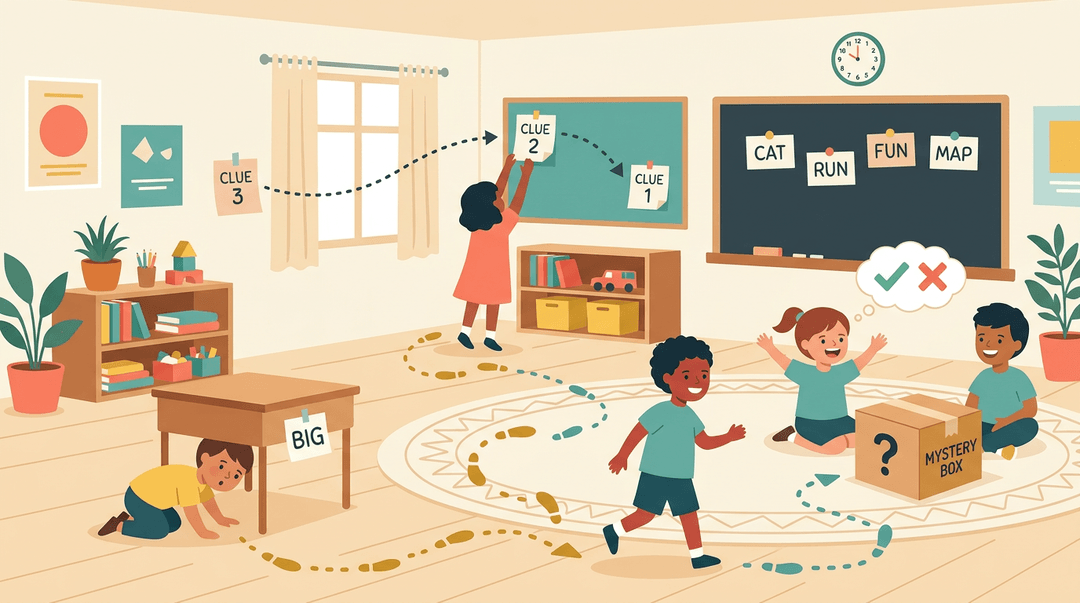
Themed clue hunts hide cards that each point to the next location, so a review lesson becomes a mystery story.
Hidden lesson tasks tuck practice problems under desks. A third-grade teacher reviewing sight words can tape twelve words around the room, and the search keeps everyone engaged.
In mystery box guessing, students ask yes-or-no questions to identify a sealed object, which builds reasoning.
Dance and music break games
Need a reset? In freeze dance review, students dance until the music stops, then answer a question on a whiteboard. It's quick and refocuses the room.
Minute to win it challenges give teams sixty seconds for a lesson task, like naming vocabulary words. The clock adds urgency.
Adapting Games by Grade Level
The best game for a fifth grader rarely works as-is for a tenth grader. It's less about which game you pick and more about how you adjust it for the learners in front of you.
Games built for elementary students
Young learners need short rounds, clear rules, and plenty of movement.
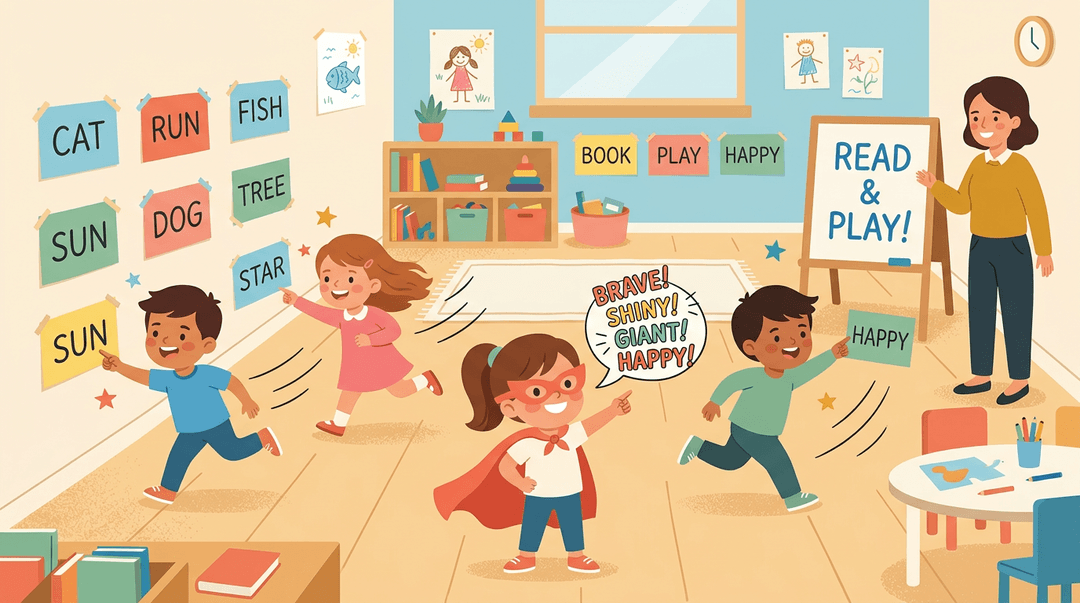
A sight word game works well when students race to find and read words posted around the room, and it gives a first-grade teacher a quick check on who's solid and who needs another pass.
In a superhero adjective game, students pick a hero and describe it with vivid adjectives, turning a grammar drill into play. Simple rule games for K-5 work best when you teach the rule in one sentence and let students learn it by playing a few rounds.
Games that work for middle schoolers
Middle schoolers want a little competition and a little independence. Try a bingo review game where students mark terms on a shared board as you read definitions aloud, so unit review feels like a contest instead of a worksheet.
In a card connections grouping activity, small teams sort concept cards by how they relate, which pushes them to explain their thinking to each other.
For a quiz show math round, split the class into teams, let a student host, and keep score while you listen for misconceptions.
Games suited for high schoolers
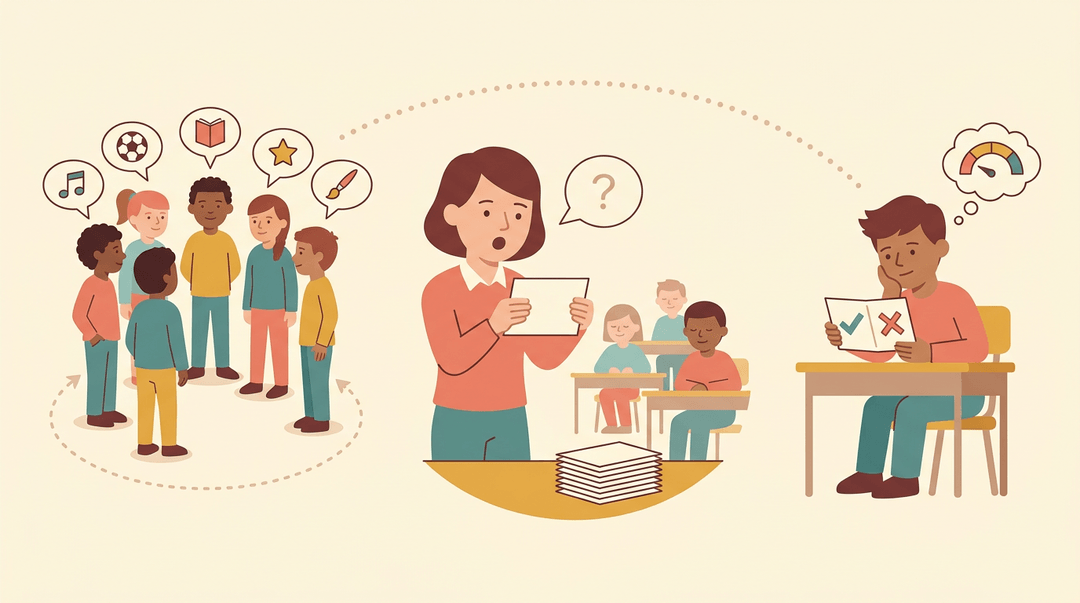
Older students respond best when games feel purposeful. A networking icebreaker helps students learn names and interests early in the year, building the community you'll rely on later.
In a notecard anonymous sharing activity, students write a question or thought on a card, and you read them aloud without names, so even quiet students can speak up.
A pass/fail reflection activity asks students to rate their own understanding of the day's goal, which tells you a lot without a single test score.
Games that work across many grades
Some games stretch further than you'd expect. Games that span grades K-8 keep the same structure while the question bank changes. A kindergarten teacher and an eighth-grade teacher can both run a review round; only the content shifts.
Many of these formats work in K-6 classrooms and across the full range from preschool to high school, so you don't have to start from scratch each year. Whatever the grade, adapt for mixed-ability and English language learner (ELL) classrooms by:
- pairing students with a buddy
- offering picture cards
- giving advanced students a harder question set.
Choosing and Setting up Classroom Games
Picking a game is only half the job. Before you choose, map each game to a standard or objective so it teaches something instead of just filling time. Then set it up so it runs smoothly on the day.
What are some fun indoor games for classrooms?
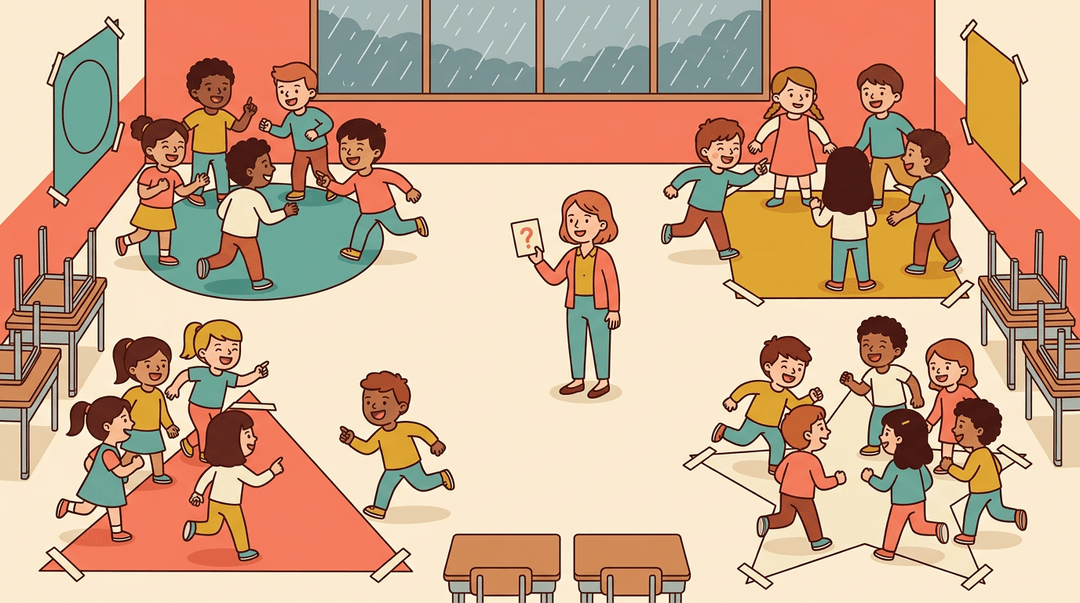
Rainy days and cold snaps keep students inside, so you need games that work in a room. Consider a fourth-grade teacher whose recess got canceled.
She ran a quick round of Four Corners, where students moved to the corner matching their answer, and burned off energy without leaving the room.
Match the game to the space and the energy level: quiet review games for calm afternoons, movement games when the class needs a reset. Many games adapt to both indoor and outdoor settings, so one plan can serve you twice.
What you need to set up a game
The easiest option is a low-prep game with no materials at all, like a question round on the board. For games you'll reuse, a classroom display box keeps pieces together.
Slide bingo sheets into sheet protectors so you can wipe and reuse them with dry-erase markers. That lets you reuse rather than rebuild each time.
Finally, keep a sub-ready game folder with the rules, a materials list, and a printed copy of each board, so a substitute can launch a game without hunting for supplies.
Getting started with game platforms
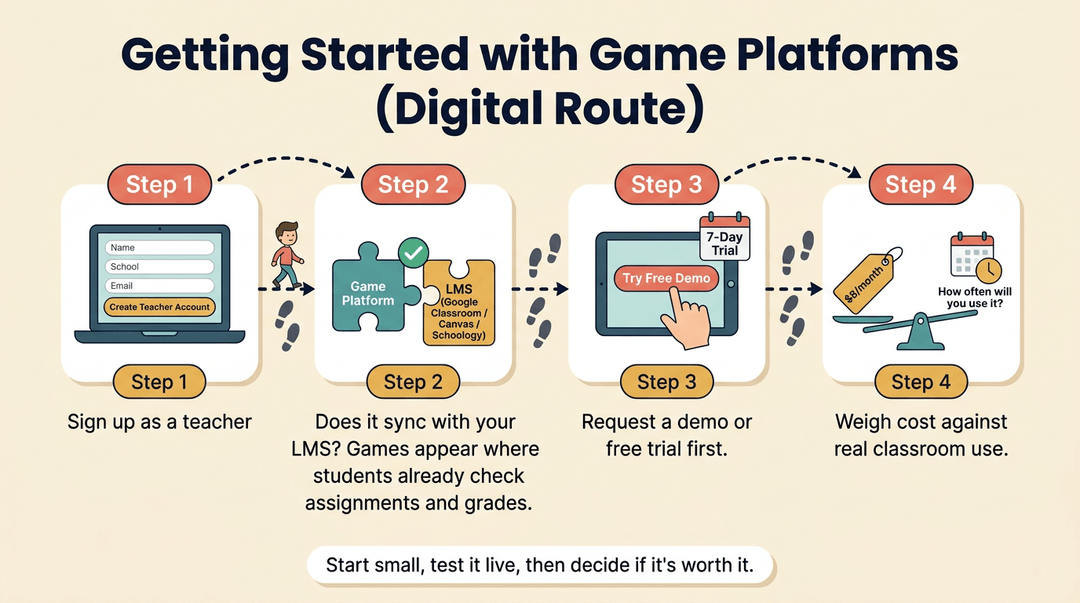
If you'd rather go digital, start with a teacher account. Then check whether the platform connects to your learning management system (LMS), the online hub many schools use for assignments and grades, so games show up where your students already look.
Finally, request a demo or try a free version, and compare pricing against how often you'd really use the tool.
What the research says about game efficacy
Evidence should guide your choices. According to Principal Investigator Kirk Walters of WestEd, an evaluation of NBA Math Hoops examined its impacts on middle school students' math outcomes and engagement.
That's a useful starting point, and it's worth reading the full evaluation yourself. For Vanderbilt findings, look up the original study before you rely on any claim about it.
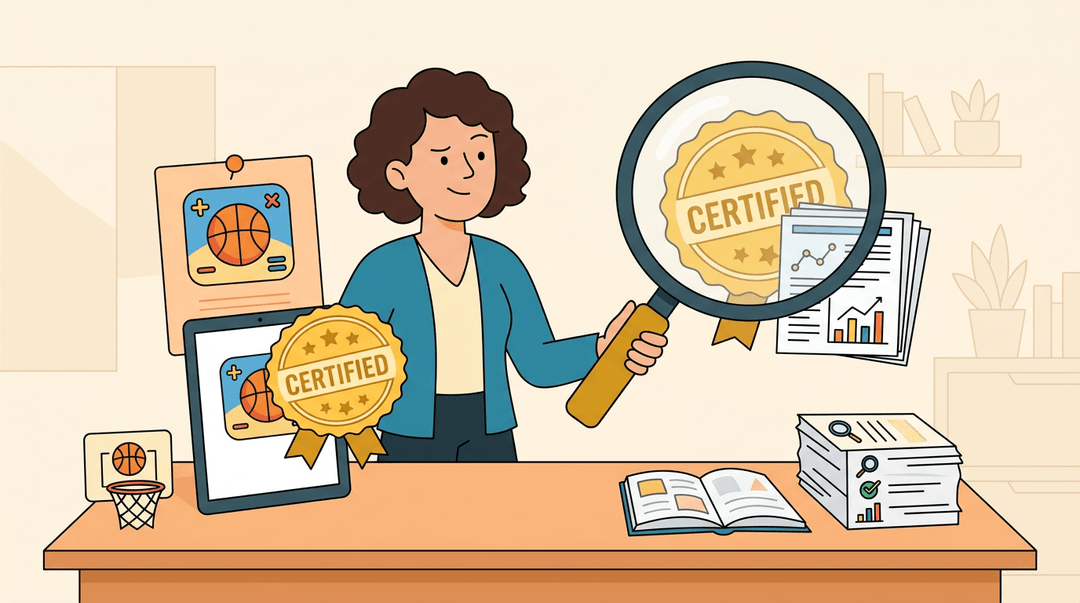
Efficacy badges and certifications can signal that a game was reviewed, but ask what they're based on. A badge is a starting point, not proof.
Classroom learning games work because they make practice feel like play, and that's a win for you and your students. Start with one option from this guide, match it to the standard you're teaching, and try it this week.
Ready to plan games alongside your standards? Check out our Curriculum Planning feature page to map units, lessons, and standards across the whole school year.
References
- Gamification versus traditional teaching: Impacts on mathematics learning outcomes and engagement — ejournal-fkip.unipa.ac.id (2026)
- Teachley's Game Apps for Mathematics: From Research to Practice at Scale in Education — ies.ed.gov
- Game Framework Analysis and Cognitive Learning Theory Providing a Theoretical Foundation for Efficacy in Learning in Educational Gaming | Davis | International Journal of Learning, Teaching and Educational Research — ijlter.org
- Evaluation of NBA Math Hoops: Impacts on Middle School Students’ Math Outcomes and Engagement — overdeck.org (2026)
Frequently asked questions
What are some fun classroom games?
Fun classroom games include buzzer quizzes, Trashketball, Charades, Pictionary, Four Corners, scavenger hunts, freeze dance review, and Minute to Win It challenges. You can connect each game to vocabulary, math facts, reading comprehension, or any topic students are practicing.
What are some good interactive games for classrooms?
Interactive classroom games include Kahoot, Baamboozle, team quiz shows, hot seat, Password, card connections, stand-up sit-down true/false, and walkabouts with wall questions. These formats keep students answering, discussing, moving, or working together rather than simply listening.
What are some popular learning games?
Popular learning games include Kahoot quizzes, Jeopardy-style review, bingo, Charades, Pictionary, multiplication dice games, matching and sorting activities, scavenger hunts, and self-checking card games. The best choice depends on the skill being practiced, the students' age, and the available time and space.
What are some fun indoor games for classrooms?
Good indoor classroom games include Four Corners, silent ball toss, line up nonverbally, hot seat, Pictionary, Charades, team trivia, hidden lesson tasks, mystery box guessing, and freeze dance review. They can provide movement and fun while keeping students inside and reinforcing lesson content.