Reflection Questions for Students That Build Real Learning

Jump to section
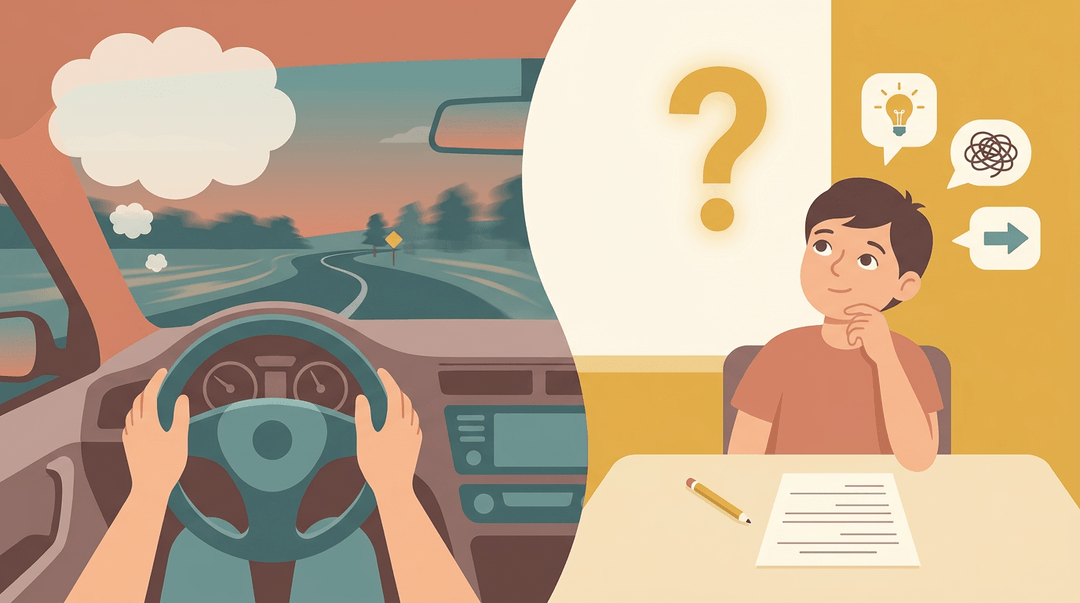
Think of the last time you drove home and realized you couldn't remember the final few miles. Your hands did the work while your mind was somewhere else.
Many students finish a lesson the same way: they get through the tasks without ever pausing to notice what actually clicked.
That's where reflection questions come in. A well-placed question asks a student to stop, look back, and name what they learned, what confused them, and what they'll try next. It's a small pause with a big payoff.
In this post, we'll sort reflection questions by purpose, format, and grade band, show you how to use the answers, and walk through a 10-minute routine you can run in class tomorrow.
Why Reflection Questions Help Students Learn
Reflection questions ask students to look back at their own thinking. Here's what they build and what gets in the way.
What students gain from reflecting
Four benefits stand out. Reflection shifts the focus from what students memorized to how they think about it:
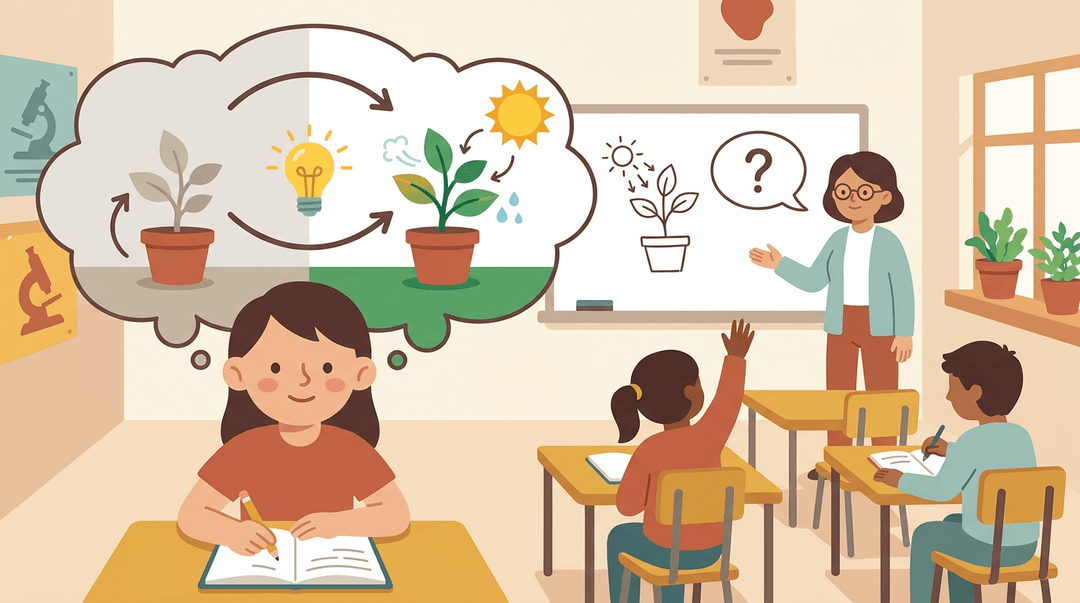
- Connected knowledge. Reflection links new ideas to existing ones. A seventh-grade science teacher might close a photosynthesis lesson by asking, "What did you believe about plants before today, and what changed your mind?" That comparison is where learning takes hold.
- Growth mindset and self-assessment. When students name what went wrong and what they'd try next, mistakes become information instead of verdicts. They learn to judge their own work.
- Motivation and student voice. Students get room to say what helped, what confused them, and what they want next, so they see themselves as part of the process.
- Better learning outcomes. The systematic review Reflective Writing in Higher Education calls reflection an indispensable skill that supports academic achievement and other educational outcomes.
What gets in the way of reflection
Students rarely reflect unprompted, so the habit has to be built into the routine. Assessment-driven curricula make it harder: with a tight pacing guide and a test looming, reflection can feel like time stolen from content.
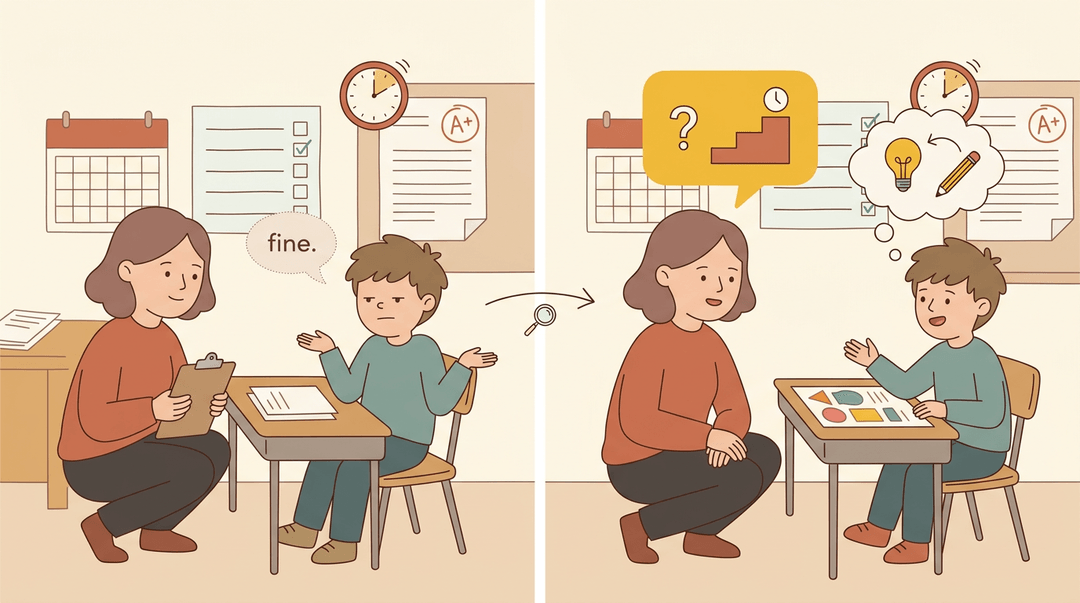
Many students also stay stuck in the present. Ask a sixth grader how a project went and you may get a shrug and "fine." A sharper question, like "Which step took the longest, and what would you change?", gets a real answer.
Finally, some students see reflection as a soft add-on rather than serious learning. Tie each question to the content, and it stops feeling optional. Name the obstacle, and you can plan around it.
What Makes a Good Reflection Prompt
The best reflection prompts spark thinking rather than just finishing a worksheet. Here's what separates the questions that deepen learning from the ones students answer in five seconds.
What good prompts have in common
Strong prompts share four traits:
- Open-ended. They ask students to explain, not just confirm.
- Relevant to course context. They point back to this unit's content, not general life advice.
- Clear, concise language. Students should understand the question on the first read.
- Avoids vague busy work. Each question should earn its place by pushing thinking forward.
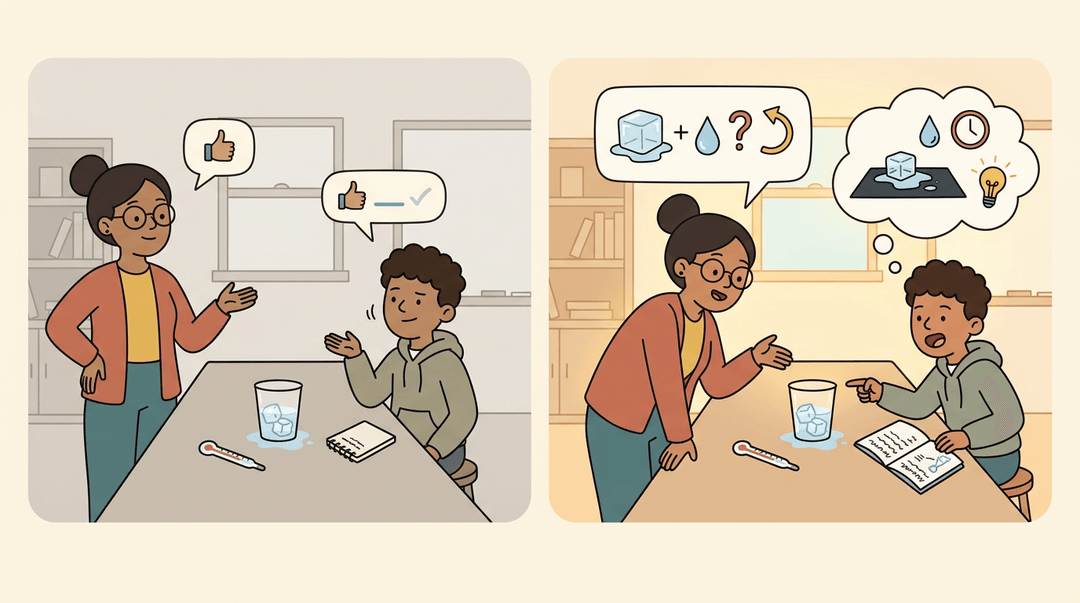
Consider a seventh-grade science teacher who asks, “Did you like the lab?” Most students say “yes” and move on.
Swap in “What surprised you about how the ice melted, and what would you change next time?” and you’ll learn what each student actually noticed.
How can I write a reflection?
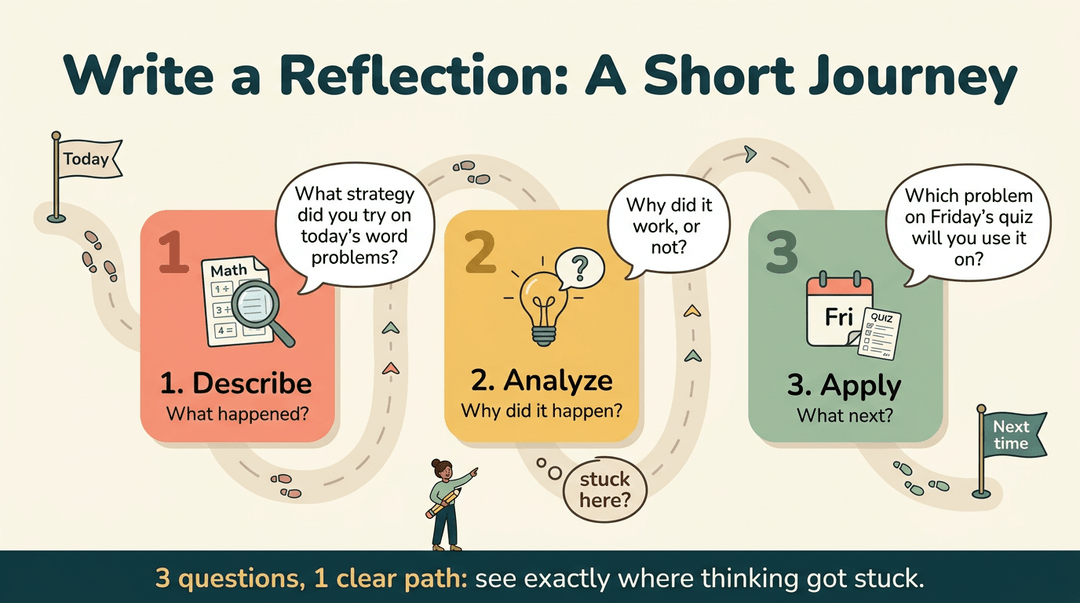
Think of a reflection as a short journey from what happened to what comes next. Students move through three stages, in order:
- Describe what happened. Start with the facts: the task, the result, the moment that stood out.
- Analyze or interpret it. Ask why it happened and what the student understood or missed.
- Apply the learning to the future. Finish with what they'll do differently next time.
Then string these stages together as scaffolded questions, each one building on the last.
A fifth-grade teacher might ask students to describe the strategy they tried on today’s word problems, explain why it worked or didn’t, then name one problem where they’ll use it on Friday’s quiz.
Three questions, one clear path, and the teacher sees exactly where the thinking got stuck.
Run a 10-minute Reflection Routine in Class
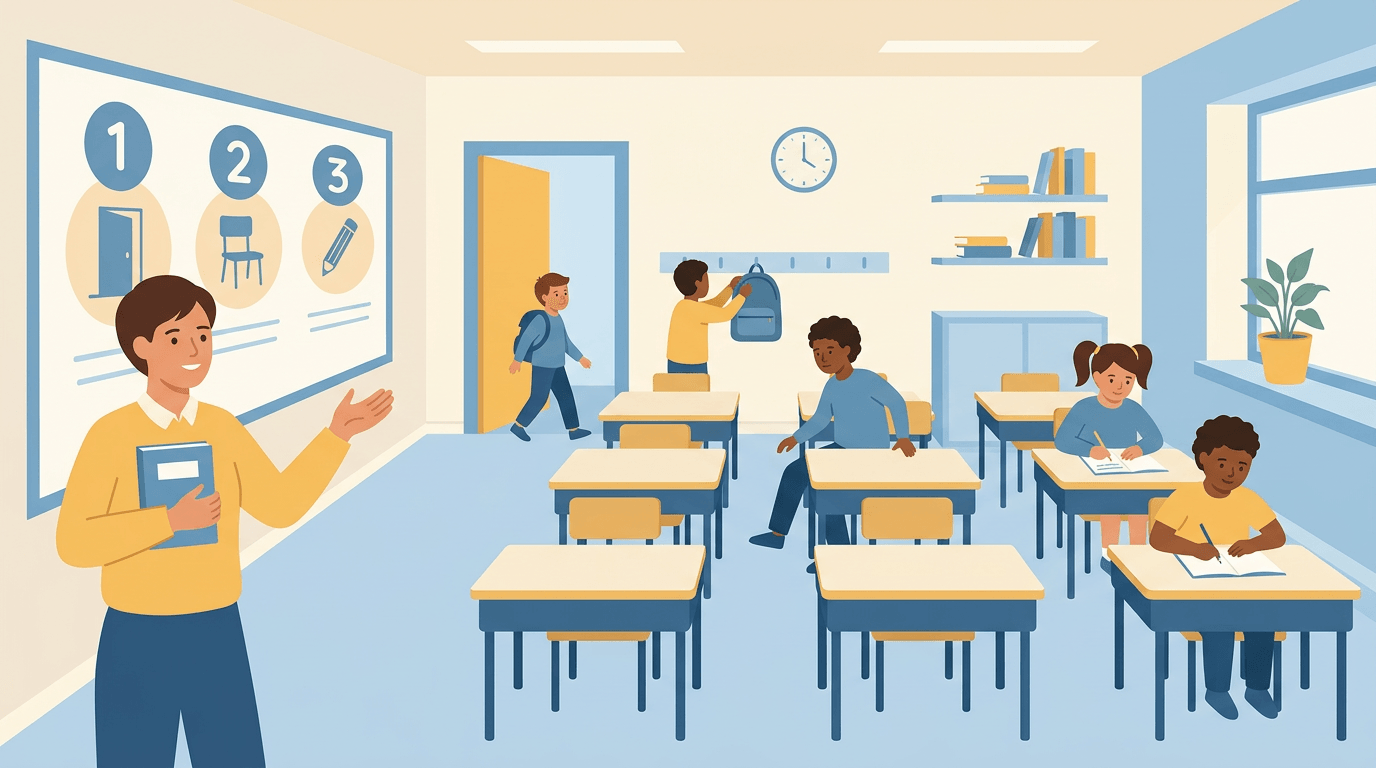
Use this routine once a week when you want students to think about their learning without adding a big prep load. It fits in 10 minutes, and you can run it tomorrow.
The weekly routine
- Pick one focus question
- Choose it before class and write it on the board.
- Example: "What helped me learn today?"
- Model your own answer
- Keep it short, honest, and specific to the lesson.
- Say: "Something that helped me today was the diagram. I got stuck until I redrew it."
- Give quiet writing or drawing time
- Aim for about four minutes of silence, with no talking.
- Younger students can draw, then add a word or two.
- Pair share, then whole class
- Partners swap answers first, so shy students rehearse before the group hears them.
- Then call on two or three volunteers to share with everyone.
Modeling comes before writing for a reason: students copy the depth they see. A one-word model gets one-word answers.
Prompts by grade band
Pick the row that matches your students and rotate prompts week to week.
| Grade band | Sample prompt or format |
|---|---|
| K-2 | Sentence stems ("Today I learned...") plus a drawing |
| 3-5 | "What helped me learn?" |
| 6-8 | "What would I change?" |
| 9-12 | "How will I apply this?" |
After a behavior incident
Reflection works here too, but keep it calm and private, not a lecture. Wait until the student has settled, then have them answer these in order, in writing or aloud.
- What happened?
- Ask for facts only, without blame.
- What was I feeling?
- Say: "Take a moment. What was going on inside you?"
- Who was affected?
- Push past "me" to classmates, the teacher, or the group.
- What will I do next?
- Aim for one small, doable action the student names.
⚠️ Watch out: Don't grade these answers or use them as a confession. If students think reflection is punishment, they'll write what you want to hear.
Keep it on track
Before each session, confirm:
- Prompt is open-ended. It can't be answered with yes or no.
- Time is protected. The full writing block happens, even when the lesson runs long.
- Responses are reviewed. You skim them within the week and look for patterns.
- Feedback loop closed. Students see one change you made because of what they wrote.
Example: A 7th-grade science teacher ends Friday's lab with "What would I change?" She models first: "I'd label my beakers before starting." Students write, then pair up. Skimming the answers over the weekend, she sees that many mention rushed setup. On Monday she says, "You told me setup felt rushed, so we're adding five minutes." Students see their reflections matter, and next week's answers get more detailed.
Store prompts and student reflections alongside your lesson plans in EMStudio's online teacher planner.
Sample Questions to Get Students Thinking
The strongest questions for a reflection paper don't just check whether students finished. They ask students to look back, explain their choices, and name what they'd change next time. Adjust these reflection questions to your students' grade band.
What questions should I ask myself about goals?
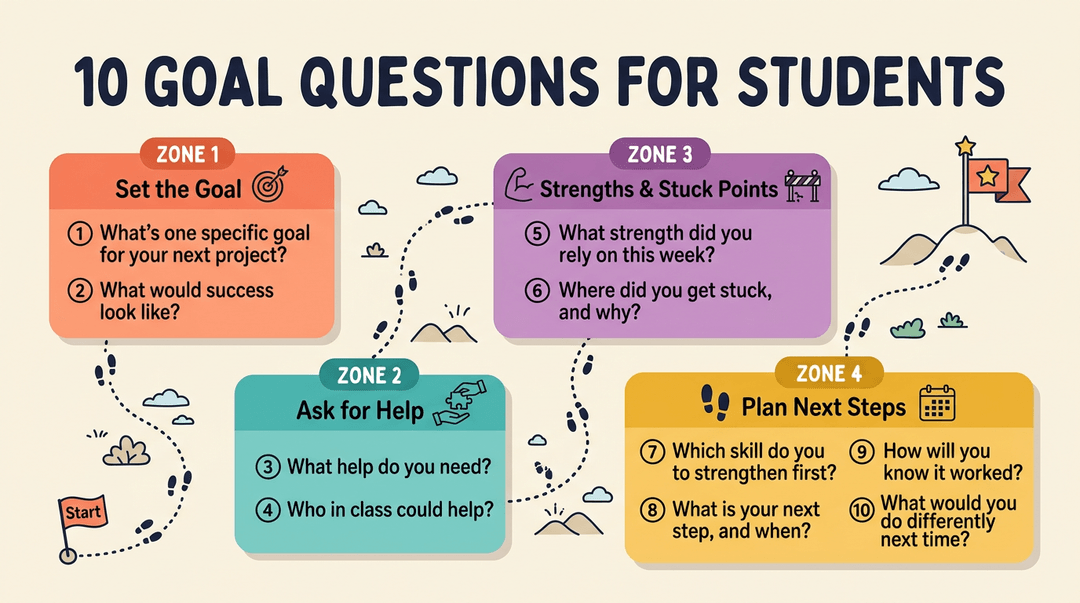
Goal questions help students see where they're headed. Try these ten:
- What's one specific goal for your next project?
- What would success look like for that goal?
- What help do you need to reach it?
- Who in class could give you that help?
- What strength did you rely on this week?
- Where did you get stuck, and why?
- Which skill do you want to strengthen first?
- What is your next step, and when will you take it?
- How will you know the step worked?
- What would you do differently next time?
Questions one and two set goals, three and four ask for help, five and six identify strengths and weaknesses, and the last four clarify next steps.
Reflecting on teamwork and class contribution
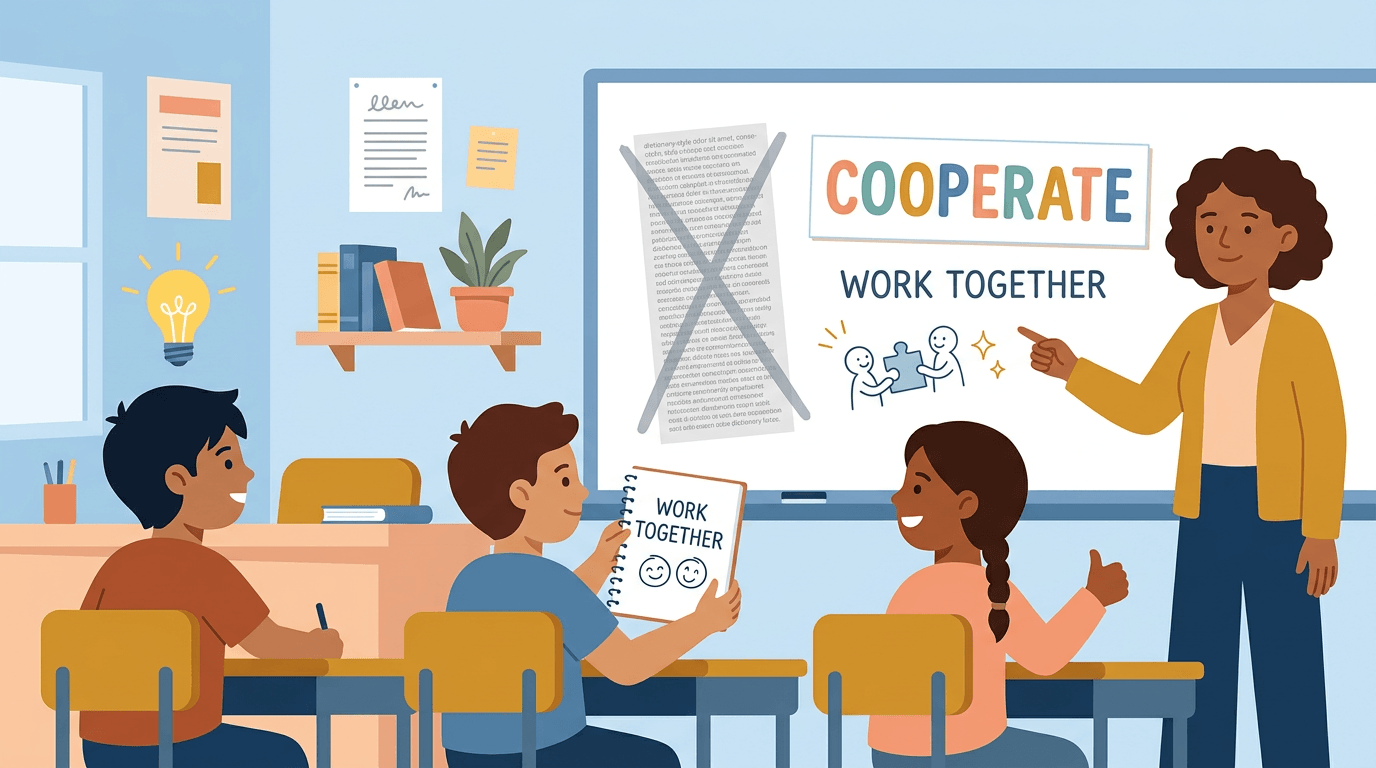
Group work builds teamwork only when students reflect on it. Ask about how the group worked, not just what it produced:
- What was one way you contributed to your group today?
- What did you learn about teamwork from this activity?
- How did you support a classmate who was stuck?
- How could you improve your contribution next time?
Think of a fourth-grade teacher who asks each group to finish one sentence after every project: 'Our team did well when...' Within weeks, students name the exact moment they split the work fairly. Specificity wins.
Tie new ideas to what you knew
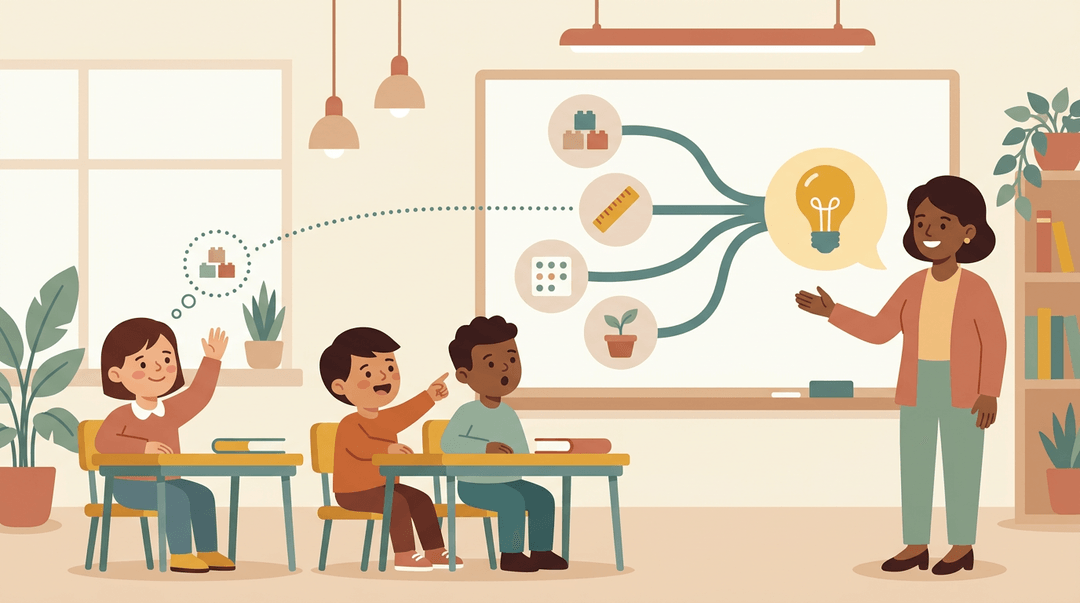
Learning sticks when it connects to what students already know. Ask about prior knowledge, the beliefs and skills students bring:
- How is today's idea similar to something you already know?
- What did you believe about this topic before today, and has that changed?
- Which skill from an earlier unit helped you here?
Over time, these links build a holistic view of the subject.
Using what you learned in real life
Transfer is the real test of whether learning stuck. Try these prompts:
- Where could you use this idea outside school this week?
- How could this strategy help you in another subject?
- What skill from today would work in a sport, job, or hobby?
Skills like comparing evidence travel across settings. For younger students, try 'Where did you count something at home today?' Older students can handle 'Where else could this same reasoning apply?'
Coached examples from your own subject
Subject-specific prompts push students past the final answer and toward why a method works. Ask students to:
- Describe a specific homework problem in their own words.
- Explain why they chose that method.
- Name a limitation or a situation where the method would fail.
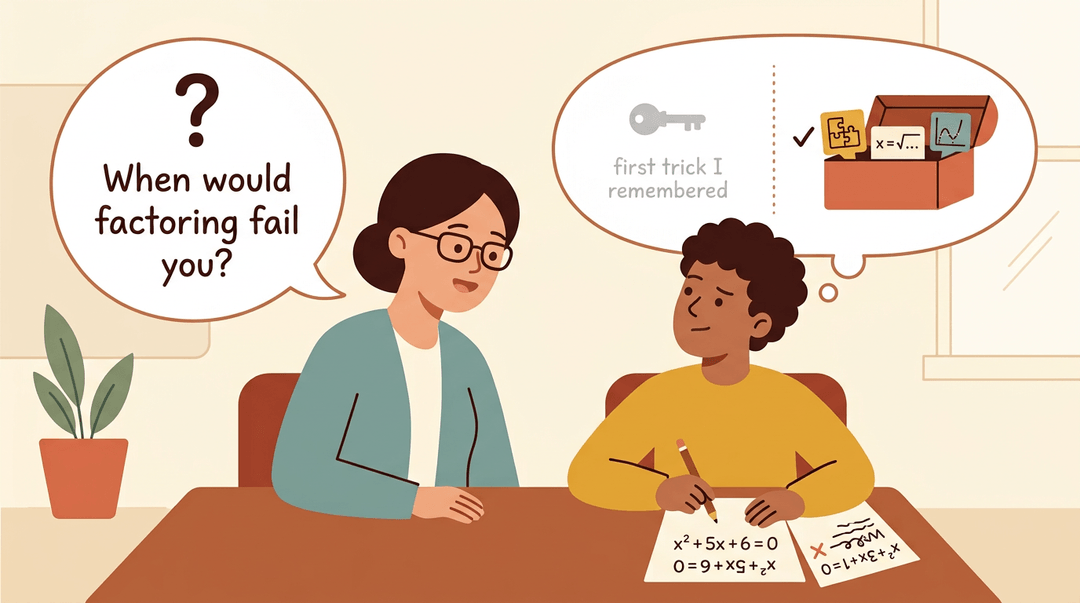
Picture a ninth-grade algebra student who picked factoring because it was the first trick they remembered. Asking 'When would factoring fail you?' turns a lucky guess into a deliberate choice.
Putting Reflection into Your Classroom
Reflection questions only pay off when you act on the answers. Here's how to collect them and put them to work.
Tools and formats for collecting reflections
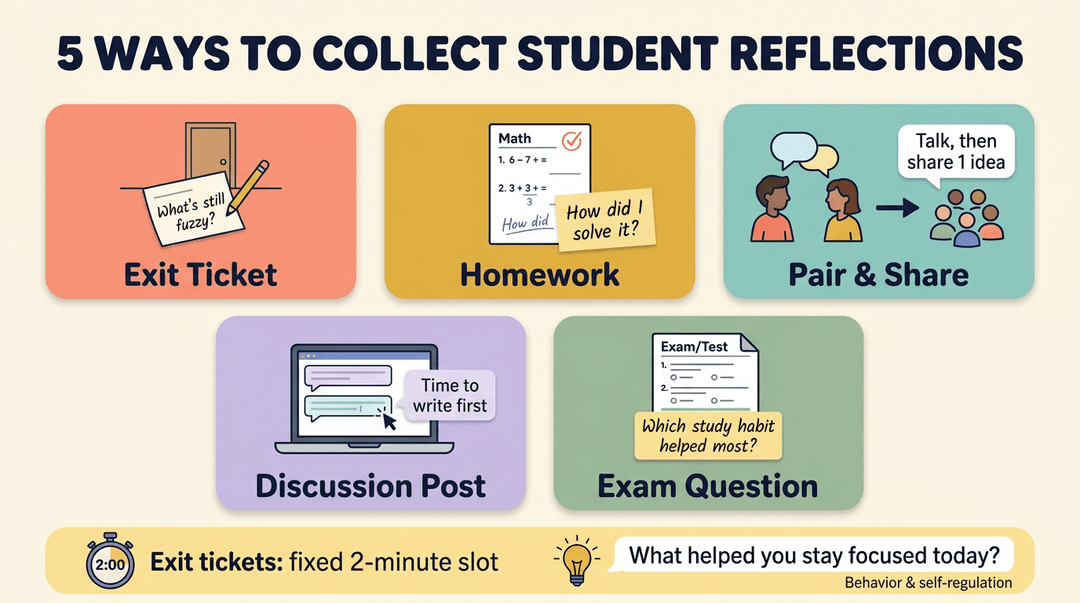
- Exit tickets. Ask two or three questions as students leave, like "What's still fuzzy?"
- Homework assignments. Add a short reflection to practice work so students explain how they solved problems, not just whether they got them right.
- In-class pairs and shares. Partners talk through an answer, then share one idea with the class.
- Discussion posts. Online threads give quieter students time to write before they speak.
- Exam questions. End a test with one item, such as naming the study habit that helped most.
Keep exit tickets to a fixed two-minute slot so students come to expect them, and skip them when a lesson runs long. For behavior and self-regulation, try "What helped you stay focused today?"
Prepare and act on student responses
Discuss goal setting before students reflect, so their answers have something to measure against.
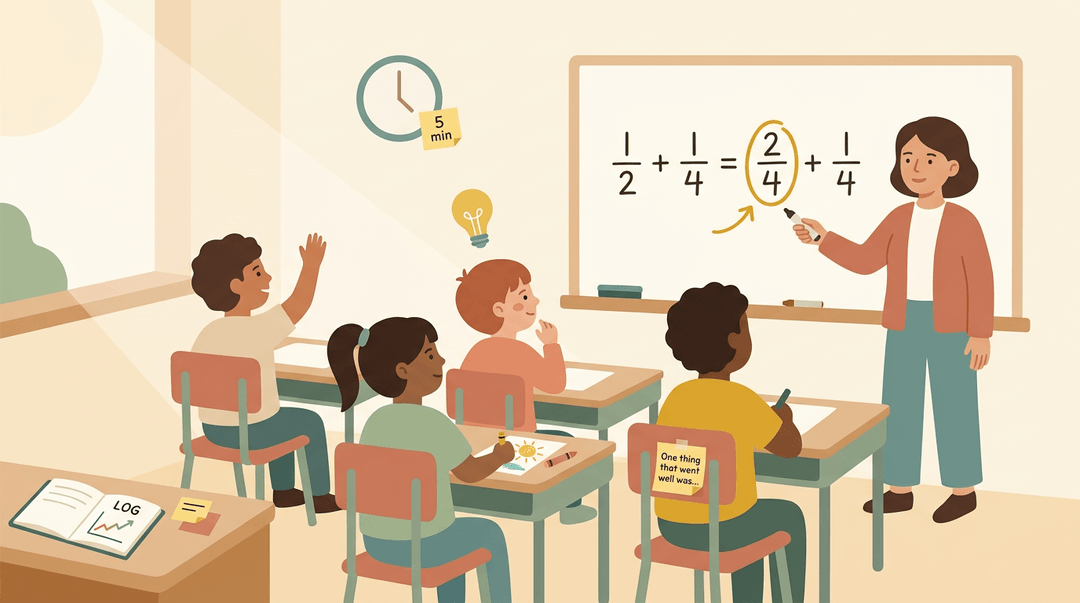
Before the reflection, jot two or three follow-ups, like "What would you try differently?" For reluctant or younger reflectors, offer sentence starters such as "One thing that went well was…" or let them answer aloud or with a drawing.
Consider a fifth-grade teacher who sees several students stumble on the same fraction step. She spends five minutes reteaching it the next morning, before the gap grows.
Bring a common theme to the whole class without naming names. Shared confusion is easier to fix.
Store answers in a simple log to compare them across weeks. You'll spot progress rather than completion: a student who once wrote "confused" and now names the exact step that tripped them up is growing.
Reflection questions turn a finished lesson into a learning moment. When you match each prompt to a clear purpose, choose a format that fits your students, and tune the wording to their grade band, the answers start pointing you toward what to teach next.
A short, consistent routine keeps that habit going, even on a packed Tuesday.
Start small. Pick one question for tomorrow's lesson, and let what your students write guide the rest.
Ready to keep your classes organized while you build a reflection habit? Check out Classroom Management to keep your classes, sections, rosters, and timetables in one structured workspace.
Frequently asked questions
What are some good questions to ask in a reflection paper?
Good reflection questions are open-ended, specific, and connected to what happened. Try: “What did I learn?”, “What confused me?”, “What helped me succeed?”, “Why did I choose that approach?”, and “What would I do differently next time?”
What are 10 questions to ask yourself?
Ask yourself: What is one specific goal for my next project? What would success look like? What help do I need? Who could help me? What strength did I rely on? Where did I get stuck, and why? Which skill do I want to strengthen? What is my next step, and when will I take it? How will I know that step worked? What would I do differently next time?
How can I write a reflection?
Write a reflection by first describing what happened, then analyzing why it happened and what you learned, and finally explaining how you will apply that learning. Use clear, specific details rather than general statements. For example, describe the strategy you tried, explain whether it worked, and name when you will use or change it next time.
How can you be a reflective teacher?
A reflective teacher regularly examines what students learned, where they struggled, and how teaching choices affected their progress. Use specific prompts, review student responses for patterns, and adjust instruction when a shared difficulty appears. Close the feedback loop by telling students what you changed based on their reflections.
How do you write about your teaching experience?
Describe a specific teaching experience, including the lesson or situation and what happened. Analyze what went well, what was challenging, and why, using evidence such as student responses or work. Conclude with what you learned and what you would change or try in a future lesson.