Student Records Explained: What Schools Keep and Why

Jump to section
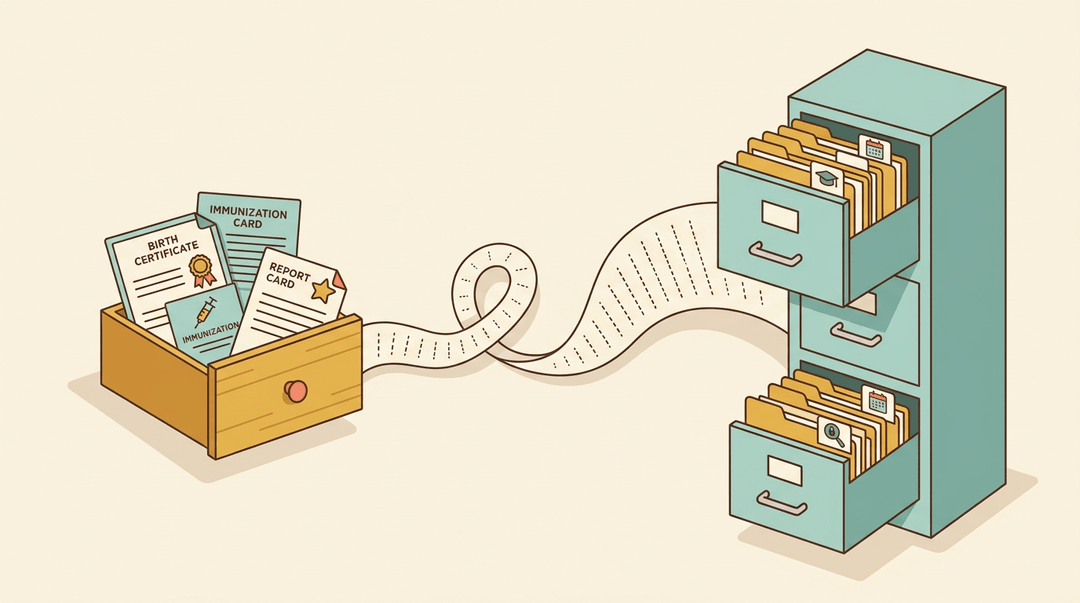
Every family keeps a version of a paper trail: birth certificates, immunization cards, report cards stuffed in a drawer just in case. Schools keep the same kind of trail, only at scale.
Student records are that trail: the official documentation of a student's academic history, attendance, and more.
Whether you're in a K-12 school, a college registrar's office, or homeschooling your own kids, the questions are the same: what gets kept, who can see it, and for how long.
This post walks through all three side by side, then hands you a classroom checklist you can actually use.
Types of Student Records Schools Keep
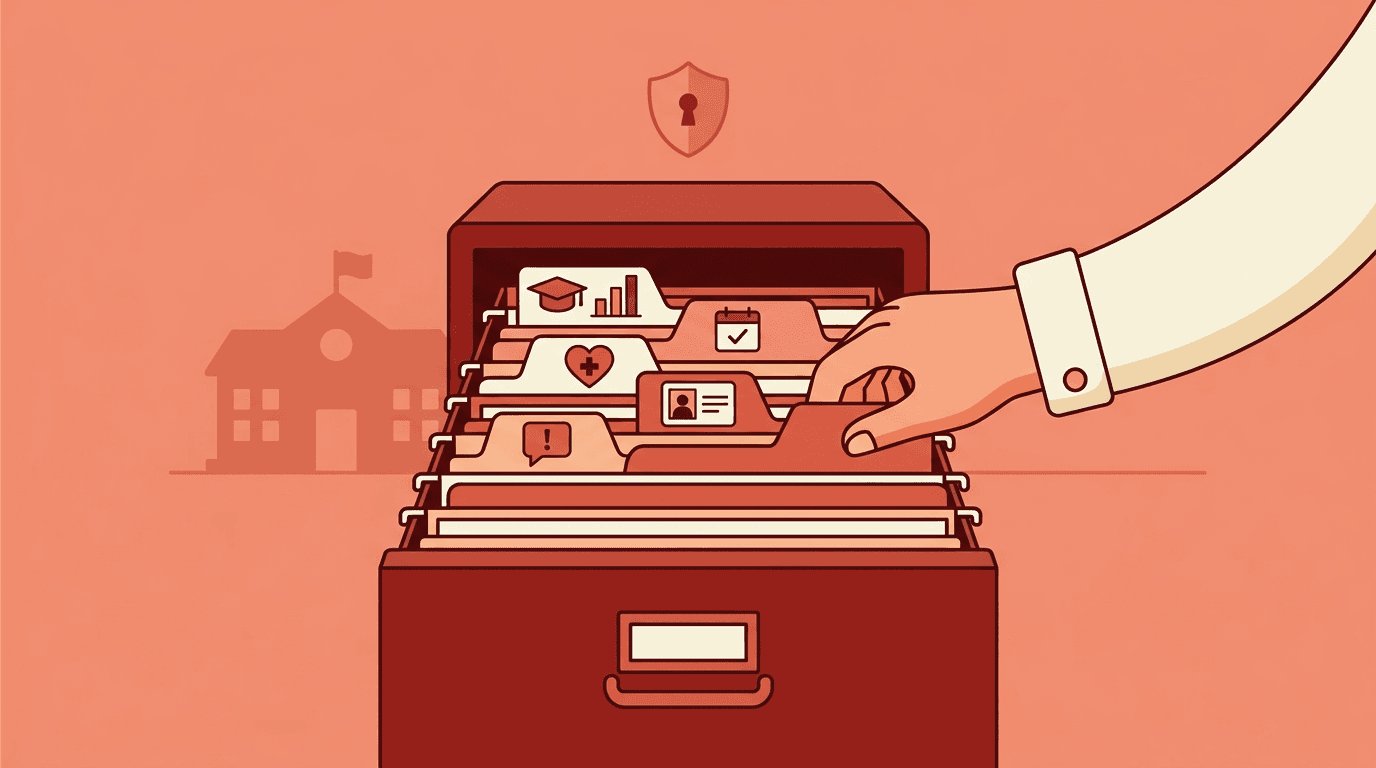
A student's file holds far more than a report card. Between academic history, financial paperwork, and enrollment forms, you'll find schools tracking a wide range of documents, and knowing what's inside each one is the first step to managing it well.
Grades, transcripts and attendance records
This is the core academic file: grades and transcripts that follow a student from one grade to the next, backed by the daily attendance log that feeds directly into it. For example, a middle school teacher marking attendance each morning isn't just checking a box. Those numbers roll up into progress reports and eventually the transcript itself. Course completion records round this out, confirming which classes a student finished and passed. Many schools keep behavioral and discipline records in this same file, so a counselor or a new teacher gets the full picture, not just the grades, at a glance.

Tuition payments and financial history
Private and tuition-based schools keep a financial ledger for each family:
- payment schedules
- amounts received
- any balance still owed
This tuition payment history matters at enrollment time, and it matters later too, when a parent needs proof of payment for taxes or reimbursement.
Personal details and enrollment paperwork
This bucket covers the paperwork that gets a student in the door:
- contact and personal information
- signed enrollment agreements
- any prior education documents carried over from a previous school
Entrance exam results, when a school requires them, live here as well, giving admissions staff a baseline before the student ever sets foot in a classroom.
Diplomas and other credentials
Once a student finishes, the school issues a diploma (or a certificate, for shorter programs) and logs that diploma issuance in the permanent file. That record isn't just paperwork for graduation day. It's proof of completion that students often need years later, for a job application or a college transfer.

Keeping Student Records Private and Confidential
Student records carry real weight, and keeping them private matters to families and schools alike.
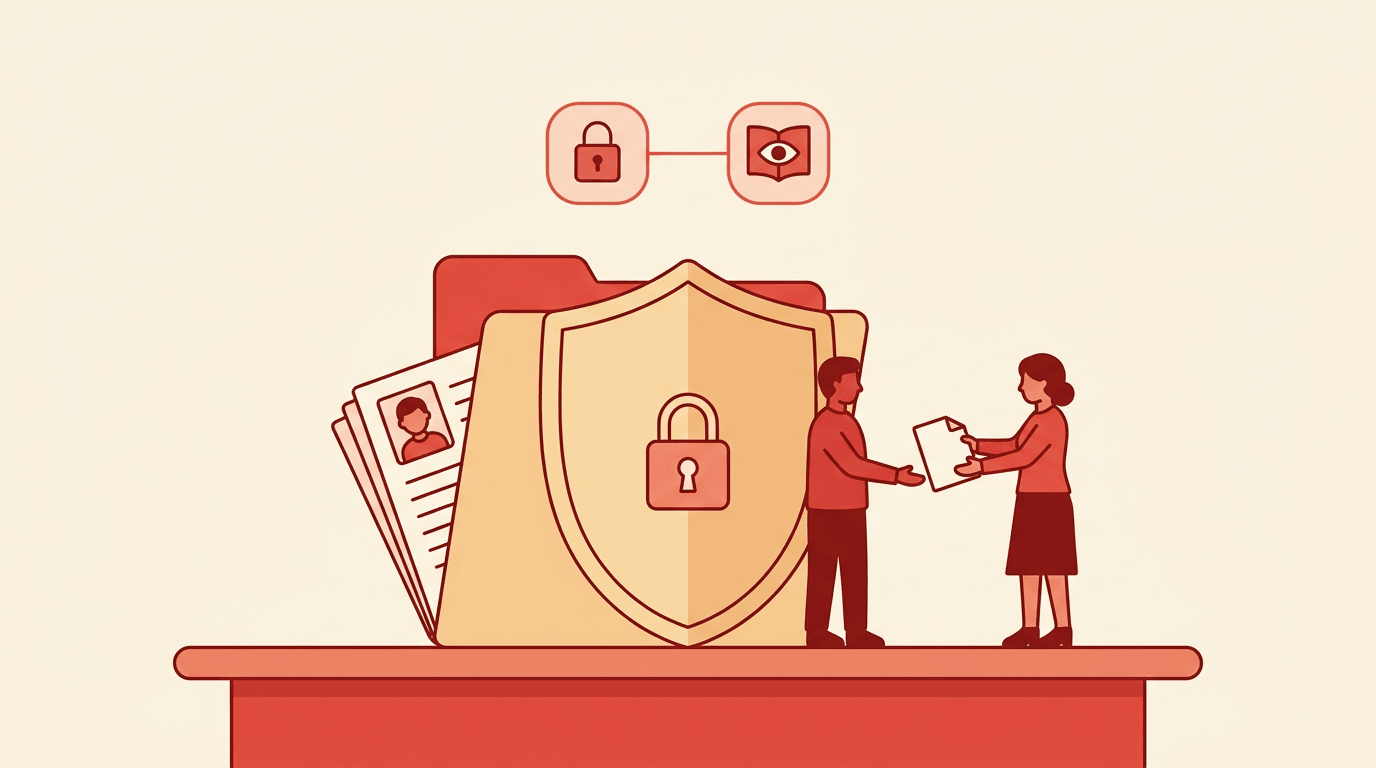
Under Protecting Student Privacy, FERPA (the Family Educational Rights and Privacy Act) gives parents and eligible students the right to inspect and review education records, and it limits when a school can hand those records to anyone else.
That protection shapes everything from directory information to what happens once a school closes its doors.
Controlling your directory information
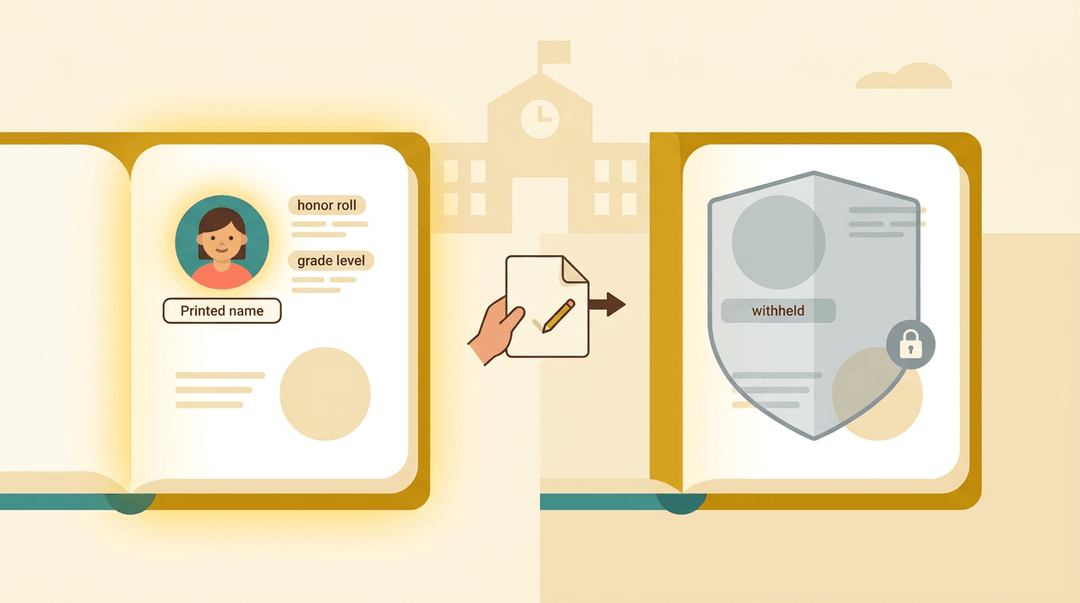
Directory information is the basic, low-stakes stuff: a student's name, grade, or honor roll status, the kind of thing that might show up in a yearbook or a graduation program.
Most districts publish a privacy policy resource spelling out exactly what counts. Parents aren't stuck with the default, though: a written request to the school can withhold directory info entirely, keeping a student's name off any public list.
Keeping records confidential after closure
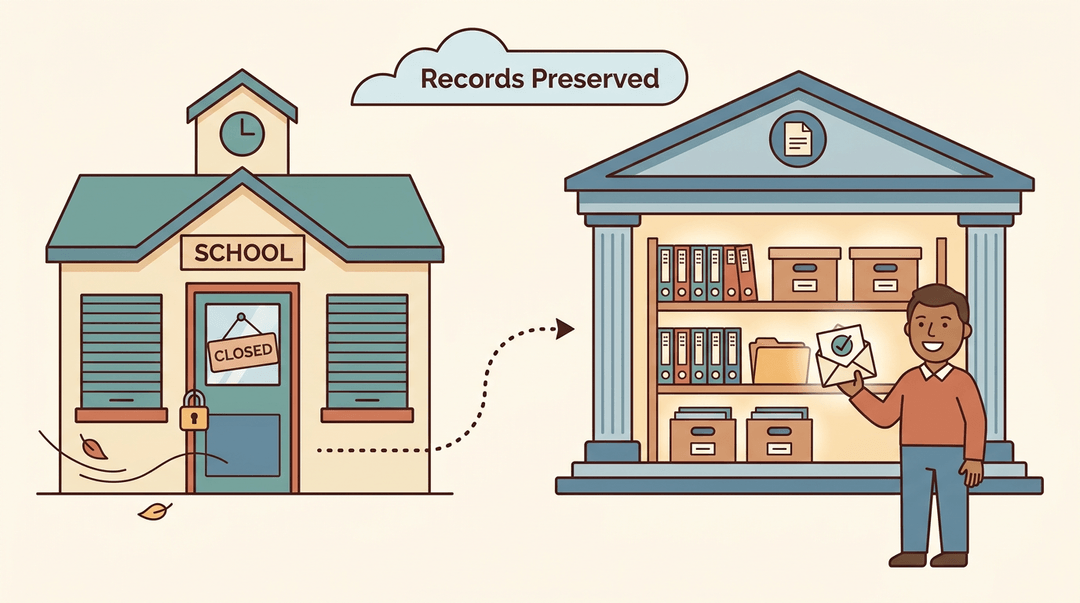
When a school shuts down, its records don't just disappear, and they don't lose their protections either.
Consider a small private school closing mid-year: a state education agency or designated custodian typically takes over storing those files, and they're required to handle them under the same confidentiality rules that applied before the doors closed.
Closure changes who holds the records, not who's allowed to see them.
Who can look at a student's records?
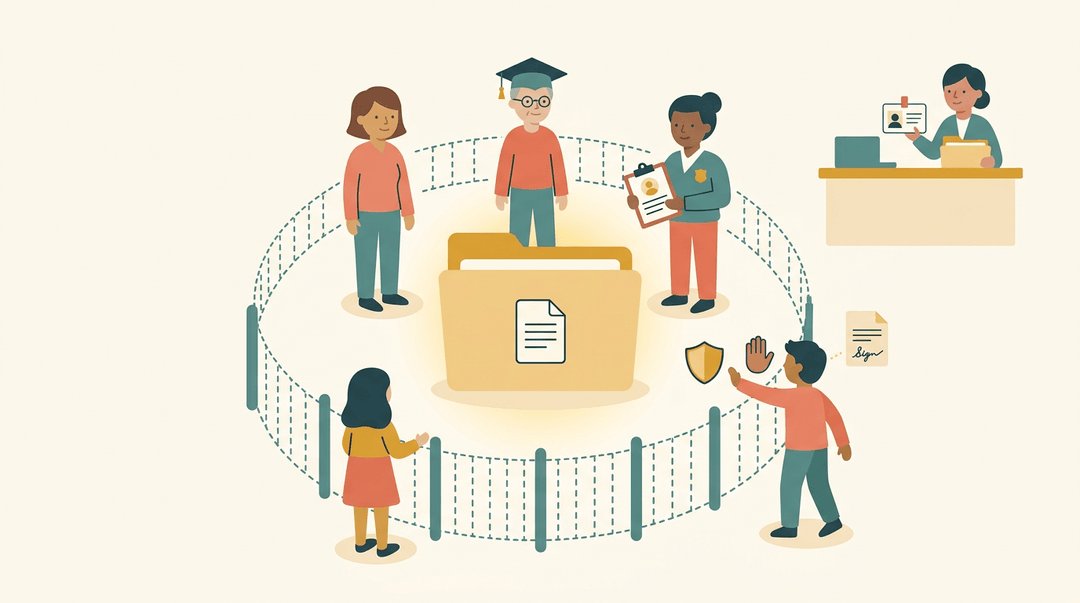
Generally, only parents, eligible students (once they turn 18 or enroll in college), and school officials with a legitimate educational need can open a student's file.
Anyone outside that circle needs written consent from the parent or eligible student first.
Before releasing anything, schools should verify identity, whether that's a photo ID at the front office or a signed release, so records only ever land in the right hands.
Setting up Your Classroom Records System
The school office keeps the official student file. These are your working records: the five documents you'll actually reach for at conference time, and the privacy habits that keep them safe.
Set them up once, in week one, and they mostly maintain themselves.
The five records, at a glance
Find each record's row, copy the sample format, and you're running.
| Record | What to capture | A sample entry |
|---|---|---|
| Class roster | Names, ID numbers, contacts, key flags | "Ava R., #2041, allergy: peanuts" |
| Attendance log | Daily present, absent, tardy, dated | "10/14: 26 present, 2 tardy (JC, MP)" |
| Grades and progress notes | Scores plus one-line observations | "Quiz 3: 78%. Regrouping still shaky." |
| Parent communication log | Date, method, topic, outcome | "10/14, call, missing work, retest agreed" |
| Incident/behavior notes | Facts only: what happened, action taken | "Pushed in line. Moved seat. Emailed home." |
The habit that makes this work: log the entry the same day, in one line. A record you update in ten seconds gets updated; one that demands a paragraph doesn't.
Example: A parent disputes a grade in March. The teacher opens the communication log and reads back: "11/2, email, warned about missing labs, offered lunch retakes." The conversation is over in two minutes, because the record already did the arguing.
Keep it private and compliant
Before you call your system done, confirm all four:
- You know who can see it. Under FERPA, parents (and students 18+) can request education records, so write every note as if they'll read it.
- It's stored securely and backed up. Locked drawer for paper, password-protected file for digital, with a second copy somewhere safe.
- You retain per school policy. Retention periods vary, so check with your office before you shred or delete anything.
- You share only with authorized parties. School officials with a legitimate need, yes; a hallway chat or a group email with grades attached, no.
⚠️ Watch out: Incident notes are where teachers get burned. Record what you saw and did, never a diagnosis. ✅ "Left seat 4 times, redirected twice." ❌ "Constantly disruptive, probably ADHD."
The attendance log is the one record you touch every single day, which makes it the easiest to automate: EMStudio's attendance tracker quietly builds these records as you take daily roll.
How to Request and Access Records
Once you know what's in a student record, the next question is simpler: how do you actually get your hands on it? The answer depends on whether you're a current student, a graduate, or a homeschool parent who's been the record-keeper all along.
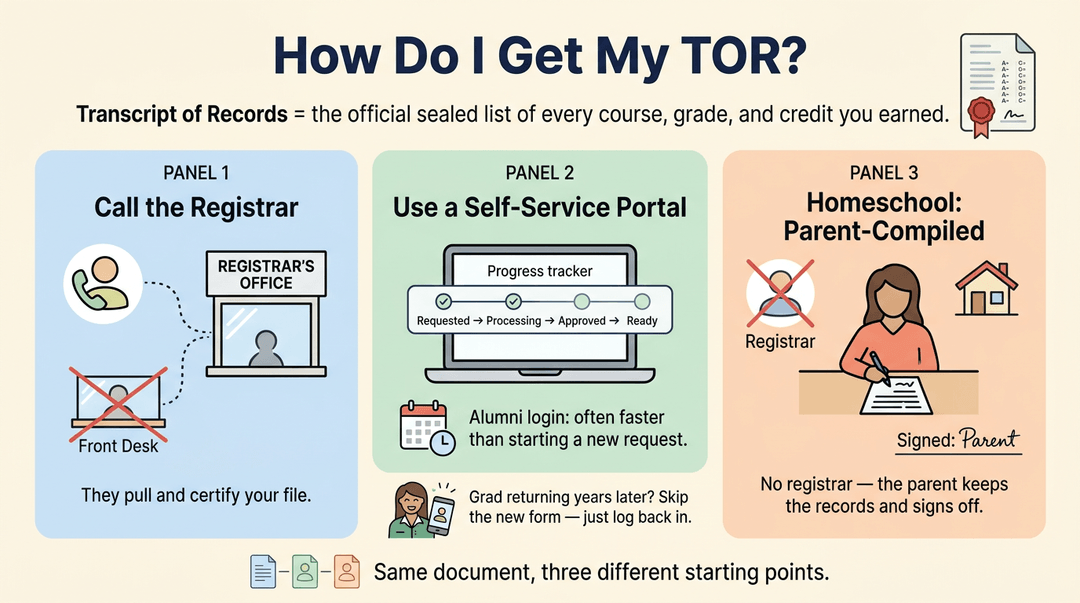
How can I get my TOR?
A Transcript of Records (TOR) is the official, sealed document listing every course, grade, and credit a student earned.
For most people, getting one starts with contacting the institution directly: the registrar's office, not the general front desk, since they're the ones who pull and certify the file.
Many schools now let you skip the phone call entirely. Self-service portals let alumni and current students request and track a TOR online, often with updates on where it stands in the approval line.
Consider a teacher who left grad school years ago and now needs a TOR for certification renewal: logging into the old student portal is usually faster than starting from scratch with a new request.
Homeschool families work differently. There's no registrar to call, because homeschool parents keep their own records.
That means the transcript a homeschooled student presents to a college is one the parent compiled and signed off on, not one issued by an outside office.
When holds block your records
A request can stall even when the paperwork is right. Two holds show up again and again:
- Past-due tuition holds. The school won't release records until the balance is settled.
- Defaulted loan holds. An unpaid federal or institutional loan can freeze transcript access until it's resolved.
Getting records from a closed school
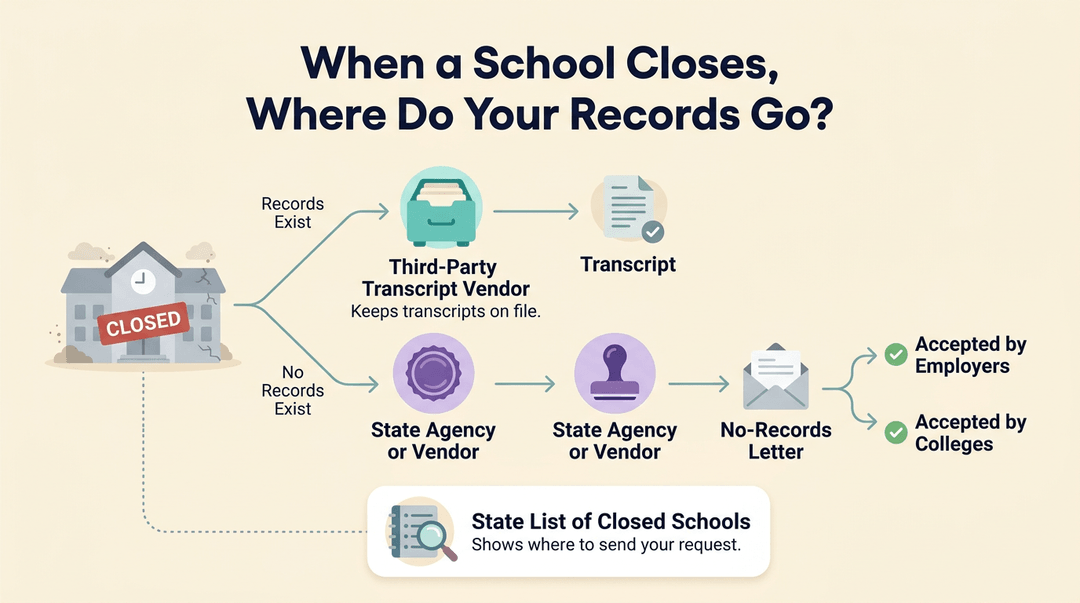
When a school shuts down, records don't just vanish. Many states route them to a third-party transcript vendor that keeps them on file for former students.
If no records exist at all, the vendor or a state agency will issue a formal no-records letter instead, which some employers and colleges will accept in place of a transcript.
States typically maintain a list of closed schools so former students know exactly where to direct a request.
Consent needed for third-party requests
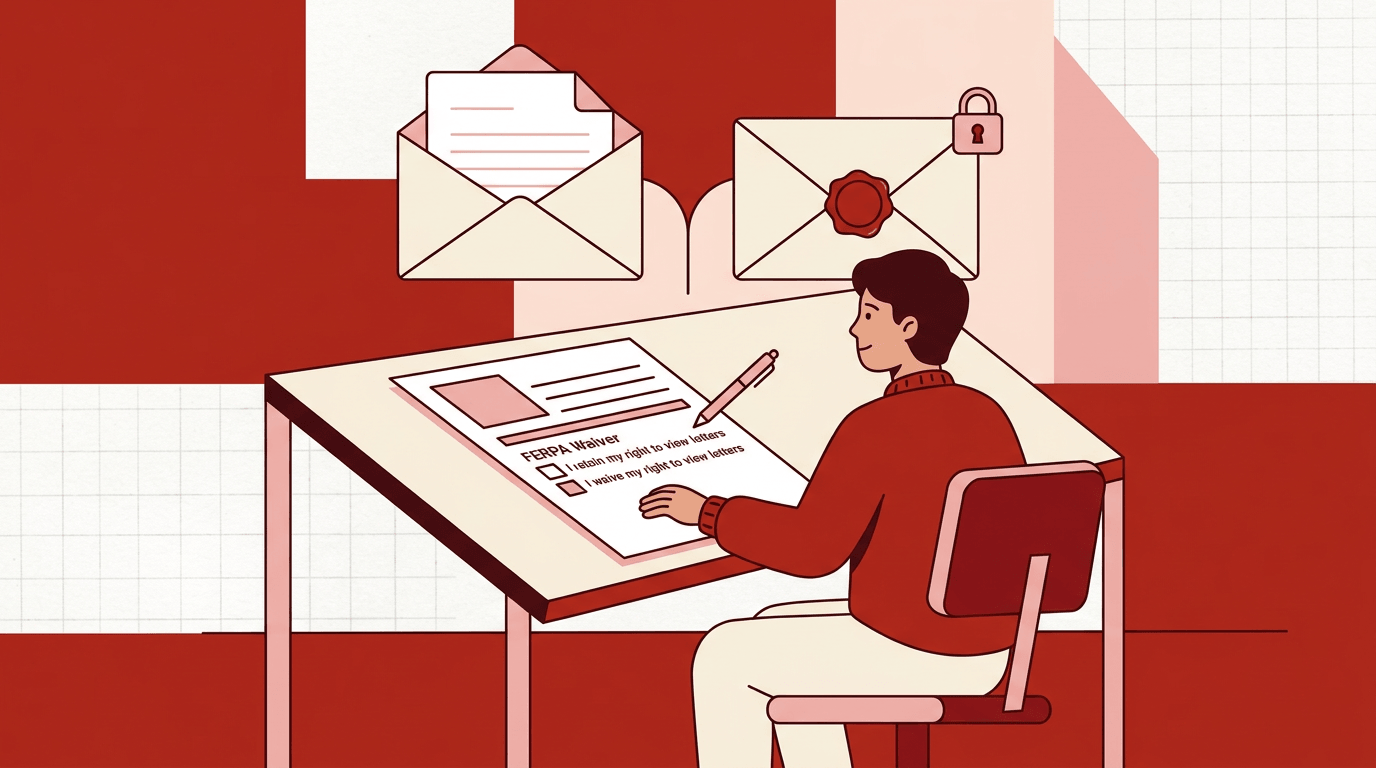
Records don't move without permission. Student consent is required before a school can release them to anyone outside the student. That includes employer verification requests, which usually need a signed authorization on file.
Most schools use simple release or withholding forms, letting a student name exactly who can see their record, and who can't.
How Long Records Are Kept and Stored
Retention isn't one-size-fits-all. Some records stick around forever, others have a set shelf life, and how a school stores them determines whether you can actually track them down years later.
Can you get school records from 20 years ago?
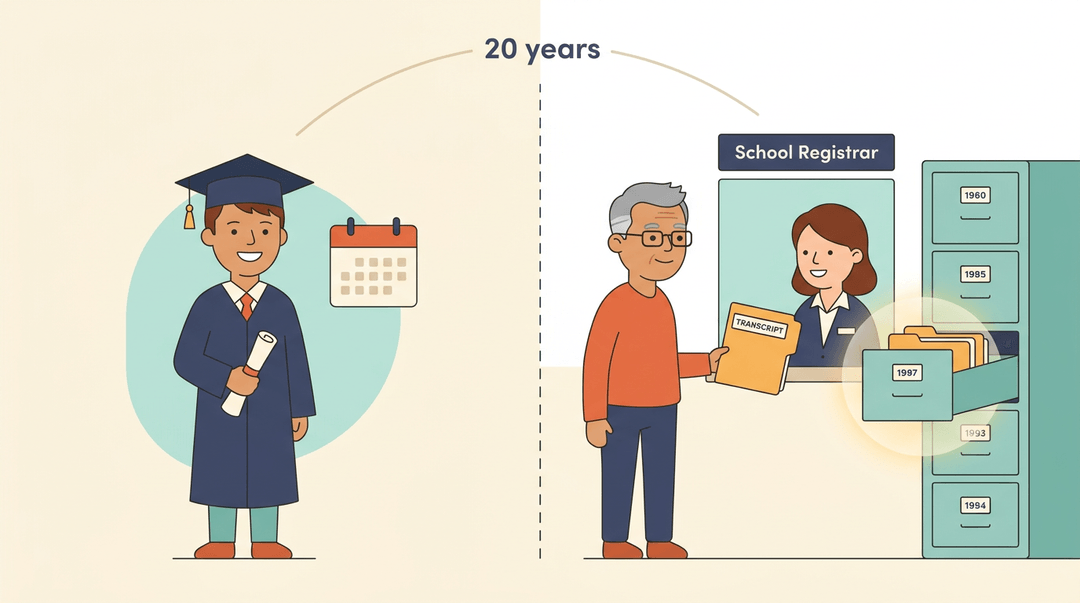
Often, yes, especially for transcripts. Transcripts are kept permanently, and ongoing grade records are maintained as part of that same permanent academic record, according to a records retention update from UGA Today.
That's good news for a former student chasing down a transcript for a job application or grad school two decades after graduation: the registrar's office is very likely still holding it.
Reaching out directly, with your full name, birth date, and years of attendance, is usually the fastest path to a decades-old record.
Storing records safely and securely
Permanent doesn't help anyone if the record gets lost, so most schools now lean on their student information system (SIS), the software that houses grades, attendance, and enrollment data, for day-to-day digital storage.
Beyond that, solid practice usually includes:
- Cloud backup so files survive a hardware failure.
- An offsite second copy, kept separate from the main building.
- Protection from fire and tampering, whether that's a fireproof cabinet for paper files or access controls on the digital ones.
School policies for recordkeeping
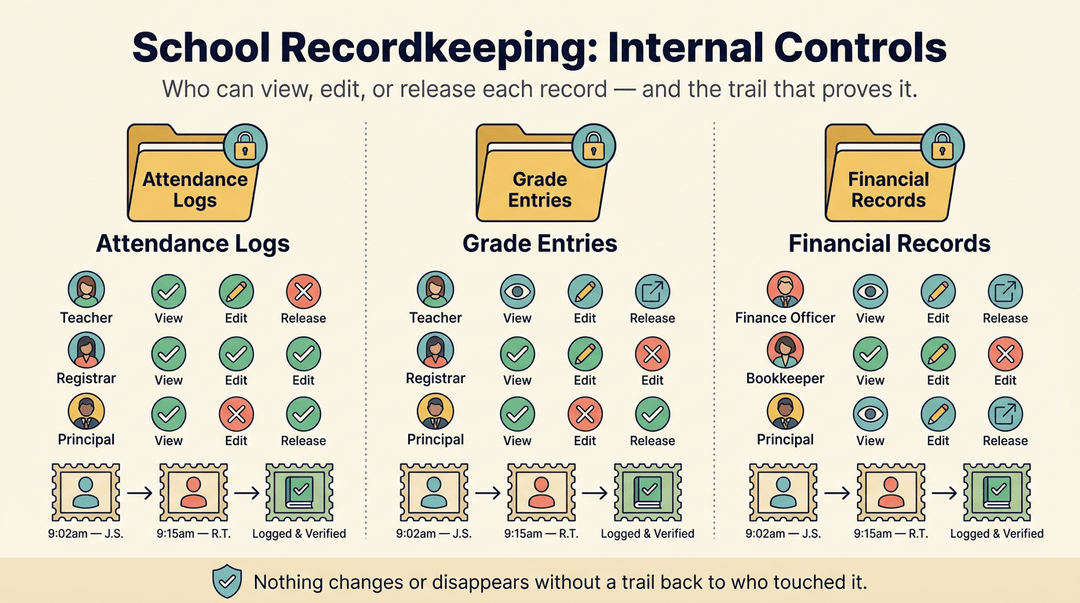
Behind the scenes, schools need internal controls: clear rules about who can view, edit, or release a record.
That typically means documented procedures for attendance logs, grade entry, and financial records alike, so nothing gets altered or lost without a trail back to who touched it.
What Happens to Records When a School Closes
When a school closes its doors, its records don't just disappear, they follow a set process designed to protect what students already earned. Here's how that typically plays out.
Finishing your program during a teach-out
Some closures come with a plan for the students still enrolled.
Under a teach-out, the closing school (or a partner institution) agrees to complete enrolled students' programs so they can finish coursework and earn the credential they've already invested time and tuition into.
Consider a teacher pursuing an alternative certification through a small private program that announces it's shutting down mid-year: an approved teach-out arrangement means that teacher can still finish the coursework, rather than starting over somewhere else.

Filing records with the state regulator
Once a closure is final, the school is typically required to submit transcripts to the state's higher education agency, along with the academic records of any students still active at the time.
This step matters because it moves the official record out of a closing office and into the hands of a body built to keep it safe for the long term.
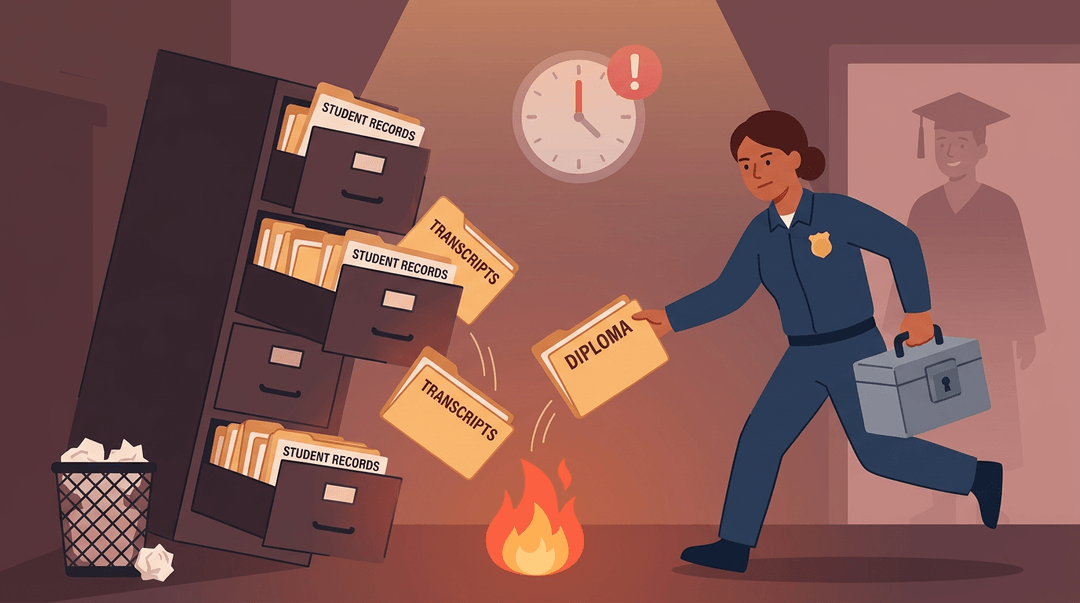
Emergency seizure of at-risk records
Sometimes there isn't time to wait for an orderly handoff.
If records are at risk of destruction or misplacement, a court-ordered seizure can step in to secure them before they're lost for good, protecting a former student's ability to prove what they earned years down the line.
Getting transcripts from closed schools
For schools that have already closed, the Texas Higher Education Coordinating Board holds records on behalf of the state board, noting that it "received records as provided by the closed institutions listed below."
To actually request one, you'll generally go through DiplomaSender, which the agency has tapped to fulfill transcript requests for the closed institutions it covers.
A list of those closed schools is maintained by the agency, so it's worth checking there first before you search anywhere else.
Student records aren't just paperwork. They're the evidence of a student's growth and the trail schools have to protect and preserve, whether that's for a few years or forever.
Get the basics right: know what to keep, who can access it, and how long to hold it, and the rest gets a lot less stressful.
Ready to keep cleaner records in your own classroom? Check out our post, Attendance & Records, to see how quick attendance tracking can help you spot patterns and stay organized all year.
References
- Student Academic Record or Transcript Requests — highered.texas.gov (2025)
- Records Management program offers end-of-year tips — news.uga.edu (2025)
- | Protecting Student Privacy — studentprivacy.ed.gov
- School Closures and Records — highered.texas.gov
Frequently asked questions
What is included in a student record?
Student records commonly include grades, transcripts, attendance, course-completion information, and sometimes behavior or discipline records. They may also contain enrollment and contact details, prior education documents, entrance exam results, tuition payment history, diplomas, and other credentials.
How can I get my TOR?
Request your Transcript of Records through the school’s registrar or records office. Many institutions also offer an online student or alumni portal for submitting and tracking requests. Homeschooling parents generally compile and sign the student’s transcript themselves.
Can you get school records from 20 years ago?
Often, yes. Transcripts and ongoing academic records are commonly retained permanently, so contact the school’s registrar with your full name, birth date, and years of attendance. If the school has closed, check with the relevant state education agency or its designated transcript custodian.
Who can look at a student's records?
Parents generally may access records while the student is under 18, and the student gains those rights at 18 or when enrolling in college. School officials with a legitimate educational need may also access them, while outside parties generally need written consent from the parent or eligible student.