Why Was FERPA Created in 1974? Understanding the Full Story

Jump to section
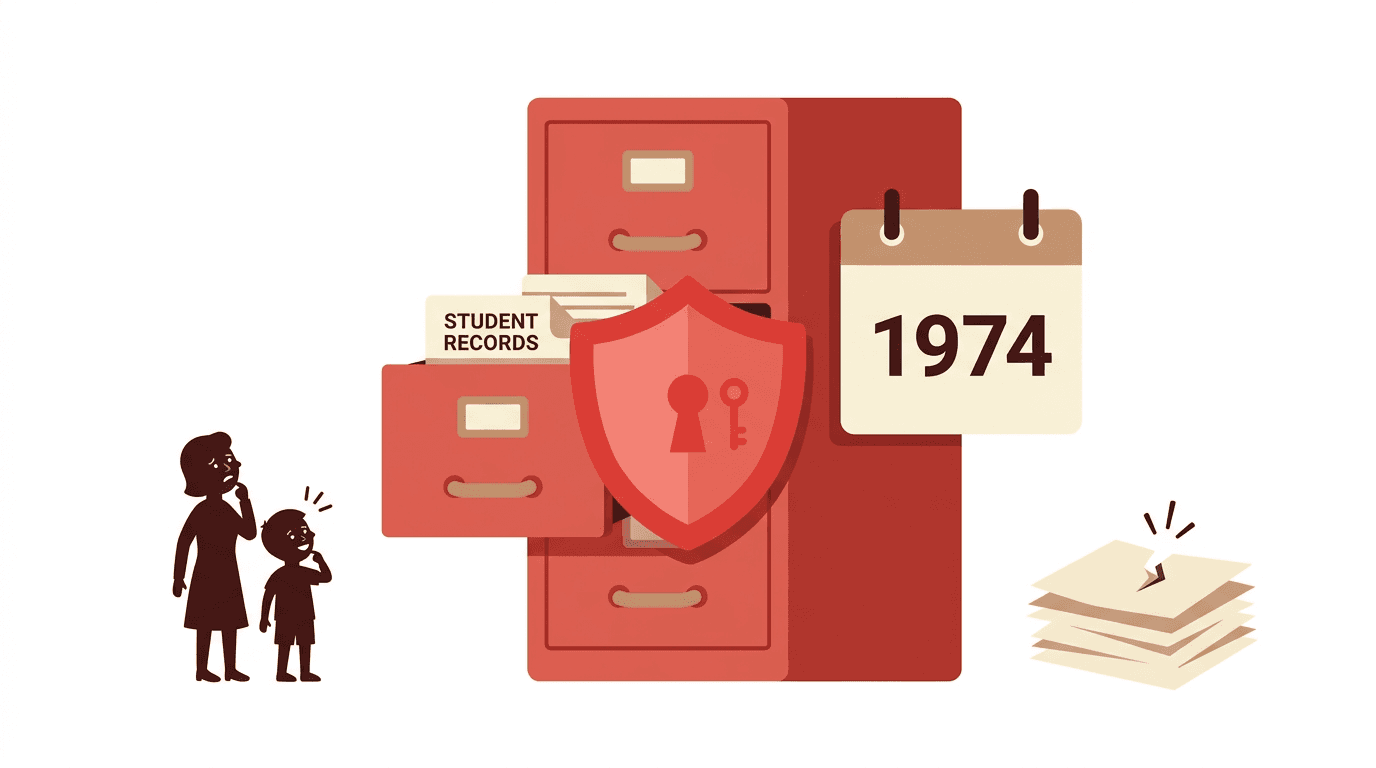
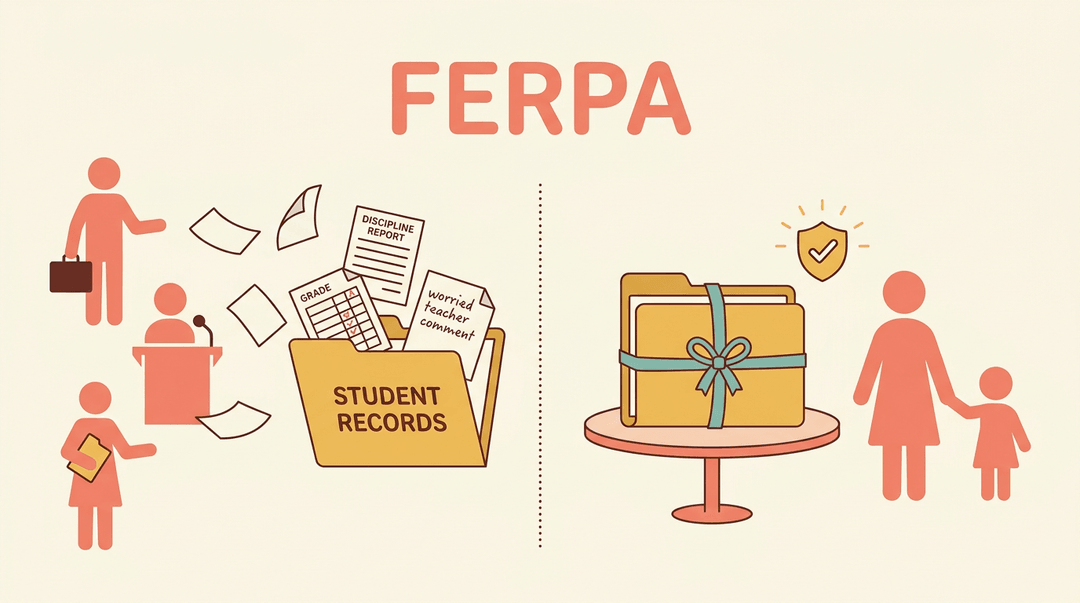
Think about every note a school keeps on a student: grades, discipline reports, even a passing comment from a worried teacher. Before 1974, that file could travel almost anywhere, to employers, other schools, even reporters, without a parent ever knowing.
That's the mess FERPA was built to fix. The Family Educational Rights and Privacy Act gives families a say in who sees a student's records and why.
Here, we'll unpack the history behind FERPA, the rights it created, and what it means for the records you keep every day.
What FERPA Is and Why It Was Created
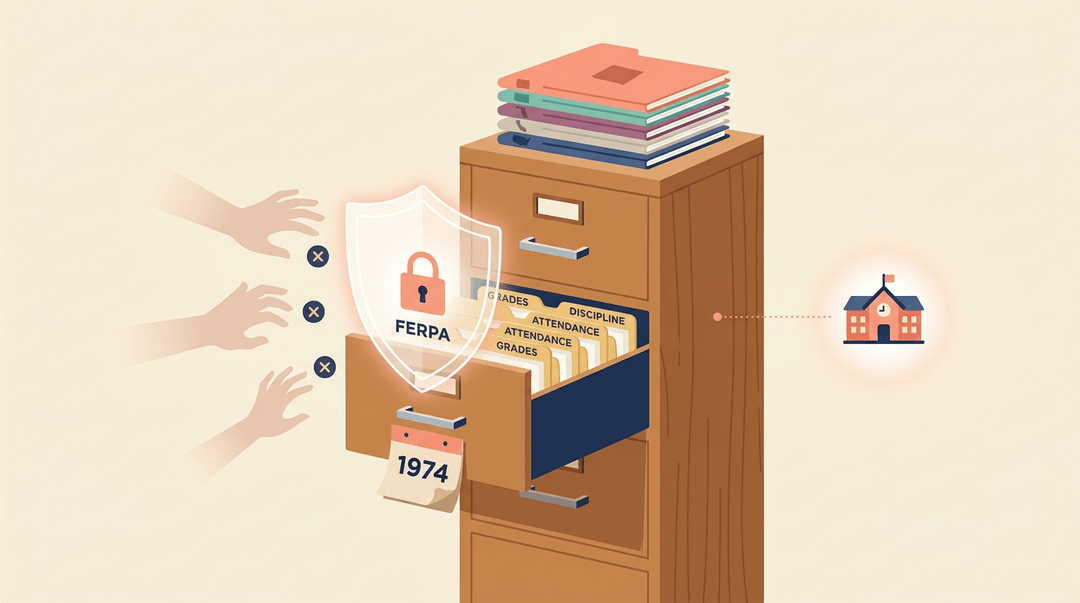
Before 1974, there wasn't a single federal rule about who could see a student's grades, attendance, or disciplinary file. The Family Educational Rights and Privacy Act (FERPA) changed that.
It's a federal privacy law that governs access to education records and applies to any school or institution that receives funding from the U.S. Department of Education, which covers most public schools and colleges.
Many states layer their own privacy rules on top, so FERPA sets the floor, not always the ceiling.
What counts as an education record
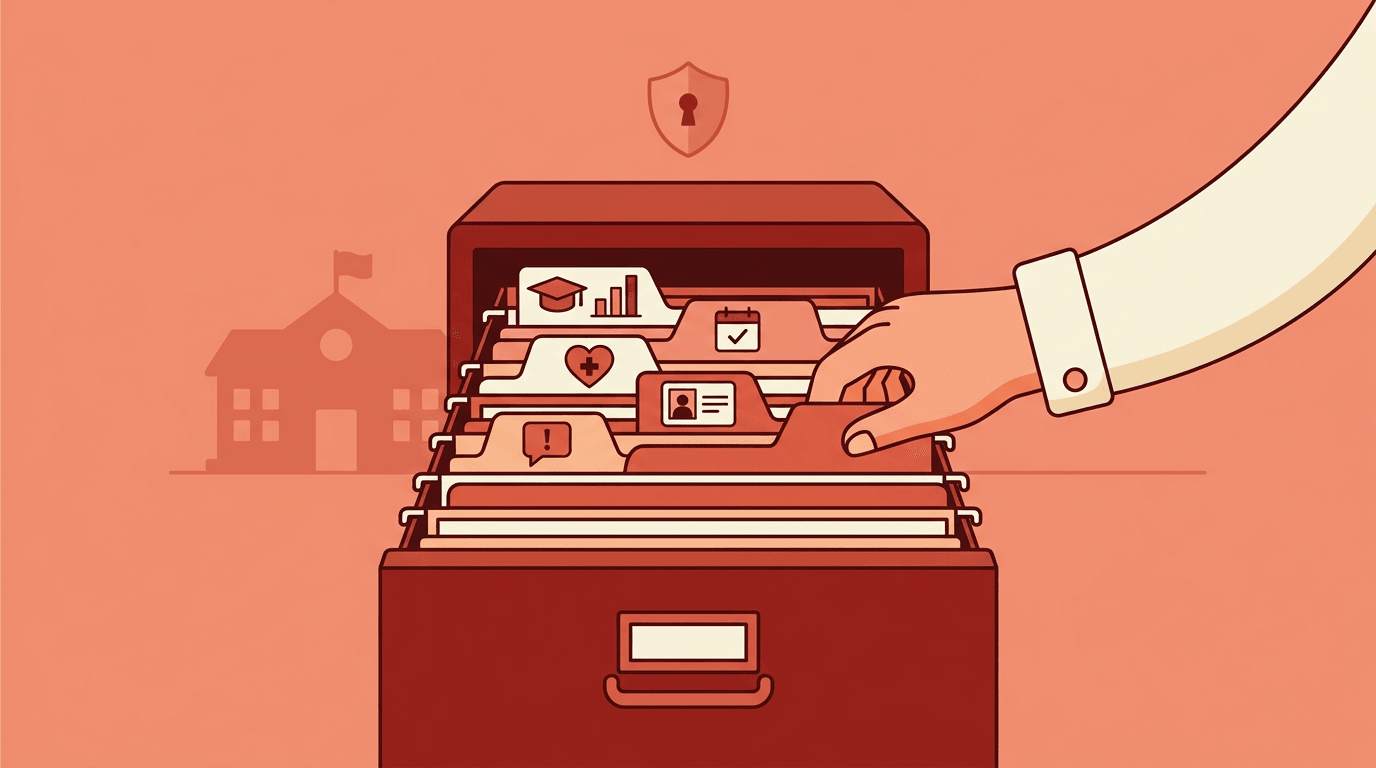
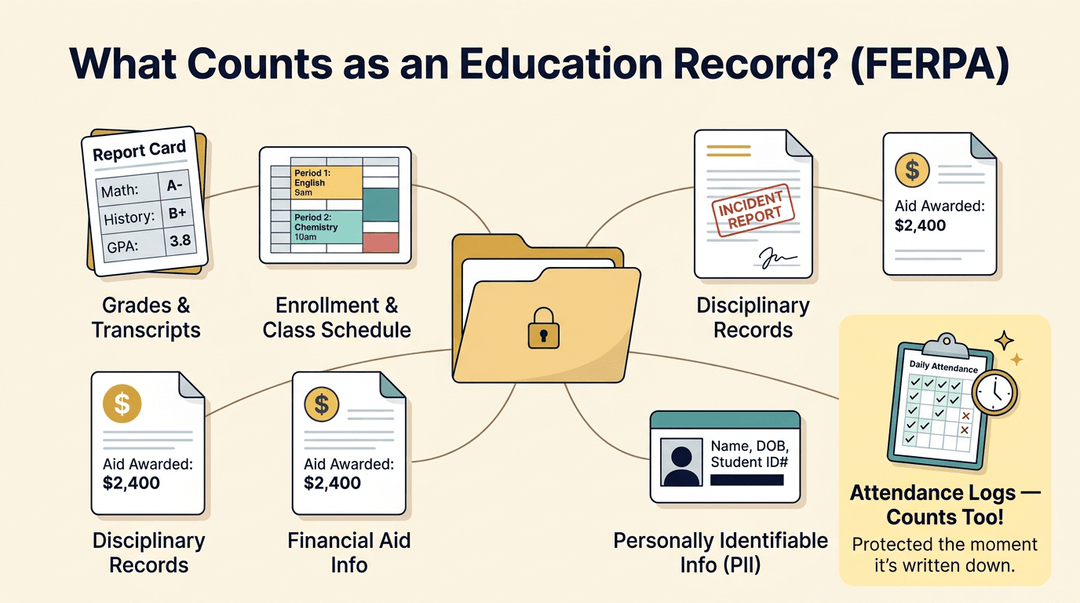
FERPA's definition of an education record is broad. It includes:
- Grades and transcripts
- Enrollment details and class schedules
- Disciplinary records
- Financial aid information
- Personally identifiable information (PII), meaning anything that could identify a specific student
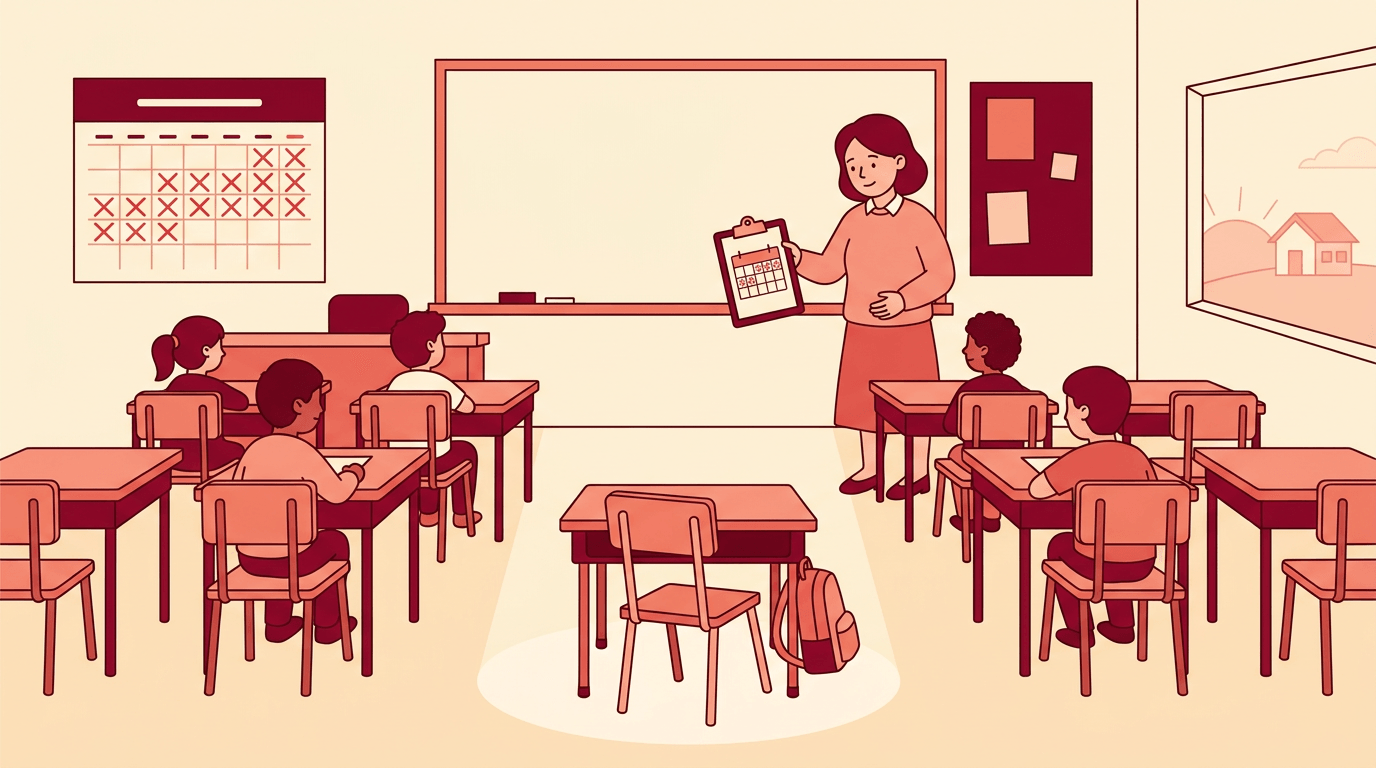
Attendance logs count too. That daily roll call you take isn't just a classroom habit: it's a protected education record the moment it's written down.
What FERPA doesn't cover
FERPA has real limits. It doesn't reach:
- A teacher's private notes, kept solely for personal use and not shared
- Campus police records
- Alumni records created after a student has graduated
Medical and psychological records sit in a gray area and have sparked ongoing debate over whether they fall under FERPA or a different privacy law entirely, depending on where and how they're kept.
Your Rights Under FERPA
FERPA does more than lock records in a filing cabinet: it hands specific, enforceable rights to parents and, eventually, to students themselves.
Schools have to spell these rights out every year through an annual notification, so no family is left guessing what they're entitled to.
What parents and students can do
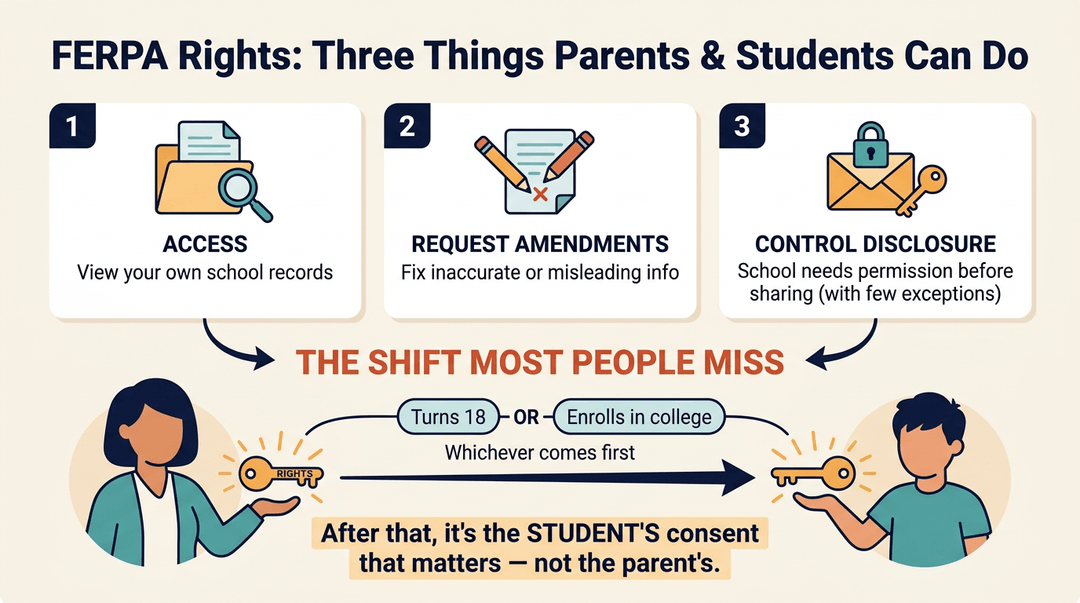
Under FERPA, parents (and later, students) can:
- Access their own education records on file with the school.
- Request amendments if something in those records looks inaccurate or misleading.
- Control disclosure, meaning the school generally needs permission before sharing records with someone outside a short list of exceptions.
Here's the shift most people miss: these rights don't stay with the parent forever. Once a student turns 18 or enrolls in a postsecondary school, whichever comes first, the rights transfer to the student.
From that point on, it's the student's consent that matters, not the parent's.
Can you see your recommendation letters?
Yes, and this surprises a lot of families. Students generally have the right to view letters of recommendation written on their behalf.
There's a common workaround, though: many college applications include a waiver that a student can sign to keep those letters confidential, which is often what a teacher or counselor will suggest so the recommendation reads as candid as possible.
How often does FERPA have to notify parents?
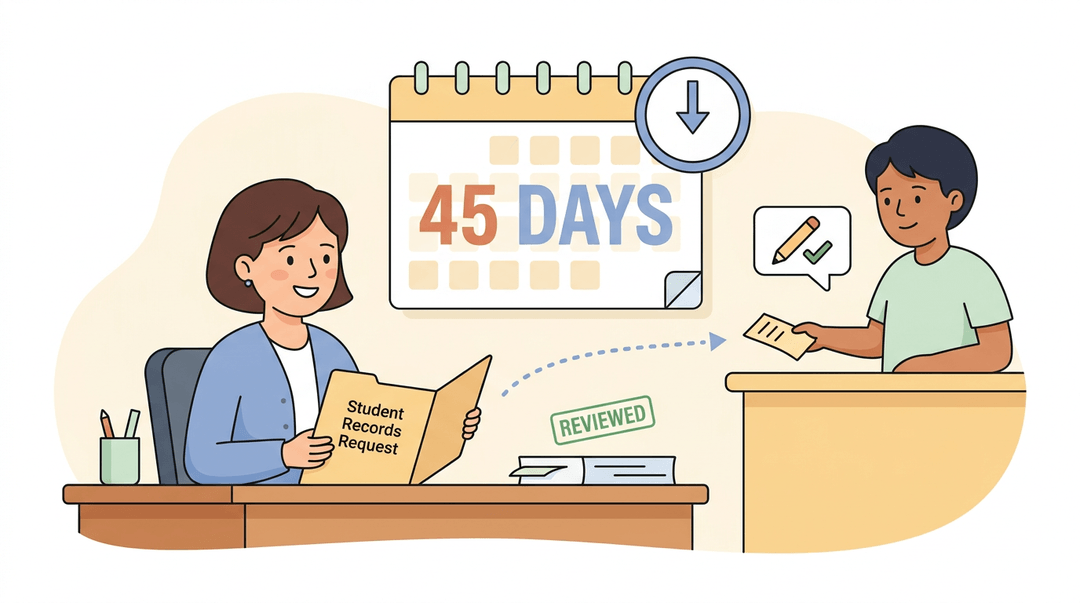
FERPA doesn't require constant check-ins, but it does set a firm clock once a request lands. According to Protecting Student Privacy, schools must comply with a request to inspect records within 45 days of receiving it.
If a parent or eligible student spots an error during that review, they can request a correction, and the school has to either amend the record or explain why it's declining.
When Schools Can Share Student Records
FERPA doesn't lock every record behind a permission slip. It draws lines: some information moves freely, some needs consent, and some depends on who's asking and why.
What counts as directory information
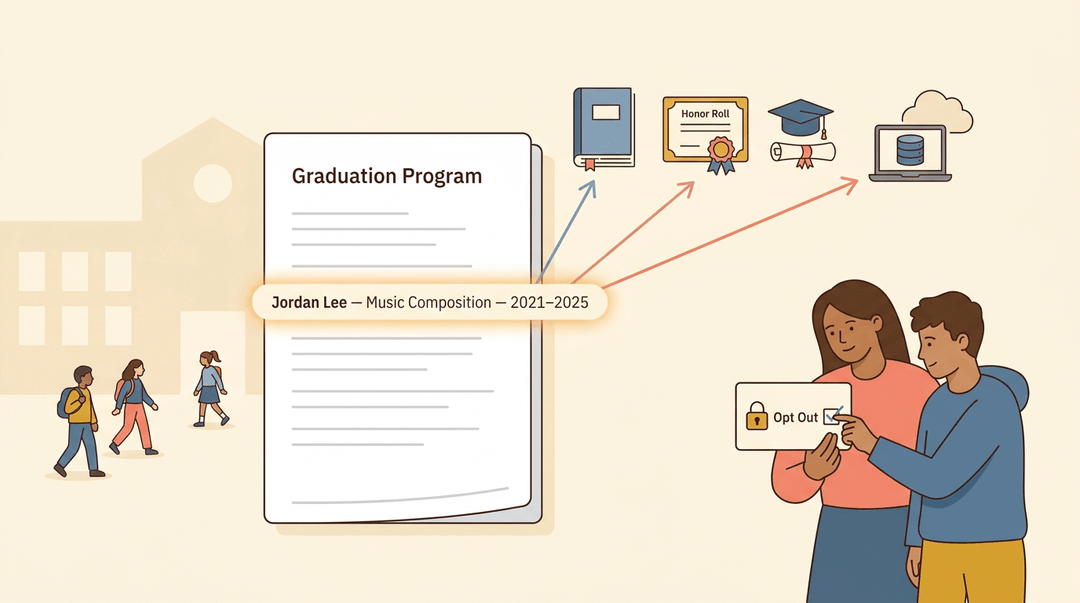
Directory information covers the basics schools have always treated as public-facing: a student's name, major, and dates of attendance.
Because it's considered low-risk, schools can share it without consent, and most do, in yearbooks, honor rolls, and graduation programs.
Parents and eligible students can still opt out, and it's worth doing so deliberately. Even ordinary facts can add up to something more revealing: a name paired with a major can point straight at a small program's roster.
That risk grew when The New School's FERPA guide notes that 2012 federal regulation changes expanded when schools could share student records and personally identifiable information without consent, a shift that widened the door for outside parties, including ed-tech vendors, to end up with more student data than families expect.
When parents can access records
Rights shift to the student at 18 or upon college enrollment, with one notable dependent student exception: if a student is claimed as a dependent under the IRS definition, either parent can still access their records, regardless of who claims them or who pays the bills.
Who else can see student records
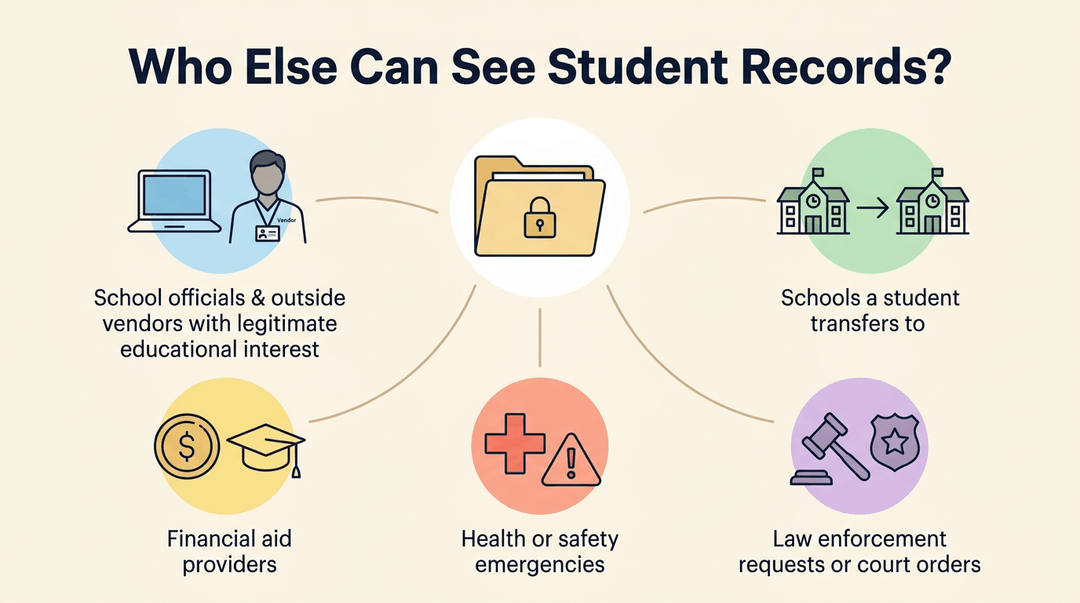
Beyond parents and students, a handful of others can legitimately view records:
- School officials with a legitimate educational interest, including many outside vendors and contractors
- Schools a student is transferring to
- Financial aid providers processing aid
- Anyone involved in a genuine health or safety emergency
- Parties acting under law enforcement requests or court orders
Sharing outcomes of serious disciplinary cases
A 1998 amendment lets postsecondary schools disclose the final outcome of disciplinary proceedings when a student's found responsible for a violent crime or sex offense.
Victims can also be notified directly, closing a gap where privacy rules once left them in the dark.
Keep Your Attendance Records FERPA Compliant
Your attendance log is an education record under FERPA, which means the same privacy rules that protect transcripts protect it too. The good news: compliance comes down to a handful of habits you can set up once and run all year.
Confirm the basics are in place
Before the semester gets moving, check that all three hold true:
- Records are stored securely. Paper rosters in a locked drawer; digital logs behind your own login.
- Never a shared spreadsheet anyone with the link can open.
- Access is need-to-know only. Admin and the front office qualify; a parent volunteer doesn't.
- You know the district retention schedule. Ask your registrar how long to keep logs and how to dispose of them. Don't guess, and don't purge early.
⚠️ Watch out: the most common leak isn't a hack, it's a projector. Close your attendance screen before you mirror your laptop to the class.
Before the data leaves your hands
Sharing is where most FERPA trouble starts, so run every request through this table:
| Before you... | Do this first |
|---|---|
| Share records outside the school (tutor, coach, agency) | Get written parent consent (or the student's, at 18) |
| Circulate an attendance report | Redact all PII: names, IDs, anything identifying |
| Hand a roster to a sub or volunteer | Confirm with admin that they have a legitimate educational interest |
What redaction actually looks like in a report you send up the chain:
- ❌ "Marcus T. has missed 12 days this quarter."
- ✅ "Three students have missed 10+ days this quarter."
The difference: the second version reports the pattern without letting anyone trace it back to one child.
Brief the adults who share your room
Co-teachers and aides handle the same log you do, and their slip is still a compliance problem. Give them a one-minute briefing at the start of each term.
Say: "Attendance is a protected education record. Don't leave the roster out, don't discuss a student's absences where others can hear, and send any outside request for records straight to me."
That single script covers the three mistakes team members make most, and it puts every request through one door: yours.
Keeping all of this running by hand is doable, but EMStudio's attendance tracker keeps daily logs organized and access-controlled, so compliance stays effortless.
How FERPA Is Enforced
A privacy law only means something if there's a process behind it. FERPA's enforcement runs through the U.S. Department of Education, not the courts, which shapes how complaints get handled and what schools actually risk.
Who handles FERPA complaints
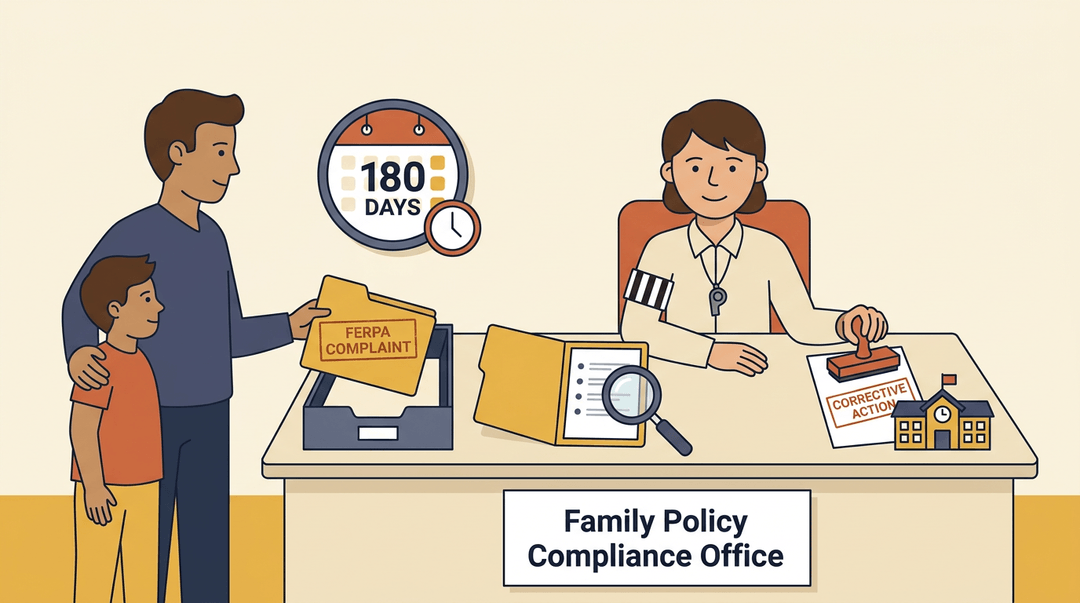
The Family Policy Compliance Office is the department's designated referee for FERPA disputes.
Parents or eligible students who believe a school mishandled education records file a complaint there, and timing matters: according to Protecting Student Privacy, "the complaint must be timely (submitted to the office within 180 days of the date that the complainant knew or reasonably knew of the violation)" and needs to lay out specific facts, not just a general grievance.
From there, the office investigates and, if it finds a violation, requires the school to take corrective action to bring its practices back in line.
What happens when schools violate FERPA
Here's the part that surprises a lot of teachers: FERPA carries no private right to sue. A parent can't take a school to court over a records slip-up under FERPA itself.
The real leverage is financial: repeated, uncorrected violations can put a district's federal funding on the line.
Actual funding cuts are rare, and outright legal penalties are rarer still, but schools still take violations seriously, because the fix is usually simpler than the fallout: set clear data-sharing rules for staff, know who can see what, and most complaints never happen in the first place.
Why FERPA Was Created
Before you can understand what FERPA asks of you today, it helps to know why lawmakers wrote it in the first place. The short version: schools used to treat student records as anyone's business but the student's, and Congress stepped in to change that.
When FERPA became law
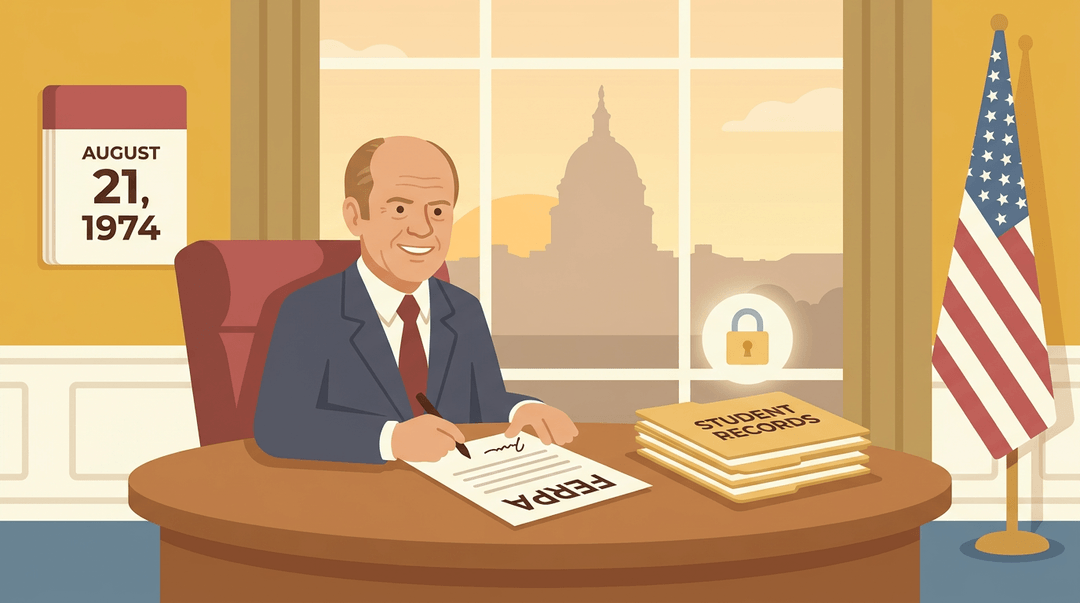
The Family Educational Rights and Privacy Act (FERPA) became federal law in 1974, part of a wave of reforms passed by the 93rd Congress.
Senator James Buckley introduced the measure, which is why you'll still hear it called the Buckley Amendment, a name NCES uses for the law that "defines education records as all records that schools or education agencies maintain about students."
President Gerald Ford signed it on August 21, 1974, according to the official legislative history, with the law taking effect that November.
The problem FERPA was meant to fix
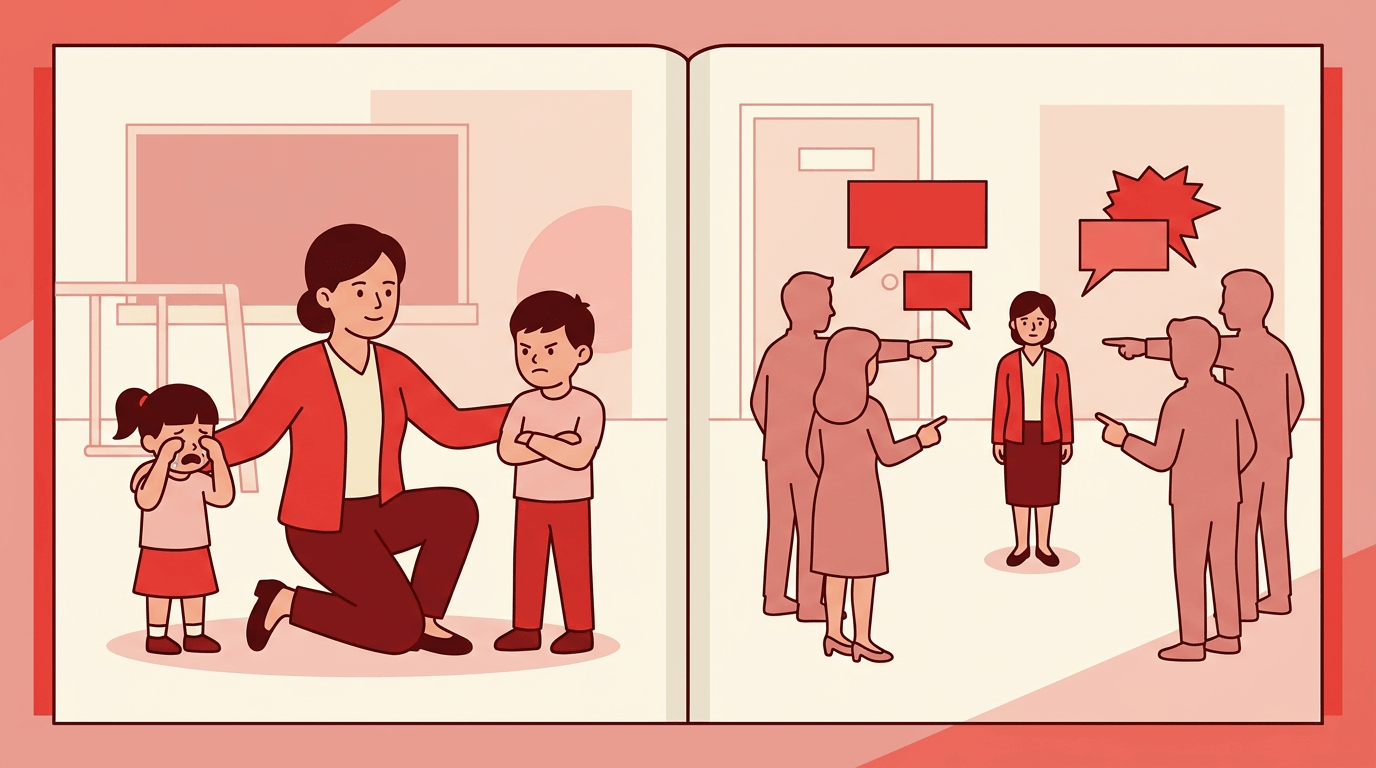
Before 1974, schools operated under almost no rules for handling student records. Parents and students routinely had no right to see their own files, while outside parties could get access without ever asking permission.
As GovFacts explains, "schools often denied parents access to their children's records while granting access to third parties without parental knowledge."
That imbalance, and the scandals it produced, is exactly what pushed Congress toward a law built on transparency and accountability, one that applies to any school receiving federal funding.
Key Court Cases That Shaped FERPA
FERPA's text answered a lot of questions in 1974, but it didn't answer every one. Two Supreme Court cases ended up doing that work, and both still shape how teachers handle grades and records today.
Landmark Supreme Court rulings on FERPA
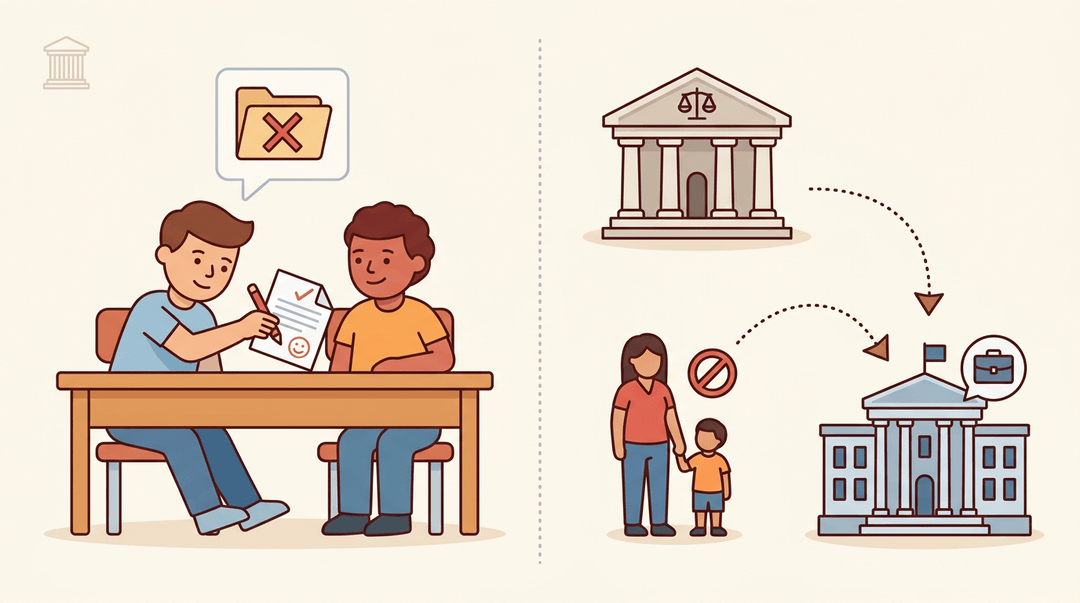
In Owasso v. Falvo, the Court took up a question every teacher who's ever handed a paper to a neighbor to grade has probably wondered about: does peer grading violate FERPA?
A parent sued a school district over the practice, arguing it exposed education records without consent.
The Court disagreed, ruling that a grade a classmate marks on a paper isn't yet an education record in FERPA's sense, since the school hasn't recorded it in a student's permanent file.
Gonzaga University v. Doe tackled a different problem: who gets to enforce FERPA when a school gets it wrong.
The Court held that FERPA creates no personal right to sue under federal civil rights law, meaning students and parents can't bring their own FERPA lawsuits. Enforcement runs through the U.S. Department of Education instead.
Together, these rulings drew the boundaries of what counts as a protected record and who can act when protection fails, questions the original law left open to interpretation.
Criticism of FERPA
FERPA has plenty of fans, but it's not without its critics. Even the law's own architect has had second thoughts about how it's played out in practice.
Is FERPA a good thing?
So, is FERPA a good thing? Mostly, yes: it gives families real control over student records. But the cons side of the FERPA pros and cons debate is worth taking seriously.
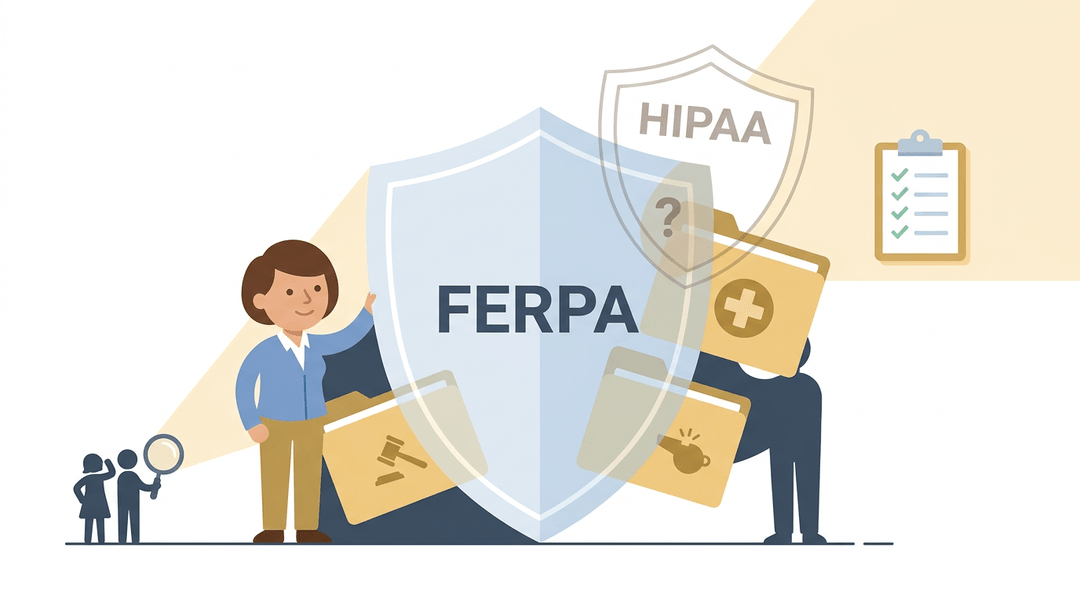
One recurring complaint is that schools sometimes use FERPA to shield non-educational records rather than protect students.
Disciplinary incidents, athletic mishaps, even campus crimes have been kept from public view by citing FERPA, even when the records in question have little to do with a student's actual education.
That criticism isn't just coming from outside observers.
Senator James Buckley, FERPA's original sponsor (the law is still nicknamed the Buckley Amendment), has said publicly that the law he helped write is now being stretched to cover far more than he intended, particularly when it comes to hiding information the public arguably has a right to see.
Another gray area is medical records.
School nurses and counselors keep health information that can blur the line between an "educational record" and a medical one, and that ambiguity fuels ongoing debate over how FERPA overlaps with the Health Insurance Portability and Accountability Act (HIPAA), the federal law protecting medical privacy.
The two laws weren't designed to interact cleanly, and schools are often left guessing which one applies.
FERPA didn't appear out of nowhere. It answered a real problem: records moving without consent, and families with no way to push back. Decades later, that same principle shapes something as ordinary as your daily attendance log.
Keeping clean, compliant records doesn't have to eat your evening. Ready to simplify it? Check out our Attendance & Records feature to mark attendance quickly and spot patterns across your classes over time.
References
- Legislative History of Major FERPA Provisions — studentprivacy.ed.gov
- The Family Educational Rights and Privacy Act (FERPA): Legal Issues — congress.gov (2026)
- How long does an educational agency or institution have to comply with a request to view records? — studentprivacy.ed.gov
- Family Educational Rights and Privacy Act (FERPA) — catalog.newschool.edu
- How may a parent or eligible student file a FERPA complaint with the Department of Education? — studentprivacy.ed.gov
- GONZAGA UNIV. V. DOE — law.cornell.edu
- The Family Educational Rights and Privacy Act (FERPA): A Comprehensive Guide — govfacts.org (2025)
- 96859 / Protecting the Privacy of Student Education Records — nces.ed.gov
- OWASSO INDEPENDENT SCHOOL DIST. NO. I—011V. FALVO — law.cornell.edu
Frequently asked questions
What is the purpose of FERPA?
FERPA protects the privacy of student education records. It gives parents and eligible students rights to inspect records, request corrections, and generally control disclosure of personally identifiable information.
What is not protected under FERPA?
FERPA generally does not cover teachers’ private notes kept solely for personal use, campus police records, or alumni records created after a student graduates. Certain medical and psychological records may be governed by different rules depending on how and where they are maintained.
How often does FERPA have to notify parents?
FERPA requires schools to notify parents and eligible students of their FERPA rights annually. Separately, schools generally must respond to a request to inspect education records within 45 days.
Is FERPA a good thing?
FERPA is generally considered beneficial because it gives families access to and control over student records. However, it can be criticized when schools interpret it too broadly, create confusion around medical information, or use it to withhold information that may not be genuinely educational or private.