Should You Waive Your FERPA Rights? A Complete Guide

Jump to section
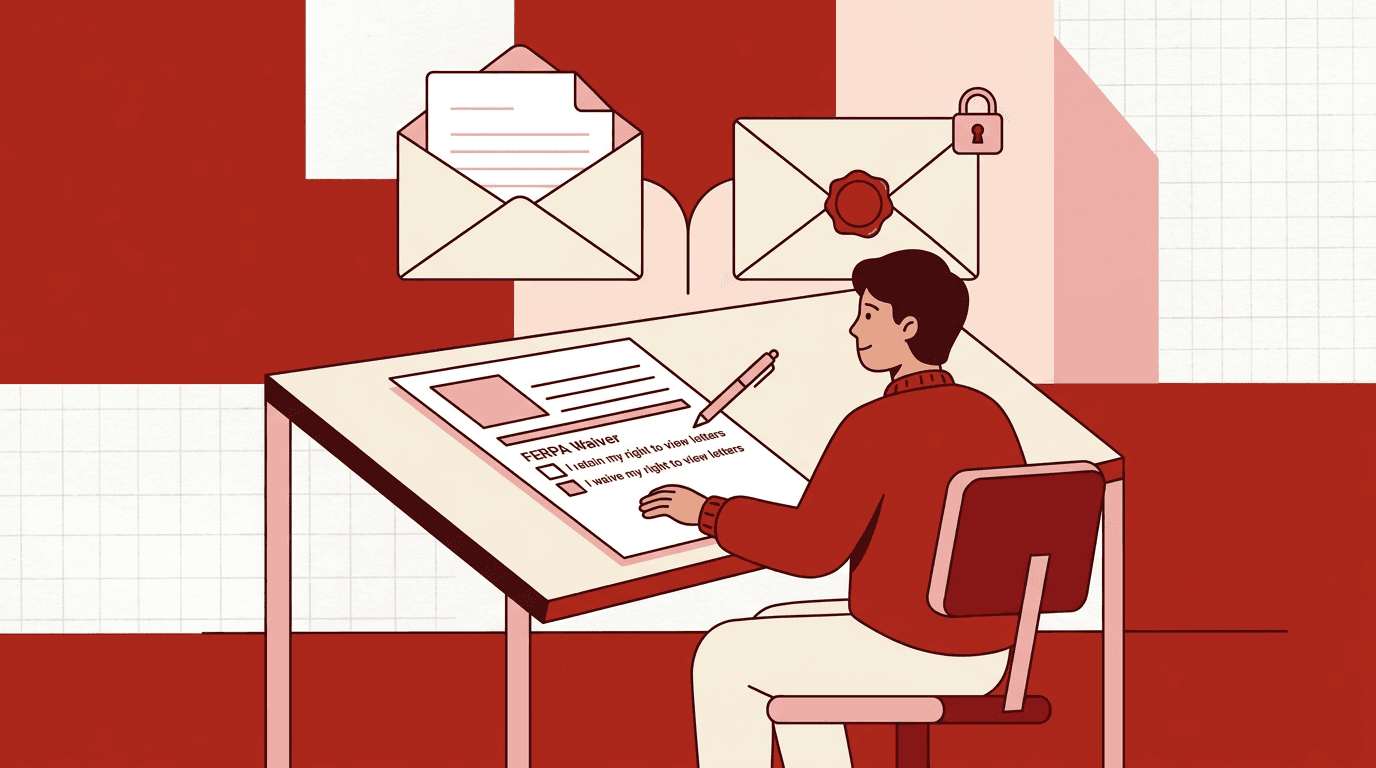
Think about handing someone a sealed envelope versus one they can peek inside before it's sent. That small choice, seal it or leave it open, is close to what a FERPA waiver decision boils down to.
FERPA, the Family Educational Rights and Privacy Act, gives students and families the right to see certain educational records, including recommendation letters, unless that right is waived.
For teachers writing those letters, the question shows up every fall. Here's how to weigh it, and what happens either way.

Should You Waive Your FERPA Rights
Signing a FERPA waiver feels like a small formality tucked into a recommendation form, but it's worth knowing exactly what you're agreeing to before you check that box. Let's break down what we mean by a waiver, and what it actually changes.
What FERPA Actually Protects
The Family Educational Rights and Privacy Act (FERPA) is a 1974 federal privacy law that protects student education records and gives students the right to inspect and review their own files.
Once a student turns 18 or enrolls in a postsecondary school, those rights transfer from the parent to the student, who becomes what FERPA calls an "eligible student". So what qualifies as a FERPA violation?
Sharing a student's education records, including a college application file or a letter of recommendation, with anyone who isn't authorized to see it counts.
According to research on FERPA compliance in schools, that also covers things like leaving graded work where other students can read it or discussing a student's records without permission.
How FERPA Affects Your College Applications
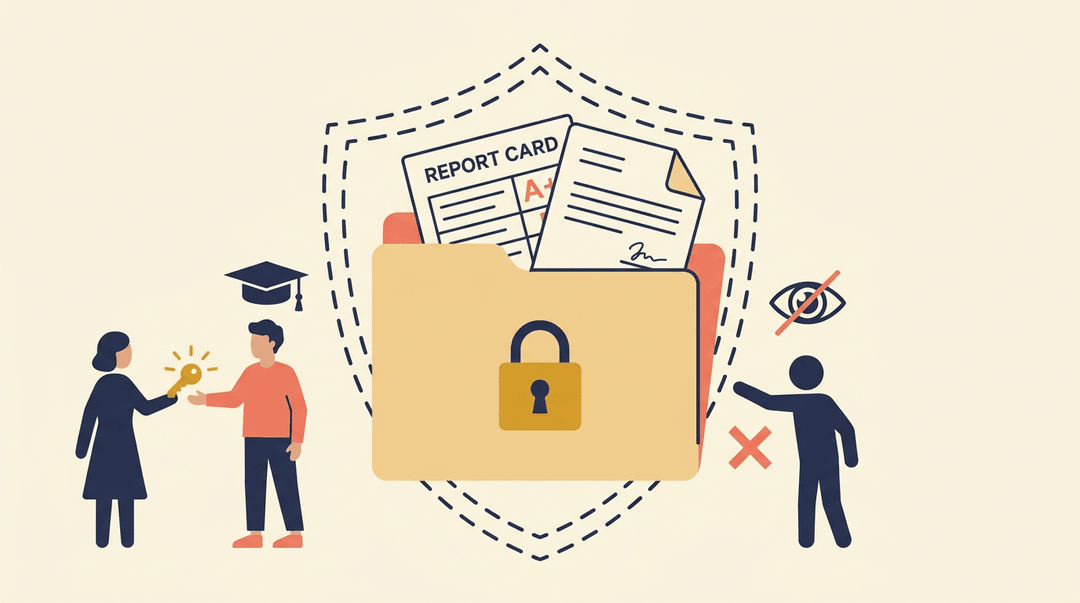
College application records fall under this same protection, and that includes any letter of recommendation you write for a student.
Without a waiver, the student keeps the right to review that letter after they're enrolled, which is exactly the kind of access many recommenders would rather avoid.
What a FERPA Waiver Really Covers
Signing a waiver only removes the student's right to view that specific recommendation. It doesn't hand over blanket access to every record: transcripts, disciplinary files, and other protected records stay off-limits regardless.
Keep the signed waiver in the student's file. It's your proof of consent if anyone ever asks.
Weighing Whether to Waive FERPA
Should you check that little waiver box or leave it blank? It's a small decision with a bigger ripple than most students realize.
Should You Waive FERPA on the Common App
Here's the short answer: yes, waive it. For most applicants, especially those aiming at selective schools, signing the FERPA waiver on the Common Application isn't really optional in practice, it's expected.
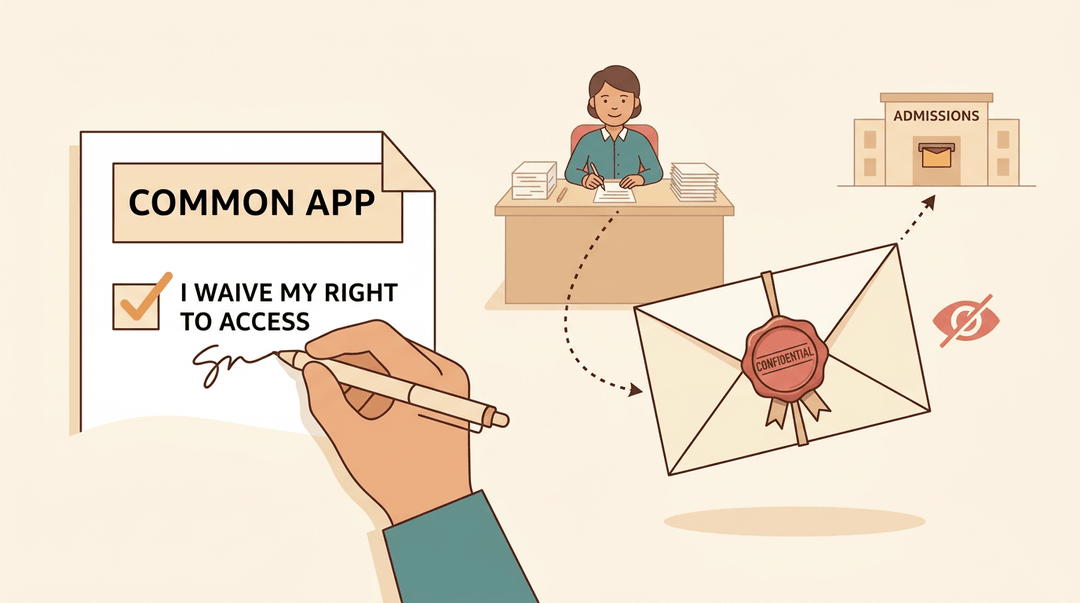
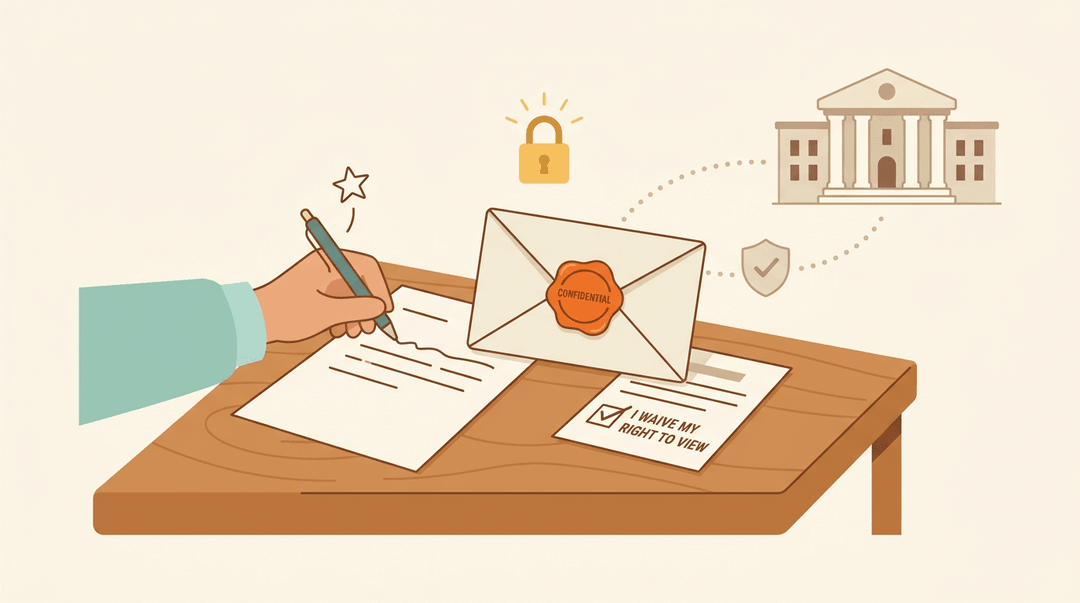
Once you sign, you give up your right to ever read the letters your teachers and counselors write on your behalf, and for elite admissions offices, that's exactly the point.
What Happens If You Waive Your Rights
Waiving your rights sends a signal, not just to the college but to the teacher writing the letter.
According to the Common Application's own FERPA guidance, "waiving your right lets colleges know that you do not intend to read your recommendations, which helps reassure colleges that the letters are candid and truthful."
In plain terms: colleges trust letters more when they know the student never saw them, and teachers write more freely when they know the same. That trust protects the credibility of the whole application, not just one letter.
Once you sign, it's permanent for that application: there's no unsigning it later.
Why Not Waiving Can Hurt Your Application
Leaving that box unchecked doesn't just skip a formality. It raises a flag. Admissions officers may wonder whether a letter was softened, edited, or quietly shaped by the student who's going to read it.
That suspicion rarely stays contained to one recommendation either: it can bleed into how the reader weighs the entire application.
Fair or not, a withheld waiver often reads as withheld trust, and in a competitive pool, that's a risk that can tip a decision the wrong way.
When Teachers Require a FERPA Waiver
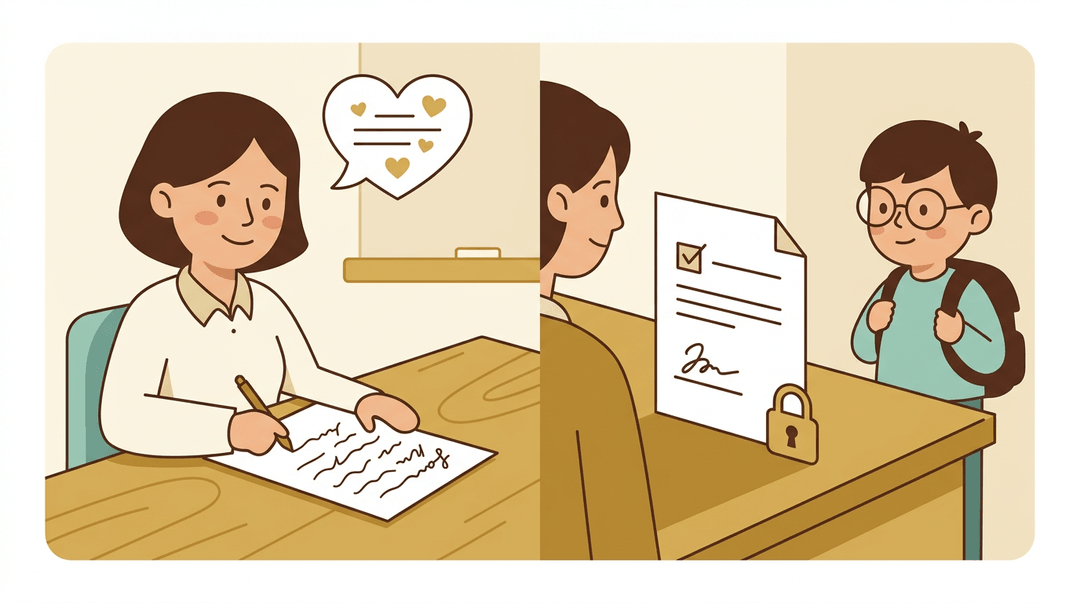
Some teachers won't write a letter at all unless the waiver is signed, and that's worth knowing before you ask. Check your counselor's or teacher's policy early rather than assuming.
For many educators, it's less about rules and more about the personal relationship: they want to write honestly about a student they know well, without wondering later if that student will read every line.
Still Unsure? Here's How to Decide
Plenty of students hit this checkbox and freeze. If that's you, talk it through with a counselor or parent before submitting anything.
Beyond that, trust your gut: if you believe your teacher will write something honest and supportive, waiving usually makes sense. If something about that relationship feels off, that instinct is worth listening to too.
A Teacher's Checklist for FERPA Waivers
You've agreed to write the letter; now the paperwork side matters as much as the prose. This checklist walks you through the three moments where waiver status affects what you do: before, during, and after.
Before you write: confirm the status
Don't start drafting until you can answer yes to all three:
- You've seen the waiver status yourself. Check the Common App or the signed form, not the student's word for it.
- You know your school's waiver policy. Some schools require a copy on file before any letter goes out; find out where yours stands.
- You've asked the counselor about anything unclear. Say: "Has this student waived their FERPA right to view the letter, and which form did they sign?"
While you write: same letter, different boundaries
Write honestly regardless of the waiver. A waived letter isn't a license to be harsher, and a non-waived letter isn't a reason to inflate. The letter should read the same either way; the waiver only changes who can see it later.
Don't discuss the letter's content if the student waived. They gave up the right to review it, and previewing it for them undermines the waiver's whole purpose.
⚠️ Watch out: "Can you just tell me the gist?" is where most teachers slip. A friendly "You waived your right to see it, so I can't share it, but I wrote you a strong letter" protects you both.
Keep your notes factual and professional. Anything you jot down about a student could surface in their record, so write notes you'd stand behind:
- ✅ "Led a lab group of four; project placed first at the regional fair."
- ❌ "Seems like a natural leader, way more mature than classmates."
- The difference: the first records what happened; the second records your opinion.
After you submit: close the paper trail
- File the signed waiver form where your school keeps recommendation records.
- If your school has no set spot, the student's cumulative folder is the default.
- Follow your school's retention timeline before discarding anything.
- When no timeline exists, ask the registrar; don't guess.
- Note the waiver status in the student's record.
- One line does it: "FERPA waiver signed 10/12; letter submitted 10/20; form filed in cum folder."
At a glance:
| Phase | Key move | What it protects |
|---|---|---|
| Before | Verify the signed waiver | You writing under wrong assumptions |
| During | Same honest letter, no previews | The waiver's confidentiality |
| After | File, retain, record | Your school's compliance record |
Keep waiver forms and record notes organized alongside attendance and student files in EMStudio.
Picking the Right Recommenders and Content
A FERPA waiver only protects a letter that's actually worth protecting. Before any student signs a thing, the real work happens earlier: who they ask, and what that person actually has to say about them.
Choosing Teachers Who Will Support You
Encourage your students to choose teachers who favor them, not just whoever taught the hardest class on their transcript.
That choice takes trust and foresight: a recommender needs real material to work with, and a student needs enough history with that teacher to supply it.
A junior year core teacher, someone who watched a full year of growth up close, is usually the strongest pick.

What Teachers Actually Rate You On
Once you agree to write a letter, you're not just describing a student in isolation. You're often asked to rate them against their classmates on criteria like leadership, integrity, and resilience.
Those ratings carry as much weight as your prose: they're what surfaces the specific admissions hook that makes one applicant stick in a reader's memory.
Shaping the Letter Without Reading It
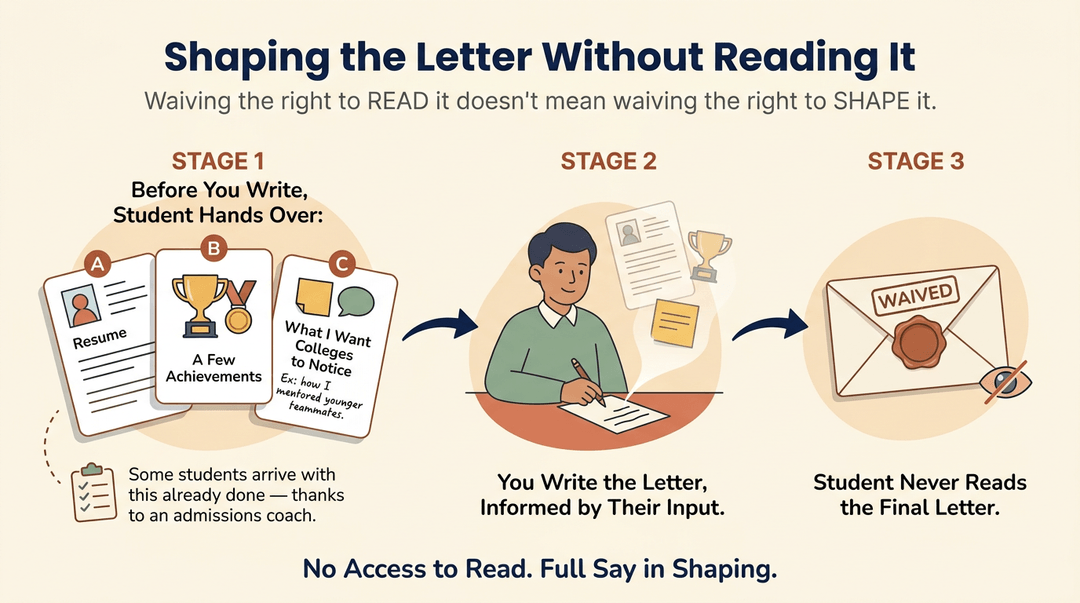
Waiving the right to read a letter doesn't mean a student has no say in it. Ask them to share anecdotes with you before you start writing, and have them hand over materials in advance:
- a resume
- a few achievements
- a sentence or two on what they want colleges to notice
Some students arrive with this groundwork already done, often thanks to guidance from an admissions coach. Either way, it makes for a stronger letter.
Can You Read Your Recommendation Letter
Here's the question every student asks sooner or later: once the letter's written, can you actually see what's in it? The answer depends almost entirely on whether you signed away your rights.
How to Ask to See the Letter
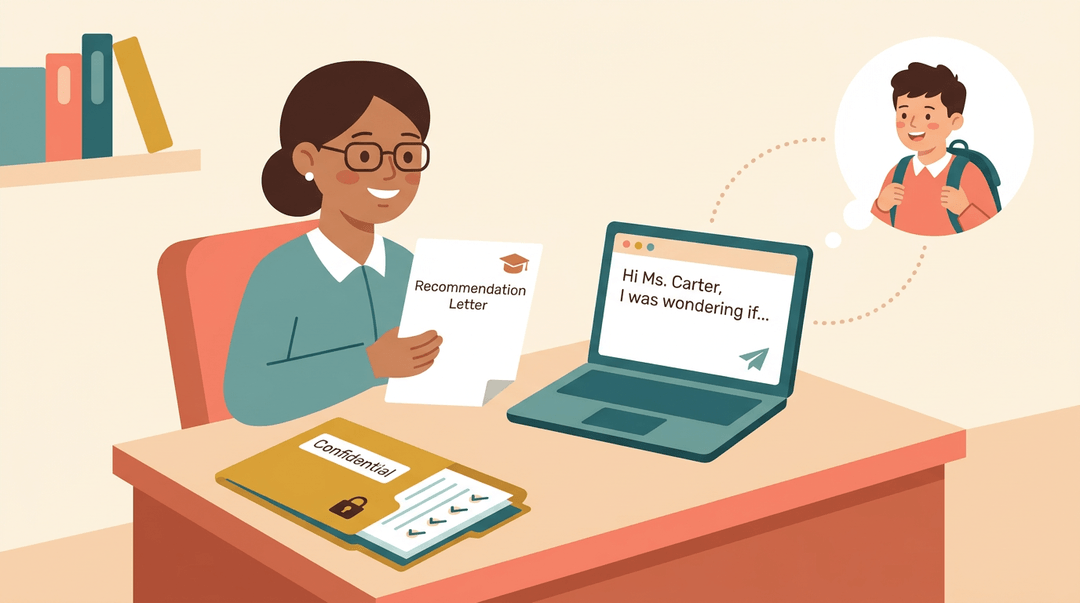
If you didn't waive your rights, you can ask to see the letter, and the most direct route is simply asking the teacher who wrote it. Think of a senior who's curious whether their favorite English teacher mentioned that award-winning essay.
A quick, polite email is often all it takes to start that conversation.
But asking isn't the same as getting. Even with an unwaived right, access isn't guaranteed the moment you request it.
Schools and teachers can have their own practices around when and how they'll show you a letter, and some may simply prefer to keep it confidential as a matter of professional judgment.
That said, plenty of teachers will share a letter voluntarily, especially if you've asked early and built a good relationship with them. A teacher might read a draft aloud, offer to talk through the main points, or hand over a copy outright.
None of that is required. It's a courtesy, not an obligation, so appreciate it when it happens and don't count on it as a backup plan if you're deciding whether to waive your rights in the first place.
Whether a student waives their FERPA rights or not, your job stays the same: write a letter you can stand behind and keep the paperwork straight.
A clear checklist keeps you covered either way, and picking the right recommenders and content makes that letter worth reading in the first place. Good records make good letters. Ready to keep yours organized before recommendation season hits?
Check out our Attendance Tracking feature to spot patterns across your classes and back up every letter you write.
References
- Family Educational Rights and Privacy Act (FERPA) | Public Health Law — cdc.gov
- Family Educational Right and Privacy Act (FERPA) — handbook.georgetowncollege.edu
- FERPA: What Do Faculty Know? What Can Universities Do?. — eric.ed.gov (2006)
- What is the FERPA Waiver? — appsupport.commonapp.org
Frequently asked questions
What happens if I waive my FERPA rights for a letter of recommendation?
If you waive your FERPA rights, you give up the right to review that specific recommendation letter after it is submitted. Colleges may view the waiver as a sign that the letter is confidential and candid, and teachers may feel more comfortable writing openly. The waiver is permanent for that application.
What happens if you waive your right?
You give up your right to inspect the specific recommendation letter covered by the waiver. It does not give colleges or anyone else blanket access to your transcripts, disciplinary records, or other protected education records.
Should I waive FERPA on the Common App?
Yes. On the Common App, waiving FERPA is generally recommended, especially for applicants applying to selective colleges. It signals that you do not intend to read the recommendations and can reassure colleges that the letters are candid and independent.
Should I waive my right to see letters of recommendation eras?
If you mean whether you should waive your right to see recommendation letters, generally yes. Waiving is commonly expected in competitive admissions and may make teachers and colleges more confident in the letters, but you should choose recommenders you trust before signing.
Is it better to waive FERPA rights?
In most college application situations, yes. Waiving FERPA can strengthen the perceived confidentiality and credibility of recommendation letters, while not waiving may raise questions about whether the letter was influenced by the applicant.
What qualifies as a FERPA violation?
A FERPA violation generally involves improperly disclosing or allowing unauthorized access to a student's protected education records. Examples include sharing a recommendation letter or application file with an unauthorized person, leaving graded work where other students can see it, or discussing student records without permission. FERPA also requires appropriate handling of records, though schools may disclose information in specific legally permitted circumstances.