No-Show Policy Basics: Wording, Fees, and Legal Limits

Jump to section
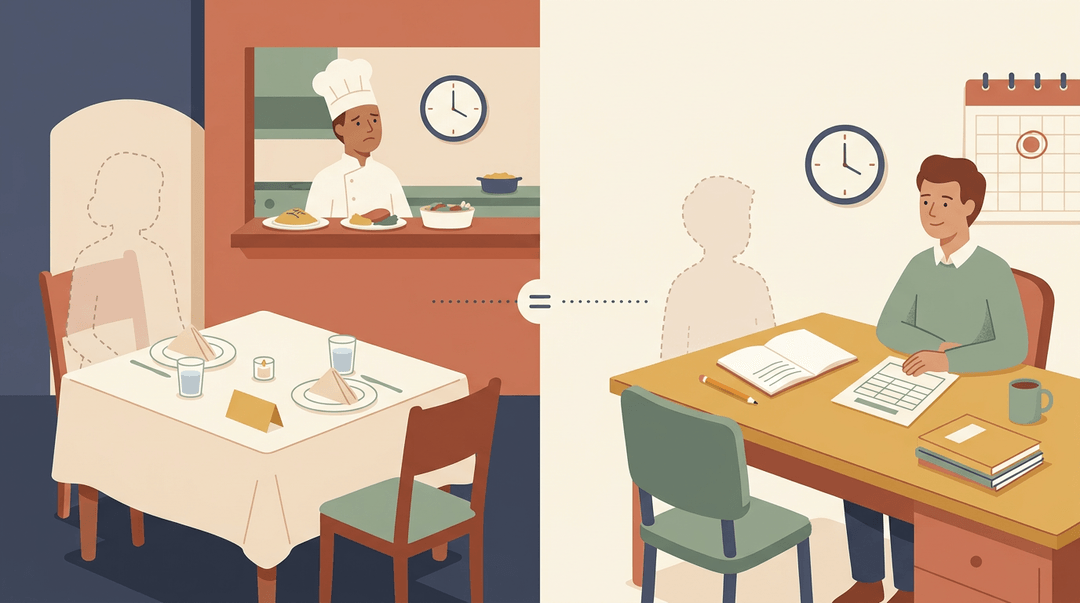
Picture booking a table for Friday night, then never showing up or calling to cancel. That table sits empty, and the kitchen planned around a guest who never came. Tutoring works the same way: time you saved for one student goes unused.
A no-show policy is a written agreement that spells out what happens when a student or family misses a scheduled session without canceling.
In this post, we'll cover what to include, how to share it clearly, how to handle fees, and the legal limits to keep in mind. You'll also find a ready-to-use version for tutors, private instructors, and homeschool co-ops.
Why Every Practice Needs a No-show Policy
A no-show policy is a written rule for what happens when someone misses an appointment without notice. Whether you tutor, teach private lessons, or run a homeschool co-op, it's one of the simplest ways to protect your time.
What missed appointments really cost
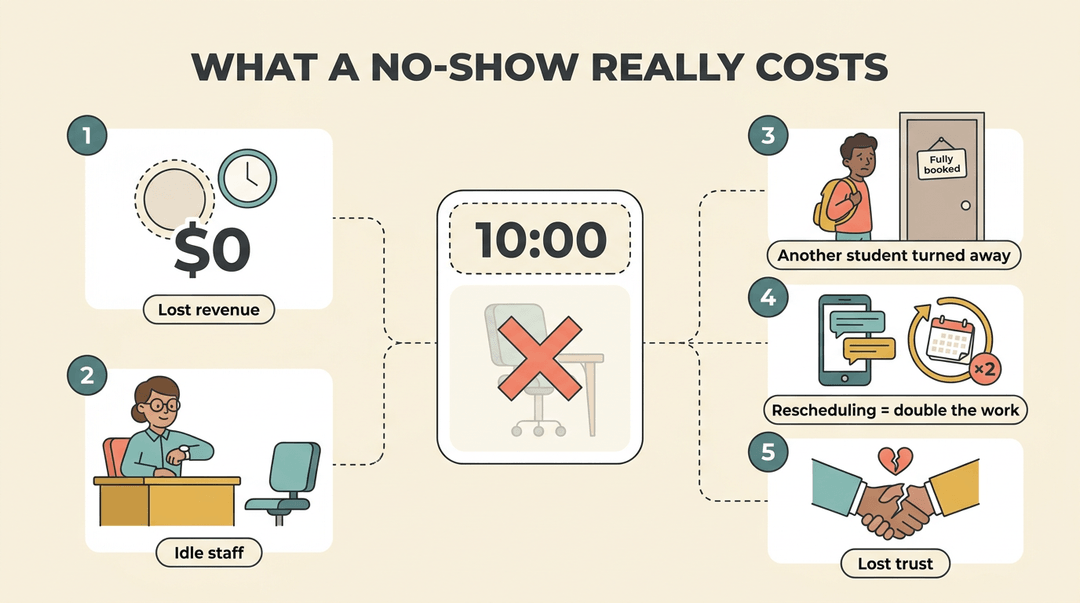
- Lost revenue and productivity. Time you set aside earns nothing.
- Open chair, idle staff. The seat sits empty while your instructor waits.
- A slot nobody else can use. Another student who needed that time was turned away.
- Rescheduling doubles staff time. Every move means another round of calls and messages.
- Lost trust. Repeated misses with no clear response wear down your relationships.
Why one written rule beats guesswork
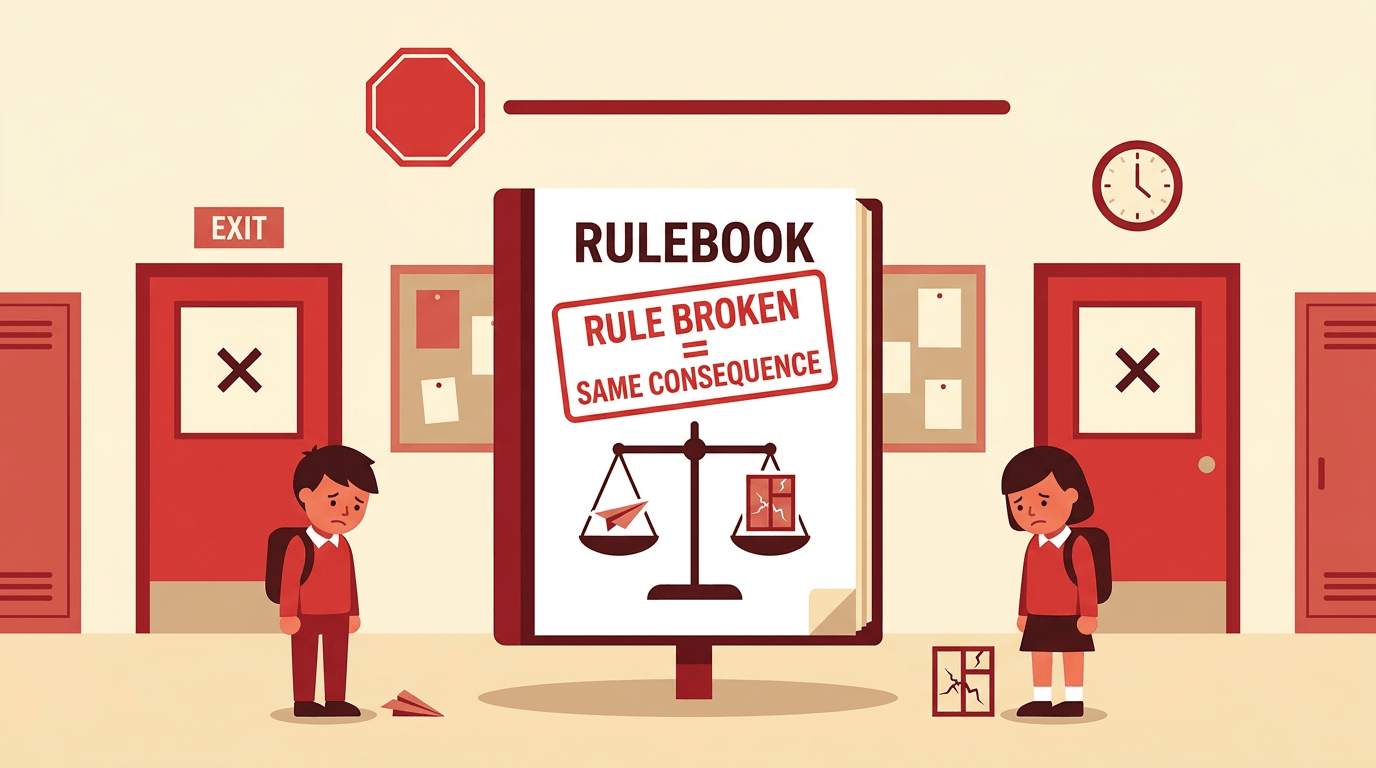
Without a written rule, every missed session becomes a judgment call. A tutor holding a Tuesday slot for a student who never shows has to decide, each time, whether to charge or call. With a policy, she sends the same reply and moves on.
A written policy gives staff one answer instead of a debate, and families know what to expect before a session is missed. The American Dental Association notes that a specific cancellation policy is especially helpful for people prone to canceling.
Many practices still don't have one. Guessing costs more.
How to define and track no-shows
Start with the terms you'll use in the rule and on your records:
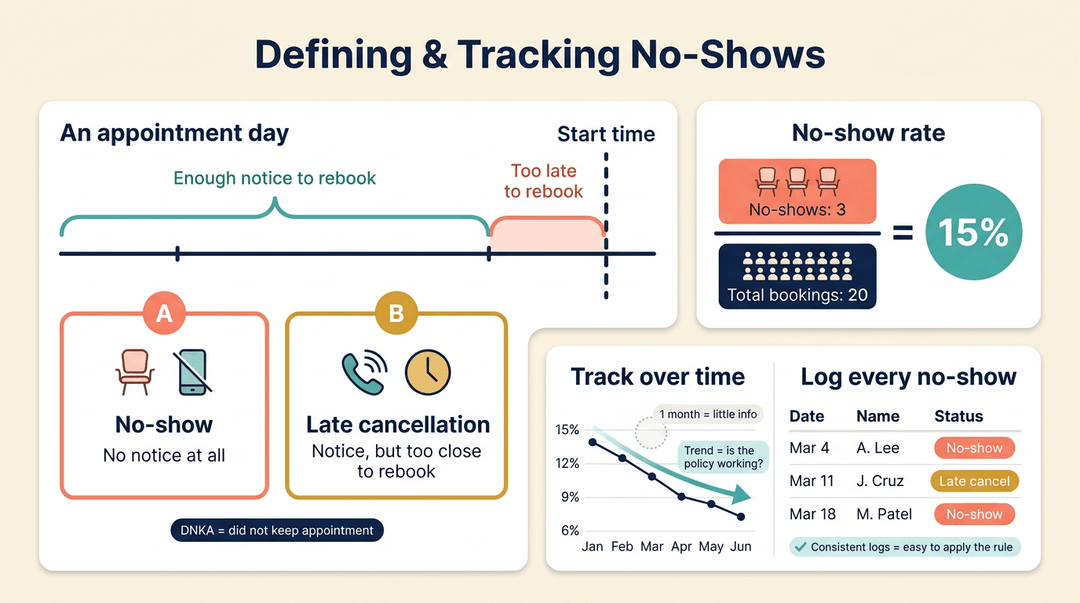
- No-show vs. late cancellation. A no-show gives no notice. A late cancellation comes too close to the start time to rebook.
- DNKA. Some offices use this shorthand for “did not keep appointment.”
- No-show rate. Divide no-shows by total bookings to get a share you can track.
- Track the rate over time. One month tells you little; a trend shows whether the policy works.
- Log no-shows in attendance records. Consistent logs make the rule easy to apply.
What a No-show Policy Should Include
A no-show policy spells out what happens when a booked session doesn't happen.
The parts every policy needs
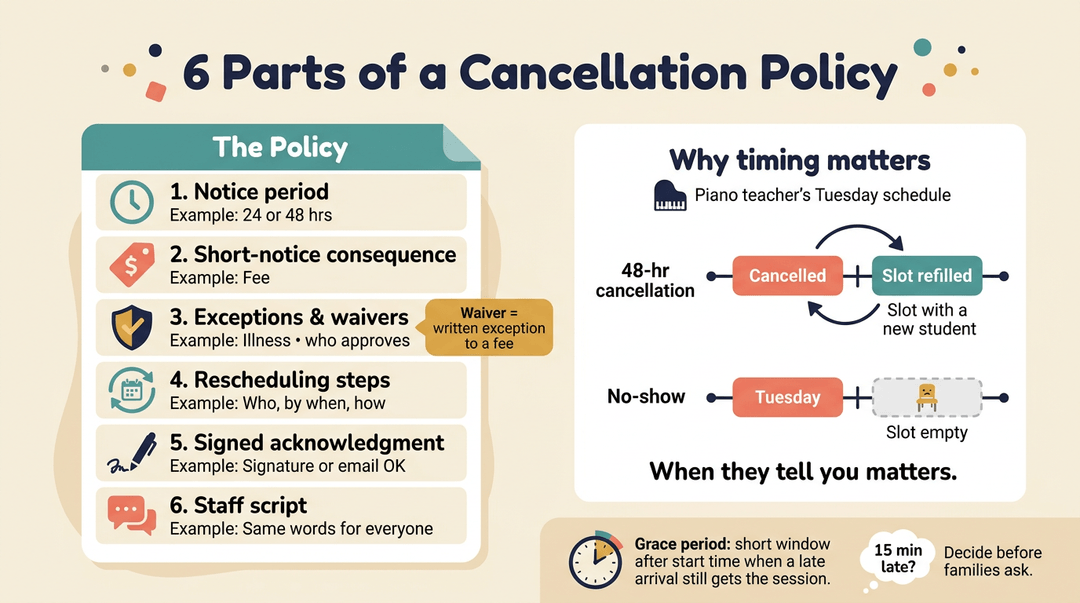
- Notice period. Pick a window, such as 24 or 48 hours.
- Consequence for short notice. Say what happens inside that window, such as a fee.
- Exceptions and waivers. List what you'll excuse, like illness, and who approves it. A waiver is a written exception to a fee.
- Rescheduling process. Explain who to contact, by when, and how to rebook.
- Signed acknowledgment. Have families sign, or confirm by email, that they've read it.
- Staff script. Give anyone who handles bookings the same words.
Consider a piano teacher with a full Tuesday. A 48-hour cancellation lets her refill it, but a no-show leaves it empty. What matters is when families tell you, not just whether they come.
A grace period is the short window after a start time when a late arrival still gets the session. Is it okay to be 15 minutes late to a doctor's appointment? It depends on the office's rules. Call ahead and ask.
Your policy should settle that before a family asks.
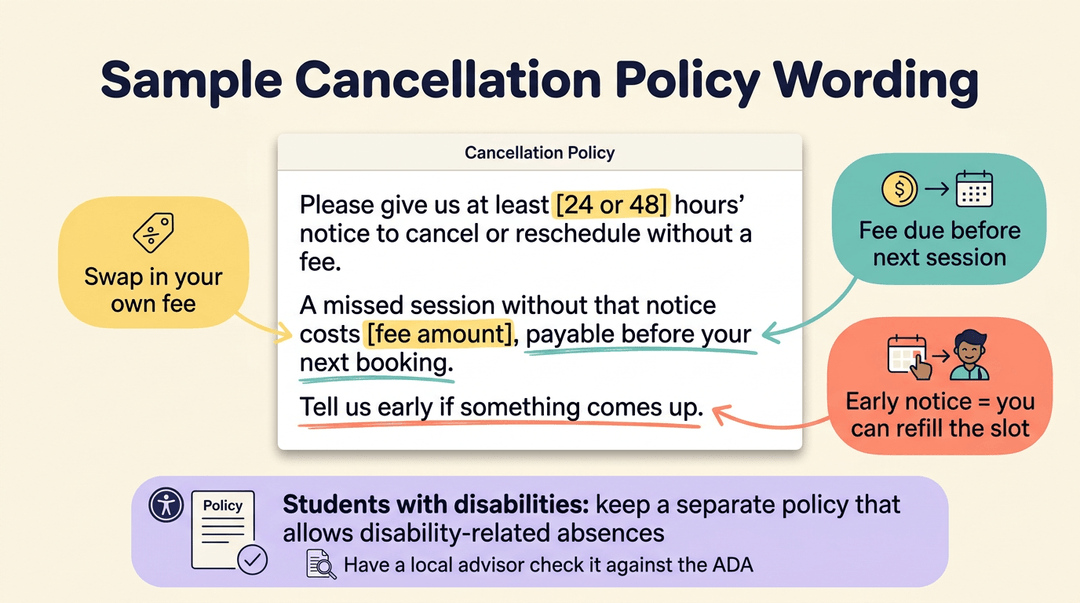
Sample wording you can adapt
Here's a short, plain version:
Please give us at least [24 or 48] hours' notice to cancel or reschedule without a fee. A missed session without that notice costs [fee amount], payable before your next booking. Tell us early if something comes up.
- Fee amount placeholder. Swap in your own figure.
- Payment before next booking. Tie the fee to the next session.
- Ask for early notice. Early notice lets you fill the slot.
- Americans with Disabilities Act (ADA) sample policies and scripts. For students with disabilities, keep a second policy and script that allow disability-related absences. Have a local advisor check it against the ADA.
Writing a Policy for Tutoring and Lessons
Use this guide to draft a one-page policy you can hand families at enrollment. Build it in five steps, adjust it by age, then check that you're applying it the same way every time.
Build the policy
- Define no-show and late cancel
- A no-show means no notice and no attendance. A late cancel means notice inside your window.
- Set your notice window
- Name a specific cutoff, like "at least 24 hours before the session."
- Choose a fee or a makeup
- Pick one default so families know what a miss costs.
- Say: "Late cancels are charged in full, or made up once at my discretion."
- State a grace period
- Say how long you'll wait before marking a no-show, like 10 minutes.
- Get a parent signature
- Collect a signed copy at enrollment. Adult learners sign for themselves.
Example: A tutor's one-paragraph policy: "Please cancel at least 24 hours ahead. A session missed without notice, or cancelled later than that, is a charge. I'll wait 10 minutes before marking a no-show. Your signature below means you've read this."
The difference between a vague policy and a usable one is that the second names the cutoff, the consequence, and the wait time.
Adjust for the learner's age
Who confirms and who cancels changes with age. Write your policy to match.
| Learner | How it works |
|---|---|
| Elementary | Parent confirms each session by text |
| Middle school | Parent and student both get reminders |
| High school | Student cancels directly, parent stays on the signed policy |
| Adult learners | They manage their own rescheduling |
Stay consistent
A policy only works if you apply it evenly. Before each term, confirm:
- Policy in writing: families can find it again without asking you.
- Shared at enrollment: they see it before the first session, not after the first miss.
- Reminders scheduled: they go out automatically, so you aren't relying on memory.
- Misses logged consistently: every no-show and late cancel gets the same entry.
- Exceptions documented: note what you waived and why, so the next family gets the same fairness.
Log every missed session and spot repeat no-shows with EMStudio's attendance tracking.
Telling Patients About the Policy
A no-show policy only works if people know about it, so let's make sure they do.
Where to post and share the rules
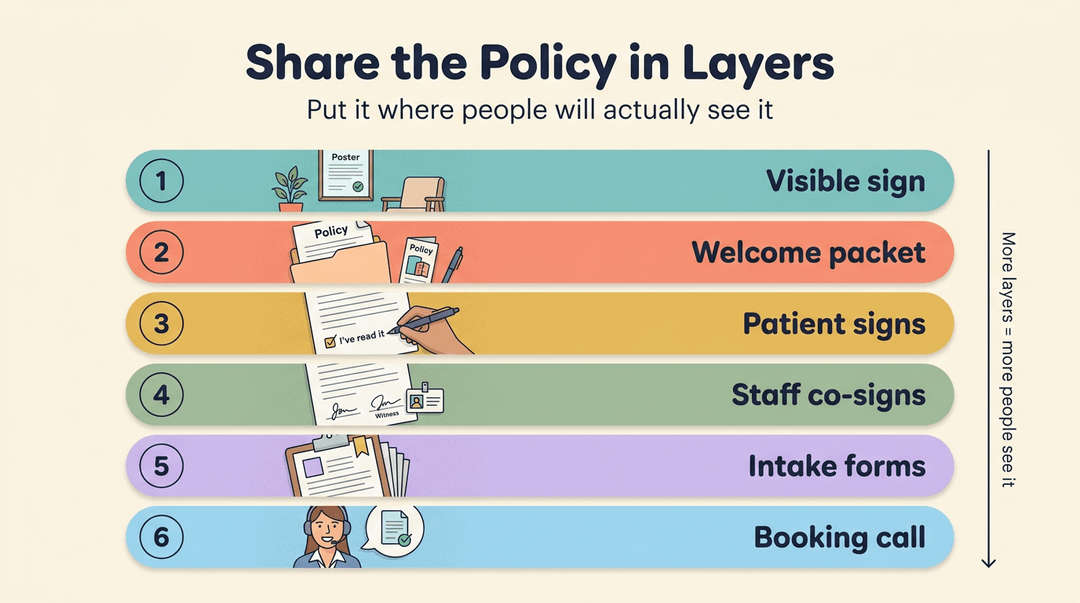
Put the policy where people will see it, not just where you file it. Share it in layers:
- Visible sign. Post it in a prominent spot in your waiting area.
- New patient package. Include it in every welcome packet.
- Patient signature. Have each patient sign to confirm they've read it.
- Staff witness signature. A team member co-signs as a witness, so there's a record.
- Patient paperwork. Keep it in the forms people review.
- Booking call. Explain it briefly when someone schedules.
Send reminders and follow-up messages
Reminders are the carrot, and the fee is the stick. Lead with the carrot.
Use call and text reminders, plus automated voice and email messages for routine visits. After a miss, send a post-miss message that offers a new time. It keeps the door open.
Check local privacy and consent rules before you text or email anyone.
For minors, remind parents before each session. Consider a school-based speech therapist who texts a parent the afternoon before a Tuesday session. The parent who forgot gets a nudge, and the slot doesn't go to waste.
Make cancelling easy for patients
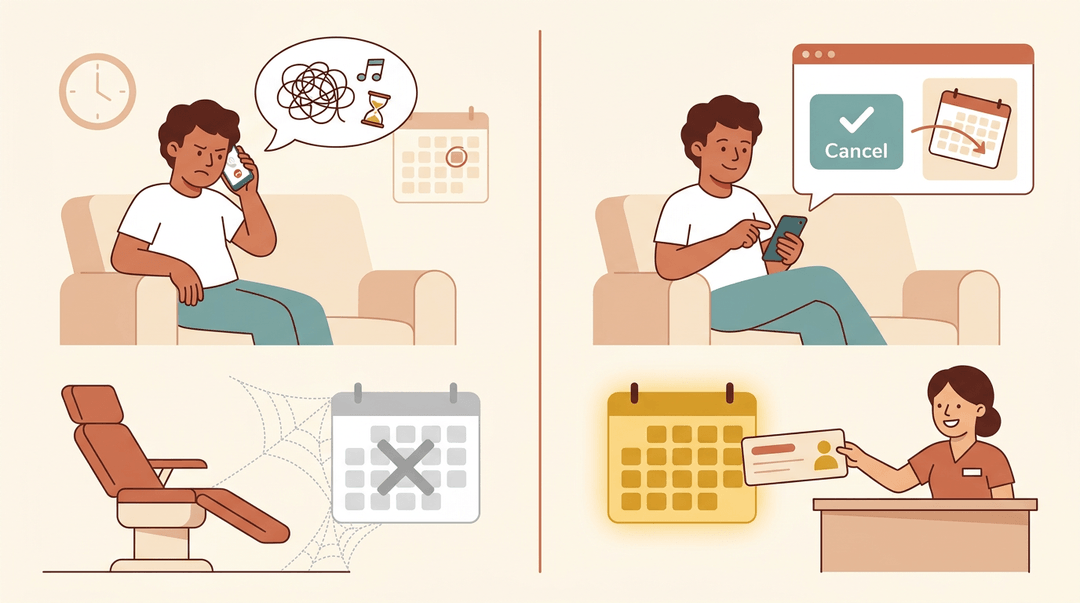
Patients need a line they can actually reach. If nobody picks up or the hold music drags on, cancelling feels like a chore.
Long hold times can contribute to no-shows. In one study of outpatient clinics, most patients who missed appointments said they'd forgotten or couldn't get through to cancel.
Always give patients a way to cancel, even on short notice. Make cancelling easier than skipping.
A cancelled slot can be refilled. A no-show usually can't.
Charging a Fee for Missed Visits
A no-show fee can protect your schedule, but the goal is reliability rather than revenue. Weigh its gains against the trust it might cost before you set one.
Weighing whether fees are fair
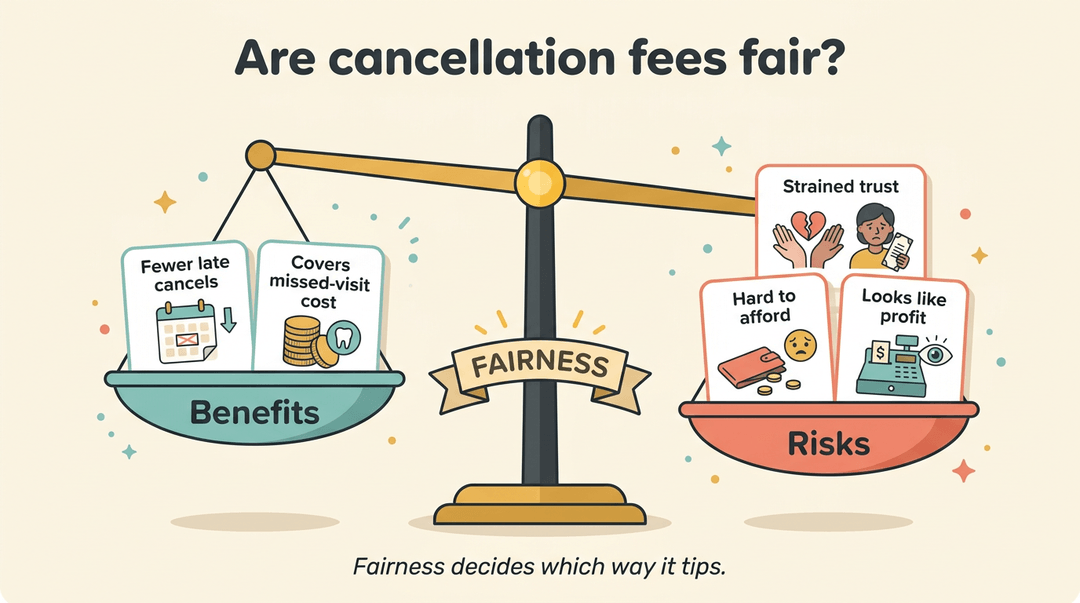
Fees bring real benefits and real risks. Here's how they stack up:
- Late cancellations: Fees discourage last-minute cancellations.
- Practice costs: Fees help recover what a missed visit still costs you.
- Relationships: A fee can strain trust, especially when a family feels caught off guard.
- Affordability: For some patients, even a modest charge is hard to pay.
- Profit center risk: If fees start to feel like a revenue stream, patients notice.
Fairness decides which way it tips.
How much practices are charging now
According to a WCHSTV report, no-show fees are becoming more common, with some practices charging $100 or more. Amounts vary widely, from $25 to $150.
The notice window is what triggers the fee: cancel inside it and the fee applies, cancel earlier and it doesn't. Spell out that window in writing, because when the fee applies matters as much as how much it is.
Waive fees with care and consistency
Consider waiving the first missed visit for long-time patients. Save the fee for habitual cancellers, where a repeated pattern is the real problem.
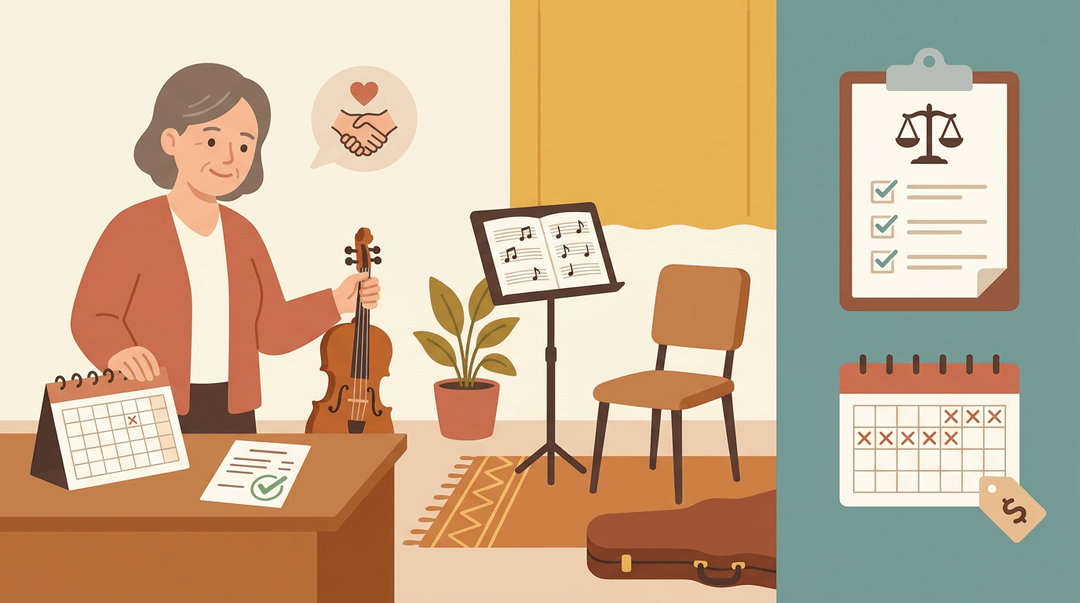
Think of a violin teacher whose longtime student misses one lesson during a family emergency. Waiving that fee costs her little and builds real loyalty.
If staff feel awkward raising a fee, script it in advance: "We know life gets busy, and our notice policy applies to everyone the same way."
Put your waiver reasons in writing and apply them the same way every time, or a waiver granted to one family and denied to another will feel arbitrary.
If a patient disputes a charge, check your notice records. If the notice was unclear or never arrived, a waiver is usually fair.
Getting paid for missed visits
You can require payment of any outstanding fee before a patient rebooks, or bill after the missed visit. The first protects your schedule from unpaid balances; the second keeps booking simple but means chasing payment later.
Plan for disputes before they happen. Patients who dispute often get a waiver, so build that step into your billing process rather than treating it as a surprise.
Other Ways to Cut No-shows
Reminders and fees only go so far. Your schedule, your follow-up, and the barriers students face matter too.
Tweak your schedule to reduce gaps
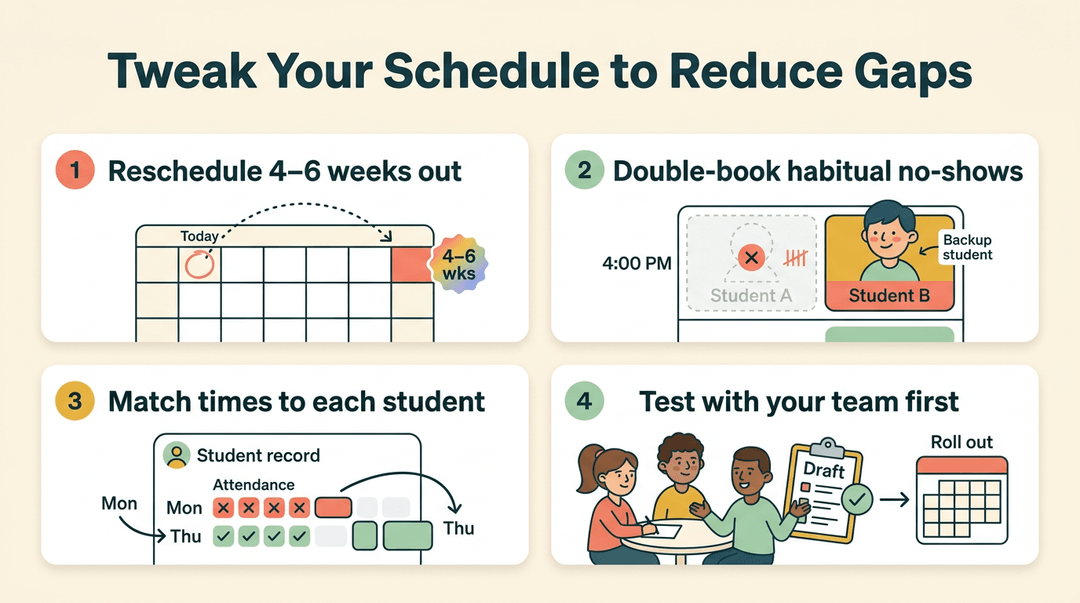
- Reschedule four to six weeks out. When a session has to move, pick a date four to six weeks away.
- Double-book habitual no-shows. If one student keeps missing a slot, book a second student into it, so the hour isn't wasted.
- Adjust times per student record. Check each student's attendance history, then move the session to a better time.
- Test changes with your team first. Trial any new schedule with co-op staff or fellow tutors before rolling it out.
Track repeat cancellers and reach out
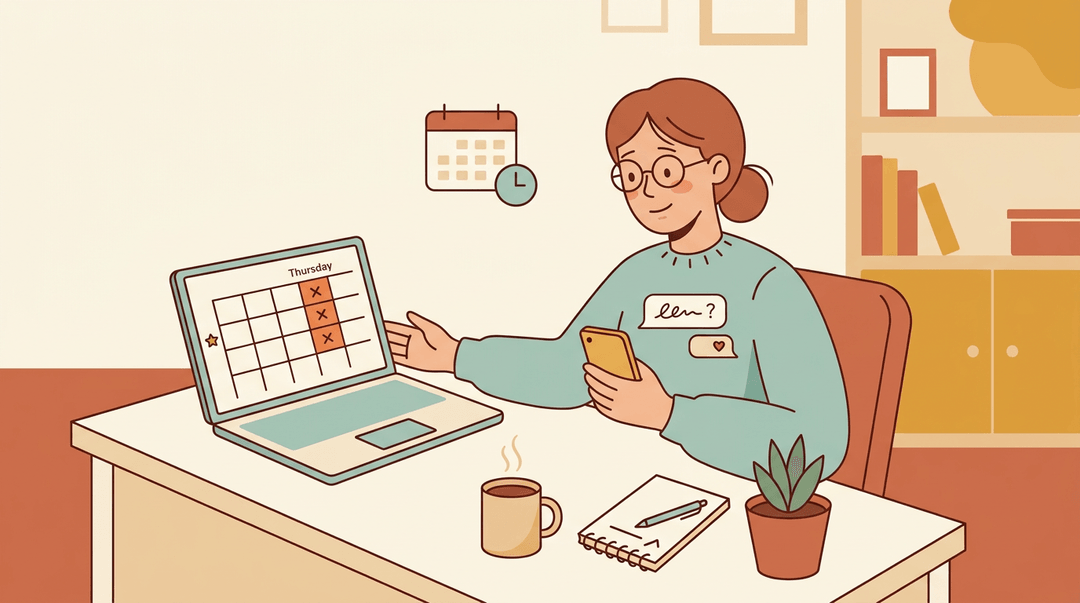
Track frequent cancellers in your scheduling software so they're easy to spot. Picture a tutor whose session logs reveal one student missing three Thursday sessions in a row.
Assign one person, such as a co-op coordinator, to handle chronic cancellers so every family hears the same message. Treat each absence as a signal, not a penalty. Ask families what caused it, because the answer can point to a fix. Just ask.
Messaging software can help too. A closed-loop audit at a community mental health service found that text reminders sent one working day before an appointment lowered the average share of missed visits from 7.5% to 5.0%.
Remove barriers like transportation
Sometimes a missed session has nothing to do with motivation. A student may simply have no ride, and no reminder can fix that.
Consider an urban primary care practice that tackled this with a ride-share program. A quality improvement initiative there estimated approximately $2.25 in clinical revenue returned per $1 spent, so attendance gains can offset what the program costs.
Legal, Financial and Patient-side Considerations
A no-show policy touches money, law, and trust, so the fine print matters.
Get the wording legally reviewed
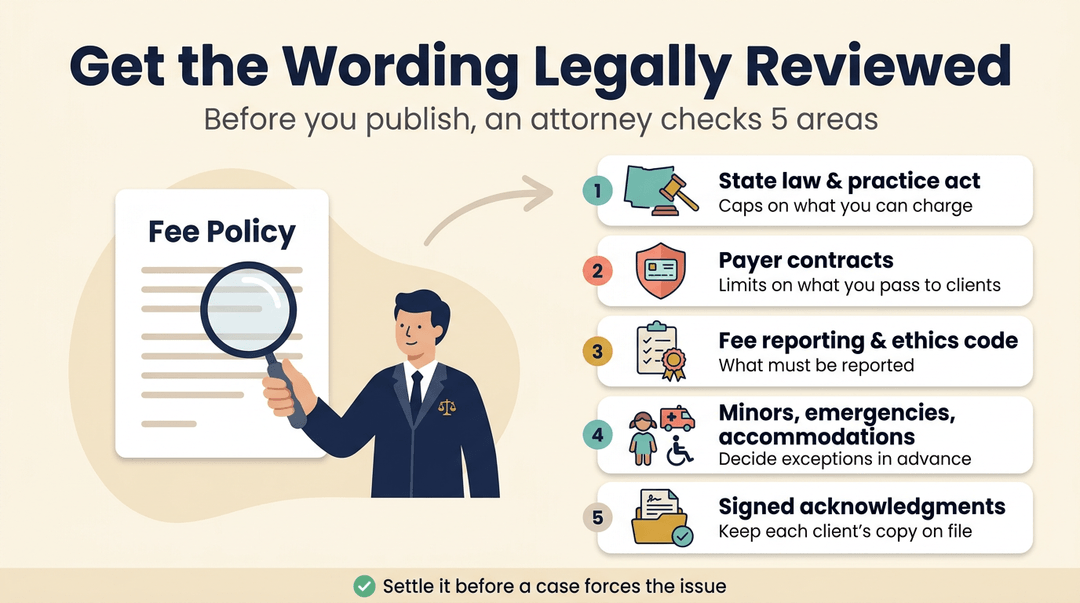
Before you publish, have an attorney review the wording against these areas:
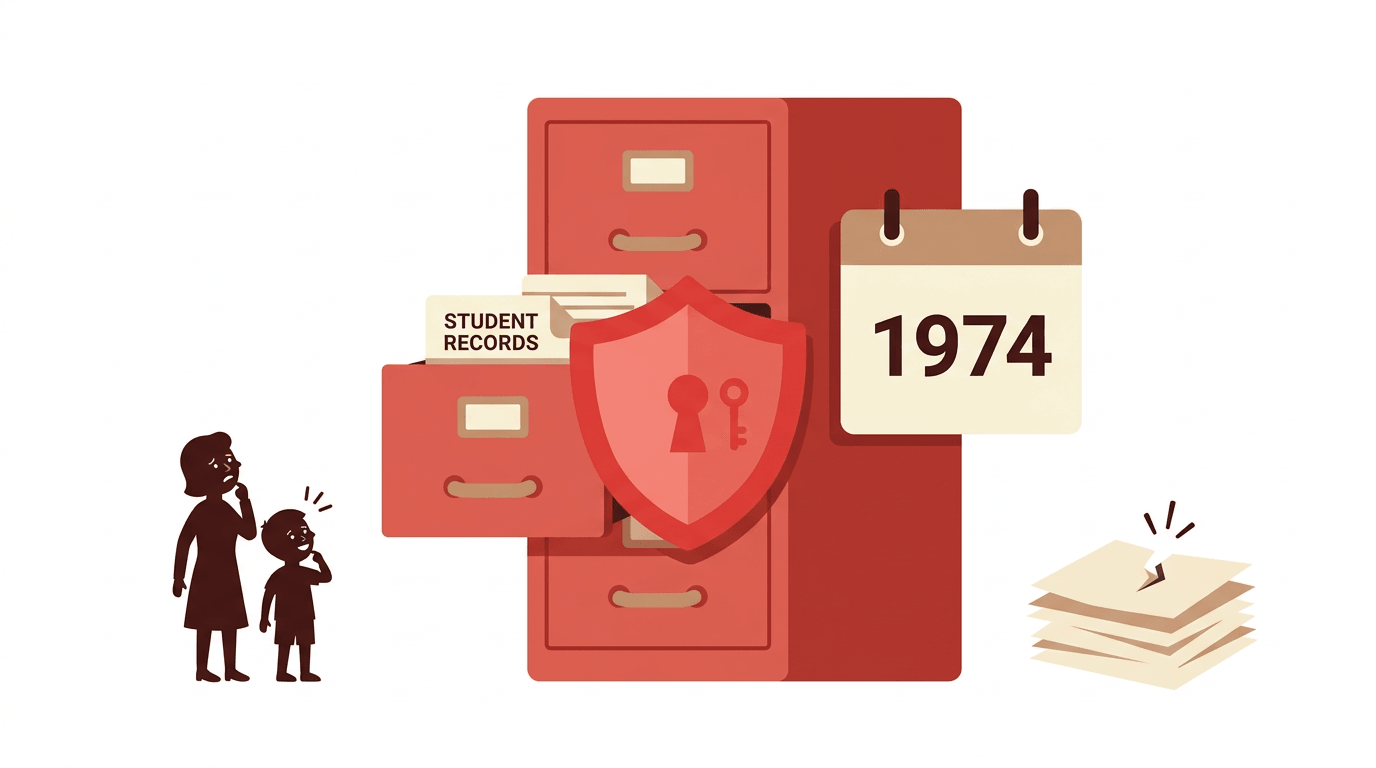
- State law and practice act: Your state's law and any practice act may limit what you can charge.
- Payer contract limits: If you bill insurance, your contracts may restrict what you can pass along.
- Fee reporting and ethics code: Check what must be reported and what your ethics code allows.
- Minors, emergencies, accommodations: Decide how these exceptions are handled before a case forces the issue.
- Store signed acknowledgments: Keep each client's signed copy on file, so you won't have to guess later.
Handling patient questions and disputes
Encourage clients to ask about the policy when booking, while everyone's still calm. If something comes up, they can ask to reschedule instead of simply not showing. Rescheduling keeps the fee off the table.
If a fee would strain their budget, they can request a waiver, and you can decide case by case.
When you cancel, waive the fee. Think of a co-op tutor whose Thursday session collapses because the room is double-booked. Waiving that fee keeps the family's trust. Fairness goes both ways.
If a charge looks wrong, clients can call billing to dispute it.
Whether fees can hurt credit
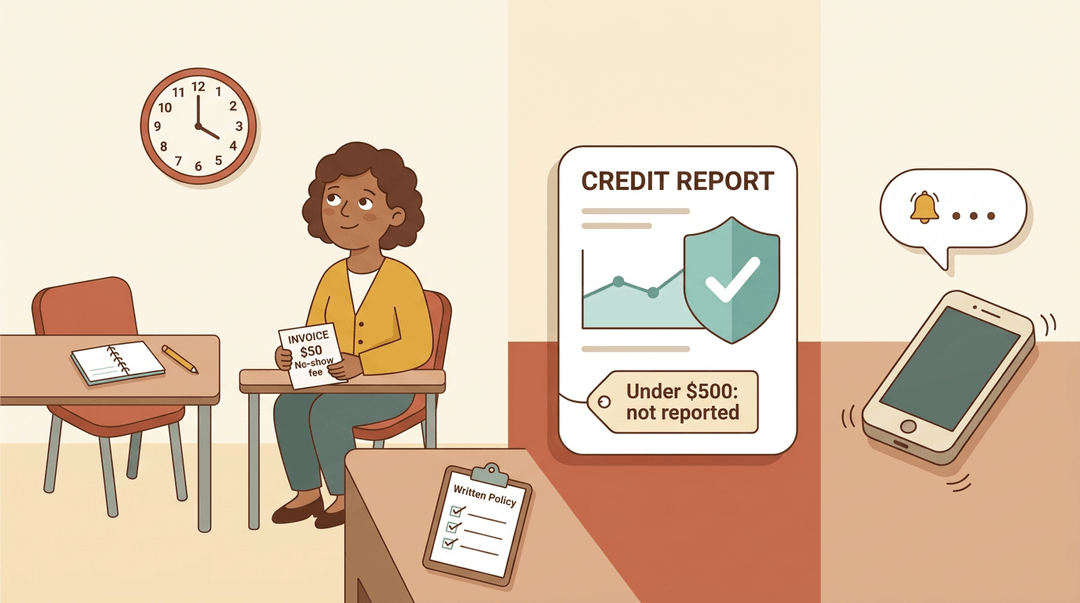
- Medical debt under $500 unreported. In April 2023, the three major credit bureaus stopped reporting medical debts below $500, according to The Effects of Deleting Medical Debt from Consumer Credit Reports.
- Fee unlikely to hurt credit. LegalClarity notes that a typical no-show fee of $25 to $100 probably won't appear on your credit report under the current voluntary threshold, but it could still lead to persistent collection efforts.
A clear no-show policy protects your time, sets fair expectations, and reminds families that your schedule matters as much as theirs. Put it in writing, share it before the first session, and apply it the same way every time.
Consistency builds trust, and trust is what keeps students coming back.
Ready to keep better track of who shows up? Explore Attendance & Records to mark attendance quickly and spot patterns across classes over time.
References
- The Effects of Deleting Medical Debt from Consumer Credit Reports — doi.org (2025)
- Reducing Did Not Attends (DNAs) at a Community Mental Health Service Through the Implementation of SMS Reminders: A Closed Loop Audit — pmc.ncbi.nlm.nih.gov (2025)
- Enhancing resource utilisation in outpatient clinics: impact of telephone and text reminders on did not attend and short notice cancellation — pmc.ncbi.nlm.nih.gov (2026)
- Lessons From a Quality Improvement Initiative to Address Transportation Barriers in an Urban Primary Care Practice — doi.org (2026)
- Do You Get Charged for Missing a Doctor Appointment? — legalclarity.org (2026)
- Cancellations — ada.org
- 'No show' fees becoming more common when it comes to doctor's appointments — wchstv.com
Frequently asked questions
What is the no-show policy?
A no-show policy is a written rule explaining what happens when someone misses an appointment without notice. It should state the cancellation notice window, any fee or other consequence, exceptions, how to reschedule, and how the policy is acknowledged.
Is it okay if you're 15 minutes late to a doctor's appointment?
It depends on the doctor's office and its grace period. Call ahead as soon as possible to ask whether you can still be seen or need to reschedule.
Can you legally charge a no-show fee?
A practice may be able to charge a no-show fee if it disclosed the fee and terms in advance, but the rules depend on state law, professional regulations, and any insurance or payer contract. Check those requirements and have the policy reviewed locally before charging patients.