Zero Tolerance Policy: A Complete Guide to How It Works

Jump to section
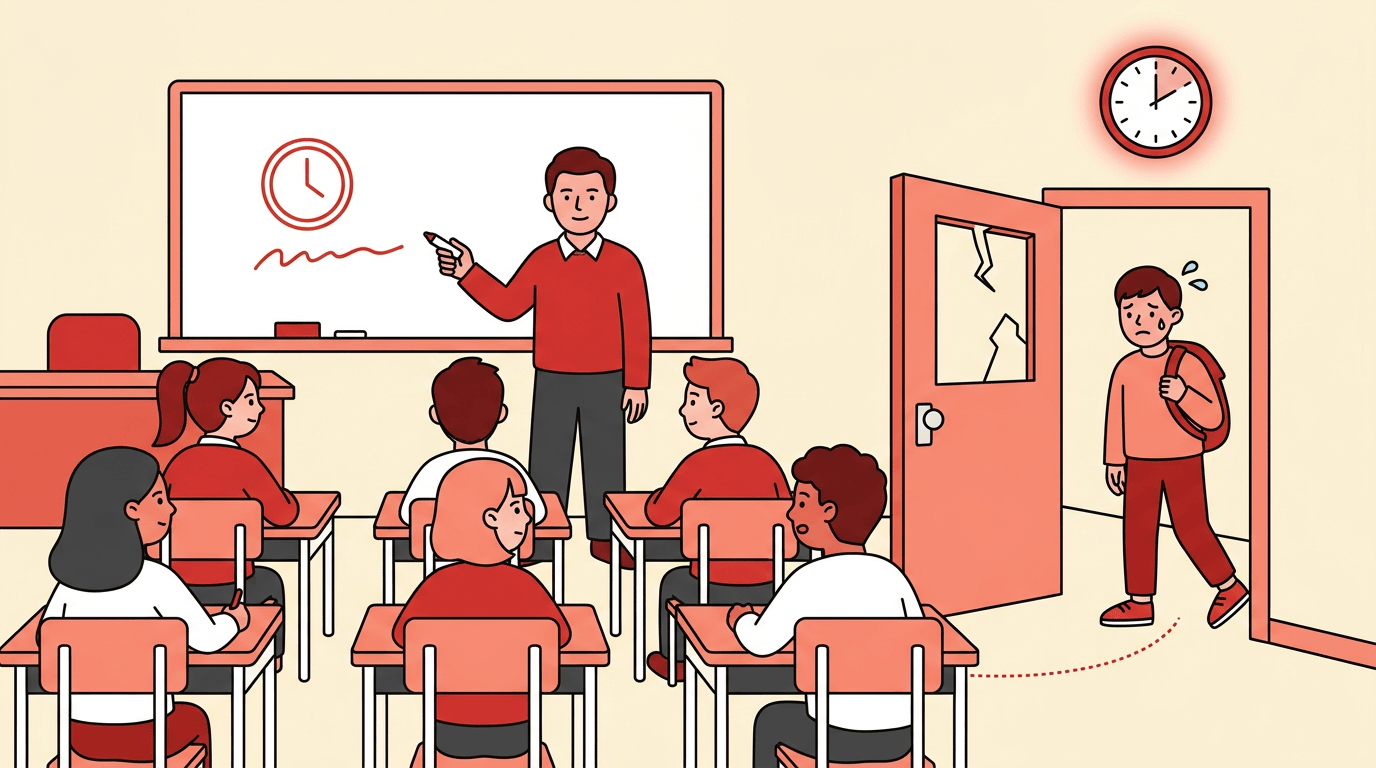
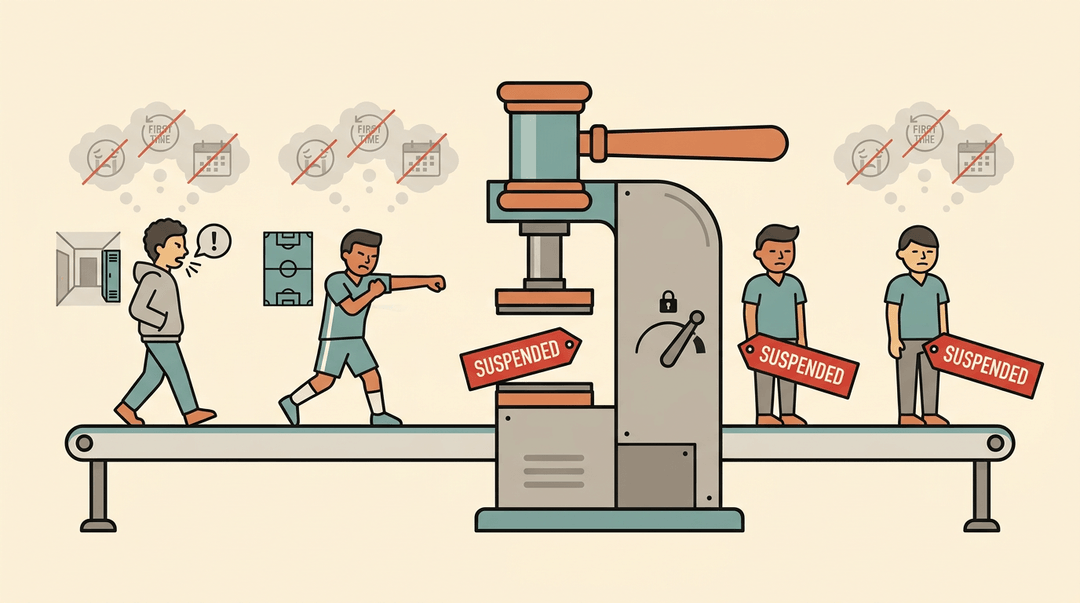
Picture a student who swears in the hallway, or a player who throws a punch on the field. Under a zero tolerance policy, the consequence follows automatically, no matter the context or the student's history.
That's the core idea, and it's worth understanding before you apply it in your own room.
Below, we'll cover what zero tolerance actually means and how it plays out in schools, policing, immigration, and the workplace. We'll also look at where critics push back and what that means for you and your students.
What Is a Zero Tolerance Policy?
A zero tolerance policy sets one firm rule and one fixed response, so the consequence stays the same no matter who breaks the rule or why. Here's how it plays out in schools, policing, immigration, and the workplace, and what it means for your classroom.
What's an example of a zero tolerance policy?
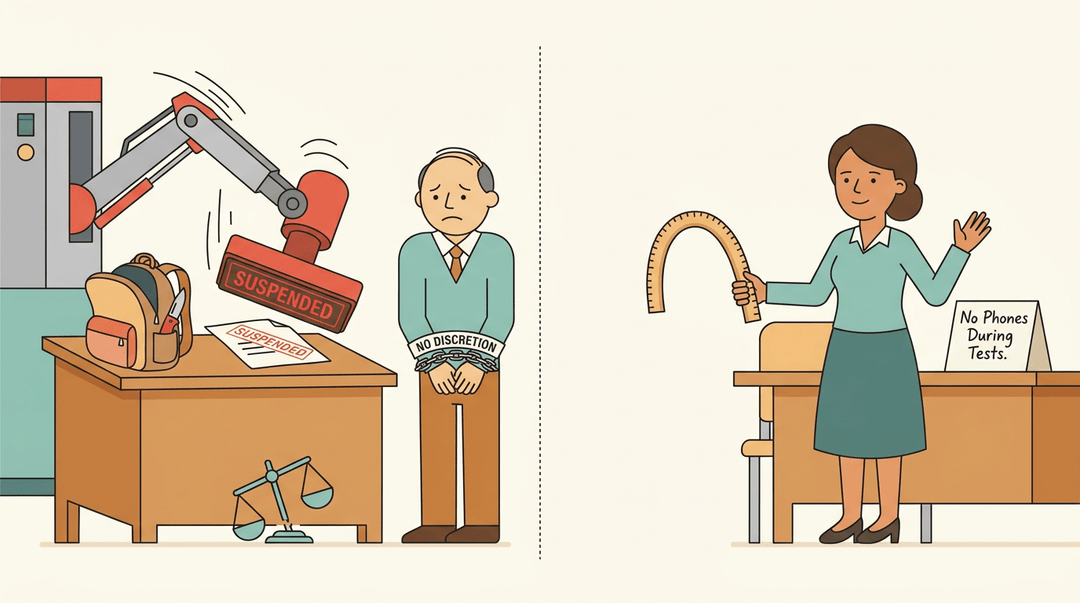
A school might suspend any student caught with a weapon, whatever the situation. Picture a middle school teacher who finds a pocketknife in a backpack: the punishment applies in full, and the principal has no room to weigh intent.
The policy covers every infraction it names, with no discretion, no leniency, and a predetermined punishment. These show up in formal systems like schools and police departments, and in informal ones, like a team rule that bans any late submission.
The distinction matters. A district's zero tolerance policy binds everyone, but a rule like 'no phones during tests' is a classroom rule you can enforce with judgment.
Six traits that define zero tolerance
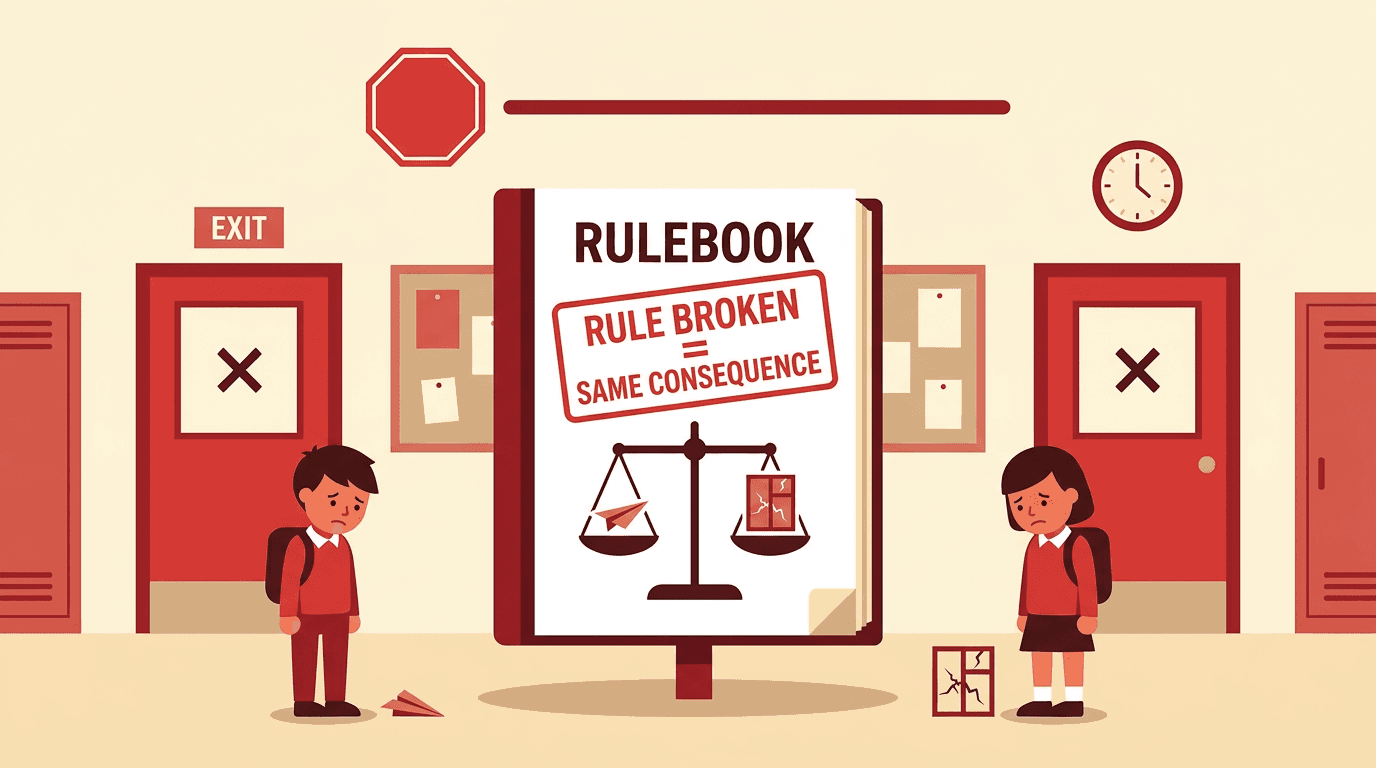
Zero tolerance rests on a few core traits. Full enforcement means the rule applies to everyone, every time. Strict liability means that a rule was broken matters more than why it was broken.
And mandatory, harsh punishment leaves little room for a second look. Excuses don't change the outcome.
Why workplace consequences aren't always automatic
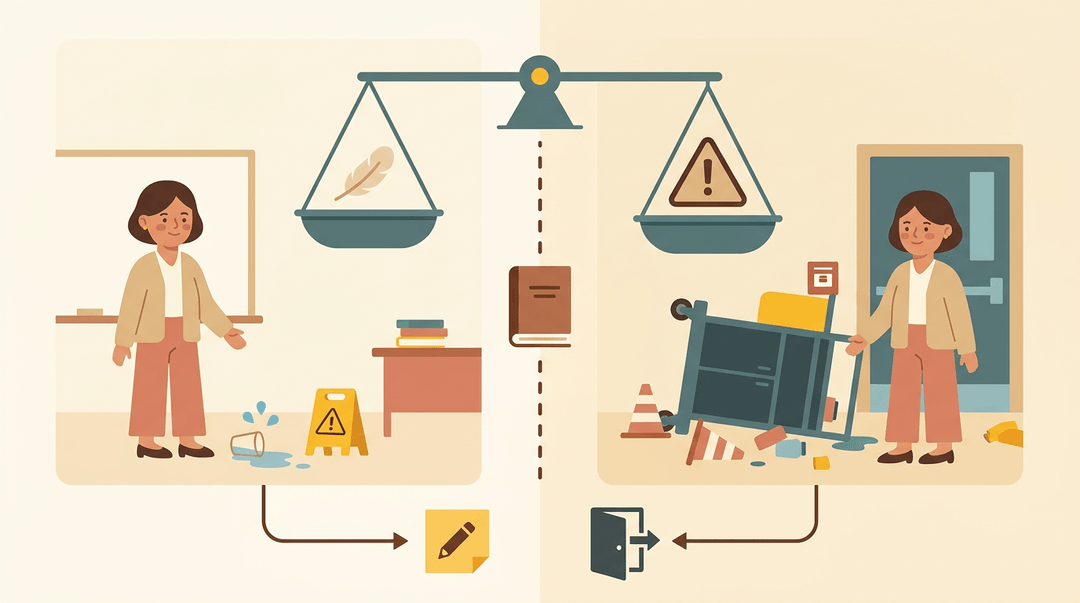
Workplace policies can pair uncompromising behavioral standards with a consistent response, meaning the same rule gets the same handling for every employee. Consider a teacher aide who breaks a safety rule.
The standard stays fixed, but the response isn't always automatic termination. The outcome is proportional to severity, so a minor lapse and a serious one don't land the same way.
Applying Zero Tolerance in Your Classroom
Use this guide to learn exactly what your school's policy requires of you, record incidents so the record holds up, and try every option your policy allows before you escalate.
Know your policy first
Zero tolerance is only fair when you know exactly where the line sits. Before the first incident, confirm:
- Handbook wording: read the actual text, not the staff-meeting summary.
- Mandatory-offense list: find which behaviors trigger automatic consequences.
- Your reporting duties: know who you tell, how soon, and in what form.
If any of these is fuzzy, ask an administrator. Try: "For this offense, do I report it myself, or does it go through you?"
Document every incident
Write the record the same way each time, ideally the same day. Here's a skeleton you can copy:
| Slot | What goes in it |
|---|---|
| Date and time | Exact, including the period or location |
| Students involved | Everyone present, including witnesses |
| Facts | What you saw and heard, nothing more |
| Your response | What you did and who you told |
The facts slot is where records go wrong. Describe what happened, not what you concluded.
- ✅ "Marcus pushed Dani with both hands. Dani stepped back into the lockers."
- ❌ "Marcus was aggressive and out of control again."
The first line describes observable action anyone could verify. The second is a judgment, and it can't be checked.
Keeping the same format for every student and every incident also protects you. Consistent records show you applied the policy evenly.
Know what counts by grade level
Your handbook has the final word, but these are the offenses you'll most often see named at each level.
| Grade band | Offenses to know cold |
|---|---|
| Elementary | Fighting, weapon look-alikes |
| Middle school | Vaping, cyberbullying |
| High school | Drugs, weapons |
Try alternatives before you escalate
When your policy leaves you any room, work through these in order:
- Start with a restorative conversation.
- Say: "What happened, who was affected, and what would make it right?"
- Loop in the behavior support team.
- Share your dated notes so they don't start from scratch.
- Escalate per your written policy.
- Follow the handbook's steps in the order it lists them.
⚠️ Watch out: A restorative conversation never replaces a mandatory report. If the offense is on your automatic list, report it as required, then use the conversation to repair the relationship.
Example: A seventh-grade teacher sees a student vaping near the gym. She checks the handbook, which lists vaping as mandatory, and reports it that day. She records the time, the students present, and what she saw. Later she holds a short restorative conversation with the student, then shares her notes with the behavior support team.
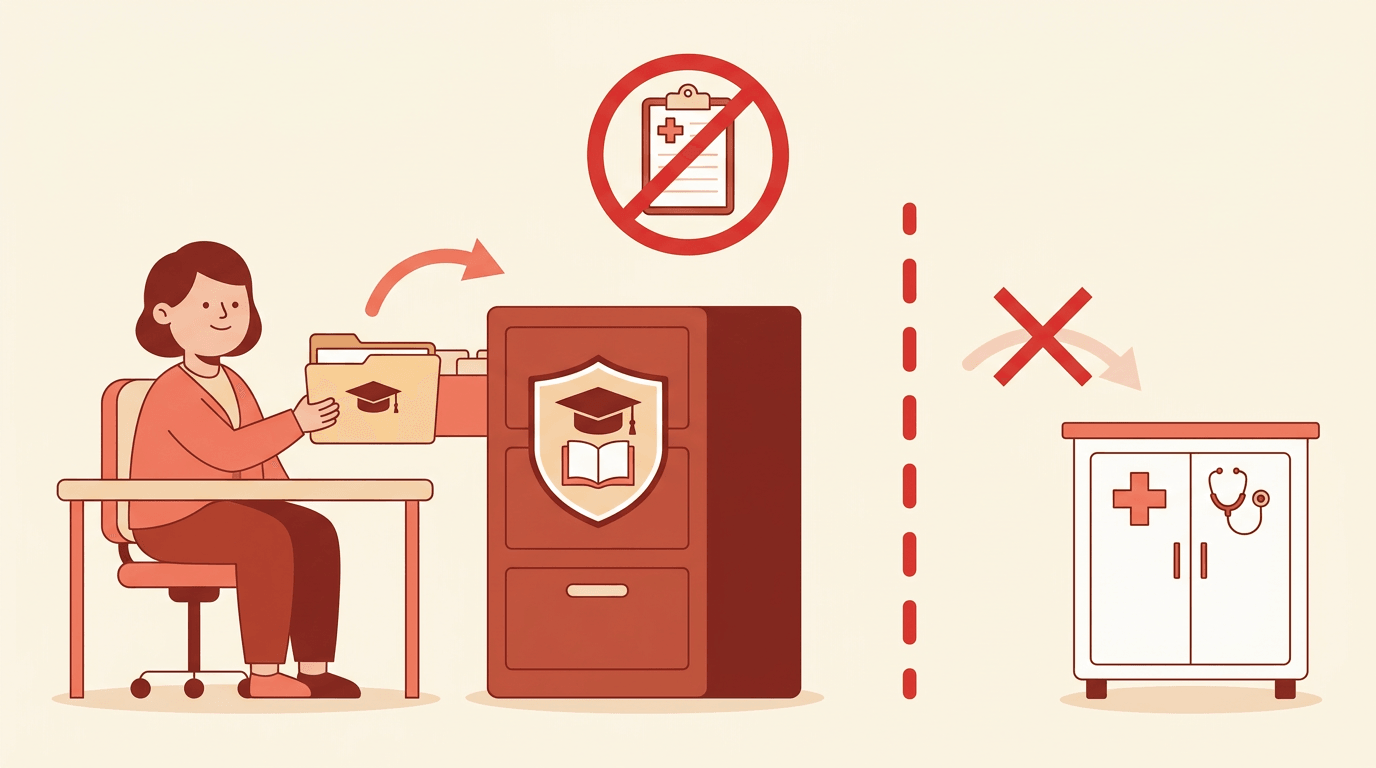
Keep incident notes and attendance patterns together in EMStudio's attendance tracking tools.
Zero Tolerance Policies in Schools
Zero tolerance started as a hard line on serious weapons offenses, but it now reaches far beyond them. Here's what it looks like in schools, who feels it most, and what the evidence says.
The law behind school zero tolerance
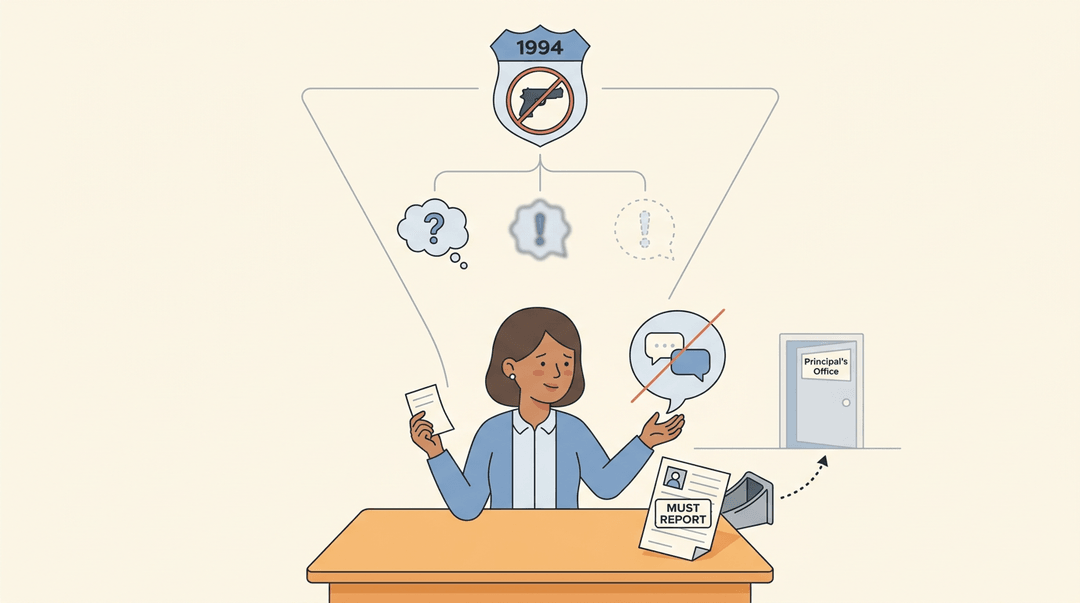
The roots are federal. The Gun-Free Schools Act of 1994 applies to schools that receive federal funds and requires them to expel for at least one year any student found with a firearm on school property.
The policy then expanded to vaguer offenses that depend heavily on interpretation.
It's also worth knowing how the U.S. Department of Education defines zero tolerance, since that definition is the baseline many policies start from. And under many policies, teachers have a reporting obligation.
You may be required to pass incidents to administration even when you'd rather handle something quietly yourself.
The same thinking shows up in zero-tolerance truancy and attendance rules, which can penalize missed days without asking why a student is absent.
Who gets disciplined more often
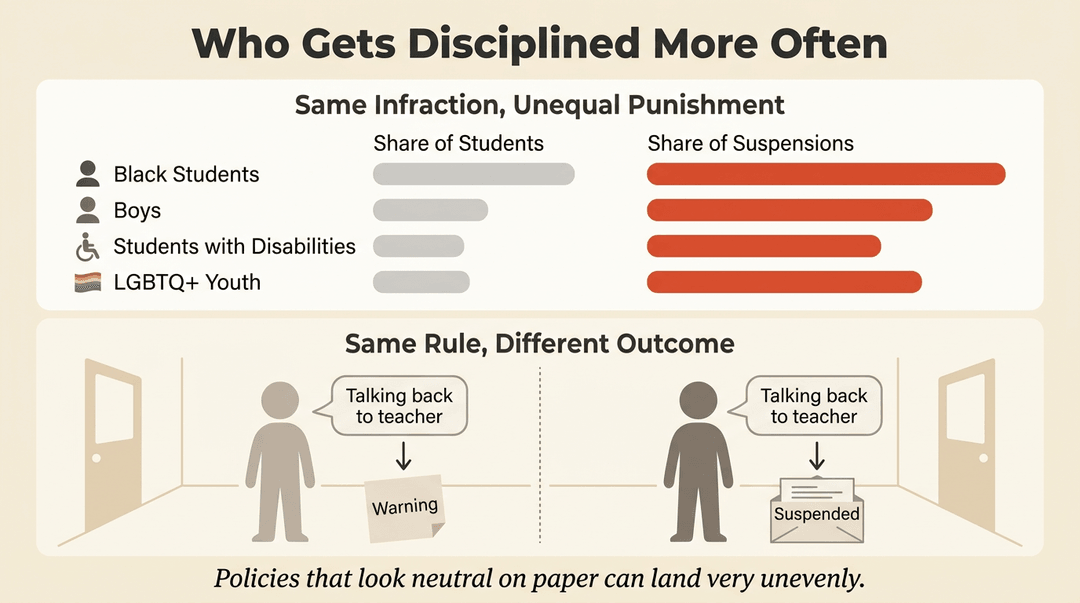
This is where the picture gets hard to look at. A GAO analysis found that Black students, boys, and students with disabilities were disproportionately disciplined through suspensions and expulsions in K-12 public schools.
The Center for Learner Equity reports that students with disabilities continue to experience higher rates of disciplinary practices than their peers.
Disparities also show up for LGBTQ+ youth. Selective enforcement compounds all of this. Consider two students caught talking back to the same teacher in the same hallway. One gets a warning and the other gets suspended. Same rule, different outcome.
Policies that look neutral on paper can land very unevenly.
Does it actually make schools safer?
The evidence is weak. The American Psychological Association review found little to connect zero tolerance policies to safer schools, and it documented negative consequences instead.
One of those consequences is serious: suspension is linked to dropout. The real question isn't whether a policy looks tough. It's whether it makes schools safer, not just quieter on paper.
Police in schools and their impact
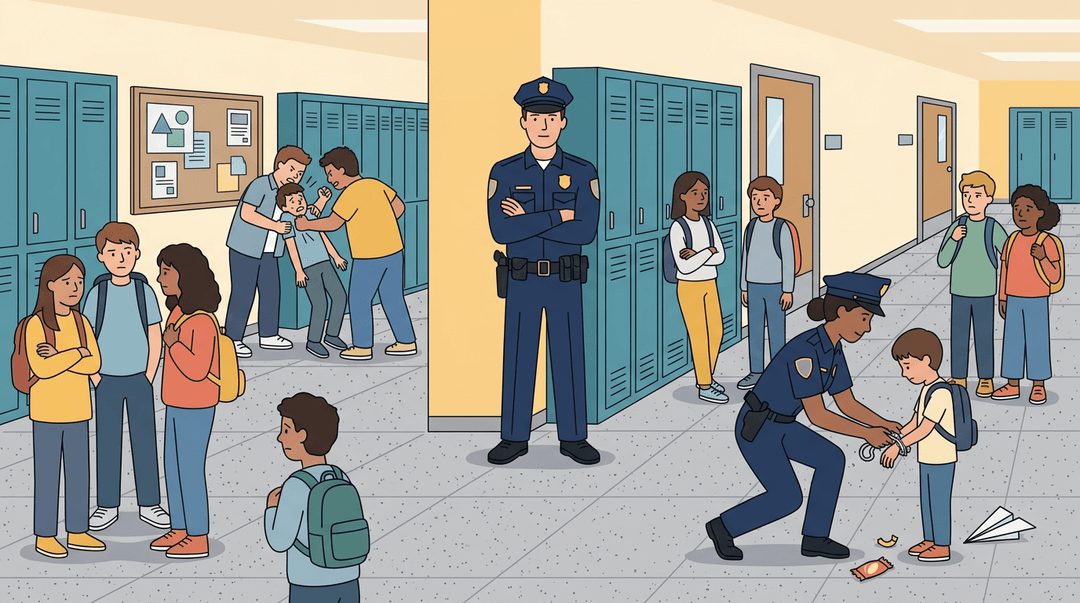
Police presence doesn't prevent shootings. According to the College of Policing, research suggests school-based law enforcement has not had a statistically significant impact on crime overall.
Bullying and crime don't reliably drop when officers are stationed in schools.
Meanwhile, arrests for minor infractions tend to climb, and students can lose trust in the adults meant to keep them safe. That trust is hard to rebuild once it's gone.
Alternatives schools are trying instead
Many districts are testing other approaches:
- Restorative justice practices. Students repair harm through guided conversations rather than automatic removal.
- Positive behavior support. Schools teach and reward expected behavior before problems start.
- Reduced police presence. Schools limit officers' role in routine discipline.
- Improved due process. Students get clear notice of charges and a fair chance to respond.
- Logging incidents for documentation. Keep a dated record of what happened and the steps taken. It protects you and the student.
The goal is discipline that keeps students in class, not discipline that pushes them out.
Where Zero Tolerance Came From
Before zero tolerance described school discipline, it lived in farm fields and food labs.
Where the term first came from
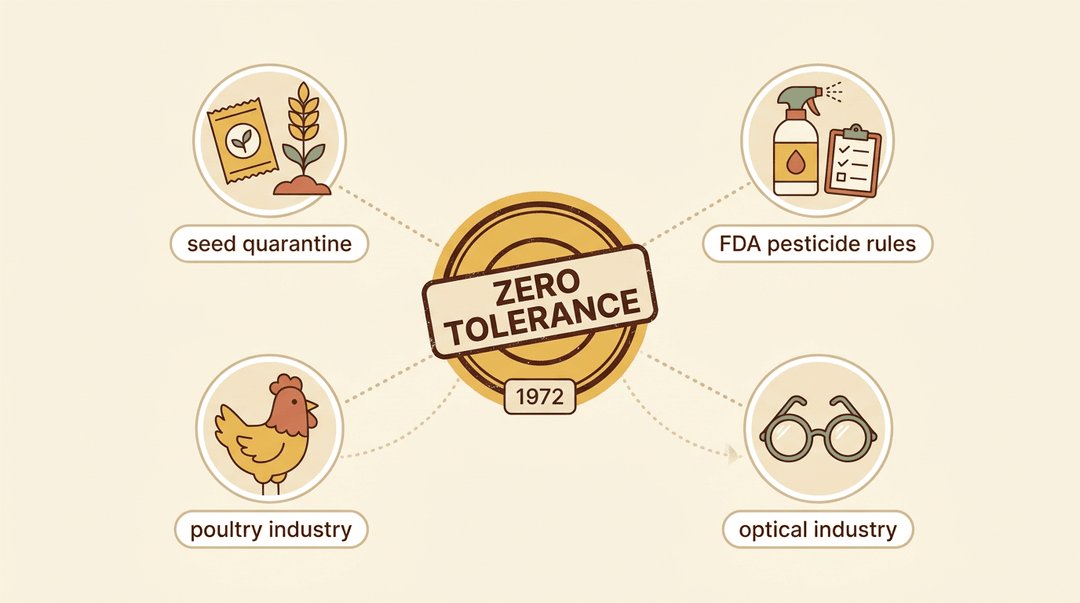
The term first appeared in 1972, but the idea predates its policing use. A research paper on seed-borne pathogens notes that quarantine seed lots are certified under a system that "provides for zero tolerance."
FDA pesticide rules of the 1960s used the concept too, and the Delaney Clause set "a zero-level tolerance for all carcinogenic additives." Poultry and optical industries used the phrase as well.
The broken windows theory connection
New Jersey's 1973 Safe and Clean Neighborhoods Act was an early step. In 1982, James Q. Wilson and George L. Kelling published the article behind the broken windows theory.
Their metaphor held that an unrepaired window signals nobody cares, and disorder invites more crime. The theory popularized the idea of cracking down on small disorders right away.
Consider a teacher who lets one unsigned hall pass slide on Monday, only to find half the class ignoring the rule by Friday. Small signals matter.
Its roots in the war on drugs
The phrase became a slogan in the Reagan and Bush era war on drugs. Policy targeted users rather than suppliers and enforced existing laws strictly. Nothing new had to be passed; the shift was in how those laws were enforced.

Zero Tolerance in Policing and Criminal Justice
Zero tolerance isn't only a school idea. It shows up in policing and criminal justice too, and the evidence behind it is more debated than headlines suggest.
Did broken windows policing cut crime?
Broken windows policing targets minor disorder on the theory that small problems invite bigger ones. New York City's crime decline is the case most often cited, and Giuliani-era policing claims credit enforcement for the drop.
Maguire and Eck tested that claim by controlling for rival causes and found that economic and demographic changes were also relevant to explaining the city's crime trends. Policing was one factor among several. Evidence beats headlines.
How other countries handle drug policy
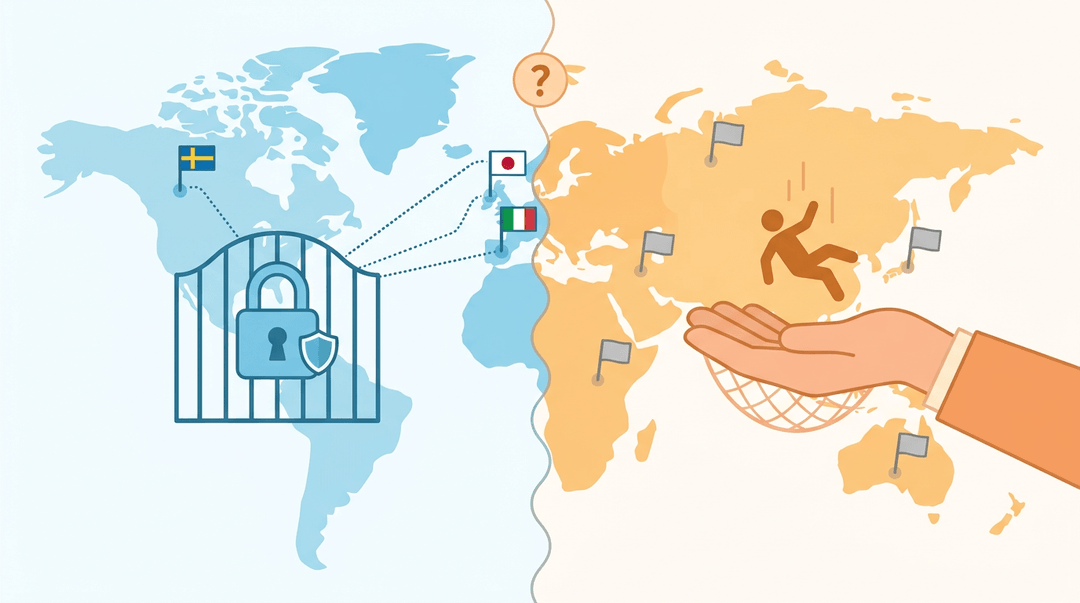
Countries take very different routes. Sweden has pursued a drug-free society as its goal, a clear zero-tolerance aim. Harm reduction takes the opposite approach by focusing on cutting the damage drug use causes rather than eliminating use.
The UN's endorsement of zero-tolerance approaches is disputed, and the label itself has been applied to drug policies in Japan, Italy, and others.
Zero tolerance drunk driving laws
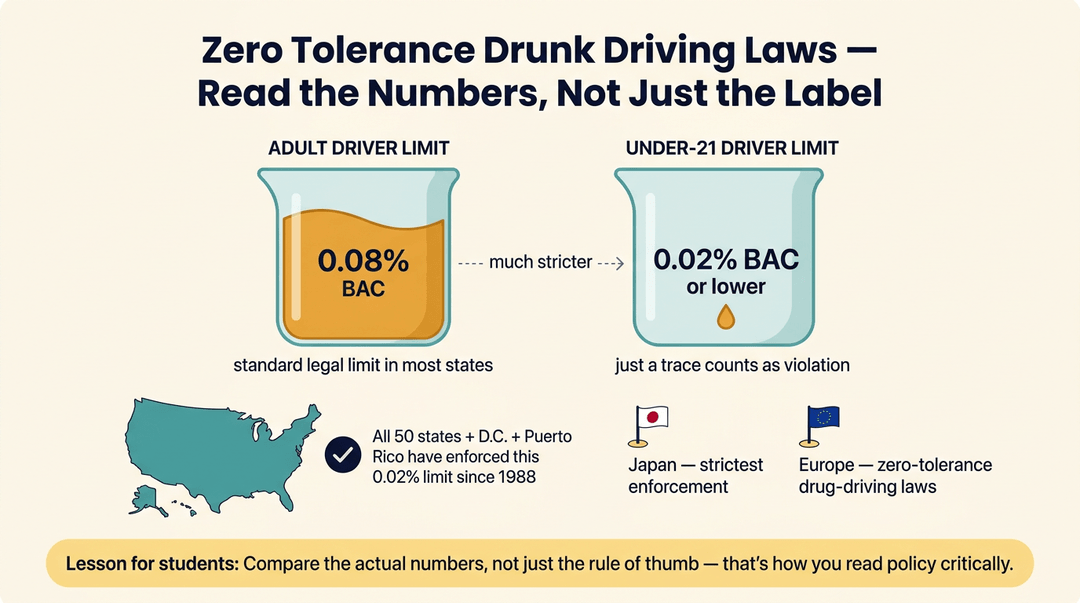
This is where zero tolerance is easiest to see. Some jurisdictions set especially low blood-alcohol limits for drivers under 21.
According to Teen Driver Source, all 50 states and the District of Columbia have set a limit of 0.02% BAC or lower for these drivers since 1988. Puerto Rico also sets a 0.02% limit.
European countries have zero-tolerance drug-driving laws, and Japan stands out for strict enforcement.
Consider a driver's ed teacher who asks students to compare these limits. Students who check the numbers rather than the rule of thumb learn to read policy critically, a skill that carries well beyond the car.
Zero Tolerance in Immigration Enforcement
Few zero-tolerance policies have reached classrooms as directly as this one. Here's what it looked like, and what researchers say it did.
The 2018 policy and family separations
On April 6, 2018, Attorney General Jeff Sessions ordered U.S. Attorney's offices along the Southwest border to adopt a new “zero-tolerance policy” for improper entry, as a conference paper on civil rights and immigration describes.
Adults who crossed illegally faced mass criminal prosecution, and many children were separated from the parents or caregivers they arrived with.
According to the ACLU's family separation data, the government later told a court that at least 2,654 children were separated. An executive order later halted the separations.
Think of a second-grade teacher whose student suddenly stops showing up, with no explanation from the family. Teachers often feel these changes first, long before a policy is discussed at a staff meeting.

Operation Streamline set the precedent
Zero tolerance didn't start in 2018. Operation Streamline began in the Border Patrol's Del Rio, Texas, sector in 2005. As Migration Policy Institute research shows, it later expanded to Yuma, Laredo, Tucson, and the Rio Grande Valley.
Prosecutions were already climbing before 2018, and the program set the template the later policy would follow. Parents were rarely the ones prosecuted under the earlier program.
Does it actually deter migration?
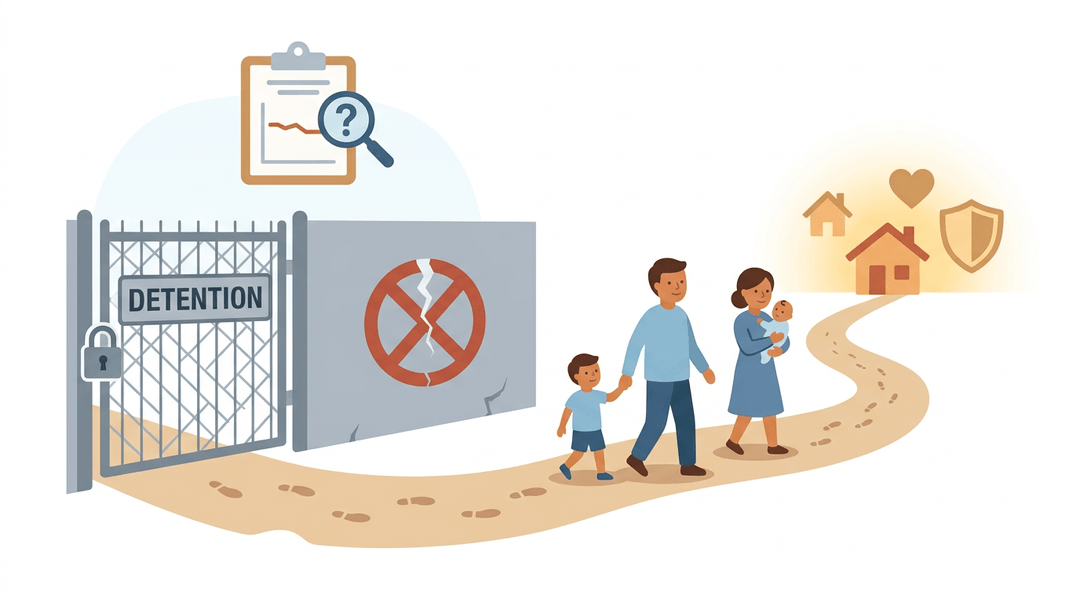
This is where supporters' claims run into trouble. The Vera Institute notes that the federal government's own data shows detention does not deter migration. A study in In Harm's Way concluded these programs did not have a strong deterrent effect.
Instead, family reunification and asylum concerns shaped migration decisions. Oversight reviewers have also found the available data insufficient to prove deterrence. Asylum seekers were penalized along with everyone else.
The costs and human rights concerns
Critics raise four main concerns:
- High incarceration costs. Detaining and prosecuting large numbers of people is expensive.
- Due process shortcuts. Documented shortcuts raise questions about fair hearings.
- Conflicts with international refugee law. Critics argue the approach doesn't meet those obligations.
- Diverted resources. Staff and courts time spent on entry cases is time not spent on serious crime.
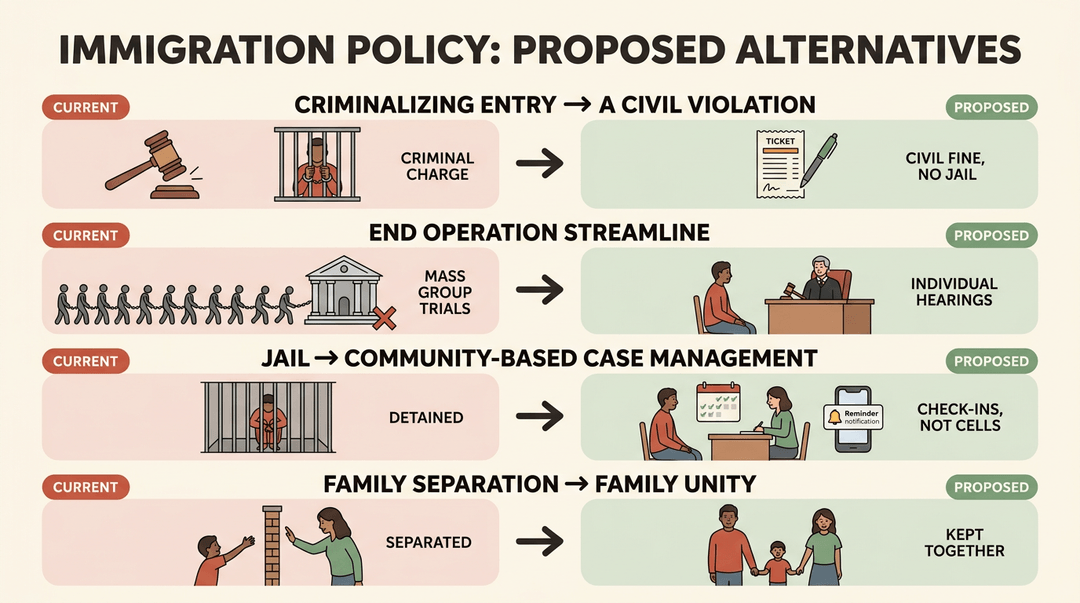
Alternatives proposed to current policy
Reformers have proposed a different path:
- Treat entry as a civil violation rather than a criminal offense.
- End Operation Streamline.
- Use community-based case management to keep people connected to their cases without jail.
- Protect family unity so children aren't separated from their parents.
Zero Tolerance Policies in the Workplace
A zero tolerance policy at work follows the same logic as in schools: certain conduct triggers a set response, no matter the circumstances. Here's how employers use these policies, and what you can take from them if you lead a team or a school office.
Where workplaces commonly apply it
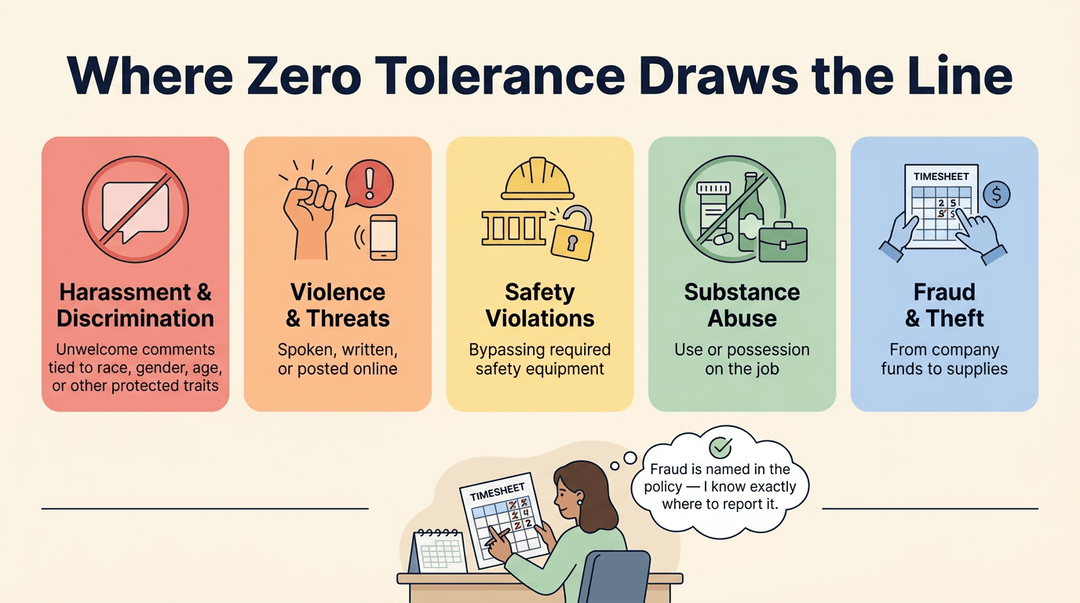
Most zero tolerance policies focus on a short list of serious conduct:
- Harassment and discrimination, including unwelcome behavior tied to a protected characteristic
- Workplace violence and threats, whether spoken, written, or posted online
- Safety violations, such as bypassing required safety equipment
- Substance abuse, including use or possession on the job
- Fraud and theft, from company funds to supplies
Consider a district payroll clerk who notices a colleague altering timesheets. Because fraud is named in a clear policy, she knows exactly where to report it and doesn't have to wonder whether it counts.
How to put a policy in place
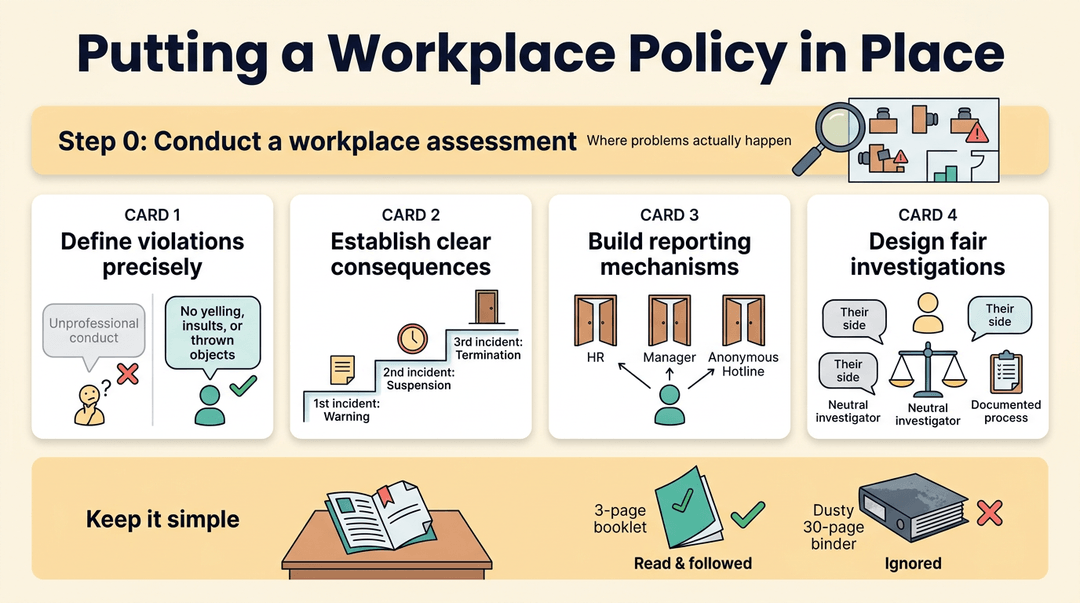
Start by conducting a workplace assessment to see where problems actually happen. Then:
- Define violations precisely. A vague phrase like 'unprofessional conduct' invites argument. A written description of what's prohibited doesn't.
- Establish clear consequences so everyone knows the response before an incident occurs.
- Build reporting mechanisms that are easy to find, with more than one route in case the usual contact is involved.
- Design fair investigations with a documented process, a neutral investigator, and a chance for everyone involved to share their side.
Keep it simple. A three-page policy that people read gets followed far more often than a thirty-page one that sits in a drawer.
Why employers use these policies
Zero tolerance gives people something firm to stand on. It creates clear boundaries, shows what the organization values, and can provide legal protection by proving the employer acted on known rules.
It also deters misconduct, because people behave differently when the outcome is predictable. Finally, it ensures consistent treatment. Consistent doesn't mean identical, though: the same rule and the same process, with room for context.
The risks of being too rigid
Firm rules can backfire when they're applied without judgment. The main danger is inflexibility. A rule written for a serious threat can overreach when it's used for a single heated argument.
Rigid rules also create inconsistent application across ranks, where frontline staff face harsh outcomes while managers quietly get a pass. That gap erodes trust fast.
Fear is the other problem. Picture a department chair who hears that a teacher's small mistake could cost a coworker their job. Reporting drops, and you lose the early warnings that prevent bigger problems.
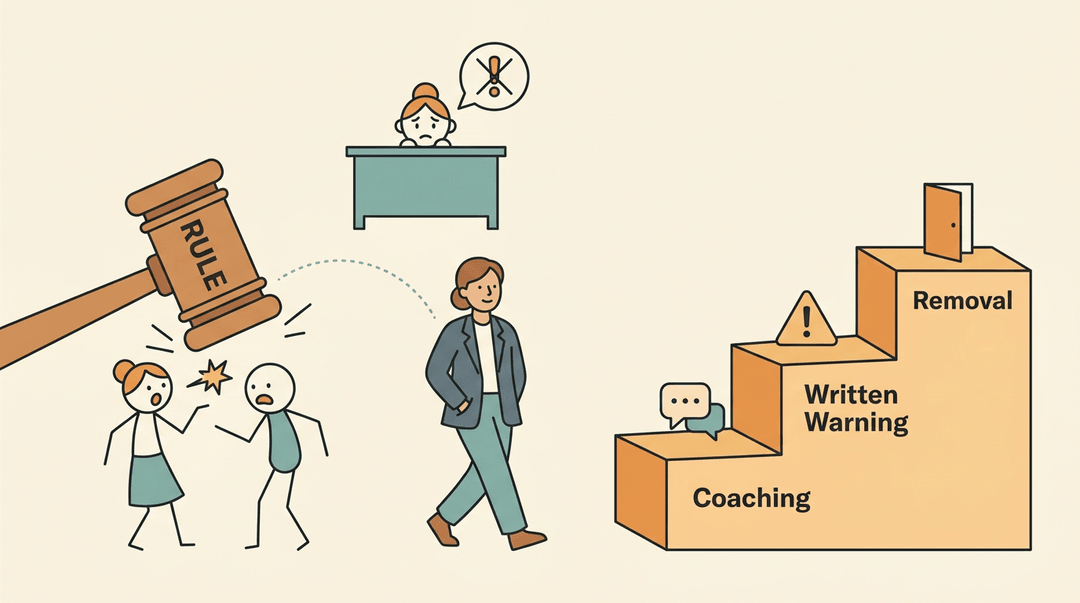
The fix is to save the hardest line for the most serious conduct and use progressive discipline for everything else: a graduated set of responses like coaching, then a written warning, then removal if the behavior continues.
Rolling out policy across countries
If your network or company spans borders, one policy won't land the same everywhere. Employment laws vary by country, so check local requirements before you finalize anything.
In some places, a works council (an employee representative body that must be consulted on workplace rules) has to approve changes first.
Communication matters just as much. A phrase that sounds direct in one culture may feel harsh in another, so test your wording with local staff.
Translate materials into the languages your people actually use, and have a fluent reader review them so the meaning survives the translation.
Criticisms and the Effectiveness Debate
Zero tolerance has its defenders, but it also draws serious criticism. Here's where the debate stands.
No room for context or judgment
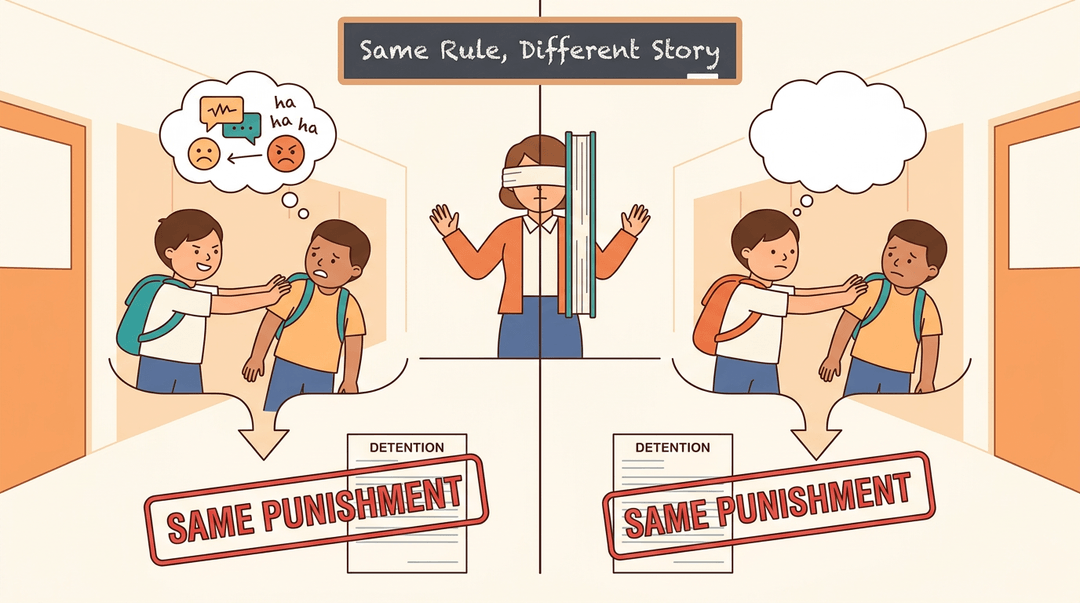
The core complaint is that these policies remove discretion, the ability to weigh context before deciding on a consequence. The same punishment applies whatever the circumstances. Picture two students who each push a classmate in the hallway.
One was taunted for weeks; the other did it for no reason. Under a strict policy, both face identical consequences. A teacher who hears both sides first can respond to what really happened.
Critics also describe a sheep-for-a-lamb effect: when a minor offense brings a major penalty, students may figure they might as well push harder. Due process matters too, since students need a fair way to explain their side and appeal.
Does the evidence back it up?
The research is less encouraging than many assume. RAND notes that aggressive strategies targeting individual disorderly behaviors "do not generate significant crime reductions."
A policy can feel tough and decisive while producing little measurable change. So ask what a rule actually changes, not just how firm it sounds.
Who bears the brunt of it
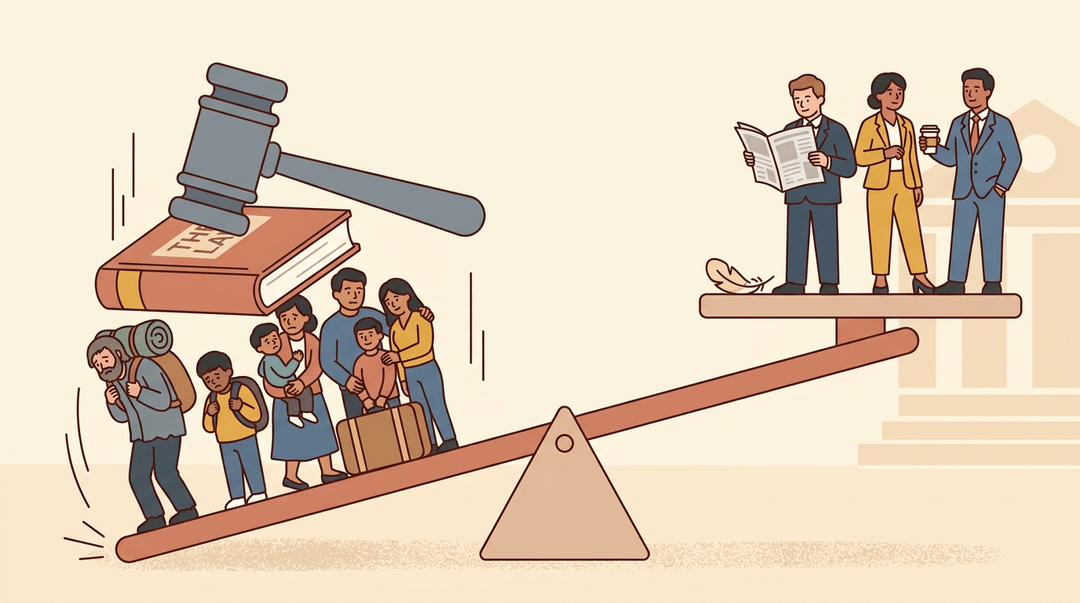
Enforcement rarely lands evenly. Poor and homeless people are often the ones targeted by strict enforcement. In schools, minority students are disciplined more than their peers.
Immigrants with no criminal record can still be prosecuted under strict rules. When a policy runs without discretion, its weight falls on the people least able to absorb it.
Why people hesitate to report at all
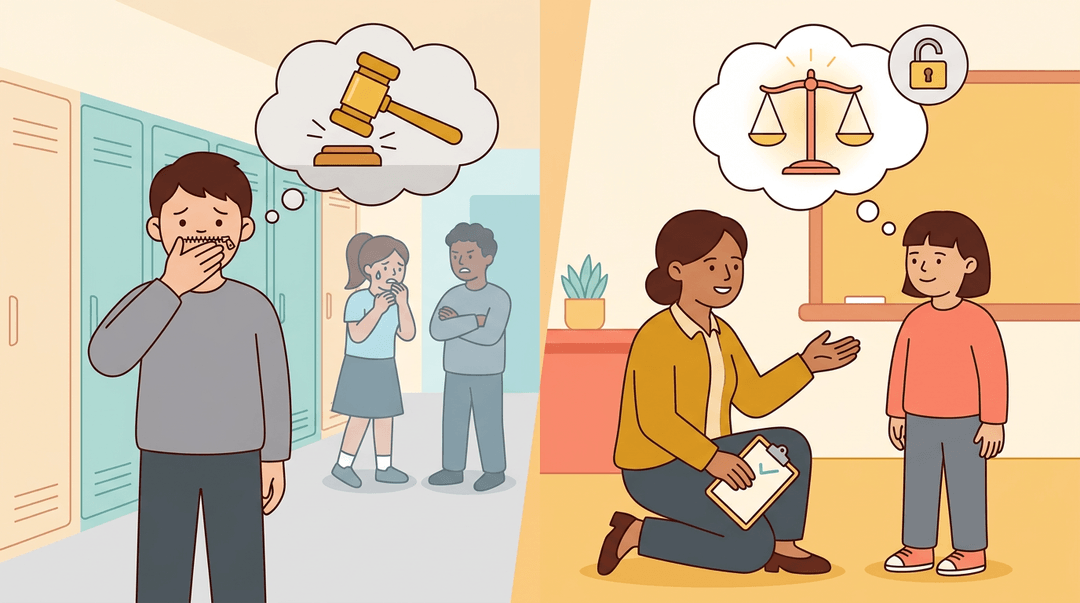
Harsh penalties can backfire by silencing the people who see a problem first. When any infraction brings a severe consequence, students may stay quiet because a friend could be punished hard. Bystanders often hesitate to step in for the same reason.
In workplaces, employees may fear retaliation for speaking up, so problems stay hidden until they're serious. Make reporting feel safe:
- explain the process,
- separate telling an adult from being punished,
- and let students know speaking up is the right call.
Zero tolerance is clear in principle, but its results depend on how consistently and fairly it's applied. In your classroom, that means knowing the rule, documenting what happens, and leaving room for judgment when a student's situation calls for it.
Ready to keep better records of attendance and behavior patterns? Check out our Attendance Tracking feature page to mark attendance quickly and spot patterns across classes over time.
References
- Mexican Immigrants Face Threats to Civil Rights and ... — ccis.ucsd.edu (2025)
- Impaired Driving Laws — teendriversource.research.chop.edu
- Disorder policing to reduce crime: A systematic review — pmc.ncbi.nlm.nih.gov
- ED590845 — files.eric.ed.gov
- New techniques for detection and identification of seed-borne pathogens in relation to international seed exchange and the zero tolerance concept — cabdirect.org (1990)
- Working Out the Bugs in Pesticide Regulation: A Survey of the Joint Efforts of the EPA and FDA — nrs.harvard.edu (1999)
- In Harm's Way: Family Separation, Immigration Enforcement Programs and Security on the US-Mexico Border — journals.sagepub.com (2018)
- The Effects of Gun-Free Zones — rand.org (2026)
- Broken Windows Theory — baltimorepolicemuseum.com
- Key Trends in Special Education in Public Schools (2020-21) — centerforlearnerequity.org (2025)
- School-based law enforcement — college.police.uk (2025)
- Arrested on Entry: Operation Streamline and the Prosecution of Immigration Crimes — migrationpolicy.org
- The Truth About Immigration Detention in the United States — vera.org (2025)
- _atlantic_monthly-broken_windows — manhattan-institute.org
- School Suspension: Consequences and Alternatives — rmc.org
- Breaking Schools’ Rules — csgjusticecenter.org
- School Police Prevent Some Violence, But Not Shootings, Research Finds — edweek.org
- Family Separation By the Numbers — aclu.org
- Zero Tolerance and Aggressive Policing (And Why To Avoid It) In Depth — rand.org
Frequently asked questions
What is the meaning of zero tolerance policy?
A zero tolerance policy is a rule that requires full enforcement and a predetermined response whenever a specified rule is broken. It generally leaves little or no room to consider intent, context, or an individual's history.
What is an example of a zero tolerance policy?
A school that automatically suspends any student found with a weapon is using a zero tolerance policy. The same preset consequence applies regardless of the student's circumstances or reason for having it.
Does zero tolerance policy mean termination?
No. Zero tolerance does not always mean termination, especially in the workplace. It means the rule is enforced consistently, while the consequence may range from reporting or a warning to suspension or termination depending on the policy and seriousness of the conduct.