What Is Student Development Theory and Why Does It Matter?

Jump to section
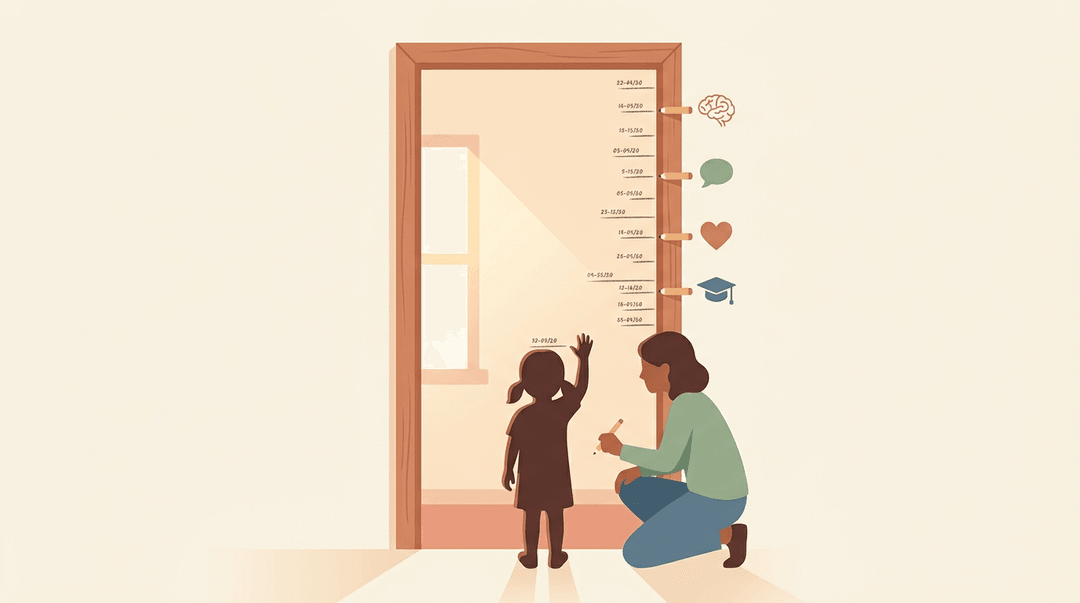
Think of the pencil marks on a doorframe, tracking a child's height year after year. Each mark tells a story of growth you can't rush, only support. Students grow the same way, just not in inches.
That's the heart of student development theory: a set of frameworks explaining how learners grow cognitively, socially, and emotionally as they move through school and beyond.
It's more useful than ever for teachers trying to meet students where they actually are.
In this post, we'll walk through the major theories, the names behind them, and how to turn each stage into a real classroom management plan.
What Is Student Development Theory
Ask any veteran teacher what a student needs to grow, and academics is only part of the answer.
Student development theory is the collection of frameworks that explain how students grow across their whole selves: physically, cognitively, and socially, not just academically.
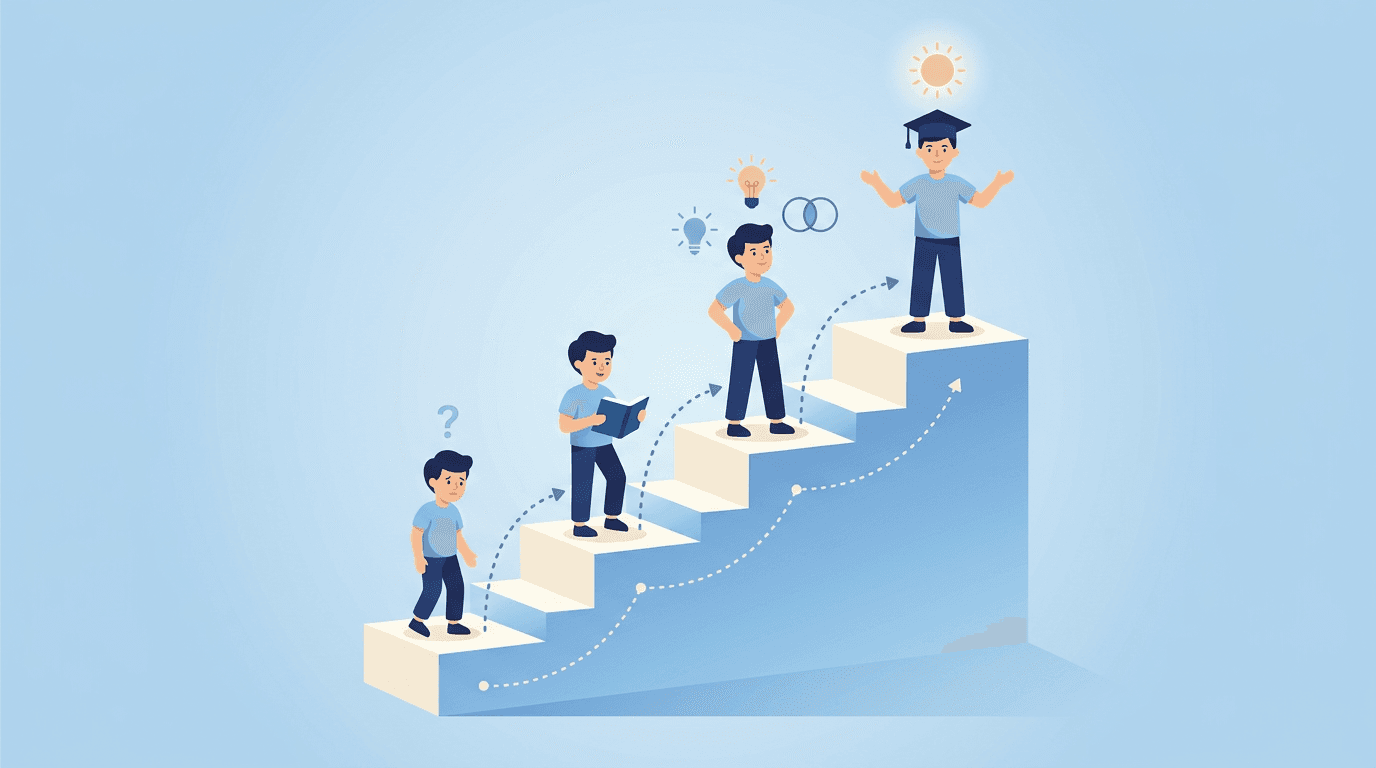
It's not one single theory but a family of related ones, and each traces how that growth gets more complex over time, moving from simple, black-and-white thinking toward more nuanced, independent judgment.
What these theories aim to achieve
At its core, this body of work exists to help colleges, and by extension teachers at every level, equip well-rounded adults, not just credentialed ones.
That means finding the balance between challenge and support: pushing students past what's comfortable while making sure they don't fall through the cracks. It also means supporting students beyond academics alone.
As researcher M. Walker puts it, student development is both a theory base and a philosophy about the purposes of higher education, aimed squarely at improving students' retention and persistence.

Where student development theory came from
The field grew out of the old in loco parentis tradition, where colleges acted "in place of a parent" and closely governed student life.
As that model faded, student services shifted from simple oversight to genuine development, drawing heavily on psychology and sociology to understand how young adults actually grow.
That shift rests on a basic assumption: students aren't finished products when they arrive on campus. They're still developing, and colleges (and their teachers) can shape how that happens.
Why colleges can't ignore this
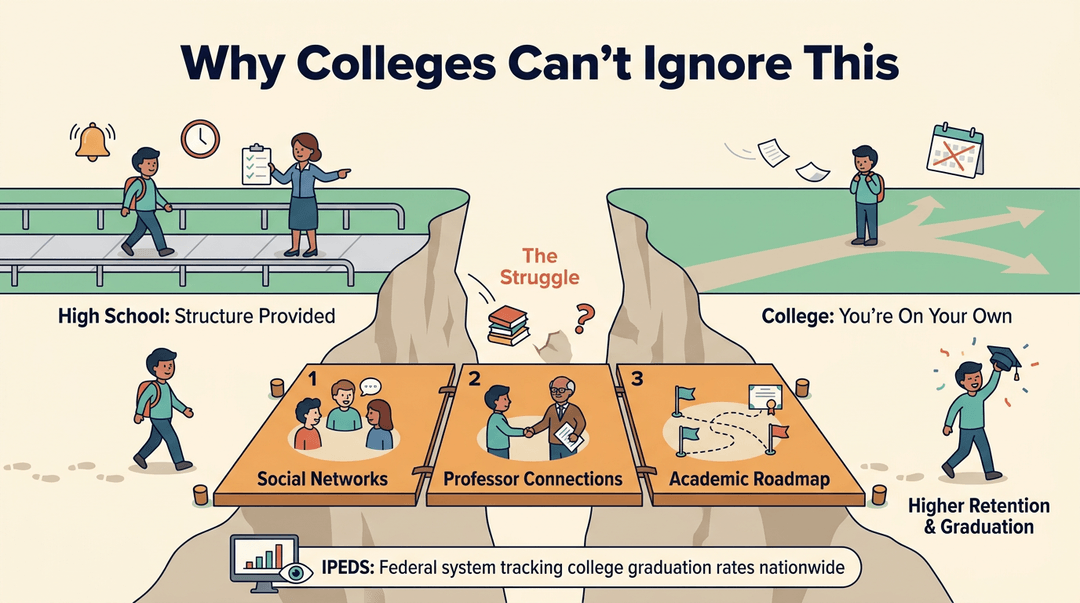
Plenty of first-year students struggle with the jump from high school structure to college independence, and the numbers back that up.
Colleges invest heavily in advising and mentoring because, as a recent LSU Online article notes, these programs help students:
- Find social networks
- Connect with professors
- Structure their academic paths
All to improve retention and graduation rates. The federal government tracks these outcomes too: the Integrated Postsecondary Education Data System, or IPEDS, monitors institution-level graduation rates nationwide.
That kind of scrutiny puts real institutional responsibility on colleges to get this right.
The Main Types of Development Theories
Ask ten researchers to define student development theory and you'll get slightly different lists, but most of it sorts into four core families:
- how students build identity
- how they make meaning
- how their environment shapes them
- how they grow into their fullest selves
Learning theory conversations often reference seven broader strands, but for classroom purposes, these four families (plus two practical add-ons below) do the heavy lifting.
Theories about identity and life stages
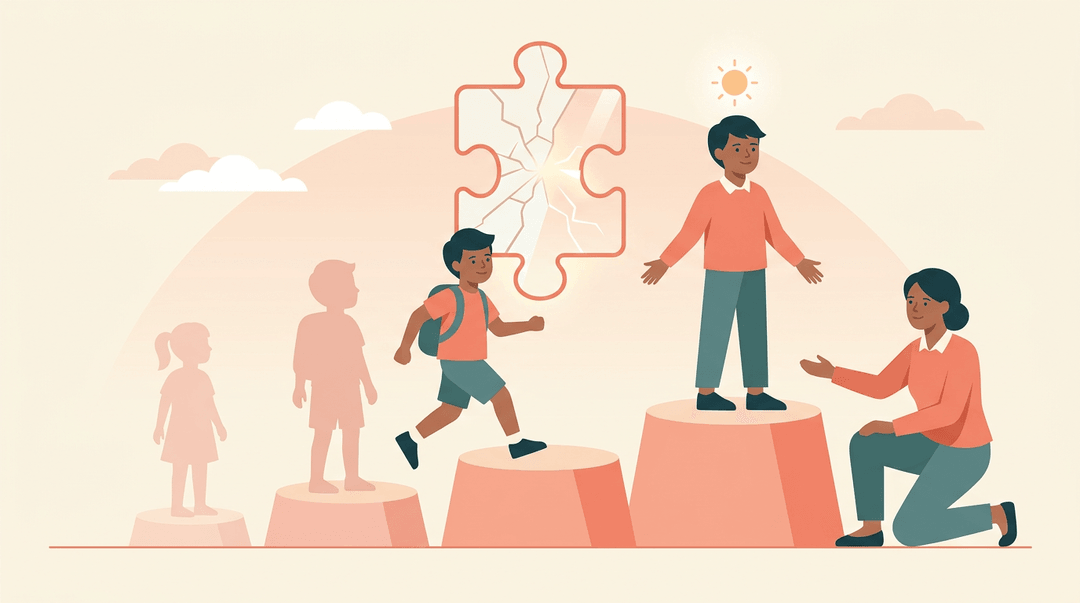
This family centers on self-reflection: how a student comes to understand who they are and where they belong.
Growth here often comes from conflict, a student wrestling with a challenge to their assumptions and coming out the other side with a clearer sense of self.
These theories describe that shift as a series of life-stage progressions, each one building on the last.
They show up most in identity and diversity discussions, where understanding a student's stage helps you meet them where they are rather than where you assume they should be.
How students make meaning and moral choices
This second family isn't about what a student knows. It's about how they come to know it. These theories track how students interpret experience, piece meaning together from it, and grow more sophisticated in their moral reasoning over time.
A ninth grader and a graduating senior might land on the same answer to a classroom dilemma, but the thinking that gets them there looks completely different, and that process, not the content, is the real subject here.
How campus environment shapes behavior
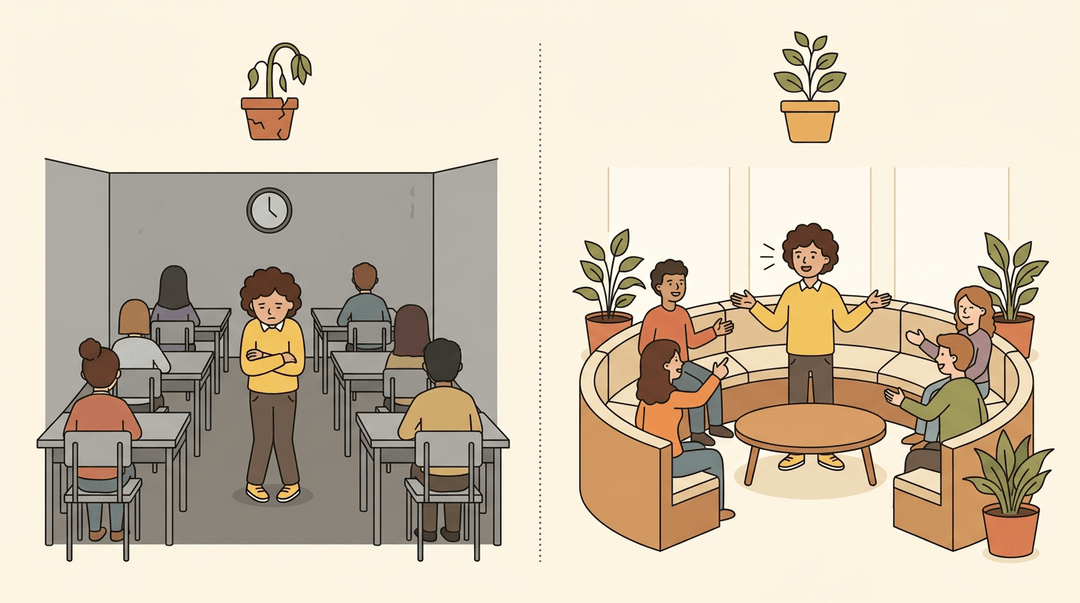
Here the focus shifts from the student alone to the interaction between student and environment. Behavior, in this view, is a social function: it changes depending on the setting a student is placed in.
Career-planning programs draw heavily on this family, matching students to environments where they're likely to thrive, and so do community-building programs aimed at shaping a healthier campus or classroom culture.
Theories focused on self-awareness and growth
This family leans humanistic. It's built around freedom, self-disclosure, and self-actualization: the idea that students grow best when they can be honest about who they are and choose their own direction.
You'll see it most in counseling contexts and in healthy-living program design, where the goal isn't compliance but genuine self-awareness.
Personality-based theories of student fit
A fifth, more practical layer treats personality as a worldview: how a student's energy and interests orient them toward certain careers, majors, or activities.
Myers-Briggs style assessments fall here, sorting students by orientation rather than by stage or environment, better suited to vocational fit conversations than deep identity work.

Step-by-step models and newer waves of theory
Some frameworks lay out step-by-step guiding models: clear stages a student moves through in order.
Others represent a newer wave, critical and post-structural frameworks that pay closer attention to how a student's social identity shifts over time and across context.
Researchers often describe this as a first, second, and third wave evolution, each one adding nuance the last one missed.
Every one of these families has real limits. They're broad generalizations built from limited samples, and no student fits a stage perfectly. Treat them as a lens, not a verdict.
Key Theorists Behind Student Development Theory
Student development theory didn't come from one voice.
It grew out of decades of researchers watching how people change as they move through school, and each name below zeroed in on a different piece of that change: identity, morality, intellect, motivation.
Together, they give you a fuller map of what's actually happening in your classroom, not just what a lesson plan assumes should happen.
Chickering's seven vectors of identity
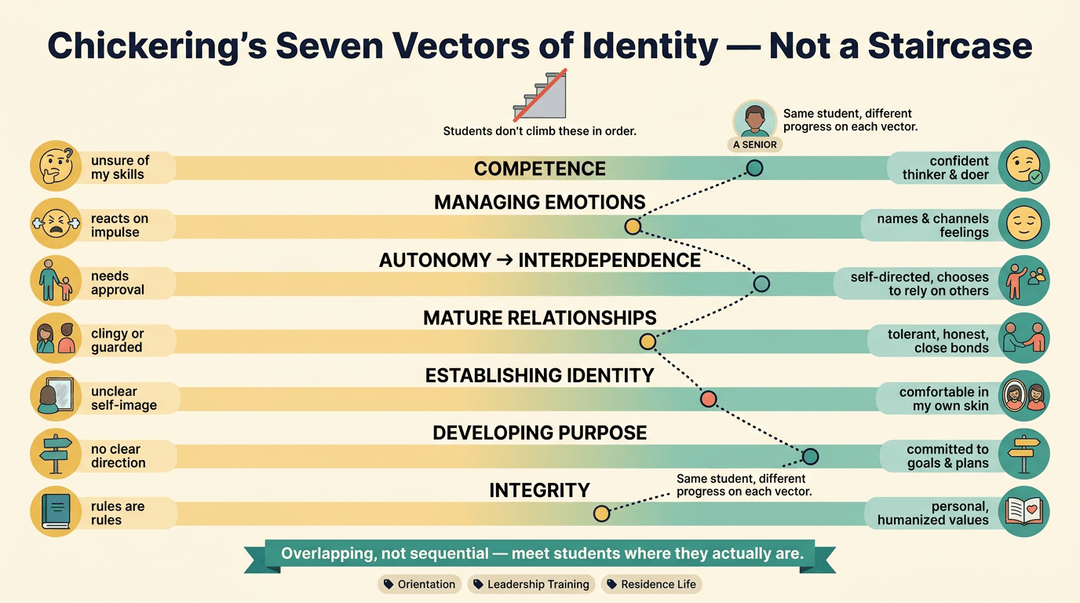
Arthur Chickering broke identity growth into seven vectors stretching from developing competence to establishing integrity, with stops along the way for managing emotions, moving toward autonomy, and developing purpose.
Students don't move through these in order. A senior might have a firm sense of purpose but still be sorting out healthy relationships.
That's why the vectors are overlapping and non-linear, and why student affairs offices use them to design orientation, leadership training, and residence programming that meets students where they actually are.
Perry's stages of intellectual growth
William Perry traced how thinking matures from dualism, where every question has one right answer, toward relativism, where students recognize multiple valid views and weigh evidence themselves.
Most college students spend real time in that relativistic middle stretch before settling into commitment: choosing a position and standing behind it while still respecting other views.
For teaching, Perry's stages are a nudge to design assignments that ask why, not just what, especially as students grow more independent in how they think.
Kohlberg's stages of moral reasoning
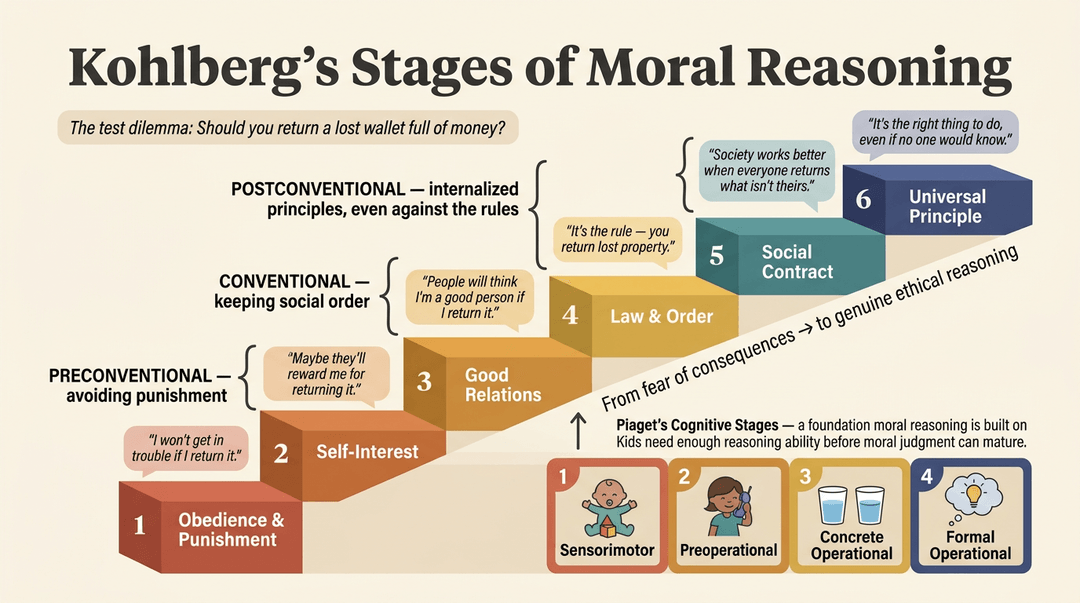
Lawrence Kohlberg mapped moral judgment across three levels: preconventional (avoiding punishment), conventional (keeping social order), and postconventional (following internalized principles, even against the rules).
Each level splits into two stages, six total, tracking a shift from consequence-based thinking to genuine ethical reasoning.
Kohlberg's work often pairs with Jean Piaget's four stages of cognitive development (sensorimotor, preoperational, concrete operational, formal operational), since a student needs a certain level of reasoning ability before that moral judgment can mature.
Sanford's balance of challenge and support
Nevitt Sanford argued that growth depends on getting the ratio right between challenge and support. A student who's ready, challenged just enough, and supported enough to handle it, grows.
Push too hard without a safety net, or protect too much, and students stall or slide back to safer, earlier ways of coping.
Built originally for college-age students, that balance shows up just as often with adult learners, who need real rigor paired with real scaffolding to keep moving forward.
Schlossberg's theory of transitions and belonging
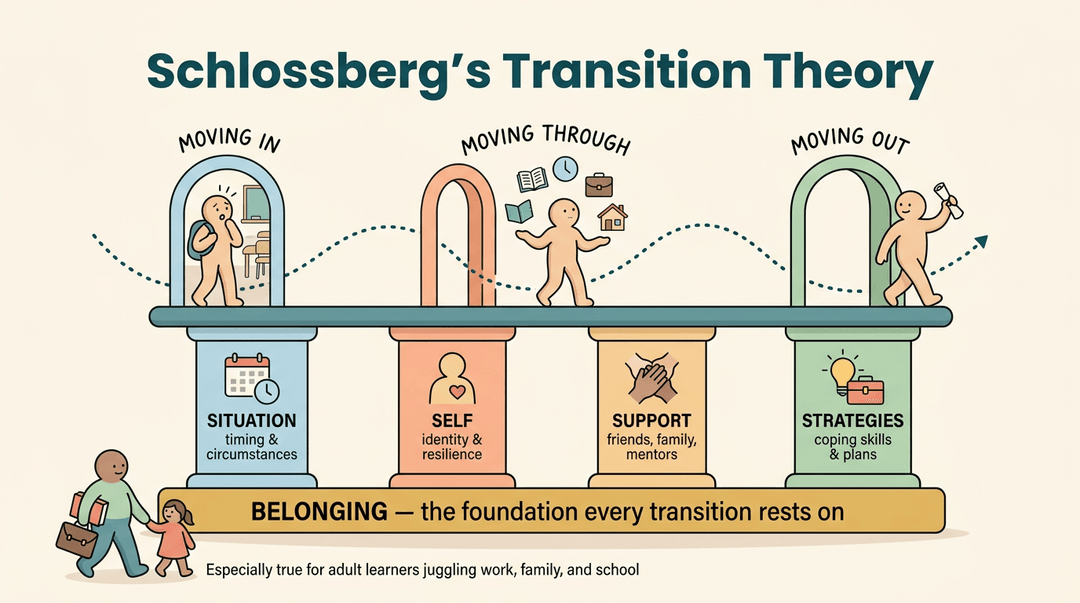
Nancy Schlossberg framed every transition, starting a new school, changing grade levels, returning to education as an adult, as a process of moving in, moving through, and moving out.
How well someone handles it depends on four coping resources, often called the 4 S's: situation, self, support, and strategies.
Schlossberg also treated a sense of belonging as central to a successful transition, which is why her framework gets applied so often to nontraditional students juggling jobs, family, and a return to the classroom.
Kolb's cycle of experiential learning
David Kolb described learning as a repeating cycle: concrete experience, then reflective observation, then abstract conceptualization, then active experimentation, which feeds right back into a new concrete experience.
From that cycle, Kolb identified four learning styles: the accommodator, the diverger, the assimilator, and the converger. The model isn't just descriptive.
It builds self-awareness: once a student recognizes their own style, they can name why certain lessons click and others don't.
Maslow's hierarchy and student motivation
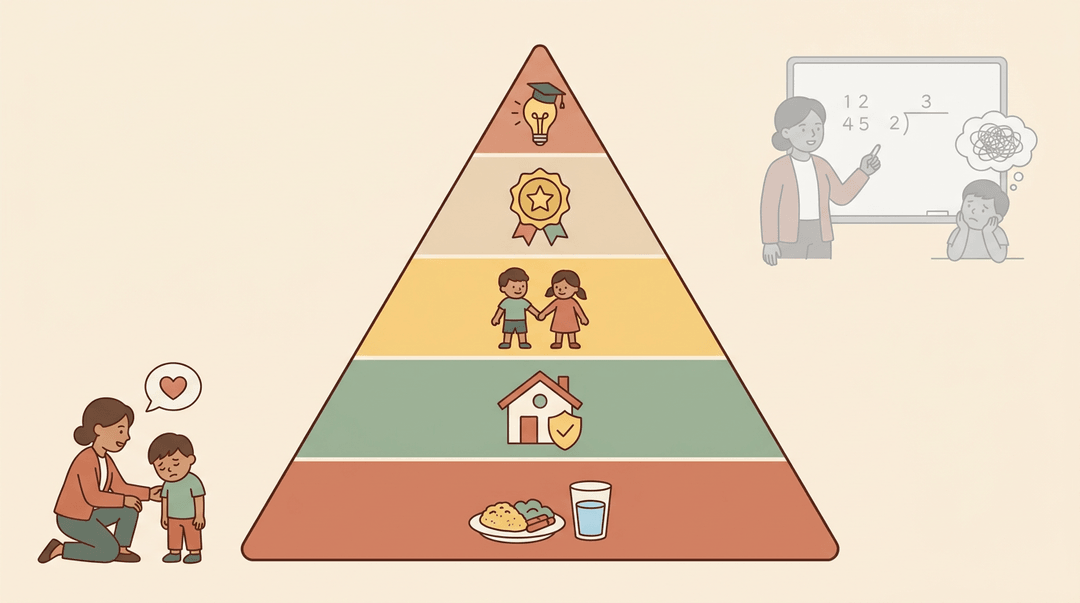
Abraham Maslow's hierarchy starts with basic needs, food, safety, belonging, and only climbs toward higher-level needs like esteem and self-actualization once those basics are met.
A student who's hungry or feels unsafe isn't in a position to chase academic growth, no matter how strong the lesson is.
Residence life programs train resident advisors on Maslow's hierarchy to spot unmet basic needs before pushing personal growth, and the same logic sits behind a simple classroom morning meeting: check in on how students are doing before asking them to focus on long division.
Other theorists worth knowing
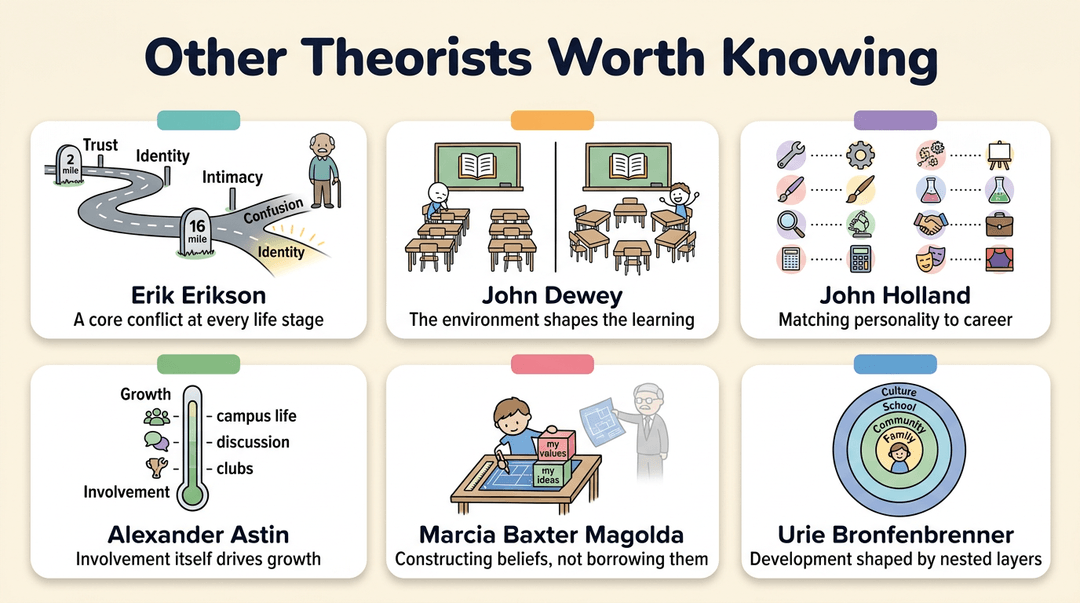
A handful of other names round out the field. Erik Erikson mapped psychosocial stages across the whole lifespan, each centered on a core conflict like identity versus confusion.
John Dewey argued that the environment students learn in shapes the learning itself, not just the content delivered inside it. John Holland's vocational choice theory matches personality types to career paths, informing school counseling.
Alexander Astin's theory of student involvement holds that the more physically and psychologically engaged a student is, in clubs, discussions, campus life, the more they grow and learn: involvement itself is the mechanism, not a side effect.
Marcia Baxter Magolda's self-authorship describes students learning to construct their own beliefs rather than borrowing them from authority.
And Urie Bronfenbrenner's ecological systems theory reminds you that a student's development is shaped by nested layers, family, school, community, culture, not by the classroom alone.
Turn Theory into a Classroom Management Plan
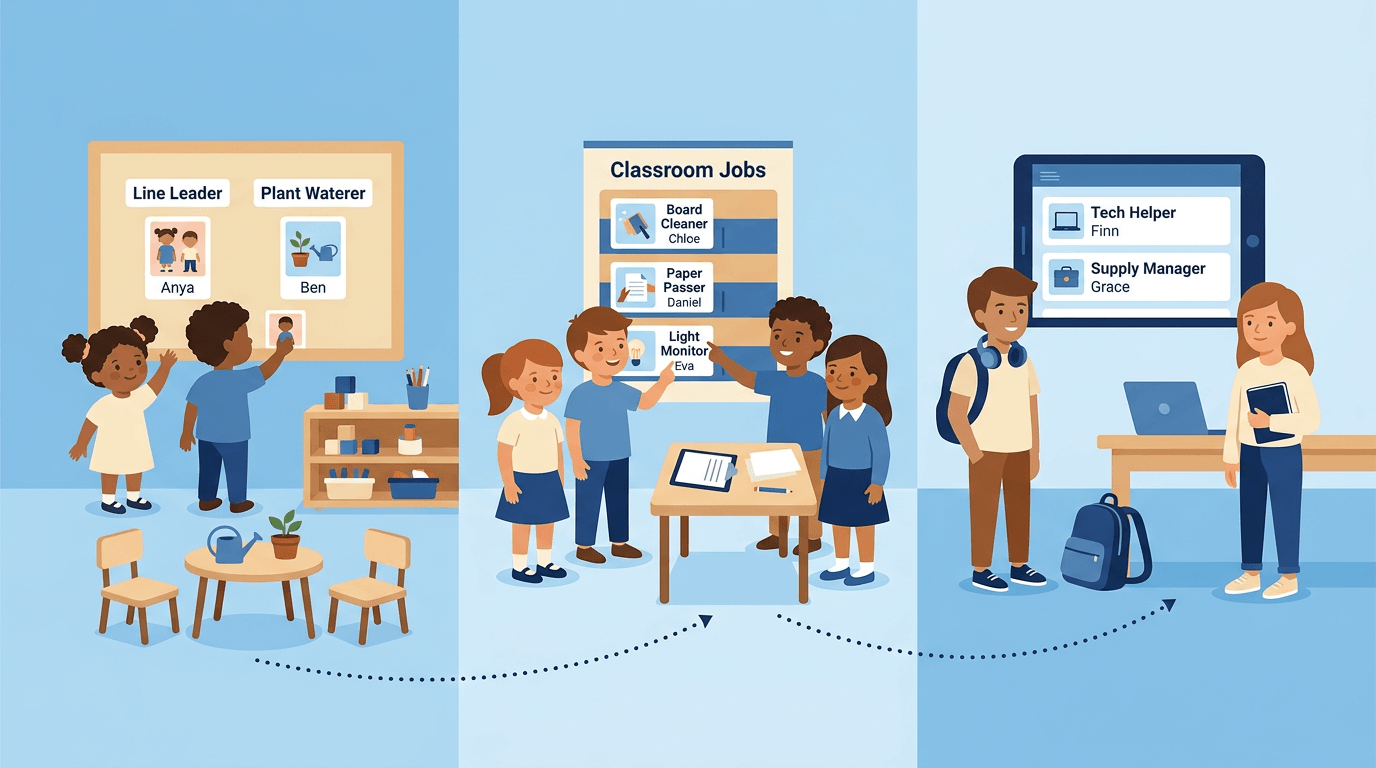
Development theory only pays off when it changes what you do on Monday. Use this guide to match your management moves to the stage in front of you, not the stage you wish students were at.
Key principle: Most misbehavior is developmental information. Ask "what need is this?" before "what consequence fits?"
Young learners: build the routine first
Little kids can't regulate what their bodies and schedules haven't settled. Run these in order:
- Meet basic needs before making requests.
- Water, snack, movement break: check these before any redirect.
- Teach one concrete routine at a time.
- Post it as three steps: "Push in chair. Hands at sides. Voice off."
- Open every day with a morning meeting.
- Say: "Greet the person next to you by name." Belonging first, content second.
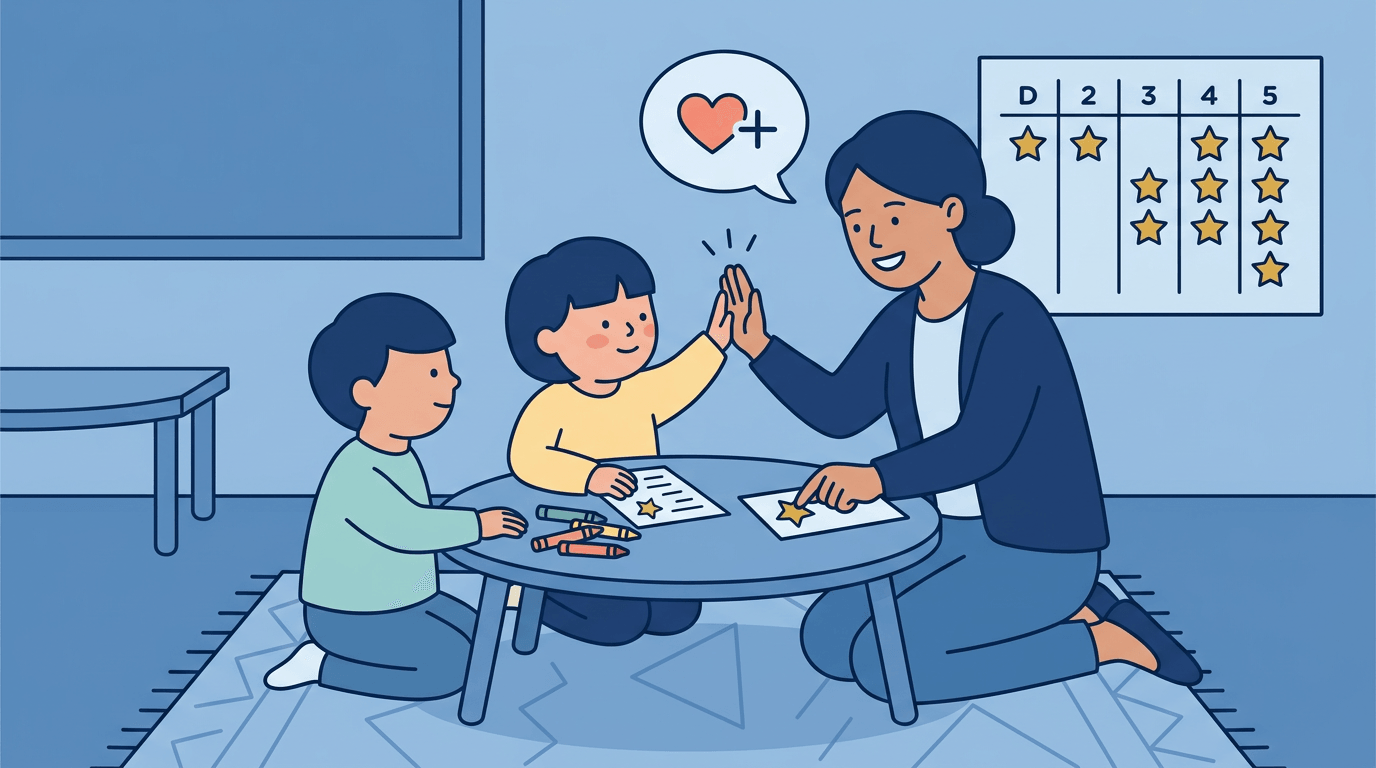
- Reinforce with a simple token economy.
- One sticker per completed routine; ten stickers earns a class privilege.
Older students: manage through identity and belonging
Adolescents are testing who they are, and peers matter more than you do. Group and seat for belonging first; a student with a place in the room has less to prove. Then respond by situation:
| When you see... | Try... |
|---|---|
| A student trying on a new persona | Naming the strength: "You led that group well." |
| Conflict splitting a friend group | A restorative conversation, not a detention slip |
| Pushback on a consequence | Two choices: "Repair it now, or write a plan tonight." |
Choice-based consequences work because they hand back agency; restorative practices work because they repair the peer bond that adolescents actually care about losing.
Example: A ninth-grade teacher replaces lunch detention with a five-minute repair chat: the student names the harm, picks the fix. Repeat incidents drop because status with peers stays intact.
Adult learners: partner, don't police
Adults don't need management; they need conditions that respect the life they bring. Before your course starts, confirm:
- Self-authorship is invited. Learners set one personal goal alongside your syllabus goals.
- Pacing flexes. Offer deadline windows ("submit any day this week"), not single due dates.
- Mattering is said out loud. Try: "Your experience in this field changes this discussion."
- Life transitions are planned for. Build a no-questions grace pass for job or family disruptions.
At a glance:
| Stage | Core need | Go-to move |
|---|---|---|
| Young learners | Safety and structure | Concrete routines, tokens |
| Older students | Identity and peers | Restorative talk, real choices |
| Adults | Autonomy and mattering | Flexible pacing, named value |
Once you've matched moves to stages, map each one to rosters, routines, and seating inside EMStudio's classroom management tools.
Putting Theory into Practice on Campus
Knowing the theory is only half the job. The real test is what changes on campus once you put it to work: in a classroom, an advising session, or a residence hall program.
How faculty can apply these theories
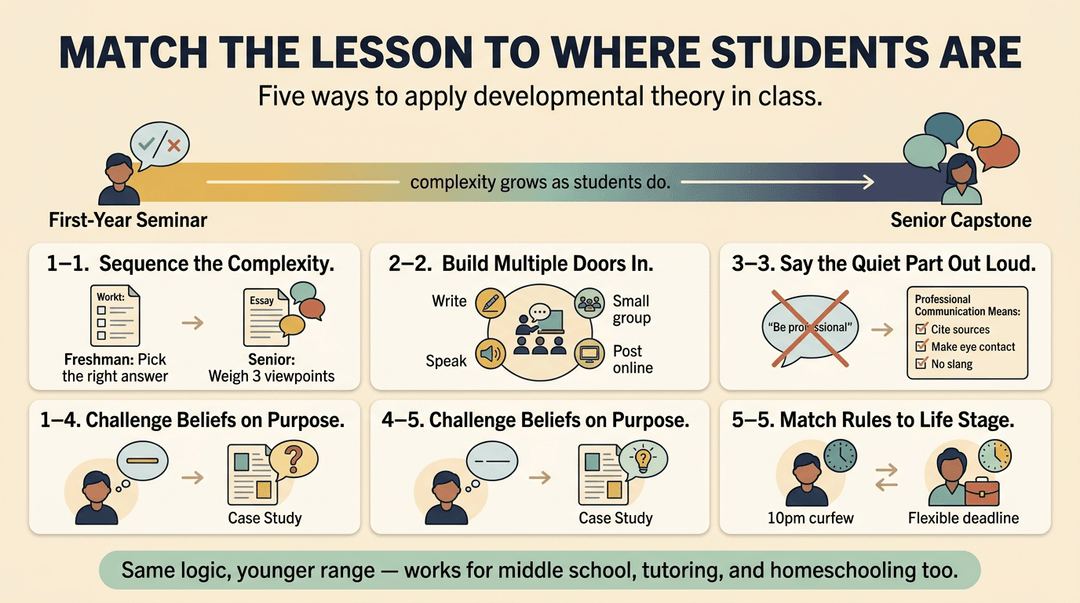
Good teaching starts with matching the lesson to where students actually are. A first-year seminar full of concrete, black-and-white thinkers needs more scaffolding than a senior capstone that expects students to weigh competing perspectives on their own.
- Align curriculum to developmental stage. Sequence assignments so complexity grows as students do.
- Design inclusive learning environments. Build in multiple ways to participate so students at different identity stages all find a way in.
- Set course expectations clearly. Say the quiet part out loud: what "critical thinking" or "professional communication" actually looks like in practice.
- Challenge student beliefs, deliberately. A case study that contradicts a student's assumption does more for growth than a lecture ever will.
- Match behavior expectations to stage. A rule that works for an eighteen-year-old away from home for the first time may need adjusting for a returning adult learner.
The same instinct scales down. A middle school teacher, a tutor, or a homeschool parent can apply the same stage-matching logic, just with a younger developmental range in mind.
Using theory in advising and student affairs
Advisors and student affairs staff lean on these frameworks for more than one conversation.
- Co-curricular program design: build events around the identity and psychosocial work students are doing that semester.
- Advising strategies: ask questions that meet a student's current stage instead of assuming they're ready for wide-open choice.
- Engagement data tracking: watch participation patterns to catch who's disengaging, and why.
- Supporting identity development: create low-stakes spaces where students can try on new roles and beliefs.
Applying theory in residence life training
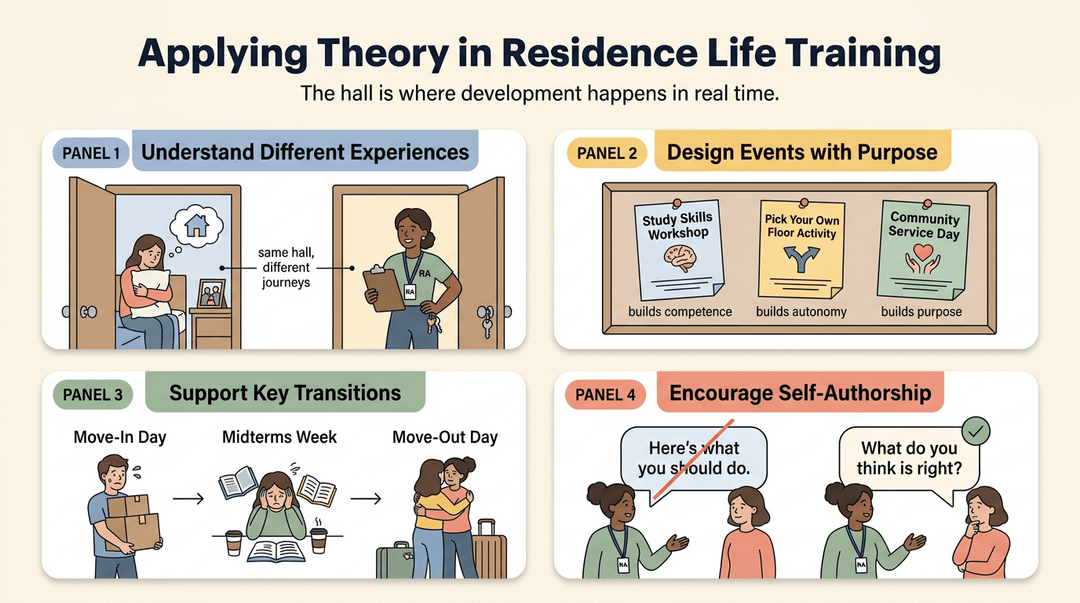
Resident assistants train on this material because the hall is where development happens in real time.
- Understand resident experiences. A homesick first-year and a confident senior RA are working through very different tasks.
- Apply vectors to programming. Floor events can target competence, autonomy, or purpose directly.
- Support transitions. Move-in, midterms, and move-out each carry their own developmental weight.
- Encourage self-authorship. Push residents toward their own answers instead of borrowed ones.
Adapting theory for diverse student groups
No single model fits every student on campus.
- Adult learners and veterans often arrive with self-authorship already underway; advise and teach them accordingly.
- International students work through identity development alongside cultural adjustment, often at the same time.
- Case-based application beats a one-size-fits-all script for any of these groups.
- Cross-pollinate theories. Blend vectors, identity models, and cognitive-structural stages when a single lens falls short.
How Identity Develops Across Diverse Students
Every student's sense of self grows along its own path, and the theory that maps that path looks different depending on which piece of identity you're tracking: disability, race, gender, or the ways these categories overlap.
Here's how each one unfolds, and why it matters once you're back in the classroom.
Stages of disability identity development
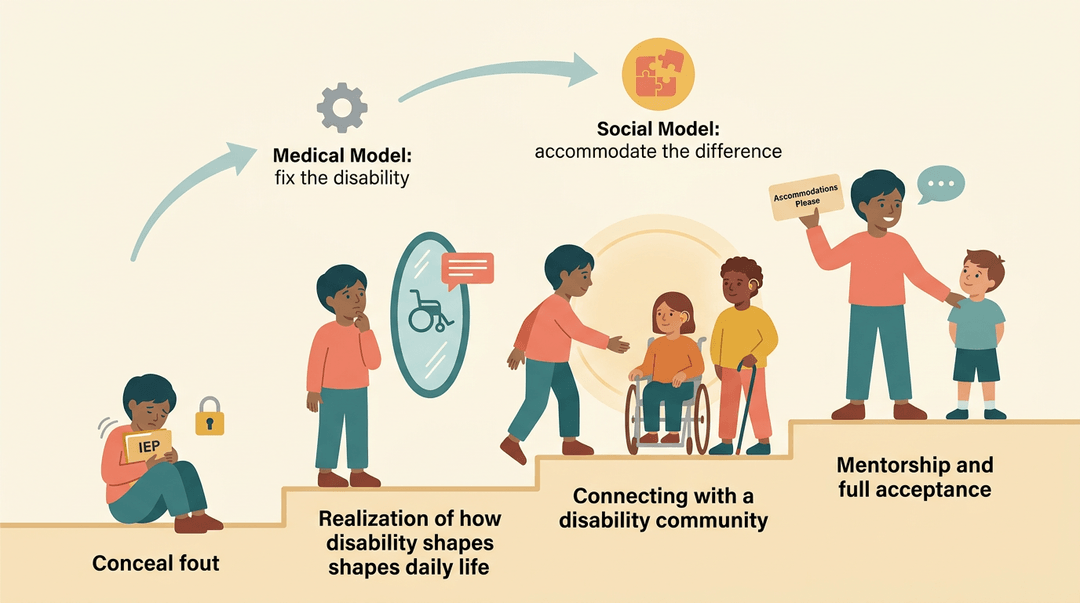
Gibson's three-stage model traces movement from passive acceptance of a diagnosis, through realization that a disability shapes daily life, to acceptance that opens the door to self-advocacy. Forber-Pratt and Aragon's four-stage model adds a step of connecting with a disability community before that full acceptance takes hold. Both trace the same underlying shift: from the medical model (disability as something to fix) to the social model (disability as a difference schools and society need to accommodate). For example, a student who once hid an IEP might, by the acceptance stage, ask openly for accommodations and even mentor a younger student facing the same diagnosis.
How racial and ethnic identity develops
Black and biracial identity theories describe movement from internalized bias toward a secure, self-defined sense of identity. Minority identity development models add two forces shaping that journey: support (mentors, affinity groups, family) and challenge (discrimination, stereotype threat). Case studies of Latino students frequently show identity forming through bicultural navigation: balancing home culture and school culture rather than picking one over the other.
LGBTQ and gender identity development
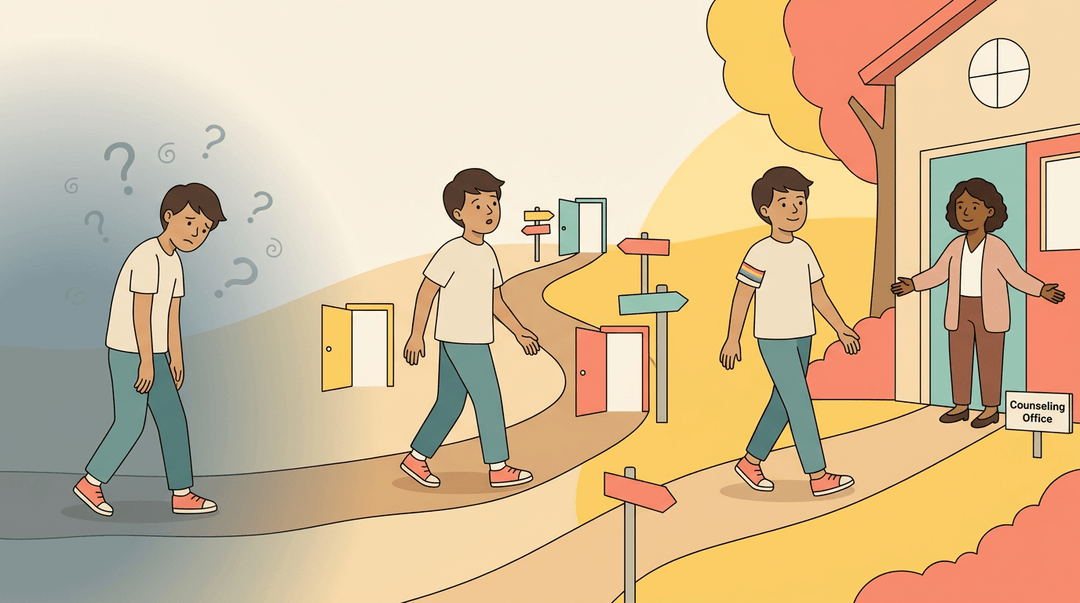
Sexual orientation identity development models move from confusion or denial through exploration to integration, where a student's identity feels settled and public. These stages guide school counselors and multicultural student services offices as they build affirming, developmentally timed support instead of one-size-fits-all counseling.
Critical lenses on social identity
Intersectionality reminds us a student is never just one identity: race, gender, disability, and class overlap and compound each other. Critical race theory, feminist theory, and queer theory push the models further, asking whose experience got centered in the first place. This second and third wave expansion keeps identity theory honest: it's less about one universal sequence of stages and more about whose stages get told.
Common Student Challenges and Retention
Even the strongest identity framework can't fully brace a student for freshman year. Knowing why so many students struggle, and what actually keeps them enrolled, shows you where to step in.
Why the freshman transition is hard
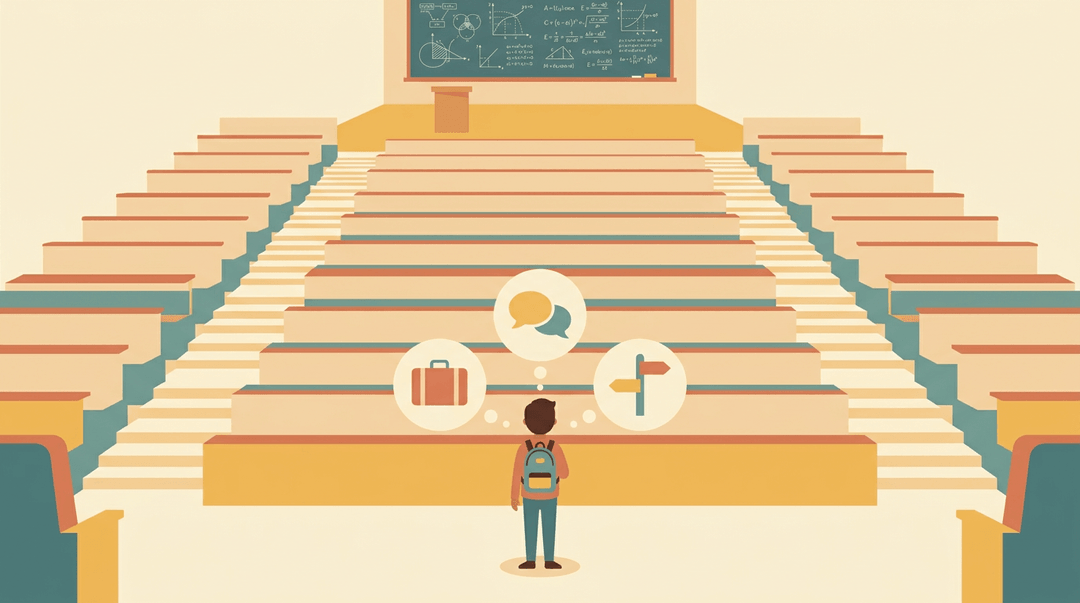
Think of an eighteen-year-old walking into a 300-person lecture hall for the first time. The coursework suddenly demands independent thinking, not just memorization.
Add in living away from home for the first time, a whole new set of social dynamics to navigate, and the pressure to choose a major before really knowing who they are yet, and it's no wonder that first year feels shaky.
What the retention numbers show
The data backs up what teachers already sense. Roughly 23% of students entering four-year colleges don't return for a second year, and almost 40% will fail to graduate within six years, according to the National Center for Education Statistics.
Every school receiving federal aid has reported graduation data through IPEDS since the 1990s, and rising tuition and student debt only raise the stakes for every student who leaves before finishing.
How to support at-risk students
The fixes aren't mysterious:
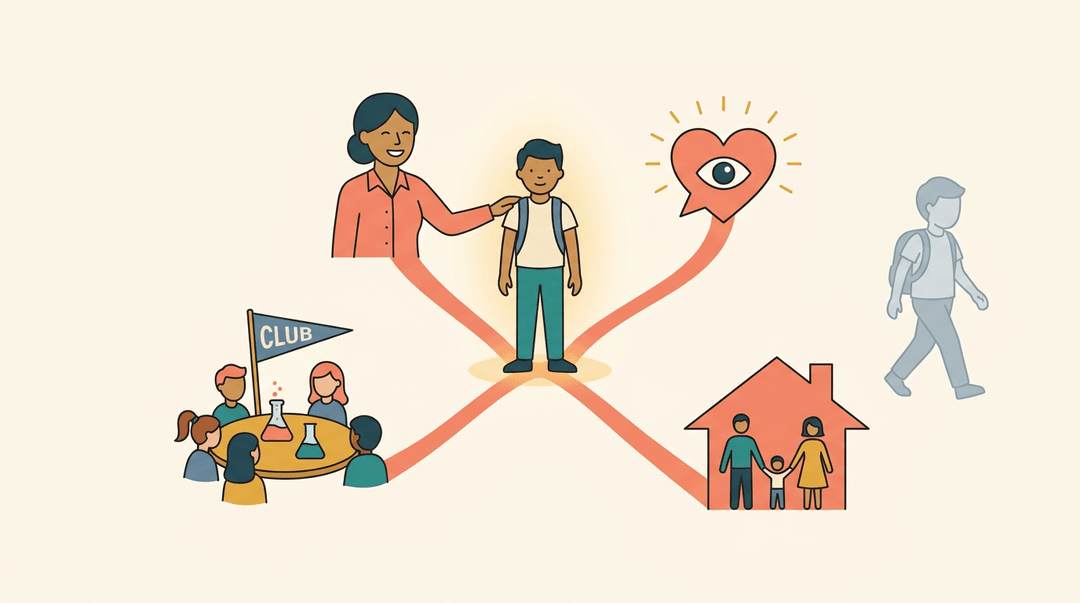
- Mentoring and faculty involvement. A student who has one adult who checks in is far less likely to quietly disappear.
- Meaningful campus activity. Belonging to something, a club, a team, a lab, keeps students anchored.
- A sense of mattering. Students need to feel seen, not just enrolled.
- Parental and family support. A student's home network still shapes whether they stay.
Student development theory isn't just background reading for a course. It's a lens that helps you understand why one student stalls, why another thrives, and what your classroom needs to look like to support both.
The stages and names matter less than what you do with them: turning theory into daily moves that meet learners where they are, at every grade band and setting.
Ready to put that structure to work? Check out our Classroom Management feature to organize your classes, rosters, and timetables around the students actually in front of you.
References
- What Is Student Development Theory? How to Help Undergrads — online.lsu.edu (2025)
- The Relationship Among Financial Aid, Retention, and Graduation ... — ir.library.louisville.edu (2025)
- student-development-theory_m-walker — srs.ucsd.edu
- Measuring Student Success In IPEDS: Graduation Rates (GR), Graduation Rates 200% (GR200), And Outcome Measures (OM) — nces.ed.gov
- College Graduation Rates: Statistics and Federal Reporting — legalclarity.org (2026)
- More to the Retention Story: — air.org
Frequently asked questions
What is developmental theory in education?
Developmental theory in education is a group of frameworks that explain how learners grow physically, cognitively, socially, emotionally, and morally over time. It helps educators match instruction, support, expectations, and classroom management to students’ developmental needs rather than treating every learner the same.
What are the five developmental theories?
Five commonly discussed developmental theories are identity and life-stage theories, cognitive or meaning-making theories, environmental theories, humanistic or self-actualization theories, and personality-based theories. Examples include Chickering’s identity vectors, Perry’s intellectual development, Bronfenbrenner’s ecological systems theory, Maslow’s hierarchy of needs, and Holland’s vocational theory.
What are 7 main theories of learning?
Seven major learning theories are behaviorism, cognitivism, constructivism, humanism, connectivism, experiential learning, and social learning theory. They explain learning through observable behavior, mental processing, personal meaning-making, growth and motivation, networks, experience, and observation of others.
What are the four main development theories?
The four main development theory families in student development are identity development, meaning-making and moral reasoning, environmental influence, and self-awareness or self-actualization. Personality-based theories are also commonly used as a practical fifth layer for understanding student fit with careers, majors, and activities.
What are the three main domains of student development?
The three main domains of student development are cognitive development, psychosocial or emotional development, and social development. Physical development is also important in broader developmental frameworks, but student development commonly emphasizes how learners think, relate to others, and understand themselves.
What are some popular theories of student development?
Popular student development theories include Chickering’s seven vectors, Perry’s intellectual development theory, Kohlberg’s moral reasoning stages, Sanford’s challenge-and-support model, Schlossberg’s transition theory, Kolb’s experiential learning cycle, Maslow’s hierarchy of needs, Astin’s involvement theory, Baxter Magolda’s self-authorship, and Bronfenbrenner’s ecological systems theory.
What are the 7 teaching theories in education?
Seven widely used teaching and learning theories are behaviorism, cognitivism, constructivism, humanism, social learning theory, experiential learning, and connectivism. Teachers may use them to design reinforcement, scaffolding, inquiry, collaboration, reflection, real-world practice, and networked learning.
What are the five theories of development?
Five commonly recognized developmental theory families are psychosocial or identity development, cognitive development, moral development, ecological or environmental development, and humanistic development. Examples include Erikson’s psychosocial theory, Piaget’s cognitive stages, Kohlberg’s moral reasoning, Bronfenbrenner’s ecological systems theory, and Maslow’s hierarchy of needs.