Challenging Behavior Doesn't Start With the Outburst You See

Jump to section
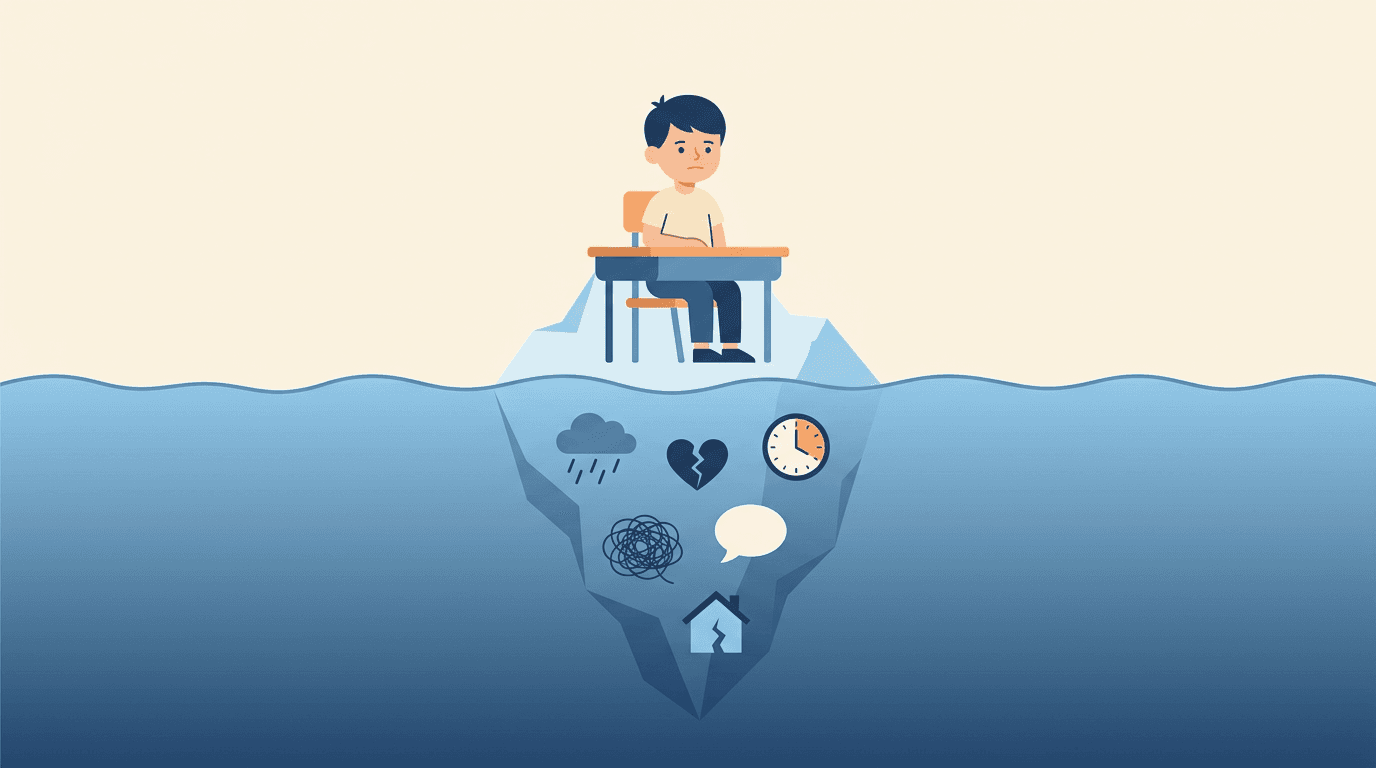
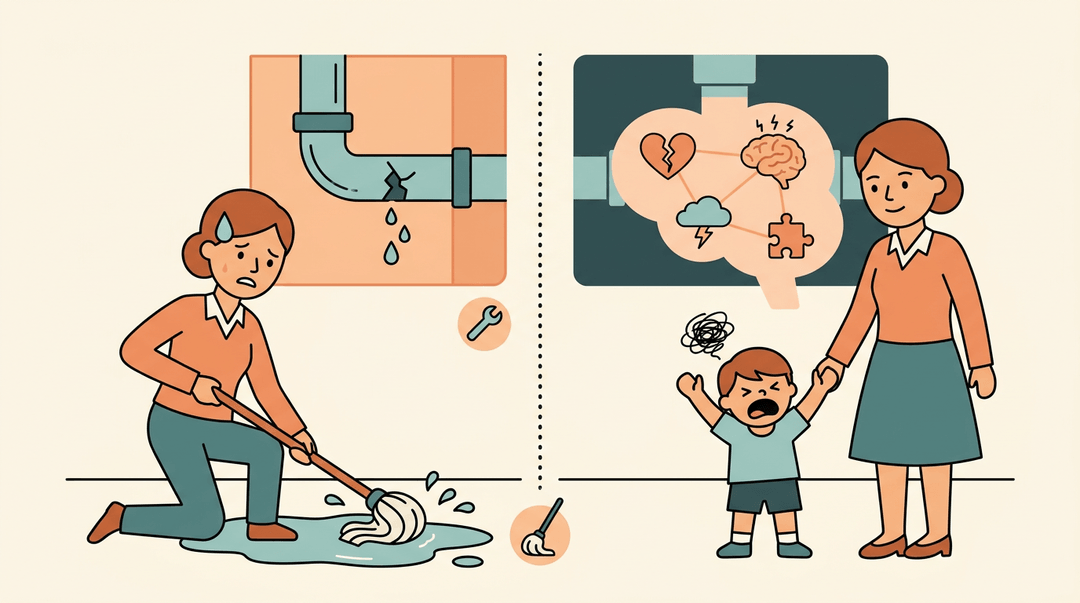
Ever tried to fix a leaky faucet by just mopping the floor? You can mop all day, but the water keeps coming until you find the pipe that's actually broken. Challenging behavior works the same way. The outburst you see is the floor.
What's behind it is the pipe. In this post, we'll unpack what challenging behavior really is, what drives it, and how you can respond, prevent, and document it with confidence.
What Challenging Behavior Really Means
Every classroom has moments that make you pause. What separates an ordinary rough patch from something worth flagging isn't the outburst itself: it's the pattern underneath it.
What Makes a Behavior Challenging
A behavior earns that label when it's persistent: it keeps showing up and keeps disrupting learning, for the student and everyone nearby. It also counts when it interferes with friendships, pushing peers away instead of drawing them in.
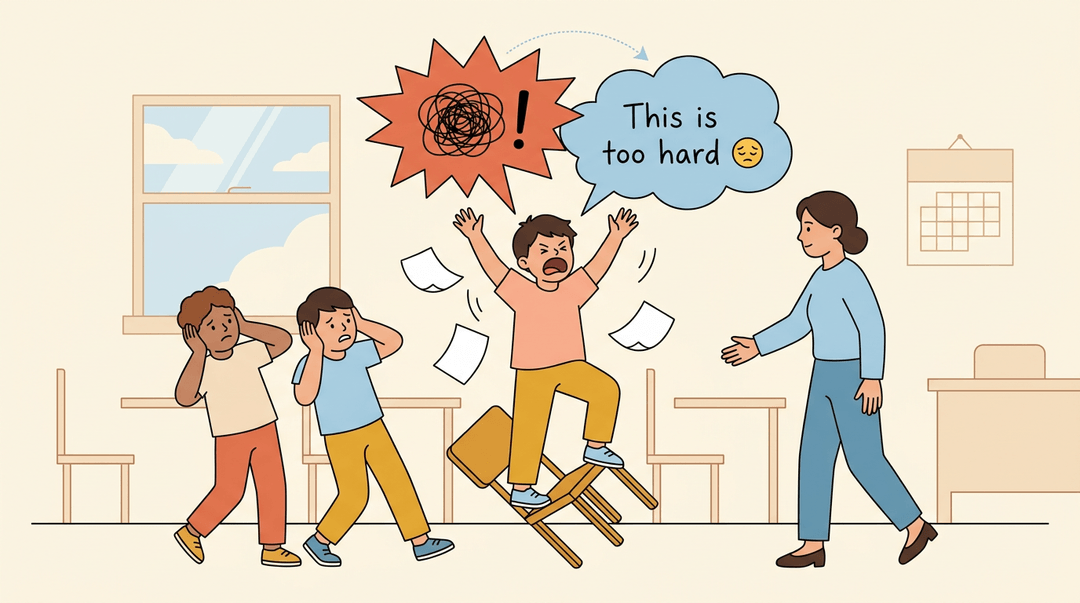
Underneath most of it is a simple truth: behavior is communication. A student who can't yet say "this is too hard" or "I feel overwhelmed" often shows you instead.
Common Types of Challenging Behavior
It shows up in familiar forms:
- Tantrums and meltdowns: a sudden loss of control, often after a buildup you didn't catch in time.
- Aggression: hitting, biting, or kicking, usually a signal of frustration outpacing words.
- Defiance: refusing directions, testing whether the limit really holds.
- Withdrawal: pulling back from activities or people altogether.
- Fussiness or disruption: the low-grade noise that chips away at a lesson's momentum.
Why Is My Child Misbehaving at School but Not at Home?
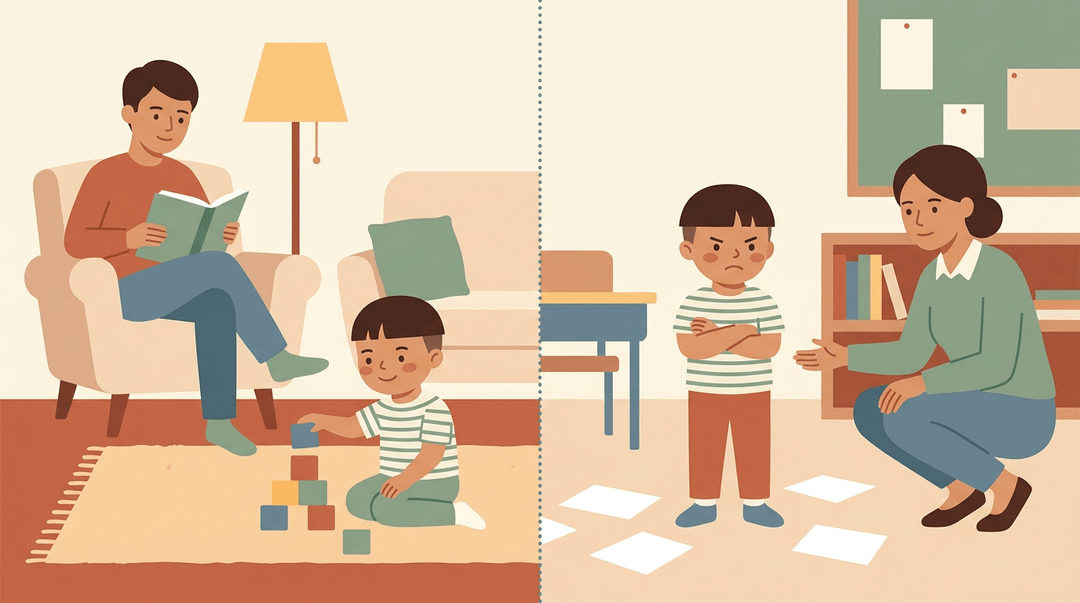
Parents ask this constantly, and it makes sense once you see it: behavior is context-dependent. A little boundary-testing is normal and expected at this age. What matters more is the persistence and intensity of it, and how often it happens.
Occasional friction is developmental. Frequent, intense episodes are the signal worth watching, whether they show up at school, at home, or both.
What's Behind Challenging Behavior
Every challenging behavior is trying to tell you something. Before you can respond well, it helps to understand what's actually driving it.
How Behavior Communicates Unmet Needs
A young student who can't yet verbalize a need doesn't just stay quiet about it: the need shows up as behavior instead. For example, a kindergartner who bites during circle time might not know how to say "I need space," so the bite becomes the message.
Whether a child is expressing a want, a discomfort, or a frustration, the behavior itself is a clue to underlying feelings, not proof of defiance.
What's the Most Common Childhood Behavioral Disorder?
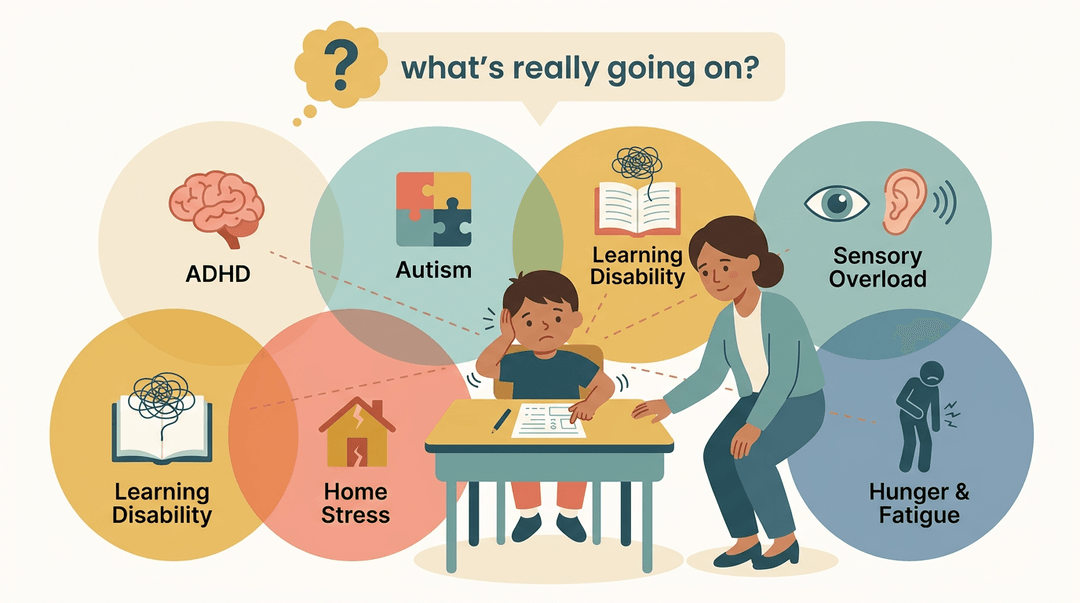
Attention-deficit/hyperactivity disorder (ADHD) is generally considered the most common childhood behavioral disorder, though it frequently overlaps with autism spectrum disorder and specific learning disabilities, so the behaviors you see in class rarely have one single cause.
Beyond diagnosed conditions, a lot of what looks like a behavioral disorder is actually a response to something else entirely:
- Adverse childhood experiences (ACEs), like trauma or instability at home
- A stressful home environment, even without a specific traumatic event
- Sensory processing challenges, where noise, light, or touch feels overwhelming
- Basic physical discomfort: hunger, fatigue, or simply needing to move
Using the ABC Model to Spot Triggers
Once you suspect a pattern, the ABC model (antecedent, behavior, consequence) gives you a simple way to track it: what happened right before the behavior, what the behavior looked like, and what happened right after.
Rooted in applied behavior analysis (ABA), this method works best when you observe patterns over time rather than reacting to a single incident.
A teacher who notices that outbursts always follow transitions from recess, for instance, has found a trigger worth planning around.
How to Respond to Challenging Behavior
Every outburst has a shape. Most challenging behavior moves through a four-stage escalation cycle:
- A calm baseline
- A trigger
- The escalation itself
- A recovery period once it's passed
Knowing which stage a student is in tells you whether to teach, to redirect, or simply to wait it out.
Why Guidance Works Better Than Punishment
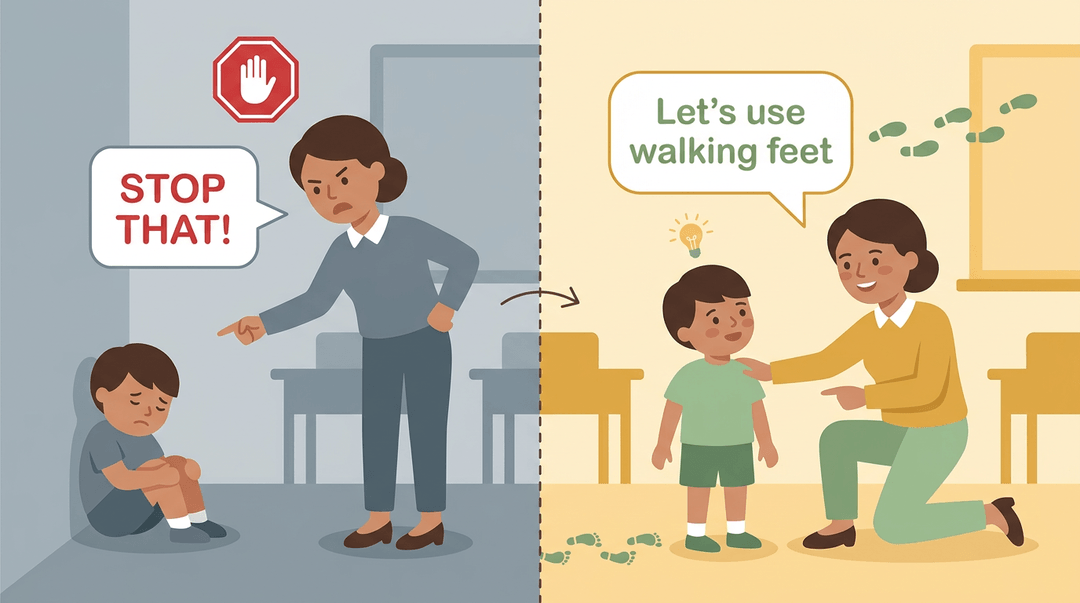
Punishment stops a behavior for a moment; guidance teaches a student what to do instead. Treat the moment as a teaching moment rather than a verdict to hand down. Punishment breeds resentment and rarely changes what happens next time, while a natural consequence (cleaning up a mess a student made, missing part of an activity because of the disruption it caused) connects cause and effect without a power struggle. Swap "stop that" for positive redirection: "Let's use walking feet" does more work than "no running."
Staying Calm and Responsive in the Moment
When things heat up, change the setting: a walk to the door, a new seat, a different task, can interrupt the cycle before it peaks. Respond calmly and you model the regulation you want to see; your steady voice is often the lesson. Offer two reasonable choices instead of a single command to sidestep a power struggle, and teach the words or actions a student can use instead of the behavior itself, so there's something to reach for next time.
Using Attention and Praise Effectively
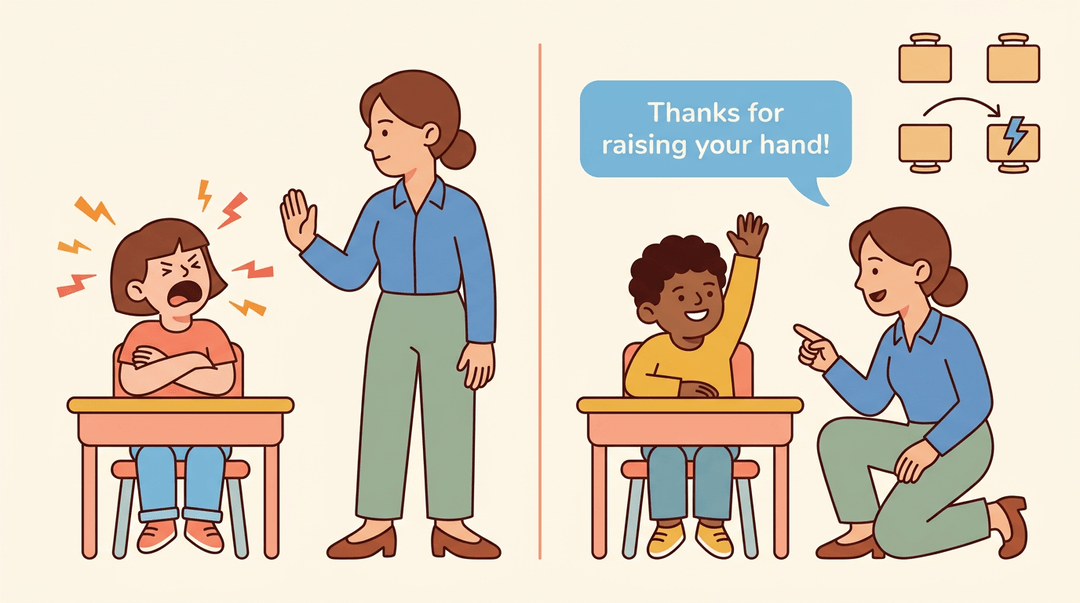
Attention-seeking behavior often fades faster when you don't feed it: ignore the outburst, then praise the positive action specifically the moment you see it ("You raised your hand, thank you"). Distraction and redirection work well for younger students especially. Over time, notice patterns: if a seating chart keeps putting a student next to a known trigger, move the seat before you have to manage the fallout again.
Your In-the-Moment Behavior Response Checklist
When a behavior flares mid-lesson, you don't have time to reread a framework. This card gives you the moves in order, by grade band, plus the essentials if the class isn't yours.
K-5: the four-move reset
- Name the trigger calmly. Show the student you see the cause, not just the behavior.
- Say: "I can see the noisy group work is frustrating you."
- Offer a choice or a break. Two acceptable options put control back in their hands.
- Try: "You can finish at your desk or at the back table. You pick."
- Use the calm-down corner as a reset, not a sentence.
- It's a spot with a timer and a feelings chart, and students return when ready.
- Log the incident briefly before the details fade.
- One line does it: "10:15, transition, offered choice, rejoined in 3 min."
Grades 6-12: private first, restorative after
- Redirect privately. Move close, drop your voice, keep it to one sentence.
- Say quietly: "I need you back with us. We'll talk after class."
- Refuse the public power struggle. State the expectation once, then step away.
- Walking away isn't losing; it removes the audience the conflict feeds on.
- Hold a restorative talk after class. Two minutes, three questions.
- Ask: what happened, who was affected, and how do we make it right?
- Track recurring patterns across incidents, not just single events.
- Same period? Same task type? Three matching entries means it's time to loop in support staff.
⚠️ Watch out: an audience raises the stakes for a teenager. Any correction delivered across the room invites a performance; the same words delivered at the shoulder usually land.
Example: A seventh grader mutters back at a redirection. The teacher nods, walks on, and finishes the lesson. Two minutes after the bell: "What was going on back there?" The student vents about a group conflict, and Tuesday's class starts clean.
If you're new or substituting
Before the first bell, confirm three things:
- The posted routines. Students trust the structure they know, so run the room's system, not yours.
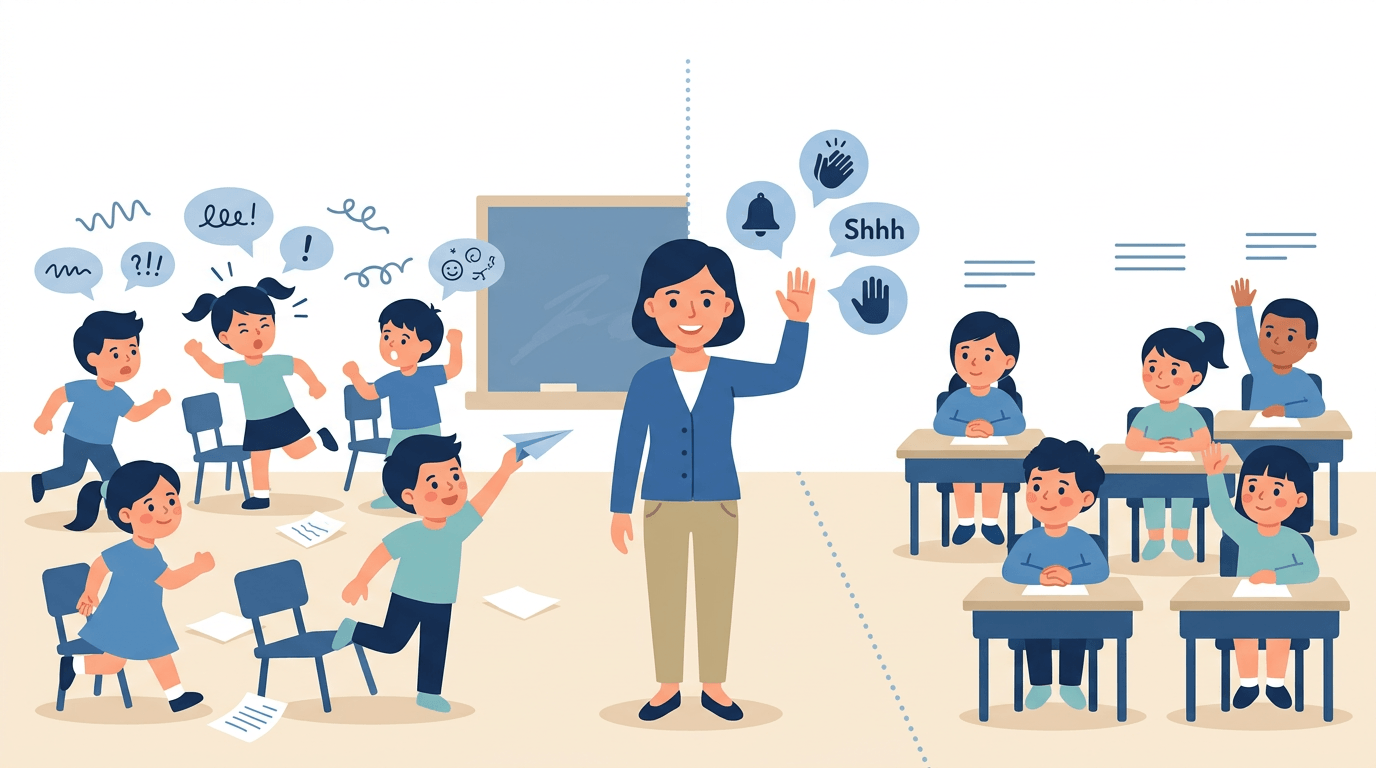
- The pre-set class signals. Ask a neighbor teacher for the attention signal (lights, countdown, clap pattern) and use exactly that one.
- The check-in/check-out plan. Some students have a scheduled adult check-in; find their names in the sub notes first.
At a glance:
| Band | First move | Follow-up |
|---|---|---|
| K-5 | Name the trigger, offer a choice | Calm-down corner, quick log |
| 6-12 | Private redirect | Restorative talk, pattern tracking |
| New/sub | Follow posted routines | Confirm signals and check-in plans |
The log lines and pattern notes only help if they live somewhere you'll actually check, so keep behavior incidents and routines right alongside your rosters and seating charts in EMStudio's classroom management tools.
Preventing Behavior Problems in Your Classroom
The best behavior plan is the one you never have to use. Prevention means building a classroom where challenging behavior has less reason to show up in the first place, and where you're tracking patterns closely enough to catch trouble before it grows.
A simple behavior log (a running note of what happened, when, and what came before it) does exactly that: it turns your gut feeling that "Tuesdays are rough" into an actual pattern you can act on.
Why Consistent Routines Matter
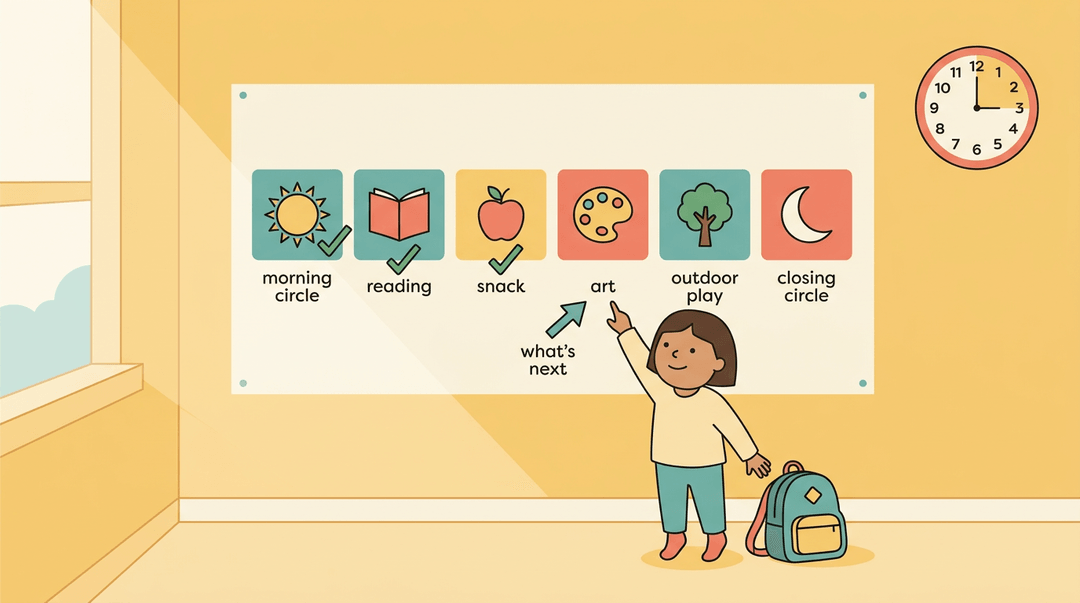
Uncertainty is exhausting for kids, especially those already prone to frustration or anxiety. A visual schedule posted where everyone can see it answers the question "what's next?" before a student has to ask, or act out, to find out.
Predictable daily routines (the same opening circle, the same transition cues, the same closing ritual) give students a map of the day. When the map is reliable, there's simply less to worry about.
Designing a Calming Classroom Space
A calm-down corner gives a student somewhere to reset before a small feeling becomes a big one. In a kindergarten room, that might be a beanbag, a basket of soft toys, and a laminated breathing chart.
In a middle school classroom, it might be a single desk with noise-canceling headphones and a sand timer.
Either way, place it where you can still supervise the whole room, and stock shared materials generously enough that two kids reaching for the same fidget toy doesn't spark its own conflict.
Teaching Kids Social-Emotional Skills
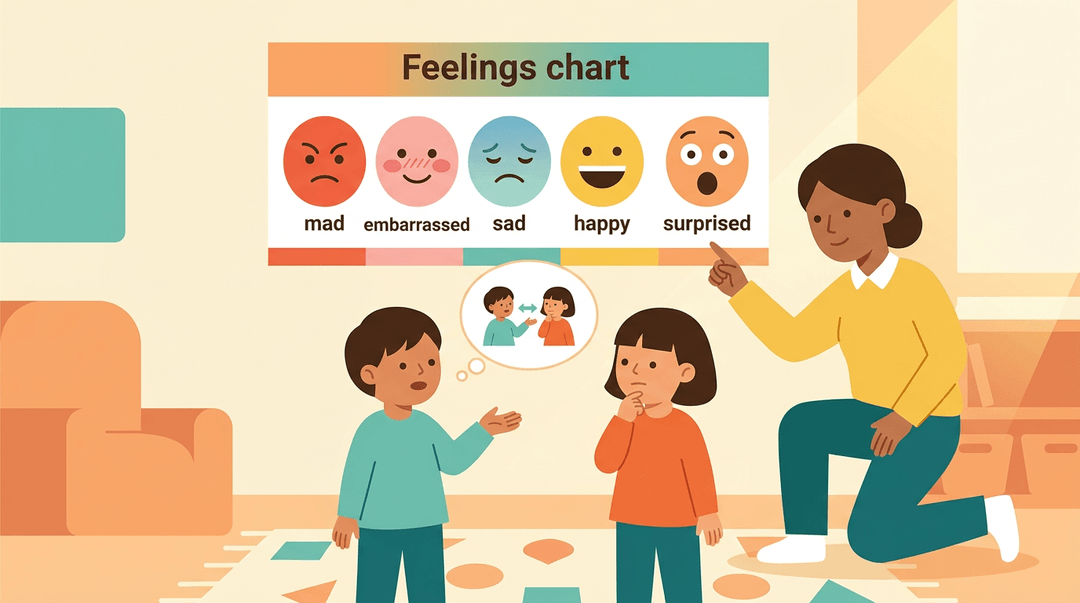
Students can't manage what they can't name. Start with identifying and naming emotions ( a feelings chart, a quick check-in question) so "mad" and "embarrassed" stop feeling like the same thing.
From there, role-play and modeling let students practice conflict resolution skills in low-stakes moments, and empathy-building activities, like retelling a conflict from the other student's point of view, help those skills actually transfer to the hallway and the playground.
Using Positive Reinforcement Well
Specific praise ("You walked away instead of yelling, nice work") teaches far more than a generic "good job." It builds a student's confidence and their trust in you, and it makes the good choice worth repeating.
What Happens When Behavior Goes Unaddressed
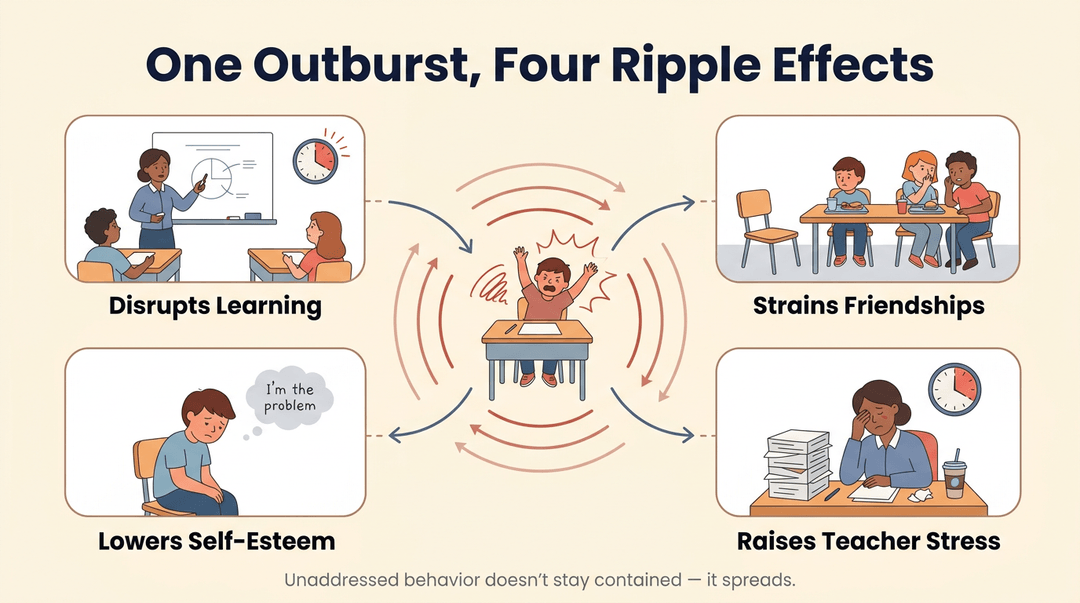
Left unchecked, challenging behavior rarely stays contained to one moment. It ripples outward, touching learning, relationships, and the adults trying to hold the room together.
How It Affects Learning and Social Growth
A single outburst can derail a lesson for everyone, not just the student at the center of it. Over time, unaddressed behavior tends to:
- Disrupt classroom activities, pulling attention away from instruction and eating into learning time.
- Strain peer relationships, as classmates grow frustrated or wary of a student who repeatedly acts out.
- Lower self-esteem, since the student on the receiving end of constant redirection starts to internalize the message that they're "the problem."
- Raise educator stress, wearing down even experienced teachers who feel like they're managing a crisis instead of teaching.
Long-Term Academic and Systemic Effects
The consequences don't stop at the classroom door. Pre-K programs already expel students at a startling clip: according to a primary study by Yale researchers, pre-K students are expelled at more than three times the rate of children in grades K to 12.
That early instability matters, because research from Royal Holloway shows that self-regulation helps predict academic achievement well into later schooling. Behavior left unaddressed now doesn't just fade.
It tends to escalate, following students into new grades and new classrooms until someone steps in.
Partnering with Families and Providers
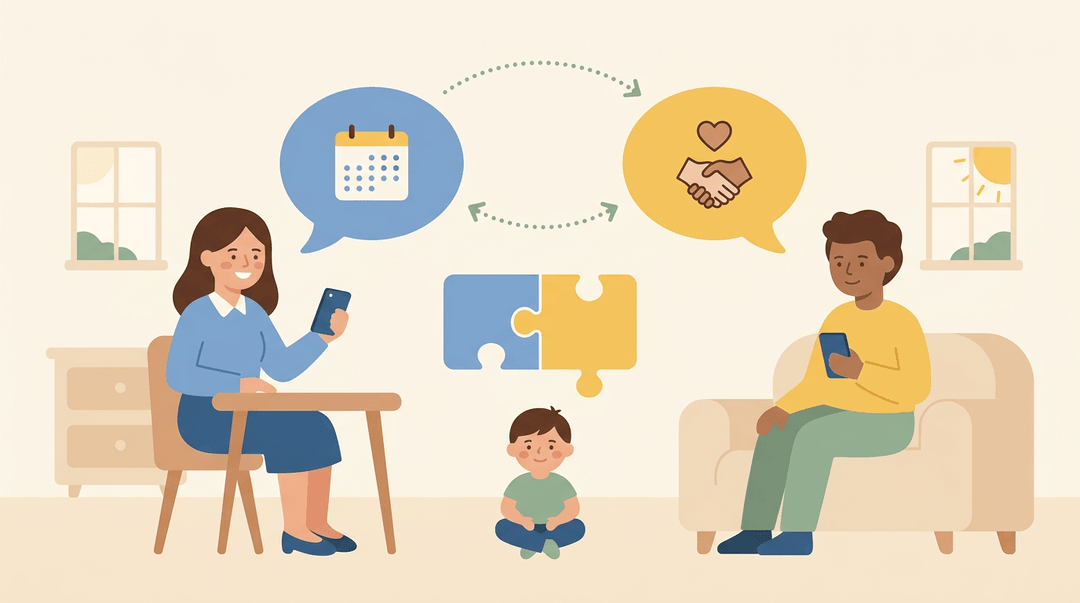
No behavior plan works in isolation. The strategies you build in your classroom stick best when families and outside providers are pulling in the same direction, not finding out about a problem after it's already boiled over.
Talking With Families About Behavior
Waiting for a crisis to make the first call sets the whole relationship up wrong. Regular behavior updates, even brief ones, keep families in the loop and turn a hard conversation into a routine one.
How you frame those updates matters just as much as how often you send them. Non-blaming language keeps the focus on the behavior and what's driving it, not on the child or the parent.
Instead of "Marcus won't stop interrupting," try "Marcus is having a hard time waiting his turn during group discussions, and here's what we're trying."
That conversation should run both ways. A parent might mention a rough morning at home or a new medication; you might notice a pattern they haven't seen yet. Sharing observations both ways often surfaces the missing piece neither of you had alone.
Building Consistent Strategies Between Home and School
A student who hears one set of expectations at school and another at home is stuck guessing which rules actually apply.
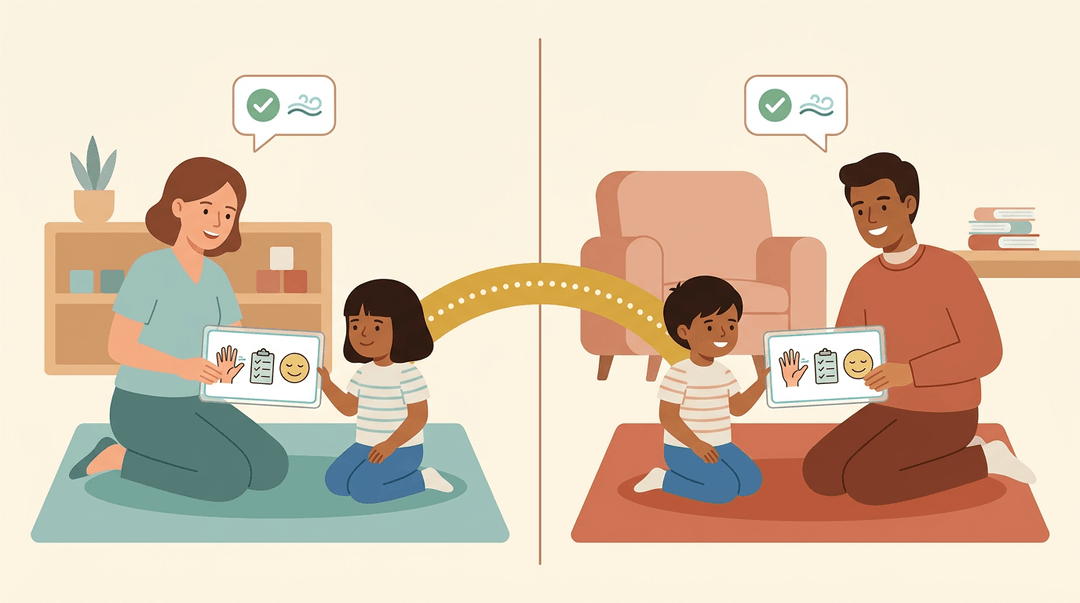
Consistent strategies across settings close that gap: the same cues, the same language, the same response to the same behavior, wherever the student is.
For students with more significant needs, a joint behavior plan built with families and any outside providers keeps everyone using the same playbook rather than improvising separately.
And the payoff compounds: when families reinforce a skill at home, like a calming routine or a communication strategy, that student practices it far more than the school day alone allows.
Professional Frameworks and Support Options
You don't have to invent a behavior plan from scratch. A handful of well-tested frameworks already do the heavy lifting, and knowing which one fits your classroom can save weeks of trial and error.
Evidence-Based Program Models to Know
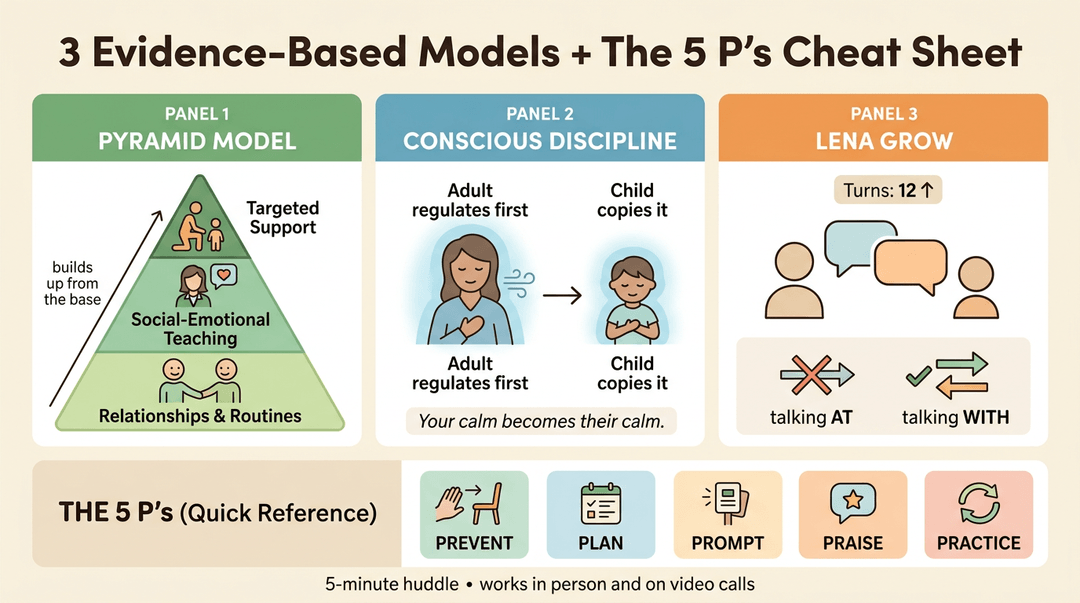
Three models show up again and again in classrooms and coaching rooms alike:
- Pyramid Model. A tiered system that builds from strong relationships and routines at the base up to targeted social-emotional teaching for kids who need more support.
- Conscious Discipline. Puts the adult first: it's built on the idea that your own self-regulation is the model your students copy.
- LENA Grow. Tracks conversational turns between adults and children, then coaches you to talk with students more, not just at them.
For a quick, portable version of these ideas, many teachers lean on the 5 P's:
- prevent
- plan
- prompt
- praise
- practice
It's simple enough to run in a five-minute huddle before class, and it travels well into virtual classrooms, where visible prompts and consistent praise matter even more without a shared room to lean on.
What Teachers Need for Training
Behavior management isn't a minor gap. Recent survey data shows it's the top training priority teachers name, with more than 36% calling it their biggest classroom challenge. Look for professional development built around real scenarios, not slide decks, and ask your school for behavior support plan templates you can adapt instead of building from zero.
When to Seek a Professional Evaluation
Some signs call for more than a classroom strategy:
- Persistent aggression that doesn't ease with consistent support.
- Sudden mood or mental health changes that don't match the child you know.
- Injuries, to the child or to peers.
When you see these, loop in a counselor or specialist. That's not failure. It's the next right step.
Challenging behavior isn't a mystery you have to solve alone, and it's rarely just about the moment you see. Once you understand what's driving it, respond with a clear plan, and loop in families early, those tough days start feeling more manageable.
The goal isn't a perfect classroom. It's a classroom where you're prepared. Ready to build that structure into your daily routine?
Check out our Classroom Management tool to keep your rosters, sections, and schedules organized so you can focus on the students in front of you.
References
- From genetic disposition to academic achievement: The mediating role of non-cognitive skills across development — pure.royalholloway.ac.uk (2025)
- Pre–K Students Expelled at More Than Three Times the Rate of K–12 Students — news.yale.edu
- Oklahoma teachers cite behavior, class sizes as top challenges in 2025 survey — newson6.com (2025)
Frequently asked questions
What is challenging behavior?
Challenging behavior is a persistent pattern that disrupts learning or interferes with relationships and friendships. It can include outbursts, aggression, defiance, withdrawal, or disruption, and often communicates an unmet need, frustration, discomfort, or feeling of being overwhelmed.
What is the most common childhood behavioral disorder?
Attention-deficit/hyperactivity disorder (ADHD) is generally considered the most common childhood behavioral disorder. Similar behaviors can also be related to autism, learning disabilities, stress, trauma, sensory challenges, hunger, fatigue, or a need for movement.
What are some common behavior issues in 3-year-olds?
Common behavior issues in 3-year-olds include tantrums, meltdowns, defiance, aggression such as hitting or biting, fussiness, difficulty sharing, and disrupting activities. Occasional boundary-testing is developmentally normal, but frequent or intense episodes deserve closer attention.
How to handle difficult child behavior?
First, look for what happens before and after the behavior to identify triggers and unmet needs. Stay calm, offer two reasonable choices or a brief break, redirect the child toward an appropriate behavior, and praise the positive behavior specifically. Consistent routines, visual schedules, calm spaces, and communication between caregivers can help prevent future incidents.
How to deal with a difficult child in preschool?
Use predictable routines, simple directions, and calm, private redirection. Name the likely trigger, offer two acceptable choices, provide a supervised calm-down space as a reset rather than a punishment, and teach a replacement skill such as asking for help or space. Record patterns and work with the family and preschool team when behavior is persistent or intense.
Why is my child misbehaving at school but not at home?
Behavior is context-dependent, so different demands, transitions, peer interactions, sensory conditions, or expectations at school may trigger behavior that does not appear at home. Some children also hold themselves together in one setting and release stress in another. Compare observations from both settings and look for patterns in timing, tasks, people, and consequences.
What are examples of challenging behaviors?
Examples include tantrums and meltdowns, hitting, biting, kicking, persistent refusal to follow directions, withdrawal from activities or people, excessive fussiness, interrupting, shouting, and other repeated classroom disruptions. The behavior is considered challenging when it persists and significantly affects learning, relationships, or safety.
My 4-year-old is misbehaving at home. What should I do?
Stay calm and focus on what may be driving the behavior, such as fatigue, hunger, frustration, sensory overload, or a difficult transition. Use consistent limits, offer two choices, redirect positively, and praise specific helpful behaviors as soon as they occur. Track when the behavior happens and seek guidance from a pediatrician or child specialist if it is persistent, severe, causes injuries, or comes with sudden mood changes.