Teachers and Bullying: A Complete Guide to Both Sides

Jump to section
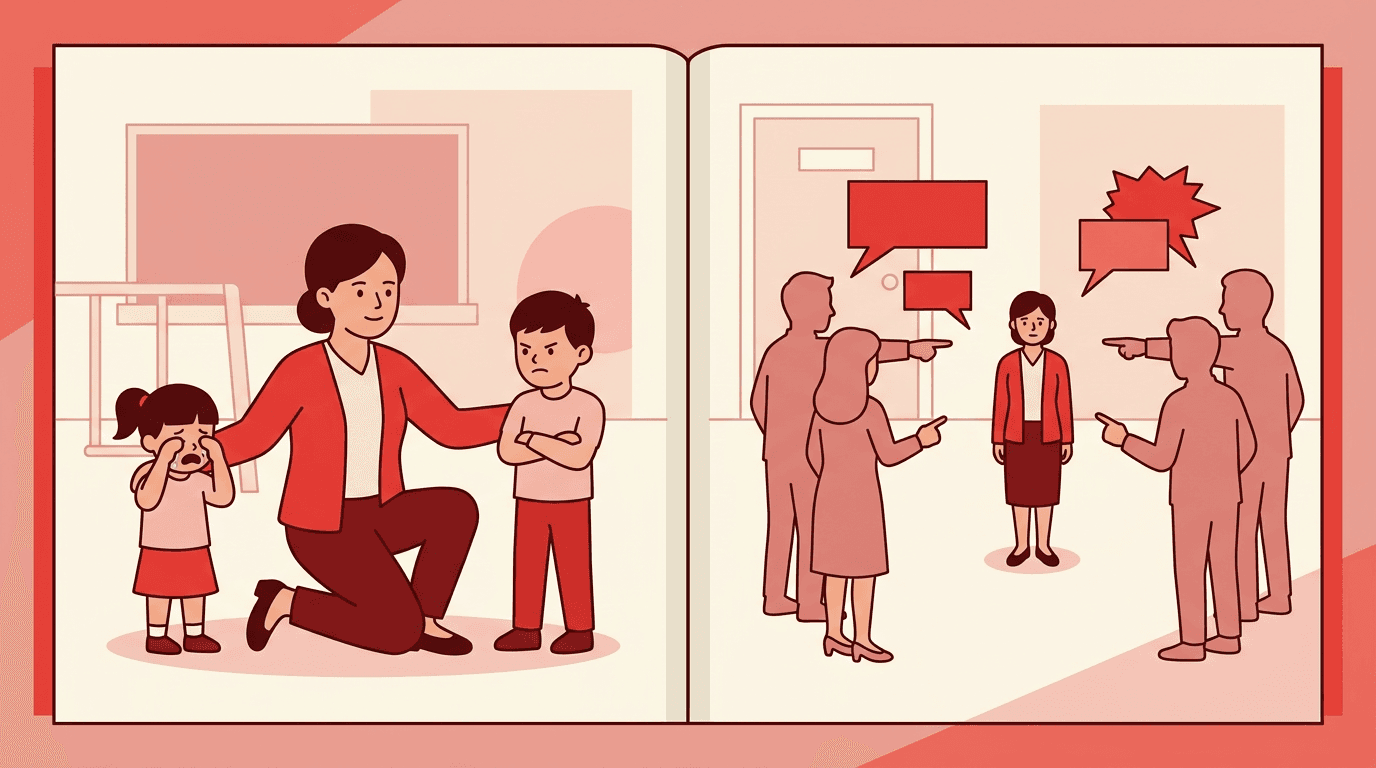
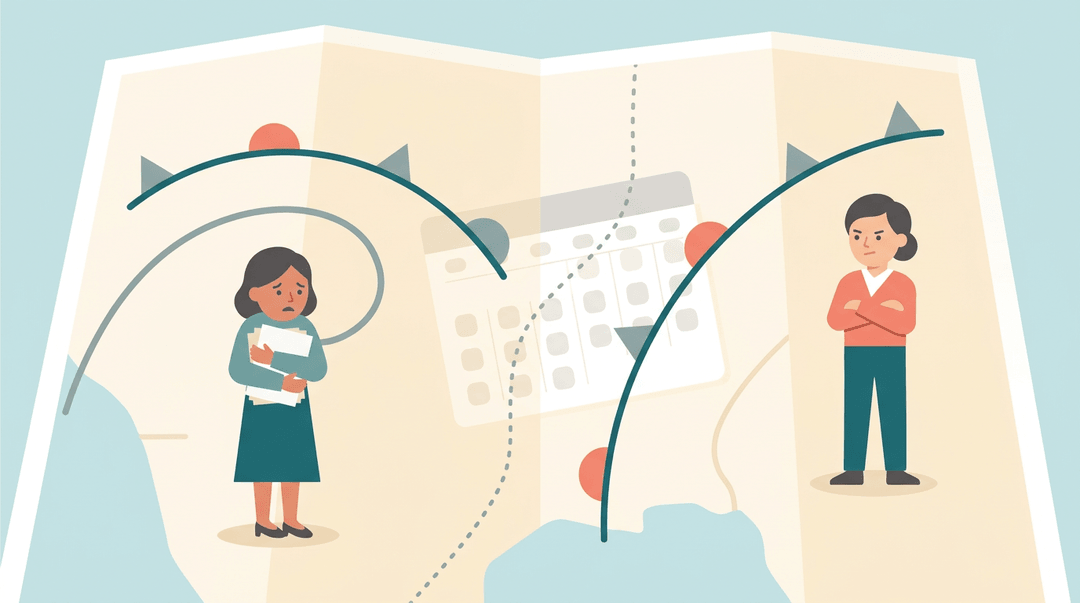
Picture two storm fronts moving toward each other on a weather map. That's bullying at school in a nutshell: one front is a teacher being targeted, the other is a teacher unintentionally becoming the source of harm.
Bullying is repeated, intentional harm, and it doesn't only run student to student. In this post, we'll define both sides, cover your legal protections, and show you how attendance patterns can flag trouble early.
Understanding Teachers and Bullying at School
Bullying at school isn't only a student problem. It moves through staff rooms and inboxes too, and it runs in both directions: teachers get bullied, and teachers bully.
What Makes a Teacher a Bully?
So what makes a teacher a bully? Look for repeated, non-physical mistreatment: spreading false information or gossip, belittling someone in front of others, or deliberately excluding them.
Legally, harassment means unwelcome conduct severe or persistent enough to create a hostile environment, especially when it targets a protected characteristic like race, disability, or gender.
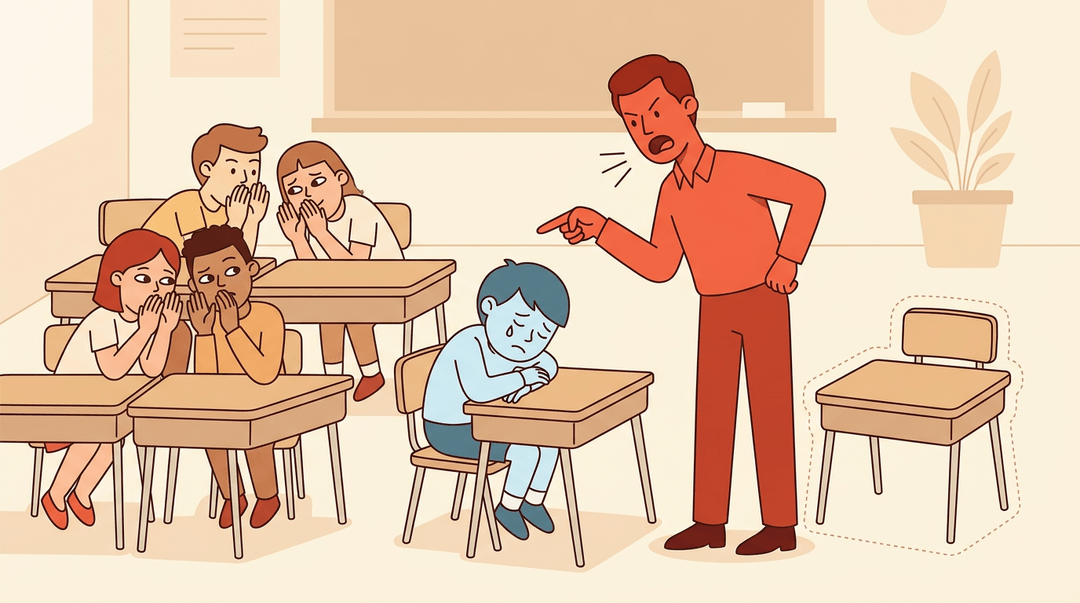
That's different from constructive criticism, which aims to help rather than humiliate. And yes, a teacher can bully a student: through ridicule, exclusion, or unfair targeting that has nothing to do with learning.
Who Bullies Teachers at School
Teachers get bullied by more people than you'd think.
Researcher de Wet found bullying in a school setting can come from the principal or deputy principal, department heads, colleagues at the same post level, or subordinates: upward bullying by juniors happens too.
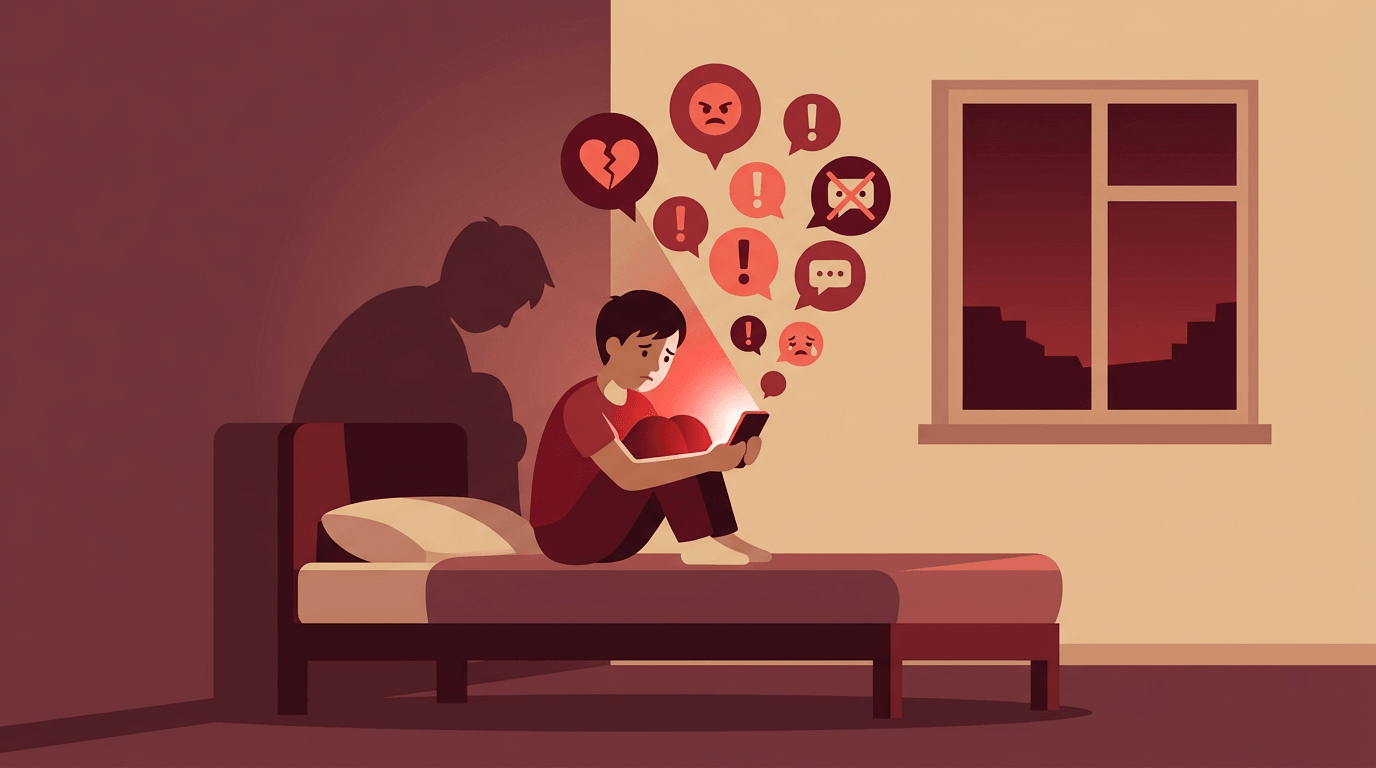
Parents and pupils pile on as well, sometimes through cyberbullying: harassing messages or public shaming online.
Real Teacher Bullying Stories
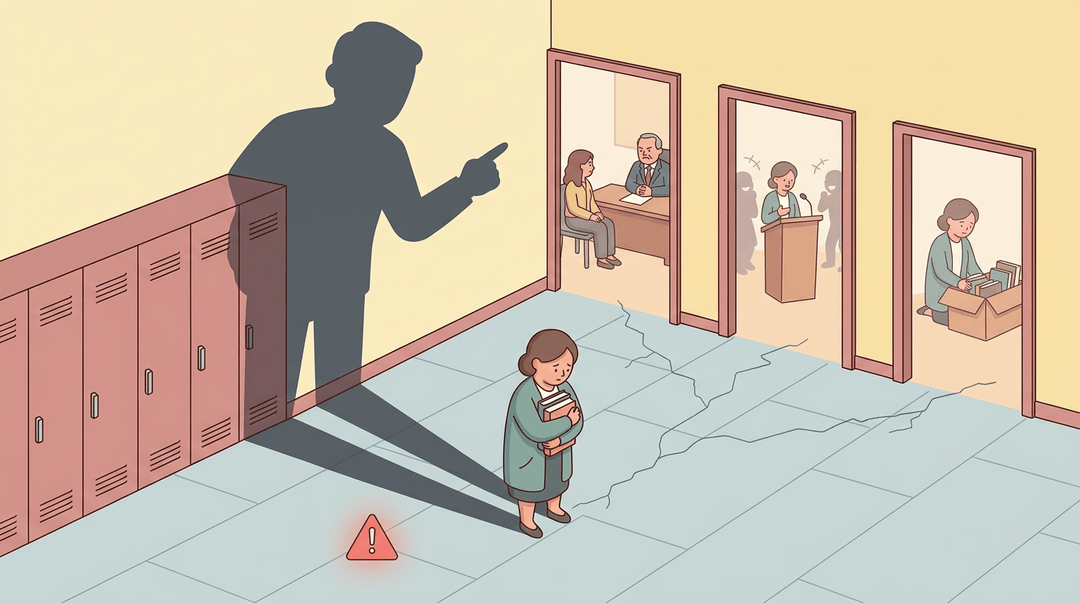
Real cases span the spectrum: a counselor harassed by a principal, a union president targeted by a district representative, a colleague ridiculed during a staff presentation, a primary teacher pushed out through an unfair support plan, and a special needs teacher whose treatment led to self-harm.
These aren't outliers. They're warnings.
How Bullying Affects Teachers and Schools
Bullying doesn't stay contained to one bad day or one classroom. It works its way into a teacher's health, and over time, into the culture of the whole building.
The Toll Bullying Takes on Health
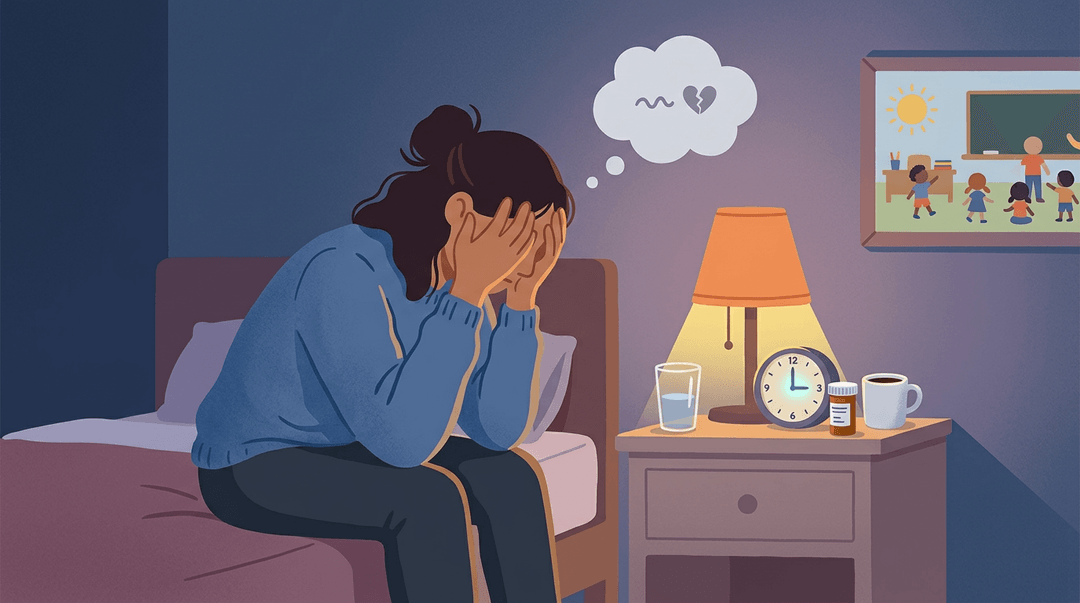
For a teacher on the receiving end, bullying often starts quietly: distress, withdrawal, self-blame. Left unaddressed, it can deepen into low self-esteem, anxiety, and depression.
Sleep tends to go first, and insomnia can push some teachers toward self-medication just to make it through the week. The body keeps score too, often showing up as headaches and other physical symptoms that never quite resolve.
In the most serious cases, bullying of educators has been linked to self-harm and even overdose, with one teaching union survey reporting that the toll is severe enough to drive some teachers toward thoughts of self-harm.
What Is the #1 Reason Teachers Quit?
Ask teachers who've left the profession why, and bullying is often the answer, not the paperwork or the pay. It erodes dignity and the trust a teacher once had in their school.
It poisons the building's culture, turning a place meant for learning into one defined by stress and blame. That kind of atmosphere doesn't just harm one person: it harms the profession itself, pushing capable educators toward the door.
A systematic review and meta-analysis in BMC Public Health found a significant link between workplace bullying and an increased intention to leave.
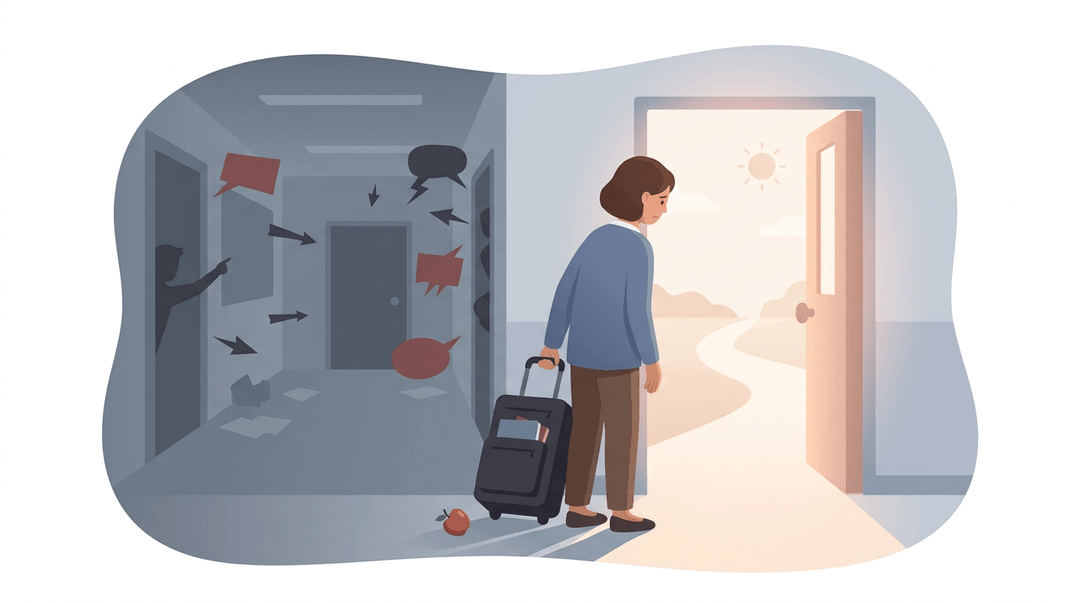
That's bullying and teacher attrition in a nutshell: the more hostile the climate, the faster good teachers walk away.
Spotting Bullying Through Attendance Patterns
Attendance data is often the first place bullying shows up, before a student says a word. This guide gives you the flags to watch, the grade-level clues, and the four moves to make once a pattern appears.
Red flags worth a second look
Scan your roster for these signals. Any one alone might be nothing; two or more together over a few weeks is a pattern worth acting on.
- Sudden spikes in absences. A near-perfect attender misses three days in two weeks.
- Chronic tardiness. Late arrivals that cluster on the same weekdays or after the same transition.
- Repeated early dismissal requests. "Feeling sick" calls home that keep landing midweek.
- Avoiding specific classes. Present all day but absent one period: check who shares that room.
What it looks like at each grade level
The same avoidance instinct wears different disguises as students get older:
| Grade band | Watch for |
|---|---|
| Elementary | Clinginess at drop-off, frequent stomachache complaints |
| Middle school | Sudden friend group shifts paired with new absences |
| High school | Skipping specific periods while attending the rest |
The four moves when a pattern emerges
- Document incident dates as you notice them.
- Log date, class, and reason given: "10/14, absent P3, 'nurse visit.'"
- Cross-check with the school counselor.
- Ask whether they've seen behavior changes or heard peer reports.
- Contact parents promptly.
- Say: "We've noticed a pattern in Maya's attendance and want to understand it together."
- Flag the pattern for review.
- Send your dated log to administration so it enters the official record.
⚠️ Watch out: ask about the pattern; don't announce a bullying conclusion. "I've noticed" opens a conversation, while "your child is being bullied" can shut one down before you have the facts.
Example: A seventh grader with strong attendance starts missing every Tuesday and Thursday, the two days her former friend group shares her gym class. Her teacher's dated log turned a hunch into a case the counselor could act on within a week.
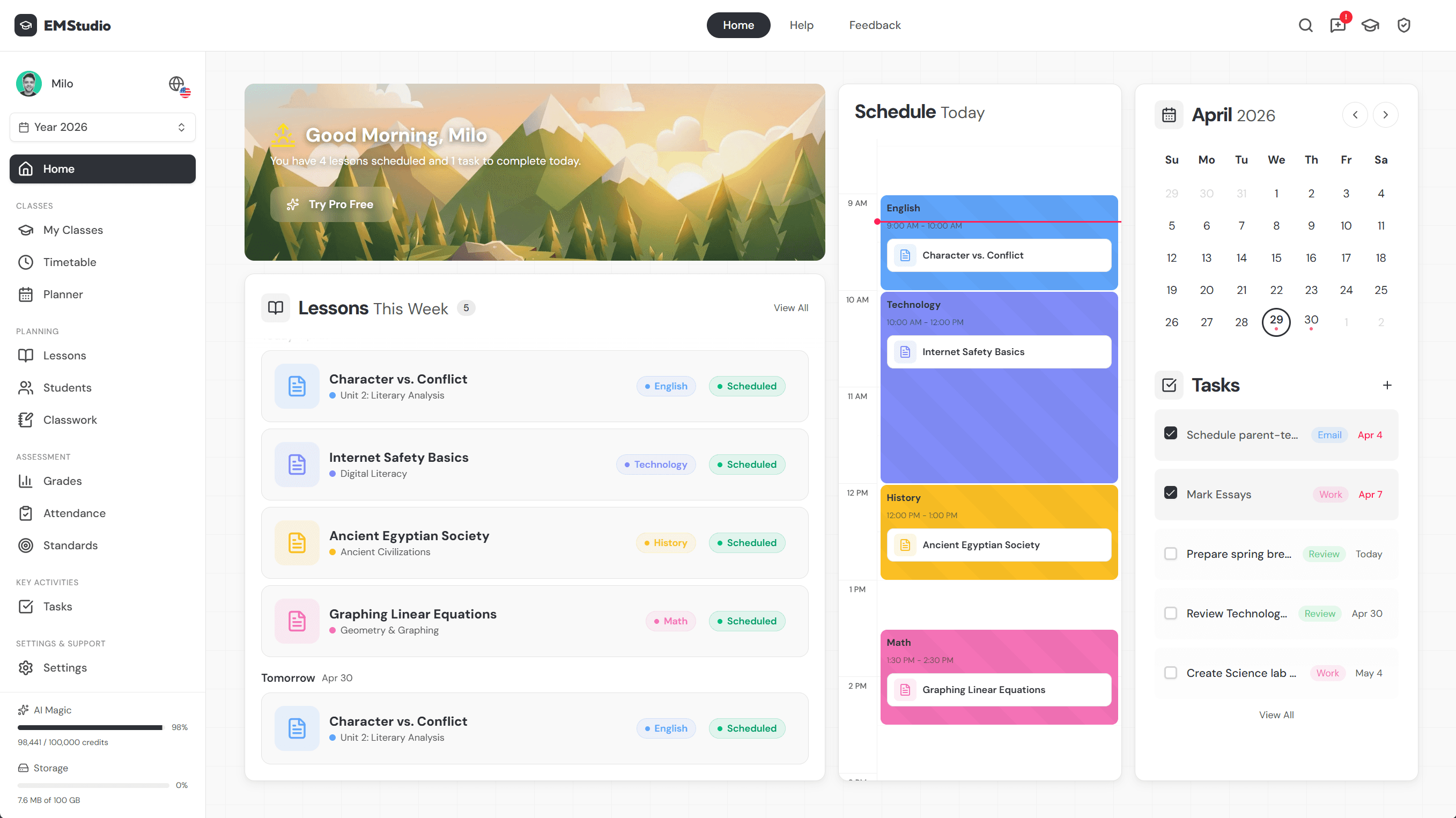
The pattern only appears if the data is easy to see: spot bullying-related absence patterns fast with EMStudio's attendance tracking and reporting tools.
What to Do When a Teacher Bullies You
Maybe it's a colleague who talks over you in every staff meeting, or maybe it's your own child coming home saying a teacher humiliated them in front of the class.
Either way, the same core playbook applies: name the behavior, document it, and escalate it if it doesn't stop.
Addressing the Bully Directly
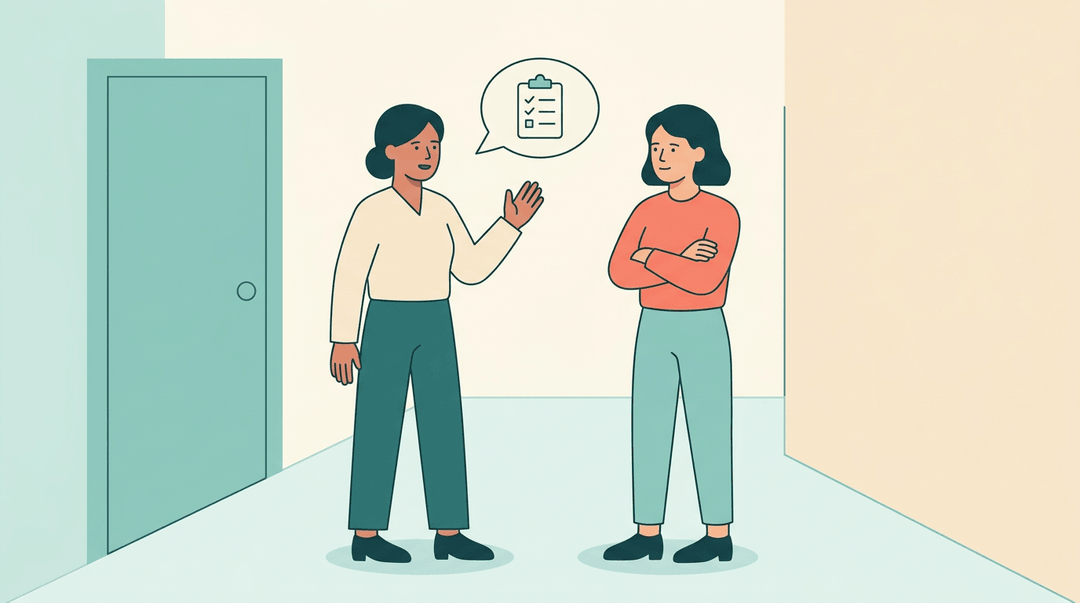
When it's safe to do so, start small. Tell the bully, calmly and directly, that the behavior needs to stop. Stay factual: describe what happened rather than trading insults, and resist the pull to retaliate in kind.
A one-to-one conversation, held privately rather than in front of students or coworkers, often resolves things before they ever need a paper trail.
For a parent whose child is on the receiving end, this step usually looks different: a calm, private conversation with the teacher first, before involving anyone else.
Keeping Records of What Happened
Keep a simple diary:
- dates
- times
- what was said
- who was present
Send a short follow-up email after any tense exchange so there's a timestamped record in writing. Save screenshots and recordings where you have them, and note any witnesses who saw or heard what happened.
This record becomes essential if the situation ever needs formal action.
Getting Support and Reporting It
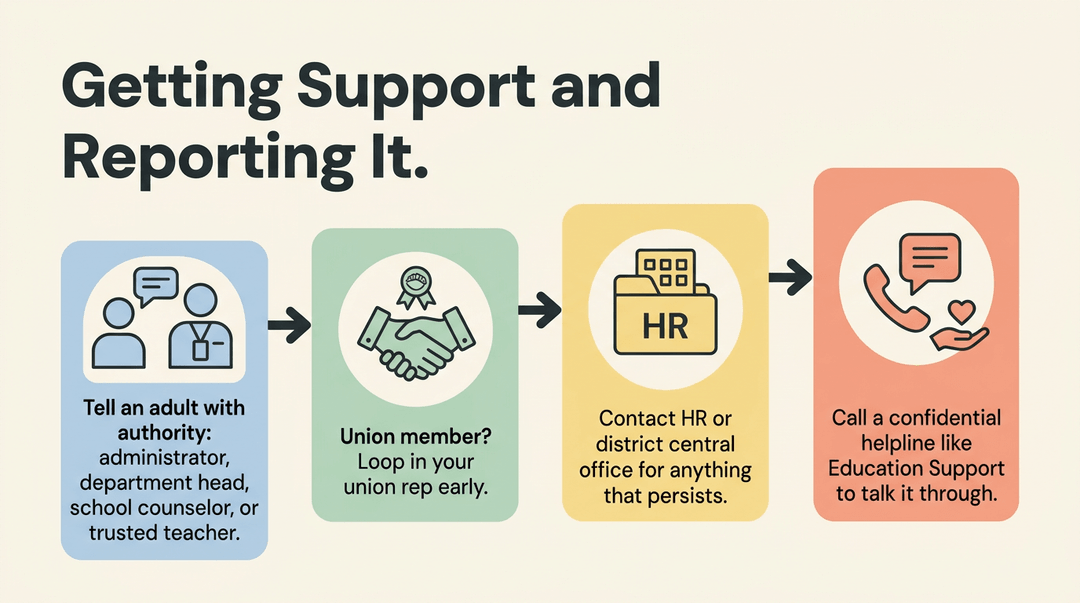
Tell an adult with authority to act: an administrator, a department head, or, for a student, a school counselor or another trusted teacher. If you're a union member, loop in your union representative early.
Contact human resources (HR) or your district's central office for anything that persists. Helplines like Education Support exist specifically for educators who need to talk it through confidentially.
Taking Formal or Legal Action
If informal steps go nowhere, raise a formal grievance through your school or district's process.
An employment tribunal is an option when workplace bullying crosses into unlawful treatment, and any criminal act (threats, assault) belongs with the police, not just HR.
Changing role or workplace should be a last resort, not a first move, but sometimes it's the healthiest one available.
Legal Protections for Bullied Teachers
If you're on the receiving end of bullying at school, you're not without options. Several layers of law and policy exist to protect you, and knowing them turns a helpless situation into an actionable one.
What Is Considered Harassment From a Teacher?
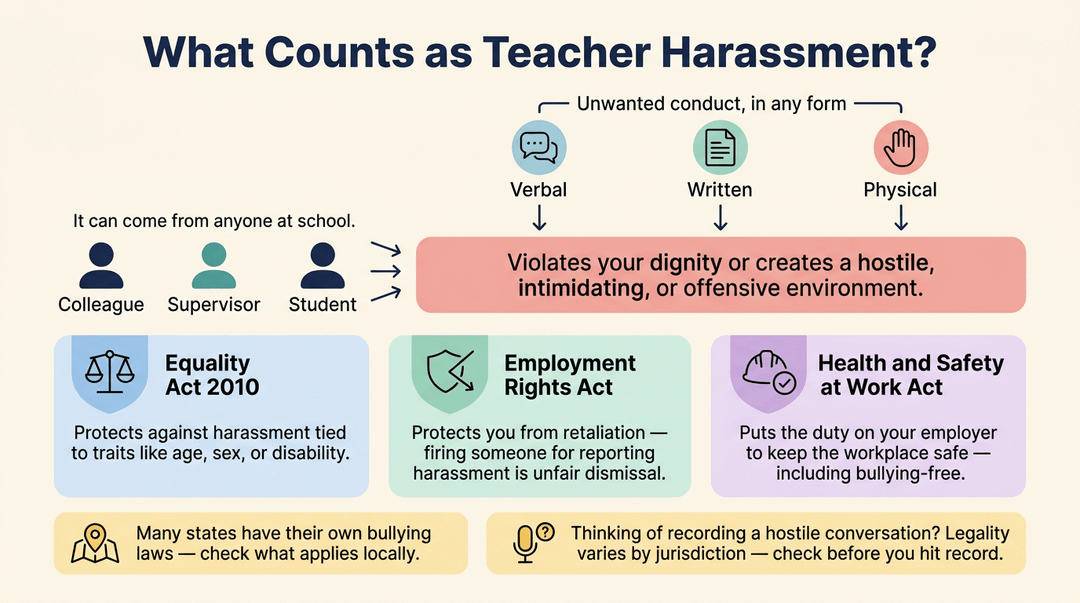
Harassment from a teacher means unwanted conduct, verbal, written, or physical, that violates your dignity or creates an intimidating, hostile, or offensive environment.
It can come from a colleague, a supervisor, or even a student, and the law treats it seriously on several fronts:
- The Equality Act 2010 covers harassment tied to a protected characteristic like age, sex, or disability, and the Act sets out what counts as discrimination and harassment in the workplace.
- The Employment Rights Act protects you from retaliation. Under its unfair dismissal provisions, an employee dismissed for a protected reason is treated as unfairly dismissed.
- The Health and Safety at Work Act puts the duty back on your employer: every employer must ensure, so far as reasonably practicable, the health, safety and welfare of employees, which includes a bullying-free environment.
- Many states also have their own bullying statutes, so check what applies locally.
- If you're thinking of recording a hostile conversation, know that legality varies by jurisdiction: check the rules before you hit record.
School and Union Policies to Know
Beyond the law, your district's bullying policy and employee handbook spell out reporting steps and HR's role. Most schools run a formal complaint investigation process once you report.
Your union adds another layer: a grievance process and collective bargaining protections that can back you up when policy alone doesn't cut it.
Building a Culture Without Bullying
A staff culture that pushes back against bullying doesn't build itself. It grows from small, repeatable choices, and those choices usually start with you.
How to Build a Supportive Staff Culture
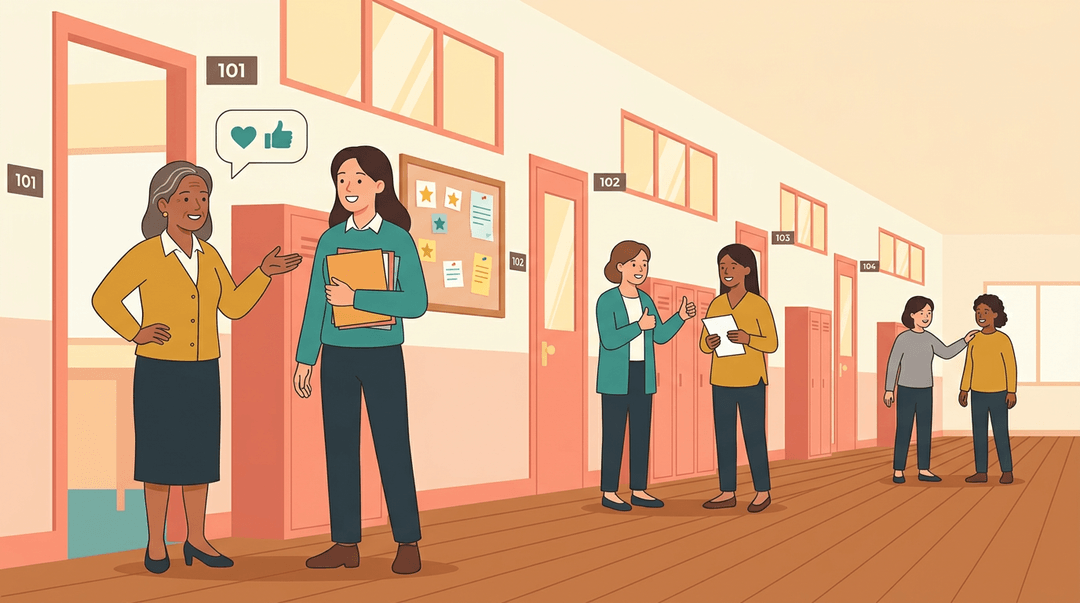
Consider a veteran teacher who opens every staff meeting by naming a colleague's win before moving to logistics. It's a small habit, but it's contagious. A few deliberate practices like that can shift an entire building:
- Lead by example, and affirm colleagues out loud. Praise a coworker's classroom management in the hallway, not just in a private note. Public affirmation sets the tone others copy.
- Ask for help, and show some vulnerability. A department head who admits a lesson bombed and asks for feedback signals that struggling isn't shameful. That permission spreads fast.
- Gather allies for change. One teacher speaking up rarely shifts a culture. A small group raising the same concern to an administrator carries far more weight.
- Recognize sensitivity to criticism. Feedback delivered without care can land as an attack, especially for a colleague already feeling isolated. How something is said often matters more than what's said.
Watch absence patterns, too. A teacher who suddenly starts calling in sick before a meeting with a particular colleague, or right before facing a certain classroom, might be signaling something they haven't said out loud yet.
Those spikes are worth a quiet, direct check-in before they become a pattern nobody addresses.
Bullying rarely announces itself. Whether you're the one being targeted or working to keep your own classroom free of it, the patterns show up before the full picture does: in absences, in silence, in who stops raising a hand.
Watching for those patterns, and knowing your rights and responsibilities, keeps your classroom safer for everyone.
Ready to catch those patterns before they turn into bigger problems? Check out our Attendance Tracking feature to spot patterns across your classes and act early.
References
- Equality Act 2010: Code of Practice for services, public functions and associations, 2026 — gov.uk (2026)
- Workplace bullying and turnover intentions among workers: a systematic review and meta-analysis | BMC Public Health — link.springer.com (2025)
- Employment Rights Act 1996 — legislation.gov.uk
- Health and Safety at Work etc. Act 1974 — legislation.gov.uk
- The role of the principal in maintaining a harmonious working environment : an investigation into "legal" staff bullying by the school management team in Ekurhuleni North District high schools — hdl.handle.net (2013)
- Eight out of ten teachers suffering bullying, survey suggests — tes.com
Frequently asked questions
What is the #1 reason teachers quit?
Bullying is often cited as the leading reason teachers quit because it erodes their dignity and trust in the school. A hostile, stressful culture can push capable educators to leave the profession.
What is considered harassment from a teacher?
Harassment from a teacher is unwanted verbal, written, or physical conduct that violates someone’s dignity or creates an intimidating, hostile, or offensive environment. It is especially serious when tied to a protected characteristic such as race, sex, disability, or age.
What are signs of a toxic teacher?
Signs of a toxic teacher may include repeated ridicule, gossip, public belittling, deliberate exclusion, unfair targeting, or humiliating treatment. Constructive criticism is different because it is intended to help rather than shame.
How to handle a teacher that bullies?
If a teacher bullies you, write down what happened, including dates, exact words, witnesses, and supporting messages. When safe, calmly ask the teacher to stop, then report persistent behavior to a counselor, department head, administrator, union representative, or other trusted authority.
How to tell if a teacher is bullying you?
A teacher may be bullying you if the mistreatment is repeated, intentional, and humiliating rather than a one-time disagreement or fair correction. Watch for ridicule, exclusion, unfair targeting, spreading rumors, or treatment that is unrelated to your learning or conduct.
Can a teacher bully a student?
Yes, a teacher can bully a student through repeated ridicule, exclusion, public humiliation, or unfair targeting. Bullying can occur even when it is non-physical and may involve a hostile or intimidating classroom environment.
What makes a teacher a bully?
A teacher is a bully when they repeatedly and intentionally mistreat someone, such as by spreading false information, belittling them publicly, deliberately excluding them, or unfairly targeting them. Fair discipline and constructive criticism are not bullying when they are focused on helping or maintaining a safe learning environment.
What to do when a teacher bullies you?
Tell a trusted adult, counselor, administrator, parent, or another teacher, and keep a dated record of each incident. Save relevant messages or screenshots, identify witnesses, and escalate the complaint if the behavior continues or involves threats, assault, or discriminatory harassment.