What Is a Rubric Score? A Complete Guide to Grading Criteria

Jump to section
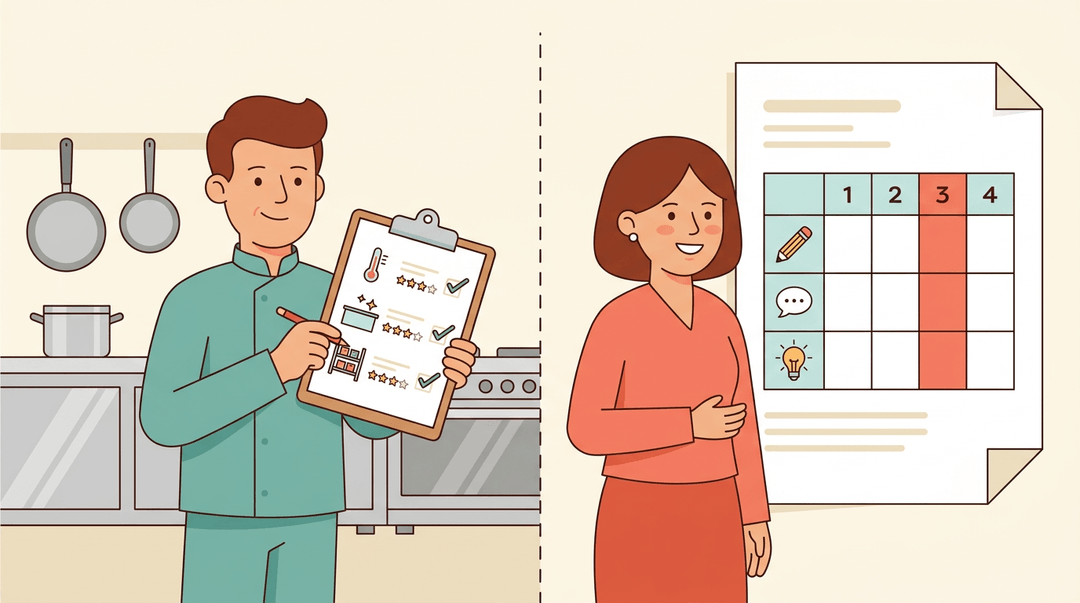
Think of a restaurant inspector walking through a kitchen with a checklist: cleanliness, temperature, storage, each rated on a clear scale instead of a gut feeling. Grading works the same way when you use a rubric score.
It's a number or level tied to specific, defined criteria, built so two different teachers would land on the same result. In this post, we'll break down what a rubric score means, how to build one, and how to put it to work in your classroom.
What a Rubric Score Actually Means
A rubric score is the number or label a student earns on each criterion of a rubric, and it's always tied to a description of what that level of work actually looks like. It's not a guess or a gut feeling: it's a number anchored to evidence.
Why Rubric Scores Matter
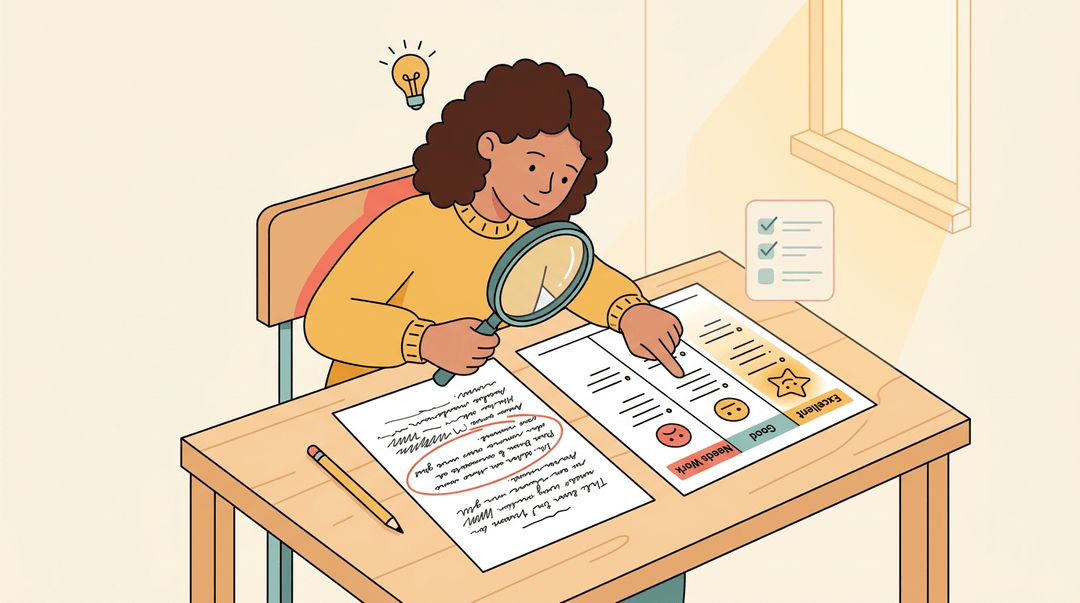
A clear rubric score does more than report a grade. It empowers student self-evaluation: a student can hold her own paragraph up against the "excellent" description and see exactly what's missing before she ever hands it in.
For example, a seventh-grade writing teacher who posts the rubric before an essay is due gives students a map, not a mystery.
Scores also clarify grading expectations for everyone in the room, and they help ensure fair assessment: two students doing similar work earn similar scores, because the score ties back to the criteria rather than a teacher's mood that day.
Consider a teacher grading thirty lab reports late on a Thursday night; a rubric keeps that grading consistent from the first paper to the last.
Rubric scores keep paying off after the grade is recorded. Use them in reflection logs, where students track their scores across assignments and notice real growth, not just one grade on one paper.
The Scale From Poor to Excellent
Most rubric scales run from poor to excellent, typically across four levels. Good rubrics use neutral category names rather than language that stings, so a struggling student sees room to grow instead of a label stuck to them. Common level names run:
- excellent
- successful
- acceptable
- attempted
Each paired with a description that spells out what that level actually looks like in the work itself. The description, not the label, does the real work of the score.
How to Build a Rubric
Building a rubric well starts before you write a single criterion: decide whether you need a holistic rubric (one overall score based on a general impression) or an analytic rubric that scores each criterion separately.
Most classroom work calls for analytic, since it shows students exactly where they lost points. Here's a simple process to get there:
Start by Brainstorming Criteria
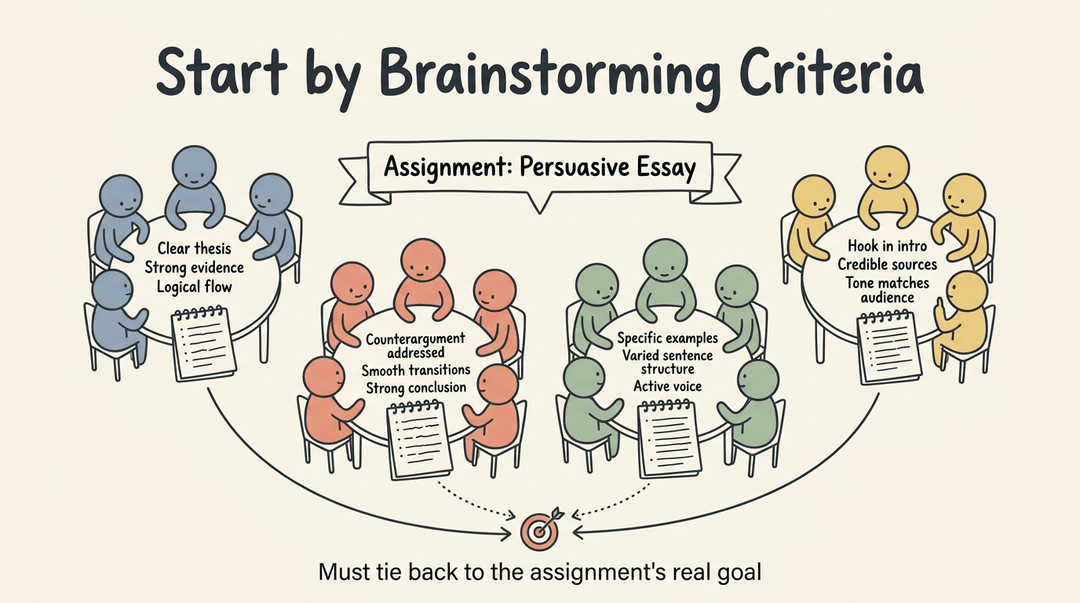
Invite your class into the process. Split students into small groups and ask each one to brainstorm five to seven possible criteria for the assignment. Think of a persuasive essay, where one group lists "clear thesis" while another lists "counterargument addressed." Push every group to tie its list back to the assignment's actual goals, not just general writing habits.
Narrow Down Your Criteria List
Have each group rank its list by importance, then present its top picks to the whole class. Open a class discussion to compare overlapping ideas and cut anything too vague or repetitive. Aim to settle on roughly four criteria total: enough to cover the assignment without overwhelming anyone grading (or being graded).
Write Clear Descriptions for Each Level
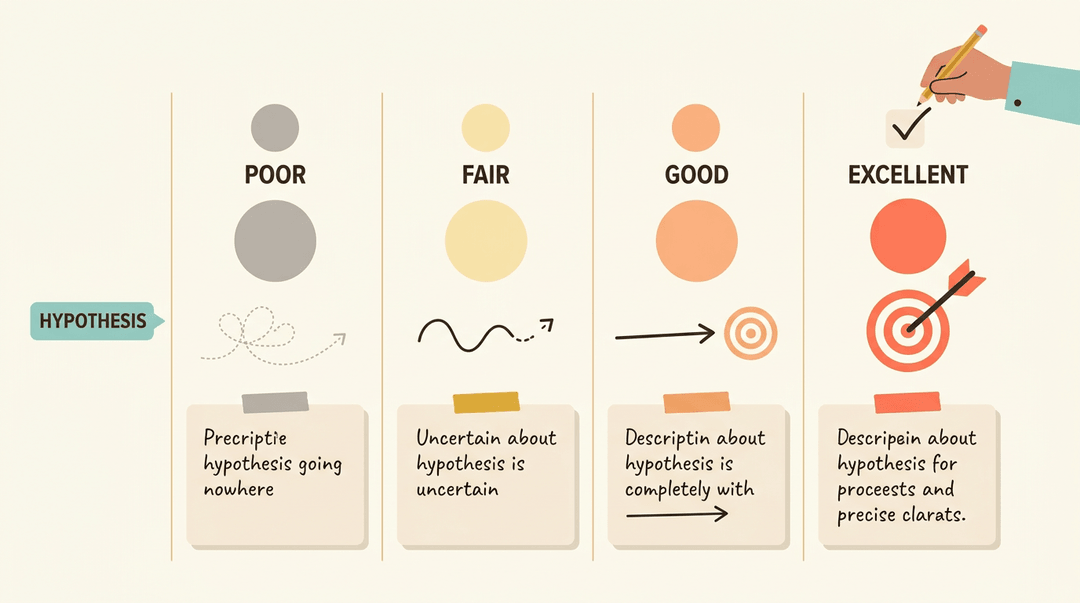
For each criterion, write what poor, fair, good, and excellent work actually looks like. For example, under a "hypothesis" criterion in a science rubric, excellent might mean the hypothesis is testable and tied directly to the research question, while poor means there's no clear prediction at all. The clearer each level reads, the less room there is for confusion, for you or your students.
Using Rubric Scores in Your Classroom
Here's the full scoring cycle, from handing out the rubric to returning grades, plus a format that fits each grade band. Pin it up; it runs the same way for every assignment.
The five-step scoring workflow
- Share the rubric before the assignment.
- Walk through one criterion aloud. Say: "Here's exactly what a 4 looks like for evidence."
- Score each criterion separately.
- Rate organization, then evidence, then conventions: never one gut-feel number for the whole piece.
- Total the points for a raw score.
- Four criteria at 4 points each gives a score out of 16.
- Convert the total to a grade.
- Example: 13/16 = 81%, a B on most scales.
- Give feedback per criterion, not just a total.
- One line per row: "Evidence: 3. Add a second source to reach a 4."
💡 Tip: Score one criterion across the whole stack before moving to the next. You'll hold a single standard in your head instead of five.
Pick a format for your grade band
| Grade band | Format | What it looks like |
|---|---|---|
| Elementary | 3-point visual scale | Smiley, straight face, frown beside each criterion |
| Middle school | 4-point analytic rubric | Four criteria, levels 1 to 4, totaled out of 16 |
| High school | 100-point weighted rubric | Analysis 40 pts, evidence 30, conventions 30 |
| Homeschool | Narrative plus score | A short written reflection with a score attached |
Example: A seventh-grade teacher scores essays on a 4-point analytic rubric: claim, evidence, organization, conventions. A student earning 3 + 4 + 3 + 2 gets 12/16, a 75%, and one comment per row telling them where the missing points live.
Before scores go out, confirm
- Criteria match your objectives. If the lesson targeted evidence, a rubric row says "evidence."
- Every level has a descriptor. No blank cells; a 2 should be defined, not a vibe.
- Scoring is consistent across students. Re-check your first two papers after finishing the stack.
- Scores reach students promptly. Feedback lands within days, while the work is still fresh in their minds.
When the stack is scored, enter rubric scores straight into your EMStudio gradebook and let weighted averages calculate automatically.
What a Rubric Scoring Chart Looks Like
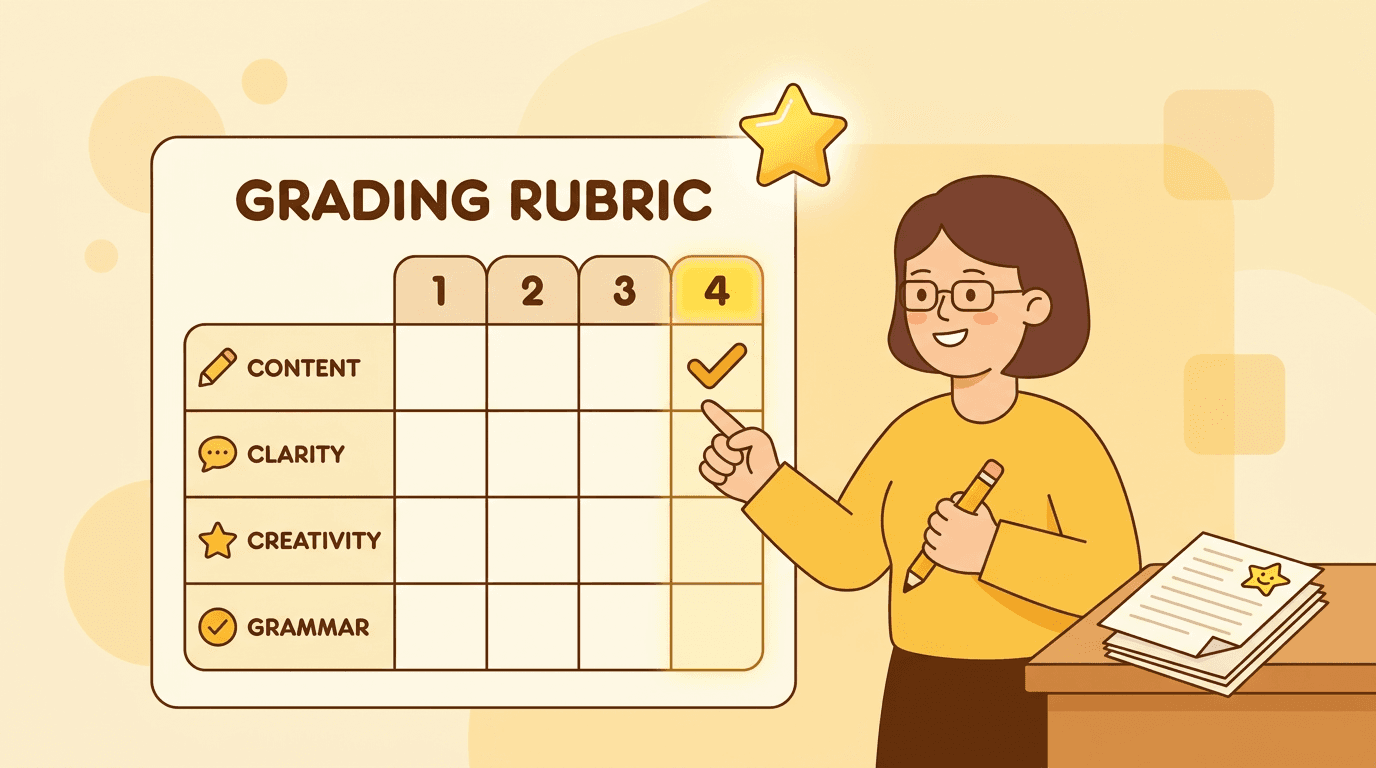
Picture a grid: rows for each skill you're grading, columns for each level of quality. That grid is the rubric scoring chart, and once you've seen one, the whole idea clicks into place.
What Is an Example of a Rubric?
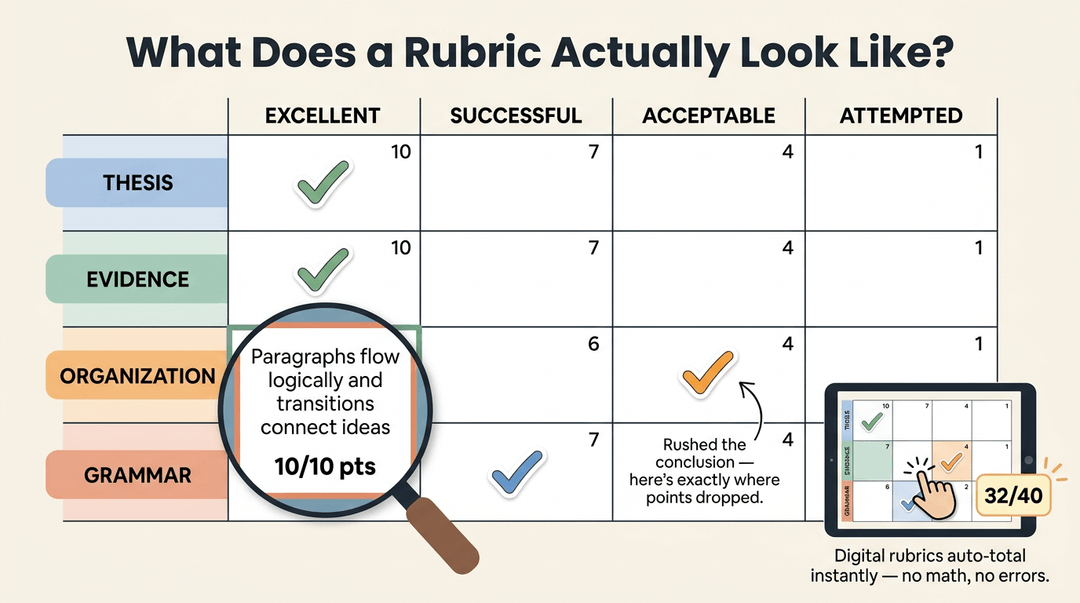
A typical rubric lists the criteria down the left side (thesis, evidence, organization, grammar) and lines up category labels across the top (excellent, successful, acceptable, attempted).
Each box where a row meets a column holds a short description of what that quality looks like at that level, plus a point value.
For example, a middle school writing rubric might score "organization" from 0 to 10, with a description like "paragraphs flow logically and transitions connect ideas" sitting in the excellent column.
A student who nails evidence but rushes the conclusion sees exactly where points dropped, not just a single grade with no explanation.
Many digital rubrics auto-total these scores the moment you click a box, saving you the math and cutting down on grading errors.
What's the Highest Score on a Rubric?
Most four-level rubrics follow a familiar point spread:
- Excellent: 8 to 10 points
- Successful: 5 to 7 points
- Acceptable: 2 to 4 points
- Attempted: 0 to 1 point
That said, the highest possible score varies by rubric. Some run 1 to 4, others 1 to 100, depending on how many criteria you're grading and how heavily each one counts.
To turn a rubric score into a grade, add up the points earned across all criteria, divide by the total possible points, and convert that percentage the same way you would any other assignment.
How Do You Score a Rubric?
Scoring a rubric comes down to one simple move: matching what's in front of you to the language in each performance level, then recording that match as a score. The real decision is who does the matching.
Who Should Score the Work
A rubric score doesn't have to come from you alone. Four approaches work, often together:
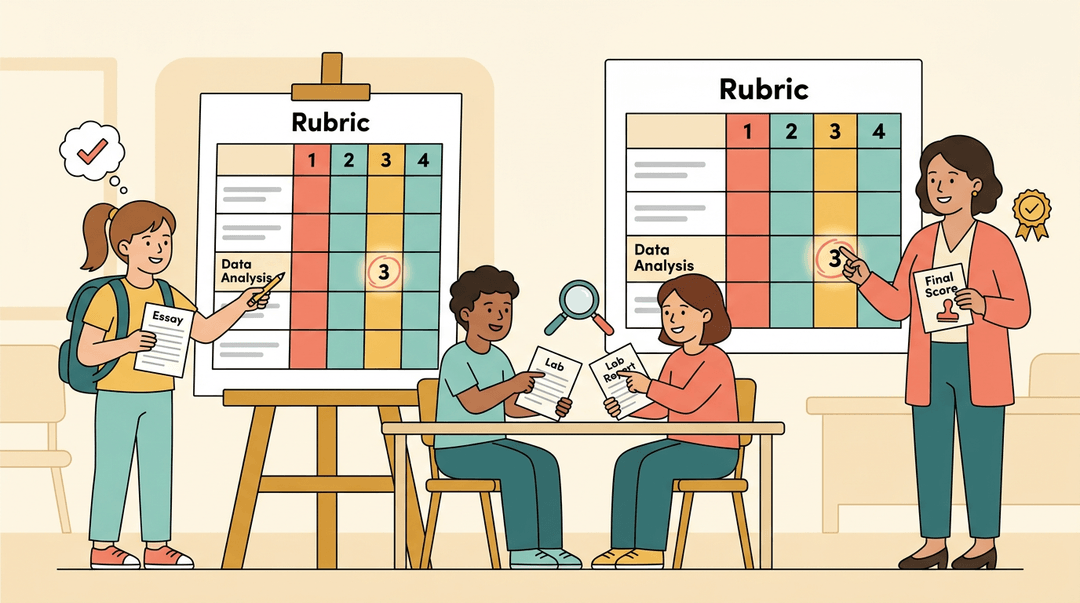
- Student self-assessment. A middle school writer rereads her essay against the rubric before turning it in, circling the level that matches her thesis paragraph. This builds ownership and catches easy fixes early.
- Peer assessment. Partners trade lab reports and score the "data analysis" row together, which exposes gaps a writer can't see in their own work.
- Teacher assessment. You apply the official score, since you hold the final say and the grade book.
- A combination. Many teachers blend all three: students self-score, peers check, then the teacher confirms. The layering builds accuracy and buy-in at once.
The step-by-step process stays consistent no matter who's scoring:
- Read the entire piece of work first, without scoring.
- Score one criterion row at a time, not the whole rubric at once.
- Match the evidence to the closest performance level, even if it's not a perfect fit.
- Record the score and note one piece of evidence that justifies it.
- Total the rows for a final rubric score.
When multiple people score, calibration matters: scorers review a few sample papers together and compare scores before grading solo, so a "3" means the same thing no matter who assigns it.
A rubric score turns grading from a judgment call into something consistent, transparent, and fair for every student in the room.
Once you've built the chart and know how to apply it, scoring stops being a guessing game and starts being a quick, reliable process. Ready to make grading less of a headache?
Check out our Grading & Assessment page to see how an online gradebook can calculate and organize your rubric scores automatically.
Frequently asked questions
What is a rubric grading scale?
A rubric grading scale is a set of defined performance levels used to assess work against specific criteria. Each level has a description explaining what the work looks like, helping make grading clearer, more consistent, and fairer.
What is the highest score you can get on a rubric grade?
There is no single highest score for every rubric. Common scales use 4 as the highest level, while other rubrics may use 10, 100, or a different maximum depending on their criteria and weighting.
What is an example of a rubric?
An example is a middle school writing rubric with rows for thesis, evidence, organization, and grammar. Each row has performance levels such as excellent, successful, acceptable, and attempted, with descriptions and point values for each level.